Posted in Book Review Tuesday

Book Review Tuesday (2/14/23) – Son of the Storm (The Nameless Republic, #1)

Happy Tuesday, bibliophiles, and happy Valentine’s Day! I’ve got no plans other than eating cookies, but I’m all for spreading the love. 💗

Son of the Storm has been on my radar for…about 6 months? A year? I’m not sure, but either way, I’m glad I picked it up. Usually, long, epic fantasy books like this make me lose interest, but Suyi Davies Okungbowa has written a tale that had me hooked almost all the way through.

Enjoy this week’s review!

Son of the Storm (The Nameless Republic, #1) – Suyi Davies Okungbowa

Danso is well on the way to becoming a renowned scholar, but despite the path set before him, he seeks more in life than what his university can teach him. He knows that the city of Bassa has sinister secrets woven into its history, walling itself away from the rest of the world and making every immigrant swear to secrecy. Danso’s bravado catches up with him when he discovers Lilong—and along with her, a type of magic that he never knew existed. A magic that bonds to him, and a magic that could determine his fate and the fates of Bassa itself.

TW/CW: graphic violence, racism/colorism, immolation, blood

These days, it’s rare for an epic fantasy over 500 pages to keep my attention; to pull it off, you have to not only have great worldbuilding, but you have to buoy it with some kind of action and character building, and more often than not, many will lean on one to propel the page count. I was hoping that Son of the Storm wouldn’t fall into that trap, but to my relief, it gave us all of those elements and more, making for a compelling fantasy that hooked me on the rest of the series!

It’s clear to me that so much care was put into the characters of Son of the Storm, but Danso stood out the most to me. He’s refreshingly fleshed out—he’s lovably cocky, he’s determined, and he can talk his way out of any situation. Beyond that, there was so much nuance to him that made the plot all the more compelling; the wrongs within Bassa had a personal connection to his own family history, and that drove him to discover more about the outside world. It’s a low bar, I know, but I’m so used to epic fantasy having issues that are only tangentially related to their protagonists, and giving Danso a more personal, tangible connection to the plot made the story all the more interesting to read.

And that’s in no small part thanks to Okungbowa’s fantastic writing! His prose hit the perfect balance of fantastical and grounded, making the human aspect of the story shine through. The moments of humor are balanced with moments of meditation on systemic issues and personal biases, and there wasn’t a moment that I thought that either were too much or too little. Although the plot did have brief moments of lulling, Okungbowa easily revived the suspense and action to keep the story moving in ways that made sense and were integral to the journeys of each character. In my experience, it’s difficult to keep up that pace for over 500 pages; usually, something gets lost in the worldbuilding or somewhere else, but Son of the Storm was, for the most part, consistently action-packed.

Back to the characters, however, is where my major problem came in: the multiple POV structure. Normally, I’m a sucker for multiple POVs when they’re done well, giving the reader a chance to see the story through the eyes of several, fleshed-out characters. It’s clear that Okungbowa loves his characters, but maybe he loved them…a little too much. During the last half of the book, we got the POVs of a few side characters that only had relevance in a certain section of the book, taking away the spotlight from the development of the main characters, such as Danso, Lilong, and Zaq. A lot of the time, these characters’ voices didn’t even come through, making the fact that the chapter is from their POV nearly pointless. Having the POVs consistently switch between Danso, Lilong, Zaq, and maybe Esheme would have made the story flow so much better, and it would have made sense to focus on their development rather than a passing side character.

All in all, an action-packed piece of fantasy with lovable characters and a plot that kept me guessing. 4 stars!

Son of the Storm is the first in the Nameless Republic series, followed by Warrior of the Wind, which is slated for release in November of this year. Suyi Davies Okungbowa is also the author of David Mogo Godhunter and several other short stories.

Today’s song:

listened to this album (Leisure) yesterday, and it was a lot of fun!! this one’s a standout

That’s it for this week’s Book Review Tuesday! Have a wonderful rest of your day, and take care of yourselves!

Posted in Book Review Tuesday

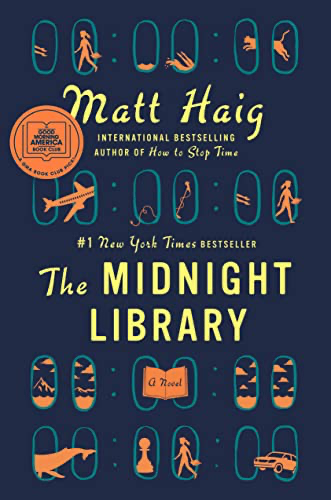
Book Review Tuesday (2/7/23) – The Midnight Library

Happy Tuesday, bibliophiles!

I’ve had this book on my radar for a few years now, but I wanted to read it after the ocean of hype died down. I forgot about it for a while, and I found a copy at my college’s library, and figured that it might be worth a try—I read The Humans, also by Matt Haig, and thought it was decent, so I decided to take a stab. I lowered my expectations to average from all of the hype, but The Midnight Library ended up being even worse than I thought—insultingly un-nuanced and a wholly frustrating read.

Enjoy this week’s review!

The Midnight Library – Matt Haig

Nora Seed has reached what seems to be a dead end in her life. All of her childhood dreams never came to fruition, and now she’s stuck in her thirties with nowhere to go. But after she attempts to take her own life, Nora finds herself in the Midnight Library, where every book on the endless shelves contains an alternate life—lives where she pursued different dreams, different boyfriends, and every other imaginable outcome. As she travels through a multitude of alternate realities, Nora must come to terms with herself and how she wants to live her life—full of regrets, or full of hope?

TW/CW: suicide/suicidal ideations, animal attack, loss of a loved one, depression, panic attacks, animal death, substance abuse, cancer

A recurring thought that came to me while reading The Midnight Library was that it was like if you sucked every ounce of nuance and complexity out of Everything, Everywhere, All At Once. I know full well that Everything came out two years after this novel, but my point still stands. In the abstract, the message of The Midnight Library was good, but it had all the subtlety of a sledgehammer to the face, which made for an exceedingly unpleasant reading experience.

The Midnight Library is a case study in the effect of good or bad execution of a story idea. If you have a good idea but don’t execute it well, the idea itself gets bogged down in all of the structural flaws of the writing itself. The message that Matt Haig tried to get across was a good one—focusing on living your life, not getting bogged down with regrets, and giving yourself a chance to change—but it was so ham-handed in its delivery that all of the nuance (of which there was SO much potential) was erased entirely. It was so clear that The Midnight Library was trying to say something, but without any complexity, it ended up spitting out nothing that we haven’t heard before.

For instance, in one life, Nora Seed is a world-famous rockstar selling out arena shows all around the world. However, as Nora progresses through this alternate timeline, she realizes that this alternate self is feeling empty inside, and that fame has left her a barren shell of what she once was. That’s all well and good, and it’s a good message that fame does not automatically equal happiness. But at the end of the chapter, this message was digestibly packaged into a short platitude, right above Nora’s hypothetical follower count on social media. It was almost insulting how it was delivered—what was the point of that when Haig showed it through his writing just a page before? Even if you’re not a writer, if you’re ever taught about writing in school, “show, don’t tell” is one of the first principles that you’re taught. As a reader, it feels insulting to one’s intelligence: I got the message just fine, why be that redundant and blatantly obvious?

Furthermore, a lot of the potential lives, even though they were neatly and obviously packaged to the reader to teach them a lesson, ended up contributing nothing to the plot. When they did contribute, the message was reiterated by the all-knowing librarian, as if I’m watching a children’s show, each episode ending with an “and what did we learn today, kids?” kind of message. The Midnight Library isn’t all that long of a book, but a good quarter of the misadventures through Nora’s alternate lives didn’t serve any purpose, even though that was the obvious intent.

Lastly—Matt Haig isn’t at fault for this first part, but dear lord, do not let the synopsis fool you. This is not a feel-good book. The inciting incident for The Midnight Library is Nora attempting suicide, and that got glossed over so much in the marketing of the book. For the first part of the book, I feel like Nora’s mental health issues, although they aren’t explicitly named, were dealt with respectfully, but once it got to the end of the book, it took a turn for the worse. As if by magic, Nora’s depression is cured, and she now has the will to live again, after glimpsing all of her alternate lives. It really felt harmful—yes, this is a sci-fi/fantasy book, but depression and other mental health issues don’t magically disappear after a romp through alternate realities. Downplaying something as serious as depression and suicide really didn’t sit right with me, and it felt like the ending of the book erased something that should have been acknowledged far more in this book.

All in all, a disappointing book that decided to take its well-intentioned message and knock you over the head with it, thereby erasing all attempts at nuance and complexity. 2 stars.

The Midnight Library is a standalone, but Matt Haig is also the author of The Humans, How to Stop Time, The Radleys, and several other books.

Today’s song:

I like this one even more than Panopticom—I can’t wait to see what else this album brings!!

That’s it for this week’s Book Review Tuesday! Have a wonderful rest of your day, and take care of yourselves!
Posted in Book Review Tuesday

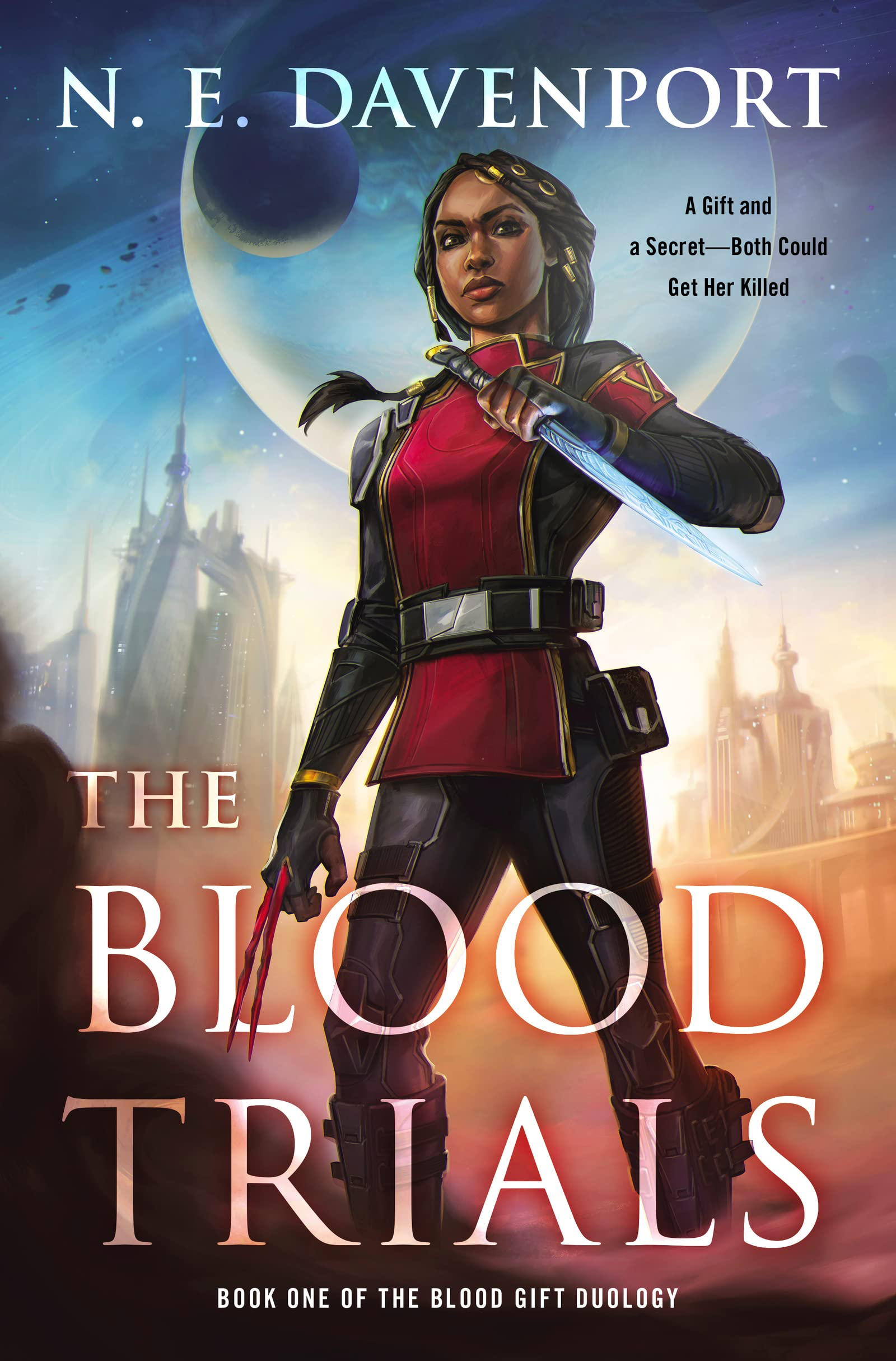
Book Review Tuesday (8/2/22) – The Blood Trials

Happy Tuesday, bibliophiles!
I’d seen this book floating around for a while, and the promised blend of sci-fi and fantasy hooked me in. But soon after I started The Blood Trials, it proved to be a disappointment to me—although there’s a great discussion of systemic racism and misogyny, the rest of the book lacked steady worldbuilding, and the writing tried too hard to be gritty.

Enjoy this week’s review!
The Blood Trials (The Blood Gift Duology, #1) – N.E. Davenport

Ikenna is the granddaughter of a prominent politician; both of them drew scrutiny from within the Republic of Mareen for their Khanian heritage, so Ikenna was trained in self-defense and blood magic by her grandfather in secret. But when her grandfather is assassinated, Ikenna suspects foul play—none other than the Praetorian Guard, the elite military might of the Republic of Mareen, could have orchestrated his murder. Determined to find his killer, Ikenna climbs through the ranks of the Praetorians, fighting her way to the top to avenge the death of her grandfather. But what she finds deep within the Praetorian Guard is worse than she could have ever imagined.

TW/CW: graphic violence, murder, loss of loved ones, racism, misogyny, substance abuse (alcohol)

The Blood Trials had a ton of potential, but it ultimately felt like an early draft as opposed to a finished book—although it had some great commentary on systemic racism and misogyny, the lack of worldbuilding and the writing style made for a book that failed to hook me once I got started.

I’ll start with the one thing I did appreciate about The Blood Trials—there were some great themes of how racism and misogyny, more often than not, run deeper than surface interactions and are embedded into the very fabric of a society. Ikenna’s experience in the Republic of Mareen mirrors so much of the sociopolitical climate of the U.S. and beyond, and it served as a timely and cogent commentary on how society systemically oppresses women, people of color, and other marginalized groups.

Beyond that, however, The Blood Trials consistently fell flat. I was excited to see how Davenport would blend sci-fi and fantasy into her world, but other than a base conflict that served as the origins for the Republic of Mareen and the surrounding countries, it left a lot to be desired. There wasn’t any indication of how magic and technology existed, what role technology played in this society, or how humans existed in this place in the first place. The magic system was even more so—all I could glean was that the blood gift was passed down genetically and very few possessed it. For such an interesting concept, I’m sad that The Blood Trials left me wanting more.

Additionally, the writing style did little to invest me in the story. I’ve seen a lot of reviews mix this up as YA, and that’s understandable—even though this book is technically billed as adult, it did feel like a YA book masquerading as an edgy, gritty adult novel. And this is coming from someone who predominantly reads YA—even from me, it felt like Davenport was trying too hard to make it “adult,” what with the excessive, graphic violence, the frequent swearing, and the sex. I don’t have a problem with any of those, but they all felt intentionally amped up to make the book more “adult” as opposed to making it more of a fleshed-out story.

Ikenna’s character was also an example of how Davenport’s writing style failed to hit the mark. She should, in theory, have been a character that would be easy to root for, especially given the themes of the story. But she tragically falls into the trap of a “Strong Female Character™️” who just ends up being a woman written with traditionally masculine traits without any sense of vulnerability. Even though her motives were good enough to move the plot along, Davenport was, again, trying far too hard to make her tough, and left her without any other character traits. Her main motive was to avenge her grandfather, and yet her grief was glossed over to the point of nonexistence in favor of making her tough and stoic. Similarly, most of the other characters seemed to come and go without consequence, only having a few base traits and disappearing and reappearing seemingly at Davenport’s will.

The Blood Trials also could have done with a little slimming down; for me, it could have easily ended after Ikenna beats the Praetorian Trials. The last 100 pages felt like they could have been a setup for the second book in the duology, but they were shoehorned sloppily into the last quarter of the book. I’d already lost my faith in most of the book by then, but those last pages only served to make it even less cohesive.

All in all, a sci-fi/fantasy novel that brings great commentary to the table, but lacked in worldbuilding and writing. 2 stars.

The Blood Trials is the first book in the Blood Gift duology, followed by the forthcoming sequel The Blood Gift, set for release in April 2023. The Blood Trials is N.E. Davenport’s debut novel.

Today’s song:

That’s it for this week’s Book Review Tuesday! Have a wonderful rest of your day, and take care of yourselves!