Posted in Book Review Tuesday

Book Review Tuesday (11/28/23) – Hunger Makes the Wolf

Happy Tuesday, bibliophiles!

Hunger Makes the Wolf came on my radar when I was looking for more books with disability rep (as always), but I ended up buying it on my Kindle after my dad notified me that I had some unused Kindle points (thank you for reminding me!)—it was free with the points added on, so how could I resist? And while Hunger Makes the Wolf wasn’t perfect, it’s a ton of gunslinging, space-fantasy fun.

Enjoy this week’s review!

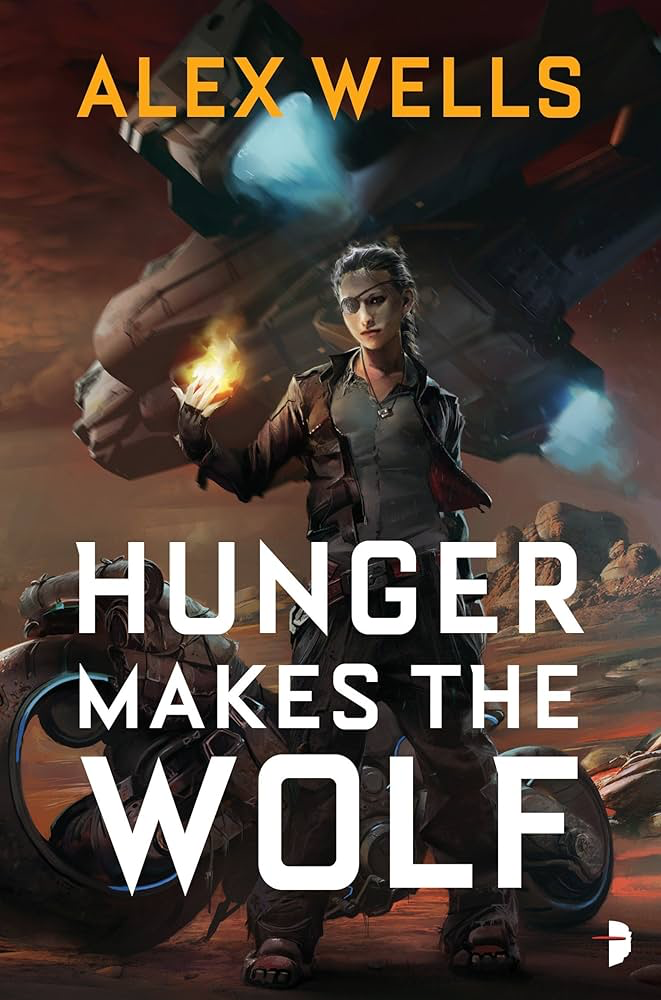
Hunger Makes the Wolf (The Ghost Wolves, #1) – Alex Wells

Hob Ravani ekes out a living in the deserts of Tanegawa’s World, a planet owned by TransRifts—the corporation who controls the market on interstellar travel in the whole galaxy. For 10 years, Hob has gotten by with the help of the Ghost Wolves, a group of bandits roaming the desert and finding money where they can. But when Hob discovers the body of Nick, the man who recruited her to join the Wolves, abandoned in the desert, she knows that she has to act before TransRifts discovers their operation—and discovers the powers that she’s kept hidden from sight.

TW/CW: murder, descriptions of injuries, descriptions of corpses, violence, loss of loved ones, human experimentation

Writing accents phonetically is a slippery slope that I’m not going to get fully into in this review. In this case, though, Alex Wells had decent success with making everyone who was meant to sound like they had a Southern accent actually sound like they had a Southern accent, which worked—this novel was a space Western, after all. That being said, the unintended consequence was that Wells’ spelling of Hob’s accent was that I imagined her voice more like Holly Hunter in Raising Arizona than the badass, hardened gunslinger that she was made out to be. It sort of worked, though.

As far as sci-fi subgenres go, I’m not usually huge on space Westerns; I’ve rarely seen them done exceedingly well (even The Mandalorian got more than a little repetitive eventually), but the best are at least fun. And that was what Hunger Makes the Wolf was—incredibly fun. It had all of the trappings of a debut novel, but what Wells did get right on the first time was that pacing. Although the action sequences were what made Hunger such a blast to read in the best parts, Wells also knew how to balance them out with quiet, more emotional moments, and also moments to slip in worldbuilding without absolutely walloping you with it. Wells’ action was really the star of the show here; their fight scenes had just the right amount of tension, levity, and butt-kicking to make for more than one delightful scene.

Recently, I’ve read several sci-fi books that were marketed as “space fantasy,” and none of them have really fit the bill. And yet, Hunger Makes the Wolf wasn’t necessarily marketed as such, but it does what the other novels lacked. Even amidst the classic sci-fi backdrop of corporate greed, massive spaceships, and gruesome human experimentation, there’s the element of the characters’ strange hidden powers. Naming said powers “witchiness” was already a win in my book, the charm of it really fits the Western atmosphere that Wells was going for—it hits that sweet spot of not sounding overly jargon-y or formal, but not too hokey, either. Every time one of the characters mentioned it, I couldn’t help but smile—especially in Hob’s aforementioned Holly Hunter voice.

Hunger Makes the Wolf is an incredibly ambitious novel, and the ambition is accentuated when you remember that this is Alex Wells’ debut. In some ways, it worked; Wells managed to juggle a safe amount of the worldbuilding without leaving the reader without context, but also without dumping it excessively. However, what Wells did not juggle as well was the sheer amount of characters that we jump between. Hunger was clearly meant to have a found family theme to it, which I’m normally a sucker for, but Wells just had so many extraneous characters on their hands that none of the character relationships felt fleshed out. If we had gotten more scenes with Hob and the rest of the Wolves, for instance, I would have believed that they really were as thick as thieves. Adding onto this, the perspective switches may not have been necessary; Mags, although she plays a prominent role, doesn’t have a perspective or voice that added anything substantial to the narrative. It’s a classic debut author case: Alex Wells had some spot-on ideas, but they bit off far more than they could chew.

All in all, a rollicking space fantasy with action aplenty, but with characters that left me wanting more. 3.5 stars!

Hunger Makes the Wolf is the first book in the Ghost Wolves duology, followed by Blood Binds the Pack. Hunger was Alex Wells’ debut novel; they are also the author of the short story Angel of the Blockade.

Today’s song:

FARGO IS BACK I AM FOAMING AT THE MOUTH OH MY GOOOOOOOD

That’s it for this week’s Book Review Tuesday! Have a wonderful rest of your day, and take care of yourselves!

Posted in Book Review Tuesday

Book Review Tuesday (11/7/23) – The Deep Sky

Happy Tuesday, bibliophiles!

The Deepy Sky came out this July, and I’ve been seeing a ton of buzz about it around the blogosphere since. I’m always in for a sci-fi thriller, and this one delivered in that aspect, as well as the wonderful mixed-race rep!

Enjoy this week’s review!

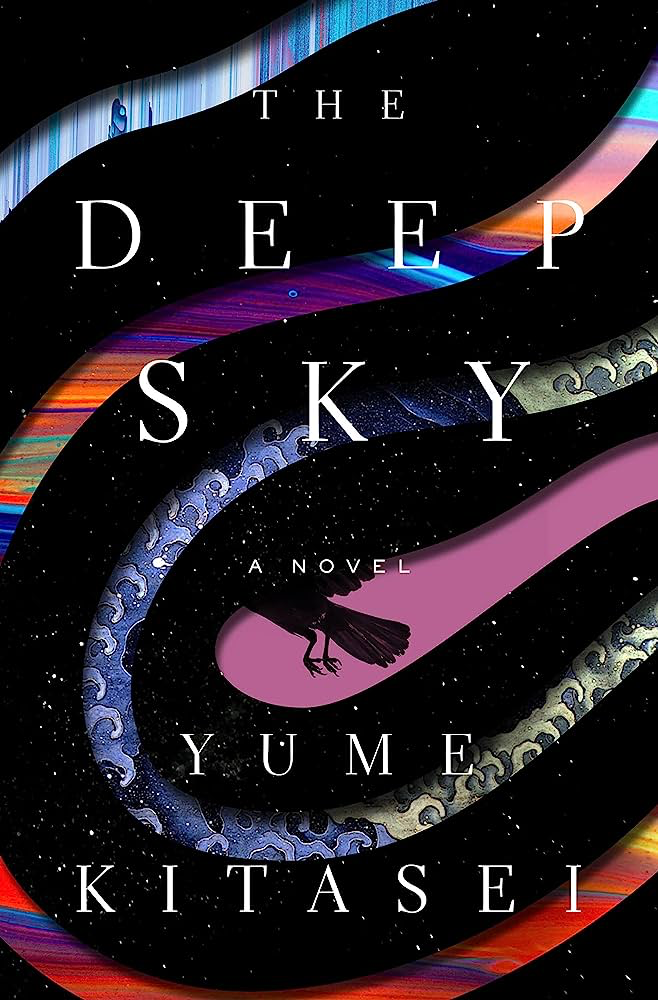
The Deep Sky – Yume Kitasei

Asuka has been chosen as a representative on a mission to deep space, where she will help give birth the next generation of Earth’s children. But she has been chosen to represent Japan—a country she barely knows, as a half-Japanese, half-Latina girl raised in the United States. Feeling like an imposter to an unfamiliar country, she accepts her duty and joins the crew of the Phoenix. But a deadly explosion onboard the ship leaves her the only surviving witness. With all eyes on her once more, Asuka must get to the bottom of the explosion before the perpetrator strikes again.

TW/CW: racism, terrorism, miscarriage/fertility themes, death of a child

“Literary” sci-fi rarely does it for me; most of what I’ve read barely scrapes past the 3.5 star rating for me, at best. Often, what happens is that the sci-fi element gets significantly watered down for the sake of marketability, drama, and a place in a celebrity’s book club (see: Sea of Tranquility, In the Quick). But The Deep Sky had the chops to make itself unique—and incredibly poignant.

The sci-fi plot of The Deep Sky is pretty standard as far as story elements go, but Kitasei’s approach to it made it feel fresh. It’s the setup for a myriad of sci-fi thrillers: you’ve got a large crew voyaging through the depths of space, only for a tragic accident to leave everyone onboard in suspicion, with no way to get back to Earth. It’s not necessarily a new approach plot-wise that keeps it going—it’s the emotional core that Kitasei brings to it. You’re really able to see deeply into Asuka’s head, deeper than a lot of authors dare to go with these kinds of stories; it’s a great way to increase the stakes without having to complicate the mystery of the story.

Also, LET’S HEAR IT FOR MIXED-RACE REPRESENTATION!! I’ve been on a roll with books with amazing mixed-race characters and stories lately (see also: Leslie Marmon Silko’s Ceremony—a very different book, but no less poignant), and as a mixed-race person, I’m so glad that narratives like these exist. Kitasei’s depiction of the imposter syndrome that Asuka faces about her identity is twofold—not only is there the level of it that comes with her being of Japanese and Mexican descent in the U.S., but also in the fact that she has to represent Japan—a country that she’s barely been to—in this mission. It really did make me feel so, so seen. Kitasei’s portrayal of having these intersecting identities and them coming at odds with how others want to box you in was deeply moving and authentic, and I cannot thank her enough for that.

Back to the subject of literary sci-fi. A lot of these types of novels that I’ve read deal with intersecting, nonlinear timelines, which may or may not have to do with actual time travel (case dependent). For the most part, it worked incredibly in Kitasei’s favor—even outside what we can consider the “main” plot, the pieces that we get of Asuka’s life before the deep space mission were almost more intriguing than the actual murder mystery in space. Kitasei’s character work is incredibly detailed and nuanced, and having most of this novel be driven by character and family was a choice that made me enjoy it that much more. These types of sci-fi thrillers normally lend themselves to very distant characters, and minimal character work by proxy (outside of “trust no one”), so this was a breath of fresh air in that sense.

That being said, the nonlinear timeline was also what brought part of the novel down for me. There’s much more emphasis placed on the time before the mission than the actual mission, making the murder mystery plot feel like an afterthought. The way that these timelines were spaced out meant that we went long stretches without checking in on what’s supposed to be the novel’s inciting incident, which made the stakes feel much lower than they were meant to be. The tension got appropriately amped towards the end, but other than that, there really wasn’t as much thriller as I was expecting going in. Maybe this is just a matter of how The Deep Sky was marketed, but I did wish we got a little more of the “main” plot.

All in all, a rare gem of a literary sci-fi novel where every page brimmed with emotion and suspicion. 4 stars!

The Deep Sky is a standalone; it is also Yume Kitasei’s debut novel.

Today’s song:

listened to my first Arlo Parks album, and I’m a fan!! this was my favorite, for sure

That’s it for this week’s Book Review Tuesday! Have a wonderful rest of your day, and take care of yourselves!
Posted in Books

The Bookish Mutant’s Book for Asexual Awareness Week – 2023 Edition

Happy Sunday, bibliophiles! I hope this week has treated you well.

First off, apologies for the lack of a book review/Sunday Songs this week. I’ve just been busy with school, and I didn’t have as much time to sit down and write something that wasn’t the draft I’m trying to get myself back into the rhythm of writing. (I’ve been cobbling at this post in advance before this week, so that’s why you’re able to see it now.) Plus, I was just generally exhausted on Tuesday, but it was a good exhaustion, all things considered, because I’d seen Peter Gabriel the night before! Words don’t do justice to how incredible of a show it was. You’ll definitely hear about it later.

Here in the U.S., Asexual Awareness week, or Ace Week, is celebrated from October 22-28! Even though I’m not on the asexual/aromantic spectrum, it’s impossible to not see how much this community gets left behind, even within the LGBTQ+ community; just as any other spectrum of identity, it’s just as valid and worthy of respect as anything else. I’ve been meaning to make more asexual book lists, but this time of year is kind of crazy for me. But this year, I figured I would start early so I would have another book list—we need to shed more light on these fantastic books and authors!

For my original list from 2020, click here!

Let’s begin, shall we?

THE BOOKISH MUTANT’S BOOKS FOR ASEXUAL AWARENESS WEEK

FANTASY:

REALISTIC & HISTORICAL FICTION:

SCI-FI:

TELL ME WHAT YOU THINK! Have you read any of these books, and what did you think of them? What are your favorite books with characters on the asexual spectrum? Let me know in the comments!

Today’s song:

That’s it for this year’s recommendations! Have a wonderful rest of your day, and take care of yourselves!

Posted in Book Review Tuesday

Book Review Tuesday (8/8/23) – Machinehood

Happy Tuesday, bibliophiles!

After I read Meru back in June, I immediately went through the rest of S.B. Divya’s full-length books and put them on my TBR. Even though sci-fi is my favorite genre, I don’t readily jump for sci-fi thrillers quite as often, but after loving Meru, I was willing to give this one a chance. And while it wasn’t without its flaws, Machinehood was an incredibly detailed and twisty novel!

Enjoy this week’s review!

Machinehood – S.B. Divya

2095. In Welga Ramirez’s world, humans and machines work in an uneasy symbiosis. Artificial intelligence has become so advanced that humans must take all manner of pills, not only for them to keep from getting sick, but to be strong enough to compete with the machine labor force. Welga has intentions to retire from being a bodyguard. But after a client is killed in front of her and a hybrid human-machine terrorist group called the Machinehood is to blame, she must track down her killer—and the members of the Machinehood that have threatened to attack every major pill funder until production comes to a standstill.

TW/CW: violence, murder, racism, substance abuse, abortion/forced pregnancy, miscarriage

You ever finish a book that’s so detailed in its worldbuilding that not only can you imagine all of the described conventions and their ramifications, but the massive google doc that was probably behind it all? That’s how Machinehood felt to me—aside from the one other S.B. Divya book that I’ve read so far, Machinehood was one of the most thoughtfully-crafted books I’ve read in a long time.

At its best moments, Machinehood felt like a good Christopher Nolan movie. There was no shortage of suspense, and while it was difficult to keep up with at times, it was always an enjoyable read. I don’t gravitate towards sci-fi thrillers as much, even though sci-fi is my favorite genre, but this novel reminded me of what the really well-written ones are capable of doing; the suspense kept me guessing, the tension hardly ever let up, and there were twists aplenty to satisfy any sci-fi reader’s appetite. And of course, nothing makes a thriller like a main character about to retire, and then has to do that One Last Mission™️. When it’s not a part of a huge franchise, it works for me.

Machinehood is S.B. Divya’s first novel, and even then, it’s easy to see the threads from where they eventually branched off to Meru. The most prominent of those was, by a long shot, the worldbuilding. Like Meru, the dystopian, AI-dominated world of Machinehood is painstakingly detailed, down to the most minute consequence of any given sociopolitical ramification. I wouldn’t be surprised if Divya had some kind of Pepe Silvia-style conspiracy cork board to keep track of all the possibilities of this world that they created. There truly was no stone left unturned, and for the most part, it was a positive experience—between the moments of suspense, it was fascinating to see these possibilities unfold. From the myriad of pills that keep humans competing with the AI labor force to the ways that genetic and physical modification advanced, there was nothing that Divya didn’t think of, and that created one of the most fleshed-out sci-fi worlds that I’ve read recently.

Unfortunately, the downside of all of that excellent worldbuilding was its delivery. Having read Meru first, it’s easy to see how Divya improved on this delivery from Machinehood to there. Meru deftly toed the line between explaining its complex worldbuilding and dumping it all in one sitting. Machinehood, on the other hand, could have used some work in that department. As much as I enjoyed how richly layered the worldbuilding was, Divya had a frequent tendency to ramble on about said worldbuilding; even with all of the suspenseful plot points falling into place, this novel took frequent breaks to explain why [x] was a result of [y] and [z], which took away from the tension built up during the parts where the actual plot occurred. It’s a pitfall that I can almost excuse, given that a) Divya’s worldbuilding is obviously top-tier, and b) this was their debut novel, but it definitely took away from some of my enjoyment of the book as a whole. This novel probably would’ve gotten the full 4 stars from me if not for all of this.

All in all, a twisty and suspenseful debut with extensive worldbuilding that sometimes suffered from just as extensive rambling. 3.75 stars, rounded up to 4!

Machinehood is a standalone, and S.B. Divya’s first novel. Divya is also the author of the Alloy Era series (Meru, Loka, and an untitled third book) and Runtime, and has contributed to many short story collections.

Today’s song:

been listening to this song a bunch again, we’re levitating over here

That’s it for this week’s Book Review Tuesday! Have a wonderful rest of your day, and take care of yourselves!
Posted in Books

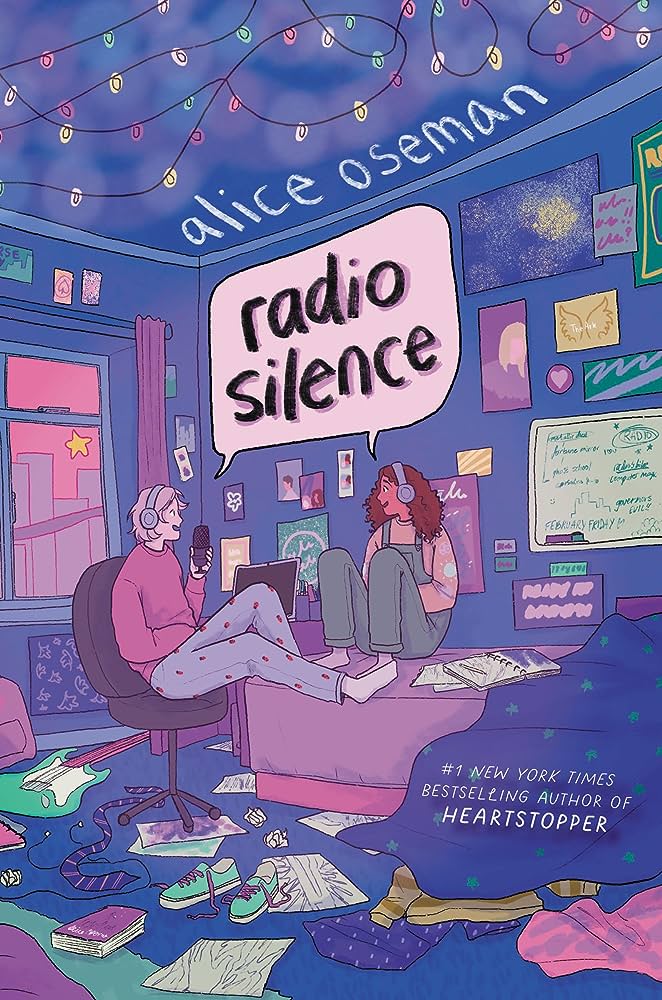
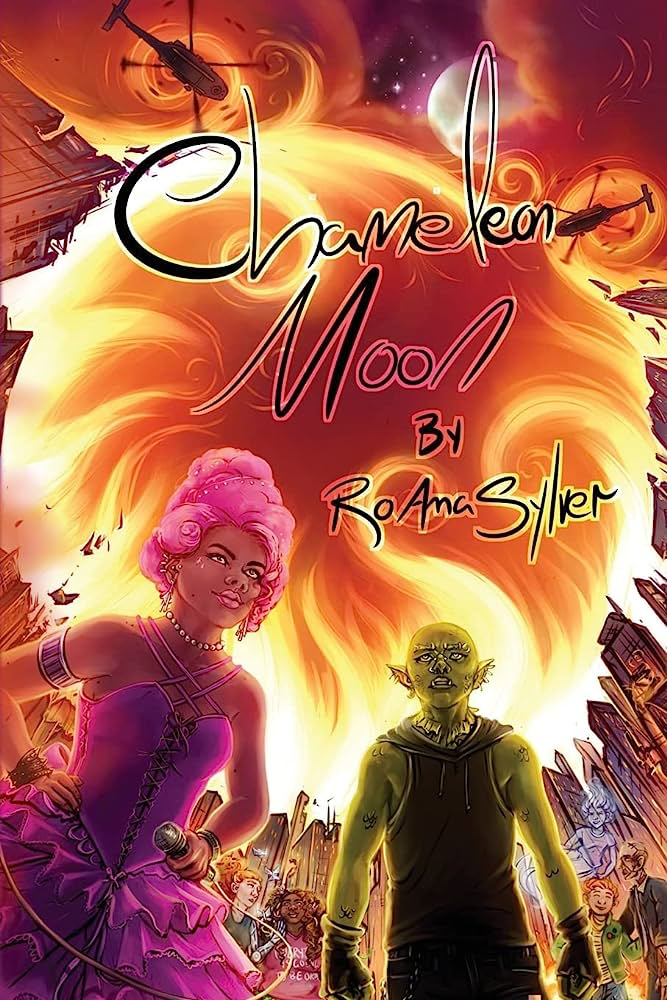
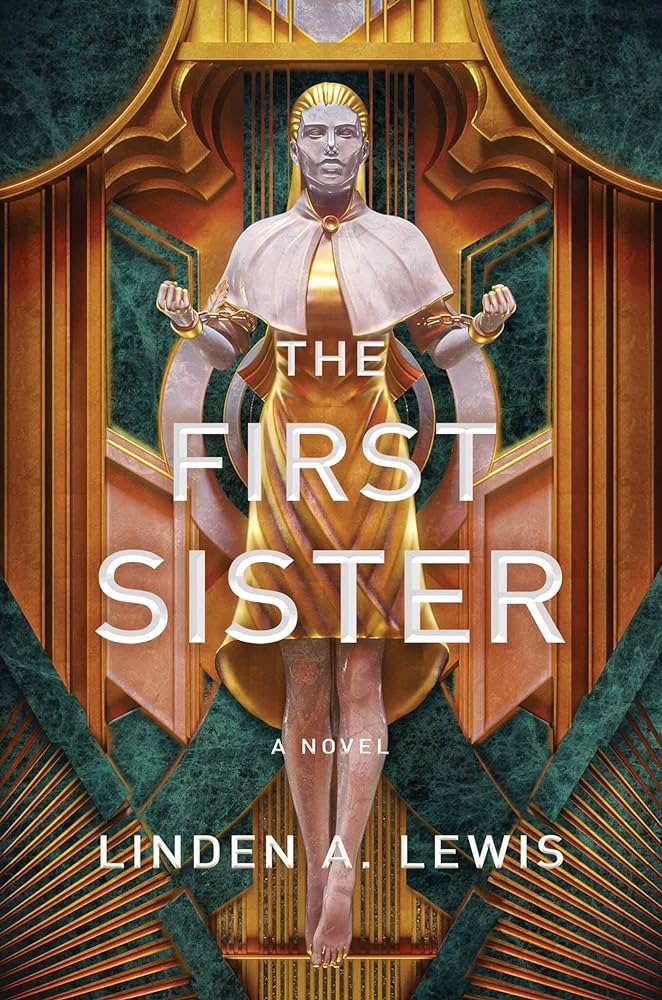
The Bookish Mutant’s Books for Disability Pride Month (2023 edition) ♿️

Happy Friday, bibliophiles!

Here in the U.S., July is Disability Pride Month! Although I’ve seen some more recognition for it in the past few years, I find myself saying this over and over—disability issues are left behind in intersectional feminism far too often. The larger representation in media of disabled people as otherwise white and cishet, the lack of accessibility at many pride events, and the hurdles that most disabled students have to go through in order to get accommodations at school is proof. And yet, around 27% of Americans have some sort of disability—myself included. As the literary world has slowly shown more stories with disabled characters, it’s more important than ever to uplift disabled voices.

Like some of my other themed lists this year, I’ve decided to expand it beyond YA, because I’d be remiss if I didn’t include some of the amazing Adult and MG reads with disabled rep over the years. I’ve separated all of these recs by age group, and included their genres, my rating, and the type of disability rep.

(SHOUTOUT TO NOT IF I CAN HELP IT, I FINALLY HAVE A MORSEL OF SPD REP)

for my lists from previous years, click here:

  • 2022 (+ on having SPD and the lack of representation)
  • 2021

Let’s begin, shall we?

THE BOOKISH MUTANT’S BOOKS FOR DISABILITY PRIDE MONTH (2023 EDITION)

YA:

ADULT:

MIDDLE GRADE:

TELL ME WHAT YOU THINK! Have you read any of these books, and what did you think of them? What are your favorite books with disabled rep? Let me know in the comments!

Today’s song:

That’s it for this year’s Disability Pride recs! Have a wonderful rest of your day, and take care of yourselves!

Posted in Uncategorized

Book Review Tuesday (6/20/23) – Meru

Happy Tuesday, bibliophiles!

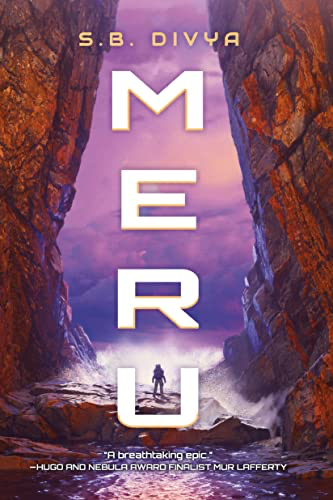
I’ve been eyeing this book for a while—I remember it being heavily advertised on Goodreads when it was first released, and normally, I don’t pay much attention to Goodreads ads or sponsored books, but all you had to say was “space opera” and I was hooked. I’m a woman of simple tastes. It was cheap on the Kindle library, so I bought it to read on vacation. To my excitement, it ended up being my favorite book that I read on vacation—so detailed and gripping!

Enjoy this week’s review!

Meru (The Alloy Era, #1) – S.B. Divya

Jayanthi, like all other humans in her day and age, are confined to Earth. Kept there by the Alloys, evolved human descendants with advanced capabilities, she has been raised by Alloy parents on her homeworld, but has always dreamed of seeing the wider galaxy. But when an opportunity arises for Jayanthi to explore the newly discovered planet Meru with the aid of an Alloy pilot, she jumps at the chance—what better way to show the galaxy that humans are more than their violent past?

With the help of Vaya, her Alloy pilot, Jayanthi touches down on Meru. Soon, they find themselves embroiled in a human-alloy conflict, seemingly engineered to separate the two of them. Will Jayanthi and Vaya beat the odds—and restore faith in the human race?

TW/CW: ableism, xenophobia (fictional), sexual content/pregnancy, descriptions of injury, sci-fi violence

I got carsick while reading this book, but I don’t hold it against it at all. That was on me and my hubris of thinking that I wouldn’t get nauseous on a long car trip just this once. Whoops.

Reading some of the lower-rated reviews of Meru is kind of cracking me up…listen. I get that zie/zir pronouns (and neopronouns in general) are somewhat obscure, but of all the absolutely wild, dense, and out-there concepts that this book throws at you, that’s what makes you jump ship? Not the exceedingly complicated…well, everything else?

That being said, Meru lived up to the hype I’ve seen it getting for the past few months! It hit a sweet spot for me that a lot of sci-fi and fantasy books rarely do—creating a complex and multilayered universe, but very delicately balancing when and where to deliver all of this information. Divya came very close to going over the edge, but she navigated the worldbuilding delivery with aplomb.

So, about said worldbuilding. I’d say that Meru isn’t for the faint of heart, even for longtime sci-fi fans—as I mentioned in the beginning of the review, there’s a lot to take in, from the post-human history of the Alloys to all of the machinations surrounding new genetic modification laws in the future. But even though we do get some of this information in larger chunks, Divya excels at navigating which information is actually relevant to the scene it’s informing, and not sledgehammering you with extra information that only becomes relevant elsewhere in the book. It also helps that every inch of said worldbuilding is truly fascinating—it’s clear to see how much care was put into the creation of this universe.

If you’re talking about disability in sci-fi, you’re generally bound to open a particularly dicey can of worms. There’s quite a lot of eugenics narratives that a lot of readers have let slide for years, and the narrative of curing all disabilities is seen as positive, when a lot of the disabilities being described never needed curing in the first place. For the sake of this review, I’ll keep it short, but the bottom line is that it’s gross. But Meru takes a refreshing perspective on disability in sci-fi—not only was Jayanthi, the protagonist, specifically engineered to have sickle-cell anemia (now THAT’S a subversion I like), her disability is depicted in a far more advantageous and positive light. Anyone who’s ever touched a high school biology textbook probably remembers this example: despite its drawbacks, those with sickle-cell also have increased resistance to many tropical diseases. That’s exactly the case for Jayanthi, whose sickle-cell anemia makes her more suited to the environment of the planet Meru than those without it. Positive disability rep is good enough, but having it specifically depicted as something that gives the character the edge is something special. That, along with the wonderful discussions around disability and bodily autonomy (both allegorical and literal), made Meru a wonderful experience for me as a disabled reader.

In addition, Divya has created such a vibrant cast of characters in Meru! Jayanthi was such an endearing and powerful protagonist, and her relationship with the equally endearing Vaha was full of tenderness, despite its ups and downs. Almost all of the cast added to the book’s masterful suspense and tension, making you feel deeply for all of the relevant characters before things got (very) hairy. Plus, the integration of Sanskrit, several Indian-coded (and other POC characters), and loads of casual queerness was a breath of fresh air from all of the white, male, cishet sci-fi that still dominates the market. We need more books like Meru.

All in all, an intricately-crafted sci-fi novel that dazzled with its detailed worldbuilding, diversity, and refreshing discussions around disability. 4 stars!

Meru is the first book in S.B. Divya’s Alloy Era series, continued by the forthcoming Loka, slated for release in July of 2024. Divya is also the author of Machinehood and Run Time, as well as a contributor to several short story collections.

Today’s song:

NEW SMILE IT’S SO GOOOOOOOOOOOOOOOD (does this mean that we’re closer to hearing “Read the Room” too?????

That’s it for this week’s Book Review Tuesday! Have a wonderful rest of your day, and take care of yourselves!

Posted in Books

The Bookish Mutant’s Books for AAPI Heritage Month (2023 Edition)

Happy Wednesday, bibliophiles! I wrote most of this post in advance, but as of now, I’m about to move out of my dorm!! I HAVE SUCCESSFULLY FINISHED MY FIRST YEAR OF COLLEGE!!

Here in the U.S., May is Asian American and Pacific Islander Heritage Month, and I’ve compiled another list of book recommendations for the occasion! Diverse reading shouldn’t be restricted to a single month, but it’s so important to amplify marginalized—in this case, AAPI—voices during this month. My lists serve as guides to read during not just their respective months, but any time you’d like.

However, this year is a little different. Even though I’m too lazy to change the header image (sometimes you’ve gotta be a bit stingy with your media space), I’ve decided to put both YA and adult books on this list. I’ve started to read more adult books in the past few years, and I’d be remiss if I didn’t include some of these books on this list. So it’s a slightly wider pool to choose from this year—read at your leisure!

If you’d like to see my past lists, click below:

Enjoy these recommendations!

THE BOOKISH MUTANT’S BOOKS FOR AAPI HERITAGE MONTH

YA:

ADULT:

TELL ME WHAT YOU THINK! Have you read any of these books, and what did you think of them? What are some of your favorite books by AAPI authors? Let me know in the comments!

Today’s song:

I FEEL LIKE I’VE ASCENDED TO ANOTHER PLANE OF EXISTENCE HELP

That’s it for this list of recommendations! HAve a wonderful rest of your day, and take care of yourselves!

Posted in Books

The Bookish Mutant’s Books for Autism Acceptance Month ∞

Happy Thursday, bibliophiles!

As some of you may know, April is Autism Acceptance Month here in the U.S.! I don’t think I’ve highlighted a book list for the occasion, but in my ongoing quest for disability rep in general, I’ve come across many great books with Autistic protagonists and stories. If you’re looking to diversify your reading, it’s always important to uplift every kind of marginalized voice, and disability rep in general often gets left in the dust. So I’ve compiled a list of books by Autistic (with one exception—the author is still neurodivergent, just not Autistic) for this month.

NOTE: some of the older books on this list may still use the term Asperger’s, but in recent years, the term has since been renamed to Autism Spectrum Disorder (ASD) in the DSM-5, in part because of its association with Hans Asperger, who was involved with Nazism. Some people still use the term, but it is still important to acknowledge the history behind the term.

Enjoy these book recs!

THE BOOKISH MUTANT’S BOOKS FOR AUTISM ACCEPTANCE MONTH

READ:

ON MY TBR:

TELL ME WHAT YOU THINK! Have you read any of these books, and if so, did you like them? What are your favorite books with Autistic rep? Let me know in the comments!

Today’s song:

That’s it for this list of recommendations! Have a wonderful rest of your day, and take care of yourselves!

Posted in Book Review Tuesday

Book Review Tuesday (3/14/23) – Nightwatch on the Hinterlands

Happy Tuesday, bibliophiles!

I was a huge fan of K. Eason’s Thorne Chronicles when I first read them, so you can imagine my excitement when I found out that she was starting a companion series set in the same universe! (I didn’t find out until a few weeks ago, but that’s beside the point.) I jumped on the chance to put it on hold at the library, and I finally got to read it recently; however, I found Nightwatch on the Hinterlands to be an entirely different type of story than Rory Thorne, which, in this case, was its downfall.

For my double review of How Rory Thorne Destroyed the Multiverse and How the Multiverse Got Its Revenge, click here!

Enjoy this week’s review!

Nightwatch on the Hinterlands – K. Eason

It’s been decades since any of the riev—battle-mechas designed for the war effort—have done any harm to civilians. For years, they’ve been decommissioned or redesigned for labor purposes. So when Lieutenant Iari arrives at the scene of a crime and realizes that a riev may have been the perpetrator, she knows that the mystery will lead down a trail that she never anticipated treading. Along with Gaer, an ambassador-turned-spy, Iari must play a dangerous game amongst her planet’s criminal underbelly, one that may lead to something greater than a simple murder.

TW/CW: murder, blood, descriptions of injury, xenophobia (fictional—cast is almost exclusively aliens)

I was a massive fan of the Thorne Chronicles, but after reading Nightwatch on the Hinterlands, I’m sorely disappointed in the direction that K. Eason decided to go with this series—my most common thought while reading this novel was why include this?

As a starting point: why these characters? I liked Iari well enough in How the Multiverse Got Its Revenge, and she does have the potential to have an interesting story, but I didn’t get enough information in Multiverse to really care about her. I didn’t remember much about Gaer either, and he was a well-written and likable character, at the very least, but there wasn’t much that carried over from the previous books to make me care enough about him. These characters were virtually all that carried over from the Thorne Chronicles into this new series (The Weep), and that was where my disinterest began.

In concept, I like Eason’s decision to set Nightwatch in the seedy, criminal underbelly of the world that was touched on in the Thorne Chronicles. It’s a classic sci-fi setting, and with how rich Eason’s established world already was, it would be easy to make something compelling out of it. However, the Thorne Chronicles were far more centered around the human characters, and the aliens were more of a sideplot, mostly just appearing in Multiverse. Nightwatch, however, was entirely centered around the alien characters; normally, this is something I’d be 100% on board with, but without the context that could’ve been given in either Multiverse or in…y’know, some part of this book, I was left in the dark for any of the conventions of this part of Eason’s established world. I somehow understand that not giving glimpses of the other characters (Rory, Messer Rupert, etc.) would’ve been easy fan service, but other than Iari, if I hadn’t known that this was a companion book, I wouldn’t have seen the connection at all.

And on the subject of context…we needed so much more of it. So much more. Even though 90% of these alien species weren’t even talked about in the Thorne Chronicles, Eason wrote Nightwatch in a way that automatically assumes that readers know every single cultural aspect of every single alien species (of which there are many), as well as the context of the various wars that have gone on before the events of Nightwatch, in a very short timespan. I’m all for science fiction novels that don’t dump every single bit of exposition and worldbuilding into the story in one, unceremonious pile at the beginning, but this felt like the other extreme—wanting to avoid that so much that the reader is left without a single clue of what’s going on. I understand the concern that this writing style grew out of, but there really could’ve been a much more comprehensible happy medium in terms of worldbuilding. Beyond that, it’s clear to see how much time Eason put into creating these alien races and cultures, and that’s something I’ll always admire, but the effect of that got dwarfed by the alienating (no pun intended) fashion that she (did not properly) integrated them.

Like the approach to worldbuilding, Eason’s writing style in this novel is a double-edged sword. It’s a wildly different style from the endearingly irreverent but simultaneously observant voice that she used in the Thorne Chronicles. In contrast, Nightwatch had the distant feel of a hardboiled noir in space, quick and to the point, except for when information was delivered. On the one hand, it’s proof that Eason can be very versatile in terms of voice across her novels. On the other, this didn’t feel quite as genuine as the Thorne Chronicles—it made sense for the story, but the characters less likable, and the plot felt rushed, like constant running in circles from A to B without much context as to why or how. It suited the style of Nightwatch to a point, but it ended up being a detriment to both the pacing and my general enjoyment.

While I was reading, I was debating whether or not I wanted to stick it out for the rest of the series; I really wanted to give K. Eason the benefit of the doubt after how much I adored the Thorne Chronicles, but I don’t think I’ll be continuing The Weep after how unpleasant my experience with Nightwatch was. Obvious points go to the extensive worldbuilding and the clear time and care put into crafting this aspect of the world, but most of the other elements—the writing style, the way we got (or didn’t get) pieces of worldbuilding, and not much to make me care for the characters—brought my enjoyment down immensely. 2 stars.

Nightwatch on the Hinterlands is the first book in the Weep series, succeeded by Nightwatch Over Windscar. This series is a companion to the Thorne Chronicles, which consists of How Rory Thorne Destroyed the Multiverse and How the Multiverse Got Its Revenge. K. Eason is also the author of several other novels, including the On the Bones of Gods series (Enemy, Outlaw, and Ally).

Today’s song:

BACK ON THE PETER GABRIEL TRAIN FELLAS CHOO CHOO

That’s it for this week’s Book Review Tuesday! Have a wonderful rest of your day, and take care of yourselves!
Posted in Book Review Tuesday

Book Review Tuesday (2/7/23) – The Midnight Library

Happy Tuesday, bibliophiles!
I’ve had this book on my radar for a few years now, but I wanted to read it after the ocean of hype died down. I forgot about it for a while, and I found a copy at my college’s library, and figured that it might be worth a try—I read The Humans, also by Matt Haig, and thought it was decent, so I decided to take a stab. I lowered my expectations to average from all of the hype, but The Midnight Library ended up being even worse than I thought—insultingly un-nuanced and a wholly frustrating read.

Enjoy this week’s review!

The Midnight Library – Matt Haig

Nora Seed has reached what seems to be a dead end in her life. All of her childhood dreams never came to fruition, and now she’s stuck in her thirties with nowhere to go. But after she attempts to take her own life, Nora finds herself in the Midnight Library, where every book on the endless shelves contains an alternate life—lives where she pursued different dreams, different boyfriends, and every other imaginable outcome. As she travels through a multitude of alternate realities, Nora must come to terms with herself and how she wants to live her life—full of regrets, or full of hope?

TW/CW: suicide/suicidal ideations, animal attack, loss of a loved one, depression, panic attacks, animal death, substance abuse, cancer

A recurring thought that came to me while reading The Midnight Library was that it was like if you sucked every ounce of nuance and complexity out of Everything, Everywhere, All At Once. I know full well that Everything came out two years after this novel, but my point still stands. In the abstract, the message of The Midnight Library was good, but it had all the subtlety of a sledgehammer to the face, which made for an exceedingly unpleasant reading experience.

The Midnight Library is a case study in the effect of good or bad execution of a story idea. If you have a good idea but don’t execute it well, the idea itself gets bogged down in all of the structural flaws of the writing itself. The message that Matt Haig tried to get across was a good one—focusing on living your life, not getting bogged down with regrets, and giving yourself a chance to change—but it was so ham-handed in its delivery that all of the nuance (of which there was SO much potential) was erased entirely. It was so clear that The Midnight Library was trying to say something, but without any complexity, it ended up spitting out nothing that we haven’t heard before.

For instance, in one life, Nora Seed is a world-famous rockstar selling out arena shows all around the world. However, as Nora progresses through this alternate timeline, she realizes that this alternate self is feeling empty inside, and that fame has left her a barren shell of what she once was. That’s all well and good, and it’s a good message that fame does not automatically equal happiness. But at the end of the chapter, this message was digestibly packaged into a short platitude, right above Nora’s hypothetical follower count on social media. It was almost insulting how it was delivered—what was the point of that when Haig showed it through his writing just a page before? Even if you’re not a writer, if you’re ever taught about writing in school, “show, don’t tell” is one of the first principles that you’re taught. As a reader, it feels insulting to one’s intelligence: I got the message just fine, why be that redundant and blatantly obvious?

Furthermore, a lot of the potential lives, even though they were neatly and obviously packaged to the reader to teach them a lesson, ended up contributing nothing to the plot. When they did contribute, the message was reiterated by the all-knowing librarian, as if I’m watching a children’s show, each episode ending with an “and what did we learn today, kids?” kind of message. The Midnight Library isn’t all that long of a book, but a good quarter of the misadventures through Nora’s alternate lives didn’t serve any purpose, even though that was the obvious intent.

Lastly—Matt Haig isn’t at fault for this first part, but dear lord, do not let the synopsis fool you. This is not a feel-good book. The inciting incident for The Midnight Library is Nora attempting suicide, and that got glossed over so much in the marketing of the book. For the first part of the book, I feel like Nora’s mental health issues, although they aren’t explicitly named, were dealt with respectfully, but once it got to the end of the book, it took a turn for the worse. As if by magic, Nora’s depression is cured, and she now has the will to live again, after glimpsing all of her alternate lives. It really felt harmful—yes, this is a sci-fi/fantasy book, but depression and other mental health issues don’t magically disappear after a romp through alternate realities. Downplaying something as serious as depression and suicide really didn’t sit right with me, and it felt like the ending of the book erased something that should have been acknowledged far more in this book.

All in all, a disappointing book that decided to take its well-intentioned message and knock you over the head with it, thereby erasing all attempts at nuance and complexity. 2 stars.

The Midnight Library is a standalone, but Matt Haig is also the author of The Humans, How to Stop Time, The Radleys, and several other books.

Today’s song:

I like this one even more than Panopticom—I can’t wait to see what else this album brings!!

That’s it for this week’s Book Review Tuesday! Have a wonderful rest of your day, and take care of yourselves!