Happy Sunday, bibliophiles, Happy Trans Day of Visibility, and Happy Easter for those celebrating!
Mentally, I’m still at the beginning of the semester, but somehow midterms are over and I’ve just gotten back from break…ignoring that…
Let’s begin, shall we?
GENERAL THOUGHTS:
I’ve continued to be busy in most of my academic aspects of life, but I’ve managed to stay on top of it—midterms season wasn’t as bad as I thought it was going to be, and it certainly helped that we got an accidental four-day weekend thanks to a snowstorm so drastic that my college called two snow days in a row. I’ve lived in Colorado my whole life, and I’ve never experienced a double snow day…good times, gotta say. I didn’t leave my dorm for all of that Thursday and spent my time playing Minecraft and drinking hot chocolate. A win is a win. But now, the weather’s warming up, and I’m looking forward to soaking it all in.
I honestly thought that this month was going to be my worst reading month, but I read a lot more than I expected; spring break definitely gave me a boost, and March has ended up being my best reading month of 2024 so far! Rating-wise, it’s a different story (certainly more stinkers in this batch), but there were plenty of excellent reads before and after my brief reading slump. Blogging has been about the same—again, school has made it so that I’m mostly sticking to my usual book reviews and Sunday Songs, but I’ve had fun writing them all the same.
Other than that, I’ve just been drawing, playing Minecraft (WE’RE FINALLY GETTING THE DOG UPDATE), studying, watching The Bear, The Completely Made-Up Adventures of Dick Turpin (STAND AND DELIVAH), Abbott Elementary, and Constellation (I haven’t been this stressed out and baffled by a show since Dark, and that’s really saying something), series 17 of Taskmaster, Dune: Part 2 (may thy knife chip and shatter), seeing Chelsea Wolfe live (!!!!! THE QUEEN), and reverting from human to hibernating grizzly bear the minute snow started falling.
READING AND BLOGGING:
I read 19 books this month! I thought it would end up being a lot less than that, but spring break gave me much more time to read. As far as ratings, this has probably been my worst reading month (first DNF and 1-star rating of the year…), but that doesn’t mean that I didn’t read a ton of fantastic books!
Happy Sunday, bibliophiles! I hope this week has treated you well.
Happy St. Patrick’s Day! Despite appearances, you theoretically would not actually be able to pinch this week’s graphic for not wearing green, despite wearing mostly brown. Please give it up for Lucy Dacus and her green top.
Also, most of the songs this week are either bittersweet or just………flat-out sad, so…apologies in advance.
I knew it. I knew I’d fall into the Alex G trap eventually. My Car Seat Headrest-poisoned brain finally succumbed to another sad white guy with voice cracks and bedroom recording equipment. It was only a matter of time.
I genuinely can’t decide if “Sarah” is fully tragic, or if there’s some sweetness in there. The atmosphere that Alex G creates certainly leans toward the former; listening to this song is a blur from a car window, sticky with the humidity of the South as you drive past flat, dismal lawns and white-painted houses that have stood there so long that the paint has peeled and molded to brown in the corners. It dwells in a kind of dream-space where the narrator is hesitant to leave, knowing that the consequences will crash down upon them the minute they step foot into the less-green grass on the other side of the fence. Again, my mind has permanently been altered by listening to too many of the earlier, lo-fi Car Seat Headrest songs when I was at the tender, impressionable age of 14, but there’s an enchanting melancholy of the cheap distortion on the guitar and the synths that drift like ribbons underwater, each note trailing off like a thought unsaid. In a way, “Sarah” is a kind of love song, but with a love that’s overshadowed by the damning realization that you’re not the right person for the one you love. And yet, the narrator cannot extricate themselves from Sarah, wanting to cling to her desperately, but knowing that the more they stay, the more they’ll destroy her. It doesn’t feel like a self-hating, depreciating kind of awareness—it’s a crushing realization that the narrator really is, in some way, in a place where they’ll only drag the people they love down with them, against all of their wishes. That’s what makes it tragic to me; Alex G sings half of the song in a higher pitch that drives his voice to shattering cracks, and you can hear his voice break as he sings the line “she loves me like a dog.” The distorted howl of “did I make a mistake?” feels like it drifts up into a smoky, firework-scented sky as it dissipates into digital nothingness, an anguished thought birthed in the depths of introspection.
…AND A BOOK TO GO WITH IT:
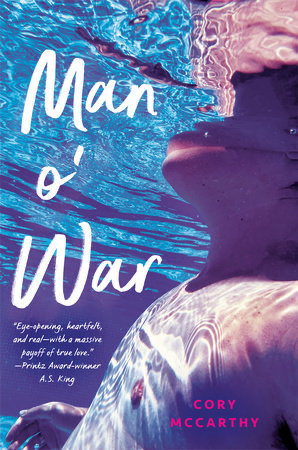
Man o’ War – Cory McCarthy – a painful and poignant journey of learning to love yourself and other people.
Two years ago, I doubt I would have listened to The Dreaming in full. I warmed up to Kate Bush’s earlier stuff more easily, but with the onset of the most recent season of Stranger Things, I was just kind of Kate Bush’d out, which, for a woman of her insane talent, it kind of embarrassing to say. I just couldn’t turn a corner without hearing “Running Up That Hill”—as objectively good a song as it is, the omnipresence of it turned me off. But two years, a listen to The Kick Inside, and more than a good word from my brother (the world has never seen a more fervent Kate Bush superfan), and I finally found myself here. I’m glad I listened to it now—even though my love for “Suspended in Gaffa” (still my favorite track) persisted through the summer of 2022, there was so much weirdness and artistry to the album that it was almost overwhelming—more than once it felt like that in a “mom, come pick me up, I’m scared” way (see: “Get Out of My House”), but overall, that was all apart of the package deal. Admittedly, I can’t fully get on board with all of it; as much as I love the lyrics to “Sat in Your Lap,” that song has irrationally annoyed me since I was a kid, and that quality hasn’t exactly faded—I wish it had, but it’s in the minority of songs that I actively skip on this album. After three albums, this almost feels like Bush’s Hunky Dory: the moment where she had honed her skills and image and officially started going absolutely bonkers.
One such aspect that Bush had nailed by the time that The Dreaming came around was channeling raw, untapped emotion; you can almost feel the bewildered, shaking tears slipping from her eyes as she is faced with something divine in “Suspended in Gaffa” and the feral release in the form of braying like a mule at the end of “Get Out of My House.” It’s overwhelming because it’s exactly what you’re supposed to feel—both of these songs are about separately intense and overpowering emotions, and I believe there’s very few musicians out there who can make that tidal wave translate from the music to the body. That’s already a feat, but given that she was 24 when she released this album…okay, I need to stop googling “how old was Kate Bush when she released [insert album],” because I inevitably get existential. Either way, it’s talent—and “Houdini,” the album’s grief-drenched penultimate track, is testament to that. Recounting the story of Houdini’s wife, Bess, who tried to contact him through seances with a code that the two had devised to ensure that it was him (“Rosabel, believe”); contact was allegedly made in 1929, but she lated believed the code to be the result of trickery from beyond the grave. It’s a deeply tragic story, and Kate Bush pulled no punches in drowning “Houdini” in sorrow. Soft piano dominates the piece, but when it isn’t demure and solemn, Bush lets out a mourner’s wail so convincing that I’d easily believe that she’s channeling Bess Houdini’s bereaved spirit as she bellows out “With your life/The only thing in my mind/We pull you from the water!” That image, of Houdini passing the key to his chains to Bess through a kiss, was what made it on the cover art—I thought it was a wedding ring for the longest time, but to be fair, only the round part is visible on her tongue, and the rest is concealed behind her lips.
Alright. That’s enough of the abject depression for now. Here. Sit down on the bench beside me. Here’s $20, go see a Big Thief.
I’d like to think that I’ve found out about all of these separate Big Thief songs independently, but in reality, all of the songs I end up listening to are the ones brought up by my fantastic brother’s equally fantastic girlfriend, so once again: thank you. If there was ever a song to describe this time of year—nearly spring, almost warm, and the grass is still brown but peppered with sprouts pushing through—it would be “Objects.” Each pluck on the guitar feels like worms and beetles gently crawling through crumbly earth, the shifting of tiny pebbles and dead leaf fragments as they bore tunnels through the ground. This was only recorded about eight years ago, but there’s already a stark difference in Adrianne Lenker’s voice; when I think of this song and earlier songs (see also: “Velvet Ring”), her voice sounds papery, thinner than thumbnails and soft enough to fold into simple origami. It’s gotten simultaneously more feathery, more feral, and richer with the years, but what I’ve heard of these first two Big Thief albums feel like time capsules in her vocal evolution. And like the springtime that “Objects” evokes, the lyrics are all about the spillover of love as it begins to blossom; like the same sprouts that push their way to the sunlight, the object of affection inspires the narrator to “[Leave] the familiar/Air is getting chillier/Stepping outside your skin.” It’s not just Lenker’s voice that feels understated—all of the instruments feel restrained and green, but it conveys that fizzy, bashful feeling of the beginnings of love.
I generally have Joe Talbot of IDLES to thank for a lot of things, namely the musical positivity he’s brought into my life, but I also have him to thank for finding this song. Recently, Talbot was featured on BBC’s CBeebies bedtime story segment, where, after reading the picture book Under the Love Umbrella, he listed off some songs to soothe children. This was one of them, and the minute I heard it, I understood completely.
This song is a very sparing one. In a sense, “Your Young Voice” is barely a song at all. It’s only two lines that repeat for almost three and a half minutes: “And it’s your young voice that’s keeping me holding on/To my dull life, to my dull life.” And yet, it tugs at the heartstrings more than some songs with a full verse-chorus structure of the same length. The lyrics are so simple, and yet, their repetition weaves together what a mountain of unnecessary stanzas do in any other piece; their repetition feels like a promise, a mantra—you get the sense that whoever’s young voice is keeping the narrator anchored, the only thing keeping them clinging to the end of their fraying rope. Repeated over these three and a half minutes, it feels like a prayer to remember why they’re enduring this life in the first place. King Creosote (a.k.a. Kenny Anderson…King Creosote is a fantastic stage name, if I’ve ever seen one) has a voice with a constant, shuddering waver that whispers over your ears like cold wind over the plains, and that waver is what cements that image of frailty and unconditional love for me. “Your Young Voice” is also simple in its composition—mostly acoustic guitar, with some piano that fades into the ending as Anderson’s voice dissipates into the fog, but this song is all about dredging the well of deep emotions from a place of emotions stripped bare: there’s no need for embellishment or flair. No matter if your interpretation of the young voice is a parent to a child or teenagers falling in deep (not the interpretation that would’ve come to mind first, but that’s how Sex Education took it, although they used a cover…not nearly as good as the original, in my opinion), this song is love, boiled down to its tearful essence.
When I was thinking about organizing this graphic, I was just loosely going off of looks, not necessarily what order the songs are in. That’s generally how the process goes. However, there are times where I end up shooting myself in the foot and then turning around and shooting the feet of everybody else who might happen upon this post. I mean…I guess “Houdini” or “Sarah” would been kind of an awful way to end this batch, but it looks like we’re bringing down the house with…Lucy Dacus ruminating on the complicated relationship between her and her mother. Real light stuff to go with your Sunday morning cup of coffee, huh? My bad, guys.
2019, the album where “My Mother & I” appears, is part cover album, part original material, each song released to coincide with a holiday—“La Vie en Rose” for Valentine’s Day, “Dancing in the Dark” for the shared birthday of her father and Bruce Springsteen, and “In The Air Tonight” for Halloween (Lucy, it’s a good cover, but…that’s the song you cover for Halloween? Out of all the objectively spookier songs that exist?), etc. “My Mother & I,” as you probably gathered, was released on Mother’s Day, and also to coincide with Taurus season—both Dacus and her mother are Tauruses, part of what the song anchors itself around (“The stars have a lot to say/About women born in the month of May”). It’s a beautiful song, but I find myself glad that I haven’t been able to connect to it fully; the relationship that Dacus describes with her mother, the distance and later connection emphasized by the fact that Dacus was adopted, is one that seems to be full of fractures, but scored by the love that ultimately tethers them. I’m so close to my own mother that it makes me thankful that, even if I had the aspiration to write music, the only feeling that would come up is gratitude because I have the honor of being her daughter. There’s a restrained kind of sorrow that hints at places where Dacus seems to have needed the guidance of her mother (“They called me an old soul/When I was too young to know/The difference between a soul and a ghost/I feared what was inside/Trapped in my body, kept from the other side/A spirit searching for a second life”). “My Mother & I” comes from a place of wistful rumination, but ultimately reaches for a sense of forgiveness and commonality—Dacus branches beyond the Taurus connection to a wholly human one—”We want love, warm and forever/We want to die in the presence of our loved ones/My mother and I.” It’s…ow. Yeah. I don’t know why I went into a Lucy Dacus song that I hadn’t heard and not thought “hmm, surely it won’t be emotionally crushing!” But in this case, the emotional core comes from a kind of forgiveness that has taken years to spread its roots, but has only grown stronger in the dirt with age. And it seems that the forgiveness is mutual, since she’s since performed this song with her mother on backing vocals:
I believe I heard about The Melancholy of Summer somewhere around the blogosphere when it first came out last May, and I figured it would be a good piece of fiction between several hefty fantasy reads. Louisa Onomé is a new-to-me author, and now that I’ve read her newest work, I don’t regret it—a coming-of-age story that pulls no punches.
Summer is alone. Waiting to turn 18 and gain her independence, she has been staying at friends’ houses after her parents were convicted of fraud and went on the run without warning. Left to her own devices, Summer has been able to keep her status a secret, but after her counselor discovers that she has been living alone, she’s sent to live with a cousin she barely knows. Struggling to balance her double life with a cousin who’s barely more independent than she is, Summer is faced with a myriad of difficult decisions for the future. But Summer is left with a burning desire to find out what really happened to her parents, and it will take her to places she didn’t bargain on going to.
First off: this isn’t about the book itself so much as the marketing. About the marketing…whose idea was it to tag this book as “sad girl summer”? How do you see a book tackling a myriad of sensitive topics, including but not limited to parental abandonment, homelessness, and familial betrayal and go “ah, yes, ✨sad girl summer✨” WHAT? I just wanna talk to whoever made that decision. Just a quick chat. WHY? And I thought trope marketing couldn’t get any worse…
All this is to say that I’m saying these things because it’s more than The Melancholy of Summer deserves. Situated on the older side of YA, it’s not just a coming-of-age story: it’s an unflinching portrayal of the topics I discussed earlier. There’s no sugarcoating or dancing around the reality of issues here. It’s a heartbreaking novel, but it’s not one that employs horrific events for shock value—they’re an authentic consequence of Summer’s circumstances. I haven’t read a lot of novels—especially not YA novels—that have dealt with these kinds of subjects, but I really respect the route that Onomé chose to go down in terms of portraying them. Although I can’t speak to their accuracy, it feels like an unapologetic respectful depiction of parental abandonment and homelessness, along with the emotional turmoil that brings.
Going off of that, Summer’s character felt just as authentic. She really feels like a teenager, and not in a forced way; it really should be a given for a YA novel, but you’d be surprised at how many authors miss the mark. Summer isn’t just a teenager—she’s a messy one, an emotional one, and sometimes a brazen and impulsive one, but never once did it feel like Onomé was forcing it down our throats that she’s 17. Summer’s yearning for independence felt all too real, especially given her circumstances; none of the pent-up anger that she expresses felt out of place, and none of her emotional outbursts were without reason. Summer felt, more than anything, just how someone with teenage, volatile emotions would feel having to grapple with circumstances out of her control, and that’s a large part of why The Melancholy of Summer was so successful for me.
That being said, although most of the plot points did feel appropriately and respectfully handled, much of the development (or lack thereof) with the character of Olu felt very rushed and unresolved. The plot point about her being groomed, as well as the plot of Summer trying to help her out at the venue, felt like it was tossed in as a slice of filler, and therefore felt half-baked at best. With how authentically Onomé portrayed a lot of the topics in the novel, it seemed uncharacteristic that something as serious as grooming was brushed over so quickly and resolved in a way that could only be described as unsatisfying. It was all but a footnote, and it seemed like it wanted to be a major plot point, but with how unceremoniously it was shoved into the middle of the novel, it felt poorly handled.
This was a symptom of a larger issue in The Melancholy of Summer overall; other than Summer, hardly any of the side characters get the development that they need. Save for Summer’s aunt, the side characters that we’re meant to care for almost as much as Summer were often one-note and tossed aside whenever the plot called for it. Tanya, Summer’s cousin and guardian, could have been a vital character to explore, and although we do get the sense that she still feels like a kid and doesn’t know any more than Summer does about navigating life, she shows hardly any growth throughout the course of the novel. The same can be said for Olu, Sid, and many of the other people that we meet. It was clear that Summer got the most attention, and yes, she’s the protagonist, but that doesn’t mean that the side characters had to be left in the dust.
All in all, a heartbreaking and authentically-written novel with a vibrant protagonist but a not-so-vibrant supporting cast. 3.5 stars!
The Melancholy of Summer is a standalone, but Louisa Onomé is also the author of Twice as Perfect, Like Home, and Pride and Joy.
Today’s song:
That’s it for this week’s Book Review Tuesday! Have a wonderful rest of your day, and take care of yourselves!
Happy first Sunday of 2024, bibliophiles! I hope the first week of the year has treated you well.
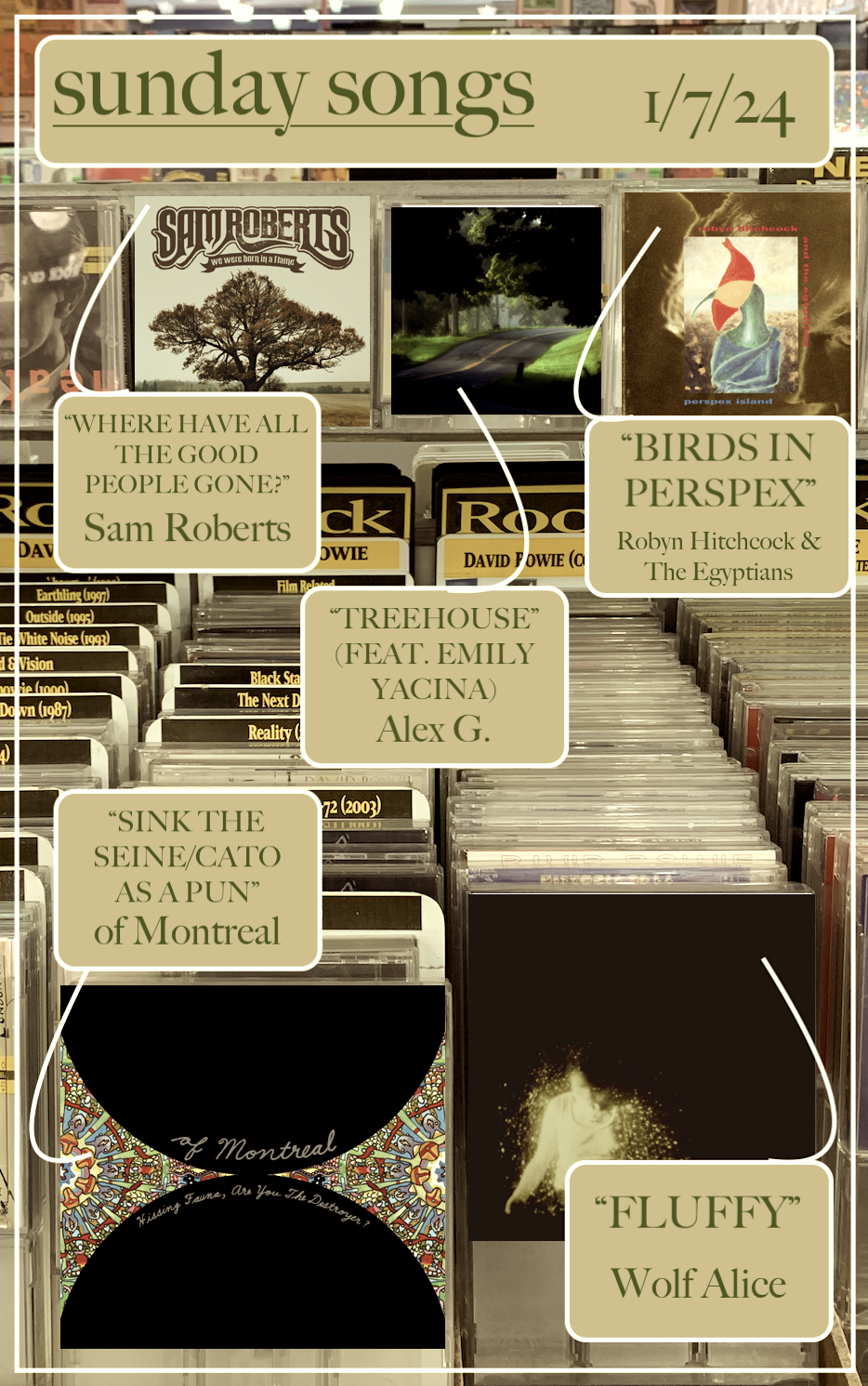
We’re starting off the year with: songs I’ve rediscovered from scattered parts of my childhood, songs that feel like childhood, and more song titles referencing Norway in a single album than anybody bargained for. Certainly not me. Only thought that Kevin Barnes only sprinkled them in three at a time.
I don’t know how it took me this long to listen to Hissing Fauna, Are You the Destroyer? given how much of Montreal dominated my taste in my freshman year of high school. Chances are it’s because Radiohead came along shortly after and I never recovered, but it’s still taken me an embarrassingly long time to come back to this album in its entirety. And yes, it’s pretentious as all get out—the album (as well as anything from of Montreal’s catalogue) is full of songs with titles like “Heimdalsgate Like a Promethean Curse,”“A Sentence of Sorts in Kongsvinger” and “We Were Born Mutants Again with Leafling.” (There is a song that’s over 10 minutes long in the mix, how’d you guess?) But aside from the in-built pro that you don’t need to put “of Montreal” after the song titles when you google them (I’d be hard-pressed to find another, completely original song called “Labyrinthian Pomp”), it’s pretentiousness that I can indulge in; there’s no denying that Kevin Barnes is showing off their literary/historical/etc. chops, but it’s both so clever and so catchy that there’s no denying the goodness in it.
Even within an album where almost every title warrants English class-level analysis (and then turns out to be not that deep half the time), there’s always time to dance. (Go back to “Heimdalsgate” and “Sentence.”) If there’s anything that Barnes has mastered in their prolific career, it’s how to make any kind of crisis catchy, be it religious, romantic, existential, or otherwise. I’ve lumped “Sink the Seine” and “Cato as a Pun” together because they’re essentially the same song, but I don’t mean that in a derogatory way at all—although the album is made so that each song smoothly transitions into the other, the brevity of “Sink the Seine” and the underlying themes that bleed into “Cato as a Pun” make it a very singular narrative within the plentiful dirty laundry aired in Hissing Fauna. “Sink the Seine” starts out with an almost fawn-voiced Barnes searching for the person they once knew after distance has grown between them—I’m assuming the Seine they’re referring to is the river, but there’s a desperate drowning that they’re at first willing to do—the impossible task of sinking a river in their quest to find the past in a present form. But by the time “Cato as a Pun” rolls around—and, contrary to the people arguing on lyric websites here and there, is apparently just referring to someone’s cat named Cato—it’s much more bitter and up-front; now, the desperation has grown into wanting this person to “play with [their] head” just to obscure the fact that so much of a gulf has grown between them. Barnes has frequent, literary bangers when it comes to their usually purple prose-y lyrics, but there’s no denying that their talent is no less evident in their undressed lyrics—”What has happened to you and I?/And don’t say that I have changed/’Cause man, of course I have.” Efficacy in getting your message across isn’t a one-way street—just ask Kevin.
…AND A BOOK TO GO WITH IT:
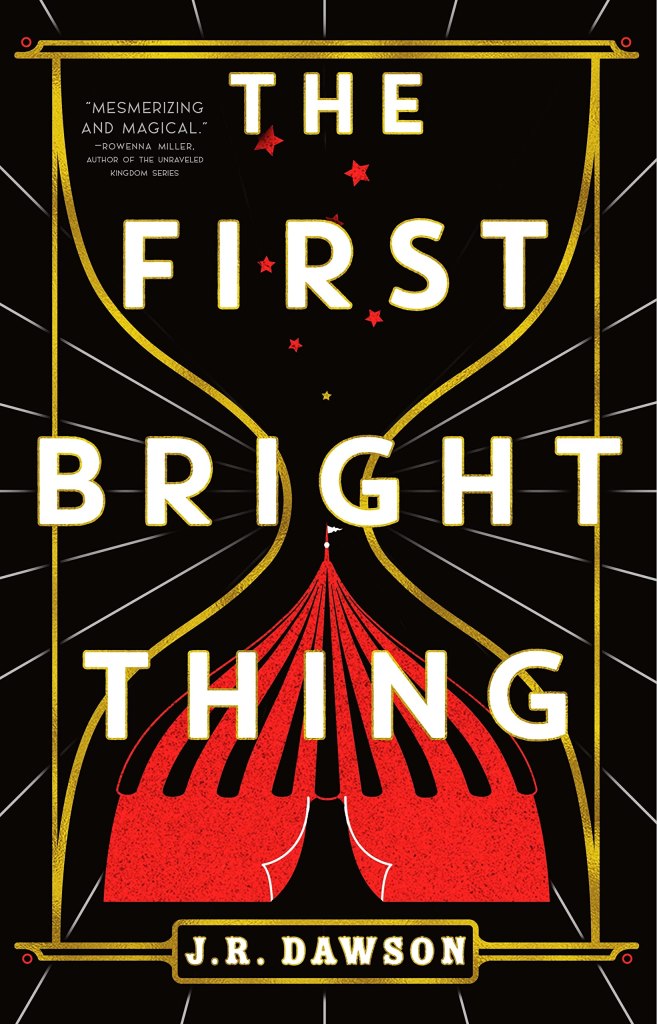
The First Bright Thing – J.R. Dawson – both of these songs combined bring the complicated relationship between the Ringmaster and the Circus King in this novel—especially the distance and plentiful mind games.
Nothing like a neutered cat to inspire a song, huh? Or at least the video, at any rate…either way, it’s funny. Pour one out for poor old Fluffy.
I may not be a fan of pop-punk (why does it even exist? It’s like they just said “let’s make punk commercial, even though that’s exactly what punk isn’t supposed to be”), but I’m still a sucker for a loud, screamy song about recklessness and breaking away from the mold. It’s the kind of music that makes for good additions to character playlists. This one’s gonna wind up on one of mine someday, mark my words. Up until this point, my introduction to Wolf Alice was through what seems to be the more disparate ends of their musical spectrum; way back in middle school, I got attached to their indie friendship anthem “Bros” through the radio (and what a joy it was to hear it again in season 2 of Heartstopper), and a few years back, I heard the much more refined, but heavier “Smile,” from their most recent album, Blue Weekend. “Fluffy” is on the heavier side, for the most part, and it feels like one of the better takes on the age-old “I wanna get out of this town” song (see again: pop-punk). It’s got none of the whine that usually comes along with the subject matter, and the jagged, bitter bite that it was missing all along. You really do feel like this song was born in a dilapidated junkyard, or even the rusty back alley that parts of the music video were filmed in. If anyone else did the sarcastic shout of “Sixteen/so sweet!” in the chorus, I’d roll my eyes without a doubt, but Ellie Rowsell gives it the raspy, pent-up rage that many a musician has been going for. And there’s nothing like pounding, crunchy guitars to accompany that. This is angst done right, for sure.
…AND A BOOK TO GO WITH IT:
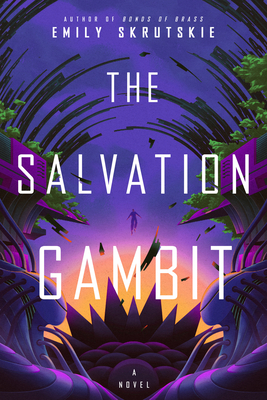
The Salvation Gambit – Emily Skrutskie – the thrill-seeking lyrics, combined with all those crunching guitars, are the perfect fit for Murdock, this novel’s fiery protagonist, in both the past and the present.
Here’s another one I have to thank my dad for—somehow, I find myself missing this song, even though it’s finally in my ears after going so long without hearing it.
“Where Have All The Good People Gone?” was a distant drifter in my childhood—I swear that I have a memory gathering cobwebs in the back of my mind of hearing this song playing from the speaker on our old TV, back when we played our music from my parents’ chunky iPod. And I feel like even if I had known Sam Roberts’ name (and the name of this song) beforehand, I wouldn’t have thought anything of it. Poor dude’s cursed with one of the ultimate “just some guy” names aside from…I dunno, John Smith? When you google his name, this particular Sam Roberts, as far as his solo career is concerned, doesn’t show up until the 5th link. (At least his Sam Roberts Band shows up first. There’s that. Then it’s mostly a radio personality named Sam Roberts??) But it seems like he has plenty of acclaim in his native Canada, so I guess we Americans are most of the ones scratching our heads to try and come up with his name. Even this song didn’t pop out to me as familiar until I heard him sing the chorus—”where have all the good people gone?” And then it clicked. Random childhood memory that I didn’t even know that I’d stored: accessed. Elvis Costello was the comparison that immediately came to mind—it certainly has a much more distinctly 2000’s indie/folk-rock flavor, but lyrics like “Oh, the Milky Way/Has gone a little sour/The leaves dried and the flower fell away” or “The modern world is a cold, cold world/And all I meet are cold, cold girls” (maybe you’re the problem? Kidding, but…) just reek of that practiced tightness that Costello represents for me. But as opposed to the smart suits and sunglasses of Costello (or…the green shirts, even),”Where Have All The Good People Gone?” is all stomping boots, jean jackets, and patches of dust, and not in the country pastiche kind of way. It has no trouble feeling exactly how it wants to feel.
…AND A BOOK TO GO WITH IT:
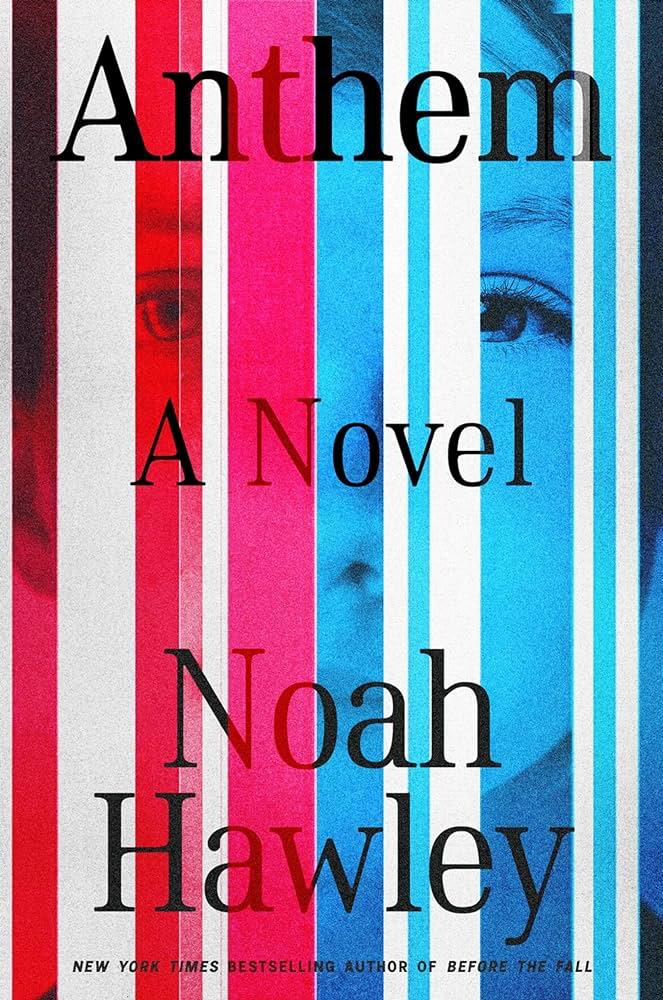
Anthem – Noah Hawley – this book is decidedly leagues more bleak and fatalistic than Sam Roberts seems to be, but at its core, it asks the same question: where have all the good people gone?
Somehow, this didn’t surface in the weeklong period in early 2020 where I ferreted through a few Alex G songs on a whim and then forgot about him. He’d always been a specter on my Apple Music—every time I went back to Car Seat Headrest, he was always lurking there in the “similar artists” bar. What I’ve listened to of his sort of gleans that comparison, but from the looks of it, his earlier stuff seems more reminiscent of Car Seat Headrest. Thus why I’m almost a little scared to get in too deep with his music, after the irreparable change in my brain chemistry that happened when I first heard “Drunk Drivers/Killer Whales” on the radio when I was 13. I’m an adult now, I doubt I can have that kind of pure, concentrated angst keeling me over without major consequences…
Yet in spite of all that, this song is one of the most calmingly innocent things I’ve encountered in the past few months. I don’t know how much of it is because Alex G himself isn’t fully at the wheel—all of the vocals are sung by Emily Yacina, and from my limited scope of Alex G, I feel like his flat, indie drawl doesn’t quite fit with the playful, childlike quality of this song, but I guess he recognized that enough to put this song in Yacina’s hands. Somehow, the bedroom construction of this song—nothing but synths and drums machines—distorts Yacina’s voice in such a way that she sounds like she has braces, which makes the song feel even more like a vignette of childhood—”What do you think of my treehouse?/It’s where I sit and talk really loud/Usually, I’m all by myself.” It makes me feel like there should be a slightly off-putting Tim Burton character (probably voiced by Winona Ryder) inviting you into her treehouse and playing games with you; it’s easy to get the feeling that the character in the song is eager to have any kind of friendship. It’s pure, but never in a saccharine way—it’s like someone put some footage from a home video into song, just kids running off into the woods and playing with sticks.
…AND A BOOK TO GO WITH IT:
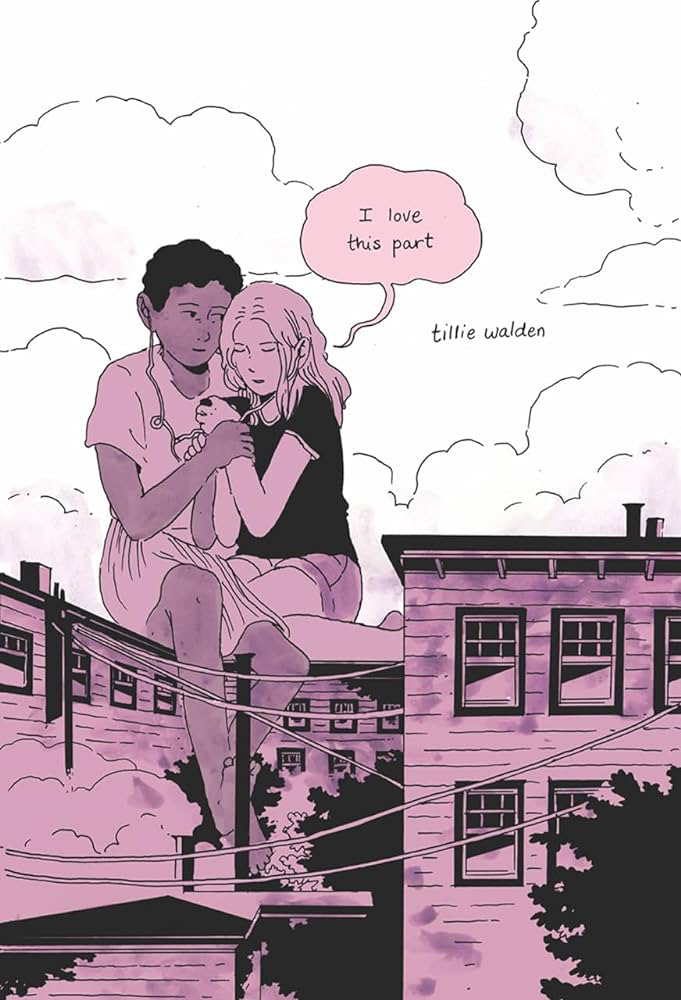
I love this part – Tillie Walden – like Jay Som, Tillie Walden’s style of beauty in simplicity lends itself to this kind of doe-eyed bedroom pop.
I’m not about to rescind my statement about how of Montreal’s quirky song titles make them much easier to search on YouTube, but they’re not the only ones. Again, I ask: who else has made a completely original song called “Birds in Perspex”?
Over the past few months, I’ve been picking up Robyn Hitchcock songs here and there in an attempt to school myself before I see him at the end of the month (!!). Most of what I end up skimming around, save for his more recent material (he’s been consistently cranking out music with various bands and as a solo artist since the ’70s…absolutely prolific king), ends up turning up as some nostalgic tidbit from my childhood that I’d entirely forgotten about. Riffling about his catalogue almost feels like I did when I was a kid looking for bugs in the yard—there’s something odd and wonderful hidden under every rock. Take “Birds in Perspex.” I clicked on it on iTunes just because of the oddball title, but I didn’t expect for the full force of miscellaneous childhood car rides to come speeding back at me. Like my faint recollection of “Tender” before I heard it again in high school (for at least a decade, all I remembered was the “come on, come on, come on/get through it” part), the tiniest slice of the chorus had been bonking around in my head on and off for years—I recognized “Birds in Perspex” the minute I heard “come alive” in the chorus. Just like most of his songs, there’s a charmer’s whimsy about it that, it seems, has never faded with age; behind the glossy, folky strumming, Hitchcock immediately admits that “Well I take off my clothes with you/But I’m not naked underneath/I was born with trousers on.” Y’know. Just another day at the office. Presumably after a rather eventful encounter with Balloon Man. As the song goes on, it’s so bizarrely romantic that you feel like you’d be seduced if he’d written this song about you. Robyn Hitchcock has the kind of voice fit for a black turtleneck. a cigarette, and love notes stuffed with rose petals, but I’m honestly so much more glad that he stuck with his whimsical weirdo style.
So many things happening today…World Peace Day, 🎶the 21st niiiight of September🎶, and it’s the 10th anniversary of the release of The Search for WondLa. The latter’s got me super sappy…that series has absolutely cemented itself into the fabric of my childhood, and my life as a whole. (I almost wrote a whole blog post about it, but I did NOT have any mental energy to spare yesterday, so it might happen…later? Who knows)
Anyway, Goodreads Monday is a weekly meme created by Lauren’s Page Turners. All you have to do to participate is pick a book from your Goodreads TBR, and explain why you want to read it.
This one just came out this August, and it sounds like a fascinating contemporary sci-fi! I requested an eARC of it a while ago and never got a response, so my chances are nil now, but hopefully I can find it at the library soon.
Let’s begin, shall we?
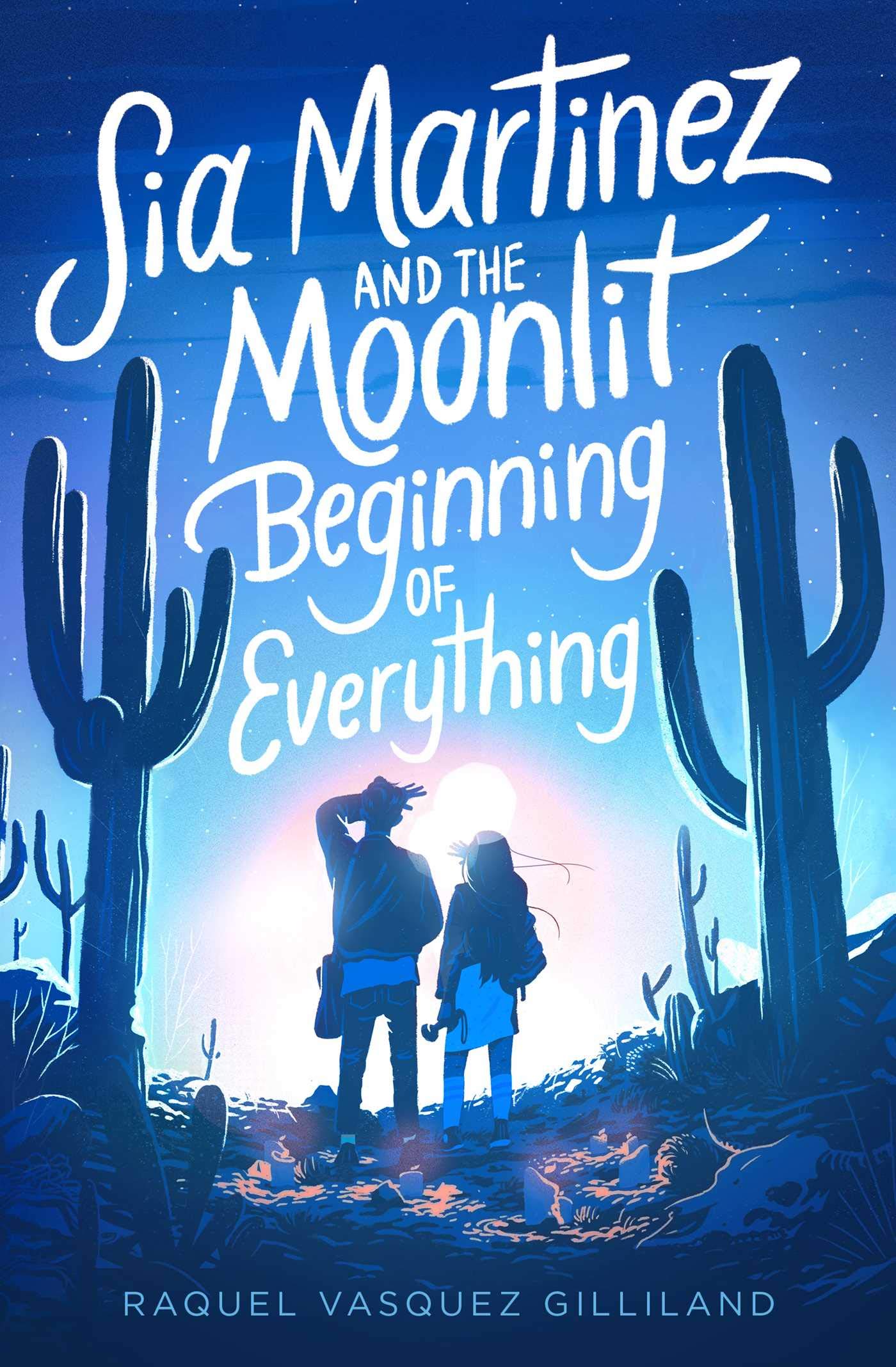
GOODREADS MONDAY (9/21/20)–SIA MARTINEZ AND THE MOONLIT BEGINNING OF EVERYTHING by Raquel Vasquez Gilliland
It’s been three years since ICE raids and phone calls from Mexico and an ill-fated walk across the Sonoran. Three years since Sia Martinez’s mom disappeared. Sia wants to move on, but it’s hard in her tiny Arizona town where people refer to her mom’s deportation as “an unfortunate incident.”
Sia knows that her mom must be dead, but every new moon Sia drives into the desert and lights San Anthony and la Guadalupe candles to guide her mom home.
Then one night, under a million stars, Sia’s life and the world as we know it cracks wide open. Because a blue-lit spacecraft crashes in front of Sia’s car…and it’s carrying her mom, who’s very much alive.
As Sia races to save her mom from armed-quite-possibly-alien soldiers, she uncovers secrets as profound as they are dangerous in this stunning and inventive exploration of first love, family, immigration, and our vast, limitless universe.
So why do I want to read this?
Sia Martinez and the Moonlit Beginning of Everything seems like the perfect novel that we need in this day and age; a timely novel about the hard truths of immigration and deportation, but with a sci-fi twist. Contemporary novels with sci-fi twists have always been hit or miss for me, but when they’re hits, they make for some of the most poignant novels out there. Sia looks like it has just the right recipe for that sort of tear-jerker kind of genre-bending novel. I can’t wait to read it!
And CAN WE TALK ABOUT THAT COVER, LADIES, GENTLEMEN, AND OTHERS? The color scheme, the art style, the typeface, the…everything…
Today’s song:
This inexplicably got stuck in my head this morning…
That’s it for this week’s Goodreads Monday! Have a wonderful rest of your day, and take care of yourselves!







 The Bookish Mutant