Posted in Sunday Songs

Sunday Songs: 7/7/24

Happy Sunday, bibliophiles! I hope this week has treated you well.

This week: it’ll be two years of making these Sunday Songs graphics in a few days (!!), but I haven’t had many purple color schemes in all that time…enjoy the purple while it lasts. Also, I talk about movies that I haven’t seen and albums that I haven’t quite seen.

Enjoy this week’s songs!
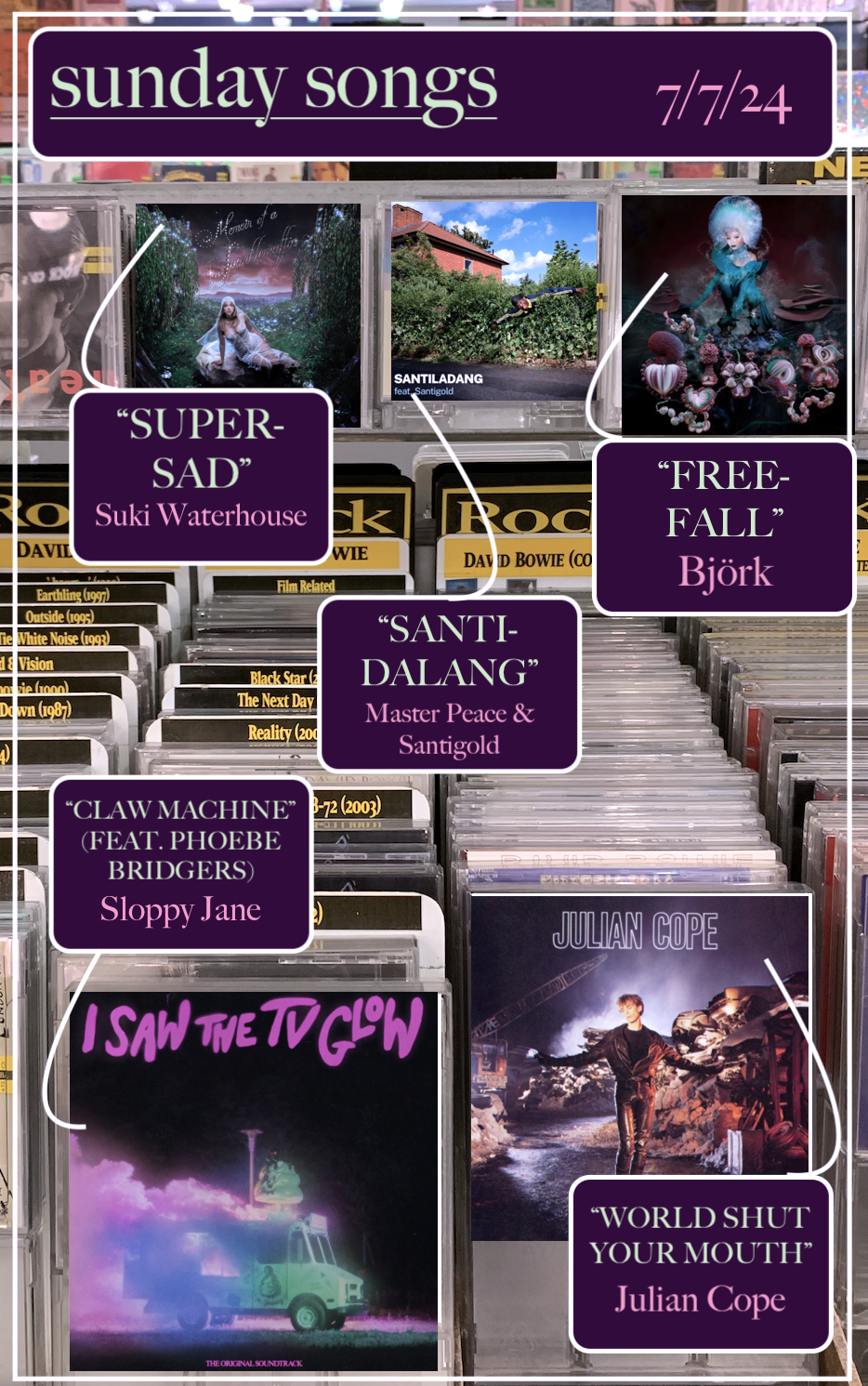
SUNDAY SONGS: 7/7/24

“Claw Machine” (feat. Phoebe Bridgers) – Sloppy Jane

Here I am, an absolute poser, posting this without having seen I Saw the TV Glow. I’m a simple woman. I saw Phoebe Bridgers and Jay Som on the soundtrack and immediately downloaded both songs without knowing any of the context apart from Lindsey Jordan being in her first acting role (I’m lovingly suspicious of her acting abilities, but that shot of her with an axe in the trailer is top-tier), and that “Claw Machine” plays in the opening.

The opening? Is Jane Schoenbrun trying to eviscerate us before the movie even begins? For everyone who’s soldiering through the boygenius hiatus: fear not! Phoebe Bridgers, along with Haley Dahl (aka Sloppy Jane, who Bridgers formerly played bass for) have come to emotionally derail your summer. “I think I was born bored/I think I was born blue/I think I was born wanting more/I think I was born already missing you.” Oh! Good to know that I won’t survive 10 minutes of this movie if I eventually watch it! Yippee!

…AND A BOOK TO GO WITH IT:
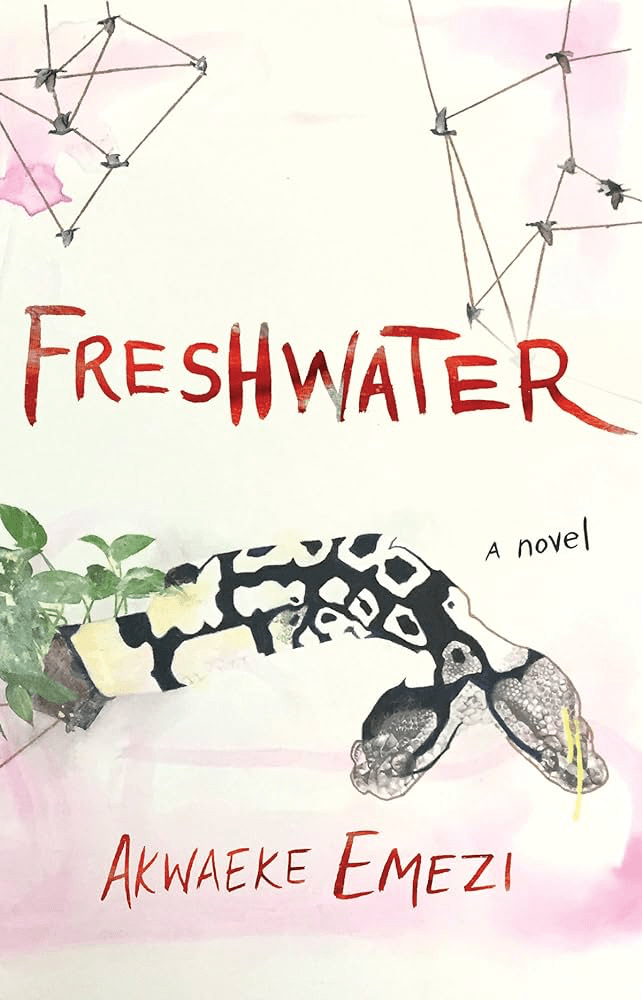
Freshwater – Akwaeke Emezi“Your heart is like a claw machine/Its only function is to reach/It can’t hold onto anything…”

“World Shut Your Mouth” – Julian Cope

It takes a certain kind of person to have the guts to name their album Saint Julian, but thankfully, it’s not entirely Julian Cope’s fault. Before this album’s release, his record label was intent on Cleaning Up His Act™️ and making him into their idea of a rockstar, thus: the leather, the haircut, and constantly looking like there should be a vine boom whenever the camera lands on his face. It was the ’80s. Comfortingly, the song “Saint Julian” is about his frustrations with god, but to be fair, anybody who can cover Roky Erikson’s “I Have Always Been Here Before” so heartwrenchingly deserves the saint title.

The ’80s never gave Cope the praise he deserved, save for some alternative hits. Crazy, given the fact that after Saint Julian came around, he’d basically become the unacknowledged father of Britpop. Everybody mentions The Kinks (obviously) and The Smiths as some of the progenitors of the genre, but where’s the love for Julian, who basically molded Parklife’s guitar-heavy confidence seven years prior with “Shot Down”? The clean, punchy guitars? The tongue-in-cheek lyricism? Even the look, even if it was more on the part of the record label than Cope himself—there’s no denying Damon Albarn and Jarvis Cocker took plentiful notes, chiseled cheekbones and all. Regardless of whether people will remember that, at least they’ll remember that he could pen a perfect pop song. Oiled and sleek as a new car, it oozes confidence more than Cope’s fabricated persona ever could. He didn’t need to get his hair did to have the gravitas to belt “World, shut your mouth/Shut your mouth/Put your head back in the clouds and shut your mouth,” just like the song’s unnamed protagonist who “[flies] in the face of fashion.” Complete with a mic stand that Cope could climb up and spin around on, it’s the side of the ’80s that I wish lingered—the slickness combined with clever turns of phrase thanks to the likes of Cope. Even if Cope resented the attempts to make him into a pop star (understandably so), there’s no denying that, at the height of his powers, he could write a perfect pop song. Good for him, though. Presently, he’s out living his best life and writing about Stonehenge and rock history. Go off, king.

I suppose all this means is that I selfishly get to gatekeep Julian Cope while cursed with the knowledge that he may get the praise that he deserves. I’ll Cope. I’ll Julian Cope—[gets dragged off stage by a comically large cane]

…AND A BOOK TO GO WITH IT:
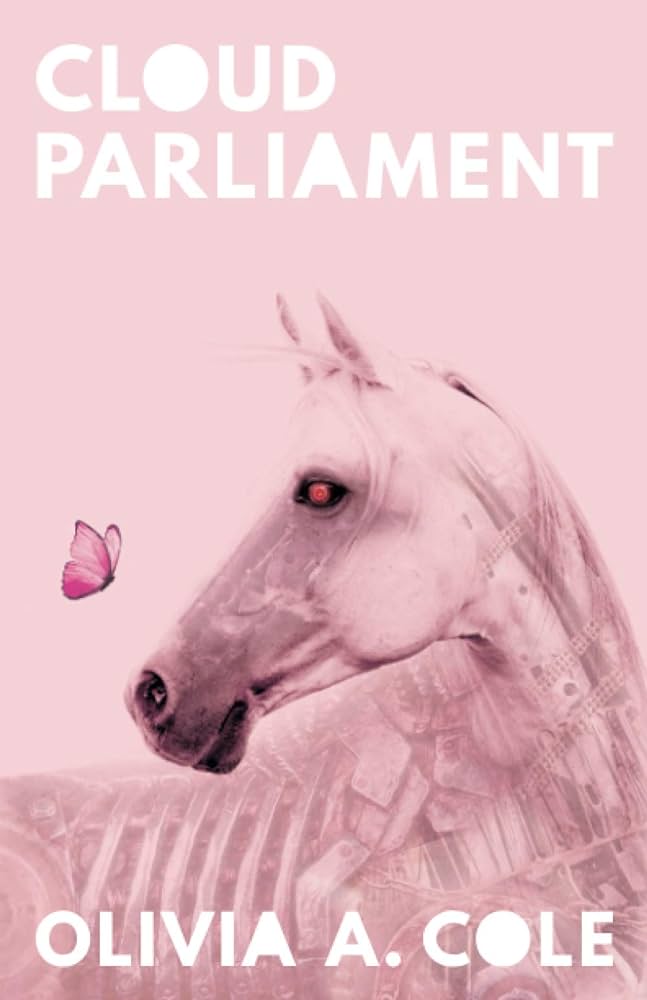
Cloud Parliament – Olivia A. ColeBold confidence abound—the kind strong enough to avenge the dead and bring entire industries to their knees.

“Supersad” – Suki Waterhouse

After a string of recent singles, Suki Waterhouse has announced her new album, Memoirs of a Sparklemuffin, out this September. I have to say…oh, god, that’s a painful album title. It sounds like the kind of thing you’d come up with at age 10 when asked for the title of your hypothetical autobiography. It feels like something that would be printed on a Justice shirt with kittens wearing sunglasses and enough glitter to blind a person at short range. Yeesh. But there is a method to the memoir; Waterhouse named the album after a species of Peacock spider from Australia (I wonder if the scientist who nicknamed it “sparklemuffin” regrets it…at least it’s just a nickname): “I came across the Sparklemuffin—which is wildly colored, does this razzle-dazzle dance, and its mate will cannibalize it if she doesn’t approve of the dance. It’s a metaphor for the dance of life we’re all in. The title felt hilarious, ridiculous, and wonderful to me,” she said to Rolling Stone. My verdict? Still a yikes album title, but at least there was thought behind it…?

The newest single, however? A joyous summer bop, to say the least! For Waterhouse, this has a slight rock edge, but undeniably remains the indie pop that she’s begun to polish. Strung together with “My Fun,” it’s clear that Memoirs of a Sparklemuffin centers rediscovering joy and healing at the forefront; “Supersad” is an anthem to hauling yourself out of bed, letting go of what you can’t control, and embracing fun in all of its forms: “Could be the worst time I ever had/Lose my mind, always get it back/There’s no point in being supersad.” Stagnation and sadness aren’t just detrimental to your health—at the end of the day, it always feels so boring to me, even if, in the moment, I can’t do anything to do it. And there’s a multitude of things that are way out of your control! No matter how long it takes to get yourself out of the funk, it’s temporary—and there’s no point in being supersad. Life is short.

…AND A BOOK TO GO WITH IT:
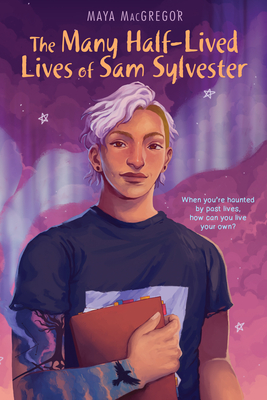
The Many Half-Lived Lives of Sam Sylvester – Maya McGregorLeaving old ghosts behind to turn over a new leaf—and find love.

“Santidalang” – Master Peace & Santigold

My mom and I are very similar people in a number of ways, but one of the ways that we hadn’t acknowledged until now is that we’ll see a song with Santigold on it and immediately hit download. It’s Santigold!! Who wouldn’t?

Named “Santidalang” in acknowledgment of the aforementioned legend, this track is a slight reworking of Master Peace (ba-dum tssssss)’s “Shangaladang” from his debut album, How to Make a Master Peace (ba-dum tsssssssssss). For someone who frequently cites LCD Soundsystem as one of his primary influences, what I’ve heard of his music is far from the uptight rhythms that I associate with James Murphy. What he’s taken from him, along with several other indie and dance acts from the 2000’s, is a neat rhythm—it’s a box, when you look at it from afar, but one that’s large enough to allow Master Peace a spacious environment to dance. Even amidst the pressing issues of the lyrics, “Santidalang” never stops being carefree; the opening is delivered with a defiant “ha-ha,” and lines like “The police wanna arrest me and my mates/I’m just wanna get myself some good grades/My mom told that she’s gonna send me away” with the goofy ring of a flexatone in the background and a smile that you can hear through the music. Like Santigold, it’s a grinning middle finger to those who would put him in a box and an assertion of joy in spite of it all. That’s why it’s so perfect that Santigold is featured on this finger after championing a similar mentality of joy and self-love in spite of societal expectations. Santigold bursts into an already vibrant track with her signature confidence, immediately claiming the space as hers. Like Master Peace, her smile and persistence cuts through the track like rays of sunshine: “Try to hold me down/I fight the power with my fist up.”

It’s easy to imagine that both Master Peace and Santigold had an absolute blast recording “Santidalang,” but it seems this picture only confirms it:

…AND A BOOK TO GO WITH IT:

A Song of Salvation – Alechia Dow – Defiant love and joy in the face of a universe that wants our heroes dead.

“Freefall” – Björk

Once I hit a valley in my Sisyphean Album Bucket List, I’m due for revisiting Fossora. When it was released almost two years ago, I liked it, but I felt like I didn’t fully get it. Björk is about as out there as out there can get, but even for me, it felt impenetrably so, like she’d ascended to a higher plane of being that us mere mortals couldn’t dream of reaching. Is that still true? It’s Björk, of course it is. But the more I listen, the more the ice melts—it’s not that I never liked Fossora, but for me, its merits become more evident the more time you spend with it. A way-homer, if you will.

I’d forgotten all about “Freefall” in the dust, and in retrospect, the fact that I listened to Fossora while I was figuring out how college works didn’t do wonders for remembering this album—or interpreting it. In Björk’s quest to become the all-knowing fungus queen, she remains as attuned to the surreal thrill of love as she was on Vespertine. Even in the wake of the tumultuous divorce with Matthew Barney (cheating is reprehensible on its own, but IMAGINE CHEATING ON BJÖRK, MY GOD), she has still found time to reminisce about the coalescence that the best relationships produce: “I let myself freefall into your arms/Into the shape of the love we created/Our emotional hammock/Safe inside the fabric of our love-woven membrane.” Of course she refers to it as a membrane, but it’s one of my favorite lyrics; saying that she’s attuned to nature and her body is an understatement—even in such a yearning song, she feels more whole than ever. Love as a fleshy, beating membrane, something to curl up inside like a vital organ (or a cocoon, even), evokes what most songs could not touch with multiple verses. Even if Björk drinking the water of life and willingly being consumed by the fungus has made her music more esoteric than it already was, what strikes me about “Freefall” is that she has such a human understanding of love; not necessarily in the sense of the soul, but in the sense of the sensation of warmth and the bodily joy of watching your heart tie itself to another and merge.

…AND A BOOK TO GO WITH IT:
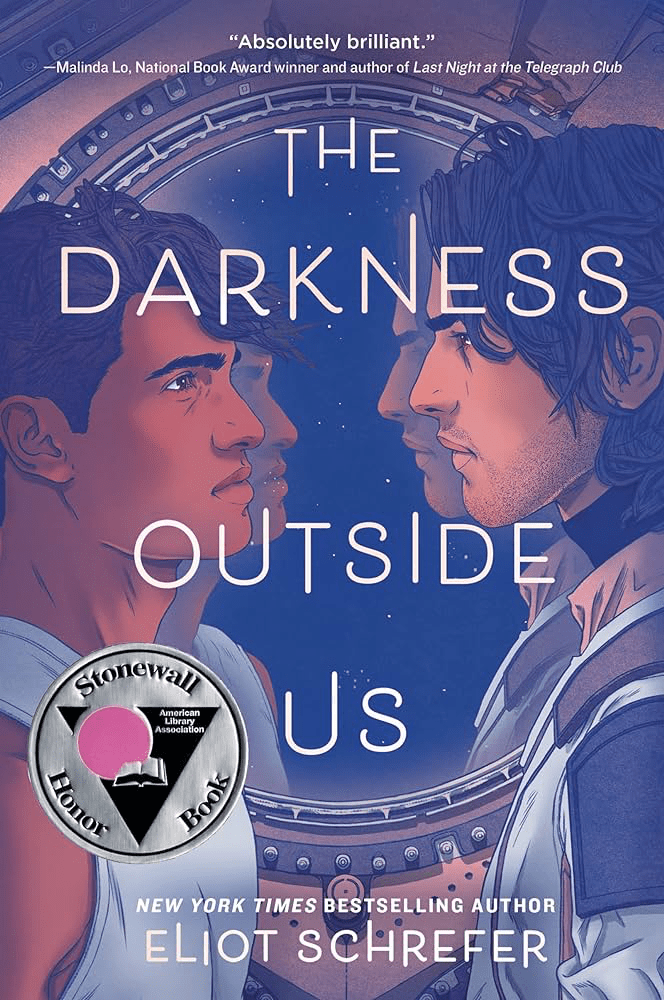
The Darkness Outside Us – Eliot Schrefer“Our joined presence gains form/Our affections captured in a structure/Visceral sculpting of our love into space…”

Since this post consists entirely of songs, consider all of them to be today’s song.

That’s it for this week’s Sunday Songs! Have a wonderful rest of your day, and take care of yourselves!

Posted in Sunday Songs

Sunday Songs: 1/14/24

Happy Sunday, bibliophiles! I hope this week has treated you well.

I…whoops, well, I forgot to mention this last week, but I’ve been writing Sunday Songs for a year now! This experience has given me a ton of room to learn about both myself and how I write about music (lesson #1: I should not write these posts in a single day), but I hope you all have enjoyed it as much as I have been. And I think the book pairings make it more fun, so I hope you’re all getting something out of them as well.

TRIGGER WARNING: one of these songs addresses abortion, so if you find this triggering, skip through the section on “Bellyache.”

Enjoy this week’s songs!

SUNDAY SONGS: 1/14/24

“The Girl Who Fell to Earth” – Gaz Coombes

To begin this post: shoutout to a) musician parents who create the most beautiful pieces of music in honor of their children (David Bowie set an unattainable precedent for that kind of thing, as he regularly did, but it doesn’t negate everything else), and b) parents who wholeheartedly support their neurodivergent children. The latter is a low bar, but you’d be surprised at how many people don’t reach it. So thank you firstly to my wonderful parents, and also thank you to Gaz Coombes.

I’m in the opinion that Gaz Coombes is severely under-appreciated; I’m guessing a lot of people mostly remember him from Supergrass, and what they remember of Supergrass is “Alright,” which, of course. It’s a fantastic song. (Also proof that the Clueless soundtrack was nothing but bangers.) But there was so much creativity and joy that was branded into the rest of Supergrass’ career, and that extended far beyond to Coombes’ more recent solo career. I’m still newish to it, but even from a handful of songs heard over the course of a decade or so, it’s clear that he just cannot stop making incredible songs, whether it’s a one-off covers album with fellow Supergrass bandmate Danny Goffey (maybe all that creativity was reserved for the music, because…man, there’s something weirdly uncomfortable about naming your band the Hotrats…) or the solo albums he’s steadily been putting out since the early 2010’s. They aren’t all hits, but when Coombes hits it just right, it feels like a call to arms, even if it’s lyrically different. There’s always a chugging, purely rock rush, an instantly swelling gravitas he brings to his best works, whether its the echoing call of “Long Live the Strange” or the instantly palpable urgency of “Detroit.”

“The Girl Who Fell to Earth” captured in my heart like the latter two songs, but not necessarily in the same way. There’s no assault of rushing guitars and choir on this one, and that’s not what it needs. It’s much quieter, and deeply tender that hit a note that I wasn’t expecting it to hit when I saw the title and my lizard brain went “oooooh ehehehehe space” and clicked on it on a whim. It scratches a highly specific, primal itch that not a lot of songs manage well. It’s one thing to make a song about being an outsider and making a song that caters to outsiders—I eat those up regularly, mark my words. But songs about loving an outsider—giving them care and appreciating them in spite of what others see as flaws—claw into my heart more deeply that I’d care to admit. No, it’s fine. I’ll admit it. I am not only deeply weird and proud of it, but also deeply sentimental. I walked into this song like Wile E. Coyote walking straight off a cliff, hovering in midair, and then dropping to the unfathomable, unforgiving depths below, only to come up with a comically large bruise on my head. (“Oh, look! There’s a large triangle of Swiss cheese in the vicinity! Surely there will be no strings attached…wait, where’d the sun go—”) There’s a reason I played “Beautiful Freak” by Eels into oblivion when I was in middle school. I wasn’t subtle. (Neither was my habit of watching Hellboy II: The Golden Army about once a month.) As much as later middle school me tried to fashion myself as somebody who wasn’t reliant on anybody (it was easier to do that when I had mostly shitty friends), I feel like a fundamental part of being an outsider is wanting to see yourself elsewhere—enough that it doesn’t become mainstream again, but enough to know that you’re not alone in this incomprehensible mess of a world that wasn’t made for us. I was a softie at heart, and that has never changed. It doesn’t matter what kind of love it is—we do want to be loved, in the end, somehow. And it’s made even more precious when you grow up and think that the world will never love you back. Every kind of love can be applied to this song, similarly to “Beautiful Freak”—it’s a universal arm around the shoulder to anyone who has ever felt othered, a clarion of warm acceptance towards the complexities of being on the fringes. (This song was apparently featured in a show called Modern Love, so they seem to have taken it the romantic way.) But knowing that Gaz Coombes wrote this about his autistic daughter makes the tenderness in my heart balloon even more than the initial emotion of that first listen. It gives me hope, to say the least, that there are people out there who are wholeheartedly accepting neurodivergent children in a world that still highly stigmatizes autism, among other conditions. Not that I ever thought that Gaz Coombes was horrible before this, but I respect him so much more not just because “The Girl Who Fell To Earth” exists, but also that he’s giving his daughter the childhood she deserves.

To all the girls who fell to Earth: you’re not alone.

…AND A BOOK TO GO WITH IT:

Heart of Iron (Heart of Iron, #1) – Ashley Poston – off topic, but it’s crazy to see how much Ashley Poston has taken off in the past few years! This will always be my favorite book of hers, but I’m so glad to see that she’s finally getting the acclaim she deserves.

Some sort of sci-fi romance was always going to be the pairing for this song, but the minute I heard “warrior child”…yup. Step right up.

“Rocket’s Tail” – Kate Bush

If you told me to guess the artist of a song that’s unexpectedly emotionally soul-vibrating but was literally just inspired by a cat, I’d immediately guess that Kate Bush had made it. She doesn’t always hit it for me, but when she does, I just about collapse. Of course she just saw her cat being a silly little creature and decided to squeeze the most primal emotion out of it. Just for kicks and giggles, y’know?

Just like she made the grooviest song about getting transformed into a kite against your will (at age 19, no less), she somehow got one of the only (mostly) a capella songs that makes me really feel things from “I’ve got a cat named Rocket and he’s cute lol,” basically. Like most of her songs, what’s on the surface isn’t necessarily what matters; it would have been 100% on brand for her to intentionally write a song about strapping a canister of gunpowder to your back and becoming one with the rocket, but what Rocket the cat apparently inspired her was the fleeting joy in spontaneity—to her, ”there’s nothing wrong with being right here at this moment, and just enjoying this moment to its absolute fullest, and if that’s it, that’s ok, you know. And it’s kind of using the idea of a rocket that’s so exciting for maybe 3 seconds and then it’s gone.” That alone would have made for an excellent song, but there’s nothing like the chorus that opens the song—the harrowing, wavering harmonies of Trio Bulgaria, for whom Kate Bush partially wrote the song to showcase their voices, transport me back to some early, Pleistocene state. I feel like I’ve been summoned to hoist up my spear and join my clan to take down a mammoth, or something. Bush just generates that effect with many of her harmonies—the songs that I love most of hers are the ones that tap into the urge to drop everything, grow my hair long, and sprint through the woods in a flowing, white dress. (see: not to be That Pretentious Music Person, but my favorite song of hers, the B-Side “Burning Bridge.”) The harmonies she concocts, whether or not it’s her singing, are incredibly effective on that front. I would’ve bought into all of this song if it was all that it was, but of course, Kate Bush, being Kate Bush, knew that the only thing better than “Rocket’s Tail” was “Rocket’s Tail” with the most glorious guitar solo kicking in right at the moment the rocket launches. Performed by Dave Gilmour, no less. That’s how you make a song.

…AND A BOOK TO GO WITH IT:

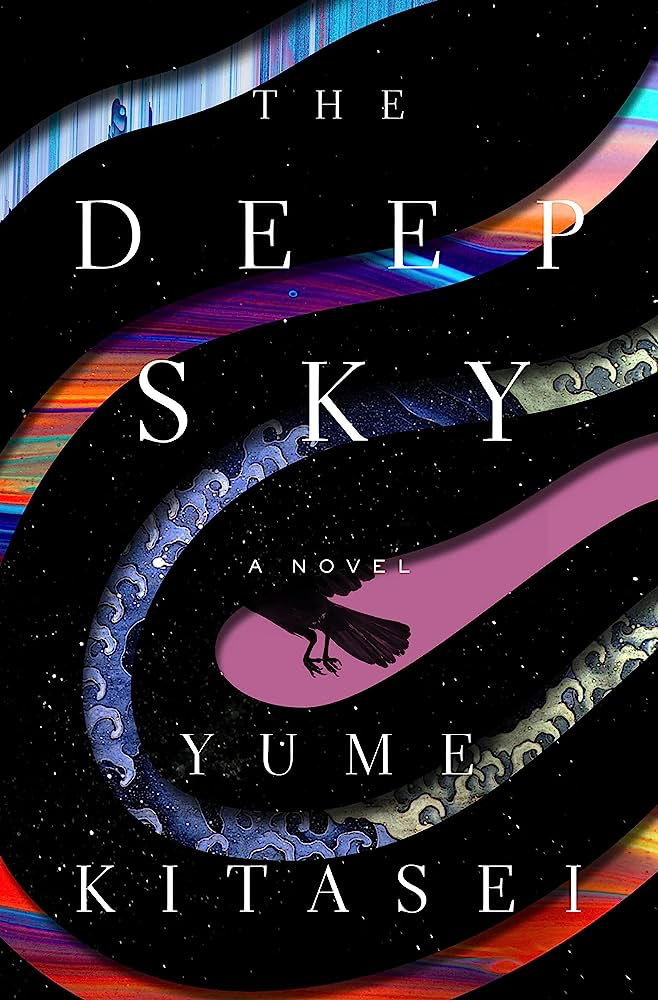
The Deep Sky – Yume Kitaseithe pure, emotional resonance of “Rocket’s Tail” lends itself to this song—can’t you imagine this song playing between vignettes of Asuka’s crisis on Earth and the launch into space?

“Bellyache” – Echobelly

Ever since my Blur Breakdown™️ back in mid-2021, I’ve been grasping at all of the Britpop I can get my hands on. (Well…not all the Britpop. Not to be That Blur Fan™️, but every Oasis song I’ve hear just make me seethingly angry. Also, I can’t shake the gut feeling that both Noel and Liam Gallagher look like they’d call me every applicable slur without hesitation.) Granted, Blur has mostly dominated my extended Britpop Breakdown™️, but I’ve dabbled in a fair bit of Pulp (probably concerning how many times I listened to “TV Movie” back in 2022) and Suede, and I’ve been neck-deep in Supergrass and Super Furry Animals since I was old enough to comprehend music as a concept. Part of what most agree defined the genre was social commentary—specifically on British life, as the name suggests, but for at least until it became more of a tabloid battle of the bands mess, that was the foundation that albums like Parklife (AAAAAAAAAAAALL THE PEOPLE) and songs like “Common People” (I haven’t seen Saltburn yet but I’ve heard about the Pulp joke…genius) were built upon. But even though said commentary was appropriately potent and often as clever as can be, there’s only so much you can do with it in a genre that was fronted by mostly white men. I’ve yet to get into the more women-fronted faces of Britpop (Elastica and Sleeper and such), but Echobelly caught my eye not just because it was women-fronted; again, in a sea of mostly white men, here was a band fronted by Indian-born Sonya Madan, and featuring Debbie Smith—a Black woman—as one of the band’s guitarists.

And even from the sparse handful of songs I’ve sampled from them, it’s already clear that Madan succeeded in her mission to highlight the areas of social commentary and topics that not just Britpop, but much of mainstream music in general, rarely shed light on. Not only that, but many of them weren’t just lyrically clever, but clever enough that they’re not immediately evident on the first listen. A first go-around at “Bellyache” seems like something about a relationship gone sour—the chorus’ repetition of “What do I care/what do I care now that it’s over” could easily point in that direction. Much of the instrumentation points to that kind of embittered bite—the clean guitars are undeniable, but all cloaked in a layer of scratchiness and grime that makes it feel as grainy and obscured as the background of Everyone’s Got One (an album title that was partially created to make the acronym “E.G.O.”). But Madan specifically wrote this song about a friend getting an abortion—the lyrics hit me right in the face the minute that I found that out, but it speaks to Madan’s songwriting ability; not only was this a pretty taboo subject to address at the time, especially as one of EGO‘s lead singles, but it transformed such a deeply traumatic experience into something that could fly under the radar when needed, but still retained the emotional weight needed to address it. Just because it’s not immediately evident doesn’t mean that it doesn’t portray the trauma of both Madan and her anonymous friend. It’s obvious that there’s no easy way to write about this subject, but personally, Madan’s method is as tactful a way that I can think of.

…ANDA BOOK TO GO WITH IT:

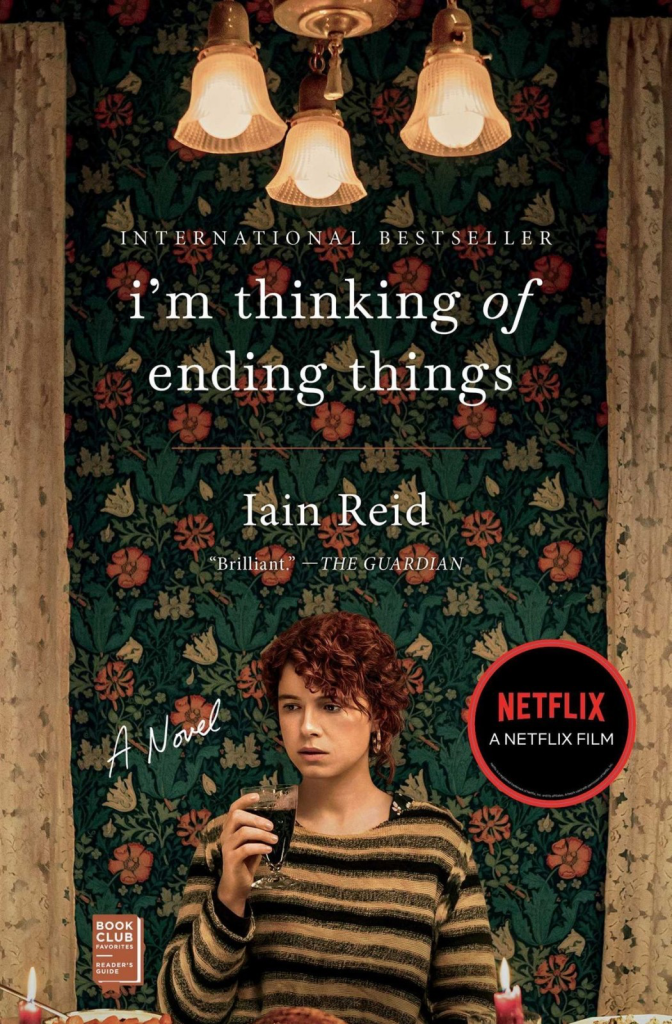
I’m Thinking of Ending Things – Iain Reidalthough the trauma itself is different from the song, this novel crafts a similar sense of unease and discomfort—and addresses trauma in a similarly clever way.

“Beehive” – Mark Lanegan Band

This is the last song I’d pick for a coming of age movie, but I just have such a vivid memory attached to it from when I was in middle school. I was with all the girls in my class at a friend’s house before the graduation dance, at the end of 7th grade. We were all having snacks in her backyard. It was probably mid-May, warm with the promise of summer. And I was on her swing set, swinging as high as I could, and all that was going through my head was this song. Not a firecracker summer yet, but pretty close. The manicured grass was damp and glowing with the light of the afternoon fading into evening. Middle school as it was, everything felt greener.

Even though “Beehive” has been coming back to me in waves since that moment when I was 13, I’d never seen the music video until then. I almost wish I hadn’t seen it, since the image that I have in my head of it is so clear; it feels like there should be gray walls in a dilapidated house, blinds being rattled in the wind from freezing wind, household objects flying like a tornado around a crouching, shadowed figure, and speakers crackling with lightning, like the song says. Basically like this scene from Legion. But the trailer park vampire couple fits in their own way. Let’s hope that they get back home before the sun comes up. Stay safe, y’all.

Somehow, I’ve mostly appreciated Mark Lanegan through his solo work—I distantly know about his work with the Screaming Trees and Queens of the Stone Age, but most of what I hold closest is from more recent albums like this. I always think of how strange it is that I felt the sadness that I did when he passed back in 2022—in the grand scheme of things, I really only know a handful of his songs, and yet the ones I do know have etched themselves so distinctly in the musical map of my lifetime, even in the most fleeting of memories (see also: “Carnival”). They weren’t necessarily the kind that helped me through dark times or lifted me up in the bright ones, but they were just so clear that they were uniquely there, like the kind of painting you see at an art museum that hangs itself up in your brain the minute you lay eyes on it. (It was also late February when I heard the news, freezing and slushy, and we were driving home from the airport, so part of the miserable air can probably be attributed to February™️ and the sensory hell of the Denver Airport. Neither are pleasant.) “Beehive” just has such a specific atmosphere to it that I can’t attach to any other song. Even if the background of the minimalist Gargoyle album art wasn’t that shade of light gray, it would instantly call to mind that roiling, warmish shade of gray of the sky brewing up a storm above a beach with churning waves carving fingerprints onto the shore. I remember it like I remember being in Boca Grande some years back, watching storm clouds churn into themselves above the graying ocean through the window of a hotel room. Lanegan’s gravelly, raw-throated rasp buzzes just like the bee’s nest in his head, making the imagery of “lightning coming out of the speaker” and “press[ing] my body against the window/In an electric storm” uncommonly vivid in my head. It’s a song worth dragging your chair up to listen to, no matter your experience with Mark Lanegan.

…AND A BOOK TO GO WITH IT:

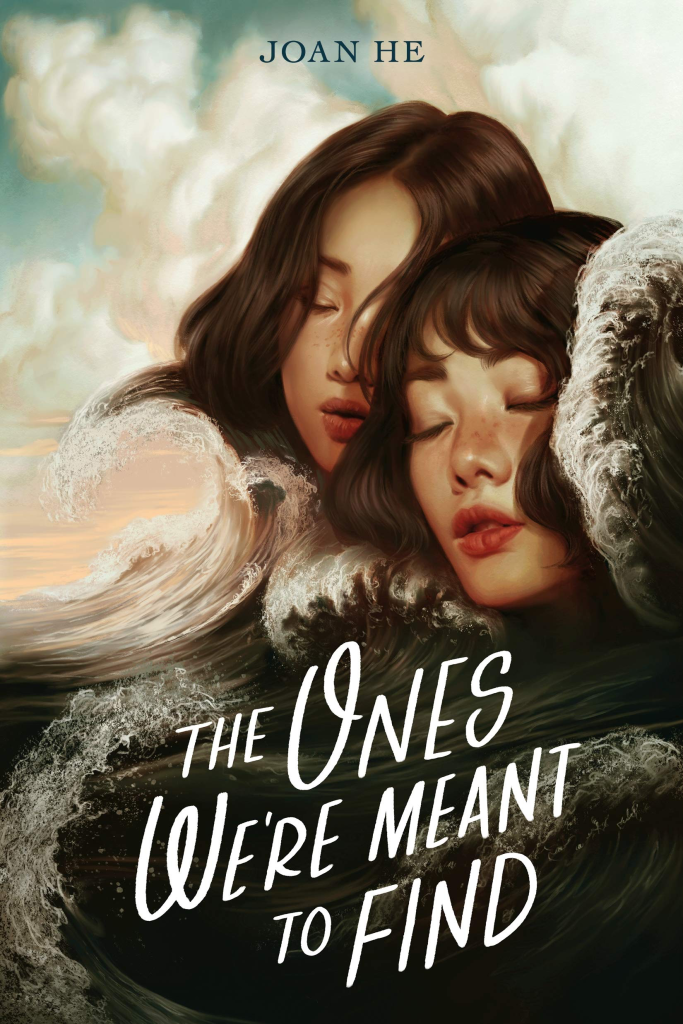
The Ones We’re Meant to Find – Joan Henot a lot of songs have the combination of sounding like a summer storm and crackling electricity at the same time. Not a lot of books pull off both either, but this one does.

“Why’d You Only Call Me When You’re High?” – Arctic Monkeys

I sit at my laptop, pasting the link to this song into this post. I change into a tennis skirt, docs, and a striped top. You suddenly see the world with a slightly grainy filter. You can’t place the color, but something has shifted. Only two words come to mind: “Tumblr” and “aesthetic.”

I leave.

…AND A BOOK TO GO WITH IT:

Stars and Smoke – Marie Lusimilar atmosphere of nightlife, late-night calls, and romance.

Since this post consists entirely of songs, consider all of them to be today’s song.

That’s it for this week’s Sunday Songs! Have a wonderful rest of your day, and take care of yourselves!

Posted in Book Review Tuesday

Book Review Tuesday (11/8/22) – Huntress (Ash, #0.5)

Happy Tuesday, bibliophiles!

Huntress is one of those books that just sat on my TBR collecting dust for several years. I decided to read it after finishing Ash a few years back, and I finally was able to get my hands on a copy from the university library. After remembering liking Ash, my expectations were average, and I was rewarded with a solid, strong fairytale full of darkness in unexpected places.

Huntress is technically a prequel, but it doesn’t necessarily require reading Ash beforehand, as its set in the same world, but hundreds of years earlier (you should read it anyway, though!). If you’d like to read my review of Ash, click here!

Enjoy this week’s review!

Huntress (Ash, #0.5) – Malinda Lo

Kaede and Taisin have been chosen for an insurmountable task: restoring order to the human world. For years, the sun hasn’t shone, the crops have dried up, and strange creatures have begun to breach the boundaries of human and otherworldly. The only way for them to seek answers is through the mysterious Fairy Queen, but the journey there may be more dangerous than what lies at the end. But as members of their party begin to die off, Kaede and Taisin must grapple with their futures—the future of the human world, and of the feelings they’re having for each other.

TW/CW: blood, fantasy violence, death, descriptions of injuries/corpses

“I don’t want to marry the man you arranged for me to marry because I don’t know him and I want to have control over my life”: good, good

“I don’t want to marry the man you arranged for me to marry because I don’t know him, I want to have control over my life, and also I’m a lesbian”: EVEN BETTER

It’s been a few years since I’ve read Ash, but reading Huntress doesn’t necessarily require a whole lot of knowledge of Ash‘s world to understand it. What remains, however, is that you have to remember that it was some of the first of its kind. Nowadays, YA is dominated by fairytale-inspired and fairytale retellings, some of which are queer, but stories like Ash and this companion were some of the first ones to do so—and some of the first to be openly queer. If you remember that (and if you can get past the painfully dated cover), you’re in for a fun ride—a dark and atmospheric piece of high fantasy filled with all sorts of danger and strange creatures.

Lo’s world is pretty distinctly High Fantasy™️, which I’ve been jaded with as of late, but her unique spin on it was enough to create a captivating world. Although the magic system was a little hazy, Lo’s descriptions of the barren landscape and treacherous forests created a world that felt real enough to step into. Even more captivating were the creatures that inhabited this world—everything from unicorns to horrifying changelings; the mythology around them and the stakes they created propelled the story even more. Plus, it’s always refreshing to have non-European inspiration for a high fantasy novel; in the author’s note, Lo explains that most of the book was inspired by both Chinese and Japanese mythology.

What I remember about Ash was how much I loved the main couple, but with Huntress, that was a little bit less of the case. In fact, I found Kaede and Taisin to be almost interchangeable (accentuated by the sporadic POV changes), but still compelling enough to root for. Most of the other characters were rather underdeveloped and forgettable, but Lo has a grim solution for the problem—killing them off. For me, it was Con who stole the show; he was the only character with a distinct personality, and it was a very lovable one at that. He’s the kind of character who probably would’ve been lumped in as the love interest in any other YA book, but having him as a platonic friend was so much more endearing.

Even though I loved Lo’s worldbuilding, I still wish that more was explored; we only got tidbits of the creatures in the Fairy Queen’s kingdom, and especially since the main villain was introduced so late in the book, I wished that we’d spent less time on the road and more time near the destination. The journey was interesting, sure, but it would’ve been more interesting to explore the more alien, unfamiliar corners of the world Lo created.

All in all, a solid piece of fantasy that made good use of its dark, barren atmosphere, but could’ve pushed it even further. 3.5 stars!

Huntress is a prequel to Ash, and they are the only books set in that universe. Malinda Lo is also the author of Last Night at the Telegraph Club, the Adaptation duology (consisting of Adaptation and Inheritance), and several other books for teens and adults.

Today’s song:

found this and “Metal Mickey” in a video somebody made of a medley of Britpop riffs, and…maybe I should check them out now?

That’s it for this week’s Book Review Tuesday! Have a wonderful rest of your day, and take care of yourselves!