Posted in Sunday Songs

Sunday Songs – 5/31/26

Happy Sunday, bibliophiles! I hope this week has treated you well.

BEFORE I GET INTO IT: my longtime best friend has joined me in creating a book blog! It’s over on Wix, but it’s well worth migrating to another website to see her excellent book reviews. Go show Daisy’s Fables some love!!

This week: this one really feels like I’m a 12-year-old holding up my interests and talking at you about them, but that’s what blogs are for, right?

Enjoy this week’s songs!

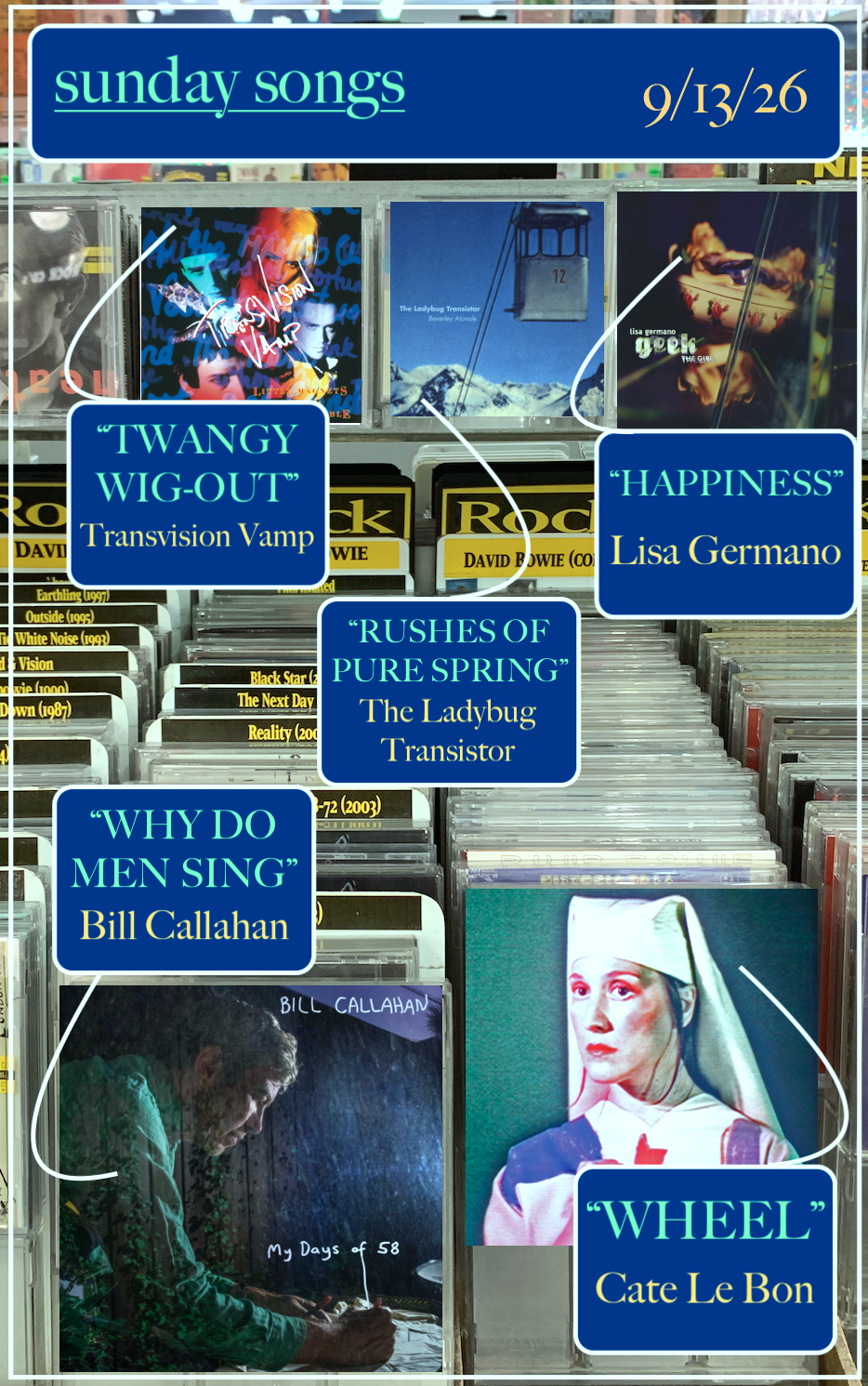
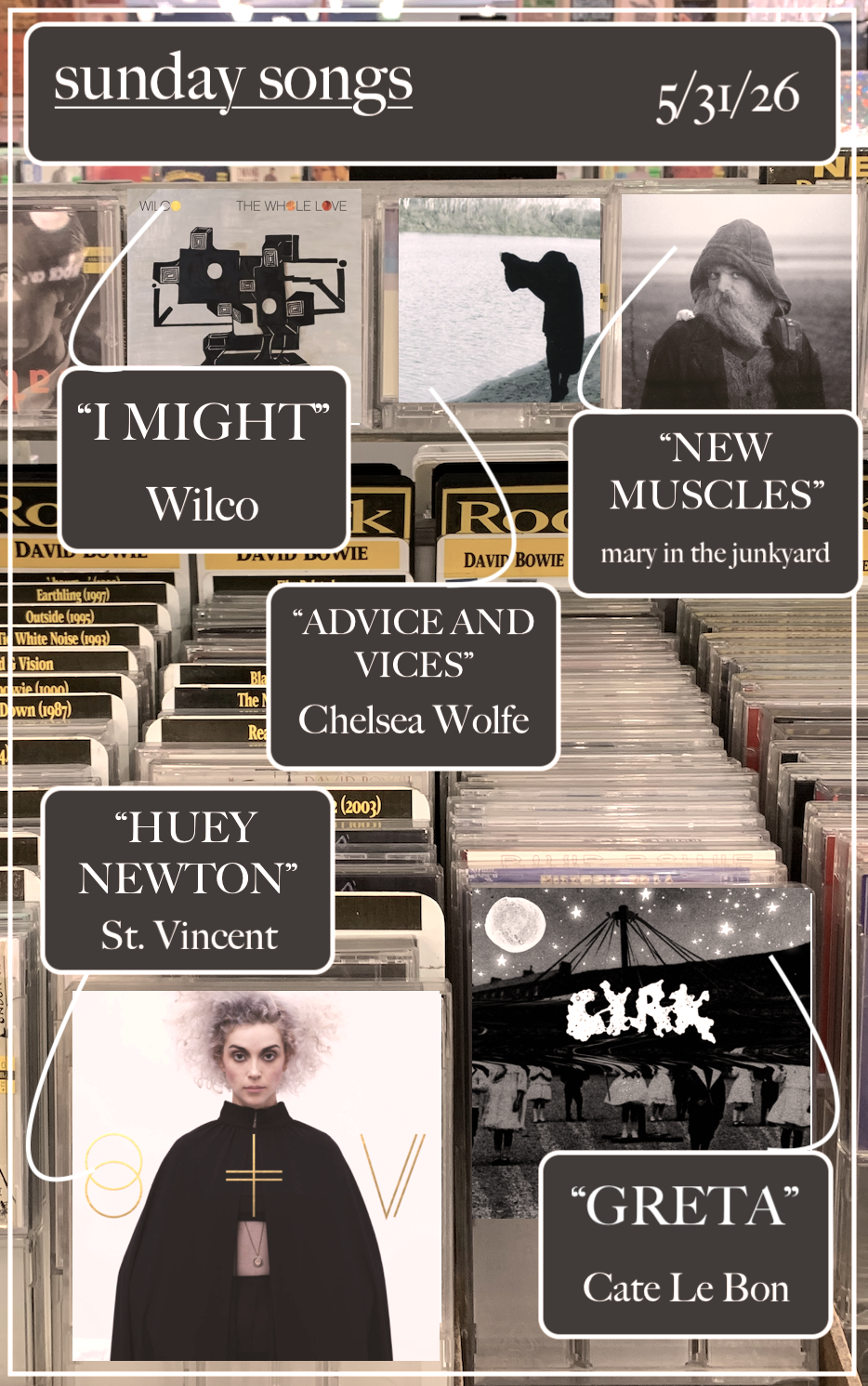
SUNDAY SONGS: 5/31/26

“Huey Newton” – St. Vincent

Sit down. I’m yapping about St. Vincent’s self-titled album again. You WILL listen. You subscribed to this blog, this is the price you pay…

I really haven’t changed since the age of 12, huh? It really makes pieces of my soul wither to see companies running with the joking “your inner child needs a little treat” expressions and turning the healing experience of becoming one with your inner child corporate. No, your inner child doesn’t need the new Starbucks drink, or whatever. That being said, preordering the 10th anniversary pressing of St. Vincent’s self-titled album was for me, but also my inner 12-year-old. As I sat there listening to it, I could feel her curled up inside of me like a chrysalis. I feel like I’m slowly becoming everything she wanted me to be.

But present me reveres St. Vincent as much as 12-year-old me did. Now that I’m older, it’s become one of those puzzle boxes of albums with new layers that reveal themselves every time you listen to it. (And that’s saying something, because I listened to it a concerning amount in middle school.) For me, this listen made me realize that this album is musically and thematically sound. There isn’t as much of a narrative to it as some of St. Vincent’s other albums, but throughout the many modern anxieties that she dishes out, there’s this through line of life being swallowed by the Internet; it’s meant to be more of a near-future thing, if her cult leader persona is anything to go by, but it rang true in 2014—and today. Clark wrote “Huey Newton” as a loose stream of consciousness song; the reference to the Black Panther Huey Newton is only relevant because of a vivid dream she’d had about him after taking a high dose of Ambien. For Clark, the lyrics are “tied to the next in a way that I don’t even understand…It has the feel of an extended Google search, and is set in the near future, after a long winter.” It is kind of a sonic doomscroll in the way that it pinballs from one disconnected image to the next. But you can see the intention of the artifice of the Internet that comes through in some of these images; “Fake knife, real catcher,” or “fuckless pawn sharks” evoke the ease of which people construct their identities even though there’s nothing behind the curtain. 12 years later, her image of a lawless internet populated by fakers and criminals has become even realer, with the blight of AI polluting what was already polluted in the first place. (For the record, I’m taking the line “Cowboys of Information” as the name for my purely hypothetical St. Vincent cover band.)

“Entombed in a shrine/Of zeroes and ones” remains one of the hardest lines on the album, if only in delivery alone. “Huey Newton” switches from a more restrained, dreamy piece of indie synth-pop before launching a salvo of guitar shrapnel in your face at the 2:37 mark. Every line is spit as her signature guitars dissolve into glitch-like fuzz. It all sounds distinctly pixelated, aggressive in its assault, as though the false veil of the digital world is being torn apart by a virus before your eyes. The beauty of St. Vincent to me is that the layers on “Huey Newton” are present on every song—everything has digitized tree rings hewn into it, every one revealing something about the vibrant tapestry of this album’s dystopian, digital world.

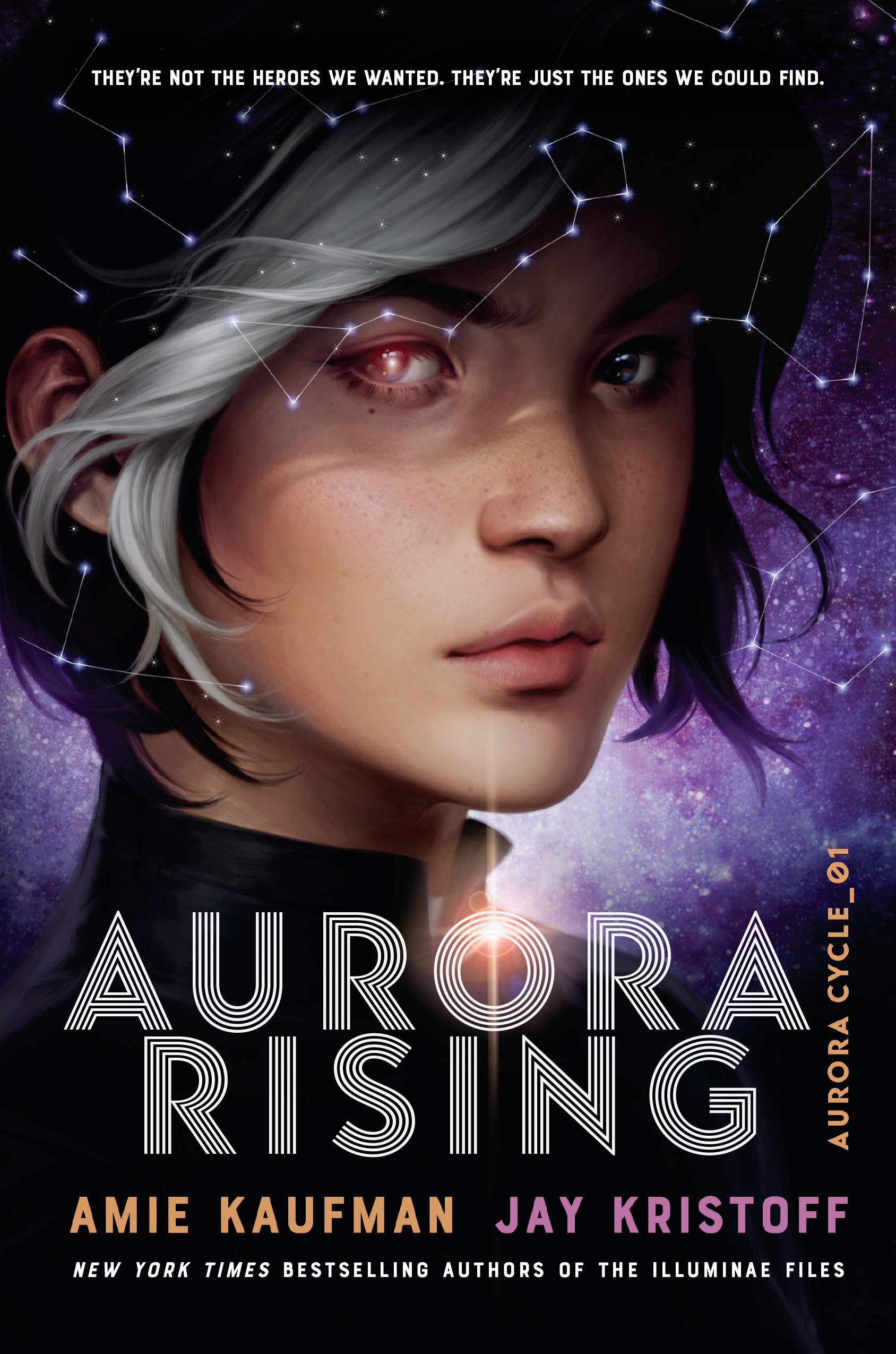
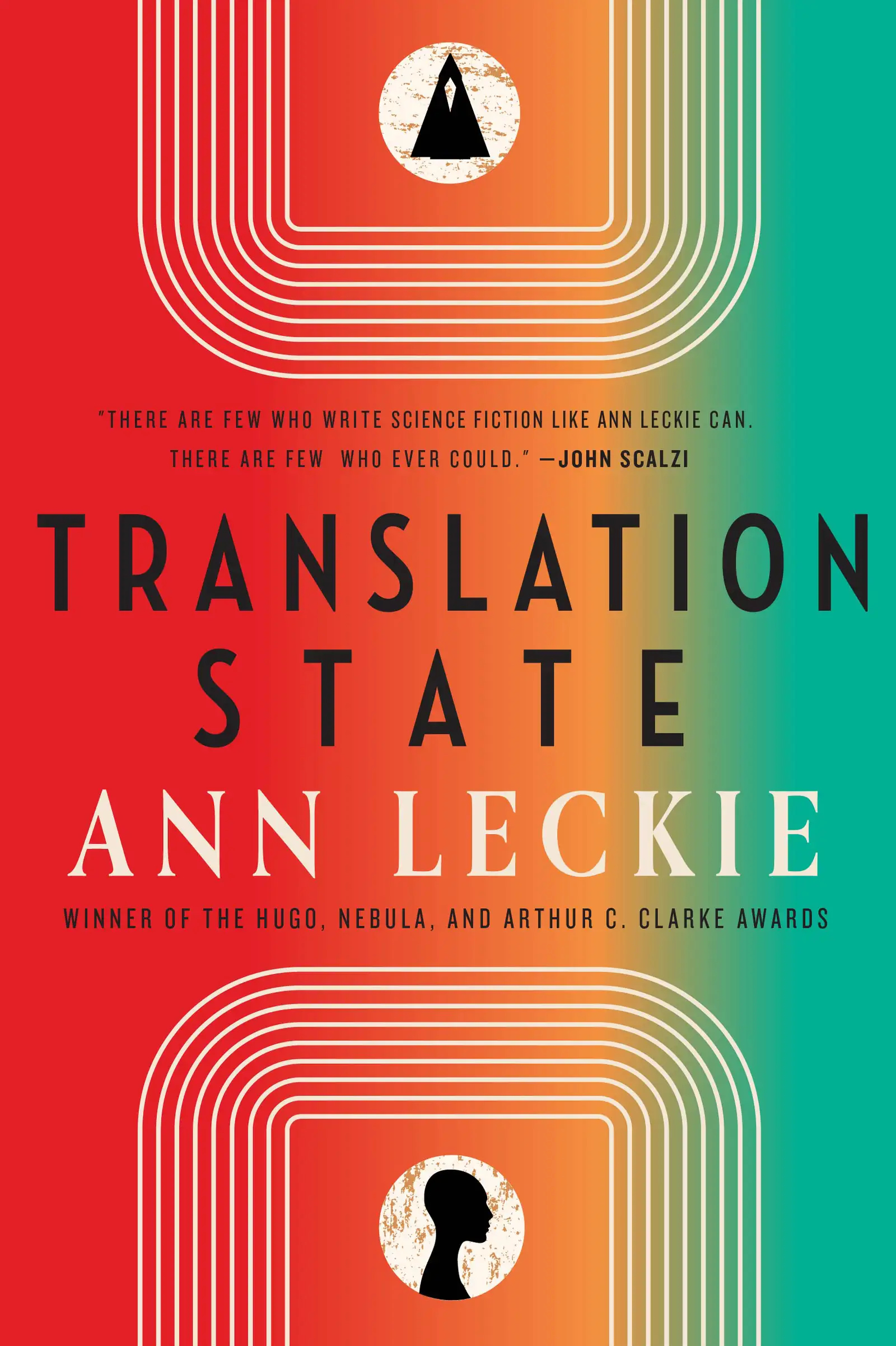
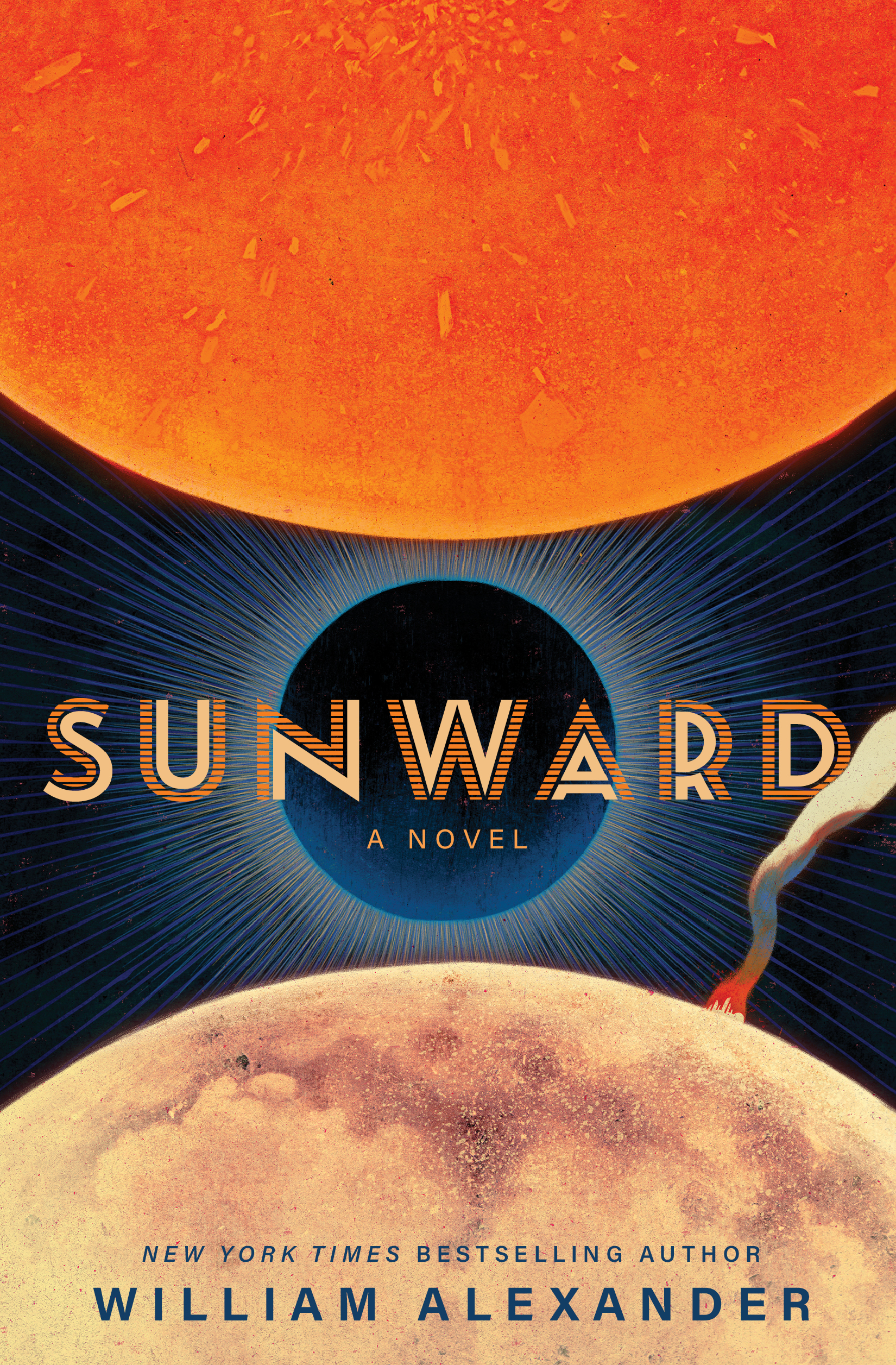
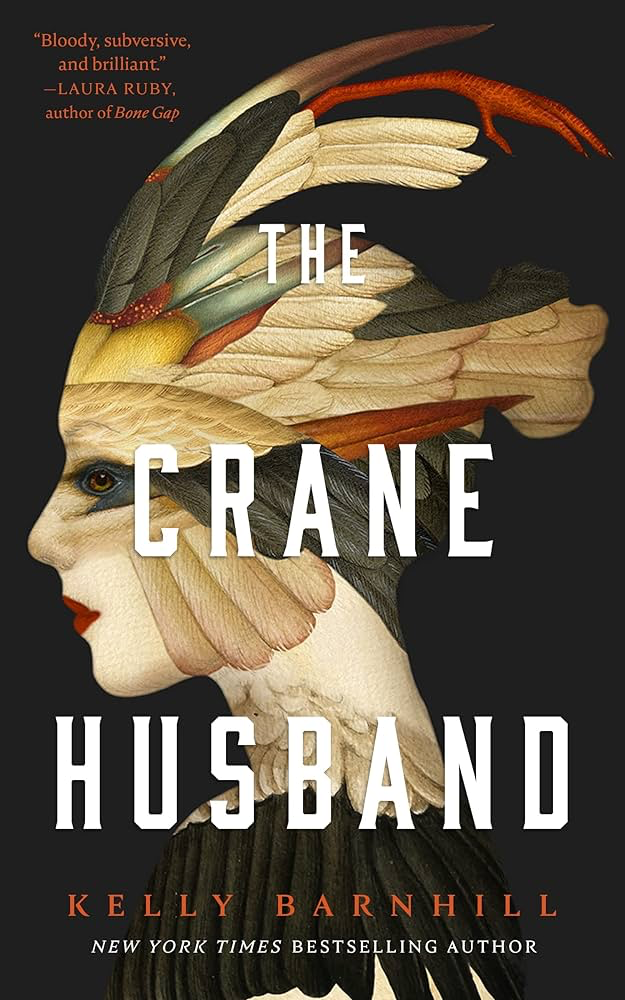
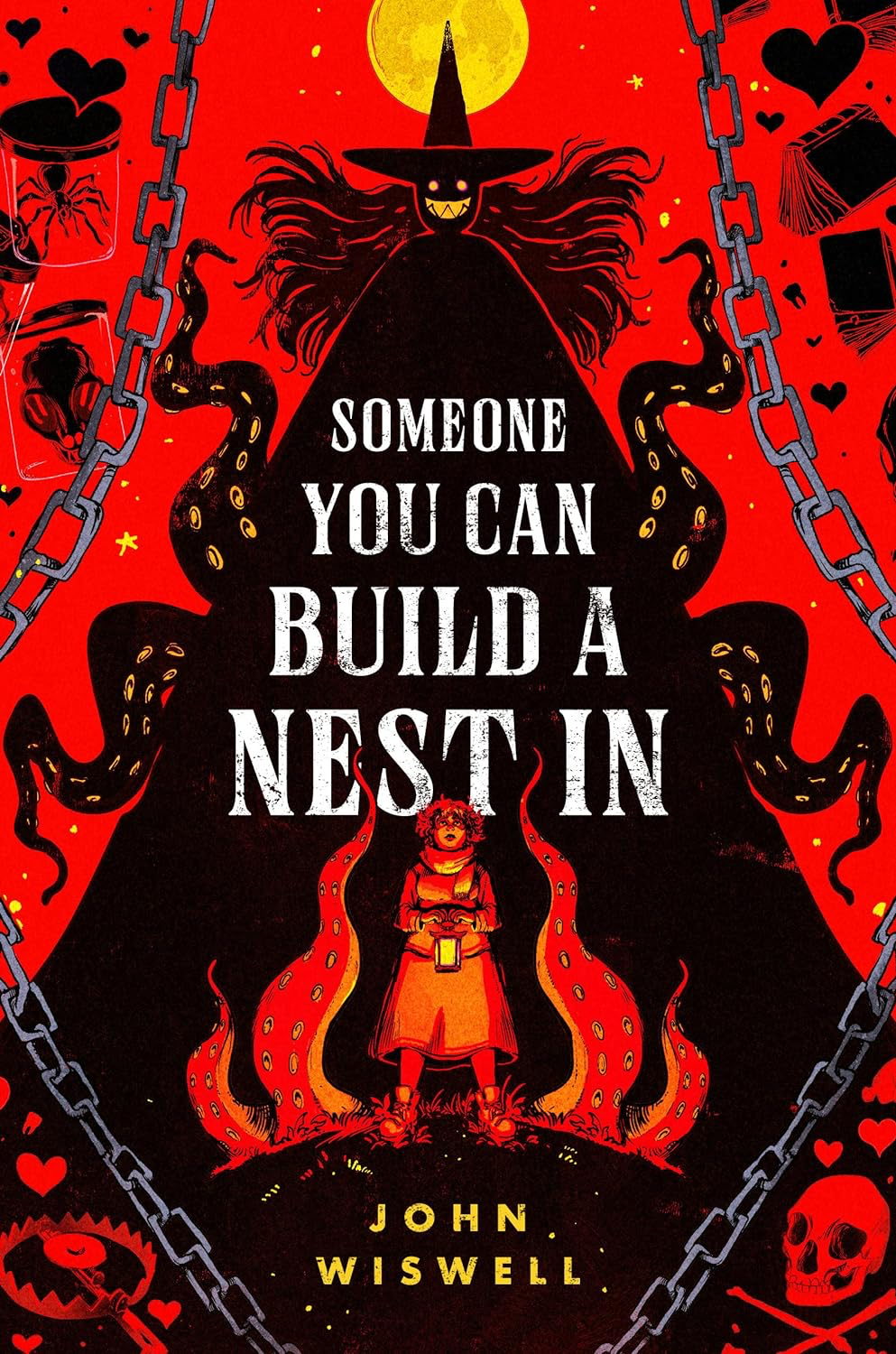
…AND A BOOK TO GO WITH IT:

Machinehood – S.B. Divya“Entombed in a shrine of zeros and ones, you know/You know/Oh, with fatherless features/You motherless creatures/You know…”

“Greta” – Cate Le Bon

Cate! Le Bon! Cannot! Make! A! Bad! Album!

Genuinely baffling how one person can be this talented. Sure, there are weaker spots in her catalogue, but I don’t think there’s such a thing as a bad Cate Le Bon song. I’ve just listened to CYRK, her second album, and it’s just as inventive as some of her later work, though quite different in sound. Before she crafted atmospheres from saxophones and synths, she had a more traditionally indie rock sound, but not without the unique lyrical and vocal touches that she’s always carried. CYRK as a whole is playful (fitting for an album named for the Polish word for “circus”), an adventurous branching-out into whatever struck Le Bon’s fancy. In spirit, it reminds me a lot of Björk’s early work, where she was just putting out feelers wherever she wanted, with only the intention to make daring music.

“Playful” doesn’t exactly describe “Greta” though. It’s one of the slower, more contemplative songs on the album; aside from the vaguely trumpet detour at the end, most of it relies on muted guitar and bass. For that reason, it came out of nowhere for me. What also came out of nowhere was how emotionally moving this track is; Le Bon softly sings of a subject with “eyes the size of lagoons/Dreaming wild” and whose baby days are “coiled up inside her like ribbons all tied.” It feels like she took a telescope and looked down at me as a child, my eyes turned skyward. There’s something about it that feels like a comforting lullaby, from the references to a child born in the stars to the slow rhythm, fit for gently rocking a cradle back and forth. It feels like an ode to every weird child who refused to let the weirdness get beaten out of them, no matter how hard the world tried. If I’d heard this as a kid, I feel like I would’ve found infinite solace in it, but now that I’m hearing it as an adult, it feels like a potent reminder to keep the child alive, to not let the ribbons of baby days get tangled or forgotten, and to remember that all of us are made of star stuff.

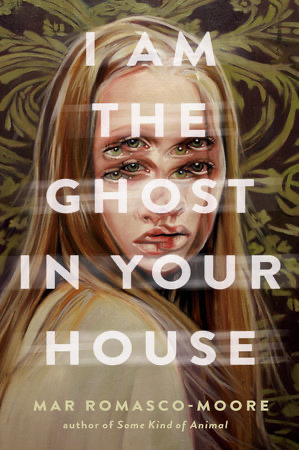
…AND A BOOK TO GO WITH IT:

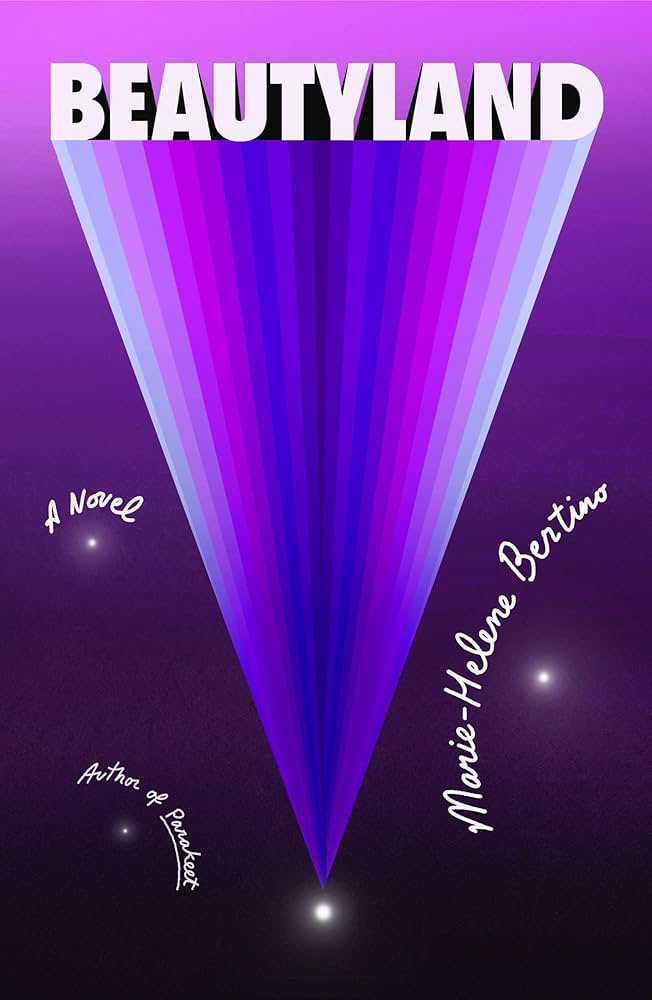
Beautyland – Marie-Helene Bertino“Observatories clocked you in the stars/They were holding you so dear/Greta, be good to yourself/You’ve always been here.”

“I Might” – Wilco

The Whole Love does not get the love it deserves. Fully acknowledging that I have a fog of nostalgia surrounding my head whenever I talk about this album, this album is severely underrated. I think the problem with Wilco’s discography is that Yankee Hotel Foxtrot is such an obvious, career-defining best that it overshadows so much of the adventurous work that they’ve made in the decades since. And if we’re talking about adventurous, then we need to talk about The Whole Love, an unexpected buffet of Wilco’s classic alt-rock sound and explorations out into both the electronic and folk worlds. “Art of Almost” and “Sunloathe” really shouldn’t be on the same album in theory, but The Whole Love makes it happen.

This album was the first Wilco release I remember being…well, conscious for. I was in elementary school when it came out; I specifically remember my dad playing the album all the way through while driving to work and watching the Popeye crossover music video for “Dawned On Me” at the old studio where I took piano lessons. So even before I went through the whole album on my own, I’d already listened to the whole thing. “I Might” was one of the many songs on the album that remained in a nameless limbo in my memory as A Wilco Song That Certainly Exists, but I couldn’t put it to a concrete song. It sounds like your average Wilco song from the 2010’s, with its driving rock sound and cheery organs, but even though it’s not as full-throttle weird as “Art of Almost” (which comes right before it on the album…talk about whiiiiplaaaaash), it has the spirit of “let’s try everything, what’s the worst that could happen?” Jeff Tweedy’s lyrics are nonsensical and free-association (“Your sno-cone/And it’s piss and blood,” anyone?) and the chorus of “You won’t set the kids on fire/Oh, but I might” is…wild, obviously, but the more I listen to it, the more it feels like it’s a defiant statement of turning his past work—and people’s expectations of the band—upside down and destroying them. The Whole Love came out of its ashes, and to me, it’s still one of the most daring albums in their catalogue.

…AND A BOOK TO GO WITH IT:

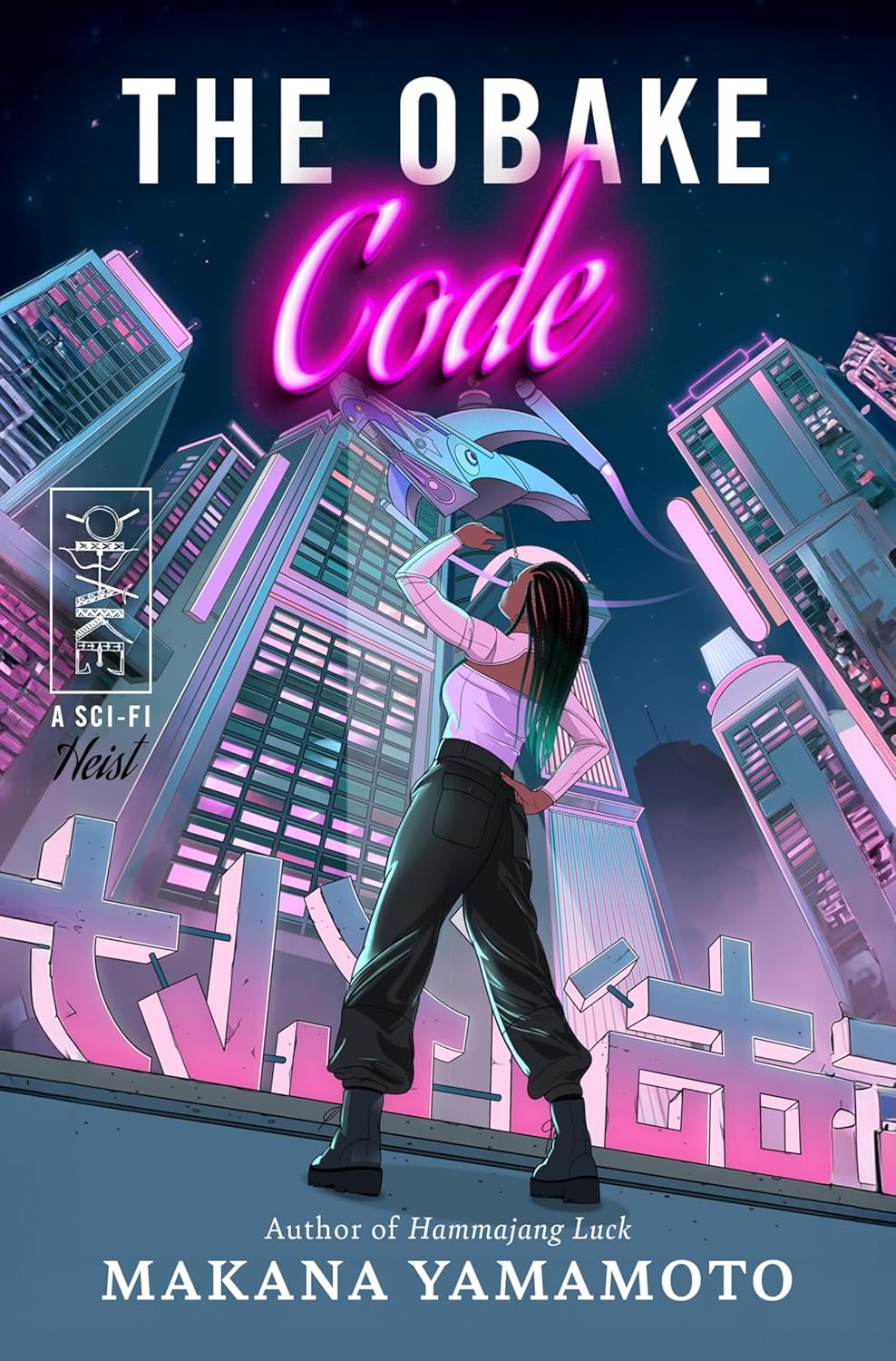
The Obake Code – Makana Yamamoto“It’s in the cards, oh oh/’Get Well Soon – everybody’/Do all lies have a taste?/Let it go, I don’t know, oh…”

“Advice & Vices” – Chelsea Wolfe

I’d forgotten about “Advice & Vices” since…at least high school, around the time I had my Chelsea Wolfe awakening proper and listened to The Grime and the Glow, her first album. Hearing a song like this brings up so many contradictions—I love it, but I simultaneously feel like it’s slightly distant from the music she’d become known for, and yet it feels so innately Chelsea Wolfe. It’s always been goth, but it’s not cloaked in quite the same foreboding atmosphere as much of her later work. The album is much more lo-fi, and yet you can already see the seeds of her signature style germinating; “Advice & Vices” feels like a more understated indie rock song, until you hear Wolfe’s muted ghostlike howls recorded at the very end of the song. Her voice is already strong here, and it’d only get stronger. But it’s like watching Wolfe fish in a frozen lake for what would become her sound; the ice is melting, and around it is what would become the iconic artist that I love today. She was always that good.

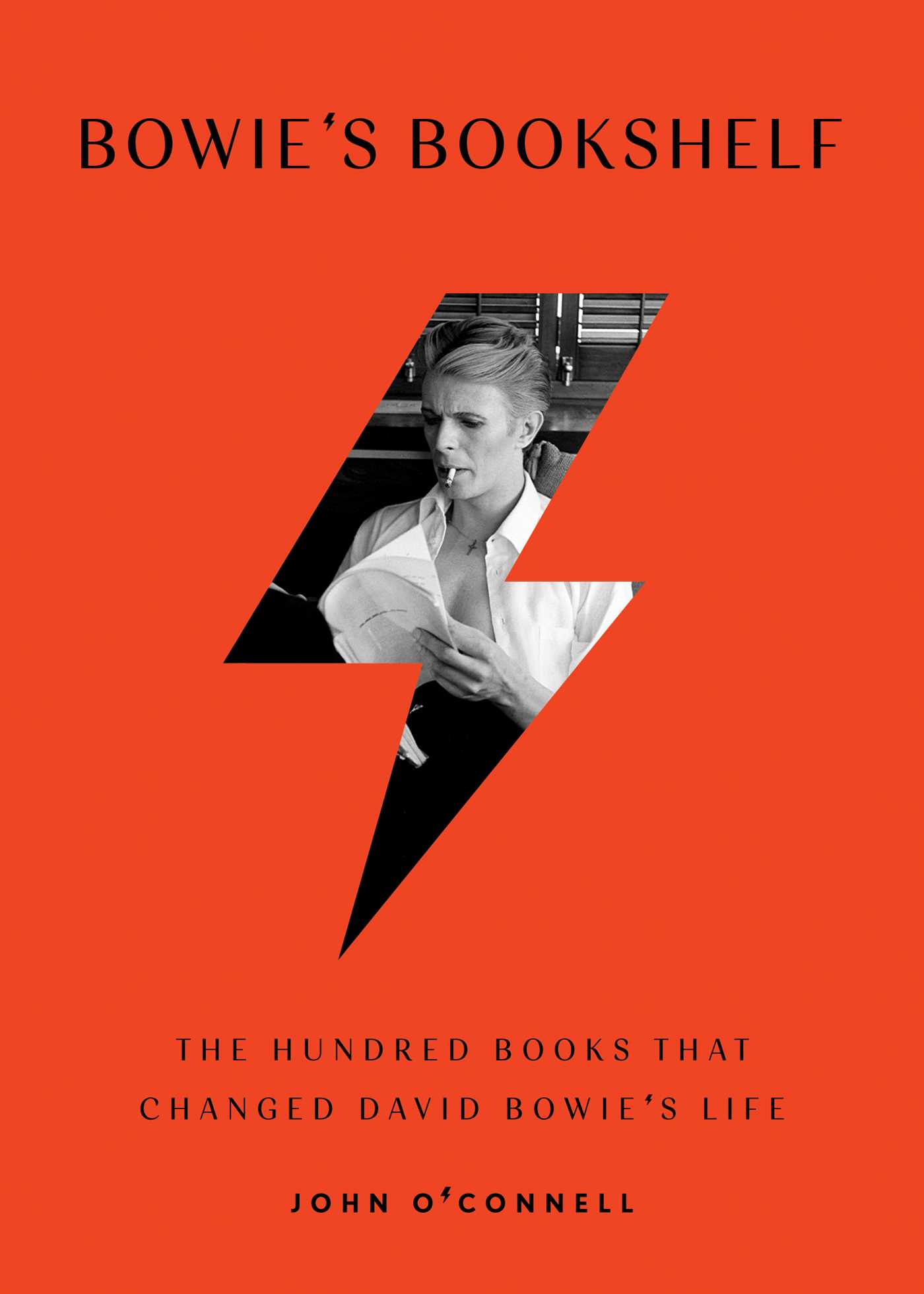
…AND A BOOK TO GO WITH IT:

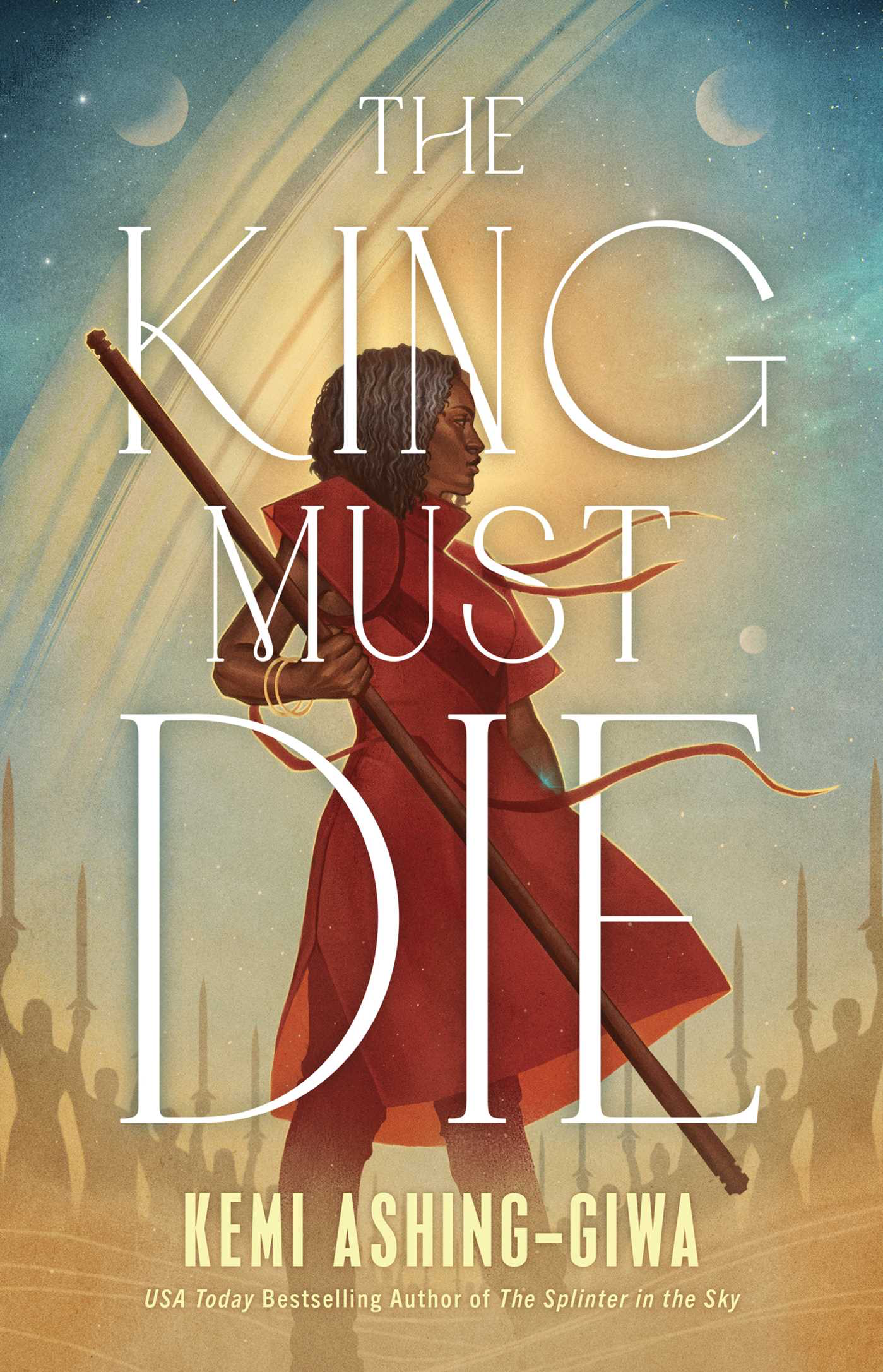
The King Must Die – Kemi Ashing-Giwa“I never listen to my own best advice, no/Like one thing leads to another/Like one heart bleeds for another/And everybody wants what they can’t have…”

“New Muscles” – mary in the junkyard

The cynical part of me is starting to think that mary in the junkyard (or their management) might’ve just been too good at picking singles. But the more optimistic part of me is starting to think that Role Model Hermit is going to be such a fun album. We’re at three singles now ahead of the album’s July release, and each one has been so different from the other—this is pretty much worlds apart from “Candelabra.” It’s also a very different song than I’ve expected from mary in the junkyard, and…I love it.

“New Muscles” is such an uplifting, confidence-boosting song. But from the more gloomy instrumentation, full of strings and percussion that sounds like somebody’s whacking a plastic bucket with a spoon, you wouldn’t think it. Yet it’s the perfect song for dusting yourself off and getting back on your feet. It’s all about emerging from a cocoon and embracing all of the possibilities of your new, stronger, and more healed self: “I’ve been getting up and getting out/Working out and working on myself/New muscles all over my back/New muscles all over my back.” It feels like the spiritual successor to Wilco’s “Kicking Television” in terms of empowering indie rock songs about self-improvement that totally avoid sounding corny. It has a playful element to it (“I will take you down with one finger”), but it balances the joking “they’ll never see the new me coming” attitude with a genuine, sparkling hope for the wonderful things that’ll happen once you start exercising these new muscles and putting that healing self to work. “New Muscles” came out at a very advantageous time in my life—I’ve been feeling some version of this song for a while, what with trying to claw my way out of a multitude of bad habits and becoming more independent in my life. It really does feel like emerging from a chrysalis, even though I know that I’ll probably be emerging from a number of chrysalises over the course of my life. For now, I’m taking this new self to better places. Here’s to flexing your new muscles.

…AND A BOOK TO GO WITH IT:

Juliet Takes a Breath – Gabby Rivera“Courage in my bones/I embrace the thunder and the lightning/I will make it so hard to forget me…”

Since this post consists entirely of songs, consider all of them to be today’s song.

That’s it for this week’s Sunday Songs! Have a wonderful rest of your day, and take care of yourselves!

Posted in Book Review Tuesday

Book Review Tuesday (5/26/26) – The Killing Spell

Happy Tuesday, bibliophiles!

As I’ve been doing my AAPI books focus during AAPI Heritage Month over the years, I noticed that I’ve unintentionally neglected the PI part of the acronym, which is a real shame. Unfortunately, as with a lot of marginalized groups, it’s difficult to find books—especially genre fiction—by marginalized authors; in fact, The Killing Spell is billed as the first traditionally published adult fantasy by a Native Hawaiian author, which…insert the “disappointed, but not surprised” meme. It took until 2026 for this to happen? Christ.

Anyways, I was intrigued by that, and by the urban fantasy premise. In the end, The Killing Spell was a fun and ambitious fantasy debut.

Enjoy this week’s review!

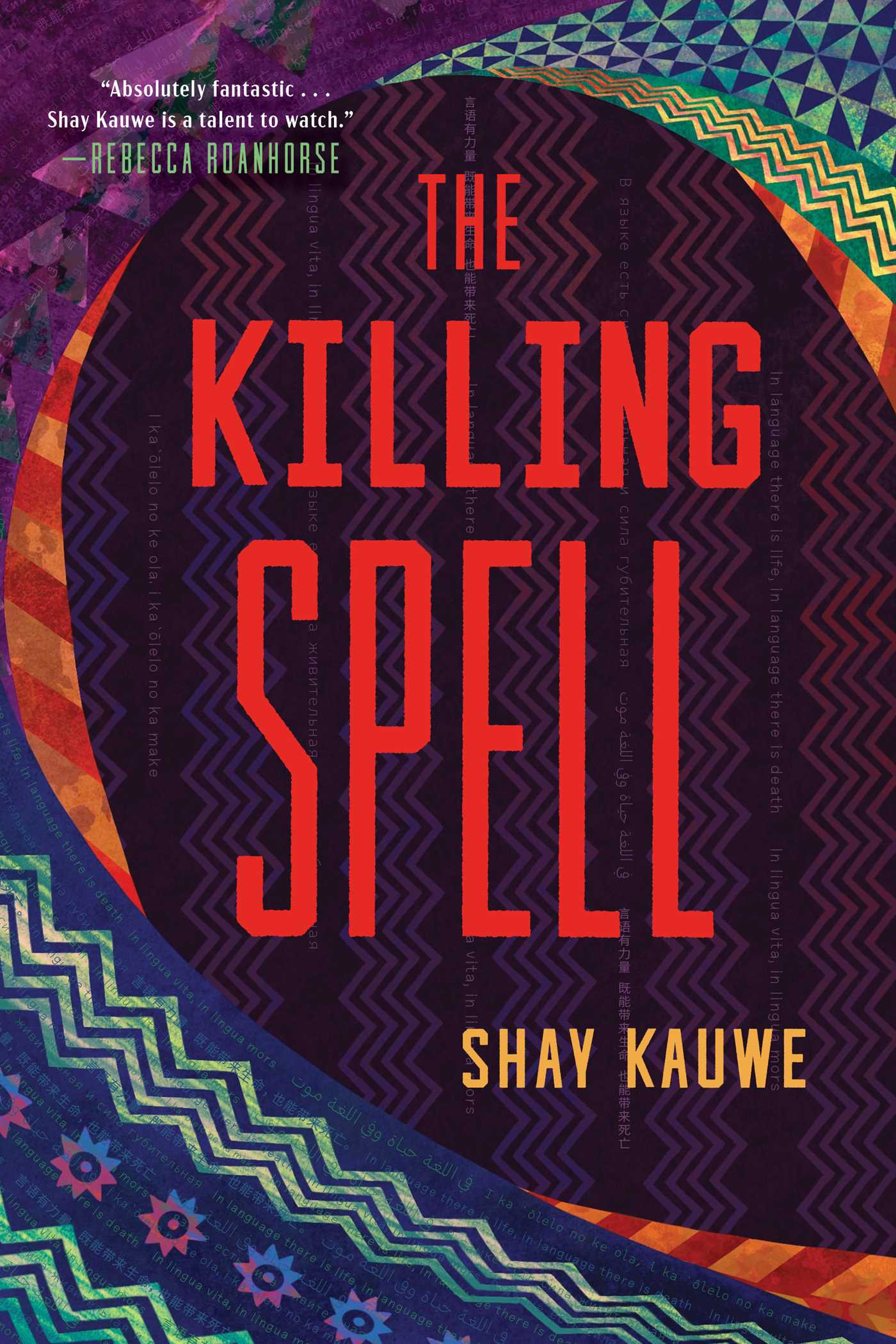
The Killing Spell – Shay Kauwe

200 years ago, a flood of unforeseen proportions changed the world forever. The Hawaiian Islands were submerged in the ocean, and the survivors found refuge on the coast of California. Kea Petrova lives in this Hawaiian Homestead in what remains of Los Angeles, honing her language-based magic. Discriminated against by the powers that be—both because of her heritage and her magic—she tries to keep her head down. But when a powerful politician is murdered by a killing spell connected to the Hawaiian language, Kea has a target on her back. Desperate to prove her innocence, she teams up with a corrupt politician to clear her name. But what they’ll uncover may shake the magical world of L.A. to its very foundations…

TW/CW: murder, violence, sexual harassment, racism, colonialism/imperialism themes

The Killing Spell is a great debut, but what stands out about it is that I can just feel how much fun Shay Kauwe had while writing it. Though it wasn’t without its flaws, I could feel that same sense of fun and adventure on every page of this novel. I guarantee that you’ll have a blast reading it!

The characters in The Killing Spell are also a standout for sure. Kea was such a compelling main character; she has that perfect combination of being flawed enough to seem real but likable enough to root for. She’s headstrong and stubborn more often than not (to be fair, it’s justified half the time), but she’s so determined and witty that it almost makes up for it. She had the perfect combination of traits to make all of her adventures instantly worth following. The other characters were differing degrees of fun and campy, which suited the classic murder mystery atmosphere. The only character that I didn’t like as much was Sora. He was a little too cliched for my liking, and as much as I love a good enemies-to-lovers arc, Kea and Sora lacked romantic chemistry to me. The romance subplot was just forced in general—thinking back to the story as a whole, it really didn’t enhance anything about it. But he’s the exception to the rule—Shay Kauwe’s characters were a joy to follow.

Despite The Killing Spell being set 200 years in the future, it checked off all of the boxes for a fun murder mystery. I think I just like genre fiction-mystery/thriller melds in general—they just present so many fun opportunities to use worldbuilding to make a compelling world and explain the structures of it by showing you what it means for things to go wrong. There’s so much here for the diehard fantasy fans, but I think if you’re a mystery reader who wants to get into fantasy, you should absolutely pick up The Killing Spell. The setting is modern enough for a lot of the classic murder mystery beats to happen, and with the right balance of seriousness and camp; you’ve got your mysterious poisonings, unlikely detective teams, and seducing people for clues in a dance hall, all wrapped up in a futuristic fantasy package. What was clear to me was that The Killing Spell was Kauwe’s love letter to both genres, and that passion was evident with every successive page.

Language-based magic was already a fascinating magic system for Shay Kauwe to explore, but it bolsters the novel’s themes, which were one of The Killing Spell‘s biggest strengths. Many of the characters (most prominently Kea) are Native Hawaiian, and there is so much discussion about sovereignty and land ownership, as well as the preservation of Indigenous cultures. But I think the language magic and the discussions of the “legitimacy” of languages was the strongest theme in the novel. Through this magic system, Kauwe starts some very cogent discussions about what languages that people and governments deems “important” in its often Eurocentric view, and the bias against languages that don’t have as many speakers; there’s also lots of very potent discussions about cultural pride and how it can be an act of resistance when the dominant, hegemonic cultures are bent on deeming it “lesser.” Kauwe’s pride in Native Hawaiian culture shone through in The Killing Spell, and from an outside perspective, I think these kinds of perspectives are so vital to fantasy as a genre.

Most of the elements above would’ve added up to a solid four stars for me. I had some minor nitpicks, but most of them aren’t very relevant. What is relevant, however, is the worldbuilding, which left a lot to be desired. Aside from the language-based magic, which was well-thought out and thematically strong, the worldbuilding got messy. The whole impetus for the emergence of magic was this cataclysmic flood, which somehow released this language magic into the world. How this happened just…isn’t explained. At all. There was a flood, the Hawaiian Islands sunk, and…magic appeared? I guess? And The Killing Spell happens 200 years after said flood. You’d think that there would be some sort of major societal change, right? Other than the vague system of magical mobs that rule L.A., we get no explanation as to how the world reorganized itself or how magic changed society at large. This is supposed to be 200 years in the future, but nothing would’ve changed if this was just an urban fantasy set today. Other than the Hawaiian Homestead plot, we don’t get any real consequences of how the world changed after the flood. And locations outside of America get mentioned, but what the hell happened to them? Come to think of it, what’s going on in America outside of L.A.? Ultimately, the foundation was there, but Kauwe didn’t expand on it nearly enough for the worldbuilding to actually hold water.

All in all, an action-packed debut rife with magic, mystery, and intrigue. 3.75 stars!

The Killing Spell is Shay Kauwe’s debut novel, and a standalone.

Today’s song:

ANOTHER BANGER CATE LE BON ALBUM IN THE BOOKS! cyrk is excellent, and this song makes me emotional out of nowhere…

That’s it for this week’s Book Review Tuesday! Have a wonderful rest of your day, and take care of yourselves!

Posted in Sunday Songs

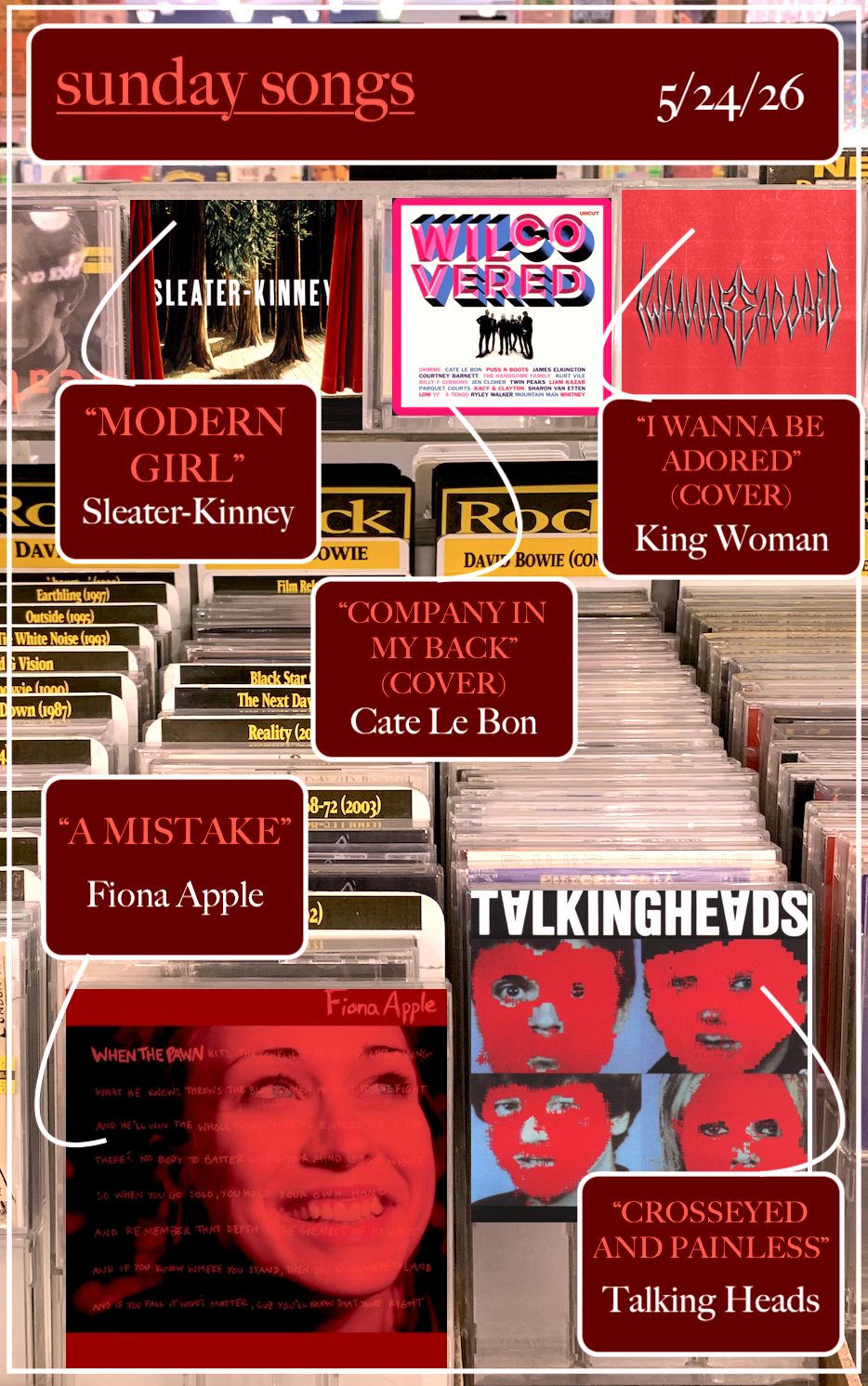
Sunday Songs: 5/24/26

Happy Sunday, bibliophiles! I hope this week has treated you well.

This week: inventive covers, timeless anthems, and some classic quirked-up white boy music.

Enjoy this week’s review!

SUNDAY SONGS: 5/24/26

“A Mistake” – Fiona Apple

If we live long enough under the patriarchy, most of us women have the urge to permanently destroy something at least once in their lives. Once is generous, honestly…have you read the news lately? For Fiona Apple, who had been heavily scrutinized under the public eye and lambasted by music critics in the years leading up to When the Pawn…, the urge must’ve been constant. That’s why “A Mistake” feels so genuine. It’s a slinky, trip-hoppy track about breaking free of society’s expectation of a “good girl” and deliberately wrecking things, fully cognizant of the consequences but not caring in the slightest: “And when the day is done and I look back/And the fact is I had fun/Fumbling around/All the advice I shunned, and I ran/Where they told me not to run/But I sure had fun.” No matter if you act on it, Apple taps into that universal urge to raise hell after being boxed in and stymied by expectations of femininity (“I wanna make a mistake/Why can’t I make a mistake?”), societal control, and an urge to just rebel, even if you don’t know what against. And then there’s the element of deliberately going against good advice—Apple’s trail of destruction, by her own admission, isn’t entirely justified, but there’s that constant, biting urge to defy well-meaning advice anyway. After all, “And if you wanna make sense/Whatcha lookin’ at me for?/I’m no good at math.” It’s all wrapped up in a complex package, not always thoughtful, but from a messy, nonsensical place of rage with nowhere to go. Screeching guitars that give the effect of buzzing insects and a luscious synth loop to back it all up, creating a fully-fledged ode to giving into your most reckless urges.

…AND A BOOK TO GO WITH IT:

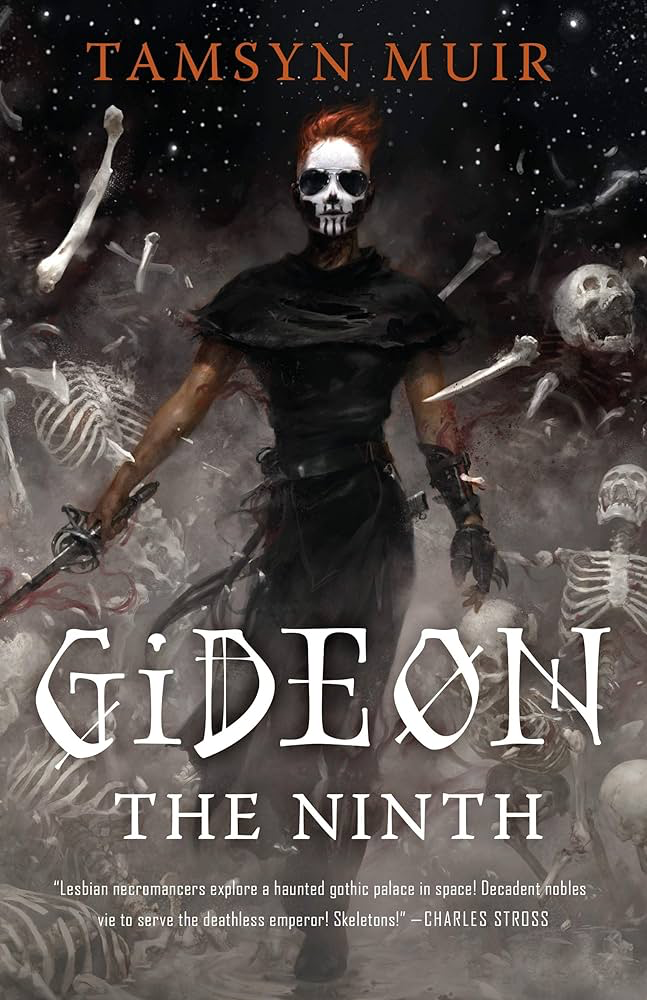
Gideon the Ninth – Tamsyn Muir“So I’m gonna fuck it up again/I’m gonna do another detour/Unpave my path/And if you wanna make sense/Whatcha lookin’ at me for?/I’m no good at math…”

“Crosseyed and Painless” – Talking Heads

This might be the moment where I finally, finally get into Talking Heads. My brother recently listened to Remain In Light and introduced me to a handful of songs from it; apparently, he’d also fully Mandela-effected the idea that I owned a Remain In Light t-shirt, so maybe I should just listen to it. So much has been said about the album: the fusion of rock, funk, and early hip-hop, the influence of Afrobeats, the early electronic instrumentals. And all of that’s there. But you know what strikes me immediately?

Brian Eno. This just reeks of Eno. I mean, he obviously produced this album, but his rhythmic influence is so clear. “No One Receiving,” one of my favorite songs of his, is very Talking Heads, and he’d worked with the band on several albums at that point. But the frantic, anxious rhythms of “Crosseyed and Painless” and the chirping electronics are so Brian Eno. (He also provides backing vocals on the chorus, and Byrne’s certainly got some “King’s Lead Hat” in the delivery.) Maybe I just love it because of the Eno by proxy. But I feel like that would be a disservice to David Byrne and co., whose unique touch seems to have made Remain In Light so iconic. First off—oh my God, Tina Weymouth’s bass playing is nothing short of phenomenal. Once she finds the groove, she grabs ahold and never lets go. I think Byrne is what separates this from Eno in the end—though they share the same kind of angular energy, Byrne’s seamless shifts between desperate crooning in the chorus to frantic, anxious proto-rapping in the bridge: “Facts all come with points of view/Facts don’t do what I want them to/Facts just twist the truth around/Facts are living with their insides out.” That’s just nothing but David Byrne, as is this song’s spirit, in the end. Eno bolstered it, but the sweaty-palmed sprint through a state of alienation is nothing but Talking Heads.

…AND A BOOK TO GO WITH IT:

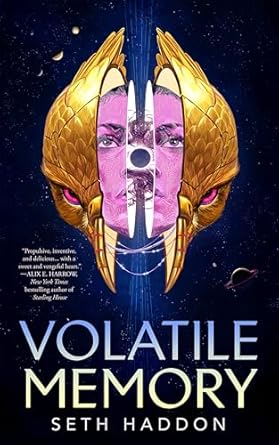
Volatile Memory – Seth Haddon“Nothing there/No information left of any kind/Lifting my head/Looking for the danger signs…”

“Modern Girl” – Sleater-Kinney

I hate to say it, but the strongest memory I have of hearing “Modern Girl” was hearing Sleater-Kinney play it live while co-headlining with Wilco about five years back. They did the classic “this is our big song, sing it with us!” thing and tried to get the crowd to sing the chorus…and only a handful of people did. Yeesh. Probably some of the largest-scale secondhand embarrassment I’ve ever felt. But they’re plenty successful, well-known, and presumably happy with their lives, so I can’t imagine that one (1) crowd in Colorado not singing along with them made much of a dent on their egos.

Nonetheless, “Modern Girl” is one of the songs I took away from that setlist all the way back in 2021. Despite the painful mix on the version I have (once it gets loud, it gets crunchier than a bass-boosted meme from 2018…somebody remaster this already, Jesus 😭), it has the same staying power. It’s an anthemic, gradually building story of mounting emptiness; every verse, happily sung until bitterly screamed, scrambles for meaning in a world of artifice. There’s a void (a donut hole, if you will) at the heart of “Modern Girl” that fruitlessly gets filled by consumerism, mass media, and hollow love. It’s a sort of universal story of filling the hole in your life with all the plastic that TV advertises, only to find that “My whole life/Looks like a picture of a sunny day”—beautiful on the surface, but really just a flimsy piece of film in the end. Where you end up is sprawled out, floundering in the drowning tide of distortion that gradually swallows Carrie Brownstein and Corin Tucker’s riffs and harmonicas. Sometimes, all you can do when faced with the emptiness at the heart of your life is shout at it—and shout Sleater-Kinney does.

…AND A BOOK TO GO WITH IT:

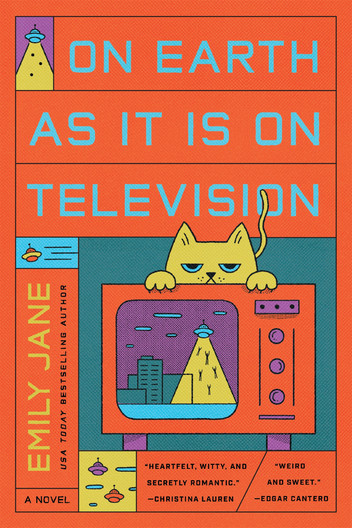
On Earth As It Is on Television – Emily Jane“My baby loves me/I’m so angry/Anger makes me a modern girl/Took my money/I couldn’t buy nothin’/I’m sick of this brave new world…”

“Company In My Back” (Wilco cover) – Cate Le Bon

Somehow, while spreading the gospel of Cate Le Bon to my family, I completely missed this cover, which my brother thankfully found. Wilco Covered, a limited-edition album only available on CD (and another big thank you to my dad for digging it up on eBay), was a real mixed bag, but this cover is a staggeringly good fit for both Le Bon and Wilco. “Company In My Back” comes from A Ghost Is Born, and Jeff Tweedy’s signature lyricism was already at some of its delightfully weirdest; “I attack with love/Pure bug beauty/Curl my lips and crawl up to you” is still one of the more memorable Wilco openings if we’re going by lyrics alone. Add in the wording of the chorus (“Holy shit/There’s a company in my back”) and some dulcimer, and you’ve got one of the more left field early Wilco songs out there. The original’s clattering percussion, like bug’s legs against tile, are equally so. It’s natural that Le Bon covered it, given her weirdo proclivities. Her moody lilt and agitated instrumentals fit in so naturally in her interpretation of this song. (I especially love the way she sings “They are hissing radiator tunes.” Pure magic.) This was recorded in 2019, and Reward has its footprints all over it, with blasts of saxophone to replace the acoustic guitars of the guitar. It’s such an excellent tribute, turning “Company In My Back” almost inside out while lovingly preserving the offbeat-ness of the original without sacrificing her own artistry.

…AND A BOOK TO GO WITH IT:

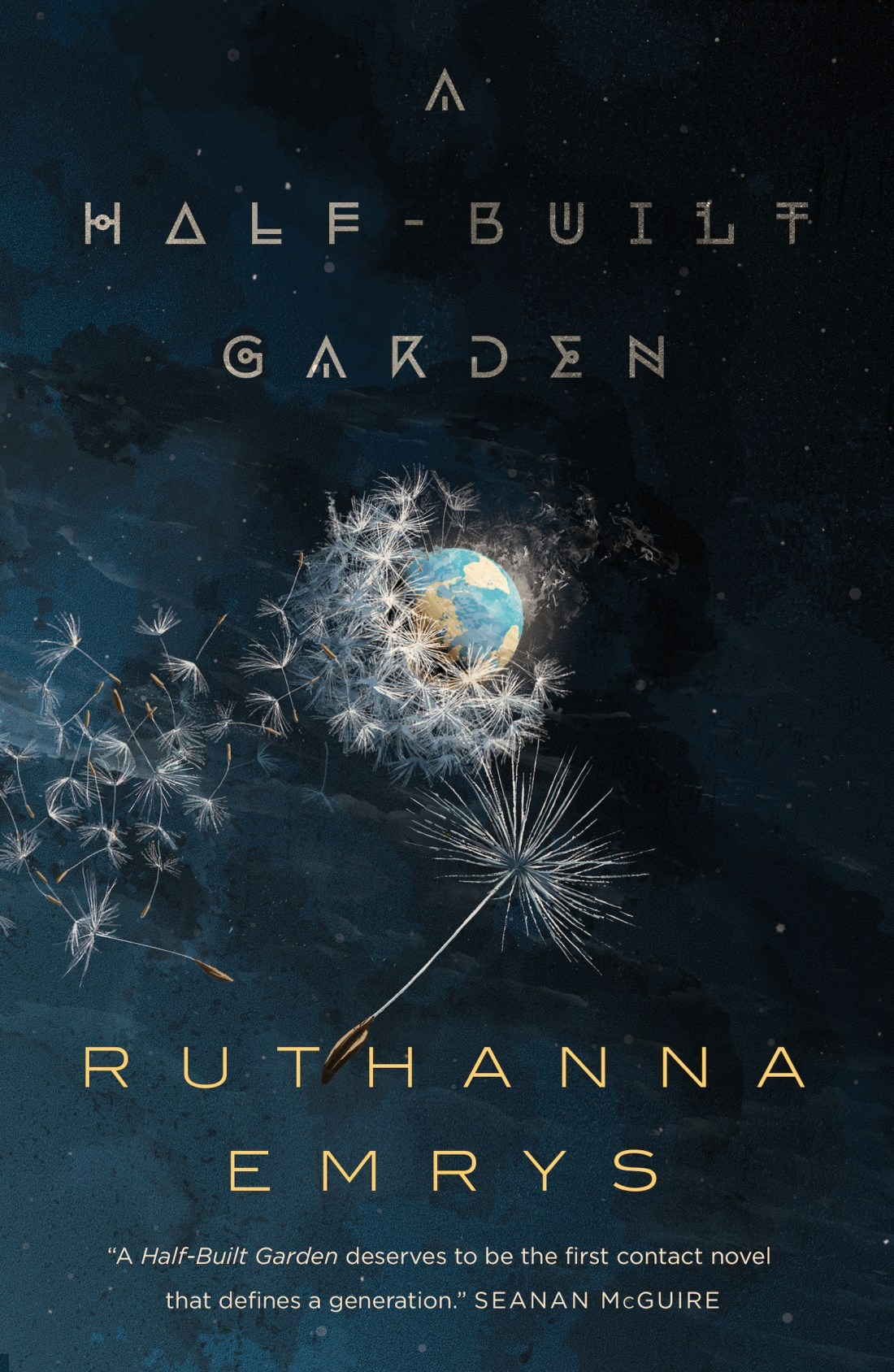
A Half-Built Garden – Ruthanna Emrys“You learn so slow, old radiant beauty/I’ll curve my flight…”

“I Wanna Be Adored” (Stone Roses cover) – King Woman

What makes a cover good to me is when it captures the song’s spirit; like I just talked about with Cate Le Bon’s take on “Company In My Back,” it messes around with the instrumentals but retains Jeff Tweedy’s soul beneath it. Though King Woman’s take on “I Wanna Be Adored” doesn’t reach those heights (and how could it, with the original basically defining a good portion of the alternative/indie rock sound of the ’90s?), I think it succeeds in the same way. While the Stone Roses’ original dips into a dreamy haze, King Woman’s cover basically sounds like Stone Roses by way of Chelsea Wolfe. It’s longer and more drawn-out, with sludgy guitars and a thick, foggy echo clouding everything. Kristina Esfandiari shouts the iconic chorus as though into the mouth of a canyon, pleading into a cold void, a stark contrast to the speed at which it’s sung in the original. It’s an exciting take on this song—one that clearly melds King Woman’s style into the original’s beating heart.

…AND A BOOK TO GO WITH IT:

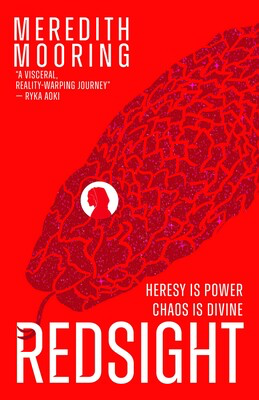
Redsight – Meredith Mooringthe sludgy, doomy atmosphere of this cover absolutely fits with this tale of dark magic in space.

BONUS: In addition to Programmes for Cools, Jim Noir has just released The DLC Tapes exclusively on Patreon—or you can buy it on his KoFi! It’s another album of polished releases from previous EPs and outtakes. Here’s the reworking of “Scene 2”:

Since this post consists entirely of songs, consider all of them to be today’s song.

That’s it for this week’s Sunday Songs! Have a wonderful rest of your day, and take care of yourselves!

Posted in Book Review Tuesday

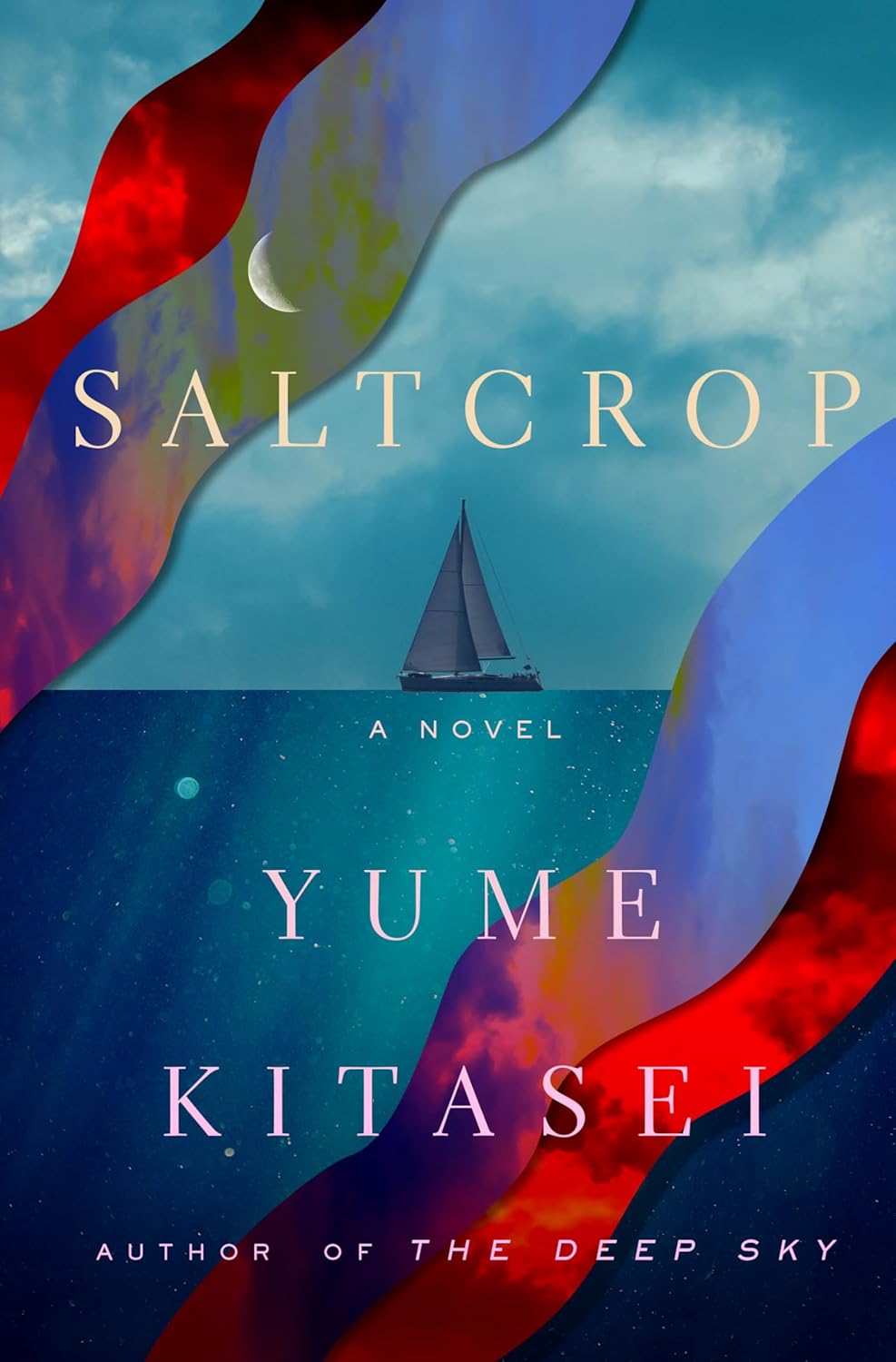
Book Review Tuesday (5/5/26) – Saltcrop

Happy Tuesday, bibliophiles!

GUESS WHO’S BACK…WITH A BACHELOR’S DEGREE! 🎓 YIPPEE!! Either way, I’ll be back to my normal posting schedule for the foreseeable future, as I’m now done with finals and all of my graduation festivities.

I’ve been a fan of Yume Kitasei since her debut, The Deep Sky. Her second novel, The Stardust Grail, was a 5-star read for me—it’s truly a gem, if you haven’t read it already. (After re-reading it last month, I’m firmly convinced that we need another book set in that universe. Her worldbuilding was so expansive!! It needs a companion novel!! Please!!) So I was ecstatic to hear that she was writing another sci-fi novel. It seems she’s been jumping between all kinds of sci-fi subgenres: a literary thriller with The Deep Sky, space opera with The Stardust Grail, and now dystopia with Saltcrop. And though it didn’t blow me away like The Stardust Grail did, Saltcrop is still a worthy, timely testament to Kitasei’s talents.

Enjoy this week’s review!

Saltcrop – Yume Kitasei

In a world ravaged by climate change, the three Shimizu sisters–Nora, Carmen, and Skipper—eke out a living with their aging grandmother. But Nora has been missing for months without an explanation. Carmen has faith that Nora will turn up soon, but Skipper suspects foul play. The sisters voyage out into uncertain waters to find Nora, but when they stumble into an intricate conspiracy that’s more than they bargained for, they must decide whether the journey was worth it at all—and if Nora is even out there in the first place.

TW/CW: medical content, body horror, death of parents, abuse, violence, murder, illness, animal death, chronic illness themes

One of the coolest things about watching Yume Kitasei’s career expand, from a reader’s perspective, is her willingness to try almost anything within the sci-fi genre. Her first novel was a more literary, sci-fi thriller; her second, a daring space opera with influences from Star Wars and Indiana Jones. Saltcrop is wholly different than both of them, and perhaps the greatest thing about it is that Kitasei never seems to run out of ideas, and that she’s unafraid to chase them.

Saltcrop is full of heart, and to me, that was its main strength. What formed this heart was the central relationship between Skipper, Carmen, and Nora. Even though 1/3 sisters was notably missing for 2/3rds of the novel, her presence was palpable; all that was possible due to the subtle interactions that Kitasei wove through Skipper and Carmen, both past and present. Their clashing but united dynamic as sisters propelled the novel in such a poignant way. Though you know from the start that Skipper and Carmen would cross the ocean for their sister (and they do), Kitasei never falters in giving you the sense of the complex but steadfast love that they have for each other. It feels like a middle finger to all of the dystopian media that posits that the apocalypse will somehow deteriorate our inherently human urge to love and help each other. Siblings will be siblings, even when climate change floods the world—Kitasei means that in every sense possible.

The setting of Saltcrop is familiar: a flooded dystopian world rendered unrecognizable by climate change, where the poor eke out a hardened existence while the rich continue to get richer. It’s a plot we’ve heard many times before, but Kitasei’s touch made it much more human. Aside from the exploration of the sisters’s relationships, I think what made Saltcrop’s plot and worldbuilding so memorable were the vignettes that made it human. Kitasei’s flooded world was peppered with stories of ordinary people, dead and alive, who made a living in spite of nearly inhospitable circumstances. It doesn’t shy away from the dark and ugly parts of this world (namely the spread of illness and corporate greed) Combine that with the clearly exhaustive research she did about agriculture, epidemiology, and genetic modification that got especially relevant in the last half of the novel, and Saltcrop was one of the most lived-in dystopias that I’ve read in quite some time.

I said earlier that Saltcrop is fairly different from her previous two novels, but in terms of writing, I think it trends closer to The Deep Sky, which is to say that it leans more into the literary side of her prose. And if there’s anybody I trust with more literary prose, it’s Kitasei. Her eye for poignant, needle-sharp descriptions that lodge themselves into your heart is stronger than ever—there are casual gut-punches laid about everywhere. Even in the heart of a climate-ravaged dystopia, there were almost Fargo-like interludes where reality and memory warp, which was all the more potent considering the themes of remembrance in Saltcrop. (The bear scene in the middle especially comes to mind.) Like the plot, Kitasei’s prose turned an environment that we’ve seen many times before into something wholly fresh and enlivened.

I’ll admit, I have some mixed feelings about the ending. On the one hand, I loved how the sisters rallied together to try and bring down the antagonist corporation, which routinely swallowed all of their attempts at resisting; the gradual, quiet victory was hopeful, and felt realistic to the long and rocky road to justice that we see with these kinds of issues. However, I feel like there were so many unanswered questions at the end; without spoiling anything, it felt like the setup to another novel, but there was so much left unsolved and unsaid, and yet Kitasei gave it the tone of a bittersweet ending, but a concrete ending all the same. It only felt wrapped up in the sense of the corporation plot, but beyond that, it felt unfinished. I’m all for an ambiguous ending, but with such a key piece of the puzzle missing, it didn’t feel satisfying in the slightest.

All in all, a startlingly human post-apocalyptic story of sisterhood and survival. 4 stars!

Saltcrop is a standalone, but Yume Kitasei is also the author of The Deep Sky and The Stardust Grail.

Today’s song:

genuinely criminal that this isn’t available on streaming, but this is, hands down, one of the best Wilco covers out there

That’s it for this week’s Book Review Tuesday! Have a wonderful rest of your day, and take care of yourselves!

Posted in Sunday Songs

Sunday Songs: 2/22/26

Happy Sunday, bibliophiles!

This week: even though I mention both Water Moon and Underwater Moonlight in this post, they’re somehow not paired together…sorry. Plus, songs about grief, love, and illegally keeping wild animals in your apartment.

Enjoy this week’s songs!

SUNDAY SONGS: 2/22/26

“The Man Who Stole a Leopard” – Duran Duran

I didn’t expect to be putting such critical Madeline Todd lore here on the blog, but it was recently dredged up from the annals of my mind after not thinking about it for, at minimum, a decade. So here you are.

I’ve been something of a Durannie from a young age. Second-generation Durannie on my mother’s side, if you will. My mom was at the critical point of fandom for Duran Duran, being a tween (and then a teen) in their heyday, and from an early age, she passed down that love to me. I have lots of fond memories of watching their music videos from a DVD on our old TV, along with listening to their CDs while we played with Barbies, some of which my mom had passed down to me as well. That brings us to All You Need Is Now, which came out when I was in elementary school; a lot of the tracks have heaps of nostalgia attached to them, including “The Man Who Stole a Leopard,” which I loved at the time. Fast forward a few years, and I now had my own iPod nano that I could listen to music with at night. “The Man Who Stole a Leopard” made its way onto the first playlist that my dad lovingly made. But at night, this song transformed into something that scared the shit out of me. Specifically, the violin sample beginning at 5:52. “Scared the shit out of me” is an adequate description, but what might be more accurate is that it gave me the absolute willies. My heebies were jeebied, dude. Something about the mild distortion of the violins, under cover of darkness, sounded so fundamentally wrong to my 10-year-old mind, huddled under blankets. Thankfully, I got my dad to remove the song from the playlist, and the nightmare ended.

Naturally, this was a very pleasant thing to remember when I woke up at 4 am a few weeks back. But when I revisited “The Man Who Stole a Leopard,” I found that my memory had completely distorted my perception of that violin sample that freaked me out all those years ago. Admittedly, I get a kind of knee-jerk sense of dread in the lead up to it, but I was pleasantly surprised that it sound completely innocuous to me—a little distorted and reverby, but just a handful of fuzzy chords to give a flourish to the outro. I’m now hovering where I was in the pre-iPod era, when I was allured by this song. Despite what the fabricated (yes, FABRICATED, I’ve been living a lie since 2011) news broadcast might lead you to believe, this tale of the man who stole a leopard and kept it in his apartment is entirely fictional. (Granted, some of the wording in the broadcast clues me in to the fictionality of it now, but it’s still fairly convincing, especially considering that they got the real newscaster Nina Hossain to record it.) What stands out to me about this track, along with most of the tracks I fondly remember from All You Need Is Now, is that there’s hardly a sense of Duran Duran trying to put their youthful, ’80s glory days in amber and imitate it. Sure, there’s a very “Hungry Like the Wolf” sensibility to the subject matter, but its prolonged runtime (6:15) and more eery atmosphere better fits their earliest albums, before they became perennial pop icons of the ’80s. Like a prowling cat, it’s a drawn-out, seductive crawl through a tale of toxic seduction and love that isolates you from all else. But from all of these memories, there’s one crucial lesson I have to take from this: things tend to sound a lot more sinister when you’re in the dark. Shed some light on it, and this track—like so many other things—will lose the fangs you thought they had. What a relief it is to not be 10 anymore. I love this song.

…AND A BOOK TO GO WITH IT:

Open Throat – Henry HokeI think there’s enough overlap between a big cat being inside human houses and almost being domesticated to bridge the gap between a leopard and a mountain lion. Literary fiction isn’t always my favorite, but this was an excellent read.

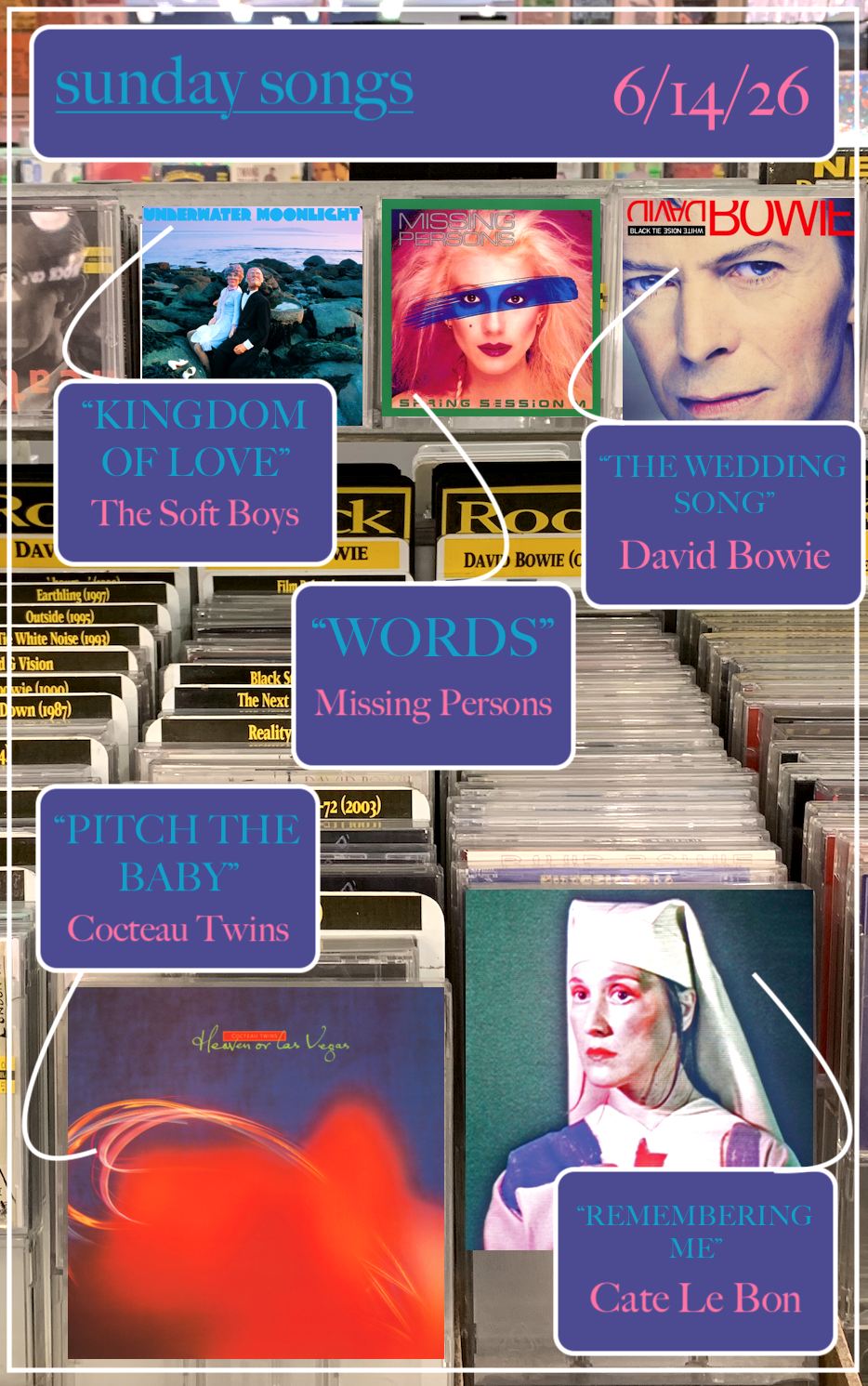
“Queen of Eyes” – The Soft Boys

At its worst, a lot of punk music and culture became a caricature of itself; There was such a dogged determination to “sticking it to the man” that, in declaring that they were different from the mainstream, they created a different kind of conformity in sound and style. If you’re not exactly like x, y, or z, you weren’t punk. As insufferable as that is in retrospect (and today, presumably, though I don’t keep up with a lot of modern punk), it did breed a veritable garden of absolute weirdos who weren’t punk enough in a myriad of ways—bands like XTC and The Soft Boys, whose quirky members adhered in some ways to punk’s musical style, but were too sincere—and literary-minded—for punk, because punks don’t write about statues who come alive and wander out to sea. I’ve definitely been influenced by some aspects of punk bands and aesthetics over the years, especially when I started becoming more aware of politics; however, I feel like the bands I identify more with are the ones that were a little too soft, melodic, or just authentic enough for punk. And I think that’s where my expression falls too—I’ve always identified, in terms of my makeup and my clothes and my politics and my music, with “alt,” just because it’s an umbrella term for anyone who falls outside of those strictly-defined, often social media-enforced lines in the sand between one aesthetic from another. My music taste was bound to fall here eventually.

I’d loved about half of Underwater Moonlight ever since I saw Robyn Hitchcock for the first time, but now that I’ve started collecting vinyl, I picked up a copy of the album when I saw him again at the beginning of the month—AND GOT IT SIGNED BY THE MAN HIMSELF!! I’m still in shock, honestly, so on the off chance that you’re reading this, Mr. Hitchcock—thanks again. It’s been in the background of my life consistently for the past month, and I can’t think of any downsides, other than my neighbors hearing the lyrics of “Old Pervert” through the walls. (Look, it’s not my fault that they made a song called “Old Pervert” but also made it an indisputable banger.) I was agonizing over which song to include here, since they’ve all more or less been on a loop in my brain, but “Queen of Eyes” stuck out to me, probably the sunniest inclusion on the record, especially on the heels of the jagged, leering stylings of “Old Pervert.” Even this early on, Hitchcock was nothing but himself: his half-nonsensical, half sweetly sincere and lovesick lyrics are wrapped in a wallpaper collaged from the psychedelic Beatles, Syd Barrett, and something that could have only come from his brain and his alone. Bright, jangly, and infectiously catchy, it embodies this line from the booklet that came from my record booklet, written by David Fricke: “the Soft Boys dared to ask: did punk rock and the end of the 1970s…also have to mean the end of joy, literacy, and bright voices?” That torch remains the same one that Hitchcock has carried for the rest of his prolific career. What struck me while listening to Underwater Moonlight is that this same spirit has always been there—his sprightly musical vitality has only brightened since his early forays into music.

…AND A BOOK TO GO WITH IT:

A Song of Salvation – Alechia Dow“Here I am again, it’s no surprise/Locked in orbit ’round the queen of eyes…”

“Sienna” – The Marías

Expect a lot more about The Marías in the coming weeks—they’ve been a very calm anchor in the chaos of…well, everything in my life. I’ve spent the past week digging more into their music, but this song was one of the first I discovered, in no small part because it was the soundtrack to a recent art trend that went around Instagram and TikTok. (The one I linked is from @zaiciart on Instagram, who has such a wonderful style!) From what I’ve heard of the album, Submarine really was the best possible name—every song feels like it’s been submerged, crafted from trails of bubbles and that special kind of whispery echo that happens to your voice when you’re trying to talk to your friends in the pool. María Zardoya has such a uniquely ethereal voice, so much so that it was genuinely jarring to hear her normal, lower speaking voice on their (excellent) Tiny Desk concert. “Sienna” is a wistful track, but one that only really harpoons you in the gut out of nowhere once you look into the lyrics—the backdrop is the fallout of Zardoya’s previous relationship, but specifically mourning the baby she imagined having with her partner: “she would have done all these things like us. But because we broke up, Sienna will never exist,” Zardoya said about the origin of the track. The track’s ghostly qualities crystallizes once you know that meaning—this entire future that Zardoya imagined is nothing but mist now; it’s fitting that, as this future fades away, so does the song, and Submarine as a whole—”Sienna” is the last breath before the album closes, an exhale of resignation before Zardoya’s wishes become ephemeral.

…AND A BOOK TO GO WITH IT:

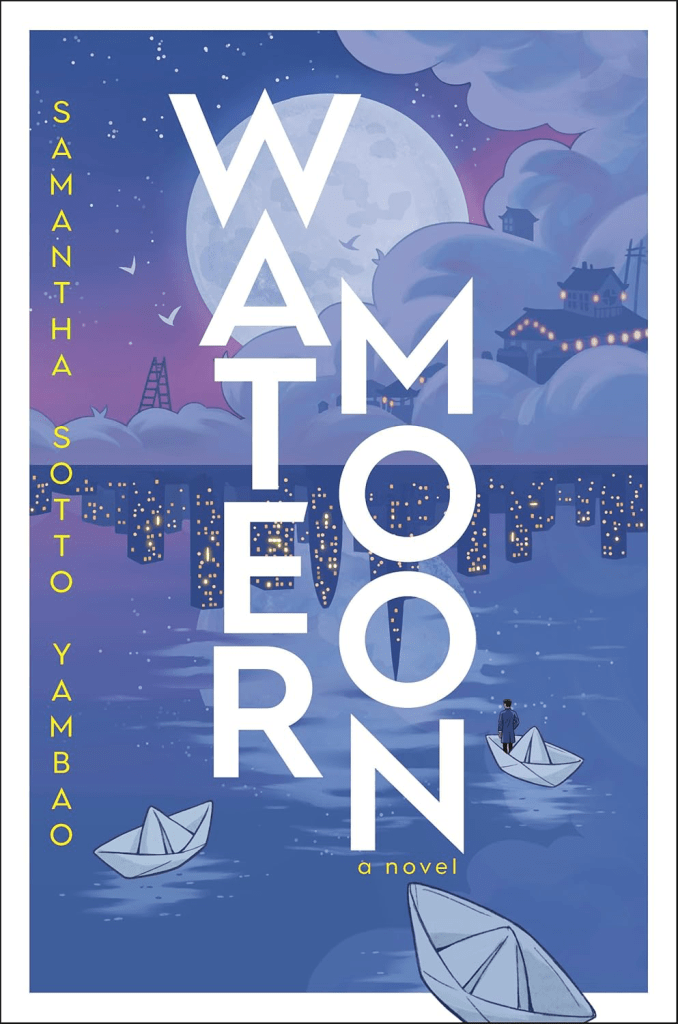
Water Moon – Samantha Sotto Yambao“And I smile when I think of all the times we had/On the beach in the winter, when the waves were mad/Down by the water, crystal clear/See her face in the forest, then it disappears…”

“Cuckoo Through the Walls” – Cate Le Bon

Sunday Songs has basically become one of those Scooby-Doo villain reveal scenes. You rip off the “Sunday Songs” mask, and it’s just a weekly excuse for me to blabber on about Cate Le Bon. You fools all fell for my trap!

Did Cate Le Bon just casually come out of the womb with years’ worth of fully-formed talent? I still have two albums of hers that I haven’t listened to, but I swear that she’s incapable of making a bad album. Mug Museum feels a lot more like a standard indie rock album than her more recent works, but even the more (marginally) accessible style couldn’t keep her from her quirky engine firing on all cylinders. Moments of somber contemplation (“Mug Museum”) are hand in hand with ragged rage (“Wild”), and yet all form the weave of Le Bon’s experiences surrounding the album. Most of it deals with the death of her grandmother and how Le Bon processed her sudden absence from the matrilineal line; for her, it was less about what her grandmother meant to her as an individual and more about how her family rearranged and shifted in wake of her absence. The titular Mug Museum is a kind of haunted house of sorts where memories live: she called it “an imaginary place where relationships are looked at and thought upon.” Walking through this album does feel like strolling through a museum built inside of someone’s old house; small objects hold centuries of memories, and every strand on a curtain or crack in a window holds a deep history. “Cuckoo Through The Walls” is one of the tracks that I felt exemplified this feeling the best. Its more restrained, steady pace feels like tentatively peering through all the corners of said aging, dusty house, glancing at the light illuminating unseen gaps in the floorboards. Le Bon describes a state where these memories have anchored her to the house, to the point where she almost becomes the house itself: “And I watched the dinner drown/I drank for hours/Never leave the house/Cuckoo through the walls/Lay still on the ground/Exhale the sound of symphonies.” Like her signature, left-of-center takes on the most universal emotions, her grief doesn’t keen, but sinks into all the hollows of her mind and body—and that might be more of an honest depiction of it than most songwriters are willing to take.

…AND A BOOK TO GO WITH IT:

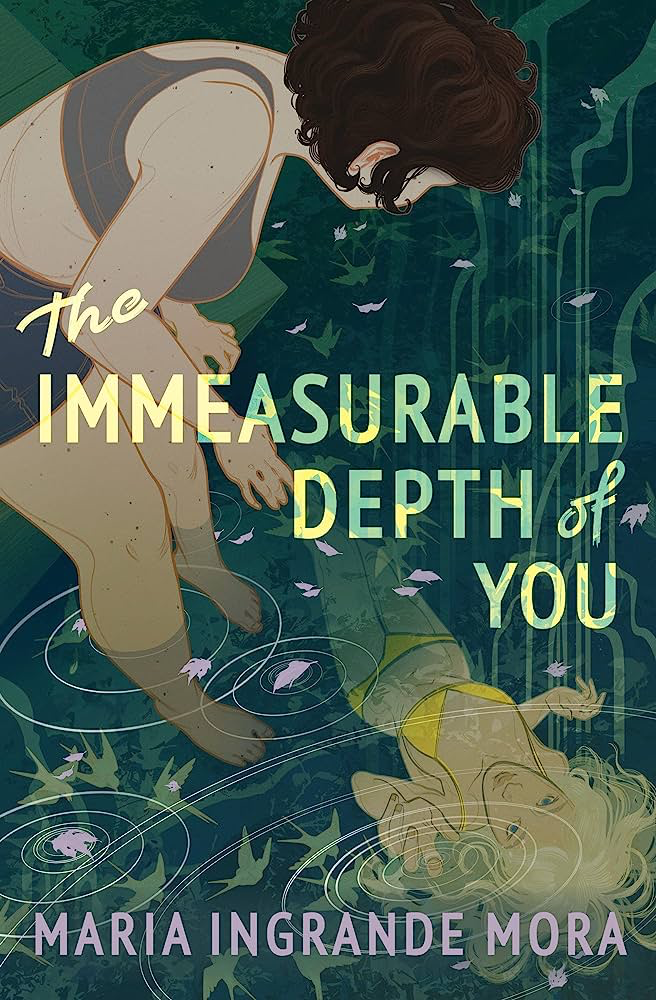
The Immeasurable Depth of You – Maria Ingrande Mora“I will not sing your name/And tie my heart to Jupiter/And watermelon dreams/I felt the fear of change…”

“Au Pays du Cocaine” – Geese

Alright, you got me. The jury’s still out if Getting Killed is getting lobbed onto the mounting pile of albums I want to listen to, but “Au Pays du Cocaine” makes me understand a modicum of the hype. Sometimes an album invades your Instagram feed for no reason, but half the time, there’s at least something to it, even if that something boils down to only a song or two. This song just makes me feel…safe. Yes, it’s seems more to be about a relationship with someone who’s ruined their life, but it feels so safe to me. It sounds like the friends you give you a ride when it’s too far to walk, and the people who texted me and offered their showers when the hot water shut off in my apartment. It’s a hastily-built up lean-to to give you a fleeting moment of shelter in the rain. The middle ground between my feelings about “Au Pays du Cocaine” and the more literal lyrics is that it’s a promise: believing that people can change, and being ready for them when they do. I’ve learned the hard way that for some people, you just have to let them heal on their own terms, but that you by no means have to forgive them, or even be there for that healing. There’s a hard-won freedom in that realization. But this song is for the ones that are worth sticking around for—the people you love despite their faults. It’s rare to find those people worth sticking around for, but maybe that’s why I feel such solace in this song—those people are few and far between, but this song is for them.

…AND A BOOK TO GO WITH IT:

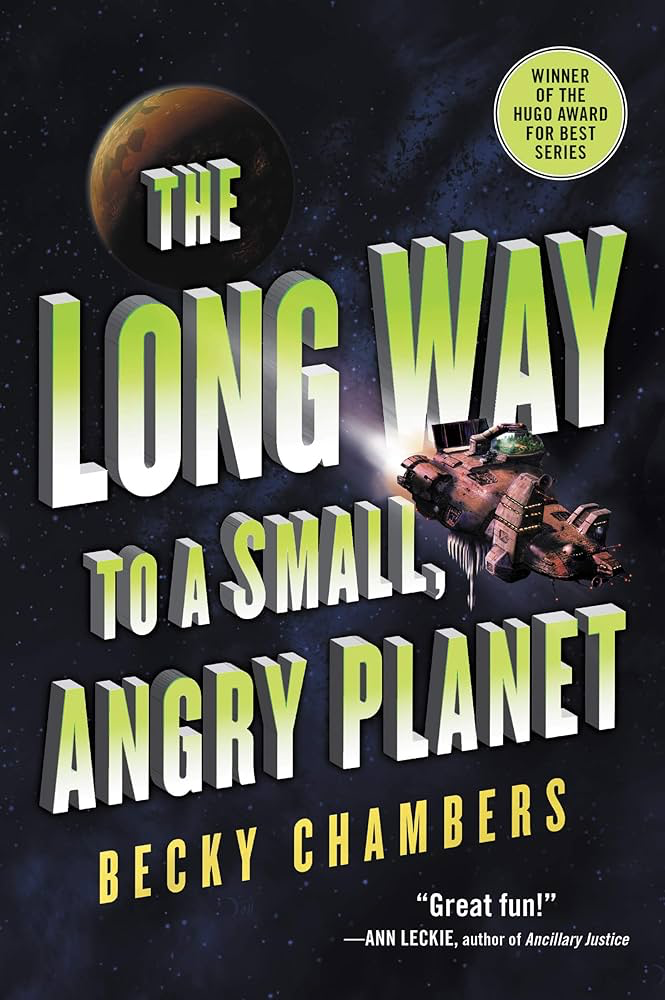
The Long Way to a Small, Angry Planet – Becky Chambers“You can be free/You can be free and still come home/It’s alright/I’m alright…”

Since this post consists entirely of songs, consider all of them to be today’s song.

That’s it for this week’s Sunday Songs! Have a wonderful rest of your day, and take care of yourselves!
Posted in Sunday Songs

Sunday Songs: 2/15/26

Happy Sunday, bibliophiles! I hope this week has treated you well.

This week: some of my favorite women in music getting unabashedly weird with it, the pioneering bisexuals of Britpop, and…crabs.

Enjoy this week’s songs!

SUNDAY SONGS: 2/15/26

“Wonderful” – Cate Le Bon

In her review of Crab Day for Pitchfork, Laura Snapes said this about the album’s inspiration (Cate Le Bon’s young niece replacing the mean-spirited pranks of April Fool’s Day for Crab Day, where you celebrate by drawing crabs): “nonsense is often the best response to nonsense, that the constructs we use to prop up our lives are often totally arbitrary.” Le Bon has had a deep sense of absurdity, but Crab Day as an album is built all about taking ordinary things in our life to task, but also about being faced with the fact that half of the things in our lives are arbitrary, flimsy constructs. Some of it’s done gleefully, as in the creation of Crab Day, but for others, it’s more emotional—“I Was Born on the Wrong Day” came out of Le Bon’s mother digging up her birth certificate and admitting that they’d had her birthday wrong for decades. Crab Day, both lyrically and musically, explores the pain that comes from realizing that our world is built on the flimsiest stilts imaginable, but also the glee that comes with spitting in the face of them and embracing life’s absurdity.

There’s always been quirkiness surrounding Le Bon’s music, but Crab Day feels like the moment that the eggshell split open and she fully embraced offbeat, unconstrained creativity. That’s not to say that any of her earlier work isn’t creative—quite the opposite, having just listened to Mug Museum—but this album is where her current sound began to coalesce in earnest. It’s much more guitar-oriented than her more recent works, but it’s got all of the hallmarks of what’s become her signature style: artful blares of saxophone, offbeat lyrics, and slanted melodies and rhythms that read like the audio version of a picture frame hanging at a crooked angle. “Wonderful” exemplifies that crookedness, easily the most unfettered moment of weirdness on the album. The guitars scream Lodger-era David Bowie, and the lyrics of mid-’70s Brian Eno. But the fact that seemingly every commenter in the YouTube comments section has an entirely different band comparison as to what it sounds like proves how original Le Bon’s unique arrangement of elements is. With everything from the xylophones to Le Bon’s vocals at a breakneck pace, it’s an ode to being constantly in motion: “I wanna be your motion-picture film, oh yeah/I wanna be your ten-pin ball, ball, ball.” In the context of the album’s crusade to expose life’s absurdity, it feels like a concentration of her spirit throughout this album, but also her career at large: to be adventurous in all sorts of ways, and to be constantly be searching for a new way of setting creativity and weirdness in motion.

…AND A BOOK TO GO WITH IT:

Floating Hotel – Grace Curtisit’s difficult to match a song as singular as this to a book, since it’s so distinct; but if anything, this would match the bustle of a Wes Anderson-esque hotel in space.

“Marigolds” – Kishi Bashi

Realizing that Kishi Bashi had written a song named after my favorite flower was already an exciting revelation, but finding out how engrossing of a song it is made that discovery all the better. Tinged with both joy and melancholy, “Marigolds” surrounds cross-generational experiences, and bridging the gap of realizing that everybody around you has a complex inner life, separated by time, but united in the here and now: “It’s the realization that another person’s perception of the world is just as real to them as yours is to you, and that this humility is the first step in living in harmony on a planet that is ultimately made up of 8 billion parallel universes.” With that emotional core to the track, the field of marigolds couldn’t be a more perfect metaphor—each bloom appearing similar on the outside, but each one having a unique, complex makeup that can’t be seen from the outside. His usual lush string arrangements are layered in a glimmering swarm evoking the delicateness of flower petals and the ephemeral wingbeats of songbirds. Paired with a gorgeously animated music video by Geoff Hopkinson, featuring marigolds that turn into fantastical, jellyfish-like beings, “Marigolds” is an utterly transportive track, scented with pollen and wistful longing.

…AND A BOOK TO GO WITH IT:

Record of a Spaceborn Few – Becky Chambers“I wish that I could grow up with you/I wanna see the world the way you do/I want to fall off the edge with you/I want to have fun with you…”

“Drink Deep” – Florence + The Machine

You guys, I’m sorry. Every time I hear a Florence + The Machine song, it’s described as some masterpiece that leaves permanent claw marks on your heart, and then I listen and I come back feeling…perfectly alright? I’m sure there’s something I’m missing, but some things just aren’t everybody’s cup of tea all the way. Objectively, Florence Welch has great vocal range, and I’ve never hated any song of hers, but I’ve also never thought to myself, “I need to listen to more Florence + The Machine.” Maybe part of it’s just that she’s been unfairly associated with the TikTokification of female rage (or, “female rage is when a woman sings loud and man is bad”) and “divine feminine” becoming a buzzword, but that’s not her fault at all. However, as I follow a lot of music publications online, I saw that Mark Bowen of IDLES was one of the producers on her latest album, Everybody Scream, so I was at least intrigued.

One of my dearest friends has been trying to convert me for quite some time (once again, SORRY), but I heard a snippet of this one, and I was hooked out of nowhere. It sounds almost nothing like any of her other songs I’ve heard. Again, Welch has a great voice, but I feel like a lot of her songs seem to rely on the strength of her voice in order to amp up the emotion, and the rest of the music doesn’t always follow. “Drink Deep” is more contemplative, but also, a lot eerier than I gave her credit for. Here, Welch translates her experience with her life passing her by as she’s touring (while everybody else moves about normally in their lives) as akin to being prisoner to the fae, trapped and ageless in their realm for hundreds of years while everyone else ages naturally: “What I thought was a night was a thousand years/What I thought was a sip was a thousand tears/But still, they said/Drink deep.” It devolves into a kind of Celtic-inspired folk horror where what Welch ends up essentially cannibalizing herself at the will of the fae—an apt metaphor for what the music industry puts its performers (especially women) through. The atmosphere of “Drink Deep,” with an ominous, thundering drumbeat, chimes, and a warbling choir reminiscent of Kate Bush’s “Rocket’s Tail,” evokes the passage into another, darker realm, a descent into an unbreakable deal made in blood.

…AND A BOOK TO GO WITH IT:

The Familiar – Leigh Bardugo“They gave me gowns and riches/Cut gold thread with their teeth/Every night I went to see them/No, I did not sleep/And every cup they brought to me/Oh, you know I did/Drink deep…”

“Moon” – Björk

Every time I mention Biophilia, it’s inevitable that I go on and on about the app—which is appropriate, since it is the backbone of the album. But I feel like you’re missing an entire chunk of the album if you don’t talk about the delicately constructed visual language of it—for me, you’re missing half the story if you don’t see the elaborate costumes and the artistry of the visuals. All of the music videos for Biophilia are showstopping, and the music video for “Moon” feels like the best introduction to the album’s aesthetic. Literally, it’s a moving version of the album cover, but the superposition of the moon phases over Björk’s body visually convey the lyrics and the concepts behind them. I love the jagged, glowing constellation-shapes surrounding her, both a map of the app and of a galaxy itself; and I cannot get enough of Björk’s costumes for this album cycle. That combination of her rusty, Mars-orange wig and the metallic shades all throughout her bronzy dress and the playable harp corset, against the stark black of the backdrop, are just such a memorable, cosmic color combination to me. The blue ringing her face and eyes brings out the contrast spectacularly. This is the epitome of a wholly realized creative vision brought to life. Granted, this is much later in her career, but it gives me some hope that maybe, in some ideal timeline, some of the projects that I’m envisioning can someday can get as much of my creative freedom inside of them as possible.

The best way that I can describe “Moon” is that I feel as though I’m listening to a perfect circle. Set in 17/8 sign to mimic the phases of the moon, the chorus of harps seem to circle each other, an elaborate, delicate Ouroboros that encircles itself forevermore. It takes a. rare genius to make a song sound like a shape, but that’s exactly the kind of musician that Björk is. Her mind!! Her MIND!! Having a lighter, more celestial tone for a song about the moon, a subject that often invokes more ominous, sweeping majesty or loneliness (see: Radiohead’s “Sail to the Moon,” Bachelor’s “Moon”) makes it stand out from its many, many peers; the instrumentation is so pearly and dewy, and her line about “adrenaline pearls” makes me think of “Cocoon” in the sweetest way. And more poignant still is how she relates these lunar phases to the phases we cycle through in life—”Best way to start anew/Is to fail miserably/Fail at loving/And fail at giving/Fail at creating a flow/Then realign the whole.”

…AND A BOOK TO GO WITH IT:

Activation Degradation – Marina J. Lostetter“As the lukewarm/Hands of the gods/Came down and gently/Picked my adrenalin pearls/They placed them in their mouths/And rinsed all the fear out…”

“The Drowners” – The London Suede

I think I just like 90% of Britpop. The only band in the genre that I’ve never liked is Oasis, and I’ve heard some argue that they’re not stylistically Britpop, but were just lumped into the genre because they blew up at the same time as bands like Blur and Pulp. I’m not sure if I can agree in good conscience just because I despise Oasis, but given what I’ve heard of them…it makes sense. Other than them, I’ve loved everything I’ve heard from the rest of the Big Four—and “The Drowners” is really convincing me that I need to listen to more of The London Suede.

At the forefront of every other explosive new subgenre, you will find a bisexual. The London Suede were one of the first bands to be called Britpop in earnest, and contributed a significant amount to its sound, although they were focused less on British social commentary and more on a dramatic, glam rock resurgence that recalled David Bowie’s storytelling and subversive sexuality and Morrissey’s literary-minded lyrics (and half-unbuttoned shirts). In their earlier days, they very much banked on the profitability and controversy of the queer imagery and lyrics in their band, as Bowie did back in the ’70s, from the lesbian couple on their self-titled album cover to Anderson’s obliquely queer lyrics and androgynous presentation. If he wasn’t bisexual, I’d honestly feel like it bordered on queerbaiting, relying on the shock value of subversive sexuality to make more money. But it’s not his fault, necessarily—God knows there’s legions of glam rock/metal artists from the ’70s and ’80s who glommed onto the queer aesthetics for the money it made them, and later disavowed queerness entirely. (Lookin’ at you, Alice Cooper.) Ultimately, The London Suede feel more like they’re indebted to English literary tradition to me—often queer, often subversive, and dramatically indulging in themes of class division and excess. That’s what Anderson and co. feels like to me, and “The Drowners,” with its cult of ambiguous sexuality, glamor, and wealth, feels like a worthy tribute.

…AND A BOOK TO GO WITH IT:

The Atlas Six – Olivie Blakethis brand of Britpop being big and dark academia being a major literary trend missing each other temporally is either a major blessing or a curse—they fit a little too well with each other.

Since this post consists entirely of songs, consider all of them to be today’s song.

That’s it for this week’s Sunday Songs! Have a wonderful rest of your day, and take care of yourselves!

Posted in Sunday Songs

Sunday Songs: 2/8/26

Happy Sunday, bibliophiles!

This week: unfortunately, the pink theme couldn’t be scheduled for the week of Valentine’s Day, so enjoy your pink disentangled from the holiday. Also, Madeline being pretentious from the age of 5, a whole lot of beep-boop-beep, and Kathleen Hanna’s answer to these trying times.

Enjoy this week’s songs!

SUNDAY SONGS: 2/8/26

“This Island” – Le Tigre

All rise for the anti-ragebait national anthem! The litany against ragebait, if you will.

I’m sure there’s some activism/politically-involved situation that Kathleen Hanna hasn’t written about, but you have to give it to her—in that sphere, she’s got a song for almost anything. Since 2024, every new Le Tigre song that I discover has hit hard in this political context, whether it’s the perennially relevant reminder to “Get Off The Internet” (destroy the right wing!) or the rallying cry of “Keep On Livin’.” Even in 2008, the internet already had shown the ugly side of not just enabling faceless trolls to spread misinformation, but for anger-inducing content to get the most engagement; it’s been a disaster for everything, really, but especially activism. Pair that with social media’s penchant to push the most shocking angles on news stories that are already shocking (and the sheer volume of said shocking, disheartening news), and you’ve got a recipe for disaster for anybody who wants to doggedly keep hope. It’s ground so many would-be activists into the ground, turning them into despairing doomers convinced that there’s no hope for the future.

“This Island” isn’t exactly the uplifting chant of “Keep On Livin'”, but it doesn’t necessarily need to be. Its target is that kind of person who’s so hopelessly entrenched in internet-peddled doom that they need a bucket of ice water to the face to snap them out of it. It’s tough love (part of the chorus is just a repetition of “You’re a mess!”), but it’s vital if you want to carry on. The brutal 3.3/10-rated (3.3? Did Le Tigre kick your puppy?) Pitchfork review of This Island lamented that the album sacrificed its normal political bite in favor of making it more watered down and commercially accessible. Yet although the instrumentals are smoother and the beats poppier, no major label production could ever defang Hanna and co.; “This Island” rings as an unflinching slap upside the head and a call to remember all of the good things happening in the world; the backdrop of the album was the War on Terror, but now, in…well, a new iteration of just that, this last verse hits harder than ever:

The horizon’s like a ship in flames tonight/You say you just don’t know/If you can take this city, cause the/Rent’s high, and the war’s on/And it’s last call/Even your friends look worried/My friends all think you’re smart/We think you’re super-fine/But it’s high time/I mean it’s high tide…”

I’m not above doomscrolling. Goodness knows that I’ve needed said splash of cold water in my face more often than not. It’s not our fault—social media has been deliberately manufactured to keep you hooked as long as possible; in just the same way, the ruling class wants to keep you hopeless and constantly posting so that you only make money for their corporations and don’t rise up. What matters most is what you are—and what you do—outside of the internet. What matters is that you have the strength of your friends and community beside you. Even when it seems like all hope is lost, we can take this city. Le Tigre took this city in 2004—who’s to say that we can’t do it in 2026?

…AND A BOOK TO GO WITH IT:

We Will Rise Again: Speculative Stories and Essays on Protest, Resistance, and Hope – edited by Karen Lord, Annalee Newitz, and Malka Olderseveral of the stories in here have a similar aim that Le Tigre did back in the day: to merge political awareness with art.

“Always On My Mind/In My House” (cover) – Pet Shop Boys

Separately, the elements of this song should not work. If you just said, without context, that this was an ’80s synth pop cover of an Elvis song (which was, as with most Elvis songs, a cover in and of itself) that devolves into acid house halfway through and stretches to nearly 10 minutes long, I’d probably be put off, to say the least. It’s like the musical version of “I hate gay halloween, what do you meanyou’re dressed as [insert combination of niche references]?” Things that were only possible in the late ’80s, folks. But against all odds, this is incredible. A few weeks back, I was listening to this on repeat while making a digital drawing, and I got into a flow state so queer that the drawing practically flew from my fingertips. Originally conceived to commemorate the 10th anniversary of Elvis Presley’s death, this, “Always On My Mind” later morphed into the 9-plus-minute remix and combination with “In My House.” Retrospectively, most of the writing on this song talks about how, by all accounts, this shouldn’t have worked. And yet Neil Tennant and Chris Lowe make it look like the combination of Elvis, house, rap, and random firework samples was always meant to be. It’s a case study in lulling a listener into a false sense of security before letting the floor drop out from under them. Every beat drop and twist works seamlessly—the switch from house back into the Elvis cover at 5:26 knocks me off my feet every time. You already need a boatload of talent for a song to sound effortless, but to be able to unite so many disparate elements and make it into a chart-topper—this was the #1 Christmas single in the U.K. in 1987.—takes a special kind of band.

…AND A BOOK TO GO WITH IT:

A Swift and Sudden Exit – Nico Vicentythematically, it fits nicely with this book, but this had to have been hidden somewhere in the ’80s scenes (or the ’90s ones, for that matter).

“Cover Me” – Björk

I always come back to Post. To me, it’s one of her most experimental albums, but not in the sense of musical genre—it’s one of her more accessible ones, right after Debut. But it’s much more experimental in its mindset. She sends her feelers out in every possible direction, and the joy of the album comes from the sheer range of emotions and genres she explored, from grimy, electronic tracks to an attempt to channel Chris Isaak’s “Wicked Game” (in the way that only Björk could). The adventurous spirit that she first fostered on Debut, playing the role of ingenue in both her life and music, practically explodes out here. You can hear it more clearly on the louder songs, whether it’s the bevy of strange instrumentals pulsating outwards or Björk herself actually screaming—another staple of her music that’s carried on 30 years post-Post.

“Cover Me,” the penultimate track on the album, is often forgotten in the deluge of other masterpieces stacked on top of each other on Post. But to me, it represents, both lyrically and musically, a key part of where Björk would go later on in her career. It’s a prickly yet twinkly song—the main body of the instrumental consists of hammered dulcimer, which is played in such a way that it feels cautious, like any sudden movement or snap of branches could trigger a trapdoor; the feeling is accentuated by the humid, jungle-like atmosphere, with all sorts of rattling noises that disappear just as quickly as they appear. Without a doubt, it’s one of the less accessible tracks on the album. Every time I listen to “Cover Me,” I feel like I’ve stepped into Henri Rousseau’s painting “Tiger in a Tropical Storm (Surprised!),” pushing aside the woodcut-looking leaves and treading lightly so as not to alert the snarling tiger inches away from me; it’s fearful, but the fear is outweighed by the ecstasy of proving that “the impossible really exists.” Her lyricism feels fairytale-like, as though she’s mapping out an entirely new land, looking over her shoulder to guide you with her commentary; With a sly smirk, she declares, “I’m going hunting for mysteries.” Taking another step forward, she whispers back to you, almost afraid to admit: “This is really dangerous/But worth the effort.”

According to Björk, she wrote “Cover Me” to poke fun at herself for making the process of making the album so pointedly different, and purportedly, difficult. And yet, as the black sheep even in an album swarming with oddball anthems, it’s paved the way for exactly the kind of career that Björk has made for herself. Every part of her life has been about pushing music to its limits, whether it’s bridging together music, science, and technology to make a stunning album and an educational app or creating entirely new instruments for her tours. Björk has never shied away from what’s dangerous, and her willingness to bend, stretch, and outright break boundaries, musically and societally. Though she’s known by more iconic lyrics, this one might just be the best to describe her career so far: “I’m going to prove the impossible really exists.” And if there’s anything to be learned from her endeavors, is that all of that danger was well worth the effort.

…AND A BOOK TO GO WITH IT:

The Search for Wondla (The Search for WondLa, #1) – Tony DiTerlizzi“While I crawl into the unknown/Cover me/I’m going hunting for mysteries/Cover me/I’m going to prove the impossible really exists…”

“Circuit” – Apples in Stereo & Marbles

Tragically, this song (and the album, Expo) aren’t even on YouTube. Criminal, if you ask me! But I think it should tell you how concerningly niche my music taste was, even as a child—”Circuit” was my favorite song when I was about 5. Less of a brag and more of a grim foreshadowing of me becoming an insufferably pretentious adult. Back in the day, I had this great little Hello Kitty CD player; I’ve got a specific memory of having this song on a playlist and having to press down on those thick, 2000’s buttons just so I could hear this song over and over, ad nauseam. I stand by 5-year-old Madeline—it never gets old.

Though it’s labeled under The Apples in Stereo, Marbles is the solo project of Robert Schneider, the Apples’s frontman; if you thought that you can’t possibly get any more beep-boop-beep than The Apples in Stereo…buckle up. Chiefly consisting of synths, Expo is nothing but electro-pop—emphasis on the electro. Every song I’ve heard from the album sounds like the kind of music that could only be made by squeaky robots from some ’50s pulp sci-fi movie. Little me specifically imagined Plex from Yo Gabba Gabba! singing it. It’s a self-contained sci-fi universe, complete with its alluring protagonist, some sort of robot or cyborg woman who “perceives circuitries/Inside everything she sees.” Lo and behold, this is the work of a man, not a machine. But with the precision applied to every single part of this track, “Circuit” truly is a well-oiled machine. Like the intricate, fragile fragments of a circuit board, every flourish of processed orchestral samples and every bubbly synth chord all work as cogs in a machine with so many moving parts, yet with effortless cohesion that so many artists can only dream of reaching. This is how you make a pop song. Embrace the beep-boop.

…AND A BOOK TO GO WITH IT:

The Infinity Particle – Wendy XuThe robot is gender-swapped here, but he sure does see electricity.

“Typical Love” – Cate Le Bon

“Typical Love” was cut from the Pompeii sessions, but according to Cate Le Bon, was “disassembled and reassembled it many times but it always felt like a second cousin to the other tracks so was put aside for a rainy day.” It’s in limbo between the production of Pompeii but with the kind of lyrics I would’ve expected on Michelangelo Dying, cataloguing the quiet, suffocating mundanity of a relationship gone stale. If it had any closer cousin on Pompeii, it would probably be “French Boys”; it has the same kind of wry comedy of Le Bon putting on airs—she might as well be muttering “Typical love, typical love” before taking a drag from one of those long, old-fashioned cigarette holders. But as with most of her tracks, “Typical Love” is anything but typical, with percussive bursts of her own breath, saxophone blares that bleed out like oversaturated watercolors soaking through thin paper, and an Eno-like taste for taking repetition to its logical limit, stretching melodies and words until they no longer feel like their original forms. It’s all at once angular and circular, like an abstract painting, woven from brightly-colored, dancing shapes.

…AND A BOOK TO GO WITH IT:

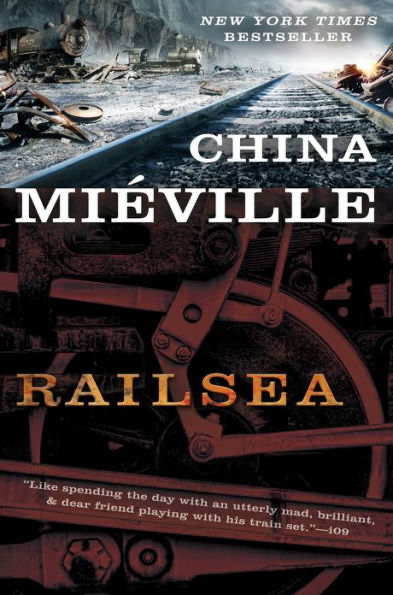
Embassytown – China Miéville“Nothing ever changed in your corridor eyes/Rely on me, baby/Rely on air/Only a shadow again/Typical love…”

Since this post consists entirely of songs, consider all of them to be today’s song.

That’s it for this week’s Sunday Songs! Have a wonderful rest of your day, and take care of yourselves!
Posted in Sunday Songs

Sunday Songs: 2/1/26

Happy Sunday, bibliophiles! I hope this week has treated you well.

This week: who would win in a fight: righteous haterism or unfettered whimsy? Neither, actually. They’re both more powerful when they’ve joined forces.

Enjoy this week’s songs!

SUNDAY SONGS: 2/1/26

“Lipstick on the Glass” – Wolf Alice

It feels redundant to say that this is a very 2010’s song for it coming out of the 2020’s—”Lipstick On The Glass” only came out in 2021, and Wolf Alice were active all throughout the 2010’s anyway. And yet, I can’t shake how much they’ve crystallized that 2010’s indie sound. This song feels like a cousin of Eisley’s “Currents,” a favorite of mine in middle school, which came out in 2013. Both of them feel very cloudy and foggy, but adorned with clear, angular sparks that stick out of the mist like fragments of crystal. Even through the almost Cocteau Twins-kaleidoscope in the chorus, Wolf Alice have set up a system of lighthouses: the sharp percussion, and Ellie Roswell’s vocals, that range from a husky whisper to a diving bird of prey cutting through the sky. Free-floating and without much of an anchor, “Lipstick On The Glass” ha such a sense of urgency despite the deliberate blending of most of its musical shapes and textures into each other, making for an exciting, cinematic blend—especially when the chorus first kicks in. That beat drop is even more gratifying paired with Roswell’s lyrics, succumbing to the siren song of an old lover. But even after that beat drop, “Lipstick On The Glass” is beguiling all the way through.

…AND A BOOK TO GO WITH IT:

The Stars Undying – Emery Robin“Oh, my body does deceive me/Just as did yours/Though we’re fighting different wars/In our ways…”

“Harbour” – Cate Le Bon

Straightforward for Cate Le Bon usually means that it’s still delightfully strange. When I first listened to Pompeii, “Harbour” was actually one of my least favorites—I never disliked it, but it wasn’t as in-your-face inventive as some of the others on the first listen. It’s a case of every song on the album being excellent, so the benchmark is extra high from the get-go, making songs like this get lost in the dust. To be fair, after experiencing “Dirt on the Bed” for the first time tends to overshadow all else when you listen to Pompeii, but that’s no excuse for leaving a song like this to languish. I maintain that it’s one of the weaker songs on the album, but at this point, a weak Cate Le Bon would be a career highlight in your average artist’s hands.

Pompeii as a whole has a pretty even, calm pace, as adorned with all kinds of weirdness as it is. “Harbour” got lost for me because it didn’t have the same strangeness on the surface, but the more I listen, the more layers I find hidden within it. That’s the joy of Cate Le Bon for me—even her more radio-friendly songs conceal everything from watery, pre-Michelangelo Dying synths to spurts of saxophone that sound like the happier cousin of the brass blasts at the end of “Dirt on the Bed.” Pompeii as a whole is quite ’80s, but not in the way of shoving neon synths down your throat—it’s just a more subtle exploration of the sound rather than a way to farm nostalgia; even so, the specific use of saxophones in “Harbour” veered too close to the latter territory on my first listen. Once again, the bar just breached the stratosphere, given how seamlessly Le Bon has been able to integrate saxophones (and brass in general) into her music without it being full on “Careless Whisper” cheese. Now, though she’s used it in better ways, it’s still a cut above the rest. That goes for “Harbour” as a whole—she’s a master at manipulating seemingly ordinary elements and twisting them just far enough to the left to make you do a double-take. She’s full of surprises.

…AND A BOOK TO GO WITH IT:

The Ministry of Time – Kaliane Bradley“What you said was nice/When you said my face turned a memory/What you said was nice/When you said my heart broke a century…”

“Presumably Dead Arm” – Sidney Gish

I’m back with another unexpected kick back into late 2019 from my shuffle…OOF. This one came during the period where I discovered some the fruitful harvest of offbeat indie rock after I got Apple Music. The floodgates were open, allowing me to listen to way too much girlpool…and this.

The thing that stands out to me about Sidney Gish is that I think she’s a key part of a newer aesthetic that will probably be defined more in retrospect. She’s the spitting image of a certain brand of Gen Z, internet-bred musician who records their music on their laptops and cut their teeth with covers on YouTube. (Gish, for the record, has a very sweet cover of The Magnetic Fields’s “All My Little Words” that she recorded in her shower that stars her pet rabbit. That should give you an idea of her general vibe.) They’ve all got purposely poorly photoshopped album art and quirky, vaguely surreal lyrics. For Gish, I think she’s at least an inch above the rest because her lyricism is, for the most part, very distinctly her and not necessarily just there to service a meme-y aesthetic. Yet I’m almost certain that it’ll date her music instantly, given a decade or so. Ed Buys Houses is still a solid, unique album, but there’s no doubt that it’ll be more and more distinctly 2016 as time passes.

I think “Presumably Dead Arm” was the first song of Gish’s that I ever listened to, and to this day, the charm of it mostly holds up. The sound is so distinctly late-2010’s, complete with the fuzz you get from recording music off of an aging laptop speaker. Now that it’s 2026, I can’t see the title without hearing it in the same cadence as this, yet even so, it’s just such a softly charming little tune. It has a very late teenage kind of wistful melancholy to it, but with the added through line of finding said presumably dead arm in a graveyard (and taking it to prom). Between laments about isolation and drunk and high friends, Gish’s distinct flavor of lyricism shines through: “I’d rather let the poor kid sleep/But he’s tripping balls, he’s tripping testes/LSD, post-wisdom teeth/He got lost in the shower/And he barely knows the hour.” But what hits me now, seven years after I initially found this song, is the genuine fear hidden behind some of the lyrics, the kind you can only get when you’re approaching your 20’s and don’t have a clue what you’re going to do about growing up: “And all these pretend spouses are a happy storybook/That’ll turn to stark non-fiction in the time it took/For me to notice that I’m old, which means I’ll be thirty and happy/Likely married to personified business-casual khakis.” As silly as some of those lines are, they’re delivered with such an urgency that for a fleeting moment, I feel them like a skipped heartbeat in my ribcage. It’s uncanny, how quickly Gish can switch from abject silliness to existentialism. But that’s very Gen Z—and very Sidney Gish, in the end.

…AND A BOOK TO GO WITH IT:

The Girl Who Was Convinced Beyond All Reason That She Could Fly – Sybil Lamban underrated oddball of the book world, as Sidney Gish is to indie rock.

“Therefore, I Am” – Jim O’Rourke

I’m all for having compassion and empathy in your heart, but there’s a special, beautiful place in this world for songs that innately feel like a massive middle finger. Sometimes it’s healthy to indulge the spite and blast your fuck-you song. And if you’re looking for a good fuck-you song, then boy, do I have the song for you.

I mainly knew Jim O’Rourke from his far calmer, instrumental world and his role as the longtime producer for much of Wilco’s discography. I knew that he had a solo career, but I honestly thought that it was more along the “Bad Timing” side than this. Apparently he’d been so steeped in his more experimental musical roots for so long and decided to try his hand at a more straightforward indie rock album, and came out the other side with Insignificance. It’s a shame that he doesn’t tap into lyric-oriented music and sing more—he’s got a great voice. And I’m not saying the stuff about the lyrics because they’re some poetic, soul-searching kernel of wisdom. They just happen to be some of the most artfully vitriolic disses I’ve heard put to song. Take this one:

“We are on a sinking ship/But I’d like to stay on board and shoot the cannons at you.”

DAMN. DEDICATION. On my first listen, I just kept hearing this over and over with each successive lyric:

I would not want to be on the receiving end of that. I pity whoever Jim O’Rourke was beefing with circa 2000. “As you can see/I’m a happy guy”—are you sure, Jim? For a song sung so calmly, every line is a gleeful slap in the face—it’s not just a fuck-you to whoever it may concern, but an open brag about how much his life has improved ever since they ended things. The instrumentals have a very Brian Eno, repetition-oriented feel to them (with a guitar tone that scratches every good itch in my musical brain, I might add), and yet even without any screaming or hammering guitars to pieces on stage, it manages to be so cleverly bitter under such an unassuming guise. Perfect cure-all for any and all breakups, toxic friendships, or just thinking about the excess of scummy authority figures all around. I need some Riot Grrl bands to cover this. God, it’s so fun.

…AND A BOOK TO GO WITH IT:

To Shape a Dragon’s Breath – Moniquill Blackgoose“Why do you hide behind somebody else?/There’s one too many in this room/And I think it’s you…”

“Octopus’s Garden” – The Beatles

I know the whole situation of 3/4 of the Beatles being at each other’s necks during the Abbey Road/Let It Be sessions while Ringo Starr just made a song about an octopus has been memed to death. But really? We should all aspire to be like Ringo in that scenario. Observe the chaos around you and defy it openly with silliness and childlike wonder. Being labelled as the goofy Beatle must’ve had its perks, because I doubt anybody would’ve expected “Octopus’s Garden” to have as lasting of an impact as it did. It’s a classic, both in the Beatles sense and in the sense of most every child since 1970 having fond memories of it. And it’s a classic for a reason. Unlike some of the other more obliquely “joke” Beatles songs (see: “Wild Honey Pie,” which, I’m gonna say it: a thing of sheer beauty), the production is staggeringly good. It came on shuffle the other day, and when I just expected to have a little laugh with Ringo, I got blown away at just how tight of a composition it is—the piano arrangement? George Harrison’s guitar riffs? The harmonies? EVERYTHING? For a song that often gets dismissed as one of the more shallow songs in their catalogue, “Octopus’s Garden” has all manner of hidden layers to it, like bits of seashells hiding just beneath the surface of the waves.

…AND A BOOK TO GO WITH IT:

Sea Sirens – Amy Chu and Janet K. LeeI’m convinced that this book is set exactly where Ringo Starr set “Octopus’s Garden.” We found it, gang. We found the Octopus’s Garden…

Since this post consists entirely of songs, consider all of them to be today’s song.

That’s it for this week’s Sunday Songs! Have a wonderful rest of your day, and take care of yourselves!
Posted in Book Review Tuesday

Book Review Tuesday (1/27/26) – A Swift and Sudden Exit

Happy Tuesday, bibliophiles!

First off, I figured I would share this resource with you all. My heart continues to break from seeing ICE violence wracking Minneapolis. If you’re financially available, here’s a post with a comprehensive list of places to donate to support the good people of Minneapolis. If you’re not financially able: continue to spread the word! When the government continues to propagate blatant lies, your words are the best weapon to use against them. Rest in power to Renee Nicole Good, Keith Porter, and Alex Pretti. ABOLISH ICE.

Here’s another book that I got with some gift card money for Christmas. I’m always on the hunt for more books with good bisexual rep, especially when it’s in genre fiction. This indie-published time travel romance between a time traveler from the post-apocalyptic 2050’s and an immortal caught my eye immediately, in no small part thanks to the wonderfully comic book-y cover. Though it wasn’t without its flaws, A Swift and Sudden Exit was an emotional and action-packed romp through time and space.

Enjoy this week’s review!

A Swift and Sudden Exit – Nico Vicenty

Zera lives in a post-apocalyptic 2058, where a geomagnetic storm nearly two decades ago plunged Earth into almost uninhabitable conditions. The remains of the military are scrambling to make things right, and the only way out of the wasteland is time travel. But when Zera travels back to 2040—the date of the geomagnetic storm that started it all—she sees a woman who claims to have known her, and may just be immortal. Zera follows this woman over centuries as she struggles to find the missing piece of the puzzle, but will this mysterious, immortal woman be more than just a means to reverse the apocalypse?

TW/CW: homophobia, violence, police brutality, vomit, abuse, suicidal ideation, stalking, blood, murder, loss of loved ones

Maybe the real geomagnetic storm was the bisexual romance we made along the way?

A lot of the reviews for A Swift and Sudden Exit that I’ve read have talked about how this novel couldn’t seem to make up its mind on whether it wanted to be sci-fi or romance. This problem never popped up for me, and I think that might be the novel’s hidden strength. It wasn’t afraid to put the sci-fi and romance elements at equal importance. Vincenty did an excellent job of developing these aspects in tandem, and it made for a very unique mix of genres. The worldbuilding was sound for the most part, but the same attention was paid to making Zera and Katherine’s romance into something that had a very real, slow-burn progression. I felt just as much tension with Zera trying to prevent the geomagnetic storm as I did with her will-they-won’t-they dynamic with Katherine. It’s such a fun premise to begin with—a romance between a time-traveler and an immortal—but Vincenty delivered on both aspects. A Swift and Sudden Exit succeeded for me in part because equal effort was put into the two most disparate parts of the novel, and the merging of the two felt seamless.

The most compelling parts for me were how Vincenty explored both the past and the future. The radiation-wracked future was appropriately bleak, and I loved the atmosphere she created with Zera and the others in their bunker. Just the same, I loved Zera and Katherine’s journey through time. My only critique was that I wanted to see more of the 1884 period—I feel like the whole failed Arctic expedition subplot was way too interesting to only get a single chapter. Come on. Yet beyond that, I loved seeing the different time periods across the United States. Vincenty had a great balance of having some fun, romantic notions of the time periods that Zera and Katherine visited, but also of the very real dangers they presented for queer women like them. Zera and Katherine both being bisexual made my heart so happy, but I appreciated Vincenty’s approach to writing them navigating more unsafe time periods; it didn’t shy away from queer-related issues (including police brutality and the AIDS crisis), but it never veered into full-on trauma porn territory. Vincenty’s strength in this novel is balance.

However, throughout A Swift and Sudden Exit, I found myself unable to fully suspend my disbelief. Although the worldbuilding was fairly solid—I’m honestly fine with the immortals bit not being explained fully—it was the stakes that made me suspicious of the story. Even though this is presumably an incredibly dire situation with world-ending stakes, the remains of the military seemed completely content to let Zera go on all manner of borderline frivolous missions that conveniently lined up with her meeting her sexy immortal girlfriend. Sure, you’ve got to let some plot conveniences go just to keep the story going, but given that Zera’s pretty low in the chain of command (and on Colonel Vylek’s nerves almost constantly), it didn’t make sense that she hadn’t been demoted or kicked off the mission at least halfway through the novel. Additionally, a lot of the problems got resolved far quicker than they should’ve—the funding getting cut for the time travel initiative comes to mind. Seems like a huge problem, and yet it got resolved in the span of maybe 1, 2 chapters tops? It didn’t make sense. I can chalk part of it up to the pacing—A Swift and Sudden Exit has very swift and sudden pacing, giving us little time to rest; it worked when it came to some of the more climactic scenes, but not when glossing over important plot points.

Additionally, I found Vincenty’s writing style to be a bit bare-bones. It was entertaining, but I never found myself thinking that it was great. She did an excellent job with describing the historical time periods and post-apocalyptic 2058, but I think there could’ve been a lot more done with the character writing. Zera and Katherine were developed well, but a lot of the other characters, even the more important ones, felt like window dressing at best. Until the last quarter, Kissi didn’t function as much else than a witty sidekick for Zera. Without spoiling anything, the twist about Byrd came out of nowhere, but I feel like that’s more of a consequence of his character rarely appearing and not getting much development other than quirky banter. Colonel Vylek was much more secondary, but even though I gather her presence was meant to feel like a threat, she never did; maybe that’s because all of the obstacles that she put in front of Zera got resolved so quickly. Had they been developed more, especially Byrd and Colonel Vylek, I think the stakes issue might have been partially resolved. They never felt like real antagonists (or even just roadblocks, in Vylek’s case). I’m not saying that they needed to be on the importance level of Zera and Katherine, but given the roles they had, they could’ve been more distinct and developed.

All in all, an ambitious debut that didn’t fulfill all of its promises, but provided an adventurous, sapphic journey through time nonetheless. 3.5 stars!

A Swift and Sudden Exit is a standalone, but Nico Vicenty is also the author of Bone Dresser and Death Between the Stars.

Today’s song:

love love love crab day!!

That’s it for this week’s Book Review Tuesday! Have a wonderful rest of your day, and take care of yourselves!
Posted in Sunday Songs

Sunday Songs: 1/25/26

Happy Sunday, bibliophiles! I hope this week has treated you well.
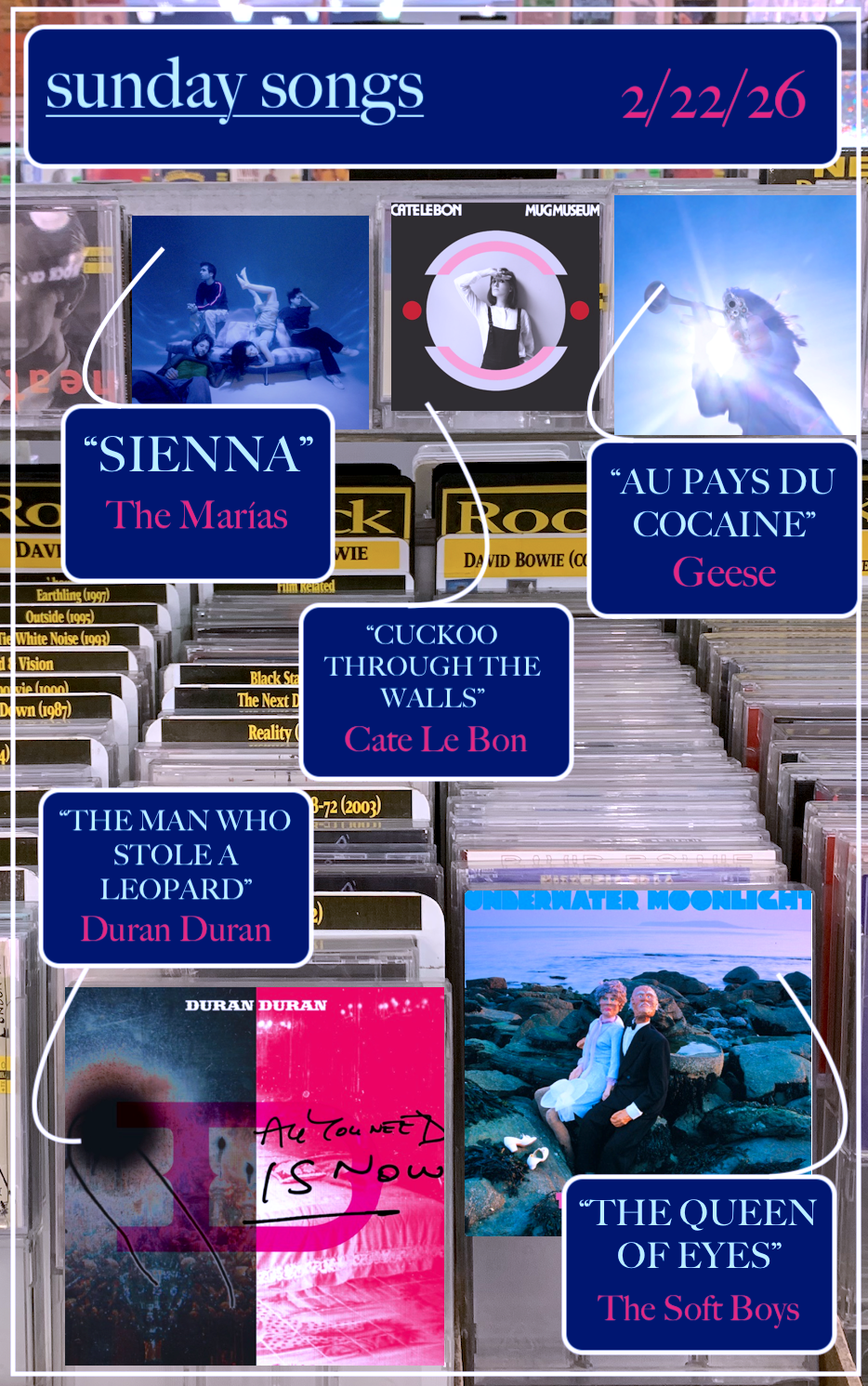
This week: Here it comes again; a fantastic voyage to Palo Alto to answer this essential question: where’s my phone? It’s been undone!

Enjoy this week’s songs!
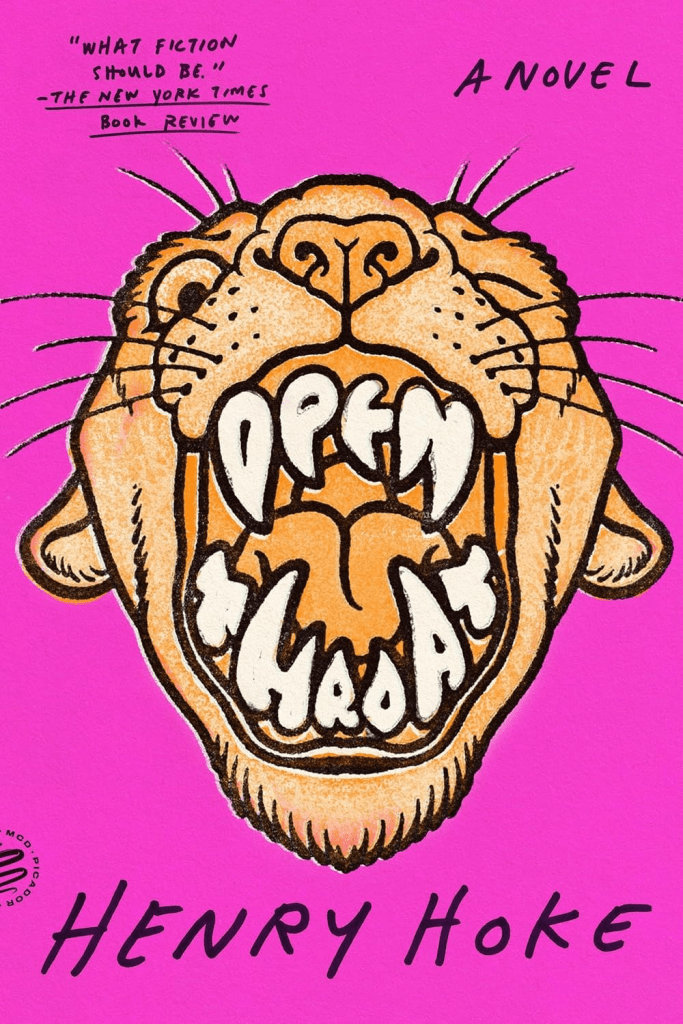
SUNDAY SONGS: 1/25/26

“Where’s My Phone?” – Mitski

It’s finally come to that time of year when I start accumulating albums that I’m looking forward to. Nothing’s About to Happen to Me, which is set to release on February 27, is topping the list at the moment for sure! Mitski is back for her first album in two and a half years, and as usual, she’s set to put a pulse on the neuroses of the world; Nothing’s About to Happen to Me seems to be a concept album about a recluse who never leaves her cluttered house. With the aesthetics of cats and old wallpaper, this album has such a clear image—and an intriguing one. Mitski channels some of her heavier guitar work on “Where’s My Phone?”; it’s an exciting sonic callback, like she’s been dusting off the old Bury Me at Makeout Creek sounds (!!!). Adopting a falsely cheery tone, Mitski sings of this character desperately repressing every possible source of negativity, yearning to be “clear glass with nothing going on.” The sentiment of “I keep thinking surely somebody will save me/At every turn I learn that no one will” is pure Mitski all the way down, but it’s refreshing to see Mitski going headfirst into a new character; her introspection, fictional or nonfictional, is where her art shines. Plus, that music video, in which Mitski’s multigenerational home gets assailed by dozens of strangers, is nothing short of bonkers. Definitely somebody’s vivid anxiety dream, for sure.

For some reason, my mind got stuck on the classic censored beep sound on the “I would fuck the hole all night long” line. Sure, we are in the age of musicians proactively self-censoring, but of all musicians, Mitski seems like the last one to do that, especially with how she’s clawed to keep her individuality—and sanity—intact in the music industry. She’s not a Taylor Swift type, and she hasn’t shied away from profanity before. There’s no clean version of the song, and the music video has it too—and yet the official lyrics don’t censor it. So what’s the deal? Was it some sort of artistic touch for the album’s central character’s supposed shame and guilt? I still haven’t come to a conclusion myself, but I swear that it’s intentional. Whatever the case, “Where’s My Phone” buzzes with neurosis, crunching at the edges, an ember of anxiety.

…AND A BOOK TO GO WITH IT:

I’m Thinking of Ending Things – Iain Reid “I keep thinking surely somebody will save me/At every turn I learn that no one will/I just want my mind to be a clear glass/Clear glass with nothing instead…”

“Fantastic Voyage” – David Bowie

As calm of a song “Fantastic Voyage” is, it’s a certainly eerie start to Lodger. I finally got around to listening to the album in its entirety not long ago, while mourning 10 years since Bowie’s passing in 2016. Listening to Lodger not long after Taking Tiger Mountain By Strategy put me in an irreparable chokehold makes me realize the sheer impact of Eno on Bowie—his weirdness was all there, but after decades of being mainstream, it was Eno who resurrected the less palatable parts of weirdness. I’m sure it was less unexpected at the conclusion of the Berlin Trilogy, but expecting another “Starman” and getting…I dunno, “African Night Flight” must’ve been some unparalleled whiplash. And he’d keep the act going throughout his entire career. In a way, Lodger is a microcosm of what his career would later be. There’s no shortage of tricks up his sleeve, from the strange, often eerie left turns to the sneakier tricks; for one, “Fantastic Voyage” and “Boys Keep Swinging” have an almost identical chord progression, but their atmospheres are so radically different that I didn’t even notice. It’s a trickster kind of album, obstinate in its mission to not be boxed in.

After falling back to Earth, the Berlin Trilogy got much more worldly, and Lodger was its peak. The entire album reeks with the recollection that the world is rife with the unknown, be it in places unseen or the machinations of politics. “Fantastic Voyage” is the thesis of that song; it reads like a scrawled diary before the apocalypse, and it very well could have been, what with the threat of nuclear annihilation and the Cold War on Bowie’s mind. He pits the casual dehumanization of entire peoples against the plea for the dignity of all individuals. He looks skyward, pondering the missiles that could rain down on the population and end everything in an instant. But in the midst of all this turmoil, decades after 1979, the final verse rings truer than ever: “They wipe out an entire race and I’ve got to write it down/But I’m still getting educated/But I’ve got to write it down/And it won’t be forgotten.”

Oof. Certainly feels like a slap in the face, given that ICE has been snatching children off the streets and shoots unarmed civilians in Minneapolis, and I’m just holed up in my apartment trying to get my thesis done. Yet Bowie’s words feel like a guidebook. I’ve got to write it down—I interpret that both in the sense that we have to commit the crimes of these monsters to paper, lest the government conveniently paints them in a more pleasant light (as they already are), but also that in spite of everything, we have to keep on with our creativity. Sometimes, all we can do is write. Of course, that doesn’t make political action, however small, null and void, but sometimes it’s all you can do but journal everything around you to stay sane. All that matters, both for Bowie and for all of us, is to keep the pen moving—that keeps our minds sharp, it creates a record of the soul.

…AND A BOOK TO GO WITH IT:

Do You Dream of Terra-Two? – Temi Oh“Remember it’s true/Dignity is valuable/But our lives are valuable too/We’re learning to live with somebody’s depression/And I don’t want to live with somebody’s depression/We’ll get by, I suppose…”

“Palo Alto” – Radiohead

In a move that’s probably stunned nobody, I’ve decided to become the insufferable neighbor and take up collecting vinyl; my parents were nice enough to gift me with a record player, as well as my two favorite albums: David Bowie’s Hunky Dory and Radiohead’s OK Computer. I can’t thank them enough. My neighbors, on the other hand, are probably rueing the day that they had to hear “Fitter Happier” through the walls without warning. Your honor, I plead “whoopsie daisies.”

OK Computer—specifically, the 2017 remaster with all of the b-sides, OKNOTOK—all but swallowed me whole in my freshman year of high school, and the version of me that got chewed up and spit out was irreparably, permanently changed. Whether it was for the best or the worst is up to interpretation, but either way, it’s given me a love of Radiohead that hasn’t waned to this day, more than seven years after I first listened to the album. However, at that age, I was still in the woeful process of immediately deleting whatever songs that didn’t hook me on the first few listens from my library. The destruction left in the wake was irreparable—and it also made me completely forget that this absolute gem existed. I can’t even put my finger on why it wasn’t a favorite at the time; the only reasonable explanation is that OK Computer is just so jam-packed full of songs that shattered my brain that brain-shattering became the standard. I was harsh back then.

Yet on my new record player, “Palo Alto” came out of left field. In the mindset of Thom Yorke, I can sort of see why this one got the axe back in the day—musically, it’s less adventurous than some of the other tracks. It’s very much of the same, more straightforward rock/Britpop crop of The Bends, despite the avalanche of fuzz and decorative beep-boops. Thematically, it’s on par with the anxiety of OK Computer, with the tiresome monotony of corporate life: “In a city of the future/It is difficult to concentrate/Meet the boss, meet the wife/Everybody’s happy, everyone is made for life.” Even if it’s not as compositionally inventive as some of the a-sides, even Radiohead’s more straightforward songs are a cut above the rest, and “Palo Alto” is proof. With the sudden, grinding assault of Jonny Greenwood and Ed O’Brien’s guitars against Thom Yorke’s exasperated delivery of regurgitated small talk, it encapsulates the exhaustion of being trapped in an endless cycle of work buttressed only with surface-level interactions.

…AND A BOOK TO GO WITH IT:

Embassytown – China Miéville“In a city of the future/It is difficult to find a space/I’m too busy to see you/You’re too busy to wait…”

“Here It Comes Again” – Cate Le Bon

I regret to inform you that I’ve been listening to way more Cate Le Bon again, but I can’t help it that it faintly fits the vibe of my honors thesis. Michelangelo Dying, Pompeii, and Reward all got revisited last week, and you will be hearing about it. This is, once again, a threat.

Among the many impressive things about Cate Le Bon is the myriad ways that she makes her music sound innately aquatic. I talked about how watery all of Reward feels when I first listened to it back in July, with “Miami” and its sounds of aquarium gravel and bubbles. Unlike a lot of her songs, “Here It Comes Again” feels more like water rhythmically; with an almost waltz-like rhythm, it feels like the motion of a plastic toy boat being carried out to sea. The melody continually repeats and lives by eating itself, a gently cyclical waltz across a flooded ballroom covered in algae. That precise quality of the melody is what enhances the lyrics. It’s implied in the title (and the chorus), but “Here It Comes Again” drowns in monotony, its sonic eyelids growing heavier with each repetition: “Man alive/This solitude/Is wrinkles in the dirt.” Very few artists make solitude and dreariness into such musical feasts like Cate Le Bon does—if it’s loneliness, she’s spun it into something as appealing as a bowl of candies with brightly-colored wrappers.

…AND A BOOK TO GO WITH IT:

Here Beside the Rising Tide – Emily Jane“Man alive/This solitude/Is wrinkles in the dirt/I borrowed love from carnivals/Set it in a frame/Here it comes again…”

“Been Undone” – Peter Gabriel

HE’S BACK! PETER GABRIEL IS BACK TO SAVE 2026!

Once again culminating in an album coming out this December, o\i is being released in singles corresponding with each full moon of 2026. Three days into 2026, it gave me some hope—and a bittersweet full-circle moment for me. I spent the spring semester of my freshman year of college listening to i/o‘s singles, and I’ll be spending the spring semester of my senior year listening to its inverse. The songs comprise of both castoffs from the i/o sessions and from further back in his career; according to this video, the chord progression for “Been Undone” has been on the back burner for several decades. As the starting gun for the album, it’s an expression of some of what I love best about Gabriel: his boundless creativity and his grounded humility. “Been Undone” is all about learning moments—the ones that cause us pain or overwhelm us, but ultimately teach us something valuable: “By all the forms that you get from the Mandelbrot set/I’ve been undone/By the recursive slaves in the home of the brave/I’ve been undone.” I’m assuming the latter is in reference to the deeply broken U.S. prison system, but back to back with a mathematical concept that results in dizzying, fascinating patterns, it proves the song’s point: both great wonder and great pain can be the origin of learning. Musically, I thought it was going to be a more standard new-era Gabriel song, and it continues so for nearly 6 minutes; but at 5:59, he takes a left turn back into “The Tower That Ate People” territory, turning a pleasantly synthy tune into his personal brand of almost-industrial, proving that even at 74, he has no shortage of tricks up his sleeve.

Also, the bit where Gabriel was asked about the Bright/Dark-side mixes and if he allows the producers to play with the structure cracked me up—probably the clearest vocalization of “no <3” I’ve ever seen HAHA

…AND A BOOK TO GO WITH IT:

Life Hacks for a Little Alien – Alice Franklin“Though I want to observe, it keeps touching a nerve/And I’ve been undone/By the past that you trace, by a moment of grace/I have been undone…”

Since this post consists entirely of songs, consider all of them to be today’s song.

That’s it for this week’s Sunday Songs! Have a wonderful rest of your day, and take care of yourselves!