
Happy Sunday, bibliophiles! I hope this week has treated you well.
So last week, I got a comment on one of my Sunday Songs posts commending my song/book pairings. At first, it was nice to be recognized…and then I realized that the comment reeked of AI, was inexplicably posted four separate times, and came from a website that makes AI-generated playlists based off of book pairings. BOO, TOMATO, TOMATO!! USE YOUR BRAIN! Anyway, as always, you can get your completely AI-free, human-made, pretentious book-music pairings from an exhausted post-grad right here, and you don’t have to use up enough water to fuel a city to do it. There’s no excuse to use AI for much of anything these days. But this? Why deprive yourself of fun?
This week: Ziggy Stardust didn’t need a lawyer, but I’m defending him anyway. Plus, Björk does show tunes and Cate Le Bon enhances everything that she touches.
Enjoy this week’s review!
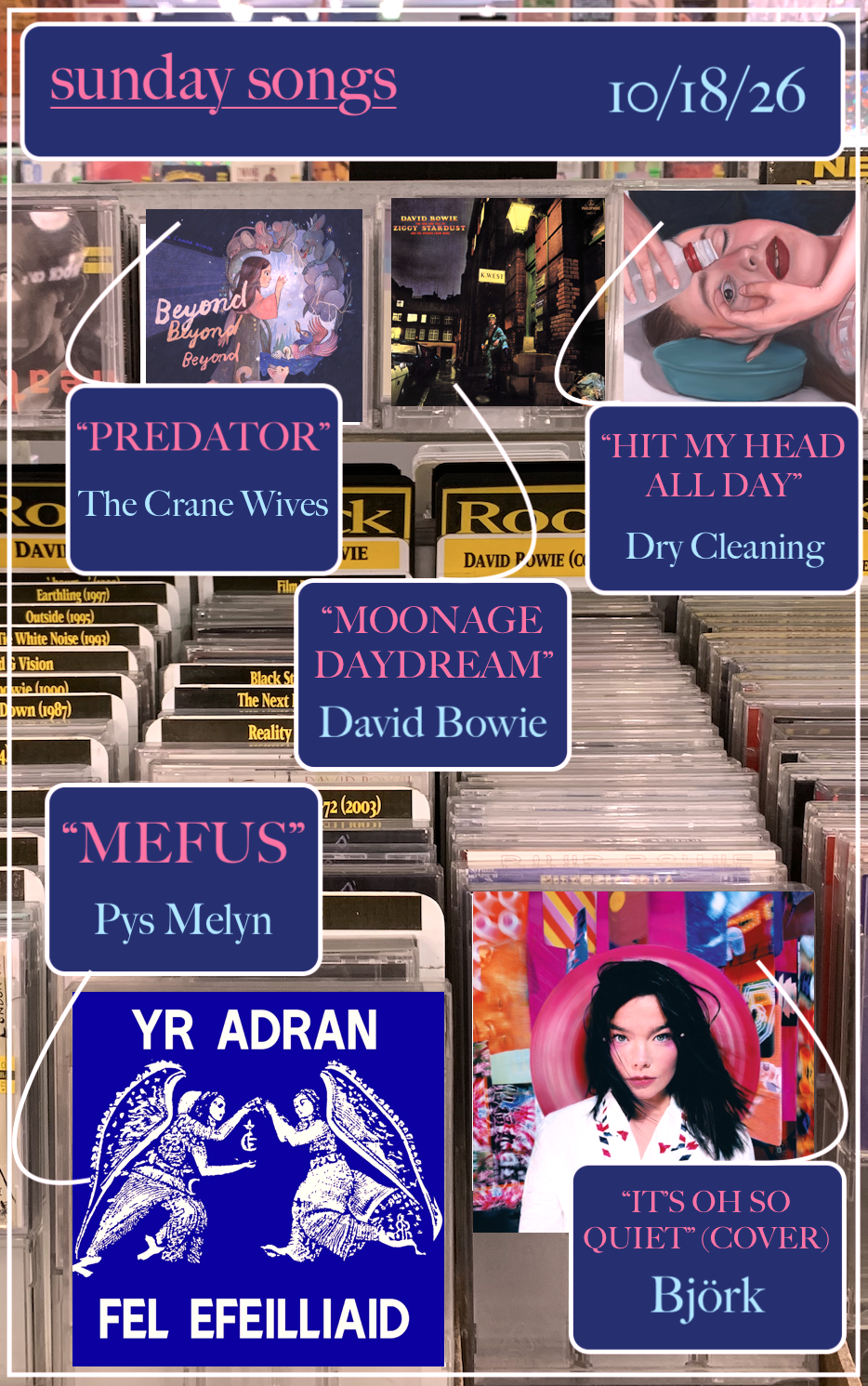
SUNDAY SONGS: 10/18/26
I need to relinquish any shame that I have left about discovering great songs via social media. Sometimes you can stumble across random gems just from seeing some art on your cousin’s story. That’s the case with “Mefus,” and man, am I glad to have found this. How else would I have found a sunny, ’60s-inflected instrumental from some Welsh-language band that I’ve never heard of before? (I listened to all of this album, Fel Efeilliaid, the other day—it’s worth a listen, but “Mefus” remains my favorite track.) For all of the musicians desperately trying to sound like the ’60s and nosediving, Pys Melyn make it look easy; their plinking organs and shuffling drums seem like they were plucked straight from 1966. It sounds like what Wes Anderson would listen to on his morning jog. (Can’t you see this song soundtracking some of his meticulously-framed shots?) “Mefus” means strawberry in Welsh, and for a wordless song, it perfectly evokes summer sunlight and the carefree happiness of picking strawberries. Normally, I don’t gravitate towards instrumentals in terms of songs I have on repeat, but “Mefus” is nothing short of enchanting, a time capsule of the ’60s and of summers without a timestamp.
…AND A BOOK TO GO WITH IT:
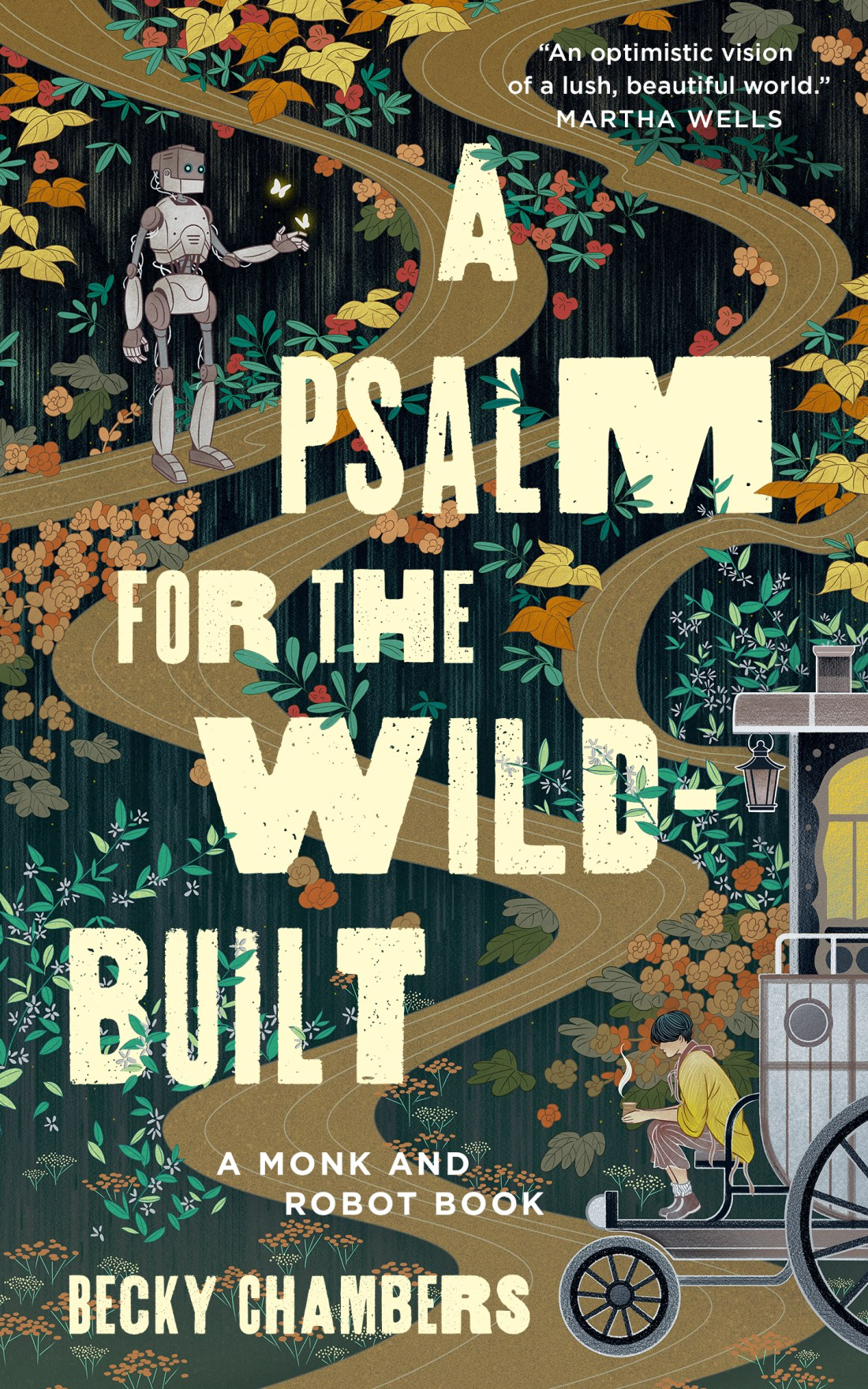
A Psalm for the Wild-Built (Monk & Robot, #1) – Becky Chambers – WE’RE SERENELY STROLLING THROUGH THE WOODS TO FIND OUR PURPOSE WITH THIS ONE ‼️‼️‼️🗣️🗣️🔥
“It’s Oh So Quiet” (Betty Hutton cover) – Björk
For all of the innovation on Post, I feel like there’s a case for “It’s Oh So Quiet” being one of the more solid pieces of proof of Björk’s genius—and the song isn’t even hers. It’s a cover of a Betty Hutton song from the ’50s, a show-tuney B-side that Björk’s tour manager at the time would frequently play in the van on tour. (That version is also a cover, in a way—it’s an English translation of a German song from 1948, “Und jeszt ist es still.”) Hutton’s version is loads of fun, but having listened to this cover for so long, it makes me weirdly anxious—it’s not supposed to be that fast! It’s too compressed! But it’s one of those covers that’s all but eclipsed the original, and it’s easy to see why.
Post is already a fairly weird album, considering how mainstream it got back in the mid-’90s, but nothing gets weirder than a solid stretch of cutting-edge electronics being unceremoniously interrupted by a ’50s show-tune popping up behind you like a jack-in-the-box. Strangely, the transition is barely jarring. To be fair, “The Modern Things” has the right kind of rhythm to ease you into “It’s Oh So Quiet.” But to me, it’s proof of Björk being a truly mercurial, unexpected presence in music. She morphs her tales of mysterious, post-apocalyptic, moss-covered presents and futures into a Broadway-like tune complete with clicking heels and a ’40s-style big band. And though Betty Hutton was doing some pretty impressive yelling on her own, you can’t talk about “It’s Oh So Quiet” without how Björk punctuates it with ecstatically wild screams. It cranks the intensity of the original—which already evoked the devil and bombs exploding—up to a thermometer-shattering level. It goes beyond love or lust and into something so all-consuming that it’s scarcely quantifiable in words—AAAAAAAAAAAAAAAAA! And that’s why I think that mouse-quiet feinting between each chorus, slowed down from the original, works so well; it stretches out that tension like an accordion, truly lulling you into a false sense of security before the brass section detonates in your face. WOW, BAM! AAAAAAAAAAAAAAA!
And I can’t not talk about Spike Jonze’s music video, and not for the plain reason that it’s an iconic touchstone in the history of ’90s music videos. “It’s Oh So Quiet” was the first Björk song that I ever fell in love with. I remember being genuinely spellbound by it when I was around six or seven (no way of getting around that). On its own, it felt like some part of my impressionable brain had been cracked straight open. But paired with the music video, which I distinctly remember watching with my mom huddled in the dark around the family computer, it was like tapping into some magical, unknown realm that I had no access to before. Of course, the magical realm was Björk, and I’d never be the same again. But the music video is just a pure joy. I’d fully believe it if this was just the effect that Björk naturally has on her environment: turning a sketchy tire shop into a dance floor, bringing mailboxes to life, and compelling entire hordes of strangers, from goths to businessmen in their suits and ties, into a spontaneous dance routine. And then she flies off. Manic pixie dream girl activities for anybody else, but that’s just Björk, and she’s naturally like that. It’s all very Amelie, pre-Amelie. Inexplicably, I started welling up when I rewatched the video for this post. Maybe it’s because it will always be that portal’s entrance to somewhere wondrous.
…AND A BOOK TO GO WITH IT:
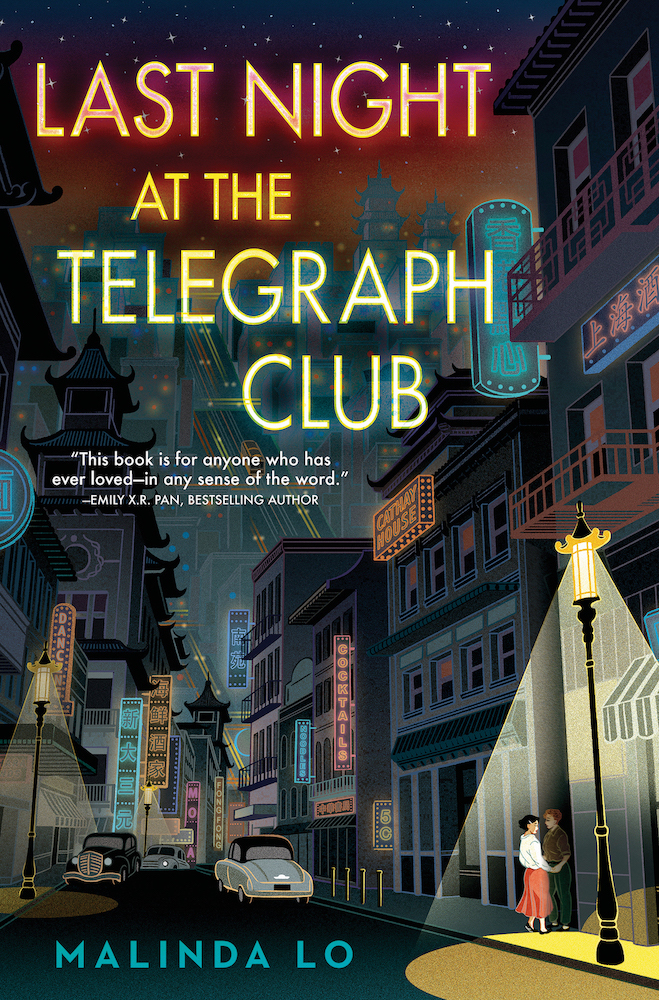
Last Night at the Telegraph Club – Malinda Lo – I suppose this would fit more with the ’50s version, but the atmosphere fits the setting of this novel.
My formal apologies: sorry, Crane Wives, I wasn’t familiar with your game.
To be fair, before one of my dear friends sent me some of their newer material, I primarily associated The Crane Wives with the kind of folk-pop that goes viral on TikTok from really corny DnD edits. I swear that’s happened multiple times. Real shame for a band with a fantastic name. But as with a lot of things, I didn’t dig deep enough—and there’s more to them than meets the phone-sized eye. It seems like a lot of their songs on their latest album, Beyond Beyond Beyond, expanded their palette considerably. I, for one, didn’t expect to come into “Predator” with a bassline faintly reeking of Radiohead, of all bands. (See also: “Black Hole Fantasy,” which has a great six-minute languish to it.) It seems like they’re undergoing a kind of Shakey Graves arc, splintering out from the folk model and into more adventurous territory. Sure, “Predator” has its missteps—easy on the handclaps, dude—but it’s got a real propulsive instrumental, darkly askew and more alternative than I’d given them credit for, a tale of being trapped in your own harmful habits (and getting tangled up in the same harmful habits of other people). It’s refreshing to know that I was wrong about a band—and it was to fun to realize that The Crane Wives had more to them than meets the eye.
…AND A BOOK TO GO WITH IT:
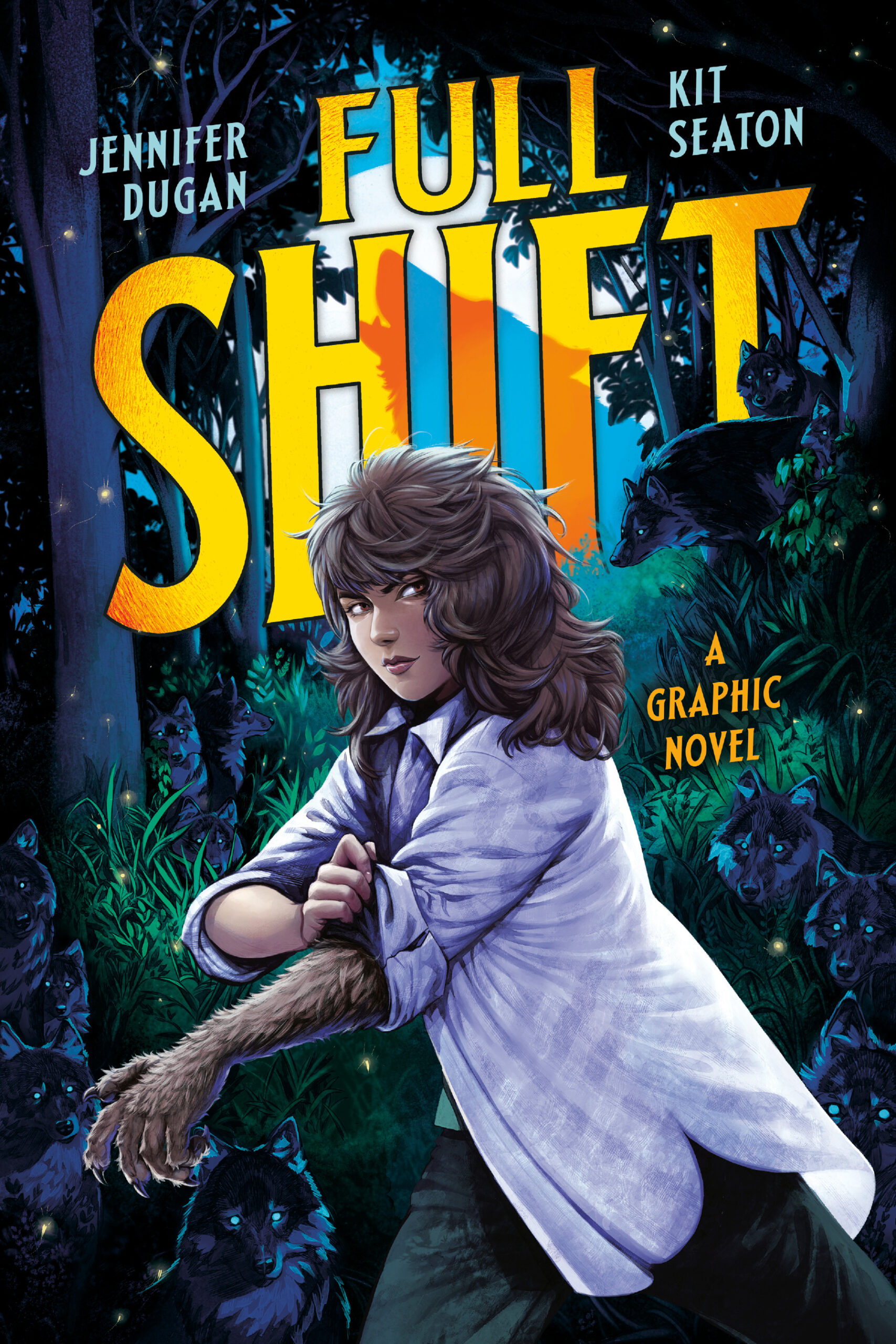
Full Shift – Jennifer Dugan and Kit Seaton – “What were you thinking?/Shouldn’t you know better?/You opened the door for an apex predator…”
“Moonage Daydream” – David Bowie
I put this on my Sunday Songs lineup because I’d listened to it again for the first time in a while, and predictably, fell in love with it all over again. But I didn’t stop and think that I’d be really writing about “Moonage Daydream.” What do you even say about “Moonage Daydream?” One of the most memorable singles from one of his most iconic albums of all time. The song that gave the name to Brett Morgen’s biopic/documentary/mind exploration from 2022. It was the track they put in Guardians of the Galaxy to great effect back in the day. The lyrics gave me my username on several other social media platforms. What the hell do you even say about “Moonage Daydream” that hasn’t already been said?
In a lot of Bowie fan spaces, there’s a kind of aversion amongst the die-hard fans towards the Ziggy era. I’m behind some of it—I feel like there’s a tendency for a lot of Bowie fans to gloss over all of the other radical transformations (both personal and musical) that he made over the span of his career in favor of only fixating on Ziggy Stardust and the glam era, and maybe a bit of his late ’70s work as a treat. On the one hand, it really is a disservice to disregard decades of his career, and if you listen to Bowie but only acknowledge the ’70s, you’re depriving yourself of so much of the mercurial artistry that he’s praised for. How can you understand that transformation if you don’t see the radical leaps he made from suit-and-tie pop star in the ’80s to the electronic, experimental mastermind of the ’90s, and so on? It’s made it weirdly uncool to like Ziggy the deeper you get into fan spaces.
Yet I find myself so defensive of the Ziggy/glam era; even as somebody who’s been poring through his discography for the better part of my life, it remains my favorite period of his, both aesthetically and musically. Part of that’s purely nostalgic, of course—you never forget your first love, and this is the first version of Bowie that I fell in love with. The specific confluence of the glam rock sound at its finest, the visual aesthetic, and the sci-fi themes combined with the inherent and coded queerness of a lot of lyrics scratches a way too specific itch in my brain. Yes, it was a persona like all the others, but I think we often gloss over the fact that every persona inadvertently represented parts of himself. For me, I’ve always seen it as something of a product of the shock and alienation he felt being thrust into the spotlight after being a struggling folkie barely making a splash in the industry for years. He was alien, no matter how he dressed. He felt like an alien.
And that’s what makes “Moonage Daydream” so staggering and important to this day. Beyond the hastily-crafted concept behind The Rise and Fall of Ziggy Stardust and the Spiders from Mars, it still stands as the cornerstone of what the album represented. As I’ve gotten older, I’ve realized that Ziggy Stardust, as grandiose as it is, has so many moments wanting to experience something real; I imagine it was a consequence of Bowie struggling to find a foothold anywhere and feeling alienated himself. From the quiet moments in “Soul Love” to the plastic-clad downfall of the titular “Ziggy Stardust,” there’s a yearning for the real behind the artificial. And that desire is what culminates in “Moonage Daydream,” a more straightforward love song behind all of the classically sci-fi lyrics. Behind the spandex, rayguns, and sensuality, Bowie wants to peel back what’s fake and fully fall in love. Could I be reading too much into it? Probably. But I think that’s what makes the yearning of this track feel authentic. Ziggy was always much more than the makeup and spandex—it was Bowie’s own desire to touch reality behind the artifice of modern life that he found himself suddenly faced with.
Also, the guitar solo just rips. God bless Mick Ronson.
…AND A BOOK TO GO WITH IT:
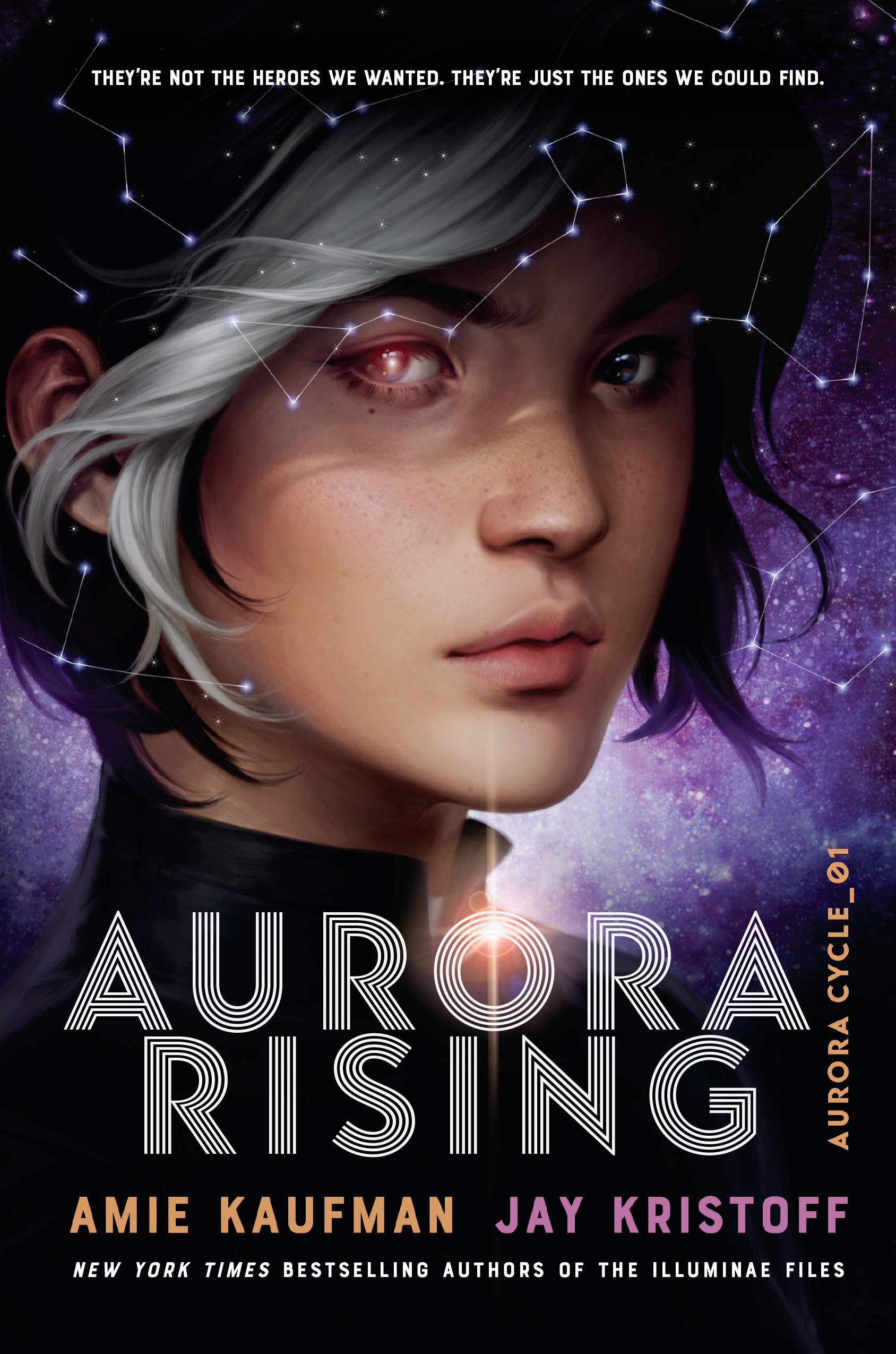
“Hit My Head All Day” – Dry Cleaning
The Cate Le Bon kick was bound to lead me to Dry Cleaning someday, but as with Me Oh My, my older brother was the impetus for listening to their newest album, Secret Love, which Le Bon produced. I’d vaguely heard of them in relation to her, but I’d never gotten around to listening to them. There’s no doubt that Secret Love has Le Bon’s magical fingerprints all over it; her thrumming bass, blasts of saxophone, and angular sensibilities translated well to the palette that Florence Shaw and co. already had going. Nonetheless, I have mixed feelings about the album. I think I’m just not fully on board with Shaw’s kind of post-ironic, dead-eyed kind of spoken word style. Sometimes it works in diagnosing the many ills of modern life, but at worst, it feels like some faux-deep thinkpiece I would’ve had to read for my women and gender studies minor. (Lookin’ at you, “My Soul/Half Pint.” That one just made me roll my eyes. “Maybe it’s time for men to clean for like/Five hundred years” pack it up, dude.) There’s only so much deadpan meanderings about how terrible society is before it starts getting old.
But “Hit My Head All Day?” Now this is something special. Unfortunately, it kind of ruined the rest of the album for me because nothing was quite so good as this (save for “Cruise Ship Designer,” one of the album’s more energetic tracks that reminds me a lot of Wire/Talking Heads). In a gloomy, six-minute sprawl buoyed by slinking, ’80s bass, Shaw sings as though she’s trapped in an ever-shrinking box, contorting her limbs to sharp corners. The lyrics muse on extreme desensitization and the desire to feel anything, everything, even if it means, well…hitting your head all day: “When I was a child, I wanted to be a horse/Eating onions, carrots, celery/I simply must have experiences/Manipulate me, wiggle my arms.” It’s reminiscent of Peter Gabriel’s “I Have the Touch” in its desire for connection, though this is decidedly drier and angular than Gabriel’s synthy, impassioned pleas. Here, Shaw’s dreary delivery makes the case all the more for the narrator’s lack of stimulation; you really do believe that she’s desperate to the point of banging her head against a wall.
…AND A BOOK TO GO WITH IT:
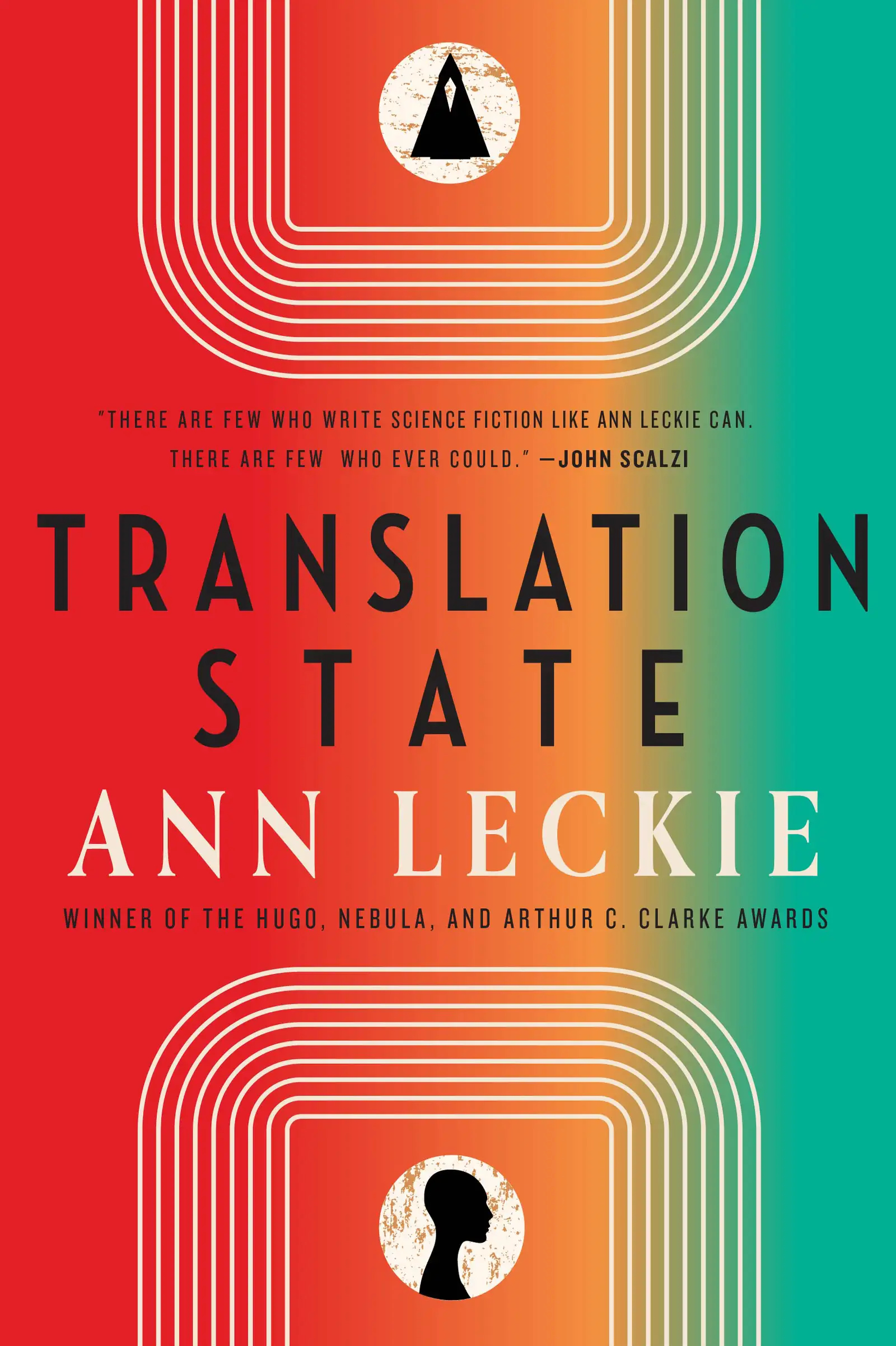
Translation State – Ann Leckie – “I simply must have experiences/Manipulate me, wiggle my arms/I hit my head in different places…”
Since this post consists entirely of songs, consider all of them to be today’s song.
That’s it for this week’s Sunday Songs! Have a wonderful rest of your day, and take care of yourselves!


I love this Dry Cleaning song!
LikeLike