Posted in Book Review Tuesday

Book Review Tuesday (6/16/26) – Idolfire

Happy Tuesday, bibliophiles! Halfway through 2026 now…😵‍💫

If you told me about 3 years ago that I was this excited for a new Grace Curtis book, I wouldn’t have believed you. Full disclosure: I didn’t like Frontier, but the premise of Floating Hotel was so endearing to me that I took a chance on it…and loved it. And here I am now. (Special shoutout to Kat @ The Lily Cafe, who is the reason that I know that this book exists. Thanks, Kat!) I had a feeling I was going to enjoy Idolfire, but as we’re officially halfway through the year…this might be one of my favorite books that I’ve read this year!

Enjoy this week’s review!

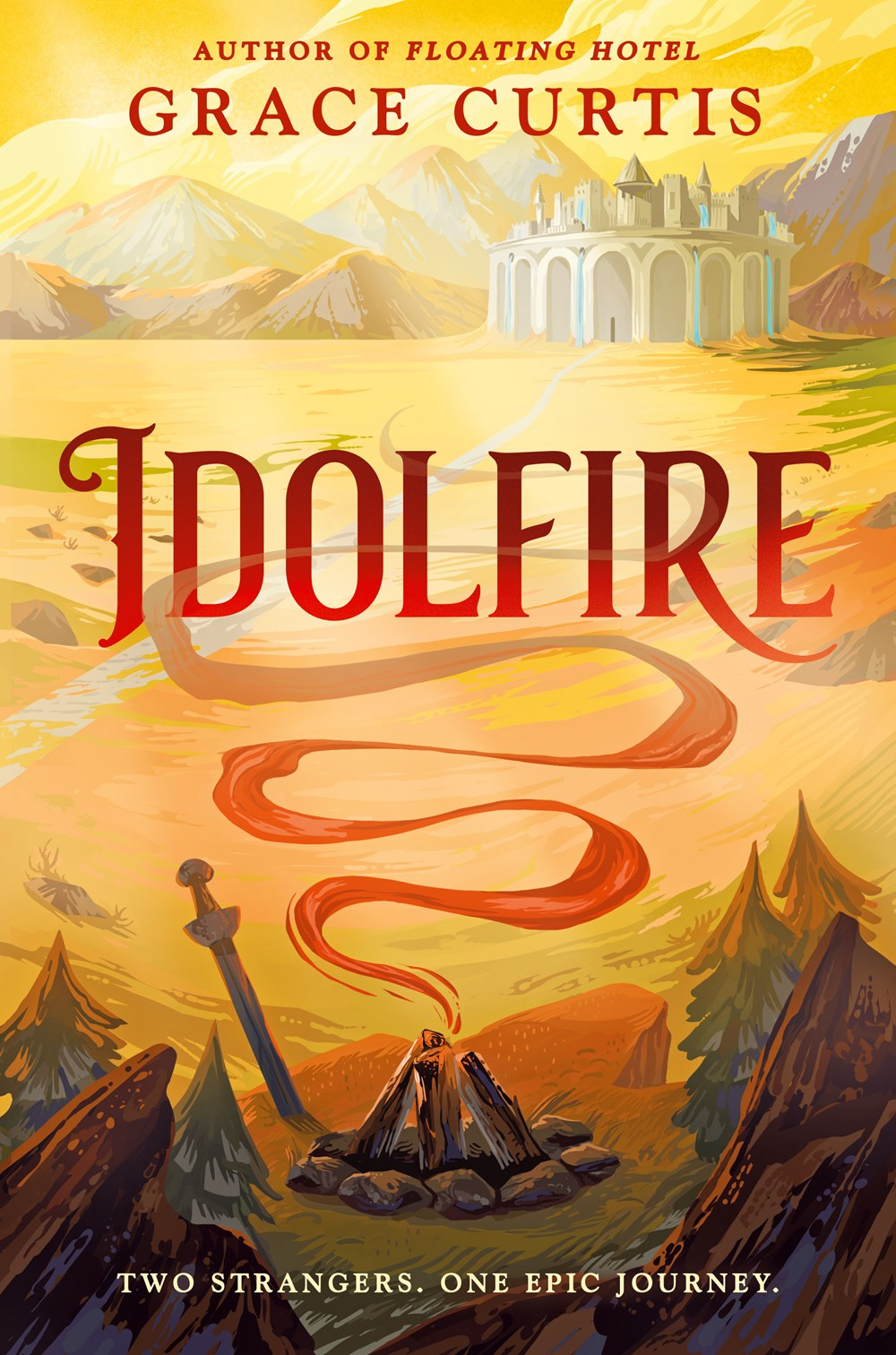
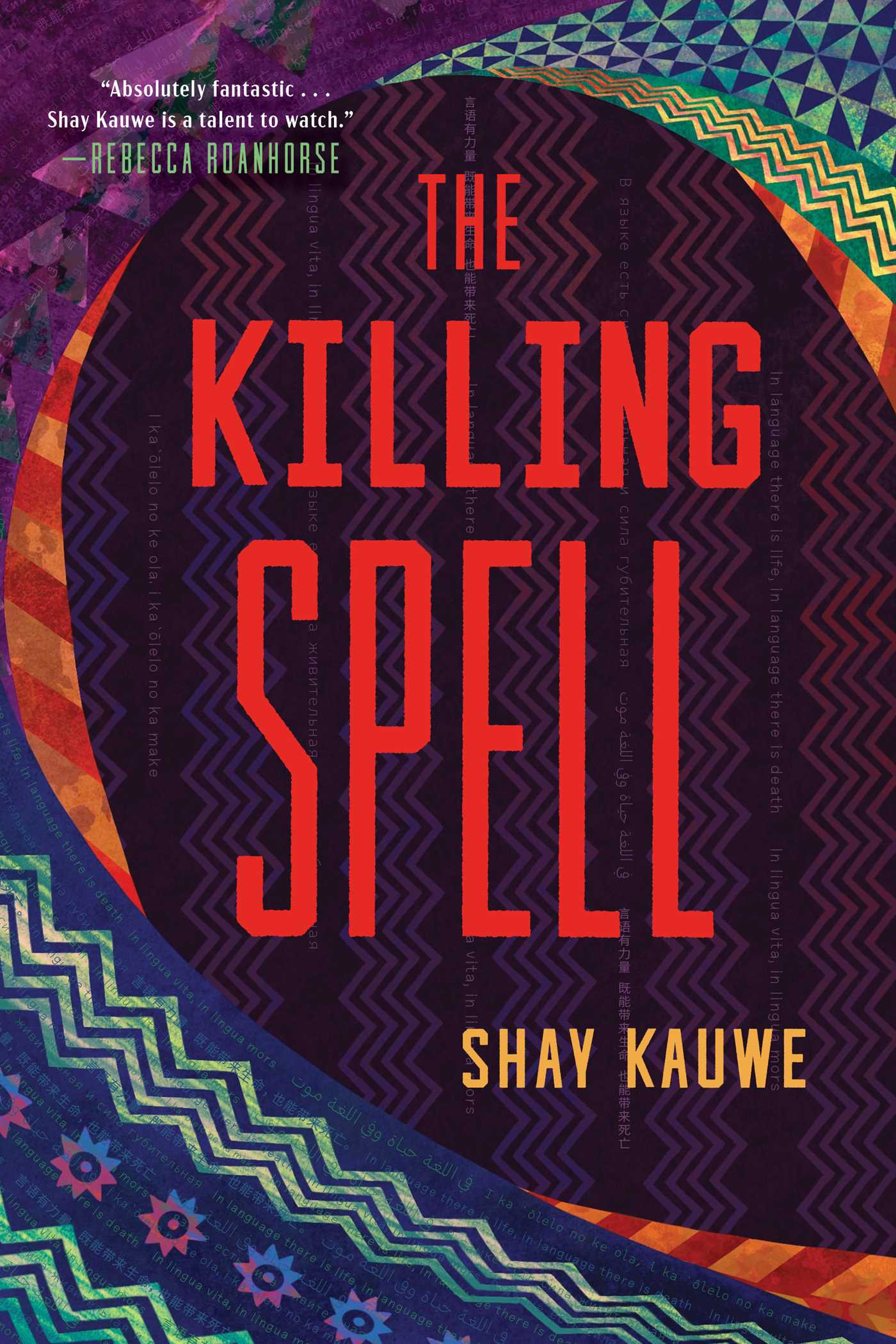
Idolfire – Grace Curtis

After illness tears her family apart, Kirby of Wall’s End sets off on the road to Nivela, a famed kingdom that has fallen from grace, but retains the promise of magic beyond its gates. Across the world, Aleya Ana-Ulai is searching for Nivela too, eager to prove herself after being abandoned by her family. When these two women from disparate regions meet on the road, neither knows that their togetherness is key to their survival. But the road to Nivela is long and treacherous, and it seems to hold everything but the answers they need within it. Aleya and Kirby must decide if the promise of Nivela is worth it—and if they’ll be able to survive at all.

TW/CW: violence, blood, war themes, loss of loved ones, child death, infertility

First off—this isn’t a slight on the book, but if you’re going in (like I did) expecting science fantasy, Idolfire is not that. This is straight up fantasy. I’m convinced that the “science fantasy” thing was tacked on for marketing reasons after Curtis wrote two sci-fi novels. Just be forewarned about that…and the fact that this book came dangerously close to destroying me. This might be one of the best books I’ve read all year.

Grace Curtis’s prose keeps getting better and better with each novel she writes. It’s prose that gave me genuine, heartwarming joy to read. She just has this way of making everything, from the setting to the subtle glances between characters, so wholly human; it goes beyond feeling lived-in and real and becomes something with a real heartbeat. Where Curtis succeeds is in shedding light on the unsaid; slight turns of phrase became quietly heartwarming or heartbreaking with a single word. Her renderings of the varied landscapes that Aleya and Kirby travel through are so rich and full of life. Every line of dialogue is razor-sharp, both in their humor and their power to devastate. If you want proof of Curtis’s improvement as a writer, Idolfire is the perfect evidence.

One of the strongest aspects of Idolfire was how it balanced humor and more sobering, serious themes. Curtis has really honed her talent for humor—there were so many moments throughout that were laugh-out-loud funny. Aleya and Kirby had such excellent chemistry (more on that later), but their separate senses of humor pinged off of each other exceptionally well, making for a fantastical road trip that never had a dull moment. And yet, Curtis gave the same amount of care to depict the darker themes of the novel alongside the lighter ones. Curtis’s depiction of war was one that has stayed with me; her descriptions of it have no interest in glorifying its purpose or its participants. Even for a novel billed with swordfighting, her sparse, devastating language in describing the horrors of war were so impactful in a genre where there’s often a degree of romantic language ascribed to something so horrendous. From the effect it has on the minds of individual soldiers to the scars that it wrought across the lands of Idolfire, Curtis explored every facet of living during wartime. Yet Curtis had the same level of care in the lighthearted and dark aspects of Idolfire—for a novel like this, it was a very difficult balance to strike, but Curtis absolutely clinched it, making for a novel that was, above all, human.

I didn’t think that Curtis’s character writing could get much better after Floating Hotel, but I was proven wrong. Although I loved the slice-of-life roving between multiple characters, I think that narrowing her focus down to two central characters did a great service to their development. Aleya and Kirby were some of the most memorable characters that Curtis has ever written. A less talented writer would’ve slapped a hasty grumpy-sunshine dynamic on them and left it at that, but they both had such richly layered personalities. Both of them had trauma so deeply embedded in their psyches, but Curtis did an excellent job of showing us how it manifested in both of them and shaped their personalities. I loved how Aleya’s more reserved, stoic nature played off of Kirby’s more mischievous personality, but the deeper you get, the more you realize that both of these traits serve as shields for both of them. They had such immediate, lovable chemistry, and the progression from begrudging companions on the road to lovers was impeccably paced, and every step of that progression felt so natural—and instantly lovable to root for. Without spoiling anything, things do turn out bittersweet for them, but I think the way that Curtis ended their story was poignant and fitting for both of them.

I also adored the road trip plot of Idolfire, and it kept me guessing constantly. Curtis’s talent for character writing also applied to the menagerie of weirdos that Aleya and Kirby met along the road to Nivela. Even the smallest glimpses we got of the denizens of Idolfire‘s expansive fantasy world were so fleshed-out, and they added so much life to the already fantastic worldbuilding. Balance is something that Curtis clearly has been honing, because like the balance between levity and darkness, there was a great balance of more action-packed moments—such as Aleya’s many swordfights—and downtime with Aleya and Kirby. The pacing was neat as a pin, and even the downtime between the more climactic parts of the novel were measured out to near-perfection. Idolfire really was a balancing act in so many ways, but Curtis toed the lines she set with enviable ease.

And if there’s anything that you can expect Curtis to do well with, it’s sharp commentary on empires and imperialism. Floating Hotel excelled at that as a point in the background, and Idolfire honed in on it even more. I think what Idolfire brings to the conversation is how ideas shape the image of an empire. Fully acknowledging that Curtis is British and I’m just projecting my experience onto this book, but I couldn’t help but think about Nivela—and Aleya and Kirby’s goals—in terms of the permanently out of reach “American dream,” and how an empire can build up an idea of itself while hiding a crumbling foundation beneath it. The further they go on their journey, the more they see the destructive aftermath of an idea twisted into something that excuses genocide and imperialism. I also liked how it tied into the magic system, with belief being what makes certain magic work/not work, and how that translated into the belief in Nivela, which has been faltering to the point of destruction. (Without getting into spoilery territory, there’s some really fascinating stuff about the very literal, human cost that this has in the world of Idolfire.) In the end, I think it was a beautiful meditation on the power of ideas, and how they can be twisted into something so terrible that it swallows the world, but how we can use that same power to create a more equitable world worth living in.

Ultimately, with ratings like these, there’s always that slight oomph that pushes it into 5 star territory. I think there’s still a few small nitpicks that made 5 stars not justifiable, but it sure was close. Overall, Idolfire was a deeply moving and human road trip fantasy, a meditation on the nature of the ideas and idols we hold up in our minds. 4.75 stars!

Idolfire is a standalone, but it has a companion novel, Heaven’s Graveyard, set 2,000 years later in the same universe. Grace Curtis is also the author of Frontier and Floating Hotel.

Today’s song:

I’m sorry, Let’s Dance (1983), I was unfamiliar with your game

That’s it for this week’s Book Review Tuesday! Have a wonderful rest of your day, and take care of yourselves!

Posted in Sunday Songs

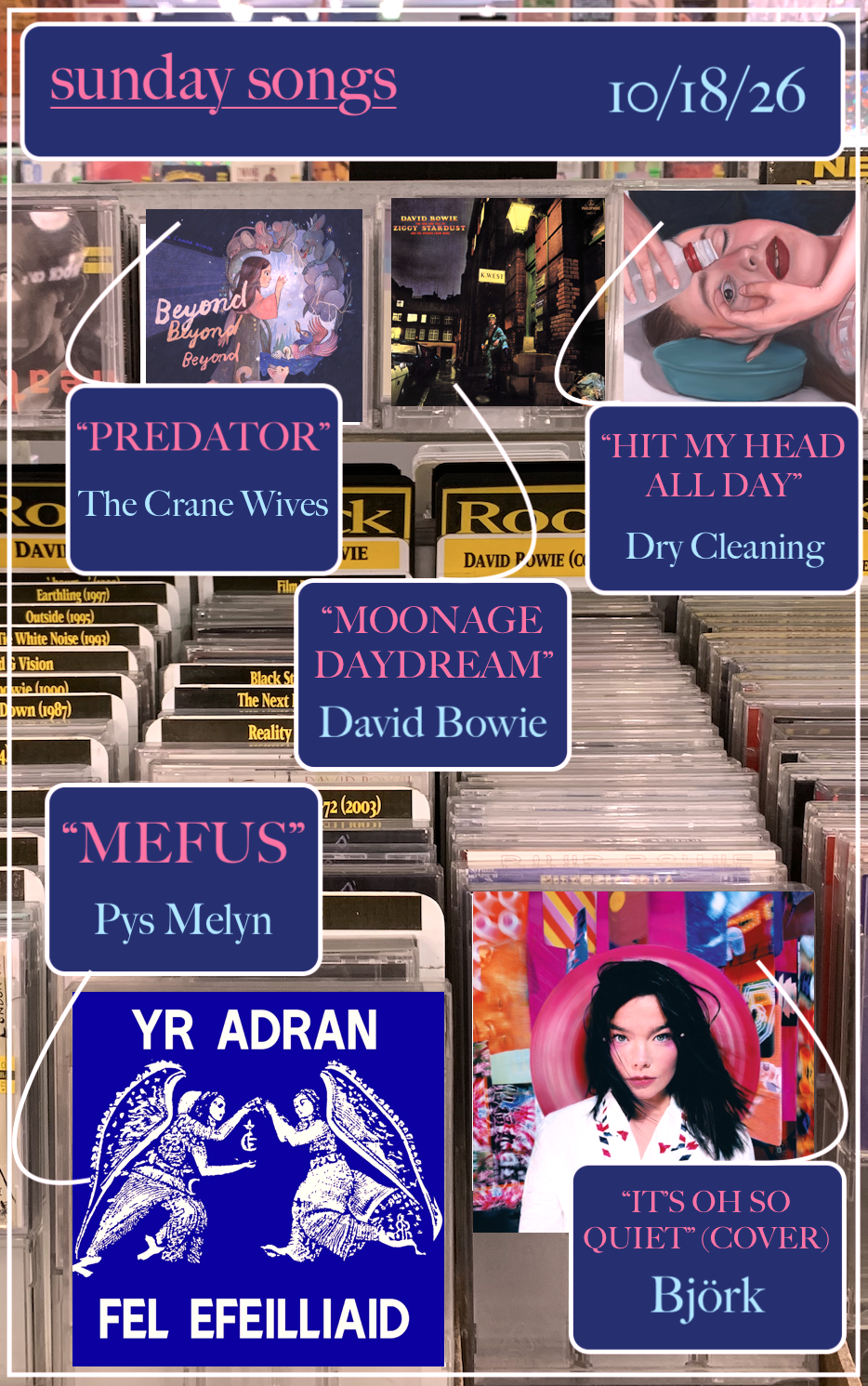
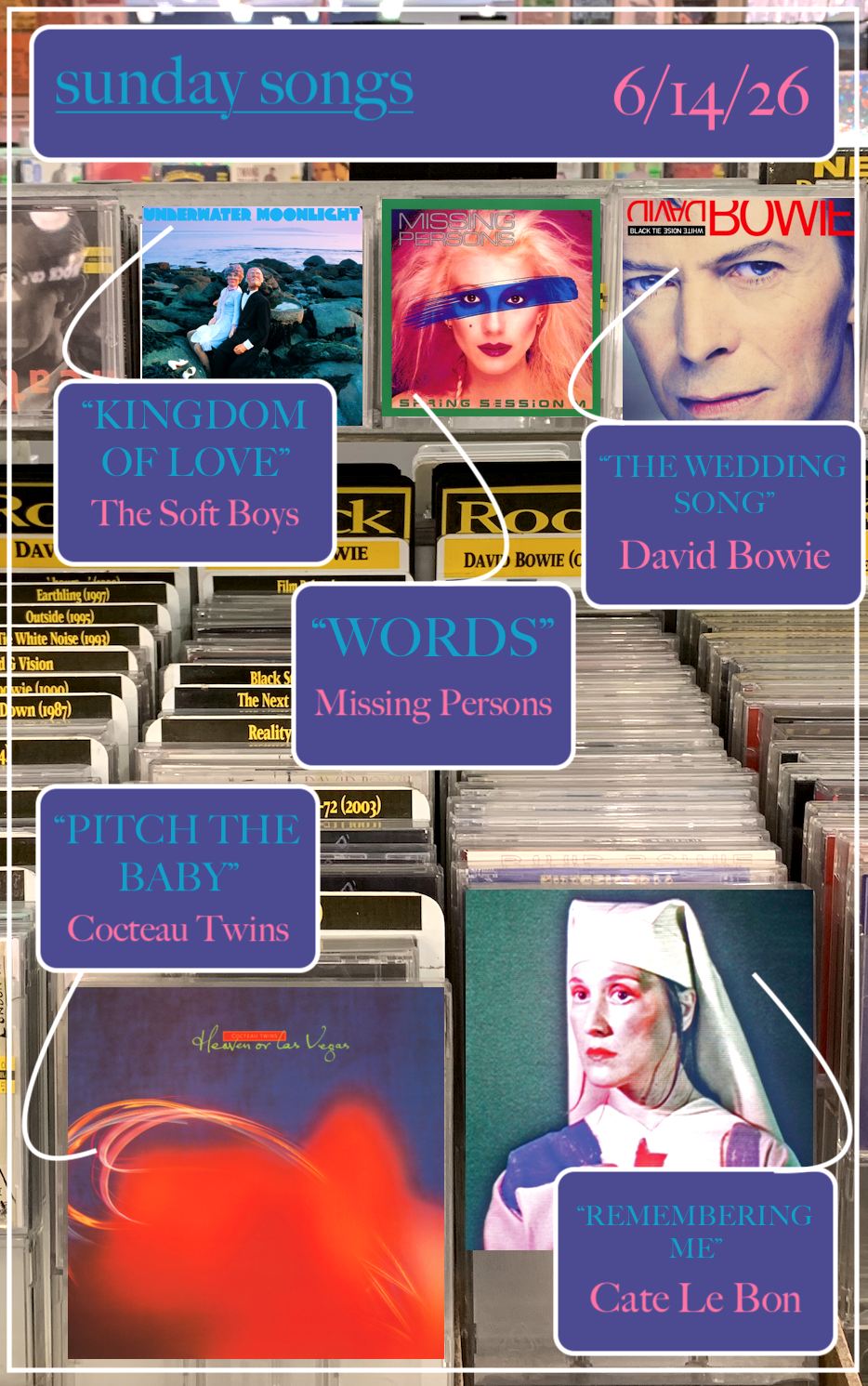
Sunday Songs: 6/14/26

Happy Sunday, bibliophiles! I hope this week has treated you well.

This week: in a concerning reversion to the summer of 2024, I’m excessively yapping about Cate Le Bon and Cocteau Twins in the same post again.

Enjoy this week’s songs!

SUNDAY SONGS: 6/14/26

“Pitch the Baby” – Cocteau Twins

Buckle up, folks, it’s Cocteau Twins summer…again.

Heaven or Las Vegas never gets old. Four years later, and I still haven’t recovered from the moment that I heard “Cherry-coloured Funk” in art class in high school. There was no turning back. But I did cave and grab it on vinyl, and it was about time I experienced the album again. Once more, there’s not a bad song on the album, but surprises surface with every listen. Lush is the best word that comes to mind with this album; over the course of their discography, Elizabeth Fraser and co. had been defining their niche of atmospheric, worlds-within-songs shrouded in mist and mystery. Blue Bell Knoll was the first step in making each song feel like a world, but Heaven or Las Vegas, to me, is where those worlds began blooming with lifeforms. Every distinguishable word that comes out of Fraser’s gibberish fog feels like you’re being let in on a secret. Each listen makes you feel a part of their world, like they’ve given you a ticket to their far-flung, alien planet.

“Pitch the Baby” is one of those songs where the glimpses of the comprehensible words feel like this. Despite what all the memes associated with this song, nobody’s going full fastball special on a baby, not to worry. In fact, it seems to be quite the opposite; though 99% of the lyrics are predictably murky, much of it appears to be addressed to Fraser’s then newborn baby: “I only want to love you/I’m so happy to get to care for you.” In spite of the turmoil leading up to this album’s release, Fraser claimed that her daughter being born gave her a sense of clarity, and that many of the tracks were “reputedly recorded…while holding Lucy-Belle in her arms.” Here, the circularity of “Pitch the Baby” feels like a cradle: it has this looping, dream-pop structure, but it’s always given me the feeling of something being shielded. It boasts some of Simon Raymonde’s funkiest, most iconic basslines, and the rapid bloop-bloop-bloop of the synths form Saturn rings around the track. It’s tantalizingly easy to lose yourself in, but in the end, the contained world it brings to life feels less like a song and more like a selfless act of love.

…AND A BOOK TO GO WITH IT:

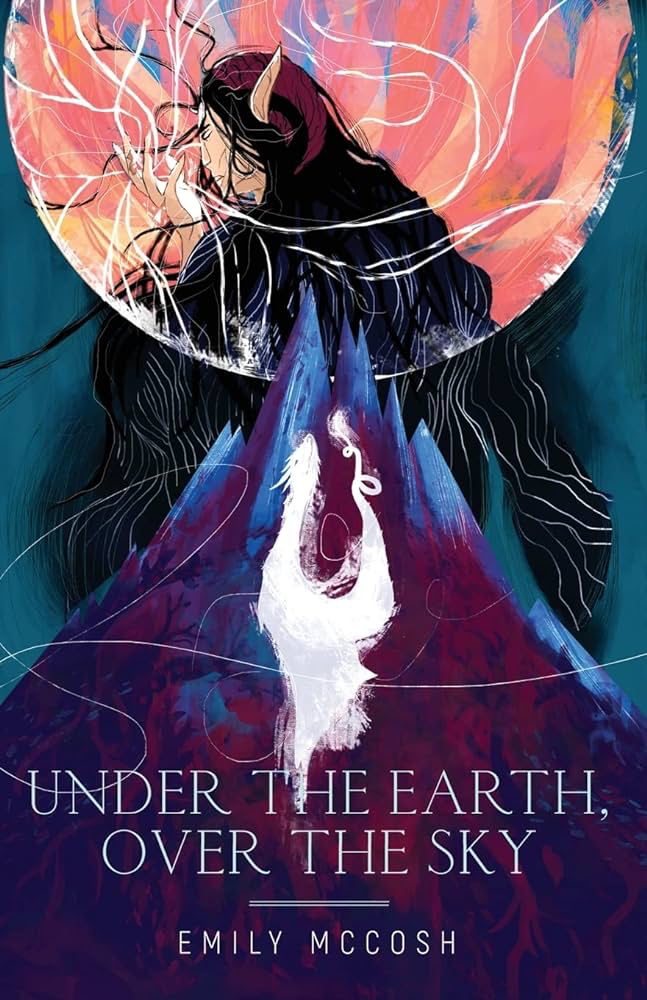
Under the Earth, Over the Sky – Emily McCosh“I only want to love you/I’m so happy to get to care for you…”

“Remembering Me” – Cate Le Bon

I keep gushing about Pompeii over and over again, but somehow I’ve barely touched on the aesthetics of the album! It’s so distinct and very Cate Le Bon—I love all of the imagery of statues and the emphasis on static poses (evoking the sort of frozen visions of past selves that becomes one of the album’s main themes), but the neon, avant-garde makeup and costumes too. I forgot how much I loved the music video for “Remembering Me,” which stands on its own well, but…if those opening shots aren’t a tribute to David Bowie’s “Life On Mars?” music video, then I don’t know what is. (If you need more evidence to support this, I suggest Reward‘s touching closing track, “Meet the Man.”)

I’m kind of baffled to this day that the second half of Pompeii didn’t hit me as much as the first, because “Remembering Me” hasn’t gotten out of my head since. I think on the first listen, it felt like it leaned too much into the ’80s pastiche. I think I was, once again, too wrapped up in “Dirt on the Bed” and such to really absorb this song. Now, it stands out to me as one of the more emotional tracks. Behind the catchy, weirdo synth-pop curtain is a story about stories—more specifically, the ones we tell ourselves. The more I listen, the more it feels like the scene in Barbie where Margot Robbie blurts out “Do you guys ever think about dying?” in the middle of a glitzy, sparkling party. Le Bon called it “a neurotic diary entry that questions notions of legacy and warped sentimentalism in the desperate need to self-mythologise“; for Le Bon, who had to face all of this while returning to her childhood home during the pandemic, it became a tug-of-war between the self that she was and the self that she wanted to be perceived as: “In the remake of my life/I moved in straight lines/My hair was beautiful.” The verses confidently strut, catwalk-like, as the pedestaled, false version of herself—stronger, more confident, more beautiful—before the chorus tears everything down. You can’t get any more candid about this than “Facedown in heirlooms.” Whew.

The rest of “Remembering Me” is full of just as many sucker punch lyrics: “I wore the heat like/A hundred birthday cakes/Under one sun/I didn’t need anyone/On my own luck/I arrived just to seat the choir/And bowled them over.” It’s the kind of vulnerability that gets more impactful with each listen—I’ve certainly gotten into those places where I’ve been so determined to be confident and self-reliant that I worked myself into a corner, and only asked for help when things had bubbled up and exploded in my face. Like it or not, we’re all caught between that image of ourselves and our real self. But hell, if Cate Le Bon wrestled this too, then maybe there’s hope for us too.

…AND A BOOK TO GO WITH IT:

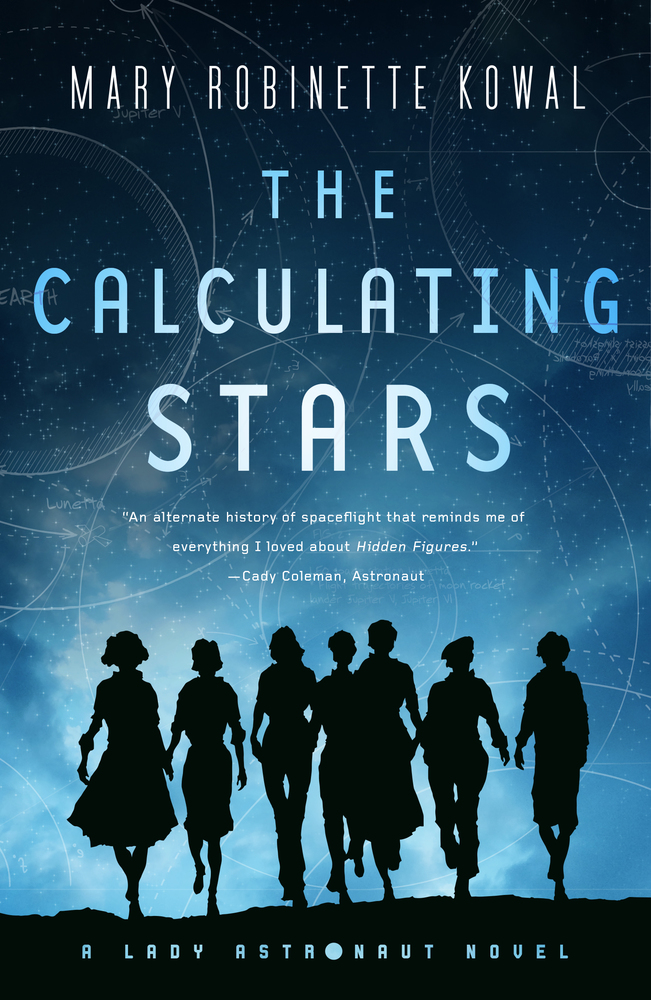
The Calculating Stars – Mary Robinette Kowal“I wore the heat like/A hundred birthday cakes/Under one sun/I didn’t need anyone/On my own luck…”

“Kingdom of Love” – The Soft Boys

“You’ve been laying eggs under my skin/Now they’re hatching out under my chin/Now there’s tiny insects showing through/And all them tiny insects look like you!”

I was nearly going to word this part somewhere along the lines of “there’s enough good Robyn Hitchcock lyrics to fill a book,” but then I remembered that there is such a book (It’s called Somewhere Apart, if you’re interested. I highly recommend it), and “Kingdom of Love” was included in it. Dammit.

I listened to an episode of Life of the Record about Underwater Moonlight last week, so for all the die-hard Hitchcock-heads out there, here’s almost an hour and a half of Robyn Hitchcock detailing the story behind the album in great—and often hilarious—detail. He often talks about the album as the product of him being a rather confused young man in the music industry, but if I could come up with anything as good as the lyrics I pasted above, I’d be set for life. Hitchcock words a lot of the love-adjacent songs on this album as being akin to demonic possession, which…I’m sure there’s a lot to unpack there, but we got some great songs about it. And you know what? I’ve been listening to this song over and over for weeks as I’ve been trying to play it on guitar, and if that’s not demonic possession, I don’t know what is. (That riff at the end of the chorus is burned at the back of my brain. Still a work in progress.) “Kingdom of Love” evokes the frenzied urgency of punk and pairs it with lyrics that recall a ’50s B-movie about alien invasion, all in service of this twisted, grotesque vision of falling head over heels. Hitchcock’s yowled declaration of “all I want to do is be your creature!” at the end of the bridge cements what makes Underwater Moonlight so wonderful: a distillation of the brash punk sound of the late ’70s, but with a weirdo slant that was all Hitchcock and co.

..AND A BOOK TO GO WITH IT:

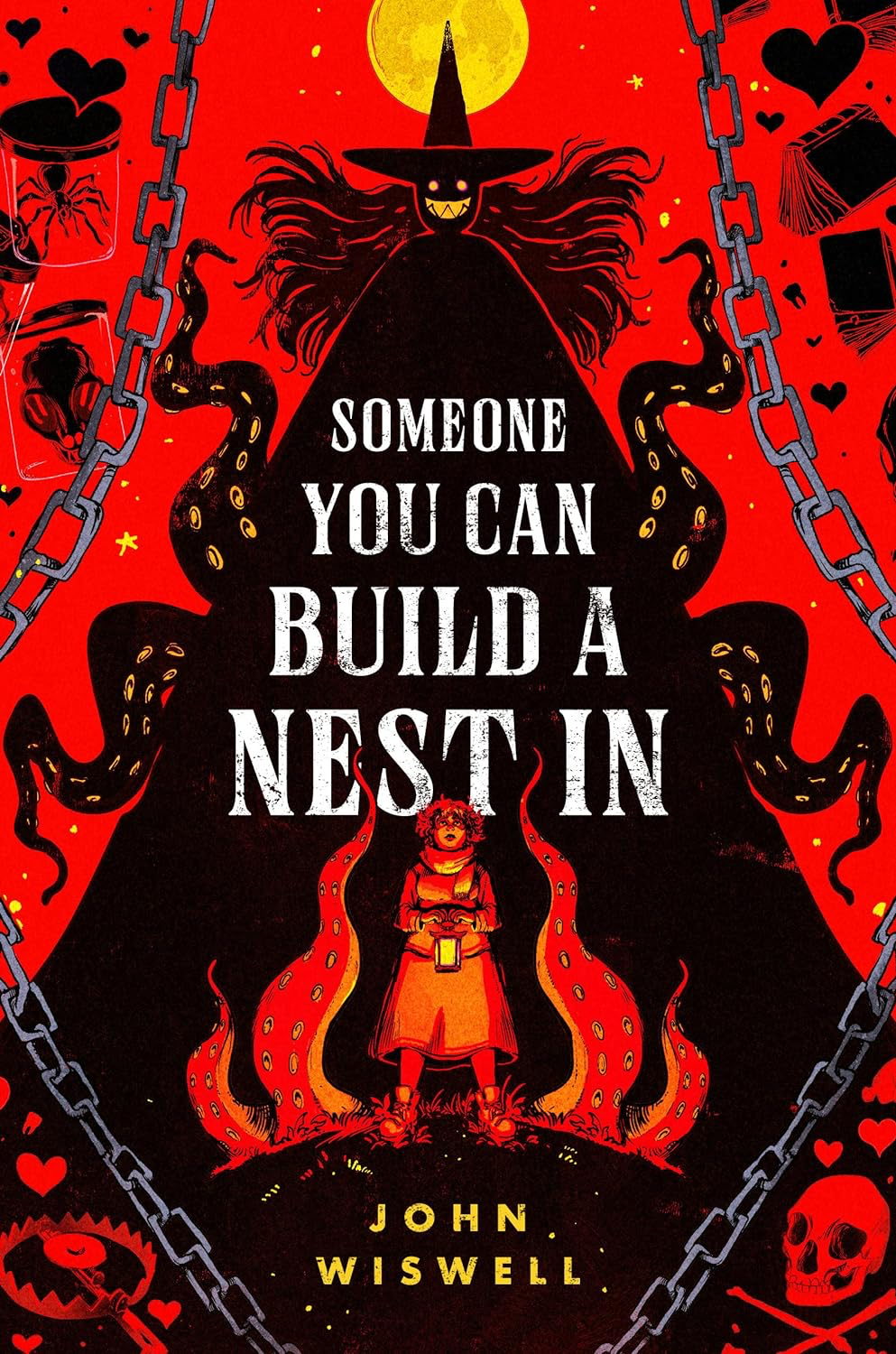
Someone You Can Build a Nest In – John Wiswell “You’ve been laying eggs under my skin/Now they’re hatching out under my chin/Now there’s tiny insects showing through/And all them tiny insects look like you!”


“Words” – Missing Persons

Unfortunately, you’ve all come to me in a very ’80s time in my life. I think I’ve come full circle back to where I was in elementary school, when most of my music taste consisted of Duran Duran, Erasure, and Madonna, owing to my mom. I never stopped liking all of those bands, but I think I just happened to be at the epicenter of Gen Z being oversaturated with highly-curated ’80s nostalgia…the impact (derogatory) of Stranger Things. But new wave is just that good though. At its best, new wave was such a sharply bold genre, with its sleek sound but alternative spirit. For a song like “Words,” a repeated exorcism of frustrations of repeatedly going unheard, it’s the perfect medium—how can you go unheard when you’ve got a voice like Dale Bozzio? Her theatrical vocal presence makes this entire song, belting, squeaking, and murmuring through the various stages of her anger. It’s all a perfect specimen of new wave, and no amount of time that passes will make it any less wonderfully catchy.

…AND A BOOK TO GO WITH IT:

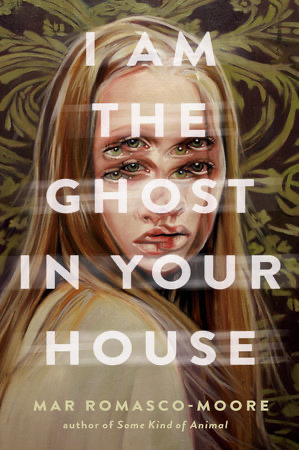
I Am the Ghost In Your House – Mar Romasco-Moore
“I might as well go up and talk to a wall/’Cause all the words are having no effect at all/It’s a funny thing, am I all alone?”

“The Wedding Song” – David Bowie

I…

…okay, I get dangerously emotional every time I think about how much David Bowie and Iman loved each other. And still do. Shit, I need a minute, I’m on my period…just trust me on this one.

…AND A BOOK TO GO WITH IT:

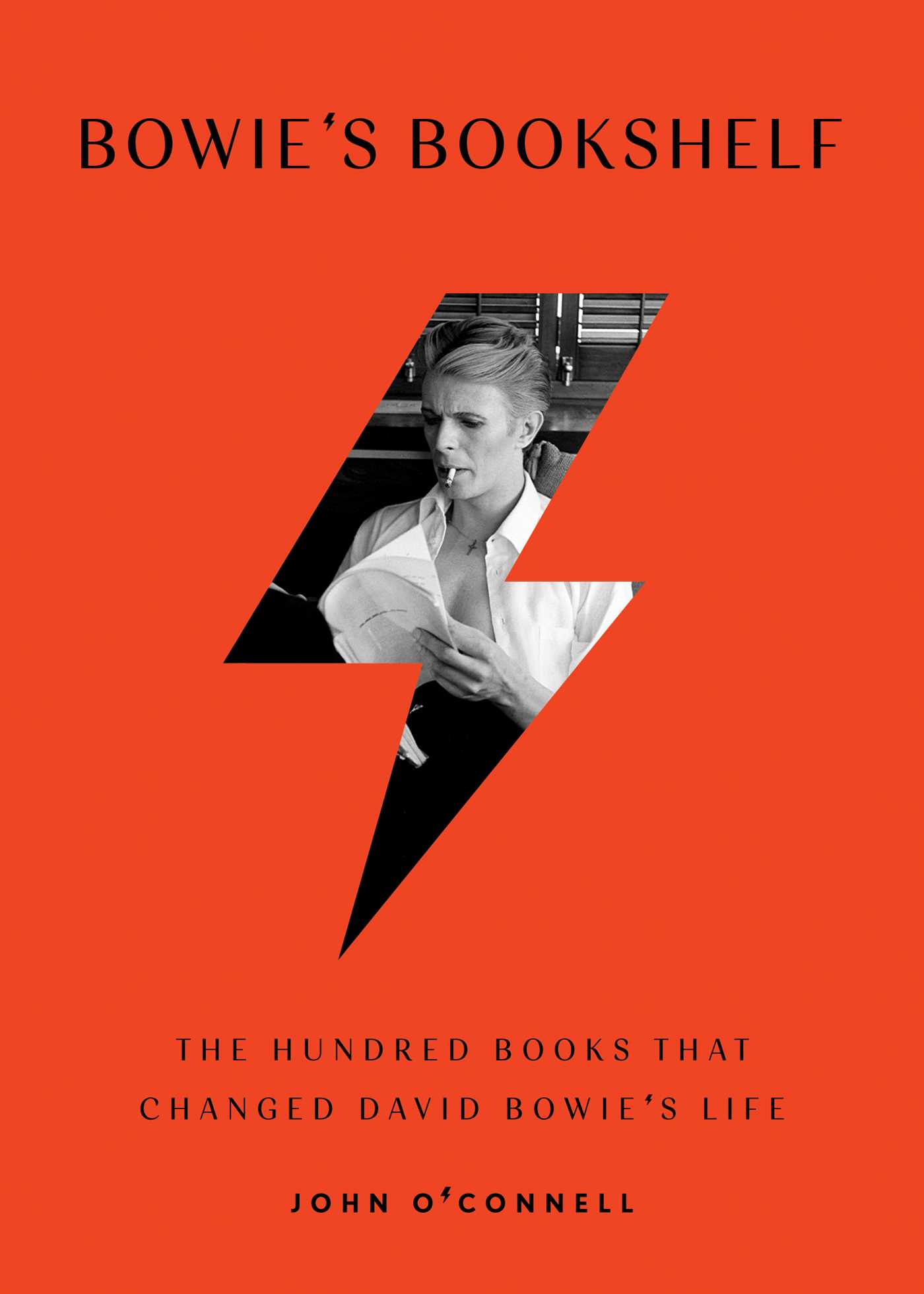
Bowie’s Bookshelf: The Hundred Books that Changed David Bowie’s Life – John O’Connellyou’ve been fooled, this is just a book recommendation that’s just even more book recommendationseither way, there’s some greats in here, and a peek behind the curtain of one of the most literary-minded rockstars in history.

Since this post consists entirely of songs, consider all of them to be today’s song.

That’s it for this week’s Sunday Songs! Have a wonderful rest of your day, and take care of yourselves!

Posted in Sunday Songs

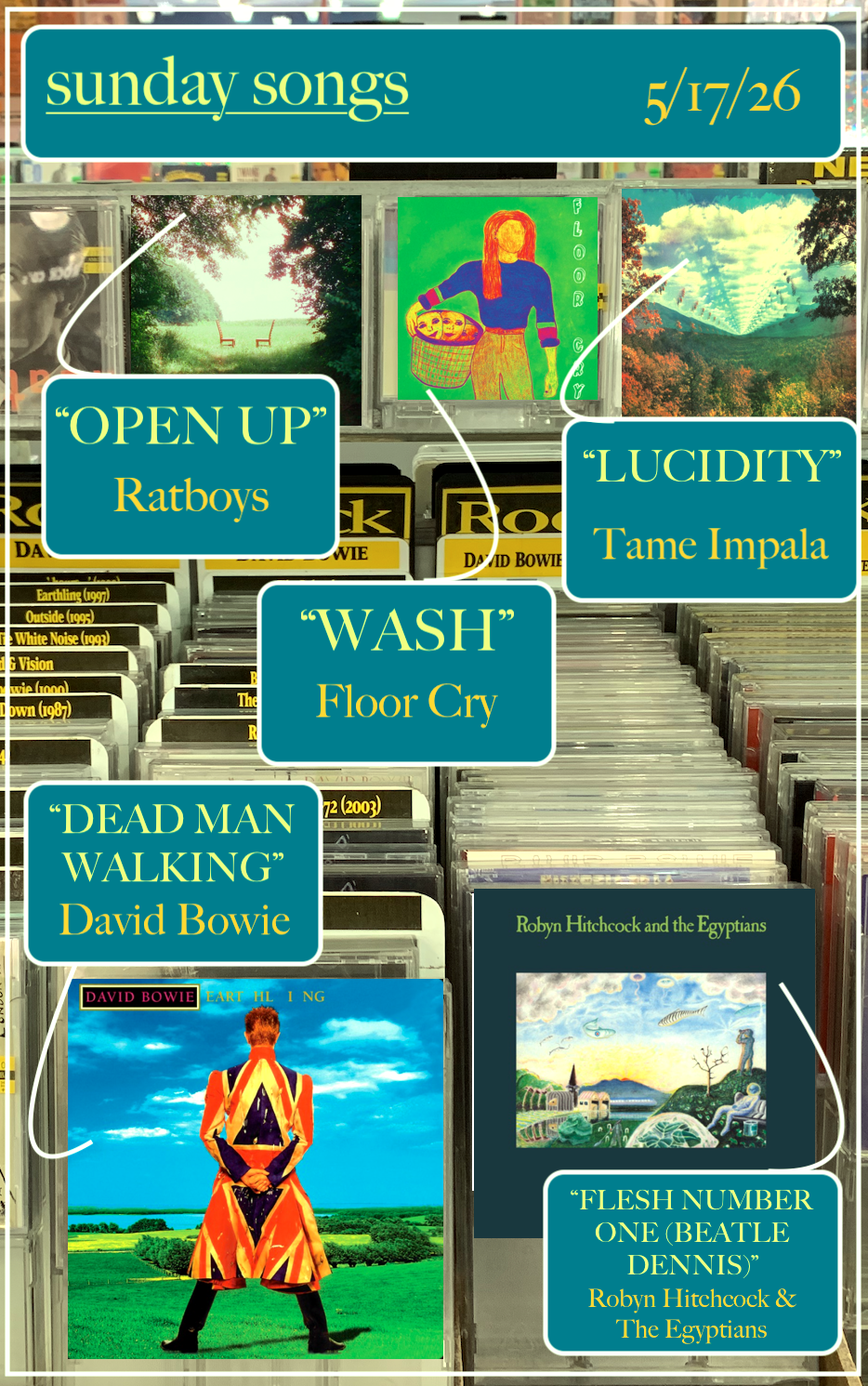
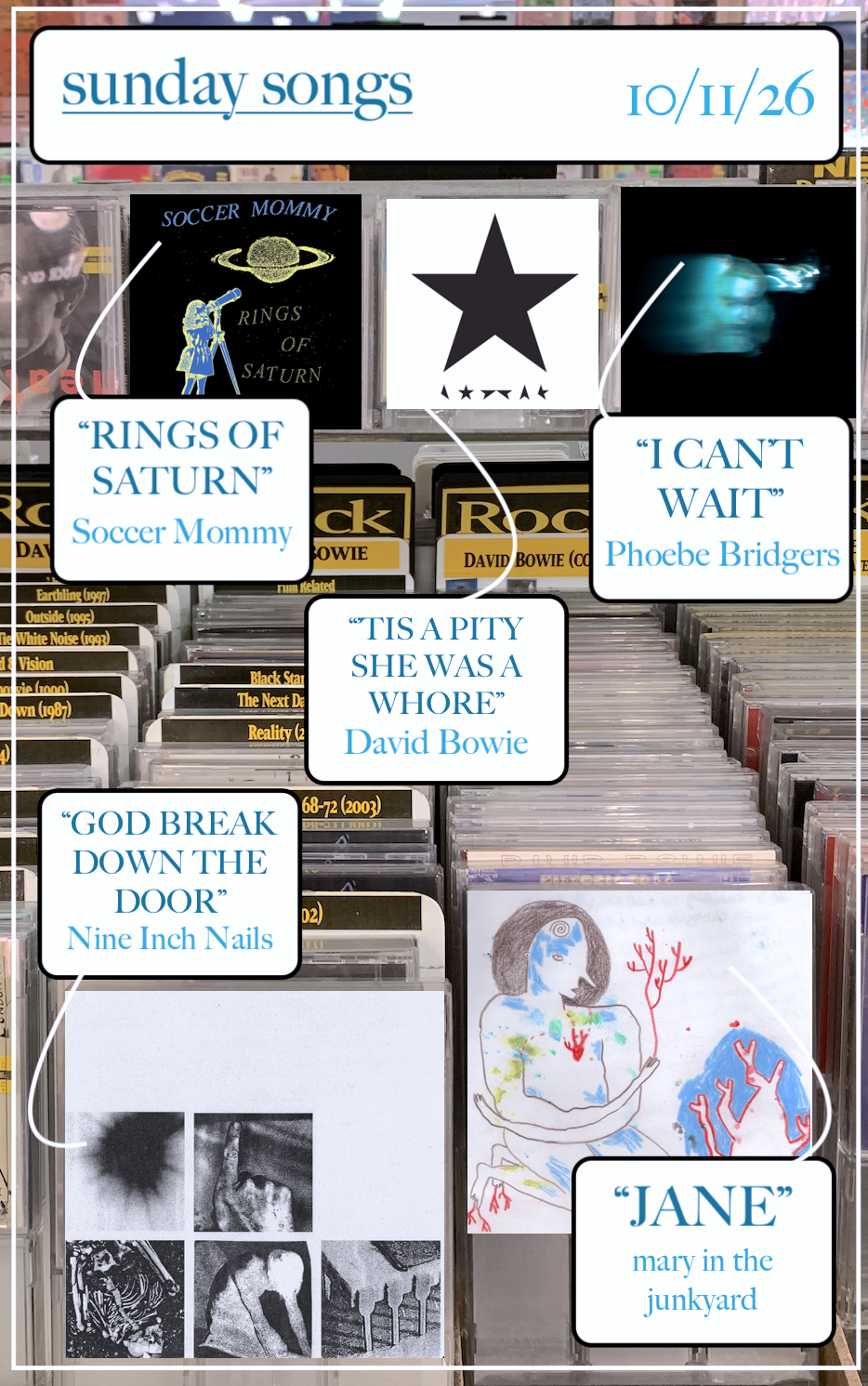
Sunday Songs: 5/17/26

Happy Sunday, bibliophiles! I hope this week has treated you well.

This week: the inescapable march of time? Nah, no need to worry about that, let’s go frolic in a field, whee!

Enjoy this week’s songs!

SUNDAY SONGS: 5/17/26

“Dead Man Walking” – David Bowie

The above meme has been my experience with Earthling. You know what I’ve been doing while listening to Earthling? That’s right…knitting a scarf, otherwise motionless, while my brain is vibrating at a speed that could shatter glass. God, I love Bowie.

Earthling really was a shock to my system. Even as a seasoned Bowie fan, you know in the abstract how easily he was able to adapt to musical genres and eras without necessarily sacrificing his own personal core. But it’s albums like Earthling that make you remember this in earnest; he adapts to the growing electronic and dance subcultures of the ’90s amphibiously, as if it had been the air he’d been breathing all along. It’s all a mishmash of influences, and if you’re looking for a microcosm of it, look no further than the multitudes in “Dead Man Walking”; yes, it’s a meditation on aging on the surface, but to me, it’s a conversation between the past and the present, at heart; originally, it was meant to be a tribute to Susan Sarandon (who he’d worked with on The Hunger) and her film Dead Man Walking, but after watching a performance by Neil Young and Crazy Horse, it inspired Bowie to write about the contrast of these aging rock n’ roll legends and the vitality that the music still contained. The ties to the past increase tenfold with Jimmy Page’s connection—he offered the chord progression of “Dead Man Walking” to Bowie all the way back in the ’60s (he had already recycled it for multiple songs, namely “The Supermen”).

The frenetic, thrumming drum n’ bass of this track encapsulates how nonlinear this experience of time is—the past is constantly communicating with the present and future, creating a constant conversation, a kind of tangled subway map of years and people. Leave it to Bowie to create such a concise meditation in the form of pulsating dance—it feels like this song should soundtrack a high-speed speeder chase in some cyberpunk movie. And as if we hadn’t gotten enough twists, now throw in Mike Garson doing Aladdin Sane-esque jazz piano at the very end. Naturally. Up until the end, his manifesto was to keep everybody on their toes—including himself, it seems.

BONUS: here’s an excellent clip of Bowie performing an acoustic version of “Dead Man Walking” with Reeves Gabrels for Conan O’Brien:

…AND A BOOK TO GO WITH IT:

The Infinite Miles – Hannah Fergeson“And I’m gone, gone, gone/(Gone, gone, gone spinning slack through reality)/Now I’m older than movies/(Dance my way, falling up through the years)/Let me dance away…”

“Flesh Number One (Beatle Dennis)” – Robyn Hitchcock & The Egyptians

A Globe of Frogs was, surprisingly, my first experience with listening to a Robyn Hitchcock project all the way through (not counting the Soft Boys); most of the tracks are excellent, but the average Robyn Hitchcock listening experience to me usually circles back around to “how does he manage to make this many good songs?” I swear that this is on the alternative-hit level of something like “Birds in Perspex” or “So You Think You’re In Love”—with how much indie airplay those two songs got, it’s baffling that “Flesh Number One (Beatle Dennis)” didn’t get it…okay, maybe it’s harder to sell a song with a title like that. But that doesn’t matter, right? Though it’s lyrically less weird than some of the other tracks on A Globe of Frogs, it distills Hitchcock’s undying love for the ’60s into a lovestruck, ’80s alternative track. It’s pure ’60s jangle all the way down (hence the Beatle in the title), breathlessly joyful; though that guitar brightness is straight-up Hitchcock, it made complete sense to hear that Peter Buck of R.E.M. also contributed his guitar skills to this album—it certainly has some of the same textures of Green, which came out around a year after A Globe of Frogs. It’s an encapsulation of the stages of love where you’re in so deep that nothing else matters—a plane could be crashing down in the studio, but we’re not there, are we? We’re in love, YIPPEE! God, it’s so delightful.

For the record, it’s an excellent duet. On A Globe of Frogs, he’s duetting with Glenn Tilbrook of Squeeze, but for most of the live shows I’ve seen recently, it’s been with his wife, Emma Swift. It was so sweet when I saw him back in February, and it’s just as sweet here:

…AND A BOOK TO GO WITH IT:

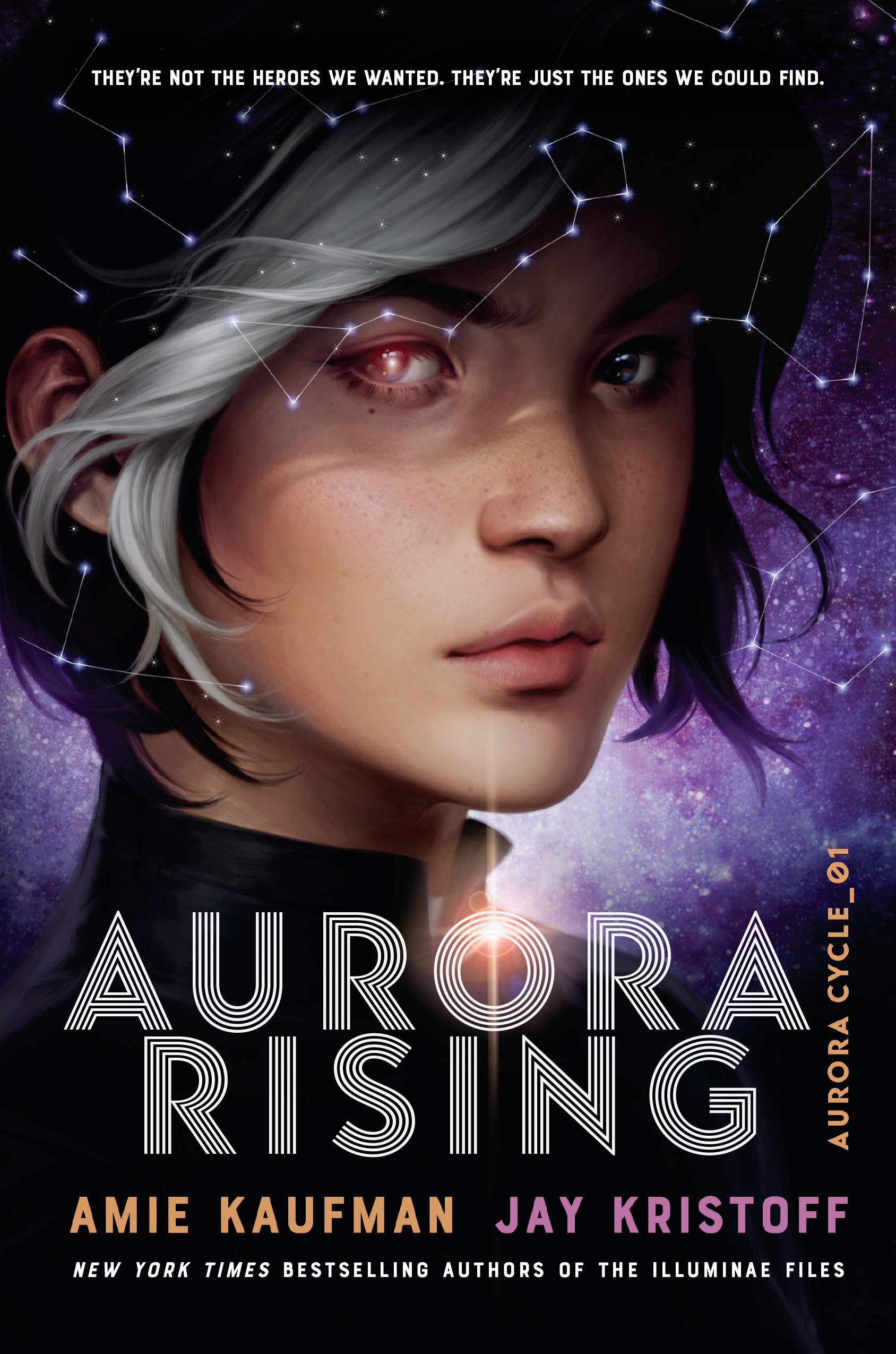
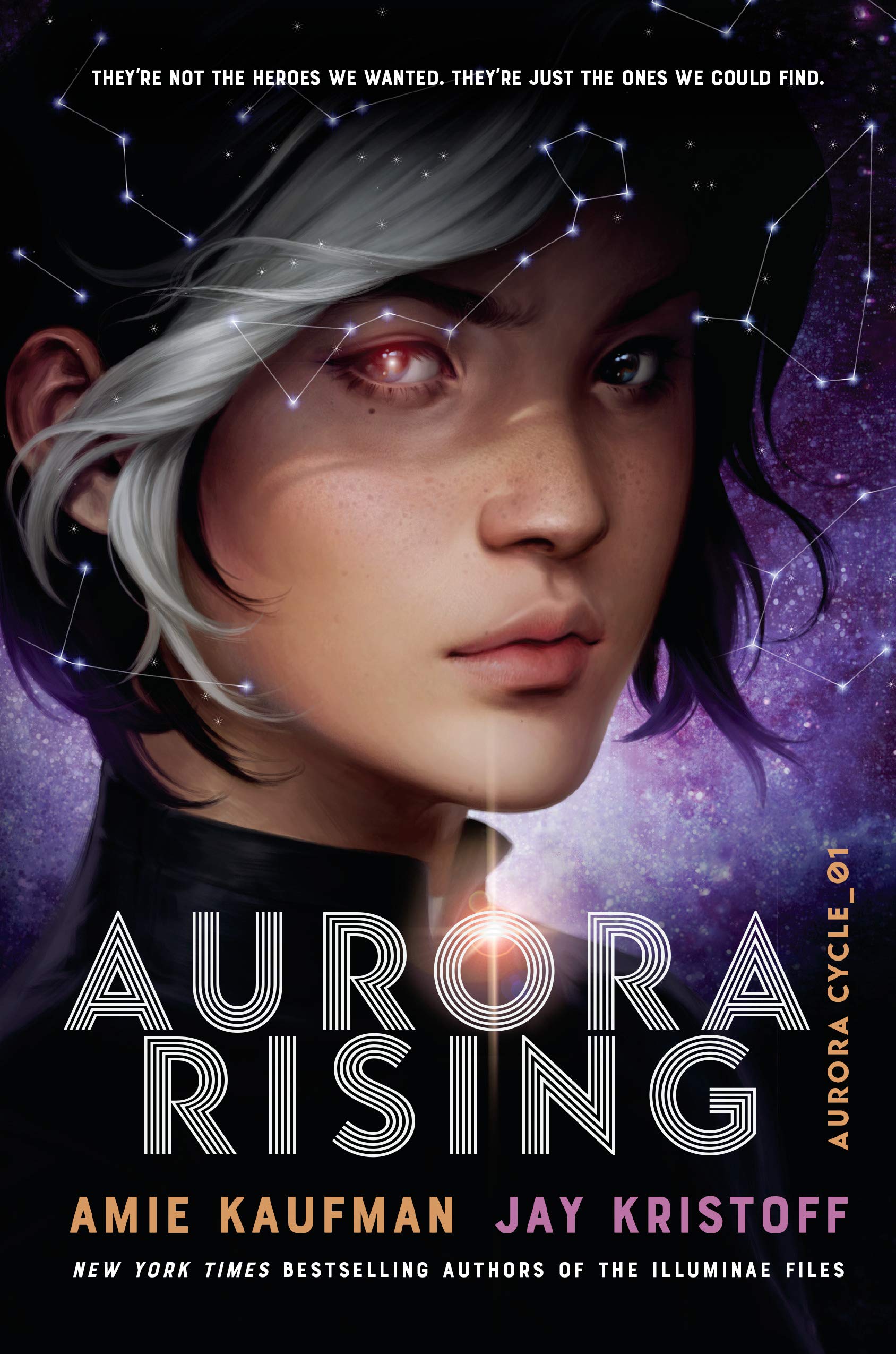
Aurora Burning (The Aurora Cycle, #2) – Amie Kaufman and Jay Kristofftell me this wasn’t Auri and Kal frolicking around in the Echo while the rest of the galaxy was collapsing around them…

“Open Up” – Ratboys

It’s Wilco all the way down. I’ll just hear a song and like it, and bam. It’s just Wilco influence behind the Scooby-Doo villain mask.

For “Open Up” specifically, it didn’t hit me until I read frontwoman Julia Steiner’s interview about this song on Stereogum: “I love Wilco…They have records, Being There and Yankee Hotel Foxtrot, which both have these track ones that are these expansive scene-setters for the whole album and consist of a sequence of verses interspersed with beautiful noise. So that was sort of the template that I was excited to try to work within.” The openers in question are “Misunderstood” and “I Am Trying to Break Your Heart,” which…phew. That’s how you make an album opener, and it’s not exactly an easy act to follow.

Putting this in context makes me see exactly where “Open Up” gestated. Tinged with alt-country and led by Steiner’s vocals (which struck me as very Michelle Zauner, another Wilco fan), this track feels like An Opener. This is my first exposure to Ratboys, but already, I can see exactly where it takes shape; it’s got that slow, burbling build of a good opener that feels anthemic without giving everything about the album away. It never exactly gets to that “beautiful noise” that Steiner describes (no offense, but this isn’t “I Am Trying To Break Your Heart” 2, but nothing could be, to be fair), but it’s got such a hold on that sense of catch-and-release, with teases of percussion and guitar that reel you in before the ending…well, opens up, no pun intended. Fitting, with the song’s thesis and chorus: “what’s it gonna take to open up?”

…AND A BOOK TO GO WITH IT:

Failure to Communicate – Kaia Sønderby“Pick all the locks inside our heads/It takes a while, in your defense/But I got lots of time/So what’s it gonna take to open up tonight?”

“Wash” – Floor Cry

I feel like a part of me will always be nostalgic for that specifically 2010’s flavor of lo-fi dream pop that was everywhere when I was in high school. My friend knew exactly what she was doing sending me this in a café while it was actively raining outside—that’s the proper way to listen to these kinds of songs. It’s whispery and understated, but “Wash” is such a calming track. Propelled by its looped guitar and muted percussion, it really evokes that particular moment in time where the newest tracks weren’t afraid of sounding like yes, this was made with just me, myself and I with GarageBand in my room. Felicia Sekundiak’s vocals nearly drown under the mix, but for a song about feeling like you’re floundering in every way, it fits, whether or not it was intentional.

…AND A BOOK TO GO WITH IT:

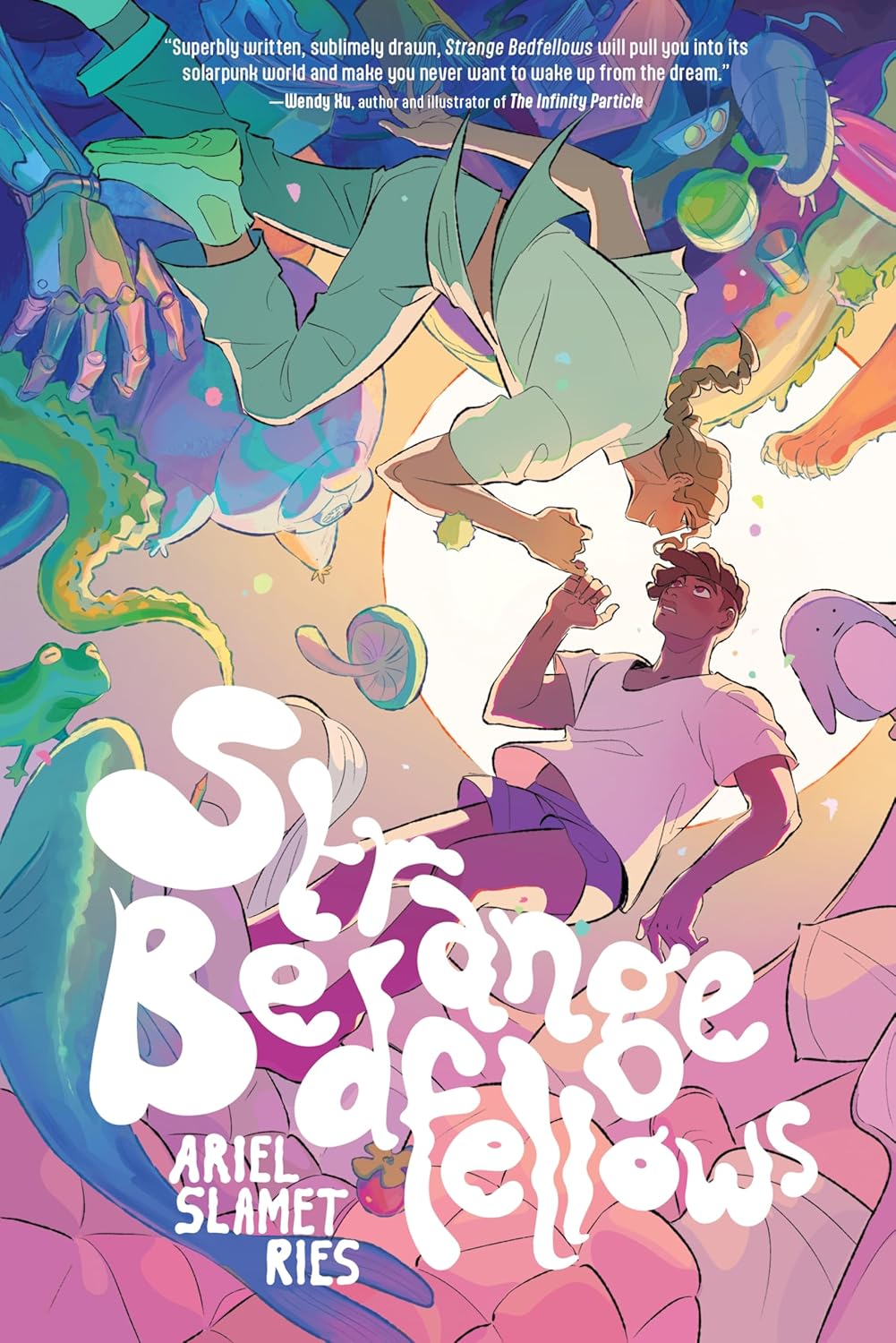
Strange Bedfellows – Ariel Slamet Ries“Swimming/’Til the water started spinning/Now I feel it down in my throat/Heart’s too heavy for a lifeboat…”

“Lucidity” – Tame Impala

It’s songs like this that make me forget that Tame Impala is ostensibly…pretty boring now. Or so I’ve heard. I’ve just heard “Dracula” everywhere, and yeah, it’s mediocre, not much else I can say about it. But you know how I knew that Tame Impala had gone downhill? Around the time when Deadbeat came out last year, I heard the hippie baristas at my local coffee shop grousing about how terrible it was. The minute Tame Impala loses the barista demographic, he’s done for.

So it’s kind of a shock to remember Kevin Parker’s beginnings. “Lucidity” popped into my head the other day, and it feels worlds away from where he is now. With its chugging guitars and Parker’s drifting vocals, it’s a fantastic piece of psychedelic rock. Fuzzy and trippy, it manages to toe that ever-thinning line between ’60s worship and modern sensibilities, and while it does kind of stumble over the former line, it never makes it lose its potency. It’s very Beatles, but if a time traveler went and gave John Lennon a ton of new guitar pedals. It’s undeniable what made Tame Impala such a sensation in the first place—he hit just the right chord here.

…AND A BOOK TO GO WITH IT:

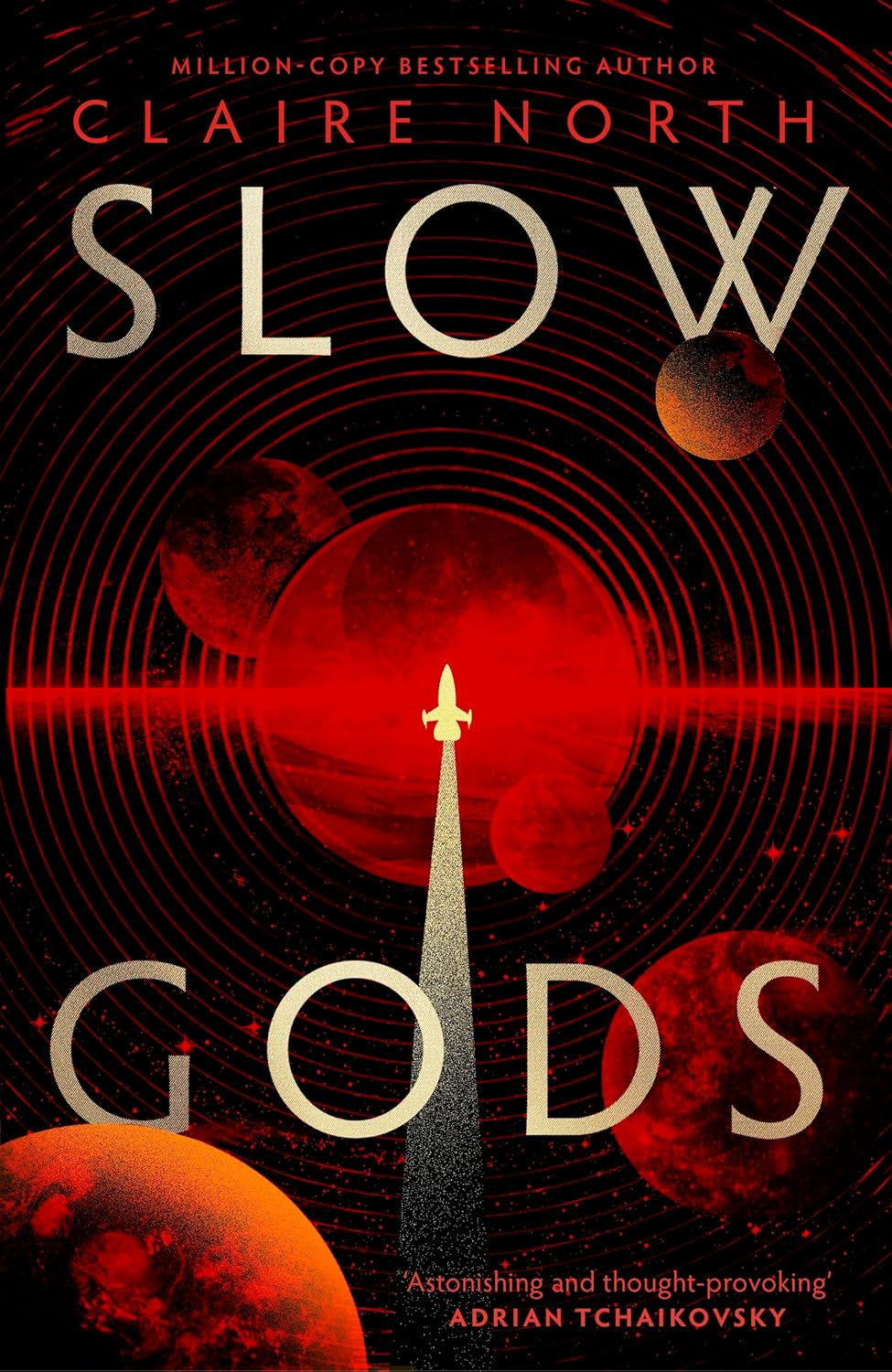
Slow Gods – Claire North“Lucidity, come back to me/Put all five senses back to where they’re meant to be/Oh it’s hard to tell, breaks down/There is a will, there is a way…”

Since this song consists entirely of songs, consider all of them to be today’s song.

That’s it for this week’s Sunday Songs! Have a wonderful rest of your day, and take care of yourselves!

Posted in Monthly Wrap-Ups

March/April 2026 Wrap-Up 🏫

Happy Thursday, bibliophiles!

This is a scheduled post, so I’ll be going back into my gopher hole for at least another week (or thereabouts), but one thing about me is that I love to categorize and wrap things up, in spite of it all…

Let’s begin, shall we?

GENERAL THOUGHTS:

I’ve been in the weeds of finals for the past few weeks, and I only just submitted my last final. Which also happened to be my last final…and the last assignment I’ll ever submit for undergrad. Jesus. I graduate college tomorrow (!!!), and I’ll continue to be busy, so expect that I’ll be radio silent for at least another week, with the exception of one other scheduled post aside from this one.

As you could probably gather from the amount of times I randomly dropped off the face of the Earth this blog, March and April have been very busy for me. It’s been a time. In late March, I defended my honors thesis, which was nothing short of nerve-wracking. But it was worth it—guess who’s graduating summa cum laude?? After that, I barely even considered that there would even be a semester after my honors thesis, since working on it swallowed up most of my semester. Of course, I only had a week or two before finals swallowed everything, but such is life. And college.

And now I’m about to graduate. What people don’t tell you about college is that, aside from graduation, there’s no real fanfare for the end of college. I just had a single, completely uneventful class on Thursday afternoon, and then I was just…done. With undergrad. Four years, all culminating in some random class I only took for the upper-division elective credit. You expect it to end with firecrackers and confetti and not just shuffling out of class and taking the bus home, but that’s the way things go sometimes. Sometimes things just end. And that’s okay. But maybe it’s fitting, in a way. I spent so much of my life being petrified at even the thought of going to college and being away from my parents. There was so much catastrophizing in the years and months leading up to college. But it ended so quietly, so ordinarily. In the end, it was uneventful, and it was all fine. Well, more than fine, I’d say. I came away with a GPA that wasn’t too shabby, so many wonderful friends, a ton of new experiences that I’ve braved…not to mention that summa cum laude I mentioned!! Come on!

So maybe it’s for the best that things end quietly. I can look back and be at peace, knowing that everything I struggled through was worth it, and hardly anything turns out as badly as your anxieties make it out to be. About a month back, one of my best friends introduced me to Rilo Kiley’s song “A Better Son/Daughter,” which…first off, you know who you are, and that was diabolical to do that to me right before graduation. Dastardly, even. OW. But I find myself drawn to it again and again, knowing some of the lows I’ve experienced recently in college (and in life), and that I came out the other side a more independent, self-assured, and hopefully more whole person. I sure feel better, knowing that I’ve made it to this point in spite of it all. So thank you, said friend, for bringing that song into my life.

MARCH READING WRAP-UP:

I read 13 books in March! Unfortunately, I had my first DNF of the year (I gave it an extra star because there were a few good ideas in it, but overall, Pleasure Activism got on my nerves and life is short), but aside from that, I had an excellent reading month! I focused on books by women for Women’s History Month, and I had a blast with new-to-me authors, longtime favorites, and treasured re-reads.

2 – 2.75 stars:

The Lightest Object in the Universe

3 – 3.75 stars:

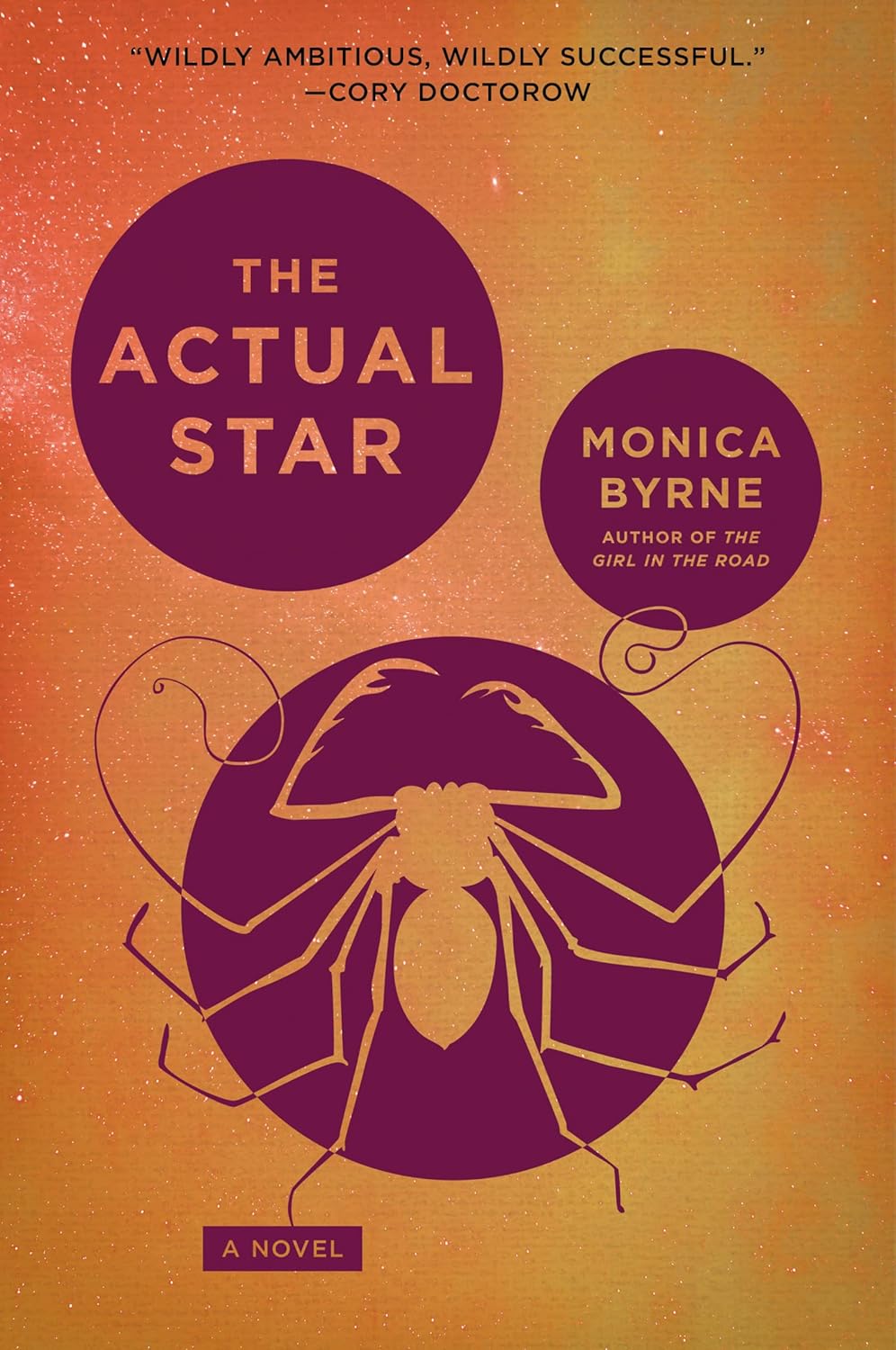
The Actual Star

4 – 4.75 stars:

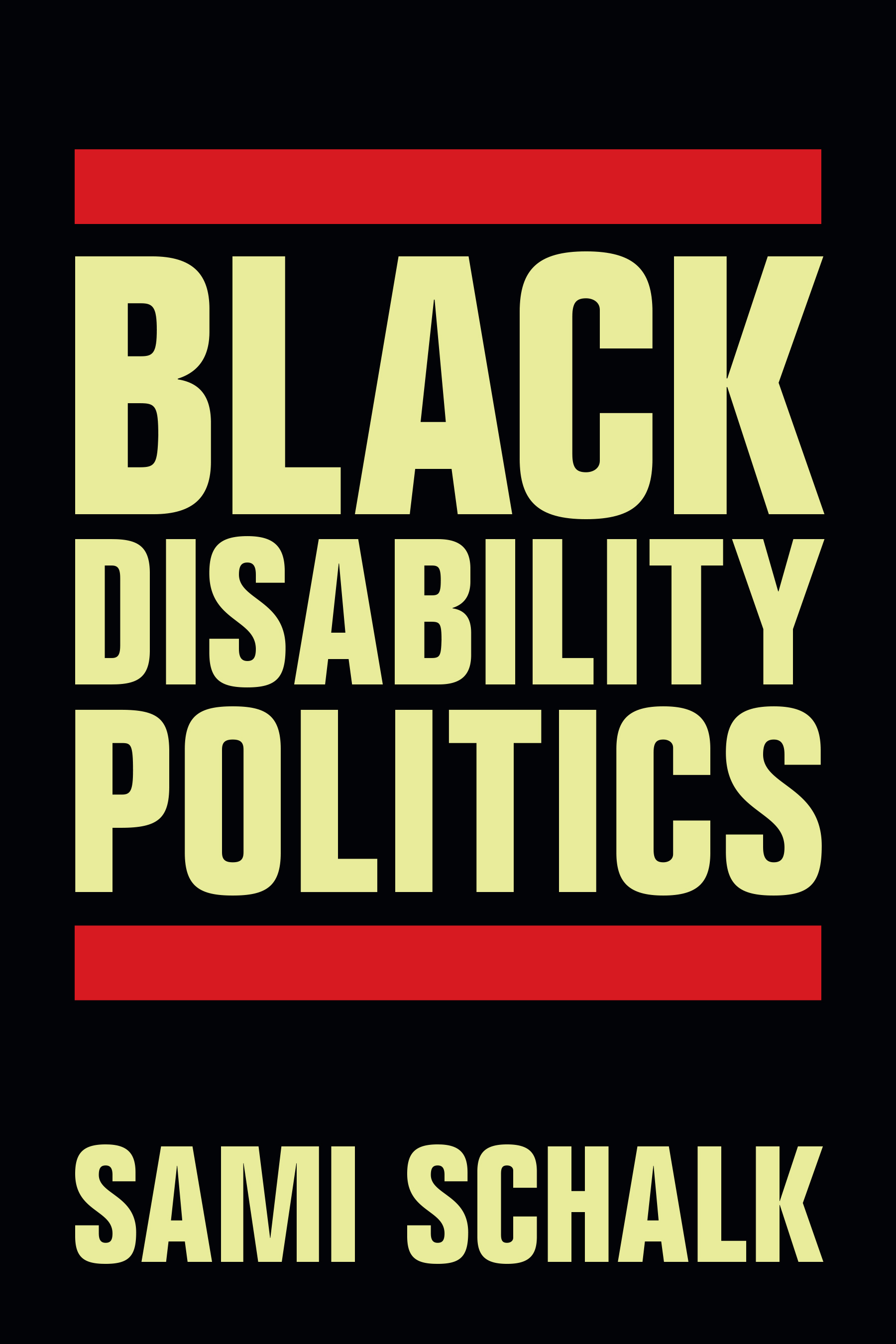
Black Disability Politics

5 stars:

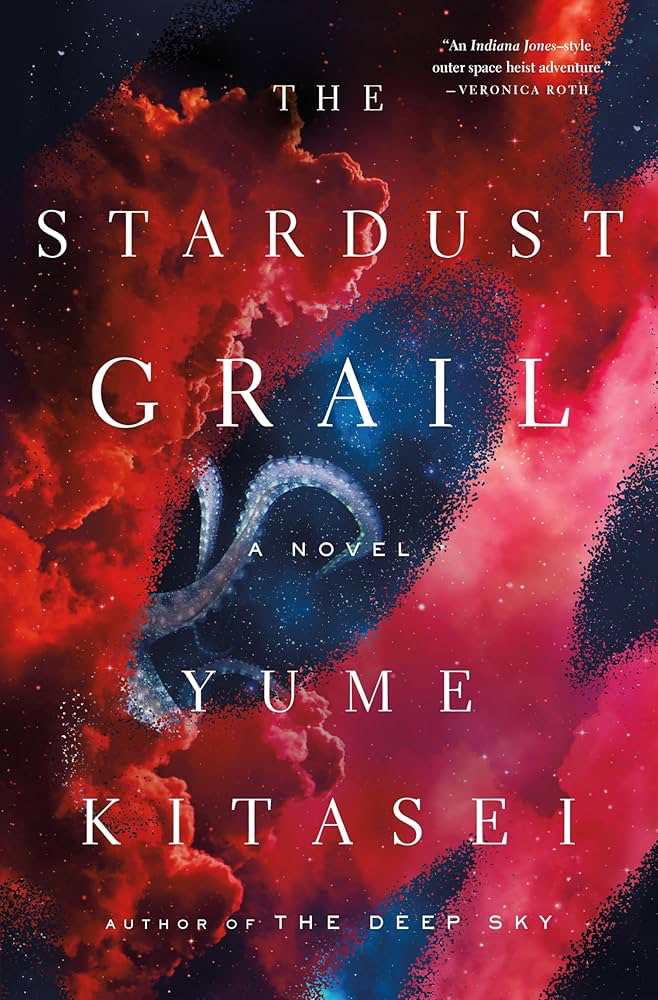
The Stardust Grail

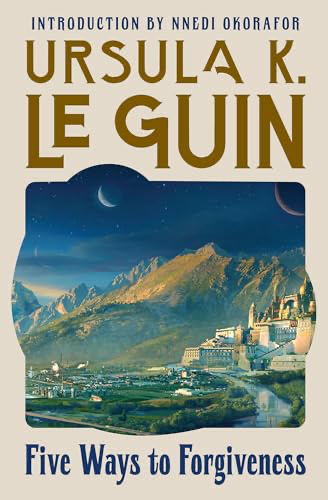
FAVORITE BOOK OF THE MONTH (not counting re-reads): Five Ways to Forgiveness – 4.5 stars

Five Ways to Forgiveness

REVIEWS:

SUNDAY SONGS:

BONUS:

APRIL READING WRAP-UP:

I read 13 books in April! Ratings-wise, this month was a rollercoaster—I had a 5 star read and my first DNF of the year one after the other (I kid you not), so there have been lots of ups and downs. But most of the books I read came out somewhere above average, so I can’t complain. The ones that were excellent made up for the bad and the mediocre.

1 – 1.75 stars:

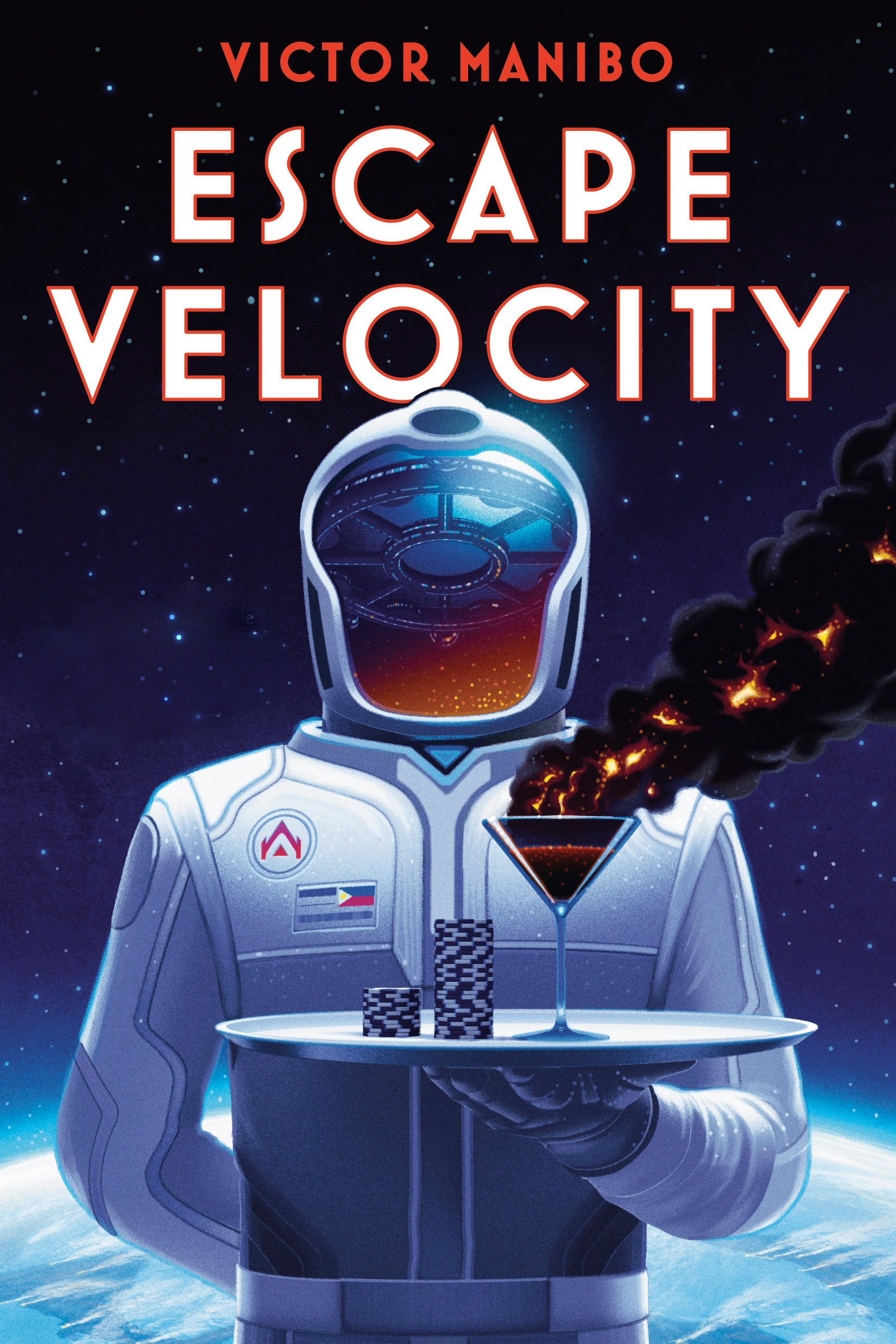
Escape Velocity

3 – 3.75 stars:

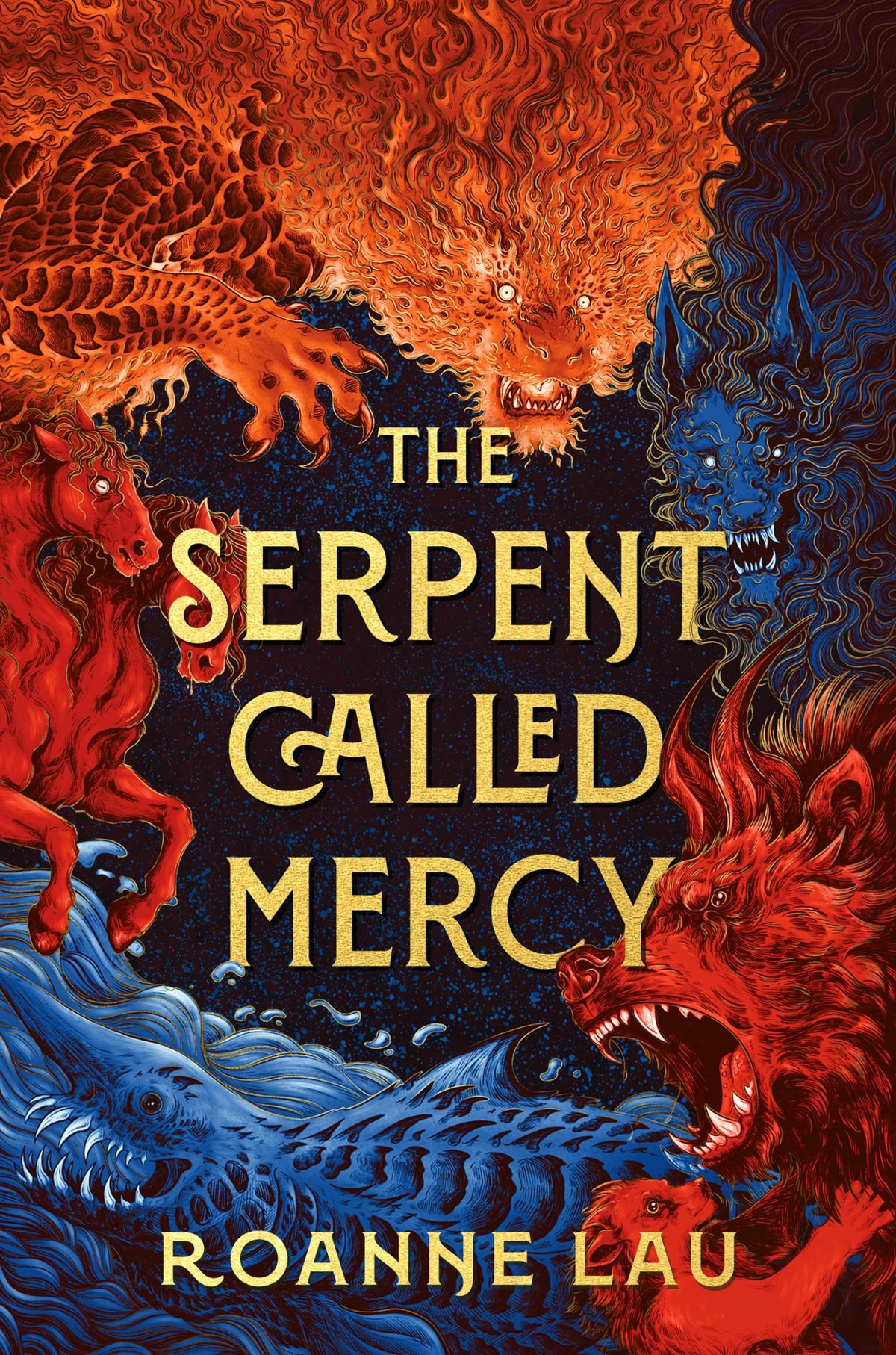
The Serpent Called Mercy

4 – 4.75 stars:

Slow Gods

5 stars:

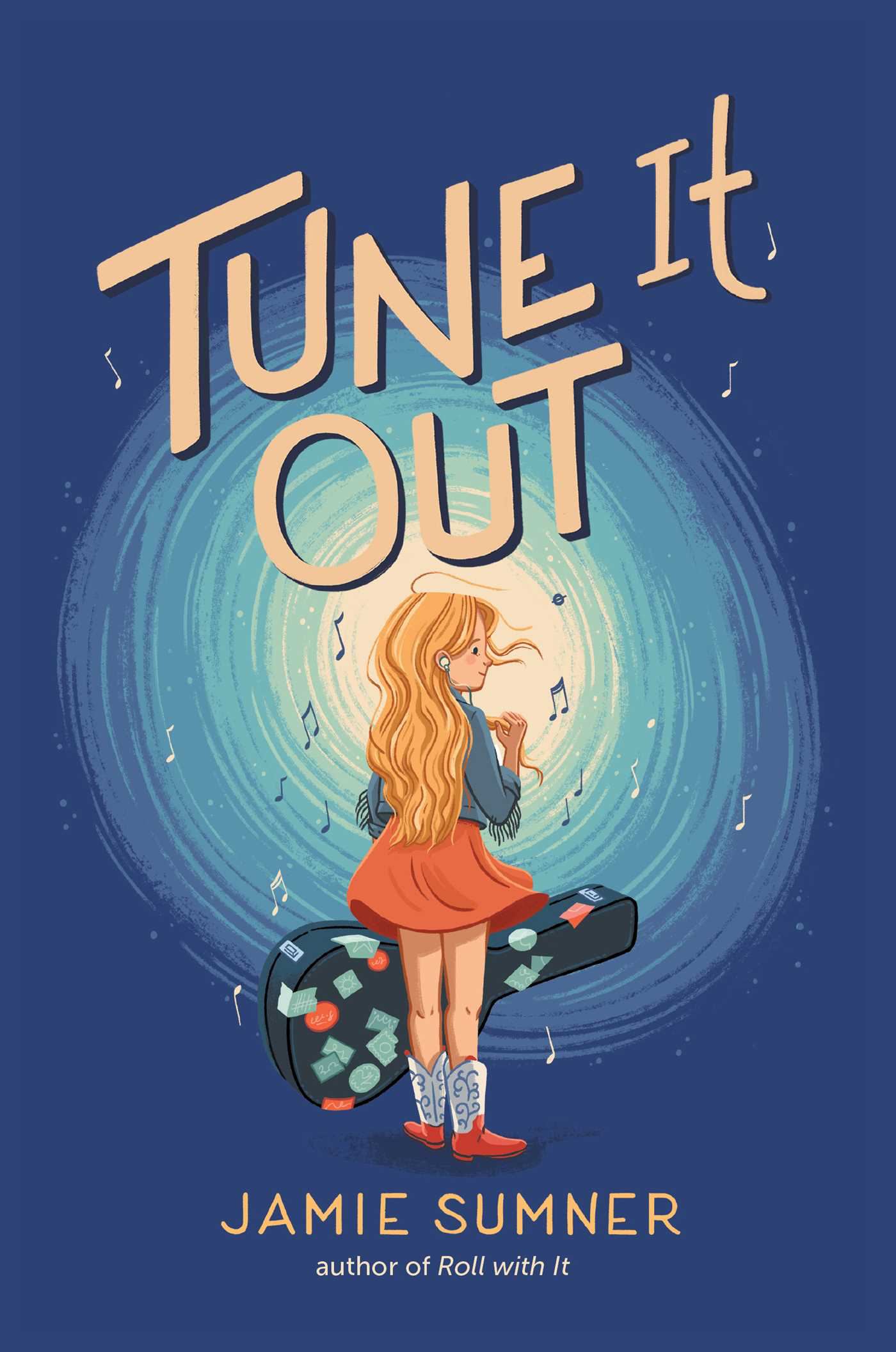
Tune It Out

FAVORITE BOOK OF THE MONTH: Tune It Out5 stars

Tune It Out

REVIEWS:

SUNDAY SONGS:

BONUS:

Today’s song:

holy fuck, Earthling is phenomenal…I’ve really been feeling that “music meant to be listened to on drugs at the club/me listening to it sober doing the dishes” meme while listening to it while knitting on the bed though 💀

That’s it for this wrap-up! Have a wonderful rest of your day, and take care of yourselves!

Posted in Sunday Songs

Sunday Songs: 4/5/26

Happy Sunday, bibliophiles, and Happy Easter to those celebrating! 🐰

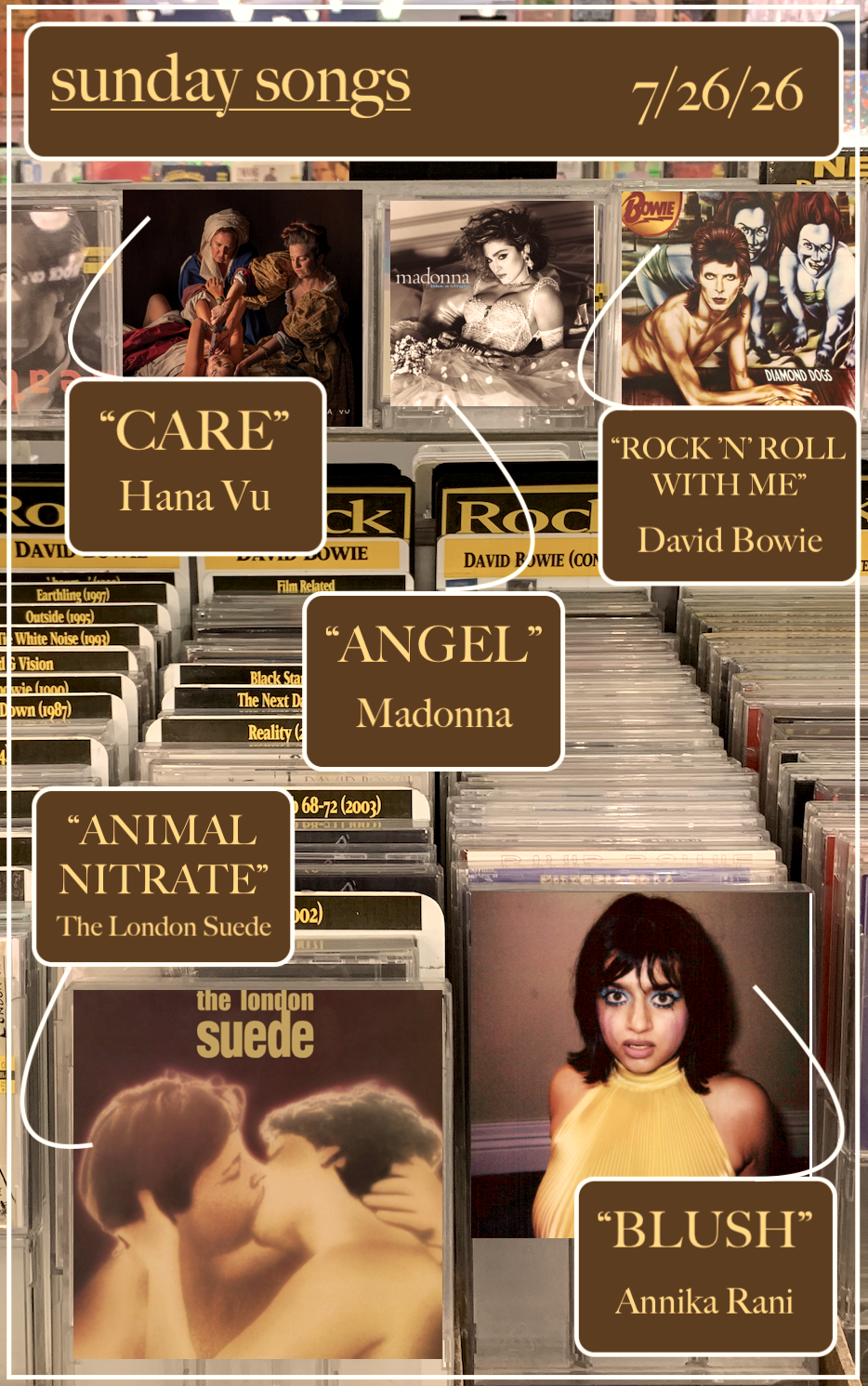
Since I took a break last week to finish up my honors thesis, here’s my graphic and the accompanying songs from that week:

SUNDAY SONGS (3/29/26):

This week: living vicariously through a digital album because SOMEBODY won’t tour in my area, making something out of nothing, and the inevitability of mildly cursed Jeff Tweedy music videos.

Enjoy this week’s songs!

SUNDAY SONGS: 4/5/26

“Crash Landing” – mary in the junkyard

THE ALBUM! THE ALBUM IS FINALLY COMING!

After about a year and a half of following their excellent singles and EP, mary in the junkyard is finally putting out their debut album! Role Model Hermit comes out this July, and I couldn’t be more excited. With the last handful of singles, I had some fears that they’d become a one-trick pony, but I’m so glad that a) they’re deviating from the sound that they’d established, and b) that the final product is this stunningly good.

“Crash Landing” gives their sound more polish, but takes away none of their corner-dwelling, cobweb-covered sensibilities. The harmonium gives me goosebumps every time, but after the instrument fades away, that haunting power never fades. When the harmonium chords transition into the soaring guitar, it really makes the choice of the music video make sense—everything in this song sounds like frigid waves crashing against white chalk cliffs. Now that Clari Freeman-Taylor sounds clearer, the subtle power of her voice comes through even more, through lyrics surrounding falling in love with a deeply guarded person: “And I can take your mask off/But only in the dark/And you won’t takе your shoes off/In case you have to run, run, run.” The repetition of “you open up like a coconut” sticks out, mainly from the coconut bit—that word doesn’t fit as neatly with the rest of them—but as with all of their lyrics, mary in the junkyard frame it as just the right kind of flotsam and jetsam to decorate this track.

…AND A BOOK TO GO WITH IT:

Sisters in the Wind – Angeline Boulley“And I can take your mask off/But only in the dark/And you won’t takе your shoes off/In case you have to run…”

“Up The Hill Backwards” – David Bowie

Scary Monsters and Super Creeps has a special place in my heart. All the way back in middle school, at the height of my David Bowie discovery phase, it was one of the first albums that I listened to in full, after the virtually unbeatable Hunky Dory/Ziggy Stardust/Aladdin Sane glam trifecta. But I hold it up with nearly the same nostalgia. I feel like most of it tends to get lost amongst other Bowie albums, save for its most popular singles (“Ashes to Ashes” and “Fashion”). Both of them are icons in their own right, but I’d honestly argue that Scary Monsters, all the way through, is nearly as strong as the Berlin Trilogy, if not equally strong. It’s in a strange limbo in Bowie’s discography between the end of Berlin and the beginning of his plainer, more mainstream pop era of the ’80s, and the space between that juncture is what makes Scary Monsters so exciting to me: all the polish of pop, but with the same unusual, and often dystopian undertones of an album like Low or Lodger. Hell, he’s using what sounds to be the same drum machine from “Breaking Glass” on “Up the Hill Backwards.” It’s basically the fourth and forgotten chipmunk of the Berlin Trilogy that got unfairly swept aside.

“Ashes to Ashes” remains one of my favorite David Bowie tracks of all time, and that, along with the more commercial singles from the album, tends to overshadow the other gems on this album, everything from a Tom Verlaine cover to a dystopian tale more grounded and grittier than the contents of Diamond Dogs. But “Up The Hill Backwards” is an immediate standout to me. It feels like an alien organism wearing the skin of a typical pop song as a coat: everything seems aligned perfectly for radio-friendliness, but then it reveals just how delightfully askew it is. Most of that is due to the unusual 7/4 time signature, giving it that lack of resolution, but it’s full of chimes and squeals and chimney-like puffs that make it into a well-oiled machine like no other. With the ripping guitar riffs of Robert Fripp, you can’t go wrong—every off-kilter cog in “Up The Hill Backwards” is working in precise harmony. And it’s all strangely upbeat for a song about the existential void that comes in realizing the slowness of progress; the first line references a line in Dada: Art and Anti-Art which itself is referencing the fall of Imperial Germany (“The vacuum created by the arrival of freedom/And the possibilities it seems to offer”), but it could represent the death of one system and the slow birth of another. It’s contextualized further knowing that Scary Monsters was written in wake of his divorce with Angie Bowie, so that “vacuum created by freedom” can be systemic or personal. Either way, “Up The Hill Backwards” pledges to trudge onwards in the face of collapse, no matter how uphill the journey is.

…AND A BOOK TO GO WITH IT:

Five Ways to Forgiveness – Ursula K. LeGuin“The vacuum created by the arrival of freedom/And the possibilities it seems to offer/It’s got nothing to do with you, if one can grasp it…”

“Gwendolyn” – Jeff Tweedy

Jeff Tweedy’s always been one for mildly cursed music videos (see: “I Know What It’s Like”), and this video certainly translated it into the COVID-19 age, with the noses and mouths of fellow musicians (and a handful of actors) disturbingly green-screened over his masked face. If you’re hankering to see what Jeff Tweedy’s face would look like if it was mashed up with Robyn Hitchcock, Fred Armisen, Jay Som, Seth Meyers, Jon Hamm, or Nick Offerman (and more)…now’s your chance, I guess?

A lot of Jeff Tweedy’s solo work before Twilight Override tends to be more on the folky and borderline simplistic side (though the two are mutually exclusive, that’s not a dig at the entirety of folk music). It hasn’t hooked me nearly as much as his work with Wilco, but what you have to understand is that even if you’re getting something less than Wilco-quality, it’s still a great song. “Gwendolyn” is a more straightforward rocker, but you still get your money’s worth of most of what I like about Jeff Tweedy; there’s punches of truly inspired lyrics (“The sun coming up/Like a piece of toast”) and squealing, joyous guitar riffs aplenty. The truth is, Tweedy’s a cut above the rest, and even his more traditionally rock songs are as such—”Gwendolyn” is pure joy.

…AND A BOOK TO GO WITH IT:

Lady’s Knight – Amie Kaufman & Meagan Spoonerokay, sue me…yes, I did put this in just because we’ve got two Gwens here.

“The Strangers” (Live) – St. Vincent & Jules Buckley

Even though I’ve been cruelly deprived of an orchestral tour date near me, at least I have LIVE IN LONDON! , St. Vincent’s digital-exclusive live album, where she’s accompanied by Jules Buckley’s 60-piece (!!) orchestra. I’ve loved seeing these new takes on her classic songs, especially since she’s been dredging up some rarely-played deep cuts out of the vault to interpret live (most of the shows have been opened with “We Put A Pearl In the Ground,” an instrumental piece from Marry Me.) “The Strangers” isn’t a deep cut by any capacity, but nonetheless, I think some of the album’s best interpretations have been of tracks from Actor; the whole album leans into drama and theater, so it’s no surprise that it translates well with orchestral backing. “The Strangers” is given the suspenseful, eerie grandeur of the original track, with the backing instrumentation easily taken up by the string and woodwind sections. It’s a grand, cinematic interpretation of an already grand and cinematic track, and with Annie Clark’s elevated shredding, it becomes something truly epic and sweeping, decadently consuming everything in its path.

…AND A BOOK TO GO WITH IT:

Red City – Marie Lu“Lover, I don’t play to win/But for the thrill, until I’m spent…”

“Moroccan Peoples Revolutionary Bowls Club” – Blur

My lukewarm Blur take du jour is that Graham Coxon may be the most talented member of the band, either on par or above Damon Albarn, as much as I love him. So the fact that I love Think Tank so much comes as a surprise even to myself. Blur without Coxon, in concept, isn’t even Blur! Right?

Sort of.

Coxon left the band temporarily due to creative differences, and during Think Tank, he only appears on one track, playing guitar for “Battery In Your Leg.” But what redeems the un-Grahamness of the album is the sheer inventiveness of it. You take away your lead guitarist, responsible for creating the band’s most iconic riffs, and the rest of the band members went “Huh. Let’s make sounds that sound like everything but a guitar and see what happens.” For Blur, this feels like a continuation of the experimental mindset that peaked with13, but in a new, more worldly sort of vein. In a way, it’s a response to loss, musically more than anything, though occasionally lyrically (“Sweet Song” was written about Coxon’s departure): when an important person departs from your life (temporarily, at least), what do you do with what’s left?

“Moroccan Peoples Revolutionary Bowl Club” doesn’t tackle that subject matter, but it is a spectacular showcase of what happened when a chunk was untimely ripped from the fabric of the band. It’s one of the tracks on the album that easily could’ve come from Gorillaz’s first album, with its commentary on greed and the destruction of the environment. Alex James’s bass gets to shine on this track, with his smooth, funky riffs becoming the centerpiece amidst humming autotune and guitars. However you feel about Blur sans Graham, it stands as a quirky album produced by a band at a crossroads—it’s strikingly unusual in their catalogue.

…AND A BOOK TO GO WITH IT:

Automatic Noodle – Annalee Newitzsimilar in spirit to the feel of Think Tank: full of strange machinery, and mostly upbeat in spite of being smack dab in the middle of a dystopia.

Since this post consists entirely of songs, consider all of them to be today’s song.

That’s it for this week’s songs! Have a wonderful rest of your day, and take care of yourselves!

Posted in Sunday Songs

Sunday Songs: 1/25/26

Happy Sunday, bibliophiles! I hope this week has treated you well.

This week: Here it comes again; a fantastic voyage to Palo Alto to answer this essential question: where’s my phone? It’s been undone!

Enjoy this week’s songs!

SUNDAY SONGS: 1/25/26

“Where’s My Phone?” – Mitski

It’s finally come to that time of year when I start accumulating albums that I’m looking forward to. Nothing’s About to Happen to Me, which is set to release on February 27, is topping the list at the moment for sure! Mitski is back for her first album in two and a half years, and as usual, she’s set to put a pulse on the neuroses of the world; Nothing’s About to Happen to Me seems to be a concept album about a recluse who never leaves her cluttered house. With the aesthetics of cats and old wallpaper, this album has such a clear image—and an intriguing one. Mitski channels some of her heavier guitar work on “Where’s My Phone?”; it’s an exciting sonic callback, like she’s been dusting off the old Bury Me at Makeout Creek sounds (!!!). Adopting a falsely cheery tone, Mitski sings of this character desperately repressing every possible source of negativity, yearning to be “clear glass with nothing going on.” The sentiment of “I keep thinking surely somebody will save me/At every turn I learn that no one will” is pure Mitski all the way down, but it’s refreshing to see Mitski going headfirst into a new character; her introspection, fictional or nonfictional, is where her art shines. Plus, that music video, in which Mitski’s multigenerational home gets assailed by dozens of strangers, is nothing short of bonkers. Definitely somebody’s vivid anxiety dream, for sure.

For some reason, my mind got stuck on the classic censored beep sound on the “I would fuck the hole all night long” line. Sure, we are in the age of musicians proactively self-censoring, but of all musicians, Mitski seems like the last one to do that, especially with how she’s clawed to keep her individuality—and sanity—intact in the music industry. She’s not a Taylor Swift type, and she hasn’t shied away from profanity before. There’s no clean version of the song, and the music video has it too—and yet the official lyrics don’t censor it. So what’s the deal? Was it some sort of artistic touch for the album’s central character’s supposed shame and guilt? I still haven’t come to a conclusion myself, but I swear that it’s intentional. Whatever the case, “Where’s My Phone” buzzes with neurosis, crunching at the edges, an ember of anxiety.

…AND A BOOK TO GO WITH IT:

I’m Thinking of Ending Things – Iain Reid “I keep thinking surely somebody will save me/At every turn I learn that no one will/I just want my mind to be a clear glass/Clear glass with nothing instead…”

“Fantastic Voyage” – David Bowie

As calm of a song “Fantastic Voyage” is, it’s a certainly eerie start to Lodger. I finally got around to listening to the album in its entirety not long ago, while mourning 10 years since Bowie’s passing in 2016. Listening to Lodger not long after Taking Tiger Mountain By Strategy put me in an irreparable chokehold makes me realize the sheer impact of Eno on Bowie—his weirdness was all there, but after decades of being mainstream, it was Eno who resurrected the less palatable parts of weirdness. I’m sure it was less unexpected at the conclusion of the Berlin Trilogy, but expecting another “Starman” and getting…I dunno, “African Night Flight” must’ve been some unparalleled whiplash. And he’d keep the act going throughout his entire career. In a way, Lodger is a microcosm of what his career would later be. There’s no shortage of tricks up his sleeve, from the strange, often eerie left turns to the sneakier tricks; for one, “Fantastic Voyage” and “Boys Keep Swinging” have an almost identical chord progression, but their atmospheres are so radically different that I didn’t even notice. It’s a trickster kind of album, obstinate in its mission to not be boxed in.

After falling back to Earth, the Berlin Trilogy got much more worldly, and Lodger was its peak. The entire album reeks with the recollection that the world is rife with the unknown, be it in places unseen or the machinations of politics. “Fantastic Voyage” is the thesis of that song; it reads like a scrawled diary before the apocalypse, and it very well could have been, what with the threat of nuclear annihilation and the Cold War on Bowie’s mind. He pits the casual dehumanization of entire peoples against the plea for the dignity of all individuals. He looks skyward, pondering the missiles that could rain down on the population and end everything in an instant. But in the midst of all this turmoil, decades after 1979, the final verse rings truer than ever: “They wipe out an entire race and I’ve got to write it down/But I’m still getting educated/But I’ve got to write it down/And it won’t be forgotten.”

Oof. Certainly feels like a slap in the face, given that ICE has been snatching children off the streets and shoots unarmed civilians in Minneapolis, and I’m just holed up in my apartment trying to get my thesis done. Yet Bowie’s words feel like a guidebook. I’ve got to write it down—I interpret that both in the sense that we have to commit the crimes of these monsters to paper, lest the government conveniently paints them in a more pleasant light (as they already are), but also that in spite of everything, we have to keep on with our creativity. Sometimes, all we can do is write. Of course, that doesn’t make political action, however small, null and void, but sometimes it’s all you can do but journal everything around you to stay sane. All that matters, both for Bowie and for all of us, is to keep the pen moving—that keeps our minds sharp, it creates a record of the soul.

…AND A BOOK TO GO WITH IT:

Do You Dream of Terra-Two? – Temi Oh“Remember it’s true/Dignity is valuable/But our lives are valuable too/We’re learning to live with somebody’s depression/And I don’t want to live with somebody’s depression/We’ll get by, I suppose…”

“Palo Alto” – Radiohead

In a move that’s probably stunned nobody, I’ve decided to become the insufferable neighbor and take up collecting vinyl; my parents were nice enough to gift me with a record player, as well as my two favorite albums: David Bowie’s Hunky Dory and Radiohead’s OK Computer. I can’t thank them enough. My neighbors, on the other hand, are probably rueing the day that they had to hear “Fitter Happier” through the walls without warning. Your honor, I plead “whoopsie daisies.”

OK Computer—specifically, the 2017 remaster with all of the b-sides, OKNOTOK—all but swallowed me whole in my freshman year of high school, and the version of me that got chewed up and spit out was irreparably, permanently changed. Whether it was for the best or the worst is up to interpretation, but either way, it’s given me a love of Radiohead that hasn’t waned to this day, more than seven years after I first listened to the album. However, at that age, I was still in the woeful process of immediately deleting whatever songs that didn’t hook me on the first few listens from my library. The destruction left in the wake was irreparable—and it also made me completely forget that this absolute gem existed. I can’t even put my finger on why it wasn’t a favorite at the time; the only reasonable explanation is that OK Computer is just so jam-packed full of songs that shattered my brain that brain-shattering became the standard. I was harsh back then.

Yet on my new record player, “Palo Alto” came out of left field. In the mindset of Thom Yorke, I can sort of see why this one got the axe back in the day—musically, it’s less adventurous than some of the other tracks. It’s very much of the same, more straightforward rock/Britpop crop of The Bends, despite the avalanche of fuzz and decorative beep-boops. Thematically, it’s on par with the anxiety of OK Computer, with the tiresome monotony of corporate life: “In a city of the future/It is difficult to concentrate/Meet the boss, meet the wife/Everybody’s happy, everyone is made for life.” Even if it’s not as compositionally inventive as some of the a-sides, even Radiohead’s more straightforward songs are a cut above the rest, and “Palo Alto” is proof. With the sudden, grinding assault of Jonny Greenwood and Ed O’Brien’s guitars against Thom Yorke’s exasperated delivery of regurgitated small talk, it encapsulates the exhaustion of being trapped in an endless cycle of work buttressed only with surface-level interactions.

…AND A BOOK TO GO WITH IT:

Embassytown – China Miéville“In a city of the future/It is difficult to find a space/I’m too busy to see you/You’re too busy to wait…”

“Here It Comes Again” – Cate Le Bon

I regret to inform you that I’ve been listening to way more Cate Le Bon again, but I can’t help it that it faintly fits the vibe of my honors thesis. Michelangelo Dying, Pompeii, and Reward all got revisited last week, and you will be hearing about it. This is, once again, a threat.

Among the many impressive things about Cate Le Bon is the myriad ways that she makes her music sound innately aquatic. I talked about how watery all of Reward feels when I first listened to it back in July, with “Miami” and its sounds of aquarium gravel and bubbles. Unlike a lot of her songs, “Here It Comes Again” feels more like water rhythmically; with an almost waltz-like rhythm, it feels like the motion of a plastic toy boat being carried out to sea. The melody continually repeats and lives by eating itself, a gently cyclical waltz across a flooded ballroom covered in algae. That precise quality of the melody is what enhances the lyrics. It’s implied in the title (and the chorus), but “Here It Comes Again” drowns in monotony, its sonic eyelids growing heavier with each repetition: “Man alive/This solitude/Is wrinkles in the dirt.” Very few artists make solitude and dreariness into such musical feasts like Cate Le Bon does—if it’s loneliness, she’s spun it into something as appealing as a bowl of candies with brightly-colored wrappers.

…AND A BOOK TO GO WITH IT:

Here Beside the Rising Tide – Emily Jane“Man alive/This solitude/Is wrinkles in the dirt/I borrowed love from carnivals/Set it in a frame/Here it comes again…”

“Been Undone” – Peter Gabriel

HE’S BACK! PETER GABRIEL IS BACK TO SAVE 2026!

Once again culminating in an album coming out this December, o\i is being released in singles corresponding with each full moon of 2026. Three days into 2026, it gave me some hope—and a bittersweet full-circle moment for me. I spent the spring semester of my freshman year of college listening to i/o‘s singles, and I’ll be spending the spring semester of my senior year listening to its inverse. The songs comprise of both castoffs from the i/o sessions and from further back in his career; according to this video, the chord progression for “Been Undone” has been on the back burner for several decades. As the starting gun for the album, it’s an expression of some of what I love best about Gabriel: his boundless creativity and his grounded humility. “Been Undone” is all about learning moments—the ones that cause us pain or overwhelm us, but ultimately teach us something valuable: “By all the forms that you get from the Mandelbrot set/I’ve been undone/By the recursive slaves in the home of the brave/I’ve been undone.” I’m assuming the latter is in reference to the deeply broken U.S. prison system, but back to back with a mathematical concept that results in dizzying, fascinating patterns, it proves the song’s point: both great wonder and great pain can be the origin of learning. Musically, I thought it was going to be a more standard new-era Gabriel song, and it continues so for nearly 6 minutes; but at 5:59, he takes a left turn back into “The Tower That Ate People” territory, turning a pleasantly synthy tune into his personal brand of almost-industrial, proving that even at 74, he has no shortage of tricks up his sleeve.

Also, the bit where Gabriel was asked about the Bright/Dark-side mixes and if he allows the producers to play with the structure cracked me up—probably the clearest vocalization of “no <3” I’ve ever seen HAHA

…AND A BOOK TO GO WITH IT:

Life Hacks for a Little Alien – Alice Franklin“Though I want to observe, it keeps touching a nerve/And I’ve been undone/By the past that you trace, by a moment of grace/I have been undone…”

Since this post consists entirely of songs, consider all of them to be today’s song.

That’s it for this week’s Sunday Songs! Have a wonderful rest of your day, and take care of yourselves!
Posted in Book Review Tuesday

Book Review Tuesday (1/13/26) – We Will Rise Again: Speculative Stories and Essays on Protest, Resistance, and Hope

Happy Tuesday, bibliophiles, and from the bottom of my heart, fuck ICE. Rest in power, Renee Nicole Good. My heart goes out to everybody in Minneapolis right now. ❤️‍🩹

Whoo, look at me! Actually reviewing a book not long after it came out!!

I found out about We Will Rise Again soon after it came out, and it immediately caught my eye—in fact, it seemed almost specifically engineered for me. I mean, speculative fiction based on social justice? Come on. And while the stories and essays within it varied in quality, this anthology was a worthy endeavor and a much-needed collaboration.

Enjoy this week’s review!

We Will Rise Again: Speculative Stories and Essays on Protest, Resistance, and Hope – edited by Karen Lord, Annalee Newitz, and Malka Older

(description from The Storygraph:)

From genre luminaries, esteemed organizers, and exciting new voices in fiction, an anthology of stories, essays, and interviews that offer transformative visions of the future, fantastical alternate worlds, and inspiration for the social justice movements of tomorrow.

In this collection, editors Karen Lord, Annalee Newitz, and Malka Older champion realistic, progressive social change using the speculative stories of writers across the world. Exploring topics ranging from disability justice and environmental activism to community care and collective worldbuilding, these imaginative pieces from writers such as NK Jemisin, Charlie Jane Anders, Alejandro Heredia, Sam J. Miller, Nisi Shawl, and Sabrina Vourvoulias center solidarity, empathy, hope, joy, and creativity.

Each story is grounded within a broader sociopolitical framework using essays and interviews from movement leaders, including adrienne maree brown and Walidah Imarisha, charting the future history of protest, revolutions, and resistance with the same zeal for accuracy that speculative writers normally bring to science and technology. Using the vehicle of ambitious storytelling, We Will Rise Again offers effective tools for organizing, an unflinching interrogation of the status quo, and a blueprint for prefiguring a different world.

TW/CW: violence, transphobia, themes of oppression/marginalization, ableism, murder

Somehow, it’s so on brand that Ursula Vernon would be that hardcore about gardening. I always vaguely got that vibe from her work, but her essay was not a surprise in the slightest.

There were all kinds of speculative fiction authors featured in We Will Rise Again: familiar authors I’ve liked, familiar authors I haven’t been a fan of, and unfamiliar authors entirely; in fact, all three of the authors who edited the anthology (Karen Lord, Annalee Newitz, and Malka Older) are all hit-or-miss authors for me, but I stuck to this anthology because the concept was so compelling to me. Sure enough, not only were their stories fascinating, so were everyone else’s. Some of my favorites were Charlie Jane Anders’s “Realer Than Real,” a meditation on being transgender in the U.S. and poking fun at gender roles, Abdulla Moaswes’s “Kifaah and the Gospel,” a potent commentary about Palestinian resistance and the inherent absurdity of colonialism, and Malka Older’s “Aversion,” an excellent commentary about how to get people to pay attention and care about issues without having to expose them to a barrage of triggering, disturbing imagery. (The latter isn’t deeply relevant at all, no way! No way…) Whether in sci-fi, fantasy, or loosely speculative formats, all of them came together in a vibrant quilt of different perspectives and ideas.

The nonfiction in We Will Rise Again was, for the most part, equally potent. I was so excited to see Nicola Griffith featured in here, and her essay “Rewriting the Old Disability Script” was as timely as ever; even though disability representation in media at large, not to mention literature, has gradually gotten better, this was a potent reminder of the staggering lack of representation of disability of any kind in mainstream media. I’d already read N.K. Jemisin’s “How Long ‘Til Black Future Month? The Toxins of Speculative Fiction, and the Antidote That Is Janelle Monae,” but it fit perfectly in this anthology and was well worth a re-read. The very core of We Will Rise Again was that the fiction stories had tangible input from activists with real-world experience; without this, I still would’ve liked these stories, but with this added layer, they strangely gave me more hope. The faith of real-world activists embedded in fiction emphasizes what this anthology was really about, for me: educated, grounded hope for a better future.

However, with an anthology that cast such a wide net idea-wise, there’s bound to be some misses. I think the biggest issue with We Will Rise Again was that it verged on being too broad. Naturally, when you’re talking about social justice, there are so many things that you can talk about, and this anthology discusses the whole gamut of them in both fiction and nonfiction, from community care to transphobia to disability rights. For the most part, I could see the common thread through all of them easily. Some of them, however, bordered on being very loosely strung together; for instance, although I loved Vernon’s essay “The Quiet Heroics of Gardening,” the connection between it and the other stories was very, very loose. I think the issue was that not all of the fiction stories had nonfiction paired with them—the format they had with most of these stories could’ve cohesively been applied to all of them and given the anthology a better, more reasonable structure.

Overall, there weren’t any stories that I didn’t like, which is a rare thing in any given collaborate short story anthology. However, I did have a structural issue with some of them. Speculative fiction is a notoriously broad term, and I think some of the stories in this collection took that a little too seriously. While some of them were clearly sci-fi, fantasy, or at least had some speculation and change to the world, some of them barely felt speculative. For instance, if you took away the fleeting fantastical element of Vida James’s “Chupacabras,” I would’ve thought that it was only set a few years after the present—there wasn’t a ton that was new about it, and said fantastical element felt like an afterthought. (I had a similar issue with Sabrina Vourvoulias’s “Persefoni in the City.”) Even with some of the “this is only meant to be a few years from now” stories, I got that what was speculative was the politics (ex. with Izzy Wasserstein’s “The Rise and Fall of Storm Bluff, Kansas”), but with the ones I mentioned, hardly anything had changed. While I get that the focus wasn’t necessarily on the worldbuilding, with the anthology’s whole point being on genre/speculative fiction as a way of collective imagination and imagining better worlds, stories like those felt at odds with the intended message. “Speculative” was a bit generous of a term for some of those stories.

All in all, a diverse and hopeful anthology, both in terms of its contributors and its subject matter, all coming together to make powerful statements about how to survive in this landscape and dream of something better. 3.75 stars!

We Will Rise Again is a standalone anthology; Karen Lord is also the author of the Cygnus Beta series (The Best of All Possible Worlds, The Galaxy Game, and The Blue and Beautiful World). Annalee Newitz is also the author of The Terraformers, Autonomous, Automatic Noodle, and The Future of Another Timeline. Malka Older is also the author of The Investigations of Mossa and Pleiti series (The Mimicking of Known Successes, The Imposition of Unnecessary Obstacles, and The Potency of Ungovernable Impulses) and the Centenal Cycle (Infomocracy, Null States, and State Tectonics).

Today’s song:

LODGER 🙌

That’s it for this week’s Book Review Tuesday! Have a wonderful rest of your day, and take care of yourselves!

Posted in Sunday Songs

Sunday Songs: 11/2/25

Happy Sunday, bibliophiles! I hope this week has treated you well.

This week: In which I study the sudden occurrence of British men writing diss tracks about God in 1987.

Enjoy this week’s review!

SUNDAY SONGS: 11/2/25

“Decora” – Yo La Tengo

My Yo La Tengo knowledge is limited, considering how they theoretically line up with quite a bit of my music taste. They definitely seem to fit into my indie music sensibilities, and I even share a name with one of their songs, though they pronounce it differently than my name. (You win some, you lose some.) I do, however, know drummer and vocalist Georgia Hubley from the infectiously catchy and delightful 6ths track “Movies in My Head.” It’s a song about dreaming up fantastical scenarios and real life never measuring up, and Hubley’s airy vocals really do give it the feel like she’s never quite looking at the camera and never quite there, at least not fully. (Surely I don’t relate to that at all. Nah…)

That same dreamy quality of Hubley’s vocals blooms here, but in nearly the opposite environment. It feels like an adaptable houseplant to me: plant it in wildly different-shaped pots, and it still blooms just the same, and just as bright and healthy. I suppose that’s what you’d call versatility, but bear with me, I’m an English major. Let me have a metaphor or two…either way, this is just about the opposite end of the spectrum as Stephin Merritt’s sparkling indie pop. “Decora” is far noisier and grungier in the background, laden with crunching, distorted guitars that sound like the squealing of rusted machinery. It’s all rough edges and pockmarks, much like the collaged album cover of Electr-O-Pura. Yet Hubley’s voice drifts like a pastel balloon above a junkyard, sailing effortlessly through the clouds amidst the grime and squealing of the instrumentals. It’s beyond a perfect pairing—such disparate sounds meld together so seamlessly, and that’s magical to me.

…AND A BOOK TO GO WITH IT:

Skyhunter – Marie Lu“It’s not the first time you’ll take a fall/Act like you’ve never seen double before/We tie deep into the past/Take this chance with me ’cause it’s the last…”

“Saint Julian” – Julian Cope

British men in 1987, for whatever reason: “I absolutely need to write a diss track about God RIGHT THIS SECOND” (see also: the more well known “Dear God”)

So. Saint Julian! Severely underrated album, right? It just reeks of this jangly, proto-Britpop sound that I can’t get enough of. I’d already listened to about half of the album by virtue of it being on heavy rotation in my dad’s car throughout my childhood, but the familiarity of it didn’t dull the sheen at all. It’s very much a pop album, but it’s a clever, horny, dramatic, literate, and downright catchy one—”Eve’s Volcano” has been on repeat for me since June.

Past the first half, the album takes a turn from literately horny to just literate, but the sound is just as consistent. Where he was just singing about how you need to hold onto his special feature (wink wink), he applies the same instrumentals to his personal beef with God. Which…entirely understandable, and given the rest of Cope’s discography, is actually much more common for him than the former, given his penchant for philosophy and the ideas of Jungian psychoanalysis. Amidst almost medieval-sounding woodwinds and an otherwise ’80s band, he characterizes God as deliberately smug, a God that all but slapped him in the face when he tried to seek him out for solace: “‘I’ve been looking around this world I created/It’s going so well!’/I looked, I stared, I said, ‘I think I’ve lost you!'” Cope’s got a lot of snark to spare, but it’s all leveled in such a sly, clever way—he feels almost like a kind of trickster deity with a smirk aimed at the camera knowing that he’s had God himself. And like a lot of tricksters, the narrative ends in Cope getting imprisoned by God for mouthing off, not knowing that he’s given him even more proof that God’s not all that: “Remind me not to pray to you!”

…AND A BOOK TO GO WITH IT:

Agnes at the End of the World – Kelly McWilliams“I stared into your face, the waves so deep and strong/Your fall from grace—a God so far gone/Remind me not to pray to you…”

“I Feel Free” (Cream cover) – David Bowie

Last week, I got into some David Bowie covers, so why not get into David Bowie covering other bands this week? A little switcheroo…

And talk about covers that sound eons away from the original! I didn’t even know it was a cover until a few days ago, but the original version by Cream from 1967 sounds worlds apart from Bowie’s interpretation in 1992. As Bowie tells it, in the early days of The Spiders from Mars, he and Mick Ronson would frequently cover this song—according to him, it didn’t sound very good, but I swear their ’70s sound would suit this cover perfectly. (It was also the final track that Bowie and Ronson recorded together before Ronson’s tragic, early death from cancer at age 46.) Instead of the peppy, very distinctly ’60s swagger of Cream, Bowie’s version of “I Feel Free” all but sounds like it was fast-tracked into the ’90s at startling speeds. It almost sounds more like the Pet Shop Boys than Bowie. It feels like his slicker, more commercial ’80s sound dialed up to a dizzying degree, complete with chrome-shininess abound, fluttering and frenetic saxophones, and soaring guitars, thanks to Ronson. And can we talk about his vocal range? Those low notes are just intoxicating.

There’s a very distinctly hippie flavor to Cream’s version, so it feels like a small wonder (or perhaps, a little wonder? Thank you, thank you, I’m here all night), and that feeling naturally lends itself to lyrics of carefree and ecstatic nature. Here, Bowie translates that feeling to something akin to cruising through the city in an expensive, silvery car, watching the city lights reflect off of the freshly-waxed doors, glimmering and luxurious. Just as easily as Bowie could shift personas and musical styles, he could also place that almost alchemical property onto any cover he touched, while still retaining the heart of the original—the core of the mouth percussion in the beginning remains fairly similar. But it just goes to show how deeply creative of a musician Bowie was, not just in interpreting his own work, but the work of others.

…AND A BOOK TO GO WITH IT:

How to Steal a Galaxy (Chaotic Orbits, #2) – Beth Revisthis would be right at home in a glitzy, high society gala…in the middle of space, of course!

“Harvest Moon” – Neil Young

Everybody seems to have this heartwarming, cinematic experience of listening to this song the first time. Me, on the other hand? Found it in an edit of Kermit and Miss Piggy…how could I not immediately download it after that?

https://www.instagram.com/reel/DMJcQu3yfFP/?utm_source=ig_web_button_share_sheet&igsh=MzRlODBiNWFlZA==

Unironically got misty watching this, which should probably tell you exactly the kind of person I am, but I’m not ashamed of it.

I really don’t know a ton of Neil Young (though “Cinnamon Girl” is an obvious classic), but sometimes…yeah, I can’t resist a good ballad sometimes. There was just this warmth to it the instant I heard it, the kind of warmth you only get when leaning next to the fireplace as you watch the sun fade into the clouds at night. Those sporadic, plucked notes on the dobro feel like they’re drifting skyward; who’s to say if they’re fireflies or embers from a campfire, but either way, they glow to me. And despite the slightly corny music video (the dude sweeping to the beat in front of the restaurant nearly ruined the vibe, I’m sorry), “Harvest Moon” has this autumnal comfort to me, tinged with the last colors of the sunset and the warm of somebody in your arms.

…AND A BOOK TO GO WITH IT:

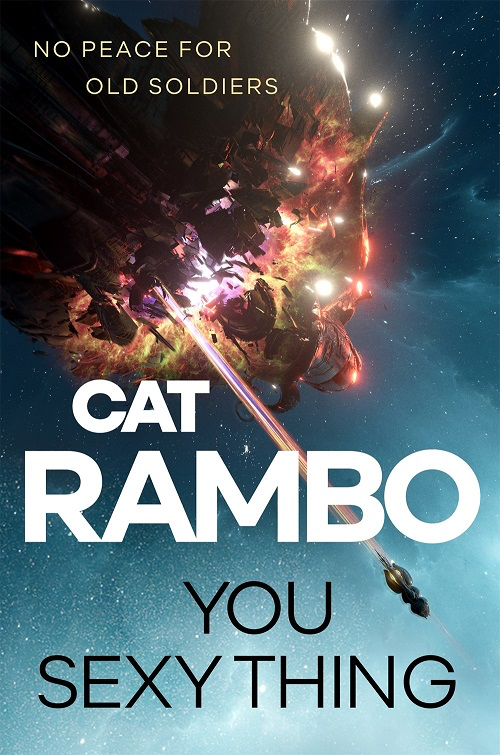
You Sexy Thing – Cat Rambolook, I know the cover has the polar opposite vibe of this song, but stay with me here…

“You’re My Thrill” – Billie Holiday

This was one of those songs that was tucked into the absolute deepest, dustiest archives in my brain. I remember hearing it a lot in my parents’ cars when I was little—really little, there was always a big, bulky car seat in these hazy memories. I don’t know if I fabricated this memory, but I swear I remember hearing it as we passed down a run-down storefront somewhere along a highway in Denver. Maybe that strange, lingering feeling is why I can’t shake the feeling that “You’re My Thrill” has always come off a little bit eerie to me. I suppose it’s just the shifting standard of what’s considered the “right” way for a love song to sound and the more creeping tone of the song. With this instrumentation, Holiday’s crooning of “Where’s my will?” certainly feels a bit more like succumbing to something against her will than it does just being lovesick. And yet, still, still, it’s such a classic love song—it’s no wonder that Holiday’s legacy has become so solidly set in music history. Her voice is, without a doubt, one of the most captivating. It’s difficult for me to describe the exact cocktail of emotions that it evokes—enchantment, seduction, and in some cases, dread—but that’s the mark of an iconic vocalist.

…AND A BOOK TO GO WITH IT:

The Monsters We Defy – Leslye PenelopeI…whoops. The Venn diagram of when Billie Holiday had a career and the year this book is set is off by a few years, but I still feel like the jazz in this novel fits.

BONUS: it’s been a great week for indie rockers on late night TV. Here are some standouts:

Since this post consists entirely of songs, consider all of them to be today’s song.

That’s it for this week’s Sunday Songs! Have a wonderful rest of your day, and take care of yourselves!
Posted in Sunday Songs

Sunday Songs: 10/26/25

Happy Sunday, bibliophiles! I hope this week has treated you well.

This week: I think you’ve all been getting too comfortable with the lack of Björk in the past month or so…WOE, BJÖRK BE UPON YE

Enjoy this week’s review!

SUNDAY SONGS: 10/26/25

“Anemone” – The Brian Jonestown Massacre

I love a song that just envelops me. “Anemone” is one of those tracks were there’s nothing in the lyrics remotely related to anemones (or even the sea), but it just happens to be the right title, just from the feel of it. The production and instrumentation sound like the lazy swirl of a temperate ocean around you, like footage of Planet Earth with a shot panning over gentle waves making anemones’ tentacles wave in the wind like branches on a tree. “You should be picking me up/Instead you’re dragging me down,” in that frame of mind, feels like being pulled under by a rogue wave and surrendering to the current.

Anton Newcombe’s voice feels like a backup instrument and not the lead vocal, somehow just as ethereal and misty as the faintly distorted rhythm guitar. That’s probably because the lead guitar, also played by Newcombe, is so distinct that it feels more like the voice of the song. From the beginning, it makes intricate loops and twists, like an animation of yarn curling in on itself—or the tendrils of an anemone slowly reaching out to you. It starts off almost uneasy, as if trying not to intrude on the melody, but once it expands, it takes the song from dewy cobwebs to a fully-defined spiderweb of dreamlike sound.

…AND A BOOK TO GO WITH IT:

The Two Lies of Faven Sythe – Megan E. O’Keefea twisty, surreal world of crystals and secrets—befitting of a dreamlike song like this.

“Fame” (David Bowie cover) – Eurhythmics

The other day, a good friend of mine (and one of the only people I know who’s just as obsessed with David Bowie as me, which is really saying something) and I were volleying back and forth about David Bowie covers. I wish I were as open-minded like them, but I think I was just burned by the aftermath of Bowie’s death when every single radio station decided that it was the right time to play nothing but the shittiest Bowie covers known to man. You can’t blame me for being a little suspicious at first. If you have that seismic of an impact on music, you’re bound to spawn a ton of bad covers. Plenty of good ones too, though! (For your perusal, and also the ones I sent said friend: Warpaint’s cover of “Ashes to Ashes,” TV on the Radio’s cover of “Heroes,” Lisa Hannigan’s cover of “Oh! You Pretty Things,” and Karen O and Willie Nelson’s cover of “Under Pressure.”)

But when they said that Eurhythmics had done a cover of “Fame” back in the early ’80s, I knew it was going to be good. (So thank you, said friend!) After all, Annie Lennox did take up the mantle of resident British, orange-haired, androgynous pop star from Bowie after Ziggy Stardust had been put to bed. I knew she was going to be cooking something. Bold, daring covers are few and far between, but if anyone can do it, it’s Eurhythmics. Lennox and Stewart transmuted Bowie’s plastic soul into a wholly different sound. It’s slicker than chrome, and so, so ’80s in the best way. Sped up and dominated by synths that sound like liquid mercury, Lennox’s vocal take on “Fame” turns the meditation into a song that feels like it belongs in a movie montage, walking through a crowded ballroom full of shallow, Hollywood types. Her mocking laugh echoes through the repetition of “Fame” in the chorus, hammering down Bowie’s original message of fame and the mercurial music industry wringing creative talents dry.

…AND A BOOK TO GO WITH IT:

The Monstrous Misses Mai – Van Hoang“Fame (fame)/What you like is in the limo/Fame (fame) what you get is no tomorrow/Fame (fame) what you need, you have to borrow…”

“The Sun Goes Down and the World Goes Dancing” – The Magnetic Fields

Dammit…I almost slipped into my usual “I need to set aside 3 hours to listen to 69 Love Songs in its entirety” intro for yet another song from 69 Love Songs. 3 hours? In this economy? With my Instagram-rotted goldfish attention span? Kidding, kidding…only partly. I need to shut up and just listen to the album.

In the meantime, I seem to have gathered a stash of assorted songs from 69 Love Songs like a squirrel gathering acorns for the winter and hiding them in the most random places. Yet I do not have the uncanny acorn memory of a squirrel, so I’m fully surprised every time the Magnetic Fields Instagram account soundtracks one of their posts from the 69 Love Songs 25th Anniversary Tour with one of these songs. “The Sun Goes Down and the World Goes Dancing” was a recent favorite from the start. I fully mean this as a compliment, but there’s something about the production that makes the song sound like it’s been played on toy instruments. You can’t tell me that those clacks in the background aren’t plastic. Given the absolute laundry list of instruments listed under Stephin Merrit’s name on the Wikipedia page for 69 Love Songs, it wouldn’t be out of the ordinary for him to have thrown some in for fun. Another fun fact: Daniel Handler, a.k.a. Lemony Snicket (yes, that Lemony Snicket) played several instruments on the album and arranged “Asleep and Dreaming.” I feel like it’d take an archaeologist to deconstruct the sheer amount of lore that this album has.

And yet that toylike quality makes the rusty charm of this song, from the thin mandolin strums and the hollow, clinking percussion. It’s uncharacteristically devoid of the usual lovelorn frustrations that Merritt usually displays—it’s nothing but breathless, dizzy joy. “The Sun Goes Down and the World Goes Dancing” is a snapshot in motion of rapidly twirling lovers careening across a dim dancefloor, relishing in the warm glow of the lights. It’s the faint smell of the night air as you squeeze someone’s clammy hand, a leap of faith into someone else’s arms. The beat seems to all but gallop like a trained pony with a collar adorned with jingle bells, brushed to perfection but nothing but happy about it.

…AND A BOOK TO GO WITH IT:

Heartstopper, vol. 1 – Alice Osemandon’t tell me that this song isn’t befitting of some little animated leaves and fireworks.

“Play Dead” – Björk

There’s something so singularly admirable about Björk that makes even her more commercial songs feel so uproariously her. Even a relatively sparse music video, not directed by her and interspersed with clips from the film it was from, The Young Americans, couldn’t tamp down the raw power of her voice. Even when given a formula, Björk played around with it in every way that she could—from all accounts, the opportunity was an experiment for her. On writing “Play Dead,” Björk said that writing the song was “fun because the character in the film was suffering and going through hardcore tough times and at the time I was at my happiest. It was quite liberating to sit down after writing a whole album to write from someone else’s point of view.”

Aided by David Arnold, who composed the film’s score, and Jah Wobble (of Public Image Ltd) contributing the (gloriously slick) bass, “Play Dead” reminds me, at best, of what I like so much about trip-hop. It’s so seductive and slick, and even with the lyrics aching with numbness, it’s so brimming with life. Sure, that’s in no small part due to the cinematic orchestral swells that punctuate the background, but Björk’s voice makes it from a song into a true performance on every listen—even the most melancholy lyrics from her are blood vessels full of life. Nothing could ever suck the energy out of her performances, much less this one.

…AND A BOOK TO GO WITH IT:

Red City – Marie Lu“I belong to here where/No one cares, and no one loves/No light, no air to live in/A place called hate/The city of fear…”

“Overkill” – Colin Hay

[BANGING FIST ON THE TABLE, IN TEARS]

HE JUST LIKE ME FR

…AND A BOOK TO GO WITH IT:

Forever is Now – Mariama J. Lockingtona poignant, honest depiction of a young Black girl dealing with chronic anxiety.

Since this post consists entirely of songs, consider all of them to be today’s song.

That’s it for this week’s Sunday Songs! Have a wonderful rest of your day, and take care of yourselves!
Posted in Sunday Songs

Sunday Songs: 8/10/25

Happy Sunday, bibliophiles! I hope this week has treated you well.
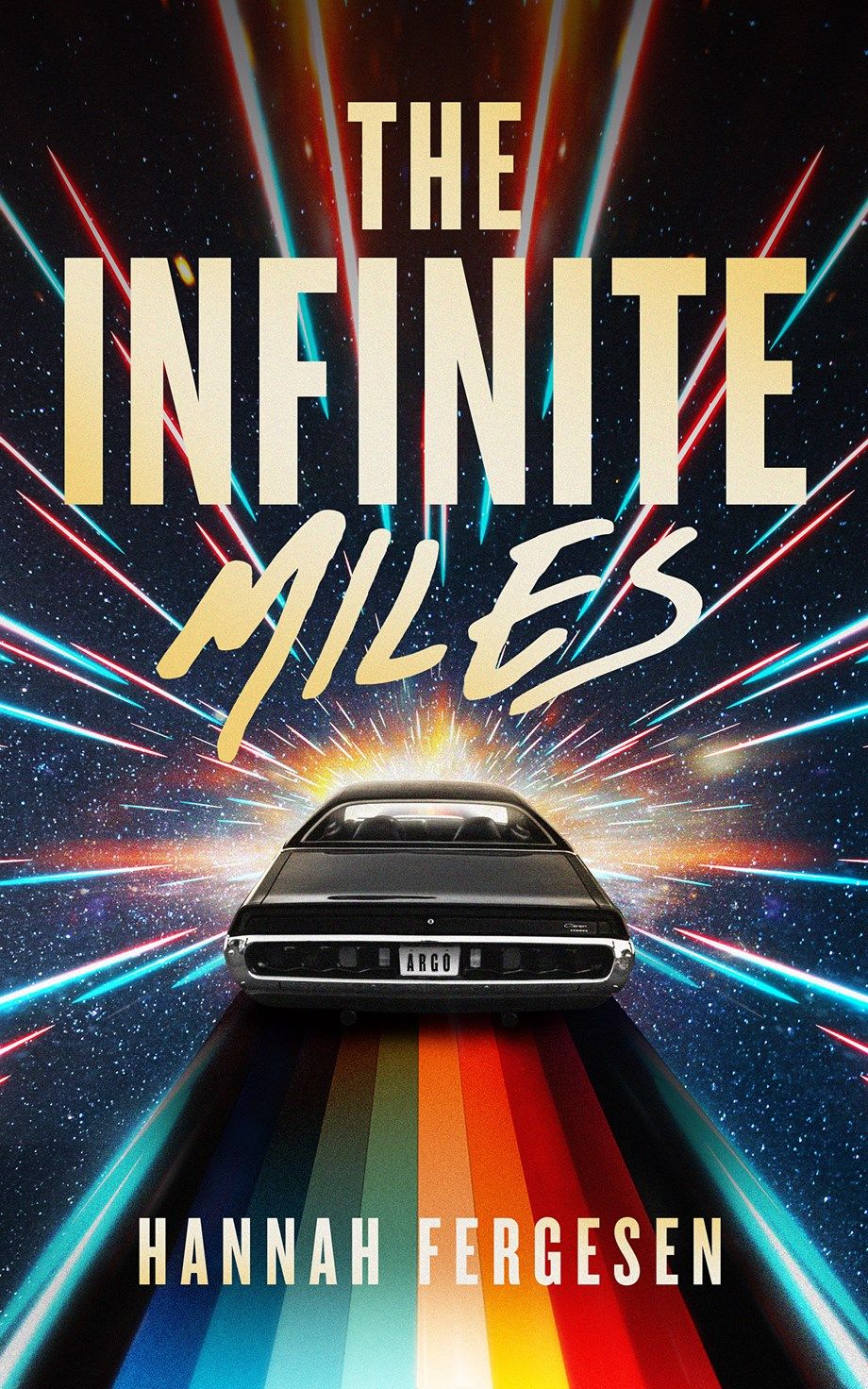
This week: a David Bowie double feature (who could’ve seen that coming?), upcoming artsy albums, and more reasons why I really just wish I had dual British citizenship, because apparently all of the good music related stuff happens exclusively in the UK.

Enjoy this week’s songs!
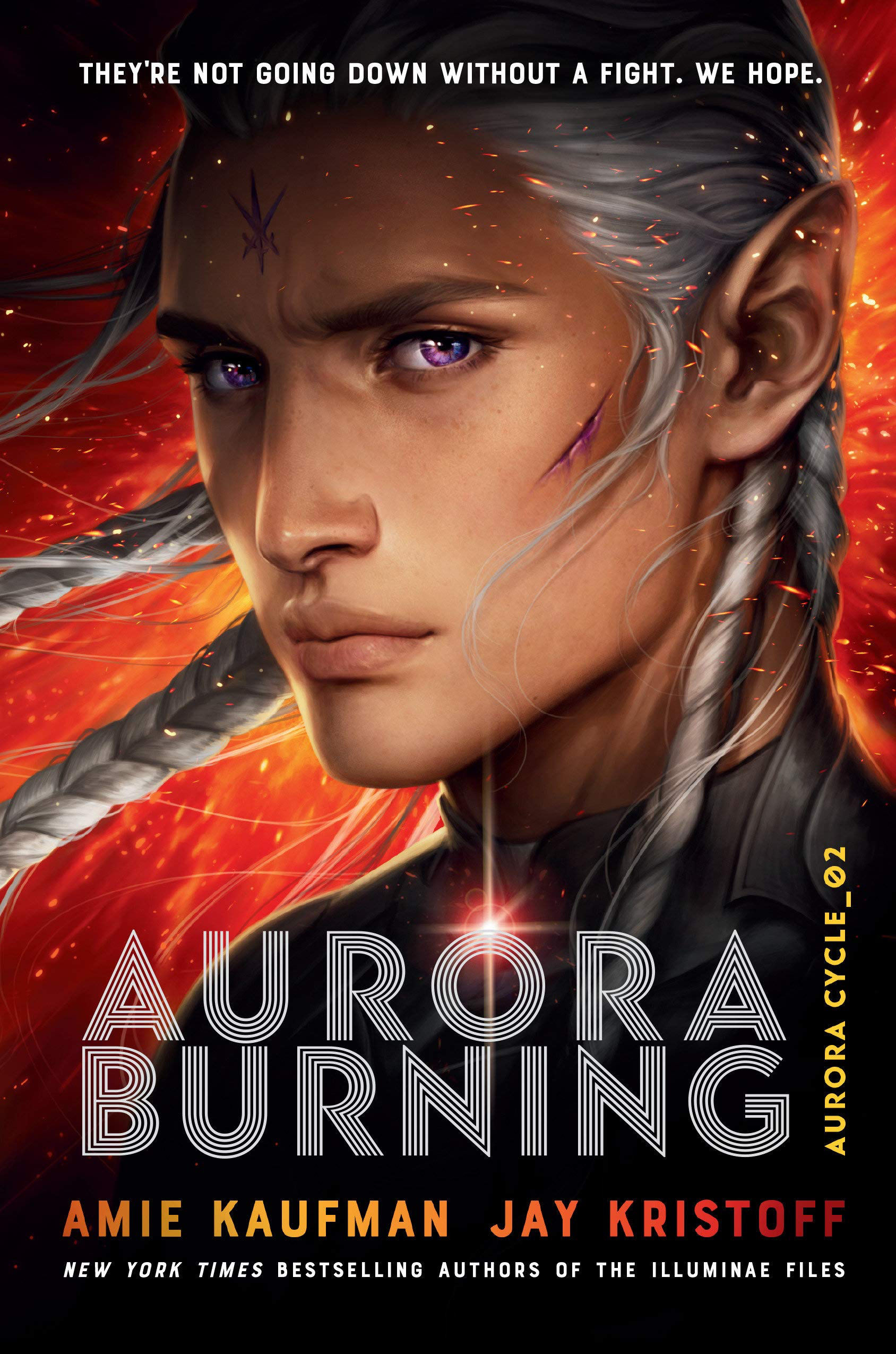
SUNDAY SONGS: 8/10/25

“Is It Worth It (Happy Birthday)?” – Cate Le Bon

I could really do with some more restrained excitement about Michelangelo Dying, but…these singles just aren’t letting me do it! They’re both so enchanting! I can’t get enough!! I’m really hoping they’re not the best of the bunch, but I have faith that Cate Le Bon has something quirkily artsy up her sleeve, if this and “Heaven Is No Feeling” are any indication.
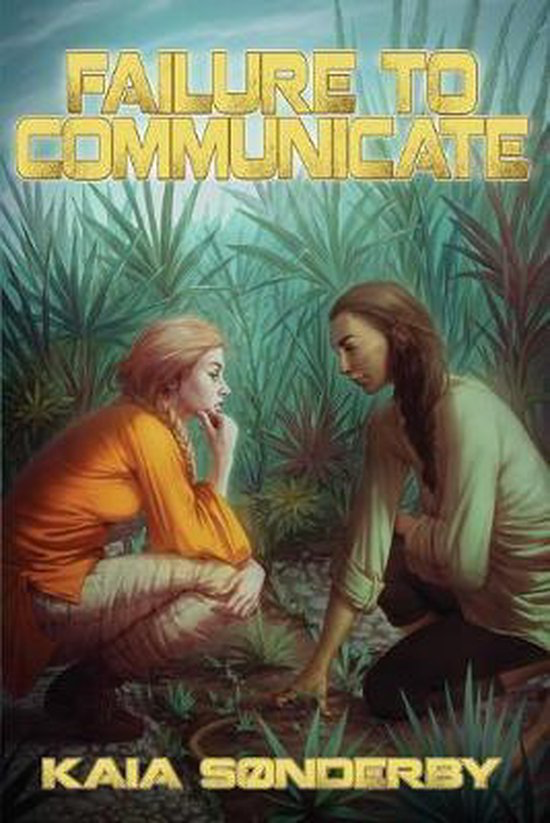
“Is It Worth It (Happy Birthday)?” takes the palette of the album down a more subdued, melancholy route than “Heaven Is No Feeling,” trading the former’s synthy strut for glassy-eyed introspection. But even with the thematic shift, Le Bon’s signature modern touches are there. Awash in fizzling, electronic textures, this track is an outstretched bolt of lavish fabric, much like the pink background of the album cover. Silky and watery, it makes every instrument feel like it’s been drenched in sunlit water, from the gentle, barely perceptible bass to the saxophones. I’m not usually this big of a fan of saxophones, but the way Le Bon utilizes them, more for added sonic texture than for dramatic solos, make her world even more layered and delectable to pick apart. It’s distinctively her, but I can’t help but think of the dense, dreamy soundscapes of the Cocteau Twins when I listen to it. (“For Phoebe Still A Baby” jumps out in particular.) Yet drama is what this song quietly thrives on, as the lyrics muse on trying to make light out of abject sorrow: “Open up in hell/And dress the hall/It’s a holiday/It’s a birthday/Is it worth it?/Is it worth it?” The lyrics nearly get swallowed by the sheer magnitude of sounds woven into the production—including the signature, lilting cadence of Le Bon’s voice—but it almost seems exactly her intention. It feels both mean and inaccurate to call any of it window dressing, but next to the lyrics, all about trying to laugh heartbreak away and pretend it’s something that it’s not, it feels like exactly the kind of shrouding she’s singing about. At the end, she laments that she’s “Checking out/Even with my language in him,” just as the listener tries to extricate her from the vibrant sea of sound she’s crafted to shield herself. It’s easy to get washed away in, and if the rest of Michelangelo Dying is anything like this, I’ll be gladly losing myself in it come September.

…AND A BOOK TO GO WITH IT:

The Ephemera Collector – Stacy Nathaniel Jackson“Open up in hell/And dress the hall/It’s a holiday/It’s a birthday/Is it worth it?”

“Saviour Machine” – David Bowie

“David Bowie predicted ChatGPT” would’ve been a good headline for this post, but as much as I love him, he was far from the first to ponder about AI. But really…this song does basically predict ChatGPT, and in this song it’s “President Joe” who introduces it to the world, which is kind of a crazy coincidence. Had to do a double take when I first heard the lyrics, for sure. Drawing from much of the sci-fi media of his time, Bowie’s version of AI comes in the form of The Prayer, an AI system introduced by President Joe to make the population’s decisions easier for them, from stopping wars to simply thinking themselves. However, it’s The Prayer itself that calls for its own destruction, going insane after having such decisions weighing on its shoulders and pondering: “Please don’t believe in me/Please disagree with me/Life is too easy/A plague seems quite feasible now/Or maybe a war/Or I may kill you all!” Life is too easy for sure, now that everyone’s trying to flirt and make art and music and go through school entirely with AI. Sorry, but can’t you idiots stop and forgo convenience to experience the tedious pleasures of the human experience? Embarrassing. Jesus Christ. Remember, kids: you can’t stake your life on a savior machine.

“Saviour Machine” rings reminiscent of short stories of the likes of Ray Bradbury, but it also reflects the much darker tone of The Man Who Sold the World. Though it wasn’t like he hadn’t trod into darker lyrical subjects before, going from something like “Uncle Arthur” to an album comprised of insane asylums, the Vietnam War, and gay sex with Satan in the span of three years is a whiplash-inducing left turn for anyone. I don’t think it’s the edginess of the subject matter that makes it feel more mature, but the exploration—The Man Who Sold the World represents a critical turning point in Bowie’s storytelling ability, and he was willing to explore places that he hadn’t explored before, pushing himself out of his typical territory in order to create something wholly unique. It feels to me what he said when he spoke about art: “If you feel safe in the area that you’re working in, you’re not working in the right area. Always go a little further into the water than you feel you’re capable of being in. Go a little bit out of your depth, and when you don’t feel that your feet are quite touching the bottom, you’re just about in the right place to do something exciting.” Darkness was coincidental, and of course, not all of the album is necessarily dark—it was merely territory that he hadn’t scoured before, and that challenge led him to create some of his most innovative work, time after time, album after album. “Saviour Machine” feels like the prelude to that storyteller’s attitude, one that would guide him to untold heights in his career.

…AND A BOOK TO GO WITH IT:

The Outside – Ada HoffmannA few centuries in the future, when something like The Prayer gets out of control…

“Real Lovin” – Black Belt Eagle Scout

Katherine Paul has a distinctly whispery voice—everything they sing sounds like they’re singing it into a cool breeze. Most of her music pre-The Land, the Water, the Sky suits it perfectly; though she’s become more adventurous with her vocal capabilities later on, a lot of her songs had a slower, softer demeanor that suited the airiness of her voice. But if there’s any song to be characterized by this, it would be this one. I’d forgotten all about “Real Lovin” for years—I initially listened to At the Party With My Brown Friends around five years ago—until it popped back into my shuffle out of nowhere. Though Paul’s voice soars with more volume towards the end of the track, her whisper-singing is perfectly suited to the quiet tenderness of the lyrics: “Now that you can dream/What is it you see/When you wake up in the folds of blankets in your bed/In your room/In your house/By yourself?” It’s the sound of a sliver of dewy light sliding through the slats of shutters in the early morning as you blink away the threads of sleep. Paul’s voice is a comfortable sheet over me as I listen, and she delivers what’s easily the softest, tenderest uttering of “well that’s bullshit” I’ve ever heard in a song. But no matter the intensity, which rises with every passing minute as the instrumentals build up, I never have a doubt that Paul means exactly what she’s saying.

…AND A BOOK TO GO WITH IT:

Each of Us a Desert – Mark Oshiro“You’ve tried and tried/What seems a million times and you wonder how you’ll end up/Is it the moon?/Is it the stars?/Do they rule you and your heart?”

“Crocadillaz (feat. De La Soul and Dawn Penn)” – Gorillaz

While I froth at the mouth that I can’t go to the Gorillaz exhibit in London, I figured it would be fitting to talk about them…for the millionth time on this blog.

It was a strangely pivotal moment when, a week after Cracker Island released back in early 2023, three more songs were added to the lineup. I had middling thoughts about the album up until then; for me, it represented the point at which Gorillaz (and later Blur with The Ballad of Darren) became nearly indistinguishable from Damon Albarn’s solo work. There were a handful of fun tracks, but as a whole, it failed to hold as much water as something like their first three records, even with the star-studded list of collaborators. And when it seemed all hope was lost…Del the Funky Homosapien and De La Soul returned! (Two years later, “Captain Chicken” has no business being so good for a song with such a goofy title AND samples of chicken clucks. God, it’s so good.) Disregarding the “Momentz” haters (heathens, all of you), every time De La Soul and Gorillaz collaborate, a special kind of magic happens. Even with Trugoy the Dove’s too-soon death hanging over it, “Crocadillaz” was one of the unmistakable highlights of the album. For a song about constantly looking over your shoulder and the trappings of fame, it has a steady, easy calmness to it, propelled by Dawn Penn’s “Doo-doo-doo-doo-doo-doo-doo” chorus, which gets delightfully stuck in my head more often than not. Trugoy and Penn make for an unlikely but smooth pairing for this song, with the former providing the sharp-edged, quick-witted verses and Penn’s smooth, resonant vocals giving the song a simultaneously retrospective and playful chorus. I’m not usually a fan of the “Gorillaz but it’s just the collaborators” songs, but with a pairing as talented as these two, it’s easy to excuse.

…AND A BOOK TO GO WITH IT:

So Let Them Burn – Kamilah Cole“Could play the sheep, but beware of the wolf’s eye/Hypnotized by the crocodile’s smiles/The exchange is brief, but watch for the teeth…”

“Watch That Man” – David Bowie

Aladdin Sane has to be the most iconic album cover in David Bowie’s catalogue. If you know any album cover, it’s that one—the nondescript, asleep-looking Bowie with a glittering lightning bolt slashing across the front of his face. And that silvery bit on his collarbone—I always thought it was a bone fragment when I was a kid, and my dad thought it was something like mercury pooling on his skin. It raises questions! It sticks in your head! And yet, the album cover gets talked about much more than the actual album. Sure, it’s probably the weakest if we’re grouping it in with Hunky Dory and The Rise and Fall of Ziggy Stardust and the Spiders from Mars, but that’s because you’re grouping it with two of the greatest albums of all time. But it’s really such a disservice that the album only gets remembered for the cover—there are so many excellent cuts from the album, even if it never usually makes the cut for hit Bowie songs (except for maybe “The Jean Genie”). It’s slick as hell, incredibly funky…it just rocks. Listen to the album and you just know. And “Watch That Man” is what sets the tone, a rollicking dance floor rocker that begs for you to shake your hips with every word—not just the “shakin’ like a leaf” bit. Inspired by seeing the New York Dolls live, “Watch That Man” follows a lively party, with the lyrical camera roving over every participant as the music blasts. I never had any particular problem with the mix, but it was one of the more rushed songs on the album, and on reflection, doesn’t sound as clean as some of the other tracks—it’s all a bit muddy, with most of the instruments, Bowie’s voice included, being at a very similar volume. But for a song meant to emulate the rush of a concert or being on a crowded dance floor, it gets the job done spectacularly.

…AND A BOOK TO GO WITH IT:

Kings, Queens, and In-Betweens – Tanya Botejudancing, parties, and no shortage of glitter and makeup.

Since this post consists entirely of songs, consider all of them to be today’s song.

That’s it for this week’s Sunday Songs! Have a wonderful rest of your day, and take care of yourselves!