Posted in Book Review Tuesday

Sunday Songs: 7/20/25

Happy Sunday, bibliophiles! I hope this week has treated you well.

This week: I get more heated than I ever expected to be about Edvard Grieg, my middle school sad bastard music comes out of its cave, and, uh…what’s that? LOVE SHACK, BABY! More at 6.

Enjoy this week’s songs!

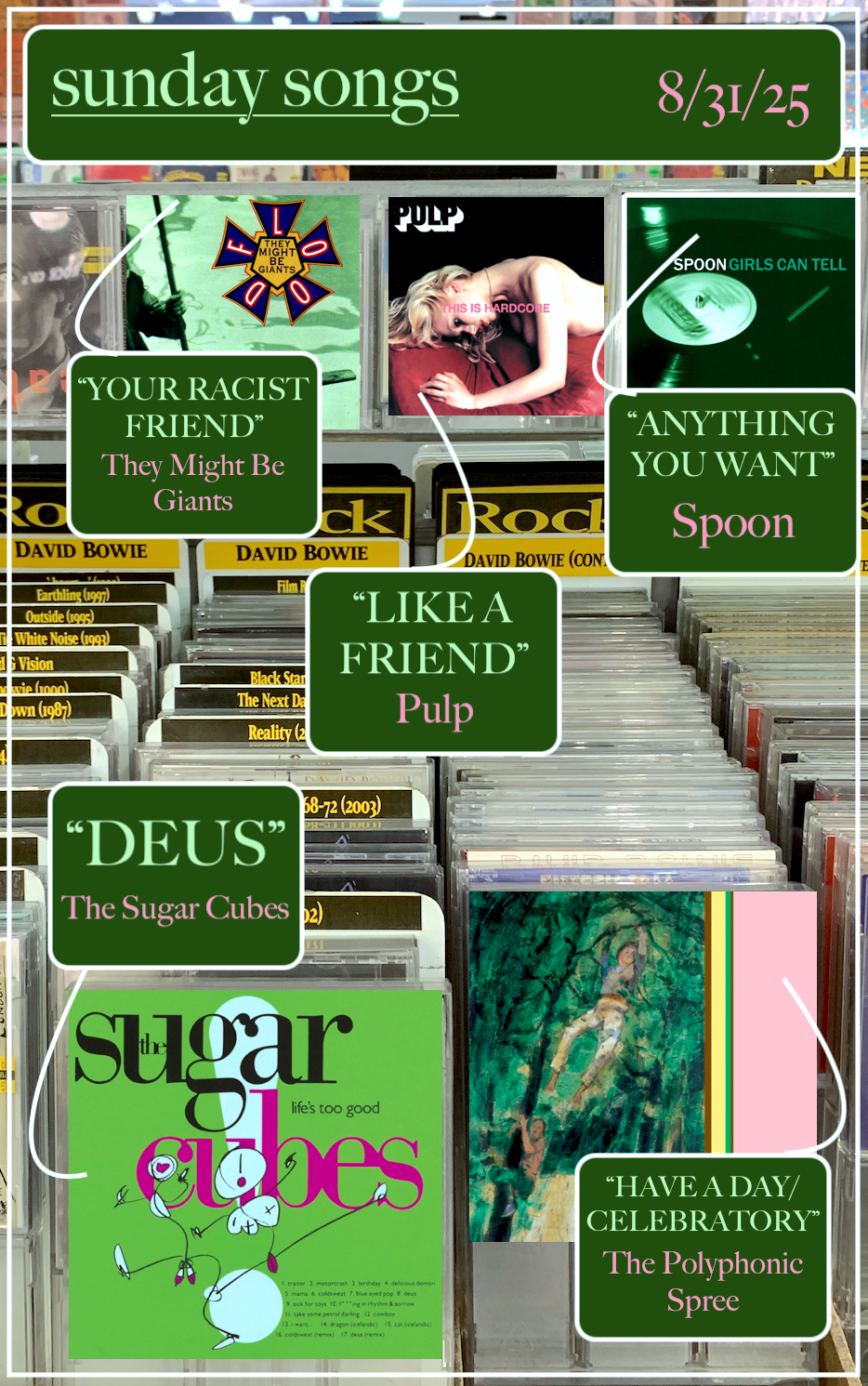
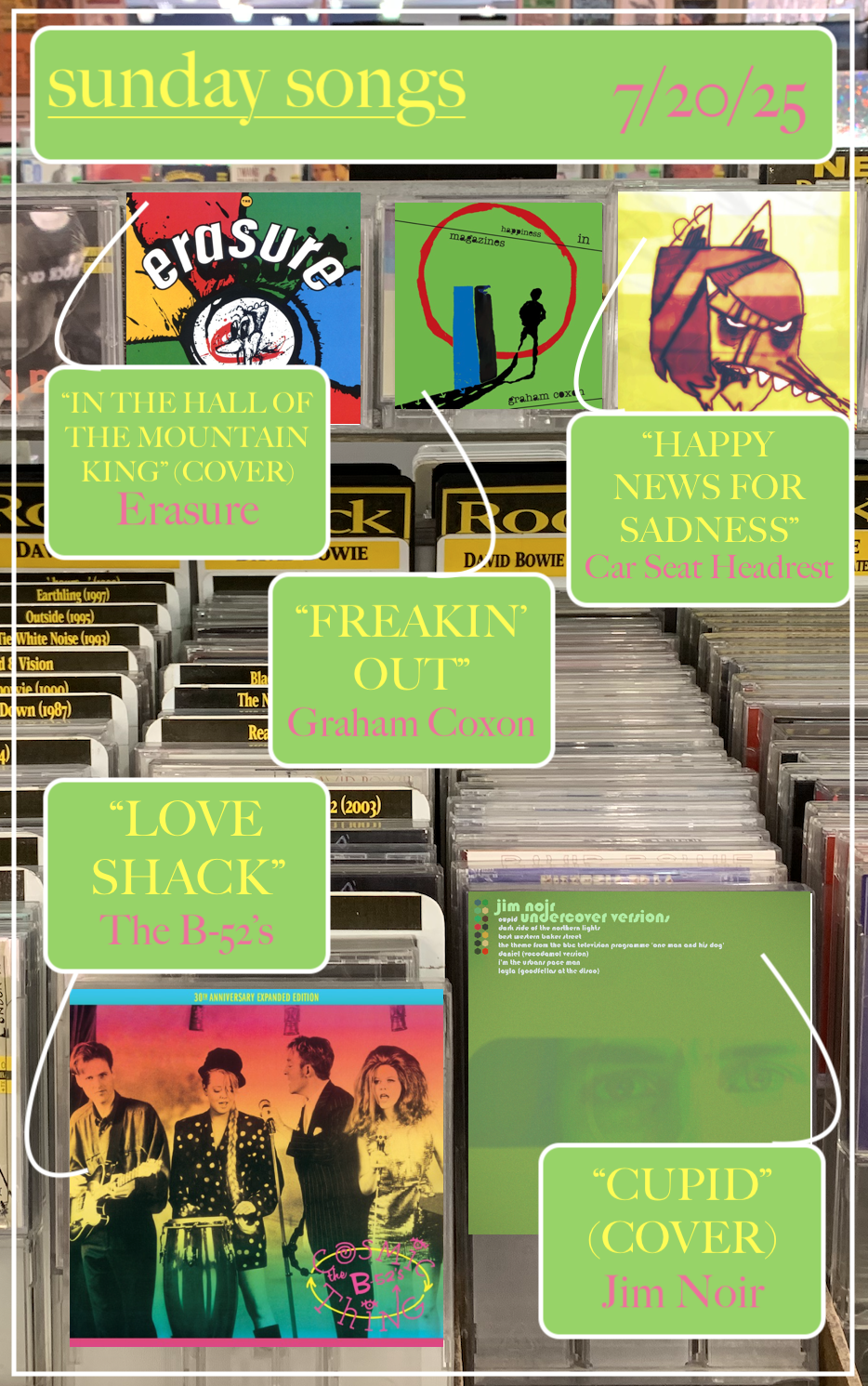
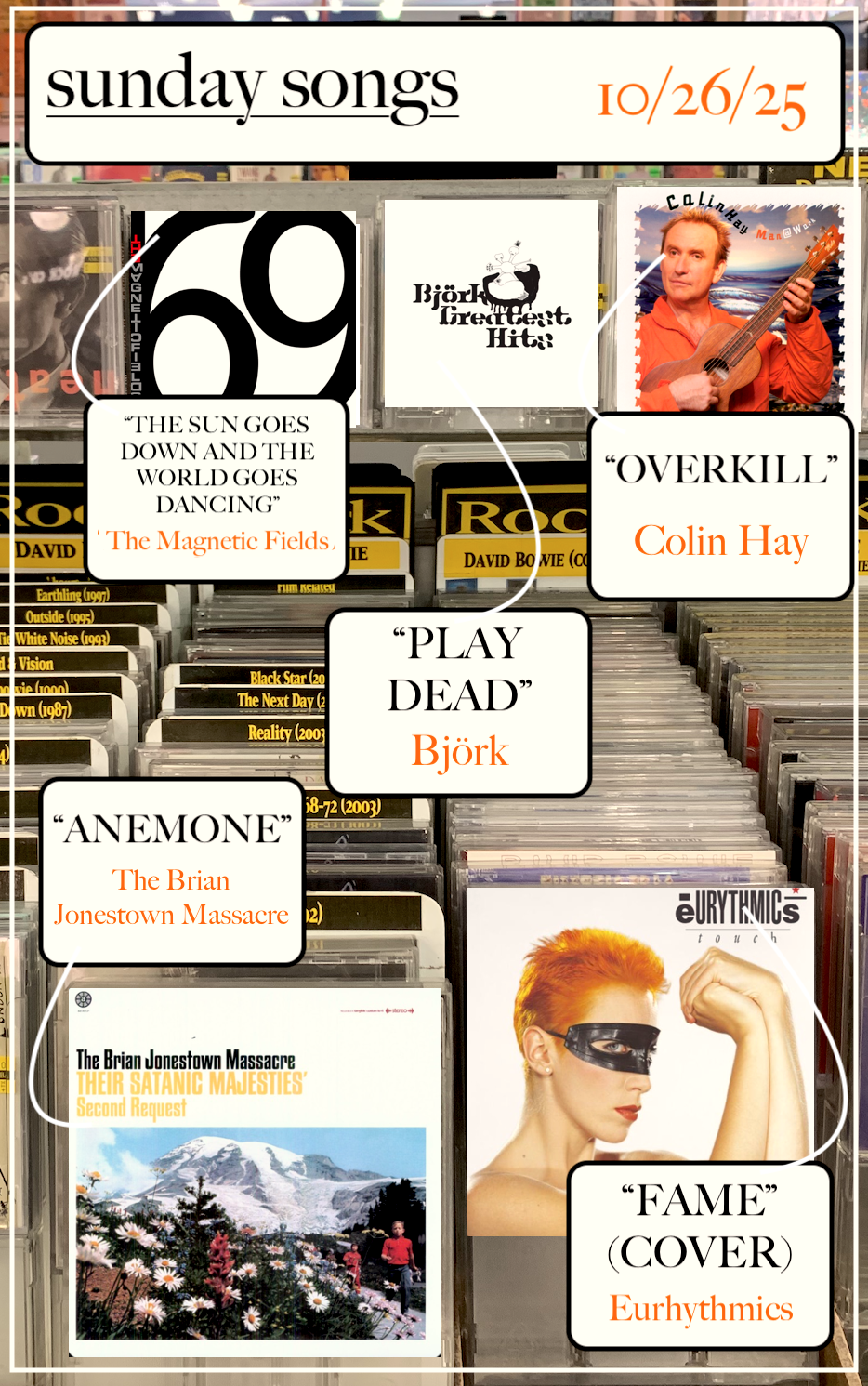
SUNDAY SONGS: 7/20/25

“Love Shack” – The B-52’s

This one came late because of, once again, my insistence on sticking to these (loose) color palettes. But god, I was having a blast listening to this on repeat during Pride Month. I couldn’t go to any pride parades or anything because of a) preexisting plans and b) it was, quite literally, as hot as an oven. But the amount of times I listened to “Love Shack” honestly made up for it.

Sure, this isn’t nearly as weird as some of The B-52s’ other songs—in fact, it’s probably their most accessible song—but it really is fitting as one of their signature songs. The pop joy isn’t just a product of them being upbeat for airplay—it really was a triumphant moment for them, their comeback after tragedy struck the band in 1985 after the death of Ricky Wilson from AIDS-related complications. It was them coming back from the brink and declaring that in spite of tragedy, they would stick to their mission of bringing gleefully weird pop music to the world. It’s a catchy pop song, sure, but it was also a commitment to celebrate togetherness in spite of the greatest hardship a band could possibly endure. And for a song that’s mainly just remembered as the product of a particularly weird party band, that’s such a beautiful legacy to leave. But beyond that…oh my god, it’s just so camp. It’s just so fun! How can you not grin constantly when you hear this song? Fred Schneider’s just being Fred Schneider, Kate Pierson and Cindy Wilson are producing some of the best harmonies in pop music, and the whole “bang, bang, bang, on the door, baby” bridge? Who ISN’T shivering with antici……..pation at that? (And yes, that is RuPaul right there at 2:03 in the music video, as if this song couldn’t get any queerer.) I’m tempted to dismiss my instincts to get all women and gender studies with it about “Love Shack,” but if this isn’t queer joy—coming together in the face of a widespread tragedy that affected the LGBTQ+ community so fundamentally—then what is? LOVE SHACK, BABY!

…AND A BOOK TO GO WITH IT:

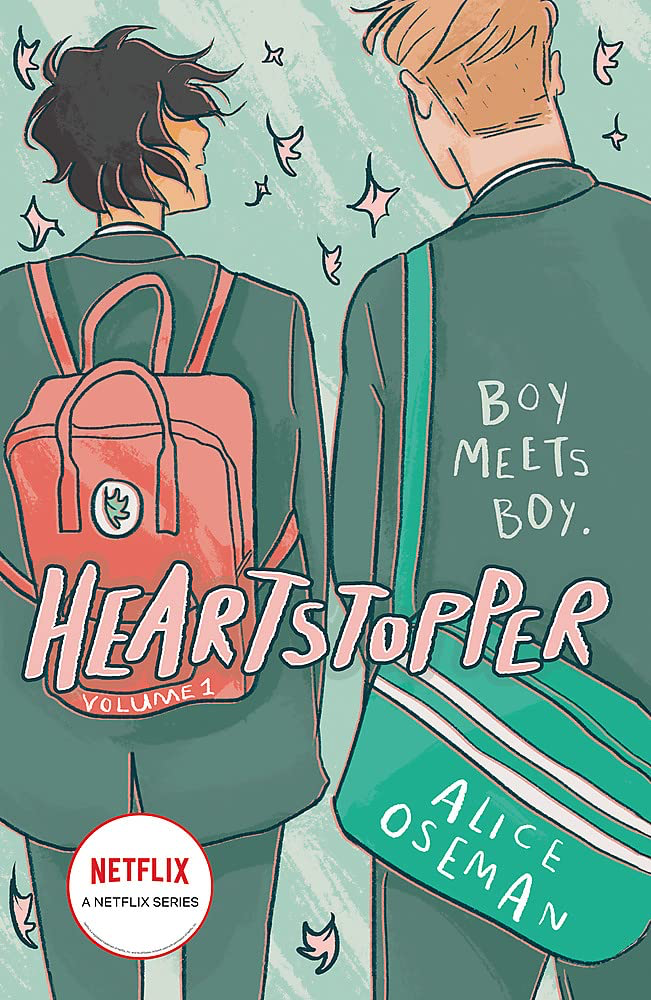
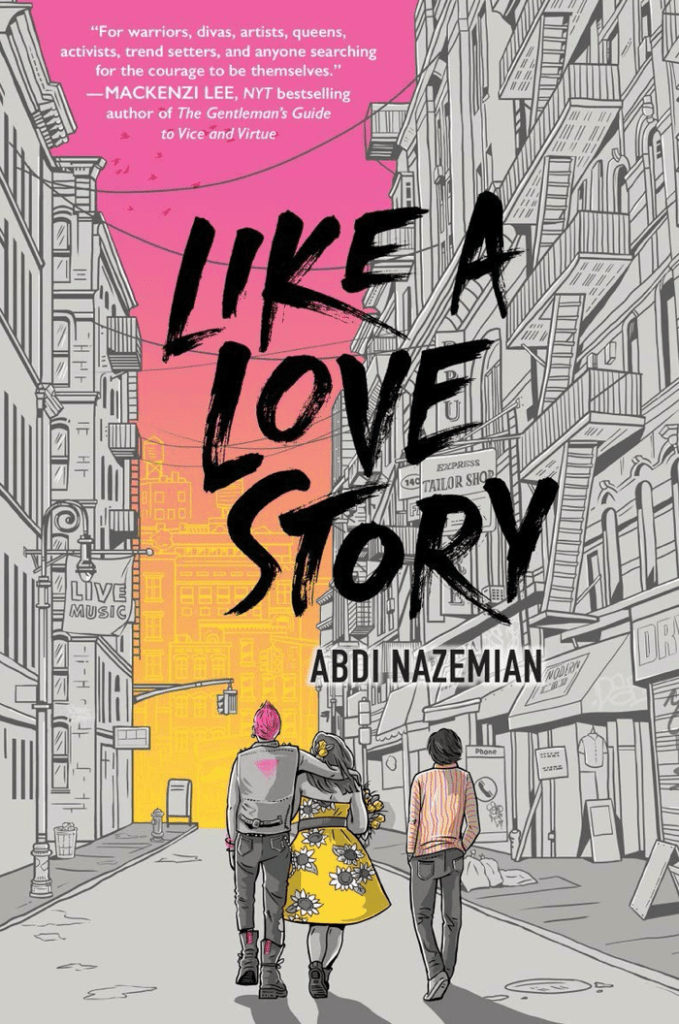
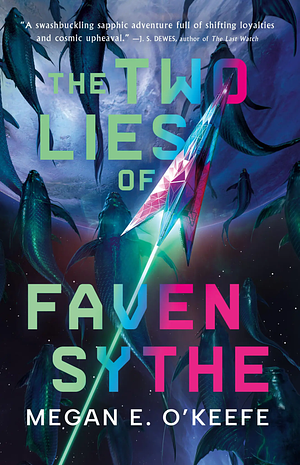
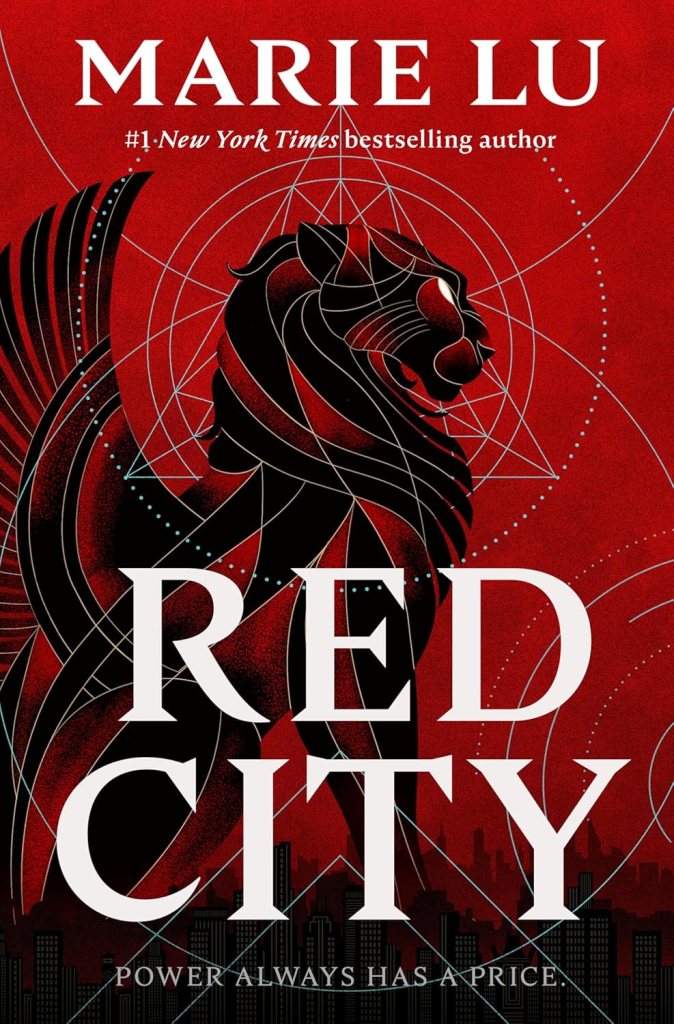
Like a Love Story – Abdi NazemianThe B-52’s aren’t the focus of this book (Madonna is, though), but this novel is set in 1989—the same year “Love Shack” was released—and centers around similar themes of queer identity and togetherness in the face of tragedy.

“Cupid” (Sam Cooke cover) – Jim Noir

While we all wait for Jimmy’s Show 2 to come out, Jim Noir has released an EP of covers, available on his Patreon! (It also includes a mashup of Pink Floyd’s “Breathe” and Super Furry Animals’ “Northern Lites,” which is pretty amazing.) He posted this cover of Sam Cooke’s “Cupid” several months before hand, and I lamented that he hadn’t made it available for release, because unexpectedly, it was perfectly suited for him. Jim Noir’s music is full of ’60s influences, but until now, I mostly thought it was reserved for bands like The Beatles or the Beach Boys, which more readily come through in his sunnier, twinklier melodies. I should’ve known how easily that would translate to another part of the ’60s—Sam Cooke’s classic love song. It’s hard to touch any of his songs for me, not necessarily because they hold a particularly special place in my heart, but because they’re so ubiquitously him—Cooke’s songs have a quality about them that make them feel fully-formed, able to be made by nobody but him. The key to Jim Noir’s success with the cover is that he doesn’t overdo it—he’s just Jim Noir, not Sam Cooke. It’s an understated cover, but that quality makes it more intimate and calming to me—there’s a soothing quality about it, from his harmonies to the soft background strings. That’s what makes it such a genius cover—Jim’s not being anyone but him, but staying true to the spirit of the original.

…AND A BOOK TO GO WITH IT:

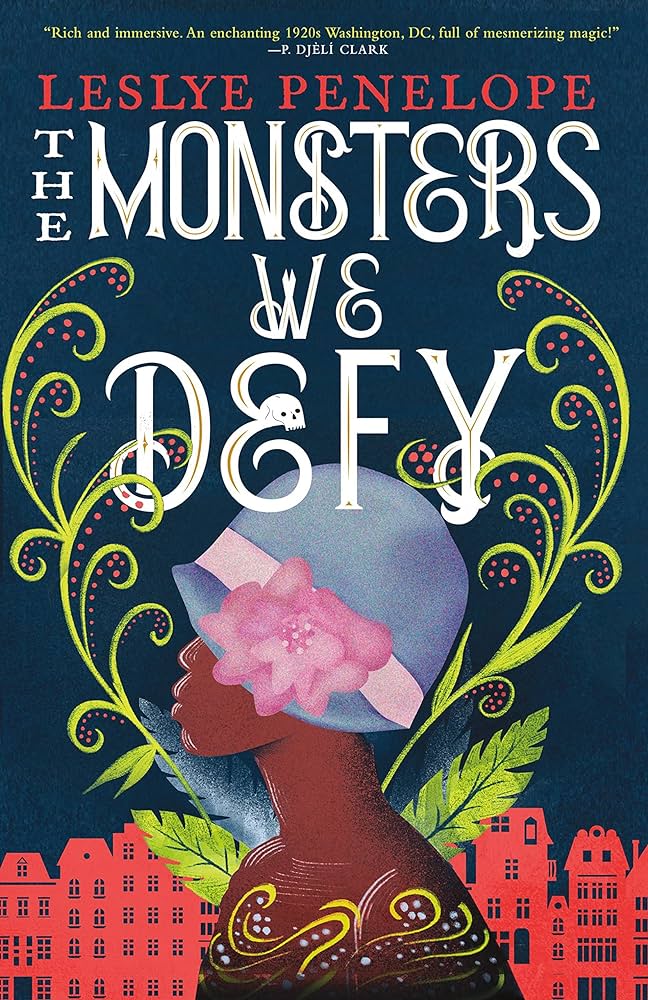
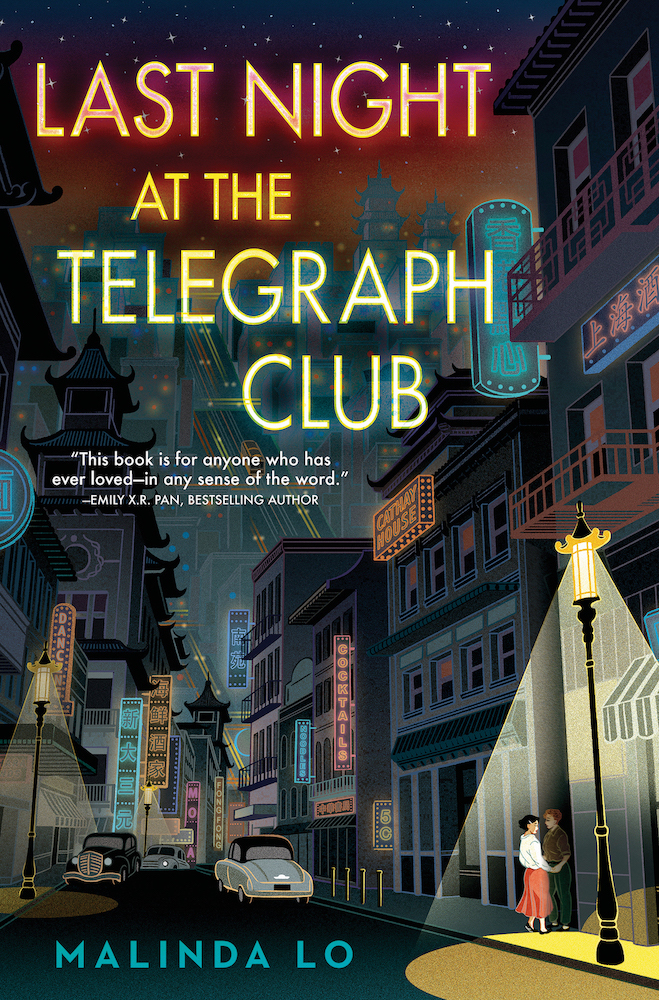
Last Night at the Telegraph Club – Malinda LoI’m a few years off as far as the dates go, but give it a few years, and this would fit right in with the more tender, quiet moments of this novel.

“In The Hall of the Mountain King” (Edvard Grieg cover) – Erasure

I had no idea that this existed until a few days ago, and y’know what? It’s an absolutely wild pairing as far as covers go, but trust me, it sounds exactly how you’d picture it sounding. It’s just “In The Hall of the Mountain King” done entirely with synths. I do enjoy it, but I feel like it betrays the original song in a key way. The thing that most people remember about “In The Hall of the Mountain King” is that point (you know the one) where it goes absolutely, truly, off-the-wall bonkers, like they crammed chaos incarnate into whatever concert hall it was performed in. It’s about the gradual buildup!! The payoff!! It feels like a whole pack of firecrackers going off and ricocheting off the walls!! And Erasure…barely sped up the tempo? Which is a crazy move to pull when covering this…like, how does one cover “In The Hall of the Mountain King” and not go fucking nuts with it? You do you, Erasure, I guess, but…man, you already pulled the move of putting an Edvard Grieg cover as a bonus track, might as well go crazy with it!!

…AND A BOOK TO GO WITH IT:

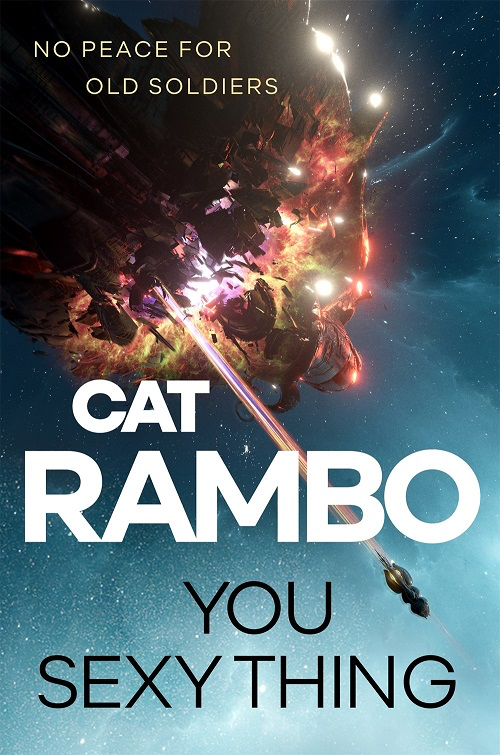
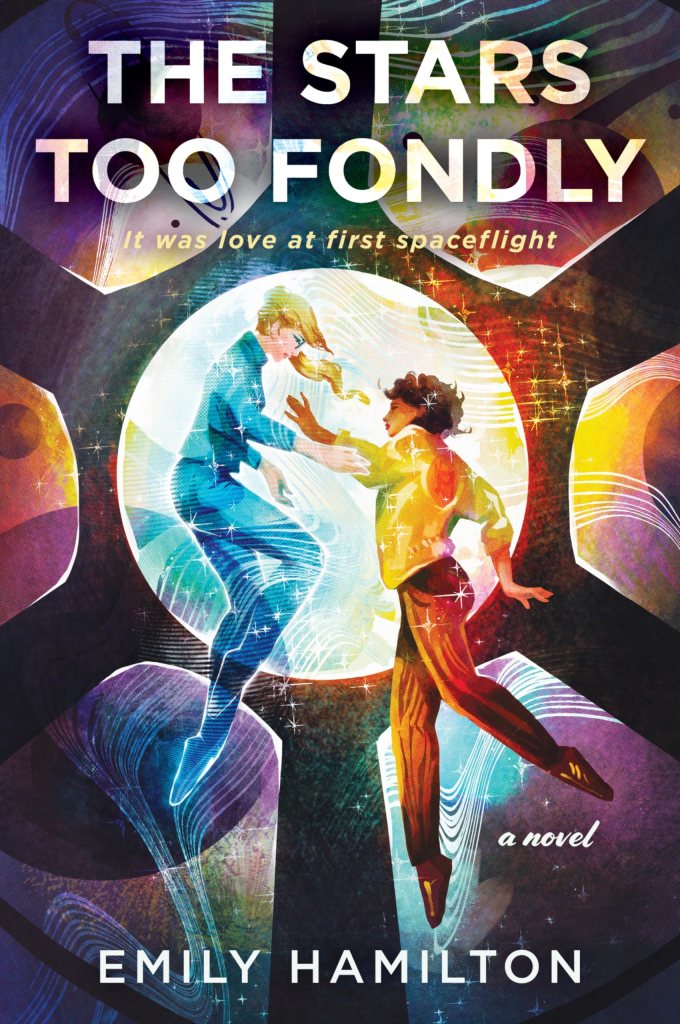
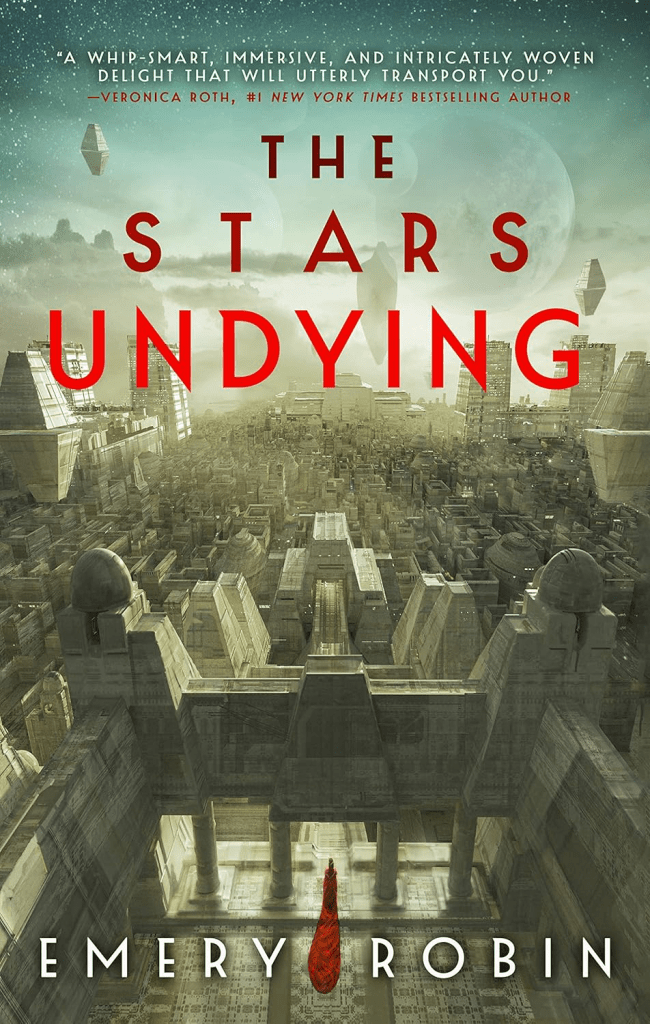
The Stars Undying – Emery Robin…kinda hard to recommend a book to pair with a synth cover of classical music, but, uh…how about a sci-fi retelling based on the stories of Cleopatra and Julius Caesar? Will that suffice? Help me out here…

“Freakin’ Out” – Graham Coxon

So here’s what Graham Coxon was doing all that time when Blur was making Think Tank, which was…doing exactly what was barely on Think Tank: guitar freakouts (no pun intended). While his former bandmates were reveling in some of the more experimental sides of their musical taste and abilities, Coxon was sticking to what he loved and did best. Part of why I got so attached to Blur was his propulsive guitar playing, whether it was his bright, chugging melodies on Parklife or the darker, grungier sounds of their self-titled album or 13. “Freakin’ Out” isn’t his lyrically strongest song, but it’s got this driving, punk-inspired beat that never lets you go. Of course, in true Graham Coxon, he’s in a suit and glasses while playing all this—Weezer who? If there’s anything that Graham Coxon has committed to in the last few decades, after spending time with Blur during the height of Britpop and being pressured to conform to pop music standards, it’s being nothing but himself. We’re all better for him being a quiet, introspective person playing loud, upfront music.

…AND A BOOK TO GO WITH IT:

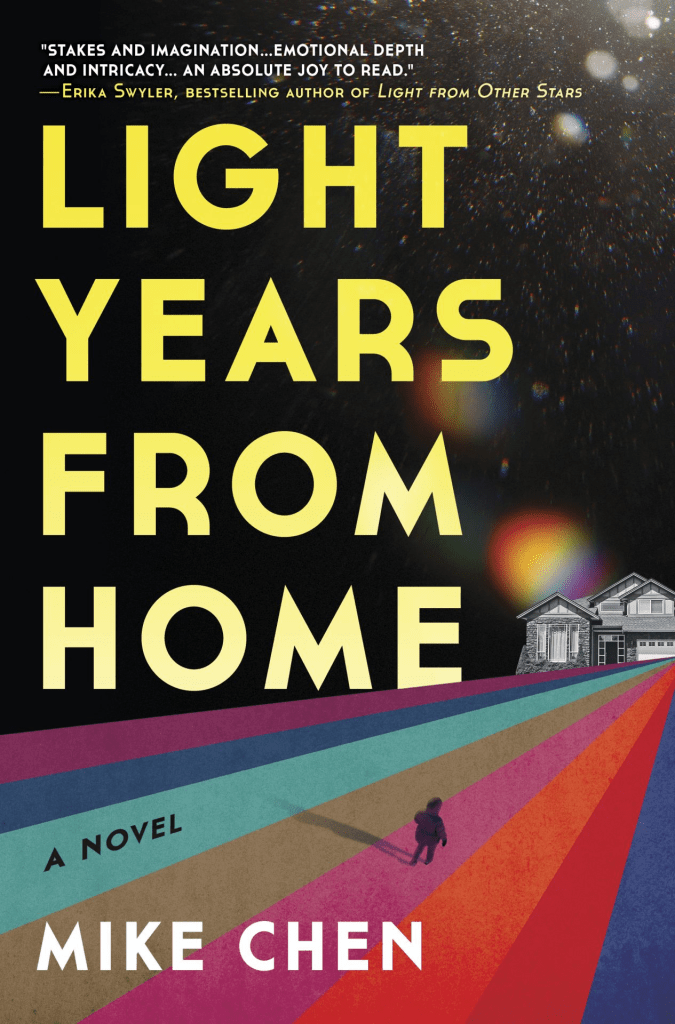
Light Years from Home – Mike Chen“Nothing to be, nothing to fear/Nothing to prove, nothing to say/Nothing to lose, nothing to gain/Nothing to feel, nothing to hate/Nothing is real, it’s all too late…”

“Happy News for Sadness” – Car Seat Headrest

The Car Seat Headrest I saw when I was 14 was a very different Car Seat Headrest than the one I saw last week. At one point in the show, Will Toledo opened up about how he didn’t like playing some of his older material, particularly that from Teens of Denial, because he was, as he said, “an angry young man of 23.” It struck me as so humble that he’s willing to admit that he’d moved on from that anger and strife and that he was committed to being in a stabler, happier place in his life. Teens of Denial remains one of my favorite albums of all time, an album that was at my side at my most lost and confused moments when I was a young teenager. Sure, I would’ve loved to hear “Cosmic Hero” (if not just to replace my video from 2018 where my off-key screeching drowned out the actual song) or something, but I’m happy that Will Toledo’s happy. And all of this was the preface for “Drunk Drivers/Killer Whales,” which he played to a crowd that knew all the words. Myself included. It was one of those nights where I could feel my younger self peering out from my chest, wiping the smudge away from her glasses, and dancing. I felt her dancing with me. I danced as hard as I could that night. It’s one of those times where a concert has felt, more than anything, like a warm hug, a reassurance across time to that little girl that she would be okay.

Car Seat Headrest has a notoriously rabid fanbase, small but mighty, the kind of people who’d unironically go up to you and say something like “Oh, you haven’t listened to the absolutely crusty-sounding old recordings he put out on Bandcamp and labeled ‘just awful shit?’ Fuckin’ poser!” And…yeah, with the kind of discography that Will Toledo has, it does lend itself to the kind of Charlie Kelly conspiracy theory board types. But the other side of that coin is that you get people who will ardently do the wave to a song that’s only available on Patreon. And that’s what made the show so riotously fun—the fervor of the fans for songs old and new, whether it was the stirring intro of “CCF (I’m Gonna Stay With You)” or the extended medley of older songs. (I’ll admit to being awakened like a sleeper agent when they started playing “Something Soon.”)

“Happy News for Sadness” was one of the excerpts from medley of older songs that they did for the encore, one that somehow escaped my unending curiosity when I was in middle school. I’d already found “No Passion” and “Sunburned Shirts,” so who knows how this slipped through my fingers. I feel like it might’ve been for the best, because I have a feeling that earsplitting, lower-than-lo-fi “BWEEEEEEEEEEEEEEEEEEEARGH” at 1:52 would’ve killed my headphones. “Happy News For Sadness” is as clear a glimpse into the sadder, angrier young man that defined much of Will Toledo’s career—the central chorus of “You can never tell the truth/But you can tell something that sounds like it” speaks to a lingering depression that’s been ever-present throughout his catalogue. Meandering through malaise and expired food doesn’t seem like something Toledo would revisit, given the speech he gave about Teens of Denial, but the fact that he’s able to reconcile with different eras of his own art in different ways feels like a mode of communication with the past. His songwriting was his way of telling the truth, and that truth resonated with so many people. To bridge that connection, to be able to look back and sing altered versions of the same song, is likely his way of making peace with it. Healing that younger part of yourself is different with each angle you tackle it from, but committing to that seems to be Toledo’s ongoing mission. I’m just lucky to be able to heal along with him and alongside hundreds of people.

…AND A BOOK TO GO WITH IT:

The Bad Ones – Melissa Albert“Nobody cares about/(But I’m still ugly on the inside)/Your life and the people in it/(But I’m still ugly on the inside)/So you can stop telling me it gets better…”

Since this post consists entirely of songs, consider all of them to be today’s song.

That’s it for this week’s Sunday Songs! Have a wonderful rest of your day, and take care of yourselves!

Posted in Sunday Songs

Sunday Songs: 6/15/25

Happy Sunday, bibliophiles, and more importantly, Happy Father’s Day!! I always end up writing one of these posts on Father’s Day, what with it landing on a Sunday and all, but it’s fitting, given that my amazing dad is the one who not only is responsible for a lot of my music taste, but was also the one to encourage me to write these posts and wanted to hear my thoughts. So thank you to him, for all of the gifts he’s given to me, and to my family. I love you. 🩵

This week: before I go radio silent for a week for a road trip, how about a random kick in the pants from 2019? Plus, new Cate Le Bon, old(ish) Shins, and others.

Enjoy this week’s songs!

SUNDAY SONGS: 6/15/25

“Jellybones” – The Unicorns

Chances are, given my proclivities for Car Seat Headrest and other like lo-fi, awkward white boys, I probably would’ve stumbled upon The Unicorns eventually. It was an inevitability. Either way, I was introduced to it via Black Country, New Road’s episode of What’s In My Bag?, and I can’t call it much else other than a delight in the many times that I’ve listened to it since. “Jellybones” is a whimsical title as it is, but the rest of the song stays true to that silliness, complete with bone-related puns (“Drove up in my bone-ca-marrow,” ba-dum tsss); the entire song revolves around jellybones (an obscure sort of expression for nervousness) being a genuine malady worthy of going to the hospital and getting limbs amputated for. Everything has a juddering, garagey sound to it, from the engine-like startup to the guitars to the keyboards, which the intro warps into the sounds I feel like I’d hear aboard a clunky, malfunctioning spaceship on the cover of a ’50’s pulp magazine. 2:43 feels simultaneously too short and the perfect length for “Jellybones”—I need more, and yet this song could only ever be a sputtering little firecracker, spurting out sparks and then gently slipping out of existence.

…AND A BOOK TO GO WITH IT:

Madman Comics Yearbook ’95 – Mike AllredJellybones definitely seems like it could be a genuine illness in the Madman universe. (Least wacky Dr. Boiffard subplot, maybe?) Either way, the lyrics definitely fit with the kind of silliness in these comics.

“Heaven Is No Feeling” – Cate Le Bon

Getting the one-two punch (positive) of new Big Thief (to be discussed) and Cate Le Bon on the same day was almost too much…and just when I thought that we were finished with all of my most anticipated albums of the year! Cate Le Bon’s new album, Michelangelo Dying, comes out this September, and suffice to say, if it’s anything like this song, I’m all ears.

Taking cues from the synth-heavy sound of Pompeii, “Heaven Is No Feeling” opens with an intro too good for a track that’s right in the middle of the album: a murmur of “What does she want?” before launching into a flurry of rippling, watery synths and guitars slathered in enough effects to make them camouflage with the synths. In line with her very ’80s sound, there’s plenty of saxophone, but not enough that it overpowers any of the rest of the song. Gently groovy and keenly observational, Le Bon takes the position of a wallflower: there is a kind of emotional distance to it as she watches the subjects as they move like pawns across a chessboard: “I see you watch yourself/Walk the room/Stroking the air/Like this paint won’t dry.” As she observes the distant fallout of a failed love, the song feels like she’s watching someone through security camera footage, pretending to be distanced when she hasn’t fully gotten over the wreckage—much like the music video, where a buzzcutted Le Bon watches herself on an old TV. Every repetition of “I see you watch me” feels like a degree of separation from the body and from her feelings (surely that’ll end well…), and “heaven is no feeling” becomes a kind of blissful removal from one’s own emotions.

…AND A BOOK TO GO WITH IT:

The Infinity Particle – Wendy Xu“I see you watch me watch you/Watch me move away/You occupy the space/Like a ribbon untied…”

“Chasing Shadows” – Santigold

Santigold, man. Nobody’s doing it like her. I often think of 99 Cents as being one of the only happy albums of 2016, but next to Blackstar, A Moon-Shaped Pool, and Teens of Denial, anything looks happy. But what makes me keep coming back to songs from 99 Cents is how she used the veneer of happy, bubblegum pop songs to further her message—they remain peppy pop songs, but they’re all armed with critiques about consumerism and the music industry. Santigold has often talked about her negative experiences in the music industry, whether it’s how unaccommodating the industry is to mothers, especially where touring is concerned, or how her music did not qualify to some critics as “Black music.” Despite how candid she’s been about the physical and mental toll it’s taken on her, Santigold has only used that to become even more herself than ever. Her last album, Spirituals, went fully into Afrofuturism and current politics, and she’s expanded her creativity into a podcast, Noble Champions, where she brings guests to talk about everything from said nebulous category of “Black music” to social media addiction. (From the episodes I’ve intermittently listened to, she’s also had a whole host of amazing guests, including Yasiin Bey, Questlove, Tunde Adebimpe, Mary Annaïse Heglar, and so many more. The only problem is that there’s not more Santigold, frankly.) I saw her perform live last August, and it’s one of the only concerts I can think of where a singer has been truly kind and candid with her audience; decades in the industry didn’t stop her from signing people’s records in between songs.

Like the album cover, where Santigold is shrink-wrapped and slapped with a price tag along with all manner of plastic junk, “Chasing Shadows” reckons with the human toll of commodifying artists. Contrary to Pitchfork’s assessment that the song “basically plods along inoffensively until it ends” (I’m sorry, the fuck?), it’s one of the more steadfast songs on the album, still fast-paced but providing a cooldown between some of the more in-your-face pop songs. Rostam Batmanglij (formerly of Vampire Weekend) produced the track, and knowing that, I can hear him all over the beat—I say this affectionately, but it’s the most 2016 pairing ever. I love it. Through rapidly-uttered lyrics, Santigold reflects on how quickly the industry moves on so quickly from artists once they’re out of fashion, summarized by one of the finals the second verse: “Why they eating they idols up now/Why they eating they idols up, dammit?” Reflecting on seemingly being left behind, her solution, as always, is to defy the standard, continuing to do what she’s doing. The video mirrors this back: she asserts herself in multiple places inside various houses: at the head of a table at a decadent Christmas feast, standing upright and fully clothed in a bathtub, and towering over a child-sized table with a child-sized tea set. No matter the location, she stands firm, defiantly staring the camera, returning the gaze—of the music industry who tried to put her in a box, to racist and misogynist detractors, or to anyone who has ever doubted her. No matter what, she’s looking directly at you, as though to cement her irreplaceable space of individuality that she’s created for herself.

…AND A BOOK TO GO WITH IT:

Victories Greater Than Death – Charlie Jane Anders“One thing about time, it waits for nobody, you told me, isn’t that what they say/Been batting ‘gainst it and getting nowhere, just racin’ got nothing to say to nobody…”

“Cut Your Bangs” (Radiator Hospital cover) – girlpool

What in the 2019 did my shuffle just pull? I hadn’t even thought of this song in years, and boom, suddenly I’m back in high school art class, diligently obeying the “only one earbud in if you want to listen to music” rule while drawing X-Men fanart because I blew through whatever I was actually assigned. God.

High school…and my first introduction to girlpool through Apple Music. Sure, I’m fully on board with the fact that streaming has harmed musicians more than it has helped them, but for a lot of people, myself included, it opened the floodgates for discovering so many musicians back when I was in high school. girlpool was one of the big ones, prominently soundtracking my sophomore year of high school, from their earlier work on Before the World Was Big (which turns 10 this year, Jesus) to their more current (at the time) What Chaos is Imaginary. Almost six years after I discovered them, girlpool since released one final (disappointing) album, Forgiveness, broken up shortly after, and then…Avery Tucker’s come back with a good solo single, but Harmony Tividad seems to have pulled a Gwen Stefani and now makes pop songs with the most chronically online lyrics you’ve ever heard. How the times have changed. But good for her, I guess? You do you…

Even though girlpool had moved past this inception of their music by the time I got into them, they fit too perfectly into the sad, acoustic indie that comprised most of my music taste, and still kinda does today. “Cut Your Bangs” is a cover, but to this day, it remains one of the best parts of this inception of girlpool. In contrast to the faster, more rock sound of the original by Radiator Hospital, girlpool take the chorus’ ending of “the small stuff” literally, slowing it to a crawl in order to wring the most out of the quietly introspective lyrics. I remember not liking the original when I first heard it, and on reflection, I don’t hate it, but I still think it’s a situation where girlpool knew exactly what to do with it. All of the lyrics need a gentler space to breathe, and the twin harmonies of Tividad and Tucker make them stand out. To this day, the way their voices know exactly which lyrics need a plaintive murmur and which ones need a higher-pitched belt feels almost telepathic—at their best, what made girlpool so successful is that they had such an instantaneous communication that allowed them to switch from gentle to jagged in the blink of an eye, but never once lose their synchronicity.

…AND A BOOK TO GO WITH IT:

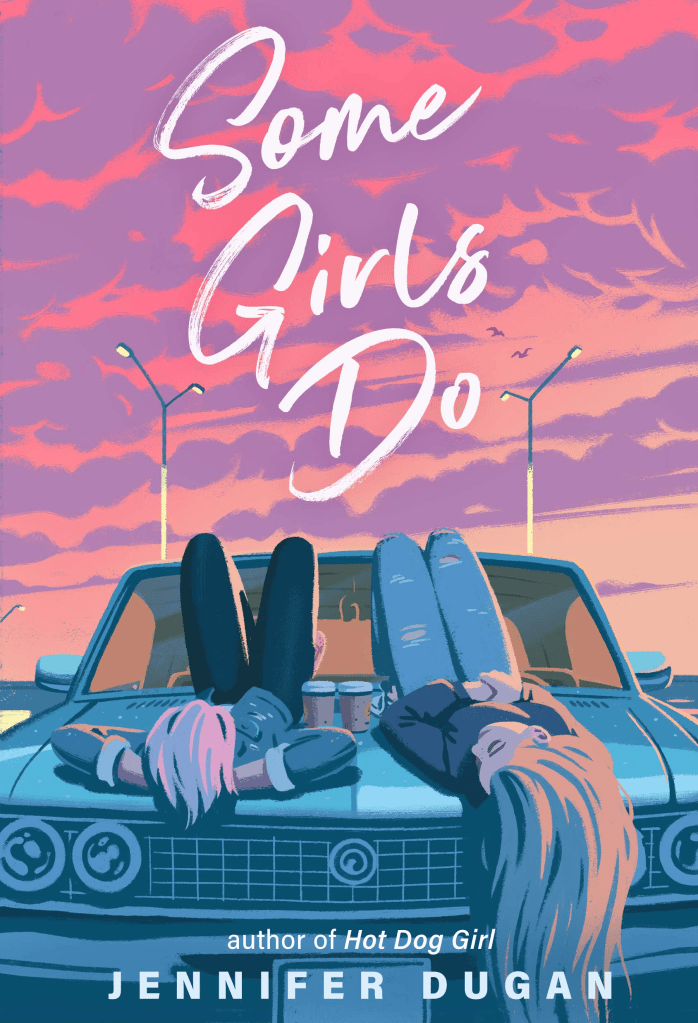
Some Girls Do – Jennifer Dugan“You say you’ll cut your bangs, I’m calling your bluff/When you lie to me, it’s in the small stuff…”

“Young Pilgrims” – The Shins

James Mercer just has such a unique way with words. As music history (and my personal music library) proves, there’s practically a million ways to say a sentiment along the lines of “I’m dissatisfied with my life and it’s cold and wet outside and I’m also depressed.” Mercer saw that and gave us these iconic lines:

“A cold and wet November dawn/And there are no barking sparrows/Just emptiness to dwell upon/I fell into a winter slide/And ended up the kind of kid who goes down chutes too narrow…” HE SAID THE LINE! GUYS, HE SAID THE LINE! CHUTES TOO NARROW!

Said barking sparrows came back to me completely at random, in the way that especially sharp lyrics or melodies do. Although Mercer’s narrator envies the “eloquent young pilgrims” passing by him, I struggle to find words other than eloquent to describe how he articulates such a near-universal feeling, a mess of regret and stagnation and the emptiness that comes with control slipping through your fingers and wanting to regain it. In a simple duet of acoustic and electric guitars, Mercer wrings some absolute poetry out of such a stagnant state, drawing every possible image from ice melting on a train window and the desire to “grab the yoke from the pilot and just/fly the whole mess into the sea.” I love a good literary-minded songwriter, which I guess it’s no surprise that I latched onto The Shins from such a young age. But with age, I appreciate the lyrics even more—James Mercer is one of those songwriters who prove that, at its best, music is eloquent poetry set to music. It doesn’t need to be (and rarely is), but when it hits that spot, I can’t help but relish it.

…AND A BOOK TO GO WITH IT:

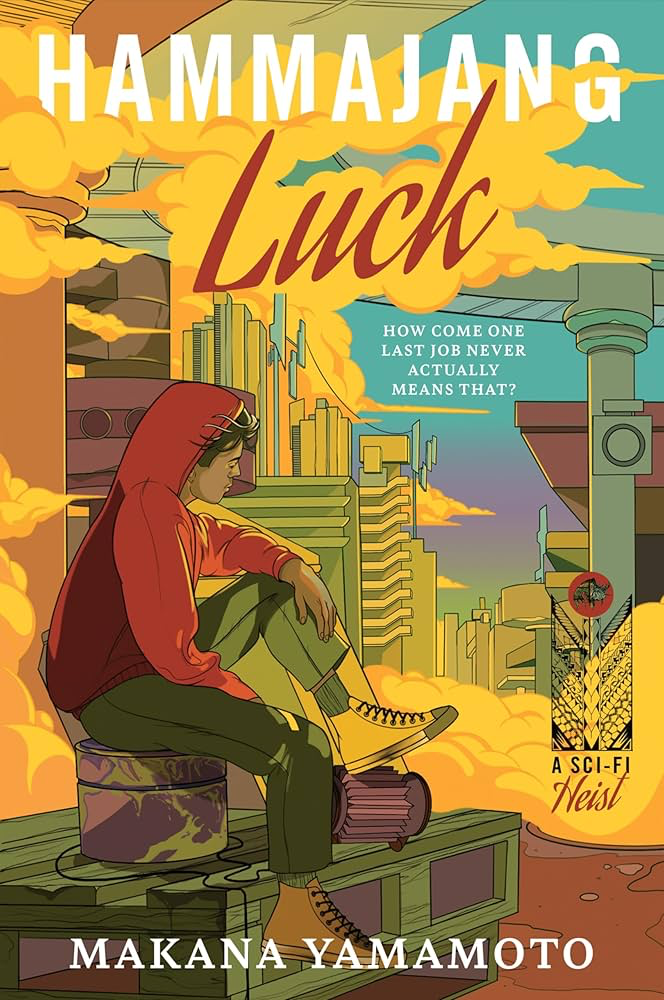
Hammajang Luck – Makana Yamamoto“But I learned fast how to keep my head up, ’cause I/Know there is this side of me that/Wants to grab the yoke from the pilot, and just/Fly the whole mess into the sea…”

Since this post consists entirely of songs, consider all of them to be today’s song.

That’s it for this week’s Sunday Songs! Have a wonderful rest of your day, and take care of yourselves!
Posted in Sunday Songs

Sunday Songs: 3/23/25

Happy Sunday, bibliophiles!

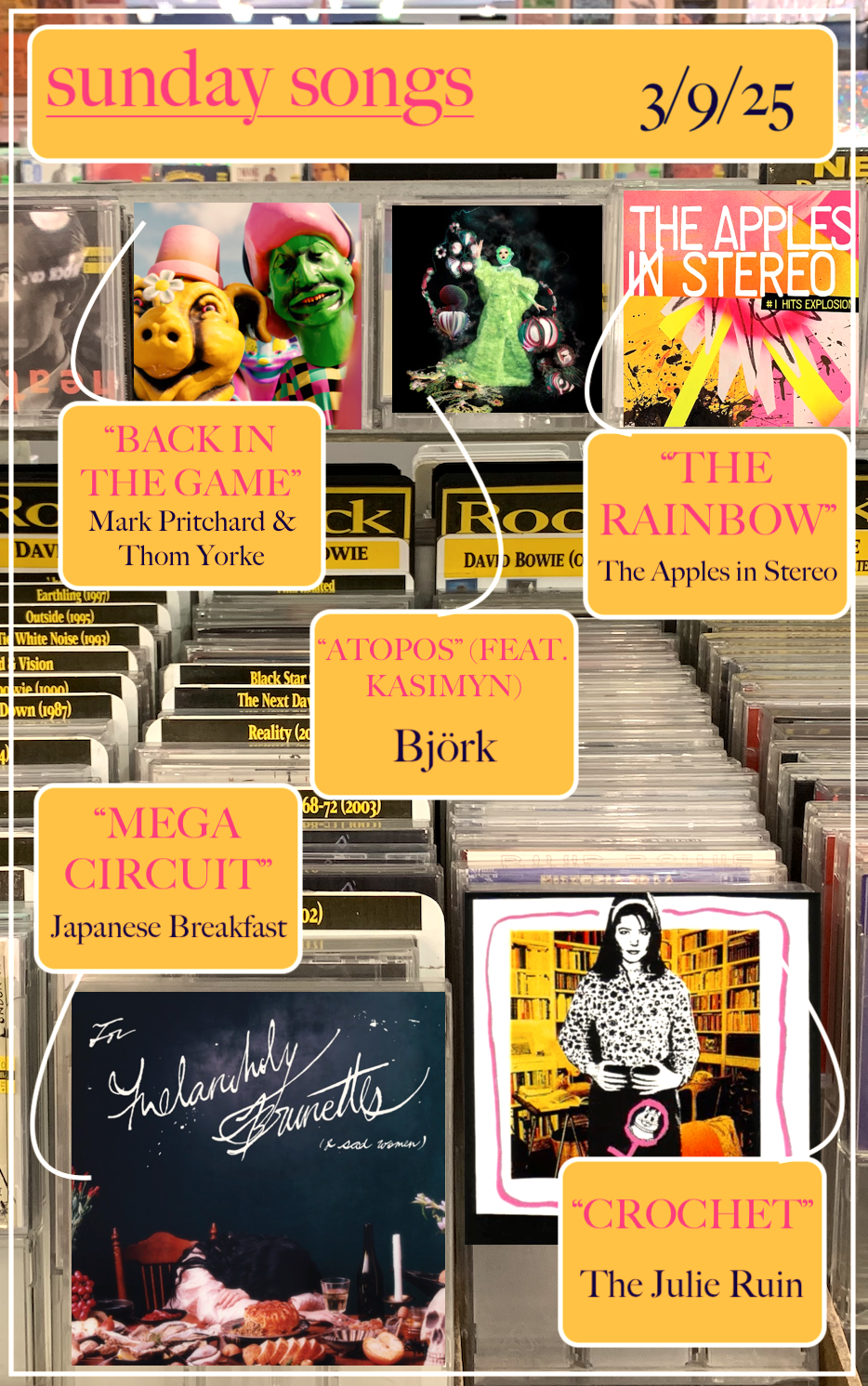
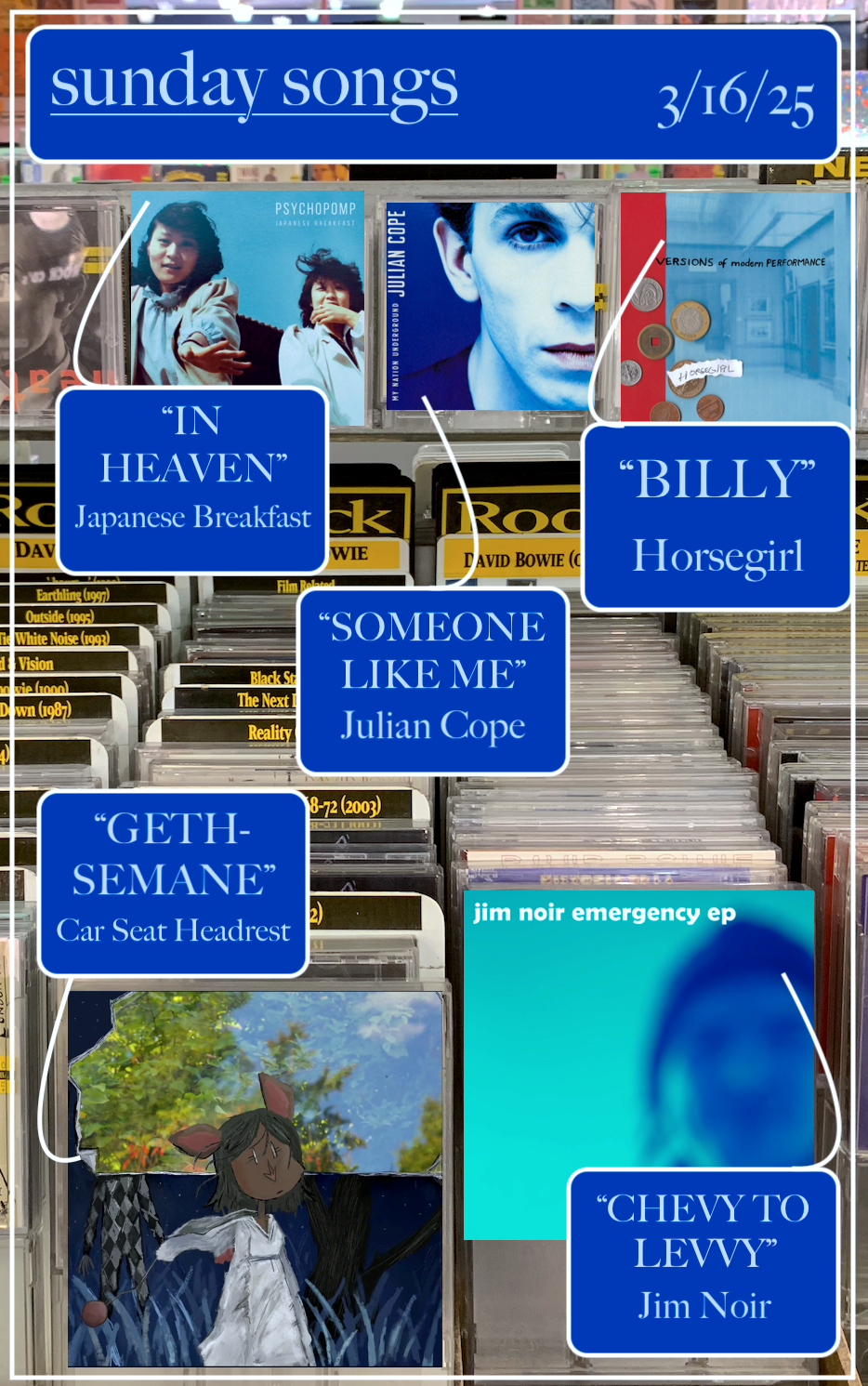
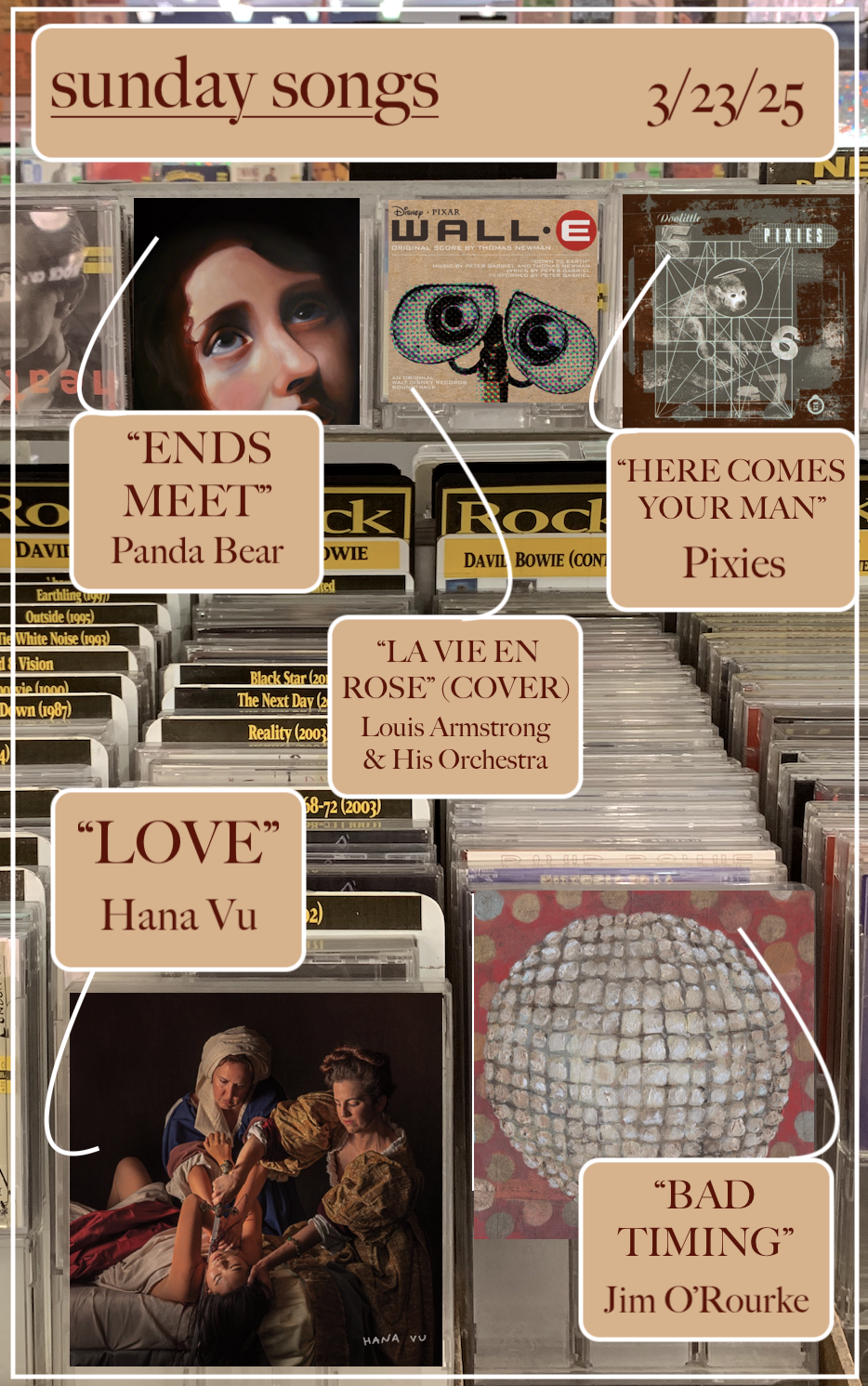
Since I haven’t been able to post in a few weeks, here are the Sunday Songs graphics from that time:

3/9/25:

3/16/25 (or, NEW CAR SEAT HEADREST IN MAY, WE ARE SO BACK):

This week: you thought this would be a quick post after I haven’t been able to write regularly for two weeks? WOE, TEN MINUTE SONG BE UPON YE!

Enjoy this week’s songs!

SUNDAY SONGS: 3/23/25

“Love” – Hana Vu

One of the best surprises a concert can have in store is a good opener. There are infinite jokes about bad openers, half of which…well, might be dogging on perfectly fine artists trying to get their foot in the door, and half of them are true. I really do try to at least go into openers with an open (no pun intended) mind, because everybody has to start somewhere, no matter how big of an artist they’re opening for. But sometimes it’s just up to your taste. Even with some cringy performances, you can at least tell that they’re trying.

I saw Soccer Mommy about two weeks ago (stellar performance!!!! as always!! and the crowd had basic human decency this time, unlike the parasitic frat bros that populated her crowd last time) with Hana Vu as the opener. I kept my expectations low. I expected to just nod along and twiddle my thumbs, but I think I may have found an excellent artist! She came off quite shy, mumbling to the audience and asking us what we had for dinner, but once she started performing, it was clear that Soccer Mommy had a worthy match to her sound. However, if I had to compare Vu to anyone, it would be to Lucy Dacus—they have a similar brand of indie rock, both bearing warm, rich vocals and guitar-driven angst with no shortage of heart. Nothing can come close to “Night Shift,” but Vu clearly studied how that song goes supernova at the end. The closer to her most recent album, Romanticism, “Love,” like Vu’s performance before Soccer Mommy, starts out unassumingly, but quickly becomes a dramatic landslide aided with thundering drumbeats, strings, and Hana Vu bellowing as though into a cavern. The lyrics, as sparse as they are, come sung clutching a bleeding heart in both hands, staining everything within arm’s reach. It truly lives up to the drama of the album cover, with Vu draped in robes and with a sword pressed to her neck, modeled after Artemisia Gentileschi’s “Judith Slaying Holofernes.” Either way, Hana Vu has earned a tally in favor of the good opening bands I’ve seen—and a place in my more regular rotation of artists. A big thank you to Soccer Mommy for giving a platform to Vu’s talent, and thank you to Vu for the fantastic opening act!

…AND A BOOK TO GO WITH IT:

To a Darker Shore – Leanne Schwartz“I just want you to stay/You know I hate giving up/And oh, Well I guess it’s just me/Please don’t leave me alone/You know I can’t let you be…”

“Bad Timing” – Jim O’Rourke

Once my dad sent me this song, it was immediately relegated to my quiet instrumental study playlist. I shouldn’t say “relegated,” really. It’s a great song to peacefully study along with, but it keeps you on your toes. Ten minutes long and dense doesn’t make it sound appealing, but “Bad Timing” sounds like how those slow motion videos of flowers unfurling after the frost melts from their buds look. “Bad Timing” also proves my long song theory right with flying colors—the best ones have enough changes to keep you interested for ten minutes. This track in particular feels like two songs in one. The first is a homely, acoustic ditty, which peacefully bows out at the 2:50 mark, giving way to a chorus of plucked strings and, of all instruments that should sound shimmery, an accordion would be my last guess. Yet Jim O’Rourke pulls it off, making it shudder and glimmer along with the synths. You’re lured into a soft, ambient sense of security, but like rot climbing up the roots of a plant, O’Rourke tears away at the music, fiber by fiber, until the remnants are ablaze in distortion and ascending mayhem by the time you reach the eight and a half minute mark. It’s clear to me the magic O’Rourke made with producing almost all of Wilco’s albums—he has such a talent for taking a simple melody, stretching it out and contorting it as easily as a chef kneads dough. He put something entirely unassuming into the oven, and something wholly unexpected came out the other side once the experimental yeast rose.

On another note: I can’t for the life of me find who made the album art for Bad Timing, but it’s just so charming to me.

…AND A BOOK TO GO WITH IT:

Annihilation – Jeff Vandermeereverything becomes slowly, gradually unrecognizable and strange, just like the progression of “Bad Timing”

“Ends Meet” – Panda Bear

Brian Wilson is alive and well, but what I’ve listened to of Sinister Grift feels like a glimpse into an alternate universe where Brian Wilson got temporally airlifted from the ’60s into the 2020s and had to find his way around. That, and if he’d been given nothing but a knapsack full of various synths and electronic knickknacks to carry with him on his time-out-of-time journey. “Ends Meet” is the definition of psychedelic, constantly fading in and out of focus like ripples over sunlit water. Noah Lennox’s voice also feels piped in from beneath the shallows of a reef—released this February as it was, everything I’ve heard of Panda has been carefully crafted to be specifically summery and aquatic, at least in sound (see: “Comfy in Nautica,” “Ferry Lady”*).

The existential lyricism feels at odds with the music at first glance: Lennox is confronting what we all have to confront at some point in our lives: we’re all gonna die, so what else is there to do? His answer is as simple and as difficult as any: appreciate everything in it, bad and good: “And when it is my time/Dig it all.” It’s a lesson I’ve been chipping away at for the better part of last year, what with my difficulty in staying present and not projecting myself into possible futures (not the time traveling Brian Wilson ones, unfortunately), but the way that Panda Bear takes it musically seems different than most. Sonically, “Ends Meets” feels so daydreamy and almost dissociative—its head isn’t in the clouds, it practically is the clouds. Even the face on the album cover of Sinister Grift looks like their mind is somewhere else entirely. But that in and of itself is putting that sentiment of being un-anchored into music and into words. It’s a jarring pairing in concept, tackling this subject matter with such an acid-tinged, vacation-like musical landscape, but to me, it’s the feeling of letting go of that burden, of knowing that all you can do in life is appreciate every facet of it.

*the “Ferry Lady” music video is about as trippy as you’d expect, so if you’re sensitive to flashing images or eye strain, you’ve been warned.

…AND A BOOK TO GO WITH IT:

The Library of the Unwritten – A.J. Hackwith“They got a spot to bury you/It’s not news, you’re tremblin’ for what?/Just keep it in the groovе (Don’t let up)/But keep the doorways shut…”

“La Vie en Rose” (Édith Piaf cover) – Louis Armstrong & His Orchestra

I was never much of a Disney kid, but Wall-E, one of the first movies I saw in theaters as a kid, will always unlock a particularly special place in my heart. Star Wars was my true introduction to sci-fi, but the more I think about it, Wall-E was right up there in conditioning me to fall headfirst into the genre. Even now, in my twenties and watching Wall-E for a grade to analyze the gender dynamics for a class on Disney and gender…it broke me. I knew it would. Sure, Mark Fisher cites it by name in Capitalist Realism when he talks about how Hollywood has subsumed anti-capitalist resistance and yada yada yada, but…god, how could even the most shriveled soul not be moved by an almost newborn race of humankind returning to the same earth, babies treading over barren ground as the giddy captain gleefully lists off all the plants that can be grown in it? And you’re already crying? And then they hit you with “Down to Earth?” Diabolical.

Part of my class’s discussion on the gender dynamics of Wall-E, beyond how we’re socialized to see Wall-E and Eve as boy and girl even though they’re…intelligent machines with no gender to speak of, was how the viewer is socialized to show their relationship as romantic (and traditionally heterosexual) from the markedly older, “classic” media surrounding them. Notable songs and clips from Hello, Dolly! do the heavy lifting there, but in the barest sense, Louis Armstrong’s cover of “La Vie En Rose,” one of the more ubiquitously recognized love songs of this century, which plays when Wall-E first becomes romantically interested in Eve, adds to this effect. And while I see the argument, as women and gender studies/queer theory-pilled as I am, I really don’t think Wall-E is nearly as guilty as a whole cadre of other Disney movies who have improperly shaped particularly women and young girls’ views on how gender and romance should be. For me, “La Vie En Rose” feels as pure as Wall-E and Eve, in all of their innocent, nonsexual romance. Even as a little kid, only knowing Louis Armstrong from “What A Wonderful World” (and thinking that Grover from Sesame Street was behind the vocals), something about those piano flourishes unfurled a kind of petal inside of me. It’s one of the first examples I can name of a melody really scratching an itch in my brain. I’m next to illiterate when it comes to jazz, but Armstrong was clearly one of those rare people who could give his trumpet such an individual voice—by the end of the song, you could call it just as much of a vocalist as he is. Paired with the cinematography of Wall-E’s tire treads tracing neat lines in the trash-laden dirt, something about it felt so neat, so meant to be, a puzzle piece shifting into place. Both of them are clean, and yet not sanitized—they’re sweet, earnest, pure. A part of childhood me is warmed every time I hear this song, obviously, but even outside of that context, the soothing spell of this rendition is undeniable. As is Wall-E.

…AND A BOOK TO GO WITH IT:

The Cybernetic Tea Shop – Meredith KatzLouis Armstrong’s take on “La Vie En Rose” is obvious coffee/tea shop music, but combined with my Wall-E association, why not return to this cozy, tender tea shop in a distant future?

“Here Comes Your Man” – Pixies

The music video for “Here Comes Your Man” has to be one of the more uncomfortable music video experiences I can think of, not because of any particular content, but more because you get the overwhelming feeling that nobody wants to be there. Every time they pan to Frank Black or Kim Deal (or Joey Santiago, honestly), they look like they’re trying to telepathically kill the cameramen, Professor X style. They don’t want to be there, the camera crew doesn’t want to be there, and they don’t want you there either…oh, my bad, sorry for the intrusion. I’ll see myself out. For good reason, though—they were averse to making music videos, and when their label pressured them to do so, they famously decided to stick it to the man and gape their mouths open like fish while the lyrics were playing. Given…well, everything I’ve heard about Frank Black, it could easily just be them being petty, but for an underground band who were achieving success they didn’t seem to want, it’s understandable.

I always feel a kind of odd shame when I like That One Song/Album That Got Popular with a certain band that the band openly hates with a passion. If I’d had the time to write a post last week, I would’ve said the same thing for Julian Cope and “Someone Like Me”My Nation Underground is one of his poppier albums, and one that he wasn’t satisfied with. (See also: “Me Myself & I,” a song I love, but that De La Soul inserts “we hate this song” into live performances of the lyrics…yeah, you get the picture.) For Pixies, they weren’t satisfied with this pop song to the point where they almost never performed it live. But…it’s so good. Sure, it’s simpler and more accessible than some of their work, but they knew how to make one of the most iconic alternative pop songs. Most alternative rock fans would probably be able to recognize that bassline immediately, all thanks to the timeless talent of Kim Deal. There’s layers to the genius of it—the harmonies of Deal and Black, the vague, surrealist lyrics about homeless people boarding a train before an earthquake, the faint comfort and hope in spite of that. The chorus of “here comes your man” was a last minute addition, but it’s always given a kind of solace for me, ever since I was a kid, before I understood the lyrics of the verse. Even with the bleak nature of the verse, it’s always implied a kind of salvation or relief to me. Bottom line: sometimes, even if That Song got popular, it’s obviously popular for a reason, but how talented a band’s craft is can often shine through in the charts.

Sometimes. We don’t talk about “Creep.”

…AND A BOOK TO GO WITH IT:

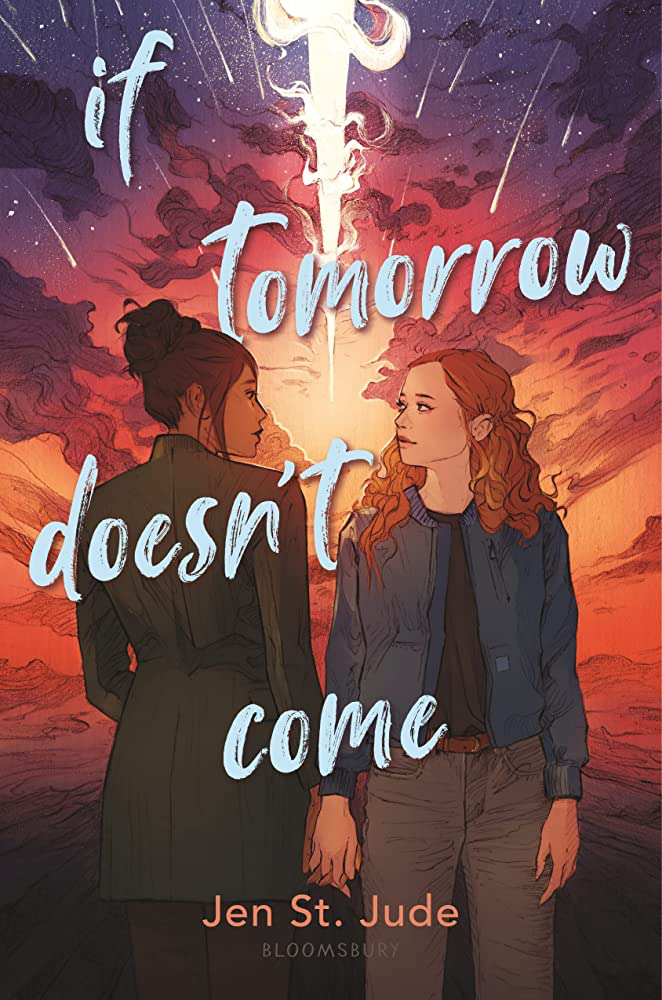
If Tomorrow Doesn’t Come – Jen St. Judea similar kind of disaster-oriented scenario to the song, of people scrambling to safety in the wake of a planet-destroying asteroid.

Since this post consists entirely of songs, consider all of them to be today’s song.

That’s it for this week’s Sunday Songs! Have a wonderful rest of your day, and take care of yourselves!
Posted in Uncategorized

Sunday Songs: 1/12/25

Happy Sunday, bibliophiles! I hope this week has treated you well.

This week: in which being a DC comics fan and a fan of British alt-rock goes awry.

Enjoy this week’s songs!

SUNDAY SONGS: 1/12/25

“Can’t Help Falling in Love” (Elvis Presley cover) – Lick the Tins

Imagine going so hard on an Elvis cover that you have to add not one, not two, but THREE Irish polkas at the end just so that it reaches the three-minute mark…I don’t find myself saying this often, but that pennywhistle kinda goes crazy.

“Can’t Help Falling In Love” has been covered hundreds upon hundreds of times—it’s so simple and iconic that it’s an obvious go-to for anyone to wring some emotion from the audience. (Whether or not they’re always successful is debatable. At worst, it can be the easy way out.) I can’t definitively find just how many times it’s been covered since Presley’s original release, but it’s got a slew of big names parading behind it: Kacey Musgraves, Beck, Chris Isaak, U2, Erasure, Zayn of One Direction, and Christine McVie isn’t even scratching the surface. (Though this one isn’t technically a cover, Spiritualized’s “Ladies And Gentlemen We Are Floating in Space,” one of my favorite songs of all time, adds the lyrics to J. Spaceman’s melody. It gets me every time…) And…well, as with any song that’s covered as numerously as this one, even the greats blend together sometimes. Rarely do they stray beyond the lazy, slow-danceable tempo. You can’t do much to a classic…

…unless you’re Lick the Tins. Their take on “Can’t Help Falling in Love” is one of the only takes that makes it sound lively. From the minute the drums kick in, you’re propelled by the spirited energy that the Irish band injected straight into the heart of this song. It’s considerably sped up, but beyond that, they make it so naturally celebratory. Alison Marr and the chorus behind her make every verse feel like a victory lap, a joyous sprint fueled by the essence of that feeling of falling in love. Of course, said speed meant that they had to add said three polkas at the end, all performed with the same Celtic inspiration that fueled the rest of the cover (and their very small body of work), but it makes it feel like the most triumphant of endings: the rickety car is driving into the sunset, the bouquet has been caught, the girl has been got. John Hughes clocked that quickly in his decision to put it at the end of Some Kind of Wonderful—this song couldn’t be any more ’80s rom-com if it tried. But long before I saw that movie, there was always a kind of purity to it—nothing could taint the memory of a song that so embodied the unbridled joy of running through a field, bathed in sunlight.

I haven’t sampled any of the Lick the Tins originals, but this song was released on their first and only album, Blind Man on a Flying Horse. Maybe there is some kind of shame to be only known for an Elvis cover and then disappearing from the face of the earth, but if I had a cover as near-perfect as this one…I dunno. I think I’d be happy.

…AND A BOOK TO GO WITH IT:

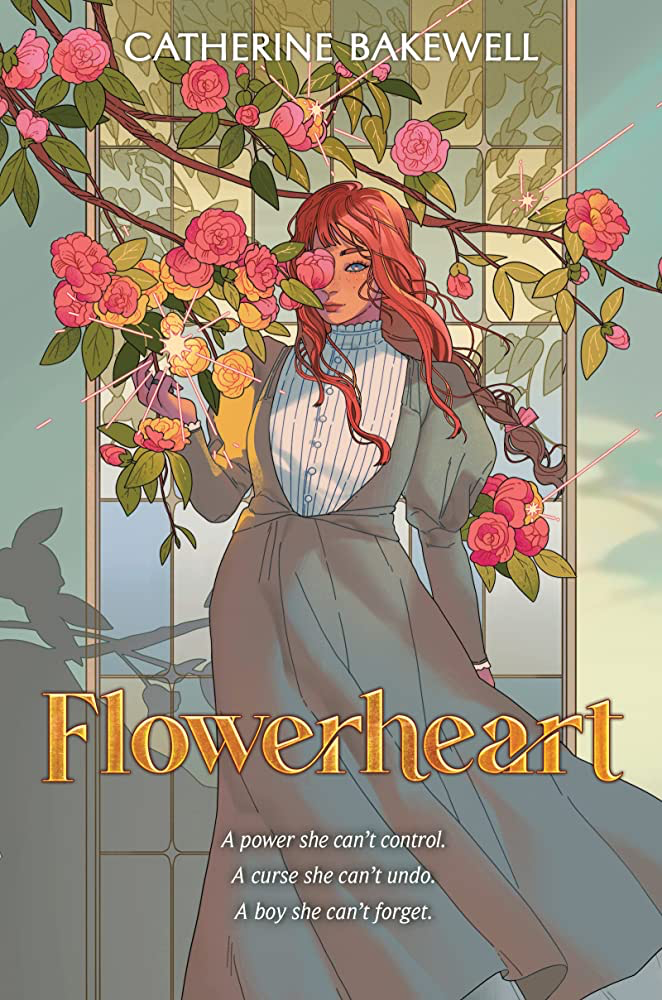
Flowerheart – Catherine Bakewellthough I didn’t enjoy every aspect of this book, I do feel like this cover would suit the homely, comforting atmosphere that it boasted at its highest points.

“Little Spacey” – Cocteau Twins

It now the dead of Cocteau Twinter. It’s been in the 20-degree range for several days now, and I’ve had several…questionably fruitful sessions of attempting to learn to knit while listening to this album. My expectations were high after how consistently fantastic the albums I’ve listened to before this (Heaven or Las Vegas and Blue Bell Knoll) and how pleasantly “Oomingmak” has lingered with me for six months, but to this day, Elizabeth Fraser and co. have not failed me.

Take out the inspirations from David Attenborough’s The Living Planet: A Portrait of Life on Earth, and it would still be a distinctly winter album. With bass player Simon Raymonde absent for the recording of this album (he was recording for the This Mortal Coil record Filigree & Shadow), the sound is more delicate than a pointed icicle dripping from a rooftop; the album’s lack of a distinct bass gives its the delicacy it needs to feel as atmospherically Antarctic as it does. (A great playlist transition for you: “Lazy Calm,” the opening track, with David Bowie’s “V-2 Schneider”…what, you thought you could escape one of my posts without a mention of David Bowie?) “Little Spacey” in particular has to be one of the iciest songs on the album. Normally, that word has the connotation of being prickly or unfeeling, but in this case, I say icy in the sense of how winter sunlight reflects crystalline colors off of it, or how it begins to melt at the corners once that sunlight comes out, or how snowflakes cling to the toothy tip of an icicle during a snowstorm. Fraser arranges and layers her harmonies in such an otherworldly way that it sounds more like an overhead flock of cooing seabirds than anything human. It has the ice of an Antarctic winter, yet all of the comfort of watching it from a TV screen, in the same way I imagine the band gathering inspiration for the album.

…AND A BOOK TO GO WITH IT:

Even the Darkest Stars – Heather Fawcettfrigid, windy, and wintry, but glittering with starlight.

“I Me Mine” – The Beatles

…yeah. It’s not like George Harrison wasn’t also a jerk during the Get Back sessions, but oh my god…being in the studio with the rest of The Beatles for that long would make me write a song about how the world is ruled by ego too. Being around John Lennon does that to a guy…and Paul McCartney bluntly correcting your grammar. Jesus. Without a doubt, it’s a bitter note for The Beatles—”I Me Mine” was the last new material recorded by them, depending on which criteria you’re going off of*—but even through the bitterness, you can of course count on George Harrison to weave something timeless from it. The oscillation from the boat-rocking-on-waves sway of the verses to the urgent clanging of the organ during the chorus seems like an accurate picture of the volatility of these sessions—sometimes, they made progress that would eventually become Let It Be and Abbey Road, but it would whip around into heated arguments (take a wild guess who started most of them) just as easily. Given the more charitable and spiritual person Harrison became as he departed from The Beatles, it’s hard to imagine him throwing any sort of truly mean-spirited shade—but I feel like “I Me Mine” could be argued as a diss track. No names named, but it’s about John and Paul. We know. Or a diss track on the concept of egoism. It’s both.

*there’s a considerable amount of debate over what counts as the last true Beatles song; “I Me Mine” had only 3/4 Beatles present for the recording.

…AND A BOOK TO GO WITH IT:

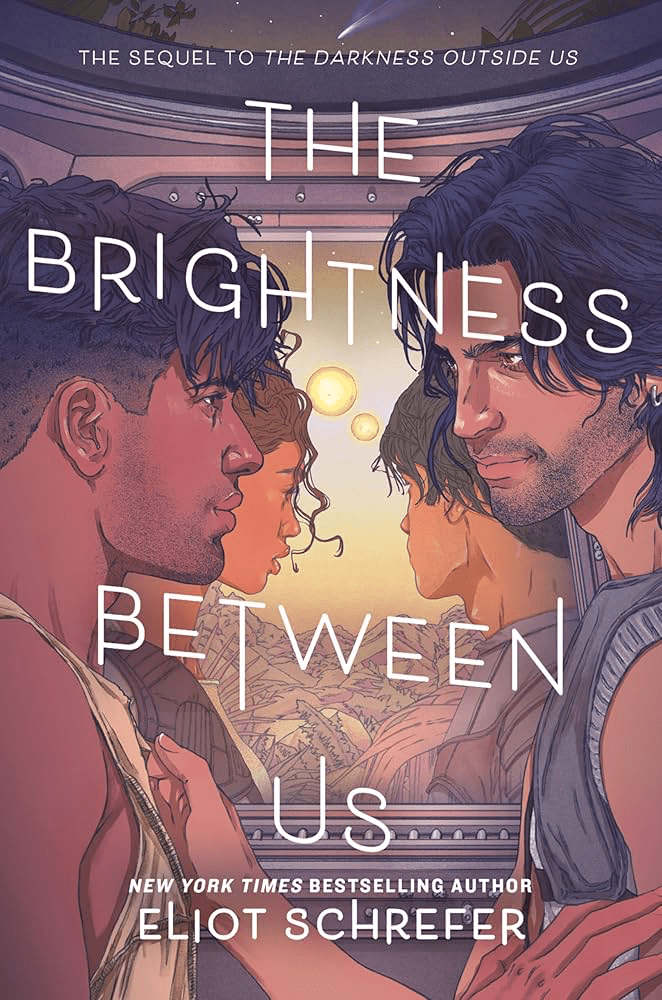
The Brightness Between Us (The Darkness Outside Us, #2) – Eliot Schreferin the less-far future side of this novel, there’s an awful lot of “I Me Mine” going on in the Cusk household…

“Good Blood Mexico City” – Elbow

Man…I love comics, but any given comic fandom is just so painfully full of contrarians. You’ve got a bunch of dudebros wasting away in basements whining about how none of the comic book movies coming out are actually comic accurate, but then the Superman trailer comes out, and those same people are whining about Guy Gardner and his glorious bowl cut? It’s pure campy comic perfection. IT’S COMIC ACCURATE. It was never about comic accuracy, was it—

Oh? What’s that you say?

…oh. Wrong guy. Wrong Guy. Garvey, not Gardner, I’ll see myself out…great song though, right?

…AND A BOOK TO GO WITH IT:

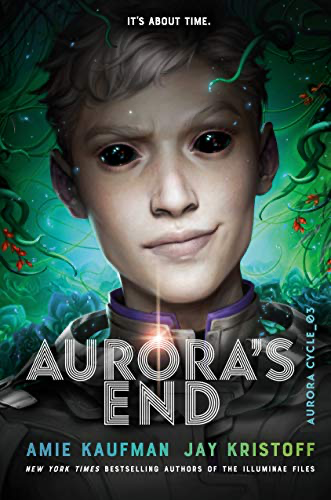
Aurora’s End (The Aurora Cycle, #3) – Amie Kaufman & Jay Kristoff“This is the day for big decisions, you know/Follow your lodestar/Starry eyes, smoky eyes, urgent eyes/This is the surge of the good blood rising/If you’re running, I’m coming…”

“Love’s Ring of Fire” – Anita Carter

If I had a nickel for each time in music history that Johnny Cash became known and adored for a cover, I’d have two nickels, which isn’t a lot, but in this instance, it’s really not weird that it happened twice. The man was supremely talented—he didn’t just cover said songs, but undeniably elevated them (the other, in this case, being his gut-wrenching rendition of Nine Inch Nails’ “Hurt”). In this case, a fair amount of people know that “Hurt” is a cover. I can’t speak for the rest of you, but it hit me like a sack of bricks when I found out that “Ring of Fire” was a cover. (The one time I’ve actually learned something from YouTube shorts—specifically this one by Tommy Edison.) I was just so accustomed to hearing his version and nothing else; I assumed with his stature that he’d written it just the same.

Turns out that Anita Carter was responsible for the original version, sister of June Carter (who Cash eventually married), who wrote the song along with Merle Kilgore. Carter’s voice is a noteworthy contrast to Cash’s—the way she croons the iconic line “I believed you like a child/oh, but the fire went wild” tickles my brain in that special sort of way that only a handful of songs do—as does the way her high note fades into a sunset sky at the end of every repetition of the chorus. Yet despite, that, it’s rather subdued for a song comparing love to, y’know, a whole ring of fire; to quote my mom upon hearing it, she sounds “emotionally distanced from the ring of fire.” Yikes…but it is awfully slow for the metaphor at hand. It could be a consequence of being able to see clearly after being chucked through said ring of fire and coming out the other side with more than a few burns, but you don’t exactly get that fervor that’s inherent to the metaphor. Johnny Cash, being Johnny Cash, took that sign, sped up the chorus, tweaked some lyrics, and added some mariachi horns after dreaming about a rendition of the song backed by them, as the story goes. To me, it’s two observers’ perspectives on the same phenomenon, but distance is the key: maybe it’s because Cash sung his view directly from said ring of fire that his version became more enduring. Either way, seeing the first evolution behind an enduring country hit was a surprising journey.

…AND A BOOK TO GO WITH IT:

The Good Luck Girls – Charlotte Nicole DavisAnita Carter’s specific version wouldn’t be out of place in the Western-inspired setting of this duology.

Since this post consists entirely of songs, consider all of them to be today’s song.

That’s it for this week’s Sunday Songs! Have a wonderful rest of your day, and take care of yourselves!

Posted in Sunday Songs

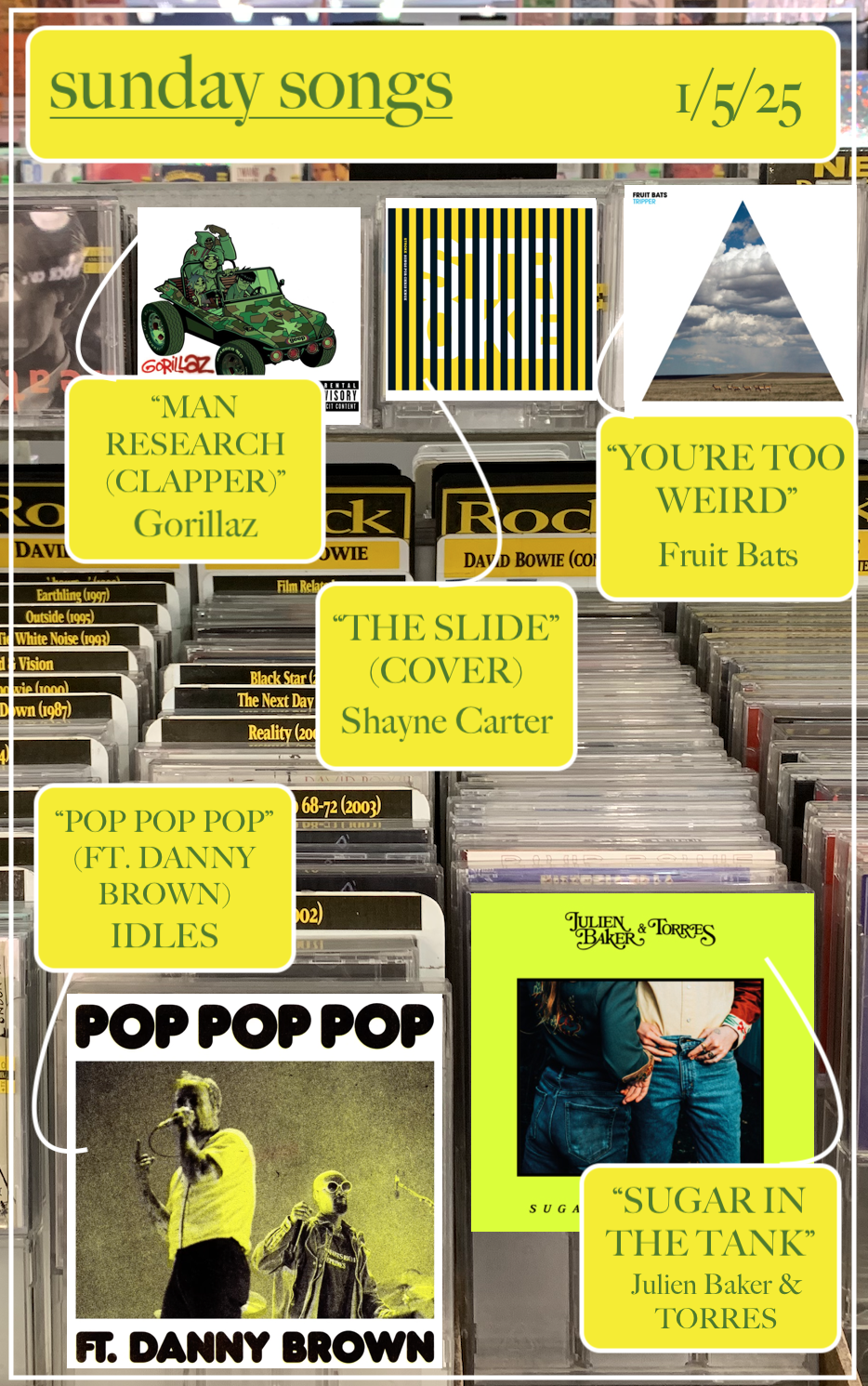
Sunday Songs: 1/5/25

Happy Sunday, bibliophiles, and happy near year!

First post and the first Sunday Songs of 2025! No pressure. This week: new verses on new songs, new(ish) takes on old(er) songs, and…oh, god, Eric, please put your shirt back on—

Enjoy this week’s songs!

SUNDAY SONGS: 1/5/25

“POP POP POP (feat. Danny Brown)” – IDLES

Dread it…run from it…TANGK always arrives. One of the best albums of 2024, hands down. I already talked about “POP POP POP” back in March, but at the end of the year, IDLES added one more flourish to an already excellent track—a guest feature by Danny Brown. Of course, I say that knowing next to nothing about Danny Brown up until this point, but the spin he and IDLES put on one of the most prominent highlights of TANGK is an interesting one—and catchy, too. In places, the beat has been treated like an accordion, stretched out in some areas and compressed in others—the final, spoken-word monologue has been sped up, while the first five seconds are jumpstarted, recreating the static of plugging a guitar amp in. Meanwhile, Brown’s guest verse hurtles at breakneck speed; For me, there are some lines that come across rather corny (“On the surface/Looks like a circus/All these clowns around, pull the curtain”). However, at the very end, Brown’s lyrics align with the ethos of “POP POP POP” in the first place: an assertion of purpose, that purpose being staying true to yourself, spreading love, and being a source of protection for others. The final line sums it up nicely: “Took a couple wrong turns/Don’t know right from left/But found my way to the home that I strayed/And now I say everything is okay.” Can “POP POP POP” ever be improved? I highly doubt it, but I also doubt that this was meant to be an improvement—it’s more the kicking around with a preexisting idea with other collaborators, and in that experimentation, it creates an exciting take on one of the 2024’s best songs.

…AND A BOOK TO GO WITH IT:

Forever Is Now – Mariama J. Lockington“Searching for something you cannot hide/Looked in the wrong place, but should search inside/Relied on things that just let me down
But now I see what its really ’bout…”

“Sugar in the Tank” – Julien Baker & TORRES

Personally, I’ve never quite gotten on board with the queer cowboy aesthetic, but I can respect how queer people have been taking it back. In the first place, I think any kind of cowboy mythos attracts the kind of people who want to forge their own trails and make their own way without the constraints of society, a Venn diagram that seems to attract, strangely enough, both conservative people wanting to go back to “traditional values” and queer people who see an out from heteronormative culture. Growing up in the mountains, my association with much of it came from the former, even in our fairly liberal town (I say fairly liberal because there was the odd confederate flag or “if you’re reading this, you’re in range” sign on someone’s house). But I don’t mind seeing a bedazzled cowboy hat or a boygenius photoshoot out in the desert every now and then. Evidently, I’m too much of a city slicker.

The reclamation of country by queer people has gone in much the same way, and I’ve never been one for country in the first place (same association as above), but what I will give a try 8 or 9 times out of 10 is anything that Julien Baker is involved in. Now here’s an example of queer cowboy/country reclamation done right: nothing better than two lesbians making a song with a title referring to slang for an effeminate man and turning it into something positive and sensual. Musically, there’s twang aplenty, but at least for me, Baker’s talent screams at you like a neon sign—she’s whipped out the banjo once more, and it contrasts with the hazy overdrive that TORRES has applied to her excellent guitar work. The boygenius fan is me is more partial to how Baker’s harmonies fit with Phoebe Bridgers and Lucy Dacus, but it’s clear that she’s well-matched with TORRES, musically and vocally. I’m not 100% on board with the more country direction—it’s more on the alt-country side, but very much country-sounding—but I’ll give it a chance for Baker.

…AND A BOOK TO GO WITH IT:

Road to Ruin – Hana Leewill something close to post-apocalyptic, biker cowboys suffice?

“Man Research (Clapper)” – Gorillaz

I remembered this track after getting into “Bill Murray” a few weeks ago; as wonderful an album as Gorillaz is, I often find myself forgetting about some of the songs sandwiched in the middle; this one has the job of following up “Clint Eastwood,” and with how many tidal waves that classic made in the early 2000’s, any track following that up, like “Bill Murray” and “Feel Good, Inc.,” has an exceedingly hard act to follow. But in much the same way as “Bill Murray” brings down the tempo but keeps the creativity, “Man Research (Clapper)” provides a bridge between some of the more energetic heavy-hitters—“Punk” comes up right after it. Buoyed by a sample from Raymond Scott’s instrumental piece “In The Hall of the Mountain Queen” (delightful, honestly—feels like the title screen music for an ’80s video game and not in a cheesy way), it’s dominated by the rasping repetitions of Damon Albarn pushing his higher vocals to their limits—maybe there’s the excuse for why I forgot about it. A good portion is just him going “yeah yeah yeah yeah yeah yeah,” but that’s the mark of a great musician—sure, he’s just going “yeah yeah yeah” in front of a sample and some record scratches, but I eat it up every time. There’s a smooth cohesion to his craft that makes every separate element seem as though this song is their final form, their ultimate destiny to be brought together.

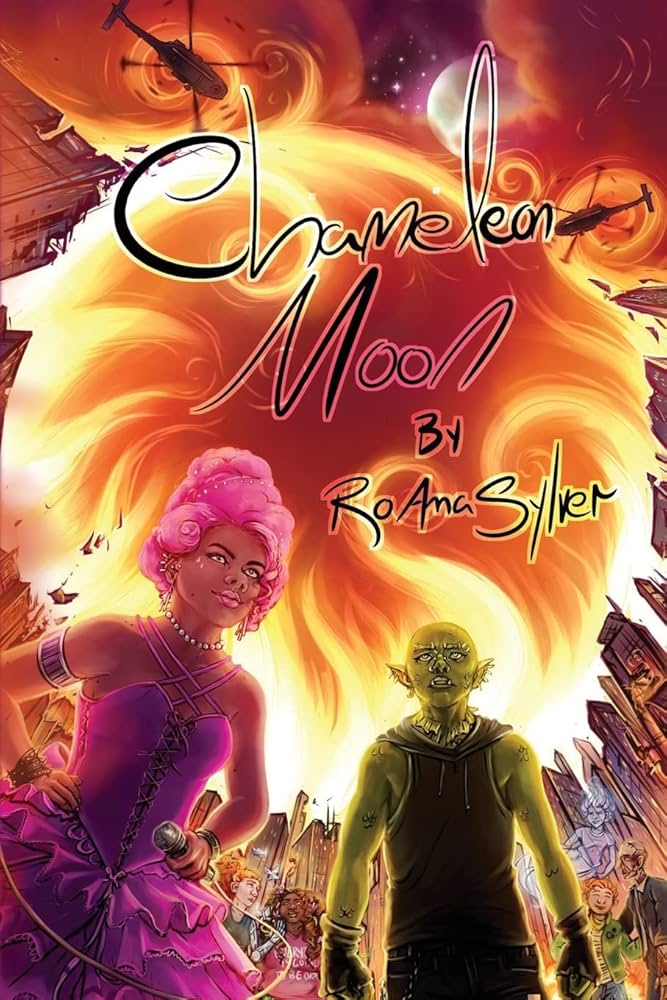
…AND A BOOK TO GO WITH IT:

Chameleon Moon – RoAnna SylverI picked this one more for the atmosphere than the lyrics—a similar kind of hazy and raspy energy, but with an undercurrent of vitality.

“The Slide” (Tall Dwarfs cover) – Shayne Carter

Some covers prove that the singer understands some part of the song more than the original creators. Not to front on Chris Knox, incredibly talented and oddball songwriters as he is, but Shayne Carter’s cover gets to the heart of what Knox and co. were going for as far as the tone and the emotion of the lyrics.

Tall Dwarfs aren’t going to be anything but jangly, and their original version of “The Slide” is no exception. It’s got a psychedelic, ’60s sway to it, faintly sunny…and then you get to the lyrics. And then you get the whiplash from hearing those upbeat guitars against the lyrics: “The doctors should kill/She’s terminally ill.” I’m sorry, WHAT? I’m not saying that songs can’t have lyrics that don’t match the mood of their music, but in this case, Shayne Carter’s interpretation does the song more justice. In contrast to Knox’s upbeat instrumentals, Carter employs solemn pianos, muted strums of an acoustic guitar, and an electronic drone that begins to circle around you at the 1:58 mark as you listen like vultures circling carrion. The acoustics sound like they were recorded at 3 a.m. in an abandoned gym with walls covered in mold. That atmosphere captures how disturbing the lyrics are—sparsely told, it recounts the experience of an 80-year-old, terminally ill woman wasting away in an institution. That cold, chilling echo gives the song a much more tangible setting and emotional depth; the spareness of it all makes the setting so much more unforgivable, with its featureless walls and constant chill in the air. That Radiohead-like, droning dread comes about as close as I would imagine to capturing that imprisoned, monotonous feeling of your mind slip away and being powerless to do anything about it, all the while surrounded by nurses who barely want to be there. It’s a tragedy of a song—it was written in the 1990’s, and while I’m sure conditions have somewhat improved for patients, these situations are a reality for so many people, whether or not they have control of their minds. The pen that Chris Knox and co. put to paper was a respectful and sympathetic one, but Shayne Carter deserves so much praise for how much his musical interpretation brought out the original sentiment—and made it even more emotional.

Sadly, it’s a story that partially came true for Chris Knox; he suffered a stroke in 2009, and has had a limited vocabulary ever since. He’s made a handful of public appearances and performances in the last decade or so, but he’s largely off the radar these days. However, “The Slide,” alongside many more of his covers from both his solo work and of Tall Dwarfs, were compiled on Stroke: Songs for Chris Knox in order to initially help his family pay the medical bills. I hoped that he hadn’t accidentally predicted his own fate with “The Slide,” but it seems that his family has been going to great lengths to make sure he’s taken care of. Even amidst the horrors he described, there are bright spots worth celebrating—namely, the love of family and friends during unpredictable situations such as his.

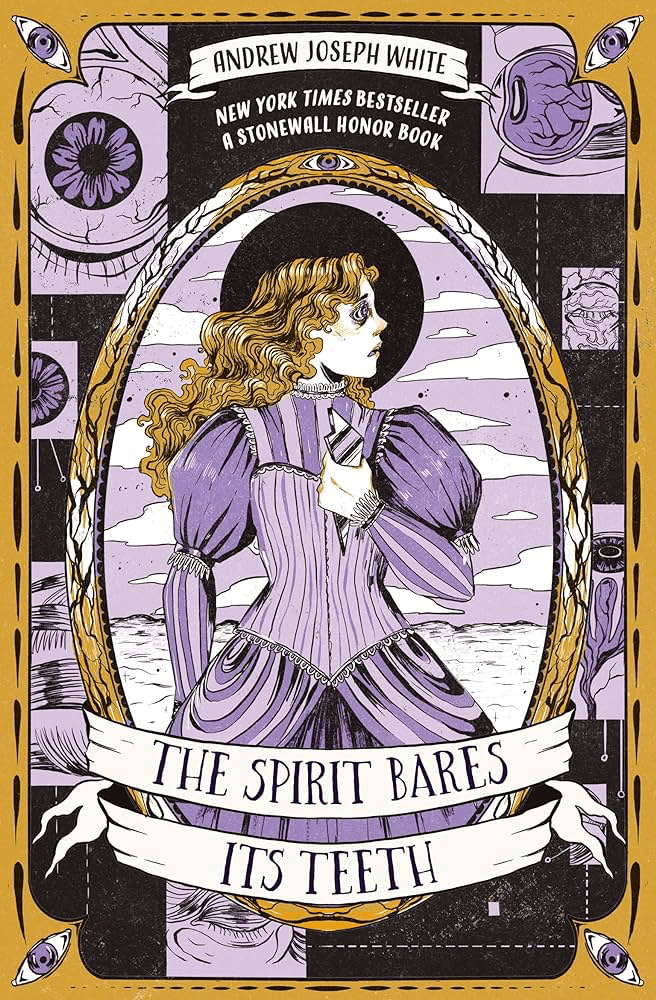
…AND A BOOK TO GO WITH IT:

The Spirit Bares Its Teeth – Andrew Joseph Whitethe institutions in this novel are different than the one in the song, but it’s just as oppressive—and deeply haunting and eerie.

“You’re Too Weird” – Fruit Bats

…okay! Going into this, I didn’t expect to be that well-acquainted with Eric Johnson’s chest hair while he stared longingly into my eyes, but here we are? 😀 Don’t think I needed all that…thank you Eric, very cool

Either way, it’s all part of the ’80s-parodying cheese of the music video, complete with mullets, long pearl necklaces, everyone’s hair being artfully blown by an invisible fan, and even a keytar. The best part is that every single band member is fully leaning into the cheese, with every band member hamming it up whenever the camera is on them. If I can erase the strategic view of said chest hair via Johnson’s unbuttoned shirt, “You’re Too Weird” is a great little indie track; Johnson has one of the more distinctive voices in indie music that I can think of, and he takes it to some of its extremes, hitting higher notes than I’d expect even from him. Like the ’80s music and videos that “You’re Too Weird” takes cues from, it’s an endlessly catchy love song, peppered by a tasteful guitar solo and tambourine here and there. I’ll have to bring this back once the weather gets warmer—it’s the perfect song for staring out the car window on a summer evening.

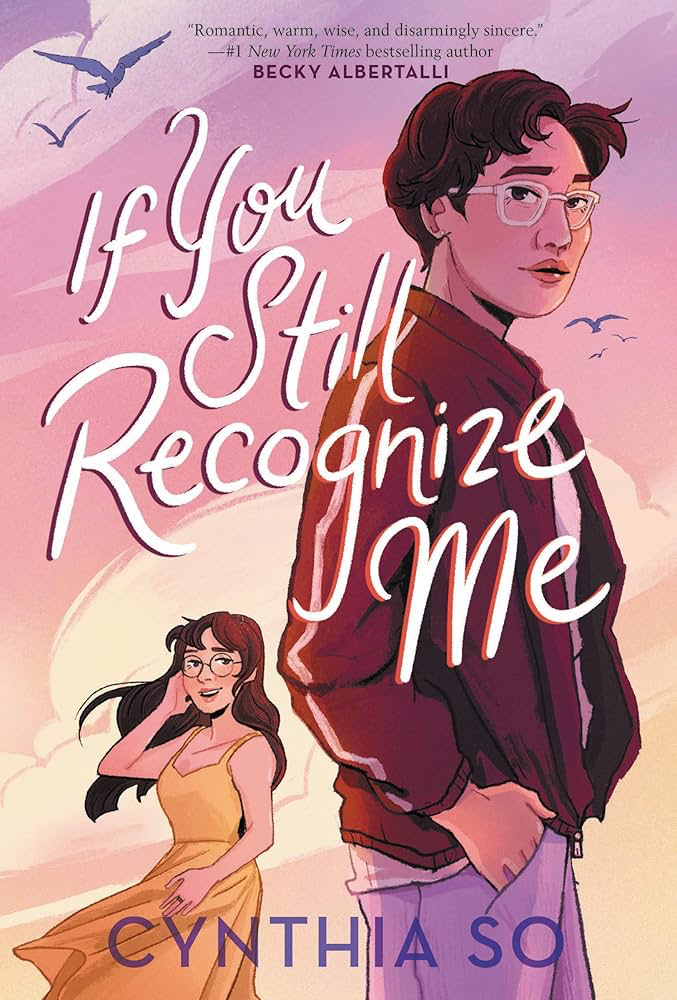
…AND A BOOK TO GO WITH IT:

If You Still Recognize Me – Cynthia So“They say that I’m not supposed to be in love with you/They say that you’re too weird for me/And you’ll leave eventually/But then I’m the only one who ever believed in you…”

Since this post consists entirely of songs, consider all of them to be today’s song.

That’s it for the first Sunday Songs of the year! Have a wonderful rest of your day, and take care of yourselves!

Posted in Book Review Tuesday

Book Review Tuesday (12/17/24) – Can’t Take That Away

Happy Tuesday, bibliophiles!

For the time being, I’m back! Safe to say I was swamped this semester, so I’m glad that I’ll have about a month of rest before I go back to school for the spring semester. When I wasn’t writing here or in my WIPs, I wrote around a combined 24 combined pages for various papers…and they say being an English major is easy…

Either way, I’ve had Can’t Take That Away on my radar since it came out in 2021. As with most other books on my TBR, there’s no real rationale for it languishing there for so long. I ended picking it up because of the premise; queer YA and MG books are bearing the brunt of bans and challenges here in the States, so I wanted to support them whenever I can (even if it’s already a good amount of what I read). (I can’t find anything definitive on whether or not this one was actually banned or challenged other than one Goodreads reviewer shelving it as such.) Either way, though it had its flaws, the storyline of Can’t Take That Away feels ripped right out of the headlines, and it’s a vital piece of literature for trans teens looking to find their voices.

Enjoy this week’s review!

Can’t Take That Away – Steven Salvatore

Carey Parker was born to be a diva. With an unwavering love for Mariah Carey and aspirations of stardom, they have fought tooth and nail to express themself the way that they want. So when a friend convinces them to audition for Elphaba in their high school’s production of Wicked, they seize the opportunity—and land the leading role. Yet in spite of their apparent talent, parents and teachers cause an uproar about genderqueer Carey’s casting in the role of a leading lady. With mounting threats to kick them out of the play and dismantle the production all together, Carey must find their voice in order to prove that they deserve to be heard—and sing.

TW/CW: homophobia, transphobia, misogyny, misgendering, physical assault/violence, descriptions of injuries, bullying, gender dysphoria, suicidal ideation, cheating, loss of loved ones

I have nothing against Wicked, but reading this while being oversaturated with all things Wicked every time I opened up Instagram was an experience, for sure…I guess if Carey were a real person, they’d be over the moon at the prospect of the movie, so there’s that.

Without a doubt, Can’t Take That Away is a story that needed to be told. For the most part, I applaud Steven Salvatore for delivering this novel with unflinching realism (about 90% of it, at any rate. More on that later). The plot—parents and teachers cause an uproar when a genderqueer teen takes on the role of Elphaba in their high school’s production of Wicked—feels like a headline waiting to happen. I have no doubt that it’s already happened. My only minor complaint is that the main villains (Mr. Jackson and Max) felt cardboard, but they too, in a way, felt like the adults raving and ranting about “gender ideology” and the online trolls bent on tearing queer people down. They leaned on the side of exaggeration, yet…some people are just like that, unfortunately. That realism is what fueled the story; Carey’s manifold struggles, from grappling with gender dysphoria, bullies, and first love, was delivered both candidly and sensitively. Salvatore didn’t hold back from the ugly parts of some of these topics (be warned—happy ending aside, it’s a rough ride), but it made them all the more important to show that, like the plot, Carey is as real a person as your trans classmate. Carey could easily be someone in your life, and that was what made the story ring so resonantly.

That being said, I felt that the romance was incredibly messy, and not necessarily in a good way. Having Carey have their first love as they’re fighting to find themself was a good side plot in concept, but…it was just a dumpster fire for no reason. I don’t know if this is just me reading YA and no longer being a teenager, but half of the romantic drama felt unnecessary in contrast to the very timely, very upfront main plot. Why did Carey need to kiss some random guy in a basement while they were dating Cris? How are Carey and Cris just okay with everything that the other did? Maybe this is just me, but if my partner kissed somebody else in a basement while we were dating, I wouldn’t come running back…see? MESSY. Can’t Take That Away already had high drama aplenty, and I know that’s a hallmark of YA to some extent (that I appreciate), but this bordered on ridiculous.

I’m rather conflicted about the ending. It was wrapped up quite neatly, which isn’t inherently a crime, especially since it’s YA. There are bound to be some things that are tied up more nicely than they would be in real life. Can’t Take That Away is aimed at high schoolers, and unless it’s too neat, this quality isn’t always an instant flaw in YA books. That being said, Can’t Take That Away bordered on taking that to an extreme. After the protest, the cops are immediately on the side of the queer people and people of color, and have almost no hesitation about punishing the white male perpetrators of the hate crimes. Carey’s protest immediately goes viral, and they get so famous that they get free tickets to see Mariah Carey and go onstage and sing with her. The bad guys get their comeuppance almost instantly, and the good guys get the greatest rewards possible. I’m not saying that Carey and company didn’t deserve a happy ending—they absolutely did—but it felt unrealistic to a point where it almost felt like the fulfillment of a fantasy. Sure, that’s what writing’s for to some extent, but when dealing with a plot that felt ripped from the headlines, the resolution felt much less so. You can give characters a fulfilling, satisfying victory that feels earned and realistic!

Yet at the same time, queer kids deserve these kinds of stories. There are easily infinite examples of straight characters getting unrealistic endings that end in instant fame and wish fulfillment, so why shouldn’t Carey? Why shouldn’t all of the trans kids reading their story? Yes, it made me roll my eyes a little when this story, one that ended well enough, had to escalate everything to “and then Carey got everything that they ever wanted in life! Yippee!” But after the deluge of hatred and violence that Carey endured throughout Can’t Take That Away, why shouldn’t they get that ending? This novel is not escapist by any stretch of the imagination, but there’s a kind of necessary escapism in these stories—very real circumstances resolving with the absolute best possible outcome with no strings attached. Sure, it was a stretch, but Carey deserves it—and so do all of the queer teens reading this book.

All in all, a book with flaws here and there, but ultimately proved a timely story about finding your voice. 3.5 stars!

Can’t Take That Away is a standalone, but Steven Salvatore is also the author of And They Lived…, No Perfect Places, The Boyfriend Subscription, and the forthcoming novel When Love Gives You Lemons, which is slated for release in May of 2025.

Today’s song:

this is the least fitting pick for a book about a teen who loves Mariah Carey, but I only pair books with songs in my Sunday Songs, so…enjoy the whiplash. Bon appetit!

That’s it for this week’s Book Review Tuesday! Have a wonderful rest of your day, and take care of yourselves!

Posted in Sunday Songs

Sunday Songs: 9/29/24

Happy Sunday, bibliophiles! I hope this week has treated you well.

This week: high school throwbacks, off-kilter oddities, and a few too many people trying to explore each other’s minds than I’m comfortable with. Cool it, Charles Xavier…

Enjoy this week’s songs!

SUNDAY SONGS: 9/29/24:

“Piano Fire” (feat. P.J. Harvey) – Sparklehorse

It’s a Wonderful Life is one of those albums that took me a bafflingly long time to listen to. I know, I know, I did it to myself, but the fact that I didn’t pick it up when I was 15 and irreparably mired in Good Morning Spider astonishes me. It’s probably owed to the fact that I was also even more irreparably mired in OK Computer, which tends to overshadow things a tad bit. Looking back, maybe it was for the best that I wasn’t on an all-Sparklehorse diet at that age. I already looked pathetic scuffing my snow boots through the hall while blasting “Maria’s Little Elbows” through my earbuds between classes. I was 15, guys. It was 100% that serious, trust me.

What I can say is that I think I would have felt the same way about It’s a Wonderful Life at 15 as I do now—it’s a triumph of an album. Scattering through surreal urgency and subdued melancholy, it has every kind of Sparklehorse you’d like—along with a smattering of collaborators. It’s almost funny how different said collaborators are (take Nina Persson’s delicate backing vocals on “Gold Day” and then Tom Waits growling like a hulking ogre on “Dog Door”), but the power of Sparklehorse has always lain in the disparate elements Mark Linkous cobbles together. Like some kind of American Gepetto, he constructs all of his songs into tiny figures made of warped wood and bird bones, and what totters to life creaks with every step. They’re quaint creatures with acorns for heads and cigarettes and toothpicks for legs, but there’s no other way to love them save for exactly as they are.

Those he chooses to collaborate with feel much the same way. P.J. Harvey, of all people, was a left-field choice when I first heard about her featuring on “Piano Fire.” The only Sparklehorse song I could conceive being able to contain the kind of raw fury she exudes was “Pig,” and that had already come and gone by the time It’s a Wonderful Life came out. “Piano Fire,” however, is one of the most upbeat tracks on the album; you feel a racing urgency to it, immediately sprinting down an overcast beach the minute the first guitar chords kick in. Or maybe it’s the searing heat of airport tarmac that you’re sprinting across the minute you hear the opening line: “I got sunburnt waiting for the jets to land.” Sunburnt describes “Piano Fire” surprisingly well; it has the texture of an old photograph left out in the sun too long, all of the colors now bleached to unnatural, pale shades. Linkous almost takes a backseat on his own song, never raising his voice when he dishes out surreal vignettes of “Fiery pianos wash up on a foggy coast/Squeaky old organs have given up the ghost/Fire them up and kill the piano birds.” But that urgency is why P.J. Harvey is so perfect for this song; once the chorus kicks in, her soaring voice provides the jet fuel for this creaky old jet to careen off the runway and into a sky littered with the strangest birds you’ve ever seen.

…AND A BOOK TO GO WITH IT:

Love in the Time of Global Warming – Francesca Lia BlockBlock’s bizarre, dreamlike prose certainly fits with the surreal imagery that Linkous employs in this song—and the majority of his catalogue.

“Gigantic” – Pixies

In almost two and a half years of making these Sunday Songs graphics…this is the first time I’ve double-dipped. It was bound to happen eventually, not just because my music taste is finite, but because this song has lingered with me from a young age. I faintly remember being around five or six and hearing this song in my dad’s old car, driving in fading light down the road back to my house, and hearing the iconic chorus: “Gigantic, gigantic/Gigantic, a big big love.”

I’ve often talked about how simplicity in lyrics can convey more than the most complex songs in some cases, and if you need further proof, look no further than “Gigantic.” Most of that work is done by the immense, never-fading talent of Kim Deal, who sells every metric ounce of explosive love in this song; with every cry of “A big big love,” you get it—there’s no other words that can adequately describe the kind of secretive, all-consuming romance that swirls through every pluck of the bass. That opening bass riff is the shy, cracking open of a bedroom window when the parents are asleep, an invitation with a blushing, anticipatory smile. What follows never fails to knock me off my feet. I say “knock” and not sweep or lift me off my feet precisely because that’s what it feels like, as though the ground has opened up beneath you, and you’re falling headfirst into the unknown—contained in a kiss that consumes every cell of your body.

…AND A BOOK TO GO WITH IT:

The Kindred – Alechia Dowall-consuming, explosive, and intergalactic love.

“Take Me To The River” – Al Green

I’m sure Al Green is a perfectly nice guy, but…that album cover and title is not it, man…”Al Green Explores Your Mind?” Can he…can he not?

The fact that they were just naming albums anything back in the day aside…how did I not know about this song for so long? I’ve loved the Talking Heads cover for years, but somehow, it never dawned on me to look it up and discover that it was a cover. There’s something to be said for the phenomenon of white artists’ covers of songs by Black artists overshadowing the originals, but this isn’t quite the case—from the looks of it, between the amount of times that this song has been covered (most recently by Lorde for a Talking Heads tribute album, oddly enough) and the royalties from [checks notes] those animatronic wall fish, it’s cemented itself as an enduring classic of soul. I’m sure Al Green isn’t complaining about the latter though, given that he’s gotten the most royalties from the fish cover. Yet no matter the strange journey that “Take Me To The River” has taken, none of it has overshadowed how deliciously groovy it is. It’s endured for five decades in counting precisely because it wastes no time in getting straight into its slinky, infectious funk. Green’s voice flies from slick to howling in seconds and recovers in record time, all in time with the blasts of an impeccable horn section. 50 years, and you can’t not bop your head. I’m still not jazzed about Al Green exploring my mind, but I can’t deny that he worked some undeniable, immortal magic with this one.

…AND A BOOK TO GO WITH IT:

The Final Revival of Opal & Nev – Dawnie Waltonthough the musical genres differ, the atmosphere and climate of the ’70s runs through both.

“Secretarial” – A.C. Newman

I’ve had a turnaround. I’ll be honest—even though I’ve liked several New Pornographers songs since I was young, “Secretarial” has always bugged me for some reason. I never hated it, but it was always one of those songs where, over the years, I developed a reflex of just skipping it whenever it came on shuffle. I didn’t question it for a while. Many years have passed, and for once, I didn’t skip…and here we are.

A.C. Newman—and most of The New Pornographers’ catalogue, by extension—has this songwriting style that’s just so distinctive in a way that I can’t put my finger on. Even if you separated his or Neko Case’s voice from the lyrics, I could hear a line like “So come on, let the sun in/We’ve been gunning for promotion/Postering the slogans on the roadsigns.” and immediately go “yup, A.C. Newman wrote that.” What makes it so distinct has bugged me for years, and to this day, I can’t fully put my finger on it. The closest I can say is that their specific diction has an inherently off-kilter quality to it. Newman is never overly verbose, but the way he arranges words is always slightly askew. His lyrics dwell in the thin limbo between obtuse poetry and sense, situated in a place where you can decently get the metaphor he’s going for, but instinctually, you know that those syllables just don’t go together neatly. “Secretarial,” like another other Newman product, might as well be a puzzle, in that sense, but one that was put together wrong with the pieces that only look like they should fit together, but stick and slide against each other. I’ve never been great with time signatures, but this one is angular enough to match the slanted lyrics. Even if you don’t know the guy, you can’t deny that it takes some serious talent to not just think of but pull off “Lady, it’s secretarial” as a hook.

…AND A BOOK TO GO WITH IT:

Lagoon – Nnedi OkoraforI’ve used this book more than once, but it was right there…

“One day you blew across the water/After racing through the countdown/Spewing ancient wisdom like your friend/The revelation had come and they were looking for me…”

“Henry” – Soccer Mommy

Oh, early Soccer Mommy…oh, “Henry.” This one sure soundtracked many a one-earbud-in free draw in art class my sophomore year. I think it was in the fall that I found this song as well; it carries a distinct smell of wet leaves and wood chips in the pumpkin patch. Cheesy as the title of this album, the self-released For Young Hearts, is, it’s not like it’s a lie. Here’s to many more high schoolers listening to this in art class.

It seems that “Driver” has put a pin in this tradition, but “Henry” is part of a long lineage of Soccer Mommy songs about the seduction of Bad Boys™️ (see also: “Death By Chocolate”). Of course, the natural conclusion was that the ultimate bad boy was to be conquered in “lucy,” that being…the devil himself. (God, I need to stop. I sound like a youth pastor.) But here in 2016, “Henry” chronicled the kind of guy who hung out behind the high school, smoking cigarettes in a leather jacket, and giving you a wicked smile as you passed. Sophie Allison’s younger voice, along with the plucky instrumentation (cannot get enough of that bass), makes you feel like you’re following a mischievous wood sprite through sunlit woods. Light and lovesick, it captures that heady, teenage love drug that makes every step stumble: “‘Cause Henry has a laugh like fire/And it’s spreading through the streets and burning on telephone wires/I don’t know just what it is/But he’s driving all the good girls bad with that evil smile of his.” Soccer Mommy’s had that golden, indie touch all along—”Henry” remains a classic to me.

…AND A BOOK TO GO WITH IT:

Carry On (Simon Snow, #1) – Rainbow Rowell“I don’t know/Just what it is/But he’s driving all the good girls bad with that evil smile of his…”

Since this song consists entirely of songs, consider all of them to be today’s song.

That’s it for this week’s Sunday Songs! Have a wonderful rest of your day, and take care of yourselves!
Posted in Sunday Songs

Sunday Songs: 9/22/24

Happy Sunday, bibliophiles! I hope this week has treated you well.

This week: I apologize in advance for every single driving mention and/or pun that I made in this post. I didn’t even notice it at a certain point…I just couldn’t…stop…

1:58-2:07

Enjoy this week’s songs!

SUNDAY SONGS: 9/22/24

“Bloody Ice Cream” – Bikini Kill

It’s been just under a month since I had the privilege of seeing Bikini Kill live, and even as someone who isn’t a hardcore fan of the band, I had SUCH a wonderful time! That’s owed in no small part to the commanding presence of Kathleen Hanna, not just in the history she carries, but in just how real she was. There she was, a pioneer of feminist punk, just onstage joking about how her bra was too tight and recounting a memory of rich girls pelting her with squirt guns before she walked into a job interview. Never at any moment was there a pretense of acting cool or punk. It was nothing but Kathleen Hanna, in all of her smudged-mascara and sequined glory. Bless Kathleen Hanna, really.

So when she introduced this song, which I was familiar with only in name, by saying that it was dedicated to “all woman writers,” you bet that I stood up and saluted her like it was the national anthem. And even as a fan on the sidelines, I’d accept “Bloody Ice Cream” as a new kind of anthem. It articulates in less than one and a half minutes what so many creators—chiefly women—are told about the profession: “The Sylvia Plath story is told/To girls who write/They want us to think/That to be a girl poet/Means you have to die.” The unspoken doctrine of your craft not being valid unless you sobbed and suffered over it permeates all kinds of media. I’ve been around so many people who think that trauma is the secret to good writing, whether it’s slapping it onto their characters or thinking that their hope in their message is invalid because it doesn’t show the bleakness of the real world. Counterpoint: ever experience happiness? Even once? Was that not in the real world?

The modern world may be far from perfect, but we have an understanding that could nurture and heal the Sylvia Plaths and Virginia Woolfs of tomorrow. And we have the recognition that there is no power greater than joy. In and outside of the writer’s world, we’re taught that to feel downtrodden is to experience the real world, competing each other for how exhausted we are, how much we have on our plates, and how sad and gloomy our projects are. Is this really what creativity is? It’s not like there’s no value in showing the darker aspects of life, but for how much it clogs the literary world, I feel like so many people have forgotten that writing—and imagination—isn’t just a contest for who can work themselves to the bone the most artfully. I write to put out the energy I want to see reflected in the world around me. And that energy is joy. The systems of oppression that surround us want to see people like us being so downtrodden that we have no energy to question them. So write. Write joy. Write what’s in your heart. Scream and dance like Kathleen Hanna. And don’t underestimate the value of kindness. They hate to see you joyous.

…AND A BOOK TO GO WITH IT:

The Crane Husband – Kelly Barnhill“Who was it/That told me/All girls who write/Must suicide?”

“My Impure Hair” – Blonde Redhead

The best shoegaze sounds like you’re slipping in and out of a dream, that limbo best experienced from 1-4 in the morning when you’ve woken up from a dream, your eyes are gummy, and you’re not sure if the hazy shapes forming the walls and bed around you are part of another dream you’ve yet to wake up from. I guess that’s why it’s so easy for people to get high to this kind of music, but like…well, all things, sobriety is better suited to experiencing them. “My Impure Hair” is the closing track on 23 (I’m not even a diehard fan, but I just LOVE that album cover), and even from this tiny taste, it feels like an artfully placed closing track. It has the quality of a lullaby; every element, from the soft instrumentation to Kazu Makino’s vocals, is whispered, as though not to disturb a swaddled baby drifting off in their crib. Once you think you’ve heard a distinct sound, it bleeds into another like spilled watercolors, creating a pale wisp that floats, airless, on the passing wind.

…AND A BOOK TO GO WITH IT:

The First Sister – Linden A. Lewis“But in the end/We defend our decadence/You never wept like that/Whatever lost, I won’t forget about you…”

“Kanga Roo” – Big Star

Nothing baffles me more about “Kanga Roo” than the fact that, although it didn’t officially see the light until 1978, it was recorded sometime in 1974. I suppose there’s some ’60s psychedelic bands that got close to the sound here, but this kind of deterioration feels so modern. It doesn’t sound like 1974! It sounds like a less fuzzy Spacemen 3 or the first take of a Bends-era Radiohead b-side. One of the top comments on the official audio called it “the rough draft for Wilco’s Yankee Hotel Foxtrot, which is the most astute description I’ve ever seen ascribed to it—I don’t know how it never clicked, but suddenly, “Ashes of American Flags” makes eons more sense.

I can only imagine what hearing this in 1978 felt like—probably the musical equivalent of “mom, come pick me up, I’m scared” after expecting something more like “In The Street.” Jesus. That feeling certainly crept into me when I first heard this song, while driving home from a concert late at night, navigating a winding canyon road in near-pitch black. All of the shrill mechanical squeals sound much more menacing when you’re barely awake. “Kanga Roo” sounds like it’s actively pulling itself apart at the seams, a threadbare rag only attached to its halves by a few strands of fraying string. The drums are never on beat or consistent in volume, somebody’s banging on a cowbell for about 15 seconds, and all the electric guitars are doing is getting scratched and squealed into oblivion. It’s a bizarre experience, watching a song crumble like charcoal in a dead firepit the morning after a campfire. Yet there’s an innocence to it; Alex Chilton’s voice is the only clear sound in “Kanga Roo.” You’re hearing the instruments fighting for their lives while Chilton’s plainly singing “You was at a party/Thought you was a queen.” The iconic line that gave the song its name (“oh, I want you/Like a kangaroo”) almost makes no sense, and I’m not sure if Chilton has ever offered up an explanation, but somehow, I see it. I imagine one of those towering, buck kangaroos standing at full height, and feeling the desire to grasp someone in your arms with the strength of such a creature.

I included This Mortal Coil’s cover of “Kangaroo” in one of my past Sunday Songs that I didn’t get around to writing because I was occupied with moving and school; I have too much homework to fully go into who’s coming out victorious if we’re pitting the original against this one, but I’m at least partial to it for how sparse it feels, even with the soaring strings. It’s much more put-together than the original (not to disparage the artful chaos), but there’s something to be said for what it does with the negative space that the Big Star version drowns out. What can I say? They got me. They got me with the big feels.

…AND A BOOK TO GO WITH IT:

The Spirit Bares Its Teeth – Andrew Joseph Whitethe lyrics could match up with any number of books, but it’s the creaking, uneasy atmosphere that puts it squarely in this novel’s company.

“Driver” – Soccer Mommy

I’m so glad that Soccer Mommy has become a prominent enough artist that she has the means to do funny marketing campaigns, because whoever came up with the one for “Driver” had a stroke of genius. By calling a number that Sophie Allison posted, you could get a snippet of the track before it came out, followed by “how’s my driving?”-style call prompt. Maybe we are in an okay timeline.

Without a doubt, Sophie Allison has never been more sure of herself at the wheel. A departure from the expression of beauty in lingering grief that were the two lead singles, “Lost” and “M,” “Driver” presents a more lighthearted detour to the landscape of Evergreen. The backing guitars and effects have gained a grungier, grimier edge, but Allison’s sunshine puts them all in a dusty, golden light. As the guitars and drums thrum like gravel skipping across a dirt road, Allison turns her attention to the present loves of her life. You almost get the feeling that she’s slipping into the self-deprecation of her early career, but there’s nothing but affection for herself, but more in terms of her partner, who puts up with her “losing [her] concentration on every whim.” Allison presents herself as the more emotional, scatterbrained half of the couple, which her partner is playful about, but is also the one to ground her when she gets too far into her head with a reminder of “where are we going now?” She’s never completely blameless, but she’s full of nothing but love for her anchor that keeps her from veering off the path; it’s not like some of her earlier songs, like this would indicate that she’s in danger of slipping away entirely, but it’s an exercise in learning to rein yourself in—and find somebody who isn’t afraid to rest a hand on your shoulders and remind you where your feet are planted.

…AND A BOOK TO GO WITH IT:

Aurora Burning (The Aurora Cycle, #2) – Amie Kaufman and Jay Kristoffnot to get all 2020 Madeline on you all, but…the Kalauri in this song…I’m gonna keel over…

“I’m a five foot four engine waiting to move/I’m a test of his patience with all that I do/‘Cause I’m hot and he stays cool, I don’t know why/But he puts up with my moods/And he makes me smile when he says/’Where are we going now?'”

“Bishop’s Robes” – Radiohead

The connection of inspiration between Radiohead and The Smiths never surprises me, but sometimes, with bands that inspire another, you find a single song that you know is the missing link in the evolutionary tree, the line of ancestry concretely delineating their music as kin. More specifically, it makes sense next to their cover of “The Headmaster Ritual,” though “Bishop’s Robes” takes a much more subdued turn.

Yorke’s raw lyricism thrives in both simplicity and complexity; he can weave any number of stories with denser, more prosey lyrics, but he knows just what kind of simple, unadorned phrases to stab you in the gut with. In this case, it’s the chorus, repeated like a shaky-voiced prayer in a dark corner: “I am not going back.” It becomes more of a reminder than a statement, as though to convince his brain that no, he’s not back in his pre-teen years under the reign of his “bastard Headmaster.” Volumes have been written about the horrors and abuse of the British education system back in the day (see: pretty much anything by Pink Floyd)—and some continuing into now, I would imagine—but what sets “Bishop’s Robes” apart is the mood. It might be more accurate to call it a lack, as the most overwhelming feeling you get from this track is not anger but numbness. There’s a resignation to it, weighing down the music, as though, even in adulthood, the experience has sapped him: Yorke doesn’t have the energy to fling insults along the lines of “spineless swines” or “belligerent ghouls” at his abusive childhood tormentors—all he can do is “bastard.” And it’s that eyebagged, forlorn crawl that sells the lasting effect it had on him. After years of unyielding discipline, I can imagine the fear of not raising your voice—a haunting presence that permeates every note of this track, constantly looking over its shoulder to guard innocent contraband that doesn’t exist.

…AND A BOOK TO GO WITH IT:

Agnes at the End of the World – Kelly McWilliamssecrecy, escape, and the horrors of a perverted version of Christianity in the hands of the wrong man.

Since this post consists entirely of songs, consider all of them to be today’s song.

That’s it for this week’s Sunday Songs! Have a wonderful rest of your day, and take care of yourselves!
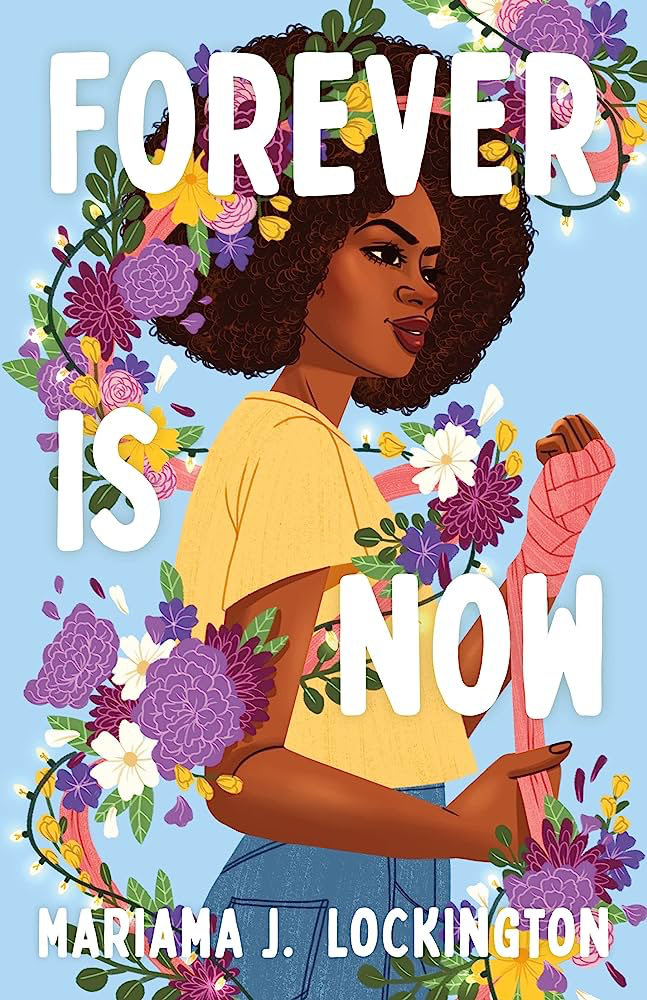
Posted in Monthly Wrap-Ups

July 2024 Wrap-Up 🌤

Happy Wednesday, bibliophiles!

Somehow July’s already over…it felt awfully fast, yet the heat made the evenings so slow…time, huh?

Let’s begin, shall we?

GENERAL THOUGHTS:

July for sure had its ups and downs; I was getting hit with the election anxiety big time at the beginning of the month…so naturally, I was overjoyed at the prospect that Biden had dropped out of the election. Comforting that my options aren’t just “old white man with dementia” and “old white man with dementia who also happens to be a felon.” (Still. No excuse to vote for the felon, folks. Harris 2024!). So my faith has been restored on that front, and I’ve ended the month on a much more hopeful note, thankfully. America remains a dumpster fire, but least there’s some light at the end of the tunnel.

I was able to read a good amount this month, though! As is with every year, I was scrambling to find more and more books with disability rep for Disability Pride Month (there’s a solid amount out there, but it’s still fairly scarce), but I ended up reading some excellent books as a result! Summer has confined me to the house for the most part, what with the miserable heat (listen, I like summer, but not 90 degree heat, let me be clear), but it’s given me plenty of time to read—and to write! I participated in Camp NaNoWriMo this month, and as of today, I reached my goal of 50,000 words a day early! I had no idea that I’d be able to pull it off a day early—I had my ups and downs as far as motivation goes, but now, I’m a little over halfway through my first draft of this novel! I’ve also had fun with my blogging this month, and I feel like I’ve written some productive reviews.

Other than that, I’ve just been drawing, playing guitar, drinking a ton of tea, watching Succession (nearly finished with season 2!), watching and re-watching several Studio Ghibli movies (technically, I saw Ponyo when I was 5, but it felt like a fever dream back then…MUCH more beautiful now!), and doing everything I can to get out of this heat.

READING AND BLOGGING:

I read 18 books this month! As with every month, there were some hits (nearly 5 stars) and misses (an unfortunate DNF…), but I especially had fun reading books for this year’s Disability Pride Month!

1 – 1.75 stars:

The Secret Summer Promise

2 – 2.75 stars:

Cascade Failure

3 – 3.75 stars:

Accessing the Future

4 – 4.75 stars:

Year of the Tiger

FAVORITE BOOK OF THE MONTH – Someone You Can Build a Nest In – 4.5 stars

Someone You Can Build a Nest In

POSTS I’M PROUD OF:

POSTS FROM OTHER WONDERFUL PEOPLE THAT I ENJOYED:

SONGS/ALBUMS THAT I’VE BEEN ENJOYING:

so glad I gave this album a try!
:,)
this song’s had a massive chokehold on me for at least three weeks now…
thank you to horsegirl for deerhoof and this song!!
this album is instant calm…
so glad I remembered this song… :,)

Today’s song:

RETURN OF THE SNAIL

That’s it for this month in blogging! Have a wonderful rest of your day, and take care of yourselves!
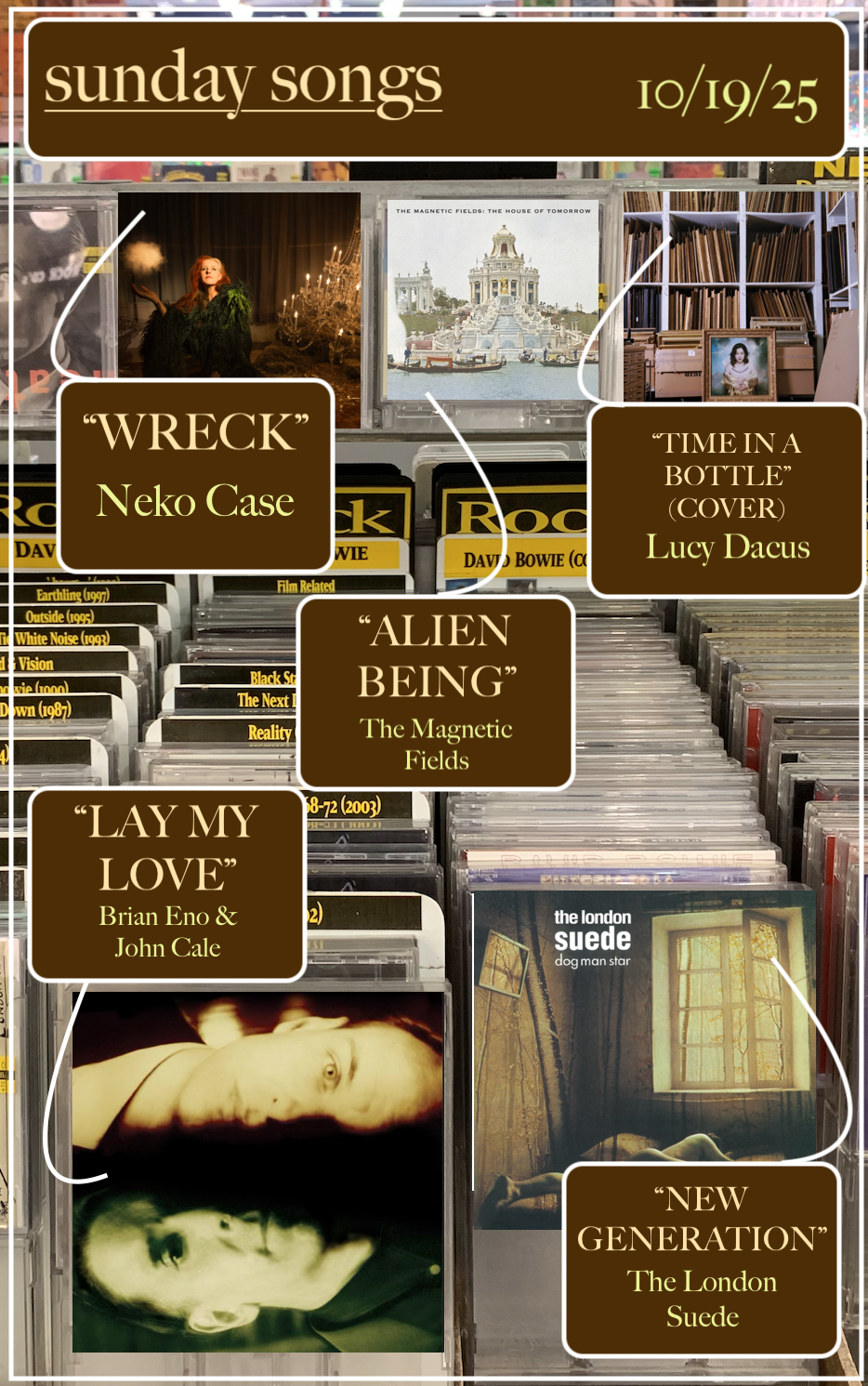
Posted in Sunday Songs

Sunday Songs: 3/3/24

Happy Sunday, bibliophiles! I hope this week has treated you well.
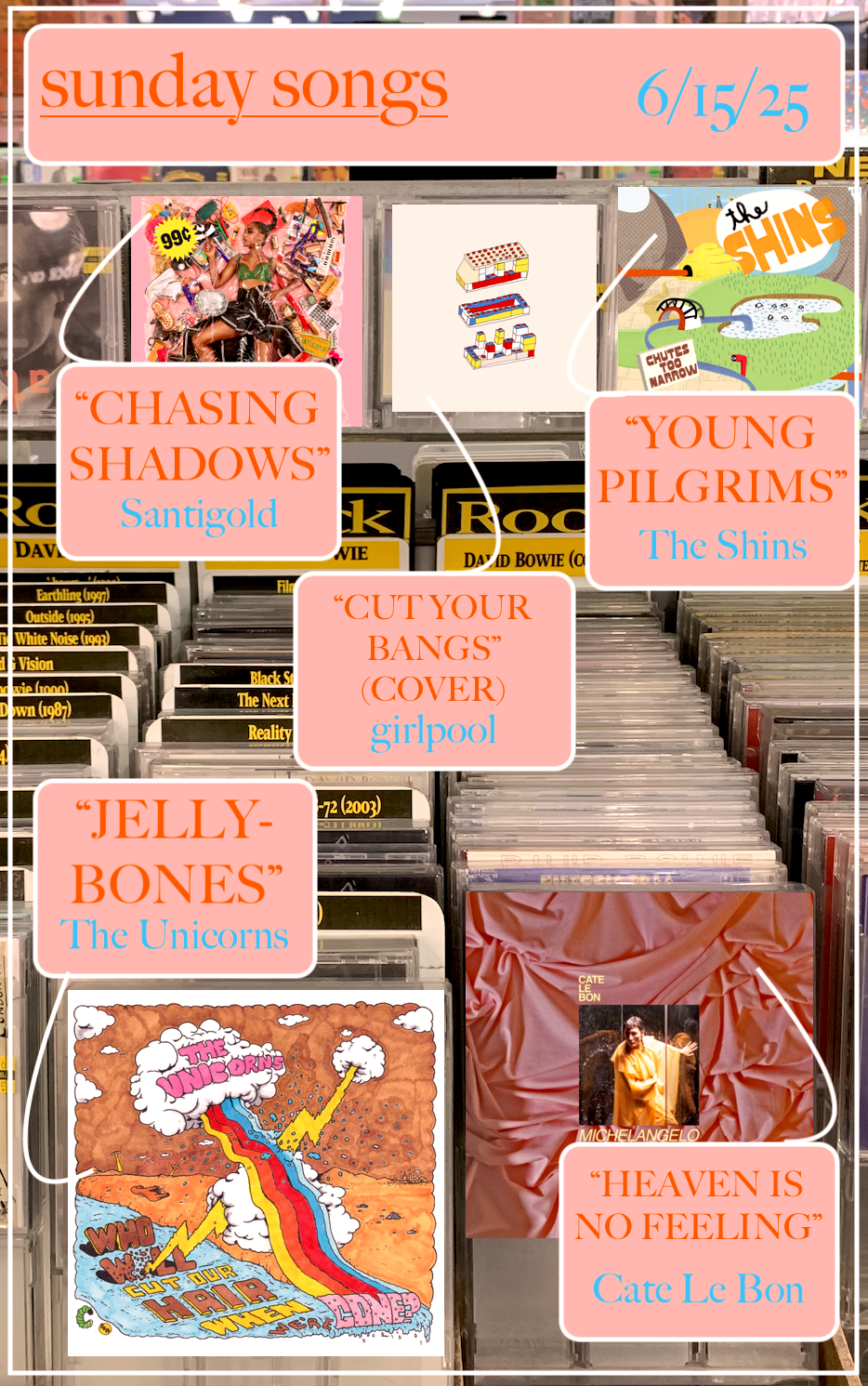
This week: spring green for March, old dogs, and the consequences of the fact that at least 90% of my friends are gay and their music tastes rub off on me.

Enjoy this week’s songs!
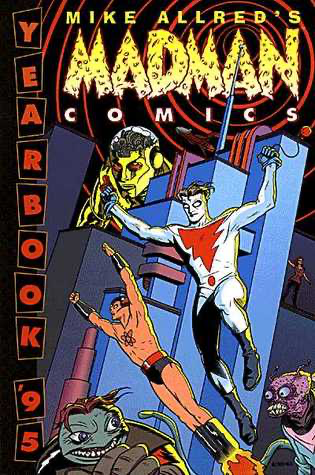
SUNDAY SONGS: 3/3/24

“What Are We Gonna Do Now” – Indigo De Souza

This just in: the sad girl kool-aid has never left my system, and it likely never will. Buckle up.

“What Are We Gonna Do Now” lives squarely in the liminal space of uncertainty, as the title implies. It feels like the tense opening to a film; I could just be stuck on this imagery of the line “and we’re still on call with the nurses,” but I can’t help but imagine an opening shot panning out from the slow spikes of a heart monitor, slowly letting out beeps as Indigo De Souza’s voice gently drips like an IV with that lingering, trailing question: “what are we gonna do now?” Almost everything is gradual about this song, as if the verses were frozen in time: a picture of a person standing on the street while snowflakes suspended in midair decorate the space around them. De Souza’s voice dips and dives into nooks and crannies that only a cat could fit into, army-crawling through the shadows as she describes the wear and tear of a relationship in the middle of turmoil—not necessarily on the verge of a fracture, but in the middle of the storm that they aim to push through together. Exhaustion and frustration tinges it (De Souza’s delivery of “and I’m never cooking up what you’re craving” remains one of my favorite parts of the whole song), but it’s never the kind so intense that would throw their love out the window—it’s the determination of trying to find out exactly how to fix things, and scrabbling around, searching for answers in desperation. Like the ebb and flow of love, the instrumentals swerve from a near standstill to a rousing, guitar-driven chorus and back to quiet again, but after the first verse, nothing is the same; it has the same kind of barely-contained chaos of songs like Wilco’s “Via Chicago” and Mitski’s “The Deal,” with a sense that the anxiety of making amends and grasping for solutions. As De Souza’s airy voice rises like she’s gasping for air after emerging from the ocean, trembling drums and tambourines slip in and out of time, ever so slightly off-kilter and teetering, like one sneeze would send them all into disarray. Unlike the former two songs, though, it never fully gives in, but the unraveling is always at the back of the song’s mind, like an overflow of fearful thoughts as they try to pick up the pieces, but a sense of deep-breathing control as De Souza picks themselves back up.

…AND A BOOK TO GO WITH IT:

If Tomorrow Doesn’t Come – Jen St. Judeone of the few apocalypse novels that really makes it a mission to focus on the human aspect.

“Lord Only Knows” – Beck

Full disclosure: I definitely ruined this album for myself. I knew it was going to be a good album, and it 100% is, but I’d already listened to about 3/4 of it, so there were no surprises left. All of the songs I remembered were already favorites, and the ones I hadn’t yet discovered weren’t as instantly classic as the others (sorry, “Derelict”). But that’s on me. Maybe on my parents for playing it so much in the car over the years, but mostly on me. Whoops.

That’s not to say that Odelay is a bad album at all—in fact, it’s quite the opposite. It makes me miss the old Beck, the one who didn’t scrub everything to an unnecessary polish, but instead made his music like a sculpture made from bits and bobs found in the junkyard—a bit of a tire here, an old, rusty car hood there, some nuts and bolts sprinkled on top for a finishing touch. It’s a collage, but not necessarily in the way that artists like De La Soul or The Beastie Boys make their collages: while their infinitely clever concoctions feel like they oil every sample into a unified organism of unlikely pieces, Beck’s method (for a while, at least) was to make every spare and found part stick out like sore thumbs, but so much so that all those sore thumbs eventually made a hand so absurd that it makes you think how does that even function as a hand? And yet it’s the perfect hand. There’s no other way that “Hotwax” would work without “I’m the enchanting wizard of rhythm.” In fact, the absurdity of all these samples make this mutant (no pun intended) record so memorable—nobody was doing it quite like Beck. Take this song, which starts out with a rasping scream, then descends into twangy and almost docile acoustic-guitar driven rock. It’s not the heat-waved calm that “Jack-Ass” (my favorite track on the album) exudes, but it’s got that same lazy drawl to it, every word curled at the edges like scraps of paper singed by a campfire. Odelay hadn’t yet reached critical mass of clever silliness that made ’90s-2000’s Beck so fun (that would be Midnite Vultures), but he had plenty of fun to spare—I always find myself laughing at the final lines that Beck sings as the track fades out like a car driving out of view, obscured by the wobbling lines of a heat wave: “Going back to Houston/Do the hot dog dance/Going back to Houston/To get me some pants.” You just can’t deliver the word “pants” with that much emphasis and have it not be funny. Them’s the rules. I apparently have the humor of a five-year-old, but evidently, so does Beck, and we’re all the better for it.

…AND A BOOK TO GO WITH IT:

Fortuna (Nova Vita Protocol, #1) – Kristyn Merbethall of the same lazy, summer-eyed charm, but make it space opera (as things usually are on this blog).

“New Slang” – The Shins

Whenever I go to write about The Shins, I always end up going straight for the purple prose. It’s like the way I get with Radiohead, except they invoke something akin to religious fervor in me. I’m too far gone. But there’s something about James Mercer and his perpetually rotating cast of characters that evokes the lyrical side of my writing. Perhaps it’s that part of me connecting to that part of him, because he’s certainly got songwriting chops for days.

“New Slang” has been lingering in my life for decades; I faintly associate it with a period sometime in elementary or middle school. I think it may have been at the end of a playlist I listened to frequently. The Shins are never all that far from my mind, but this was the perfect song to shuffle out of the blue, soft and smiling like an old dog with white patches threaded into the fur of its snout. And I ran right up to pet that dog—god, I missed this song. Hello, old friend. Mercer has long since mastered the art of the old heartstring-tugging acoustic song, and while its as hipstery as it gets, there’s a calmness to it, a serenity like no other. And yet, for all intents and purposes, it’s James Mercer’s equivalent of a pop-punk “I’m getting out of this town” song; the lyrics were inspired by his experiences separating from Albuquerque, New Mexico, where the first iterations of The Shins had tried to take root. Disillusioned by a scene that he described as “macho, really heavy, and aggressive,” Mercer and company branched outwards, where their lyrical folk could have more meaning. “New Slang” was Mercer’s way of “flipping off the whole city,” as he described it (“Gold teeth and a curse for this town”), but there’s something beautiful in how quietly this song shoots its bitter middle finger. It’s not the jerky angst of separation that pop-punk lends to the subject, but instead the moment of looking back into the sunset, knowing that everything you’ve left behind is in the dust with the approaching night. Perhaps that’s where that serenity I feel comes from—the serenity of knowing that what’s in the past is in the past, and that it has no control over your life anymore. It’s underfoot, only tire tracks in the dirt now. You can’t help but feel a wave of peace at the thought.

…AND A BOOK TO GO WITH IT:

Trouble Girls – Julia Lynn Rubinwhile Lux and Trixie’s reasons for ditching their town are more complicated, there’s no less of a feeling that they’re giving it the finger the whole way out.

“The Gold” (Manchester Orchestra cover) – Phoebe Bridgers

Full disclosure: I hate the original version of this song. Hate it. It stinks of that kind of that faux-earnest, country-leaning pop that forced itself down everyone’s throats in the mid-2010’s like a contagion. If this weren’t obviously a breakup song, I know my music teacher would have made my 5th grade class sing this. I hate to relentlessly dog on a song, but also…Christ. This made me throw up in my mouth a little.

Phoebe Bridgers, on the other hand? A godsend. Leave it to her to make the original lyrics, some of which were actually good sound good, and not like they were being shoved down through the godforsaken Mumford & Sons strainer. I will give Manchester Orchestra (posers, they’re not even from Manchester…) some credit: “you’ve become my ceiling” is genuinely a beautiful lyric. But I just wish it wasn’t being delivered with that smarmy, offensive excuse for authenticity. Again: Phoebe Bridgers is our savior. She grounds this song enough to make the turmoil within it feel real. Never once did this song need belting, stadium-rock grandeur: it needed clarity, a sense of calm amidst the chaos, and a steady hand on an acoustic guitar. It’s got slightly more effects than Bridgers usually allots to a song of this tempo, but it hits the balance of flourish and that acoustic sincerity that she’s come to be known for. It’s a breakup song, but although some of those call for grandiose declarations of sorrow, some of them need time to sit in silence and wallow it in, and that’s exactly the treatment that Bridgers gave “The Gold.” I’ll just go ahead and pretend that she wrote it. Yup. Manchester Orchestra? Who is she?

…AND A BOOK TO GO WITH IT:

Vinyl Moon – Mahogany L. Brownesimilarly, this novel in verse deals with the fallout of a relationship built on mistrust.

“Caesar on a TV Screen” – The Last Dinner Party

Before I listened to the full song, I distinctly remember seeing a snippet of this song advertised somewhere on Instagram and thinking something along the lines of “god, this is pretentious.” And I stand by that. It’s still pretentious. But in context, it’s a good listen.

I’ve heard a decent amount of buzz surrounding The Last Dinner Party, usually falling in one of two camps: that they’re out to save rock and roll and bring it back to its glory days, or that they’re just…okay? The former argument, while I like it in concept, reeks of the kind of mentality that “modern music isn’t good anymore” because it’s not all Pink Floyd, which…okay, cool if you like Pink Floyd, but also…creative rock didn’t die as soon as Y2K hit? You just have to look a little harder now that rock isn’t the reigning influence on popular music anymore. In the modern day, we treat rock music like we often treat women: as something to be saved, when all along, it’s been doing just fine, thank you. I doubt we’ll ever go back to those days, and maybe we shouldn’t—there’s no way you can completely replicate a movement in its full, temporal context, and maybe that’s okay. I’m all for bringing back glam rock, but chances are, anything you try to resurrect is going to feel displaced in our modern day context. You can take inspiration from them, but personally, it’s a hard thing to recreate in all of its flesh and blood.

Which…seems like a good deal of what The Last Dinner Party are going for. Frontwoman Abigail Morris has regularly emphasized how much she and the band enjoy being pretentious (if having their debut album titled Prelude to Ecstasy wasn’t enough of an indication), and if that’s what’s bringing them joy, then all power to them! They’re talented musicians, for sure. Weirdly, the other two songs of theirs that I listened to just sounded like…any old indie pop song, which I kind of hate to say, but if you’re all about “saving rock n roll” and just putting out that, then I feel like you have to keep your mission consistent. But you certainly get that feel from “Caesar on a TV Screen.” As far as the structure goes, it feels slightly disjointed, but the more I watch the music video, I get what they’re going for—a song with a distinct, three-act structure, emulating the epic, Shakespearean twists and turns that inspired it. There’s loads of drama to spare, from the rush of strings in the third act to Morris’ impassioned howl of “everyone will like me!” at the song’s exiting flourish, like she’s brandishing a prop sword with every word. It’s dripping with that kind of theatrical, ’70s and ’80s drama—there’s Queen written all over it, and I can’t help but think that some of that drama was informed by Kate Bush. And…yeah, Freddie Mercury, Kate Bush, and David Bowie, the latter of whom the band have repeatedly cited as one of their primary influences, are probably some of the most colossal shoes to fill in terms of musical artistry. But there’s no doubt that The Last Dinner Party are a skilled bunch in their own right—and god, they look like they’re having the time of their lives. It’s exactly the kind of excess, maximalism, and drama that their band name implies.
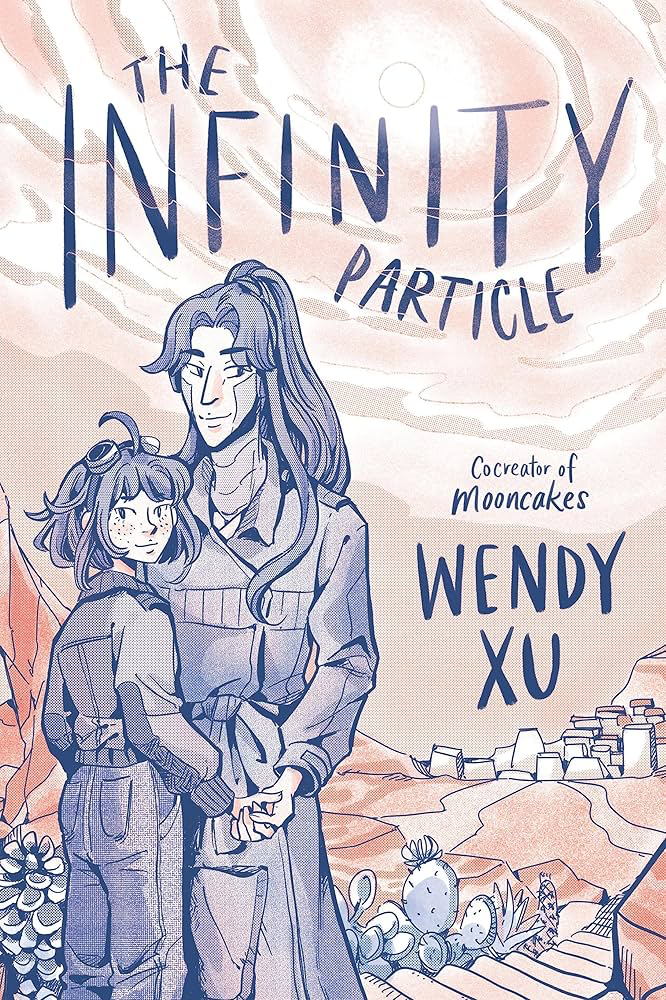
…AND A BOOK TO GO WITH IT:

Strike the Zither (Kingdom of Three, #1) – Joan He“When I was a child, I never felt like a child/I felt like an emperor with a city to burn” HMMM…

Since this post consists entirely of songs, consider all of them to be today’s song.

That’s it for this week’s songs! Have a wonderful rest of your day, and take care of yourselves!