Posted in Book Review Tuesday

Book Review Tuesday (9/29/26) – Sunward

Happy Tuesday, bibliophiles!

It feels like this is my first time reading William Alexander, but technically it isn’t. My first experience of his writing was ages ago; I picked up his MG novel Goblin Secrets when I was about 10 or 11 (I think? My memory’s hazy on it, to be honest) and didn’t like it. But I wasn’t the best judge of taste back then (even if the average ratings for Goblin Secrets are rather low), and plus, Sunward was his first book for adults, and things are bound to have changed.

For whatever reason, it’s so difficult to find sci-fi books by Latine authors. I don’t know if it’s the publishing industry or some other thing, but I feel like for Latine authors specifically, they’re so few and far between. That’s part of why I was so excited to see Sunward out in the wild. I’m so glad to report that although past Madeline didn’t like Goblin Secrets, Sunward is not to be missed.

Enjoy this week’s review!
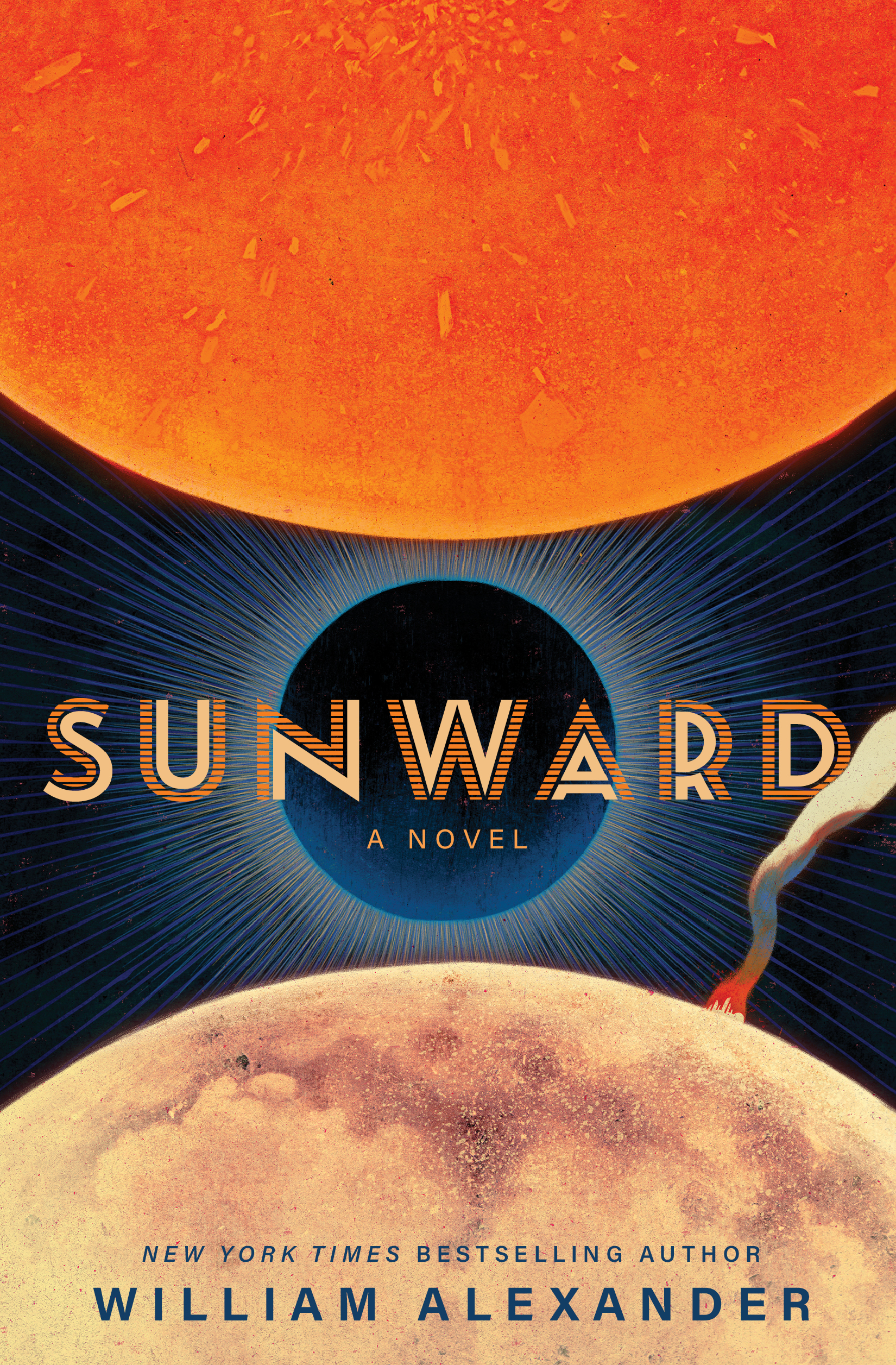
Sunward – William Alexander

When faced with the decision to follow in her parents’s footsteps as interplanetary politicians, Tova Lir chose a quieter life. She works as an interstellar courier, ferrying private communications across the solar system. But her spaceship doubles as a nursery—Tova raises sentient AIs whose consciousnesses are still on the levels of children and teenagers. When Agatha Panza von Sparkles (she named herself), one of her AI wards, experiences the splintering of her consciousness, Tova has to seek answers in the last place that she wants to go: Earth’s moon, where a deadly explosion has been pinned on its robot population. With the help from her former AI wards, Tova must cross the solar system to save Agatha’s mind from disappearing entirely.

TW/CW: racism, child death, descriptions of injury

Sunward clearly felt like a first-time attempt at a sci-fi novel; there’s less emphasis on the hard mechanics of the worldbuilding, and even with the strong AI element, it rarely veers into any grounded science. Even as a certified sci-fi girlie, that’s not a dig at William Alexander in the slightest. In fact, that’s part of why I loved Sunward so much. It wasn’t burdened by any of the rigid genre conventions that some authors adhere to, and it frequently bucked against what sci-fi is “supposed to be.” Alexander was unafraid to make his solar system unabashedly quirky—it almost felt like Wes Anderson’s take on straight-up sci-fi post-Asteroid City, from the precocious characters to the charm of the solar system’s cultures. There’s a sun-based cult on Mercury. The Moon has wacky mushroom architecture. The gang runs into a theater troupe of mostly robots that perform Twelfth Night in sign language. There’s a pretentious poet and her screaming parrot. Some of the more deliberately twee bits (ex. Agatha Panza von Sparkles) did get grating at times, but for the most part, it made for such a delightful novel. It’s just so charming and strange, and I loved every second of being in Alexander’s new solar system.

As a whole, the worldbuilding of Sunward was a mixed bag. But something that Alexander really excelled at in this novel was the cultural aspects of the worldbuilding. Our solar system is flung far into the future, with human settlements on many of the planets familiar to us, but each of them felt so culturally distinct. Alexander did such an amazing job feel like every planet’s people was unique, and even within the planets, giving them different groups and points of conflict. The same goes for his depictions of human-robot relations; they also differed from planet to planet, but different characters had different culturally specific reasons for the positions that they had. In particular, I loved the whole group of people isolated on a spaceship that developed their own sign language after an illness rendered most of the crew Deaf—that was a fascinating aspect, and I loved that unique inclusion in the novel. It was just so clear that there was tons of thought put into this future vision of the solar system, and I loved it.

Of course, you all know that I’m a sucker for found family. It’s old news at this point, but loving stories like this has made me picky about which ones actually feel like family. Sunward, in the end, knocked it out of the park. Tova was such a strong character, and I loved that her stoic outward presence didn’t contradict the love that she had for her robot children and the people around her—in fact, it only enhanced the protectiveness she felt for them. She was a great protagonist, but the side characters made this novel shine even more. Sunward’s dynamic was way more of a dysfunctional found family, which is pretty much par for the course, considering that this novel is basically just a solar system-wide quest to reunite all of Tova’s AI children. Tova’s getting the band back together, and it…doesn’t go to plan. Alexander did a great job of meshing all of the characters’s clashing desires and making this found family painfully chaotic, but still funny. It’s very much “we’ve all been tossed together in this spaceship with a vague common goal, and we all have to tough it out,” but by the end, in spite of all the squabbling, they stick together. That being said, a lot of the characters were too underdeveloped for it to fully feel like a family until the last few chapters. I would’ve loved Sunward to be longer for several reasons, and this was the most prominent one for sure. But for what it was, Sunward’s resonant love for family and sympathy for outsiders made it a tenderly emotional novel.

Unfortunately, that first-time sci-fi writer element that I praised earlier dragged Sunward down in some places. While I was willing to suspend my disbelief for a lot of this novel, there was a complete lack of context for a few too many of the worldbuilding elements. Sunward is set in our solar system, but the only context that Alexander gives us is that we’re “far in the future.” We don’t know the year, how many centuries it’s been since we’ve colonized the stars, and how long that took. Listen—I don’t need all of the answers, but given that Earth has been abandoned for nebulous reasons, we still retain some pop culture from antiquated Earth eras, and there’s some semblance of advanced technology, it would’ve helped to have at least a rough timeline of how we colonized the solar system, and more importantly, why. The same would’ve helped with some context around the human-robot tensions, but that was at least easier to extrapolate from context clues; still, I would’ve liked more than just vibes and ideas that haven’t been hashed over in other robot-related sci-fi. Granted, I thoroughly enjoyed Sunward, but it desperately needed some more ground to stand on in terms of the worldbuilding.

All in all, a heartfelt and quirky vision of our solar system in the future, and the love that brings people together within it. 4 stars!

Sunward is a standalone and William Alexander’s first novel for adults. He is also the author of several other books for children, including Goblin Secrets, Ghoulish Song, Ambassador, Nomad, A Properly Unhaunted Place, and A Festival of Ghosts.

Today’s song:

I’ve finally listened to Cate Le Bon’s entire discography (album-wise)…Me Oh My is my least favorite, but it’s still so fun

That’s it for this week’s Book Review Tuesday! Have a wonderful rest of your day, and take care of yourselves!

Posted in Book Review Tuesday

Book Review Tuesday (6/17/24) – Floating Hotel

Happy Tuesday, bibliophiles!

Old news: I’m desperate for good cozy sci-fi, and most of that desperation comes from the fact that nobody does it like Becky Chambers, but publishers will slap “perfect for Becky Chambers fans!” on literally any sci-fi book with a hint of several people crammed on a ship. It has to stop. Floating Hotel looked like it might actually live up to those expectations, but I was hesitant because I didn’t enjoy Grace Curtis’ debut, Frontier. But I’m glad I gave Floating Hotel a chance, because it was just what I needed!

Enjoy this week’s review!

Floating Hotel – Grace Curtis

The Grand Abeona Hotel knows no borders, no political affiliations, and no galaxy or planet to call home. But for many, the Grand Abeona is their home away from home—a safe haven where nobody cares who you are and why you’re here. Run by Carl, the aging manager who first came to the hotel as a stowaway, the Grand Abeona is home to a vibrant cast of characters, all of whom will have paths that will unexpectedly intersect. And as small mysteries begin piling up in the far corners of the Grand Abeona, Carl and the hotel’s misfit staff must pull the pieces together before the hotel itself is put in harm’s way.

TW/CW: death, torture (both offscreen), verbal abuse

In retrospect, there’s really no better book that I could have read on my Kindle, which has the Grand Budapest Hotel on the case. Some things were just meant to be.

I doubt anyone will ever top Becky Chambers in terms of cozy sci-fi, but Grace Curtis comes close—and that’s exactly why I’m so glad that I gave her another chance. Though it’s not without its mystery and relatively high-stakes subplots, Floating Hotel is a cup of tea for the soul: quiet, observant, and downright warm and charming.

My main issue with Frontier was that it promised action, but delivered next to nothing; it’s not that I don’t like books without action, but when your book’s tagline is “love, loss, and laser guns,” you kind of…have to deliver there, no? After reading Floating Hotel, it’s clear that quieter, cozy sci-fi is what Curtis was meant to write; aside from the rebellion subplot, which was relatively under-the-radar and wasn’t a major issue until the last 20% of the novel, this novel had comfortably low stakes. Although there was a fair amount of turmoil in the empire established in the world of Floating Hotel, you really do feel like the Grand Abeona is a safe haven from all of the ills of the galaxy. There, nobody cares who you are, so long as you have a story to tell.

Another issue with Frontier was that, with all of the characters and subplots it juggled, a lot of the plot points blended together, giving the reader little time to connect with anybody. If my leap from Frontier’s 2-star rating to my 4-star rating of Floating Hotel wasn’t indication enough, Curtis has significantly improved on that aspect of her writing in the space between the two novels! This novel similarly juggles a multitude of characters—many of whom only get one chapter in the vast sea of POVs—but all of them have a unique place in the story. None of the backstories or motivations felt forced, and all of them connected back to how the Grand Abeona has healed them as people; through all of their eyes, whether it’s a waitress, a piano player, or a professor visiting for a conference, you can see just how important of the Grand Abeona is as a safe haven. Floating Hotel is one of the few books with more than 10 (I think?) POVs that has truly worked for me, and it’s a combination of really being able to connect each one to the hotel and its story, and it incorporates other characters organically before we even get their POVs—the interconnectedness was so smooth that I didn’t mind the massive amount of voices displayed.

Curtis clearly understands the cozy part of cozy sci-fi that so many people who market books as “cozy” never seem to get—the near absence of stakes. For the majority of the novel, it’s a very down-to-earth, slice-of-life kind of plot where all of the mysteries are more humorous than troubling; I mean, one of the main subplots of the first half of the novel is trying to find the culprit of an anonymous admirer leaving love letters in the lobby index. And I ate it up. It’s just so gentle!! Is the fate of the galaxy at stake? Absolutely not! The hotel staff is just getting together once a week to watch terrible movies for nostalgia’s sake!! Peak cozy sci-fi right here, folks!! There are queer and disabled characters abound (WOOHOO!!), but neither homophobia nor ableism are plot points at all! They’re just going about their lives!! This is the stuff!!

What both Curtis and Becky Chambers get right about cozy sci-fi as well is that cozy doesn’t necessarily equal apolitical. In the background, there’s plenty of discussions of imperialism with the tyrannical empire crawling with shady cloning and nepotism (take a guess at how those two things tie together…). Curtis isn’t afraid to take stabs at capitalism, environmental destruction, xenophobia (I love the subplot about the empire banning media about aliens because it would compromise the perceived superiority of the human race), and so much more over the course of the novel, and it elevates it exponentially. It emphasizes another truth (for me, at least) about cozy sci-fi, and being a gentle person in general—cozy or quiet does not equal docile or unwilling to speak out about injustice. To quote IDLES, another bastion of kindness: “Ain’t no doormats here/It doesn’t mean you have to bow, or say “Your Highness”/Just kill ’em with kindness.”

All in all, a gentle and masterful piece of cozy sci-fi, and a marked improvement from Grace Curtis’ debut. Consider my faith in her writing restored! 4 stars!

Floating Hotel is a standalone, but Grace Curtis is also the author of Frontier.

Today’s song:

am I ashamed of listening to this on repeat while writing the third book in my sci-fi trilogy? absolutely not.

That’s it for this week’s Book Review Tuesday! Have a wonderful rest of your day, and take care of yourselves!
Posted in Book Review Tuesday

Book Review Tuesday (3/26/24) – The Cybernetic Tea Shop

Happy Tuesday, bibliophiles!

There’s a special place in my heart dedicated to cozy sci-fi, but the sad thing about it is that hardly anybody does it well save for Becky Chambers. I guess it’s hard to reach the bar when it’s been set astronomically high (no pun intended), but I will still read any cozy sci-fi that comes my way, despite the amount of times that the blurb “for fans of Becky Chambers!” has severely led me astray. However, in the midst of my reading slump, The Cybernetic Tea Shop was the perfect novella to tide me over and lift my spirits.

Enjoy this week’s review!

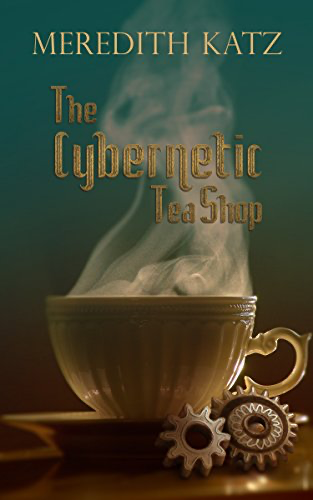
The Cybernetic Tea Shop – Meredith Katz

After the death of her master, Sal, an autonomous robot operating outside of the laws of a futuristic America, runs the tea shop that her master founded. For hundreds of years, she has run it like a well-oiled machine, but something in her program seeks something more. When Clara, an AI technician struggling to make ends meet, walks into Sal’s tea shop by chance, they have an instant spark of friendship—and perhaps even something more. Is Clara what Sal needed all along, and is Sal the key to the similarly vacant space in Clara’s heart?

TW/CW: loss of loved ones (past)/discussions of grief, hate crimes/discrimination (sci-fi)

Since about 2021, I’ve lost count of the amount of times that the tagline “for fans of Becky Chambers!” has let me down. Nobody does cozy sci-fi like her; all of the times I’ve read books with that promise, you get some semblance of found family (which comes off rather forced, in the worst instances), but it often lacks the quiet, tender moments that put the cozy prefix in. However, in that respect, I’m glad to say that The Cybernetic Tea Shop wasn’t a letdown—not without its flaws, for sure, but more than enough to scratch my never-ending cozy sci-fi itch.

I’ve been in a very novella-centered headspace for months, given that I’m trying to write one for class and I’ve been studying how they work for said class as well. One of the foremost concerns we’ve been talking about is how much worldbuilding you can fit into such a small space—often 100 pages or less. The key, I’ve learned, is, after giving your reader the necessary context to make the world feel real, is to only expand on the parts that are essential to understanding the circumstances of your characters. Katz did an excellent job of establishing this kind of worldbuilding, and it speaks to what a novella can achieve in such a small page count! Inevitably, I found myself wanting more of the futuristic American setting that Katz built, but the context we get is only what we need to understand Sal: the creation of intelligent robots, the outlawing of said robots because of ethical complications with intelligence, and the discrimination and illegality of robots in the centuries since. It’s the perfect foundation to set up not just the world, but the conflicts that these characters encounter.

Cozy sci-fi, by nature, often keeps things small; a handful of characters, a singular setting, and all else happening in the background. Novellas, also by nature, typically scale it down as well. The Cybernetic Tea Shop only centers around two characters, but that’s all it really needs; this novella is small in every aspect, and that’s why it largely succeeded. By narrowing down two characters (and their budding romance) and a single, unique setting, Katz confined her world to reasonable limits to explore in a novella; nothing ever felt too convoluted or too large to fit into just over 100 pages, but it didn’t feel too sparse, either. Similarly, aside from the character-driven focus (also the backbone of cozy sci-fi), there’s hardly any plot points, and that was actually a strength of The Cybernetic Tea Shop—in terms of structure, it was practically a Goldilocks of novellas.

However, although the general craft of the novella was commendable, the writing left a lot to be desired. For such a fascinating world and two characters moving through it in a unique way, I wanted so much more from the writing. The prose was rather bare-bones, doing the bare minimum to describe a setting or situation. I wanted so many more descriptions—and genuinely interesting descriptions— of Sal’s tea shop; you can do so many fun things with a tea shop, but I hardly got a sense for what it looked like, what it smelled like, or any other kind of sensory details. Similarly, the dialogue, although it had moments of being sweet, was often bland and stiff, and felt transactional in terms of the prose—just a way to get from point A to point B. Given that the romance between Clara and Sal was what eventually drove the novella, transactional dialogue is the exact opposite of what The Cybernetic Tea Shop needed; the kind of romance that Katz was shooting for wanted to be anything but transactional, but ended up falling flat.

In addition, I found myself wanting more from the characters. Again: cozy sci-fi is a heavily character-driven subgenre, and the evolving relationships between the characters are what make the plot go forward, and not necessarily outside conflict. I did like that Katz only zoomed in on Clara and Sal, but I almost wish that the novella had been all from Sal’s perspective. We get a very detailed and nuanced vision of Sal’s character, from her grieving her long-dead master to her insecurities and fears about being in hiding as an autonomous robot. Clara, on the other hand, was given very little of the same treatment; I would have liked to have seen her have some kind of romantic hurdle to overcome—commitment issues, hesitance, or something along those lines—that would make her something more than just a tool to instigate romance. We did get some of her background, but it didn’t add to much about her in terms of personality—the only part of her character that paired her with Sal was that she’s an AI technician, and therefore in a place to help Sal. With the focus on two characters, it would do Katz a favor to give both of them the fleshing-out that they deserve.

That being said, although Clara’s characterization left a lot to be desired, I did like the more romantic aspect of the plot towards the end of the novella. Even beyond the super sweet asexual/wlw representation (both Sal and Clara are asexual and sapphic!), there was a lot about the romance that worked; the setup of Clara fixing Sal’s programming evolving into cuddling was such an adorable and genius setup, and the resolution that came from it was similarly heartwarming. It did feel slightly rushed, but aside from that, Katz left it in a place where I didn’t quite want more, but was satisfied in knowing that their relationship was bound to blossom. I wanted something cute, and I got something cute, so Katz 100% succeeded on that front!

All in all, a tender, cozy novella with sweet romance and tight structure, but bland prose and half-baked characterizations. 3.5 stars!

The Cybernetic Tea Shop is a standalone, but Meredith Katz is the author of several other novels for adults, including the Pandemonium series (The Cobbler’s Soleless Son, Behind Bars, Heir to the Throne, and Barred Souls), the Sixth Sense Investigations series (Empty Vessels and If Wishes Were Fishes), and many more.

Today’s song:

shoutout to chelsea wolfe for playing this before her show. hauntingly beautiful.

That’s it for this week’s Book Review Tuesday! Have a wonderful rest of your day, and take care of yourselves!