Happy Thursday, bibliophiles! Happy Leap Day too, I suppose.
Already the end of February, huh? Good riddance honestly. Not that I had a bad month, but I’m just ready for all this gross, slushy weather to be over with.
Let’s begin, shall we?
GENERAL THOUGHTS:
February’s definitely still been busy, but now that I’m more used to my schedule and able to keep myself on track, it’s all good. Things are getting into gear with my classes, I’ve been able to make time to write and make art and hang out with friends, and the weather is starting to warm up. Key word is starting. We’ve had snow almost every Friday or weekend without fail for…probably a month or two? Colorado. The meteorological indecision never ends. But luckily, other than that first week, I’ve been able to blog somewhat steadily.
Reading has been similarly good—sadly, most of the books I’ve read for school so far haven’t been my favorites (apologies in advance to all the Jane Austen fans here), but other than that, there have been very few misses! I also shifted my focus to books by Black authors this month for Black History Month, and I’ve read both familiar and new-to-me authors and had tons of fun. I also ended up having two five-star reads in a month, so I’d call it good! I’m glad that I’ve been able to keep up my reading schedule, because there’s so many books I’m excited to read soon! A whole bunch of holds from Libby have been pouring in, all of which I’ve been eagerly anticipating…
Other than that, I’ve just been cranking out tons of writing, drawing here and there, watching Abbott Elementary, BEEF (absolutely SHAKESPEAREAN lemme tell you), The Bear (ngl I’m mostly just in it for the needle drops), and Constellation (WHAT IS GOING ON 😀), and being in a near-constant state of being on my toes since I never know when we’re gonna get dumped with snow.
Oh, and I think we have the best possible end to a month that I’ve had in several months…BABE. WAKE UP. NEW ST. VINCENT JUST DROPPED. WE’RE GETTING THE ALBUM, TODAY’S THE DAAAAAAAAAAAY
APRIL 29TH CANNOT COME SOON ENOUGH.
READING AND BLOGGING:
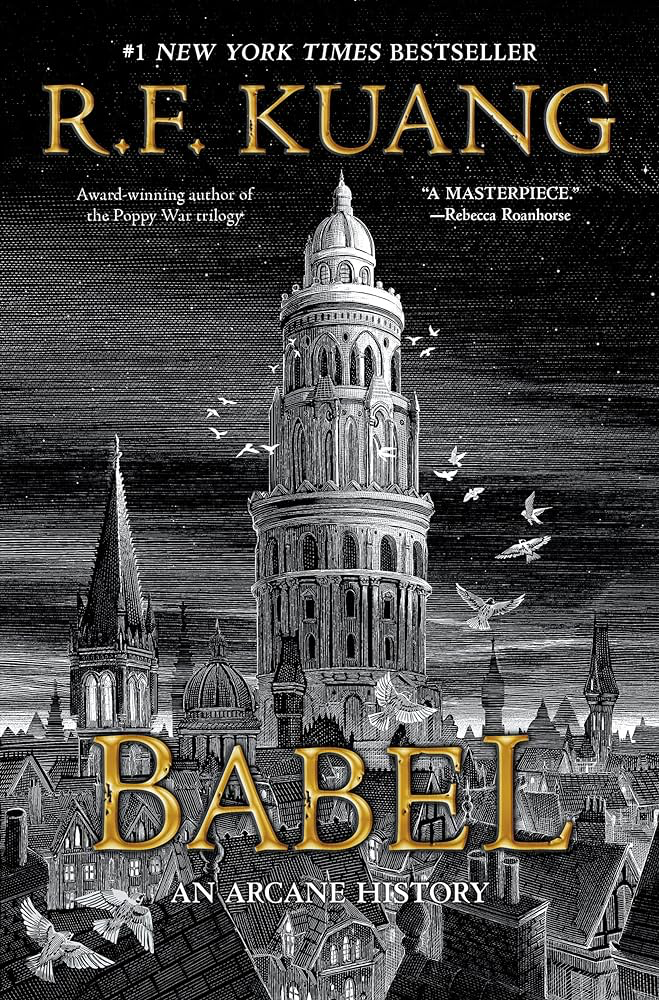
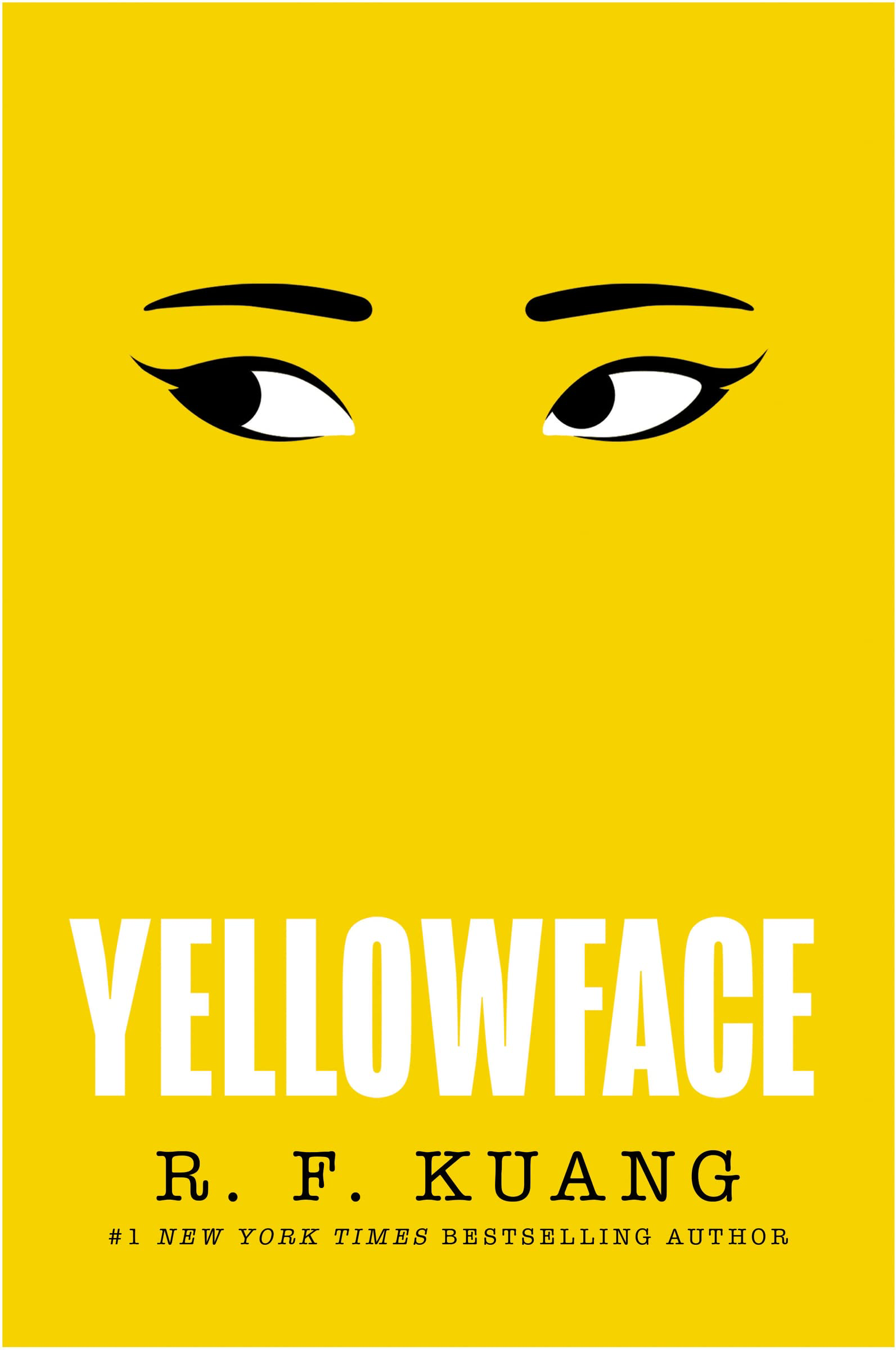
I read 17 books this month! Definitely more than I expected to read, but I’m about at the point in the year where I’m familiar enough with my schedule that I can squeeze in more time for reading. There were definitely a few stinkers in the mix, but I had not one but two five star reads this month, which was pretty incredible! My eternal thanks to Audre Lorde and R.F. Kuang.
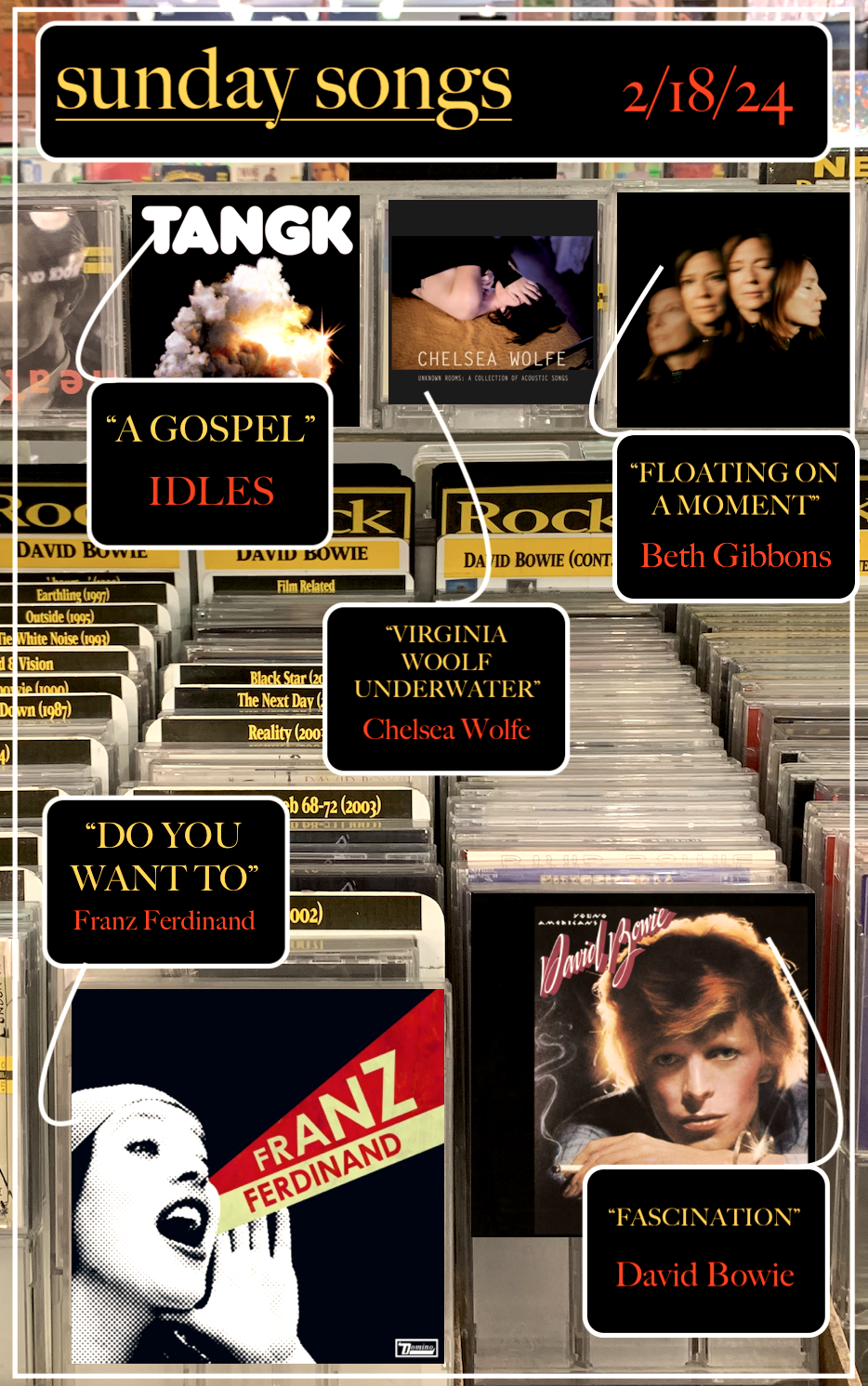
From all accounts, it seems like Franz Ferdinand peaked at this album, You Could Have It So Much Better. But I feel like it’s understandable, on some level. You try to replicate something as iconic as “Take Me Out” or this, and you risk flying too close to the sun. Lightning can’t strike twice. Well, I guess it can, if you count this and “Take Me Out,” but…okay, three times?
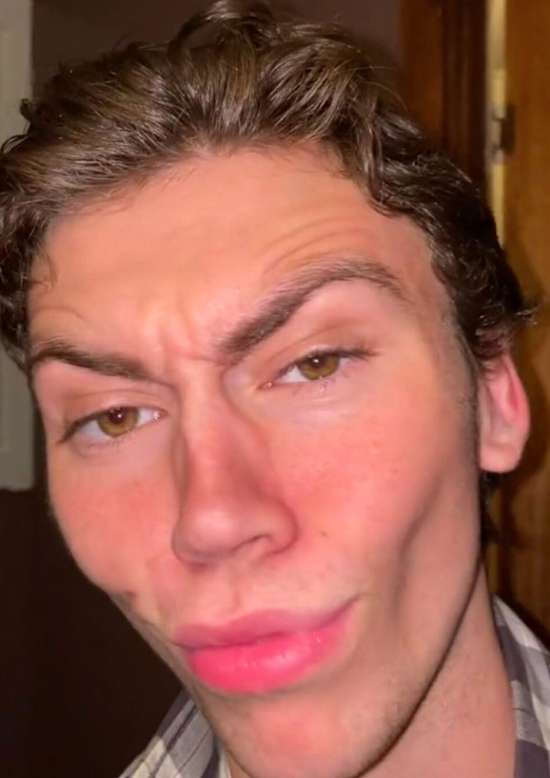
This song. It’s so stuffed with infectious hooks that it’s practically a thanksgiving turkey. It’s pumping with allure and adrenaline, and not a single bit feels wasted. You hear the first 20 seconds and think “oh, that’s a great start to the song,” but lo and behold, every single band member pulls of their top hats to reveal a second, even more spectacular hook to propel it to unforeseen heights. And from that meteoric rise, “Do You Want To” feels like the most delightfully slick, guitar-driven gold mine of 2000’s indie rock. It’s a song that wrenches you by the hand into a nighttime world of leather jackets, impeccable hair, and shiny guitars. Lyric-wise, it’s nothing that the band hasn’t covered, but lyrics were never their legacy—the absolute sheen of it all overpowers the rest of it, and it’s the kind that you can keep on repeat for hours and never get tired of. For a few years, Franz Ferdinand seemed to have perfected that kick of leather-jacket, smooth indie rock, and even though it seemed to have burned out a decade or so down the line, for a moment, their talent was clear—and explosive. The only sin that “Do You Want To” ever committed was not having a third hook hidden beneath their other top hats—the last thirty seconds (“Lucky, lucky/You’re so lucky”) are just begging for at least one more burst of smooth guitar that sounds like it’s been fired out of a cannon. It’s such a frustrating ending. With that kind of buildup, how could they not be extending the song for a finale as glorious as the entrance? Either way, the three and a half minutes that we do have is joyous enough. Almost enough to make me forgive Alex Kapranos for permanently freezing his face in this expression for no good reason:
…AND A BOOK TO GO WITH IT:
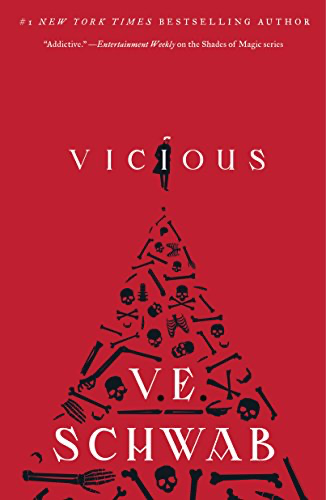
Vicious – V.E. Schwab – come to think of it, a lot of V.E. Schwab’s male protagonists fit a similarly charismatic and boundary-pushing (mostly in terms of magic and science, anyway), but this novel absolutely fits the slick, Franz Ferdinand vibe.
Frustrated that “Do You Want To” ends right before it should theoretically go on for at least two more minutes? Fear not! At least David Bowie wasn’t afraid to make his timeless grooves almost six minutes long.
Welp. I don’t know how Young Americans wasn’t on my album bucket list already, but it sure is on it now. The iconic title track and “Fame” should’ve convinced me, but somehow it was “Fascination” that pushed me over the edge. It reminds me just what I love about the ’70s; the production is nothing but slick and slinky, full of vibrance and a groove that never even comes close to sputtering out for all five minutes and 48 seconds. God, the saxophone. I don’t usually find myself saying that about saxophones, but oh my god. It’s not a song that just makes you feel like dancing—you’re all but transported to a dance floor somewhere, amidst loose ties and sunglasses and warm lights bathing everyone’s faces. Strangely, the only thing that doesn’t scream vibrant or groovy is Bowie’s voice. The more you focus on it, the eerier it feels. Even though his voice was a decade or so from becoming as rich and resonant as he was later known for, it had thinned out even more so that he was in his youth. Young Americans was recorded during the height of his crippling cocaine addiction, and you can hear it in this song more than any other on the album. I could just be projecting, given how he was able to belt out the classic “ain’t there one damn song that can make me…break down and cry?” on the same album, but whether or not it was purposeful to add to the slick, sultry air of the album and his persona, it’s not a stretch to make. His voice often takes a back seat to the sheer power of the backup singers, and despite the seduction written all over “Fascination,” I can’t help but think of the exhaustion that eventually led him to pack his bags for Berlin in a few years’ time. No judgement, but it’s kind of the reason why I’m always a little suspicious of people who say that The Thin White Duke is their favorite Bowie persona. Iconic as all the others in both looks and musical output, but…I don’t know, it feels like a red flag that the Bowie you remember most fondly is the Bowie that was characterized by exhaustion, excessive substance abuse, and behaviors that he later condemned as a byproduct of the worst period of his life. I just feel like if that’s your favorite Bowie…again, no judgment, but calm down, you edgelord. You’re not impressing anybody. Music isn’t automatically deep just because the artist was at rock bottom when they made it.
Nonetheless, it isa truly fantastic, masterful song. David Bowie was just almost incapable of having an album without at least one good song, even if it was the more commercial ’80s albums.
TANGK is a bizarre album in the best possible way. IDLES seem to have partially (but never fully, this is still IDLES we’re talking about) shed the punk sensibilities that they’re known for, and in its wake, Joe Talbot and company have gone on to explore uncharted territory for the band. Tracks like “Gratitude” and “Hall & Oates” prove that they’ll never stop being their aggressively positive selves, but TANGK has given them room to grow. How much of it we can credit to Nigel Godrich is up in the air, but either way, it’s a fascinating evolution.
Emotional vulnerability and healthy masculinity have always been cornerstones of the IDLES image, but never have they been so soft and bare on “A Gospel.” Looking back, the Ultra Mono track “A Hymn” feels like its spiritual predecessor, both in title and nature, but even then, this is the first time that IDLES have ever felt quiet. No screaming, no bass, no rasp roughening Talbot’s voice. “A Gospel” presumably finds Talbot after his recent divorce, solemnly wallowing in the aftermath: “Delete my number/I’m no more/Ignore my eyes, babe/They’re just sore.” (“I’m not crying, it’s just been raining…on my face…”) But true to IDLES’ commitment to love and mutual understanding, he harbors no ill will towards his own partner, gently offering solace and closure instead of the biting words that are all too common in these kinds of songs: “I know you better/I’m your half/Just tell me darling/And I’ll be your past.” It’s sad that it’s so rare that you find songs about relationships that aren’t malicious towards the partner in some way; in some cases, the other party is in the wrong, but we’ve had so many songs about conniving women (from men who are likely the problem) and whatnot that finding a song like this feels like a needle in a haystack. “A Gospel” seems to come, refreshingly, from a place of genuine remorse; you can feel the embarrassment in Talbot’s confessional lyrics, but they’re never overly self-deprecating or, on the other hand, aggressive. It’s a melancholy song, but it feels like the most amicable breakup song I’ve heard. Talbot has repeatedly said that the thesis of TANGK revolves around love, and although “A Gospel” takes it from a more distraught angle, it’s still love—being able to step away from a situation where you know you’re in the wrong, and encouraging a peaceful resolution.
No matter what Chelsea Wolfe album I listen to (you’ll definitely be hearing about her latest next week), it almost always makes me come back to some of the material off of Unknown Rooms. I adore Chelsea Wolfe’s shreddier, overtly goth style, but unfortunately, I drank the sad girl Kool-Aid long ago and I can never come back, so here I am, back at the acoustic album. There’s no doubt that Wolfe can wring out emotion whether or not she’s playing electric or acoustic. She’s at her best when she’s conjuring a swarm of bats from oblivion with a full assault of instrumentals, but the power always lingers. Like my favorite of her songs, “Boyfriend” (also from this album): naught but guitar and Wolfe’s ghostly rasp, it evokes the same rise of power and overwhelming emotion as anything else she’s written. In the end, it all feels cavernous.
“Boyfriend” is plenty bleak, but there’s something about “Virginia Woolf Underwater” that feels so much more so; although it’s just as sparse as any other track on this album, the discordant nature of it all ties the despair of it together, with off-kilter chords punctuated by a tambourine. Only later do the orchestral strings come in, but they feel just as cold as the rest of the song. Alluding to Virginia Woolf’s early death by drowning, the song feels as distorted as voices floating in the water. Wolfe’s voice drifts in and out of focus. The lyrics imagine Woolf’s state: “Everything you’ve owned is gone/Everything you know is wrong/Everyone you’ve loved has left/Everything you’ve touched is dead.” Given Woolf’s struggles with depression and trauma from the second World War towards the end of her life, it’s not a stretch to think that she was thinking thoughts along these lines. That’s what makes the song tragic, but there’s something touching about how Chelsea Wolfe was able to connect to her all these years later, and was moved enough to write her an elegy of sorts. It’s a cross-temporal love letter, a call through the ether to tell not just Woolf that she understands, but for others to relate to and know that they are not alone in their experiences. Only fitting that now, 12 years after the release of Unknown Rooms, that her newest album is titled She Reaches Out To She Reaches Out To She. What better way to sum up Chelsea Wolfe’s brilliant career?
…AND A BOOK TO GO WITH IT:
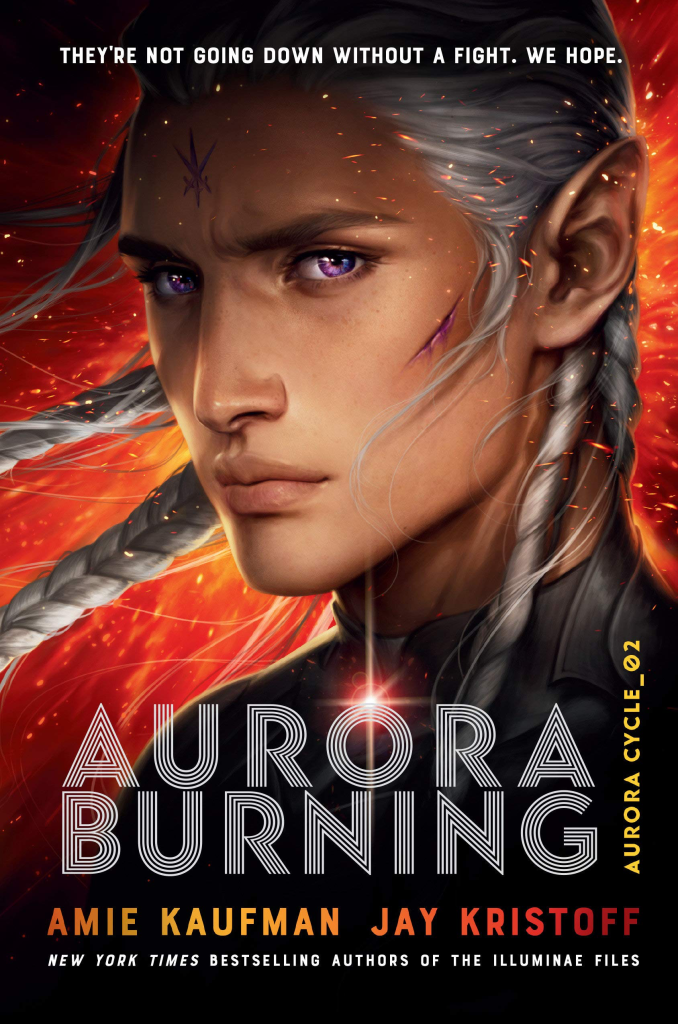
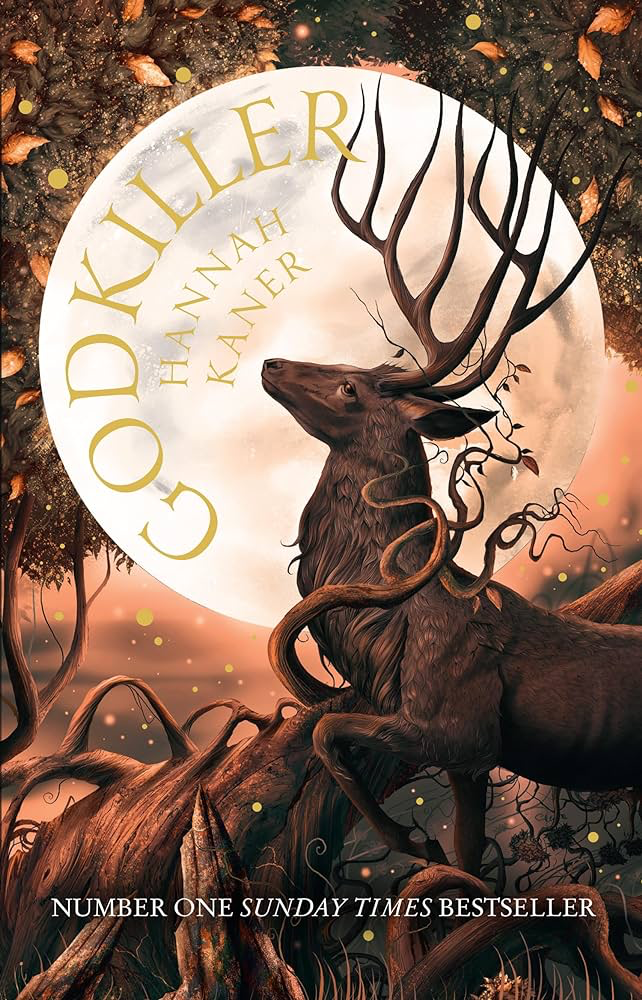
Godkiller (Fallen Gods, #1) – Hannah Kaner – this story similarly begins with Kissen, who has lost everything, and the novel follows her finding her purpose…with some killing gods on the side.
I feel like I shouldbe more invested in the fact that Beth Gibbons is releasing a solo album this May. Then again, I still haven’t picked myself up and listened to Dummy, so I feel like that’s the top priority. The only thing keeping me from it is the Sisyphean album bucket list I’ve created for myself, so we’ll see when I get around to it. Soon, given that at least a quarter of it had me in a nearly unbreakable chokehold in early 2022.
“Floating On A Moment” feels further removed from the trip-hop that Portishead was known for, opting for a more stripped-down form. Synths and samples have been exchanged for acoustic guitars and a choir, and the result is slow and gentle, like water trickling from the gutter. Admittedly, I expected something weirder from Gibbons, but I don’t not like this song—it’s good, but it’s not the kind of slow that’s always compelling (that would be Portishead). It’s good when you’re in the moment (no pun intended) and listening to it, but on the outside…I hate to say it, but it feels a little predictable? The fact that it’s track two on Lives Outgrown seems kind of bizarre unless the whole album is going to be this slow, or if it just has a slow start. What’s weirder is that “Floating On A Moment” is centered around the fleeting nature of time and staying in the present, and yet it’s so slow…I guess it could fit with the image of time slipping through your fingers, but this song feels anything but fleeting. If anything, it’s the slow drip of a memory recalled, an alternate reality pondered, a gradual crawl through the recesses of the mind. All that’s to say that this isn’t a bad song. For what it is, “Floating On A Moment” is as gentle as they come, something to have in the background. Again: I hate that I’m saying that about Beth Gibbons, of all people, but we don’t have the whole picture of Lives Outgrown. We’ll see what she’s got up her sleeve.
Even though the pervasion of AI art in music videos is maddening to me (at this point, it’s less about the fact that it’s AI and more that the “style” just looks objectively ugly), the AI elements of the music video for “Floating On A Moment” suit how the song feels; everything melting into a gloopy mess is a hallmark of AI animations at this point, but that kind of melting, combined with the real-life footage of Gibbons, melds surprisingly well with the slick, melting quality of the song.
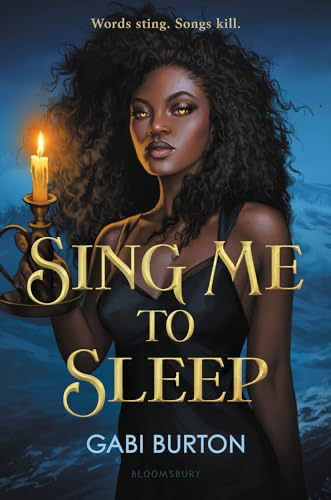
I always love stories about mermaids and sirens, so Sing Me to Sleep instantly went on my TBR when it came out last June. Sing Me to Sleep presented a land-bound take on sirens that proved fascinating, and resulted in a tense, seductive YA fantasy!
Saoirse is hiding a deadly secret. She’s a siren, driven by the urge to kill and seduce, which has made her into the perfect assassin. Her talents took her all the way to the good graces of the royal family of Kierdre, but they don’t know of her true identity—and she must hide it at all costs, lest she incur the wrath of their creature-hating king. But working as one of the personal bodyguards to Prince Hayes has its perks, and soon, Saoirse finds herself questioning her loyalties—and drawn towards a prince who would kill her if he discovered her true self.
I’m not going to bog down this review by starting it with another rant about how jaded I am with epic and high fantasy, but I’ll leave it at the fact that this was the reason that my expectations for Sing Me to Sleep were so average. But I ended up blowing through this novel, and I haven’t done that in weeks—it’s just pure fun.
I won’t lie—I was a little disappointed when I realized that Sing Me to Sleep took place primarily on land when they had a siren protagonist. Mermaids and sirens are an instant draw for me, so I was excited to explore some of those magical aspects and how Burton realized them in her fantasy world. However, once I got into the novel, I ended up enjoying how Saoirse’s siren status affected her when she was confined to land, from the call of the sea every time she came near it to being momentarily thrilled by having her head dunked underwater while being tortured for information. Burton’s handling of Saoirse’s hidden thirst for male blood was similarly well-executed; it set a kind of time bomb of sorts whenever she was around her targets, and made the stakes feel tangible and not just an aside thrown in to remind the reader that she’s a siren. The way that Burton utilized these aspects made for a novel with just the right amount of stakes, with tension in all the right places.
Sing Me to Sleep hinged on the twist of Saoirse, trained to seduce and take advantage of men before killing them to satisfy her bloodlust, accidentally falling for Prince Hayes and not knowing what to do with herself. I was banking on it being a little cheesy (this is YA fantasy, after all), but I really appreciated how slow Burton took it with the budding romance! Not only was the forbidden aspect of it enhanced by the aforementioned handling of Saoirse being a siren, Burton didn’t go headfirst into the romance, like so many authors end up doing while trying to pull off enemies-to-lovers. The initial hatred and disdain felt genuine, and Saoirse’s inner conflict when she realized that she was falling for one of her marks was appropriately a shock to her senses. Although I didn’t particularly care for Prince Hayes as a character, Saoirse’s reactions to him felt true to what enemies-to-lovers should be. I’m interested to see how the romance will play out in the sequel…
Again: I’ll spare you my gripes with epic fantasy as a whole, but unlike of much of the fantasy I can remember reading recently, Sing Me to Sleep had the beginnings of some fascinating fantasy worldbuilding! The novel does a great job of establishing all of the different magical races and subsequently detailing the history of discrimination and subjugation amongst them. Burton did have quite a lot on her plate, but for the most part, she juggled it well, making for a world with limits that made sense and enough hints within to make me want to read the sequel just to see how some of the hidden elements get explored. Half the hard part of worldbuilding is making it something that the reader is actually motivated to read once you’ve done all the heavy lifting to create it, and Burton succeeded on that front!
However, while Burton did well with juggling several moving parts in her worldbuilding, I’m not sure if I can say the same for her characters. Although Saoirse was a compelling protagonist with motives that were appropriately fleshed-out, most of the others—of which there were a ton—left a lot to be desired. Besides Hayes, if we got any trace of their personalities, it was left at one character trait (or physical description) to distinguish them, and not much else. Combine that with the expectation that there were dozens of these characters running around that we had to remember to get all of the plot, and it just made for a mess as far as remembering why any of them were important save for their job descriptions. If some of them had been cut out, it would have solved the whole problem—it’s just a case of Burton biting off much more than she could chew, which is entirely understandable for a debut novel.
All in all, an action-packed fantasy full of tension, forbidden love, and bloodlust. 4 stars!
Sing Me to Sleep is Gabi Burton’s debut novel and the first novel in the Sing Me to Sleep duology, concluded by Drown Me with Dreams, which is slated for release this August.
Today’s song:
That’s it for this week’s Book Review Tuesday! Have a wonderful rest of your day, and take care of yourselves!
Happy Wednesday, bibliophiles! I hope this month has treated you well.
First month of the year is over, whew! I don’t wanna jinx it, but I think the rest of the year will be good.
Let’s begin with the first wrap-up of 2024, shall we?
GENERAL THOUGHTS:
January’s been a good start to the year so far, I’d say. The first half was wonderfully relaxing, what with the joys of how long winter break is in college, so I was able to recharge, catch up on reading, and get some sleep in before school started back up again. As for school, I think it’s shaping up to be a great semester! I’m finally taking some classes for my newly declared women and gender studies minor, and I’ve been enjoying those, along with the amazing English classes I’m taking for my major. It was disgustingly cold for a solid week, but at least my school had the sense to call a delay (would’ve preferred a snow day, but beggars can’t be choosers, I guess), but now it’s…unusually warm? It’s nice to be able to wear a t-shirt in the afternoons, if you ignore climate change.
As I said, January has given me the chance to get back on my old reading and blogging schedule. I still didn’t blog as much outside of my regular schedule (these scholarships I’m applying for aren’t gonna write themselves), but it was much nicer not having to do that outside of schoolwork. Fingers crossed, my workload is reasonable at the moment, so I’m soaking up all the time in the honeymoon period of the semester that I can. The reading batch I had was fantastic, for the most part! I had a streak of no books that I really didn’t like for a solid three weeks, and even after that, it’s mostly been 3-5 star reads all around! Anticipated reads, books I’ve been meaning to read for a while, and re-reads—it’s been a good bunch this month. I put my reading goal at 150 books this month, which my middle school self would probably declare something along the lines of “cowardly,” but to her I’d say to wait until college.
Other than that, I’ve just been catching up on sleep (for the first half of the month, anyway), drawing, watching Abbott Elementary (so comforting and delightful!), seeing Robyn Hitchcock live (dude’s a complete weirdo, but an insanely talented weirdo), and stocking up on hot chocolate and tea in equal measure in preparations for the permanently indecisive Colorado weather. Somebody’s gotta keep us on our toes.
READING AND BLOGGING:
I read 18 books this month! Winter break gave me a good head start for the first half of the month, but I’ve been able to keep up some of the momentum through the end. And it’s been a great batch too—I’ve only read one book this month that I really didn’t enjoy, and I re-read a favorite that got even better on the second go-around!
Happy Sunday, bibliophiles! I hope this week has treated you well.
Last Sunday Songs of the month, and…yep, more dreary colors. At least the actual weather is marginally less dreary. There’s still those gross piles of snow and dirt next to the sidewalk that just refuse to melt, but at least I can feel my hands now. Most of the songs aren’t nearly as dreary, I promise. Mostly upbeat, with some ominous instrumentals thrown in. Gotta keep y’all on your toes.
I’ve given up on listening to David Bowie’s discography in any semblance of order, since I’ve been listening to as much as I can on-and-off since I was about 12. But with every album I hear, I’m still staggered by the places that his experimentation took him, all the way up until his death. His creative juices truly runneth over, to put it lightly.
But, of course, in order to generate said creative juices, one must stimulate creativity and poke at your comfort zone. That’s how many of the tracks off of “Heroes” were born, with help from Brian Eno and his “Oblique Strategies” cards, which he designed as a way to provide musicians and artists with challenges on creative projects. The two each selected a card as they were making this track—Bowie drew “emphasize differences,” while Eno drew “try to make everything as similar as possible.” Seems like a frustratingly clashing set of cards, but I suppose that’s exactly why Eno made the deck and the first place. And, of course, if anybody could make these two concepts mesh…of course. It’s David Bowie, what can’t the man do? The result is “Sense of Doubt,” which feels like it was made to soundtrack the classic “dark and stormy night”—I can practically see bolts of lightning crackling behind the pointed spires of a looming castle as clouds bulge and darken in the distance, bellies full of thunder. Even with the chunky, brighter synth chords that punctuate this soundscape, nothing can make this song sound anything other than ominous; the piano chords feel like something out of a classic horror soundtrack, there’s a faint buzzing overhead that almost sounds like planes in the distance, as though war is imminent, and there’s a squeaky-door creaking that was first just the sound of a pick being dragged across guitar strings, but was later imitated by Bowie with his own voice. Somehow, the mime performance (see above) that Bowie performed to this song brings an entirely different sense of foreboding (never thought I’d say that about mime)—he repeats a gesture of moving his hand, gently rubbing his fingers, like something’s slipping away from them—sifting through the ashes of destruction wrought by his hand; what was sown has been reaped. “Sense of Doubt” echoes like a slick cavern, leaving you to wonder exactly what’s lingering in the darkness, because somethingis definitely waiting to strike.
…AND A BOOK TO GO WITH IT:
Flowers for the Sea – Zin E. Rocklyn – the rain-soaked creeping dread of “Sense of Doubt” would fit right in with this brand of cramped, uncertain horror on a boat full of people you don’t fully trust (including your unborn baby).
It’s been about a year since I first listened to Vespertine, and I’ll continue to die on the hill that it’s a perfect winter album. Every song has the texture of newly fallen snow, and even amidst the frigid temperatures (the kind I’m sure she’s very familiar with, what with being from Iceland and all), it makes you see the glimmer in the gray sky and the diamond sparkle of snow when the moon shines on it. It’s cold, but not in an unwelcoming way.
Next to some of the other tracks on the album, “Heirloom” doesn’t stand out as a major highlight (but to be fair, it’s hard when your competition is “Cocoon”), but it’s so oddly sticky that you I couldn’t help but let it loop when it came on the other day. It doesn’t have the same immediate power as some of its sisters—in fact, even though I will always praise Björk and her endless fount of oddball creativity, but my first thought upon re-listening to this one was that the plinking drum machine and the single, off-kilter synth chord sounded like the times I was fooling around with random buttons on my keyboard when I was seven. Even for her, it’s discordant in a borderline sloppy way, but of course, it doesn’t take her long to turn the car around and craft another successful track. Once the full forest of synths and low, reverberating hums tangle everything together, it feels like the cohesively strange Björk I’ve come to know. Her lyrics are always arcane poetry (or…pagan poetry, even), but even though this one isn’t as dense of a story, there’s still a fairytale-like lilt to the way she rambles about “a recurring dream”; like the album’s undercurrent of body heat amidst winter’s cold, the warmth radiates from hazy dream-images—”I swallow little glowing lights/my mother and son baked for me/During the nights/They do a trapeze walk/Until they’re in the sky.” I almost get a Studio Ghibli-like image of the glowing lights, as if they’d have little pinprick eyes and smiling faces like the warawara from The Boy and the Heron.
…AND A BOOK TO GO WITH IT:
The Wide Starlight – Nicole Lesperance – this time, a mother’s “trapeze walk into the sky” is no dream, and it leads Eli to freezing and unexpected places.
I had the incredible privilege of seeing Robyn Hitchcock on Friday night, and I’m now convinced that he’s some kind of cryptid prophet. Between most of the songs, he’d go on for a while about CDs and salami or vampires or whether or not there was a goldfish in his glass of water or his belief that the population of Britain consists of ghosts (“that’s how Brexit happened”), and that was honestly half the fun of the show—never once did I know what was coming, and it was hilarious. The other half of the fun was how immensely talented Hitchcock is as a musician—you don’t get the sense from much of his recordings, but there’s no doubt that he’s under-recognized as an incredibly skilled guitarist. My dad had been saying it over and over, and I believed him, but it was cemented when we saw Hitchcock with just an acoustic guitar strumming out whimsical hit after whimsical hit. Some of his playing bordered on the speed that I’ve only seen with Flamenco players. He’s hardcore.
In retrospect, this probably wasn’t the best song to pick since he didn’t even play it on the setlist, but I’m trying to be honest about what I’m listening to (and also trying to fit this color scheme), and it’s still a lovely song. Structurally, it’s very simple—only about three chords top, and it hardly ever changes, but it has the quality of rolling hills, a comforting curve that stays soft under your feet; each strum is an anchor, a signpost on a flat, endless road. But as with every Robyn Hitchcock song, his whimsical lyrics always steal the show. This one calls to mind graying, autumnal images—after all, “All of the colors ran out/’Round mid-November-o.” I’ve certainly got…a multitude of questions after the “I remember your locks/And your virginity” (wh…why is that what you’re fixating on, my guy), but…[ahem] that aside, every graying vignette plucked from the depths of memory fills this song up like a gothic scrapbook, full of dancing dresses and dead leaves.
…AND A BOOK TO GO WITH IT:
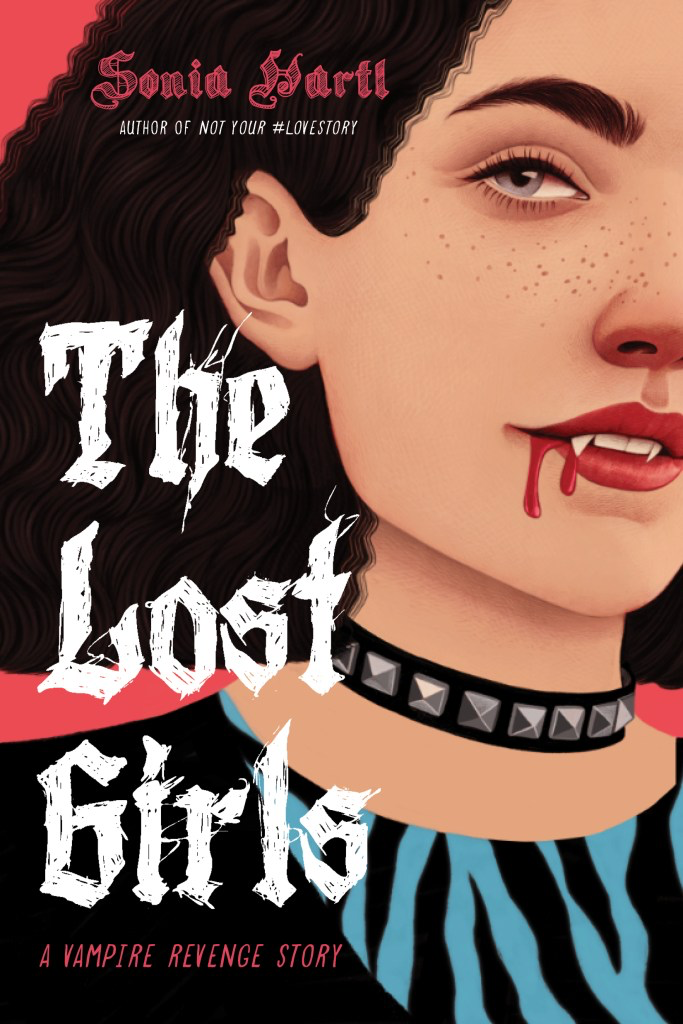
The Lost Girls – Sonia Hartl – “This is the month of the dead/Leaves on your Ouija board” already conjures up some images similar to this book, but this one also has the kind of romance that cements itself in Holly’s mind—vampirism does that to a gal.
I watched part of this year’s Rock n’ Roll Hall of Fame performances for two reasons, and two reasons only: Kate Bush (filled in for by St. Vincent) and Missy Elliott. Neither of them disappointed, especially with the absolutely showstopping, infectiously joyful, and meticulously arranged medley of songs that Missy Elliott and her backup dances performed. The video here doesn’t show it, but the official recording (you can stream it on Hulu) has a moment where the camera cuts to Annie Clark just completely slack-jawed at the whole spectacle, which is the only appropriate response, frankly. It’s glorious. And it’s because of this performance that I remembered that “Lose Control” existed. Setting aside that it’s an impeccably crafted and performed hip-hop song, I forgot that I even knew it in the first place because…well, I didn’t know that I knew it. The very secondit started, the realization hit me like a freight train.
It’s the triangle song. It’s the dancing triangle song from those memes from early 2020.
MUSIC MAKE YOU LOSE CONTROL! MUSIC MAKE YOU LOSE CONTROL!
…AND A BOOK TO GO WITH IT:
A Song of Salvation – Alechia Dow – I feel like this kind of infectious dancing is just kind of asking to be associated with a fun space opera centered around rescuing a space DJ.
Now that I’ve gotten more into some of the history of the band, it…seems like a minor miracle that The Black Crowes have reunited, what with the band having been something of a ship of Theseus with members coming and going for decades, as well as the multitude of hiatus periods and the most recent breakup, many of which resulted from various feuds by brothers Chris and Rich Robinson. Either way, it was recently announced that the two seem to have buried the hatchet (for now) and have started making new music!
Like several bands I’ve come to love now, it took me a while to warm up to The Black Crowes; they were fairly ever-present in the speakers of my family car when I was a kid, but I remember being put off by the Southern rock twang (though I was far from being able to use those words at age six) when I first heard them. And even though I’m still not a twang aficionado, I can appreciate more country-leaning music (not fully country though, I’m not sure if I’ll ever dip my toes that far into the pool), and I know a foot-stomping earworm when I hear it. It seems like these years apart have not dulled the classic Black Crowes formula; other than the subtle, aging of Chris Robinson’s voice, “Wanting and Waiting” could have been plucked straight from the mid-’90s. Time has served them well—they’ve only sharpened their ability to craft a catchy rock song that’s full to bursting—there’s no shortage of instrumental flurries working in this machine, from the very country organ flourish at the beginning to the choir chanting “blood on fire” as the song triumphantly stomps to a close. This one’s a crowd-pleaser in the making; I’m not sure if I’m a big enough fan to want to listen to the rest of Happiness Bastards in full once it comes out, but if the rest of it is anything like this song, it’ll be a hit.
…AND A BOOK TO GO WITH IT:
Hunger Makes the Wolf – Alex Wells – I feel like a fair amount of Black Crowes songs would fit with the Western-inspired aesthetic of the novel—it has that same scrappy, confident vibe to it that makes you want to stomp your feet.
Since this post consists entirely of songs, consider all of them to be today’s song.
That’s it for this week’s Sunday Songs! Have a wonderful rest of your day, and take care of yourselves!
Godkiller has been out for almost a year now, and it’s been on my radar since last December. Fantasy is second to sci-fi for me, especially where high fantasy like this is concerned, but the compelling characters and the lush, queer-normative world drew me in. Sure would be a shame if the second book wasn’t out yet…oh.
In the kingdom of Middren, the worship or belief in gods of any kind is strictly forbidden. The gods of Middren grow bigger and stronger with every human that believes in them, but after a devastating war between the gods and humankind, Middren has deemed them too dangerous to continue living. In the aftermath, the last gods are hunted down by Godkillers. Kissen is a Godkiller; after her family was slaughtered by a fire god, she has taken up the mantle to ensure that what happened to her family never happens to anyone again. But when she stumbles upon Inara, a noble-born child with a minor god bonded to her, she knows that the only way to break the bond without killing her is to go to Blenraden, the last stronghold of the wild gods. The road ahead will be filled with unexpected allies and strange turns, but Kissen and Inara are weary. For a war is brewing once more, and they may be caught in the middle…
TW/CW: loss of loved ones (on- and off-page), fire, blood, violence, animal death, child death, sacrifice (human/animal), war themes, PTSD
It’s incredibly rare that I enjoy any kind of high fantasy these days, especially with the vaguely European setting and medieval technology level. But Hannah Kaner has managed to elevate all of those elements and create something truly special—a queer-normative high fantasy with no trouble being itself in a sea of carbon copies. I thoroughly enjoyed this one!
I’m all for a good trope subversion, and this presents an especially delicious one that even I’m aspiring to add into my own writing. I’ve seen a ton of posts/general discourse about how a lot of creators have shied away from making female characters that match common archetypes, but since many of the archetype’s traits are seen as more masculine, it’s almost entirely male characters that end up making up the demographic. In this case, you have the hardened warrior-type who reluctantly ends up taking a child under their wing who eventually melts their cold heart. It’s a trope I’ve always loved, but I’ve rarely seen it done with female characters. Along comes Kissen, and I’m reminded of how excellent the trope can be when it’s done exceptionally well. She has the classic personality of the archetype, but done in a way that makes her character feel fleshed out—she isn’t just hardened for the heck of it, and you get to see exactly how and why she became that way. Her interactions with Inara, from the initial reluctance (which, again, is developed more than “I don’t need a child around”) to her motherly role towards the end, felt tenderly genuine, and watching their relationship develop was one of the highlights of the book.
You know me. I’m all for queer-normative and disability-friendly sci-fi and fantasy worlds, but Godkiller feels so special precisely because of how high fantasy has historically treated both of those things. For disabled characters in particular, it’s practically an expectation that they have to be bitter and constantly in a state of suffering because being in a medieval setting where their disability is minimally understood automatically makes them a weakling. But Godkiller flips that entirely on its head—not only is the main character disabled (facial scars and a prosthetic leg), but it isn’t a main part of the plot; never do we see Kissen suffering for the plot because she’s disabled, and her disability is seen as something neutral, and something to be cared for accordingly. (There is some discussion about the discrimination that Kissen faces because of her scars, but it’s more on the front of being marked by a curse and not necessarily the scars themselves.) One of the side characters is also Deaf, and not only was she one of my favorite side characters, her scenes were explicitly shown so that the reader could see how happy she was with her wife! The fictional sign language was also treated in a similarly neutral/positive way—there’s even a bit of worldbuilding where Kaner explains that sign language isn’t just used by Deaf or mute people in Middren, but it’s used by pirates on the high seas to communicate when the roar of the ocean drowns out speech. 10/10 worldbuilding. 10/10 disabled representation, and 10/10 disabled people in happy relationships.
The god-killing premise was also one of the main draws for me about Godkiller, hence the name. It could have been easy for a book like this to ride on the premise being interesting and then proceed to do hardly anything out of the ordinary to it, but Kaner’s worldbuilding surrounding the gods of Middren was excellent! Every kind of god is explained, and I loved the wide variety of gods that we saw throughout the novel, from the more formidable ones that caused the war to minor gods like Skediceth, who were just little creatures with surprisingly formidable powers. I also loved the concept of gods tangibly feeding off of belief—the more shrines there are, the more powerful a god continues to be. Not only did this flesh out the worldbuilding, but it made a lot of elements that would have otherwise been forgettable contribute to the overall stakes of the novel.
My only major complaint about Godkiller was the ending. The pacing was solid for most of the novel, but the ending felt so much more rushed compared to the rest of it. The stakes got milder for a significant stretch, but it only felt like they were amped up in the last 5-10 pages just so that Kaner could tie in a thread to the sequel and remind the reader that Godkiller wasn’t a standalone. It was one of those endings that had me turning back to the last page and then back to the acknowledgements and wondering “wait, that it was it? that was the ending?” For how cleverly most of the novel was constructed, it just felt so sudden and sloppy compared to the rest of it.
All in all, one of the better high fantasy novels I’ve read in a while, with lovable characters, a refreshingly disability-friendly world, and neat, fascinating worldbuilding. 4 stars!
Godkiller is the first novel in the Fallen Gods series, followed by Sunbringer, which is slated for release this March. Godkiller is Hannah Kaner’s debut novel.
Today’s song:
That’s it for this week’s Book Review Tuesday! Have a wonderful rest of your day, and take care of yourselves!
Happy Sunday, bibliophiles! I hope this week has treated you well.
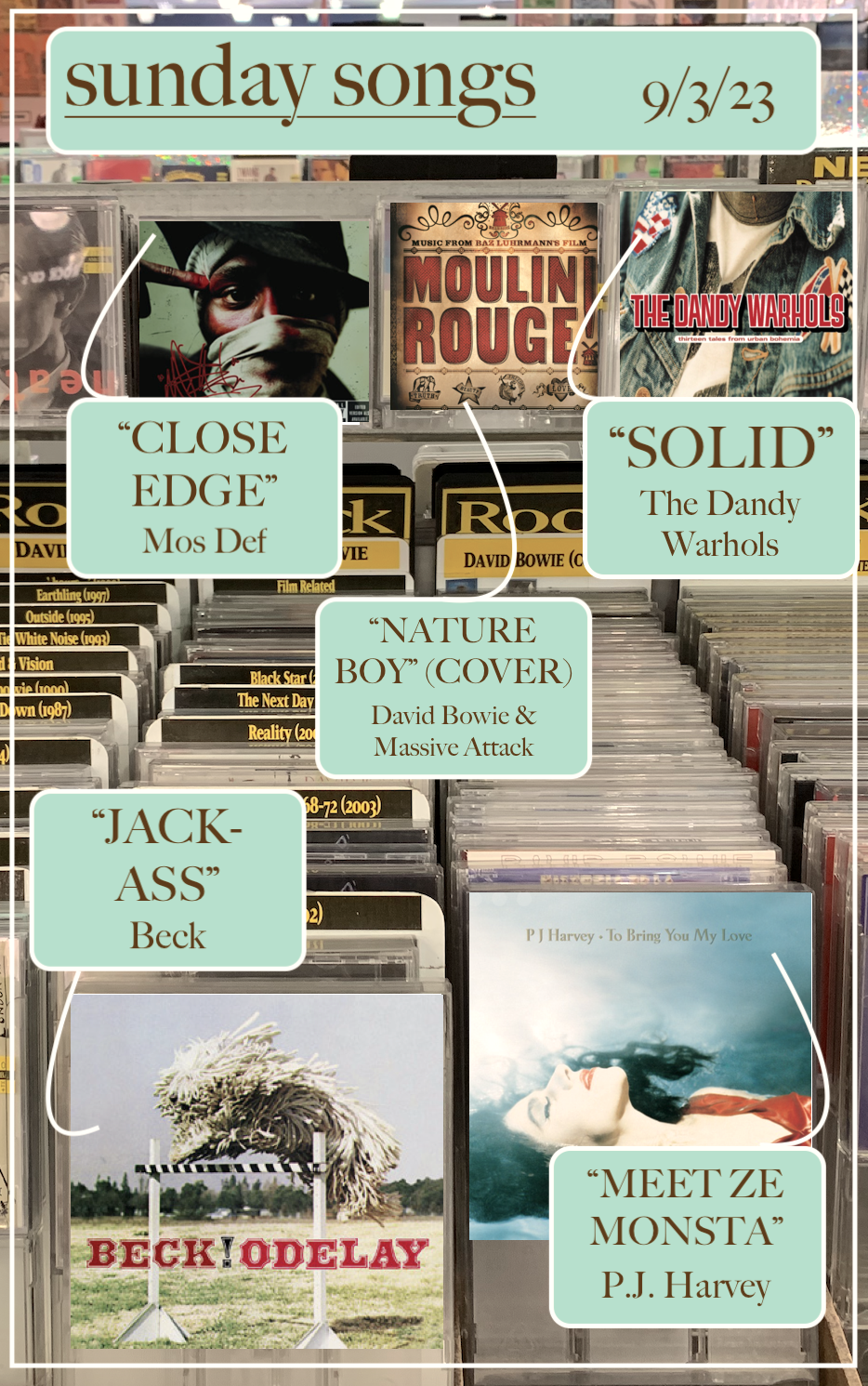
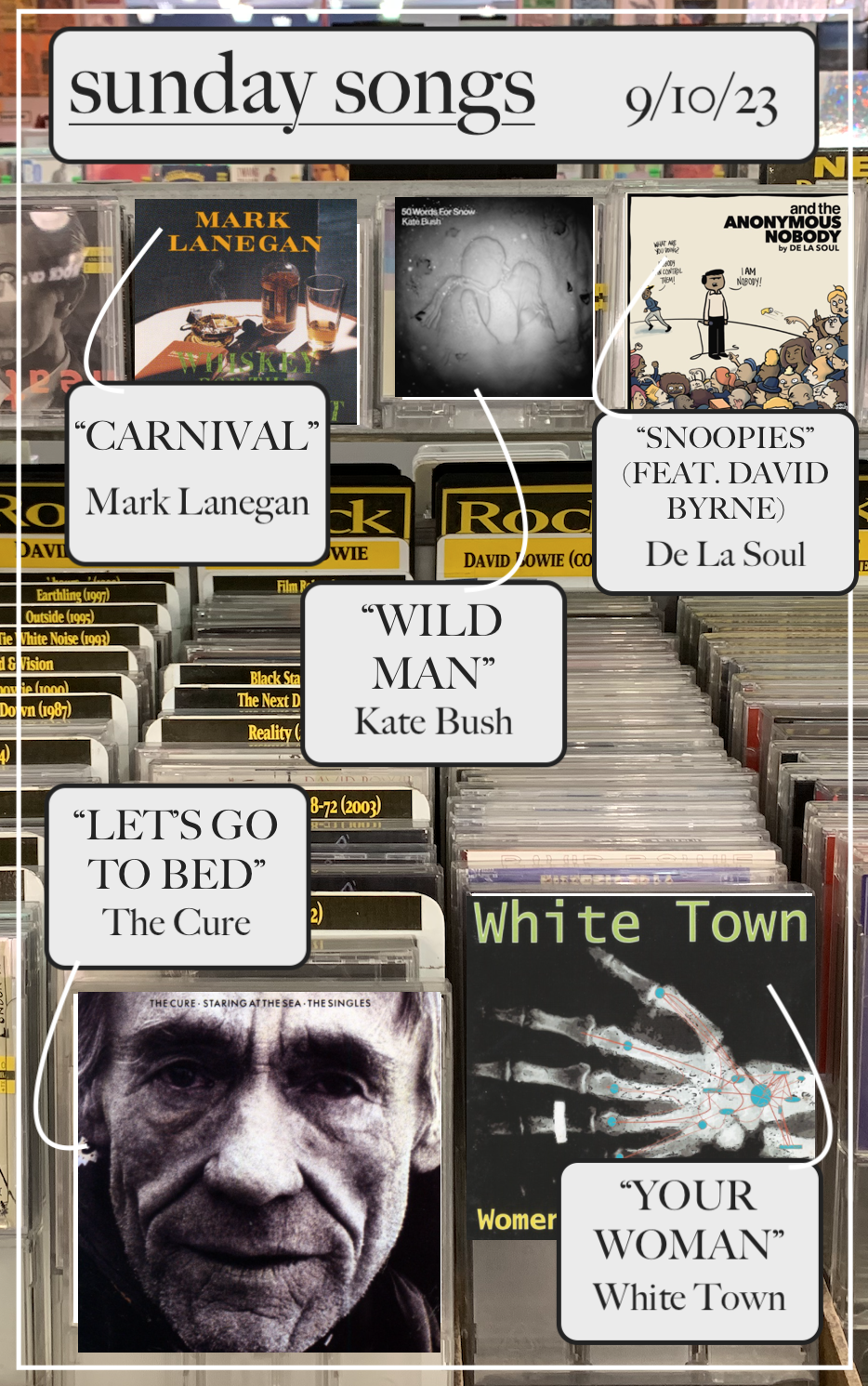
Guess who’s back! Here I am again, and I think I’m almost ready to get back on my somewhat-normal blogging schedule. While I was away, I still made the Sunday Songs graphics, but I just posted them on my personal Instagram; even though I never wrote about them, I think they’re all cool and that you should listen to them, so here are the songs for most of September:
No, sorry, this isn’t the J-Lo “On the Floor.” I doubt that one’ll end up on one of these posts. Listen, I had a group project in my freshman year of high school where my friends and I had to make a version of it about reflexive verbs for Spanish II. You can understand why I’m not too keen on revisiting it.
Instead, have a wonderfully bubbly song that has no connotations about group projects for Spanish class! Huzzah! Back in June, I saw Perfume Genius open for the Yeah Yeah Yeahs, and while nothing can come close to the performance of the latter, I still came away with a few excellent Perfume Genius songs in my back pocket. The grinding indie chug of “Describe” overshadowed the few that I downloaded, but the other day, “On the Floor” came on shuffle right before I was about to pack things up for bed, and I couldn’t help but have an impromptu, one-woman dance party in my dorm room. Under the glow of my rainbow lights (I feel like Mike Hadreas would approve), I felt a rush of fizzy joy, like the pop of a freshly-opened can of soda, bubbling up in me as the notes filtered through my headphones. Ever since, it’s never failed to put a smile on my face. It has the same effect as a lot of Japanese Breakfast songs have on me; from the glistening guitars to the ethereal harmonies in the chorus, every part of “On the Floor” seems to glitter. It’s a song coated in colorful lights, twinkling like the panels of a disco ball as Hadreas sings of what he drescibed as “that maddening, solitary part of desire.” It’s a song laden with no shortage of obsession and longing, but coated in the most joyous façade of pop, impeccably polished. In stark contrast, the video feels…very Perfume Genius, from my limited scope of his work, but doesn’t mesh as much with how I perceived the song? “On the Floor” seems more suited to scenes of a club bathed in pink and purple lights, as opposed to a sweaty Mike Hadreas rolling around in the dirt with a lover that fades away like the breeze (like the crush he describes projecting onto). You do you, I guess.
I don’t have much experience with listening to posthumous albums, save for David Bowie’s Toy, and even in that case, it was more that Toy was fully recorded and then shelved while he was still alive, while Sparklehorse’s Bird Machine was never finished in his too-short lifetime. And even though my reputation for sad bastard music precedes me (be grateful that these posts never originated when I started listening to Radiohead), Bird Machine hurt to listen to. I can’t rightly say if my tolerance for sad music has faded since then, but if I had to sum it up, sometimes it helps to have the feeling of being consumed by sound. For a lot of artists in that vein, the spectrum of all that kind of all-consuming sound is somewhere that you can lose yourself in; on the one end, Radiohead felt like being transported into a haunting, alien landscape, a whole dimension where I could detach myself from the earthly world. (High school does that to a gal.) Right on the other end, Julien Baker’s first album, Sprained Ankle, was just the right amount of raw and vulnerable to feel as though the music was watching over me as I grieved. Even though I will always champion narratives of hope and the value of love, I’m not about to discount the times in which sad music is exactly what I needed. Healing should always be the goal, and I am better for having healed from what Baker was there for me with, but there’s something to be said for, in her words, “giving the sorrow some company.” And even though I only break out the specific “sad bastard music” playlist for that reason, sometimes it’s just simply feeling the sweeping swell of emotion surround you. I feel it with non-sad music as well (ever heard of Hunky Dory? Talk about sweeping), but the thread here is that I can’t not feel everything—good and bad—like a tidal wave some days. Thus, I gravitate to songs that make me feel that way. Big feels need company.
But here, it’s hard to lose myself. It’s not that it isn’t “sweeping” by my wobbly definition, but a song like this is almost impossible to separate from Mark Linkous’ circumstances. “Kind Ghosts” is a truly gorgeous song, with buzzing-insect effects on Linkous’ voice and a distorted, ethereal hum that permeates every note like moss growing over stones. And like an insect, it has the delicacy, the fragility of a dragonfly’s wing, a transparent wavering that catches the light. Like most of his other works, the lyrics balance woodsy, quaint nonsense with plain ol’ gut-wrenching devastation. “I came to drink more whiskey than water” and “I’ve swallowed a phantom/And I forget how to breathe” leave no room for misinterpretation, but even such sense-defying oddities as “I hung my wolves up high in the pine trees/Like cannonball sails they wouldn’t stay hung” sound just as plainly tragic. I doubt any listener could ever fully separate this lyricism from the absence that Mark Linkous left too soon in this world; some of Sparklehorse’s similarly atmospheric works of art are the aforementioned kind I can lose myself in, but Bird Machine will always be a hard record to swallow. Painfully beautiful, but necessary nonetheless.
Here. Come sit next to me. Grab a tissue. Send your thank yous to Mark.
Alright, who ordered the weirdest possible palate-cleanser?
I’ve had the honor of being the learning assistant for a science fiction class this semester, and that’s meant that I’m getting to read and watch a whole lot of wonderfully bizarre (and nostalgic—we love my man Ray Bradbury 😔✊) stuff. Early on, we watched this for homework; I had a vague feeling beforehand about remembering seeing something about giant, blue, French aliens with soulless red eyes somewhere (probably on one of my Pinterest deep dives), but nothing could have prepared me for this movie. The animation is nothing short of gorgeous—all hand-drawn, incredibly detailed, and full of vibrant color at every turn. But it’s…yeah, it’s more than a little bit of a trip. There’s random interludes with alien creatures eating each other (I’m certain that they all would have given me nightmares as a kid), an uncomfortable amount of alien boobs, and far too many lingering shots on said soulless red eyes with nothing behind them for comfort. It’s beautiful, but in the way that makes your head hurt—I’m still not entirely sure what I watched, but…I liked it? Yeah, I liked it.
Nothing added more to the surreal nature of Fantastic Planet more than Alain Goraguer’s score; most of it is a recurring motif of experimental jazz, which really does put you in the mind of “what did I just watch?” It all screamed Pink Floyd to me, which, since Dark Side of the Moon came out in the same year as this movie, makes sense. I can’t help but think of “Time” whenever I hear anything from this score. This movie seems like it would be on that kind of prog-rock wavelength. That’s what made it the perfect atmosphere for this film—the proggy, spacey theme that runs through the whole score marries perfectly with the oddball, alien landscapes that we traverse through. It’s a bizarre movie. I certainly don’t regret watching it.
Looks like somebody was enjoying himself in quarantine, huh? Enough to crank out at least thousands of possible combinations for this album? Seriously, go play around with the Movie of the Week section of the Shakey Graves website. My first go at it generated a cover of David Bowie’s “Five Years” as a part of the soundtrack… :,)
But even without all that insanity, Movie of the Week is nothing short of excellent. Even though the second half lags slightly, I wouldn’t call a single track off this album bad. But, sadly, it’s really the first half that carries it—aided by the album’s singles, the fantastic “Lowlife,” and this absolute stunner of a song. Clocking in at nearly 7 minutes long, none of that length ever feels real—if I had to make an estimate, it sounds more on the 4-minute side. But I’ll always be grateful that we get all 6:40 of “Limbo” in all of its utterly cinematic weirdness. The beginning is deceptively unassuming, clunking in with distorted piano chords and Alejandro Rose-Garcia singing each word with gentle restraint. But right around the 1:10 minute mark, “Limbo” erupts into a shock wave of humming synth that could only find a place elsewhere if elsewhere was the outer space exhibit in a museum. It’s a song that looms, casting its shadow over your in waves of colorful static, blinking in and out of focus. And even if this song didn’t explicitly reference limbo, it would still be fitting for the soundscape that Rose-Garcia has created; between the discordant marriage of every instrument and effect and the gremlin-ish, artificial harmony alongside his voice, it really does feel like slipping in and out of some wild hallucination, toeing the line between reality and delusion. Shakey Graves knows the unsteady cradle of limbo, and they play it well.
I heard this song in the background of a video, and after I found out that the band was called Daddy Issues, I was prepared for the rest of the song to not be up to pat. We get it, you edgelords. And although I’m still rolling my eyes at the band name, the timeless catchiness of this song makes it slightly better. Guess that’s just the kind of thing you have to name your punk band. It was bound to happen eventually.
“Veronica” feels like a song lost in time. It has that bright, pop-rock flavor that could have made it a cult hit if it was included in an 80’s teen movie. But it lacks just enough polish to make it land somewhere between 90’s riot-grrrl, grunge, and alt-rock. It wouldn’t have even been out of place sometime in the 2000’s, spoken in the same breath as Giant Drag. And here we are in 2015, where Daddy Issues married all of those elements and came out the other side with this. In theory, it shouldn’t stand out from any other song of its breed. You know the drill: She’s Veronica. She’s gorgeous. She’s fierce. She’s a little crazy. She’s off to steal some hearts. She’s gonna take over the world. You wanna make her your girlfriend. You wanna make out with her. But there’s just something about Daddy Issues that makes you believe every word of it, even though you’ve heard it a thousand times. Maybe it’s the mercurial lilt of Jenny Moynihan, effortlessly shifting from delicate high notes to delivering the grungy punch this song needs. Or maybe it’s the way that it all feels so precise, like it was floating in the ether all along, waiting to be discovered. Either way, it’s an undeniable earworm. All of you directors trying to put together a soundtrack for a teen movie: get over here, what are you doing?
And there’s no way that this whole song isn’t a Heathers reference. “She’s teenage suicide”? Come on.
Since this post consists entirely of songs, consider all of them to be today’s song.
That’s it for this week’s Sunday Songs! Have a wonderful rest of your day, and take care of yourselves!
Happy Sunday, bibliophiles! I hope this week has treated you well.
Sparklehorse also posthumously released “The Scull of Lucia” this week, and it would’ve fit the color scheme, but I just know that it’s gonna make me too sad to write about. Love you, Mark, but I’m trying to preserve my sanity.
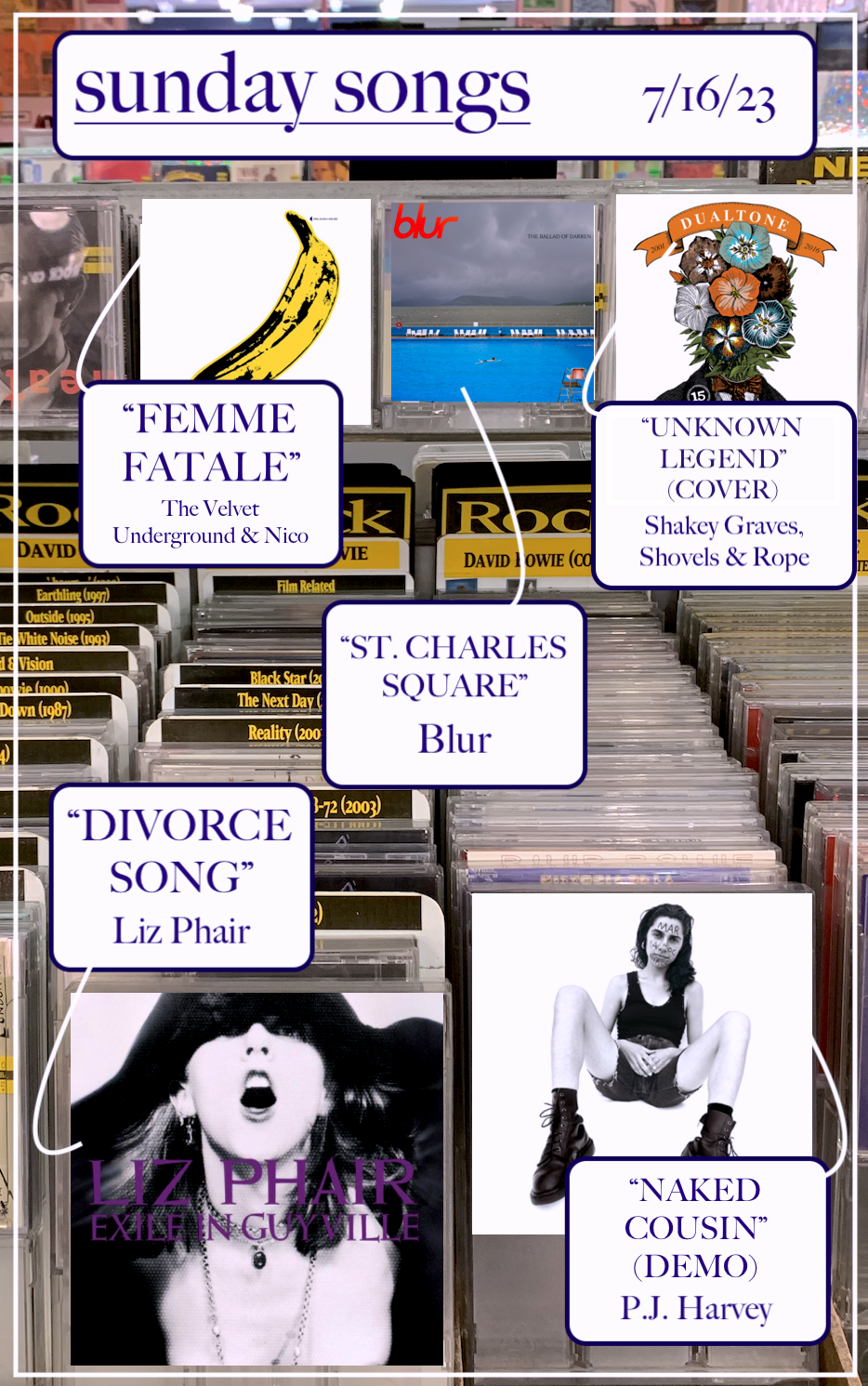
I guess this week’s batch is starting out on a sour note, but I just have not stopped listening to bits and pieces of this album for weeks, so get Liz Phair’d. My advice, though: as we are in the peak of road trip season, this is the absolute worst song to put on a road trip playlist, as good as it is. Regardless of whether or not you’re in a romantic relationship on said road trip, I feel like it’s just a horrible omen either way.
Speaking to Rolling Stone, Liz Phair said that she wasn’t surprised that this song became a fan favorite from Exile in Guyville: “…[‘Divorce Song’] has that deadpan delivery. It’s an ordinary person doing ordinary things…the song is really just about relating to another person. It feels like an action-packed song. You’ve done a lot…but really it’s just two personalities trying to be intimate and bumping up against each other on a road trip and that’s all that happens.” The concept of lyrical storytelling is, for some reason, always equated to having some grand, lofty narrative, as if stories about ordinary things somehow don’t make the cut. But that’s exactly what makes “Divorce Song” such a powerful song—it’s a linear narrative about a road trip gone south, and yet it packs the same punch of a narrative spanning multiple songs. You can tangibly feel the trapped heat of the inside of a car, the humid desolation of a cramped hotel room, and the sinking realization that “it’s harder to be friends than lovers/and you shouldn’t try to mix the two/’cause if you do it and you’re still unhappy/then you know that the problem is you.” Against the backdrop of Phair’s turmoil, small details create a painfully fleshed-out picture (“and it’s true that I stole your lighter/and it’s also true that I lost the map”), the images of this song feel as real as if I were watching them unfold on a movie screen; that really should be the bare minimum, but honestly, in the age of mass-produced, filtered music dominating the airwaves, this song feels like a breath of fresh air, even 30 years later. (Not too sound like a boomer there. I’ve just been inundated for the past few days because Taylor Swift was in town this weekend.) Contrary to Pitchfork contributor Scott Plagenhoef’s assertion that Exile would come off as dated to this generation because we’re so used to explicit sexual content in mainstream music…it’s not dated in that sense? At all?? Sure, we are exposed to more of it, but that doesn’t diminish the value of one of the first female artists to bring these kind of raw, unapologetic, and honest lyrics to the indie rock scene and owning it. It’s not like it’s impossible to see that empowerment shining through, whether it’s in the context of 1993 or 2023.
Seriously, Pitchfork…whose grand idea was it to have a man write a review of the 15th Anniversary Edition of Exile in Guyville? Not that men can’t write reviews of music by women and vice versa, but this one? The album that specifically came about to critique the boy’s club of indie rock? That’s just a war crime, if I’ve ever seen it. The review is from 2008, but…no, they had definitely had women on board at Pitchfork by then. There’s no excuse. Jesus Christ…
uhhhhhhh tommy shelby sigma male octillionaire grindset cillian murphy moment
No, I haven’t watched Peaky Blinders yet, but my parents recently going through the whole show (and getting close to finishing it) has me almost convinced to watch it?? If anything will convince me, though, it’s the absolutely loaded soundtrack: Radiohead? The White Stripes? The Kills? I mean, come on. Perfection. And this too!
And, it’s reminded me that I need to get into P.J. Harvey. Somehow, I always forget about her, but every time I hear a song of hers, it’s instantly gripping, whether it’s the grinding jumpscare of “Rid Of Me” or what is hands down the best cover of The Rolling Stones’ “(I Can’t Get No) Satisfaction” ever performed, along with our queen Björk:
If that doesn’t make you want to worship the ground that they both walk on, just for a moment, I’m not sure what possibly will. The sheer power they both wield.
Again, there’s no excuse for me not to get into more P.J. Harvey right this minute, except for my pileup of albums waiting to be listened to. But for now, I at least have this song—and it’s a demo? How is this a demo?? Lucy Dacus, on her episode of Amoeba Records’ YouTube series What’s In My Bag? picked an album of Harvey’s 4-track demos, and remarked about how she wished that her demos were “remotely shareable” in comparison. Either way, I’m so glad that this demo is out in the world. Even with my limited P.J. Harvey knowledge, raw power is what characterizes what I’ve heard of her music—raw-throat screaming, instrumentals that bear down on you like an onslaught. “Naked Cousin” is just that; the slightly grungier (not necessarily grungy in the Nirvana way, but in both the musical and non-musical sense of the word), grimier sound quality coming from the demo enhances its atmosphere. It’s an eerily sinister song, the dirtiness of the instrumentation matching the lyrical image of discomfort that Harvey weaves: “I hate his smell and/I hate his company, but/But most of all, I hate that he/He looks just, just like me.” It’s a deeply uncomfortable song—Harvey really enhances the tangible feel of someone lingering over you, the feeling of their hot, sour breath pressing against your skin. She can certainly create an atmosphere, even if it’s the last one you’d want to be surrounded by.
Since I’ve started working at the library, I’ve made a playlist for myself to listen to while I’m shelving books. It’s all soft, slow songs, both so I don’t get distracted and so it matches the atmosphere of the library. So there’s a lot of Phoebe Bridgers, Radiohead, Wilco, some older St. Vincent, et cetera. “Femme Fatale” went on there almost immediately, but not just because it fit those criteria: nothing makes you feel more like a character in an indie movie than listening to The Velvet Underground in a library.
Nico’s vocals take the lead on “Femme Fatale,” leaving Lou Reed to the backing vocals on the chorus. I already talked a little about the power of her voice back when I first listened to The Velvet Underground & Nico back in April with “All Tomorrow’s Parties,” but those two songs together are emblematic of her vocal range. Next to the looming, encroaching presence on the former (although it comes later in the album), “Femme Fatale” sees Nico dipping into a gentle whisper, her voice fading to an almost imperceptible hiss at the very end of each chorus as she says “hear the way she talks.” As massive of a presence as her famously low, resonant voice is, she slips into the quiet so easily (see also: “I’ll Be Your Mirror”), and yet retains the same cavernous quality—even as her voice drifts through the enchantingly gentle intro of guitar and tambourine, you can instantly feel it in your chest, making your bones vibrate. Or maybe the latter is just the mixing of this song—famously headphone-vibrating, if the YouTube comments are any indication. It’s the perfect fit for a film—the only movie I can seem to find with it is Bandslam, which I’ve never heard of, but Wes Anderson really needs to get on it. Past time that he used it for something, although maybe he filled his personal Nico quotient in The Royal Tenenbaums?
One Nico song seems like a small quotient, but who am I to judge Wes Anderson? He’s Wes Anderson, after all.
Gather ’round, my fellow Americans, let us all cry and watch videos of Blur performing in Wembley Stadium, and hope for the best that they’ll just get over themselves and announce a North American tour. Grab your tissues. Cry with me.
But this. THIS. This is the Blur that I’d been missing! “The Narcissist” was a solid song, but “St. Charles Square” is a much better showcase of their talents—and brimming with so much more creativity. Unlike the former single, which sounded as though it could be a solo Damon Albarn track, “St. Charles Square” finally feels like Albarn, Coxon, James, and Rowntree have reformed as a truly cohesive unit, their unique talents blending as seamlessly as they did in the 90’s. Whether or not Damon Albarn’s “OI!” at the beginning is a callback to “Parklife” (aaaaaaaaaall the people) or just him being British is up for debate, but even if it is nostalgia bait, you bet I’m biting it. You guys have no idea how many times my mom and I have car-danced to that song. I’ll gladly be a nostalgic shill for a bunch of white, middle-aged British guys. And finally, finally, Graham Coxon’s signature guitar playing has returned to the spotlight! His riffs are as power-laden and punchy as ever, and he’s adopted an echoing tone that calls back to David Bowie at the very beginning of the 80’s, rightas he released Scary Monsters (And Super Creeps).And this song is full of scary monsters and super creeps of its own—the delightfully eerie lyrics are rife with “ghosts come back to haunt me” and “something down here/And it’s living under the floorboards/Its grabbed me round the neck with its long and slender claws.” With all that to work with, it’s no wonder that Albarn’s flair for showmanship shines in this track: I’d be lying if I told you that his piercing, werewolf howl at 1:40 didn’t make me giddy on every single listen. It’s a spooky delight all the way through.
I didn’t know until I started looking into this song that it was a cover—Shakey Graves was the main draw, I only knew of Shovels & Rope because they always come up as similar artists when I search for Shakey Graves on Apple Music, and I can only remember one (1) Neil Young song off the top of my head. And normally, I wouldn’t be one for folk-country songs describing a blonde woman riding through the desert on a Harley-Davidson that rhymes “diner” with “finer” (in reference to said woman), but, again: Shakey Graves.
iTunes has this song labeled as Shakey Graves & Shovels & Rope (and my English major brain wants to separate them with a comma or “and,” not a second ampersand, for the love of god 😭), but I was surprised to see that YouTube lists it as Shovels & Rope feat. Shakey Graves; if anything, there’s far more Shakey than Shovels—Alejandro Rose-Garcia is clearly taking the lead on vocals here. (I guess that this song was also included on Shovels & Rope’s covers album, Busted Jukebox, vol. 1, so that’s probably why.) Either way, the harmonies on this rendition of Neil Young are my main draw. Rose-Garcia’s voice has this distinct, irreplaceable rasp to it, rough and raw-throated at the edges, but never losing its power. Combined with the husband and wife duo of Michael Trent and Cary Ann Hearst (is it bad to ask who’s the shovel and who’s the rope in this relationship?), their voices form a resonant group of harmonies, with Hearst’s high notes elevating the thrill of the music and Trent providing a steady wall for it to anchor itself against. Whether they’re hitting the highest of high notes or gently drifting away from the chorus with their whispered repetition of “the air she breathes.” Again: I’m not usually one for the folky covers with the obligatory harmonica solo at the end, but Shakey Graves will convince me.
Since this post consists entirely of songs, consider all of them to be today’s song.
That’s it for this week’s Sunday Songs! Have a wonderful rest of your day, and take care of yourselves!
Happy Sunday, bibliophiles! I hope this week has treated you well.
Today marks almost a year since I’ve been making these Sunday Songs graphics, and about six months since I’ve started writing about them on here. But if there’s on thing I’ve learned in this year of collaging album covers on Previews, it’s this: all roads lead back to David Bowie.
“Quicksand” has been an immensely special song to me, from the time I was young and my dad still had to speedily turn the car volume down in time for little me to miss the word “bullshit.” Even back when I didn’t even have the capacity to understand anything about what an ego is or the fact that it was capable of death (“knowledge comes with death’s release,” cue the “aah-aah-aah-aah” that always scoops my tender heart out of my ribcage), this song felt like the encircling warmth of a cosmic pair of arms, infinite in their reach and love, rocking me to sleep like a baby. The iconic lyric “I’m not a prophet or a stone-age man, just a mortal with the potential of a superman” has been my life’s mantra ever since I comprehended it. Learning it on guitar made me love the song down to its molecular structure—chances are, if you can rattle off any old chord off the top of your head, it’s in there somewhere. Even the painful, finger-twisting ones—especially the finger twisting ones. And yet David Bowie makes them all sound like they were all destined to be played together since the dawn of time—all of them. It’s the kind of song that was fully-formed from the very start, as Athena splitting out of the skull of Zeus, armed with a ragtag, motley crew of guitar chords. It feels like listening to the heartbeat of the cosmos itself.
So it’s so strange to think that it wasn’t always quite as fully-formed as I thought—in parts, at least. With the release of Divine Symmetry (a line fittingly taken from this song), a boxed set containing Hunky Dory in its entirety, plus the demos and live performances that eventually fused to form my favorite album of all time. Among them was this—a raw, stripped-down version of one of my favorite songs of all time. “Quicksand” was always destined for the epic grandeur of the album version, but there’s a different brand of poignant tenderness to this demo. With only David Bowie’s voice and the heartbeat-thrum of his acoustic guitar, you can hear the subtle differences—lyrics swapping places, Bowie straining to reach the high notes in the higher key he originally plays this song in. There’s an urgency to every strum, as though he knew this song had to see the light of day, but he had to put his heart into it, whichever way it came out. And that’s the power of this song: Bowie never took the easy way out. Every version is in tune with the resonant hum of the universe.
Never in my life would I have anticipated liking a xylophone solo this much. The words “xylophone” and “solo” make sense separately, but you rarely ever hear them together, right? And yet, against all odds, it’s so good. Imagine being at a Violent Femmes concert and the crowd going wild over a xylophone solo. That’s the dream.
A lot of what I’ve heard of the Violent Femmes works against all odds, from the infamous story of how the cover of their debut, self-titled album came to be to everything about their unique, abrasive sound. All you’ve got here is some guitar, bass, and a drum set that was originally part washbasin (plus said xylophone). The nicest you can necessarily say about the vocals is that they’re abrasive. It really is the essence of D.I.Y.—separately, there’s no way that it should work together and sound good, and yet it does. We all know “Blister in the Sun” nowadays, right? Whatever formula that Gordon Gano and company worked out in the early 80’s with this album, when everybody started turning to synths and capitalism, they nailed it. Every song I’ve heard off of this album feels timeless, but “Gone Daddy Gone” feels like it could’ve come from anywhere—a tiny, under-underground garage in the 70’s, somebody sick of all of said synths and capitalism in the 90’s—there’s something so ubiquitous about this song, from its frustrated, high school lyrics that Gano delivers with a sinister sneer, to the unexpected patchwork of sound. And of course, whoever’s idea it was to add a xylophone solo to this song deserves an award.
I’ve been overdue to talk about Here Come the Warm Jets and Brian Eno for a few weeks, but I am nothing if not pointlessly devoted to trying to create a nice color scheme. But yes, I finally got around to listening to it after putting it off for several months (blame it on the whiteboard…oh, I still need to post those, don’t I?), and I’m a fan! Even though nothing rivaled “Cindy Tells Me” (which is, for me, a hard thing to achieve—my absolute favorite Brian Eno song, now that I think about it), there wasn’t a single song I didn’t like. I’m a sucker for any album where each track bleeds into the next, giving the illusion of a continuous, long song—almost a symphony: some of my favorites albums do it, or at least do it partway (see: Hunky Dory, OK Computer), and in the case of Here Come the Warm Jets, it added a cohesive layer to an already meticulously weird album. There’s Brian Eno doing weird voices, there’s guitar freakouts, and there’s uptight-but-glam 70’s weirdness all over the place. It’s an album.
“Baby’s On Fire” stood out immediately—I remember hearing the name somewhere and looking it up a few years before I listened to this album in full, but I’d all but forgotten about it until a few weeks ago. It has a deliciously creeping, building feeling to it—with every thrumming piano chord and drumbeat, it feels like something is sneaking up on you, casting a long, thin shadow over your body before coming in to pounce. And pounce it does, with an extended, purely 70’s guitar freakout that, if you break the separate parts of it, easily takes up half to 2/3 of the song—as it absolutely should. It’s fantastic. I find myself vibrating in my seat every time I listen to it; Robert Fripp’s frenetic playing sounds like the auditory version of fabric being torn apart, all at once ragged and full of hypnotic color. Add that to Brian Eno’s distinctly nasally, theatrical vocals, and you’ve got something that feels like the shadow of a hand on the wall—a hand with long, glossy acrylics on the nails, the kind that look like claws. I suppose that’s what ‘s tearing through the fabric, but I doubt that would be very conducive to the kind of guitar insanity on this song. In this house, we love and cherish 70’s guitars.
I swear that my motive for downloading this song wasn’t just to create a playlist consisting of songs that have the same names as other songs. It’s twins with “Tin Man” by Shakey Graves, if you were interested. I named the playlist “Attack of the Clones.” Execute Order 66.
I’m very new to feeble little horse, but “off-kilter” was the one (hyphenated) word that immediately came to mind when I first listened to “Tin Man.” Every note just seems slightly tweaked from the next—almost pleasant sounding, but just enough to make you furrow your brow. Lydia Slocum’s dry, droll drawl creeps over the withered vines of notes, just as creaky and rusty as the the famous Tin Man himself before he got some oil in his joints. But unlike the Tin Man, this song doesn’t need any oiling or polishing; like the Violent Femmes, it exists in its own, uniquely abrasive space, not existing to please, but baring its prickly porcupine quills proudly. Like Lisa Germano, Sparklehorse, and others before them, feeble little horse is content to make their songs look and feel like a collection of rusty spare and found parts. But where the former two is the dread you feel upon finding said spare parts, “Tin Man” is the sudden prick of stepping on something sharp sticking out of the pile. It’s almost like Sid’s cobbled-together, mutant toys in Toy Story—despite all of its parts from other toys, it crawls along the carpet just fine. And maybe it’s an insult to compare this great song to that baby doll-spider monstrosity, but given the aesthetic of the music video, I don’t think Lydia Slocum and company would be too insulted.
I didn’t intend for this one to end on such a somber note, I promise. Just the way I thought the album covers went together. But I came upon this song on accident—as dear to my heart as Wilco is, I haven’t listened to Being There all the way, despite the claims of an unknown employee at Amoeba Records in San Francisco that it was “the best Wilco album.” BOOOOOO. DUDE. Not to rag on a complete stranger several states away that has no idea that I exist, but respectfully…Yankee Hotel Foxtrot exists? Summerteeth? My guy??
But I’m not here to rag on Being There, either. It’s the same record that gave us “Misunderstood,” after all, and proof that screaming like a death metal frontman is just one of the great Jeff Tweedy’s many talents. Every member of Wilco is proof that they’re really a jack-of-all-trades band; they’re primarily known for generally being on the stranger side of alt-country, but they can do it all, from Nels Cline’s famous, spidery guitar solo on “Impossible Germany” to the pseudo-Thom Yorke surprise of “Art of Almost.” The thing is, loving songs like those almost makes me forget that they’re just as apt at creating gently melancholy folk numbers: “Red-Eyed and Blue,” anyone? And as with every Wilco song that I can think of, Jeff Tweedy’s sharp, ever-clever songwriting is the clear star (no pun intended) on “Sun’s a Star.” What’s more Tweedy than taking a look at one’s own folky breakup tune and declaring “and there’s this song/in a minor key/hey, how could it be/such a cloudless tune?” I’m nothing if not a sucker for a sad, acoustic song, and leave it to Jeff Tweedy to scratch that itch. And there’s nobody else that could translate walking away into a single contraction—somehow, the name “Sun’s a Star” feels like an apathetic shrug of the shoulders. You’re not as special as I thought you were. Oh well. Sun’s a star.
Since this post consists entirely of songs, consider all of them to be today’s song.
That’s it for this week’s Sunday Songs! Have a wonderful rest of your day, and take care of yourselves!
I’ve had a few pride-related book tags that I’ve been waiting to do since last June, so I figured I’d break this one out right about now. I found this one over at The Corner of Laura, who also created the tag.
Rules
Link back to the original creator (The Corner of Laura) and link back to this page (otherwise, the original creator won’t get a notification).
Thank whoever tagged you and link back to their post
(Optional) Use the graphics and don’t forget to credit the original creator (Text prompts are at the end of the tag if you’d prefer to use those)
(Optional) Tag 5 or more other people.
Let’s begin, shall we?
🏳️🌈THE LGBTQ+ HISTORICAL ICONS BOOK TAG🏳️⚧️
SAPPHO: Greek poet known for her lyric poetry which is believed to describe homoerotic feeling | A book of poetry (or written in verse)
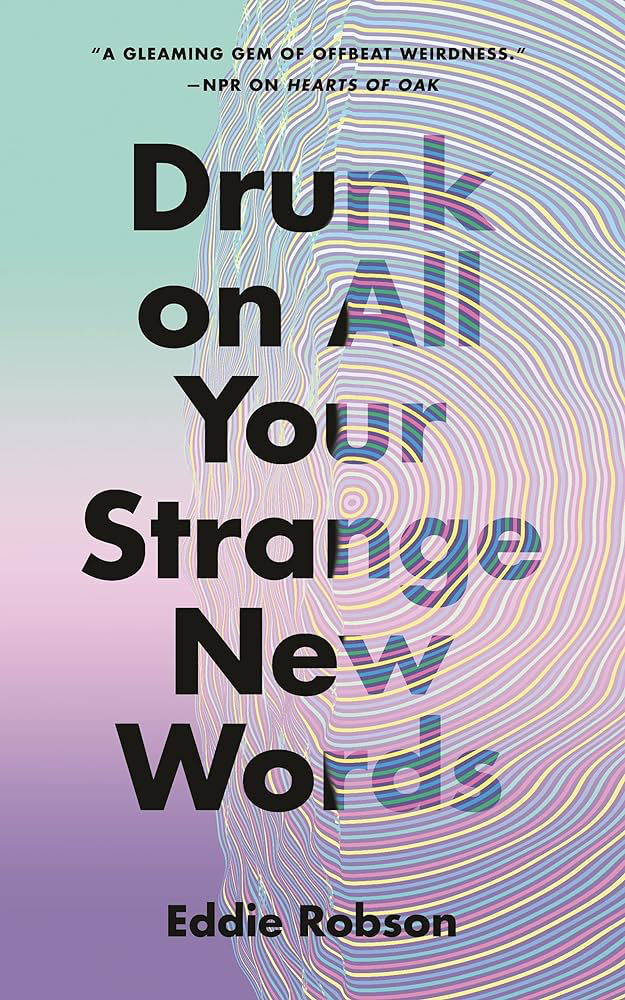
Nothing Burns as Bright as Youis a beautiful novel in verse about the complicated relationship shared by two Black queer girls.
ALAN TURING: Mathematician known for cracking the Enigma code but who was persecuted for his homosexuality| A character who deserved better
As sweet as The Girl from the Seawas, I found myself getting so stressed out about how Morgan treated Keltie in the beginning. She just kept pushing her around and neglecting her, and while it did resolve itself neatly and they fell in love, I still felt so bad for Keltie. She’s just an adorable creature, dude, she doesn’t need all that human baggage…
GILBERT BAKER: Creator of the rainbow Pride Flag| The most colorful book you own
Skyhunterhas one of my favorite book covers in my collection—it dazzles me every single time I look at it!
ANNE LISTER: Landowner, industrialist and considered to be the first modern lesbian| A book written as a diary (or includes diary entries)
I have fond memories of reading the copy of I Capture the Castlethat my mom bought for me while I was out sick years ago, and re-reading it several times since. It’s seriously the sweetest, most charming book—a big thank you to my mom for turning me on to this one.
MARSHA P. JOHNSON: Prominent figure in the Stonewall Uprising and founder of several LGBTQ rights organisations| A character you’d would want fighting at your side
Sona and Eris from Gearbreakersare both formidable in their own ways—either one (or both) would be an easy pick to have fight at my side.
ALFRED KINSEY: Creator of the Kinsey scale| A book set in academia
I haven’t read a whole lot of books sets in academia (and I’ve never gotten the hype for dark academia, so I tend to steer clear of those), but Leigh Bardugo never misses, so obviously this prompt has to go to Ninth House.
LUCY HICKS ANDERSON: First trans woman to defend her identity in court| A book where a major scene takes place in court
It was so hard to think of any books besides To Kill a Mockingbird (Laura’s answer) with a courtroom scene, but I read Merunot long ago, and it has a particularly climactic and poignant courtroom scene—a futuristic one, but a courtroom scene all the same.
OPEN PROMPT: Your choice | A book that inspires you
Of course, I’m going with David Bowie as my LGBTQ+ historical icon of choice—who else? He’s been a hero of mine for years, and a hero to so many. Even in the 60’s, before he rose to stardom, he was already breaking down barriers, and continued to do so in all aspects of his career thereafter. Calling somebody “ahead of their time” is thrown around quite often, but I really think that the world wasn’t ready—and wouldn’t be ready for today—for Ziggy Stardust. And personally, I can’t think of a better beacon of hope to me than him; I started getting into his music at a time when I was struggling to find my place and looking for a light at the end of the alternative weirdo tunnel. And here was Bowie, wearing dresses in the 70’s, openly declaring his bisexuality, and creating a cosmic persona that touched the hearts of so many people. I’ve certainly felt like an alien all my life, but he, if anyone, is to credit for teaching me to embrace that feeling—to quote him, “oh no, love! You’re not alone.” From one bisexual alien to another: thank you.
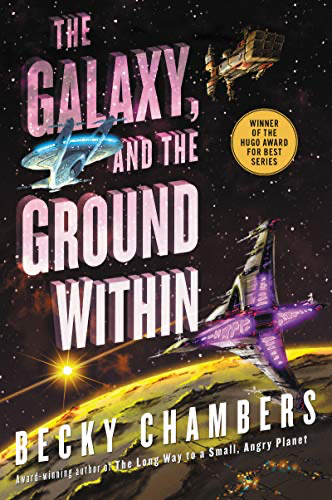
As for a book that inspires me, I’d easily give that title to Becky Chambers’ Wayfarers series. Sci-fi always seems defined by cosmic stakes and harrowing violence, and while that can work in moderation, these books really cemented the idea that a narrative doesn’t have to be centered around struggle or suffering to be worth reading—and writing. Here, Chambers has created a vast, creative space opera universe with complex political background noise and dozens of strange creatures, but they’re not embroiled in some lofty, intergalactic conflict: they’re just going about their lives. It’s something that almost no other piece of sci-fi media has ever done—it’s very common in realistic fiction, but the concept that happiness and healing as genuine plot points can exist alongside aliens and starships just blew my mind. I aspire to write at least one thing as comforting and cozy as Becky Chambers someday.
And remember, kids: grimdark is just as unrealistic as sunshine, lollipops and rainbows, because they represent opposite ends of the same literary spectrum. Making a book excessively dark and gritty doesn’t automatically make it deep, and giving a character an excess of trauma and a tragic backstory doesn’t automatically make them fleshed-out and well-written.
+ anyone else who wants to participate! If you see this tag and want to do it, I’d love to see your answers! If I tagged you and you’ve already done this tag/don’t want to do it, my bad.
Today’s song:
we love a good guitar freakout
That’s it for this book tag! Have a wonderful rest of your day, and take care of yourselves!