Posted in Book Review Tuesday

Book Review Tuesday (2/11/25) – The Maid and the Crocodile

Happy Tuesday, bibliophiles!

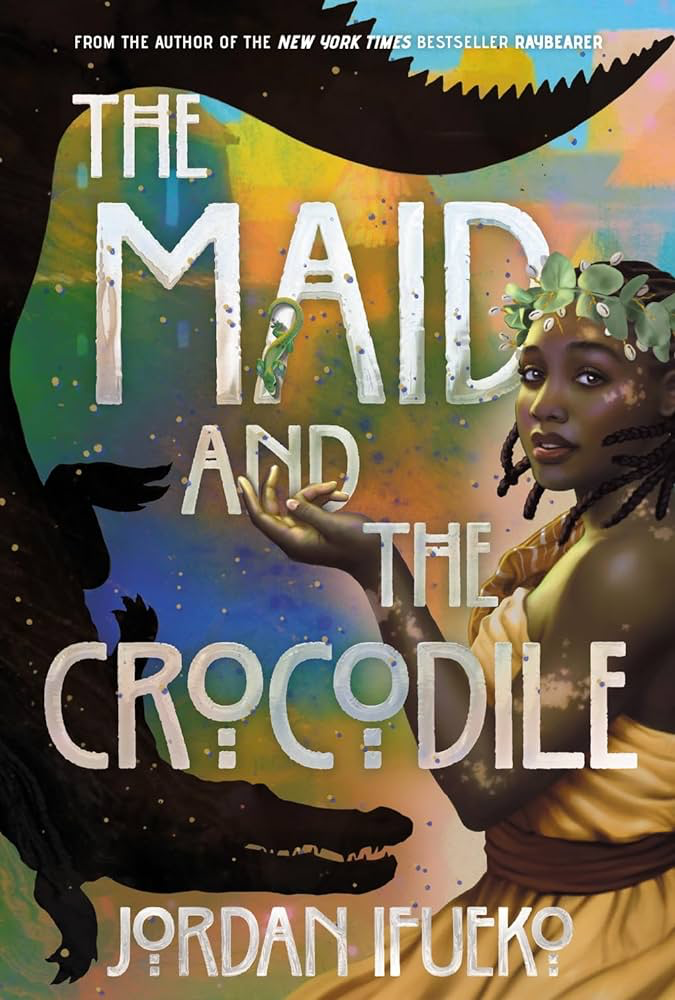
I had a ton of fun with Jordan Ifueko’s Raybearer duology, but somehow I completely missed that she released a novel last August in the same universe! It was an absolute treat to be back in Ifueko’s world, and The Maid and the Crocodile proved a valuable asset to her fantasy universe.

Enjoy this week’s review!

The Maid and the Crocodile – Jordan Ifueko

Small Sade is desperate for any job that she can find. With her crooked foot and vitiligo, the people of her village think she is cursed and touched by spirits. Eventually, she finds work as a maid, but not before an act of desperation sees her bound to a powerful god, known only as the Crocodile. As she moves up in the ranks, she realizes that she is a Curse Eater—her profession as a maid not only cleans the houses of her clients, but changes their fates. Juggling her newfound ability and a world on the brink of revolution with only the Crocodile as her guide, Small Sade must learn to forge her own path before someone else decides it for her.

TW/CW: ableism, self-harm/mentions of suicide, descriptions of injuries, classism, mentions of sexual assault, abuse, loss of loved ones

I can excuse a handful of pop culture references here and there, but after that god-awful Minecraft trailer, if I hear “the children yearn for the mines” ONE MORE TIME, I’m gonna snap…Jordan Ifueko, this was a great book, but that tested me…especially with the climactic scene that it temporarily undercut.

That aside, it was an absolute treat to return to the world of Raybearer with The Maid and the Crocodile! I didn’t think to re-read the duology before going back into it (I never seem to do that unless it’s with a book I’m really invested in), but I was so easily immersed into the world nonetheless! For both casual and eagle-eyed readers, there are Easter eggs aplenty—several characters from the duology make cameo appearances (SANJEET!!! MY GUY!!!!), and the nuances of the world stay the same, for the most part. It was an easy transition, which isn’t always easy to do. I loved how The Maid and the Crocodile expanded on the world as well! Ifueko really has a strength in writing ordinary characters forced into extraordinary, powerful positions, and Small Sade is no exception. However, she’s much more different than Tarisai, which I appreciated—there’s much more of a sense of her having to work towards the top, and her humored yet determined tenacity was what made her so special of a character. Through her, we see Oluwan City from more ordinary eyes, which makes the themes of the story so much more clearer.

I couldn’t have read The Maid and the Crocodile at a better time, and not just because it was a fun read. Its themes about the nature of change and revolution are critical—IT’S ALL ABOUT LOVE! It’s so refreshing to see a character who wants to help society change for the better not out of revenge or a vague “evil government bad [does not elaborate]” motivation, but out of love. Small Sade’s motives stem from wanting to care for the people she loves and wanting to see that love reciprocated in the world around her. Change rooted from love is a perspective that I rarely see in YA, even though its plots have centered around dismantling governments and revolutionary change for decades. I’m so tired of saying “in times like these,” but I mean it—in times like these, narratives about radical change being rooted in love—for your people, for your country, and for your culture—are critical to understanding what change can truly do.

Whenever you have a disabled character in a non-modern setting, even if it’s fantasy, you always run the risk of amping up the internalized ableism. Small Sade, who is shunned and deemed “spirit-touched” because of her crooked foot (she uses a cane for mobility) and her vitiligo, faces a great deal of ableism. It’s not as though plots about overcoming ableism (NOT the disability, mind you) aren’t worth telling, but in non-modern and fantasy settings, it does get slightly tired to have all disabled characters in these settings go through versions of the same arc. I loved how Ifueko handled Small Sade’s character—she resists ableism, but most importantly, she is a person beyond her experiences of ableism. Her experience of discrimination informs her story, but it is not the entirety of her character. Small Sade is defiant, self-reliant, and deeply caring—she’s so fully-fleshed out, which is a rarity for disabled characters. So hats off to Ifueko for an excellently-written disabled character!

However, though it had its moments, I was never fully invested in the romance between Small Sade and Zuri. I got that they had a connection, but I feel like he showed up too few times for the relationship to really work. Small Sade had eons more character development than he ever had the chance to. I get that a curse slowly turning you into a crocodile tends to do this to a guy, but at times Zuri felt rather codependent—up until the last 50 pages or so, Small Sade felt more like a means to an end for him, and his redemption was too underdeveloped for me to be fully invested in it. I appreciated their mutual resolution, but it was too late for it to feel fully satisfying. Given how strongly written the relationship between Sanjeet and Tarisai was in the Raybearer duology, I really expected Ifueko to deliver more with The Maid and the Crocodile. Small Sade and Zuri had moments, but not enough for me to be invested in them romantically.

All in all, a worthy addition to Jordan Ifueko’s Raybearer universe, full of heart, curses, and hope. 3.75 stars, rounded up to 4!

The Maid and the Crocodile is a standalone, but is set in the world of the Raybearer duology (Raybearer and Redemptor). Jordan Ifueko is also the author of the 2022-2023 run of Marvel’s Moon Girl and Devil Dinosaur, and has also contributed to Jim Henson’s Storyteller: Tricksters.

Today’s song:

That’s it for this week’s Book Review Tuesday! Have a wonderful rest of your day, and take care of yourselves!

Posted in Sunday Songs

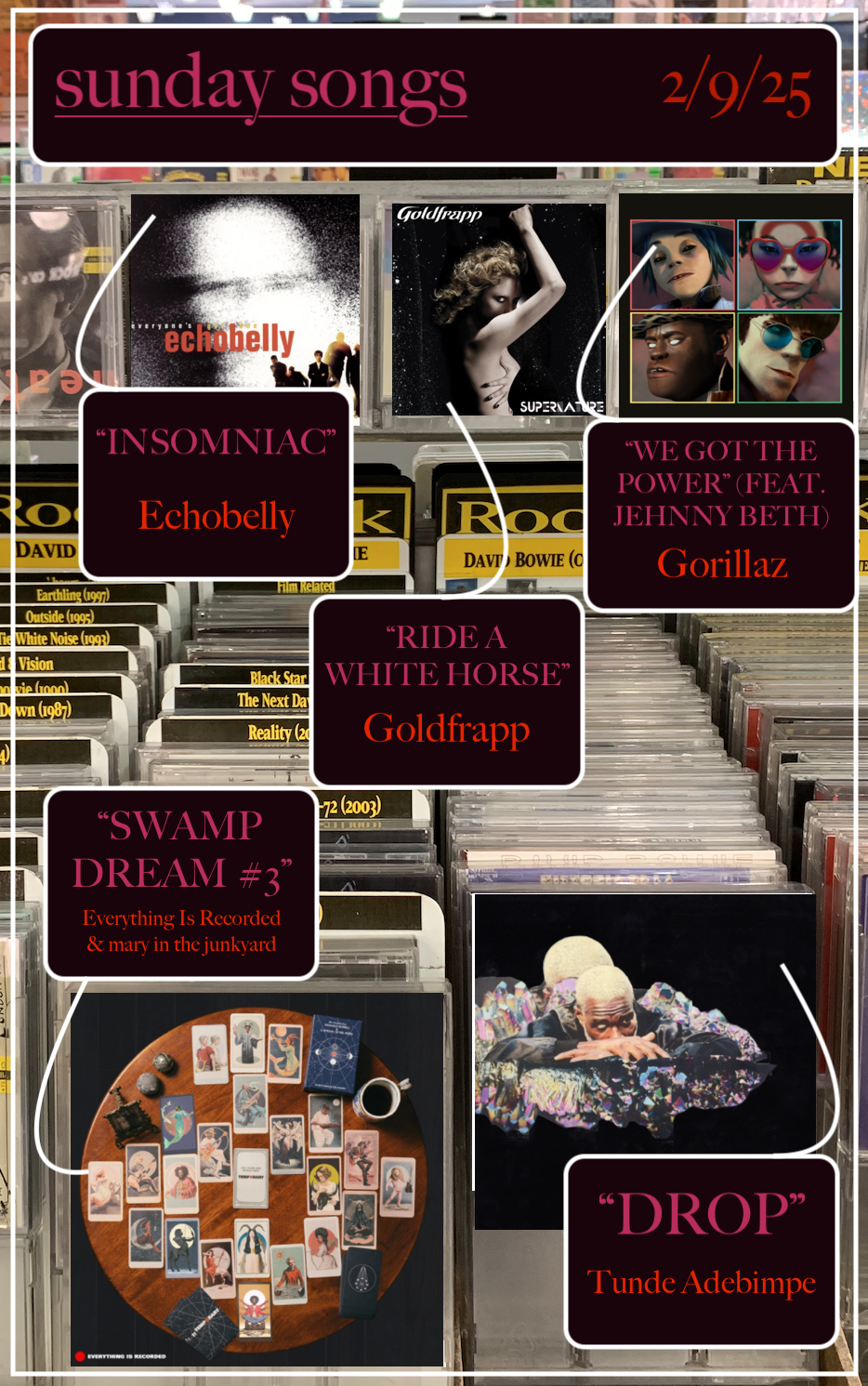
Sunday Songs: 2/9/25

Happy Sunday, bibliophiles! I hope this week has treated you well.

This week: there’s never a bad time to listen to Gorillaz, but I certainly could’ve timed when I listened to Humanz better.

Enjoy this week’s songs!

SUNDAY SONGS: 2/9/25

“Swamp Dream #3” – Everything Is Recorded & mary in the junkyard

We now return to some much-needed mary in the junkyard-posting. I suspect it’ll become consistent…at some point. Not to pressure them, but hopefully this year (or the next) holds a full-length album in the future?

In the meantime, we have an excellent collaboration between them and Everything Is Recorded, the stage name of producer Richard Russell (also the founder of XL Records); he’s produced several albums under the name, often amassing a wide variety of musicians and songwriters to bolster them in a Gorillaz-like way, minus the cartoon characters. His forthcoming album, Richard Russell is Temporary, includes the likes of Florence Welch, Kamasi Washington, Noah Cyrus, Roses Gabor (a.k.a. the singing voice of Noodle on “DARE”), Bill Callahan, and mary in the junkyard! Granted, I hadn’t heard of Everything Is Recored until mary in the junkyard announced this single, but if this guy’s the owner of a record label, I could only hope this would introduce this fantastic, burgeoning gem of a band to a wider audience.

If “Swamp Dream #3” becomes the band’s ambassador, I wouldn’t mind either. Even though it’s more electronic than most of their catalogue, it’s got a naturalistic, moss-covered feel to it that you can’t scrape off of their sound no matter how many synths you paste onto it. It has the juddering thrum of rusted machines, all at once simple and a doorway into a hidden world; although I love the music video, “Swamp Dream #3” is begging for some kind of stop-motion treatment. I imagine it as an outside view of a termite’s mound or a rabbit’s warren, with the camera panning over clay worms poking out of the dirt and tiny insects, moles, and other underground rodents traversing the vast network of tunnels. (The real worms and beetles suffice, though.) Clari Freeman-Taylor’s vocals bring a kind of wonder to the song, a curiosity that isn’t quite childlike, but still seeks to shove its hands into the sand and the dirt, searching for hidden pathways and possibilities: “Mystery of my own flesh/I’ll never stop wondering/Never stop/Turning inside out.” Needless to say, the chorus, a repetition of “into the dirt” backed by looped vocals and a stuttering drum machine, could not be a better fit for a song with hands dirtied from looking for earthworms in the ground.

…AND A BOOK TO GO WITH IT:

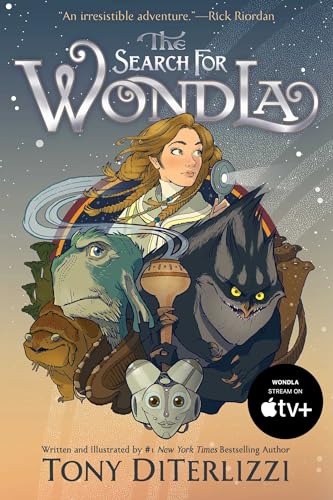
The Search for WondLa – Tony DiTerlizzi“You are from an old land/Crafted out of wet sand/What is it all about?/Staring at your hands…”

“Drop” – Tunde Adebimpe

NEW TUNDE ADEBIMPE JUST DROPPED!! THEE BLACK BOLTZ!! OUT THIS APRIL!! I’m not sure if anything will ever cure the decade-long TV on the Radio drought, but man, a new album from such a fantastic talent sure comes close.

I never got around to writing about “Magnetic,” but it felt so much like TV on the Radio to me—it was distinctly Tunde Adebimpe, but it had that same urgent propulsion that made their indie hits feel ageless. It’s one of those tracks that makes you see how far the footprints of one particular member of a band in their music. TV on the Radio bunched several people together with magic touches into a single band, which is startling, but this touch is unmistakably Adebimpe’s. But “Drop” is where his sound begins to branch out and diverge into something wholly new. It has a flavor that’s simultaneously ’80s and 2010’s indie pop. Once the beatboxing intro fades away, rhythmic as bubbles popping in midair, it becomes a much more relaxed yet introspective dive into Adebimpe’s mind. As the guitars—clean enough to almost sound like synths—radiate into the calm ripple of the track, he grapples with a sensation of awakening; “Drop” couldn’t be a more apt title for a song whose lyrics are steps away from launching off a daunting yet hopeful precipice: “I′m gonna try it for myself/I’m gonna need somebody′s help/Cast an extraordinary spell/And rise into the night.”

Together, “Magnetic” and “Drop” couldn’t make me more excited for the range of Thee Black Boltz. “Magnetic” was a perfect access point for the fans who were wanting something close to TV on the Radio 2: Electric Boogaloo (listen, it’s kind of a self-callout), but “Drop” represents the somewhat uncharted territory that we have yet to see Adebimpe cover fully.

…AND A BOOK TO GO WITH IT:

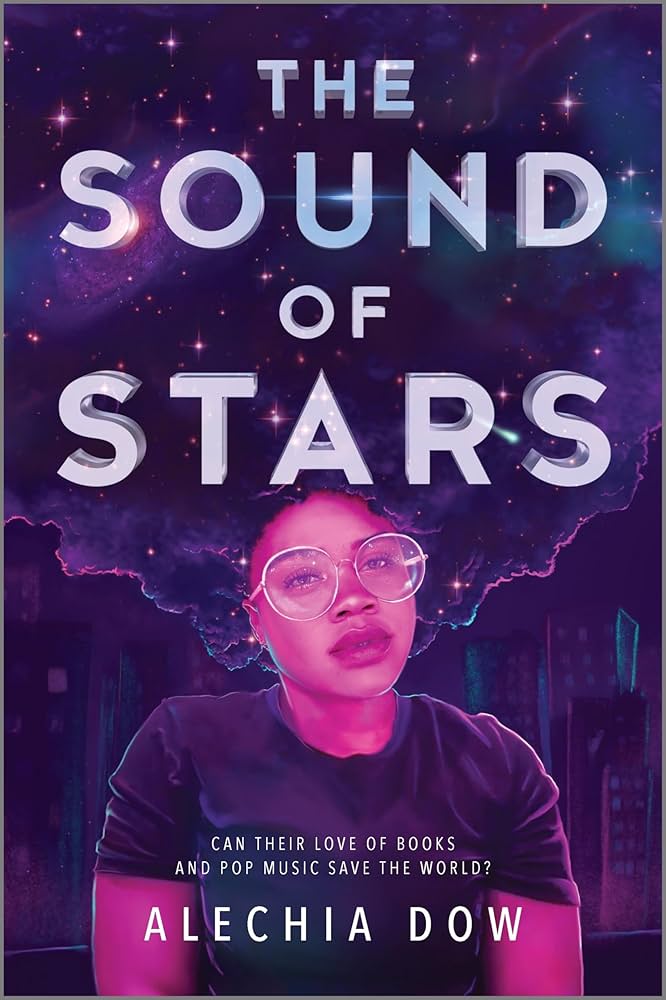
The Sound of Stars – Alechia Dow“We′re gonna feel it when we drop/Let′s go out where the visions never stop/There is a light/There’s a light just beyond this horizon/See it shine and rise into the night…”

“Insomniac” – Echobelly

Generally, the British were absolutely cooking with grease as far as rock music goes from about 1964 on, but there’s something so fruitful about the ’90s to me. If it’s from the period from 1992-1999 and it’s British, there’s a solid 75% chance that I’ll enjoy it. No, wait. Not exclusively the Brits, just because ’90s rock was so good, guys, but I just love the ’90s. To me, 1994 seems a particularly ripe crop of the vast harvest of the decade, especially the Britpop boom of the first half of the ’90s. Three out of the four of Britpop’s Big Four released albums: Blur with Parklife, Oasis (🤢) with Definitely Maybe, and Pulp with His ‘n’ Hers. But even if you look past the big players, 1994 is full of gems—”Insomniac” being one of them.

I just love Britpop, man. God. I talked a bit about Echobelly last year (with “Bellyache,” from this same album, Everybody’s Got One) with their propensity to take the genre’s penchant for social commentary a step further, as well as their much more diverse lineup compared to many Britpop bands of the time. (Not one but TWO women of color in a Britpop band was pretty much unheard of at the time) “Insomniac” is much more radio-friendly, but it embodies the “pop” of the Britpop, but never in a mindless way—more in the way that their contemporaries could wrap commentary in the most delicious guitar hooks. As Sonya Madan sings of her concerningly high subject (“I think we’ve lost control, dear/Whatever turned you on/You put it up your nose, dear”), the guitars absolutely knock you upside the head. You couldn’t wring the pure Britishness out of it if you tried (particularly the way that Madan sings “I swim in circles/In puddles/In trouble and then I go” like it’s a nursery rhyme…on a song about substance abuse), but you couldn’t wring the pure rock n’ roll out of it, either—this is what a hit should be.

…AND A BOOK TO GO WITH IT:

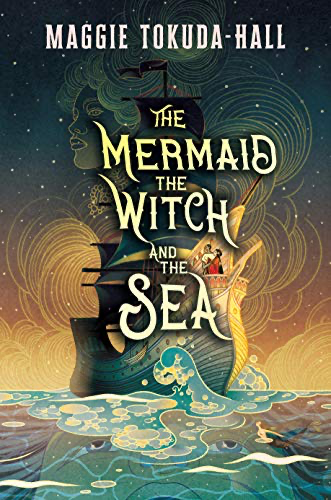
The Mermaid, the Witch, and the Sea – Maggie Tokuda-Halleven though Alfie gets a more sympathetic redemption arc in the final book, some of his relentless drug abuse certainly rings close to this song.

“Ride A White Horse” – Goldfrapp

“Ride A White Horse” is about as clean of a song you could get. It’s more than polished—it came out of the womb shinier than a disco ball, and its blinding sheen is made for dancing. Alison Goldfrapp has insisted that the title wasn’t a nod to T. Rex (but sort of was a reference to this), but the two songs couldn’t be further from each other—the dance-pop glamour of this song is about as far as Marc Bolan and company frolicking through the woods, but both have entirely distinct energies that differentiate themselves far beyond their respective choice of animals. Even for something made in 2006, Goldfrapp and Gregory’s work still sounds straight out of a club in the Blade Runner universe. Part of this is why I think the choice of making the music video for “Ride A White Horse” the epitome of dirty is kind of genius fit—it’s such a sanitized song, and yet Alison Goldfrapp sings it against superimposed backdrops of rotting food waste with scraps of toilet paper stuck to her heels, not to mention the cameo from what appears to be the proto-Trash Man. Even when there’s flies buzzing off of it, the polish of it never fades.

Also, because this popped up when I looked this up on YouTube, here’s a bit of unexpectedly delightful Goldfrapp content:

…AND A BOOK TO GO WITH IT:

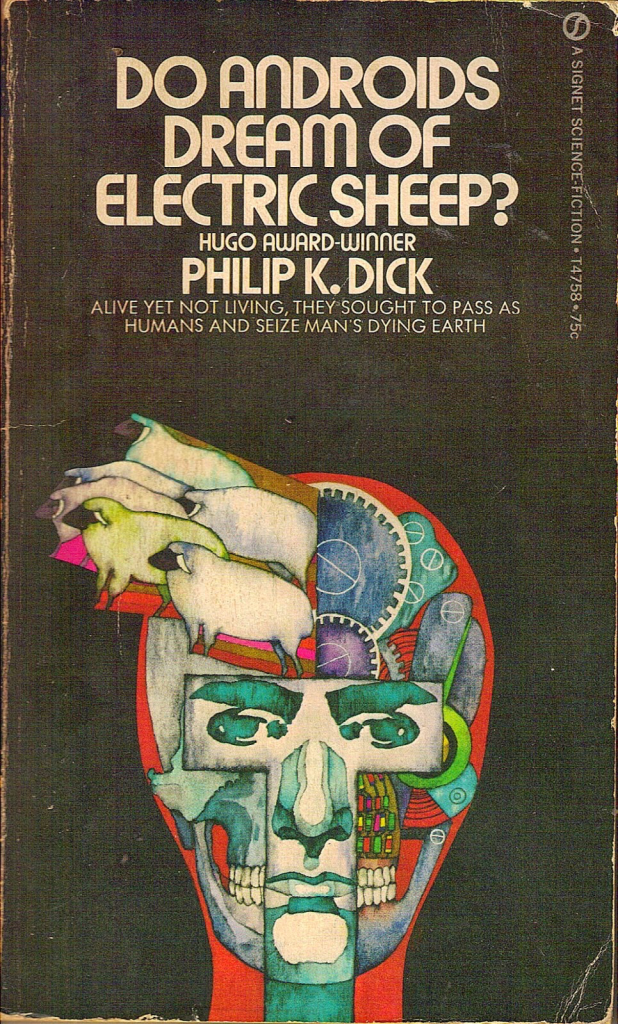
Do Androids Dream of Electric Sheep? – Philip K. Dickas much as I disliked this book, I can’t deny that it fits the atmosphere—more so of the movies, as I said before.

“We Got the Power” (feat. Jehnny Beth) – Gorillaz

In retrospect, it was probably a terrible idea to listen to Humanz for the first time mere days before the inauguration just because of the album’s conception. When telling Pusha T, one of the album’s plentiful collaborators, what the atmosphere of the album was, Damon Albarn described it as “a party for the end of the world if Trump wins.” Not only did he say this well before Trump was elected, but…well, y’know. We all know the mess we’re in. Humanz often gets lambasted by the fandom as their worst album. I wouldn’t say it’s bad, but I think it’s the nexus of modern Gorillaz, which is to say that it’s the point where their albums became increasingly devoted to their collaborators as opposed to the creative force of Albarn and Hewlett. Said collaborators are hit or miss, but most of the songs have a verse by Albarn with the exact same filter over his voice once the collaborators have had their place in the sun. Much as I love my guy Damon, it got slightly tiring after about 10 songs. But if it’s a party for the Trump-era hellscape, Humanz fulfills its purpose with flying colors, balancing social commentary with gloriously catchy pop songs. I feel like the thesis is perfectly encapsulated by Vince Staples’ chorus on “Ascension”: “The sky is falling, baby/Drop that ass before it crash.”

In spite of all that, the album ends on an anthemic note—”We Got The Power.” As simple as the lyrics are, simplicity is what this track needs. In times so overwhelmed with shock, horror, and doom, sometimes a more concise message is the best thing to cut through the noise. “We got the power to be loving each other/No matter what happens.” IT’S TRUE! It’s why “All You Need Is Love” has endured for so long. It’s simple, but it’s the kind of uniting message that we needed. If anyone should know that, with their history of cleverly packaged social commentary, it’s Gorillaz. Albarn is joined by Jehnny Beth (if I had a nickel for every time I’ve heard Jehnny Beth sing a French verse on a British band’s song, I’d have two nickels, etc., etc.) and an uncredited Noel Gallagher. I briefly mentioned it before it, but as much of an Oasis hater as I am, it really is beautiful that they were able to set aside the stupidest possible differences, realize how stupid they were, and join forces on a song about loving each other. You can’t not appreciate it. (To say nothing of Liam…) And as the closing track to an album about a party at the end of democracy, it’s a welcome light at the end of the tunnel, and a true light—it’s not the flashing club lights that shroud the fear of most of the album, but a real lodestar.

…AND A BOOK TO GO WITH IT:

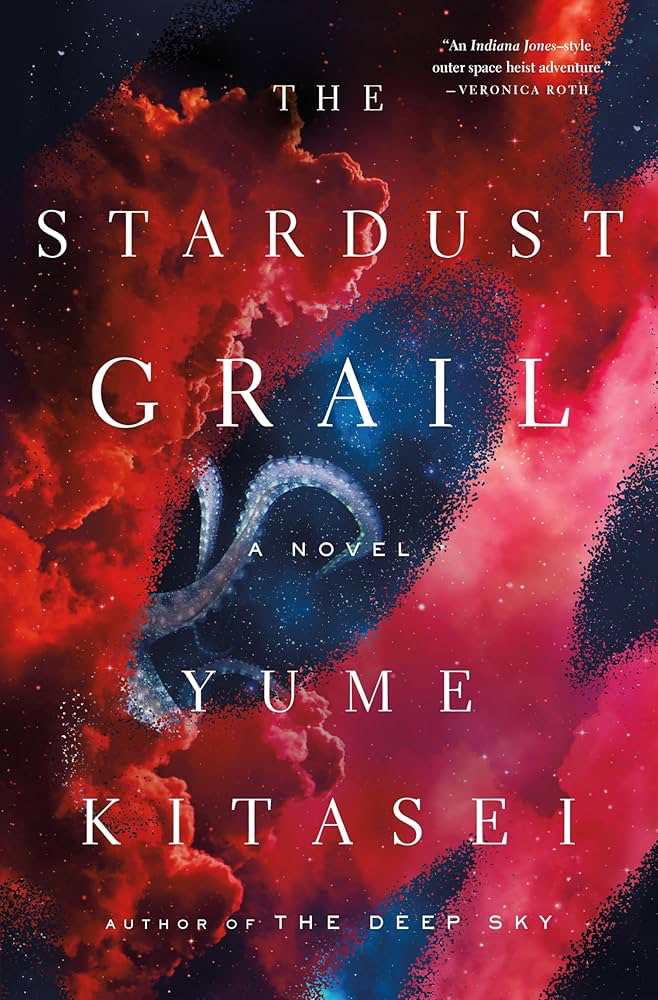
The Stardust Grail – Yume Kitasei“And we dream of home, I dream of life out of here/Their dreams are small/My dreams don’t know fear/I got my heart full of hope/I will change everything/No matter what I’m told…”

Since this post consists entirely of songs, consider all of them to be today’s song.

That’s it for this week’s songs! Have a wonderful rest of your day, and take care of yourselves!

Posted in Sunday Songs

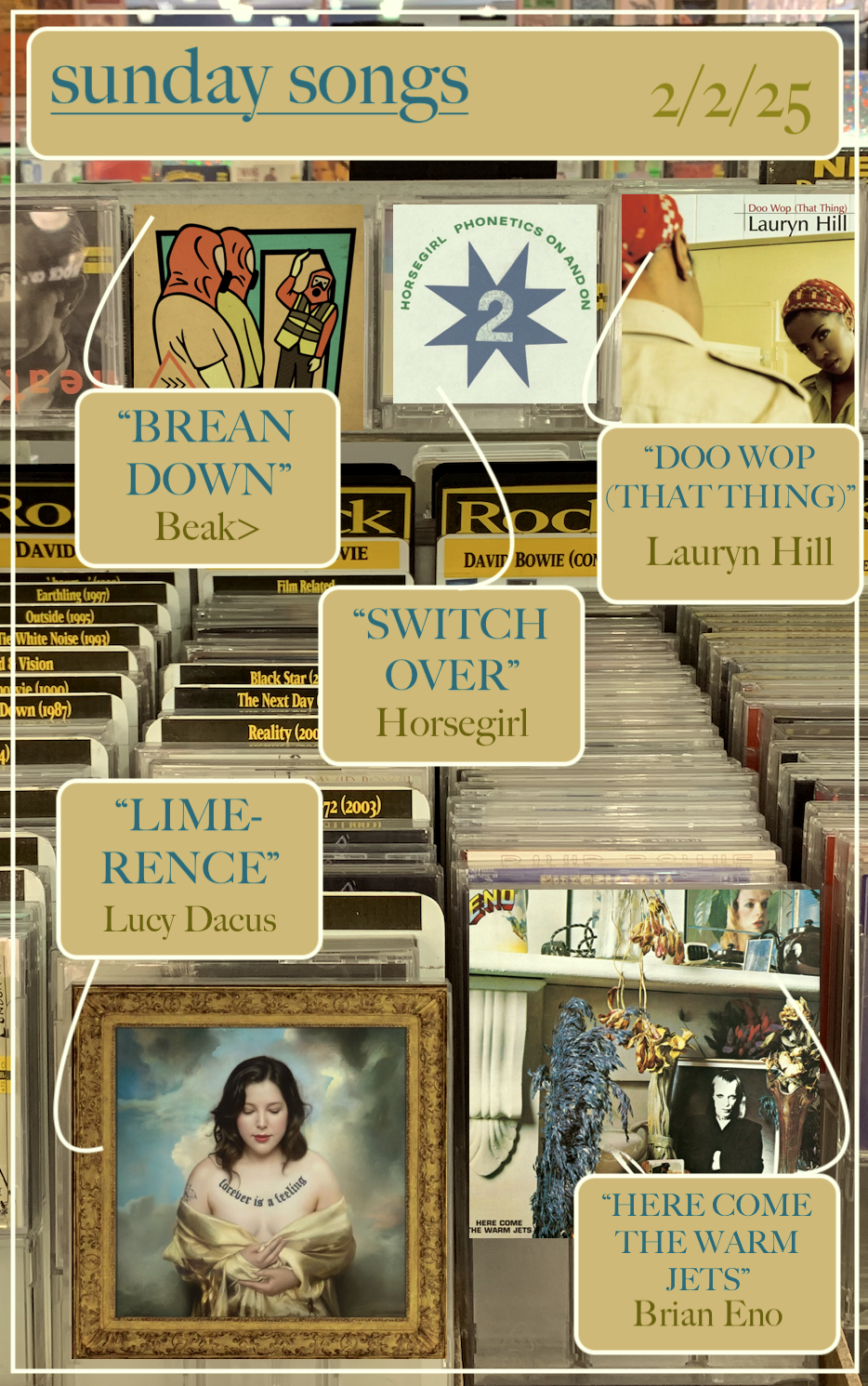
Sunday Songs: 2/2/25

Happy Sunday, bibliophiles! Hope you didn’t drive angry today.

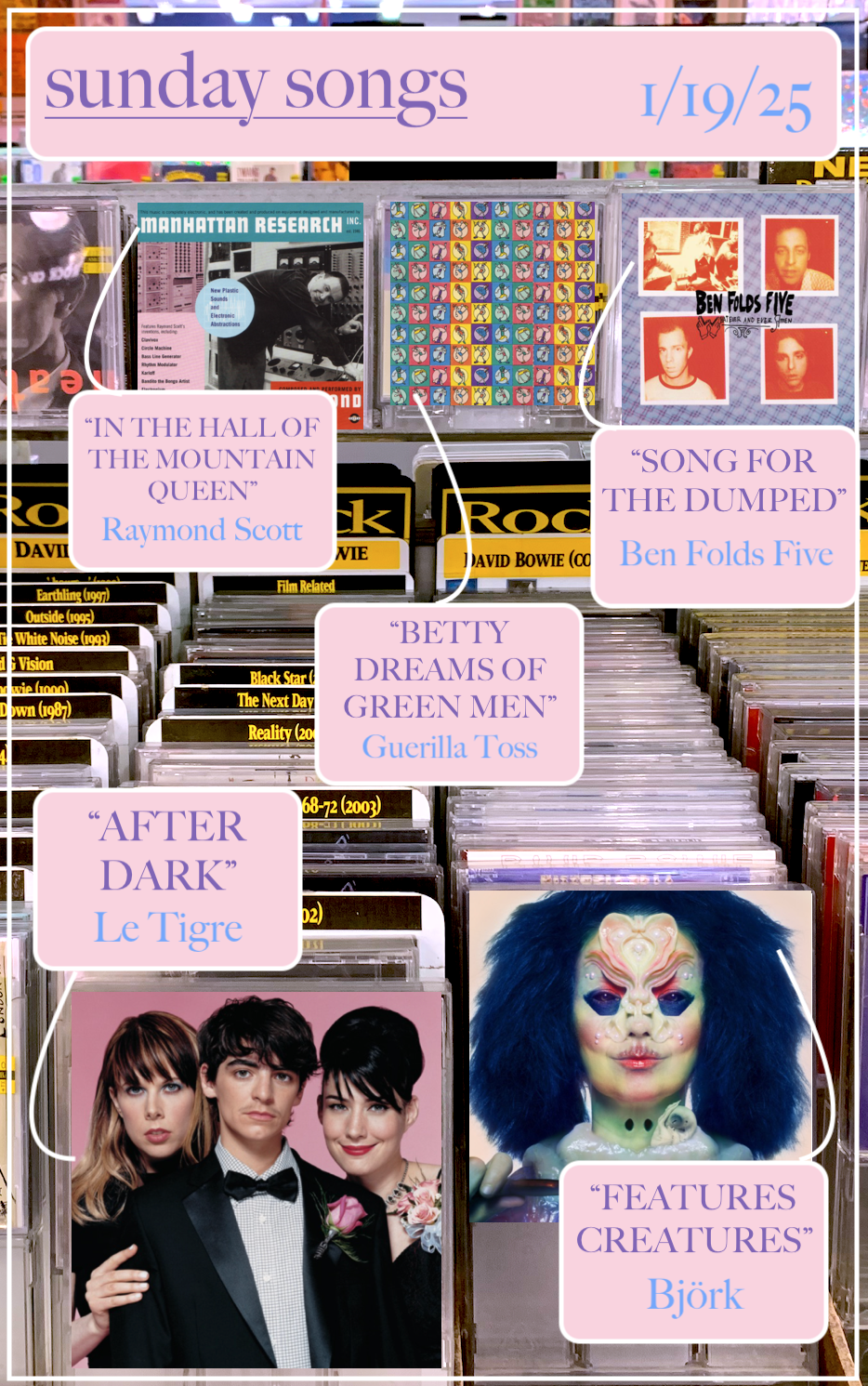
Since I’ve been absent for the past two(ish) weeks, here are my graphics and songs from the middle of January:

1/19/25:

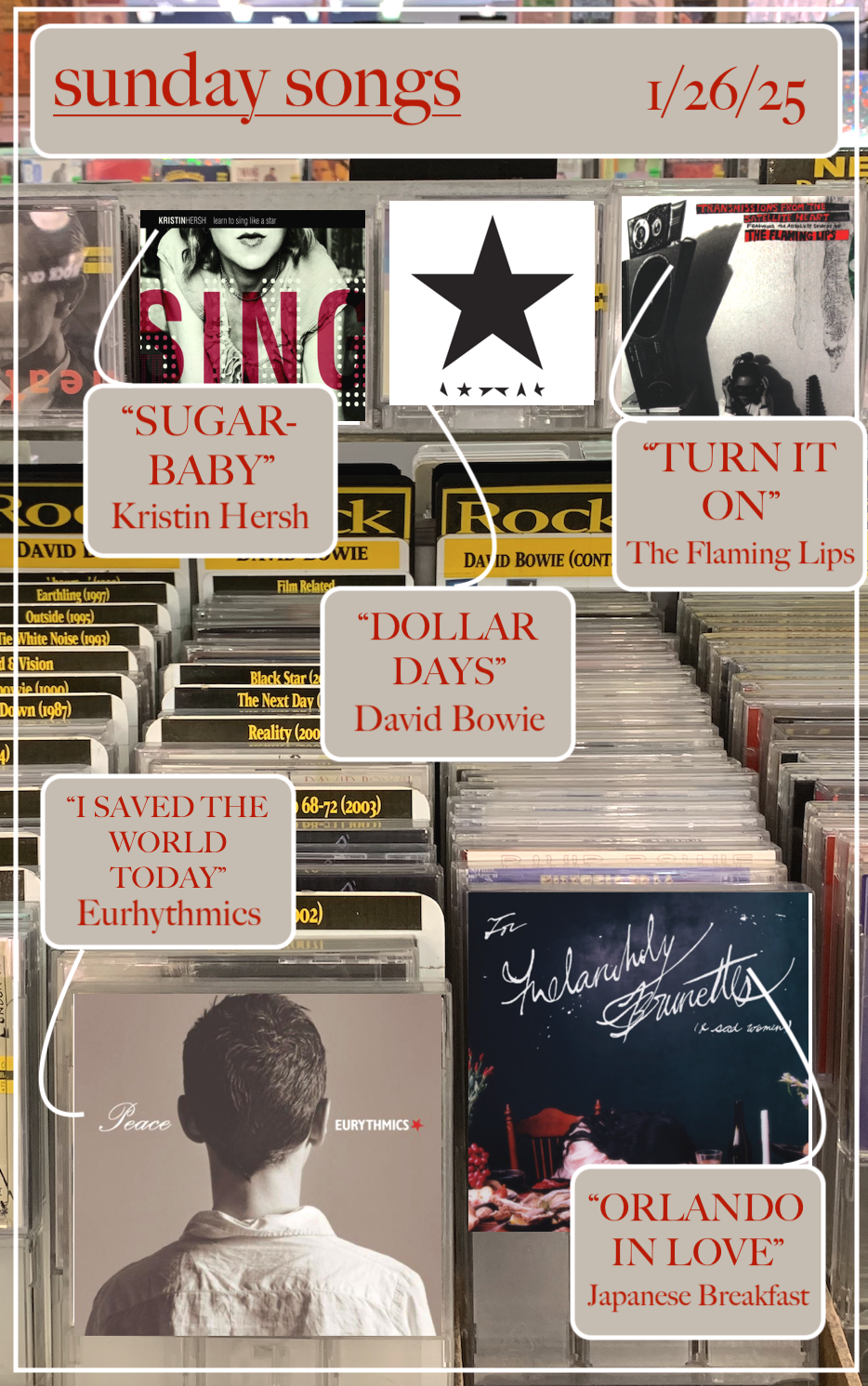
1/26/25:

This week: shoutout to Brian Eno songs with vehicles in the names. Plus, Lucy Dacus is thinking about breaking your heart (but when is she not?).

Enjoy this week’s songs!

SUNDAY SONGS: 2/2/25

“Limerence” – Lucy Dacus

January. Love it or hate it, it’s that magical time of year when all of the singles and album announcements for the first half of the year start rolling in. Oh, the sweet sound of new music…especially when it’s from Lucy Dacus! It’s been known that she’s been cooking something up after previewing a handful of new songs post-the record (as is Julien Baker—new album from her and TORRES too!!), but mid-January, she officially announced her new album, Forever Is a Feeling, which will be out this March! Aside from…well, y’know (I know it’s a painting, which makes it more impressive, but what in the PicsArt is that album cover?? That font?? 😭 No hate to Dacus or to Will St. John, but…there could’ve been so many better choices…), I’m so excited for this new record—I’m loving the aesthetic of gilded museums and flowing dresses, as well as the orchestration that Dacus has brought to the record—or at least to “Limerence.”

The other day, I saw some reel or another about how a lot of modern songwriters see writing down explicit, confessional details (or details that sound authentic enough to be confessional) in their songs as an automatic way to get depth, and I halfway agree. I do think that with the steady stream of Phoebe Bridgers wannabes that have been pouring out of some factory in L.A. since 2021 has influenced that, but I don’t think it’s always lazy songwriting. Let’s just say that you can tell when it’s for soul-baring or clout-getting purposes. The key is knowing which details are important: vignettes or extended scenes that elevate the themes or contribute to evoking the intended emotion, something that Bridgers has always excelled at. I hate to say it, but the first lines of “Limerence” nearly feel like the anti-Bridgers method: “Natalie’s explaining limerence/Between taking hits from a blunt, high as a kite/While Roddy’s playing GTA/I swear, why is he so good at this game?/It should be cause for concern.” Against the delicate, piano-dominated orchestration of “Limerence” and the soaring warmth of her voice, such ordinary details feel shoehorned in, without as much connection to the rest of the song. It’s not as though she hasn’t written similarly observational lyrics, but the wording (and maybe the mention of some guy playing GTA with a harp in the background) doesn’t mesh with the rest of the track.

Key word here is nearly. I’ve been a fan of Dacus long enough to trust in the consistency of her songwriting—that bit really is a blip in the vast glory that is her catalogue. The rest of “Limerence” swiftly picks up the slack of those first handful of lyrics. Orchestral Lucy Dacus is, in my opinion, the best Lucy Dacus; guitar carries her humbly captivating gravitas perfectly, yet there’s something about strings, piano, and harp that carry it to new heights (see: “Body to Flame”). With the gentle tempo that recalls the reflection of silk off of marble floors during a ballroom waltz, Dacus drifts into melancholy rumination…as she often does, but it has yet to get old, especially since she’s at least self-aware of the fact (see: “The Shell”). Against the delicate plucking of harps and strings, she sings of drowning herself in distraction just to distance herself from the inevitable collapse of a relationship: “I want what we have/Our beautiful life/But the stillness, the stillness/Might eat me alive.” Carrying the leaden weight of wanting to break free, “Limerence” nervously toes circles around its subject, subtle enough between the folds of a voluminous dress to avoid the truth. The marriage of Dacus’ unbeatable voice and the almost hesitant restraint of the orchestra carve out that feeling of wanting to squirm free, but feeling the weight of severing the other person even more intensely. It’s no wonder that Dacus seemed to have the trouble she did releasing “Limerence” as a single—it was a last-minute call after releasing the much more lighthearted “Ankles” (also excellent), but I can imagine that it has that effect—too personal to keep close but also to release, yet a song that needed to be launched as one launches a satellite out into the vastness of space.

It’s…yeesh, huh? Couldn’t have expected less from Lucy Dacus…anyways, the music video is much more delightful, I promise (and see? 3:19, there’s your album cover):

…AND A BOOK TO GO WITH IT:

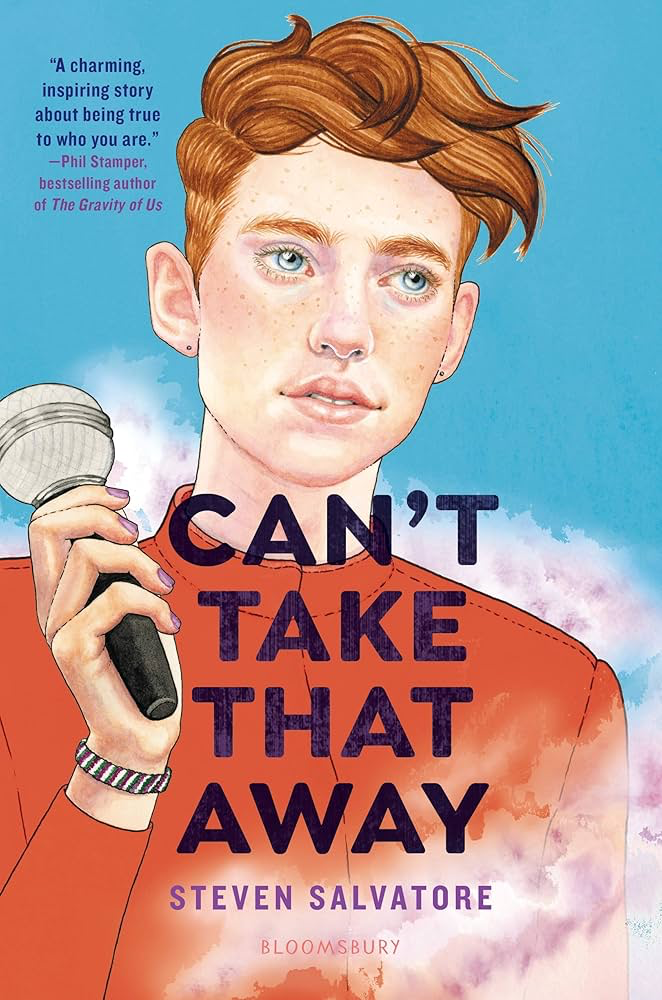
Can’t Take That Away – Steven Salvatore“Is there a difference between lying to you/If it feels just as bad as telling thе truth?/I know that there is/And I know what I’ll pick…”

“Here Come the Warm Jets” – Brian Eno

I’m about 6 months too late to make a “brat summer? Nah, Brian Eno summer” joke, but humor me, alright? We cling to what we can in these trying times. Let me have my shitty Brian Eno jokes. Brian Eno winter doesn’t have the same ring to it. (Now, Cocteau Twin-ter—okay, okay, fine, that one’s run its course, I know…)

Somehow, when compiling my list of my favorite album closers of all time, I forgot “Here Come the Warm Jets” entirely. At that point, it had been a solid year since I listened to Here Come the Warm Jets, and it had fallen off my radar. Only when I listened to Before and After Science: Ten Pictures did this track return to me. Obviously, the emotional impact of instrumental tracks can’t be understated, but it seems they’re often overlooked when they’re not film scores. Eno, to me, has a true gift of imbuing such clarity of emotion into his instrumentals (see: “The Big Ship”). Technically, “Here Come the Warm Jets” isn’t technically instrumental, but the vocals don’t come in at 2:33, and they’re so shrouded that they sound like vaguely nonsense chanting. (Eno has said that the lyrics are also meaningless and free-associative, as are many of the lyrics on the album.) Especially as a closing track, “Here Come the Warm Jets” is one of those songs that’s able to breathe life into its title without words. With the dense, buzzing hive of distortion, so thick you could stick your hand in it and feel the wings of millions of insects, it has the fuel and squeal of both tires screeching against the tarmac and the heat and urgency of a plane taking off.

Like “The Big Ship,” you can trace the slow, hopeful ascent of the song, a steady trajectory upwards as the music rises and fades into a cloud-streaked sky. And…okay, well, I know the dirtier interpretations of the whole “Here Come the Warm Jets” phrase, and the playing card on the album cover doesn’t help, but I’m choosing to believe that they’re jet planes, and I can feel the warmth of the rising, fiery hope propelling their engines skyward. Besides, Eno took the title from how he felt the guitar sounded—“like a tuned (warm) jet,” which he added into the track sheet. As with most anything he observes, it’s truly right on the money.

…AND A BOOK TO GO WITH IT:

Activation Degradation – Marina J. LostetterI can imagine the warm atmosphere of this song amongst the machinery of this novel, humming along with all of the engines and parts.

“Brean Down” – Beak>

Man, I admire committing to the bit, but how do you pronounce >>>>? Or >>>, where “Brean Down” is taken from, come to think of it? The only pronunciation I’ve seen is from BBC Radio, which, after some hesitation, called it “four chevrons.” I thought it was some sort of !!! (chk-chk-chk…don’t come for me, that’s all I know about them), but that doesn’t have the pretentious ring I thought it would have. Fascinating…you do you, Beak>. Can’t knock them, especially since one of their (now former, as of last year) members, Geoff Barrow, was from none other than PORTISHEAD back in the day…damn.

When my dad sent “Brean Down” to my brother and I, he described it as “if Radiohead and Shakey Graves had a baby,” and the more I listen to it, I can’t think of a more astute description. There’s a dread-inducing, dead-eyed drone aplenty, but with vocals from someone who’s practically a British Alejandro Rose-Garcia—it’s almost eerie how similar he and Billy Fuller sound. (The Britishness wasn’t even detectable…) Either way, it’s got a kind of creeping, cagey nausea to it that’s perfectly paired with the dusty brick walls and city streets of the music video, all while Fuller sings of alienation and empty absorption: “Tell me what I want and I feel like I do/Stuck in a cage and the people looking at you/Nobody’s perfect and even if you say so/We don’t like the music ’cause it ain’t up on the radio.” There’s your Radiohead for you…but really, Beak> excelled at making the song have the illusion of looseness, with the occasional pulse of the guitar and the drums, but still ultimate feel caged and immobile, as purposefully restrained as the artfully jerky moves of the music video’s danger, Vladislav Platonov. It’s not just the mechanical drone that haunts “Brean Down,” but the sensation as if something is slowly shadowing your figure—conformity, so it seems. Not a whole lot that induces dread as much as that.

…AND A BOOK TO GO WITH IT:

Junker Seven – Olive J. Kelley“Tell me what I want, and I feel like I do/Stuck in a cage and the people looking at you/Nobody’s perfect and even if you say so/We don’t like the music ’cause it ain’t up on the radio…”

“Switch Over” – Horsegirl

Only took me three singles to use the actual Phonetics On & On cover for one of these graphics…I do it for the color scheme. After months, it finally fit. Sorta.

With every single from Phonetics On & On that comes out, I’m continually blown away by just how much Horsegirl have grown and the incredible talent they’ve managed to accrue with experience and maturity. From the beginning, they’ve known how to throw together a tight groove, but “Switch Over” is one of their most striking ones yet. It shines in the way that only freshly polished wood does, creating a catchy, dynamic tapestry with lyrics that, when put together, only consists of about nine words total, repeated over and over. It’s not unusual for Horsegirl, but god, it’s sure been refined from greatness to something fantastic. In limbo between the ’70s (if that wasn’t evident from the Lou Reed poster at the beginning of the video), the ’90s, and something uniquely current. Even with the rhythm kept on such a tight leash, there’s an undeniably current of ease and whimsy running through it—I think it’s the lack of restraint. They’re throwing everything into making something deceptively simple and cooped up, but the passion that they throw into it makes the edges, rigid upon first glance, wiggle with every strike of Gigi Reece’s cymbals. (Also, gotta love how they just disappear into nothingness the minute they hit the cymbals. Peak comedy.) Maybe it’s too early to say so, but Phonetics On & On is shaping up to be one of the best albums of the year—“2468” and “Julie” were hits from the start, but “Switch Over” is proof that we can’t predict the breadth of talent that Cheng, Lowenstein, and Reece (and Le Bon) have up their sleeves.

Man, I’m glad to live in a world with Horsegirl in it. Their only sin so far is refusing to tour near where I live.

…AND A BOOK TO GO WITH IT:

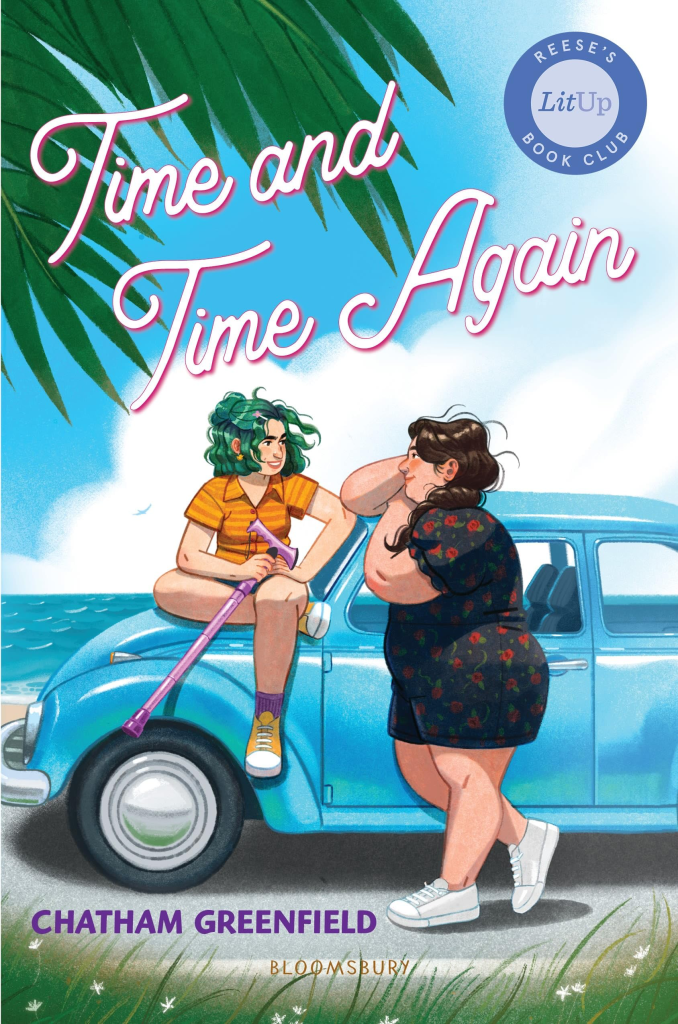
Time and Time Again – Chatham Greenfieldrapid switching and repetition, but this time, it’s repeating the same day over and over (yes, this is basically lesbian Groundhog Day).

“Doo Wop (That Thing)” – Lauryn Hill

Aside from the crushing constraints of the music industry, especially for someone as influential as Lauryn Hill was at her peak…yeah, if I wrote anything as good as this, I’d be perfectly content to get it out there and then disappear from the face of the earth. Well, sure. The tax evasion and the random controversies aren’t exactly ideal. But again—if you release one album and become this influential, I don’t blame her. “Doo Wop (That Thing)” is an extension of that—it’s almost mythic in its construction, written and produced solely by Hill. Sure, I’m late to the party—it took me a minute to warm up to hip-hop as a whole, really—but better late than never.

In fact, I can’t think of a better time to return to this song. If there’s anything that’s essential in these times, it’s “Doo Wop (That Thing).” (The line “Talking out your neck/Saying you’re a Christian” comes to mind for…multiple reasons, related and unrelated to the song’s message.) You need armor against misogyny, materialism, and being seen only for your body and sexuality—it goes both ways, as Hill astutely points out. Patriarchy harms everybody. “Doo Wop (That Thing)” isn’t so much an anthem as it is instructional, and not even instructional in the “and THAT’S why…” way. It’s less of lines on a chalkboard than it is the calloused hand of a mentor, a mother, on your shoulder telling you not just to not make her past mistakes, but to know your damn worth. It’s critical. Men have always thought that they’re immune to the consequences of their actions (and the systems we have in place have reaffirmed that), but I’ve seen Trump’s reelection embolden them even more. Jesus Christ…if I had a son, I’d never kick him out of the house for being queer (a bit redundant, since I’m queer myself, but stay with me), but I WOULD if I found out that he was commenting “your body, my choice” under women’s posts online. CHRIST. Moments like these do seem like nothing has changed since 1998, but maybe that’s why Hill’s rallying cries resonates now more than ever. I want it on banners all across the country, from now until it’s no longer relevant: “Respect is just the minimum.” It’s a call for men to reconsider (and ENTIRELY reconstruct) how they treat women and for those women to realize the potential they have within themselves, restrained by misogynistic structures and societal expectations. The end of the first verse really does send chills down my spine: “Let it sit inside your head like a million women.” Remember those who came before you. You have your power, and their power.

…AND A BOOK TO GO WITH IT:

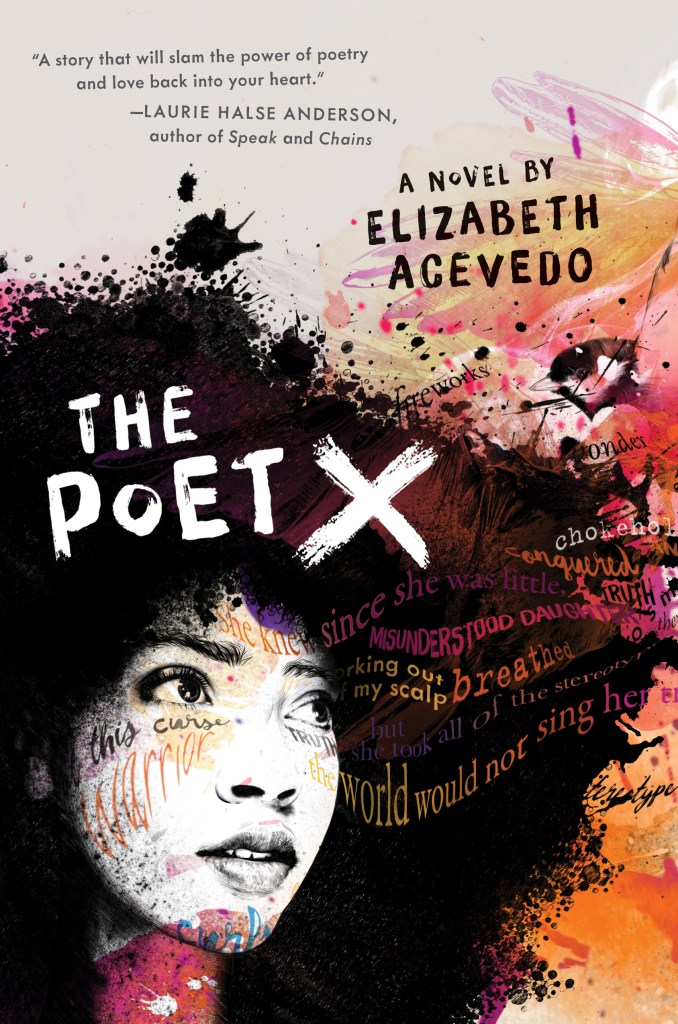
The Poet X – Elizabeth Acevedoa young girl reckons with being seen only for her body—and learning to use her voice.

Since this post consists entirely of songs, consider all of them to be today’s song.

That’s it for this week’s Sunday Songs! Have a wonderful rest of your day, and take care of yourselves!

Posted in Monthly Wrap-Ups

February 2024 Wrap-Up 🫀

Happy Thursday, bibliophiles! Happy Leap Day too, I suppose.

Already the end of February, huh? Good riddance honestly. Not that I had a bad month, but I’m just ready for all this gross, slushy weather to be over with.

Let’s begin, shall we?

GENERAL THOUGHTS:

February’s definitely still been busy, but now that I’m more used to my schedule and able to keep myself on track, it’s all good. Things are getting into gear with my classes, I’ve been able to make time to write and make art and hang out with friends, and the weather is starting to warm up. Key word is starting. We’ve had snow almost every Friday or weekend without fail for…probably a month or two? Colorado. The meteorological indecision never ends. But luckily, other than that first week, I’ve been able to blog somewhat steadily.

Reading has been similarly good—sadly, most of the books I’ve read for school so far haven’t been my favorites (apologies in advance to all the Jane Austen fans here), but other than that, there have been very few misses! I also shifted my focus to books by Black authors this month for Black History Month, and I’ve read both familiar and new-to-me authors and had tons of fun. I also ended up having two five-star reads in a month, so I’d call it good! I’m glad that I’ve been able to keep up my reading schedule, because there’s so many books I’m excited to read soon! A whole bunch of holds from Libby have been pouring in, all of which I’ve been eagerly anticipating…

Other than that, I’ve just been cranking out tons of writing, drawing here and there, watching Abbott Elementary, BEEF (absolutely SHAKESPEAREAN lemme tell you), The Bear (ngl I’m mostly just in it for the needle drops), and Constellation (WHAT IS GOING ON 😀), and being in a near-constant state of being on my toes since I never know when we’re gonna get dumped with snow.

Oh, and I think we have the best possible end to a month that I’ve had in several months…BABE. WAKE UP. NEW ST. VINCENT JUST DROPPED. WE’RE GETTING THE ALBUM, TODAY’S THE DAAAAAAAAAAAY

APRIL 29TH CANNOT COME SOON ENOUGH.

READING AND BLOGGING:

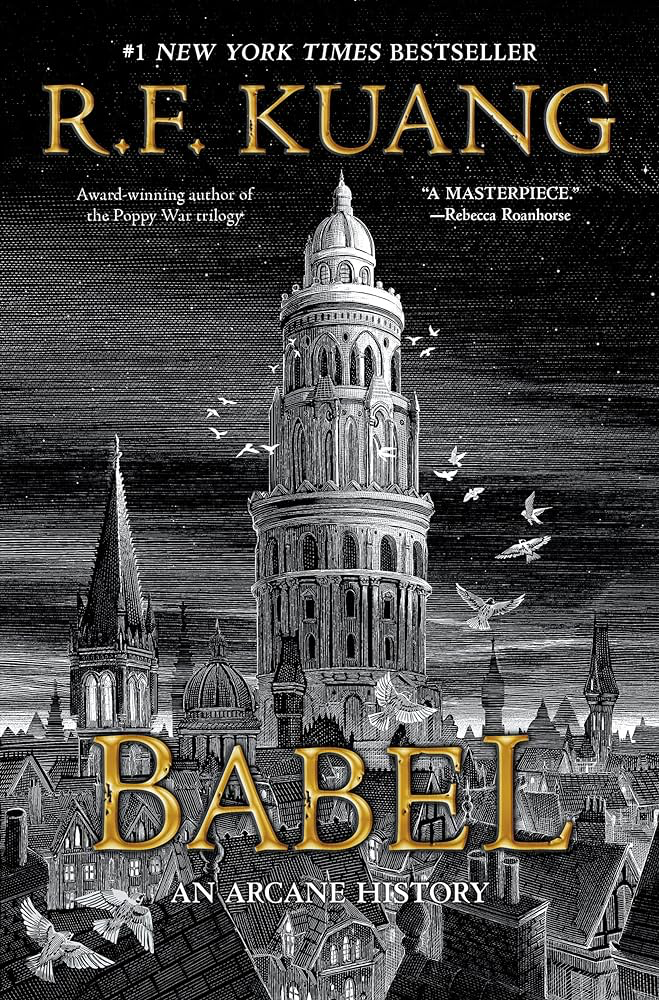
I read 17 books this month! Definitely more than I expected to read, but I’m about at the point in the year where I’m familiar enough with my schedule that I can squeeze in more time for reading. There were definitely a few stinkers in the mix, but I had not one but two five star reads this month, which was pretty incredible! My eternal thanks to Audre Lorde and R.F. Kuang.

2 – 2.75 stars:

Harlem Shuffle

3 – 3.75 stars:

Your Plantation Prom Is Not Okay

4 – 4.75 stars:

We Are the Crisis

5 stars:

Babel

FAVORITE BOOK OF THE MONTH: Sister Outsider5 stars

POSTS I’M PROUD OF:

POSTS FROM OTHER WONDERFUL PEOPLE THAT I ENJOYED:

SONGS/ALBUMS I’VE BEEN ENJOYING:

I’ve listened to this an unhealthy amount of times
NEW CHELSEA WOLFE WOOOOOOO
it always comes back to Bowie
AND NEW IDLES we are truly blessed
obsessed now
fantastic album

Today’s song:

“All born screaming” YEAH I CERTAINLY AM. MY GOOOOOOOOODDDDDDDDDDD THE QUEEN HAS RETURNED

That’s it for this month in blogging! Have a wonderful rest of your day, and take care of yourselves!

Posted in Book Review Tuesday

Book Review Tuesday (2/27/24) – The Melancholy of Summer

Happy Tuesday, bibliophiles!

I believe I heard about The Melancholy of Summer somewhere around the blogosphere when it first came out last May, and I figured it would be a good piece of fiction between several hefty fantasy reads. Louisa Onomé is a new-to-me author, and now that I’ve read her newest work, I don’t regret it—a coming-of-age story that pulls no punches.

Enjoy this week’s review!

The Melancholy of Summer – Louisa Onomé

Summer is alone. Waiting to turn 18 and gain her independence, she has been staying at friends’ houses after her parents were convicted of fraud and went on the run without warning. Left to her own devices, Summer has been able to keep her status a secret, but after her counselor discovers that she has been living alone, she’s sent to live with a cousin she barely knows. Struggling to balance her double life with a cousin who’s barely more independent than she is, Summer is faced with a myriad of difficult decisions for the future. But Summer is left with a burning desire to find out what really happened to her parents, and it will take her to places she didn’t bargain on going to.

TW/CW: parental abandonment, grooming, homelessness, emotional abuse

First off: this isn’t about the book itself so much as the marketing. About the marketing…whose idea was it to tag this book as “sad girl summer”? How do you see a book tackling a myriad of sensitive topics, including but not limited to parental abandonment, homelessness, and familial betrayal and go “ah, yes, ✨sad girl summer✨” WHAT? I just wanna talk to whoever made that decision. Just a quick chat. WHY? And I thought trope marketing couldn’t get any worse…

All this is to say that I’m saying these things because it’s more than The Melancholy of Summer deserves. Situated on the older side of YA, it’s not just a coming-of-age story: it’s an unflinching portrayal of the topics I discussed earlier. There’s no sugarcoating or dancing around the reality of issues here. It’s a heartbreaking novel, but it’s not one that employs horrific events for shock value—they’re an authentic consequence of Summer’s circumstances. I haven’t read a lot of novels—especially not YA novels—that have dealt with these kinds of subjects, but I really respect the route that Onomé chose to go down in terms of portraying them. Although I can’t speak to their accuracy, it feels like an unapologetic respectful depiction of parental abandonment and homelessness, along with the emotional turmoil that brings.

Going off of that, Summer’s character felt just as authentic. She really feels like a teenager, and not in a forced way; it really should be a given for a YA novel, but you’d be surprised at how many authors miss the mark. Summer isn’t just a teenager—she’s a messy one, an emotional one, and sometimes a brazen and impulsive one, but never once did it feel like Onomé was forcing it down our throats that she’s 17. Summer’s yearning for independence felt all too real, especially given her circumstances; none of the pent-up anger that she expresses felt out of place, and none of her emotional outbursts were without reason. Summer felt, more than anything, just how someone with teenage, volatile emotions would feel having to grapple with circumstances out of her control, and that’s a large part of why The Melancholy of Summer was so successful for me.

That being said, although most of the plot points did feel appropriately and respectfully handled, much of the development (or lack thereof) with the character of Olu felt very rushed and unresolved. The plot point about her being groomed, as well as the plot of Summer trying to help her out at the venue, felt like it was tossed in as a slice of filler, and therefore felt half-baked at best. With how authentically Onomé portrayed a lot of the topics in the novel, it seemed uncharacteristic that something as serious as grooming was brushed over so quickly and resolved in a way that could only be described as unsatisfying. It was all but a footnote, and it seemed like it wanted to be a major plot point, but with how unceremoniously it was shoved into the middle of the novel, it felt poorly handled.

This was a symptom of a larger issue in The Melancholy of Summer overall; other than Summer, hardly any of the side characters get the development that they need. Save for Summer’s aunt, the side characters that we’re meant to care for almost as much as Summer were often one-note and tossed aside whenever the plot called for it. Tanya, Summer’s cousin and guardian, could have been a vital character to explore, and although we do get the sense that she still feels like a kid and doesn’t know any more than Summer does about navigating life, she shows hardly any growth throughout the course of the novel. The same can be said for Olu, Sid, and many of the other people that we meet. It was clear that Summer got the most attention, and yes, she’s the protagonist, but that doesn’t mean that the side characters had to be left in the dust.

All in all, a heartbreaking and authentically-written novel with a vibrant protagonist but a not-so-vibrant supporting cast. 3.5 stars!

The Melancholy of Summer is a standalone, but Louisa Onomé is also the author of Twice as Perfect, Like Home, and Pride and Joy.

Today’s song:

That’s it for this week’s Book Review Tuesday! Have a wonderful rest of your day, and take care of yourselves!

Posted in Sunday Songs

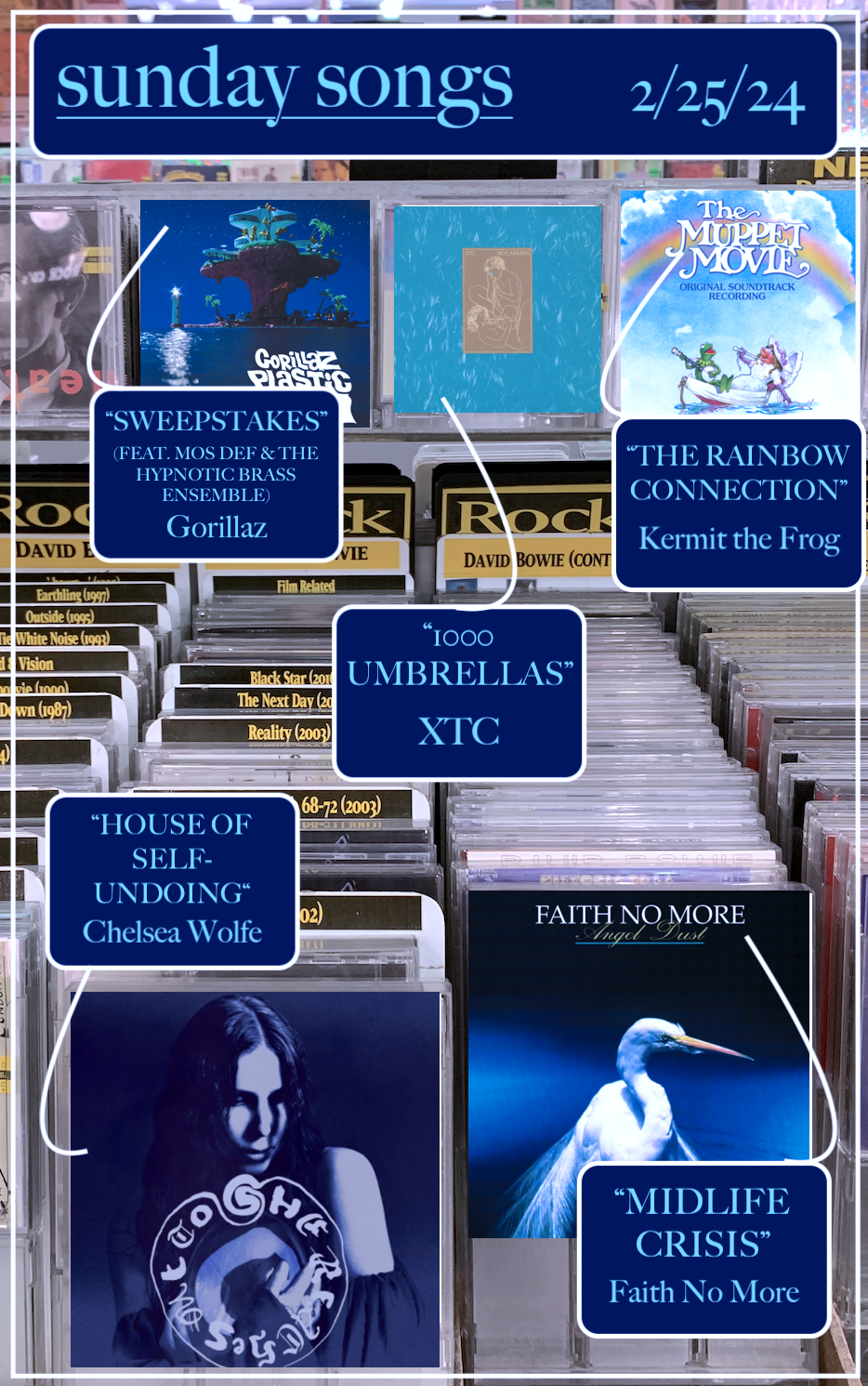
Sunday Songs: 2/25/24

Happy Sunday, bibliophiles! I hope this week has treated you well.

Took me this long to get to a blue period…it didn’t happened until almost three months in the year, but of course it’s the one that ends up having Faith No More and Kermit the Frog in the same breath. Duality of Madeline.

Enjoy this week’s songs!

SUNDAY SONGS: 2/25/24

“House of Self-Undoing” – Chelsea Wolfe

In an outcome that should be surprising to no one, Chelsea Wolfe’s new record, She Reaches Out To She Reaches Out To She, absolutely rocks. Dare I say it might be one of her best albums in years? Birth of Violence was a solid album, but I remember it having some lulls, but then again, I haven’t listen to it since its release in 2019. I haven’t listened to her entire discography, but I’ve never met a Chelsea Wolfe album I didn’t like, but there are some that nudge their way past the others to the tidal wave of goth revelry that she’s come to be known for. I’ve meant to review at least a handful of the excellent singles that came out of this album, but I remember specifically that “Whispers In The Echo Chamber” came out at a time when I got unexpectedly swamped…when there were a bunch of fantastic blue songs I wanted to talk about. Oopsie. No time like the present, amirite?

In terms of themes, Wolfe always has something poetic up her sleeve, whether she’s making the skeleton of her album out of Jungian analysis or Tarot. They’re all deeply personal, but She Reaches feels more intimately so; here, she grapples with separation of all kinds: from past relationships, from present systems, and from future pathways that her life could lead her down. But as she’s draining the gore of all the past messiness out of her system, she’s burning bridges and building her new phoenix of a self out of the charred remains. Back to “Whispers In The Echo Chamber,” where she declares “this world was not designed for us,” (GO OFF QUEEN), whispering like a mysterious necromancer into the ear of the magic-oblivious king. The album finishes on “Dusk” and its promises of “Watch[ing] this empire as it burns and dissipates/Haunted, on fire, on the wings that we create” (GO OFFFFFFFFFFFFFFF), with Wolfe finally detaching herself from this lowly, undeserving mortal plane, and giving a final, cold look to us mortals before disintegrating into a cloud of vampire bats. God, I love her. With such stacked competition, I was grasping for a real favorite on the album, but I cannot stop coming back to “House of Self-Undoing.” After the triumphant declaration of independence in “Whispers,” the second track finds Wolfe extricating herself from the turmoil that she sought to free herself from (“In the house of self-undoing/I saw your face”). Most of the heavier tracks on She Reaches are heavy in the way of Wolfe’s goth dark theatricality and billowing cloaks, but “House of Self-Undoing” is pure rock, grinding with percussion like speeding footsteps and guitars smoother than hotel bedsheets. There’s a nervous, frantic energy that claws its way out of every note, just as Wolfe’s lyrics point to, as the boldness of separation gives way to the physicality of fleeing the old and bursting into the new. It’s the journey of clawing up through the earth and spitting out the dirt in your mouth, before your caked fingernails break the surface to find the sunlight.

…AND A BOOK TO GO WITH IT:

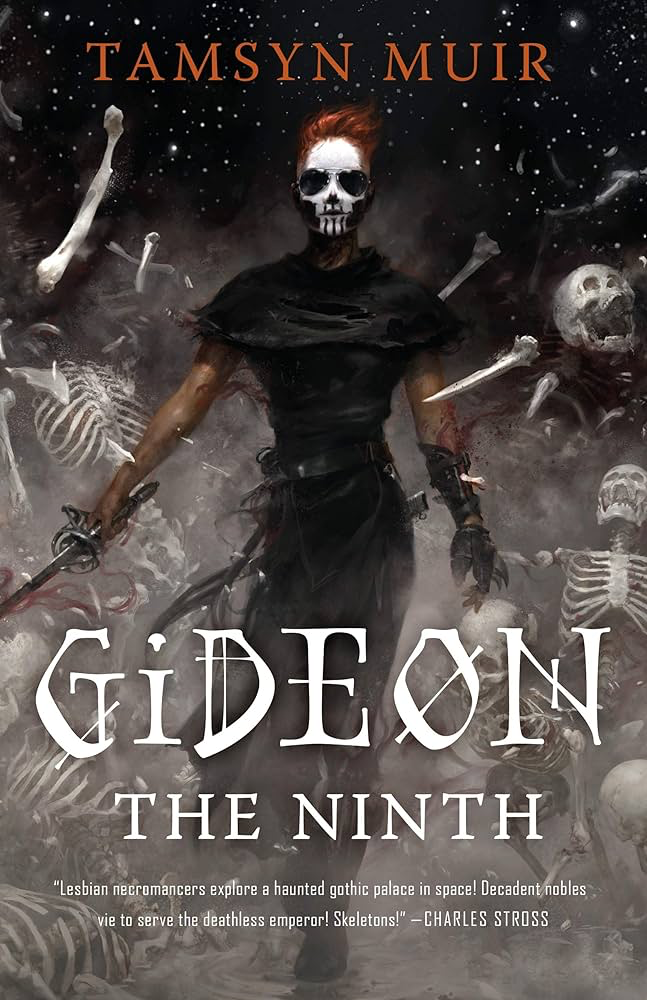
Gideon the Ninth (The Locked Tomb, #1) – Tamsyn Muiras much of a disappointment Harrow the Ninth turned out to be, I can’t deny how fun this book was. The general underworld/undead imagery is already fitting enough, but the themes of separation from a past life are the icing on the cake.

“Midlife Crisis” – Faith No More

The only proper way to describe “Midlife Crisis” is something along the lines of a feat of acrobatics. There’s so many twists, turns, and midair flips that this song executes one after the other that just makes you wonder about the mad scientist’s lab that it was surely cooked up in, because surely something bizarre and outside of human comprehension went into polishing this track to a shine. God, it just goes so hard.

Like Post, “Midlife Crisis,” over 30 years after its release, sounds like everything and nothing, but in this case, what a decent portion of the world of hard rock took from Mike Patton’s vocal acrobatics and spit out was…nu metal. Jesus. Urgh. I’ll dispense from my rant about why nu metal gets on my nerves since it’s more of a personal vendetta than one that has any kind of logical basis (listen, you try and do 50 push-ups at Tae Kwon Do while Linkin Park is blasting through the speakers), but they would’ve had nothing if not for this song. You can hear exactly where Korn got their Cookie Monster gibberish-vocals from on a single go-around on this song. What sets Mike Patton apart from them, however, is the range that he crams into these astounding four minutes; you’ve got said grimy Cookie Monster vocals, but just as quickly, he turns a corner into a soaring smoothness that makes you wonder if somebody slipped him the world’s most powerful cough drop in the time it took him to switch over. Going from those kinds of extremes so quickly and seemingly without breaking a sweat…if that’s not talent, I don’t know what is. And the scorn that this song radiates—”You’re perfect, yes, it’s true/But without me, you’re only you.” DAMN. Also, for the longest time, I thought that the line afterwards was “you’re menstruating hard” and not “your menstruating heart,” which…yeah, the actual line makes much more sense, but somehow, I feel like Patton seems like the type of guy to just say a line like “YOU’RE MENSTRUATING HARD 🗣🗣🗣🗣” with that delivery out of the blue. It was ’90s hard rock. Somehow, it works. Faith No More struck gold with this gift of a song, for sure.

…and I haven’t even gotten to the synth breakdown at 2:22. Good lord. Speaks for itself, really.

…AND A BOOK TO GO WITH IT:

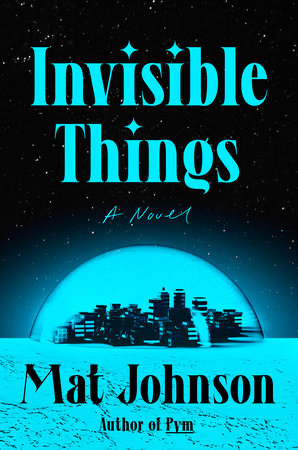
Invisible Things – Mat Johnson scorn, grime and polish in equal measure, and a bunch of alien abductees recreating Trump-era American in a bubble city on Europa. Time to party, right?

“Sweepstakes” (feat. Mos Def & The Hypnotic Brass Ensemble) – Gorillaz

I meant to talk more about Plastic Beach back in December when I first listened to it, but I can’t not come back to it, like most Gorillaz albums that I’ve listened to in full. (Maybe not Song Machine. Like…half of Song Machine. And not Cracker Island. Okay, the first three Gorillaz albums.) Besides being a sweeping showcase of both Albarn’s overflowing musical talent and the storytelling about a tech-invaded future and rampant consumerism, Plastic Beach, I think, is the first album that cemented their reputation for having a continuously stacked list of guest artists. I sincerely doubt that there will ever be another band to have Snoop Dogg, the surviving members of The Clash, and Lou Reed on the same album, and that’s not even because Lou Reed is no longer with us. The minute that I found out that there was a song that had both De La Soul and Gruff Rhys from Super Furry Animals on it, my soul just about left my body. There’s just no band quite like Gorillaz in the way they can unite and fuse genres and appeal to so many without selling their souls. I fully believe that Gorillaz are the people’s band. The arty people like them. The pretentious music nerds like them. The jocks like them. The alt people like them. I have a distinct memory of these two bros in my senior year chem class going through their Spotify, and then one of them declared “BRO, THIS IS OUR SONG,” and I fully expected something absolutely rancid, but no. It was “Dare.” DARE. Gorillaz is one of the few bands that have something for everybody, and not in the way that people say that they like “every genre” of music. Albarn’s many strengths in this part of his life hasn’t just been the varied influences that he brings to his music, but the way that he gives them a chance to have their say—Gorillaz is an amalgam of so many gems from so many places, and yet, save for some of their newer albums, hardly any of it doesn’t feel like them.

Onto “Sweepstakes.” This is one of the two Mos Def features on Plastic Beach (the other being “Stylo,” which was incredible live, by the way), and I’m frankly baffled that this one doesn’t get the attention that some of the other tracks on the album do. I’d risk it all to see this one live, especially if they actually bring out Mos Def and the Hypnotic Brass Ensemble onstage. In the video above, Mos Def comes out in…basically an Abraham Lincoln getup, if we count the beard, announcing prizes like a slick auctioneer, before launching into the truly charged, energy-pumped vibrations of this song. Energized is the only word you can ascribe to this song, really. From the beginning, the drum machine thrums a beat that hiccups so deliberately that you can’t help but start jumping. Bringing these three creative forces together on the song was the perfect recipe for a classic—Albarn’s penchant for engineering iconic dance beats, Mos Def’s commanding gravitas that he brings to each lyric, and the creeping, tidal force of the Brass Ensemble as the joyous, urgent burst of horns emerge from the curtain of synths like the chestburster clawing its way out of Kane’s body. It’s a song that begs to be heard, meant to be blasted down the streets in waves of confetti and marching feet—and that’s not just because of the brass that commands the latter half of the song. And for a song about mindless consumerism, exploitation and the duping of the working class by the rich (“‘Who’s the winner?’ Said the dealer/Every player, ‘Yeah, me'”), the infectious triumph is the most intentional thing about this track. Only fitting that The Hypnotic Brass Ensemble’s track “War” would be used for the Hunger Games movies only a few years after this. You’re a winner!

…AND A BOOK TO GO WITH IT:

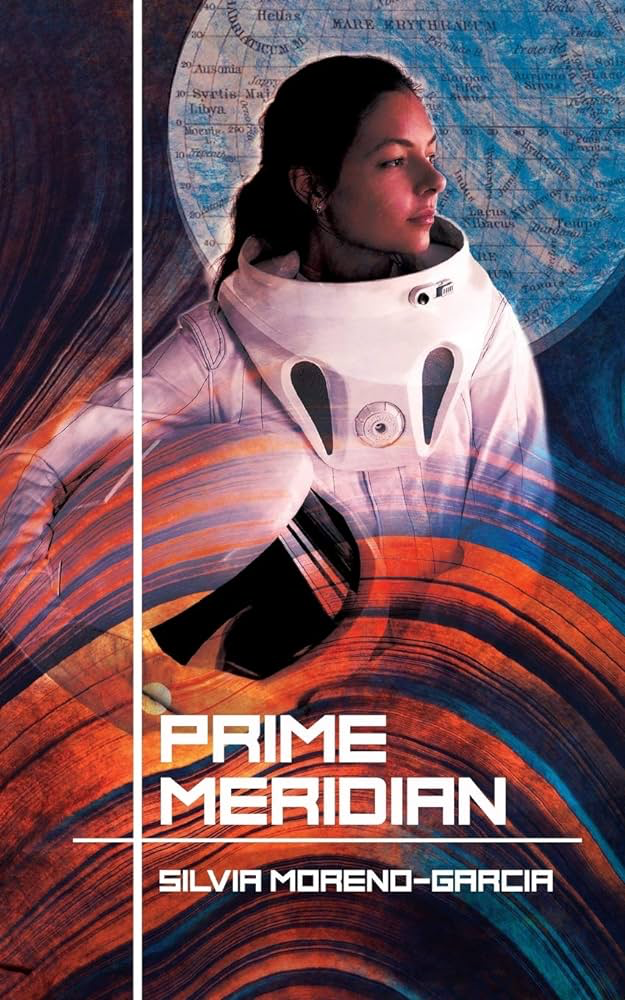
Prime Meridian – Silvia Moreno-Garciatelling the working class that they can do anything they set their heart to while the ruling class ignores them completely and colonizes Mars, anyone? Sound familiar?

…oh, wait. Damn.

“1000 Umbrellas” – XTC

Guess I just can’t stop listening to XTC, huh? In case you were wondering (because you totally were, I’m sure), “The Ballad of Peter Pumpkinhead” continues to have me in an unbreakable chokehold, but this one is good competition.

’60s inspiration can be found in almost any XTC song you can pull out of a jar, even if you ignore The Dukes of Stratosphear, which were just them under another name marketed as a “lost find” of the ’60s (and then ended up outselling any of their XTC records…ouch). For me, “1000 Umbrellas” immediately screams The Beatles, specifically in 1967—somewhere between Sgt. Pepper and Magical Mystery Tour. It’s pure theatre; even if the album, Skylarking, wasn’t a vague concept album, it practically begs for some kind of dramatic performance. Can’t you just imagine a scene of an aerial view of a bunch of pedestrians holding umbrellas in the rain, and Andy Partridge right smack in the middle of them, lamenting the loss of love as the rain pours down on him? Maybe the umbrellas morph into those pastel, spinning teacup rides as Patridge sings “And one million teacups/I bet couldn’t hold all the wet/That fell out of my eyes/When you fell out with me?” I particularly love how the orchestral arrangements seem to rise and fall, tilting just barely out of neatness and into delirium as Partridge wails, stumbling right along with the beleaguered strings section. On the heels of “Ballet for a Rainy Day,” the rain turns from the kiss of spring to cold, damp misery (a word that he frequently drags out like a ridiculed prisoner in medieval times) and like the swells of the orchestra, Partridge moans and wails like an actor trudging across the stage, the spotlight following him as he holds his broken umbrella against the downpour. I swear that this song needs a broadway-style, “It’s Oh So Quiet” music video—the imagery is jus too vivid for it to go without it.

And then we’re right back to having a jolly old time with “Season Cycle.” Duality of Skylarking.

…AND A BOOK TO GO WITH IT:

Scattered Showers – Rainbow Rowellmessy love and a chance of rain.

“The Rainbow Connection” – Kermit the Frog

Yeah. Well. If you need me to pay for your insurance following this whiplash, I’ll fork it over. But this is more of a palate-cleanser, right? Guess I ought to keep you on your toes. Or maybe you just need a bit of a break from Mike Patton growling about your menstruating heart. Take a breather. Find the rainbow connection.

Honestly, this song came on here solely since I’ve been thinking about The Muppets lately, and how glad I am that I had such an absurd and clever slice of positivity in my childhood. There seriously will never be another creator quite like Jim Henson, but it’s worth it to take his felt-covered gospel to heart: to keep imagination and joy close to your heart, always, whether or not you have an equally whimsical puppet on your hand.

…AND A BOOK TO GO WITH IT:

Any comforting book from your childhood – whatever made you feel good when you were younger should do the trick.

Since this post consists entirely of songs, consider all of them to be today’s song.

That’s it for this week’s Sunday Songs! Have a wonderful rest of your day, and take care of yourselves!

Posted in Book Review Tuesday

Book Review Tuesday (2/20/24) – No Gods, No Monsters

Happy Tuesday, bibliophiles!

I’ve had this book on my radar for a few years, as well as The Lesson; I almost read it earlier last week, but then I discovered that I could only read it on my phone, for some reason (nope). Coincidentally, I found it at Barnes & Noble later that week (on a very necessary detour I made with a friend), so I finally decided to pick up a copy for myself. Now, I’m so glad that I have a hard copy—No Gods, No Monsters is one of the most unique fantasy novels I’ve read in a while!

Enjoy this week’s review!

No Gods, No Monsters (Convergence Saga, #1) – Caldwell Turnbull

Around the world, strange creatures have come out of hiding from the shadows. Creatures of myth and legend, those thought to be confined to the imagination. In the wake of this unexplained event, known globally as The Fracture, the stories of people across America collide. A woman reckon’s with her murdered brother, unjustly killed by Boston cops, but learns that her brother’s life was more fantastical than she could have ever imagined. A professor goes in search of a friend presumed dead, but finds a schism between two cults in its place. A young girl must warm up to the presence of her adopted sister, who she grows to love despite her bloodlust. All of these events converge as the world of monsters is revealed, but can mankind reckon with their presence—and their demand to be seen?

TW/CW: police brutality, gun violence, gore, substance abuse/past mentions of an overdose, sexual abuse, domestic abuse

If I’m being honest, it’s a real shame that No Gods, No Monsters has an average rating of 3.45 on Goodreads. To be fair, it’s probably one of those “you love it or you hate it” books, but I absolutely loved it. Sometimes you love the book with an average rating over 4.00 and tens of thousands of reviews, but sometimes it’s those lower-rated and lower-reviewed novels that hit the spot. (see also: Spare and Found Parts – Sarah Maria Griffin)

No Gods, No Monsters truly felt dreamlike, and that’s what made this novel stand out to me. It’s not concerned with being overly coherent, and it drifts about in bits and pieces. I guess that’s the aspect that put a lot of people off, but it’s the kind of writing and storytelling that suits the story that Turnbull is trying to tell. It fits with the whole theme of “monsters have come out of hiding and we can’t do anything about it” theme—there’s global panic, sure, but first there’s the denial that anything is happening at all, and then the reality hits you, and you still try to deny it. This whole novel felt like navigating the haze of denial while the monsters creep out of the shadows: you know exactly what’s going on, but as long as you can help it, I’m not here, this isn’t happening.

I feel like No Gods, No Monsters could have just as easily worked as a short story collection. Each section, switching POVs from dozens of characters who are slowly woven together, works on its own, situated within worlds that are’ separate until the threads begin to tie themselves into an interlocking web of magic towards the end. They all felt like short stories, but I don’t think anything was taken away from them not being short stories—No Gods, No Monsters is a very non-traditional novel in several ways, and I liked that it toed the line between novel and anthology in order to flesh out the themes of community and the things that bound all of the characters together in the chaos.

My favorite section had to be that of Sondra and Sonya—their story was all at once chilling and tender, heartwarming, heartbreaking, and horrifying. Off of the top of my head, this instance in the novel is one of the few depictions I can think of where talking about complicated love in a fantasy/sci-fi setting really does feel complicated; the complication is very literal in the sense of depicting the drain (no pun intended—no spoilers, though) on Sondra, but her horror of both reckoning with the actions of Sonya in the present and how much they bonded in the past felt nuanced in a way that truly made me feel for Sondra. In general, this part of the novel is representative of what I loved about the novel as a whole: although there were some physical consequences to the monsters coming out of hiding, I loved that Turnbull chose to focus more on the emotional and interpersonal connections that happened in the aftermath.

Going off of that point, I loved how No Gods, No Monsters handled its expansive worldbuilding! The event that incites everything that happens in the novel is implied to be the start of a global upheaval, but Turnbull handles the complexities of it with aplomb. It doesn’t feel like every single action movie where we go instantly into mass panic and riots in the streets (although that is stated to have happened in the background), but instead gives us information in breadcrumbs through how it affects the many and varied characters of the novel. I did find myself wanting more of how the monster emergence is affecting the world, but a) I figured that the uncertainty is a consequence of the characters themselves not fully knowing what’s going on, and b) the fact that this is a series, so we’re bound to learn more in the books to come. I have We Are the Crisis downloaded, so I’m excited to find out more!

All in all, a truly memorable and inventive fantasy that explored the not-often-discussed areas of trauma and denial in the face of global upheaval. 4 stars!

No Gods, No Monsters is the first installment in the Convergence Saga, followed by We Are the Crisis. Caldwell Turnbull is also the author of The Lesson.

Today’s song:

my friend just got me hooked on indigo de souza, I’m OBSESSED

That’s it for this week’s Book Review Tuesday! Have a wonderful rest of your day, and take care of yourselves!
Posted in Sunday Songs

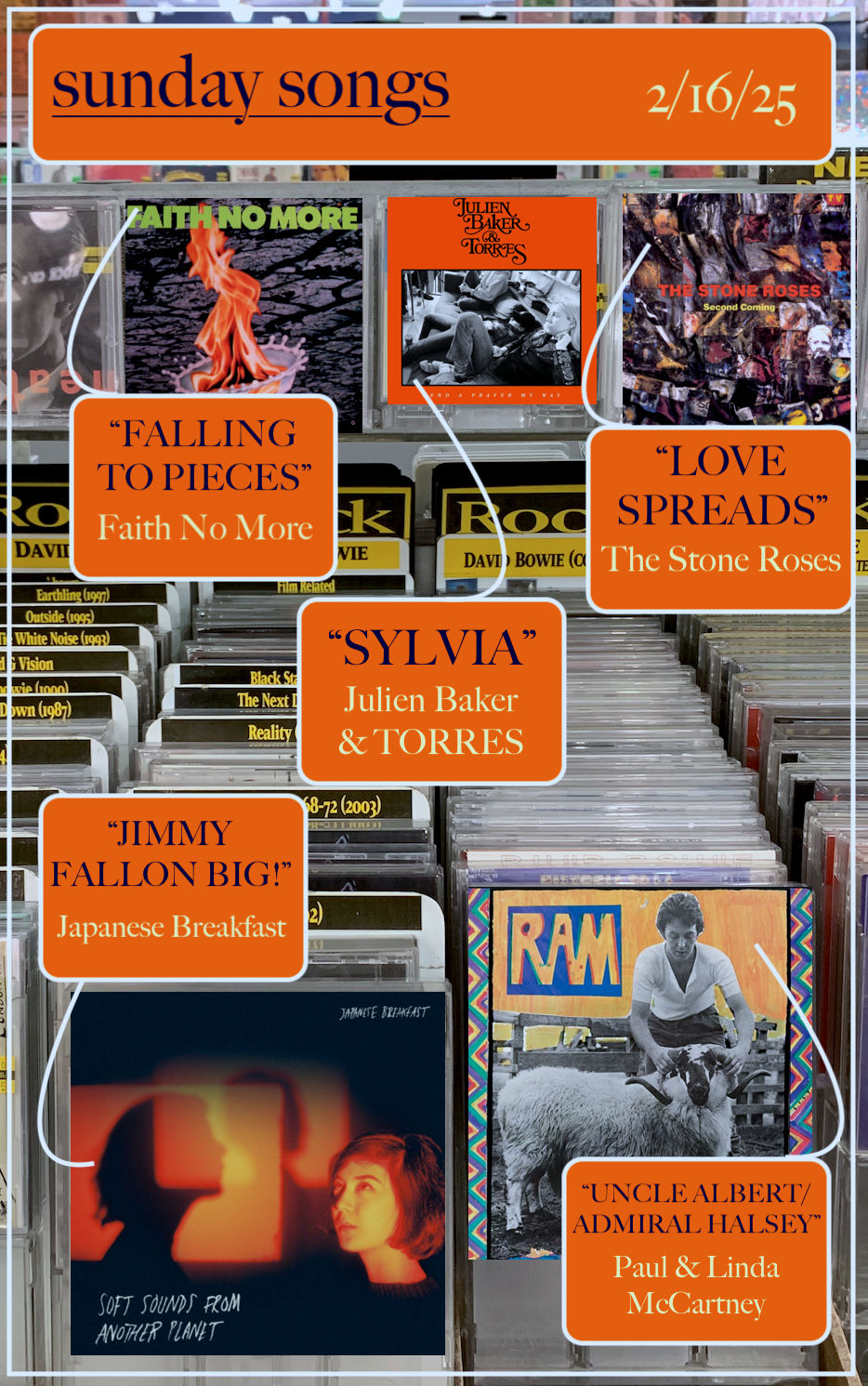
Sunday Songs: 2/18/24

Happy Sunday, bibliophiles! I hope this week has treated you well.

Welp. Back to the black and white (mostly) color palettes again. Oops. But ’70s David Bowie heals all wounds, right? Right?

Enjoy this week’s songs!

SUNDAY SONGS: 2/18/24

“Do You Want To” – Franz Ferdinand

From all accounts, it seems like Franz Ferdinand peaked at this album, You Could Have It So Much Better. But I feel like it’s understandable, on some level. You try to replicate something as iconic as “Take Me Out” or this, and you risk flying too close to the sun. Lightning can’t strike twice. Well, I guess it can, if you count this and “Take Me Out,” but…okay, three times?

This song. It’s so stuffed with infectious hooks that it’s practically a thanksgiving turkey. It’s pumping with allure and adrenaline, and not a single bit feels wasted. You hear the first 20 seconds and think “oh, that’s a great start to the song,” but lo and behold, every single band member pulls of their top hats to reveal a second, even more spectacular hook to propel it to unforeseen heights. And from that meteoric rise, “Do You Want To” feels like the most delightfully slick, guitar-driven gold mine of 2000’s indie rock. It’s a song that wrenches you by the hand into a nighttime world of leather jackets, impeccable hair, and shiny guitars. Lyric-wise, it’s nothing that the band hasn’t covered, but lyrics were never their legacy—the absolute sheen of it all overpowers the rest of it, and it’s the kind that you can keep on repeat for hours and never get tired of. For a few years, Franz Ferdinand seemed to have perfected that kick of leather-jacket, smooth indie rock, and even though it seemed to have burned out a decade or so down the line, for a moment, their talent was clear—and explosive. The only sin that “Do You Want To” ever committed was not having a third hook hidden beneath their other top hats—the last thirty seconds (“Lucky, lucky/You’re so lucky”) are just begging for at least one more burst of smooth guitar that sounds like it’s been fired out of a cannon. It’s such a frustrating ending. With that kind of buildup, how could they not be extending the song for a finale as glorious as the entrance? Either way, the three and a half minutes that we do have is joyous enough. Almost enough to make me forgive Alex Kapranos for permanently freezing his face in this expression for no good reason:

…AND A BOOK TO GO WITH IT:

Vicious – V.E. Schwabcome to think of it, a lot of V.E. Schwab’s male protagonists fit a similarly charismatic and boundary-pushing (mostly in terms of magic and science, anyway), but this novel absolutely fits the slick, Franz Ferdinand vibe.

“Fascination” – David Bowie

Frustrated that “Do You Want To” ends right before it should theoretically go on for at least two more minutes? Fear not! At least David Bowie wasn’t afraid to make his timeless grooves almost six minutes long.

Welp. I don’t know how Young Americans wasn’t on my album bucket list already, but it sure is on it now. The iconic title track and “Fame” should’ve convinced me, but somehow it was “Fascination” that pushed me over the edge. It reminds me just what I love about the ’70s; the production is nothing but slick and slinky, full of vibrance and a groove that never even comes close to sputtering out for all five minutes and 48 seconds. God, the saxophone. I don’t usually find myself saying that about saxophones, but oh my god. It’s not a song that just makes you feel like dancing—you’re all but transported to a dance floor somewhere, amidst loose ties and sunglasses and warm lights bathing everyone’s faces. Strangely, the only thing that doesn’t scream vibrant or groovy is Bowie’s voice. The more you focus on it, the eerier it feels. Even though his voice was a decade or so from becoming as rich and resonant as he was later known for, it had thinned out even more so that he was in his youth. Young Americans was recorded during the height of his crippling cocaine addiction, and you can hear it in this song more than any other on the album. I could just be projecting, given how he was able to belt out the classic “ain’t there one damn song that can make me…break down and cry?” on the same album, but whether or not it was purposeful to add to the slick, sultry air of the album and his persona, it’s not a stretch to make. His voice often takes a back seat to the sheer power of the backup singers, and despite the seduction written all over “Fascination,” I can’t help but think of the exhaustion that eventually led him to pack his bags for Berlin in a few years’ time. No judgement, but it’s kind of the reason why I’m always a little suspicious of people who say that The Thin White Duke is their favorite Bowie persona. Iconic as all the others in both looks and musical output, but…I don’t know, it feels like a red flag that the Bowie you remember most fondly is the Bowie that was characterized by exhaustion, excessive substance abuse, and behaviors that he later condemned as a byproduct of the worst period of his life. I just feel like if that’s your favorite Bowie…again, no judgment, but calm down, you edgelord. You’re not impressing anybody. Music isn’t automatically deep just because the artist was at rock bottom when they made it.

Nonetheless, it is a truly fantastic, masterful song. David Bowie was just almost incapable of having an album without at least one good song, even if it was the more commercial ’80s albums.

…AND A BOOK TO GO WITH IT:

The Final Revival of Opal & Nev – Dawnie Waltonsteeped in mid-’70s rock, I suspect the fictional music that Opal & Nev made was partially inspired by Bowie’s work around the same time.

“A Gospel” – IDLES

TANGK is a bizarre album in the best possible way. IDLES seem to have partially (but never fully, this is still IDLES we’re talking about) shed the punk sensibilities that they’re known for, and in its wake, Joe Talbot and company have gone on to explore uncharted territory for the band. Tracks like “Gratitude” and “Hall & Oates” prove that they’ll never stop being their aggressively positive selves, but TANGK has given them room to grow. How much of it we can credit to Nigel Godrich is up in the air, but either way, it’s a fascinating evolution.

Emotional vulnerability and healthy masculinity have always been cornerstones of the IDLES image, but never have they been so soft and bare on “A Gospel.” Looking back, the Ultra Mono track “A Hymn” feels like its spiritual predecessor, both in title and nature, but even then, this is the first time that IDLES have ever felt quiet. No screaming, no bass, no rasp roughening Talbot’s voice. “A Gospel” presumably finds Talbot after his recent divorce, solemnly wallowing in the aftermath: “Delete my number/I’m no more/Ignore my eyes, babe/They’re just sore.” (“I’m not crying, it’s just been raining…on my face…”) But true to IDLES’ commitment to love and mutual understanding, he harbors no ill will towards his own partner, gently offering solace and closure instead of the biting words that are all too common in these kinds of songs: “I know you better/I’m your half/Just tell me darling/And I’ll be your past.” It’s sad that it’s so rare that you find songs about relationships that aren’t malicious towards the partner in some way; in some cases, the other party is in the wrong, but we’ve had so many songs about conniving women (from men who are likely the problem) and whatnot that finding a song like this feels like a needle in a haystack. “A Gospel” seems to come, refreshingly, from a place of genuine remorse; you can feel the embarrassment in Talbot’s confessional lyrics, but they’re never overly self-deprecating or, on the other hand, aggressive. It’s a melancholy song, but it feels like the most amicable breakup song I’ve heard. Talbot has repeatedly said that the thesis of TANGK revolves around love, and although “A Gospel” takes it from a more distraught angle, it’s still love—being able to step away from a situation where you know you’re in the wrong, and encouraging a peaceful resolution.

…AND A BOOK TO GO WITH IT:

Aurora Burning (Aurora Cycle, #2) – Amie Kaufman and Jay Kristoffno spoilers, but I was distinctly reminded of a certain character after the fallout of a certain reveal near the end of the novel. Ouch.

“Virginia Woolf Underwater” – Chelsea Wolfe

No matter what Chelsea Wolfe album I listen to (you’ll definitely be hearing about her latest next week), it almost always makes me come back to some of the material off of Unknown Rooms. I adore Chelsea Wolfe’s shreddier, overtly goth style, but unfortunately, I drank the sad girl Kool-Aid long ago and I can never come back, so here I am, back at the acoustic album. There’s no doubt that Wolfe can wring out emotion whether or not she’s playing electric or acoustic. She’s at her best when she’s conjuring a swarm of bats from oblivion with a full assault of instrumentals, but the power always lingers. Like my favorite of her songs, “Boyfriend” (also from this album): naught but guitar and Wolfe’s ghostly rasp, it evokes the same rise of power and overwhelming emotion as anything else she’s written. In the end, it all feels cavernous.

“Boyfriend” is plenty bleak, but there’s something about “Virginia Woolf Underwater” that feels so much more so; although it’s just as sparse as any other track on this album, the discordant nature of it all ties the despair of it together, with off-kilter chords punctuated by a tambourine. Only later do the orchestral strings come in, but they feel just as cold as the rest of the song. Alluding to Virginia Woolf’s early death by drowning, the song feels as distorted as voices floating in the water. Wolfe’s voice drifts in and out of focus. The lyrics imagine Woolf’s state: “Everything you’ve owned is gone/Everything you know is wrong/Everyone you’ve loved has left/Everything you’ve touched is dead.” Given Woolf’s struggles with depression and trauma from the second World War towards the end of her life, it’s not a stretch to think that she was thinking thoughts along these lines. That’s what makes the song tragic, but there’s something touching about how Chelsea Wolfe was able to connect to her all these years later, and was moved enough to write her an elegy of sorts. It’s a cross-temporal love letter, a call through the ether to tell not just Woolf that she understands, but for others to relate to and know that they are not alone in their experiences. Only fitting that now, 12 years after the release of Unknown Rooms, that her newest album is titled She Reaches Out To She Reaches Out To She. What better way to sum up Chelsea Wolfe’s brilliant career?

…AND A BOOK TO GO WITH IT:

Godkiller (Fallen Gods, #1) – Hannah Kanerthis story similarly begins with Kissen, who has lost everything, and the novel follows her finding her purpose…with some killing gods on the side.

“Floating on a Moment” – Beth Gibbons

I feel like I should be more invested in the fact that Beth Gibbons is releasing a solo album this May. Then again, I still haven’t picked myself up and listened to Dummy, so I feel like that’s the top priority. The only thing keeping me from it is the Sisyphean album bucket list I’ve created for myself, so we’ll see when I get around to it. Soon, given that at least a quarter of it had me in a nearly unbreakable chokehold in early 2022.

“Floating On A Moment” feels further removed from the trip-hop that Portishead was known for, opting for a more stripped-down form. Synths and samples have been exchanged for acoustic guitars and a choir, and the result is slow and gentle, like water trickling from the gutter. Admittedly, I expected something weirder from Gibbons, but I don’t not like this song—it’s good, but it’s not the kind of slow that’s always compelling (that would be Portishead). It’s good when you’re in the moment (no pun intended) and listening to it, but on the outside…I hate to say it, but it feels a little predictable? The fact that it’s track two on Lives Outgrown seems kind of bizarre unless the whole album is going to be this slow, or if it just has a slow start. What’s weirder is that “Floating On A Moment” is centered around the fleeting nature of time and staying in the present, and yet it’s so slow…I guess it could fit with the image of time slipping through your fingers, but this song feels anything but fleeting. If anything, it’s the slow drip of a memory recalled, an alternate reality pondered, a gradual crawl through the recesses of the mind. All that’s to say that this isn’t a bad song. For what it is, “Floating On A Moment” is as gentle as they come, something to have in the background. Again: I hate that I’m saying that about Beth Gibbons, of all people, but we don’t have the whole picture of Lives Outgrown. We’ll see what she’s got up her sleeve.

Even though the pervasion of AI art in music videos is maddening to me (at this point, it’s less about the fact that it’s AI and more that the “style” just looks objectively ugly), the AI elements of the music video for “Floating On A Moment” suit how the song feels; everything melting into a gloopy mess is a hallmark of AI animations at this point, but that kind of melting, combined with the real-life footage of Gibbons, melds surprisingly well with the slick, melting quality of the song.

…AND A BOOK TO GO WITH IT:

Sea of Tranquility – Emily St. John Mandela quiet and understated but detailed vision of past, present, and future.

Since this post consists entirely of songs, consider all of them to be today’s song.

That’s it for this week’s Sunday Songs! Have a wonderful rest of your day, and take care of yourselves!

Posted in Book Review Tuesday

Book Review Tuesday (2/13/24) – Sing Me to Sleep

Happy Tuesday, bibliophiles!

I always love stories about mermaids and sirens, so Sing Me to Sleep instantly went on my TBR when it came out last June. Sing Me to Sleep presented a land-bound take on sirens that proved fascinating, and resulted in a tense, seductive YA fantasy!

Enjoy this week’s review!

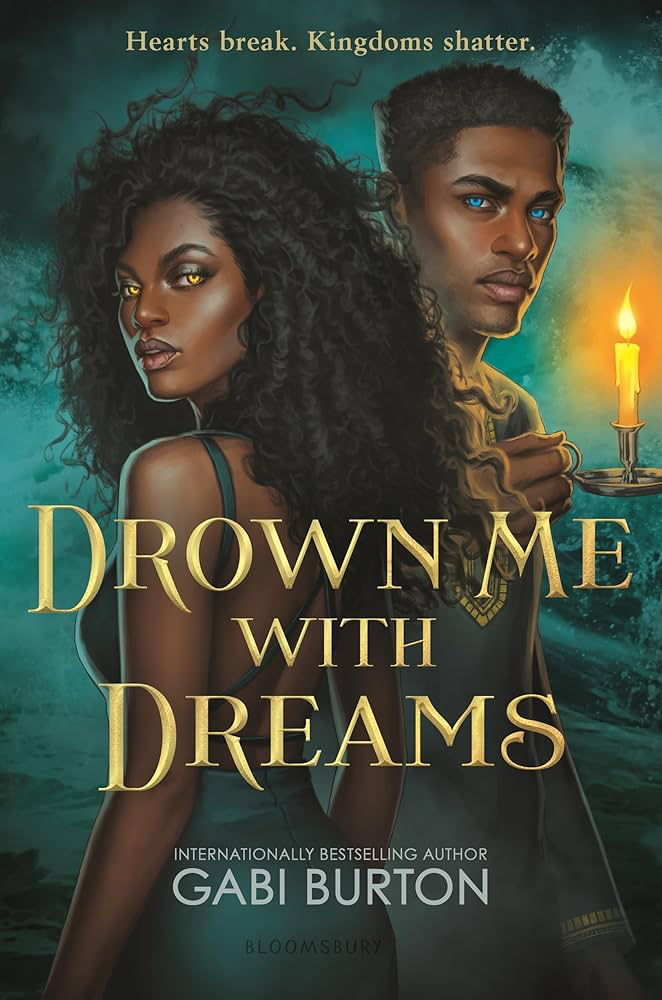
Sing Me to Sleep – Gabi Burton

Saoirse is hiding a deadly secret. She’s a siren, driven by the urge to kill and seduce, which has made her into the perfect assassin. Her talents took her all the way to the good graces of the royal family of Kierdre, but they don’t know of her true identity—and she must hide it at all costs, lest she incur the wrath of their creature-hating king. But working as one of the personal bodyguards to Prince Hayes has its perks, and soon, Saoirse finds herself questioning her loyalties—and drawn towards a prince who would kill her if he discovered her true self.

TW/CW: genocide (past), kidnapping, fantasy violence, murder, poisoning, drowning, stabbing, torture

I’m not going to bog down this review by starting it with another rant about how jaded I am with epic and high fantasy, but I’ll leave it at the fact that this was the reason that my expectations for Sing Me to Sleep were so average. But I ended up blowing through this novel, and I haven’t done that in weeks—it’s just pure fun.

I won’t lie—I was a little disappointed when I realized that Sing Me to Sleep took place primarily on land when they had a siren protagonist. Mermaids and sirens are an instant draw for me, so I was excited to explore some of those magical aspects and how Burton realized them in her fantasy world. However, once I got into the novel, I ended up enjoying how Saoirse’s siren status affected her when she was confined to land, from the call of the sea every time she came near it to being momentarily thrilled by having her head dunked underwater while being tortured for information. Burton’s handling of Saoirse’s hidden thirst for male blood was similarly well-executed; it set a kind of time bomb of sorts whenever she was around her targets, and made the stakes feel tangible and not just an aside thrown in to remind the reader that she’s a siren. The way that Burton utilized these aspects made for a novel with just the right amount of stakes, with tension in all the right places.

Sing Me to Sleep hinged on the twist of Saoirse, trained to seduce and take advantage of men before killing them to satisfy her bloodlust, accidentally falling for Prince Hayes and not knowing what to do with herself. I was banking on it being a little cheesy (this is YA fantasy, after all), but I really appreciated how slow Burton took it with the budding romance! Not only was the forbidden aspect of it enhanced by the aforementioned handling of Saoirse being a siren, Burton didn’t go headfirst into the romance, like so many authors end up doing while trying to pull off enemies-to-lovers. The initial hatred and disdain felt genuine, and Saoirse’s inner conflict when she realized that she was falling for one of her marks was appropriately a shock to her senses. Although I didn’t particularly care for Prince Hayes as a character, Saoirse’s reactions to him felt true to what enemies-to-lovers should be. I’m interested to see how the romance will play out in the sequel…

Again: I’ll spare you my gripes with epic fantasy as a whole, but unlike of much of the fantasy I can remember reading recently, Sing Me to Sleep had the beginnings of some fascinating fantasy worldbuilding! The novel does a great job of establishing all of the different magical races and subsequently detailing the history of discrimination and subjugation amongst them. Burton did have quite a lot on her plate, but for the most part, she juggled it well, making for a world with limits that made sense and enough hints within to make me want to read the sequel just to see how some of the hidden elements get explored. Half the hard part of worldbuilding is making it something that the reader is actually motivated to read once you’ve done all the heavy lifting to create it, and Burton succeeded on that front!

However, while Burton did well with juggling several moving parts in her worldbuilding, I’m not sure if I can say the same for her characters. Although Saoirse was a compelling protagonist with motives that were appropriately fleshed-out, most of the others—of which there were a ton—left a lot to be desired. Besides Hayes, if we got any trace of their personalities, it was left at one character trait (or physical description) to distinguish them, and not much else. Combine that with the expectation that there were dozens of these characters running around that we had to remember to get all of the plot, and it just made for a mess as far as remembering why any of them were important save for their job descriptions. If some of them had been cut out, it would have solved the whole problem—it’s just a case of Burton biting off much more than she could chew, which is entirely understandable for a debut novel.

All in all, an action-packed fantasy full of tension, forbidden love, and bloodlust. 4 stars!

Sing Me to Sleep is Gabi Burton’s debut novel and the first novel in the Sing Me to Sleep duology, concluded by Drown Me with Dreams, which is slated for release this August.

Today’s song:

That’s it for this week’s Book Review Tuesday! Have a wonderful rest of your day, and take care of yourselves!
Posted in Sunday Songs

Sunday Songs: 2/11/24

Happy Sunday, bibliophiles!
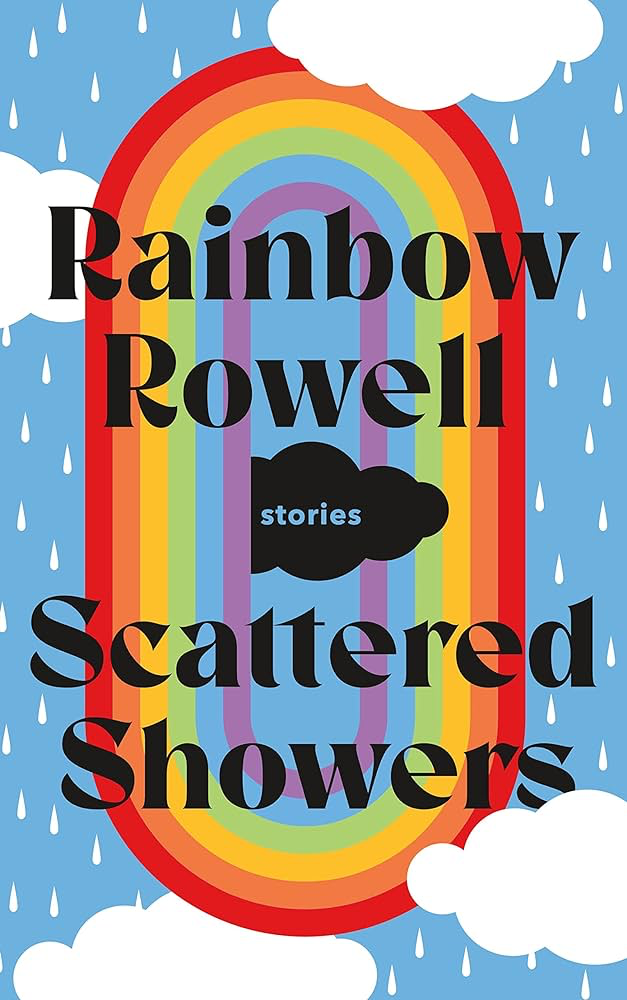
Huzzah! No more black and white color palettes! Color has returned! And somehow, I’ve managed to cram way too many songs that I’ve had on repeat into a single post, so get ready for some rambly paragraphs. Also: music that changed the game (several games, in fact), people who really liked the ’60s, and me freaking out over an Instagram post that’s already over a week old.
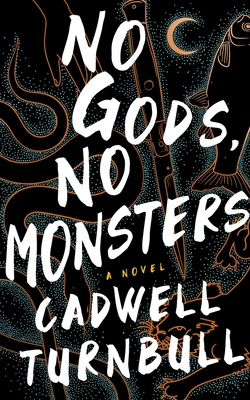
Before we get into that, here are last week’s songs:

2/4/24:

Now, enjoy (oops) this week’s songs!

SUNDAY SONGS: 2/11/24

“Read the Room” – The Smile

I already rambled about this song plenty on my review of Wall of Eyes from last week, but if you haven’t read that, take my word for it. “Read the Room” was half the reason I was excited for the whole album in the first place just because of how arresting it was to hear it live for the first time without knowing they’d been cooking it up. From that, I thought I was going to destroy my hopes for this song because I’d hyped it up so much, but no. It’s still hypnotic in every way possible. Just listen, okay?

…AND A BOOK TO GO WITH IT:

To Shape a Dragon’s Breath – Moniquill Blackgoosemassive egos and magic rainbows aplenty, but this time in the form of gaslighting and colonial pressures surrounding Anequs, an Indigenous woman fighting to make her voice heard.

“Enjoy” – Björk

Finally. I’ve finally gotten around to listening to Post, and with every song I come back to, I keep hitting myself for not listening to it sooner. Not just because some of my favorite Björk songs (and no shortage of childhood nostalgia, courtesy of my parents and their wonderfully indie taste) were on it, but just because I’ve seen it held on so high of a pedestal for so long. Normally, that’s not a primary motivator for listening to an album unless I’ve had it recommended by someone I trust, but if it’s Björk, talent of talents, that’s being held on said pedestal, then why shouldn’t I? Now that I’ve listened to it, I’m struck by the feeling that Post sounds simultaneously like nothing I’ve ever heard and everything I’ve ever heard. Every song sounds so unique, and yet screams of everything that’s come after it, whether you’re looking at the world of rock, trip-hop, or electronic—a route that Björk took on this album when she felt that rock music held little opportunity for the experimentation brewing inside of her. And that experimentation was truly wild—wild in the naturalistic sense, in the sense that she’s always meant when she’s said that she isn’t necessarily inspired by the music of her native Iceland, but of the volcanic landscape of Iceland itself. There’s musical eco-brutalism rife in this album, a full-frontal fusion of the natural and the industrial that grinds together into something that feels both alien and familiar, but wholly captivating. Maybe eco-brutalism isn’t quite the right word—I’m sure there is a word for this, but the “brutalism” part, although it is distinctly industrial in some places, feels sleeker and more technological. Post feels like that picture of a bunch of bright green plants crawling out of the dirt, but they’re planted inside of the headlight of a car; both images are strikingly different from each other, but they were always meant to be distinctly harmonious without bleeding into each other.

“Enjoy” was one of the songs that I hadn’t heard previously, and now, I’m practically waiting on its every beck and call. I just cannot stop listening to it. With something so simple as a walking, looping synth to provide its chrome backbone, “Enjoy” becomes a kind of cyberpunk catwalk, a confident strut through metal and neon lights. It’s no surprise that Tricky (who Björk had a short-lived relationship with at the time) had a hand in this track; it’s got trip-hop written all over it, but even that couldn’t place it as anything but purely Björk. With brass blasts punctuating the spiraling web of synths thickening every note, it feels like the formula that she’s molded like clay for her whole career—taking two distinct things that would sound horribly out of place in the hands of any other artist, but in her hands, sound like they were made to mesh together, a cyborg chimera of spare and found parts. And through it all, Björk’s signature, growling belt rings like a cry of confidence, a declaration (of independence?) as she struts the cyberpunk catwalk, hungry for tactile sensation, branching her feelers out for anything they can grasp. Björk described it as “[being] greedy, to be eager to consume a city,” and “Enjoy” feels like nothing but riotous consumption, something swallowing whole continents in its wake in a search for something to feel.

…AND A BOOK TO GO WITH IT:

Translation State – Ann Leckie – this novel features an alien character with a deep desire to experience the same sensations of other intelligent life that have been excluded from them; the overwhelming urge to seek out the tactile of “Enjoy” radiates through here as well.

“Chapter 8: ‘Seashore and Horizon'” – Cornelius

I’m a warm-weather creature at heart. I can’t get too warm, but I tend to come back alive once the sun comes out. I’m practically a reptile in that regard—I take any crumb of warmth that I can get, then I soak it up for the rest of the day like stolen nectar. Similarly, I find myself gravitating to sunnier, more summery music in these chillier, gloomier months. Here I am, looking out my window: all the trees are bare as can be, there’s half-melted snow sliding off the neighboring rooftops, and the ground beneath my feet is a mess of slush, dirt, and who knows what else. If you squint, there’s a tiny pocket of blue between the clouds, but it’s gray as far as the eye can see. But in these times, I turn to musical sunshine for my fix. I’m thinking back to last year, and that’s around the time when I was playing Fishbone’s “Everyday Sunshine” more often than not. Now, we’ve got some sparkly sunshine in the form of a trip to the beach.

Up until now, I only knew two Cornelius songs (“Mic Check” and “Smoke”), both collages of synth, samples, and brightly-colored, digitized sparkle. What I’ve taken away from looking into his background is that Cornelius (a.k.a. Keigo Oyamada), is, if nothing else, a student of The Beach Boys, to the point where he put a picture of himself dressed as Brian Wilson in the liner notes of Fantasma, the album where we get “Chapter 8.” Somehow, it never once dawned on me while listening to this song, but it’s like a sledgehammer in the face of Pet Sounds influence once you realize. This is literally just The Beach Boys if they had a few more synths and discovered sampling. And like what made Wilson and co. famous, “Chapter 8” feels like if warm sunshine over an endless, golden beach were channeled into just under three and a half minutes of music. Combined with the equally peppy powers of Robert Schneider and Hilarie Sidney of The Apples in Stereo, there’s no adequate words to describe this song other than carefree. You can almost see Schneider and Sidney nodding their heads in time as one strums an acoustic guitar, with animated sea creatures dancing around them. But what elevates the joy of this song is the way their high-pitched harmonies dance together, feather-light.

What a joyous, whimsical song! Sure would be a shame if…oh, for fuck’s sake, Cornelius did WHAT? Jesus Christ…at least The Apples in Stereo are good people…

…AND A BOOK TO GO WITH IT:

Sea Sirens (A Trot & Cap’n Bill Adventure) – Amy Chu and Janet K. Leea brightly-colored trip into a fantastical world under the sea.

“The Ballad of Peter Pumpkinhead” – XTC

Everybody’s weekly Apple Music replays should be generating soon, if memory serves, and I’m just waiting to see which spot out of the top 5 that this song has occupied, because it’s kind of a given that it’s going to be somewhere in there. It’s an inevitability at this point. As evidenced by this post, there’s no space left in my brain for important stuff to occupy, because it’s all been clogged with Björk, The Smile, and this for 2 weeks straight.

For XTC, it’s easy to see why. Andy Partridge always had aspirations of being a pop star, weaned on ’60s groups like The Monkees, whose style inspired his quirky musical career. And although he never got the Monkees-level fame that he’d always dreamed of (maybe that’s for the best? Who would want to have a fake show centered around you and then have to own up to not playing any of the instruments on live TV? Maybe that’s just me…), his pop craft is unmistakable. Their hits were more on the side of…well, ADHD, valium withdrawal, and poking sticks at God than “Daydream Believer,” but, as he frequently insisted, the music he and the other members of XTC was pop—it was just confined to the fringes, for the most part. “The Ballad of Peter Pumpkinhead” feels like it could have been the crowd pleaser at sold-out stadiums in some alternate universe where fawning girls had posters of Andy Partridge and Colin Moulding in mop haircuts on their walls. It’s a tragic and biting song, but it’s got the command of a song made for people to wave their hands along, raised in prayer in a mass mourning for Peter Pumpkinhead. The song did, in fact, start out as a smaller version of that kind of pity; the Peter Pumpkinhead character was inspired by a jack-o-lantern that Partridge had proudly carved, then slowly watched rot day by day, which led him to not only pity the poor thing, but toy with the concept of a person who was purely good, and therefore, according to Partridge, “I thought, ‘god, they’d make so many enemies!'” And it’s easy to see—not to be cynical with it, but most governments despise the idea of Peter Pumpkinhead-like people simply because he’s everything they’re not—charitable, kind, and just purely good, and capable of letting every criticism bounce off of them (“plots and sex scandals failed outright/Peter merely said ‘any kind of love is alright!'”). The music video, which was later heavily edited for us Americans, didn’t just expand on the allusions to Jesus in the song’s final verse (“Peter Pumpkinhead was too good/Had him nailed to a chunk of wood”), but straight up recreates the JFK assassination. Not just a few references or anything, no. It’s literally just JFK’s assassination, complete with a Marilyn Monroe lookalike, a flashing image of Cuba superimposed onto a picture of a pig, and a weeping Jackie Kennedy sprawled out of the back of the car. Certainly a ballsy move, but not even the ballsiest move they made when it came to American audiences. If being memorable was the aim, then they succeeded. But even without it, “Peter Pumpkinhead” has pathos in spades, the kind that brings people to their knees.

Hooray for Peter Pumpkinhead, indeed. He’s got my vote, but I feel like we already established that he’s not the kind of guy to run for public office, so I’d just shake his hand.

…AND A BOOK TO GO WITH IT:

The Last Human – Zack Jordanbeing the last human in the galaxy tends to make you too many enemies, even if you don’t deserve it. Also tends to happen when you’re a teenage girl.

“The Party” – St. Vincent

Oh god. God. Help me. St. Vincent wiped her entire instagram and posted a video setting aside the blonde wig from the Daddy’s Home tour H-E-L-P. HELP ME. I AM NOT OKAY.

Through my unceasing hyperventilation, I’ve come back to some of her older genius through a scattered few songs from her (slides on hipster glasses) sophomore album, Actor, and its timeless gateway into the singer and guitarist that she’s become. It’s uplifted the quirky art-pop of Marry Me into something sharper, at times more sinister (“Marrow”), and at times more heartfelt (“Laughing With a Mouth of Blood”). Only two years into her solo career, and she’s already got a full brass section at her back, but even that couldn’t stop her as a singular, meteoric force; Actor proved that she had the plentiful talent to command a room and supercharge it with artfully jagged energy, always lingering on the edge of ecstasy and fear. Compared to some of the other tracks, “The Party” isn’t necessarily the captivating explosion of some of the other tracks, but it’s still an explosion in its own right. Like “Laughing,” it’s more downtempo both in instrumentation and lyricism; for the glut of the song, Annie Clark is only joined by spare drums and specks of tasteful piano chords as she wistfully recalls tired companionship with someone as a party winds down. There’s a kind of delirious drunkenness to it as Clark watches her subject fade through her fingers in the form of scant memory: “I licked the ice cube from your empty glass/Oh, we stayed much too late/’Til they’re cleaning the ashtrays.” Lines like “oh, that’s the trouble/of ticking and talking” are straight out of the cheeky, red-lipstick mannerisms of Marry Me, but as the song unfurls like a creature hatching from an egg, it’s a concentrated specimen of her growth in the years since. As her voice fades out of lyrics and into chorus, joined by a choir rising like fog, it feels like she has her finger lingering over the button to unleash chaos, a nuclear release of creativity. Drums skip beats and fade out of line, synths blip and crackle like they’re struggling to hang on, and Clark and her chorus rise from the waves like Aphrodite rising from the sea. For a section that occupies such a small space in the song, it crams so much dare I say cosmic fervor into only a minute and a half. If “Marrow” and “Actor Out of Work” are explosions, “The Party” is an explosion in slow motion, the kind you watch from afar as debris arcs over your head and flames balloon outwards into oblivion. It’s even more evident watching it unfold in Pitchfork’s Cemetery Gates series (why did they ever stop doing those, by the way?)—there’s no other way to hear the meticulous chaos, especially in its extended form, than in an old church, where surely, Clark’s talent reverberated through the walls like the aftershocks of an earthquake.

What I’m trying to say is that there is a right way to close out an album, and this is how.

…AND A BOOK TO GO WITH IT:

The Gilded Wolves – Roshani Chokshithe image of a dying party and the faint, tender moments shared between the narrator and the unnamed character remind me of Séverin and Laila sharing a tense (but romantic) moment amidst magical glamour.

Since this post consists entirely of songs, consider all of them to be today’s song.

That’s it for this week’s Sunday Songs! Have a wonderful rest of your day, and take care of yourselves!