

Happy Tuesday, bibliophiles!
It feels like this is my first time reading William Alexander, but technically it isn’t. My first experience of his writing was ages ago; I picked up his MG novel Goblin Secrets when I was about 10 or 11 (I think? My memory’s hazy on it, to be honest) and didn’t like it. But I wasn’t the best judge of taste back then (even if the average ratings for Goblin Secrets are rather low), and plus, Sunward was his first book for adults, and things are bound to have changed.
For whatever reason, it’s so difficult to find sci-fi books by Latine authors. I don’t know if it’s the publishing industry or some other thing, but I feel like for Latine authors specifically, they’re so few and far between. That’s part of why I was so excited to see Sunward out in the wild. I’m so glad to report that although past Madeline didn’t like Goblin Secrets, Sunward is not to be missed.
Enjoy this week’s review!
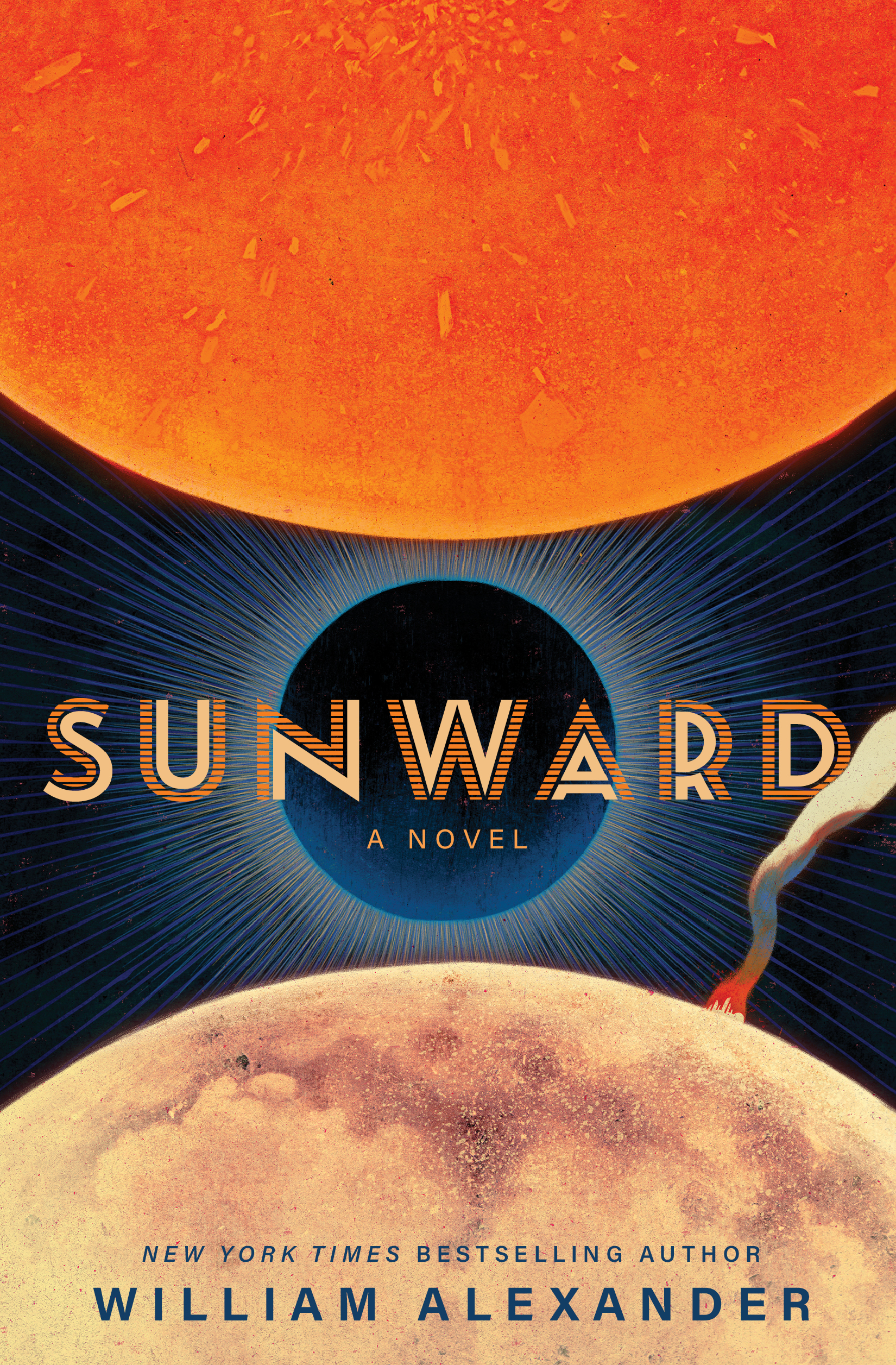
When faced with the decision to follow in her parents’s footsteps as interplanetary politicians, Tova Lir chose a quieter life. She works as an interstellar courier, ferrying private communications across the solar system. But her spaceship doubles as a nursery—Tova raises sentient AIs whose consciousnesses are still on the levels of children and teenagers. When Agatha Panza von Sparkles (she named herself), one of her AI wards, experiences the splintering of her consciousness, Tova has to seek answers in the last place that she wants to go: Earth’s moon, where a deadly explosion has been pinned on its robot population. With the help from her former AI wards, Tova must cross the solar system to save Agatha’s mind from disappearing entirely.
TW/CW: racism, child death, descriptions of injury
Sunward clearly felt like a first-time attempt at a sci-fi novel; there’s less emphasis on the hard mechanics of the worldbuilding, and even with the strong AI element, it rarely veers into any grounded science. Even as a certified sci-fi girlie, that’s not a dig at William Alexander in the slightest. In fact, that’s part of why I loved Sunward so much. It wasn’t burdened by any of the rigid genre conventions that some authors adhere to, and it frequently bucked against what sci-fi is “supposed to be.” Alexander was unafraid to make his solar system unabashedly quirky—it almost felt like Wes Anderson’s take on straight-up sci-fi post-Asteroid City, from the precocious characters to the charm of the solar system’s cultures. There’s a sun-based cult on Mercury. The Moon has wacky mushroom architecture. The gang runs into a theater troupe of mostly robots that perform Twelfth Night in sign language. There’s a pretentious poet and her screaming parrot. Some of the more deliberately twee bits (ex. Agatha Panza von Sparkles) did get grating at times, but for the most part, it made for such a delightful novel. It’s just so charming and strange, and I loved every second of being in Alexander’s new solar system.
As a whole, the worldbuilding of Sunward was a mixed bag. But something that Alexander really excelled at in this novel was the cultural aspects of the worldbuilding. Our solar system is flung far into the future, with human settlements on many of the planets familiar to us, but each of them felt so culturally distinct. Alexander did such an amazing job feel like every planet’s people was unique, and even within the planets, giving them different groups and points of conflict. The same goes for his depictions of human-robot relations; they also differed from planet to planet, but different characters had different culturally specific reasons for the positions that they had. In particular, I loved the whole group of people isolated on a spaceship that developed their own sign language after an illness rendered most of the crew Deaf—that was a fascinating aspect, and I loved that unique inclusion in the novel. It was just so clear that there was tons of thought put into this future vision of the solar system, and I loved it.
Of course, you all know that I’m a sucker for found family. It’s old news at this point, but loving stories like this has made me picky about which ones actually feel like family. Sunward, in the end, knocked it out of the park. Tova was such a strong character, and I loved that her stoic outward presence didn’t contradict the love that she had for her robot children and the people around her—in fact, it only enhanced the protectiveness she felt for them. She was a great protagonist, but the side characters made this novel shine even more. Sunward’s dynamic was way more of a dysfunctional found family, which is pretty much par for the course, considering that this novel is basically just a solar system-wide quest to reunite all of Tova’s AI children. Tova’s getting the band back together, and it…doesn’t go to plan. Alexander did a great job of meshing all of the characters’s clashing desires and making this found family painfully chaotic, but still funny. It’s very much “we’ve all been tossed together in this spaceship with a vague common goal, and we all have to tough it out,” but by the end, in spite of all the squabbling, they stick together. That being said, a lot of the characters were too underdeveloped for it to fully feel like a family until the last few chapters. I would’ve loved Sunward to be longer for several reasons, and this was the most prominent one for sure. But for what it was, Sunward’s resonant love for family and sympathy for outsiders made it a tenderly emotional novel.
Unfortunately, that first-time sci-fi writer element that I praised earlier dragged Sunward down in some places. While I was willing to suspend my disbelief for a lot of this novel, there was a complete lack of context for a few too many of the worldbuilding elements. Sunward is set in our solar system, but the only context that Alexander gives us is that we’re “far in the future.” We don’t know the year, how many centuries it’s been since we’ve colonized the stars, and how long that took. Listen—I don’t need all of the answers, but given that Earth has been abandoned for nebulous reasons, we still retain some pop culture from antiquated Earth eras, and there’s some semblance of advanced technology, it would’ve helped to have at least a rough timeline of how we colonized the solar system, and more importantly, why. The same would’ve helped with some context around the human-robot tensions, but that was at least easier to extrapolate from context clues; still, I would’ve liked more than just vibes and ideas that haven’t been hashed over in other robot-related sci-fi. Granted, I thoroughly enjoyed Sunward, but it desperately needed some more ground to stand on in terms of the worldbuilding.
All in all, a heartfelt and quirky vision of our solar system in the future, and the love that brings people together within it. 4 stars!
Sunward is a standalone and William Alexander’s first novel for adults. He is also the author of several other books for children, including Goblin Secrets, Ghoulish Song, Ambassador, Nomad, A Properly Unhaunted Place, and A Festival of Ghosts.
Today’s song:
That’s it for this week’s Book Review Tuesday! Have a wonderful rest of your day, and take care of yourselves!


