Posted in Book Review Tuesday

Book Review Tuesday (1/7/25) – The Infinity Particle

Happy Tuesday, bibliophiles!

First book review of 2025, and so far, the best book I’ve read this month! Granted, we’re only a week into the month, but it still counts for something, right? loved Mooncakes, which Wendy Xu illustrated, but I had no idea until recently that she had published a solo graphic novel—and a sci-fi one! What resulted was an incredibly emotional read to start the year off with: robot romance and explorations of how relationships make the universe work.

Enjoy this week’s review!
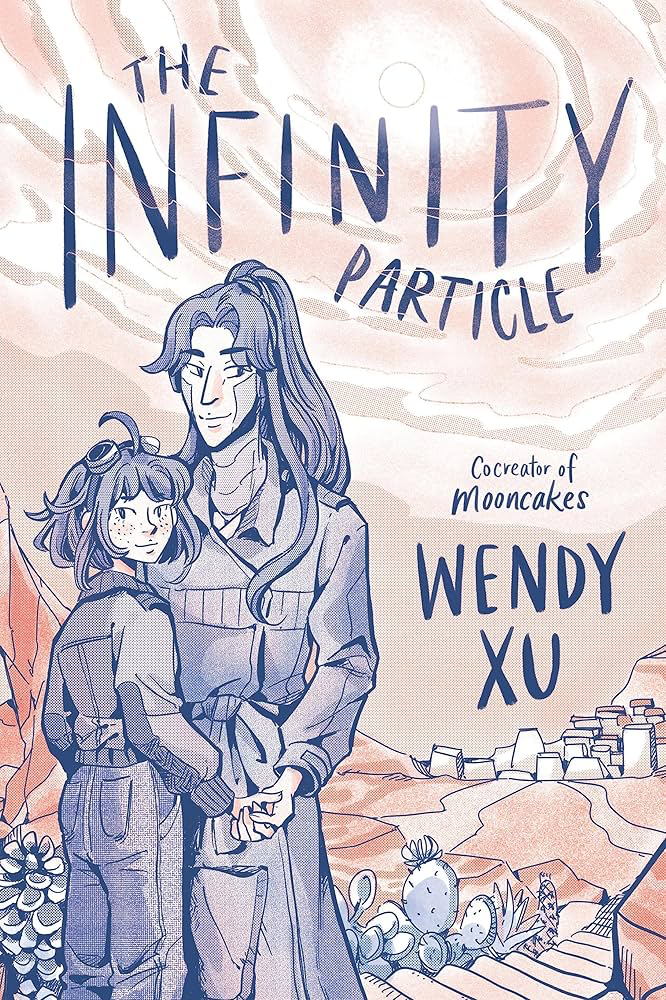
The Infinity Particle – Wendy Xu

Clementine Chang is headed for Mars. In the distant future, it’s a place of peace and industry, and it’s precisely the place that Clem wants to start her new life. A clever inventor, Clem has a knack for working with AI. She hopes to continue her education under Dr. Marcella Lin, a legendary AI engineer who inspired her work. But Dr. Lin is not what she seems—and she’s hiding a secret from the scientific world: a lifelike, humanoid AI that she refers to as her son. His name is Kye, and he yearns for a life outside of the one that Dr. Lin programmed for him. As Clem gets acquainted with him, she discovers that Dr. Lin’s intentions in making him were not as noble as she once thought—and that she may be falling in love with her former hero’s creation.
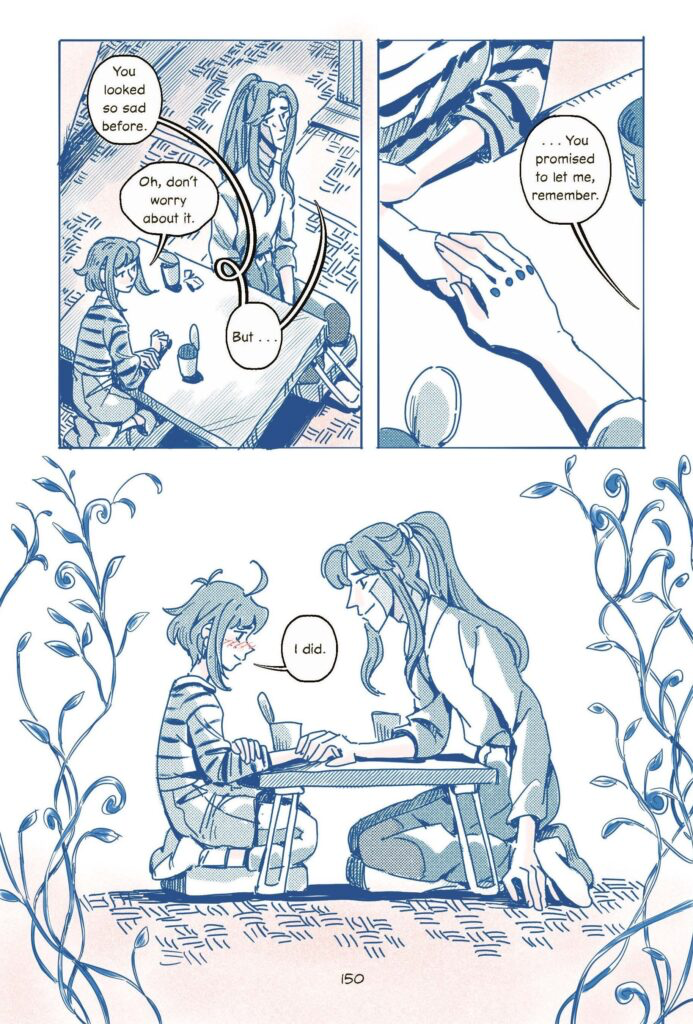
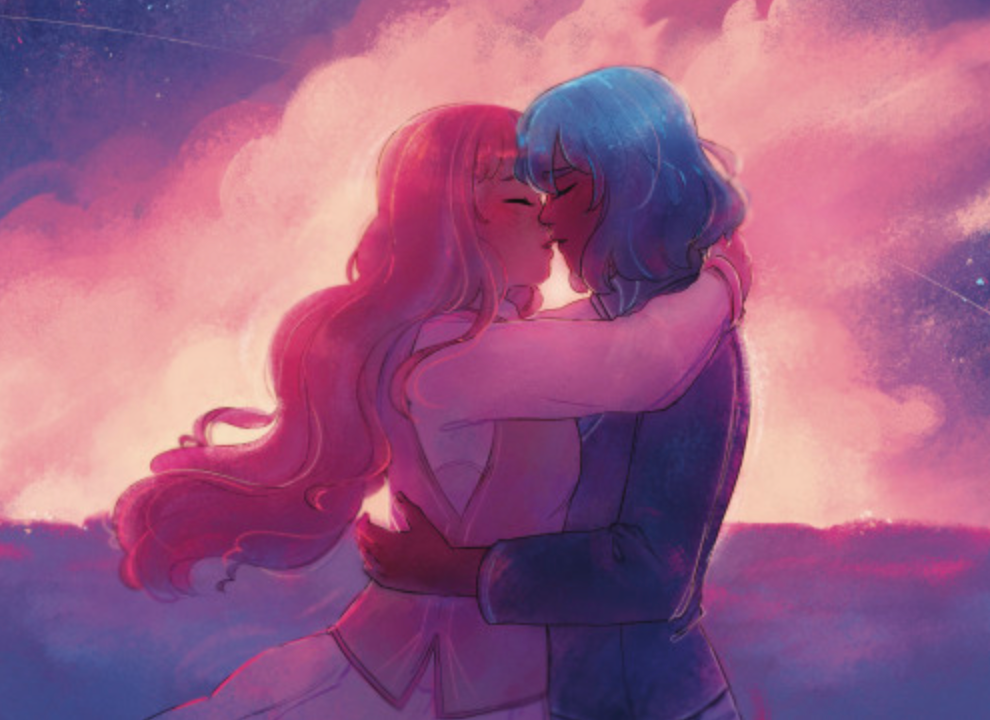
art by Wendy Xu (p. 150)

TW/CW: emotional abuse (past/present)

You know me. I’m a sucker for a good Frankenstein story. Oh, so you brought a conscious being into existence, expected it to be completely obedient to you and your whims, and didn’t expect anything to go wrong? Surely this will not have a domino effect of consequences…

That being said, The Infinity Particle isn’t just a Frankenstein story. We’ve been inundated with stories about AI and the ethics of giving robots human-like consciousnesses since day one of sci-fi’s conception (back to Frankenstein), but The Infinity Particle does what many of those stories try and fail to do: make the story human. It weaves both engineering and the complicated legacies of familial trauma into a story that is ultimately about relationships: that of parents and children, but also of young lovers. It’s a story of breaking cycles and of forging something newer and better out of their ashes. All of it is worth your time.

Wendy Xu’s vision of Mars in the distant future is one that I want to live in, which isn’t something I often say about sci-fi novels. The world of The Infinity Particle is a cozy, comforting one. In spite of the more emotional moments of the story, Xu’s setting is one you can get lost in. Rendered in a pastel color palette that’s easy on the eyes, it’s a world full of greenhouses, cafés, and cobblestone paths. Here, Mars is the perfect place for a museum date—except here, the museum features all manner of robots from bygone centuries. Although there are ethical conflicts with some of the AIs (this forms the central conflict of the novel), none of Xu’s AIs are malicious creatures—they’re all in the form of cuddly cats or owls, and in the case of Clem’s custom companion, a cat-moth hybrid. (SENA!! WE LOVE SENA!!) It’s a world I was eager to escape to, and one that I could dwell in forever.

Clem’s motivations were part of what made this story stand out. As she begins to dig deeper into Dr. Lin’s true motives for creating Kye, the way her former hero treats her AI creation begins to mirror how she was treated as a child; the emotional abuse from her mother is very similar to the emotional abuse by Dr. Lin to Kye. The Infinity Particle is a fantastic example of how very far-fetched, sci-fi concept can be used as incredibly emotional metaphors. We have Clem, who is a clone of her mother and was raised to live out the dreams that her mother could not, and Kye, an AI made to replace Dr. Lin’s son and live out her fantasies. Admittedly, the clone part was very on the nose, but the way that Xu delivered with care, giving The Infinity Particle an undeniable heart. In part, The Infinity Particle is a story of how trauma always echoes into the present, and how it can create ripples that both tear apart and rebuild relationships with others.

That shared trauma is part of what made the romance between Clem and Kye one that I was rooting for from page 1. Not only were they the most adorable couple (museum dates! Philosophical conversations in greenhouses!), their shared connection allowed them to help each other in ways that made the relationship blossom. Clem had experience with having to escape from the same kind of emotional abuse that Kye was undergoing, and as they realized that connection, their relationship deepened. However, it wasn’t just that aspect that made their relationship so lovable. Their chemistry was some of the best I’ve read in a YA novel in a long time—they were both such curious and sensitive people, and that combined curiosity not only drove the plot, but the course of their romance. Every shared moment was sweet, but never saccharine—The Infinity Particle was just a warm hug (and a kiss on the cheek) in so many ways, this being one of the most prominent.

However, even though Dr. Lin was objectively in the wrong, I appreciated the way that The Infinity Particle humanized her; never once were her actions condoned, but in the end, she wasn’t a purely evil person—she was a person who slipped so far into grief that she failed to realize how she was treating those around her. She did horrible things that could not be undone, but she was also capable of healing. It’s an incredibly difficult line to toe between acknowledging a character’s humanity and acknowledging that their actions were inexcusable; most media gets it wrong (I am looking directly at Encanto), but in the short time that was given to this plot, Xu did a graceful job of hitting that balance. Dr. Lin did some unspeakably terrible things, but deep down, she is still human. My one (minor) complaint is that this was squeezed into the end and didn’t have as much time to develop as some other parts of the novel, but it was executed thoughtfully nonetheless.

And the epilogue…hnnnnnnnngh do I love a good “the fabric of the universe is made up of love” story AUUUUUUUUGH

All in all, a heartwarming, sensitive, and thoughtful story of love, robots, and what it means to have—and to want—a mind and a life of your own. 4.5 stars!

The Infinity Particle is a standalone, but Wendy Xu is also the co-creator of Mooncakes and the creator of Tidesong.

Today’s song:

I feel like I remember this song about every 5 years and realize how much I’ve missed it…

That’s it for this week’s Book Review Tuesday! Have a wonderful rest of your day, and take care of yourselves!

Posted in Book Review Tuesday

Book Review Tuesday (5/21/24) – Squire

Happy Tuesday, bibliophiles!

Squire has faintly been on my radar on-and-off for the two years that it’s been out. I figured it would be something fun, but I didn’t expect such a hard-hitting, timely, and wholly beautiful graphic novel full of vibrant characters and sharp social commentary.

Enjoy this week’s review!

Squire – Sara Alfageeh and Nadia Shammas

Aiza wants nothing more than to be a Squire—she’ll be able to become a knight revered in legends and lore and send money home to her family, who are barely scraping by. And as a member of the Ornu ethnic group, she’s considered a second-class citizen by the empire of Bayt-Sajji, and becoming a Squire and joining the Knighthood is the only way to become a citizen. At first, she’s elated to join the ranks of the recruits, but after failing her first test, she’s relegated to the night watch. But she’s soon discovered by Doruk, the groundskeeper, whose past may lead her to discoveries about the Knighthood that may change everything. Soon, Aiza realizes that she’s become a part of the same machine that’s destroying her people, and must make a decision—loyalty to her heritage, or loyalty to the empire.

art by Sara Alfageeh

TW/CW: war themes, racism, violence, colonialism/imperialism themes, amputation (forced)

Whew. This hit me so much harder than I anticipated. But I am all the better for it—I’m so, so glad that this graphic novel exists, especially since it’s aimed at a younger YA audience.

Squire has some of the sharpest critique of imperialism in YA that I’ve seen since Maggie Tokuda-Hall’s The Mermaid, the Witch, and the Sea duology. It’s all the more poignant since the main character is so young—we never get an estimate, but it seems Aiza is on the younger side of the 12-17 age range for Squires. It’s an intimate portrait of watching everything you know about patriotism, faith, and empire be deconstructed in front of your eyes, and how that radicalizes a person—especially a young person—into enacting positive change. It holds no punches, and that’s exactly what it’s meant to do: imperialism is not something to be sugarcoated, even for younger reasons, and Squire does all of this and more.

Seeing all of this through Aiza’s eyes was what made Squire so unique. Her journey throughout the novel is as complicated as they get; at a young age, she has to grapple with the fact that the only way to gain recognition and help her family survive is to betray her own people. It’s a decision that she feels is straightforward at first, but having been fed on heroic, medieval-style propaganda, she feels in her heart that she’s right. It’s only when she fails to meet the standards of the empire that she sees the error in her ways, and her crisis begins: how can she hold an empire that she’s been groomed to love and an identity that has shaped her life in equal regard? Not such a simple decision, especially when you’re 13 or 14—and when you realize that this empire has been carrying out raids on the very same people that you once called family and friends, who the empire likens to mongrels and scum. Alfageeh and Shammas executed her journey, in all of its emotional messiness, with such care and beauty; you really feel for Aiza as she watches the reality that the empire constructed for her crumble, and her eventual mission to pursue justice was a truly resonant call to action for our times.

For the first 30% of Squire, I didn’t think that I would end up rating it 5 stars. I loved Alfageeh’s art, toeing the line of stylized and realism with ease, with each character displaying a unique emotional range. For the first third of Squire, it’s mostly seeing Aiza go through her training—a lot of running around in the countryside and playing at being a Knight. But the minute the tone shifts, it shifts dramatically—and for good reason: this is when Aiza’s image of the empire is turned to dust. Never once did the tone shift feel unrealistic; not only did it represent the drastic fall of Aiza’s faith in herself (and the Knighthood) after failing her first round of tests, but it felt true to her age and situation. If I’d been in the same situation at that age, I would have lashed out just like she did, that classic mix of sadness, anger, and deep-seated frustration at trying so hard, only to miss your goal by a hair.

Squire’s cast of characters were equally vibrant, and beautifully rendered by both Alfageeh and Shammas. Shammas’ writing made them feel like real teenagers grappling with circumstances out of their control. Like Aiza, each of them went through a complicated journey before joining Aiza and her cause; some had reason to believe that empire was beneficial to them, others never wavered in their faith until the end. Above all, they felt like confused kids—and that’s what they were. But the relationship that stood out most to me was that of the mentor relationship between Aiza and Doruk. After some hesitation, Doruk begins to see himself in Aiza—a child abandoned by the empire and forced to see the might that she once viewed as heroic being turned against her own people. I’m always a sucker for stories with ambitious, energetic kids being guided by disgruntled, older mentors, but in this case, it was a relationship that was crucial to Aiza’s development. Here was someone who had been ground through the same machine as she was and come out the other side knowing the truth; Doruk knew he had the power to change things, and mentoring Aiza in secret was his way of rebelling: teaching. God. God. Somebody hold me.

Squire’s climax was one of the book’s strengths, not just in its execution but in its symbolism, if the latter was in your face. (I’d argue that it’s supposed to be in your face—explosively annihilating a symbol of imperialism doesn’t really scream “quiet” to me.) The unity of Aiza and her band of misfits shone through after page after page of delicate development, and the conclusion, as dramatic as it was, really was the only way the book could end: in flames. What a beautiful note to end on—the physical representation of imperialism and blind patriotism, both as a character and a location, going up in flames as a result of the justice and drive of ordinary people. Yes. YES! I’ve seen some reviews that it’s a very straightforward way of going about imperialism as a whole, but I think what Squire has the power to do is be an introduction to the horrors of imperialism for younger readers just getting into the genre. Especially in these horrific times, Squire gives older MG and younger YA readers a picture of imperialism digestible enough to apply to both history and the present (especially the present). And I can’t think of any other novel fitting of the job: it’s a heavy load to carry for so many young readers, but I am so, so glad that Squire exists.

All in all, a timely and deeply emotional portrait of imperialism and war that is sure to touch the hearts of readers young and old. 5 stars!

And by the way, if it wasn’t already clear: Free Palestine.

Squire is a standalone; Nadia Shammas is also the author of Ms. Marvel: Stretched Thin, Confetti Realms, Where Black Stars Rise, and several other comics. Sara Alfageeh is also the illustrator of Not Yet: The Story of an Unstoppable Skater, and has contributed to Once Upon an Eid, Bingo Love, vol. 1: Jackpot Edition, and many other comics.

Today’s song:

I LOVE MY MOM!! (in the sense that I love my mom, and also this album, I Love My Mom.)

That’s it for this week’s Book Review Tuesday! Have a wonderful rest of your day, and take care of yourselves!

Posted in Book Review Tuesday

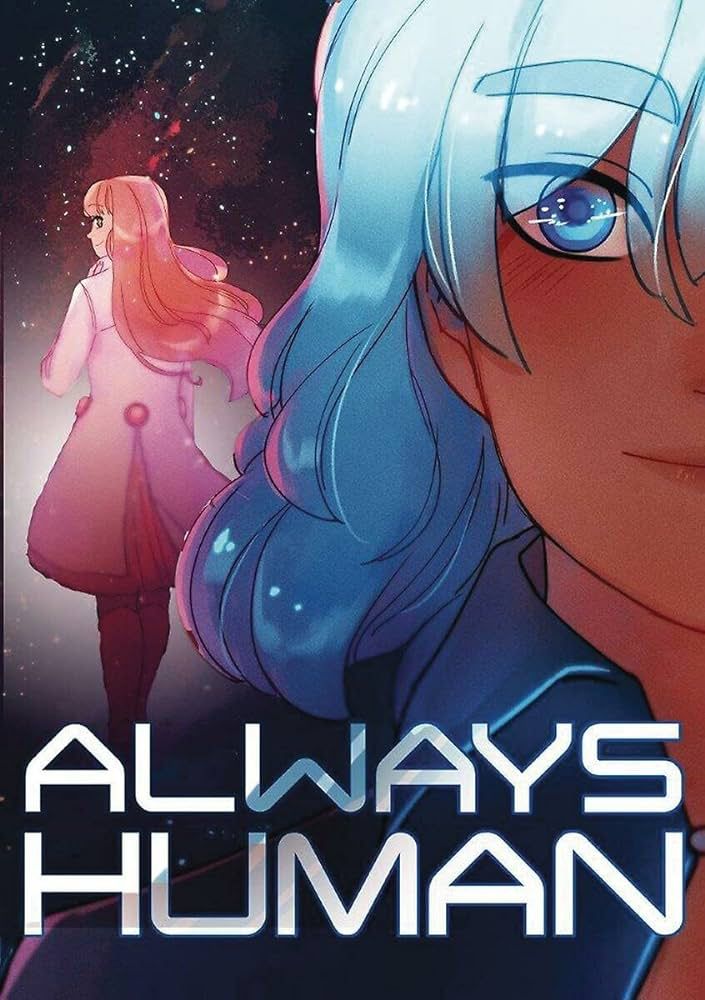
Book Review Tuesday (10/10/23) – Always Human

Happy Tuesday, bibliophiles!

Always Human came onto my radar around three years ago—probably from my fellow bloggers—but I’d forgotten about it until I came across it at my college’s library. I’m always a sucker for cozy sci-fi, and I never say no to a graphic novel, so of course I picked this book up. But while it was sweet and had some great commentary on disability, it didn’t quite scratch my sci-fi itch in all the right ways.

Enjoy this week’s review!

Always Human – Ari North

Sunati lives in a world of body modification. With simple, easy-to-use technology, she can change any part of her appearance that she wishes—even enhancing her memory so that she won’t have to study for tests. But not everybody has it as easy as Sunati. Austen has Egan’s syndrome, which means that her immune system rejects any kind of body modification. When the two meet by chance, it’s love at first sight. And although they are different in all kinds of ways, it won’t take long before they realize that they were made for each other.

Art by Ari North

TW/CW: nothing that I can find—Always Human is very gentle, and I’d be hard-pressed to find anything triggering about it. Enjoy!

Always Human is sweet. It was a soft, tender palate-cleanser, but I didn’t find myself getting very attached to any of it. It’s cute, and I’d say it’s worth a read, but it lacked the emotional weight to fully immerse myself in the characters or the world.

Let’s start out with the positives. It’s rare that fictional, sci-fi disabilities actually mirror the experience of disabled people, but Always Human did an excellent job of portraying Austen’s disability. Austen has Egan’s syndrome, a fictional autoimmune disorder where her body rejects any kind of body modification, which is central in the futuristic world where Always Human is set. Throughout Sunati and Austen’s developing romance, this novel makes the very important case that disabled people do not exist to inspire you, and that going through life as a disabled person isn’t some grand feat. It’s something that Sunati has to contend with when talking about Austen, and watching her learn made at least some of the romance work.

Additionally, I loved how vibrant the art style was! I’m not usually one for the quasi-manga style that North draws in, but every panel really did pop. The vibrant pinks and blues truly shone, which simultaneously sold the joyous glow of young love and the bright, technology-centric world that Sunati and Austen inhabit. Just like the story itself, there are no hard edges: everything is soft and cloudy, calling sunsets, cotton candy, and hope to mind. It suited the story exceptionally well—Ari North absolutely looked like she knew what she was doing.

However, there was one part of the art that didn’t sit as pleasantly with me. Although the colors consistently popped, the character movements…did not. Their poses looked so consistently stiff. And listen. I’m an artist. I get it. Drawing dynamic poses is so hard. Game recognizes game. But the characters’ movements looked so wooden, no matter what pose they were drawn in. These static poses failed to immerse me fully in the story—if they don’t look like they’re really moving, how can I believe that anything else is? I’m saying this to myself as well as Ari North: maybe a few more of those nice references on Pinterest would have livened up the art.

Always Human made the jump from WebToon to print after seemingly wild success on the former, but I’m not sure if the plot format survived the leap. The broken-up chapters would theoretically work if I were getting them, say, once a week, but all together, they didn’t feel quite as coherent. I’m all for cozy sci-fi and slice-of-life stories, but what makes the ones I like work is that there’s still some kind of end goal, however low-stakes it may be, that the characters are heading towards. Always Human felt rather meandering in that sense. It really felt like the plot was being made up as North went along, and the result was quite lukewarm. Even the romance, which the plot clearly hinged on, was set up and happened so quickly that the rest of the story didn’t hold much water. If the romance had been slowly developed over the course of the graphic novel, I would have felt much more engaged. Thus, I never really felt the emotion that North was trying so hard to get across—it all felt rushed and half-baked. Insta-love is never the answer, kids.

All in all, a light and fluffy sci-fi comic that boasted vibrant color and cogent points about disability, but felt rather stiff in both the art and the plot. 3 stars.

Always Human is the first volume in the Always Human series; the series concludes with Love and Gravity.

Today’s song:

adore this album, but also, I can’t listen to it too many times in a row, y’know?

That’s it for this week’s Book Review Tuesday! Have a wonderful rest of your day, and take care of yourselves!
Posted in Books, Goodreads Monday

Goodreads Monday (8/17/20)–The Dark Matter of Mona Starr

Happy Monday, bibliophiles!

Goodreads Monday is a weekly meme created by Lauren’s Page Turners. All you have to do to participate is pick a book from your Goodreads TBR, and explain why you want to read it.

This one was just published this April, and I’m ITCHING to get my hands on it. I desperately need to get some more Laura Lee Gulledge in my life, so here goes nothing…

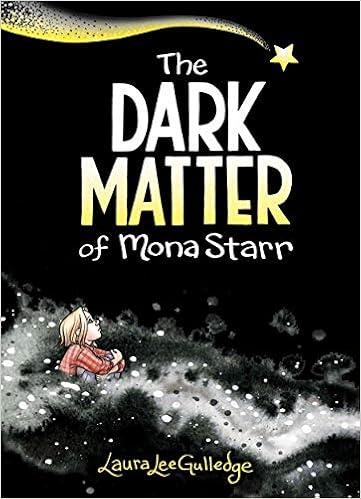
GOODREADS MONDAY (8/17/20)–THE DARK MATTER OF MONA STARR by Laura Lee Gulledge

Amazon.com: The Dark Matter of Mona Starr (9781419742002 ...

Blurb from Goodreads:

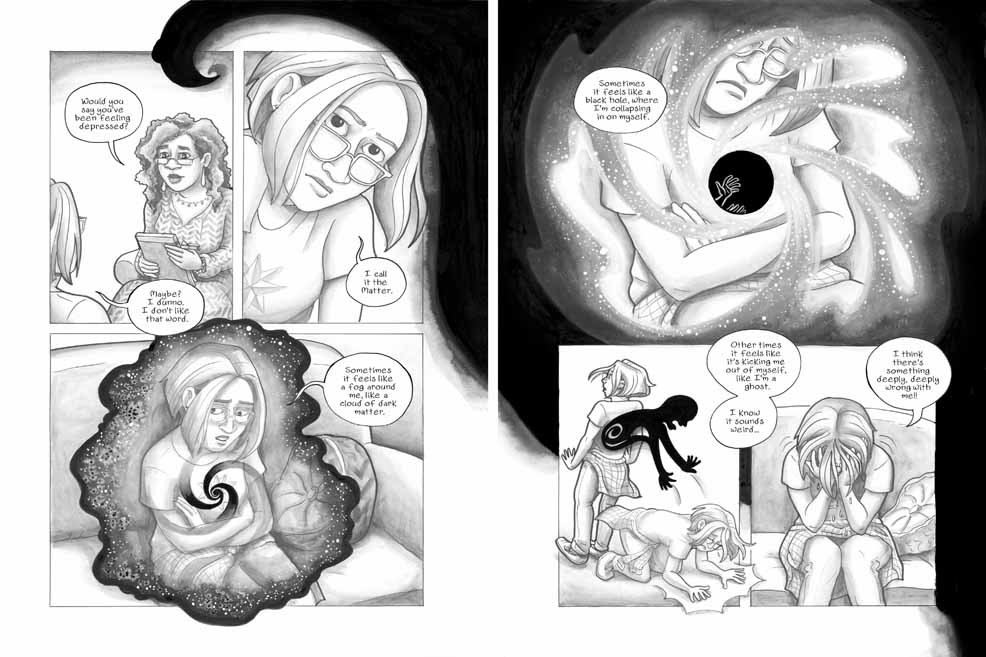
Sometimes, the world is too much for Mona Starr. She’s sweet, geeky, and creative, but it’s hard for her to make friends and connect with other people. She’s like a lot of sensitive teenagers—but in the hands of graphic novelist Laura Lee Gulledge, Mona’s struggle with depression takes on a vivid, concrete form. Mona calls it her Matter. The Matter gets everywhere, telling Mona she’s not good enough, and that everyone around her wishes she would go away. But through therapy, art, writing, and the persistence of a few good friends, Mona starts to understand her Matter, and how she—and readers—can turn their fears into strengths. Heartfelt, emotionally vulnerable, and visually stunning, The Dark Matter of Mona Starr is a story that takes the inner life of a teenager seriously, while giving readers a new way to look at the universal quest for meaning and connection.

So why do I want to read this?

Westfield Blog » Interview: Laura Lee Gulledge on The Dark Matter ...
Art by Laura Lee Gulledge

I’ve been a fan of Gulledge since I read and loved Page by Paige almost exactly two years ago. The combination of her phenomenal art style and the heart brimming from every panel made her work such a joy to read, and the graphic novel’s stuck with me ever since.

Of course, I’ve yet to read anything beyond the latter (though Will and Whit has been on my TBR for a while). When I found out she had a new graphic novel, I was ECSTATIC. And The Dark Matter of Mona Starr sounds like it could be just as masterful as her other graphic novels!

Tackling something like depression is never an easy task, but I have every confidence that Gulledge’s style and capturing of human nature will make this appeal to all readers–whether or not they have depression, and whether or not they normally read comics or graphic novels. In short, this looks beautiful, and I need more of Laura Lee Gulledge’s art in my life.

The Stigma Behind Therapy

Today’s song:

That’s it for this week’s Goodreads Monday! Have a wonderful rest of your day, and take care of yourselves!
Posted in ARC Reviews

eARC Review: The Great Gatsby: A Graphic Novel Adaptation

Happy Wednesday, bibliophiles!

I recently signed up for Edelweiss, and I’ve gotten a few eARCs from them since. (Other than this one, I’ve been approved for 2 and declined 1.) So, this is my very first eARC review!

Sarcastic First Time GIF by Brimstone (The Grindhouse Radio, Hound ...

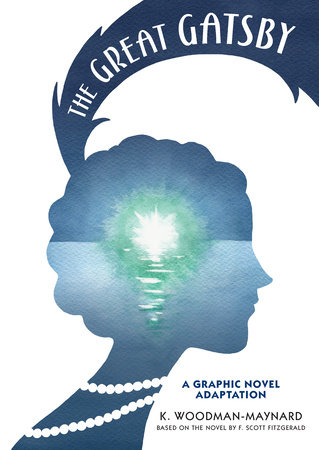
After reading and enjoying The Great Gatsby in my English class last year, I was so interested to see what a graphic novel adaptation would hold. Though it didn’t quite live up to the source material, it was certainly an enjoyable and colorful interpretation of the graphic novel.

The Great Gatsby: A Graphic Novel Adaptation by F. Scott ...

The Great Gatsby: A Graphic Novel Adaptation–F. Scott Fitzgerald and K. Woodman-Maynard

Blurb from Goodreads:

From the green light across the bay to the billboard with spectacled eyes, F. Scott Fitzgerald’s 1925 American masterpiece roars to life in Katharine Woodman-Maynard’s exquisite graphic novel–among the first adaptations of the book in this genre. Painted in lush watercolors, the inventive interpretation emphasizes both the extravagance and mystery of the characters, as well as the fluidity of Nick Carraway’s unreliable narration. Excerpts from the original text wend through the illustrations, and imagery and metaphors are taken to literal, and often whimsical, extremes, such as when a beautiful partygoer blooms into an orchid and Daisy Buchanan pushes Gatsby across the sky on a cloud.

This faithful yet modern adaptation will appeal to fans with deep knowledge of the classic, while the graphic novel format makes it an ideal teaching tool to engage students. With its timeless critique of class, power, and obsession, The Great Gatsby Graphic Novel captures the energy of an era and the enduring resonance of one of the world’s most beloved books.

The Great Gatsby GIFs - Get the best GIF on GIPHY

⭐︎Thank you to Edelweiss and Candlewick Press for giving me this eARC in exchange for an honest review!⭐︎

This was an interesting adaptation of the classic novel! Personally, something about it didn’t quite live up to the glory of the source material, but it certainly came close.

The art style was cute, simple and stylized, but not overtly so. The interpretations of the characters and their thoughts were certainly faithful. I especially liked how Daisy and Tom were drawn; Daisy was as dollish as she appears in the novel, and Tom is especially imposing and stubborn. Daisy even has her own style of speech balloons that curve out at the edges when she spoke, which was a detail I loved.

I loved the watercolors that were used to color the graphic novel. The shifting color schemes were especially deft when it came to conveying the different moods of the scenes.

However, with that being said, I don’t completely feel like it was the right art style to adapt The Great Gatsby. Although I loved the watercolor and simple style, it failed to depict some of the lavish imagery (ex. with Gatsby’s parties) as well as the novel did. A bit more coloring and definition might have done the trick.

All in all, this was an inventive adaptation of The Great Gatsby. Though it wasn’t without its flaws, it was certainly enjoyable to read and explore. 3.5 stars! (I rated the original novel 4 stars.)

EXPECTED PUBLICATION: January 5, 2021

Run Away The Great Gatsby GIF - Find & Share on GIPHY

Today’s song:

That’s it for this eARC review! Have a wonderful rest of your day, and take care of yourselves!

Posted in Book Review Tuesday, Books

Book Review Tuesday (2/11/20)–Anya’s Ghost

Book review tuesday header.jpeg

Happy Tuesday, bibliophiles!

In my recent scouring of my early TBR (which also included Zenn Scarlett), I came upon this little graphic novel and decided to give it a go. Though my expectations were just above average, I was pleasantly surprised at how clever, sarcastic, and spooky it turned out to be!

Enjoy this week’s review!

Image result for anya's ghost

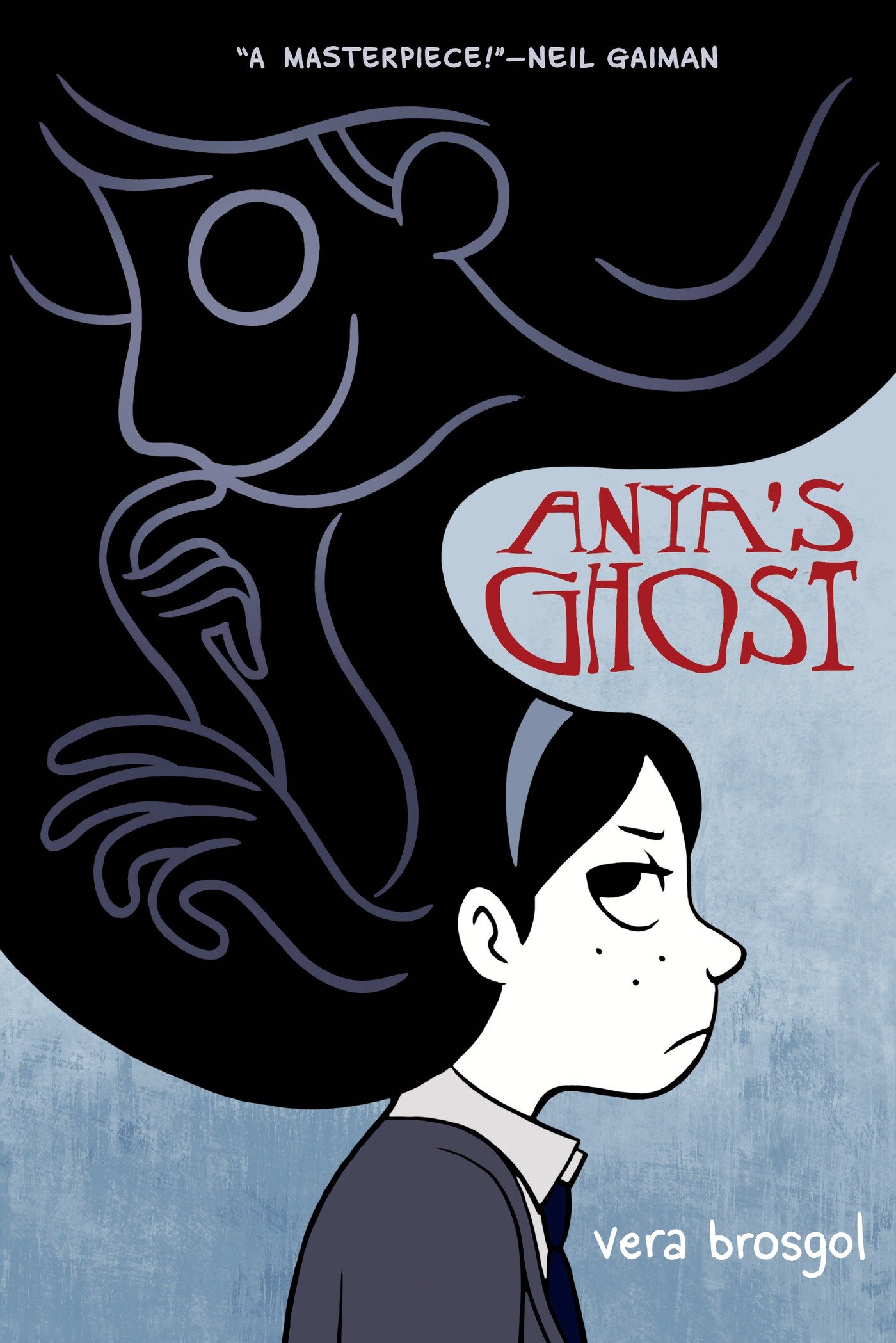
Anya’s Ghost

As far as Anya is concerned, her life is decidedly the opposite of perfect; alienated from her Russian immigrant family, and all but friendless in high school, there’s little that interests her anymore. To make things worse, she falls down a well on her way to school one morning, and is trapped there for the whole night. But what she finds at the bottom of it may be the key to changing her life.

For residing in the well is the neglected ghost of a girl named Emily. With one of Emily’s tiniest bones with her at all times, Anya can confide in Emily at any time she wants, whether it be to cheat on a test or get secret intel on her longtime crush. But the more time she spends with Emily, both she and the ghostly girl begin to change. The ghost is hiding far more than Anya knows, and if they continue on as they are, it may cost Anya her very life.


Anya’s Ghost was an absolute joy to read!

First off, let me just say, this had the perfect balance of paranormal spookiness and teenage angst–similar to comics like Courtney Crumrin (which I highly recommend, if you haven’t read it). The art style is very stylized, but not so much in a way that it distracts from the writing or the plot–perfectly cute, if you ask me. 🙂

Image result for anya's ghost

Beyond that, the story spoke partially to some of my own experiences. As someone who’s fallen into the trap of manipulative relationships, Brosgol’s use of an arguably parasitic ghost as a sort of metaphor for these sorts of friends was a masterfully executed move. She perfectly captures what it feels to be a teenager, both in writing and in art style, and the feeling of being an outsider vying for clarity and friendship in an environment that feels so unkind. Though I wouldn’t quite award it the full five stars, Anya’s Ghost was a graphic novel that undoubtedly spoke to me, and perfectly balanced paranormal fantasy with the drama of high school. Four stars for me! 


Today’s song:

Alright, sorry, I know I pummel you with David Bowie and Radiohead, but I personally think this is a masterpiece. Plus, it managed to lodge itself in my head all morning, so there’s that.


That just about wraps up this post! Have a wonderful rest of your day, and take care of yourselves!
thank you for reading.jpg