Posted in Book Review Tuesday

Book Review Tuesday (6/11/24) – Junker Seven

Happy Tuesday, bibliophiles! I’m back from vacation, and I’m feeling rested—and ready to review one of the books I read on my trip.

Junker Seven hung around on my TBR for about a year, and I ended up buying it on Kindle for my trip; as I’ve said ad nauseam, queer sci-fi is the stuff of life for me, so I’ll always lap it up when given the chance. Although I wish the worldbuilding (and the politics) were more creative, it was a solid tale of of love and the joy in reminding yourself that your existence is an act of resistance.

Enjoy this week’s review!

Junker Seven (Twin Suns duology, #1) – Olive J. Kelley

Castor Quasar makes a solitary but dangerous living as a junker, ferrying scrap—and fugitives—across the galaxy. They prefer to stay out of the business of others, whether that’s the widespread political unrest throughout the galaxy or simply making friends. But when Castor is offered a job with an exorbitant amount of money, they can’t help but be suspicious, even though the offer would mean valuable repairs for their ship—and an easier living. Their cargo is Juno Marcus, a trans activist with a target on her back and an urgent need to escape before the Intergalactic Peace Force finds her. Castor reluctantly agrees, but they soon find themself in over their head—and head over heels in love…

TW/CW: murder, loss of loved ones, transphobia, deadnaming, misgendering, ableism, police brutality

Junker Seven was by no means without its flaws, but if you’re looking for a love letter to trans love and identity, a slow-burn romance, and resistance in space, then you’ve come to the right place! Not my favorite, but this was a good book to start off pride month—unabashedly queer and political.

Structurally, there were a lot of odd worldbuilding choices (I’ll get to that later), but despite that, the world of Junker Seven felt wonderfully lived-in. The quiet moments where Castor was alone on their ship were what convinced me of this world being tangible; not everything is sleek, clean, and untouched. You never get the sense that the ship is cramped just because it was made so, but because of all of the choices that led Castor to the place they are today. It’s not just a plot device vehicle—it’s got special nooks and crannies that have been shifted over the years, and there’s a goldfish that’s been there through it all, Castor’s only constant companion. Details like this, as well as some of the pockets of resistance that Castor and Juno find throughout their journey, added a real human element to the story. Even with only two characters for most of the novel, Kelley did an excellent job of making the galaxy seem like a tangible place where humans have settled—and brought their unique ways into a new, far-future world.

If you’re looking for representation, especially trans representation, then you’re in the right place—Junker Seven has diversity in spades! Both the main character and the love interest are trans, as well as several side characters, and Castor is also disabled—they have burn scars, a prosthetic leg, and autism! The key part of said representation is that it never felt like a checklist; if the acknowledgements are any indication, Kelley’s goal was to create a resonant story of trans joy, love, and resistance, and though I’m not trans (disabled and queer, though), that love shone through; Junker Seven felt like a love letter to trans resistance all the way through, from Castor and Juno’s slowburn romance to Castor’s gradual radicalization. I love how the disability representation was handled as well! All of the details about Castor’s autism affects their job felt authentic as a neurodivergent person; no stone was left unturned, whether it was how wearing their prosthetic affected their sensory issues to how it affected their relationships. It’s clear from every page that the diversity in this novel wasn’t borne out of a need to tick off every possible marginalization—it was borne of a need to put authentic queer, trans, and disabled stories out into the world.

That being said, the worldbuilding of Junker Seven gets stranger the more I think about it. There are enough pockets that could convince you that, yes, this could be hard sci-fi that had some thought put into it, but the actual worldbuilding ends at the descriptions of the climates of the planets that Castor and Juno are hopping to and from. Other than that, the politics are the main focus, but given how political this book is, I was surprised at how unoriginal it was in terms of the evolution of politics and queer resistance. Junker Seven is set several hundred years from now, and yet the politics are all but copied and pasted from the U.S. politics of today—no changes whatsoever, save for being stricter when it comes to the treatment of trans people in particular. Yes, history does tend to repeat itself in terms of treatment of the marginalized, but it’s never in the exact same way twice; technology changes, rhetoric changes, leadership changes. None of that is reflected in Junker Seven; honestly, it was familiar to such a degree that it would have worked more if it were set in a less futuristic dystopia set on Earth. This story is set so far in the future that minimal changes in language and policy just makes no sense. It would have been so much more potent—and creative, frankly—to see how the adapted technology of the future actually factored into how trans people in this universe were being oppressed. There were a few throwaway mentions of more advanced technology that was being used to surveil trans people, but that was about the extent that anything changed. It all boiled down to unused potential—there were so many opportunities to explore how (possible) aspects like advancing technology, increased policing, and advancements in genetic modification could affect the status of trans people throughout the galaxy. And yet, Kelley chose to change almost nothing about our current political climate and paste it into space—to the detriment of my suspension of disbelief. Oppression of marginalized groups remains the same in its goals, but not necessarily in its methods—those change with the times.

What also suspended my disbelief was how little we knew about Marwood save for that he was horrible. Save for being a Trump stand-in, we knew almost nothing about him, save for that a) he’s evil (Trump), b) there’s a widespread news network that’s basically his mouthpiece that he uses to demonize trans people (Fox News), and c) did I mention? He’s evil. I will give Kelley some credit for at least establishing the Zephyr News aspect and the fact that his nepotistic predecessor both ended presidential term limits and instated Marwood in a corrupt, illegitimate election so that his fascist, ultra-conservative values would live on. That, at least, felt like a reasonable enough start for a villainous character, but that was it. The key word here is start. I wouldn’t say it completely falls into the dystopian trope of “we’re not going to say anything about the government, but you have to understand. They’re BAD, guys. BAD,” but it comes rather close. This circles back to my overarching issue of unoriginal worldbuilding, but I wanted to know what separated Marwood from any other run-of-the-mill fascist—did he come from a celebrity background and had no real political experience, like Reagan or Trump, or was he a more cold and calculating type with political prowess who knows exactly how to undo any kind of progress and twist the laws in order to abuse his power? A successful, frightening villain needs to be more than an evil cardboard standup that lurks in the shadows, and we never got more than fragments to show that Marwood was more than a stand-in fascist to move the plot along. (Also, did the entire galaxy, after blending into an almost universal accent after several hundred years, universally adopt a vaguely American two-party system and government? It’s…yeah, I have trouble believing that too.)

Although the disability representation is excellent, as I said before, I did find it odd that it wasn’t a part of Castor’s radicalization; being disabled in the 21st century is already a cyberpunk dystopia as it is, so I’m surprised that there wasn’t much discussion of not just Castor’s experience with being disabled, but how it affected their work or their perception of politics. Save for a throwaway line about an autistic person being driven to a life of crime because of how poorly said autism was treated and handled, there wasn’t much rumination on it other than that. I get that the main focus of Junker Seven was trans resistance specifically, I do wish we at least got more of it than what we got. Come to think of it…as diverse as Junker Seven was, there wasn’t a whole lot of intersectionality in terms of politics. I think there was…maybe one line about race and police brutality, and that was about it? I wouldn’t say that this is inherently a flaw of the book itself, but, once again, given how unabashedly political it was, I did find it odd that there wasn’t at least a small mention of the intersection of queer/trans issues with aspects like race, class, and disability.

All in all, a solid piece of queer sci-fi which suffered from unoriginal and nonsensical worldbuilding, but was nonetheless a shining ode to queer resistance. 3.5 stars!

Junker Seven is the first of the Twin Suns duology, followed by the forthcoming sequel Rebel Rising, which is slated for release in September. Kelley has also released D3F3CT: A Twin Suns Novella, set in the same universe as Junker Seven, as well as the novellas As the Light Goes Out and A Very Lighthouse Christmas. They have also contributed to Spectrum: An Autistic Horror Anthology and the forthcoming Dead Cowpokes Don’t Wrangle: A Weird West Anthology.

Today’s song:

why, why, WHY DID I PUT OFF LISTENING TO THIS ALBUM FOR SO LONG??

That’s it for this week’s Book Review Tuesday! Have a wonderful rest of your day, and take care of yourselves!

Posted in Book Review Tuesday

Book Review Tuesday (5/7/24) – Off With Their Heads

Happy Tuesday, bibliophiles! I’ve returned from finals hell!

I’ve been a massive fan of Zoe Hana Mikuta ever since I fell in love with her Gearbreakers duology a few years back. Off With Her Heads is her most recent novel, having just come out in late April, and even though I would’ve read it no matter what genre it was in, the idea of her writing a novel loosely based on Alice in Wonderland intrigued me—and it did not disappoint.

Enjoy this week’s review!

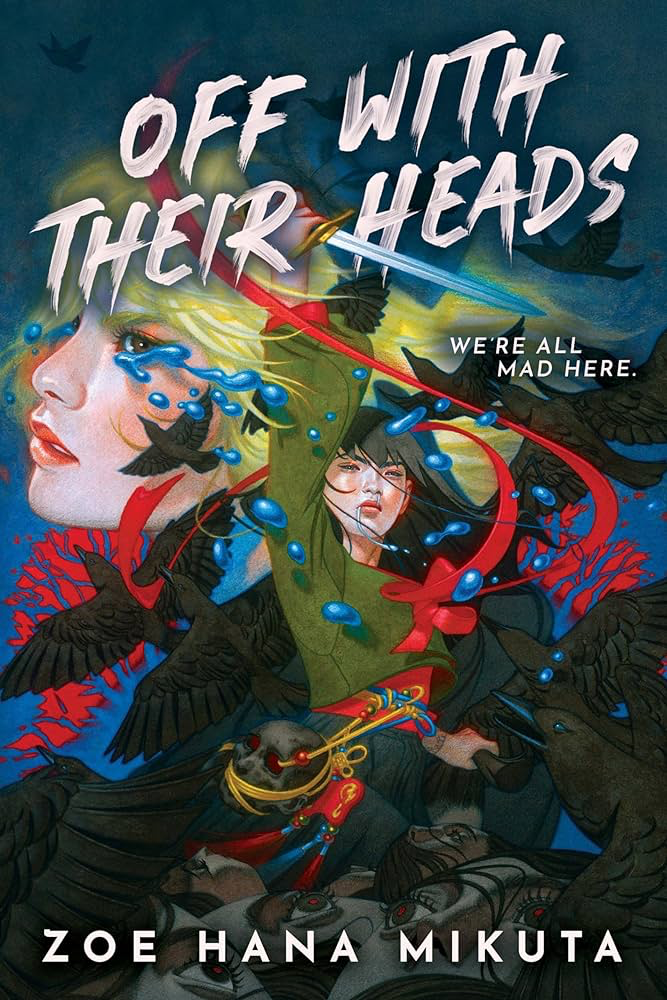
Off With Their Heads – Zoe Hana Mikuta

Wonderland is full of monsters.

After a deadly plague ravaged the land, most of the remaining witches and magic-users have transformed into monstrous Saints: bloated, bloodthirsty beasts that scour the land looking for fresh meat. Carousel Rabbit and Iccadora Alice Sickle were brought up in a world of predators and plague, orphaned at a young age and eventually escaping their decrepit orphanage together, madly in love with each other. But their obsession tore them apart, and their paths diverged.

Now, Caro has become the Red Queen’s royal butcher, killing Saints and watching as the Queen stitches together Saints of her own through dark, flesh-binding magic. Alice has been on her own for years, slaughtering Saints to get by. With every Saint that she kills, she treads closer and closer to the Red Queen’s throne—and to Caro, who Alice will stop at nothing to bring down to size. But what she finds in the Red Queen’s palace may be even greater of a threat than the love that once tore her to shreds…

TW/CW: loss of loved ones (past), murder, graphic violence, body horror, disease, blood, gore

Dark fairytale (or fairytale-adjacent) books used to be everywhere on the YA landscape. It’s the kind of stuff I ate up from about ages 12 to 16, to various degrees of quality. What they had in common, however, were universally horrible covers. God. They’ve circled back around to being hilarious now, but you could just snag any book off of the YA fantasy shelf at Barnes & Noble, and it would have a cover with an airbrushed white girl with flowy hair and an equally flowy gown either spinning gracefully or fixing your stare with a photoshopped smolder. And the gown was usually melting into…I don’t know, feathers or blood or some shit. It was all very emo. Since then, this subgenre has slowly begun to die down in popularity (or maybe not? My tastes have probably just shifted). Whether or not Off With Their Heads is the slow beginning of that subgenre’s resurgence in YA remains to be seen, but either way, I’m glad that we’ve got much prettier covers for the next generation of budding YA readers. It’s what they deserve. (Give it up for Tran Nguyen’s gorgeous cover art!)

After the Gearbreakers duology, I figured that I would read just about anything that Zoe Hana Mikuta writes. Even if Godslayers was a bit of a lackluster series concluder, it was still a fun read. Even if it isn’t her best work, you’re going to have a good time reading it regardless. Gearbreakers got a fair bit grim, as dystopias are wont to do, but Off With Their Heads is the darkest that Mikuta has ever gone (so much so that it almost borders on new adult and not YA), and she writes it with a unique talent. Whether or not the urge was pent-up, this novel revels in the “dark” of the “dark fairytale retelling,” drenching Alice in Wonderland in bloodlust, obsession, and backstabbing. However, what a lot of the dark fairytales of yesteryear interpreted darkness as was just being edgy; most everything was for shock value and appealing to the “what if this fairytale was………BAD and EVIL” urge that ropes in all the 13-year-olds and it didn’t go far beyond that. But this genuinely feels like horror, and not being an edgelord for edginess’ sake. It’s gory, it’s grim, and it’s bloody, but more in the interest of horror than shock—these characters are surviving a truly horrific world, and it turns them into horrific people for understandable reasons. There’s a distinction to be made there, and Mikuta certainly recognized it. (Also, it’s worth noting that Off With Their Heads is unflinchingly queer, which, given that most of said older fairytale retellings only added in queerness when it was a side character that would inevitably die, is a vast improvement. The bar is low, but it’s noteworthy that it’s being exceeded nonetheless. Let’s go, lesbians!)

I’ve seen a lot of reviews call Caro and Alice “morally gray,” and…I have some thoughts. I almost see it. Almost. But if they were gray, it would be an incredibly dark gray, if anything. Maybe they were morally gray at the beginning, but by the time we get to the present timeline, they’ve both become such awful people that they’re nearly indistinguishable from the one evil person that they’re respectively allured by (Caro) and disgusted by (Alice)—the Red Queen. To paraphrase Obi-Wan Kenobi (hey, I missed my chance on May 4th), they’ve both become the very thing they swore to destroy. They’re both just despicable people, but their differences are written in such a way that their different breeds of horridness play off of each other fascinatingly; Caro’s become this world’s version of a class traitor and idolizes the pinnacle of evil, while Alice has become so consumed with revenge that she’ll justify just about anything. Add in the fact that the root of their personal vendettas lie in their past romantic relationship, and you’ve got a dynamic that was delicious to pick apart for all 400+ pages of the novel. Again, it all makes sense for the truly cutthroat circumstances they were brought up in—they’re products of their surroundings, in the worst possible way.

Even as someone who doesn’t engage with a ton of horror media in general, I know that the key to executing it is making the suspense feel real, especially if the threats in your world are entirely fictional and alien to the audience. Mikuta had a multitude of ways that kept the suspense palpable, and all of them hooked me over the course of the novel. I’m not sure why it is that the “There are [x] remaining Saints” count excited me so much at the beginning of each chapter, but it was a failsafe way to keep track of both the danger and the kill count of the various characters—the tangible effects of the butchering they’re described as doing. Having those numbers up front also provided a sense of scale; in the present timeline, the Saints numbered in the thousands, giving an idea of just how dangerous being in Wonderland truly is—you can’t go for a walk in the woods without encountering a bloated, bloodthirsty, and quite possibly engineered monstrosity on the prowl for flesh. It’s a constant danger—and Mikuta make it feel much more dangerous just by having a chapter subheading.

However, what brought down some of my suspension of disbelief was the worldbuilding. Clearly, there was attention to detail, but only in the ways that Mikuta saw fit. There were tidbits here and there that I wished were expanded on—I loved the concept of the original Alice dreaming being this world’s creation myth, but we never got anything more out of that past the prologue. Outside of things like the Saints and the royal lineage, the worldbuilding was rather messy. I get that Off Their Heads is a very loose retelling at best—just using Alice and Wonderland and its characters as a jumping-off point for the setting—but there were so many convoluted and contradictory bits that I wasn’t completely invested. It’s mentioned that there’s a Jabberwocky court amongst the gentry of Wonderland who are described as humanoid, and yet the girls find a Jabberwocky in the woods described monstrously that has clear intention to kill them. Either that was a poorly-described Saint, or there’s some inconsistencies that need to be addressed. The reworking of Alice in Wonderland-related names into the characters were also a bit sloppy and corny; I get that there’s got to be some signal to the source material, but they were often so obvious, and barely related to the original character that they just made me cringe. I expected more from Mikuta on this front—slapping on character names just to remind the reader that, yes, this is a retelling, doesn’t seem like her style. I almost think it would have worked better if all of the Alice in Wonderland pretense was stripped away and made into a dystopian fantasy world.

Overall, an unflinchingly horrific retelling that displays Mikuta’s love and talent for suspense and obsessive sapphics—but her pitfalls in worldbuilding. 3.75 stars, rounded up to 4!

Off With Their Heads is a standalone, but Zoe Hana Mikuta is also the author of the Gearbreakers duology (Gearbreakers and Godslayers), and an untitled novel slated for release in 2025.

Today’s song:

That’s it for this week’s Book Review Tuesday! Have a wonderful rest of your day, and take care of yourselves!

Posted in Book Review Tuesday

Book Review Tuesday (12/5/23) – The Witch King

Happy Tuesday, bibliophiles!

Far be it from me to start the month off with a negative review, but that’s just how my December started off. Eh. Should be a lesson to me for trying to read something that’s been on my TBR for 3+ years—my tastes generally don’t change dramatically in that amount of time, but my standards for writing and plot certainly did. That’s all to say that The Witch King was a promising, inclusive fantasy that quickly proved itself to be not worth my time.

Enjoy this week’s review!

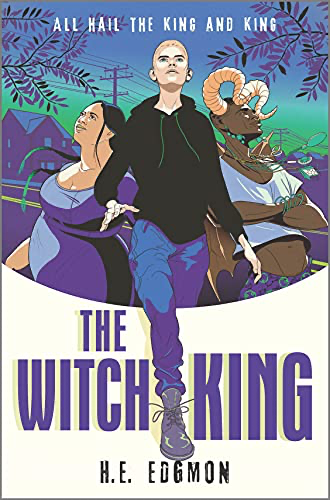
The Witch King (Witch King, #1) – H.E. Edgmon

Wyatt Croft is a witch, and in the North American realm of the fae, witches are the enemy. Years ago, Wyatt’s magic got out of control, forcing him to flee back to the human world and go into exile. But his betrothal to Emyr, the prince of the fae, has not dissolved, and Emyr is back on the hunt for him. Forced back into the world of the fae, Wyatt must come to terms with his engagement—one that may hold the lives of all of North America’s witches in the balance. And his feelings for Emyr may be coming back, as much as he wants to hide them…

TW/CW: transphobia, deadnaming/misgendering, blood, gore, abuse (physical and verbal), panic attacks, substance abuse, PTSD themes

DNF at 36%.

The Witch King has made me realize that I need to expand my criteria for DNFing books; most of my DNFs are 1-star books—the ones that are just so bad that I can’t finish them. In comparison to a lot of the other books on my DNF shelf, The Witch King wasn’t comparably as bad. But the difference is that at a certain point, it was just so clear to me that this book was not worth my time. I really wanted to like it, but once I got past the first third, there wasn’t any point in me finishing this book. A DNF is not always a 1-star read, but a 1-star read is not always a DNF. It’s like geometry but easier to explain.

I wanted to emphasize that I really wanted to like The Witch King. But in the 3+ years that this book has languished on my TBR, it’s clear that my standards have changed. The foreword by Edgmon was incredibly touching, and it’s so clear that this was the book of their soul—there’s no denying the love that went into this book. And it’s so, so important to support trans authors like him, but it’s just as important to remember that even when you read diversely, a book’s diversity doesn’t automatically fix every plot hole and writing issue. There’s some slack I’m willing to give Edgmon because this was his debut, but The Witch King really left a ton to be desired.

It’s clear that Edgmon put a lot of thought into constructing Wyatt’s character, but in his quest to make him as relatable as possible, Wyatt turned from simply “relatable” to an incompetent mess. Even as a queer person, there’s only so many “I am a gay little worm who makes terrible life decisions” (actual quote from the book) jokes I can take. Jesus Christ. The word “cringe” is outright abused these days, but I feel like this is a valid quality to ascribe to the writing of The Witch King, since most of the humor feels so overdone and unfunny. If your type of humor consists of Tumblr jokes from 2017, then boy, do I have the book for you. All of the attempts to make Wyatt seem more human and fallible made him just feel like a pathetic mess incapable of seeing past his personal faults and (many) mistakes. It absolutely grated on me after a certain point. The rest of the writing wasn’t all bad, but good god, Wyatt’s characterization made me want to jump ship almost immediately.

Since I abandoned ship after the first third, there’s probably some context that I inevitably missed, but the worldbuilding of the North American fae really left a ton to be desired. Apart from the rivalry between witches and fae, there really wasn’t much of an explanation as to how the fae worked in tandem with the human world: where do the borders between human and fae begin and end? How do the two interact? And more importantly, what are the different interactions between the different species of fae? There were a bunch of different creatures that were just thrown at you in the background with zero explanation, never to be seen again. There’s a difference between convoluted worldbuilding and worldbuilding that just isn’t properly thought-out, and this fell firmly into the latter camp. It was all just a hot mess. I’ve read several reviews saying similar things about the worldbuilding, so…I guess it never did get better beyond what I read? Oof.

That being said, I really appreciate the diversity that Edgmon wrote into The Witch King. Having a trans main character is so important, and as much as Wyatt got on my nerves, characters like him need to be in the spotlight. Edgmon presented a lot of character that were very diverse in terms of race, gender, and sexuality, and while it seems like the representation wasn’t all accurate and some of Edgmon’s depiction of social issues wasn’t handled as well as it could’ve been (glad I didn’t get to that part, I guess…), it’s always good to have a range of characters like that. It’s about all I have to say about The Witch King that’s positive, but it’s worth being highlighted.

All in all, a diverse fantasy debut that sadly crashed and burned in its characterization and lazy worldbuilding. 2 stars.

The Witch King is the first book in the Witch King duology, followed by The Fae Keeper. Edgmon is also the author of the Ouroboros series, which consists of Godly Heathens and Merciless Saviors.

Today’s song:

That’s it for this week’s Book Review Tuesday! Have a wonderful rest of your day, and take care of yourselves!
Posted in Book Review Tuesday

Book Review Tuesday (10/10/23) – Always Human

Happy Tuesday, bibliophiles!

Always Human came onto my radar around three years ago—probably from my fellow bloggers—but I’d forgotten about it until I came across it at my college’s library. I’m always a sucker for cozy sci-fi, and I never say no to a graphic novel, so of course I picked this book up. But while it was sweet and had some great commentary on disability, it didn’t quite scratch my sci-fi itch in all the right ways.

Enjoy this week’s review!

Always Human – Ari North

Sunati lives in a world of body modification. With simple, easy-to-use technology, she can change any part of her appearance that she wishes—even enhancing her memory so that she won’t have to study for tests. But not everybody has it as easy as Sunati. Austen has Egan’s syndrome, which means that her immune system rejects any kind of body modification. When the two meet by chance, it’s love at first sight. And although they are different in all kinds of ways, it won’t take long before they realize that they were made for each other.

Art by Ari North

TW/CW: nothing that I can find—Always Human is very gentle, and I’d be hard-pressed to find anything triggering about it. Enjoy!

Always Human is sweet. It was a soft, tender palate-cleanser, but I didn’t find myself getting very attached to any of it. It’s cute, and I’d say it’s worth a read, but it lacked the emotional weight to fully immerse myself in the characters or the world.

Let’s start out with the positives. It’s rare that fictional, sci-fi disabilities actually mirror the experience of disabled people, but Always Human did an excellent job of portraying Austen’s disability. Austen has Egan’s syndrome, a fictional autoimmune disorder where her body rejects any kind of body modification, which is central in the futuristic world where Always Human is set. Throughout Sunati and Austen’s developing romance, this novel makes the very important case that disabled people do not exist to inspire you, and that going through life as a disabled person isn’t some grand feat. It’s something that Sunati has to contend with when talking about Austen, and watching her learn made at least some of the romance work.

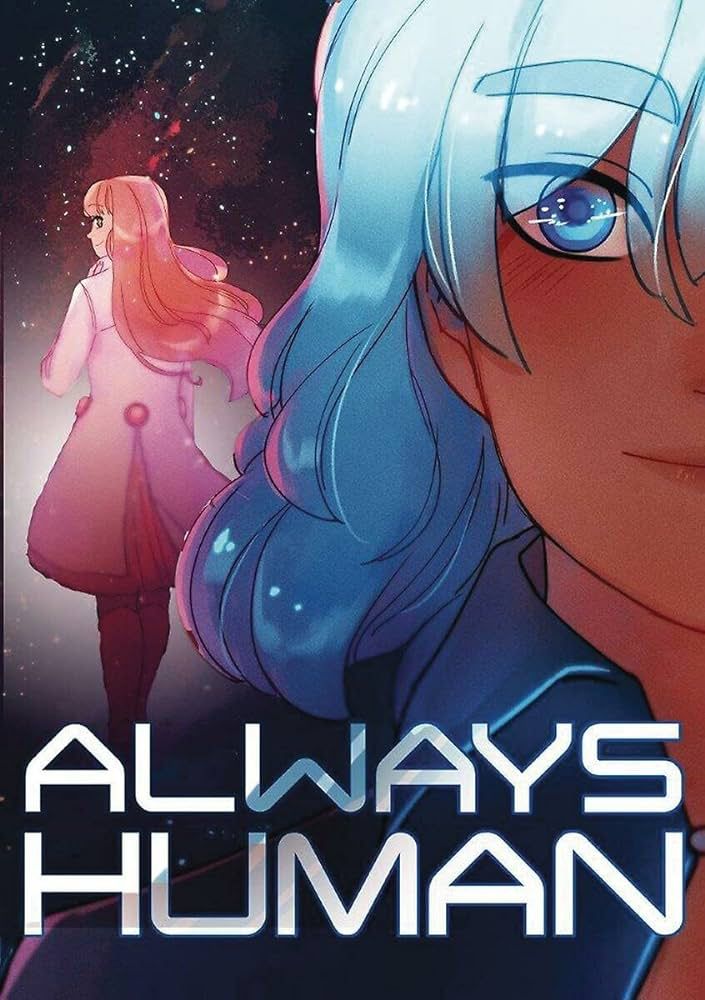
Additionally, I loved how vibrant the art style was! I’m not usually one for the quasi-manga style that North draws in, but every panel really did pop. The vibrant pinks and blues truly shone, which simultaneously sold the joyous glow of young love and the bright, technology-centric world that Sunati and Austen inhabit. Just like the story itself, there are no hard edges: everything is soft and cloudy, calling sunsets, cotton candy, and hope to mind. It suited the story exceptionally well—Ari North absolutely looked like she knew what she was doing.

However, there was one part of the art that didn’t sit as pleasantly with me. Although the colors consistently popped, the character movements…did not. Their poses looked so consistently stiff. And listen. I’m an artist. I get it. Drawing dynamic poses is so hard. Game recognizes game. But the characters’ movements looked so wooden, no matter what pose they were drawn in. These static poses failed to immerse me fully in the story—if they don’t look like they’re really moving, how can I believe that anything else is? I’m saying this to myself as well as Ari North: maybe a few more of those nice references on Pinterest would have livened up the art.

Always Human made the jump from WebToon to print after seemingly wild success on the former, but I’m not sure if the plot format survived the leap. The broken-up chapters would theoretically work if I were getting them, say, once a week, but all together, they didn’t feel quite as coherent. I’m all for cozy sci-fi and slice-of-life stories, but what makes the ones I like work is that there’s still some kind of end goal, however low-stakes it may be, that the characters are heading towards. Always Human felt rather meandering in that sense. It really felt like the plot was being made up as North went along, and the result was quite lukewarm. Even the romance, which the plot clearly hinged on, was set up and happened so quickly that the rest of the story didn’t hold much water. If the romance had been slowly developed over the course of the graphic novel, I would have felt much more engaged. Thus, I never really felt the emotion that North was trying so hard to get across—it all felt rushed and half-baked. Insta-love is never the answer, kids.

All in all, a light and fluffy sci-fi comic that boasted vibrant color and cogent points about disability, but felt rather stiff in both the art and the plot. 3 stars.

Always Human is the first volume in the Always Human series; the series concludes with Love and Gravity.

Today’s song:

adore this album, but also, I can’t listen to it too many times in a row, y’know?

That’s it for this week’s Book Review Tuesday! Have a wonderful rest of your day, and take care of yourselves!

Posted in Uncategorized

🏳️‍⚧️ LGBTQ+ Historical Icons Book Tag 🏳️‍🌈

Happy Wednesday, bibliophiles!

I’ve had a few pride-related book tags that I’ve been waiting to do since last June, so I figured I’d break this one out right about now. I found this one over at The Corner of Laura, who also created the tag.

Rules

  • Link back to the original creator (The Corner of Laura) and link back to this page (otherwise, the original creator won’t get a notification).
  • Thank whoever tagged you and link back to their post
  • (Optional) Use the graphics and don’t forget to credit the original creator (Text prompts are at the end of the tag if you’d prefer to use those)
  • (Optional) Tag 5 or more other people.

Let’s begin, shall we?

🏳️‍🌈THE LGBTQ+ HISTORICAL ICONS BOOK TAG🏳️‍⚧️

SAPPHO: Greek poet known for her lyric poetry which is believed to describe homoerotic feeling | A book of poetry (or written in verse)

Nothing Burns as Bright as You is a beautiful novel in verse about the complicated relationship shared by two Black queer girls.

ALAN TURING: Mathematician known for cracking the Enigma code but who was persecuted for his homosexuality | A character who deserved better

As sweet as The Girl from the Sea was, I found myself getting so stressed out about how Morgan treated Keltie in the beginning. She just kept pushing her around and neglecting her, and while it did resolve itself neatly and they fell in love, I still felt so bad for Keltie. She’s just an adorable creature, dude, she doesn’t need all that human baggage…

GILBERT BAKER: Creator of the rainbow Pride Flag | The most colorful book you own

Skyhunter has one of my favorite book covers in my collection—it dazzles me every single time I look at it!

ANNE LISTER: Landowner, industrialist and considered to be the first modern lesbian | A book written as a diary (or includes diary entries)

I have fond memories of reading the copy of I Capture the Castle that my mom bought for me while I was out sick years ago, and re-reading it several times since. It’s seriously the sweetest, most charming book—a big thank you to my mom for turning me on to this one.

MARSHA P. JOHNSON: Prominent figure in the Stonewall Uprising and founder of several LGBTQ rights organisations | A character you’d would want fighting at your side

Sona and Eris from Gearbreakers are both formidable in their own ways—either one (or both) would be an easy pick to have fight at my side.

ALFRED KINSEY: Creator of the Kinsey scale | A book set in academia

I haven’t read a whole lot of books sets in academia (and I’ve never gotten the hype for dark academia, so I tend to steer clear of those), but Leigh Bardugo never misses, so obviously this prompt has to go to Ninth House.

LUCY HICKS ANDERSON: First trans woman to defend her identity in court | A book where a major scene takes place in court

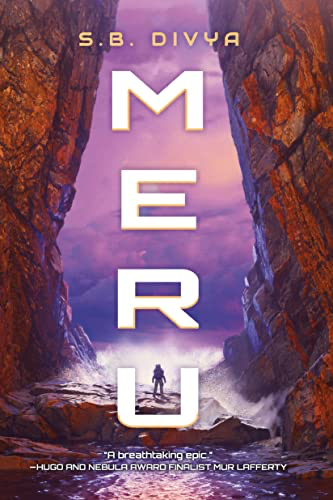
It was so hard to think of any books besides To Kill a Mockingbird (Laura’s answer) with a courtroom scene, but I read Meru not long ago, and it has a particularly climactic and poignant courtroom scene—a futuristic one, but a courtroom scene all the same.

OPEN PROMPT: Your choice | A book that inspires you

Of course, I’m going with David Bowie as my LGBTQ+ historical icon of choice—who else? He’s been a hero of mine for years, and a hero to so many. Even in the 60’s, before he rose to stardom, he was already breaking down barriers, and continued to do so in all aspects of his career thereafter. Calling somebody “ahead of their time” is thrown around quite often, but I really think that the world wasn’t ready—and wouldn’t be ready for today—for Ziggy Stardust. And personally, I can’t think of a better beacon of hope to me than him; I started getting into his music at a time when I was struggling to find my place and looking for a light at the end of the alternative weirdo tunnel. And here was Bowie, wearing dresses in the 70’s, openly declaring his bisexuality, and creating a cosmic persona that touched the hearts of so many people. I’ve certainly felt like an alien all my life, but he, if anyone, is to credit for teaching me to embrace that feeling—to quote him, “oh no, love! You’re not alone.” From one bisexual alien to another: thank you.

As for a book that inspires me, I’d easily give that title to Becky Chambers’ Wayfarers series. Sci-fi always seems defined by cosmic stakes and harrowing violence, and while that can work in moderation, these books really cemented the idea that a narrative doesn’t have to be centered around struggle or suffering to be worth reading—and writing. Here, Chambers has created a vast, creative space opera universe with complex political background noise and dozens of strange creatures, but they’re not embroiled in some lofty, intergalactic conflict: they’re just going about their lives. It’s something that almost no other piece of sci-fi media has ever done—it’s very common in realistic fiction, but the concept that happiness and healing as genuine plot points can exist alongside aliens and starships just blew my mind. I aspire to write at least one thing as comforting and cozy as Becky Chambers someday.

And remember, kids: grimdark is just as unrealistic as sunshine, lollipops and rainbows, because they represent opposite ends of the same literary spectrum. Making a book excessively dark and gritty doesn’t automatically make it deep, and giving a character an excess of trauma and a tragic backstory doesn’t automatically make them fleshed-out and well-written.

I tag:

Today’s song:

we love a good guitar freakout

That’s it for this book tag! Have a wonderful rest of your day, and take care of yourselves!

Posted in Uncategorized

Book Review Tuesday (6/20/23) – Meru

Happy Tuesday, bibliophiles!

I’ve been eyeing this book for a while—I remember it being heavily advertised on Goodreads when it was first released, and normally, I don’t pay much attention to Goodreads ads or sponsored books, but all you had to say was “space opera” and I was hooked. I’m a woman of simple tastes. It was cheap on the Kindle library, so I bought it to read on vacation. To my excitement, it ended up being my favorite book that I read on vacation—so detailed and gripping!

Enjoy this week’s review!

Meru (The Alloy Era, #1) – S.B. Divya

Jayanthi, like all other humans in her day and age, are confined to Earth. Kept there by the Alloys, evolved human descendants with advanced capabilities, she has been raised by Alloy parents on her homeworld, but has always dreamed of seeing the wider galaxy. But when an opportunity arises for Jayanthi to explore the newly discovered planet Meru with the aid of an Alloy pilot, she jumps at the chance—what better way to show the galaxy that humans are more than their violent past?

With the help of Vaya, her Alloy pilot, Jayanthi touches down on Meru. Soon, they find themselves embroiled in a human-alloy conflict, seemingly engineered to separate the two of them. Will Jayanthi and Vaya beat the odds—and restore faith in the human race?

TW/CW: ableism, xenophobia (fictional), sexual content/pregnancy, descriptions of injury, sci-fi violence

I got carsick while reading this book, but I don’t hold it against it at all. That was on me and my hubris of thinking that I wouldn’t get nauseous on a long car trip just this once. Whoops.

Reading some of the lower-rated reviews of Meru is kind of cracking me up…listen. I get that zie/zir pronouns (and neopronouns in general) are somewhat obscure, but of all the absolutely wild, dense, and out-there concepts that this book throws at you, that’s what makes you jump ship? Not the exceedingly complicated…well, everything else?

That being said, Meru lived up to the hype I’ve seen it getting for the past few months! It hit a sweet spot for me that a lot of sci-fi and fantasy books rarely do—creating a complex and multilayered universe, but very delicately balancing when and where to deliver all of this information. Divya came very close to going over the edge, but she navigated the worldbuilding delivery with aplomb.

So, about said worldbuilding. I’d say that Meru isn’t for the faint of heart, even for longtime sci-fi fans—as I mentioned in the beginning of the review, there’s a lot to take in, from the post-human history of the Alloys to all of the machinations surrounding new genetic modification laws in the future. But even though we do get some of this information in larger chunks, Divya excels at navigating which information is actually relevant to the scene it’s informing, and not sledgehammering you with extra information that only becomes relevant elsewhere in the book. It also helps that every inch of said worldbuilding is truly fascinating—it’s clear to see how much care was put into the creation of this universe.

If you’re talking about disability in sci-fi, you’re generally bound to open a particularly dicey can of worms. There’s quite a lot of eugenics narratives that a lot of readers have let slide for years, and the narrative of curing all disabilities is seen as positive, when a lot of the disabilities being described never needed curing in the first place. For the sake of this review, I’ll keep it short, but the bottom line is that it’s gross. But Meru takes a refreshing perspective on disability in sci-fi—not only was Jayanthi, the protagonist, specifically engineered to have sickle-cell anemia (now THAT’S a subversion I like), her disability is depicted in a far more advantageous and positive light. Anyone who’s ever touched a high school biology textbook probably remembers this example: despite its drawbacks, those with sickle-cell also have increased resistance to many tropical diseases. That’s exactly the case for Jayanthi, whose sickle-cell anemia makes her more suited to the environment of the planet Meru than those without it. Positive disability rep is good enough, but having it specifically depicted as something that gives the character the edge is something special. That, along with the wonderful discussions around disability and bodily autonomy (both allegorical and literal), made Meru a wonderful experience for me as a disabled reader.

In addition, Divya has created such a vibrant cast of characters in Meru! Jayanthi was such an endearing and powerful protagonist, and her relationship with the equally endearing Vaha was full of tenderness, despite its ups and downs. Almost all of the cast added to the book’s masterful suspense and tension, making you feel deeply for all of the relevant characters before things got (very) hairy. Plus, the integration of Sanskrit, several Indian-coded (and other POC characters), and loads of casual queerness was a breath of fresh air from all of the white, male, cishet sci-fi that still dominates the market. We need more books like Meru.

All in all, an intricately-crafted sci-fi novel that dazzled with its detailed worldbuilding, diversity, and refreshing discussions around disability. 4 stars!

Meru is the first book in S.B. Divya’s Alloy Era series, continued by the forthcoming Loka, slated for release in July of 2024. Divya is also the author of Machinehood and Run Time, as well as a contributor to several short story collections.

Today’s song:

NEW SMILE IT’S SO GOOOOOOOOOOOOOOOD (does this mean that we’re closer to hearing “Read the Room” too?????

That’s it for this week’s Book Review Tuesday! Have a wonderful rest of your day, and take care of yourselves!
Posted in Books

The Bookish Mutant’s Books for Autism Acceptance Month ∞

Happy Thursday, bibliophiles!

As some of you may know, April is Autism Acceptance Month here in the U.S.! I don’t think I’ve highlighted a book list for the occasion, but in my ongoing quest for disability rep in general, I’ve come across many great books with Autistic protagonists and stories. If you’re looking to diversify your reading, it’s always important to uplift every kind of marginalized voice, and disability rep in general often gets left in the dust. So I’ve compiled a list of books by Autistic (with one exception—the author is still neurodivergent, just not Autistic) for this month.

NOTE: some of the older books on this list may still use the term Asperger’s, but in recent years, the term has since been renamed to Autism Spectrum Disorder (ASD) in the DSM-5, in part because of its association with Hans Asperger, who was involved with Nazism. Some people still use the term, but it is still important to acknowledge the history behind the term.

Enjoy these book recs!

THE BOOKISH MUTANT’S BOOKS FOR AUTISM ACCEPTANCE MONTH

READ:

ON MY TBR:

TELL ME WHAT YOU THINK! Have you read any of these books, and if so, did you like them? What are your favorite books with Autistic rep? Let me know in the comments!

Today’s song:

That’s it for this list of recommendations! Have a wonderful rest of your day, and take care of yourselves!

Posted in Book Review Tuesday

Book Review Tuesday (4/18/23) – The Spear Cuts Through Water

Happy Tuesday, bibliophiles!

I was in a fantasy mood recently, so I decided to pick up The Spear Cuts Through Water after hearing some rave reviews from other bloggers. The gorgeous cover only added to the sell. But in the end, this novel ended up being a major disappointment—a murky, 500+ page slog that was only enjoyable for fleeting moments. I really need to stop setting myself up for disappointment with all these overly long high fantasy books…

Enjoy this week’s review!

The Spear Cuts Through Water – Simon Jimenez

The Emperor of the Moon Throne has terrorized the land of the Strangled Throat for centuries, aided by his three reckless sons, aptly dubbed The Terrors. But like everything else that he has seized, the Emperor’s power comes from an age-old moon god who has been locked under the palace against her will. But a god is not meant to be kept in captivity.

So she escapes. Aided by Jun, a disgraced palace guard, and Keema, a warrior from a distant, mysterious land, she sets off on a journey to find her freedom. But the Moon Throne will not let go of her so easily…

TW/CW: ableism, cannibalism, child abuse, murder, body horror, substance abuse, mentions of sexual assault (off-page), torture, loss of loved ones

This is one of those instances where I feel like I’ve read a completely different book than all of the 5-star reviewers. I really wanted to like it—and there were a few things that I did like—but ultimately, it felt like a 20-minute prog-rock song in book form: well-written, but so unneccesarily convoluted and full of itself that it became insufferable.

Before I go on my tirade, I will acknowledge that there were some wonderful, very bold and skilled parts of this novel. Jimenez’s writing had moments of being both beautiful and insightful—there were a few anchors to pull me through the slog, and his prose had moments of being incredible. 2nd person is always a bold choice, but unlike other aspects of this novel, it was executed very well, succeeding at being both immersive and fresh without feeling like it was bold just for the sake of being so.

“Bold” is generally I word that I could ascribe to most of this book. A lot of it was written in a fresh, nontraditional way, and I appreciated its execution in some sections. But a lot of it just felt like showing off—having unconventional chapter breaks and an infuriating structure just for Jimenez to show that he was capable of doing so. Most of these ended up being to the novel’s detriment. The random “chapter” breaks (there really weren’t any chapters in this book?), which mostly just ended up being sized-up font that was, essentially, what should have just the first sentence of the paragraph. And since they were all just first sentences of the paragraph, there were 2-3 of these breaks per page. POVs got switched without warning and without explanation, making the reading experience overcomplicated where it could’ve been an easy fix. It just felt like it was biting itself in the foot in the name of art—it could have been a beautiful story, if it wasn’t so intent on showing off how “different” it was.

As a result, so much of this novel got lost. Even though I was fairly lost trying to discern whose POV is it this time, I did notice one thing while reading The Spear Cuts Through Water—where’d the worldbuilding go? Other than the vague notion of a fantasy world (gods and goddesses, some talking animals/spirits, etc.), I had no idea of the layout of the world, the regions of the world, any kind of cultural cues or conventions, any kind of magic system…it just wasn’t there. At all. The same goes for the characters—they were all but cardboard, moved around like pawns for seemingly no reason. (I get that they were under oath by the Moon God, but the point still stands. They didn’t need to be that stiff.) Other than the reveal about Keema, nothing compelled me about either of them, or any of the other passing side characters. This novel was just so intent on chasing itself in circles that it forgot the essential elements that a novel needs.

All in all, a fantasy with great potential, but that ended up losing itself under layers of attempts to be daring and new. 2 stars.

The Spear Cuts Through Water is a standalone, but Simon Jimenez is also the author of The Vanished Birds.

Today’s song:

LOVE this album, this feels like a perfect match for “There’s No Other Way”

That’s it for this week’s Book Review Tuesday! Have a wonderful rest of your day, and take care of yourselves!
Posted in Book Review Tuesday, Mini Reviews

Book Review Tuesday (3/28/23) – #TransRightsReadathon mini reviews

Happy Tuesday, bibliophiles!

As some of you may know, last week (March 20-27) was when the #TransRightsReadathon was hosted in response to a dangerous increase in anti-trans legislation across the U.S. Created by Simi Kern, the goal of the readathon was to give the spotlight to as many trans books and authors as possible to bring them awareness and support in light of the rampant transphobia across the country and beyond. It’s been frightening and heartbreaking to see what’s happening in other states, and I want to support my trans siblings in any way possible. So I’ve decided to include shorter reviews of all of the trans books I read this week—all of which were good!

PLACES TO DONATE (U.S.):

Enjoy this week’s mini reviews!

A Million Quiet Revolutions – Robin Gow

summary from Goodreads:

For as long as they can remember, Aaron and Oliver have only ever had each other. In a small town with few queer teenagers, let alone young trans men, they’ve shared milestones like coming out as trans, buying the right binders–and falling for each other.

But just as their relationship has started to blossom, Aaron moves away. Feeling adrift, separated from the one person who understands them, they seek solace in digging deep into the annals of America’s past. When they discover the story of two Revolutionary War soldiers who they believe to have been trans man in love, they’re inspired to pay tribute to these soldiers by adopting their names–Aaron and Oliver. As they learn, they delve further into unwritten queer stories, and they discover the transformative power of reclaiming one’s place in history.

TW/CW: transphobia, dysphoria, misgendering/deadnaming, homophobia, off-page sexual assault, religious bigotry

Novels in verse always get me when they’re done well, and A Million Quiet Revolutions was no exception. The story of Aaron and Oliver is one that was essential to be told, and it resulted in a beautifully poignant piece of verse!

The growing relationship between Oliver and Aaron felt so genuine, and the combination of pseudo-epistolary format (oh god, that sounded pretentious…) with verse emphasized the way that their relationship transcended barriers of both place and time. The interweaving of the past with the present gave me an insight into a queer part of history that I’m almost embarrassed that I didn’t consider until reading this—better late than never, I suppose. Their voices both leapt off the page, and the easy flow of Gow’s verse made the reading experience feel effortless, drifting like wind—good poetry, to me, doesn’t quite feel like poetry; the rhythm remains, but it doesn’t feel like going line by line in such a rote way.

Above all, the message of this novel in verse is one that’s so important, especially in a time where the narrative of LGBTQ+ people being trendy and new is being pushed so often—queer people have always been here, and we will always be here. Aaron and Oliver’s journey of researching their trans namesakes—cross-dressing soldiers in the Revolutionary War—was one that’s so necessary for understanding our own roots. The key to belonging is realizing that you have always been a part of history, no matter how many pains historians have taken to ignore or deliberately erase the queerness and transness that has always been there. For me, that’s why A Million Quiet Revolutions is such an important read.

Brimming with history and rich verse, A Million Quiet Revolutions is an ode to discovering your own roots, and finding solace in hidden histories. 4 stars!

💙💗🤍💗💙

The Many Half-Lived Lives of Sam Sylvester – Maya MacGregor

summary from Goodreads:

In this queer contemporary YA mystery, a nonbinary teen with autism realizes they must not only solve a 30-year-old mystery but also face the demons lurking in their past in order to live a satisfying life.

Sam Sylvester’s not overly optimistic about their recent move to the small town of Astoria, Oregon after a traumatic experience in their last home in the rural Midwest.

Yet Sam’s life seems to be on the upswing after meeting several new friends and a potential love interest in Shep, the pretty neighbor. However, Sam can’t seem to let go of what might have been, and is drawn to investigate the death of a teenage boy in 1980s Astoria. Sam’s convinced he was murdered–especially since Sam’s investigation seems to resurrect some ghosts in the town.

Threatening notes and figures hidden in shadows begin to disrupt Sam’s life. Yet Sam continues to search for the truth. When Sam discovers that they may be closer to a killer than previously known, Sam has a difficult decision to make. Would they risk their new life for a half-lived one?

TW/CW: transphobia, ableism, self-harm, homophobia, biphobia, misgendering, anaphylactic shock, hate crimes (past), murder

…why does Goodreads still list the title wrong 😭

My ultimate hope was that this book would be as well-crafted as its cover, and for the most part, it lived up to my expectations! The Many Half-Lived Lives of Sam Sylvester deftly toes the line between a coming-of-age story and a decades-old mystery, buoyed by a diverse and lovable cast.

Sam Sylvester has a batch some of the most diverse representation I’ve seen in a realistic fiction/mystery novel in a while—aside from having a nonbinary, asexual, and Autistic protagonist (more neurodivergent protagonists, please!!), there were so many different characters that were incredibly intersectional—queer, POC, and disabled characters all across the board, and not just the teen characters too! All of these identities were woven so well into the story, and I loved the journey of self-acceptance and reckoning that Sam experiences throughout the novel as they unravel the mystery of the boy who died in their room 30 years ago.

That being said, although I liked most every aspect of this novel, this really feels like a novel that’s going to date itself. I enjoyed a handful of the references (always extra points for David Bowie), but a lot of the more recent ones—the references to Tumblr, Gen Z slang, internet culture, and a Steven Universe gag every other page, read as very hackneyed and stilted. As authentic as the rest of Sam Sylvester was, those parts dragged down what would have otherwise been powerful and realistic dialogue. Most of the writing did its job and did it well, but the attempt to ground it in the present day only ended up making a novel that’s going to date itself far quicker than it was probably intended to.

Despite that, I’d say that Sam Sylvester is still a must-read—for the excellent representation, for the mystery, and for the coming-of-age story. 3.75 stars, rounded up to 4!

💙💗🤍💗💙

The Thirty Names of Night, Zeyn Joukhadar

summary from Goodreads:

The author of the “vivid and urgent…important and timely” (The New York Times BookReview) debut The Map of Salt and Stars returns with this remarkably moving and lyrical novel following three generations of Syrian Americans who are linked by a mysterious species of bird and the truths they carry close to their hearts.

Five years after a suspicious fire killed his ornithologist mother, a closeted Syrian American trans boy sheds his birth name and searches for a new one. He has been unable to paint since his mother’s ghost has begun to visit him each evening. As his grandmother’s sole caretaker, he spends his days cooped up in their apartment, avoiding his neighborhood masjid, his estranged sister, and even his best friend (who also happens to be his longtime crush). The only time he feels truly free is when he slips out at night to paint murals on buildings in the once-thriving Manhattan neighborhood known as Little Syria.

One night, he enters the abandoned community house and finds the tattered journal of a Syrian American artist named Laila Z, who dedicated her career to painting the birds of North America. She famously and mysteriously disappeared more than sixty years before, but her journal contains proof that both his mother and Laila Z encountered the same rare bird before their deaths. In fact, Laila Z’s past is intimately tied to his mother’s—and his grandmother’s—in ways he never could have expected. Even more surprising, Laila Z’s story reveals the histories of queer and transgender people within his own community that he never knew. Realizing that he isn’t and has never been alone, he has the courage to officially claim a new name: Nadir, an Arabic name meaning rare.

As unprecedented numbers of birds are mysteriously drawn to the New York City skies, Nadir enlists the help of his family and friends to unravel what happened to Laila Z and the rare bird his mother died trying to save. Following his mother’s ghost, he uncovers the silences kept in the name of survival by his own community, his own family, and within himself, and discovers the family that was there all along.

TW/CW: transphobia, xenophobia, racism, Islamophobia, miscarriage, grief, sexual assault, animal death, loss of a parent

I didn’t go into The Thirty Names of Night with any expectations, but I was stunned by the writing! This novel is one of the best magical realism novels I’ve read in recent years, with writing as rich as a tapestry and a story that’s just as well-woven.

Joukhadar’s writing style was the star of Thirty Names; this is the first of his novels that I’ve read, but he has such a unique talent for finding unlikely comparisons and weaving them into the richest, most obvious but out-of-sight metaphors imaginable. I would never have compared the gray sky on a foggy day to the color of a kitchen knife, and somehow, it was right in front of me. His talent for metaphor suited the emotional depth of this story, as well as the almost fantastical element of the birds in New York—I will never claim to be the expert on him, but if there was any story that was suited for Joukhadar to tell, it’s this one.

That writing also made the emotional core of this story possible. There’s so much to Thirty Names: gender identity, grief, heritage, family, and the body itself, but all of it was handled with such grace and aplomb that made the story feel really, truly real. I might’ve even passed the aspect of the birds by as something that could feasibly happen with how this story was written. Every part of this novel is deeply moving, raw and beautiful, and the prose flows as smoothly as air over a bird’s wings.

All in all, a beautiful, literary tale of connections—to family, to gender, and to the world around us at large. 4.25 stars!

💙💗🤍💗💙

The City in the Middle of the Night, Charlie Jane Anders

summary from Goodreads:

“If you control our sleep, then you can own our dreams…And from there, it’s easy to control our entire lives.”

From the brilliant mind of Charlie Jane Anders (“A master absurdist”—New York Times; “Virtuoso”—NPR) comes a new novel of Kafkaesque futurism. Set on a planet that has fully definitive, never-changing zones of day and night, with ensuing extreme climates of endless, frigid darkness and blinding, relentless light, humankind has somehow continued apace—though the perils outside the built cities are rife with danger as much as the streets below.

But in a world where time means only what the ruling government proclaims, and the levels of light available are artificially imposed to great consequence, lost souls and disappeared bodies are shadow-bound and savage, and as common as grains of sand. And one such pariah, sacrificed to the night, but borne up by time and a mysterious bond with an enigmatic beast, will rise to take on the entire planet–before it can crumble beneath the weight of human existence.

TW/CW: animal attack/animal death, police brutality, body horror

Alright, so the only explicitly stated Latinx characters, specifically of Mexican ancestry, are named…Carlos and Maria? So most everybody else gets semi-unique names, but not them? It’s like Cho Chang all over again…[LOUD INCORRECT BUZZER}

If I hadn’t read Victories Greater Than Death beforehand, I would’ve been more suspicious, but it seems like Anders has gotten a lot better with diversity on that front, but…still iffy. Just saying.

That aside, The City in the Middle of the Night was one of the more inventive dystopias that I’ve read recently, but it fell victim to very convoluted writing. It’s obvious from every page that Anders put so, so much work into creating a fleshed-out world with an equally fleshed-out history—that was a riotous success on her part. The premise of society being divided by a tidally-locked planet felt eerily feasible, and I absolutely ADORED all of the alien life forms on the night side of January—the Gelet were obviously my favorites, but I would’ve liked to have seen more creatures. ALWAYS MORE CREATURES.

However, Anders’ writing choices ended up making parts of The City in the Middle of the Night something of a struggle. The story itself ended up being rather convoluted and tangled, and I found myself getting lost and confused about wait, which side of the planet are we on again? Why are we here in the first place? The additions of a boatload of characters that ended up having very little consequence to the plot at large didn’t help either. This story had the potential to be incredible, but it ended up getting so lost in itself that it became an ordeal to figure out where I was.

All in all, an inventively-conceived dystopia that excelled in worldbuilding but floundered in its writing. 3.25 stars.

Tell me what you think! Did you participate in the #TransRightsReadathon, and if so, what books did you read? What do you think of these books? Let me know in the comments!

Today’s song:

That’s it for this week’s Book Review Tuesday! Have a wonderful rest of your day, and take care of yourselves!
Posted in Book Review Tuesday

Book Review Tuesday (2/21/23) – Cool. Awkward. Black.

Happy Tuesday, bibliophiles!
I’m always up for diverse anthologies, and the fact that this one focused on both sci-fi/fantasy stories and geek/nerd culture from a Black lens was an instant sell for me! There were a few authors that I was familiar with and liked in here—Jordan Ifueko, Roseanne A. Brown, and Leah Johnson, to name a few—so that helped its case too. But as with any anthology, there were hits and misses, but there were still a fair amount of gems within Cool. Awkward. Black.

Enjoy this week’s review!

Cool. Awkward. Black. – edited by Karen Strong (anthology)

summary from Goodreads:

A multi-genre YA anthology of bestselling, critically acclaimed Black authors challenging the concept of the geek, featuring contributions from Amerie, Kalynn Bayron, Terry J. Benton-Walker, Roseanne A. Brown, Elise Bryant, Tracy Deonn, Desiree S. Evans, Isaac Fitzsimons, Lamar Giles, Jordan Ifueko, Leah Johnson, Amanda Joy, Kwame Mbalia, Tochi Onyebuchi, Shari B. Pennant, K. Arsenault Rivera, Julian Winters, and Ibi Zoboi.

A girl who believes in UFOs; a boy who might have finally found his Prince Charming; a hopeful performer who dreams of being cast in her school’s production of The Sound of Music; a misunderstood magician of sorts with a power she doesn’t quite understand.

These plotlines and many more compose the eclectic stories found within the pages of this dynamic, exciting, and expansive collection featuring exclusively Black characters. From contemporary to historical, fantasy to sci-fi, magical to realistic, and with contributions from a powerhouse list of self-proclaimed geeks and bestselling, award-winning authors, this life-affirming anthology celebrates and redefines the many facets of Blackness and geekiness–both in the real world and those imagined.

TW/CW: racism, misogyny, religion-based bigotry

Cool. Awkward. Black. was hit or miss as a whole, but above all, there were a few fantastic stories in the bunch, and I loved the spotlight on Black sci/fi fantasy, as well as geek culture. With all Black protagonists, many of which are queer and/or disabled, it’s a breath of fresh air, even if not every story was a hit for me.

Since this is an anthology, I’ll do shorter reviews of each story in chronological order.

~

“Our Joy, Our Power” – Julian Winters (⭐️⭐️⭐️.5)

I was expecting to not be a fan of this one after not being a fan of Running With Lions, but this was a surprisingly sweet story! With a tender, queer romance at a comic con and some great commentary on the racism within cosplay culture, this was a great start to the anthology. I’m not sure if it’s enough for me to give Winters’ novels another chance, but I certainly enjoyed it.

“The Book Club” – Shari B. Pennant (⭐️⭐️.5)

I felt obligated to like this one as a former book club president, but this one was a letdown. The concept of this one was interesting enough—a girl finds a book that seems to speak to her when she picks it up, and is then invited to a secret society of magic wielders in the guise of a book club—but the prose veered onto the cheesy side more often than not. I wish we’d gotten a little bit more context around the Society (and…okay, maybe the name was vague on purpose, but I would’ve liked a name more interesting than just “The Society”) and more of what their magic entailed other than the Evil Magician™️ that Must Be Defeated.

“Nina Evans, In the Round” – Kalynn Bayron (⭐️⭐️⭐️⭐️)

This one was an unexpected highlight of the anthology! Again, my expectations were rather low after how much of a sore disappointment Cinderella is Dead was for me, but I loved this story of a Black girl determined to get the role of Maria in her high school’s production of The Sound of Music. Her story of determination was a powerful and timely one, and I loved the poignant themes of Nina breaking the mold and never surrendering.

“Earth is Ghetto” – Ibi Zoboi (⭐️⭐️⭐️⭐️)

Even without the fantastic title, “Earth is Ghetto” is undoubtedly one of the best stories in this anthology! It follows Ingrid, a Haitian immigrant, who witnesses First Contact, and upon speaking to the aliens and wishing to go to their planet, realizes that they harbor many of the same prejudices as humans back on Earth. It’s witty, it’s timely, and it’s unflinchingly questioning of the norms upon which both we and the aliens built our societies. I loved the hopeful ending as well; it’s hard to get this kind of ultimatum that Ingrid has to make across in such a short story, but Zoboi managed to do all that and subvert the usual tropes and endings that go along with it. Great stuff.

“Initiative Check” – K. Arsenault Rivera (⭐️⭐️⭐️)

This was the first time I’d ever heard of K. Arsenault Rivera, and this was a decent story, I’d say. The whole story comprises a group of friends and their Dungeons and Dragons campaign, and although I wasn’t as big of a fan of the campaign aspect of it, I loved the subtle, tender chemistry that Rivera created between her larger cast of characters. A nice, sweet story, but nothing that changed my life.

“Corner Booth” – Leah Johnson (⭐️⭐️⭐️⭐️)

Following in the footsteps of Johnson’s solid rom-coms, “Corner Booth” was the story of two teens meeting after competing with each other for years over a competitive, Scrabble-like spelling app. I loved the definitions scattered throughout, showing Rose’s knack for strategy and etymology, and I loved the buildup of the enemies/rivals-to-lovers romance blossoming between her and Wes. It’s an adorable addition to the anthology, and a standout without a doubt.

“Betty’s Best Craft” – Elise Bryant (⭐️⭐️⭐️.5)

Elise Bryant perfectly captures the chaos of a high school group project, but I find myself wishing that mine had the romance of this story. Another sweet enemies-to-friends/lovers, Bryant wonderfully weaves in the grudge that Betty’s had against Jhamir for years, and takes that buildup into a blossoming friendship—or maybe something more—on a final project for an African American History class. I’ve only read Bryant’s Happily Ever Afters, but “Betty’s Best Craft” felt the same way—a light, sweet, and artsy romance of second chances.

“The Panel Shows the Girl” – Amanda Joy (⭐️⭐️.5)

I really wanted to like this one, and there was one aspect that I really did like—the discussion around disability and accommodations. Amaya’s struggles with trying to get accommodations for her ADHD was one that I knew all too well, and I’m glad to see that perspective represented. That being said, the rest of the story felt clunky to me; the twist about the drawings coming to life felt shoehorned in and poorly executed, and most of the dialogue felt stilted and corny as well. Shame…

“Spirit-Filled” – Jordan Ifueko (⭐️⭐️⭐️⭐️)

I expected nothing less from the author of Raybearer, and “Spirit-Filled” delivered! I loved the discussions around Romilly questioning her faith and the role of women, as well as the suspense built by Romilly’s secret library book locked in the supply closet of her church. Like many of the other short stories in this story, I love how unapologetic it is about questioning authority and systems, and Romilly was a great vehicle for exploring misogyny in some parts of organized religion. Plus, the youth pastor character was appropriately cringey, so that was pretty funny.

“Cole’s Cruise Blues” – Isaac Fitzsimmons (⭐️⭐️⭐️.5)

Although I wasn’t as much of a fan of the writing in this one, it had a wonderful emotional core, and I loved that it featured a trans protagonist! Also, I definitely felt for poor Hailey…man, I feel that 10 year old feel of botching something in front of an audience 😭 I JUST WANNA GIVE THE POOR KID A HUG

“High Strangeness” – Desiree S. Evans (⭐️⭐️⭐️⭐️)

More than ever, this story made me yearn for the experience of stargazing in the middle of nowhere with a goth girlfriend…is that too much to ask?

please?

“Catalyst Rising” – Tracy Deonn (⭐️⭐️.5)

Unlike some of the other stories, I went into this story with low expectations, and the low expectations were…met. I wasn’t as blown away by Legendborn as everybody else seemed to be, and this story was more of the same. It felt like a very cliched setup for a fantasy chosen one in the real world, and although I liked the inclusion of Petra’s anxiety, the story as a whole just felt so overdone and exaggerated.


“Requiem of Souls” – Terry J. Benton-Walker (⭐️⭐️⭐️.5)

I LOVED the concept of this one, especially the trio of unique ghosts that follow Rocko around, and Rocko using them to get back at those who have wronged him. The musical aspect was a lot of fun as well, and it added some very Tim Burton-like, campy fun to this story. Plus, although being Gen Z has given me a permanent Minecraft association to the word “creeper,” I loved this story’s monstrous Creeper as well.

“Honor Code” – Kwame Mbalia (⭐️⭐️)

The dialogue felt very stilted for me on this one, and beyond that, it felt more like a comprehensive guide to LARPing and not an actual story. If “Honor Code” leaned more on the present day and not so heavily on the multiple flashbacks, it would’ve held so much more water. This one might be my least favorite story in the collection.

“Drive Time” – Lamar Giles (⭐️⭐️⭐️)

Although it wasn’t the most well-written of the collection, I loved the multiple POVs and the nonstop action of “Drive Time.” The writing was more than a little cheesy, but unlike some of the other stories, it felt cheesy for the right reasons—this story is essentially if a botched driver’s test turned into something like Fast & Furious, after all. I appreciate the art of well-placed cheese.

“Wolf Tracks” – Roseanne A. Brown (⭐️⭐️⭐️⭐️)

Nothing beats werewolves tearing a racist troll to shreds (literally, in this sense), does it? I was super excited to read Brown’s addition to the story, and she delivers every bit of it with humor, heart, and grounding emotion that balances levity with more grounded themes.

“The Hero’s Journey” – Tochi Onyebuchi (⭐️⭐️⭐️.5)

I wasn’t expecting to like this one as much after how disappointing Beasts Made of Night was, but “The Hero’s Journey” perfectly captured writer’s block in a way that I’ve never seen in a short story—or any novel that I can think of. I didn’t expect to be called out with the [INSERT CHARACTER NAME IN BRACKETS], but here we are. Happens to the best of us.

“Abyss” – Amerie (⭐️⭐️⭐️⭐️)

I was super impressed by Amerie’s short story in A Phoenix Must First Burn, and her story here was a perfect sendoff for Cool. Awkward. Black. Her character work and descriptions are once again fantastic, and for once, she can make a lack of quotation marks in dialogue an understandable stylistic choice that still makes the story flow. The latter is something that usually gets on my nerves, but Amerie used it greatly to her advantage in “Abyss.”

I averaged out my ratings for each story, and they came out to about a 3.5! I’d say that’s accurate—it was a mixed bag, but there were unexpected gems from both authors that I love and authors that I didn’t like as much previously. Not every one shone, but there were enough fantastic ones in there to make this a wonderful experience. And my ratings aside, I loved the diversity of both the characters and the genres of each story—it’s a very unique collection. 3.5 stars!
Cool. Awkward. Black. is an anthology, and if you click this Goodreads link, you can see all of the previous works of the many authors featured in this collection.

Today’s song:

GAH this has been stuck in my head for a week straight it’s so good

That’s it for this week’s Book Review Tuesday! Have a wonderful rest of your day, and take care of yourselves!