Posted in Book Review Tuesday

Book Review Tuesday (7/1/25) – The Library of Broken Worlds

Happy Tuesday, bibliophiles, and happy Disability Pride Month! I’ll have something up for the occasion later this week, but for now, here’s the first book review of the month.

I’ve had this novel on my TBR for a few years. I read Alaya Dawn Johnson’s Trouble the Saints several years ago and remembered it being on the denser side, so I was hesitant going into this novel, especially with the low ratings on both Goodreads and Storygraph. I understand those ratings now—this book is not for the faint of heart, but it was also victim to some serious mismarketing, in my opinion. It’s a sprawling novel that hops between worlds and genres, and despite its flaws, it’s one of the most ambitious novels I’ve read in a while.

Enjoy this week’s review!

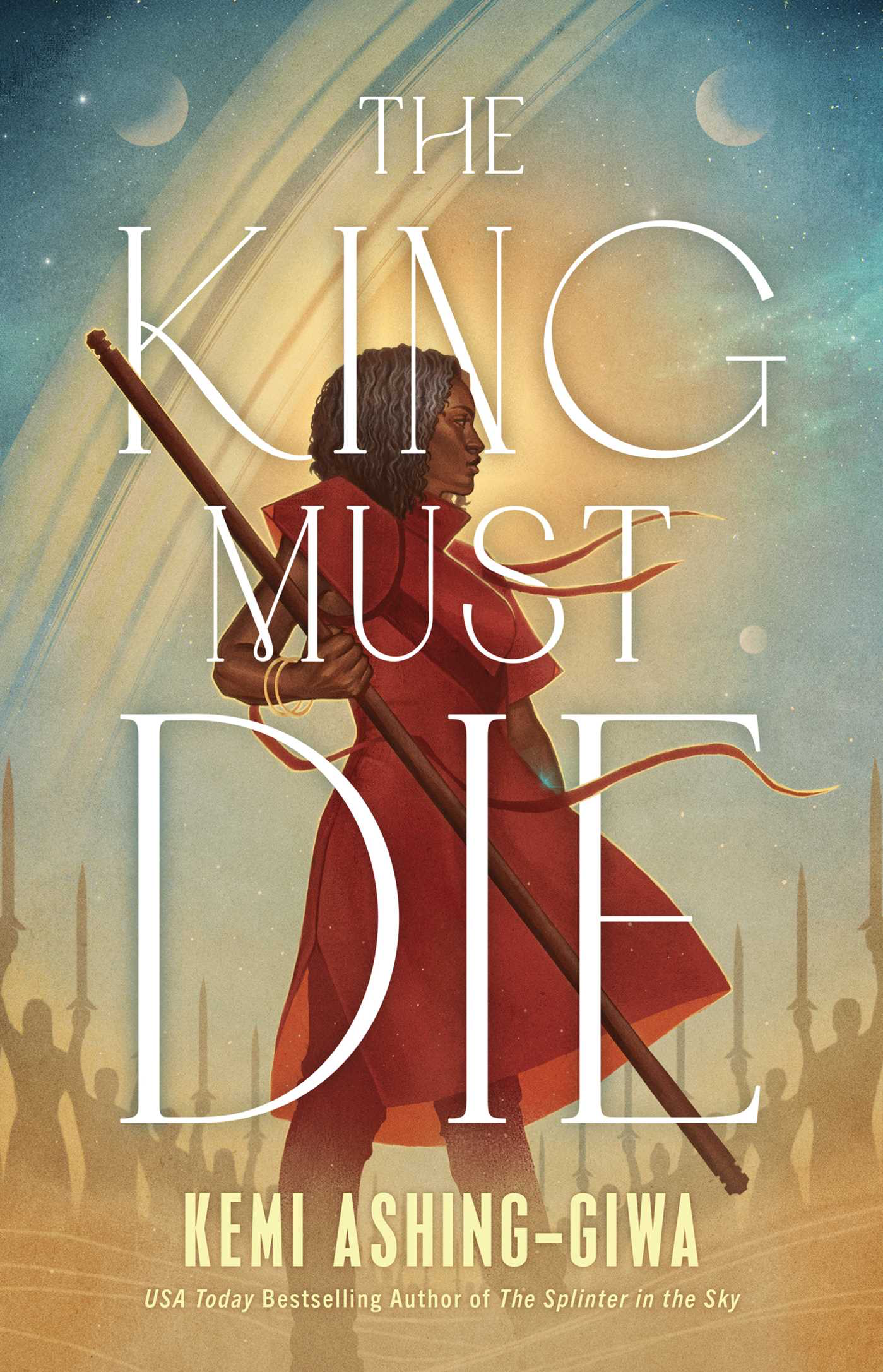
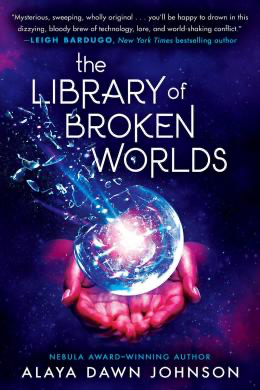
The Library of Broken Worlds – Alaya Dawn Johnson

Centuries ago, tesseract technology made travel and connection across the stars. Now, in the Library, where all of the tesseracts are held and all of the political machinations go on, Freida spends her childhood wandering amongst all kinds of strange magic and technology. She was artificially created by the Library, and has access to all of its texts. But as she grows older, she begins to understand the corruption deep within the Library. Her friends face persecution from all sides, both from mortal people and the gods beyond their reach. To save them, she must dig deeper than she’s ever ventured into the Library—and what she finds there could change her life.

TW/CW: genocide, loss of loved ones, sexual assault, colonialism/imperialism, violence

Right off the bat, let me just say: this is truly a weird book. For the most part, I mean that affectionately. It’s weirder than most YA I’ve read, and even weirder than some adult books. It’s also one of the more ambitious books I’ve read in quite some time. Straddling the line between hard sci-fi and full-blown fantasy, The Library of Broken Worlds is an ambitious—if not incredibly messy—novel.

I’ll start off by saying this: The Library of Broken Worlds really shouldn’t have been YA. Even though Freida is about 17 here, all of the concepts jammed in here really don’t feel like they should be for the 12-18 crowd. That might just be another consequence of 12-18 being a ridiculous jump in maturity for a single age range, but I digress. There are a lot of aspects that feel more well-suited for the more adult crowd. You sit in on a lot of court hearings, the politics get both deeply philosophical and intricate, and you’re dunked into the worldbuilding like one might be dunked face-first into a bucket of ice water. I think you can still work with a teenage character in an adult story (see: The Fifth Season), so I feel like it wouldn’t be much of an adjustment. As voracious of a reader as I was when I was in the peak market for YA books, I feel like I would’ve DNF’d this book in my teens. But that’s not to say that I didn’t love The Library of Broken Worlds. Had it been adjusted for an older audience, I think it might have been more successful—if not in marketing than anything else.

The case of the worldbuilding in The Library of Broken Worlds is a complicated one. It’s both the biggest strength and the biggest weakness of the novel. The worldbuilding itself is marvelous—what I could get of it. This novel is such a unique blend of sci-fi and fantasy. You have a Library as the central hub to travel to other parts of the galaxy, and the main characters is an artificially-created being created by the will of the Library itself. There’s lots of intergalactic folktales, extinct alien civilizations, a triad of nature gods that preside over the universe and form the basic divisions between its people, and a ton of worms and grubs. Gotta love the grubs. There’s a lot of ’em. The world is also refreshingly queernormative, with a variety of characters with different neopronouns and a young sapphic couple at the forefront of the story. In the acknowledgements, Johnson said that Studio Ghibli and Hayao Miyazaki were the biggest inspirations for the book. The comparison didn’t fully make sense to me, but in a way, I can see that the blend of sci-fi and fantasy, along with some of the more imagery, could feel like a darker, more convoluted version of Miyazaki. It’s such a lovingly created and multilayered world—I just wish we could’ve explored more of it.

Now, let’s go back to that word, convoluted, because it applies to…well, everything. I often talk about how writers often have the issue of vomiting all of their worldbuilding in chunks that distract from the story. This book has the exact opposite problem. From the start, you’re thrown headfirst into an exceedingly complex and convoluted world, expecting to know all of the terms and political divisions as they’re thrown about every which way. It felt like the scene from The Big Lebowski where The Dude is repeatedly getting his head dunked into the toilet (“WHERE’S THE MONEY, LEBOWSKI?”), but each time, you get a face full of completely wild fantasy terms that only get the most barebones explanations. By the time you’re sort of acclimated to the world and you think you’re getting a break, somebody’s pissing on your rug that really pulled the room together (more unexplained worldbuilding out of nowhere that overcomplicates things further). I still don’t fully know what a “broonie” is, and at this point I’m too afraid to ask. This book was in desperate need of a glossary, Jesus Christ. And a lot more exposition, as well as less convoluted and all-over-the-place explanations for what little was explained beyond the basics.

The characters in The Library of Broken Worlds were also a treat to explore! I wish we got more of some of the side characters, since there were so many, but it was Frieda’s story first and foremost. Though some parts of her were underdeveloped, Frieda was a solid protagonist; although she almost falls into a very typical mold of the YA protagonist whose life is out of her control and is different from the others (and is understandably angsty about it), these things are for reasons that are fully fleshed-out—the weight on her shoulder never feels manufactured, and the way that Johnson writes her trauma, from various sources, was very sensitive. I don’t think we got enough of Joshua (he’s almost forgotten about halfway through and only comes back in the last few bits of the climax), but I did like Nergüi’s coldness and eventual insightfulness as a counter to Frieda’s passion and hunger for knowledge.

There are some fascinating themes, political and otherwise, at play in The Library of Broken Worlds. In an attempt to be more utopian, the main government has built its government and legal system on the basis of freedom from and freedom to, and the discussion surrounding that, especially where those definitions get dangerously misused (justifying planetwide colonialism and genocide). Johnson didn’t shy away from getting into a ton of moral dilemmas. However, aside from that theme, I loved how The Library of Broken Worlds handles cycles. Simply by existing counter to her original purpose, Freida is breaking a cycle of her sisters being created for a specific purpose, and embracing empathy and love. But by doing that, she is also breaking a multitude of other cycles—the personal cycles of being traumatized and taking it out on others, and the vast, historical cycles of injustice and mass cruelty. The tesseracts also felt a bit like the interconnectedness of actions as well as events throughout history, and Freida exists at the confluence of it, making her able to fully see how she is able to reshape both her destiny and the unjust system that she lives under. As rocky and convoluted of a road Johnson takes us to get there, I appreciate that it was taken in the first place, because the payoff was mostly worth it in the end.

For most of what I just detailed, I nearly gave The Library of Broken Worlds the full 4 stars. But given the state of the book, I just…couldn’t. For all of its boundless creativity, timely themes, and observant insights, this novel was just a mess. I think this could’ve been the second-to-last draft before sending it off to the publisher, because as good as it was, the writing was all over the place. You’re unceremoniously thrust into the worldbuilding, and the only reason that I ended up acclimating (and even that’s a stretch) to everything was that this novel is nearly 450 pages long. It desperately needed more exposition, as well as clearer explanations of the key terms that come into play throughout the novel. The pacing was off—though I enjoyed the explorations of politics that Johnson employed throughout, I think we could’ve spent more time getting to know the world and less time sitting in space congressional hearings. There were a multitude of loose ends that didn’t fully get tied up. I guess that’s a consequence of such an expansive world, but The Library of Broken Worlds needed some serious refinement. I don’t normally find myself saying this, but give this book 50 more pages and a glossary, and I think some of these issues could be fixed.

All in all, an expansive piece of sci-fi/fantasy with highly commendable worldbuilding and themes, but which needed more page time and another round of edits to fully achieve its purpose. 3.75 stars!

The Library of Broken Worlds is a standalone novel, but Alaya Dawn Johnson is also the author of several novels for teens and adults, including Trouble the Saints, Love is the Drug, Moonshine, Racing the Dark, and The Summer Prince.

Today’s song:

That’s it for this week’s Book Review Tuesday! Have a wonderful rest of your day, and take care of yourselves!

Posted in Book Review Tuesday

Book Review Tuesday (8/17/21) – A Psalm for the Wild-Built

Happy Tuesday, bibliophiles! Wow, already the last day of summer for me…I go back to school tomorrow, bright and early…oh, joy. At least I’ll be able to see my friends again.

Anyways, here’s one of my library holds from this week that I enjoyed immensely! I found out about it after reading (and loving) the Wayfarers series. I put it on hold and forgot that I had, and it unexpectedly came in the library last week! And I’m so glad that it did – A Psalm for the Wild-Built was just the kind of book I needed: heartwarming, gentle and philosophical.

Enjoy this week’s review!

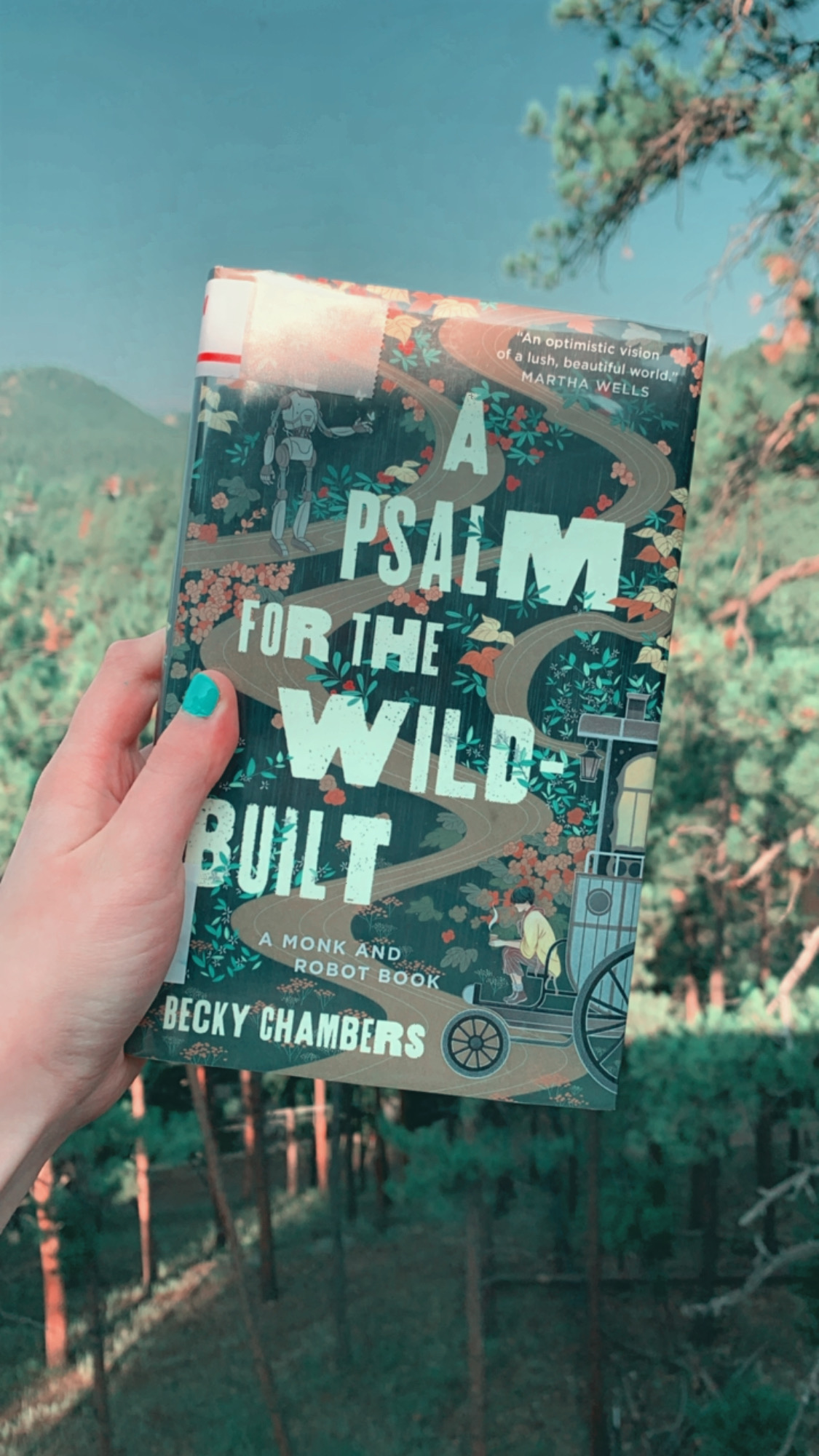
A Psalm for the Wild-Built (Monk & Robot, #1) by Becky Chambers
WHAT GAVE THE COVER ART THE RIGHT TO BE SO CUTE

A Psalm for the Wild-Built (Monk & Robot, #1) – Becky Chambers

My library copy ft. a nice filter and my backyard

Sibling Dex is tired of their quiet life as a monk in the city. Insistent on bringing spice into their life, they leave for the rural parts of town to become a tea monk, giving out tea and consolation to those who need it most. But something is still missing, so they take their tea cart into the uncharted woods.

There, they come upon Mosscap, a robot living in the woods who is eager to know about humans and their ways. Robots are the stuff of legends in Sibling Dex’s world; centuries before, they migrated to the woods, never to be seen again, leaving humans to their own devices. Knowing nothing about each other, Dex and Mosscap embark on a journey through uncharted territory, seeking answers – and finding more than they expected.

The Iron Giant" movie review | Movies & TV Amino

TW/CW: honestly? I’ve got nothing here, there’s nothing terribly violent, tragic, or graphic in any way here. It’s a gentle book, and honestly? We need more books like this

Okay, this book had no right to be JUST WHAT I NEEDED. I’d already fallen in love with Becky Chambers’ penchant for making sci-fi tender and human in the Wayfarers series, but A Psalm for the Wild-Built was truly the book equivalent of a warm hug.

Everything about this book made me all soft and warm inside. Chambers’ writing made for a beautiful, atmospheric world, filled with lush plant life, factories grown over with vines, and quirky robots wandering the woods. My mind tended to wander back to the Redwoods and Sequoias while picturing the setting – lots of tall trees, bright greenery, and all sorts of little creatures in every nook and cranny. The worldbuilding was spectacular – I was instantly immersed in the world of Dex and Mosscap, and the fact that it was all squeezed into less than 200 pages was even more impressive. It truly felt like a lived-in world, one that I wouldn’t hesitate to grab a tea cart and take a ride through the woods in.

And the characters? I now have an aggressive need to give both Mosscap and Dex hugs. Sibling Dex’s struggles with dissatisfaction and restlessness were all too relatable, and I loved their journey over the course of the novel. And Mosscap? Mosscap was just all kinds of delightful. From the cover, I pictured a shrunk-down sort of Iron Giant with the voice of C3-PO for it. It was such a cheery, eager, and curious character, and it was the perfect match for Dex’s more introspective tendencies. They made the sweetest pair, and I loved exploring Becky Chambers’ world with them.

Through it all, there’s consistent themes of dealing with dissatisfaction and the meaning of life itself. Like I said – A Psalm for the Wild-Built me told me exactly what I needed to hear, and that is that any time you feel dissatisfied, think of how miraculous life itself is – the existence of the universe and consciousness is such a marvel, why not treat it that way? Which, in a world where we’re all fed up and cagey from staying home and living out day after day in constant repetition, is a crucial message for us. I’ll be doing my best to take it to heart.

All in all, easily the sweetest sci-fi/fantasy novel I’ve ever read, equal parts journeying into the unknown and musing on the nature of life itself. 4.5 stars!

shinrinyoku

A Psalm for the Wild-Built is the first novel in Becky Chambers’ Monk & Robot series, continuing with the forthcoming A Prayer for the Crown-Shy, slated for release in 2022. Chambers is also the author of the Wayfarers series (The Long Way to a Small, Angry Planet, A Closed and Common Orbit, Record of a Spaceborn Few, and The Galaxy, and the Ground Within) and the novella To Be Taught, If Fortunate.

Today’s song:

UGH THE GUITAR IN THIS SONG…this album is magic

That’s it for this week’s Book Review Tuesday! Have a wonderful rest of your day, and take care of yourselves!

Posted in Book Review Tuesday

Book Review Tuesday (7/6/21) – Spellhacker

Happy Tuesday, bibliophiles!

I got to take a trip to my favorite bookstore last week, and this was one of the books that I picked up. I’d been meaning to read it for years after loving M.K. England’s debut, The Disasters, and I finally got to buy it and reading! And despite the average ratings, England’s second novel is a genre-bending success!

Enjoy this week’s review!

Spellhacker by M.K. England

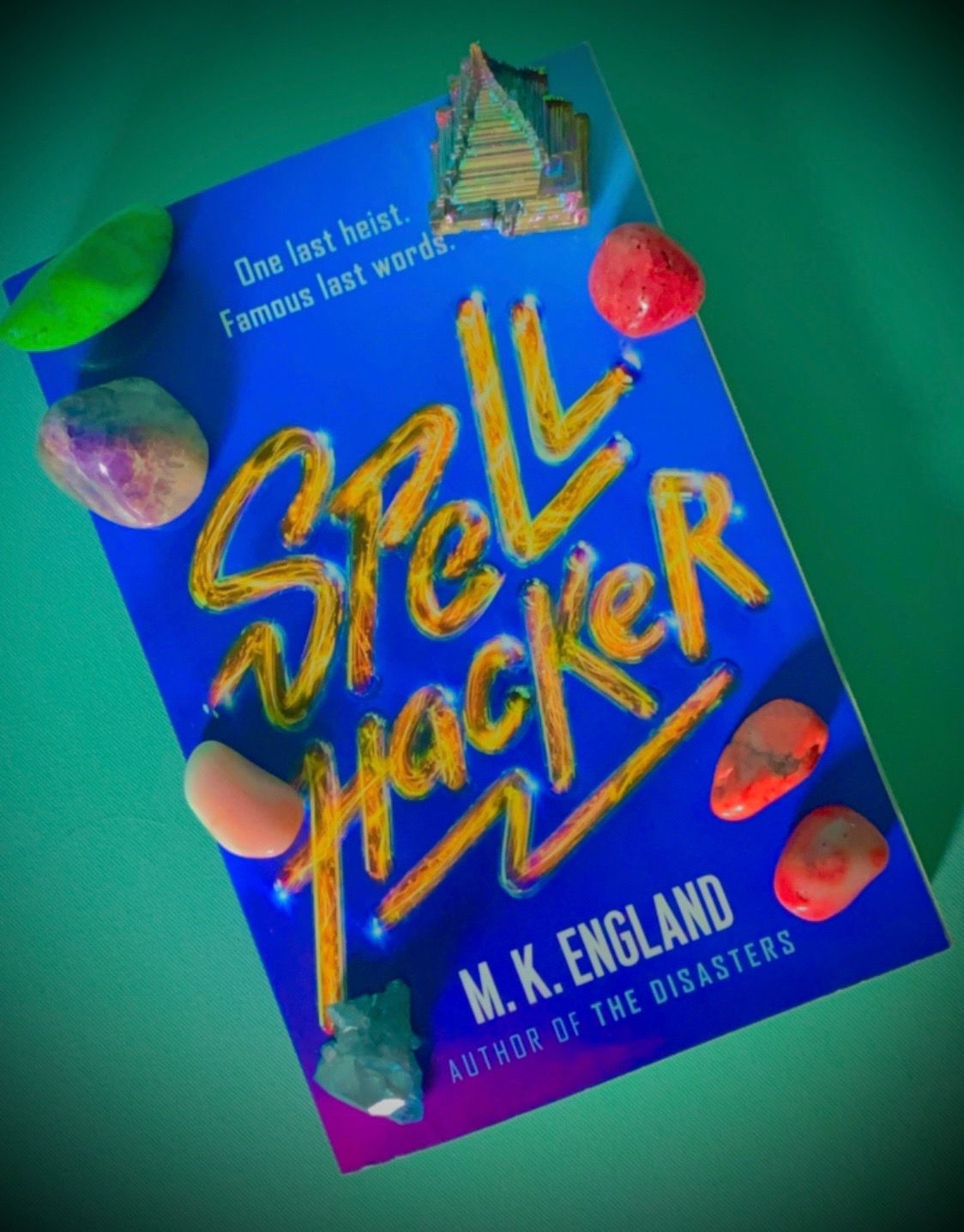
Spellhacker – M.K. England

my copy ft. a cool filter and some crystals, stones, and my bismuth

Kyrkata is a place where futuristic technology and magic – known as maz – live in harmony, but after a magical plague wracks the population, the maz supply is depleted. Corporations now hold maz with a tight fist, racking up the prices while the people who need it most turn to crime in order to get it.

Enter Diz, Remi, Jaesin, and Ania. For two years, they’ve run an illegal maz-siphoning operation. But with college on the horizon, their next heist has to be their last. When their “last job ever” results in a deadly new strain of maz, the four teens must stop a dangerous secret from coming to the surface – and get to the bottom of a corporate conspiracy that may mean the end of their world.

cute, pixels and aesthetic - image #6916550 on Favim.com

TW/CW: descriptions of illness, loss of loved ones (off-page), violence, near-death situations

Ok. Hear me out.

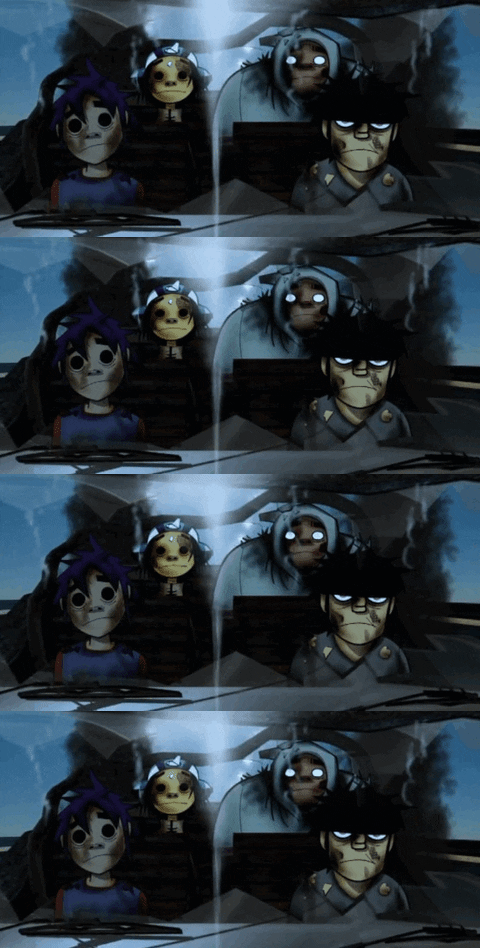
So if all of the strains of maz have the suffix -az at the end of them (ex. firaz, magnaz), would that mean that Gorillaz would be a valid name for a strain of maz? Guess they’d have to call it maz-19-2000 instead of maz-15…

…okay, I’ll shut up now. I’m just making myself giggle at this point

Gorillaz: Song By Song: 19/2000
the Gang™️ after the maz-15 incident

[ahem] anyways

It’s really such a shame that this book isn’t getting the recognition it deserves. This is what a genre-bending novel should be – it’s a seamless blend of sci-fi and fantasy, with enough worldbuilding to make both of them work! And Spellhacker has everything – heists, found family vibes, weird creatures, exploding magic, and casual queerness!

What stood out most for me was the tender found-family dynamic in this novel. All four of the main characters – especially Diz, our protagonist – are delightfully real and as messy as they come, but they just felt so genuine. They all had their lovely little quirks, and they all bounced so sweetly off of each other. The love between them (both platonic and romantic, I might say) brimmed off the page, and it made my heart so happy. Through thick and thin, they were all there for each other. Spellhacker reminded me of why the found family trope is easily my favorite trope!

And if there’s one thing better than found family, it’s a casually queer and diverse found family! Diz is queer, Remi (her love interest) is nonbinary, and there’s several wlw and mlm couples! (Or, to quote M.K. England themself, “elderly science husbands.”) There’s also a lot of POC-coded characters present, and the diversity truly shines in this novel.

And beyond that, Spellhacker is SO. MUCH. FUN. If any of you here are fans of Six of Crows or The Gilded Wolves, YOU’RE GONNA EAT THIS BOOK UP. It’s fast-paced, high-stakes, and full of disguises, hacking, chase-scenes, and breakneck action. From the moment the crew botched their last heist, the novel takes off, not letting go until the final page. But even with all that, England still allowed the crew moments to be tender, allowing for a lot of sweet scenes and character interactions. It’s the perfect balance of action and softness.

I have…mixed feelings about the worldbuilding, though. For the most part, I thought it was great; there was clearly a lot of care put into the types of maz and how society controlled them, and the various underground operations to siphon it. Kyrkata’s implied to be a world completely different from ours, but there were references to things that were very Earth-specific (I can’t remember them off the top of my head), and several of the characters had very Earth-sounding last names, which threw me off a little. But overall, the things I found were fairly nit-picky, so the worldbuilding was solid overall.

There was also something unexpected hidden in Spellhacker that I loved – England wove the usage of the maz into a metaphor for climate change, and the relationship that corporations have with the environment. Without spoiling anything, there’s themes of greed and destroying the environment in the name of making money, and I love how Diz and the others combatted that. We all love seeing corporations getting their comeuppance, don’t we?

All in all, a fast-paced novel that seamlessly blends sci-fi and fantasy to make an action-packed bundle of exploding fun. 4.5 stars!

satchel cannon | Explore Tumblr Posts and Blogs | Tumgir
okay I KNOW I need to stop with the Rabbi Milligan gifs, but Diz says something almost exactly like this line and it made me so giddy ksdjhfskjdfh

Spellhacker is a standalone, and M.K. England’s second novel. They are also the author of The Disasters and a forthcoming middle grade novel called Ultimate Gaming Showdown, scheduled for release in 2022.

Today’s song:

That’s it for this week’s Book Review Tuesday! Have a wonderful rest of your day, and take care of yourselves!