Posted in Sunday Songs

Sunday Songs: 8/16/26

Happy Sunday, bibliophiles! I hope this week has treated you well.

This week: Yes, I did, in fact, preorder a song for Sunday Songs because I knew that I’d have Things to say about Lost Weekend, even though it’s only been two days since it came out. No, I’m not trying to kill you by putting Sparklehorse, Mitski, and Phoebe Bridgers in the same post (I swear the Mitski is actually upbeat. No, really!).

Enjoy this week’s songs!

SUNDAY SONGS: 8/16/26

“Little Fat Baby” – Sparklehorse

In the aftermath of a near-death experience that gave Mark Linkous chronic pain for the rest of his life, this is what he said that he realized: “I started noticing all these things I’d forgotten about. I remember I was outside the rehabilitation place and I noticed a grasshopper, and I’d forgotten about grasshoppers…I just had this new perception of things I’d been oblivious to.” Sure, Sparklehorse is a hallmark of sad bastard music (a label that Linkous himself somewhat chafed against). But as I get older, what draws me back to Sparklehorse again and again is the encased eggs of hope beneath the sadness. His world is populated with dust and rotten wood and bones, but there’s lively insects hopping around, bird’s nests in the rafters of crumbling barns. There’s a liveliness that persists in spite of many sources of great strife in Linkous’s too-short life.

“Little Fat Baby” is one of the more somber songs in an already somber album, It’s a Wonderful Life. Yet it’s also one of the more empathetic songs. In the chorus, he ruminates on the song’s nebulous protagonist: “He got dragged/By a donkey/Through the glass/And the myrtle/But he was once/A little fat baby.” We never know what circumstances lead to this man meeting such an agonizing fate, but Linkous peers beyond the pain to see the inherent humanity in this character. The circumstances aren’t the point—the point is that all of us started off as helpless little creatures deserving of love. “Little Fat Baby” is a tender duet between Linkous and Sol Seppy, who provides fairylike accompaniment to Linkous’s already fragile voice. Quivering strings give this track a kind of grand reverence, amidst the quiet sympathy it weaves for the man who was once a little fat baby. There’s a strange comfort in “Little Fat Baby” amid the sadness—the feeling that you can always come home, no matter what you did before you stumbled onto the doorstep.

…AND A BOOK TO GO WITH IT:
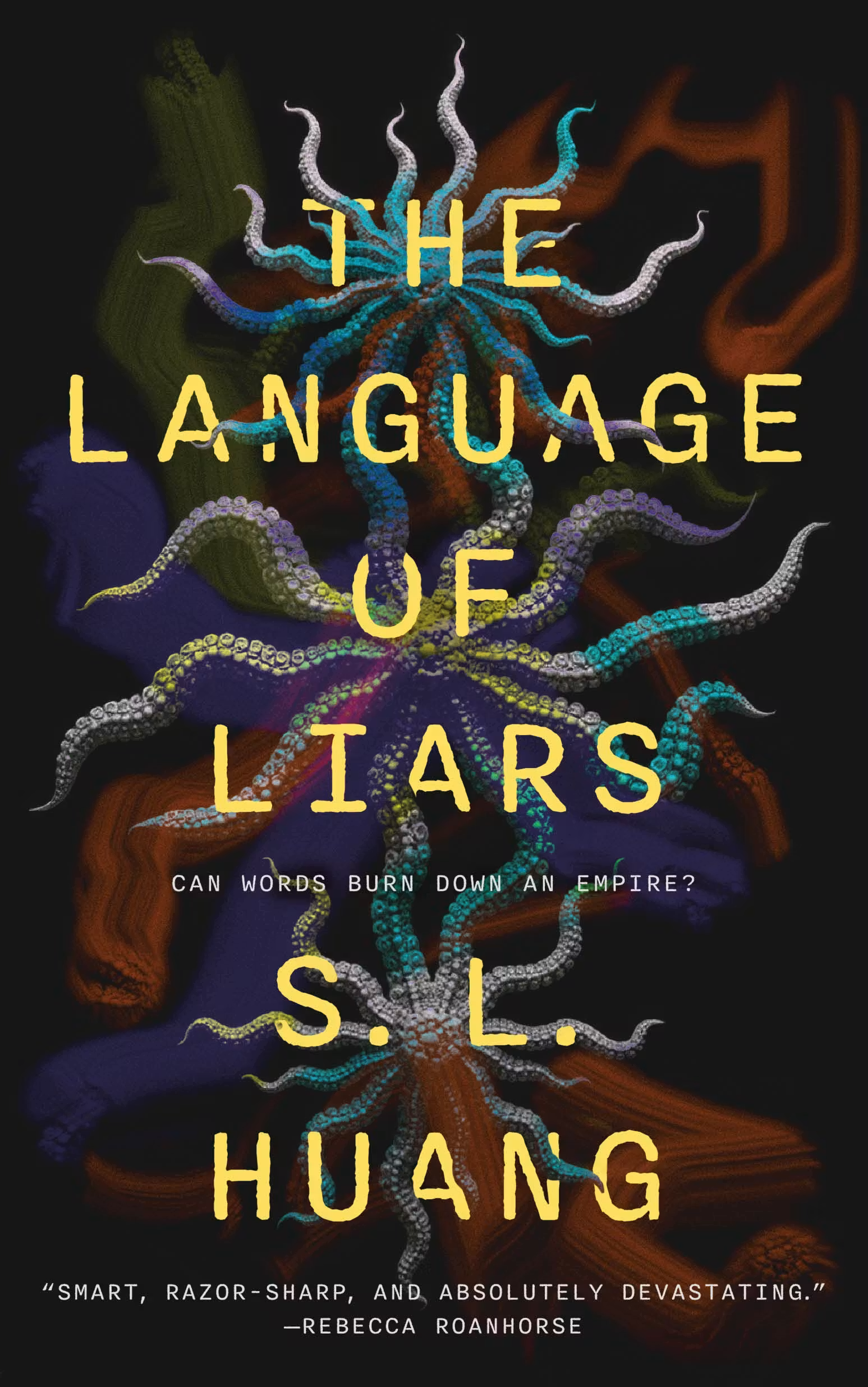
The Language of Liars – S.L. Huang“Did you make the city slickers laugh?/He got dragged by a donkey/Through the glass and the myrtle/But he was once a little fat baby…”

“Fireproof” (One Direction cover) – Mitski

Everything that Mitski touches turns to gold. Well, maybe not Laurel Hell, but they can’t all be winners. The recent tenth anniversary of Puberty 2 prompted her to release an edition with two new covers with whiplash-inducing source material: Frank Sinatra (which I talked about around a month ago) and One Direction. Of course, Mitski didn’t have to try in order to make “Fireproof” loads more fun than the original, which is pretty much the dictionary definition of milquetoast. (How do you make a song called “Fireproof” and then make it into the most sauceless, pallid excuse for a song possible? Jesus.) Mitski, on the other hand, made the vague promises of the lyrics into something tangible and fiery—her breathless admission of “I’m feeling something deep inside/Hotter than a jet stream burning up” makes it feel real. Aided by the crunchy guitars of her Bury Me at Makeout Creek era, this cover feels like she means every word, even if they aren’t hers.

…AND A BOOK TO GO WITH IT:
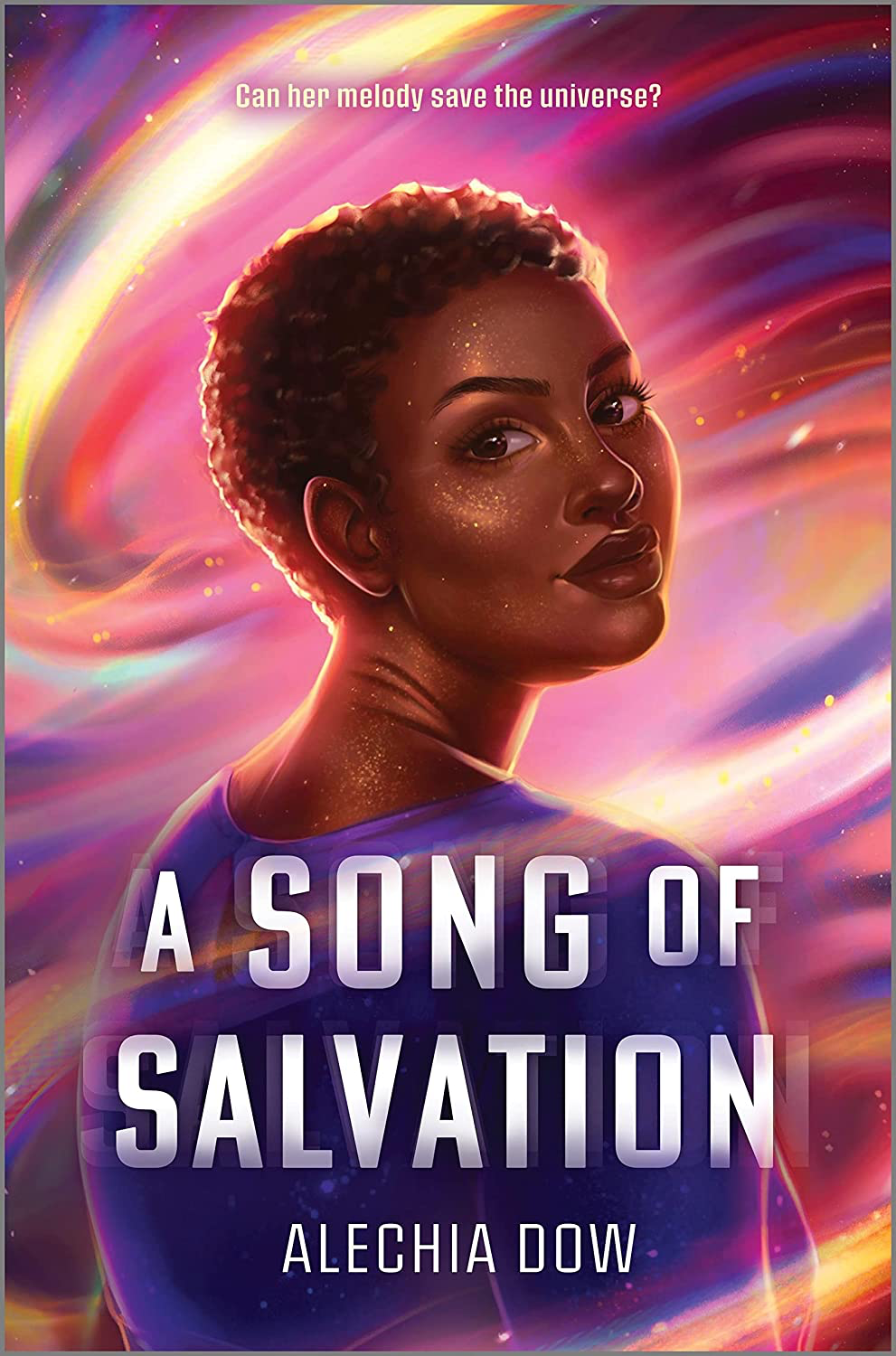
A Song of Salvation – Alechia Dow“I’m feeling something deep inside/Hotter than a jet stream burning up/I got a feeling deep inside/It’s taking, it’s taking all I’ve got…”

“Museum of Sex” – Robyn Hitchcock & The Venus 3

Having only seen him live twice, I can say in confidence that there’s a point in every Robyn Hitchcock show where it goes from a concert to a stand-up routine. The last time I saw him, he veered into a whole bit about how rock n’ roll was invented in the 1700’s aboard ships. There was a joke about “Horse Latitudes” somewhere in there. He quoted “Time and again, I tell myself/I’ll stay clean tonight” from Bowie’s “Ashes to Ashes” before segueing into “The Cheese Alarm.” The guy’s just naturally hilarious. This is the same man who casually used the interjection “yaysville!” multiple times in his memoir, after all. It felt nothing but natural.

What sticks to me about Robyn Hitchcock’s sense of humor to me is that yes, he’s got jokes, but he never half-asses them. He still puts his all into a song with lyrics like “I love that old museum of sex/You never know what’s happening next.” With the grooving, horn-laden accompaniment of the Venus 3, he launches into a track that winds along slinkily like a snake. He added in a lyric about said Museum of Sex closing at 4pm, to the laughter of the crowd, and all the while he’s chipping away at an artfully complex riff. He’s committed to the bit to a degree that most artists aren’t.

…AND A BOOK TO GO WITH IT:
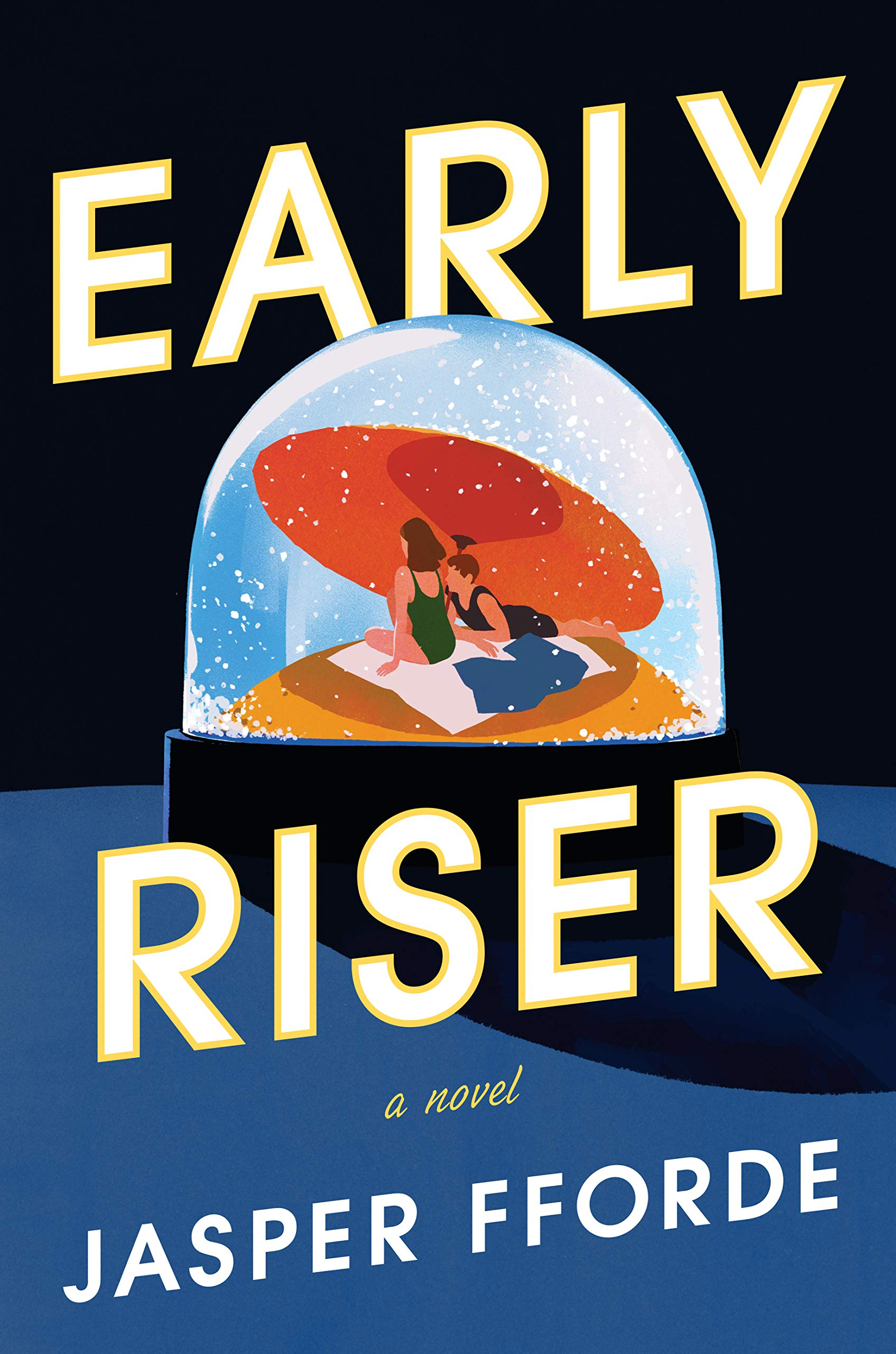
Early Riser – Jasper Ffordethere’s not a lot of books or authors I can think of that are similar to Hitchcock’s sense of humor, but Fforde’s quirky, dry wit and out of left field premises certainly comes close.

“The A Song (Laid In Your Arms)” – Spiritualized

“The A Song” is monumental. There’s no doubt about it. When I saw Spiritualized back in 2022, about a month before Everything was Beautiful was released, I remember being caught up in the towering tidal wave of noise. I could sense that “The A Song” was new, and all I could make out from the dizzying bee’s nest of sound was the line “One man’s crime is another man’s thrill”; the rest was just a shockwave.

It’s no wonder that I listened to Everything Was Beautiful to death when it came out. I had to take an extended break from it because it consumed me so much in mid-2022. To this day, I still think it’s one of Spiritualized’s best albums to date, nearly on par with Ladies and Gentlemen We Are Floating in Space, no less drugged-out but with the optimism that comes with age—and the revelation that you’re still alive, and there’s a myriad of things that you can do with your body and your life. Sure, “The A Song (Laid In Your Arms)” is probably as much about being high and watching your life slip away as any given Spiritualized song, but it’s a truly spectacular show of the amount of command that J Spaceman has of sound. Watching him at work is like watching a conductor with a 60-piece orchestra; squealing horns, screeching guitars, and percussion like pounding waves all convalesce into a marvelous, tidal force that knocks me off my feet, even when I’m sitting down. It’s so meticulously controlled and constructed, and yet there’s something so primal about how this song just swallows you whole. “The A Song” is a cosmic force—like the album title, it’s the kind of immaculate construction that, in spite of its lyrics, taps into the wonder of watching life itself unfold in front of your eyes, just like J Spaceman’s arresting compositions unfold in front of you. I think that’s the point of Everything Was Beautiful, in the end; it’s a celebration of the overwhelming shock of being alive.

…AND A BOOK TO GO WITH IT:
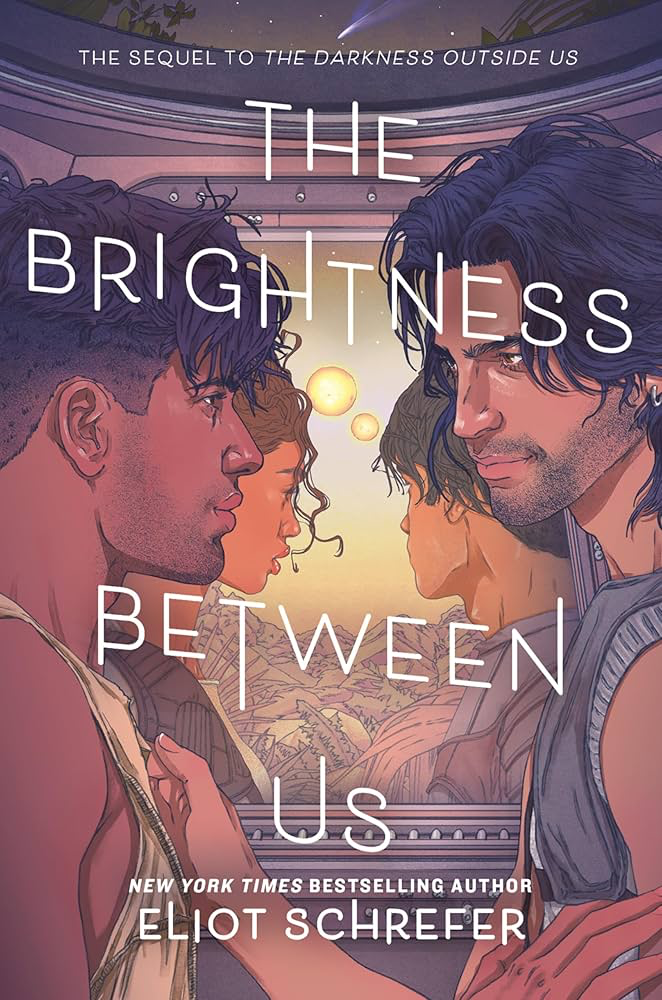
The Brightness Between Us (The Darkness Outside Us, #2) – Eliot SchreferI associate this duology a ton with Spiritualized—they have a very similarly epic quality to them.

“Kill Me” – Phoebe Bridgers

Predictably, I’ve become insufferable about Lost Weekend. Phoebe Bridgers could’ve easily gotten away with releasing Punisher 2: Electric Boogaloo after six years of radio silence, but she’s easily defied it. It’s a different record, temporally and stylistically. I’m struck by how it sounds next to Punisher; the former was lonely in the way of expansiveness, intensely sparse, like the image of Bridgers staring up at the stars in the middle of nowhere on the album cover. Lost Weekend, on the other hand, is lonely in a way that only happens when you’re caught in the eye of a storm in a roiling sea of chaos. The album is all about upheaval and disorientation, both positive and negative, with the confluence of her father’s unexpected passing and her relationship with Bo Burnham. Add to that the unforgiving eagle-eye of the music industry and the tabloid press, it’s got enough hairpin turns to make somebody want to abruptly get off the ride and throw up.

Chaos is something that Bridgers takes full advantage of on Lost Weekend, with some of the stylistic detours feeling disorienting if not played in the right order. But in order, the cohesion is difficult to miss; it feels strung together in a more adventurous way, especially with the bevy of instrumentation and noise that’s been added to the soundscape. “Kill Me,” one of my standout tracks from the album, feels like the lodestone of the chaos and disorientation: the repetition of Bridgers’s breathy admission of “This is gonna kill me/Wait!” as the instrumentation blinks into momentary silence feels like stumbling off of a dizzying rollercoaster, not knowing which direction is up or down. (Fittingly, I had a similar feeling coming out of the accompanying laser show at the Denver Museum of Nature and Science. In a good way, for sure. Fitting.) Much of the song deals with time out of time, years bending and blending together: “My boys are getting married/Turning 21/I’m not, but I was once certain, always.” That sense of uncertainty feeds into the verse about a shared kiss at a costume party where “the veil is thinning.” (Admittedly, I thought that the “flower with chemical petals” line was corny, but it turned out to be a reference to David Foster Wallace.) All of it culminates in a propulsive turn into cascading shoegaze at 3:34 that sounds like the fabric of reality itself is fragmenting into fragile pieces, buoyed by Cameron Winter’s (!!!) backing vocals. Bridger’s rallying cry of “Let’s go missing” certainly puts “Lost Boys” in a new light—all of this upheaval and heightened visibility would make anybody want to go off the grid.

Lost Weekend, in the end, reads to me like a beautiful statement about facing the inherent unpredictability of life. Some days, it’s enough to make you want to disappear. But some days, it represents a promise of something wonderful that you’ll never see coming on the horizon. Life is full of this chaos, in all of its grief and turmoil—there’s no use running from it, good or bad. Sometimes what’s on the other side is the very thing you’ve always wanted.

BONUS: Speaking of Cameron Winter [ahem] Son-John Johnson, here’s one of my other absolute favorites from the album, the duet “I Can’t Wait” and it’s newly released music video:

…AND A BOOK TO GO WITH IT:
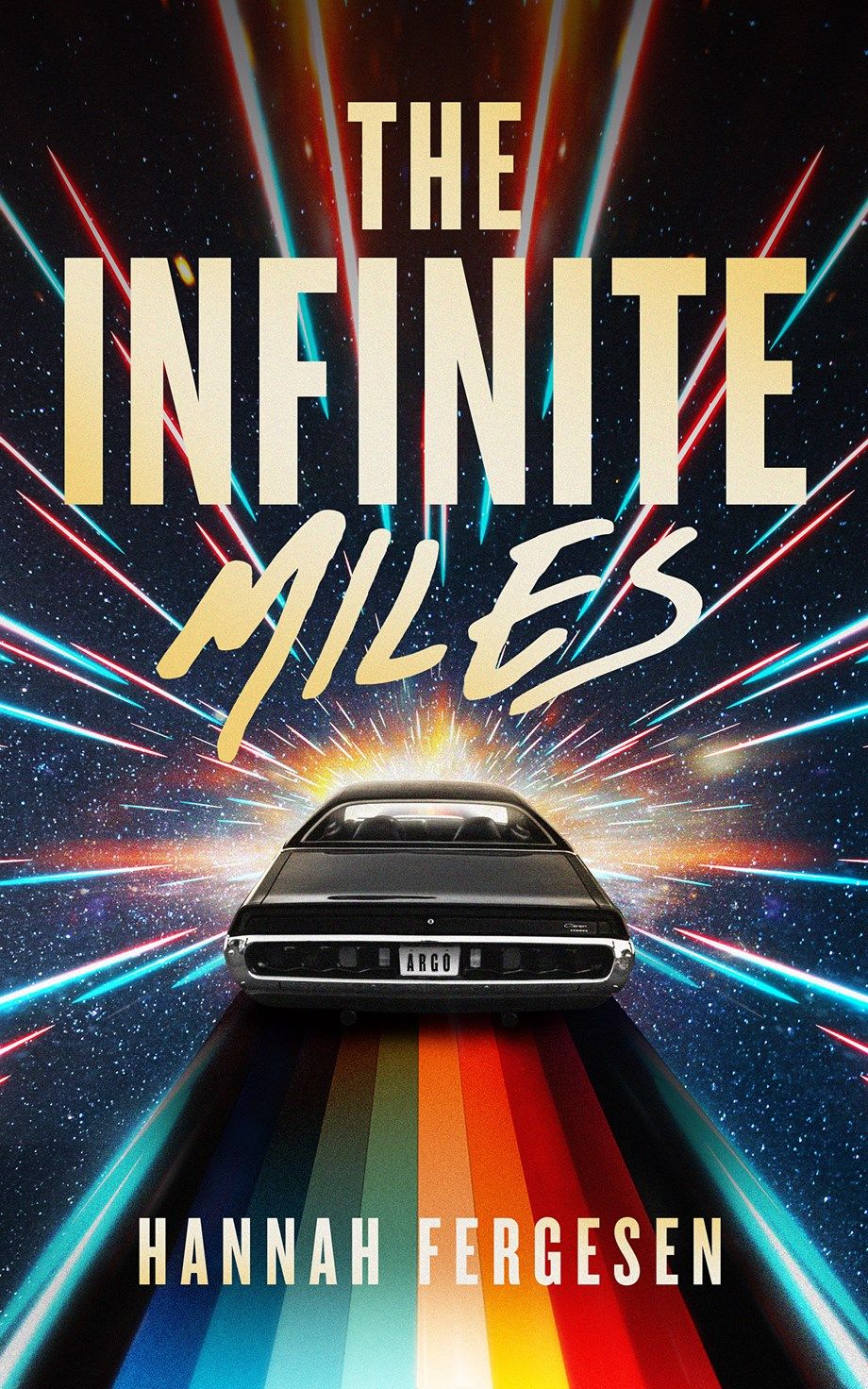
The Infinite Miles – Hannah Fergesen“Turning twenty-one/I’m not, but I was once certain, always/Now all I know is the ending…”

Since this post consists entirely of songs, consider all of them to be today’s song.

That’s it for this week’s Sunday Songs! Have a wonderful rest of your day, and take care of yourselves!

Posted in Sunday Songs

Sunday Songs: 8/9/26

Happy Sunday, bibliophiles! I hope this week has treated you well.

This week: A Beatles cover that David Bowie faltered on, but somebody else succeeded in. Plus, weird movies with weird scores, and mediocre movies with great needle drops.

Enjoy this week’s songs!

SUNDAY SONGS: 8/4/26

“All We Ever Look For” – Kate Bush

Kate Bush has her share of iconic album covers, but I swear Never for Ever has to take the cake for my favorite one. Can we acknowledge just how fantastic Nick Price’s album art is? Aside from capturing Kate Bush’s spirit and musical style, it’s just so kooky—how could you not love the parade of spooky storybook creatures coming out of Kate Bush’s skirt? It’s uniquely suited to most of the tracks I’ve heard from the album, but “All We Ever Look For” is an especially good fit. All of the flutes, koto, and quaint synth bubblings feel like they should be the backdrop for an elaborate story with stylized, woodcut characters rotating on a wheel, like a Rousseau painting that never came to be. The wheel is key here, not just because “All We Ever Look For” is neatly cyclical musically: the lyrics are as well: Bush explained in 1980 that “It’s about family relationships generally. Our parents got beaten physically. We get beaten psychologically. The last line – ‘All we ever look for – but we never did score.’” Aided by the almost medieval stylings of the instrumentals, the track plods along like a dirge, but what it’s mourning is the continuing cycles of generational trauma: “The whims that we’re weeping for/Our parents would be beaten for/Leave the breast/And then the rest/And then regret you ever left.” In a way, it remains a dirge—a kind of funeral for all of the generations who fell victim to these cycles.

…AND A BOOK TO GO WITH IT:

Wearing the Lion – John Wiswell“All we ever look for, a god/All we ever look for, ooh, a drug/All we ever look for, a great big hug/All we ever look for, just a little bit of you…”

“Everytime I’m With You” (feat. Jason Lytle) – Sparklehorse & Danger Mouse

Dark Night of the Soul was Sparklehorse’s final project before his too-soon passing, and it was an ambitious one: a collaboration with producer Danger Mouse, with a guest list consisting of the usual suspects (Nina Persson, Jason Lytle, Vic Chestnutt) and the more unexpected (Gruff Rhys, David Lynch). I haven’t listened to the whole album, but Mark Linkous and Danger Mouse’s powers combined make something so cohesive, that you’d think only a singular mind was behind it. “Everytime I’m With You” creeps along with a proto-C418 instrumental (tell me that this doesn’t sound a little like “Chirp”), where Mark Linkous and Jason Lytle’s vocals meld in a slurring warble, musing about how “everytime that I’m with you/I am drunk, and so are you.” It’s a woozy track that almost feels drunk itself, like the subjects have infected the very structure of the song itself with their own intoxication. It bridges the gap between something brighter than Sparklehorse’s usual palette, and something gentler than Danger Mouse’s usual fare.

…AND A BOOK TO GO WITH IT:

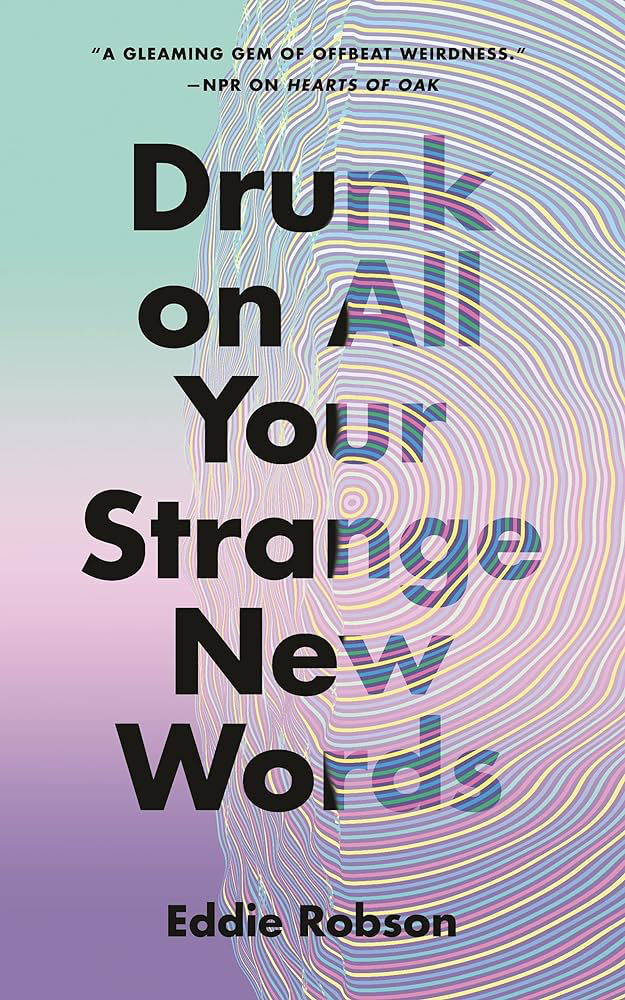
Drunk on All Your Strange New Words – Eddie Robson“Yeah, everytime you come by/We get so trashed and stay up all night/Well, it’s so wrong, but it’s so right/Yeah, it’s alright…”

“Silver Lining” – Rilo Kiley

I’ve already aired out my many problems with Supergirl, but if it has one redeeming factor, it’s that it had a fantastic soundtrack. Then again, most of Rilo Kiley’s discography is made of songs that feel reverse-engineered for coming-of-age movies—and I’ve never gotten tired of it. It really doesn’t feel like a one trick pony situation, because they’ve clearly got the capability for breathless, adventurous indie pop (“Portions for Foxes”) and some truly devastating yet affirming wallops to the face (“A Better Son/Daughter”). It’s no wonder that “Silver Lining” was the pick for Supergirl; although the movie never followed through on this arc, it’s a stomping, indie-pop ode to dusting yourself off and regaining your self worth. Like Jenny Lewis leaving her fictional groom at the altar in the music video, this track celebrates, in all of its complicated, mushy feelings of guilt and freedom, of refusing to be treated as ornamental: “I never felt so wicked/As when I willed our love to die/And I was your silver lining/As the story goes/I was your silver lining/But now, I’m gold.”

…AND A BOOK TO GO WITH IT:

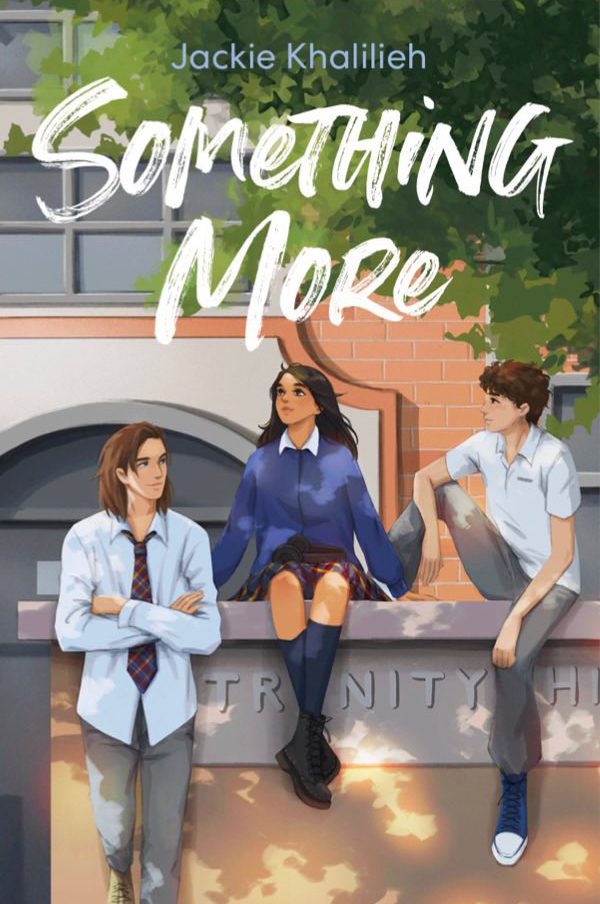
Something More – Jackie Khalilieh“And I was your silver lining/As the story goes/I was your silver lining/But now, I’m gold.”

“Korben Dallas” (from The Fifth Element) – Éric Serra

The Fifth Element was back in theaters recently, so I had to do rewatch #3 on the big screen. Every time I watch it, I forget the sheer amount of bizarre things that had to align for this movie to have happened. It’d be easy to see this and lament the sameness that’s overcome pop culture, but I maintain that weirdness will always find a way to slip through the cracks. This, however, is on a level of originality—and absurdity—that just can’t be replicated. The supreme being of the universe teaches Bruce Willis about consent, and he still doesn’t quite get it. Gary Oldman with a horrendously funny haircut and a soul patch. Tricky gets two minutes of screen time and then gets blown up. Incompetent space priests. Top-tier creature design for 10 minutes. A climax synced up with a blue alien singing opera. It’s so unafraid of being weird, and for that, The Fifth Element will forever be aspirational for me as a creator. I just get jumpstarted with inspiration with every rewatch, once I get over the bafflement that Leeloo’s godawful Band-aid outfit got past that many layers of studio scrutiny. (War crime, I tell you.)

Most of the soundtrack for The Fifth Element gets overshadowed by said opera piece, and rightfully so, to an extent. But the pockets of brilliance like this in the score deserve so much more love. The “anything goes” attitude of The Fifth Element translated to Eric Serra’s score; you go into this film weaned on a few pieces that are very much indebted to John Williams’s Star Wars scores, only to be knocked senseless by this slick, grungy trip-hop track with some of the funkiest basslines ever committed to a sci-fi film. It has everything. Percussion that sounds like one of 23rd-century New York’s elevators malfunctioning, weird little electronic warbles, and a loop of a cat’s meow to coincide with the first glimpses of Korben Dallas’s cat. And did I mention the bass? Oh my god. It sets the scene with the immediacy of somebody kicking your door down in combat boots. All that, and it instantly gives you a sense of Dallas as a character (all sorts of disparate elements held together by…Bruce Willis, of course) and the aesthetic language—both visual and oral—of Luc Besson’s world. All that for a song that’s not even two minutes long. SUPER GREEN!

…AND A BOOK TO GO WITH IT:

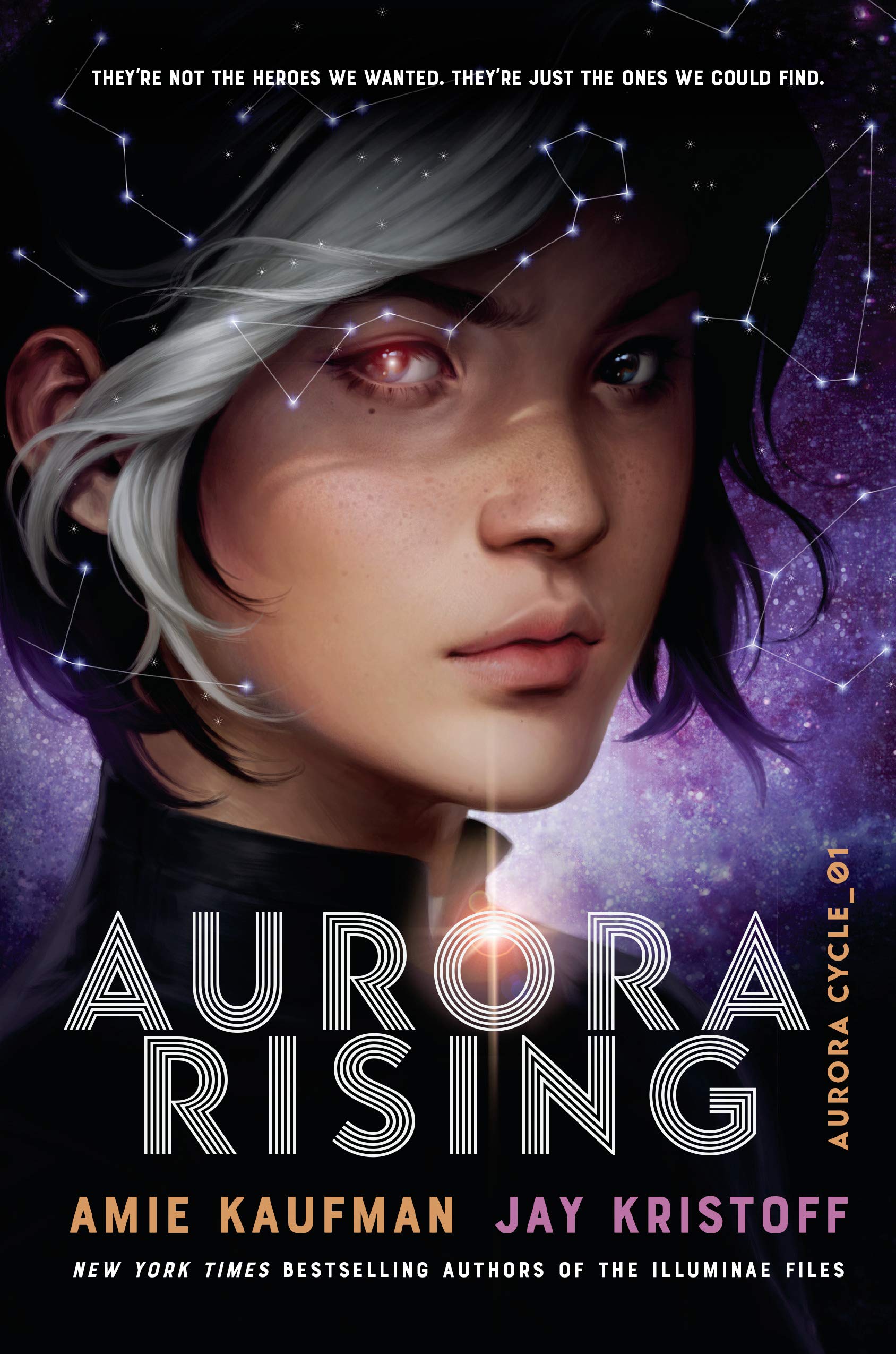
Aurora Rising (The Aurora Cycle, #1) – Amie Kaufman & Jay Kristofflook, I know I used this last week, but Amie Kaufman has cited The Fifth Element as one of her favorite movies of all time, and has said that it was a major inspiration for this series. See? All the cool people like The Fifth Element.

“Across the Universe” (The Beatles cover) – Fiona Apple

I’ll never stop being a die-hard Bowie fan, but I’m mature enough to acknowledge when he misses. David Bowie covering one of The Beatles’s most moving and iconic songs—what could possibly go wrong? A lot of things, unfortunately. The vibes are just off. His cover of “Across the Universe” appeared on Young Americans, and even though John Lennon contributed guitars to this cover, I think it’s just an awkward pairing, with Bowie stretching his voice out too much and the worst of the plastic soul of Young Americans grating against the transcendental beauty of the original. Oof.

Fiona Apple, on the other hand, knocked it out of the park. Nothing can top The Beatles’s original version, but I think she captured what a lot of covers have failed to do. I’ve always taken the song to be about transience, but the persistence of love regardless; all of the overpowering sensations are threatening to overtake Lennon (“Pools of sorrow/Waves of joy/Are drifting through my open mind/Possessing and caressing me”), and yet he remains firm that “nothing’s gonna change my world”—he can still anchor himself to what matters, which seems to be that sense of “limitless, undying love.” (Of course, he wrote it after an argument with his ex-wife, which doesn’t paint the sunniest outlook on the song, but I think the meaning breaks through like sunlight regardless. It’s just an arresting song.) But I think what Apple understood about this song is how weightless it fundamentally is. Against Lennon’s poetry, where all manner of objects drift free of gravity or any earthly constraint, Apple’s voice—and the gentle yet cinematic instrumentation—make it feel as free-floating as the original. Like Lennon, her voice is quietly reverent of witnessing these wonders every single day, her pronunciations making the word “sorrow” into something that I mistook for “sound”—that’s how soft she makes things. Like the Paul Thomas Anderson-directed music video, which finds Apple oblivious to a diner getting robbed and ransacked, it has that core of tearfully transcendent emotion while still feeling wholly untethered from this earthly plane.

…AND A BOOK TO GO WITH IT:

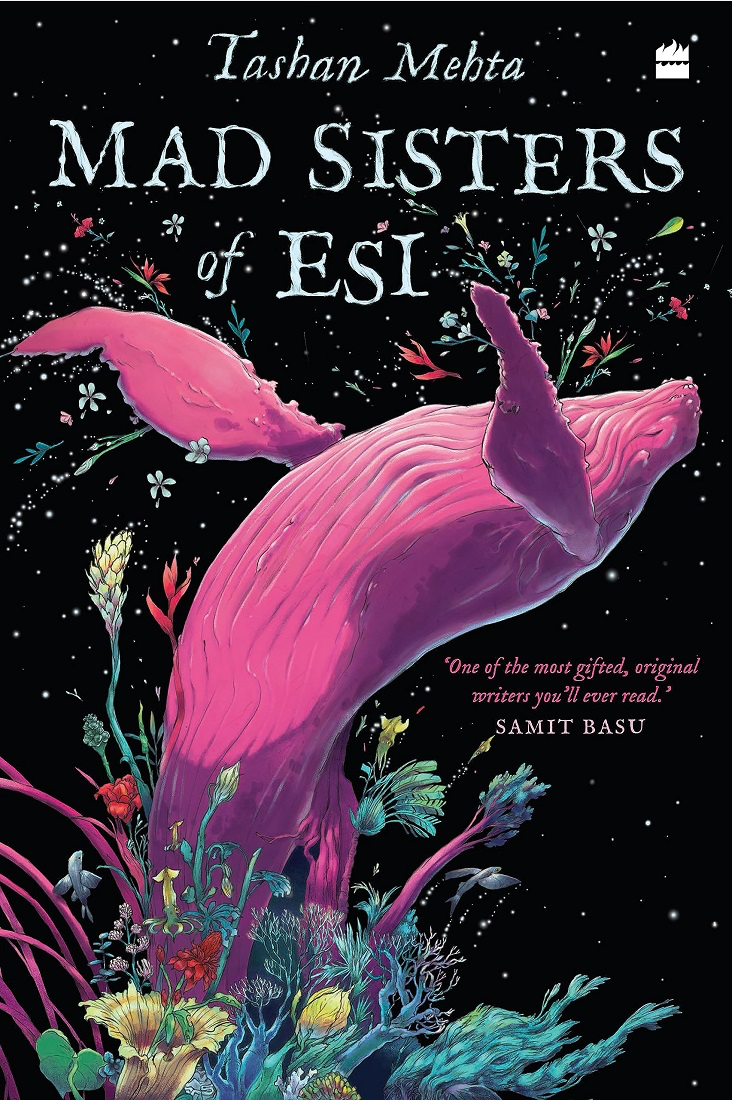
Mad Sisters of Esi – Tashan Mehta“Images of broken light which dance before me like a million eyes/They call me on and on across the universe…”

Since this post consists entirely of songs, consider all of them to be today’s song.

That’s it for this week’s Sunday Songs! Have a wonderful rest of your day, and take care of yourselves!

Posted in Sunday Songs

Sunday Songs: 10/13/24

Happy Sunday, bibliophiles! I hope this week has treated you well.

Apologies for the lack of a Sunday Songs last week and a Book Review last week—midterms are one helluva drug. Either way, I have been able to read some fantastic books, so expect a fun review next week. For now, here’s my graphic from last week:

10/6/24:

This week: MOM!!! MOM, MADELINE’S GOING AFTER THIN WHITE DUKE APOLOGISTS AGAIN!

Enjoy this week’s songs!

SUNDAY SONGS: 10/13/24

“Instant Psalm” – The Smile

Unprecedented opinion by me: Cutouts, the second album from The Smile in 2024, was…a slight disappointment. Are all of the songs good? Absolutely—this is The Smile we’re talking about, remember? And yet, even though the talent is all there, well-crafted songs don’t make up for an album lacking in cohesion. If they knowingly named the album Cutouts for this reason, it might make sense, but it really does live up to the name; these are the scraps, but for a band as artfully skilled as The Smile, the scraps will be treasures. Even if Cutouts meanders this way and that without the direction of A Light for Attracting Attention, the moving parts are spectacular.

Take “Instant Psalm.” I love when I just have the gut feeling of knowing that a song will rearrange my molecules after only listening to a 30-second snippet of it. From the minute the strings sunburst into existence, you feel that light blooming in the back of your mind. To say that this song only starts would do it a critical injustice: it awakens in the same way a flower does, the same way a cloud of spores puffs from a stomped mushroom, all of its glistening tendrils erupting in slow motion after the joyous moment of birth. “Instant Psalm” lyrically contains about the same existential dread as any other The Smile track, but I’d place it somewhere near “You Know Me!” in terms of siblings; these glistening tendrils have heralded the manipulation that the former track ushered in, and now, all is left is a kind of mental automation where your mind knows that what it’s doing is wrong, but cannot let go of what’s coiled around it: “yes is not a real yes.” It’s so calm in its submission, and that “Instant Psalm” feels like sparkling dust blown into the eyes, the kind that clogs them up enough that they no longer see reality. If there’s anything highly specific that The Smile has excelled in, it’s making songs about submitting to corrupted, outside forces sound so soothing and sleepy. Again: precisely the point.

…AND A BOOK TO GO WITH IT:

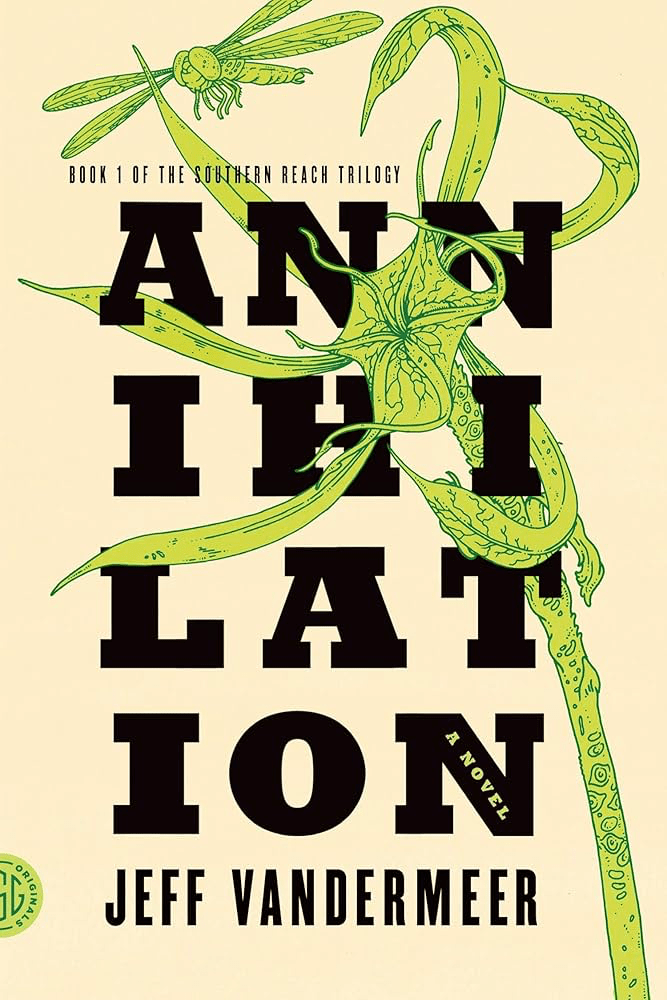
Annihilation (Southern Reach, #1) – Jeff VanderMeer“We can slide through this narrow gap/The narrow gap that you leave us in/And we feel you near/But so close that you disappear…”

“Sick of Goodbyes” – Sparklehorse

Listening to It’s a Wonderful Life prompted me to return to one of my many depressing high school lovers: Good Morning Spider, the album that preceded the former. I thought “Sick of Goodbyes” was okay back then, and given how much I suckled on that album like a baby bottle, “okay” is harsh. Compared to the irresistible draw of the melancholy of “Sunshine” and the adrenaline-blooded screech of “Pig,” this one stuck out like a sore thumb. Why is it so twangy? And my God, is it actually…upbeat?

To be fair, it really does stick out oddly in Sparklehorse’s catalogue, and for how odd Sparklehorse sounds, that really is saying something. It somehow lies at the crossroads of alt-country and punk, where scratchy guitars meet the place where Mark Linkous hefts his Southern twang into the spotlight. It’s got a vigor that few other songs on Good Morning Spider have (save for “Pig”), but the emotion behind it is no less of a punch to the face than the rest. Linkous’ specialty has always been stirring the surreal into his lyrics like a witch tossing strange objects into a cauldron, and “Sick of Goodbyes” has what I think may be one of his best weird one-liners: “no one sees you on a vampire planet.” No beating that, right?

But beating between lyrics like that is one of the sparer sentiments, but there’s no making it flowery: “I’m so sick of goodbyes.” It is sad in the way that a Sparklehorse song typically is, but the fury behind it makes it seem almost intent on healing. It’s a recognition of wanting to free yourself from the wallowing that you’ve been doing, and saving up all of the energy to declare as such. It’s not lost on me that the final belt of the chorus cuts off at “I’m so sick,” but I can’t not see the momentum. There may be no motion yet, but all of that energy has formed legs that are willing to stand, legs that are willing to rise from the muck and power forwards. “I’m so sick of goodbyes” feels like that spark of energy after you’ve gone through the first, ugly period of your grieving and realizing that you’ve spent so much energy on the dead that you have forgotten to go on living.

…AND A BOOK TO GO WITH IT:

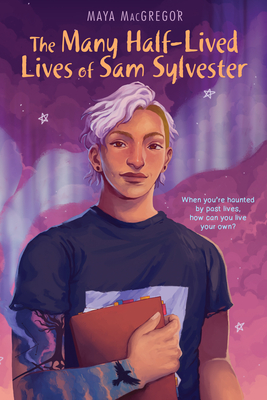
The Many Half-Lived Lives of Sam Sylvester Maya MacGregor“If I could just keep my stupid mind together/Then my thoughts would cross the land for you to see/No one sees you on a vampire planet/No one sees you like I do…”

“Not My Body” – Indigo De Souza

“Not My Body,” with De Souza’s intro, starts at 8:02.

While I ping-pong on whether or not I should listen to Any Shape You Take or All Of This Will End in my ongoing Indigo De Souza journey, I watched their Tiny Desk Concert, taken from the period of the latter. When introducing “Not My Body,” she said this about the song: “I think that when I die…what I want is to be composted and to become soil, and for that soil to be used to plant a tree, and I want that tree to be so big and strong. I don’t know what kind of tree yet—still thinking on it—A tree that people can visit and be like, ‘This is Indigo!'” Thus, she joins Peter Gabriel and his oak tree in what I imagine is a growing forest of reincarnation. It’s a soothing thought, to be reborn in the cells of something so sturdy.

Do you ever get those moments where you stop and have this realization that out of the billions of people on this Earth, that you are you, and by some roll of the dice, this is your life, this is your body, and this is who you are? It’s been a recurring thought lately. Those memes about gaining consciousness at age 4 in the middle of a Chuck-E-Cheese honestly hit the nail right on the head. For whatever reason, it’s been a recurring thought as of late. Not ideal for when I’m supposed to be listening to lectures, but it is a humbling reminder. As disembodying as those moments are, they remind me that yes, I do have the reins on this body. De Souza describes “Not My Body” as an ode to nature, and it taps into that feeling of being so conscious of your existence yet, for a moment, a spectator of it: “I’m not my body although you see me/Making moves and walking freely.” Nature, for me, is the missing key in this equation; the redwood tree that De Souza wants to be is the ultimate symbol of groundedness and connectivity—it is rooted in the earth, but its roots connect to all points in the wide world above and below it. There’s a happy medium between awareness and not feeling like you’re adrift in space, and nature has figured it out. And what better way to end such a sentiment than the last third of “Not My Body?” The way De Souza fashions their voice like a theremin, those echoing electronics that almost sound like dolphin calls, the gentle collapse of all the instruments into a single, coalescing being?

…AND A BOOK TO GO WITH IT:

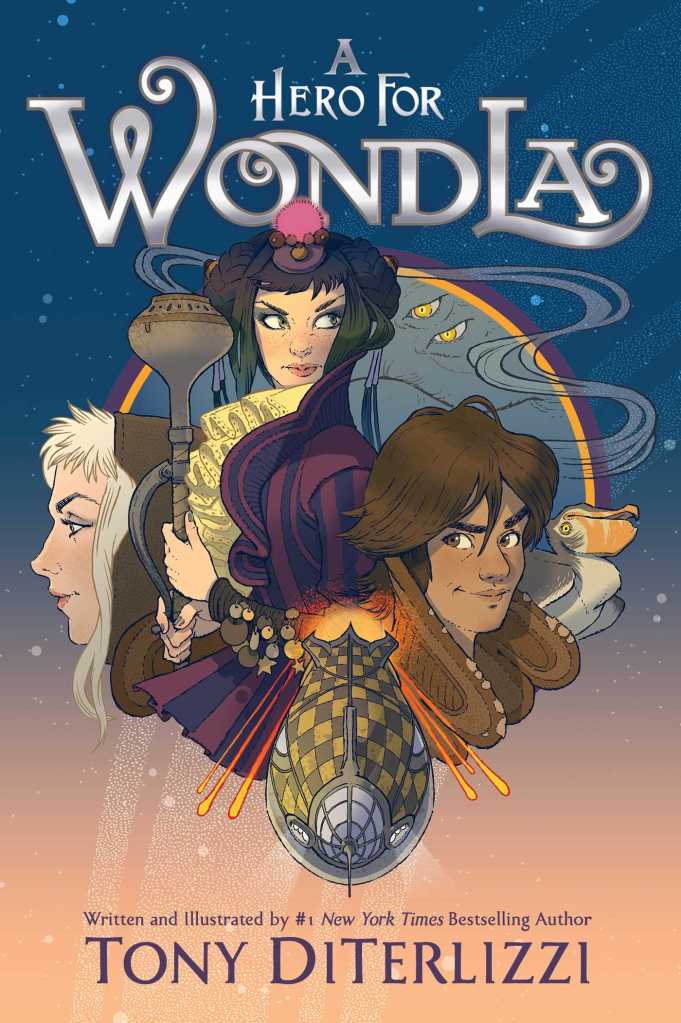
A Hero for WondLa (The Search for WondLa, #2) – Tony DiTerlizziwithout spoiling anything…Eva Eight arc, perhaps?

“Always Crashing in the Same Car” – David Bowie

If you mistook the title of this song for a commonplace idiom, I wouldn’t blame you. Frankly, it should be one. It’s memorable, it’s effective, and it’s a Bowie reference.

Low came at a deeply fraught time in David Bowie’s life. His Berlin trilogy of albums came on the heels of his darkest period, one where he committed actions that he disavowed until his dying day. Hence why I’m always suspicious and disdainful of Bowie fans who think that the Thin White Duke is somehow the “deepest” of his personas. Oh, okay, do you think you’re cool because you like the Bowie who was taking so much cocaine that it addled his brain enough to the point that he had a brush with Nazism? This is the period that Bowie spent the rest of his life thereafter vehemently swearing off (see: “Under the God“), and every clip from that era shows that he was clearly not of sound mind and body. Taking a critical look at the period is one thing, but being so uncritical about a period that Bowie so clearly wanted to forget takes a certain kind of thickheaded edgelord, in my humble opinion. It took him years to return to reality, and the Berlin trilogy chronicles his long and rocky journey towards healing, not to mention getting clean.

The circumstances surrounding “Always Crashing In the Same Car” are a fragment of Bowie’s period of addiction, an instance where, high out of his mind, he rammed his car into the car of his drug dealer. Yet there’s such a calm to this track, both warm and cold. It’s as though Bowie is watching his own life as a spectator, watching the car spiraling out of control from high above the clouds. His voice is placid, restrained, as he resigns himself to the song’s title, doomed to make the same mistakes. Apart from the crooning towards the conclusion, his voice never leaps—what does is the soaring guitar riff that seems to unfold Bowie’s ladder into the sky, from which he can watch his life from a safe distance.

Even if I haven’t gotten to such extreme lows in my life (please hold an intervention if I somehow do, good god), that kind of distance what makes the message of the song land. Breaking out of cycles and unhealthy habits is one of the hardest things a person can do, in my opinion. The effort it takes to change is outweighed by the ease of staying stagnant. You know you’re crashing in the same car, and yet your hands grip the wheel anyway. A few months, I made a commitment at the beginning of the month to stop being consumed by trivial thoughts, and I found myself trapped in an even worse cycle of anxiety just days later. The internal work I did that month was some of the most mentally strenuous that I’ve had in a while—it was far too easy to fall back on ineffective, harmful coping mechanisms than to put in the work to claw myself out of that pit of misery. I’m still working on it. But I’ve put in work. It’s taken a lot of clawing, but I’m growing the armor. Listening back to “Always Crashing in the Same Car” after all that mess gives it a whole new meaning—maybe the triumph I feel from that truly glorious guitar solo is symbolic of how it feels to climb through the sunroof, out of the wreckage, and into the light, knowing that the hard work of breaking these patterns is done.

…AND A BOOK TO GO WITH IT:

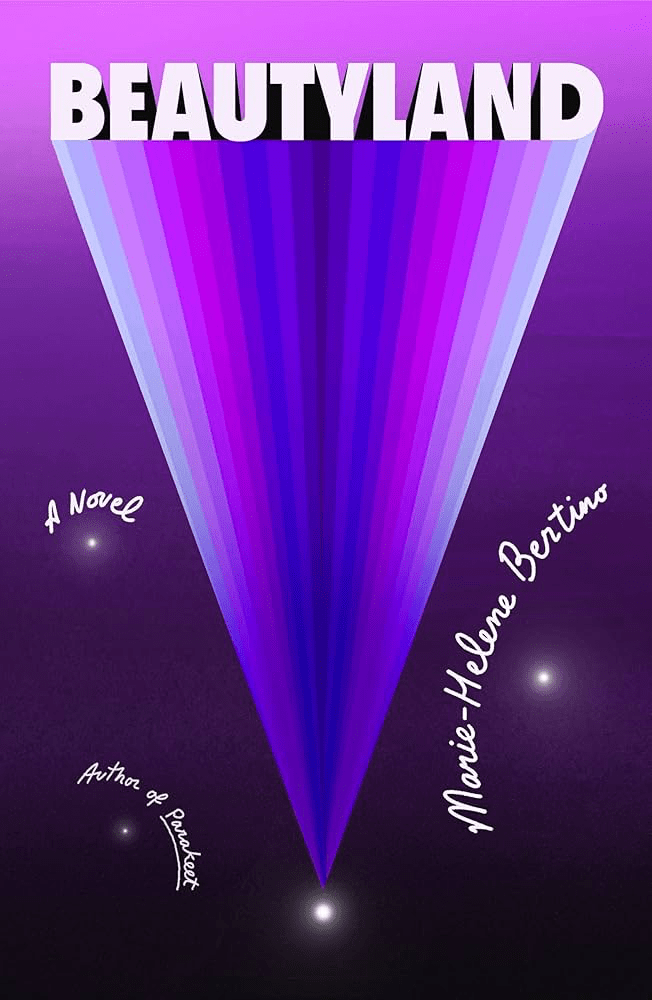
Beautyland – Marie-Helene Bertinothe narration of this novel feels the same as Bowie’s singing here: a kind of cool, matter-of-fact distance through which the world is observed, but not without some warmth.

“Sprained Ankle” – Julien Baker

From all accounts, it seems like Julien Baker has something new cooking up post-boygenius, and…hoo, boy. Am I ready? Nope. Nevertheless: I will listen. I will cry. (I already love “Middle Children” and “High in the Basement,” what can I say?) It seems simultaneously like ancient history and the blink of an eye away from when I first discovered Julien Baker, when, halfway through junior year during COVID, I listened to Sprained Ankle while I was a miserable puddle of grief and burnout. Whether or not that’s the only state you can properly listen to Julien Baker without curling up in a ball and crying is debatable, but…the only way out is through. Dramatic expression for weathering an album, I know, but there’s something gratifying in knowing that I’m a happier, stronger, and more healed person than the person I was when Little Oblivions came out in 2021. To my mom: consider this a formal apology for making you sit through almost a-capella Julien Baker depression while driving to school while it was barely even light out.

In the barest sense, Baker was working with what she had. She didn’t have any backup instrumentalists and recorded this in college at age 20, so there wouldn’t be any accompaniment other than what she played herself until Little Oblivions, alternating between guitar and piano. Yet there is no other way that “Sprained Ankle”—or any of the songs on Sprained Ankle—could have been made. It’s a lonely, self-deprecating, and wound-stingingly raw album, and outside of the lyrics, it sounds lonely. Like the bare, unadorned background of the album cover, many of the tracks feel like being in a cramped room with only the sound of your negative thoughts to keep you company. I realize how awful of an endorsement of Baker that is, but in that dreary state of 17, that was just what I needed. (To be fair, it can get to be too much—“Go Home” was exceedingly hard to listen to even back then, which is really saying something.) In the sparse, Baker creates a kind of confessional solace. Confessions are how “Sprained Ankle” starts off, after all: “I wish I could write songs about anything other than death.” There’s a self-awareness to the sadness, but like “Always Crashing In the Same Car,” the engine is running on borrowed fuel, and the marathon runner is sprinting on sprained ankles. Beyond the metaphor, Baker’s voice is meant to be the loudest thing on this record—like the cramped room, it echoes off the walls it’s given, an oral manifestation of the feeling of knowing that all you’ve got is your body. It would take a few years for it to reach the soaring heights of “Claws In Your Back,” but from the start, Baker always knew she had an anchor in her music—the instrument of her wobbling yet lighthouse-beacon piercing voice.

Now that I’ve mentioned “Claws In Your Back,” I can’t not link this dazzling performance from Baker with the National Symphony Orchestra…dare I say I haven’t felt goosebumps quite like this in years?

…AND A BOOK TO GO WITH IT:

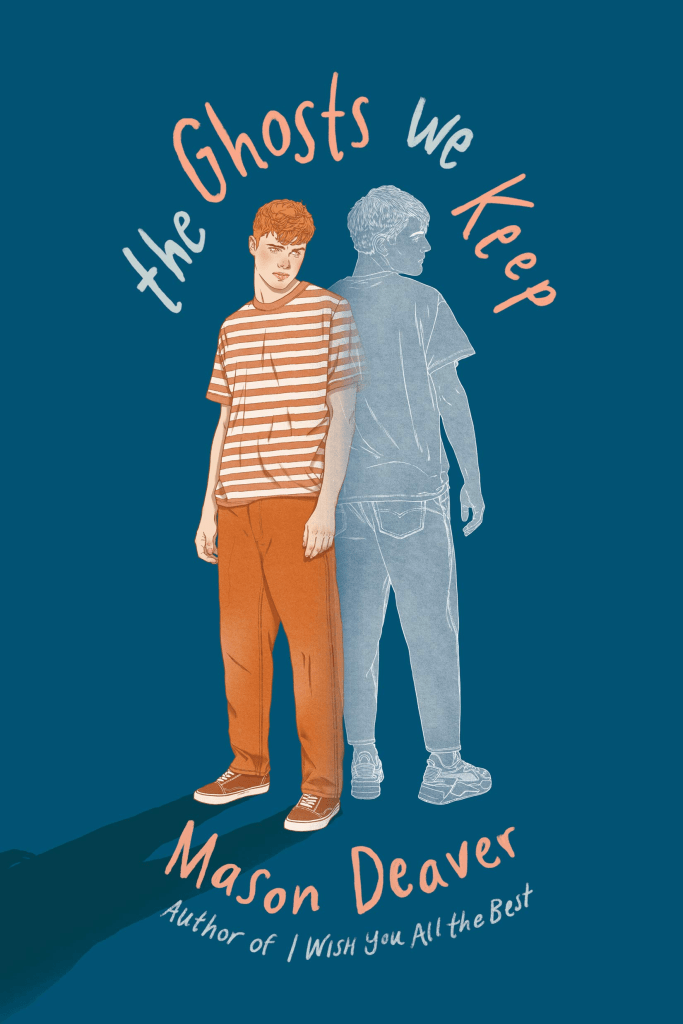
The Ghosts We Keep – Mason Deaver“I wish I could write songs about anything other than death…”

Since this post consists entirely of songs, consider all of them to be today’s song.

That’s it for this week’s Sunday Songs! Have a wonderful rest of your day, and take care of yourselves!
Posted in Sunday Songs

Sunday Songs: 9/29/24

Happy Sunday, bibliophiles! I hope this week has treated you well.

This week: high school throwbacks, off-kilter oddities, and a few too many people trying to explore each other’s minds than I’m comfortable with. Cool it, Charles Xavier…

Enjoy this week’s songs!

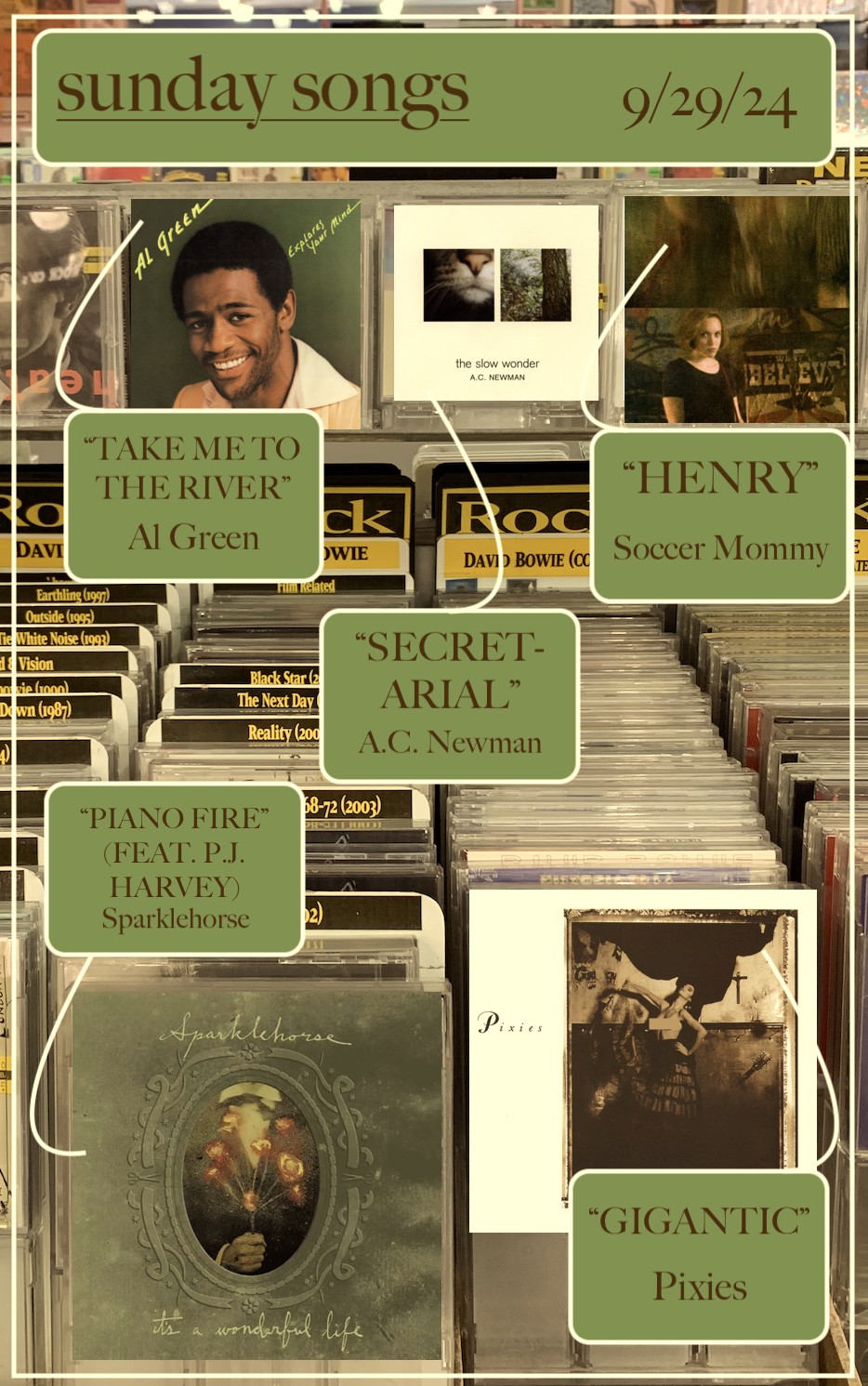
SUNDAY SONGS: 9/29/24:

“Piano Fire” (feat. P.J. Harvey) – Sparklehorse

It’s a Wonderful Life is one of those albums that took me a bafflingly long time to listen to. I know, I know, I did it to myself, but the fact that I didn’t pick it up when I was 15 and irreparably mired in Good Morning Spider astonishes me. It’s probably owed to the fact that I was also even more irreparably mired in OK Computer, which tends to overshadow things a tad bit. Looking back, maybe it was for the best that I wasn’t on an all-Sparklehorse diet at that age. I already looked pathetic scuffing my snow boots through the hall while blasting “Maria’s Little Elbows” through my earbuds between classes. I was 15, guys. It was 100% that serious, trust me.

What I can say is that I think I would have felt the same way about It’s a Wonderful Life at 15 as I do now—it’s a triumph of an album. Scattering through surreal urgency and subdued melancholy, it has every kind of Sparklehorse you’d like—along with a smattering of collaborators. It’s almost funny how different said collaborators are (take Nina Persson’s delicate backing vocals on “Gold Day” and then Tom Waits growling like a hulking ogre on “Dog Door”), but the power of Sparklehorse has always lain in the disparate elements Mark Linkous cobbles together. Like some kind of American Gepetto, he constructs all of his songs into tiny figures made of warped wood and bird bones, and what totters to life creaks with every step. They’re quaint creatures with acorns for heads and cigarettes and toothpicks for legs, but there’s no other way to love them save for exactly as they are.

Those he chooses to collaborate with feel much the same way. P.J. Harvey, of all people, was a left-field choice when I first heard about her featuring on “Piano Fire.” The only Sparklehorse song I could conceive being able to contain the kind of raw fury she exudes was “Pig,” and that had already come and gone by the time It’s a Wonderful Life came out. “Piano Fire,” however, is one of the most upbeat tracks on the album; you feel a racing urgency to it, immediately sprinting down an overcast beach the minute the first guitar chords kick in. Or maybe it’s the searing heat of airport tarmac that you’re sprinting across the minute you hear the opening line: “I got sunburnt waiting for the jets to land.” Sunburnt describes “Piano Fire” surprisingly well; it has the texture of an old photograph left out in the sun too long, all of the colors now bleached to unnatural, pale shades. Linkous almost takes a backseat on his own song, never raising his voice when he dishes out surreal vignettes of “Fiery pianos wash up on a foggy coast/Squeaky old organs have given up the ghost/Fire them up and kill the piano birds.” But that urgency is why P.J. Harvey is so perfect for this song; once the chorus kicks in, her soaring voice provides the jet fuel for this creaky old jet to careen off the runway and into a sky littered with the strangest birds you’ve ever seen.

…AND A BOOK TO GO WITH IT:

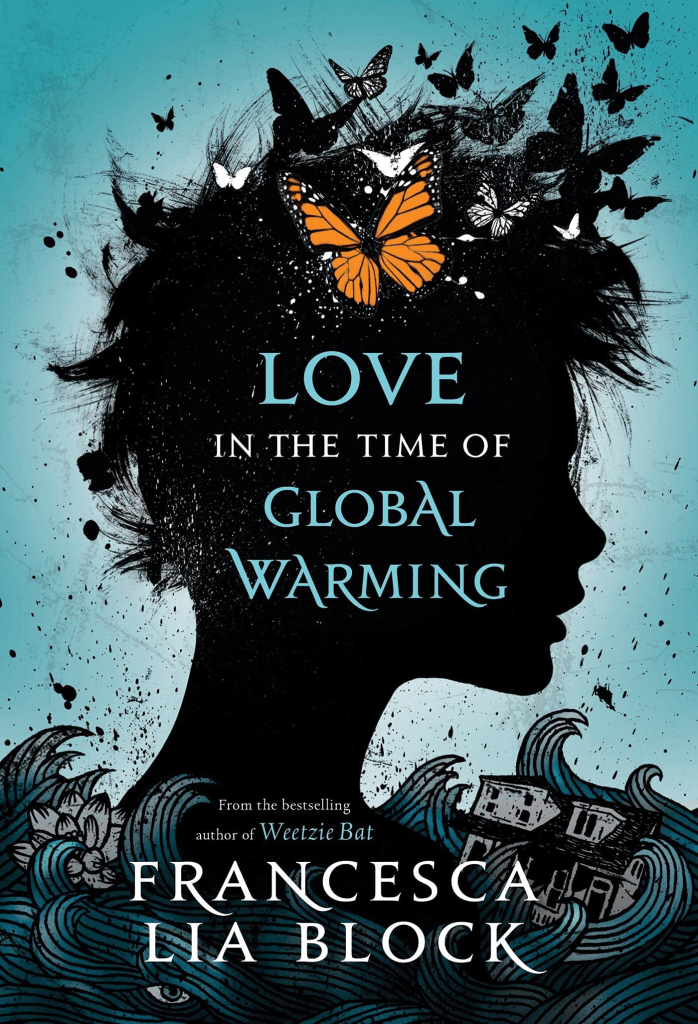
Love in the Time of Global Warming – Francesca Lia BlockBlock’s bizarre, dreamlike prose certainly fits with the surreal imagery that Linkous employs in this song—and the majority of his catalogue.

“Gigantic” – Pixies

In almost two and a half years of making these Sunday Songs graphics…this is the first time I’ve double-dipped. It was bound to happen eventually, not just because my music taste is finite, but because this song has lingered with me from a young age. I faintly remember being around five or six and hearing this song in my dad’s old car, driving in fading light down the road back to my house, and hearing the iconic chorus: “Gigantic, gigantic/Gigantic, a big big love.”

I’ve often talked about how simplicity in lyrics can convey more than the most complex songs in some cases, and if you need further proof, look no further than “Gigantic.” Most of that work is done by the immense, never-fading talent of Kim Deal, who sells every metric ounce of explosive love in this song; with every cry of “A big big love,” you get it—there’s no other words that can adequately describe the kind of secretive, all-consuming romance that swirls through every pluck of the bass. That opening bass riff is the shy, cracking open of a bedroom window when the parents are asleep, an invitation with a blushing, anticipatory smile. What follows never fails to knock me off my feet. I say “knock” and not sweep or lift me off my feet precisely because that’s what it feels like, as though the ground has opened up beneath you, and you’re falling headfirst into the unknown—contained in a kiss that consumes every cell of your body.

…AND A BOOK TO GO WITH IT:

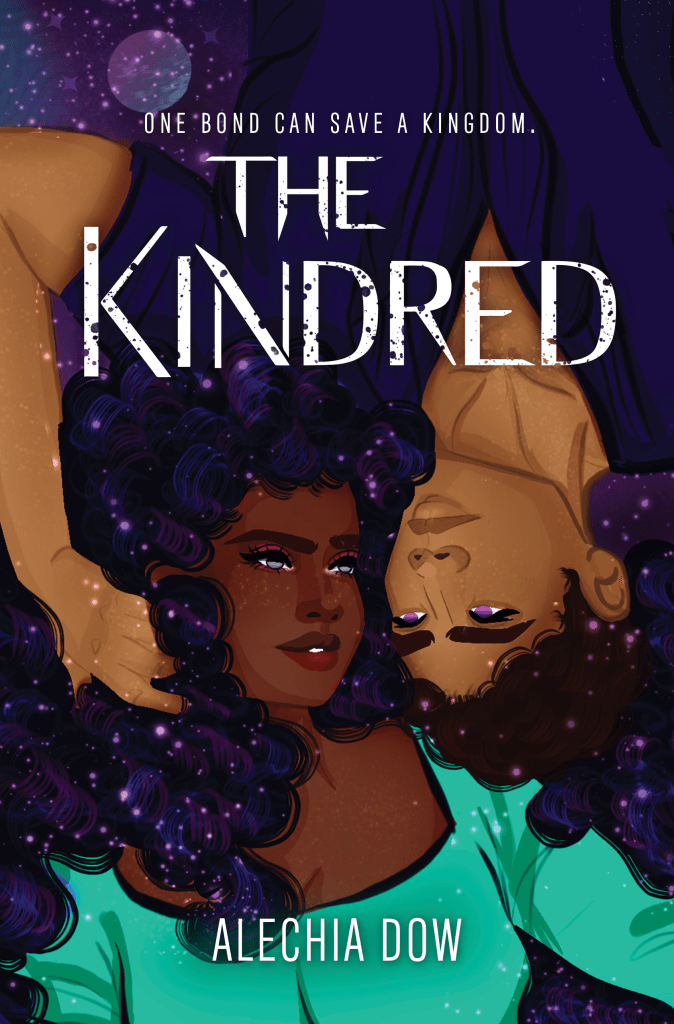
The Kindred – Alechia Dowall-consuming, explosive, and intergalactic love.

“Take Me To The River” – Al Green

I’m sure Al Green is a perfectly nice guy, but…that album cover and title is not it, man…”Al Green Explores Your Mind?” Can he…can he not?

The fact that they were just naming albums anything back in the day aside…how did I not know about this song for so long? I’ve loved the Talking Heads cover for years, but somehow, it never dawned on me to look it up and discover that it was a cover. There’s something to be said for the phenomenon of white artists’ covers of songs by Black artists overshadowing the originals, but this isn’t quite the case—from the looks of it, between the amount of times that this song has been covered (most recently by Lorde for a Talking Heads tribute album, oddly enough) and the royalties from [checks notes] those animatronic wall fish, it’s cemented itself as an enduring classic of soul. I’m sure Al Green isn’t complaining about the latter though, given that he’s gotten the most royalties from the fish cover. Yet no matter the strange journey that “Take Me To The River” has taken, none of it has overshadowed how deliciously groovy it is. It’s endured for five decades in counting precisely because it wastes no time in getting straight into its slinky, infectious funk. Green’s voice flies from slick to howling in seconds and recovers in record time, all in time with the blasts of an impeccable horn section. 50 years, and you can’t not bop your head. I’m still not jazzed about Al Green exploring my mind, but I can’t deny that he worked some undeniable, immortal magic with this one.

…AND A BOOK TO GO WITH IT:

The Final Revival of Opal & Nev – Dawnie Waltonthough the musical genres differ, the atmosphere and climate of the ’70s runs through both.

“Secretarial” – A.C. Newman

I’ve had a turnaround. I’ll be honest—even though I’ve liked several New Pornographers songs since I was young, “Secretarial” has always bugged me for some reason. I never hated it, but it was always one of those songs where, over the years, I developed a reflex of just skipping it whenever it came on shuffle. I didn’t question it for a while. Many years have passed, and for once, I didn’t skip…and here we are.

A.C. Newman—and most of The New Pornographers’ catalogue, by extension—has this songwriting style that’s just so distinctive in a way that I can’t put my finger on. Even if you separated his or Neko Case’s voice from the lyrics, I could hear a line like “So come on, let the sun in/We’ve been gunning for promotion/Postering the slogans on the roadsigns.” and immediately go “yup, A.C. Newman wrote that.” What makes it so distinct has bugged me for years, and to this day, I can’t fully put my finger on it. The closest I can say is that their specific diction has an inherently off-kilter quality to it. Newman is never overly verbose, but the way he arranges words is always slightly askew. His lyrics dwell in the thin limbo between obtuse poetry and sense, situated in a place where you can decently get the metaphor he’s going for, but instinctually, you know that those syllables just don’t go together neatly. “Secretarial,” like another other Newman product, might as well be a puzzle, in that sense, but one that was put together wrong with the pieces that only look like they should fit together, but stick and slide against each other. I’ve never been great with time signatures, but this one is angular enough to match the slanted lyrics. Even if you don’t know the guy, you can’t deny that it takes some serious talent to not just think of but pull off “Lady, it’s secretarial” as a hook.

…AND A BOOK TO GO WITH IT:

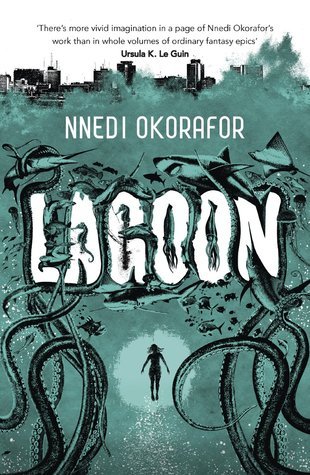
Lagoon – Nnedi OkoraforI’ve used this book more than once, but it was right there…

“One day you blew across the water/After racing through the countdown/Spewing ancient wisdom like your friend/The revelation had come and they were looking for me…”

“Henry” – Soccer Mommy

Oh, early Soccer Mommy…oh, “Henry.” This one sure soundtracked many a one-earbud-in free draw in art class my sophomore year. I think it was in the fall that I found this song as well; it carries a distinct smell of wet leaves and wood chips in the pumpkin patch. Cheesy as the title of this album, the self-released For Young Hearts, is, it’s not like it’s a lie. Here’s to many more high schoolers listening to this in art class.

It seems that “Driver” has put a pin in this tradition, but “Henry” is part of a long lineage of Soccer Mommy songs about the seduction of Bad Boys™️ (see also: “Death By Chocolate”). Of course, the natural conclusion was that the ultimate bad boy was to be conquered in “lucy,” that being…the devil himself. (God, I need to stop. I sound like a youth pastor.) But here in 2016, “Henry” chronicled the kind of guy who hung out behind the high school, smoking cigarettes in a leather jacket, and giving you a wicked smile as you passed. Sophie Allison’s younger voice, along with the plucky instrumentation (cannot get enough of that bass), makes you feel like you’re following a mischievous wood sprite through sunlit woods. Light and lovesick, it captures that heady, teenage love drug that makes every step stumble: “‘Cause Henry has a laugh like fire/And it’s spreading through the streets and burning on telephone wires/I don’t know just what it is/But he’s driving all the good girls bad with that evil smile of his.” Soccer Mommy’s had that golden, indie touch all along—”Henry” remains a classic to me.

…AND A BOOK TO GO WITH IT:

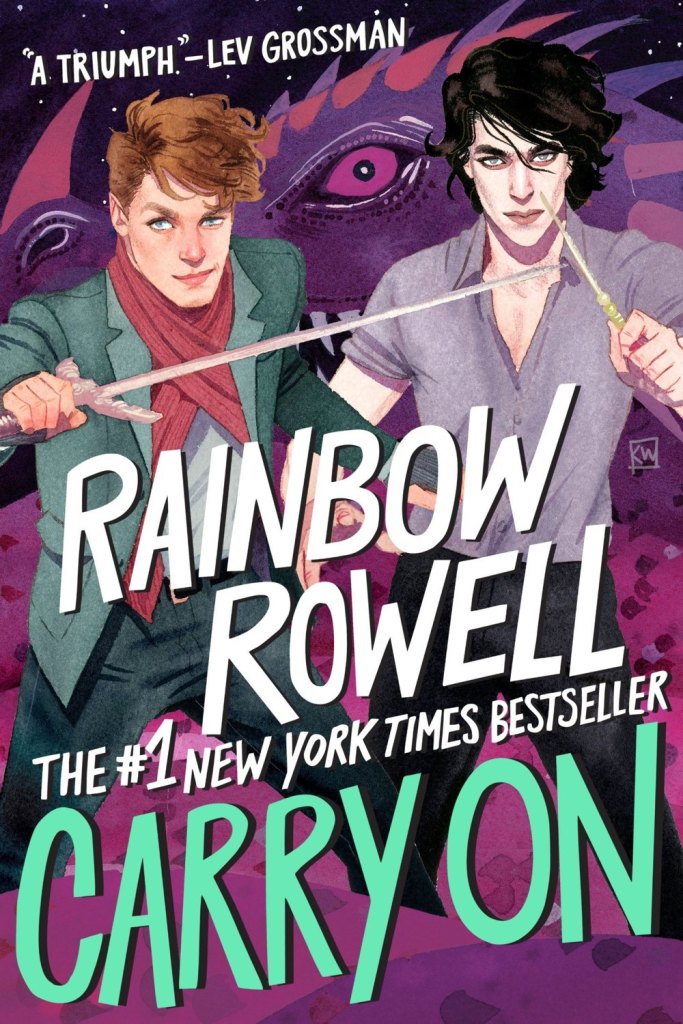
Carry On (Simon Snow, #1) – Rainbow Rowell“I don’t know/Just what it is/But he’s driving all the good girls bad with that evil smile of his…”

Since this song consists entirely of songs, consider all of them to be today’s song.

That’s it for this week’s Sunday Songs! Have a wonderful rest of your day, and take care of yourselves!
Posted in Book Review Tuesday

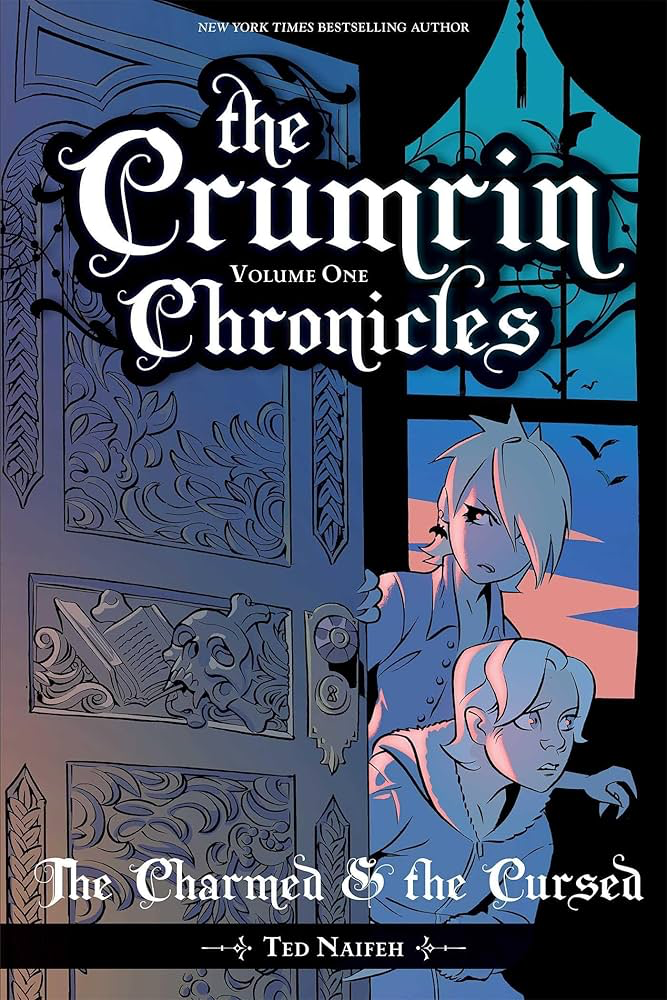
Book Review Tuesday (9/17/24) – The Crumrin Chronicles, vol. 1: The Charmed and the Cursed

Happy Tuesday, bibliophiles!

2024 really is the year of healing my inner middle schooler…I can feel the Courtney Crumrin obsession jolting back into my body…

I’ve been a fan of Courtney Crumrin from a young age—maybe a little too young, considering how quickly the subject matter gets dark, for better or worse. You know what? Definitely better. It was one of my favorite comics growing up, and Naifeh’s talent in both the writing and illustrating department has had a permanent impression on me, and spurred on my love of paranormal comics even before my Hellboy obsession was kicked into high gear. This continuation of Courtney’s story was one that I’d nearly forgotten about, but delighted in as a longtime fan—a worthy continuation of the story of the most dangerous witch in Hillsborough.

Enjoy this week’s review!

The Crumrin Chronicles, vol. 1 – The Charmed & The Cursed

Wilberforce Crumrin was trapped in the faerie realm for a century, while his older brother Aloysius got to live out a full life in the mortal world. Now rescued from his curse of never aging, Will finds himself under the wing of his adoptive older sister, a feared witch by the name of Courtney Crumrin. To help her little brother adjust to the mortal world, Courtney gifts Will with a charmed locket that will make everybody who encounters him go to great lengths to be his friend. But the love he receives from his classmates is hollow, and soon, Will must learn to discern who his real friends are.

TW/CW: fantasy violence, bullying, anaphylactic shock, loss of loved ones

When I say “I support women’s rights and women’s wrongs,” I mean Courtney Crumrin. Let a middle school girl with an ungodly amount of magical powers rain righteous fury down on a bunch of corrupt older men if she wants to.

I’m so glad that my mom reminded me that The Crumrin Chronicles existed, because it was high time that my middle school Courtney Crumrin obsession got reanimated. These new installments of the story prove that Ted Naifeh’s still got it, whether you’re talking about the stellar, eerie writing or his distinctively angular art style. In every way, it’s a treat for any longtime Courtney Crumrin fan!

Several years after the events of The Final Spell, Will has been rescued from the faerie realm, and now has to acclimate to the mortal world—which has progressed over a century from when he last saw it. The shift in the series’ name reflects the shift in the protagonist—it will always be about Courtney, but it’s clear that this is Will’s story through and through. I’m loving the ways that Naifeh has begun to develop Will’s character; apart from his delightfully old-fashioned mannerisms (ex. calling everybody “chaps,” constant exclamations of “jolly good” and whatnot), you truly get the sense that he’s a fish out of water in every way—he knows nothing about this new world that he’s in, and on top of that, he constantly has to pretend that he’s in the loop with everyone else.

In the shift from Courtney to Will as the protagonist, Courtney has also filled the role of Uncle Aloysius in the original series. What with their parents remaining as bafflingly clueless as they always were, Courtney is the only person Will can turn to for advice and comfort—she’s the only person in his life who knows the truth about his origins. Courtney, now with several years of maturity (and honing her powers) behind her, has grown more reclusive, but no less of a formidable force, both for fury and for love. Her being in a more secondary role doesn’t dull the truly awesome impact of the magic-wielding moments she gets; age has only focused and sharpened the reach of her wrath, and she uses it to its full extent when it comes to protecting the ones she loves—especially her little brother.

Protecting said little brother is what drives the central conflict of The Charmed & The Cursed; the inciting incident is brought on by a charm that Courtney places on Will that will make all of his classmates love him, thereby making his transition to modern school easier…in theory. Even if it does go awry, it teaches Will a valuable lesson about true friendship—and gives him a few real friends along the way. But the gesture alone felt so true to Courtney; she knew firsthand what it was like to be the new kid and not have anybody to show her the ropes, both socially and magically. What she and Will both learn by the end is that, in terms of the horrors of middle school, nobody can protect you from that. It’s a fact of life that puberty and making friends are rough, but sometimes, it’s up to you to decide who your real friends are.

Side characters usually aren’t a strength of Courtney Crumrin—by nature, Courtney really doesn’t have friends, save for her crotchety, geriatric warlock uncle, some talking cats, and a handful of fantastical creatures who come and go (and often either turn on her or die horribly. Fun times. Guess who hasn’t gotten over Skarrow…), but the ones that Naifeh introduces in The Charmed & The Cursed have a lot of promise! I immediately saw a bit of my younger self in Tucker, and as a kind of foil to Will, she works wonderfully; in contrast to Will, who wants to understand the real world he’s now trapped in, all she wants to do is escape it. Both of them show each other a version of reality—Tucker shows Will how his “friends” really see him, while Will shows Tucker that maybe the real world does have something in it for her. Putting a goth girl in this universe was an obvious choice, but I love Cinnamon too—and her burgeoning romantic relationship with Tucker!

The magical conflict (a CEO who happens to be a vampire, and this time, not in the metaphorical sense) was very much just a setup to stoke the flames for the rest of the series, but that doesn’t mean it wasn’t a fantastic ride. Between the callbacks to Courtney Crumrin’s Monstrous Holiday to Courtney getting to unleash the full extent of her magic, I was grinning to ear the entire time! The callbacks didn’t feel shoehorned into the narrative either—the element that does return does so for a logical reason, and there are enough new solutions to the vampire problem at hand that it doesn’t feel like a straight-up rehash. It’s loads of fun—and it provided a fascinating setup for what seems to be the main conflict of The Crumrin Chronicles.

All in all, a return to a comic I remember fondly that was clearly created with nothing but love. 5 stars!

The Crumrin Chronicles: The Charmed & The Cursed is the first volume in the Crumrin Chronicles series, followed by The Crumrin Chronicles: The Lost & The Lonely, and The Crumrin Chronicles: The Wild & The Innocent, which will be released on October 1, 2024. This series is a sequel to the Courtney Crumrin series, which consists of The Night Things, The Coven of Mystics, The Twilight Kingdom, Courtney Crumrin’s Monstrous Holiday, The Witch Next Door, The Final Spell, and the prequel Tales of a Warlock, which tells the story of Uncle Aloysius. Ted Naifeh is also the author and illustrator of several other comic books, including The Good Neighbors (written by Holly Black), Polly and the Pirates, Princess Ugg, and many more.

Today’s song:

FINALLY listened to all of It’s a Wonderful Life yesterday!! Sparklehorse and P.J. Harvey was a combination I never knew I needed so badly…

That’s it for this week’s Book Review Tuesday! Have a wonderful rest of your day, and take care of yourselves!

Posted in Sunday Songs

Sunday Songs: 7/21/24

Happy Sunday, bibliophiles! I hope this week has treated you well.

This week: music for pretentious weirdos (me), music for animation, and music that makes me cry on the regular.

Enjoy this week’s songs!

SUNDAY SONGS: 7/21/24

“Dirt on the Bed” – Cate Le Bon

I came into Pompeii with plenty of curiosity, having finally gotten around to listening to Cate Le Bon after hearing her work producing Wilco’s latest album, Cousin, and her vocal feature on St. Vincent’s “All Born Screaming.” Vaguely remembering the buzz and air of weirdness around Pompeii, I decided to listen to it first.

Pompeii and “Dirt on the Bed” have reminded me of why a spectacular album intro can be both a blessing and a curse. If nothing surpasses the first track, then the rest of the album can never recover—or at least reach the heights of the first song. You can enjoy yourself, but never as much as you did after one song. Just one. It’s a horrible dilemma. Pompeii was fantastic from the start, but after the first four songs, nothing’s quite the same—great, but like my experience with R.E.M.’s Green, nothing tops the back-to-back splendor of the first four songs. And that splendor is set in motion by the crawling intro, “Dirt on the Bed.” As the title suggests, it has the dread of something unclean creeping into the house, like a nun on the scent of sin in a shuttered Catholic girl’s school. An off-kilter, stumbling chorus of brass blooms in moldy bursts, an airborne sickness pulsating through each thrum of the bass. Now I know exactly why St. Vincent chose to work with Le Bon—”Dirt on the Bed” is especially evidence of this, but all I could think of during Pompeii is that it felt like St. Vincent had remained lyrically and instrumentally in Actor, but slowly adorned her music with synths. They’re so similar to each other, down to their folkier, precocious indie beginnings that blossomed into full-on devotion to strangeness. This is modern art pop at some of its best, unabashedly weird and precise in every flourish. “Dirt on the Bed” makes even more sense when you see it as a product of a pandemic-produced album; it paces listlessly, putting on a smile as it tries to scrub every trace of illness and dread from a spotless house. Even as calmly as Le Bon sings each lyric, foreboding seeps through every misty horn blast.

That’s how an album intro is done. After several more listens, I’d say that nothing comes quite as close to it, but “Dirt on the Bed,” “Moderation,” “French Boys,” and “Pompeii” is SUCH an undefeated stretch of songs. Pompeii is worth a listen just for that, as is the album’s very St. Vincent closer, “Wheel.”

…AND A BOOK TO GO WITH IT:

Drunk on All Your Strange New Words – Eddie Robson“Sound doesn’t go away/In habitual silence/It reinvents the surface/Of everything you touch…”

“Poor Song” – Yeah Yeah Yeahs

…okay, I can’t possibly be normal about this because I cry a little every time I hear it. Either way, there’s an undiluted purity about this song that makes any kind of analysis feel like ten steps in the wrong direction. It’s a paramount example of how easily beauty and simplicity can intertwine, and it cuts more deeply than some songs I know with hundreds of metaphors.

It’s very nearly perfect. Karen O tends to do that.

…AND A BOOK TO GO WITH IT:

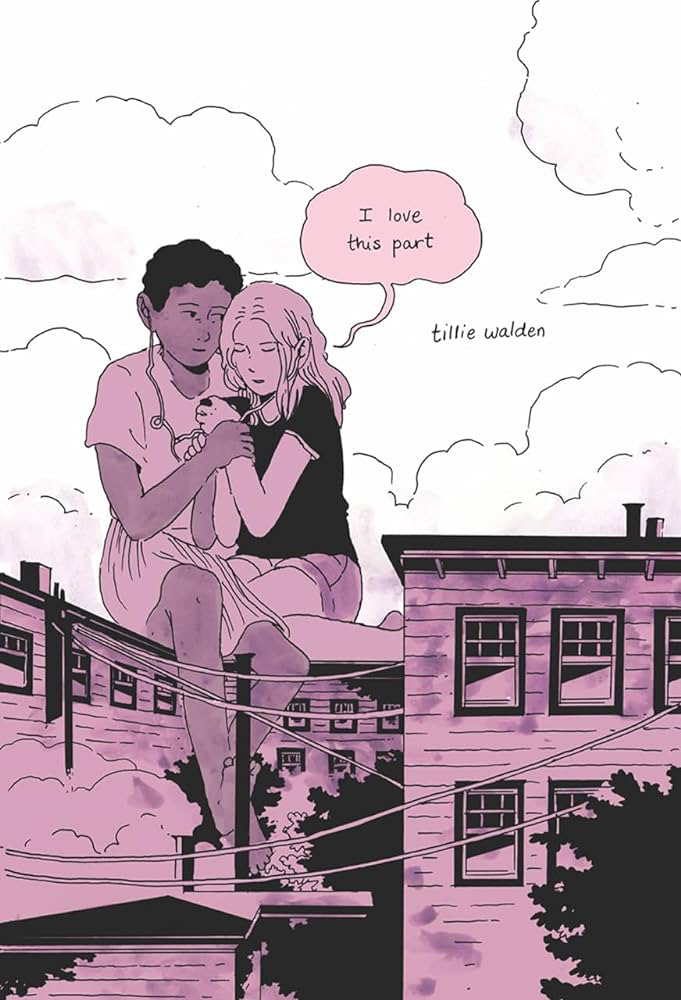
I Love This Part – Tillie Waldenquiet and gentle teenage romance.

“It’s A Wonderful Life” – Sparklehorse

One of the first times I remember hearing this song was in the car with my dad, as I come across many a good song. Looking back, since I was so young, it must have been a trip back into Sparklehorse’s catalogue shortly after Mark Linkous’ tragic passing. But as we drove home that night, the windows buffeted by snow or sleet, my dad made a wry remark about the lyrics: “he’s not feeling too good, huh?”

With every emotion comes an infinite number of ways to express it, not just confined to song. There’s the kind of songwriting that outright says that you’re sad, while others cloak it in metaphor. Neither is better than the other, but what Mark Linkous did feels like a category all its own, albeit closer to category #2. Many of the lyrics of “It’s A Wonderful Life” (if there was ever a more sarcastic title) are nonsensical, as his lyrics often are (“I wore a rooster’s blood/When it flew like doves”), but nestled between these impenetrable tidbits, the ones that do make sense land like anvils to the gut. I’ve never heard such sadness and shame articulated in the line “I’m the dog that ate your birthday cake.” Dare I say it’s one of my favorite song lyrics ever? It’s up there, just for such an unadorned, bare line to have such an instantly devastating effect; You can picture that dog, not knowing that it’s not supposed to eat human food and not processing that there’s a child sobbing at their ruined birthday, but being able to detect the shame all the same, but never know the reason why. It cowers, but it doesn’t know why it’s feeling this way. Linkous delivers it with all of that shame, clouded in the atmospheric cage of keyboards that prickle with heat lightning.

With that kind of lyricism, it came as a massive shock that this wasn’t one of his classic pieces of melancholy. In fact, Linkous wrote it as a jab at critics who panned an image of overarching depression over his catalogue: “I got fed up with people in America thinking that my music is morose and depressing and all that. That song is like a “fuck you” to journalists, or people who are not smart enough to see what it is.” And…listen, I’m a guilty party. I still think that Sparklehorse is one of the preeminent purveyors of high-quality sad bastard music, and he had enough strife in his life to justify every tear-jerking lyric. Yet this new light makes the lyrics I thought were nonsensical fall into place. Linkous describes the rest of the song as follows: “In the end, it was more about how every day, you should pick up something, no matter how minuscule or microscopic it is, and when you go to bed, you can say I was glad that I was alive to see that. That’s really what it’s about.” Wearing rooster’s blood when it flew like doves becomes a fleeting, once-in-a-lifetime capture of lightning in a bottle, and being the only one who can ride that horse th’yonder suddenly rings out as a humbly sung badge of honor. It was never sarcastic—it’s a wonderful life. I won’t ever be able to hear “I’m the dog that ate your birthday cake” without the sadness it insinuates, so maybe I’m just as much a part of the problem as the journalists he was taking a shot at, but the main takeaway for me is how versatile of a lyricist he is—if you look closely enough, he makes the absurdities of life both tragic and humbly hopeful.

Either way you absorb “It’s A Wonderful Life,” you can’t deny how otherworldly it sounds. Even years after I first heard and subsequently clung to this song, I can only name maybe one other artist who has ever come close to sounding like this—Lisa Germano, who, whether or not the two knew of each other, has a similar modus operandi of making music that sounded like rotting wood and empty doll’s heads. Lyrically and sonically, almost nobody sounds like Sparklehorse, and I suspect it’ll take a miracle for anyone to come close.

…AND A BOOK TO GO WITH IT:

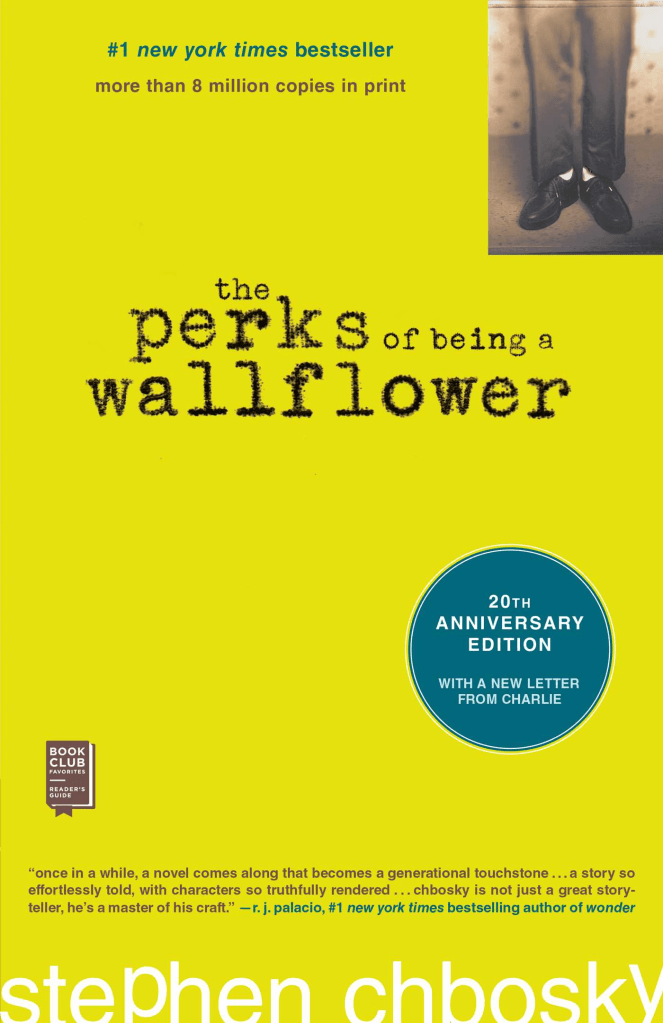
The Perks of Being a Wallflower – Stephen Chbosky Sparklehorse is no “Something,” but the crushing weight of depression and self-loathing comes across similarly.

“Girl from Germany” – Sparks

I’d heard bits and pieces of Sparks before, but like “Future Teenage Cave Artists” last week, I have Horsegirl and their episode of What’s In My Bag? to thank. Love those pretentious (affectionate) weirdos.

It seems I’ve only gotten through one strand in the massive haystack in terms of the INCREDIBLY prolific career of Sparks, which started in 1967 (under several different names) and had its most recent entry last year. Edgar Wright made a documentary about their musical exploits, and the list of artists they’ve influenced seems to span an infinite number of genres, all the way up to Horsegirl in 2023. So, having only heard two of their songs (including this one): hats off to you guys, really! Being that flagrantly weird for almost six decades is nothing short of impressive, and I can’t help but admire their musicianship in that regard.

“Girl from Germany” scratches my eternal itch for early-’70s glam rock, although it’s not all glam—it’s more glam in the sense that Brian Eno was glam at the same time, not quite like Bowie or Bolan were glam. Squeaky-clean, warm guitars as far as the eye can see and a healthy dose of theatricality cloaks this track make for a song that’s deliciously meticulous in every aspect. Russell Mael affects high-pitched vocals that wouldn’t be out of place in The Rocky Horror Picture Show while Ron Mael’s keyboard melodies glitter like light reflected off a glass of wine. And like Brian Eno, they used such a theatrical machine to touch on touchy subjects—in this case, in the climate of the early ’70s, bringing home a German girl to relatives who were mired in the horrors of World War II: “Well, the car I drive is parked outside, it’s German-made/They resent that less than the people who are German-made.” Even if every affectation is theatrical to the core, it’s still a prejudice that resurfaces today—assuming that any given person is an extension of the government and horrors of their homeland, and having to grapple with the cultural fallout of such a simple gesture of love.

…AND A BOOK TO GO WITH IT:

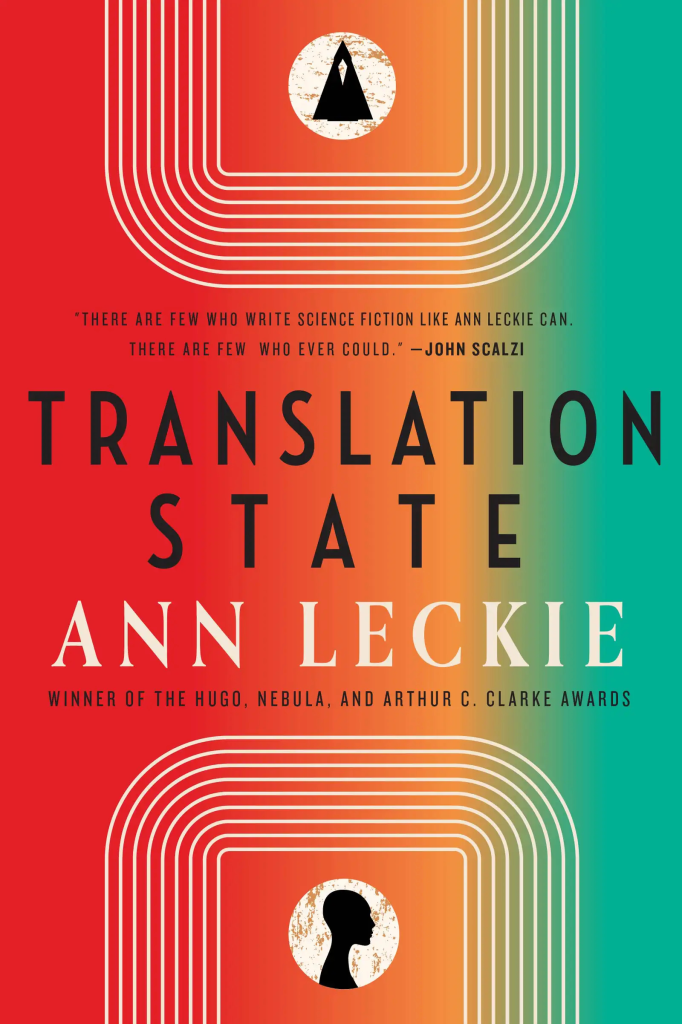
Translation State – Ann Leckie – cross-cultural confusion and characters with heart.

“Hideaway” – The Olivia Tremor Control

Having only heard one song (this one) from Black Foliage: Animation Music, I’ve already logged it into my slipshod mental list of album titles that perfectly describe the music they contain. The Olivia Tremor Control have always been masters of musical density, making soundscapes that unfold like intricate pop-up books, each layer of noise a painted paper cutout in an endless jungle. “Hideaway,” so far, is the pinnacle of that density; with each successive strain of woozy, turn-of-the-century homage to ’60s psychedelia, you’re pulled into a lush forest of plants that unfold just enough to let the tiniest slivers of light through. It’s not just the black foliage that hits the mark so fittingly—the “animation music,” as Will Cullen Hart called it, is “all the stuff floating around…To me, that’s what [animation music] is: sort-of a sound and space, personified—just flying around to greet you in a friendly way.” All at once, the xylophone chimes and trumpet blasts give “Hideaway” the feel of both the colored-pencil animations in Fantastic Planet and the bouncing characters in Schoolhouse Rock!, a papery and breathless expedition into a darkened forest of cartoonish proportions.

…AND A BOOK TO GO WITH IT:

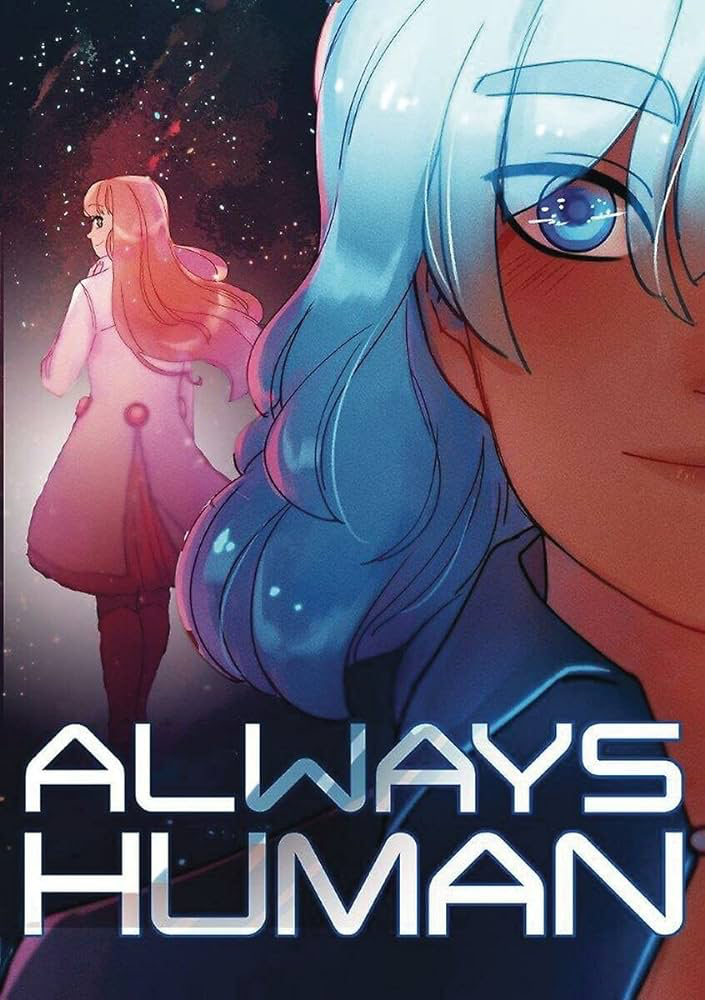
Always Human – Ari North simple, stylized art with vibrant colors—perfect for animation music.

Since this post consists entirely of songs, consider all of them to be today’s song.

That’s it for this week’s Sunday Songs! Have a wonderful rest of your day, and take care of yourselves!
Posted in Uncategorized

Sunday Songs: 9/24/23

Happy Sunday, bibliophiles! I hope this week has treated you well.

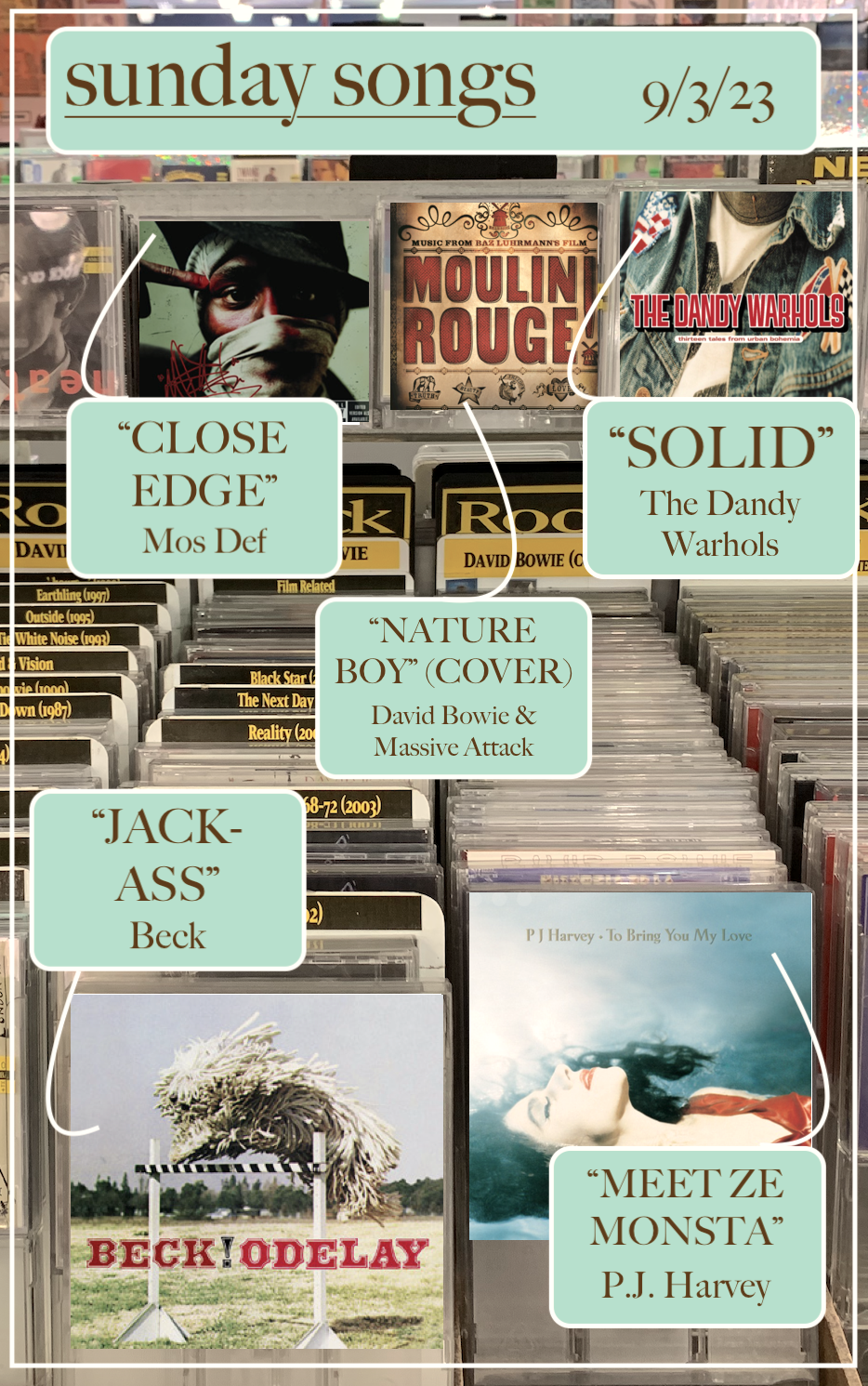
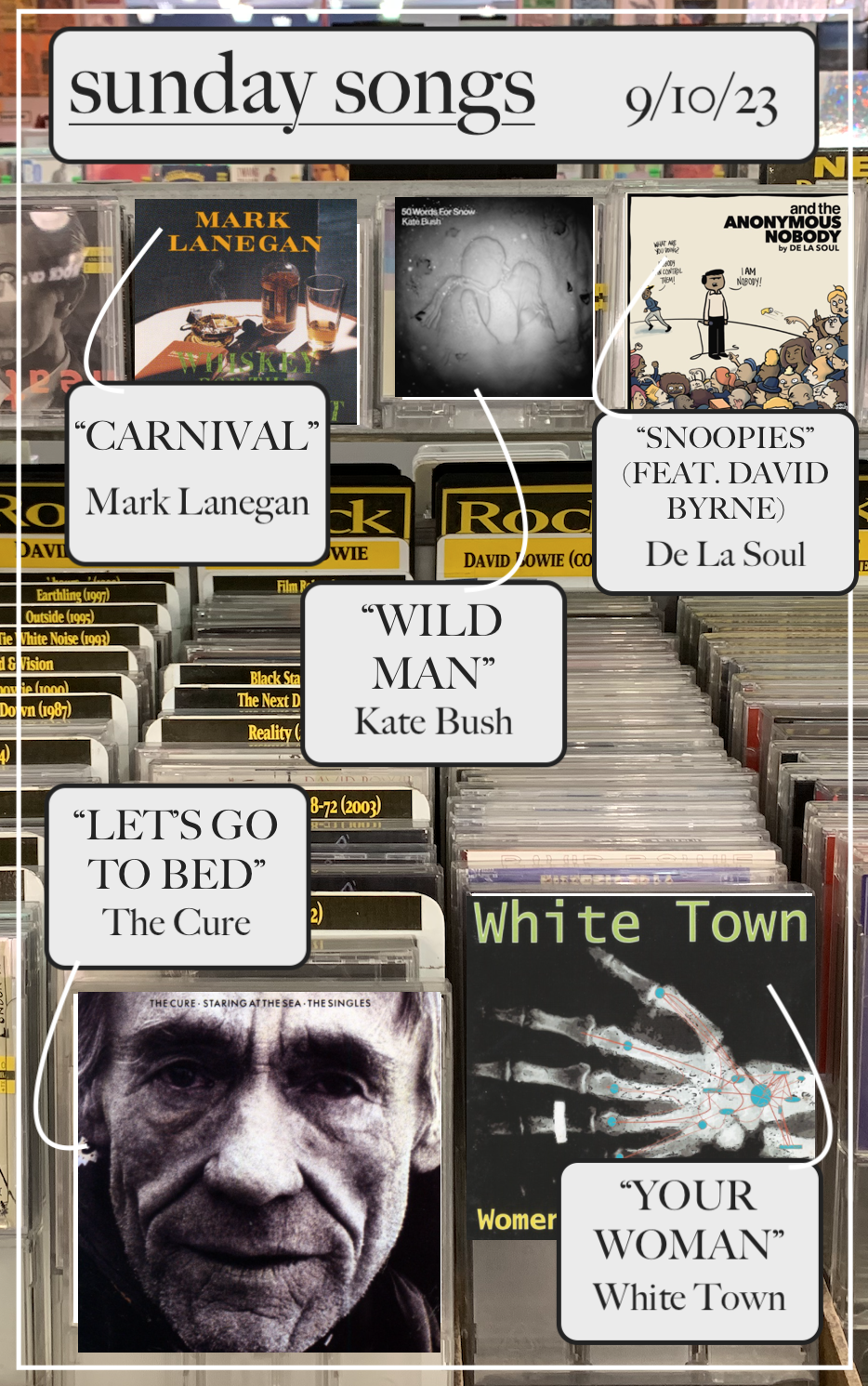
Guess who’s back! Here I am again, and I think I’m almost ready to get back on my somewhat-normal blogging schedule. While I was away, I still made the Sunday Songs graphics, but I just posted them on my personal Instagram; even though I never wrote about them, I think they’re all cool and that you should listen to them, so here are the songs for most of September:

9/3/23:

9/10/23

9/17/23

Enjoy this week’s songs!

SUNDAY SONGS: 9/24/23

“On the Floor” – Perfume Genius

No, sorry, this isn’t the J-Lo “On the Floor.” I doubt that one’ll end up on one of these posts. Listen, I had a group project in my freshman year of high school where my friends and I had to make a version of it about reflexive verbs for Spanish II. You can understand why I’m not too keen on revisiting it.

Instead, have a wonderfully bubbly song that has no connotations about group projects for Spanish class! Huzzah! Back in June, I saw Perfume Genius open for the Yeah Yeah Yeahs, and while nothing can come close to the performance of the latter, I still came away with a few excellent Perfume Genius songs in my back pocket. The grinding indie chug of “Describe” overshadowed the few that I downloaded, but the other day, “On the Floor” came on shuffle right before I was about to pack things up for bed, and I couldn’t help but have an impromptu, one-woman dance party in my dorm room. Under the glow of my rainbow lights (I feel like Mike Hadreas would approve), I felt a rush of fizzy joy, like the pop of a freshly-opened can of soda, bubbling up in me as the notes filtered through my headphones. Ever since, it’s never failed to put a smile on my face. It has the same effect as a lot of Japanese Breakfast songs have on me; from the glistening guitars to the ethereal harmonies in the chorus, every part of “On the Floor” seems to glitter. It’s a song coated in colorful lights, twinkling like the panels of a disco ball as Hadreas sings of what he drescibed as “that maddening, solitary part of desire.” It’s a song laden with no shortage of obsession and longing, but coated in the most joyous façade of pop, impeccably polished. In stark contrast, the video feels…very Perfume Genius, from my limited scope of his work, but doesn’t mesh as much with how I perceived the song? “On the Floor” seems more suited to scenes of a club bathed in pink and purple lights, as opposed to a sweaty Mike Hadreas rolling around in the dirt with a lover that fades away like the breeze (like the crush he describes projecting onto). You do you, I guess.

“Kind Ghosts” – Sparklehorse

Ouchie.

I don’t have much experience with listening to posthumous albums, save for David Bowie’s Toy, and even in that case, it was more that Toy was fully recorded and then shelved while he was still alive, while Sparklehorse’s Bird Machine was never finished in his too-short lifetime. And even though my reputation for sad bastard music precedes me (be grateful that these posts never originated when I started listening to Radiohead), Bird Machine hurt to listen to. I can’t rightly say if my tolerance for sad music has faded since then, but if I had to sum it up, sometimes it helps to have the feeling of being consumed by sound. For a lot of artists in that vein, the spectrum of all that kind of all-consuming sound is somewhere that you can lose yourself in; on the one end, Radiohead felt like being transported into a haunting, alien landscape, a whole dimension where I could detach myself from the earthly world. (High school does that to a gal.) Right on the other end, Julien Baker’s first album, Sprained Ankle, was just the right amount of raw and vulnerable to feel as though the music was watching over me as I grieved. Even though I will always champion narratives of hope and the value of love, I’m not about to discount the times in which sad music is exactly what I needed. Healing should always be the goal, and I am better for having healed from what Baker was there for me with, but there’s something to be said for, in her words, “giving the sorrow some company.” And even though I only break out the specific “sad bastard music” playlist for that reason, sometimes it’s just simply feeling the sweeping swell of emotion surround you. I feel it with non-sad music as well (ever heard of Hunky Dory? Talk about sweeping), but the thread here is that I can’t not feel everything—good and bad—like a tidal wave some days. Thus, I gravitate to songs that make me feel that way. Big feels need company.

But here, it’s hard to lose myself. It’s not that it isn’t “sweeping” by my wobbly definition, but a song like this is almost impossible to separate from Mark Linkous’ circumstances. “Kind Ghosts” is a truly gorgeous song, with buzzing-insect effects on Linkous’ voice and a distorted, ethereal hum that permeates every note like moss growing over stones. And like an insect, it has the delicacy, the fragility of a dragonfly’s wing, a transparent wavering that catches the light. Like most of his other works, the lyrics balance woodsy, quaint nonsense with plain ol’ gut-wrenching devastation. “I came to drink more whiskey than water” and “I’ve swallowed a phantom/And I forget how to breathe” leave no room for misinterpretation, but even such sense-defying oddities as “I hung my wolves up high in the pine trees/Like cannonball sails they wouldn’t stay hung” sound just as plainly tragic. I doubt any listener could ever fully separate this lyricism from the absence that Mark Linkous left too soon in this world; some of Sparklehorse’s similarly atmospheric works of art are the aforementioned kind I can lose myself in, but Bird Machine will always be a hard record to swallow. Painfully beautiful, but necessary nonetheless.

Here. Come sit next to me. Grab a tissue. Send your thank yous to Mark.

“Déshominisation (I)” (from Fantastic Planet) – Alain Goraguer

Alright, who ordered the weirdest possible palate-cleanser?

I’ve had the honor of being the learning assistant for a science fiction class this semester, and that’s meant that I’m getting to read and watch a whole lot of wonderfully bizarre (and nostalgic—we love my man Ray Bradbury 😔✊) stuff. Early on, we watched this for homework; I had a vague feeling beforehand about remembering seeing something about giant, blue, French aliens with soulless red eyes somewhere (probably on one of my Pinterest deep dives), but nothing could have prepared me for this movie. The animation is nothing short of gorgeous—all hand-drawn, incredibly detailed, and full of vibrant color at every turn. But it’s…yeah, it’s more than a little bit of a trip. There’s random interludes with alien creatures eating each other (I’m certain that they all would have given me nightmares as a kid), an uncomfortable amount of alien boobs, and far too many lingering shots on said soulless red eyes with nothing behind them for comfort. It’s beautiful, but in the way that makes your head hurtI’m still not entirely sure what I watched, but…I liked it? Yeah, I liked it.

Nothing added more to the surreal nature of Fantastic Planet more than Alain Goraguer’s score; most of it is a recurring motif of experimental jazz, which really does put you in the mind of “what did I just watch?” It all screamed Pink Floyd to me, which, since Dark Side of the Moon came out in the same year as this movie, makes sense. I can’t help but think of “Time” whenever I hear anything from this score. This movie seems like it would be on that kind of prog-rock wavelength. That’s what made it the perfect atmosphere for this film—the proggy, spacey theme that runs through the whole score marries perfectly with the oddball, alien landscapes that we traverse through. It’s a bizarre movie. I certainly don’t regret watching it.

“Limbo” – Shakey Graves

Looks like somebody was enjoying himself in quarantine, huh? Enough to crank out at least thousands of possible combinations for this album? Seriously, go play around with the Movie of the Week section of the Shakey Graves website. My first go at it generated a cover of David Bowie’s “Five Years” as a part of the soundtrack… :,)

But even without all that insanity, Movie of the Week is nothing short of excellent. Even though the second half lags slightly, I wouldn’t call a single track off this album bad. But, sadly, it’s really the first half that carries it—aided by the album’s singles, the fantastic “Lowlife,” and this absolute stunner of a song. Clocking in at nearly 7 minutes long, none of that length ever feels real—if I had to make an estimate, it sounds more on the 4-minute side. But I’ll always be grateful that we get all 6:40 of “Limbo” in all of its utterly cinematic weirdness. The beginning is deceptively unassuming, clunking in with distorted piano chords and Alejandro Rose-Garcia singing each word with gentle restraint. But right around the 1:10 minute mark, “Limbo” erupts into a shock wave of humming synth that could only find a place elsewhere if elsewhere was the outer space exhibit in a museum. It’s a song that looms, casting its shadow over your in waves of colorful static, blinking in and out of focus. And even if this song didn’t explicitly reference limbo, it would still be fitting for the soundscape that Rose-Garcia has created; between the discordant marriage of every instrument and effect and the gremlin-ish, artificial harmony alongside his voice, it really does feel like slipping in and out of some wild hallucination, toeing the line between reality and delusion. Shakey Graves knows the unsteady cradle of limbo, and they play it well.

“Veronica” – Daddy Issues

I heard this song in the background of a video, and after I found out that the band was called Daddy Issues, I was prepared for the rest of the song to not be up to pat. We get it, you edgelords. And although I’m still rolling my eyes at the band name, the timeless catchiness of this song makes it slightly better. Guess that’s just the kind of thing you have to name your punk band. It was bound to happen eventually.

“Veronica” feels like a song lost in time. It has that bright, pop-rock flavor that could have made it a cult hit if it was included in an 80’s teen movie. But it lacks just enough polish to make it land somewhere between 90’s riot-grrrl, grunge, and alt-rock. It wouldn’t have even been out of place sometime in the 2000’s, spoken in the same breath as Giant Drag. And here we are in 2015, where Daddy Issues married all of those elements and came out the other side with this. In theory, it shouldn’t stand out from any other song of its breed. You know the drill: She’s Veronica. She’s gorgeous. She’s fierce. She’s a little crazy. She’s off to steal some hearts. She’s gonna take over the world. You wanna make her your girlfriend. You wanna make out with her. But there’s just something about Daddy Issues that makes you believe every word of it, even though you’ve heard it a thousand times. Maybe it’s the mercurial lilt of Jenny Moynihan, effortlessly shifting from delicate high notes to delivering the grungy punch this song needs. Or maybe it’s the way that it all feels so precise, like it was floating in the ether all along, waiting to be discovered. Either way, it’s an undeniable earworm. All of you directors trying to put together a soundtrack for a teen movie: get over here, what are you doing?

And there’s no way that this whole song isn’t a Heathers reference. “She’s teenage suicide”? Come on.

Since this post consists entirely of songs, consider all of them to be today’s song.

That’s it for this week’s Sunday Songs! Have a wonderful rest of your day, and take care of yourselves!
Posted in Sunday Songs

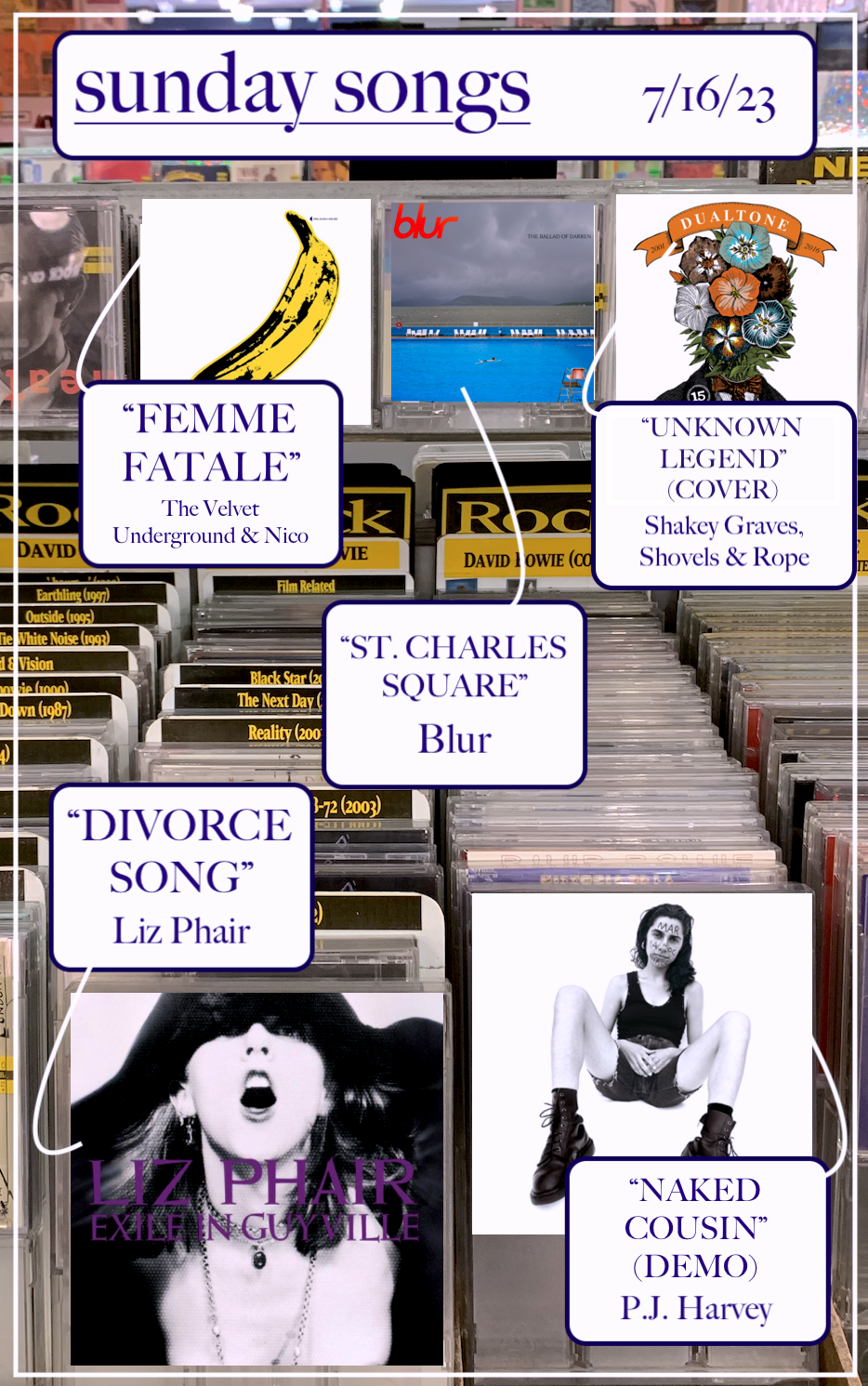
Sunday Songs: 7/16/23

Happy Sunday, bibliophiles! I hope this week has treated you well.

Sparklehorse also posthumously released “The Scull of Lucia” this week, and it would’ve fit the color scheme, but I just know that it’s gonna make me too sad to write about. Love you, Mark, but I’m trying to preserve my sanity.

Enjoy this week’s songs!

SUNDAY SONGS: 7/16/23

“Divorce Song” – Liz Phair

I guess this week’s batch is starting out on a sour note, but I just have not stopped listening to bits and pieces of this album for weeks, so get Liz Phair’d. My advice, though: as we are in the peak of road trip season, this is the absolute worst song to put on a road trip playlist, as good as it is. Regardless of whether or not you’re in a romantic relationship on said road trip, I feel like it’s just a horrible omen either way.

Speaking to Rolling Stone, Liz Phair said that she wasn’t surprised that this song became a fan favorite from Exile in Guyville: “…[‘Divorce Song’] has that deadpan delivery. It’s an ordinary person doing ordinary things…the song is really just about relating to another person. It feels like an action-packed song. You’ve done a lot…but really it’s just two personalities trying to be intimate and bumping up against each other on a road trip and that’s all that happens.” The concept of lyrical storytelling is, for some reason, always equated to having some grand, lofty narrative, as if stories about ordinary things somehow don’t make the cut. But that’s exactly what makes “Divorce Song” such a powerful song—it’s a linear narrative about a road trip gone south, and yet it packs the same punch of a narrative spanning multiple songs. You can tangibly feel the trapped heat of the inside of a car, the humid desolation of a cramped hotel room, and the sinking realization that “it’s harder to be friends than lovers/and you shouldn’t try to mix the two/’cause if you do it and you’re still unhappy/then you know that the problem is you.” Against the backdrop of Phair’s turmoil, small details create a painfully fleshed-out picture (“and it’s true that I stole your lighter/and it’s also true that I lost the map”), the images of this song feel as real as if I were watching them unfold on a movie screen; that really should be the bare minimum, but honestly, in the age of mass-produced, filtered music dominating the airwaves, this song feels like a breath of fresh air, even 30 years later. (Not too sound like a boomer there. I’ve just been inundated for the past few days because Taylor Swift was in town this weekend.) Contrary to Pitchfork contributor Scott Plagenhoef’s assertion that Exile would come off as dated to this generation because we’re so used to explicit sexual content in mainstream music…it’s not dated in that sense? At all?? Sure, we are exposed to more of it, but that doesn’t diminish the value of one of the first female artists to bring these kind of raw, unapologetic, and honest lyrics to the indie rock scene and owning it. It’s not like it’s impossible to see that empowerment shining through, whether it’s in the context of 1993 or 2023.

Seriously, Pitchfork…whose grand idea was it to have a man write a review of the 15th Anniversary Edition of Exile in Guyville? Not that men can’t write reviews of music by women and vice versa, but this one? The album that specifically came about to critique the boy’s club of indie rock? That’s just a war crime, if I’ve ever seen it. The review is from 2008, but…no, they had definitely had women on board at Pitchfork by then. There’s no excuse. Jesus Christ…

“Naked Cousin” (demo) – P.J. Harvey

uhhhhhhh tommy shelby sigma male octillionaire grindset cillian murphy moment

No, I haven’t watched Peaky Blinders yet, but my parents recently going through the whole show (and getting close to finishing it) has me almost convinced to watch it?? If anything will convince me, though, it’s the absolutely loaded soundtrack: Radiohead? The White Stripes? The Kills? I mean, come on. Perfection. And this too!

And, it’s reminded me that I need to get into P.J. Harvey. Somehow, I always forget about her, but every time I hear a song of hers, it’s instantly gripping, whether it’s the grinding jumpscare of “Rid Of Me” or what is hands down the best cover of The Rolling Stones’ “(I Can’t Get No) Satisfaction” ever performed, along with our queen Björk:

If that doesn’t make you want to worship the ground that they both walk on, just for a moment, I’m not sure what possibly will. The sheer power they both wield.

Again, there’s no excuse for me not to get into more P.J. Harvey right this minute, except for my pileup of albums waiting to be listened to. But for now, I at least have this song—and it’s a demo? How is this a demo?? Lucy Dacus, on her episode of Amoeba Records’ YouTube series What’s In My Bag? picked an album of Harvey’s 4-track demos, and remarked about how she wished that her demos were “remotely shareable” in comparison. Either way, I’m so glad that this demo is out in the world. Even with my limited P.J. Harvey knowledge, raw power is what characterizes what I’ve heard of her music—raw-throat screaming, instrumentals that bear down on you like an onslaught. “Naked Cousin” is just that; the slightly grungier (not necessarily grungy in the Nirvana way, but in both the musical and non-musical sense of the word), grimier sound quality coming from the demo enhances its atmosphere. It’s an eerily sinister song, the dirtiness of the instrumentation matching the lyrical image of discomfort that Harvey weaves: “I hate his smell and/I hate his company, but/But most of all, I hate that he/He looks just, just like me.” It’s a deeply uncomfortable song—Harvey really enhances the tangible feel of someone lingering over you, the feeling of their hot, sour breath pressing against your skin. She can certainly create an atmosphere, even if it’s the last one you’d want to be surrounded by.

“Femme Fatale” – The Velvet Underground & Nico

Since I’ve started working at the library, I’ve made a playlist for myself to listen to while I’m shelving books. It’s all soft, slow songs, both so I don’t get distracted and so it matches the atmosphere of the library. So there’s a lot of Phoebe Bridgers, Radiohead, Wilco, some older St. Vincent, et cetera. “Femme Fatale” went on there almost immediately, but not just because it fit those criteria: nothing makes you feel more like a character in an indie movie than listening to The Velvet Underground in a library.

Nico’s vocals take the lead on “Femme Fatale,” leaving Lou Reed to the backing vocals on the chorus. I already talked a little about the power of her voice back when I first listened to The Velvet Underground & Nico back in April with “All Tomorrow’s Parties,” but those two songs together are emblematic of her vocal range. Next to the looming, encroaching presence on the former (although it comes later in the album), “Femme Fatale” sees Nico dipping into a gentle whisper, her voice fading to an almost imperceptible hiss at the very end of each chorus as she says “hear the way she talks.” As massive of a presence as her famously low, resonant voice is, she slips into the quiet so easily (see also: “I’ll Be Your Mirror”), and yet retains the same cavernous quality—even as her voice drifts through the enchantingly gentle intro of guitar and tambourine, you can instantly feel it in your chest, making your bones vibrate. Or maybe the latter is just the mixing of this song—famously headphone-vibrating, if the YouTube comments are any indication. It’s the perfect fit for a film—the only movie I can seem to find with it is Bandslam, which I’ve never heard of, but Wes Anderson really needs to get on it. Past time that he used it for something, although maybe he filled his personal Nico quotient in The Royal Tenenbaums?

One Nico song seems like a small quotient, but who am I to judge Wes Anderson? He’s Wes Anderson, after all.

“St. Charles Square” – Blur

Gather ’round, my fellow Americans, let us all cry and watch videos of Blur performing in Wembley Stadium, and hope for the best that they’ll just get over themselves and announce a North American tour. Grab your tissues. Cry with me.

But this. THIS. This is the Blur that I’d been missing! “The Narcissist” was a solid song, but “St. Charles Square” is a much better showcase of their talents—and brimming with so much more creativity. Unlike the former single, which sounded as though it could be a solo Damon Albarn track, “St. Charles Square” finally feels like Albarn, Coxon, James, and Rowntree have reformed as a truly cohesive unit, their unique talents blending as seamlessly as they did in the 90’s. Whether or not Damon Albarn’s “OI!” at the beginning is a callback to “Parklife” (aaaaaaaaaall the people) or just him being British is up for debate, but even if it is nostalgia bait, you bet I’m biting it. You guys have no idea how many times my mom and I have car-danced to that song. I’ll gladly be a nostalgic shill for a bunch of white, middle-aged British guys. And finally, finally, Graham Coxon’s signature guitar playing has returned to the spotlight! His riffs are as power-laden and punchy as ever, and he’s adopted an echoing tone that calls back to David Bowie at the very beginning of the 80’s, right as he released Scary Monsters (And Super Creeps). And this song is full of scary monsters and super creeps of its own—the delightfully eerie lyrics are rife with “ghosts come back to haunt me” and “something down here/And it’s living under the floorboards/Its grabbed me round the neck with its long and slender claws.” With all that to work with, it’s no wonder that Albarn’s flair for showmanship shines in this track: I’d be lying if I told you that his piercing, werewolf howl at 1:40 didn’t make me giddy on every single listen. It’s a spooky delight all the way through.

“Unknown Legend” (Neil Young cover) – Shakey Graves, Shovels & Rope

I didn’t know until I started looking into this song that it was a cover—Shakey Graves was the main draw, I only knew of Shovels & Rope because they always come up as similar artists when I search for Shakey Graves on Apple Music, and I can only remember one (1) Neil Young song off the top of my head. And normally, I wouldn’t be one for folk-country songs describing a blonde woman riding through the desert on a Harley-Davidson that rhymes “diner” with “finer” (in reference to said woman), but, again: Shakey Graves.

iTunes has this song labeled as Shakey Graves & Shovels & Rope (and my English major brain wants to separate them with a comma or “and,” not a second ampersand, for the love of god 😭), but I was surprised to see that YouTube lists it as Shovels & Rope feat. Shakey Graves; if anything, there’s far more Shakey than Shovels—Alejandro Rose-Garcia is clearly taking the lead on vocals here. (I guess that this song was also included on Shovels & Rope’s covers album, Busted Jukebox, vol. 1, so that’s probably why.) Either way, the harmonies on this rendition of Neil Young are my main draw. Rose-Garcia’s voice has this distinct, irreplaceable rasp to it, rough and raw-throated at the edges, but never losing its power. Combined with the husband and wife duo of Michael Trent and Cary Ann Hearst (is it bad to ask who’s the shovel and who’s the rope in this relationship?), their voices form a resonant group of harmonies, with Hearst’s high notes elevating the thrill of the music and Trent providing a steady wall for it to anchor itself against. Whether they’re hitting the highest of high notes or gently drifting away from the chorus with their whispered repetition of “the air she breathes.” Again: I’m not usually one for the folky covers with the obligatory harmonica solo at the end, but Shakey Graves will convince me.

Since this post consists entirely of songs, consider all of them to be today’s song.

That’s it for this week’s Sunday Songs! Have a wonderful rest of your day, and take care of yourselves!
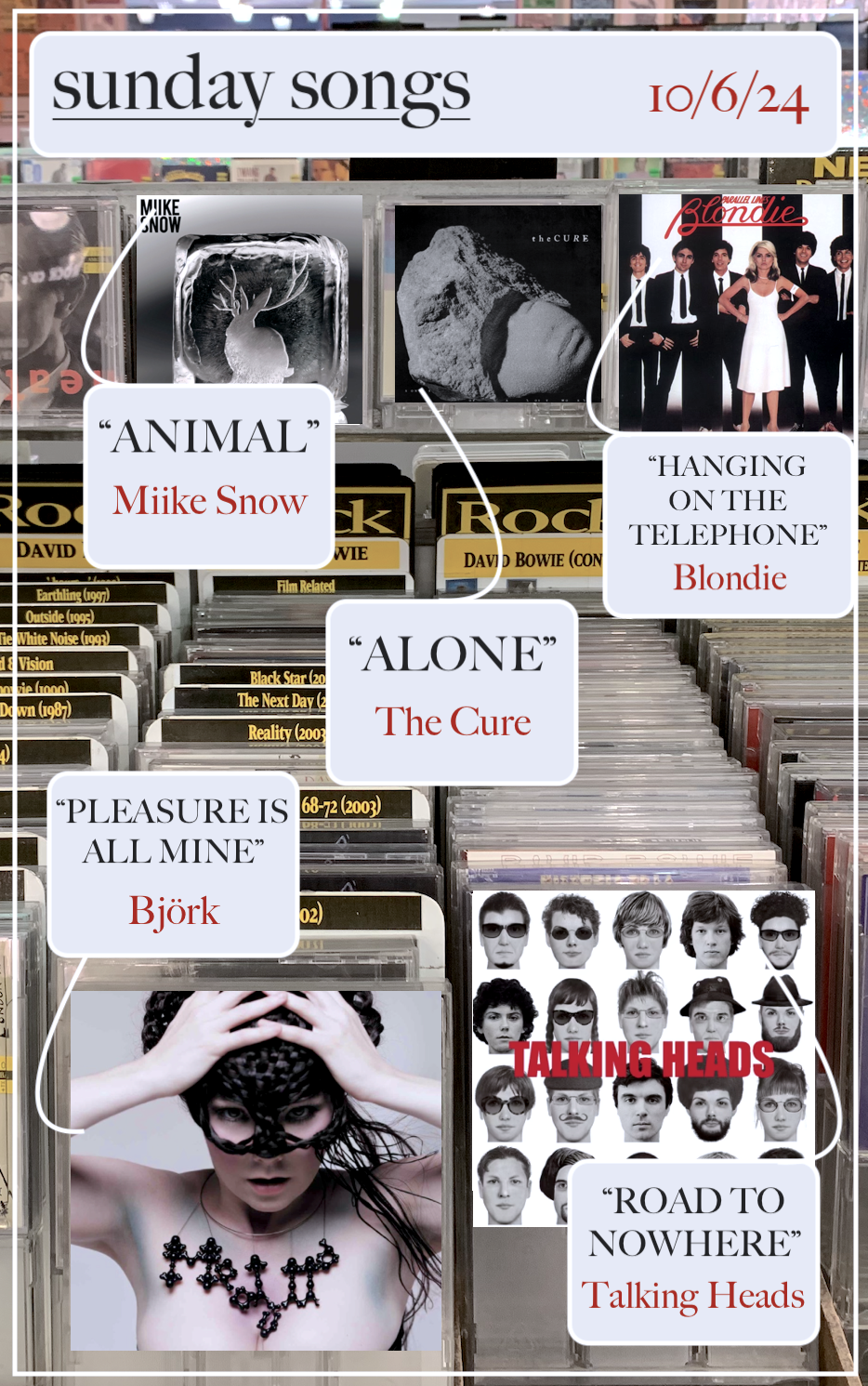
Posted in Uncategorized

Sunday Songs: 6/25/23

Happy Sunday, bibliophiles!

This week’s batch originally included a cover of “The Wreck of the Edmund Fitzgerald,” but for several obvious reasons, I omitted it since I feel like that would be the absolute worst possible timing. Whoops.

quick trigger warning: there are mentions of suicide in part of this post, so if you don’t want to read that section, skip over “Evening Star Supercharger.”

Enjoy this week’s songs!

SUNDAY SONGS: 6/25/23

“The Sensual World” – Kate Bush

Here I was thinking that “Come Talk to Me” and my 8th grade graduation were the only times that pipes of some kind (bagpipes and uilleann pipes, in this case) would ever make me feel anything…

This time, I wouldn’t say that said feeling evoked by “The Sensual World” isn’t the same kind of visceral, scoop-my-heart-right-out-of-my-ribcage of said Peter Gabriel song; this time, it’s more of a “how could she make that sound so incredibly cool” feeling. Normally, I wouldn’t be on board with these kind of fiddling, dressing up in medieval outfits kind of tunes, but I have to keep reminding myself: if anybody can do it, of course it’s Kate Bush. Of course. My favorite songs of hers make me feel like growing my shaved head all the way back out and running through the woods in a white dress (see: “Burning Bridge”), so I’m glad that she and Peter Richardson channeled that for the music video. And even without knowing much of anything about James Joyce’s Ulysses, I can’t think of a better way to adapt a monologue from a classic like that—this version is a mishmash of Molly Bloom’s monologue and Bush’s own lyrics, since Joyce’s estate didn’t grant her the rights to make the song all Joyce. (She later re-released it as “Flower of the Mountain” as a sung version of Molly Bloom’s monologue, once she was granted the rights.) I would’ve passed it off as Kate Bush and nothing but—the silky, airy cohesion throughout, the rush of joy once the fiddle and uilleann pipes kick in at the start of the chorus…everything. The chorus remained faintly in the background of my childhood memories, the title and the rest of the song lost up until a few years back, just like my favorite song was up until around two years ago. And while it’s hard to compete with my favorite song of all time at the moment, I’ve enjoyed every minute that I’ve spent with this unearthed song.

“6’1” – Liz Phair

Complete coincidence—I had no idea that Exile in Guyville just turned 30 a few days ago! Perfect occasion to talk about this song, I suppose.

Most of my Liz Phair exposure prior to a few weeks ago came from two moments: seeing this album cover in passing on our iTunes library while my brother and I were trying to make a playlist for our dad ages ago, and two Whip-Smart tracks (“Supernova” and “Whip-Smart”) that defined a specific chunk of 8th grade. Listening to either of them instantly transports me back to a bus ride in the early hours of the morning, driving out to the middle of nowhere with my school to watch the total solar eclipse. And for years, I thought that that the Exile in Guyville cover was an illustration, and that the hood over her head was her actual hair. But the other day, my mom mentioned in passing, while we were listening to Palehound, how much it sounded like Liz Phair. I believed her, having a vague memory of said two songs.

And then my mom put on the first four tracks of Exile. Holy crap, dude.

I haven’t even gotten halfway through this album, but I haven’t fallen in love with an album this quickly in ages. This track is the one that keeps coming back to me—the minute the guitars kicked in, I was reeled all the way in. And even without the context of the last half of the album, this song seems to encapsulate its thesis perfectly—daring to have the courage to break into a male-dominated indie scene and make an irreplaceable mark on it. There’s the sly turning of the Rolling Stones’ lyrics back in their faces. And of course, there’s the references to height—”and I kept standing 6’1″/instead of 5’2″” isn’t just Phair keeping her head above the water after a nasty breakup, but a joking reference to her own height—she calls this song “the bravado that [she] manifest[s]” that seemed to confuse everybody once they saw how short she is. And…yeah, if I had a nickel for every person who’s said “I thought you’d be taller” to me, I could probably buy Amazon from Jeff Bezos. Liz Phair still has an inch on me, but…yep. The short king (queen?) experience.

So, to my mom, who talked about how cool it was that we were listening to the same knds of music at the same ages: I think it’s cool too. This one’s gonna be in heavy rotation once I listen to the whole thing. I love listening to music with you too.

“I Will” – The Beatles

Happy week-belated birthday to Sir Paul McCartney! Another song that ended up on here by coincidence, but I won’t argue against doing something for the occasion.

The White Album has something for everybody. Over the course of both sides, you have classic epics of songs (“While My Guitar Gently Weeps”), nursery rhyme-style political commentary (“Piggies”), eight and a half minutes of experimental discomfort (“Revolution 9”), and everything else under the sun (here comes the). It’s part of why this album is my favorite of the Beatles’ discography—there’s no shortage of songs that you can come back to, and each time, it feels like reuniting with an old friend. Yes, even “Wild Honey Pie.” I will defend that song with my dying breath. It’s hilarious.

But it’s some of Paul McCartney’s quieter, acoustic moments that have stayed with me the most whenever I revisit parts of this album. It has the pleasant simplicity of their earliest, poppiest songs, but with McCartney’s added experience, there’s a weight to it that would’ve been difficult to achieve in their very early youth. I just now realized that the bass part is just his gentle singing—there are so many moments of quiet brilliance on this album. I added this to my playlist when I went up to Washington, and every listen felt like a warm hug—and every subsequent listen still does. 1:45 of nothing but comfort. Paul McCartney just seems to have that effect.

“Describe” – Perfume Genius

I saw the Yeah Yeah Yeahs at the beginning of the month, and it was EXACTLY as phenomenal and soul-healing as I’d expected it to be. Karen O brought an infectiously joyous energy to every minute of the set, complete with her glittery, Elvis-but-cooler outfits and confetti cannons aplenty. It genuinely warmed my heart to see the giant smile on Brian Chase’s face every time the camera panned over to the drum kit—the whole band just felt so, so happy, and that made the show all the better. Even with how damp that night generally was, I enjoyed every second.

Of course, you can’t really live up to that as an opening act, but I enjoyed parts of Perfume Genius’ opening set, without question, even only knowing one song of his beforehand (“Queen,” which…apparently he does a whole strip tease to that one normally? I guess the weather only permitted him to make generally strip tease-like motions while dragging an itchy-looking gray sheet around…the spirit is willing, but the flesh is a bit too chilly?). Every song wasn’t a winner for me, but “Describe” certainly was. Both on streaming and live, Mike Hadreas (a.k.a. “Mike on the Mic,” according to Karen O.) seems content to let his voice take a more understated backseat, which suits the propulsive guitars that wall this track in. The combination of these driving, battering rams of guitars and Hadreas’ whispery voice form a unique sound—a song that simultaneously feels sharp and prickly like porcupine spines, but smoother than a silk sheet. Hadreas toes that line of juxtaposition exceedingly well on this song—the two contrasting sounds blend only at the edges, making for a song that never feels like it’s teetering one way or the other—it’s content to plant one leg on either side of the fence and keep them there. My only real complaint is the minute-odd ending of muttering, synth-y silence, but it’s short enough to skip, and not long enough to be a major qualm. It’s probably a transition between songs on Set My Heart On Fire Immediately, but I wouldn’t know.

“Evening Star Supercharger” – Sparklehorse

I always struggle with posthumous album releases. At their worst, they’re blatant ways to capitalize off of an artist’s death and keep the nostalgia machine running, even if it’s just a collection of demos that were never meant to see the light of day. Even in David Bowie’s case—he’s my favorite singer, if I haven’t gone off about him for years on this blog, but even then, officially releasing his shelved 2001 album Toy felt weird—and it wasn’t his best work, either. I’m comforted by the fact that Bowie did actually want that album to see the light of day and seemed to be heartbroken by the fact that it got shelved, but I’m still dubious on whether or not that was Warner Music Group’s rationale for releasing it. I can say about the same for Prince’s Originals, even though I haven’t listened to it all the way through—especially with him and Bowie’s death being so close together, there’s definitely a 2016 pop-icon grief nostalgia machine running.

But Mark Linkous wasn’t necessarily a Bowie or a Prince. He wasn’t a worldwide superstar who changed the course of rock music—I can’t even think of anybody outside of my immediate family who might know about Sparklehorse. He’s gained significant renown in the indie community, but this feels different—given his history, it doesn’t seem like a cash grab at all. It seems like a genuine endeavor by Linkous’ siblings to revive some of his unreleased catalogue, not for reasons of greed or nostalgia. Toy felt somewhat off-putting; Bird Machine feels genuinely touching.

And the result of “Evening Star Supercharger” is purely Sparklehorse, without the touch of greed but still polished enough to sound smoother than a demo. It doesn’t feel far off from what I’ve heard off of Dreamt For Light Years in the Belly of a Mountain—the music has a polish of tinny glitter like a string of Christmas lights, but retains the unmistakable melancholy that ran through all of Linkous’ music. There’s an undeniable wish for stability and peace without the drugs and self-medication, but he still describes being wrenched through “the grinding metal gears/from a carnival of tears.” Knowing that he never achieved that kind of stability, leading him to take his own life in 2010, makes this unreleased material all the more heartbreaking; through the Christmas lights, it’s undeniably the sound of a damaged man. If anything, I hope Bird Machine allows us to celebrate the undeniably creative spirit that he had.

We miss you every day, Mark.

Suicide and Crisis Lifeline – 988

Since this post consists entirely of songs, consider all of them to be today’s song.

That’s it for this week’s Sunday Songs! Have a wonderful rest of your day, and take care of yourselves!
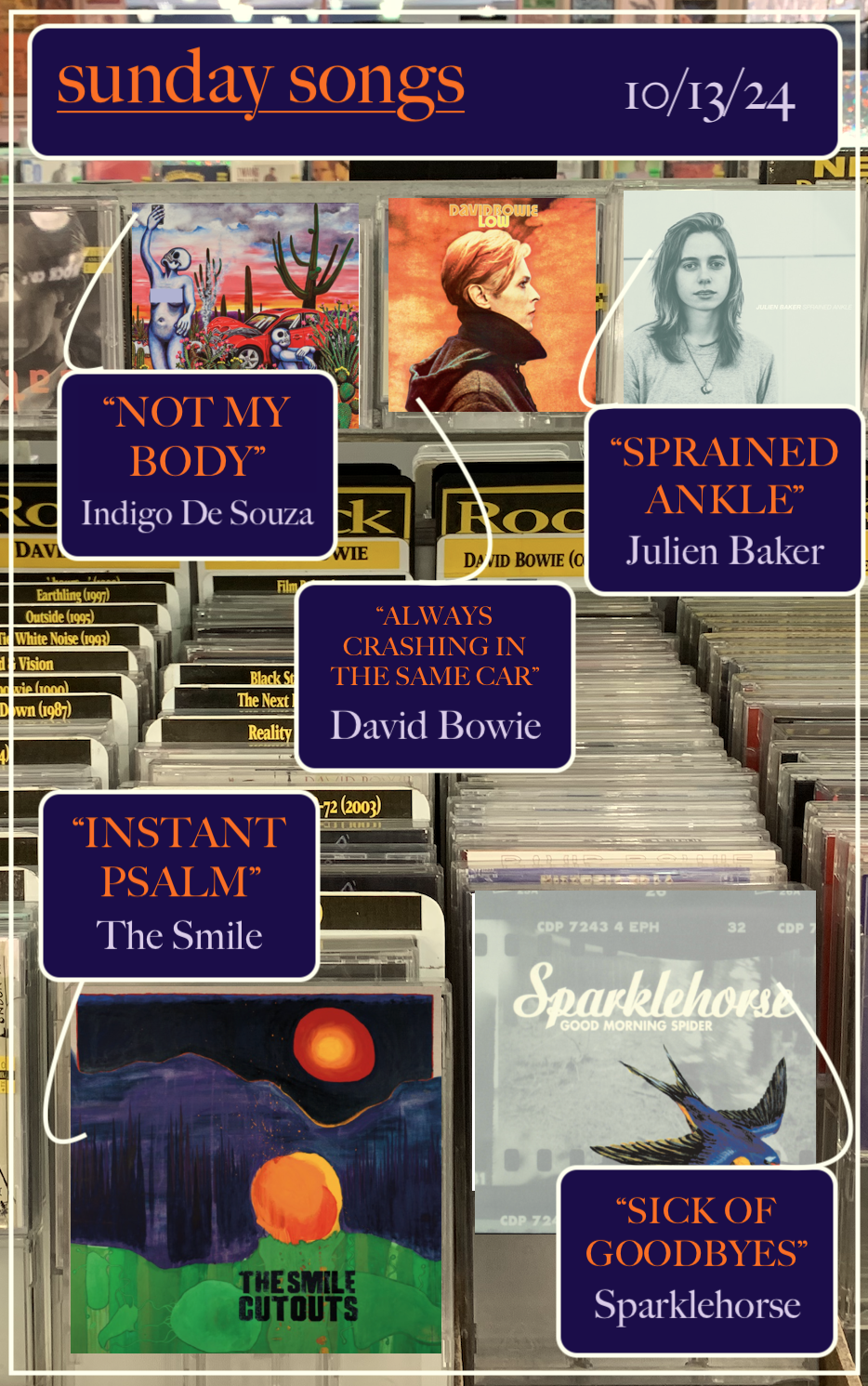
Posted in Sunday Songs

Sunday Songs: 4/30/23

Happy Sunday, bibliophiles! I hope this week has treated you well.

Here we are at the end of April, and my cough finally seems to be letting up. The weather’s consistently warm again, the trees are starting to bloom, and I’m doing my best to ignore the fact that the latter will definitely trigger some allergies in a few weeks, because hey, the trees are starting to look beautiful. All is green and new!

Enjoy this week’s songs!

SUNDAY SONGS: 4/30/23

“Ride a White Swan” – T. Rex

there has never been a better visual descriptor for how this song makes me feel

PACK YOUR BAGS, FELLAS, WE’RE GONNA GO WEAR EXCESSIVELY LONG DRESSES AND DANCE IN THE WOODS

T. Rex, Marc Bolan’s self-titled debut, was the last hurrah of his hippie roots (you really can’t go back from album titles like My People were Fair and Had Sky in Their Hair…But Now They’re Content to Wear Stars on Their Brows, huh) before going full-on glam rock, as well as the first album under his newly shortened name (no longer the full Tyrannosaurus Rex). But even as he’d gotten a crisper, cleaner name to call himself, he hadn’t fully abandoned the original, psychedelic fantasy that was Tyrannosaurus Rex, and this song—and, judging from most of the song titles on the rest of the album, everything else—is proof. It’s got everything—druids, spell casting, black cats, tall hats. What else does one really need in life? It’s whimsical. It’s lovely. It’s light. It’s a classic. Revel in the joyous whimsy!

And it seems like it was the perfect storm—for a short time, anyway. Arriving in 1970, right at the end of the sixties when the world was still clinging to the flower-child mentality, this was the perfect piece of escapist hippie music. It was Bolan’s first hit as T. Rex, and it was what launched him into stardom in the early seventies. From what I can tell, most of his career after his (excellent) third album, The Slider, was an attempt to rekindle some sort of hit, both in the U.K. and in the U.S., and despite his efforts and his complicated relationship with fame, never ended up being fruitful. Especially knowing that he died so prematurely and that most of his efforts were in vain, it always makes me sad to think about that stage of his life. Bolan was obviously such a creative soul at heart, a skilled frontman and a master of oddball wordplay, and thinking about he wasted so much of that talent by trying to please other audiences really seems to me like one of the great tragedies of rock music history. It doesn’t feel right to reduce Marc Bolan to a lesson to all of us creatives intending to make a living, but I think his story speaks more to the music (and any creative) industry as a whole; he’d gotten a taste of fame, and this fame pressured him to try and crank out hit after hit. It’s not so much an issue of Bolan as a person, as flawed as some of his fame-induced decisions were, but the way that the music industry has shaped people to behave in that way. Art should be art for art’s sake, not a pursuit of money or stardom. The music industry did Marc Bolan an unforgivable disservice, and I’ll die on that hill.

Anyways, listen to The Slider. God-tier album.

“A Love of Some Kind” – Adrianne Lenker

Alright, I’ll step off my Marc Bolan soapbox for a moment. Let’s cool down a little.

This lovely spring weather has made me feel the same way that this song does. Even if the album cover for Hours Were the Birds wasn’t set against a backdrop of dewy pine branches, I have no doubt that it would still sound the same. Adrianne Lenker seems to have captured the art of making an unrelated smell like petrichor and gently rock about like a wooden boat on a lake. There’s a slight melancholy to it (nothing quite compared to “Disappear,” another track I love from this album—I need to listen to the whole thing), but it’s undeniably hopeful; it’s a plea for reciprocation and love after a rocky period, a star-staring hope and yearning: “I know we’re strangers, so it’s okay/ You don’t have to say it/Strange is better anyway/And I think that we can make it.” There’s a certain talent that the best singer-songwriter artists, in my experience, have: the ability to hinge an entire song with a single instrument and their voice. Most of the time, it’s an acoustic guitar, and Lenker hits the nail right on the head. With just her gentle, misty voice, and the strums of her guitar, she evokes all of those sensations I mentioned earlier with such relatively little material. Even her birdlike whistles bring to mind the feeling of plants stretching their feelers after the snow melts away. I really need to listen to more Adrianne Lenker.

“House of Jealous Lovers” – The Rapture

The beginning of “House of Jealous Lovers” functions to me like the sound engineering of the screams in Jordan Peele’s Nope: are they screams of ecstasy? Are they screams of fear? Who knows. They’re all shrouded in a deliberately-placed layer of fuzz that makes it impossible to tell. And by the time you’ve started to contemplate if it’s one or the other, it’s too late: it’s Uptight White Boy Music Time.

And even without knowing much about said Uptight White Boys, it’s clear how “House of Jealous Lovers” took its place in the early 2000’s post-punk-revival movement in New York City, sliding right next to the likes of The Strokes, The Yeah Yeah Yeahs, and others. There’s not much going on lyrically, but there’s a frantic urgency to the hoarse scream that Luke Jenner (no relation to…any other infamous Jenners, luckily) delivers every line in that makes every word feel like a command. Cloaked in endlessly delayed guitars, it feels like it’s hiding something the whole time, even if part of the bridge just consists of the band counting to eight in unpredictable, wavering tones. Throw in some cowbell (as one does), and you’ve got such a strangely suspended moment in time: shaky and uptight, but somehow still self-assured in a way that makes this song hold up after almost 20 years. It feels like the world’s most neurotic club jam. I love it.

“The Cradle” – Colour Revolt

I stole this one from the great Julien Baker, who named it on boygenius’ episode of Pitchfork’s Pass the Aux series, as her hype music when she was a senior in high school, right next to…Drake? I can’t forgive the Drake, but…we all did questionable things in high school, I guess.

Drake aside, I’m so glad that Julien Baker introduced me to this song. Just like that, I’ve got another album on the Sisyphean list of albums on my notes app. Just like “House of Jealous Lovers,” we’ve got another hoarse white guy (I’ve got cough drops for everybody, take your pick) who somehow makes it work. Wonderfully. There’s so much that “The Cradle” does in such a short amount of time. It seems to invert the formula of musical buildup. Apart from the first few guitar chords, the first seconds of the song explode into delightfully crunchy guitars, letting the music take center stage, making the quiet, abrasive vocals linger in the background like a sinister afterthought. There’s something sinister about this song that I can’t quite pin down—maybe it’s that inversion, the way that the song explodes in the beginning, and only goes quiet and plodding during the last 30 seconds, as if you’re in a horror movie, waiting for something to drop from the rafters. There’s something compellingly intricate about this song, even more impressive that The Cradle was an album made in the aftermath of Colour Revolt getting dropped by their former label and three of their five original band members jumping ship. Even if this is my only exposure to Colour Revolt right now, I can still say how impressive of a feat that is.

“Sunshine” – The Arcs

Inside of you there are two wolves. One of them wants to listen to “Sunshine” by The Arcs. The other wants to listen to “Sunshine” by Sparklehorse. You are incredibly pretentious, and you also probably need a nap.

When I first heard this song, I seriously thought that the light, tinny piano intro was going to be the start of a sample. To any artists reading this (I doubt there are, but still): THIS HERE. SAMPLE THIS. WHAT ARE YOU DOING.

I’m not up to date on any of my Arcs lore, but the jump from the songs that I heard on heavy rotation on Alt Nation back when I was in middle school to this is nothing short of gutsy. But somehow, it makes complete sense. Just like the animations in the music video, it’s vibrant and polished to a shine, bursting with neon color. From the backing vocals to the smooth piano intro, it’s clearly a song that’s been in the studio for extensive amounts of time, a piece of art being chiseled out of stone. And what came out when the dust settled was an irresistibly pop-sounding indie tune of a perfect length. Every move feels exceedingly deliberate, from when the backing vocals kick in with the “sha-la-la-la-la-la”s in the last third to the quiet explosion of different instruments in the background. The only other song I can think of called “Sunshine” is an exceedingly melancholy one (as with pretty much any Sparklehorse song…sorry, Mark), but if anything, this is a song that more than lives up to its title.

Since this post consists entirely of songs, consider all of them to be today’s song.

That’s it for this week’s Sunday Songs! Have a wonderful rest of your day, and take care of yourselves!