Posted in Book Review Tuesday

Book Review Tuesday (6/30/26) – Where Sleeping Girls Lie

Happy Tuesday, bibliophiles, and if you’re a fellow Coloradan, happy Election Day! Get your ballots in by 7 pm today for them to be counted! (And preferably cast your vote for Julie Gonzales for Senate—we need somebody truly progressive, not another AIPAC-backed old white dude in office.)

we don’t need hickenlooper anymore, get him outta here…

I was a fan of Faridah Àbíké-Íyímídé’s Ace of Spades back when it first came out in 2021. Even though it’d been almost five years since I’d read a book of hers, I figured I’d give Where Sleeping Girls Lie a shot. Although it was by no means perfect, Where Sleeping Girls Lie was still a tense and fast-paced mystery.

Enjoy this week’s review!

Where Sleeping Girls Lie – Faridah Àbíké-Íyímídé

Sade Hussein is ready to start over—no matter the cost. Freshly an orphan and homeschooled all her life, she’s enrolled in Alfred Noble Academy, a cutthroat boarding school where only the most privileged earn a spot. She has her reservations, but she finds comfort in Elizabeth, her roommate and fellow outsider. But when Elizabeth goes missing and the faculty of ANA doesn’t seem to care, Sade knows that the school has something sinister lurking beneath the surface—and she’ll do anything to expose it.

TW/CW: rape/sexual assault themes, suicide, animal death, substance abuse, murder, loss of loved ones

WARNING: this review contains spoilers! Proceed with caution if you want to read this book and haven’t yet.

It’s been almost five years since I read Ace of Spaces. My tastes have inevitably shifted a bit. But it says something that Faridah Àbíké-Íyímídé’s writing feels just as sharp, even though I’m no longer in the target audience. Where Sleeping Girls Lie is a timely mystery that kept me hooked!

Faridah Àbíké-Íyímídé has still got it. Where Sleeping Girls Lie is, for the most part, both excellently plotted and paced. This book is just over 400 pages (on my Kindle edition, at least), and I managed to blow through it in only two days. (Yes, I know I’m a fast reader, but for me, that’s still saying something.) Every beat of the mystery of Elizabeth’s mystery—and the sinister underbelly of ANA that gets exposed in the process—was meticulously planned, and I loved how the back-and-forth between Sade and Baz developed along with the clues they discovered. It was so grippingly written, and Àbíké-Íyímídé did such an excellent job of spreading the mystery and reveals out in a logical but still fast-paced way, giving enough breathing room between reveals to keep me hooked for the whole novel.

I also really enjoyed the dynamic between Sade and the other characters. Although there were times when Àbíké-Íyímídé’s writing felt a little too YA and her humor didn’t always land, she did a fantastic job writing the effortless rapport between all of the main characters. The dynamic between Sade and Baz was sweet, but I think I enjoyed the slow-burn romance between Sade and Persephone the most; in an age group where it’s so easy to write halfhearted insta-love, Àbíké-Íyímídé’s gradual, will-they-won’t-they dynamic between the two girls was one that I was rooting for from the start. As with her other novels, there’s diversity aplenty—it’s always so cool to see protagonists like Sade (Black, Muslim, sapphic, and has depression and C-PTSD) in the spotlight, and the diversity in this novel felt so effortless and natural. And as Where Sleeping Girls Lie deals with all manner of slimy, predatory characters, I enjoyed the nuance that Àbíké-Íyímídé applied to the many gross characters (especially Jude and August)—they weren’t cardboard villains, but realistic manipulators who had built up charming exteriors and skirted around the blame for their reprehensible actions.

That brings me to the main theme of Where Sleeping Girls Lie; I put trigger/content warnings at the top of all my reviews, but I would highly suggest keeping them in mind before reading this book. This novel deals a lot with rape culture, sexual assault, and how systemic misogyny protects powerful men from ever facing the consequences of their actions. While this novel is technically a murder mystery, there isn’t a singular “villain” to pin the crime on: the villain is the system, which I think is the best way to do justice to this issue. The resolution isn’t neatly tied in a bow, and all of the bad guys don’t get paraded off to jail; while Sade and the others get some semblance of closure, I liked that Àbíké-Íyímídé didn’t shy away from the fact that more often than not, rapists and misogynists are allowed by our patriarchal system to get off scot-free. Sade also has depression and C-PTSD, and while I can’t speak to the accuracy of the representation, I appreciated Àbíké-Íyímídé’s depiction of how such traumatic events can become deeply embedded into a person like her. It’s a biting indictment of rape culture that pulls no punches—exactly as it should be.

However, Where Sleeping Girls Lie faltered in the handling of its twists. Ultimately, what happens in the next two paragraphs is the main reason this didn’t get the full four stars from me. From the start, there’s the matter of Sade being an unreliable narrator; while Àbíké-Íyímídé maintains this for a solid amount of time, it feels like she all but abandoned the twist with Jamila until the last minute. We get Sade’s hallucinations/dreams about Jamila early on in the book, which were excellent in terms of building up the eerie atmosphere. However, they’re then completely forgotten, and there’s no further indication of Jamila’s role in the story until we get the reveal about her—to say that it’s put on the backburner is an understatement. It’s like Àbíké-Íyímídé completely forgot about her existence and then had to scramble to include her during the Big Reveal (with a capital B). I’m all for a surprise twists, but it feels like after the first 30 pages of the book, there’s hardly any indication that Sade has something that drastic to hide. I find it hard to believe that Sade didn’t even have a handful of fleeting memories of her recently dead twin sister throughout this entire thing.

The same can be said about the twist about Francis at the end of Where Sleeping Girls Lie. I get that the message was supposed to be that the “culprit” of the mystery was meant to be the system of patriarchy/rape culture/misogyny, and I appreciated that choice. But the twist about Jude being offhandedly killed by Francis out of nowhere just didn’t make much sense. Like with Jamila, it felt like Àbíké-Íyímídé had built up this intricate web for the Fishermen plot, and then forgot that there was supposed to be a culprit to the murder, and just threw a dart at one of the more unlikable characters just so that the more nuanced characters didn’t have to take the fall. The rest of the mystery of Where Sleeping Girls Lie was so well plotted that it just felt cheap to pin it on a relatively inconsequential character and move on.

All in all, a gripping YA mystery that grabbed my attention, but failed to clinch the full four stars for the handling of its twists. 3.75 stars!

Where Sleeping Girls Lie is a standalone, but Faridah Àbíké-Íyímídé has also released Much Ado About Persephone, a short story set after the events of the novel. She is also the author of Ace of Spades, The Heirs, the co-author of Four Eids and a Funeral (with Adiba Jaigirdar), and has contributed to several short story anthologies, including The White Guy Dies First: 13 Stories of Fear and Power, Doctor Who: Origin Stories, Black Joy, and more.

Today’s song:

happy end of pride month. god, I love britpop.

That’s it for this week’s Book Review Tuesday! Have a wonderful rest of your day, and take care of yourselves!

Posted in Sunday Songs

Sunday Songs: 10/19/25

Happy Sunday, bibliophiles! I hope this week has treated you well.

This week: the chances of being pursued by Brian Eno wielding chopsticks are low…but never zero.

Enjoy this week’s songs!

SUNDAY SONGS: 10/14/25

“Lay My Love” – Brian Eno & John Cale

While digging a bit about a song that I’m not even mentioning until next week, I stumbled upon something entirely different. All of those Pitchfork Best Songs of [insert decade] lists (this was from the ’90s one) are very subjective, but sometimes I appreciate looking at them simply by virtue of finding out about something new. Last week, it happened to be a collaboration between Brian Eno and John Cale from 1990, Wrong Way Up, and “Lay My Love” in particular. I was excited by the prospect of Brian Eno already, but man…I have been sucked in. I’ve listened to this one an unhealthy amount of time. It just swallows you whole in the best way possible!

By the ’80s, Brian Eno had built a decade’s worth of entirely ambient music, and there seemed to be no return for him to the more conventional (if you can call it that) rock of his earlier career, abandoning his own vocals almost entirely: in 1989, he told an interviewer that “I’m sure I could, if someone held a gun to my head, crank out a record of songs, but at this point in time I know it wouldn’t be any good.” And given the intensely argument-fraught recording of Wrong Way Up (Cale alleges that Eno once came at him wielding chopsticks, but Eno has insisted that Cale fabricated this), there’s a good chance that in another timeline, this album may not have seen the light of day after all. And yet there they were in 1990: Eno and Cale, frequent collaborators since the 1970’s, making an album consisting of just that.

You’d think that after abandoning singing for so long, Eno would appear rusty. In fact, he’s the exact opposite. “Lay My Love” feels like the distillation of the best qualities of his off-kilter vocals. Even though he’s known for his more removed, uptight vocal quality, this track presents him as warmer than he’s ever come across. It’s a song that makes you believe every word: as he sings “I am the yearning,” you can hear the pleading in his vocals, layered upon themselves ad infinitum. Cale’s rousing violins add an upbeat swing amongst the dizzyingly layered instrumentals. It’s an all-consuming slurry of glimmering sediment and flotsam, all warmed by the sun’s rays, equal parts hymn and experimental electronic music. Eno peppers in some of his most delightfully surreal, offbeat lyrics (“I am the termite of temptation”) with ones that make sense in some unarticulated part of your soul (“I am the wheel/I am the turning”). Above all, you really do feel as though this love is being laid around you like a blanket. It feels like the kind of song to soundtrack a quiet montage in a film of a house being built, or moss growing on a log: gradual, and yet hopeful in its certainty. You know that the love is coming around to you, and when it does, it will be as joyous as every note bursting from this track.

…AND A BOOK TO GO WITH IT:

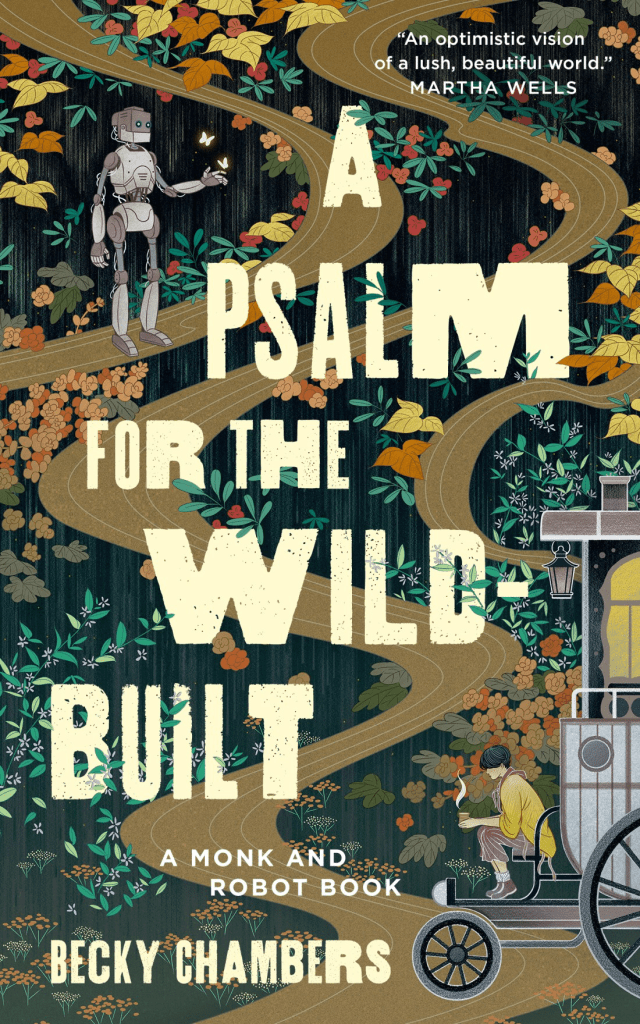
A Psalm for the Wild-Built – Becky Chambersthis seems precisely the kind of song that would soundtrack Sibling Dex and Mosscap’s quiet adventures through the woods.

“New Generation” – The London Suede

As far as the Britpop Big Four goes, The London Suede (known as just Suede in the UK) is the last frontier for me to explore; I’ve heard some of their songs sporadically and loved them (see: “Metal Mickey”), but reading The Last Party: Britpop, Blair, and the Demise of English Rock sparked some more interest in them. Add that to Neko Case’s episode of What’s in My Bag? and I was instantly hooked on “New Generation.” Along with “Lay My Love,” this song’s up there with the songs that I’ve been listening to an unhealthy amount of times. Who am I to deny my Britpop girlie urges?

I really should be a huge fan of The London Suede, given how influenced they were by David Bowie, but then again, not everybody influenced by Bowie is automatically good, of course. Brett Anderson and company seemed to worship the ground he walked on, which resulted in their melodramatic style and soaring vocals. Dog Man Star, which I’ve heard is an excellent album, was said to be inspired by a lot of Bowie’s early ’70s material, which makes perfect sense—”New Generation” feels like fanfiction set in the Hunger City of Diamond Dogs, and I fully mean that as a compliment. If Anderson’s vocals and just-so placed swoop didn’t tip you off, “New Generation” is high on the drama, but that’s part of why it works so well—it’s a strangely dystopian song that’s fit for draping yourself dramatically across the bed, full of distance and yearning. Anderson’s really doing some vocal somersaults here—he said himself that it’s one of the most difficult songs for him to sing—and amidst sepia-toned lyrics of disaffection and substance abuse, his vocals are outstretched arms beckoning for someone to swoop in and extricate him from it all.

…AND A BOOK TO GO WITH IT:

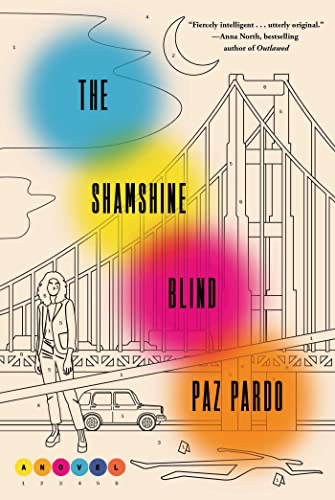
The Shamshine Blind – Paz Pardo“‘Cause like all the boys in all the cities/I take the poison, take the pity/But she and I would soon discover/We take the pills to find each other…”

“Wreck” – Neko Case

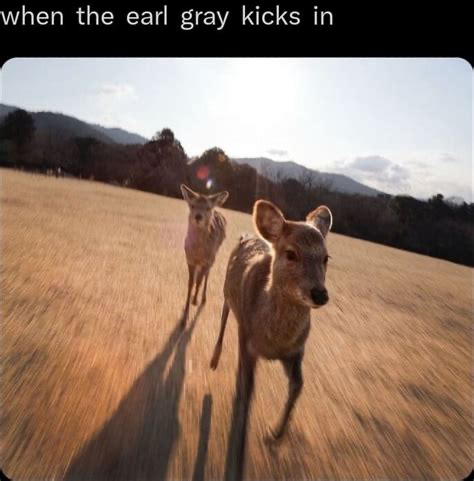
Today on incredibly specific comparisons: “Wreck” by Neko Case sounds almost exactly like this meme to me:

Maybe I do need to listen to more Neko Case after all. I’m a fan of the New Pornographers, but I really haven’t dived into any of her solo work, save for the misfire that was her cover of “Madonna of the Wasps.” You win some, you lose some. But this song, off of her new album Neon Grey Midnight Green (that’s got to be one of the better album titles I’ve heard in a while, for sure), easily falls into the win category.

For a beat, the a cappella intro lulls you into a false sense of security before dropping you headfirst into a churning, breathless whirlpool of head-over-heels romance. I can’t deny a love song that feels like you’re gleefully sprinting through a verdant field at full speed—there’s a bit of Hounds of Love Kate Bush in there somewhere in the unabashed drama that Case peddles: “I’m a meteor shattering around you/And I’m sorry/I’ve become a solar system/Since I found you/I’m an eruption/A wreck of possibilities/A volatility of stars/My clothes can’t hold together.” (Another shoutout is due to “Do I look like the sun to you?/Do I blaze freckles onto your face?”) And right after this, she breathlessly cries “And I know I can’t burn this bright forever!”—right about there, I imagine her smile splitting with reckless glee, a princess dress ballooning into endless layers of silk and tulle, a cry of nothing but sheer joy. It’s an easily addictive ode to absolutely drowning in yearning, and desperately wanting the echo to have an answer.

…AND A BOOK TO GO WITH IT:

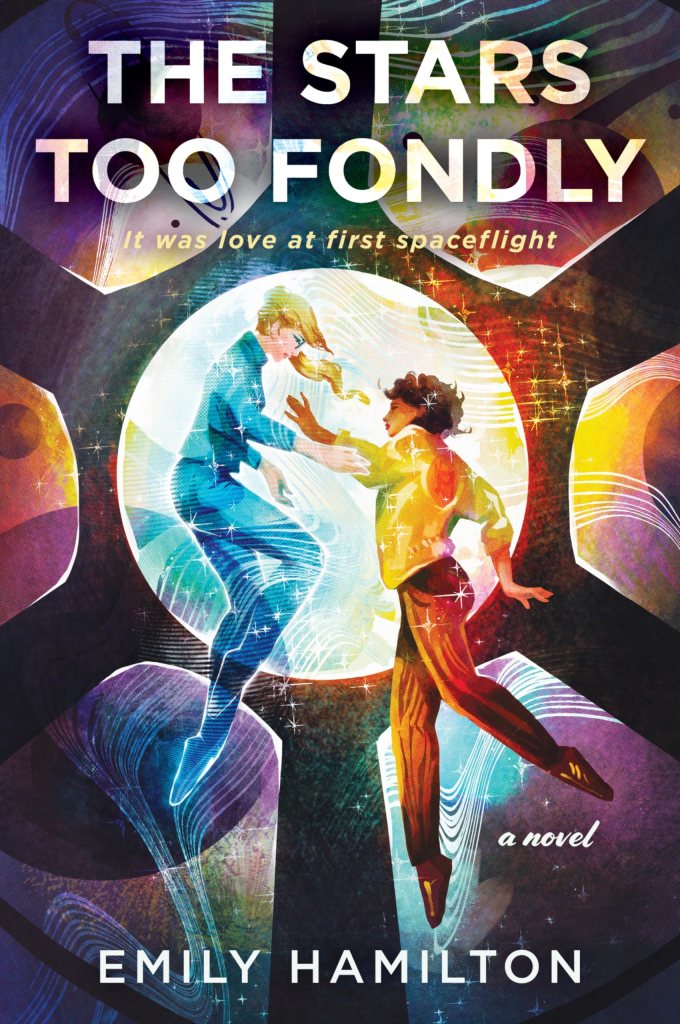
The Stars Too Fondly – Emily Hamilton“Do I look like the sun to you?/Do I blaze freckles onto your face/I bet I, bet I, bet I do/I’m a meteor shattering around you/And I’m sorry…”

“Alien Being” – The Magnetic Fields

There’s something truly beautiful about the fact that this song only has 10 likes on YouTube and a single comment that reads “being gay is awesome and you gotta try it!!!” Amen, brother.

The House of Tomorrow EP was released very early on in The Magnetic Fields’ career, and from 3/5 songs that I’ve listened to from it (this, “Either You Don’t Love Me Or I Don’t Love You” and “Love Goes Home to Paris in the Spring”), it’s clear that they’d all honed their talents very early. I suppose it helped that Stephin Merritt was in several bands before this, but it’s still very indicative of what a masterful songwriter he’s come to be. It’s also clear from the start that he’d started dissecting unhappy relationships very early on. The lyrics of “Alien Being” aren’t quite as laden with metaphor as they usually are, but they’re monotonous and repetitive—which feels like precisely the point. Almost all of them end with “nothing at all” (“You talk a lot about nothing at all/”Watch TV shows about nothing at all”), adding to the layered, grainy drone of the synths in the background. It’s a perfect encapsulation of being around someone who makes you feel like you’re talking to a wall—no feelings, no opinions, no independent thoughts, no nothing. Good thing Merritt has a lot of those things.

…AND A BOOK TO GO WITH IT:

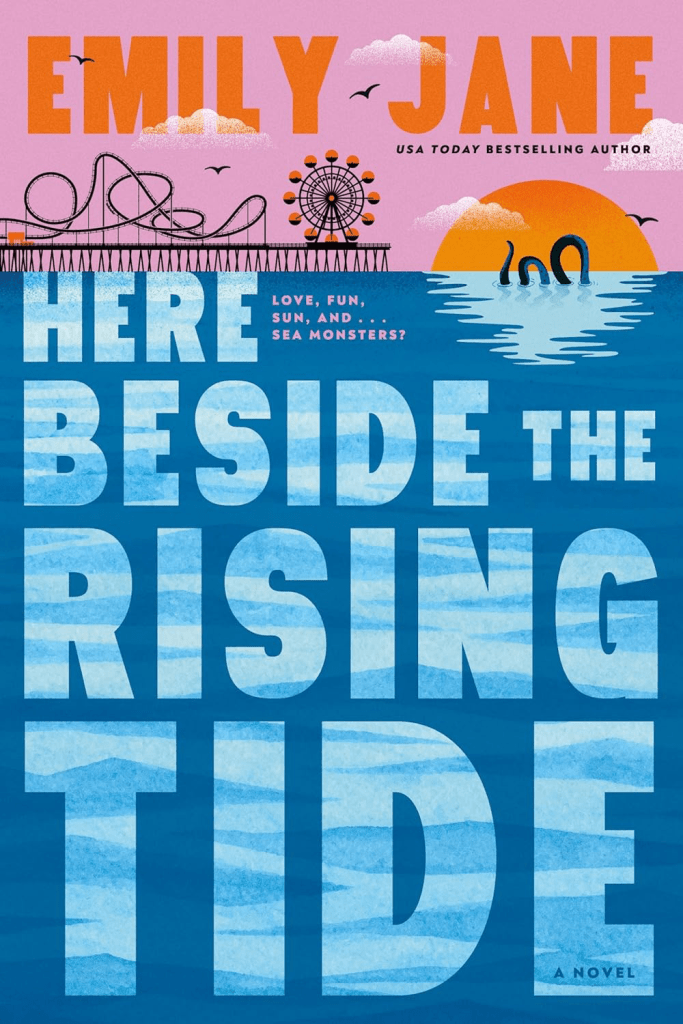
Here Beside the Rising Tide – Emily Jane“You have no feelings/I think you are an alien being/You won’t let me in/I think you are an alien being…”

“Time in a Bottle” (Jim Croce cover) – Lucy Dacus

The X-Men fan in me and the Lucy Dacus fan in me were both screaming when I found out that this was a thing…I don’t even have any sentimental feelings towards the original, but I just saw the title and got activated like a sleeper agent. Say what you want about the later Fox X-Men movies, but there’s one thing that they did best, and that was make immaculate slo-mo Quicksilver sequences with great needle drops.

I maintain that Forever is a Feeling bordered on being a disappointment, but I’m softening to some of it—especially now that we’ve gotten an expanded edition: Forever is a Feeling: The Archives. It’s mainly demos and live versions, but it had the poignant track “Losing” (should’ve been in the album, that’s my two cents) and this Jim Croce cover. Dacus’ tender, delicate fingerpicking style was practically made for this cover, as was the overall aesthetic of the album, combining acoustic guitar with gently swelling strings. I just can’t get enough of how she treats the guitar as an instrument—the way she plays on “Time in a Bottle” makes it feel like it’s not simply an instrument but a waltz partner. Her rich voice is on full display with this cover, making every note ring out with the yearning I’ve come to love her for. It’s tender in its sparing instrumentation, but her voice fills out all the empty spaces, creating a cover steeped in love and longing, just like the best parts of Forever is a Feeling.

…AND A BOOK TO GO WITH IT:

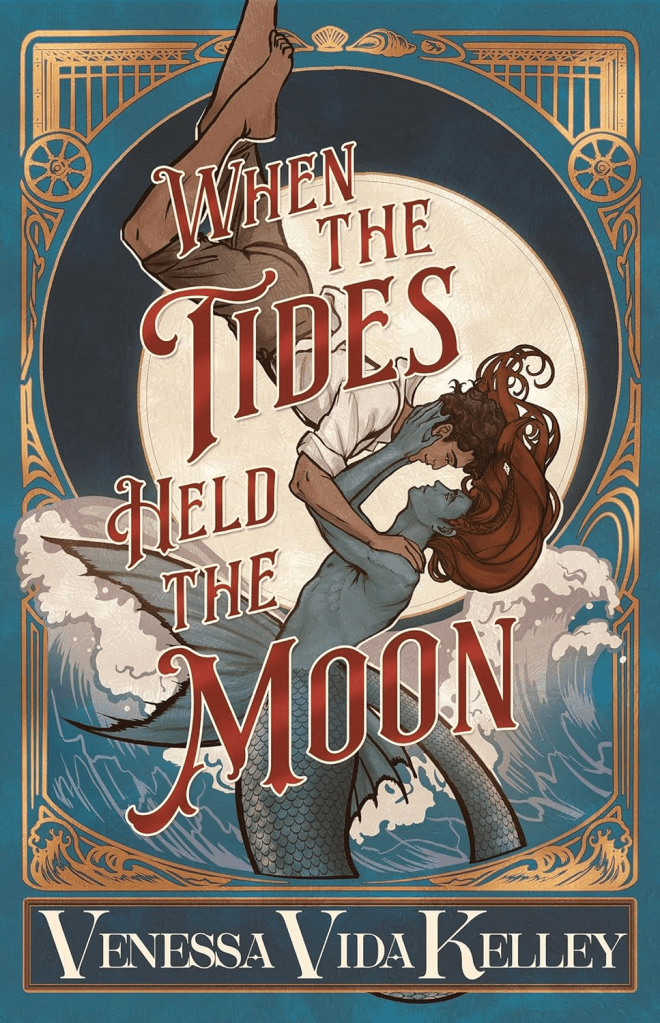
When the Tides Held the Moon – Venessa Vida Kelleythe tender feeling of this cover would fit right in with this heartfelt, moonlit romance.

Since this post consists entirely of songs, consider all of them to be today’s song.

That’s it for this week’s Sunday Songs! Have a wonderful rest of your day, and take care of yourselves!

Posted in Book Review Tuesday

Book Review Tuesday (11/8/22) – Huntress (Ash, #0.5)

Happy Tuesday, bibliophiles!

Huntress is one of those books that just sat on my TBR collecting dust for several years. I decided to read it after finishing Ash a few years back, and I finally was able to get my hands on a copy from the university library. After remembering liking Ash, my expectations were average, and I was rewarded with a solid, strong fairytale full of darkness in unexpected places.

Huntress is technically a prequel, but it doesn’t necessarily require reading Ash beforehand, as its set in the same world, but hundreds of years earlier (you should read it anyway, though!). If you’d like to read my review of Ash, click here!

Enjoy this week’s review!

Huntress (Ash, #0.5) – Malinda Lo

Kaede and Taisin have been chosen for an insurmountable task: restoring order to the human world. For years, the sun hasn’t shone, the crops have dried up, and strange creatures have begun to breach the boundaries of human and otherworldly. The only way for them to seek answers is through the mysterious Fairy Queen, but the journey there may be more dangerous than what lies at the end. But as members of their party begin to die off, Kaede and Taisin must grapple with their futures—the future of the human world, and of the feelings they’re having for each other.

TW/CW: blood, fantasy violence, death, descriptions of injuries/corpses

“I don’t want to marry the man you arranged for me to marry because I don’t know him and I want to have control over my life”: good, good

“I don’t want to marry the man you arranged for me to marry because I don’t know him, I want to have control over my life, and also I’m a lesbian”: EVEN BETTER

It’s been a few years since I’ve read Ash, but reading Huntress doesn’t necessarily require a whole lot of knowledge of Ash‘s world to understand it. What remains, however, is that you have to remember that it was some of the first of its kind. Nowadays, YA is dominated by fairytale-inspired and fairytale retellings, some of which are queer, but stories like Ash and this companion were some of the first ones to do so—and some of the first to be openly queer. If you remember that (and if you can get past the painfully dated cover), you’re in for a fun ride—a dark and atmospheric piece of high fantasy filled with all sorts of danger and strange creatures.

Lo’s world is pretty distinctly High Fantasy™️, which I’ve been jaded with as of late, but her unique spin on it was enough to create a captivating world. Although the magic system was a little hazy, Lo’s descriptions of the barren landscape and treacherous forests created a world that felt real enough to step into. Even more captivating were the creatures that inhabited this world—everything from unicorns to horrifying changelings; the mythology around them and the stakes they created propelled the story even more. Plus, it’s always refreshing to have non-European inspiration for a high fantasy novel; in the author’s note, Lo explains that most of the book was inspired by both Chinese and Japanese mythology.

What I remember about Ash was how much I loved the main couple, but with Huntress, that was a little bit less of the case. In fact, I found Kaede and Taisin to be almost interchangeable (accentuated by the sporadic POV changes), but still compelling enough to root for. Most of the other characters were rather underdeveloped and forgettable, but Lo has a grim solution for the problem—killing them off. For me, it was Con who stole the show; he was the only character with a distinct personality, and it was a very lovable one at that. He’s the kind of character who probably would’ve been lumped in as the love interest in any other YA book, but having him as a platonic friend was so much more endearing.

Even though I loved Lo’s worldbuilding, I still wish that more was explored; we only got tidbits of the creatures in the Fairy Queen’s kingdom, and especially since the main villain was introduced so late in the book, I wished that we’d spent less time on the road and more time near the destination. The journey was interesting, sure, but it would’ve been more interesting to explore the more alien, unfamiliar corners of the world Lo created.

All in all, a solid piece of fantasy that made good use of its dark, barren atmosphere, but could’ve pushed it even further. 3.5 stars!

Huntress is a prequel to Ash, and they are the only books set in that universe. Malinda Lo is also the author of Last Night at the Telegraph Club, the Adaptation duology (consisting of Adaptation and Inheritance), and several other books for teens and adults.

Today’s song:

found this and “Metal Mickey” in a video somebody made of a medley of Britpop riffs, and…maybe I should check them out now?

That’s it for this week’s Book Review Tuesday! Have a wonderful rest of your day, and take care of yourselves!