Happy Sunday, bibliophiles! I hope this week has treated you well.
This week: A Beatles cover that David Bowie faltered on, but somebody else succeeded in. Plus, weird movies with weird scores, and mediocre movies with great needle drops.
Enjoy this week’s songs!

SUNDAY SONGS: 8/4/26
“All We Ever Look For” – Kate Bush
Kate Bush has her share of iconic album covers, but I swear Never for Ever has to take the cake for my favorite one. Can we acknowledge just how fantastic Nick Price’s album art is? Aside from capturing Kate Bush’s spirit and musical style, it’s just so kooky—how could you not love the parade of spooky storybook creatures coming out of Kate Bush’s skirt? It’s uniquely suited to most of the tracks I’ve heard from the album, but “All We Ever Look For” is an especially good fit. All of the flutes, koto, and quaint synth bubblings feel like they should be the backdrop for an elaborate story with stylized, woodcut characters rotating on a wheel, like a Rousseau painting that never came to be. The wheel is key here, not just because “All We Ever Look For” is neatly cyclical musically: the lyrics are as well: Bush explained in 1980 that “It’s about family relationships generally. Our parents got beaten physically. We get beaten psychologically. The last line – ‘All we ever look for – but we never did score.’” Aided by the almost medieval stylings of the instrumentals, the track plods along like a dirge, but what it’s mourning is the continuing cycles of generational trauma: “The whims that we’re weeping for/Our parents would be beaten for/Leave the breast/And then the rest/And then regret you ever left.” In a way, it remains a dirge—a kind of funeral for all of the generations who fell victim to these cycles.
…AND A BOOK TO GO WITH IT:

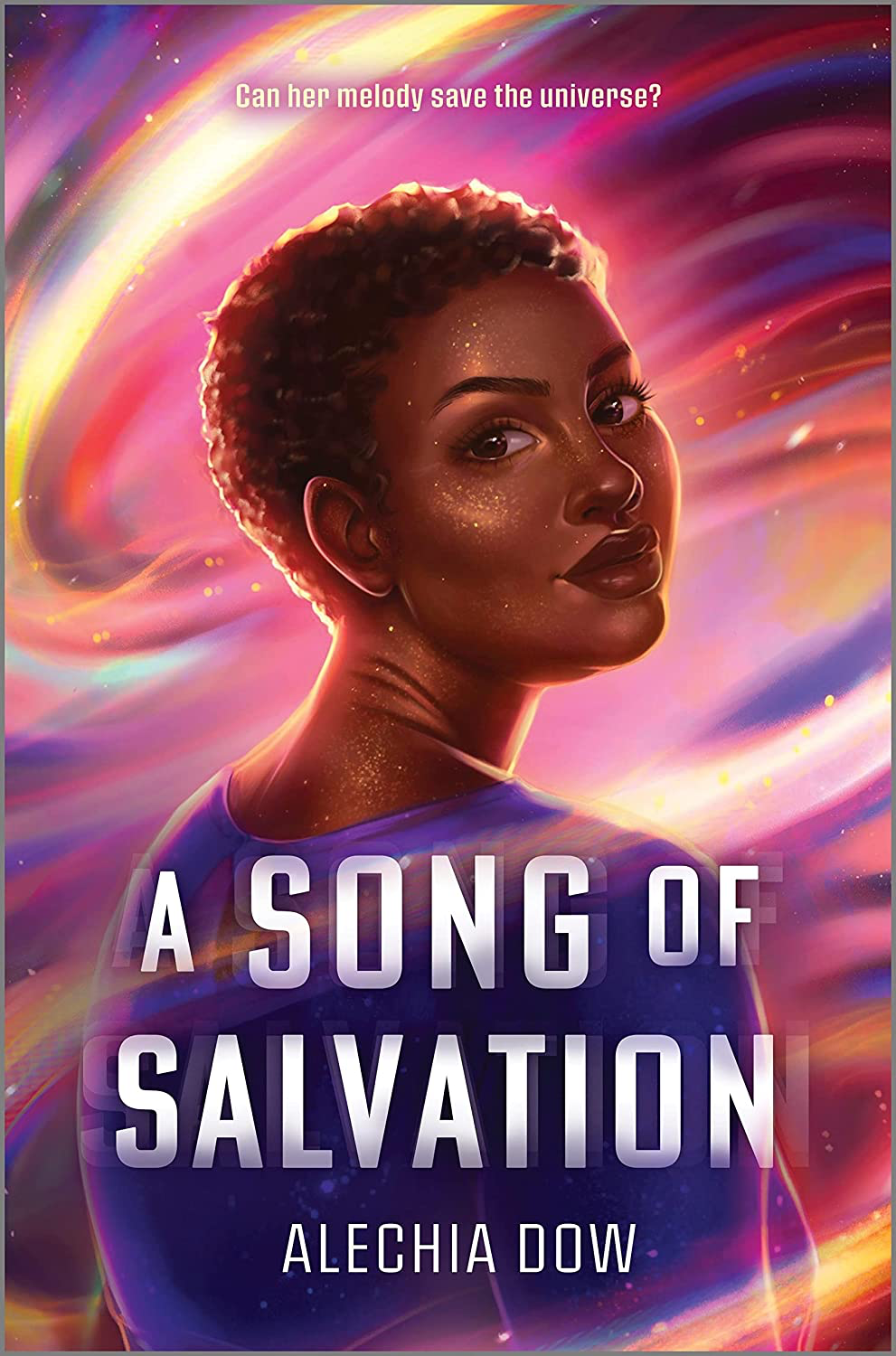
Wearing the Lion – John Wiswell – “All we ever look for, a god/All we ever look for, ooh, a drug/All we ever look for, a great big hug/All we ever look for, just a little bit of you…”
“Everytime I’m With You” (feat. Jason Lytle) – Sparklehorse & Danger Mouse
Dark Night of the Soul was Sparklehorse’s final project before his too-soon passing, and it was an ambitious one: a collaboration with producer Danger Mouse, with a guest list consisting of the usual suspects (Nina Persson, Jason Lytle, Vic Chestnutt) and the more unexpected (Gruff Rhys, David Lynch). I haven’t listened to the whole album, but Mark Linkous and Danger Mouse’s powers combined make something so cohesive, that you’d think only a singular mind was behind it. “Everytime I’m With You” creeps along with a proto-C418 instrumental (tell me that this doesn’t sound a little like “Chirp”), where Mark Linkous and Jason Lytle’s vocals meld in a slurring warble, musing about how “everytime that I’m with you/I am drunk, and so are you.” It’s a woozy track that almost feels drunk itself, like the subjects have infected the very structure of the song itself with their own intoxication. It bridges the gap between something brighter than Sparklehorse’s usual palette, and something gentler than Danger Mouse’s usual fare.
…AND A BOOK TO GO WITH IT:
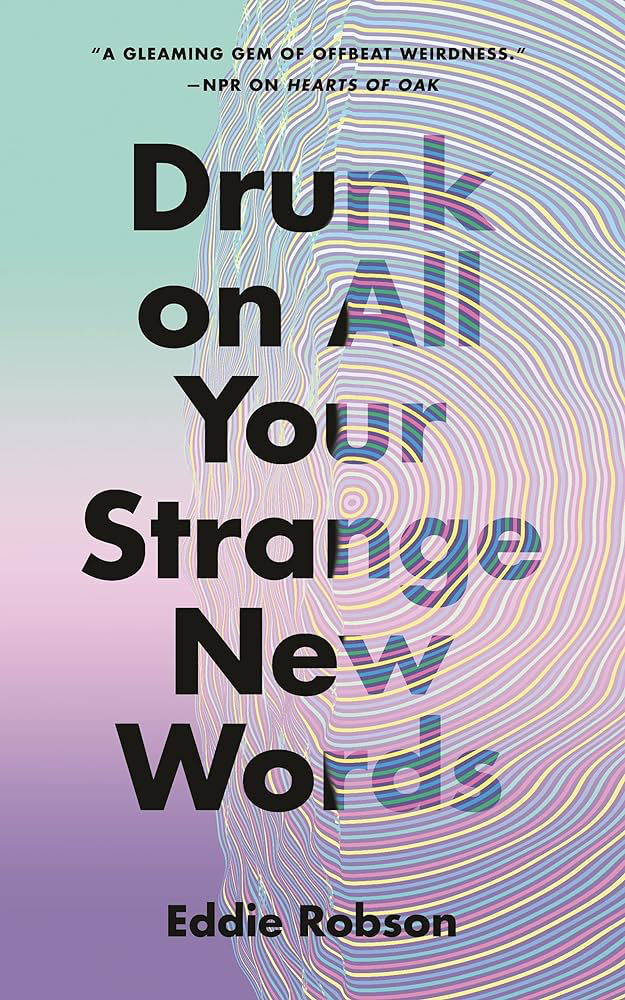
Drunk on All Your Strange New Words – Eddie Robson – “Yeah, everytime you come by/We get so trashed and stay up all night/Well, it’s so wrong, but it’s so right/Yeah, it’s alright…”
I’ve already aired out my many problems with Supergirl, but if it has one redeeming factor, it’s that it had a fantastic soundtrack. Then again, most of Rilo Kiley’s discography is made of songs that feel reverse-engineered for coming-of-age movies—and I’ve never gotten tired of it. It really doesn’t feel like a one trick pony situation, because they’ve clearly got the capability for breathless, adventurous indie pop (“Portions for Foxes”) and some truly devastating yet affirming wallops to the face (“A Better Son/Daughter”). It’s no wonder that “Silver Lining” was the pick for Supergirl; although the movie never followed through on this arc, it’s a stomping, indie-pop ode to dusting yourself off and regaining your self worth. Like Jenny Lewis leaving her fictional groom at the altar in the music video, this track celebrates, in all of its complicated, mushy feelings of guilt and freedom, of refusing to be treated as ornamental: “I never felt so wicked/As when I willed our love to die/And I was your silver lining/As the story goes/I was your silver lining/But now, I’m gold.”
…AND A BOOK TO GO WITH IT:
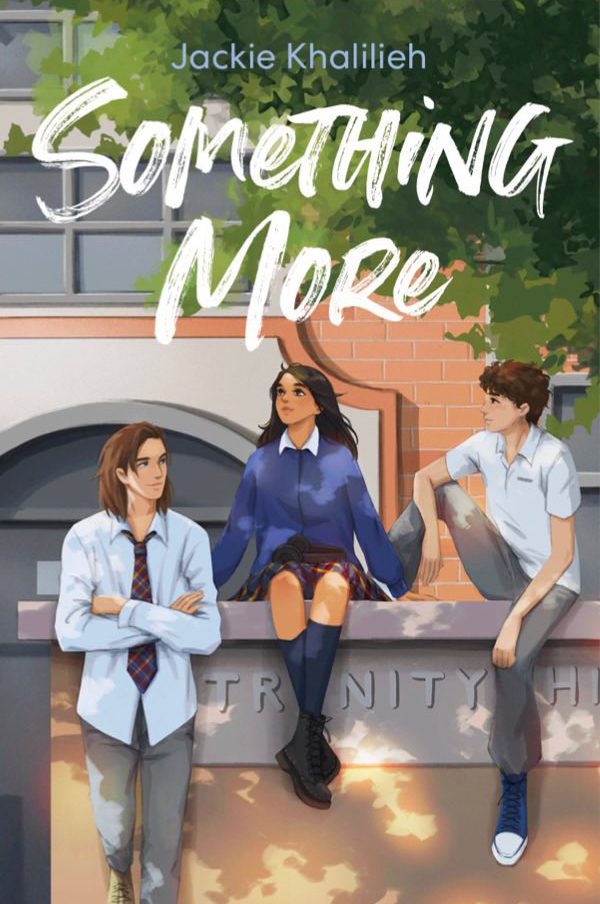
Something More – Jackie Khalilieh – “And I was your silver lining/As the story goes/I was your silver lining/But now, I’m gold.”
“Korben Dallas” (from The Fifth Element) – Éric Serra
The Fifth Element was back in theaters recently, so I had to do rewatch #3 on the big screen. Every time I watch it, I forget the sheer amount of bizarre things that had to align for this movie to have happened. It’d be easy to see this and lament the sameness that’s overcome pop culture, but I maintain that weirdness will always find a way to slip through the cracks. This, however, is on a level of originality—and absurdity—that just can’t be replicated. The supreme being of the universe teaches Bruce Willis about consent, and he still doesn’t quite get it. Gary Oldman with a horrendously funny haircut and a soul patch. Tricky gets two minutes of screen time and then gets blown up. Incompetent space priests. Top-tier creature design for 10 minutes. A climax synced up with a blue alien singing opera. It’s so unafraid of being weird, and for that, The Fifth Element will forever be aspirational for me as a creator. I just get jumpstarted with inspiration with every rewatch, once I get over the bafflement that Leeloo’s godawful Band-aid outfit got past that many layers of studio scrutiny. (War crime, I tell you.)
Most of the soundtrack for The Fifth Element gets overshadowed by said opera piece, and rightfully so, to an extent. But the pockets of brilliance like this in the score deserve so much more love. The “anything goes” attitude of The Fifth Element translated to Eric Serra’s score; you go into this film weaned on a few pieces that are very much indebted to John Williams’s Star Wars scores, only to be knocked senseless by this slick, grungy trip-hop track with some of the funkiest basslines ever committed to a sci-fi film. It has everything. Percussion that sounds like one of 23rd-century New York’s elevators malfunctioning, weird little electronic warbles, and a loop of a cat’s meow to coincide with the first glimpses of Korben Dallas’s cat. And did I mention the bass? Oh my god. It sets the scene with the immediacy of somebody kicking your door down in combat boots. All that, and it instantly gives you a sense of Dallas as a character (all sorts of disparate elements held together by…Bruce Willis, of course) and the aesthetic language—both visual and oral—of Luc Besson’s world. All that for a song that’s not even two minutes long. SUPER GREEN!
…AND A BOOK TO GO WITH IT:
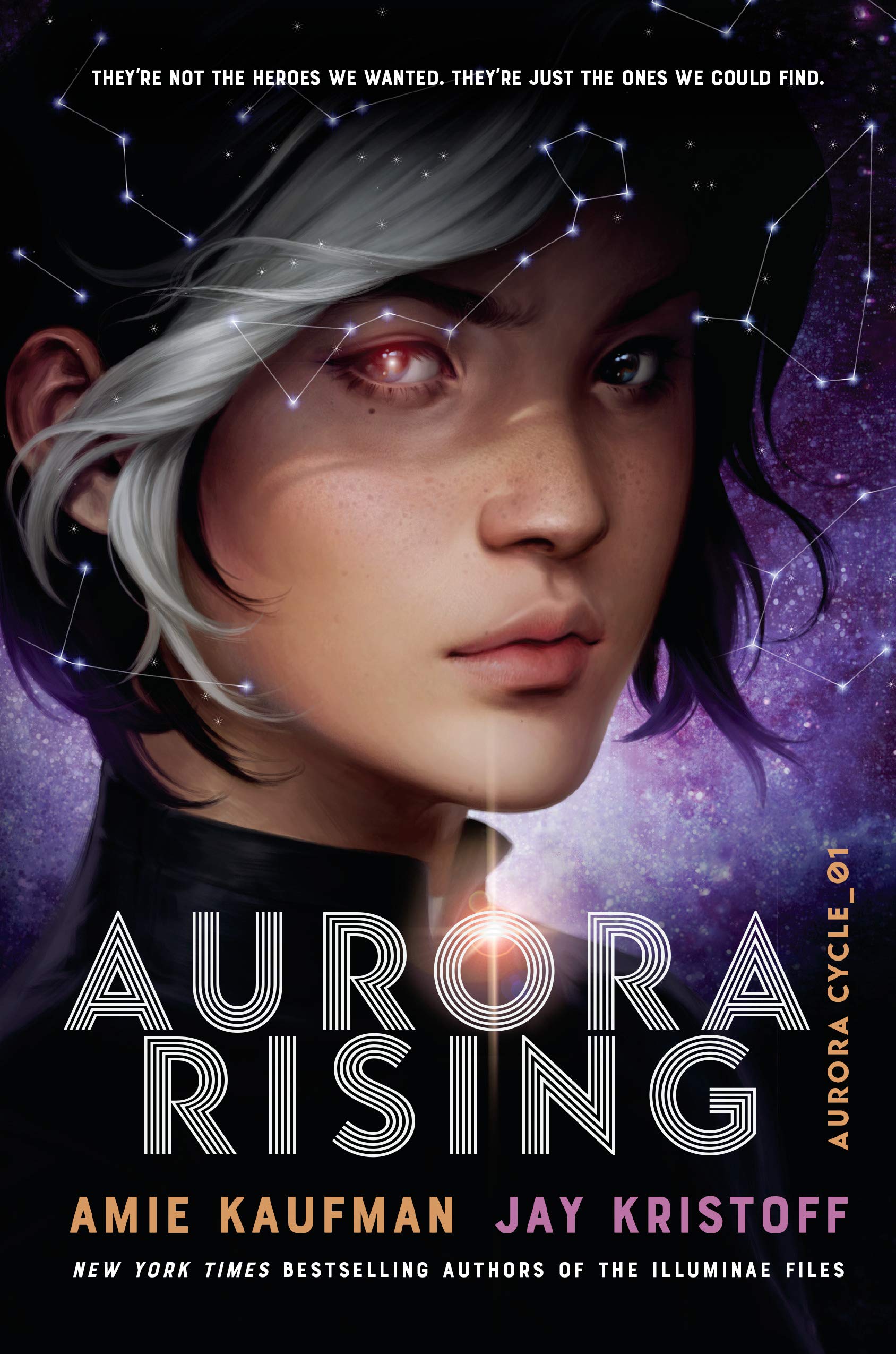
Aurora Rising (The Aurora Cycle, #1) – Amie Kaufman & Jay Kristoff – look, I know I used this last week, but Amie Kaufman has cited The Fifth Element as one of her favorite movies of all time, and has said that it was a major inspiration for this series. See? All the cool people like The Fifth Element.
“Across the Universe” (The Beatles cover) – Fiona Apple
I’ll never stop being a die-hard Bowie fan, but I’m mature enough to acknowledge when he misses. David Bowie covering one of The Beatles’s most moving and iconic songs—what could possibly go wrong? A lot of things, unfortunately. The vibes are just off. His cover of “Across the Universe” appeared on Young Americans, and even though John Lennon contributed guitars to this cover, I think it’s just an awkward pairing, with Bowie stretching his voice out too much and the worst of the plastic soul of Young Americans grating against the transcendental beauty of the original. Oof.
Fiona Apple, on the other hand, knocked it out of the park. Nothing can top The Beatles’s original version, but I think she captured what a lot of covers have failed to do. I’ve always taken the song to be about transience, but the persistence of love regardless; all of the overpowering sensations are threatening to overtake Lennon (“Pools of sorrow/Waves of joy/Are drifting through my open mind/Possessing and caressing me”), and yet he remains firm that “nothing’s gonna change my world”—he can still anchor himself to what matters, which seems to be that sense of “limitless, undying love.” (Of course, he wrote it after an argument with his ex-wife, which doesn’t paint the sunniest outlook on the song, but I think the meaning breaks through like sunlight regardless. It’s just an arresting song.) But I think what Apple understood about this song is how weightless it fundamentally is. Against Lennon’s poetry, where all manner of objects drift free of gravity or any earthly constraint, Apple’s voice—and the gentle yet cinematic instrumentation—make it feel as free-floating as the original. Like Lennon, her voice is quietly reverent of witnessing these wonders every single day, her pronunciations making the word “sorrow” into something that I mistook for “sound”—that’s how soft she makes things. Like the Paul Thomas Anderson-directed music video, which finds Apple oblivious to a diner getting robbed and ransacked, it has that core of tearfully transcendent emotion while still feeling wholly untethered from this earthly plane.
…AND A BOOK TO GO WITH IT:
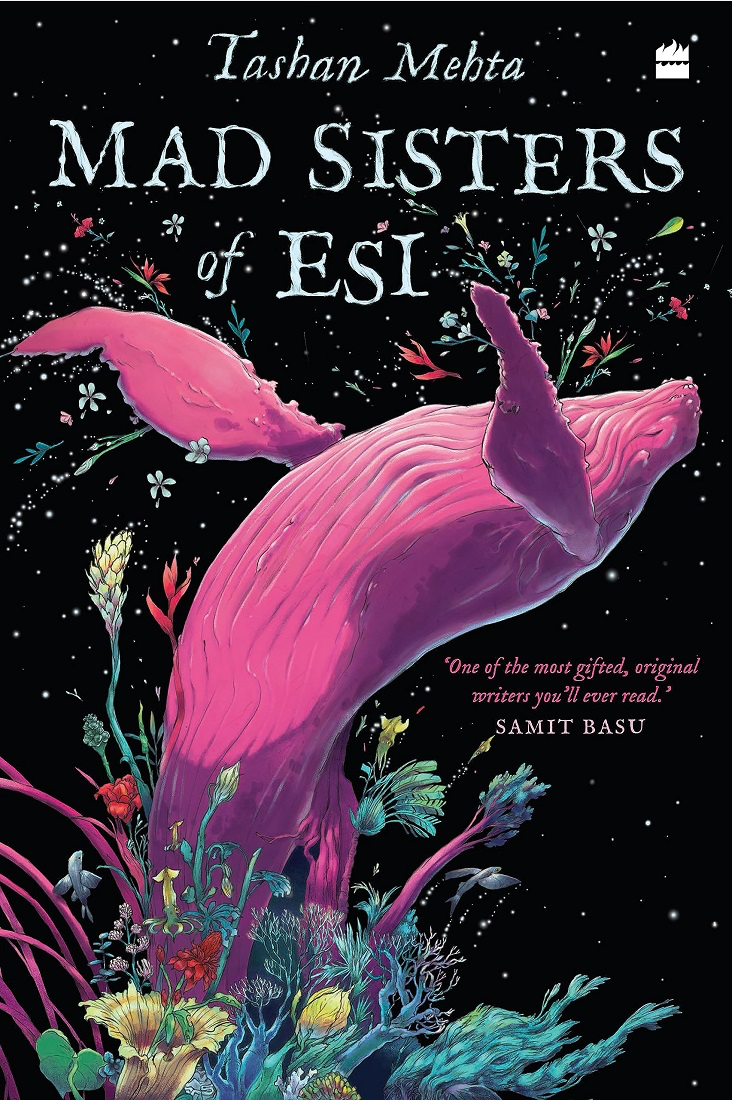
Mad Sisters of Esi – Tashan Mehta – “Images of broken light which dance before me like a million eyes/They call me on and on across the universe…”
Since this post consists entirely of songs, consider all of them to be today’s song.
That’s it for this week’s Sunday Songs! Have a wonderful rest of your day, and take care of yourselves!