Summer is waning, and thankfully, I can close this chapter knowing that I’ve filled it with an awful lot of books and iced coffee. I’m itching for fall now, I am SICK of this 80-90 degree weather!
Let’s begin, shall we?
GENERAL THOUGHTS:
This is the first summer that I haven’t had to wake up, toss everything aside, and go back to school. It’s weird. I still have friends in college, and it’s so strange to see everybody going back to class knowing that I don’t have to. In a way, I miss it: classes with friends, hanging out in the library, walking across campus in the fall when the leaves turn yellow. But man, I’m glad that my days of honors theses and extensive study sessions are behind me. (For now. We’ll see about grad school.)
Either way, I’ve managed to stick to my goals I set at the beginning of summer: writing a short story per month, taking walks three times a week. (I did cave and buy some yarn, but they were only $4, can you really blame me? And they were fun ombre colors!) Said creativity has definitely been an anchor as I’ve mired myself in the job hunt trenches, which have been…y’know, as frustrating as most everybody says that they are, but, uh. We stay silly, I dunno. I’ll find a way. I gave up on the political temperature checks long ago; safe to say, it’s hard to ignore how increasingly messed-up things are on more fronts than you’d ever think possible. But when I’m having to be in the Real World and looking for Real Jobs, all this creativity that I promised to myself at the beginning of the summer has become so much more meaningful. It’s always given me purpose, but giving myself time to enjoy it has been vital in enjoying my life, whether it’s making or consuming things.
And boy, there have been some fantastic things to enjoy lately—The Odyssey (I have insufferable English major thoughts, but a solid adaptation overall), Spiderman: Brand New Way (healed me, 10/10), a much needed rewatch of Ghosts (DIP IT AGAIN 👹), and Widow’s Bay (watching episode 10 tonight, NO SPOILERS, Y’ALL). So at least, wherever September and October takes me, I’ve made a commitment to keeping that creativity and love alive. I’ve taken another trip around the sun now, and I vow to make the weirdest of it! Nothing will break me down, not fully! Not as long as I’ve got the essential British double-hitter of new seasons of The Great British Bake-Off and Taskmaster to look forward to. Everybody say thank you to the Brits 🙌
JULY READING WRAP-UP:
I read 14 books in July! Oddly, I read a lot of novellas in July, for whatever reason. There were more stinkers than usual this month, but they were outweighed by several showstopping highlights. I also read some new-to-me and familiar authors for Disability Pride Month!
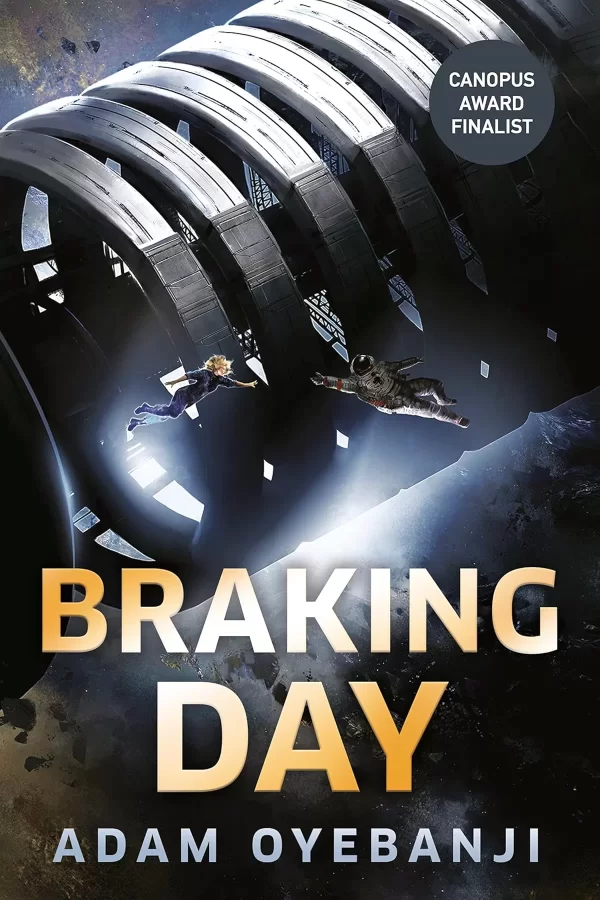
I read 13 books in August! Unfortunately, I had another DNF (Braking Day…finally, somebody was brave enough to ask the question “what if Aurora Rising sucked?”), but I had lots of excellent reads from all across the genre spectrum.
Happy Sunday, bibliophiles! I hope this week has treated you well.
This week: Yes, I did, in fact, preorder a song for Sunday Songs because I knew that I’d have Things to say about Lost Weekend, even though it’s only been two days since it came out. No, I’m not trying to kill you by putting Sparklehorse, Mitski, and Phoebe Bridgers in the same post (I swear the Mitski is actually upbeat. No, really!).
“Little Fat Baby” is one of the more somber songs in an already somber album, It’s a Wonderful Life. Yet it’s also one of the more empathetic songs. In the chorus, he ruminates on the song’s nebulous protagonist: “He got dragged/By a donkey/Through the glass/And the myrtle/But he was once/A little fat baby.” We never know what circumstances lead to this man meeting such an agonizing fate, but Linkous peers beyond the pain to see the inherent humanity in this character. The circumstances aren’t the point—the point is that all of us started off as helpless little creatures deserving of love. “Little Fat Baby” is a tender duet between Linkous and Sol Seppy, who provides fairylike accompaniment to Linkous’s already fragile voice. Quivering strings give this track a kind of grand reverence, amidst the quiet sympathy it weaves for the man who was once a little fat baby. There’s a strange comfort in “Little Fat Baby” amid the sadness—the feeling that you can always come home, no matter what you did before you stumbled onto the doorstep.
…AND A BOOK TO GO WITH IT:
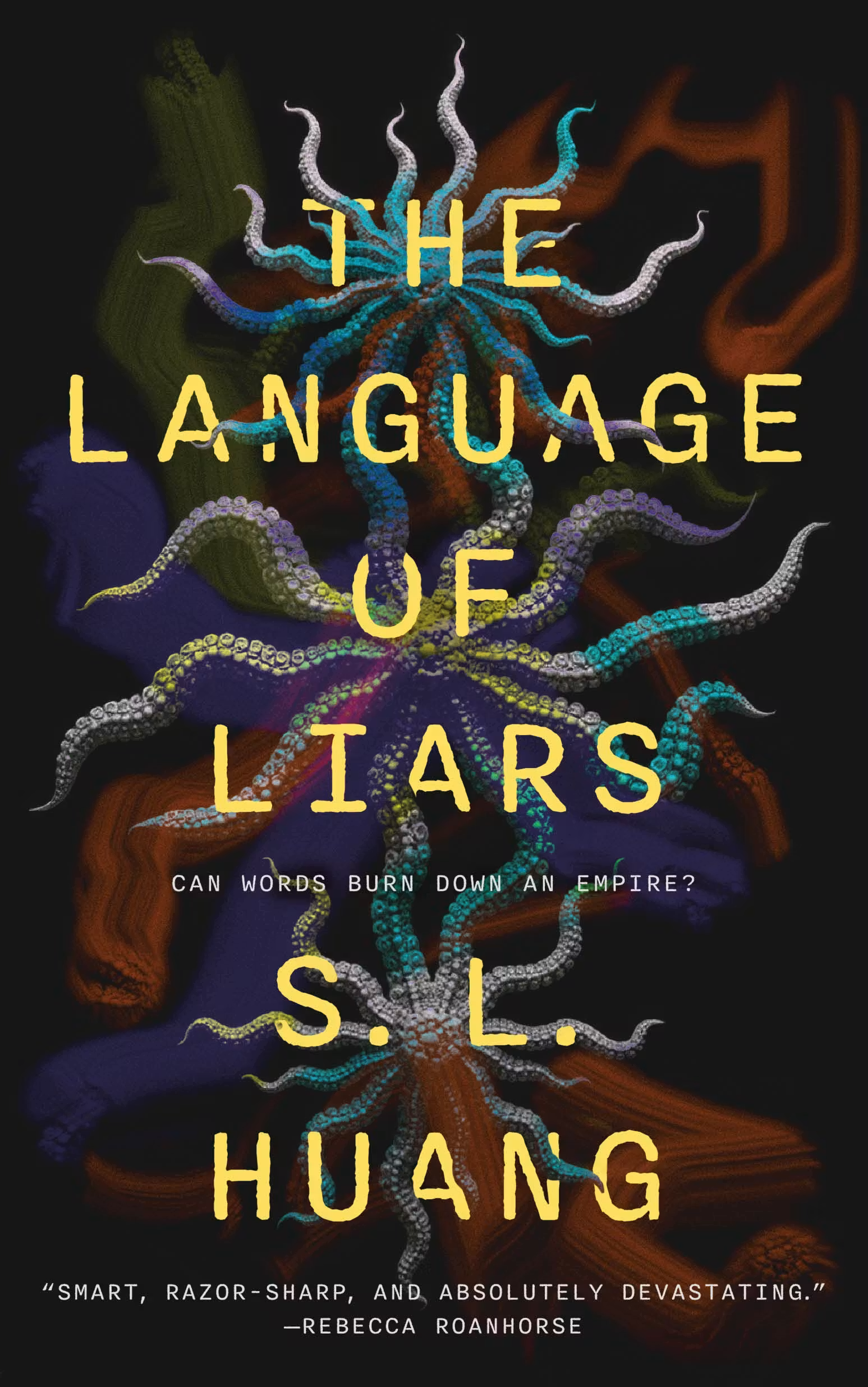
The Language of Liars – S.L. Huang – “Did you make the city slickers laugh?/He got dragged by a donkey/Through the glass and the myrtle/But he was once a little fat baby…”
Everything that Mitski touches turns to gold. Well, maybe not Laurel Hell, but they can’t all be winners. The recent tenth anniversary of Puberty 2 prompted her to release an edition with two new covers with whiplash-inducing source material: Frank Sinatra (which I talked about around a month ago) and One Direction. Of course, Mitski didn’t have to try in order to make “Fireproof” loads more fun than the original, which is pretty much the dictionary definition of milquetoast. (How do you make a song called “Fireproof” and then make it into the most sauceless, pallid excuse for a song possible? Jesus.) Mitski, on the other hand, made the vague promises of the lyrics into something tangible and fiery—her breathless admission of “I’m feeling something deep inside/Hotter than a jet stream burning up” makes it feel real. Aided by the crunchy guitars of her Bury Me at Makeout Creek era, this cover feels like she means every word, even if they aren’t hers.
…AND A BOOK TO GO WITH IT:
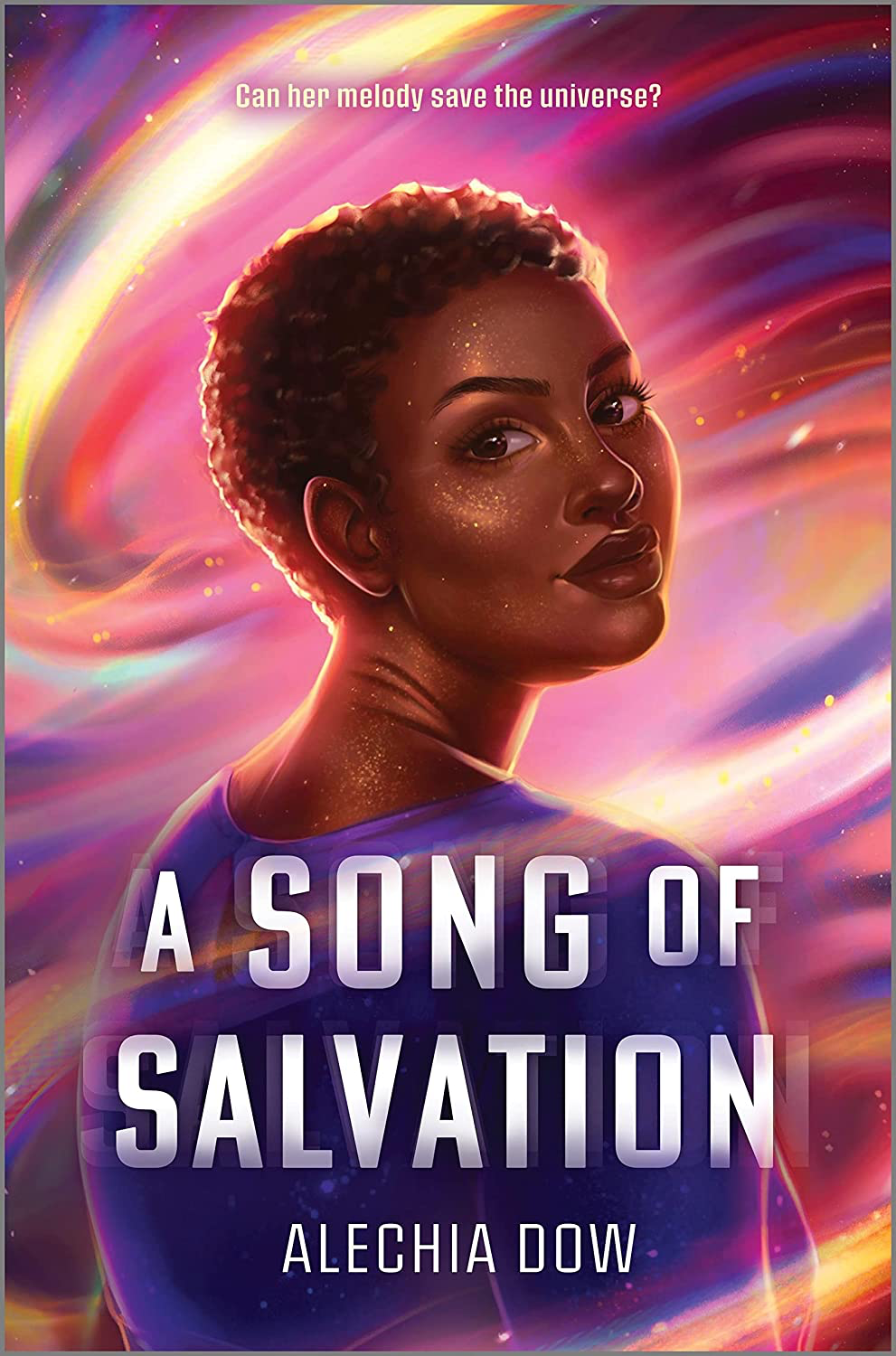
A Song of Salvation – Alechia Dow – “I’m feeling something deep inside/Hotter than a jet stream burning up/I got a feeling deep inside/It’s taking, it’s taking all I’ve got…”
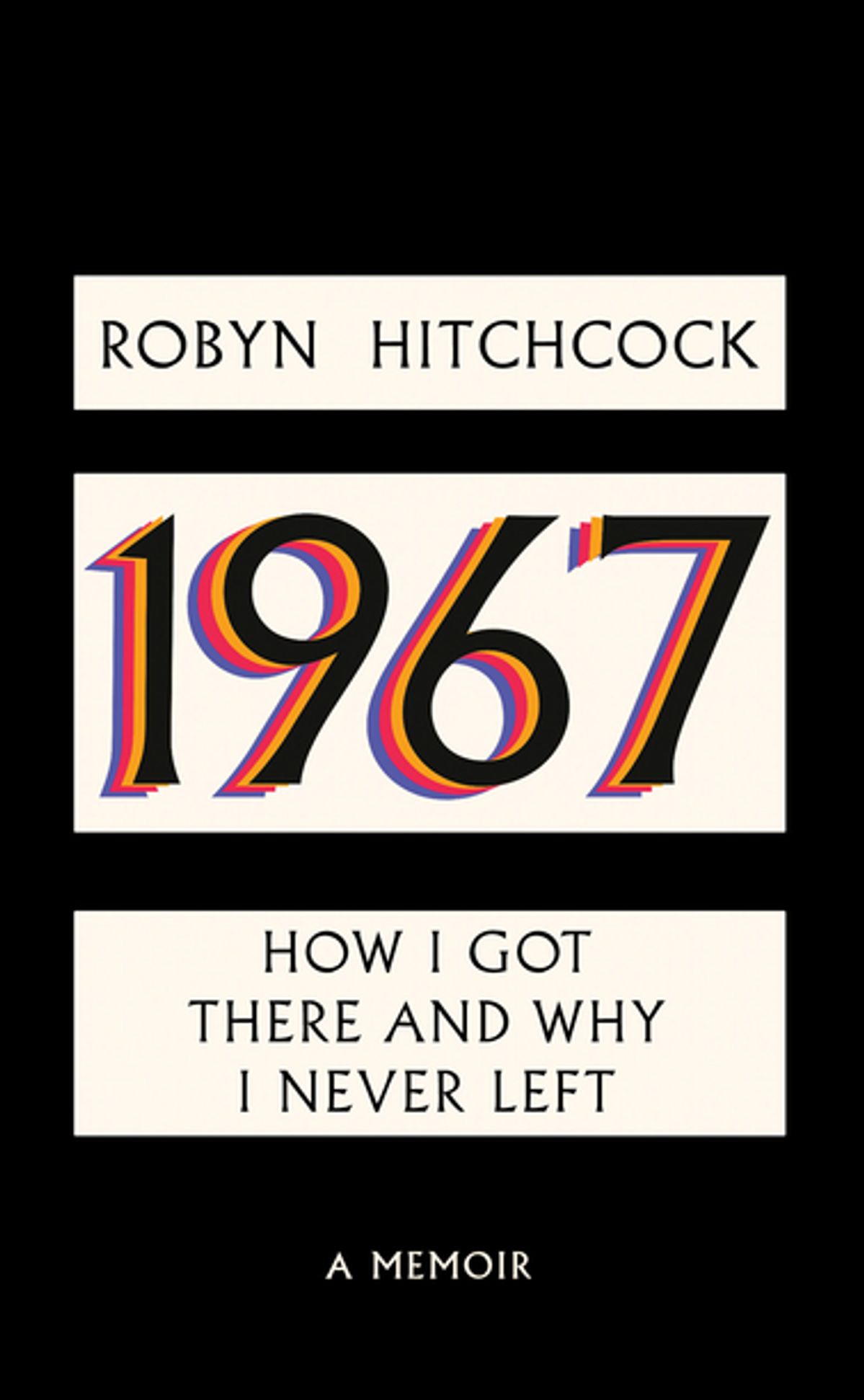
Having only seen him live twice, I can say in confidence that there’s a point in every Robyn Hitchcock show where it goes from a concert to a stand-up routine. The last time I saw him, he veered into a whole bit about how rock n’ roll was invented in the 1700’s aboard ships. There was a joke about “Horse Latitudes” somewhere in there. He quoted “Time and again, I tell myself/I’ll stay clean tonight” from Bowie’s “Ashes to Ashes” before segueing into “The Cheese Alarm.” The guy’s just naturally hilarious. This is the same man who casually used the interjection “yaysville!” multiple times in his memoir, after all. It felt nothing but natural.
What sticks to me about Robyn Hitchcock’s sense of humor to me is that yes, he’s got jokes, but he never half-asses them. He still puts his all into a song with lyrics like “I love that old museum of sex/You never know what’s happening next.” With the grooving, horn-laden accompaniment of the Venus 3, he launches into a track that winds along slinkily like a snake. He added in a lyric about said Museum of Sex closing at 4pm, to the laughter of the crowd, and all the while he’s chipping away at an artfully complex riff. He’s committed to the bit to a degree that most artists aren’t.
…AND A BOOK TO GO WITH IT:
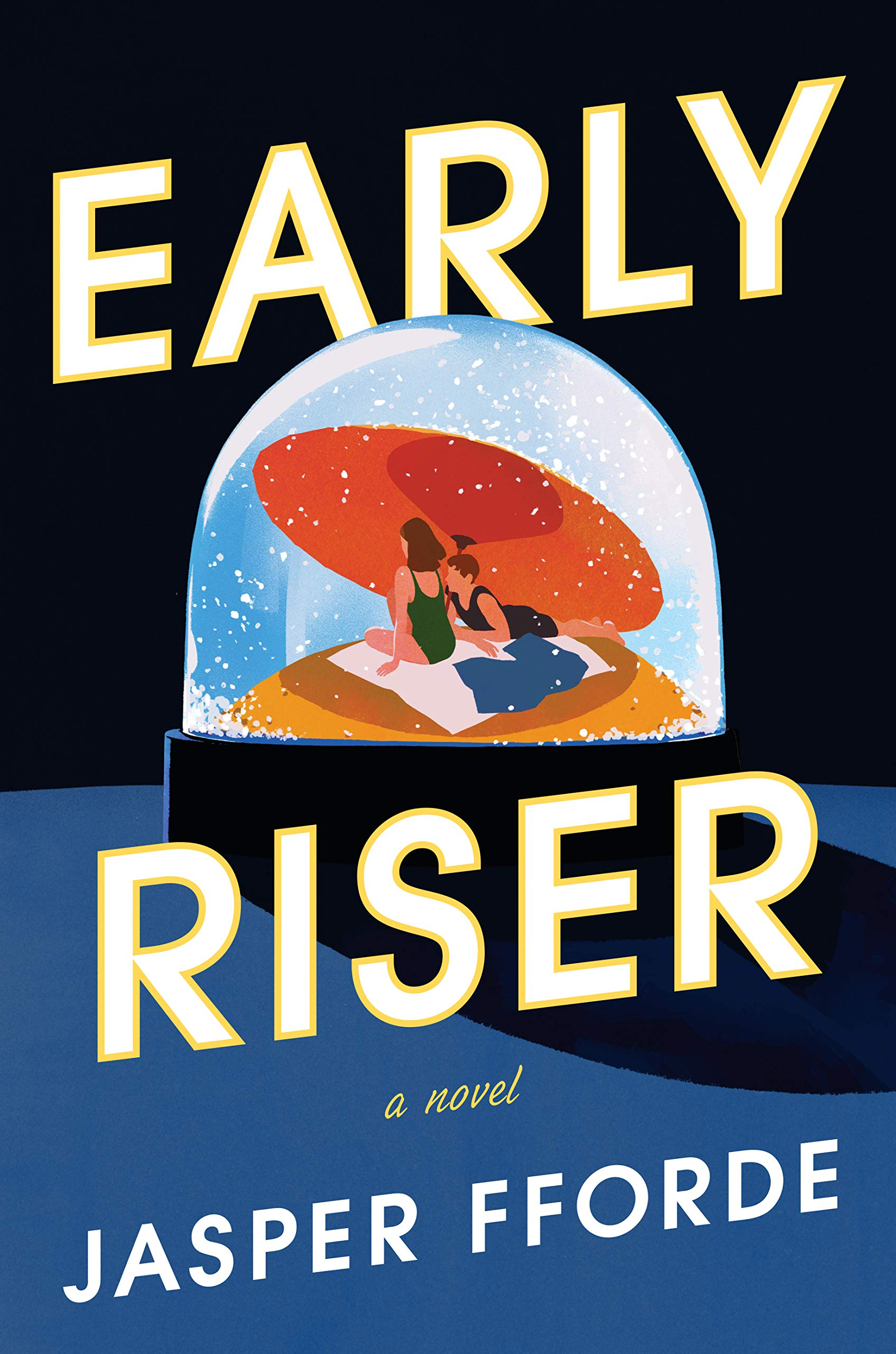
Early Riser – Jasper Fforde – there’s not a lot of books or authors I can think of that are similar to Hitchcock’s sense of humor, but Fforde’s quirky, dry wit and out of left field premises certainly comes close.
“The A Song” is monumental. There’s no doubt about it. When I saw Spiritualized back in 2022, about a month before Everything was Beautiful was released, I remember being caught up in the towering tidal wave of noise. I could sense that “The A Song” was new, and all I could make out from the dizzying bee’s nest of sound was the line “One man’s crime is another man’s thrill”; the rest was just a shockwave.
It’s no wonder that I listened to Everything Was Beautiful to death when it came out. I had to take an extended break from it because it consumed me so much in mid-2022. To this day, I still think it’s one of Spiritualized’s best albums to date, nearly on par with Ladies and Gentlemen We Are Floating in Space, no less drugged-out but with the optimism that comes with age—and the revelation that you’re still alive, and there’s a myriad of things that you can do with your body and your life. Sure, “The A Song (Laid In Your Arms)” is probably as much about being high and watching your life slip away as any given Spiritualized song, but it’s a truly spectacular show of the amount of command that J Spaceman has of sound. Watching him at work is like watching a conductor with a 60-piece orchestra; squealing horns, screeching guitars, and percussion like pounding waves all convalesce into a marvelous, tidal force that knocks me off my feet, even when I’m sitting down. It’s so meticulously controlled and constructed, and yet there’s something so primal about how this song just swallows you whole. “The A Song” is a cosmic force—like the album title, it’s the kind of immaculate construction that, in spite of its lyrics, taps into the wonder of watching life itself unfold in front of your eyes, just like J Spaceman’s arresting compositions unfold in front of you. I think that’s the point of Everything Was Beautiful, in the end; it’s a celebration of the overwhelming shock of being alive.
Predictably, I’ve become insufferable about Lost Weekend. Phoebe Bridgers could’ve easily gotten away with releasing Punisher 2: Electric Boogaloo after six years of radio silence, but she’s easily defied it. It’s a different record, temporally and stylistically. I’m struck by how it sounds next to Punisher; the former was lonely in the way of expansiveness, intensely sparse, like the image of Bridgers staring up at the stars in the middle of nowhere on the album cover. Lost Weekend, on the other hand, is lonely in a way that only happens when you’re caught in the eye of a storm in a roiling sea of chaos. The album is all about upheaval and disorientation, both positive and negative, with the confluence of her father’s unexpected passing and her relationship with Bo Burnham. Add to that the unforgiving eagle-eye of the music industry and the tabloid press, it’s got enough hairpin turns to make somebody want to abruptly get off the ride and throw up.
Chaos is something that Bridgers takes full advantage of on Lost Weekend, with some of the stylistic detours feeling disorienting if not played in the right order. But in order, the cohesion is difficult to miss; it feels strung together in a more adventurous way, especially with the bevy of instrumentation and noise that’s been added to the soundscape. “Kill Me,” one of my standout tracks from the album, feels like the lodestone of the chaos and disorientation: the repetition of Bridgers’s breathy admission of “This is gonna kill me/Wait!” as the instrumentation blinks into momentary silence feels like stumbling off of a dizzying rollercoaster, not knowing which direction is up or down. (Fittingly, I had a similar feeling coming out of the accompanying laser show at the Denver Museum of Nature and Science. In a good way, for sure. Fitting.) Much of the song deals with time out of time, years bending and blending together: “My boys are getting married/Turning 21/I’m not, but I was once certain, always.” That sense of uncertainty feeds into the verse about a shared kiss at a costume party where “the veil is thinning.” (Admittedly, I thought that the “flower with chemical petals” line was corny, but it turned out to be a reference to David Foster Wallace.) All of it culminates in a propulsive turn into cascading shoegaze at 3:34 that sounds like the fabric of reality itself is fragmenting into fragile pieces, buoyed by Cameron Winter’s (!!!) backing vocals. Bridger’s rallying cry of “Let’s go missing” certainly puts “Lost Boys” in a new light—all of this upheaval and heightened visibility would make anybody want to go off the grid.
Lost Weekend, in the end, reads to me like a beautiful statement about facing the inherent unpredictability of life. Some days, it’s enough to make you want to disappear. But some days, it represents a promise of something wonderful that you’ll never see coming on the horizon. Life is full of this chaos, in all of its grief and turmoil—there’s no use running from it, good or bad. Sometimes what’s on the other side is the very thing you’ve always wanted.
BONUS: Speaking of Cameron Winter [ahem] Son-John Johnson, here’s one of my other absolute favorites from the album, the duet “I Can’t Wait” and it’s newly released music video:
I discovered S.L. Huang through The Vela and The Water Outlaws, and I was intrigued enough by their writing to put The Language of Liars on my TBR. It was the most compelling premise I’d seen in any of their novels—and it quickly proved to be their best.
The Star Eaters are the key to making sure that galactic civilization runs—they are the only species who can mine the element required for space travel. But so little is known about them—scientists haven’t been able to figure them out and linguists have not been able to decipher their language. The only way—or so Ro has been told—is to jump into their minds, inhabiting their bodies in order to pick apart their enigmatic existence. Ro has been assigned to jump into the mind of a Star Eater, and he carries a monumental amount of responsibility on his shoulders. But the more Ro figures out about the Star Eaters, the more he realizes that this mission was never about understanding, and that the sinister ulterior motives may spell a horrible fate for him and his team.
TREAD LIGHTLY! This review contains spoilers, so if you haven’t read this novella and plan to, read at your own risk.
I’ve only read one full novel by S.L. Huang, but after reading The Language of Liars, I’m convinced that this is their best work yet. Few other novellas are able to pack so much top-notch worldbuilding, twists, and emotions into so few pages, but this one did. I’ve been thinking about it for days.
I enjoyed The Water Outlaws, but I wasn’t quite as invested in the story as I was with The Language of Liars. What carried over from that novel was Huang’s distinct writing style. They excel in extruding the raw emotion from the most minute, overlooked moments. Every little thing is important to Huang, and that made The Language of Liars into a truly unique novella. The care they put into each metaphor carried over to the care they put into each minor character. The inhospitable, alien world and all of its contradictory rules were written tensely—and intensely. I find myself thinking of Octavia Butler’s famous note to herself, where she vows to “make people FEEL, FEEL, FEEL!”; Huang certainly carries on Butler’s legacy in that regard—as well as their commitment to making anti-colonial sci-fi that truly makes you think.
The world of The Language of Liars is a truly intricate one, but Huang pulled off the exceedingly tricky feat of establishing it a) in less than 200 pages, and b) doing it without unwieldy chunks of exposition. Part of why I think Huang was so successful was because of the tidbits at the beginning of each chapter: passages from books, news segments, and quotes from fictional politicians all buttressed this world, making it feel real in the spaces between the narrative. Beyond that, Huang did an excellent job of not only pulling off this marvel of worldbuilding, but making it compelling. There’s a whole host of fascinating species, all with their own cultures and wars that the narrative is able to dip its toes into without derailing the plot. I especially loved all of the cultural quirks of Ro’s species, and the creature design in me loved how Huang went beyond “these aliens look like rabbits” to integrating rabbit-like behaviors into their language and culture.
I debated whether or not to reveal the big twist of The Language of Liars in this review because it knocked me off my feet and I don’t want to ruin that for other people. And yet, it’s so hard to discuss this novella without talking about it, and I desperately want to talk about it. As it turns out, this cutthroat social system of the Star Eaters is entirely a fabrication, and the reason that the Star Eaters’s culture is so enigmatic and unknowable is that it cannot be known—all of the remaining Star Eaters’s consciousnesses have been hijacked by other alien spies like Ro. It gutted me. The other civilizations were so desperate to “understand” (read: figure out so they could adequately exploit) the Star Eaters that they committed a mental genocide on the entire species, and everything about their culture that could’ve been discovered has been lost forever. It’s a seismic blast of a twist. And it makes such a potent point about the nature of imperialism and the history of anthropology and linguistics—sometimes, something as innocuous as attempting to understand another culture or language can quickly be turned into tools of exploitation and slavery. Though there was the faintest (faintest) glimmer of hope at the end, that haunting conclusion has stayed with me for weeks. Not only did I not see it coming, but the way that Huang executed it made everything fall into place horribly—it takes a hard left turn into psychological horror, in my opinion, but it’s the horror of imperialism.
The Language of Liars isn’t necessarily about disability, but Ro is hinted to be neurodivergent. I hesitate to put an exact name to it, as he’s an alien with entirely different physiology and brain chemistry. (That being said, some of the traits that Huang names are similar to autism, namely a difficulty grasping social cues and aversions to certain food textures.) However, I think a part of the twist that stood out to me is that the entire premise felt innately neurodivergent. Here you have Ro, who goes undercover into the mind of an alien creature to get to the bottom of their language and culture, and is shoved headfirst into a world of intricate, often contradictory social cues. Say the wrong thing, and you’ll be punished, and yet everybody else is unwilling to share what it is that makes words or phrases “wrong.” And as the twist tells us, this intricate, contradictory system of words is a house of cards that’s easily toppled: nobody knows what to do or what to say in the end, only that one wrong word could mean death. Everybody’s just performing normalcy, but it all falls apart at the drop of a hat. The Language of Liars felt so neurodivergent to me, and Ro’s journey of struggling to figure out this thankless construction of language hit home for me in more ways than one.
All in all, an inventive and haunting novella that packs a startling amount of power into less than 200 pages. 4.25 stars!
The Language of Liars is a standalone, but S.L. Huang is also the author of The Water Outlaws, the Cas Russell series (Zero Sum Game, Null Set, and Critical Point), and several other novels for adults.
Today’s song:
such a classic album—this is my favorite track, without a doubt
That’s it for this week’s Book Review Tuesday! Have a wonderful rest of your day, and take care of yourselves!