Happy Sunday, bibliophiles! I hope this week has treated you well.
This week: these grooves are out of fashion, these beats are…ancient? So is nature.
Enjoy this week’s songs!
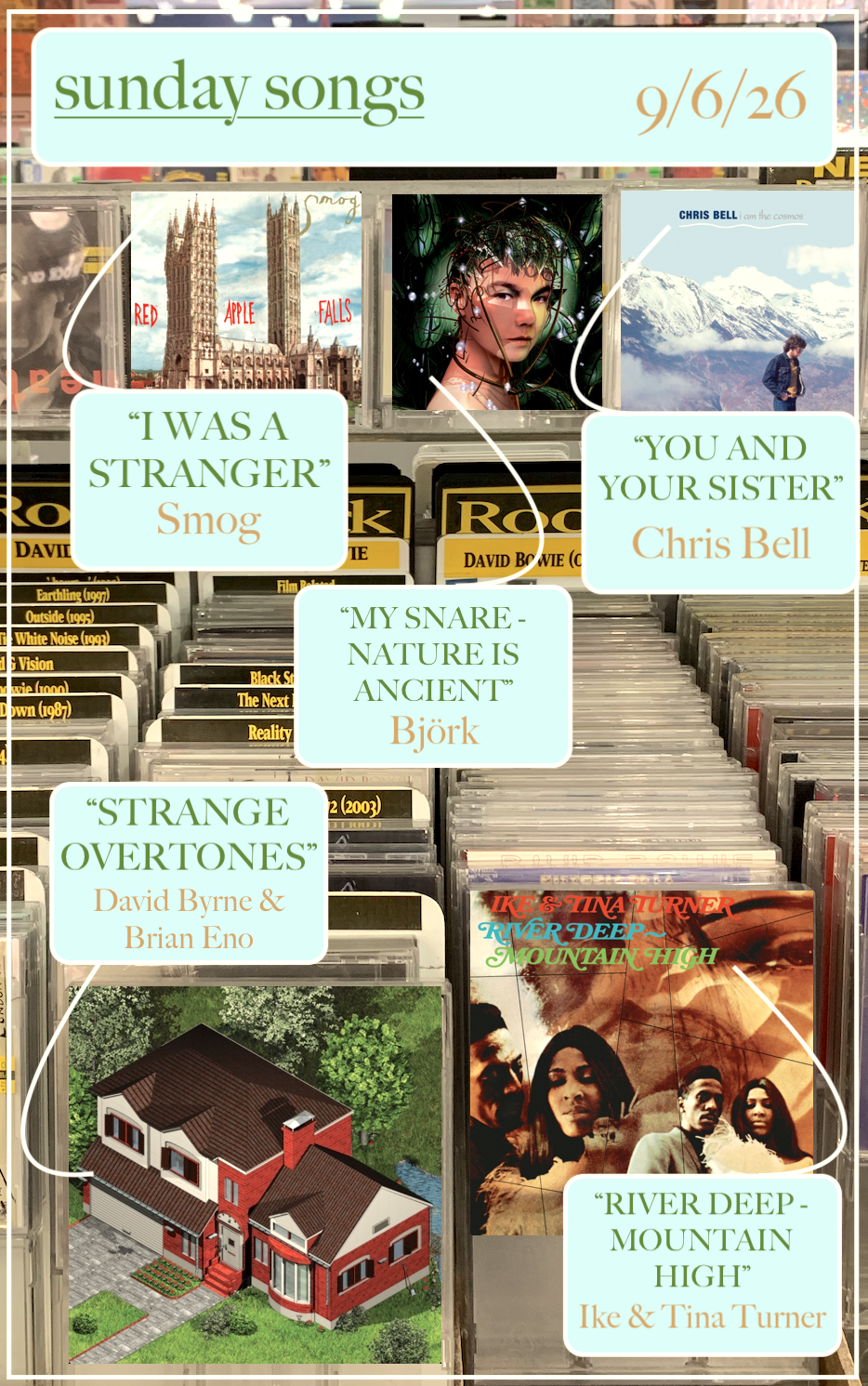
SUNDAY SONGS: 9/6/26
“Strange Overtones” – David Byrne & Brian Eno
You thought it was over? Surprise, bitch, I still won’t shut up about Brian Eno. David Byrne’s just joined the party. We’re still Eno-maxxing over here.
There are special songs that come once in a blue moon that touch you without you even knowing why. You just know it’s one of your songs, something that clicks itself into the ever-changing jigsaw of your soul. I mean, again. It’s Brian Eno, so it was bound to do that in some capacity. But I’ve now spent several mornings with my headphones on, dancing to “Strange Overtones” on repeat while making my tea. There’s a kind of easy optimism to it, like sprouts stretching out their leaves and waking up, ready to soak up the newborn sunlight. Something in David Byrne’s voice urges you on, gently ushering you like a parent with a child at the top of a waterslide. It’ll be fine, the water’s warm at the bottom, it seems to say. Take the plunge.
That quality of “Strange Overtones” endeared me from the start. But it was the specificity of the plunge that made this track thousands of times more meaningful. Eno described “Strange Overtones” as “a song about writing a song,” and that’s as evident as ever, as the narrator paces around an apartment, cherrypicking ordinary but wondrous vignettes from around their surroundings: the cold weather, a neighbor singing, small gestures of kindness between strangers. As a whole, Eno described this collaborative album as “a picture of the human trying to survive in an increasingly digital world.” Ah, there we are. That’s why it resonated so much with me. No wonder!
Everything That Happens Will Happen Today was released in 2008, but nearly 20 years later, it’s more immediate than ever. Artificial intelligence is encroaching on our sense of creativity, encouraging us to give up the slow, laborious things that give us life in favor of convenience and enshittification, touting itself as the inescapable, inevitable future (by techbros that have sunk all their money into it). But “Strange Overtones” is a celebration of that slow, contemplative life and the frustrating but worthwhile endeavor of creativity. As the narrator struggles to string their song together, words of encouragement steer them towards new paths: a change of key, a new chorus, 20-year-old beats. The end of the chorus doesn’t necessarily seem all that encouraging at the first glance (“It is strong and you are tough/But a heart is not enough”), but I think it speaks to the inherent labor of creativity, of sticking with it even when you’re mired in writer’s block, or whatever else. Your heart is not enough, and you have to put in the work—but the work is the fun of it. Byrne and Eno described “Strange Overtones” as a kind of gospel song, and it makes sense: it worships the act of creativity, and the rocky yet rewarding journey of sticking with an idea.
BONUS: as if this song couldn’t get any better, here’s David Byrne performing it with St. Vincent, featuring the latter attempting a casual lean on the saxophone player, for some reason:
…AND A BOOK TO GO WITH IT:
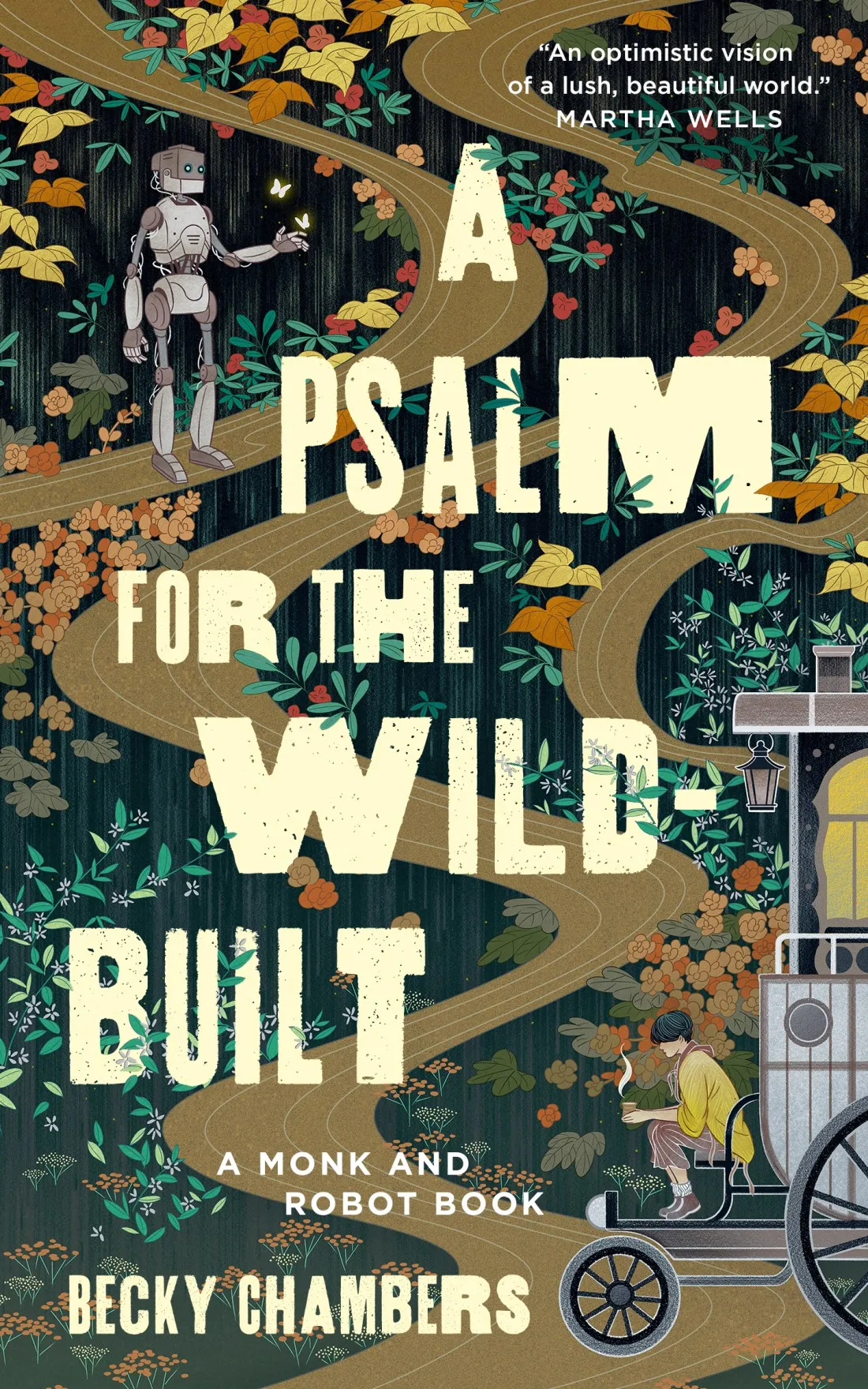
A Psalm for the Wild-Built (Monk & Robot, #1) – Becky Chambers – “Strange overtones in the music you are playing/I’ll harmonize/It is strong and you are tough/But a heart is not enough…”
“River Deep – Mountain High” – Ike & Tina Turner
Here’s a music history fact that blew me away when I first heard this song: apparently, it underperformed and barely charted when it was released in 1966. There’s probably more eloquent ways to say this, but when confronted with a song like “River Deep – Mountain High,” all you can really say is “what the fuck?” There’s no accounting for taste.
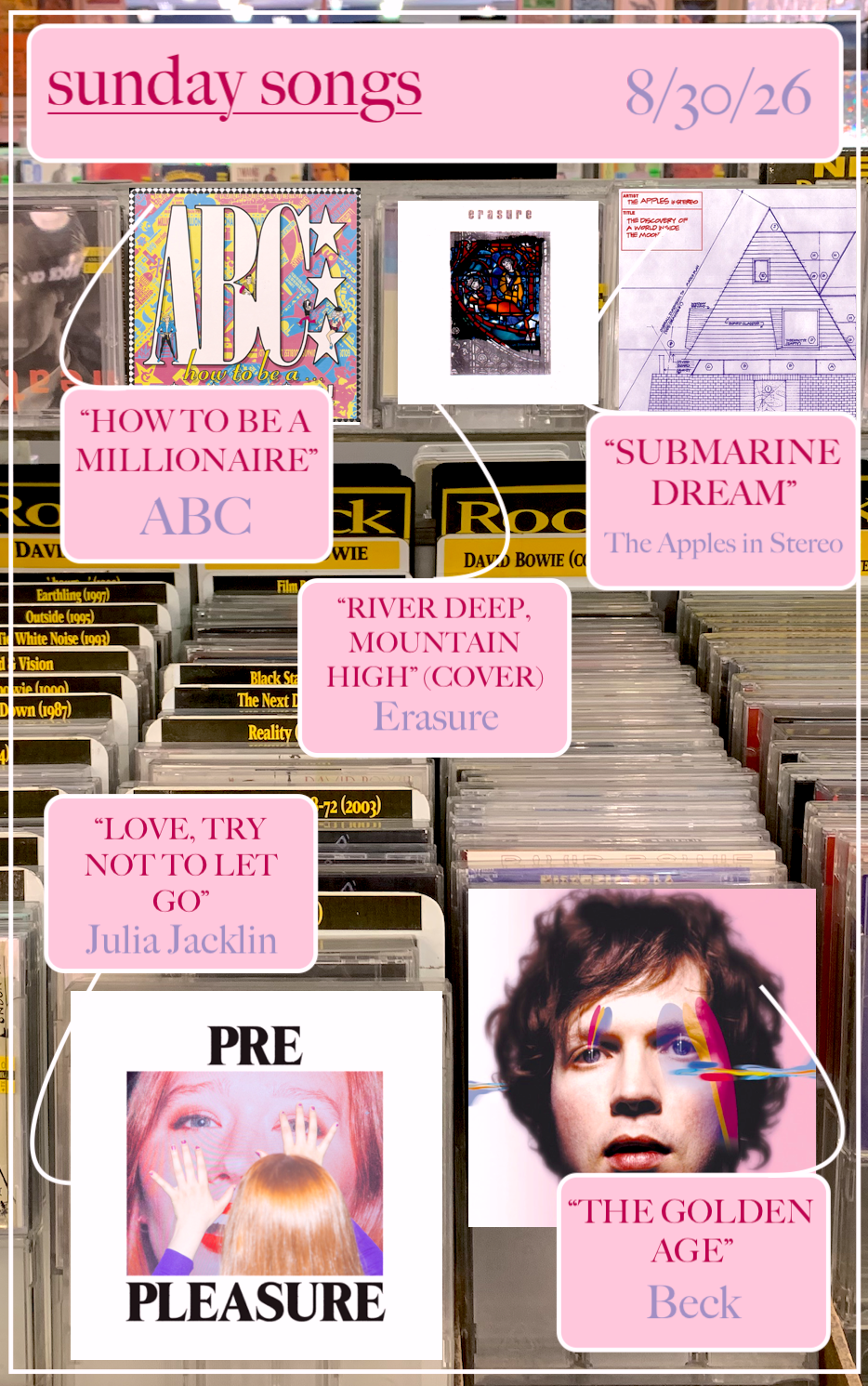
I talked about Erasure’s cover last week, and how, as fantastic of a cover as it is, it doesn’t quite capture how infectiously joyful the original is. There are few songs that are quite this convincing about just how deeply, hopelessly in love Tina Turner is. It’s just so exuberant, but you believe every single note of it—Turner’s breathless, using every metaphor for loyalty in the toolbox, and she convinces you of every single one: like a robin loves to sing, like a schoolboy loves his bag, you bet that she will love you. Unfortunately, as with…well, an unfortunate amount of songs at the time, “River Deep – Mountain High” has the misfortune of being attached to some of popular music’s most notorious scumbags at the time (that being Ike Turner and Phil Spector), especially since the latter forced Tina Turner to do a frankly inhumane number of vocal takes for this track, to the point that she was “drenched with sweat. I had to take my shirt off and stand there in my bra to sing.” I really don’t want to credit them with anything, but even from a more objective standpoint, it really is Tina Turner that makes “River Deep – Mountain High” this monumental and timeless. With the sheer power of her voice, she manages to overtake Spector’s signature Wall of Sound, and I think that’s exactly why this song is so spectacular. You just feel it rising, rising, with an unstoppable momentum, deep in your chest, and you feel the lyrics, like a flooding river about to break free of its banks.
…AND A BOOK TO GO WITH IT:
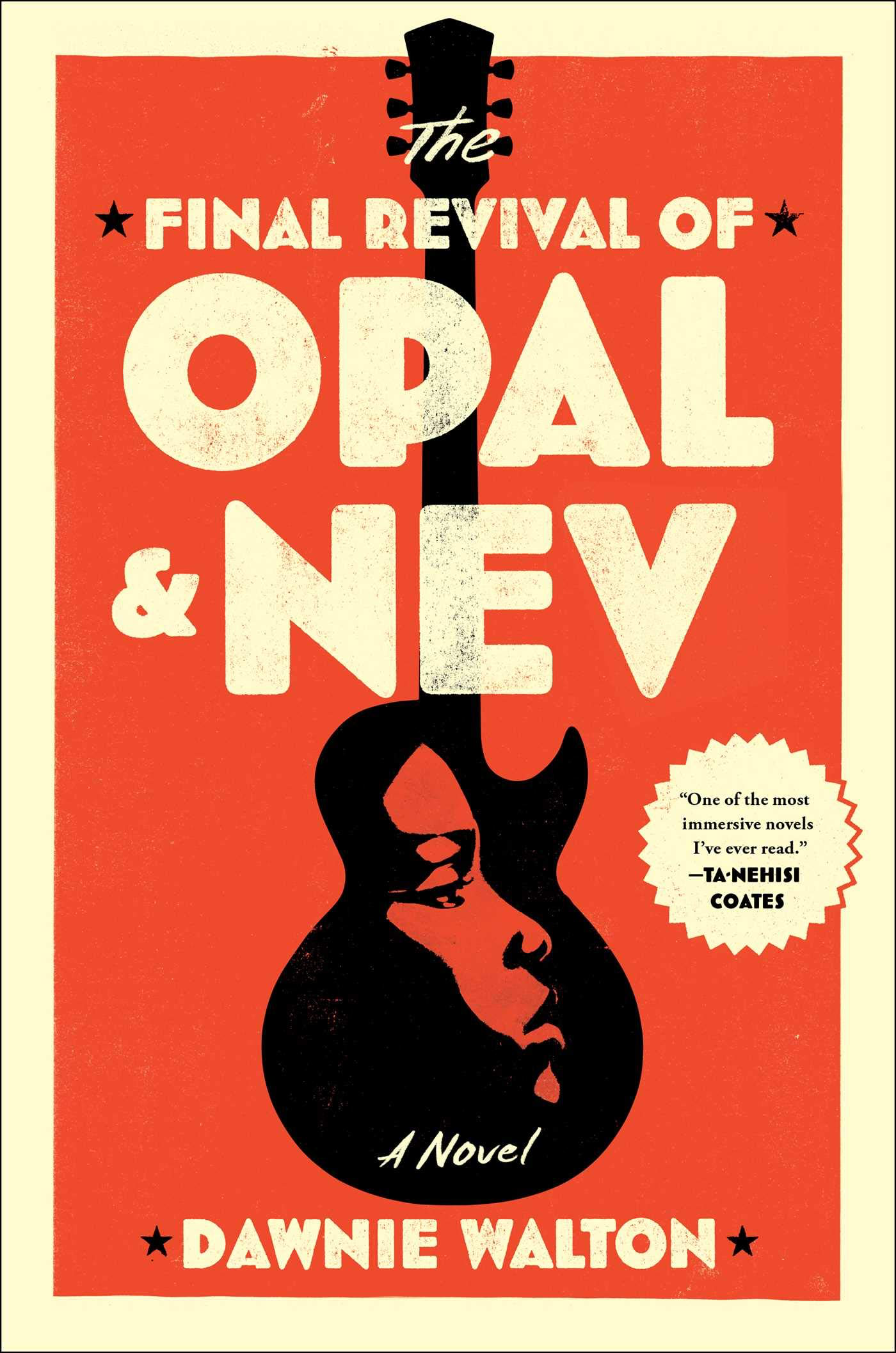
The Final Revival of Opal & Nev – Dawnie Walton – the music history threaded throughout this book calls back to the climate of the ’60s and ’70s—it definitely reminds me of songs like this, at least in the early bits of this book.
Jesus. Between this and “Ex-Con,” Bill Callahan really must’ve been going through it while recording Red Apple Falls. “Ex-Con” was at least upbeat, even though it belied a deep-seated sense of alienation. “I Was a Stranger” mines just as deep into the feeling, but makes its costuming more desolate, much more somber. That thread of isolation carries into an obscured tale playing on tropes of old Westerns and cowboy stories: Bill Callahan is now the stranger kicking open the saloon doors and casting a long shadow. Normally, I’d cue the whistling and the tumbleweeds, but there’s no air of mystery here, just a man desperate to be left behind but mystified that these new people are willing to embrace him, despite all that he’s done: “Why did you believe/All every word I said/Why did you believe/Believe a stranger?” The tinges of country instrumentation add an innate sort of melancholy to this track, barely filling in the spaces left by Callahan’s profound isolation, one that separates you from yourself, but convinces you that you don’t deserve to be believed—or embraced in any sort of way. All these touches really do make you feel utterly alone, staring at an empty horizon as the sun goes down.
…AND A BOOK TO GO WITH IT:
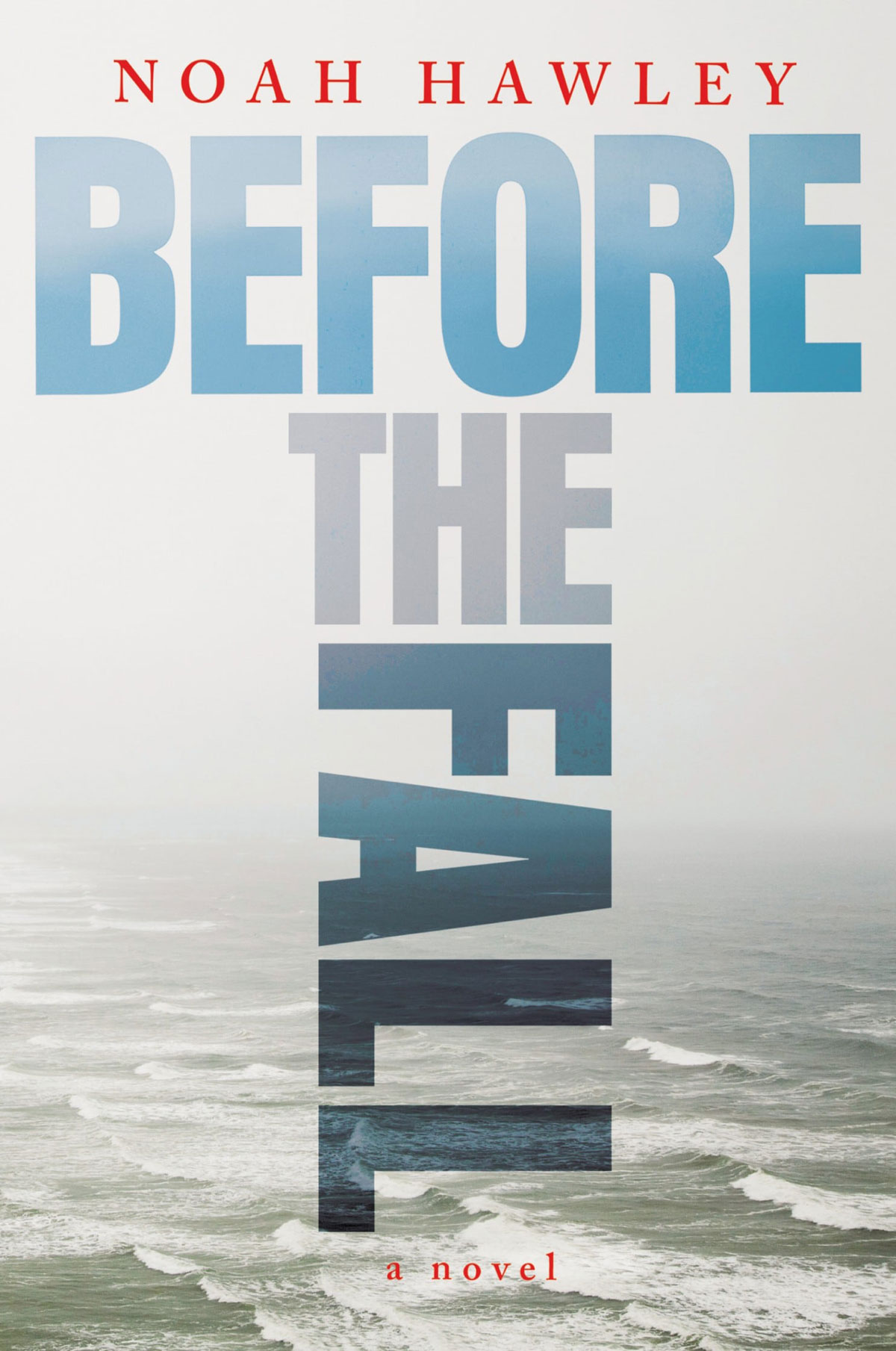
Before the Fall – Noah Hawley – “In the last town/You should have seen what I was/If I was a stranger/I was worse than a stranger/I was well-known…”
“My Snare – Nature is Ancient” – Björk
Take my hand, we’re getting out of the sad Smog times. Let’s go frolic in the woods, yippee!
Behind every incredible album is a bunch of singles that inexplicably didn’t make the cut. “Nature is Ancient” (later renamed “My Snare”) was recorded during the sessions for Homogenic, and sonically, it has that same slick futurism, imbued with hope, that made that album so iconic. But I can’t help but think that “Nature Is Ancient” feels like a Post track dressed in Homogenic‘s clothes. Its awestruck, upbeat descriptions of the nature of the natural world (no pun intended) feels like a sister to “The Modern Things” or “Isobel”—no matter the robotic dressing of the album, Björk will forever be a woman gleefully skipping through the woods and stopping to look at every flower and toadstool.
“Nature Is Ancient” is very primordial to me. The wet pulsations of the synths feel like the closest thing I can imagine to how it sounds when cells divide. I can imagine this track soundtracking the earliest evolution of life itself, watching single-celled organisms consume each other and evolving into multicellular life, wiggling around and developing eyes and feelers. With mischievous glee, Björk delivers the lyrics like she’s some sort of alien sprite giving a lesson to a lost traveler: “It’s wet in the middle/With a shell around it/It’s called ‘life’/It goes wherever it wants to/Don’t try to predict it/Then you’d offend it/It’s meant to surprise.” In spirit, it feels like the common ancestor of later, more naturalistic albums like Biophilia or Medúlla, but that reverence for nature and its mercurial qualities have been part of Björk’s DNA from the beginning.
…AND A BOOK TO GO WITH IT:
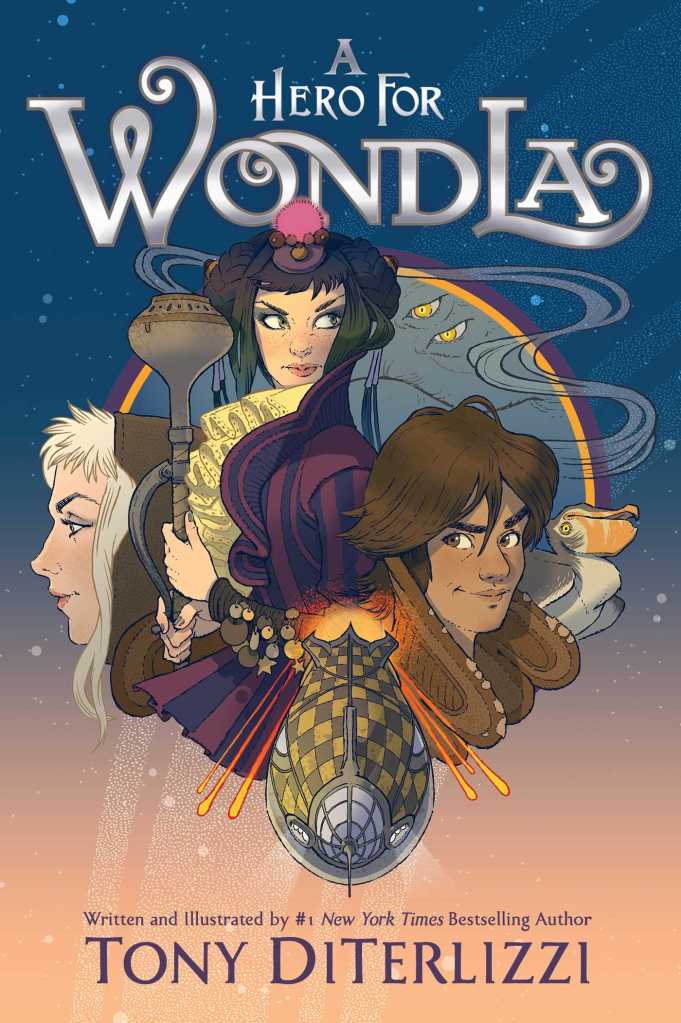
A Hero for WondLa (The Search for WondLa, #2) – Tony DiTerlizzi – tell me this isn’t what it sounds like inside of the Heart of the Forest with the Vitae Virus Generator…
“You and Your Sister” – Chris Bell
First things first: absolutely nothing against Chris Bell, but Kim Deal’s version with This Mortal Coil is better than the original. Here’s the thing: “You and Your Sister” is approaching perfect song territory, but you know what will instantly push a song even further in that direction? Kim Deal. You just can’t compete with Kim Deal. That’s just a fact.
That’s not to say that Chris Bell’s version wasn’t stunning on its own, though. I listened to the This Mortal Coil cover to death when I was in middle school, and I remember looking up the original, and being real put off by Bell’s voice. Sure, it’s not exactly conventional on this song—there are times when his rasp works better with more upbeat, louder songs with Big Star. But 10 years later, having been reintroduced to this song by surprise by my dad (as usual), something stuck me right in the ribs. I’m still not 100% warmed up to Bell’s voice, but half the time I hear “You and Your Sister,” I start getting misty. It’s just…pure. It’s been stripped down to the bone, leaving only the most essential, warm feelings of the romantic experience. The composition is, again, very simple, but everything is so impeccably placed: a swell of strings here, harmonies with Big Star bandmate Alex Chilton here, the flutter of a flute there. It’s innocent, but it doesn’t make an effort to be innocent: it just is. Between the ragged cracks in Bell’s voice and the stripped-down production, it feels as sincere as a love song can get: unafraid to sound unfinished to some, but wholly genuine as the sum of its unassuming parts. It’s just beautiful—there’s no two ways about it.
…AND A BOOK TO GO WITH IT:
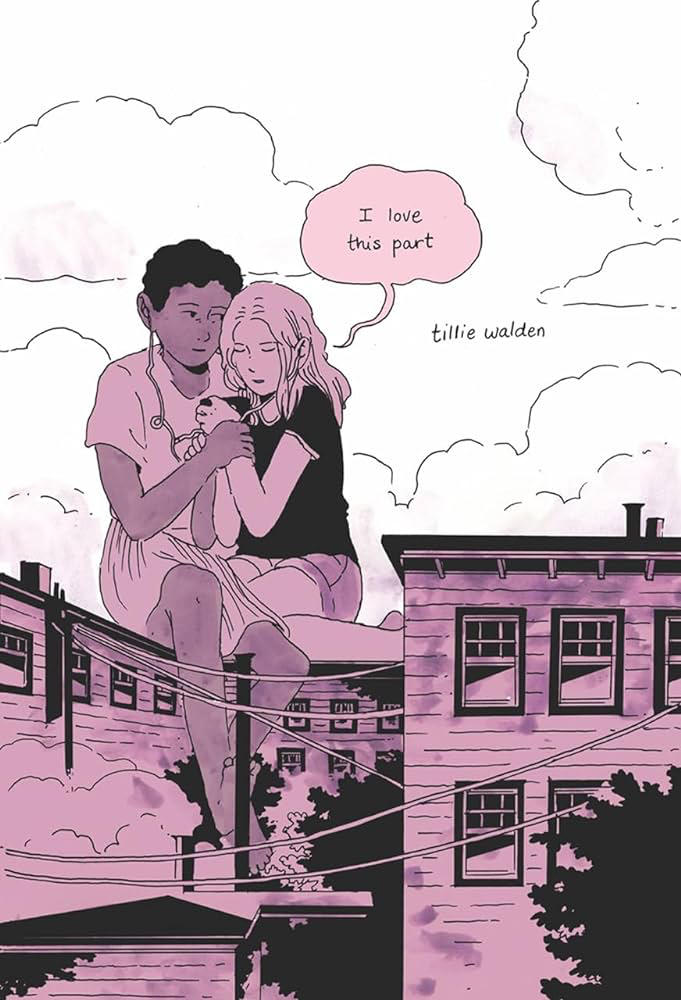
I Love This Part – Tillie Walden – similarly, a portrait of blossoming love that finds quiet profundity in the simple and mundane.
Since this post consists entirely of songs, consider all of them to be today’s song.
That’s it for this week’s Sunday Songs! Have a wonderful rest of your day, and take care of yourselves!