Posted in Book Review Tuesday

Book Review Tuesday (10/14/25) – Scout’s Honor

Happy Tuesday, bibliophiles!

To close out Latine Heritage Month, here’s a novel from an author I haven’t read in years! I’d totally forgotten about Lily Anderson since high school. I remember liking Undead Girl Gang a lot when I was younger, so I figured I might give her (somewhat) newer novel a chance. Scout’s Honor is a novel that leans into both the adventurous and the sensitive, a tale of sisterhood, coming of age, and carnivorous interdimensional monsters.

Enjoy this week’s review!
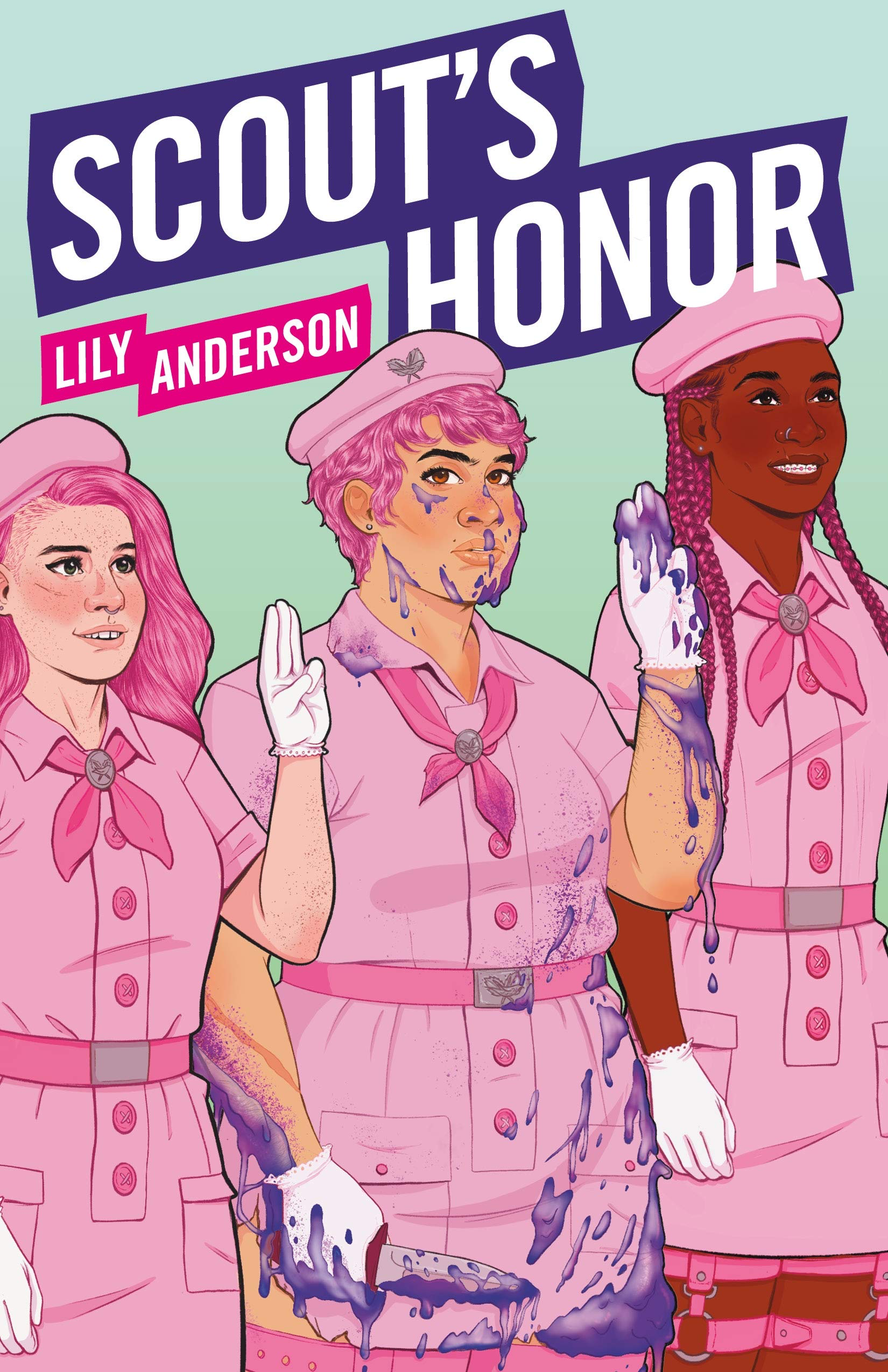
Scout’s Honor – Lily Anderson

Prue wants nothing to do with her family legacy. A third-generation Ladybird Scout, she is part of an elite circle of women trained to hunt Mulligrubs, interdimensional beasts who feed off of the emotions of humans—and sometimes their flesh, when they get hungry enough. After her friend was killed in a deadly Mulligrub attack, Prue swore off the Ladybird Scouts for good. But when a new crisis pulls her back into the fray, Prue must decide if her legacy is worth preserving—or if she needs to go her own way.

TW/CW: PTSD themes, panic attacks, violence, gore, loss of a loved one

Maybe the real Root is the friends we made along the way, amirite?

Though I can’t speak to the accuracy of the representation (Prue has PTSD), Scout’s Honor had such a deeply sensitive depiction of trauma. If the acknowledgements are anything to go by, Anderson drew a hefty amount of it from personal experience, and that authenticity shone through emotionally on the page. Narratively, you’re only fed breadcrumbs of Prue’s trauma (until you aren’t), but I feel like it mirrored Prue’s difficulties with confronting her past. There’s a lot of detail afforded to how she experiences panic attacks and how her trauma has manifested in the three years since her trauma began. Beyond that, Prue had such a poignant arc, and so much of it revolved around her trauma; the entire reason she returns to the site of her trauma is to find a way to forget it (to physically remove her ability to See the Mulligrubs via a special tea), and yet it shows her that no matter what, she can never forget the past: the only way to truly heal is not to easily overcome it, but to face it. It was such a poignant take on trauma and healing, so kudos to Anderson for that!

I also loved how Scout’s Honor tackled its themes of sisterhood! In an organization like the Ladybird Scouts, where a value like sisterhood is prized above all else, it’s bound to be perverted; any value put on that high of a pedestal is bound to be used for ill intent, which it often is in this novel—case in point with Faithlynn. But I loved how Anderson talked about what sisterhood really is—uplifting difference yet embracing commonality, and truly helping each other when we’re down. There’s Faithlynn’s sisterhood, which is just a word she can toss around while putting down the other girls around her, and there’s Prue’s sisterhood, who accepts the less conventional Ladybird Scouts like Sasha and Avi into the fold and celebrates their individual strengths in order to solve the problems throughout the novel. It’s a heartwarming exploration of the topic and a lovely depiction of how it can so easily be twisted—and an indictment of any woman whose path to success is only built on putting other women down (and in the path of danger).

For the most part, the world of Scout’s Honor was a treat! Though the worldbuilding wasn’t anything groundbreaking, there was so much surrounding the lore and the structure of the Ladybird Scouts that I loved dissecting and exploring. Anderson really nailed all of the idiosyncrasies and minute rules of this organization, from their front in the real world to the work they did behind closed doors. Anderson truly nailed the feeling of being a part of a tight-knit, insular community sworn to secrecy—there were so many laws and bylaws that had to be dodged, almost as much as the Mulligrubs, throughout the novel. Although I enjoyed the classifications of all the different Mulligrubs, I would have liked some more explanation as to how they came to Earth in the first place, and exactly what kind of dimension we’re talking about when Anderson calls them “interdimensional,” but that’s more of a me thing—the novel doesn’t necessarily need it since the worldbuilding of the primary location is already well-established.

My main issue with Scout’s Honor, however, lay in the pacing. Despite most of the emotional sections of the novel landing appropriately, Anderson didn’t seem to know how much time to allocate to certain scenes, which ended up making the pacing quite lopsided. Until the climax, it also lessened the stakes quite a bit; even though the mulligrubs are a very real threat in this universe, almost all of the battle scenes were over in what felt like the blink of an eye. If not for Prue’s trauma surrounding them, I wouldn’t have felt the tangible threat of them at all—aside from the aftermath, the characters seemed to deal with the Mulligrubs, no matter the size or strength, like that. On the flip side, although I love some character building, there were long stretches when not a ton happened, and hardly any of it serviced the plot or character development—there were just long stretches of banter that didn’t show anything that hadn’t already been established. Anderson is a strong writer for the most part, but the pacing dragged Scout’s Honor down for sure. It was really the only thing keeping me from rating it the full 4 stars.

All in all, a novel brimming with heart and heinous monsters, let down by pacing but lifted up by its depictions of trauma and sisterhood. 3.75 stars, rounded up to 4!

Scout’s Honor is a standalone, but Lily Anderson is also the author of The Only Thing Worse Than Me is You series (The Only Thing Worse Than Me is You and Not Now, Not Ever), Undead Girl Gang, The Throwback List, Killer House Party, and several other novels for teens and adults. She has also contributed to the YA anthologies The (Other) F Word: A Celebration of the Fat and Fierce, That Way Madness Lies: 15 of Shakespeare’s Most Notable Works Reimagined and All Signs Point to Yes.

Today’s song:

been unhealthily obsessed w this for the past few days…

That’s it for this week’s Book Review Tuesday! Have a wonderful rest of your day, and take care of yourselves!

Posted in Book Review Tuesday

Book Review Tuesday (10/1/24) – Death’s Country

Happy Tuesday, bibliophiles, and happy October!

Since today is both in the middle of Latinx Heritage Month and the start of spooky season proper, I figured I would deliver on both fronts. I’d heard a lot of buzz about this one, especially the fact that it had polyamorous representation—something I rarely see in literature, much less in YA. Genre fiction written in verse is also uncommon, so I had to pick up this book since it combined both of them. The result was something that was inventive at every turn.

Enjoy this week’s review!

Death’s Country – R.M. Romero

Andres Santos is ready for a new start. After moving to Miami from São Paulo, he’s keen on leaving his past behind—especially his brush with mortality after nearly drowning and seeing the face of Death itself. He barely escaped by making a deal with Death for a second chance at life. Now, he’s a part of a happy, poly triad, deeply in love with spunky photographer Renee and joyous dancer Liora. But when a car crash puts Liora in a coma, Andres and Renee know that the only option is to confront Andres’ past—by returning to the Underworld where he once bargained for his very life.

TW/CW: car crash/coma, emotional abuse, suicide, self harm, eating disorders, fantasy violence

The minute that David Bowie was mentioned, I tried so hard not to go headfirst into liking this novel. My expectations were average, and I wanted to be surprised. And then “Space Oddity” became a recurring motif. You know me, I ate that up.

For the most part, I’ve rarely seen genre fiction and novels in verse mix. The latter is usually reserved for telling realistic fiction stories and occasional historical fiction, though I’ve only seen one or two examples of the latter. But using this method outside of fiction is something that, now that I’ve read Death’s Country, I feel should be utilized more often. Poetic language lends itself to describe the dark, fantastical setting of this novel and fantastical settings in general, and Romero’s is no exception; even if it doesn’t fill up the entire page, the flowing language renders the setting in luscious detail. Given that romance is also at the beating heart of this novel, Romero’s decision of putting it in verse made the romance feel all the more like the center of the narrative. Once more, her language didn’t just put the spotlight on it—the sparsity of the amount of words on the page truly made it feel like the center of the universe.

Even with the leaps and bounds that literature, mainly YA, has made in terms of queer representation, I’ve seen hardly any with polyamorous representation. (The only other one that I can remember is Iron Widow, which I also recommend!) What I liked about how Death’s Country handled it was that it was a polyamorous story, but that it wasn’t necessarily about polyamory; those stories have a place, but sometimes, the most powerful representation comes from seeing yourself in fantastical stories usually reserved for white, cishet, etc. protagonists. There are great discussions about the stigmas surrounding polyamory (cheating, slut-shaming, etc.), but they were only a part of the story, not the whole. The more that I think about it, a poly triad makes this story work in a way that it might not have with a couple; having two people, not just one, braving the Underworld for their girlfriend in a coma, presented a unique twist on a story that’s been retold countless times, and presented an opportunity to explore multiple perspectives of love under duress.

I went into Death’s Country expecting a meditation on death (obviously), but what I didn’t expect was such an insightful metaphor about how we idealize those we love in death. The Underworld in Death’s Country is almost a vehicle for reproducing what people deem most memorable about them: not just how they die, but how they were seen in death. Liora, who was adored unconditionally by both Andres and Renee, has been molded into a romanticized version of herself that, upon closer inspection, barely resembles the real Liora. Most of that is thanks to the manipulation of The Prince, but we later find out that even he is a reflection of the dark side of Andres’ love—that kind of unquestioning idealization that strips a real person into a glowing facsimile of who they once were. This provided an insight into these kinds of retellings (Death’s Country is a loose retelling of the myth of Orpheus and Eurydice) that they don’t normally touch on; death changes the people you love physically, but also mentally—in the perceptions of others that come to define them once their physical body is gone.

However, I feel like Death’s Country could have used a dual POV to execute the emotion to its absolute fullest. The only perspective we get is Andres, while we never get into the headspace of Renee, who is journeying with him through the underworld alongside him for the entire book. I wasn’t as big of a fan of Andres as a protagonist (I found him to be on the abrasive side at worst), but Romero’s writing of him was never sloppy or badly-executed in a technical sense. I just had the strongest sense that Renee had just as much of a story to tell as him! I get that Andres was specifically the one who made a deal with Death for another shot at life, but Liora isn’t just his girlfriend—she’s Renee’s girlfriend too. She needed more backstory, but I have a strong feeling that Death’s Country would have been enhanced if she’d also had more of a voice.

All in all, an inventive, fantastical novel-in-verse with plenty of fresh twists on otherwise well-trodden literary ground. 4 stars!

Death’s Country is a standalone, but R.M. Romero is also the author of The Dollmaker of Krakow, The Ghosts of Rose Hill, A Warning About Swans, and the forthcoming novel Tale of the Flying Forest.

Today’s song:

A NEW CURE ALBUM?? what a time to be alive

That’s it for this week’s Book Review Tuesday! Have a wonderful rest of your day, and take care of yourselves!
Posted in Book Review Tuesday

Book Review Tuesday (12/5/23) – The Witch King

Happy Tuesday, bibliophiles!

Far be it from me to start the month off with a negative review, but that’s just how my December started off. Eh. Should be a lesson to me for trying to read something that’s been on my TBR for 3+ years—my tastes generally don’t change dramatically in that amount of time, but my standards for writing and plot certainly did. That’s all to say that The Witch King was a promising, inclusive fantasy that quickly proved itself to be not worth my time.

Enjoy this week’s review!

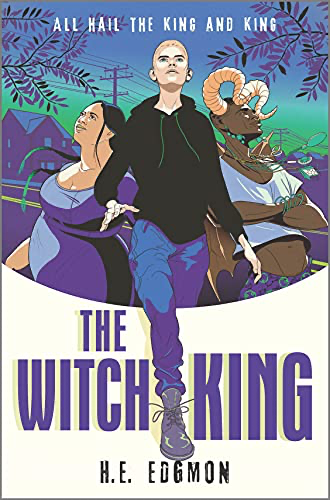
The Witch King (Witch King, #1) – H.E. Edgmon

Wyatt Croft is a witch, and in the North American realm of the fae, witches are the enemy. Years ago, Wyatt’s magic got out of control, forcing him to flee back to the human world and go into exile. But his betrothal to Emyr, the prince of the fae, has not dissolved, and Emyr is back on the hunt for him. Forced back into the world of the fae, Wyatt must come to terms with his engagement—one that may hold the lives of all of North America’s witches in the balance. And his feelings for Emyr may be coming back, as much as he wants to hide them…

TW/CW: transphobia, deadnaming/misgendering, blood, gore, abuse (physical and verbal), panic attacks, substance abuse, PTSD themes

DNF at 36%.

The Witch King has made me realize that I need to expand my criteria for DNFing books; most of my DNFs are 1-star books—the ones that are just so bad that I can’t finish them. In comparison to a lot of the other books on my DNF shelf, The Witch King wasn’t comparably as bad. But the difference is that at a certain point, it was just so clear to me that this book was not worth my time. I really wanted to like it, but once I got past the first third, there wasn’t any point in me finishing this book. A DNF is not always a 1-star read, but a 1-star read is not always a DNF. It’s like geometry but easier to explain.

I wanted to emphasize that I really wanted to like The Witch King. But in the 3+ years that this book has languished on my TBR, it’s clear that my standards have changed. The foreword by Edgmon was incredibly touching, and it’s so clear that this was the book of their soul—there’s no denying the love that went into this book. And it’s so, so important to support trans authors like him, but it’s just as important to remember that even when you read diversely, a book’s diversity doesn’t automatically fix every plot hole and writing issue. There’s some slack I’m willing to give Edgmon because this was his debut, but The Witch King really left a ton to be desired.

It’s clear that Edgmon put a lot of thought into constructing Wyatt’s character, but in his quest to make him as relatable as possible, Wyatt turned from simply “relatable” to an incompetent mess. Even as a queer person, there’s only so many “I am a gay little worm who makes terrible life decisions” (actual quote from the book) jokes I can take. Jesus Christ. The word “cringe” is outright abused these days, but I feel like this is a valid quality to ascribe to the writing of The Witch King, since most of the humor feels so overdone and unfunny. If your type of humor consists of Tumblr jokes from 2017, then boy, do I have the book for you. All of the attempts to make Wyatt seem more human and fallible made him just feel like a pathetic mess incapable of seeing past his personal faults and (many) mistakes. It absolutely grated on me after a certain point. The rest of the writing wasn’t all bad, but good god, Wyatt’s characterization made me want to jump ship almost immediately.

Since I abandoned ship after the first third, there’s probably some context that I inevitably missed, but the worldbuilding of the North American fae really left a ton to be desired. Apart from the rivalry between witches and fae, there really wasn’t much of an explanation as to how the fae worked in tandem with the human world: where do the borders between human and fae begin and end? How do the two interact? And more importantly, what are the different interactions between the different species of fae? There were a bunch of different creatures that were just thrown at you in the background with zero explanation, never to be seen again. There’s a difference between convoluted worldbuilding and worldbuilding that just isn’t properly thought-out, and this fell firmly into the latter camp. It was all just a hot mess. I’ve read several reviews saying similar things about the worldbuilding, so…I guess it never did get better beyond what I read? Oof.

That being said, I really appreciate the diversity that Edgmon wrote into The Witch King. Having a trans main character is so important, and as much as Wyatt got on my nerves, characters like him need to be in the spotlight. Edgmon presented a lot of character that were very diverse in terms of race, gender, and sexuality, and while it seems like the representation wasn’t all accurate and some of Edgmon’s depiction of social issues wasn’t handled as well as it could’ve been (glad I didn’t get to that part, I guess…), it’s always good to have a range of characters like that. It’s about all I have to say about The Witch King that’s positive, but it’s worth being highlighted.

All in all, a diverse fantasy debut that sadly crashed and burned in its characterization and lazy worldbuilding. 2 stars.

The Witch King is the first book in the Witch King duology, followed by The Fae Keeper. Edgmon is also the author of the Ouroboros series, which consists of Godly Heathens and Merciless Saviors.

Today’s song:

That’s it for this week’s Book Review Tuesday! Have a wonderful rest of your day, and take care of yourselves!
Posted in Book Review Tuesday

Book Review Tuesday (5/23/23) – Only a Monster

Happy Tuesday, bibliophiles!

This book has been on my radar for quite some time—I’m always up for a good urban fantasy every once in a while, and the V.E. Schwab comparison had me hesitantly optimistic. I figured it would be a good read for AAPI Heritage Month, but…alas, it was such a mess, and ultimately not worth my time.

Enjoy this week’s review!

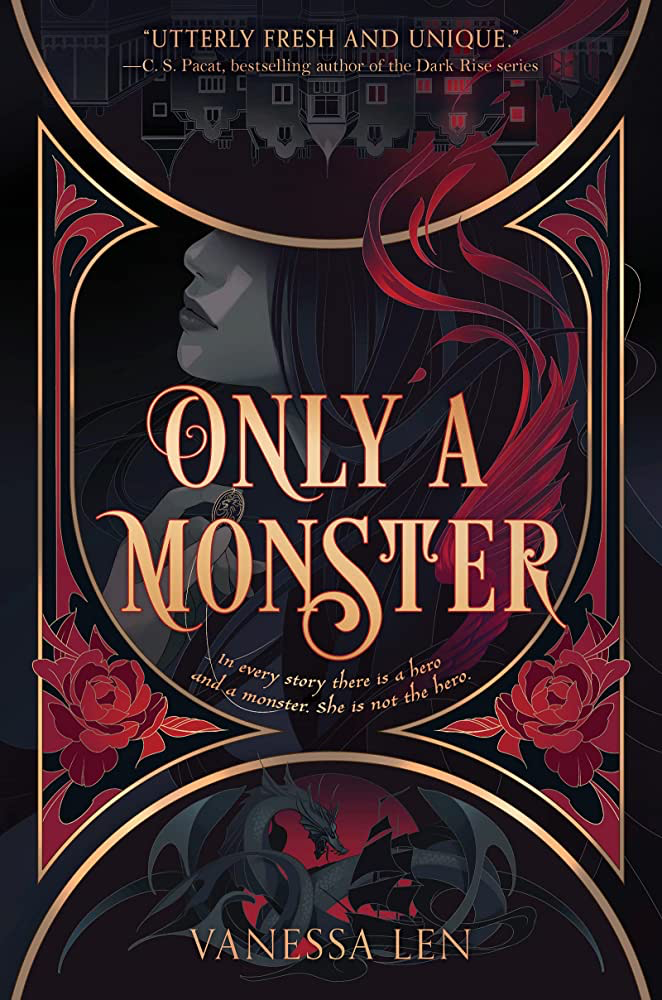
Only a Monster (Monsters, #1) – Vanessa Len

Joan is set to have the perfect summer. She’s staying in London with her late mother’s side of the family, amidst historical buildings, a steady job (with a handsome co-worker, Nick), and the smell of magic in the air. But when a disaster leaves most of her family dead, Joan is confronted with an ugly truth—she comes from a long line of time-stealing monsters. Worse still, the handsome Nick comes from a long line of monster hunters. Can Joan hone her powers before the monster hunters track her down?

TW/CW (from Vanessa Len): murder, violence, blood, loss of loved ones (on & off-page), substance abuse, xenophobia (fantasy), racism, interrogation, brainwashing, weapon use

DNF at 27%.

Before I get into my rant: I’ll always appreciate how much time and love it takes to write a book and put it out there. Any kind of creative output like this is highly admirable, and I can give this novel a certain degree of slack knowing that it’s Vanessa Len’s debut novel. That being said, Only a Monster really wasn’t it for me, and sometimes 1-star rants can be good for the soul as long as they aren’t actively hurting anybody. Gotta air it all out sometimes.

I went into Only a Monster expecting for it to be a nice break from some of the denser books I’d just read—something fun, something charmingly over-the-top. And…well, the over-the-top element was very much present, but not in a good way at all. From what I read of this novel, it was really just a mess that lacked any sort of nuance whatsoever.

We had the setup right from the start—a monsters versus monster-hunters conflict, “Joan is not the hero of this story,” et cetera, et cetera. Before reading this, I figured a lot of that language was just going to be for the sake of putting a nice hook on the front cover and other marketing purposes; I assumed that the book was going to get into some of the morally gray (as much of a buzzword that’s become with books these days) aspects of that conflict, but…no. From the get-go, we’re hit over the head with a comically large sledgehammer that JOAN IS NOT THE HERO OF THE STORY!!! and that BEING A MONSTER IS BAD BAD BAD!! and that MONSTERS AND HEROES!!!! DO NOT MIX!!! EVER!!! It’s not so much a theme so much as it is a metal pipe that gets painfully shoved down your throat. It got to the point where I felt like it was insulting my intelligence—I didn’t need to be told all this over and over. I really didn’t. Jeez. It could’ve been developed somewhat compellingly, but….no.

Beyond that, I didn’t know going in to Only a Monster that there was going to be a dreaded love triangle, which…[EXTREMELY LOUD INCORRECT BUZZER]

If there’s anything that can instantly ruin a book, it’s that. THERE’S NO NEED. And the setup wasn’t even anything that hasn’t been done before—each love interest is on one side of the conflict (monster and monster-hunter), and while I didn’t care to stick around to find out how it was resolved, I had a feeling that it would end up as a trash fire. What I did manage to get, however, was the description of Nick as “stupidly good-looking.” Can we please, as a society, get rid of this? Please? It’s starting to become just like “she let out a breath she didn’t know she was holding” at this point. Again: zero nuance.

All in all, a bitter disappointment of a book that lacked the creativity and nuance that the blurb and reviews promised. 1 star.

Only a Monster is the first in Vanessa Len’s Monsters trilogy, which will continue with Never a Hero (slated for release this August) and an untitled third book.

Today’s song:

WE LOVE THE MAGNETIC FIELDS IN THIS HOUSE

That’s it for this week’s Book Review Tuesday! Have a wonderful rest of your day, and take care of yourselves!

Posted in Books

YA Books for Nonbinary Awareness Week

Happy Thursday, bibliophiles!

This week, July 11-17, is Nonbinary Awareness Week, and today, July 14, is International Nonbinary People’s Day! I’ve done a few specific lists for books with different identities within the LGBTQ+ community, but I don’t think I’ve done a specific nonbinary one. Given that it’s the perfect time to do it, I figured I would shine a light on books with protagonists (and sometimes authors!) with nonbinary and gender non-conforming identities. Representation always, always matters, especially for a community who face scrutiny even from within the LGBTQ+ community. 💛🤍💜🖤

Let’s begin, shall we?

THE BOOKISH MUTANT’S YA BOOKS FOR NONBINARY AWARENESS WEEK

I Wish You All the Best, Mason Deaver

GENRES: Contemporary/realistic fiction, romance

MY RATING: ⭐️⭐️⭐️⭐️

All at once heartbreaking and tender, I Wish You All the Best is an incredibly powerful story of a nonbinary teen’s journey of acceptance and self-love.

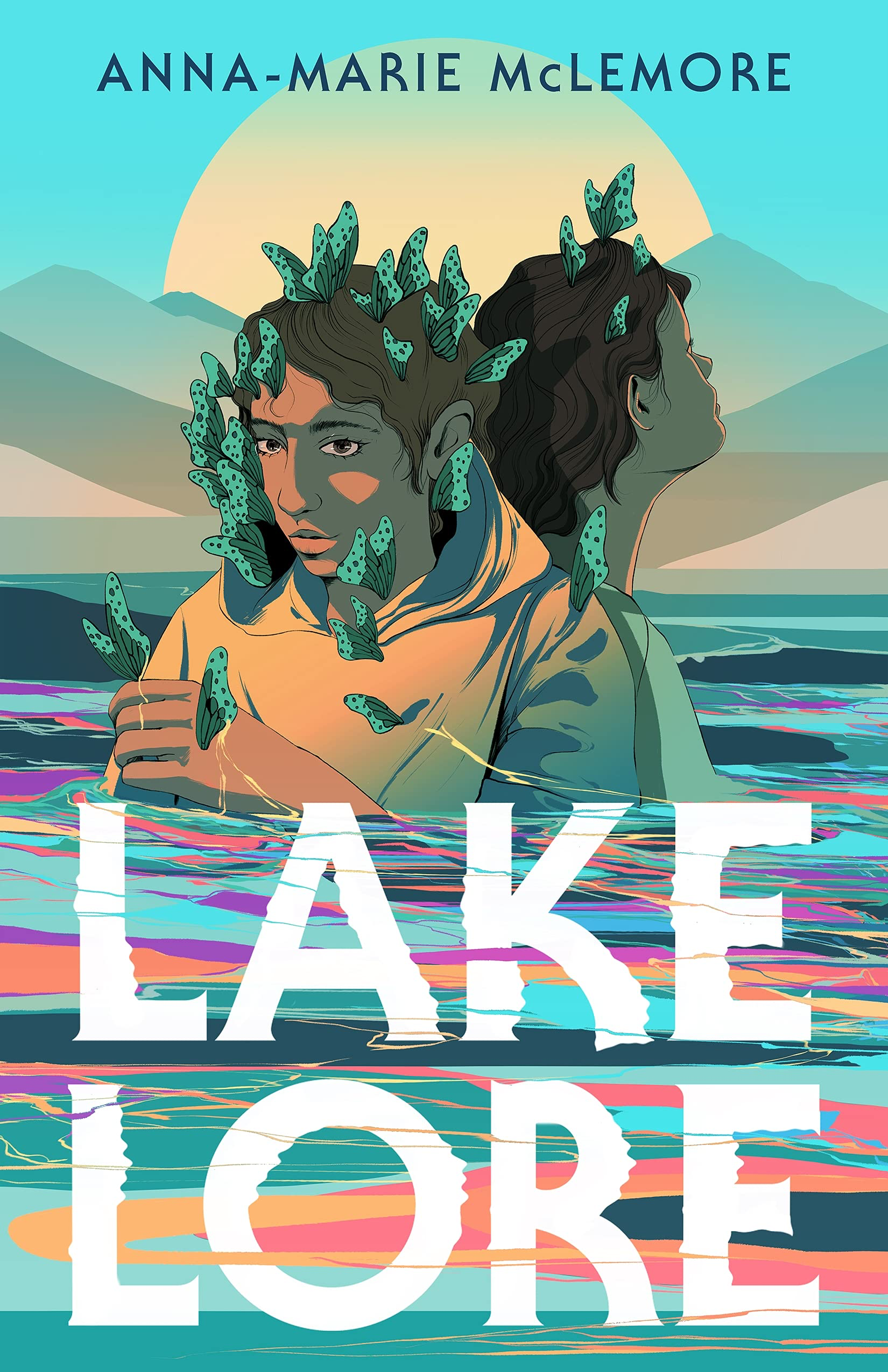
Lakelore, Anna-Marie McLemore

GENRES: Magical realism, fiction, romance

MY RATING: ⭐️⭐️⭐️.75, rounded up to ⭐️⭐️⭐️⭐️

Anna-Marie McLemore never misses, and this beautiful story of two nonbinary, Latinx, and neurodivergent teens and a secret world beneath a lake is proof.

Mooncakes, Suzanne Walker and Wendy Xu

GENRES: Fantasy, paranormal, urban fantasy, romance

MY RATING: ⭐️⭐️⭐️⭐️

An absolutely ADORABLE graphic novel about a nonbinary werewolf and a hard-of-hearing witch!

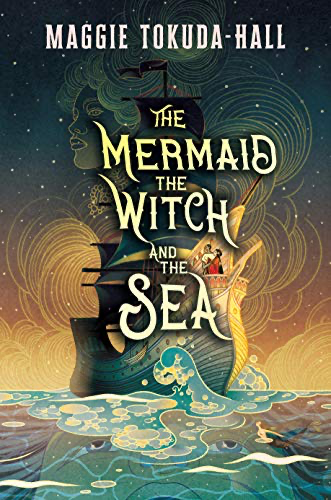
The Mermaid, the Witch, and the Sea, Maggie Tokuda-Hall

GENRES: Fantasy, romance

MY RATING: ⭐️⭐️⭐️⭐️.5

The Mermaid, the Witch, and the Sea features a powerful genderfluid pirate as one of the main characters! There’s another prominent side character who is nonbinary as well.

The Ghosts We Keep, Mason Deaver

GENRES: Contemporary/realistic fiction

MY RATING: ⭐️⭐️⭐️.5

Though I didn’t enjoy this one as much as I Wish You All the Best, The Ghost We Keep is still an incredibly powerful exploration of grief. It’s also one of the only books I’ve seen that features a protagonist that uses multiple pronouns—Liam uses he/they pronouns!

Under Shifting Stars, Alexandra Latos

GENRES: Contemporary/realistic fiction, romance

MY RATING: ⭐️⭐️⭐️⭐️

Clare, one of the twins featured at the forefront of Under Shifting Stars, is genderfluid!

Mask of Shadows, Linsey Miller

GENRES: Fantasy, romance

MY RATING: ⭐️⭐️⭐️⭐️

Mask of Shadows is a super fun fantasy novel featuring a genderfluid assassin!

TELL ME WHAT YOU THINK! Have you read any of these books, and if so, what did you think of them? What are your favorite books with nonbinary and gender non-conforming rep? Tell me in the comments!

Today’s song:

this is so creepy I love it

That’s it for this post! Have a wonderful rest of your day, and take care of yourselves!

Posted in Book Review Tuesday

Book Review Tuesday (7/6/21) – Spellhacker

Happy Tuesday, bibliophiles!

I got to take a trip to my favorite bookstore last week, and this was one of the books that I picked up. I’d been meaning to read it for years after loving M.K. England’s debut, The Disasters, and I finally got to buy it and reading! And despite the average ratings, England’s second novel is a genre-bending success!

Enjoy this week’s review!

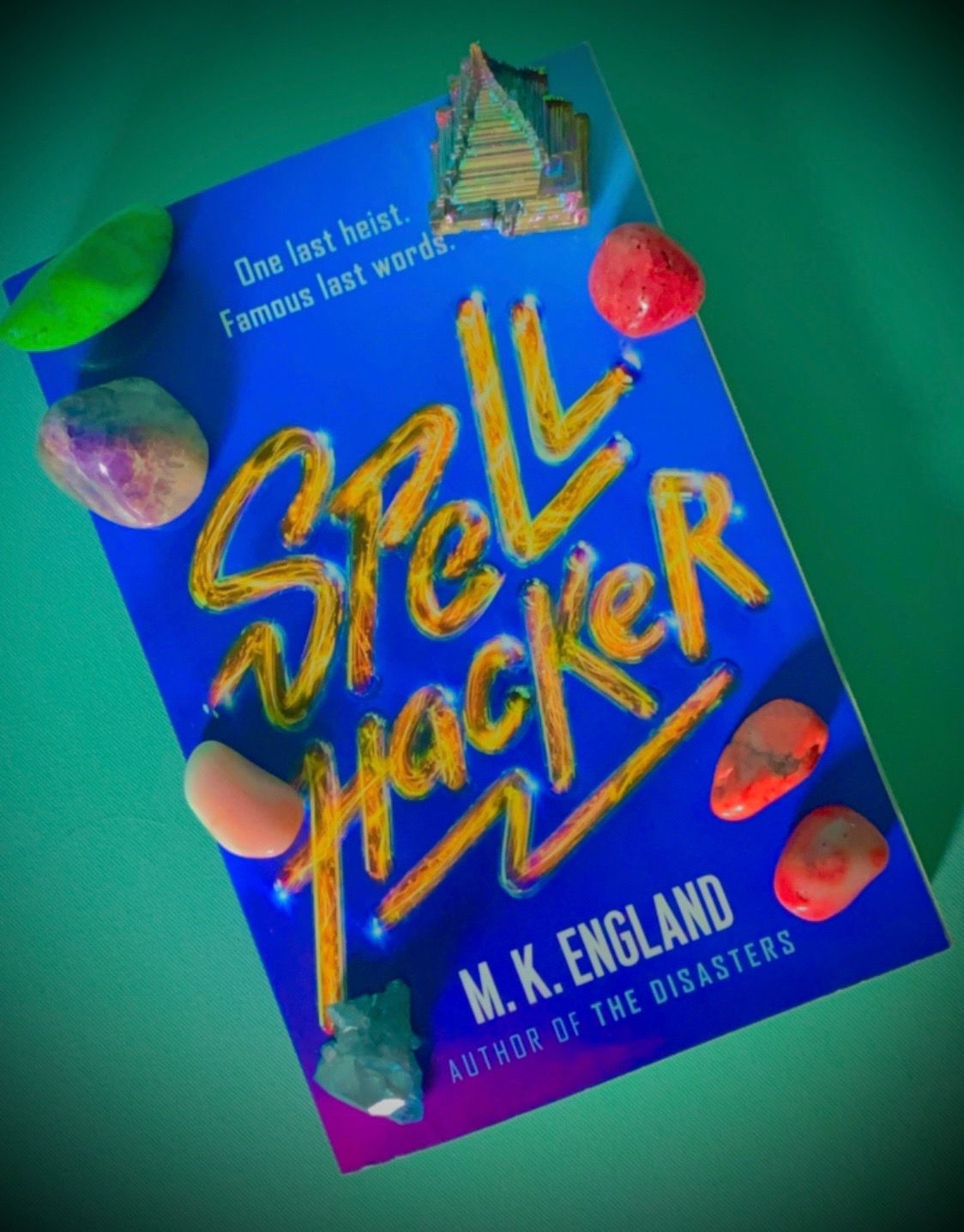
Spellhacker by M.K. England

Spellhacker – M.K. England

my copy ft. a cool filter and some crystals, stones, and my bismuth

Kyrkata is a place where futuristic technology and magic – known as maz – live in harmony, but after a magical plague wracks the population, the maz supply is depleted. Corporations now hold maz with a tight fist, racking up the prices while the people who need it most turn to crime in order to get it.

Enter Diz, Remi, Jaesin, and Ania. For two years, they’ve run an illegal maz-siphoning operation. But with college on the horizon, their next heist has to be their last. When their “last job ever” results in a deadly new strain of maz, the four teens must stop a dangerous secret from coming to the surface – and get to the bottom of a corporate conspiracy that may mean the end of their world.

cute, pixels and aesthetic - image #6916550 on Favim.com

TW/CW: descriptions of illness, loss of loved ones (off-page), violence, near-death situations

Ok. Hear me out.

So if all of the strains of maz have the suffix -az at the end of them (ex. firaz, magnaz), would that mean that Gorillaz would be a valid name for a strain of maz? Guess they’d have to call it maz-19-2000 instead of maz-15…

…okay, I’ll shut up now. I’m just making myself giggle at this point

Gorillaz: Song By Song: 19/2000
the Gang™️ after the maz-15 incident

[ahem] anyways

It’s really such a shame that this book isn’t getting the recognition it deserves. This is what a genre-bending novel should be – it’s a seamless blend of sci-fi and fantasy, with enough worldbuilding to make both of them work! And Spellhacker has everything – heists, found family vibes, weird creatures, exploding magic, and casual queerness!

What stood out most for me was the tender found-family dynamic in this novel. All four of the main characters – especially Diz, our protagonist – are delightfully real and as messy as they come, but they just felt so genuine. They all had their lovely little quirks, and they all bounced so sweetly off of each other. The love between them (both platonic and romantic, I might say) brimmed off the page, and it made my heart so happy. Through thick and thin, they were all there for each other. Spellhacker reminded me of why the found family trope is easily my favorite trope!

And if there’s one thing better than found family, it’s a casually queer and diverse found family! Diz is queer, Remi (her love interest) is nonbinary, and there’s several wlw and mlm couples! (Or, to quote M.K. England themself, “elderly science husbands.”) There’s also a lot of POC-coded characters present, and the diversity truly shines in this novel.

And beyond that, Spellhacker is SO. MUCH. FUN. If any of you here are fans of Six of Crows or The Gilded Wolves, YOU’RE GONNA EAT THIS BOOK UP. It’s fast-paced, high-stakes, and full of disguises, hacking, chase-scenes, and breakneck action. From the moment the crew botched their last heist, the novel takes off, not letting go until the final page. But even with all that, England still allowed the crew moments to be tender, allowing for a lot of sweet scenes and character interactions. It’s the perfect balance of action and softness.

I have…mixed feelings about the worldbuilding, though. For the most part, I thought it was great; there was clearly a lot of care put into the types of maz and how society controlled them, and the various underground operations to siphon it. Kyrkata’s implied to be a world completely different from ours, but there were references to things that were very Earth-specific (I can’t remember them off the top of my head), and several of the characters had very Earth-sounding last names, which threw me off a little. But overall, the things I found were fairly nit-picky, so the worldbuilding was solid overall.

There was also something unexpected hidden in Spellhacker that I loved – England wove the usage of the maz into a metaphor for climate change, and the relationship that corporations have with the environment. Without spoiling anything, there’s themes of greed and destroying the environment in the name of making money, and I love how Diz and the others combatted that. We all love seeing corporations getting their comeuppance, don’t we?

All in all, a fast-paced novel that seamlessly blends sci-fi and fantasy to make an action-packed bundle of exploding fun. 4.5 stars!

satchel cannon | Explore Tumblr Posts and Blogs | Tumgir
okay I KNOW I need to stop with the Rabbi Milligan gifs, but Diz says something almost exactly like this line and it made me so giddy ksdjhfskjdfh

Spellhacker is a standalone, and M.K. England’s second novel. They are also the author of The Disasters and a forthcoming middle grade novel called Ultimate Gaming Showdown, scheduled for release in 2022.

Today’s song:

That’s it for this week’s Book Review Tuesday! Have a wonderful rest of your day, and take care of yourselves!