

Happy Sunday, bibliophiles! I hope this week has treated you well.
This week:
Choose the best answer: You can blow with:
a) This
b) That
c) Us
d) All of the above
Enjoy this week’s songs!

SUNDAY SONGS: 4/7/24
Affirmation of the week: I have listened to this song a healthy amount of times. At least I didn’t pull the “listen but nothing but this song for almost four hours straight” stunt that I did with “Broken Man.” See? I’m better now. I’m savoring this one, and by “savoring,” I mean “listening to it slightly less, but still putting it on repeat for at least half an hour when it comes on shuffle.” What new St. Vincent does to an mf.
“Broken Man” is shining proof that All Born Screaming has a good chance of being my album of the year, but somehow, Annie Clark outdid herself even more with this latest single. I’m glad that “Broken Man” and “Flea” are tracks three and four on the album, respectively; even past the fact that they fit so slickly together, I like the idea that the title and closing tracks are a secret—she’s got something insane up her sleeve. I can just tell. After “Broken Man”‘s torrent of fury, vengeance, and Dave Grohl’s drumming, “Flea” makes the transition into the outright bloody—not bloody in the sense of the trail of destruction that “Broken Man” left, but in the sense of parasitism. Clark described the upcoming All Born Screaming as being bred in “That kind of isolation [that] breeds paranoia and loneliness…loneliness can breed violence.” Now I can see exactly where the whole “post-plague pop” label she stuck on it comes from. “Flea” slinks along on tiny, pointed legs, thrumming with a racing heartbeat and an insatiable thirst for blood; the repetition of “Once I’m in, you can’t get rid of me” is sung lower and raspier, a threat paired with a predatory lick of the lips. The kind of loneliness and violence Clark described seems to be exactly where this kind of sinister lust comes from—being isolated for so long could easily make love turn to lust, and lust consequently to hunger, so drained of human touch that what was once affection has become leeching for nutrients at the other person’s expense. And everything about “Flea” sounds frighteningly hungry, down to the parched-throat rasp with which Clark delivers the verses. When she ends verse two with a dried-out confession of “I look at you, and all I see is meat,” followed by a faint belch in the background, I suddenly got the feeling that I was being watched by something waiting to tear me limb from limb and suck me dry. It’s intense, but it’s the kind of intoxicating thrill ride that I’ve taken with Clark for nearly ten years. And the chorus finds the narrator covered in someone else’s blood, begging for just one more bite; the desperation sloughs off like a second skin, every blood-soaked belt starved and howling. It’s a kind of visceral musicianship that I haven’t seen from St. Vincent in years; although Daddy’s Home was certainly raw, it was the kind of raw you get from getting someone enough wine to spill about their childhood trauma and laugh it off. All Born Screaming is about as raw as flesh itself—it’s all the clearer that Clark has no intention of pulling punches, and that’s exactly what makes a St. Vincent song so iconic. “Rattlesnake” and “Severed Crossed Fingers” don’t illicit waves of emotion in me for nothing—they’re hearts laid bare in the street. In other words: Clark is at her best when she’s herself. Should be a given, but it’s more evident in some albums than others.
God, April 26th can’t come any sooner…
…AND A BOOK TO GO WITH IT:
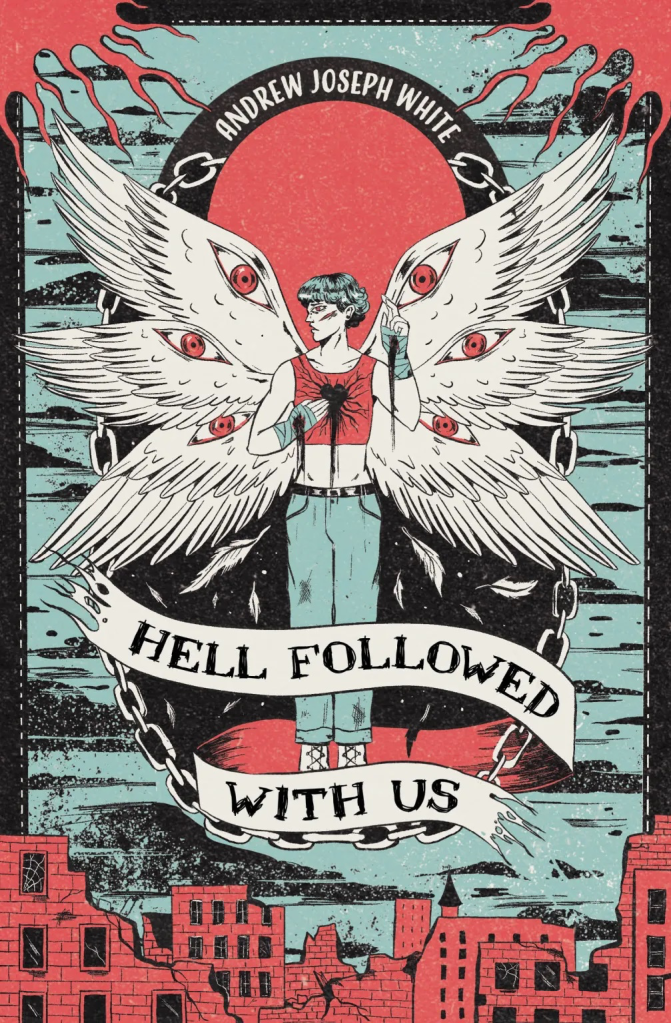
Hell Followed With Us – Andrew Joseph White – depending on how All Born Screaming goes, I might preemptively merge this with “Hell Is Here”…
Aaaaaaaaaand, that’s one more album on the Sisyphean Album Bucket List. Between the “Wolf Like Me” (the best song there is about werewolves after this), the deeply moving “Province” with its David Bowie feature (YOU HEARD ME!!), and this, I now know that Return to Cookie Mountain has to make its way into the rotation. I have Chelsea Wolfe to thank for this one; at her fantastic show at the Gothic Theater in March, she played this before the show—I wouldn’t be surprised if she was a fan before, but I suspect that it’s a kind of thank you to the fantastic Dave Sitek, who produced her truly fantastic new album, She Reaches Out To She Reaches Out To She. Also, with a title like Return to Cookie Mountain, I feel like I just have to listen.
What “Tonight” made me realize about TV on the Radio is how effectively—and quickly—they can craft an atmosphere. Some of the most layered ones I can think of are from their early career, namely the first version of “Staring at the Sun” that appeared on their debut EP, Young Liars. Instead of the shorter version that made the cut for Desperate Youth, Bloodthirsty Babes, this one has a thirty second intro (that feels longer, honestly) that consists of just the a cappella vocals of the band, interspersed with an excerpt from a Spanish-speaking radio station. Even though the chatter on the radio station seems cheerful and singsong, the drawn-out gives it a prolonged air of foreboding and sorrow to come, like the next thing we hear will be the somber announcement of someone’s death. Thankfully, that doesn’t happen, but the first lyrics we hear on the heels of that are “Cross the street from your storefront cemetery,” which, bam. That’s how you start a song. When it comes to both of those aspects, “Tonight” operates in a similar way, creating an atmosphere that’s haunting before the instruments even kick in. With the whine of a distant siren and the ever-so-slightly distorted collision of wind chimes, “Tonight” instantly transports you to a place of brown grass and barren vastness, pockmarked by dead trees strung with glass bottles and the faint sounds of the road in the distance. The music seems to lumber with every step, a beleaguered creature that lurches with every step, as if its limbs are tied down with the wind chimes you hear tinkling throughout the song. Hollow whistles harmonize with a moaning clarinet and Tunde Adebimpe’s clarion call of a voice, all at once ragged and brimming with vitality. A fair amount of the buzz surrounding TV on the Radio when they got their start were vocals comparisons of his to Peter Gabriel, and it’s an apt one—they have a similar quality of being roughly visceral, but booming with emotion. Dave Sitek is also credited with “magic” on this song, which I cannot find a musical definition for the life of me, but if there’s anything that you would credit the man for, it’s that. He has the touch.
I often get so caught up in the atmosphere that I only mine the lyrics later, but the lyrics in “Tonight” pop out so prominently on the first listen; as the wind chimes huddle for warmth, Tunde Adebimpe’s voice cuts through them like a steak knife through fabric—”My mind is like an orchard/Clustered in frozen portraits.” How does this man do it? Every single line in this song is a literary gem in and of itself, and it’s not just because of the repeated references to Edgar Allan Poe’s “The Telltale Heart”—like heartbeats rumbling through flimsy floorboards, the lyrics never fail to send chills up my spine: “Her rusty heart starts to whine/In its tell tale time.” My rusty heart sure does whine whenever those lyrics wash over me. And like the sparse nature of the atmosphere, the lyrics tell of a spare mental space, one so full of sorrow and unpleasant memories that, like the telltale heart, cannot be pushed from the mind. The song still haunts me in a largely melancholy way, but it has an uplifting sentiment at its heart. I can’t help but think of Soundgarden’s “The Day I Tried to Live” and its similar atmosphere of doom, but its lyrical heart being the fact that despite all of the horrible things crashing down around you, there will always be something left to live for, so all you can do is push through. Adebimpe’s sentiment feels like wading through a slurry of unpleasantness that never seems to end (“Blossoms that bloom so fine, just to drop from the vine/I’ve seen them all tonight), but he makes the light at the end of the tunnel shine as bright as it can: “The time that you’ve been afforded/May go unsolved, unrewarded/Some nameless you cannot know, may be coming to show you/Unbridled love and light.” No matter how much you have to push down and wade through, never doubt that good things are coming. It’s something I struggle to hold to heart, but I’ve added this song as an unexpected guiding light. I can never know the future. It scares me. But there is certainty in the love lingering beyond my current time. There is always love.
…AND A BOOK TO GO WITH IT:
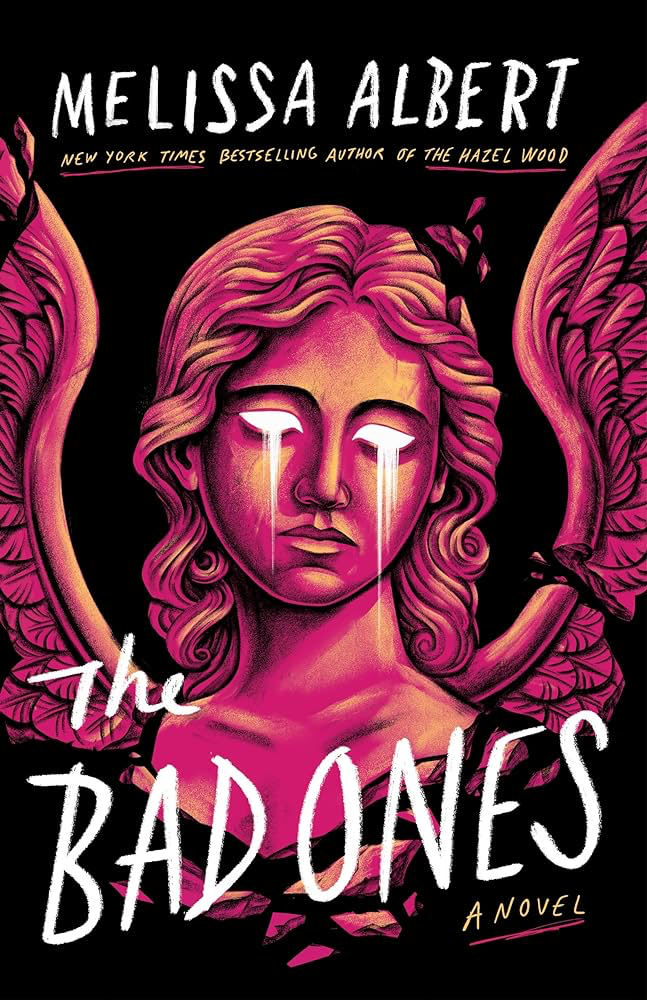
The Bad Ones – Melissa Albert – a similarly haunting atmosphere woven from swirling memories.
Contrary to my graphic, this is not, in fact, that well-intentioned but ultimately regrettable black square everybody posted back in 2020. My text box accidentally cut out the 2 on Black Metal 2, the only thing distinguishing it from the cover of Black Metal, which is…also just a black square. Gotta admire Dean Blunt for committing to the bit.
I stumbled across this song thanks to Arlo Parks, who chose Black Metal 2 as one of her picks on her episode of Amoeba Records’ series What’s In My Bag?, where she also talks about my bloody valentine and happens to be wearing one of the coolest Radiohead shirts I’ve ever seen. The songs she discusses there—“VIGIL” and “the rot”—serve as bookends, the opener and closer of Black Metal 2, respectively. Both of them have the atmosphere of a massive curtain thrown over your eyes—you’re immediately thrown somewhere else in a space that Blunt has created; no time is wasted in transporting you into his world. While “VIGIL” has the tidal-wave mounting tension of strings to prop it up, “the rot” is the last, gentle minutes of a plane ride home. It’s a distinctly sunset song: you’re slumped back in your seat, golden light is spilling through the window, and you have the sense, more than ever, that a chapter is closing, but not necessarily in a negative way. You can tell that there’s a myriad of different instruments, but all of them are toned down to a faint crawl, strings gently winding, acoustic guitars drifting away like insects in the early evening. “the rot” in particular has such a gorgeous vocal contrast between Blunt and guest artist Joanne Robertson; like Phoebe Bridgers and Jeroen Vrijhoef on “Garden Song,” what grounds the song is the stark difference, although that of Blunt and Robertson feels much more natural and less jarring than the latter. Where Blunt has the warmth and thickness of the ocean lapping over a volcanic shore, Robertson’s words float like the breeze stirring the water. Both of them drift like motes of dust into the air, closing out Black Metal 2. Without even having listened to the whole album, I can tell how successful “the rot” is as a gentle closer.
…AND A BOOK TO GO WITH IT:
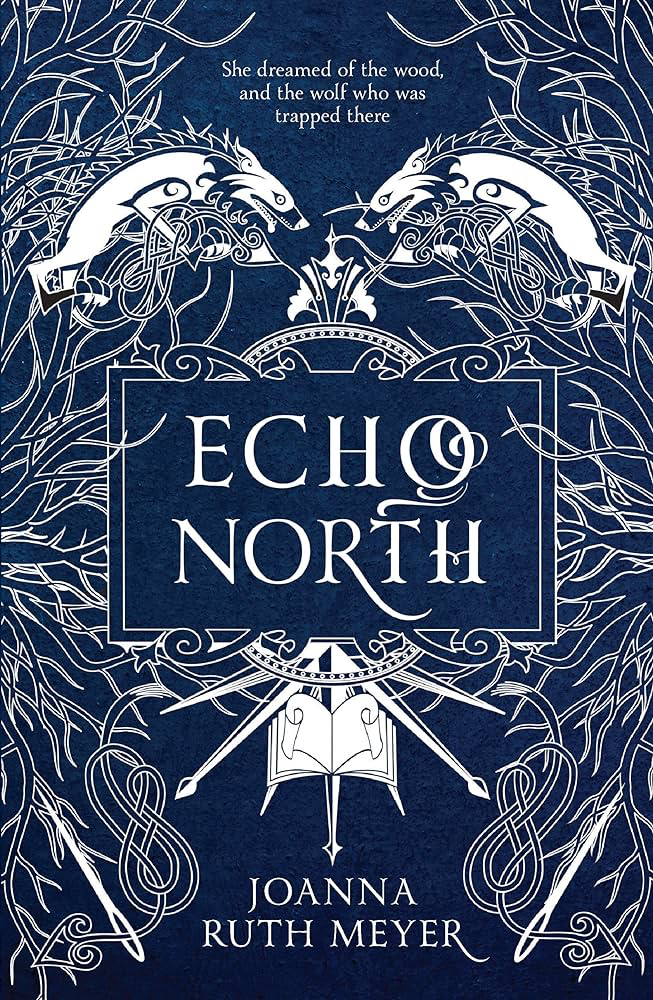
Echo North – Joanna Ruth Meyer – the frost, like the rot, lures you into the woods and makes you chase after old dreams.
“Weapon of Choice” – Fatboy Slim
Me when I walk without rhythm (I didn’t attract the worm):
…AND A BOOK TO GO WITH IT:

Dune – Frank Herbert – as is written.
“Satellite of Love” – Lou Reed
Ugh, I’m so glad this song came back intro my regular rotation recently. The outro did wonders for amping me up for my astronomy midterm.
It’s been about four years since I’ve consciously started listening to this song, but I’m sure my dad played it in the car long before that. But I’ll always love this era of Lou Reed, and you know who I’ll also always love? David Bowie. And Bowie, along with Mick Ronson (Bowie’s guitarist in the Spiders from Mars) co-produced Transformer, which has spent a woefully long time on my album bucket list. It’s smack dab in that early-’70s sound that I just live for, and I’ve already heard a handful of the classics from the album already—“Walk On the Wild Side” and “Perfect Day,” to name a few. But “Satellite of Love” remains my favorite thus far, and it’s not just because I collect space-related songs like a bower bird collects shiny rocks and trinkets. As with…well, almost every Lou Reed song, “Satellite of Love” is tinged with melancholy; it tells of love watched from a distance, the aftermath of a breakup watched from below like a stargazer looking at a meteor shower. The offbeat admission of “I love to watch things on TV” feels like an admission of what Reed thought that the relationship had turned into—just something to pass the time and make the eyes go limp. I can’t help but think of Lisa Hannigan—I can’t be sure if this was her exact inspiration, but I wouldn’t be surprised if the chorus of “Passenger” came from a similar metaphor of distant love adrift in the sky—”Oh, my satellite/Oh, my passenger.” For once, Lou Reed is the one that doesn’t sound abjectly in mourning—wistful, sure, but there’s still some light shining in the corner of his eyes, even if it’s just the reflection of a star. For me, the outro is what pumps just the barest pulse of hope into “Satellite of Love”—the piano begins to gallop, clapping and snapping dominates the percussion, and Reed begins a harmony with a wailing, angel-voiced Bowie. Reed remains anchored to the ground, but Bowie, naturally, ascends skyward with every note. There’s something about it that feels like he’s extending a hand from somewhere in the night sky, inviting us to join in the chorus.
…AND A BOOK TO GO WITH IT:

All Systems Red (The Murderbot Diaries, #1) – Martha Wells – the detached observation of love (and humanity in general) is much more humorous than wistful in nature here, but we can’t deny that Murderbot likes to watch things on TV.
Since this post consists entirely of songs, consider all of them to be today’s song.
That’s it for this week’s Sunday Songs! Have a wonderful rest of your day, and take care of yourselves!


 The Bookish Mutant
I am trying very hard not to be excited about the new St Vincent but, the first two singles are making it VERY hard not to.
LikeLiked by 1 person
I’ve gone past the point of no return at this point, I can’t NOT be excited
LikeLike