Posted in Book Review Tuesday

Book Review Tuesday (3/8/22) – A Psalm of Storms and Silence (A Song of Wraiths and Ruin, #2)

Happy Tuesday, bibliophiles, and happy International Women’s Day!

My, two sequel reviews in a row…hmm

I got hooked on the Song of Wraiths and Ruin duology last year after buying book 1 with some of my Christmas money—the cinematic writing style and fast pace made me want so much more in this universe! I wasn’t able to get my hands on a copy from the library until recently, but I’m so glad I did—a breakneck-paced ending to a spectacular fantasy series!

Now, tread lightly! This review may contain spoilers for book 1, A Song of Wraiths and Ruin, so if you intend on reading it and haven’t yet, proceed with caution.

For my review of A Song of Wraiths and Ruin, click here!

Enjoy this week’s review!

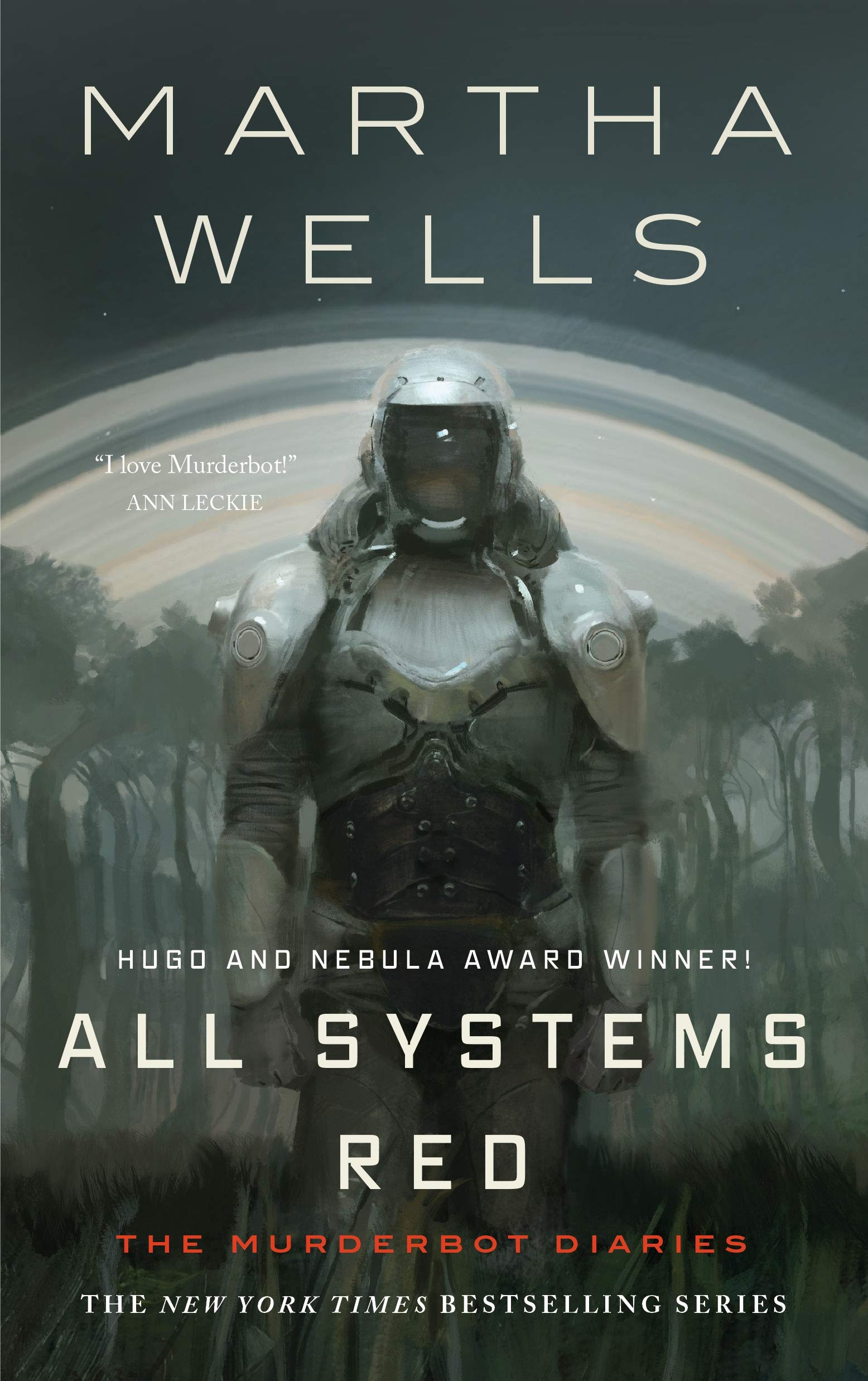
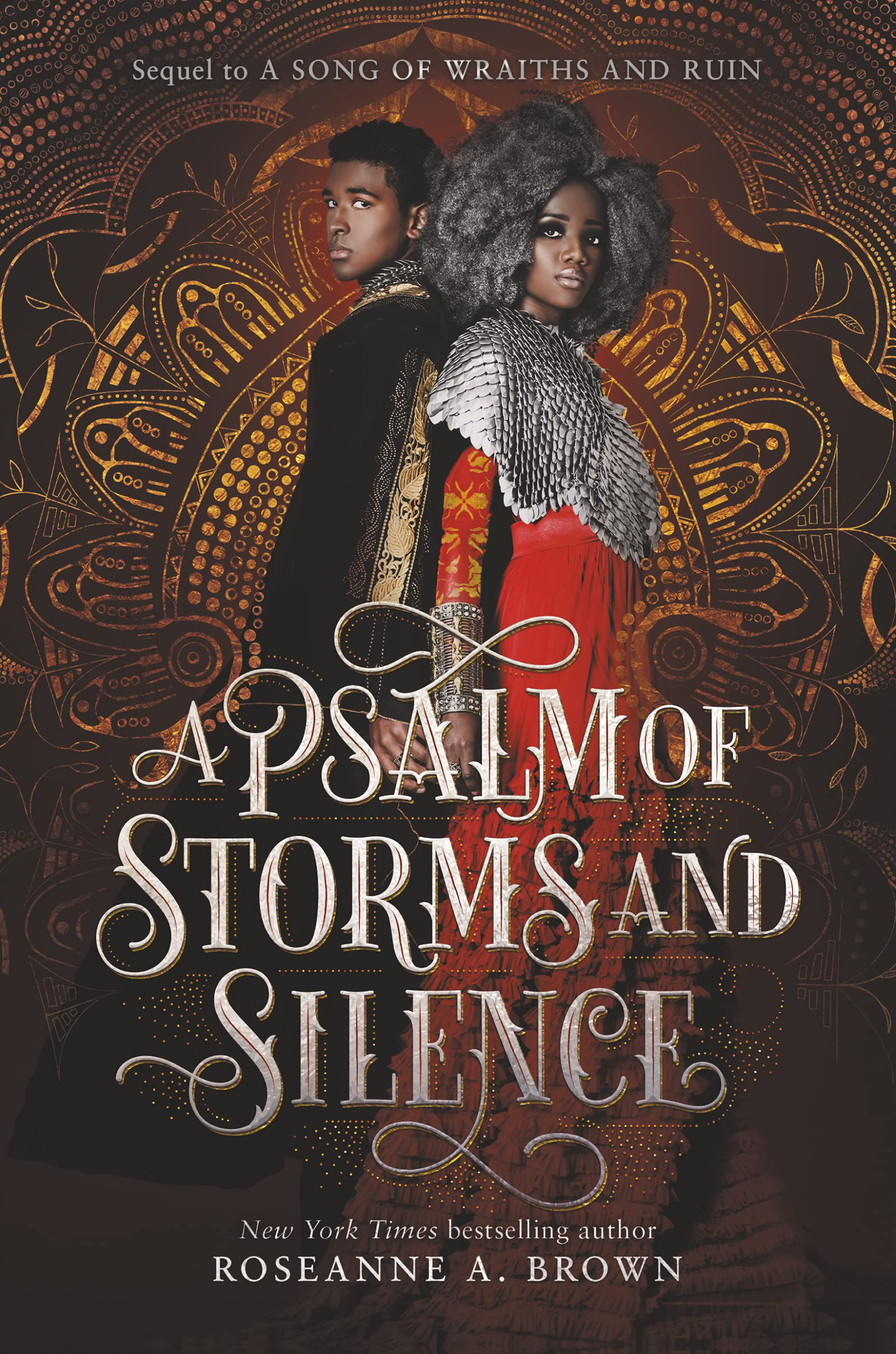
A Psalm of Storms and Silence (A Song of Wraiths and Ruin, #2) – Roseanne A. Brown

After Karina’s resurrection of her sister plunges Sonande into chaos, she and Malik must work to pick up the pieces—all while mending the cracks in their relationships.

Disowned by the royal family, Karina sets out to mend the barrier between the mortal and godly after her resurrection ritual. What she finds may mean the difference between complete harmony and absolute anarchy—and an end to Sonande as she knows it. Malik lives in the chaos that Karina’s actions have sown, and his mission is to restore the kingdom to what it once was. But his path is all too similar to Karina’s, and when he discovers that Karina may be the catalyst to prevent total destruction, he must reckon with his feelings for the person he once tried to kill—and now loves.

TW/CW (from Roseanne A. Brown): issues of self-harm, fantasy violence, emotional and physical abuse, anxiety and panic attacks, grooming, and suicidal ideation

I don’t think I’ve been this invested in a fantasy series since Smoke Thieves! It’s a shame that A Psalm of Storms and Silence is the last we’ll see of this universe (for now?), but it was a beautiful end to the series.

It’s not easy to make a fantasy world, but it’s even harder to make a world where you can convincingly narrate it from the perspective of a storyteller narrating the events that unfold before you. Just like Wraiths, Brown’s writing has a uniquely cinematic writing style that makes the world she’s created all the more engaging and compelling. It’s twisty, it’s intricate, it’s multifaceted, and best of all, it’s just plain fun. This was a book that I looked forward to reading every time I had to put it down, and for giving me that much joy, I owe so much to Roseanne A. Brown.

For me, Storms was even better than book 1, although they’re close! What set book 2 apart was how it expanded on the world that was already set forth without info-dumping. We’re introduced to new parts of the story and mythos through the eyes of Karina and Malik, and it made Brown’s already wondrous world feel all the more believable and fascinating to explore.

The new side characters also shone in Storms! There were all sorts of amazing characters introduced throughout the story, and I loved them just as much as Karina, Malik, and the others. All of the god/goddess characters were so creepy and imaginative (think…uh, centipede…centaur?), and I loved having Caracal and Ife tag along on Karina’s journey (both of them are absolute icons). Even though none of the characters I mentioned took the center stage, they felt just as fleshed out as some of the more prominent characters. Also, bonus points for the casual mlm/nonbinary rep!

As a whole, Storms also succeeded in making a sequel that raised the stakes high enough to sustain the rest of the plot but also bring it down so that (most) everything was wrapped up by the time the book ended. It’s a long book, sure, but it hit the perfect balance of creating tension without having to rush everything all in the last few pages. That being said, I did feel the ending was abrupt and a bit rushed, but by the end, everything had concluded in a satisfying way. It was more the timing of the ending than the content of the ending that was the problem.

All in all, a beautiful conclusion to one of my favorite fantasy series in the past few years. 4.25 stars!

A Psalm of Storms and Silence is the final book in the A Song of Wraiths and Ruin duology, preceded by A Song of Wraiths and Ruin. Roseanne A. Brown is also the author of the forthcoming Serwa Boateng’s Guide to Vampire Hunting, slated for release in September of this year.

Today’s song:

That’s it for this week’s Book Review Tuesday! Have a wonderful rest of your day, and take care of yourselves!

Posted in Book Review Tuesday

Book Review Tuesday (3/1/22) – Devil in the Device (Goddess in the Machine, #2)

Happy Tuesday, bibliophiles, and happy Women’s History Month! Can’t believe it’s March already…

I got hooked on the Goddess in the Machine duology back in 2020, and I stuck around for how creative and suspenseful Goddess in the Machine was. Devil in the Device came out last August, but I hadn’t been able to get around to finding it/reading it until last week. It was a little rocky at first, given that I didn’t remember parts of book 1, but once it got going, it was a wild and twist-filled ride!

Now, tread lightly! This review may contain spoilers for book 1, Goddess in the Machine, so if you haven’t read book 1 and intend to do so, proceed with caution.

thought I reviewed book 1 but apparently not oops 😵‍💫

Enjoy this week’s review!

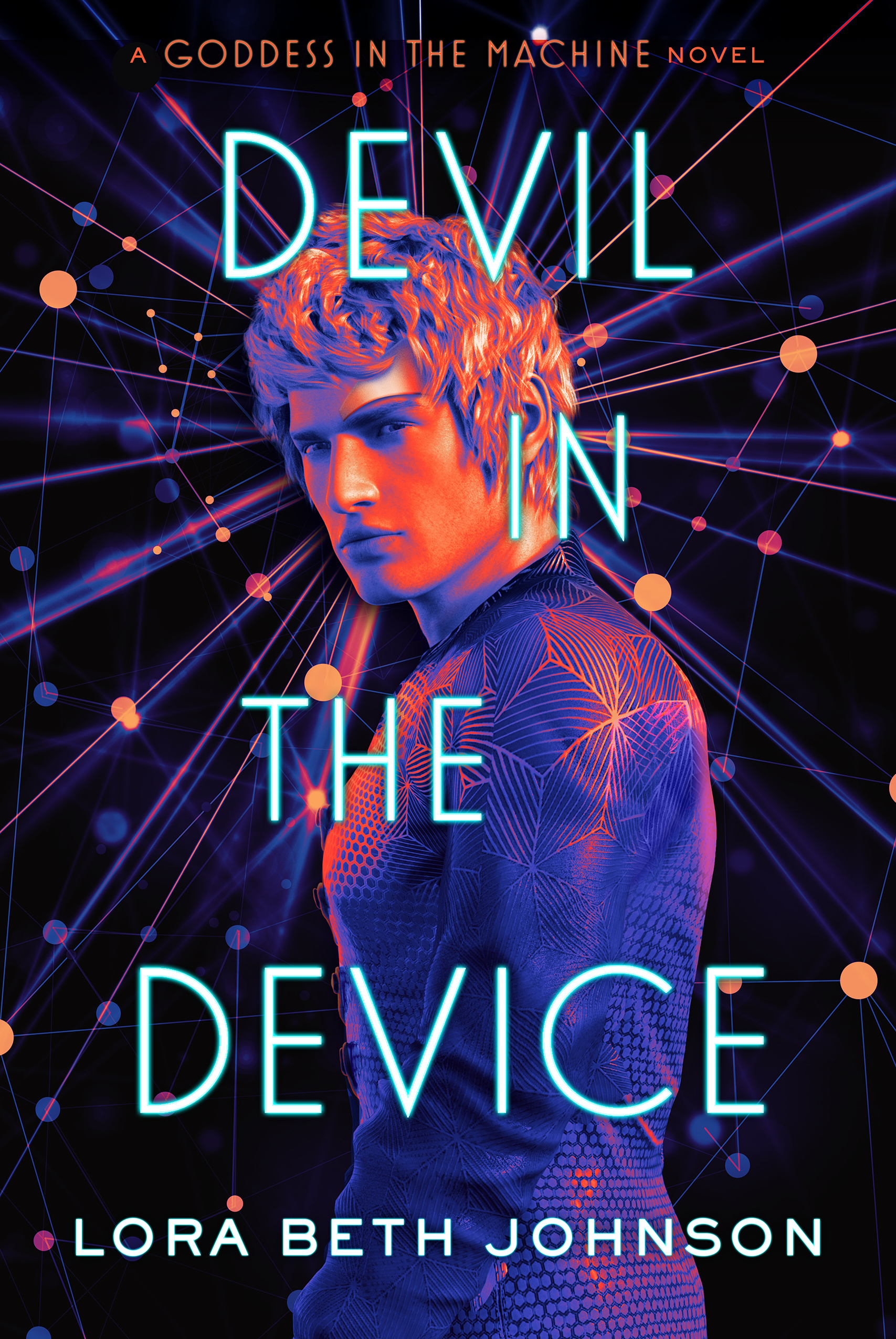
Devil in the Device (Goddess in the Machine, #2) – Lora Beth Johnson

Eerensed has been plunged into chaos.

In hiding underground, Andra grapples with her new identity and the secrets that she has uncovered. The rest of her fellow colonists, still in cryosleep, are relying on her to get off of their dying planet. But the further she gets on her mission, the more Andra realizes that the situation is far more complicated than she could have ever comprehended.

Aboveground in Eerensed, Zhade grapples with ruling the people while in disguise as Maret. His power holds tempting amounts of influence, but his people are in chaos, overrun by rogue Angels and unruly magic. Can he take control of the situation—and find out what became of Andra?

TW/CW: murder, loss of loved ones, blood/gore, substance abuse (alcohol), violence, grief, mind control, mild sexual content/innuendos

wordpress please stop autocorrecting “Zhade” to “Shade” challenge

Even without remembering…oh, at least half of Goddess in the Machine, I enjoyed reading Devil in the Device quite a lot—not quite as strong as book 1, but still endlessly twisty!

Getting into a sequel without a proper re-read or recap is always rocky; that was the case with Devil in the Device, especially the fact that I completely forgot about the weird, future Eerensed dialect of English that Zhade’s POVs were written in. I have mixed feelings on that part in general, but although it read in a very cringy way, it makes sense. I could have done without “certz” and “for true” and all that, but just like those corny Star Wars alien idioms that make no sense without context, they’re a necessary evil.

But once I got my memory jogged of book 1, Devil in the Device was a great sequel! Having the characters split up usually isn’t something I go for in sequels, but since there were only Andra and Zhade to deal with, it worked a lot more smoothly. Their split POVs gave a broader insight onto different parts of the worldbuilding, and beyond that, they created a lot of tension; most of the major revelation on Andra’s end of the line, and having Zhade be completely ignorant of almost all of it created a lot of suspense and buildup.

The fast pace was also a highlight of Devil in the Device, and with the amount of curveballs that Johnson throws throughout the course of the book, it makes for a very tense and exciting read! Secrets, deception, and betrayal all ran rampant through this book, and every page invited a new revelation. There are twists aplenty, but in the case of Devil in the Device, it turned out to be a double-edged sword; most of the twists were mind-boggling and earthshattering (@ Dr. Griffin WHOA CHILL JEEZ), but almost all of them were crammed into the last quarter of the book. All of those twists one after the other bordered on overstuffing, but overall, it had the effect of appropriately amping up the tension.

One other aspect that I’ll always appreciate about the Goddess in the Machine duology is its casual diversity—Andra is mixed-race and plus-sized, and there are consistently lots of queer secondary characters. Kiv, one of the secondary characters, is also Deaf, which I loved to see as well! The fact that he’s shown in a happy relationship makes me even happier—more disabled characters in loving relationships, please! (Plus, Kiv and Lilibet are so cute I CAN’T)

All in all, a sequel that wasn’t quite as strong as its predecessor but excelled in the plot twist department. 4 stars!

Devil in the Device is the second and final book in the Goddess in the Machine duology, preceded by Goddess in the Machine.

Today’s song:

That’s it for this week’s Book Review Tuesday! Have a wonderful rest of your day, and take care of yourselves!

Posted in Book Review Tuesday

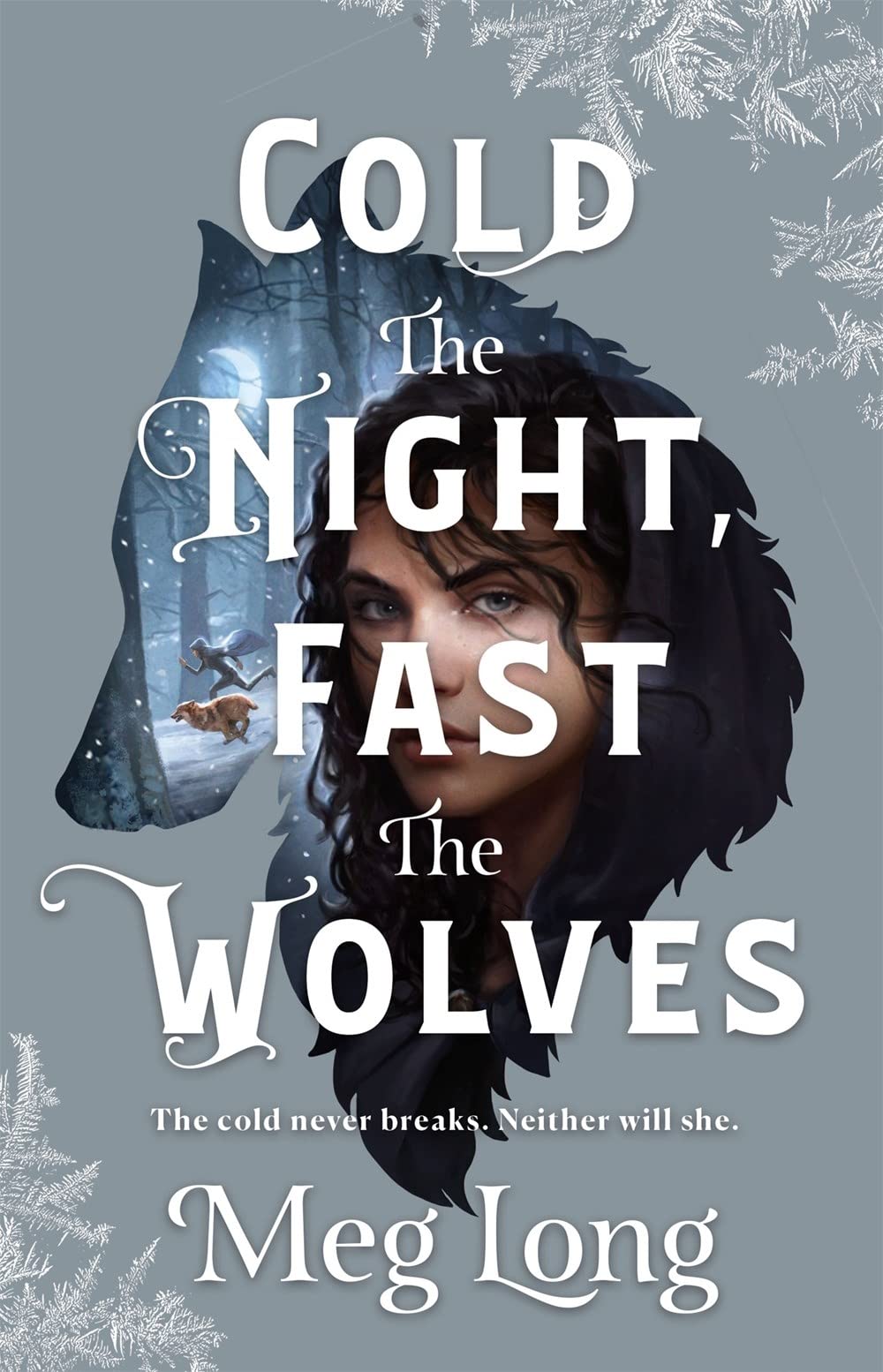
Book Review Tuesday (2/15/22) – Cold the Night, Fast the Wolves

Happy Tuesday, bibliophiles!

As soon as I found out about Cold the Night, Fast the Wolves, I immediately put it on hold at the library. The premise of a sci-fi survival story with racing wolves and vengeful gangsters hooked me in no time. However, what I found inside was a different story: too much exposition, too little story.

Enjoy this week’s review!

Amazon.com: Cold the Night, Fast the Wolves: A Novel: 9781250785060: Long,  Meg: Books

Cold the Night, Fast the Wolves – Meg Long

Sena Korhosen vowed to never involve herself in sled racing after it claimed the lives of both her mothers. But when her pickpocketing habit gets her in trouble with a prominent crime syndicate, she’s forced to flee. Along with the head gangster’s prizefighting wolf, Iska, Sean bands up with a team of scientists who can get her off of the frozen planet of Tundra—but at the cost of her helping them win the sled race that killed her moms. Trapped in the frozen wilderness, Sena faces a choice: brave the woods and the beasts within them, or risk a fate worse than death?

shadow and bone 1x06 | Explore Tumblr Posts and Blogs | Tumgir

TW/CW: violence, gore, blood, past death of parents, animal cruelty, animal death, animal attacks

This is what I get for getting my hopes up for every YA sci-fi book I come across…

It’s such a shame, though; the premise hooked me with no effort, but Cold the Night, Fast the Wolves ended up being a disappointment through and through.

For Cold the Night, Fast the Wolves, its best aspect was simultaneously its worst aspect. That aspect was the worldbuilding. I’ll start out with why most of it worked: with each page, it was clear that there was so much time put into making all of the dominoes fall in the right place. Everything from the social cleavages to Tundar’s fauna to the intricacies of the sled race were so thoughtfully written with a clear intent on making an immersive world—which Meg Long succeeded in.

However, said worldbuilding was lumped into so much of the first half of this novel that it felt more exposition than story. The plot didn’t pick up until about halfway through. I expected more of a through-and-through survival story, but Cold the Night, Fast the Wolves lingered more in civilization than it did out in the frozen wilderness that it promised. What wasn’t exposition was most often just descriptions of animal attacks, and that combination wasn’t ideal.

The other curse from the worldbuilding was the naming of certain things. There was already a degree of suspension of disbelief implied, but naming a frozen planet Tundar (tundra) and giving the animals names like rënedeer (reindeer) made Meg Long’s world all the less plausible. With all of the thought that was clearly put into this book, I feel really bad saying this, but the names just felt…plain lazy. I’m not saying that the names have to be perfect, but they shouldn’t be that derivative of what they’re based on.

With all of that mess piled on, I found it hard to get attached to any of the characters. Sena’s personality got on my nerves from the get-go, and since most of the other characters were introduced around the 1/3-1/2 mark, they came off as having little to no personality. Sena never quite developed, either, and a lot of her actions seemed to have unrealistic motivations, given her past. Add an all-too-easily-defeated villain to the mix, and you’ve got yourself a batch of very halfhearted characters.

All in all, a sci-fi novel with a bold premise that was unfortunately bogged down by too much of a good thing—great worldbuilding, but half a book’s worth of exposition to show it. 2 stars.

Luke skywalker star wars mark hamill GIF - Find on GIFER

Cold the Night, Fast the Wolves is a standalone, and is Meg Long’s debut novel.

Today’s song:

HELP I CAN’T STOP LISTENING TO THIS I LOVE IT SO MUCH

That’s it for this week’s Book Review Tuesday! Have a wonderful rest of your day, and take care of yourselves!
Posted in Book Review Tuesday

Book Review Tuesday (2/8/22) – Noor

Happy Tuesday, bibliophiles!

I’ve realized that Nnedi Okorafor is an author that I end up coming back to frequently—I’ve piled a whole lot of her books on my TBR over the years, and I’m almost never disappointed by what I read, whether it’s Remote Control or Lagoon. She’s an incredible sci-fi and Afrofuturism author, so I jumped at the chance to read Noor. I picked it up last week, and although it had some flaws, it was an endearing and immersive novel!

Enjoy this week’s review!

Amazon.com: Noor: 9780756416096: Okorafor, Nnedi: Books

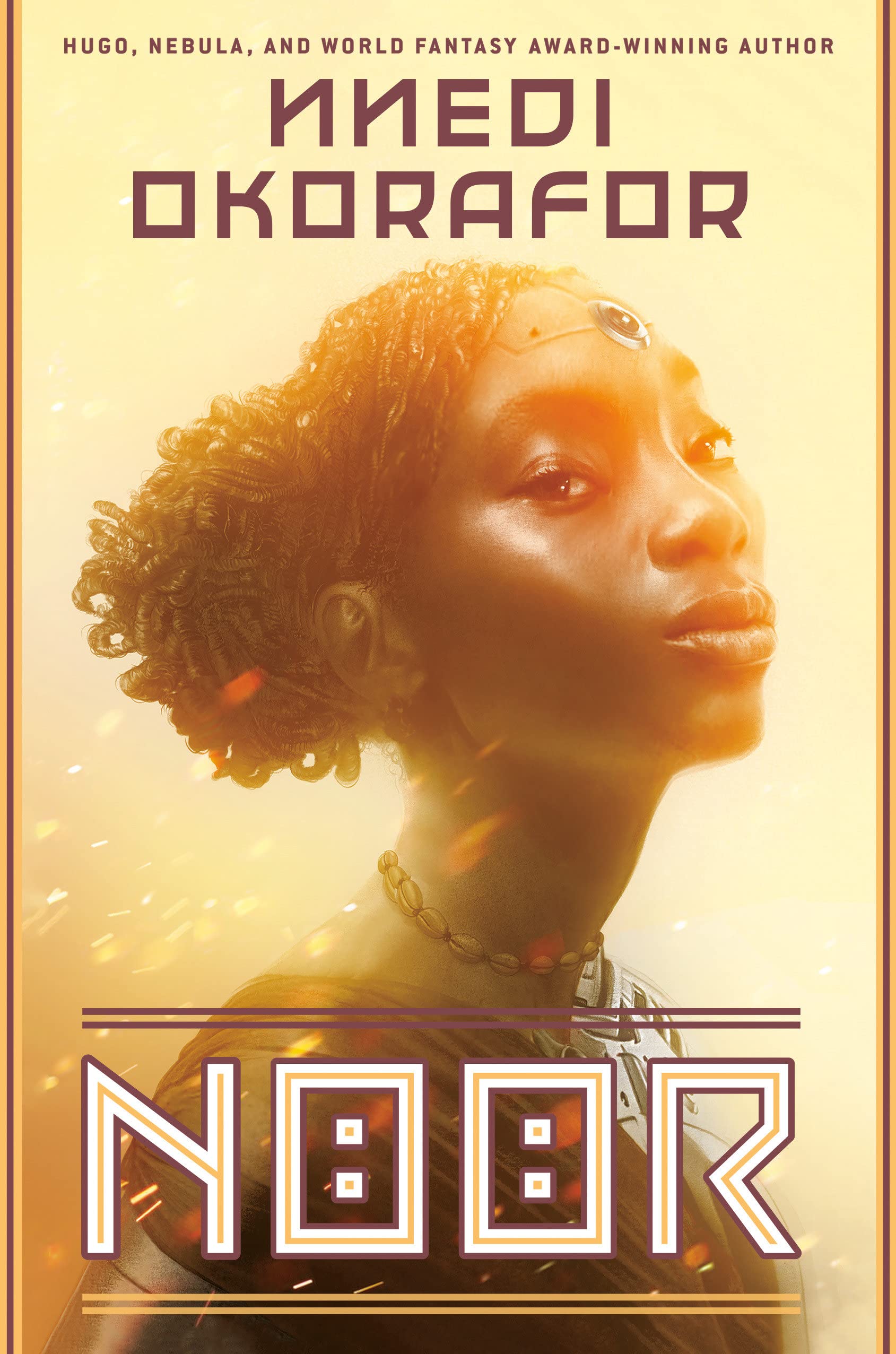
Noor – Nnedi Okorafor

Originally, AO’s name stood for Anwuli Okwudili. But she prefers the name Artificial Organism; over the years, she has gained several prosthetics and synthetic organs due to a birth defect and a car crash in her teenage years. AO is proud of the person she is, but the rest of the world is not so kind—especially when she’s caught in the middle of a violent conflict. While on the run, she meets DNA, a herdsman and a fugitive who is willing to aid in her escape. But the desert is full of dangers—the biggest of all the infamous Red Eye, said to swallow all who enter it.

jupiter's red spot great red spot gif | WiffleGif

TW/CW: murder, violence, ableism (internalized & treatment of protagonist), catcalling

[looks at this cover] why did I ever question that I like girls

Since I started on the Akata Witch series way back in middle school, Nnedi Okorafor has always been an author that I come back to. Her worlds are consistently filled with rich detail and endearing characters, and Noor was no exception. Okorafor’s newest novel is filled with cutting commentary, immersive worldbuilding, and no shortage of unique characters!

Nnedi Okorafor has a writing style that I adore; her worldbuilding and characters are stellar as they are, but she has such a way with words that everything that I mentioned practically jumps off the page. Her metaphors are often humorous and highly specific, and in Noor‘s case, they served to flesh out the characters and world even more so. Her writing never fails to impress, and Noor is another testament to the fact.

Okorafor’s characters are always endearing, but the protagonists of Noor especially shone! AO was such a unique and complex character; her backstory was more in-depth than a lot of protagonists that I can think of, and the intricacies of her history and personality were delved into without steering towards info-dumps. She and DNA had great chemistry along their journey; they bounced well off of each other both in terms of banter and personality. Even the side characters were given so much care, from the Oz-like Baba Sola to DNA’s cows.

As much as I loved all of these elements, there were a few facets that brought Noor down in some places. I have mixed feelings about how AO’s disability was portrayed; while it was clearly depicted that AO is proud of being disabled (and it’s so cool to see a Black disabled character!), there’s a lot of internalized ableism that goes unaddressed. In particular, the way that AO describes herself as “broken” and “crippled” rubbed me the wrong way. I may not have a physical disability, but the latter of the two has been known as outdated language for quite some time, and beyond that, it seems a little contrary to the part of the blurb about AO embracing herself. It’s…a good start, but it’s got some holes.

In addition, Noor had a lot to say, but it suffered from trying to cram commentary on so many different topics in a relatively short span—only 224 pages for my hardcover copy. All of the commentary was fantastic—corporate greed, environmentalism, the Western world’s misguided belief that all of Africa is “poor” and “diseased,” and how society treats disabled people are just a few of them. Problem is, while all of these are mentioned, there is so little room in the plot for them that they ended up being underdeveloped snippets. 224 pages was enough to sustain the plot, but the commentary, which was clearly meant to be the forefront, was forgotten in the dust, for the most part.

But all in all, a highly creative work from a sci-fi author who never misses. 3.75 stars, rounded up to 4!

Desert GIF - Night Canyon Timelapse - Discover & Share GIFs

Noor is a standalone, but Nnedi Okorafor is also the author of Remote Control, Lagoon, the Nsibidi Scripts (Akata Witch, Akata Warrior, and Akata Woman), the Binti trilogy (Binti, Home, and The Night Masquerade), and several other books for teens and adults.

Today’s song:

That’s it for this week’s Book Review Tuesday! Have a wonderful rest of your day, and take care of yourselves!

Posted in Book Review Tuesday

Book Review Tuesday (2/1/22) – Beyond the End of the World (The Other Side of the Sky, #2)

Happy Tuesday, bibliophiles, Happy beginning of Black History Month, and happy Lunar New Year! 🐅 My, today’s a momentous occasion…

I’ve been a fan of Amie Kaufman’s for years, and at this point, I’ll read almost anything that she writes. I discovered The Other Side of the Sky during a really tough time in my life, and reading it and immersing myself in her and Spooner’s world made the pain just that much more bearable. I preordered book 2 last year, and it came in the mail recently! Although it was a bit of a slow start, Beyond the End of the World was a jaw-dropping conclusion to a creative duology!

Now, tread lightly! This review may contain spoilers for book 1, The Other Side of the Sky! If you haven’t read book 1 and intend on doing so, I’d suggest that you skip this review just in case.

For my review of The Other Side of the Sky, click here!

Enjoy this week’s review!

Amazon.com: Beyond the End of the World: 9780062893369: Kaufman, Amie,  Spooner, Meagan: Books

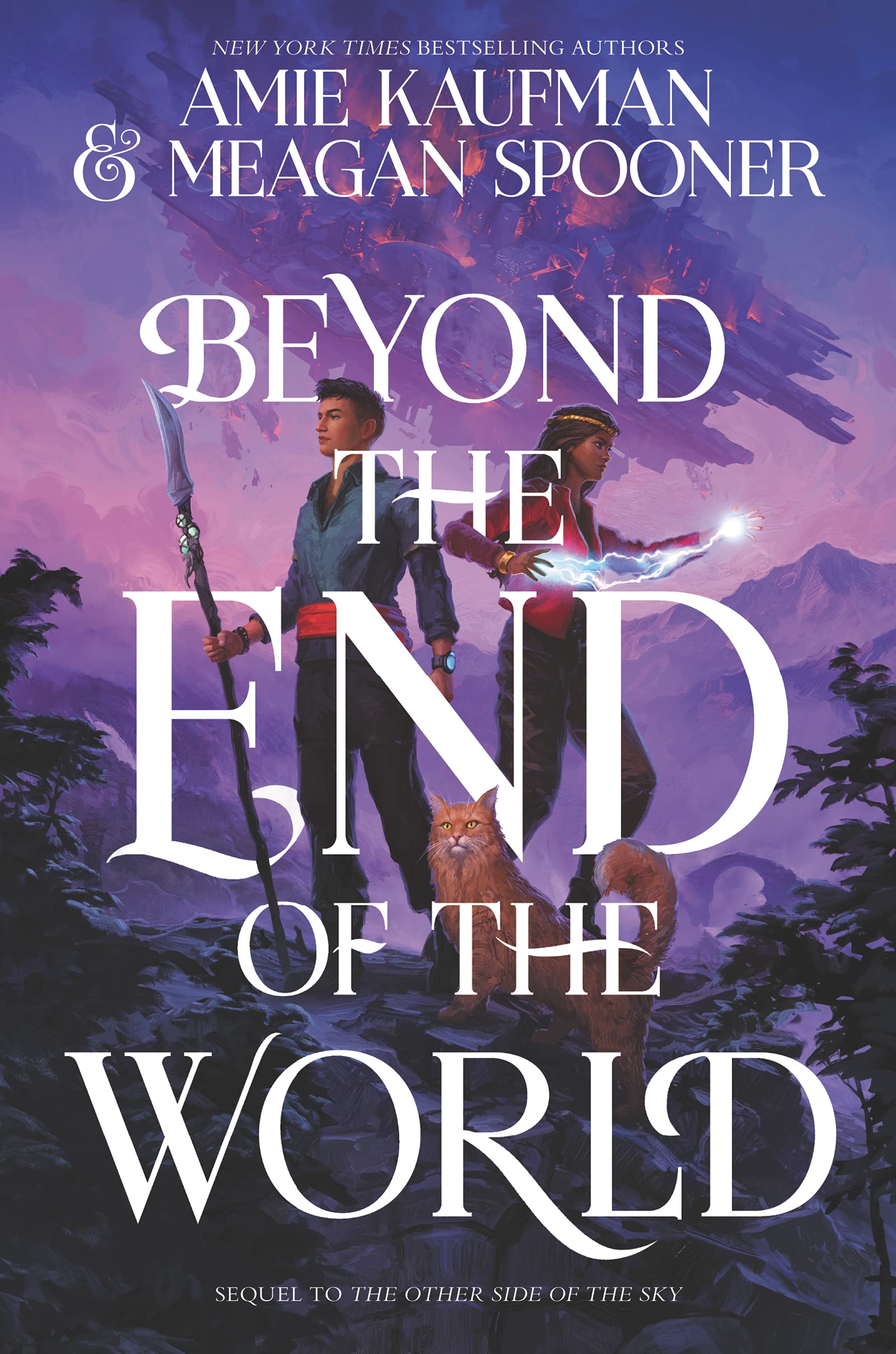
Beyond the End of the World (The Other Side of the Sky, #2) – Amie Kaufman & Meagan Spooner

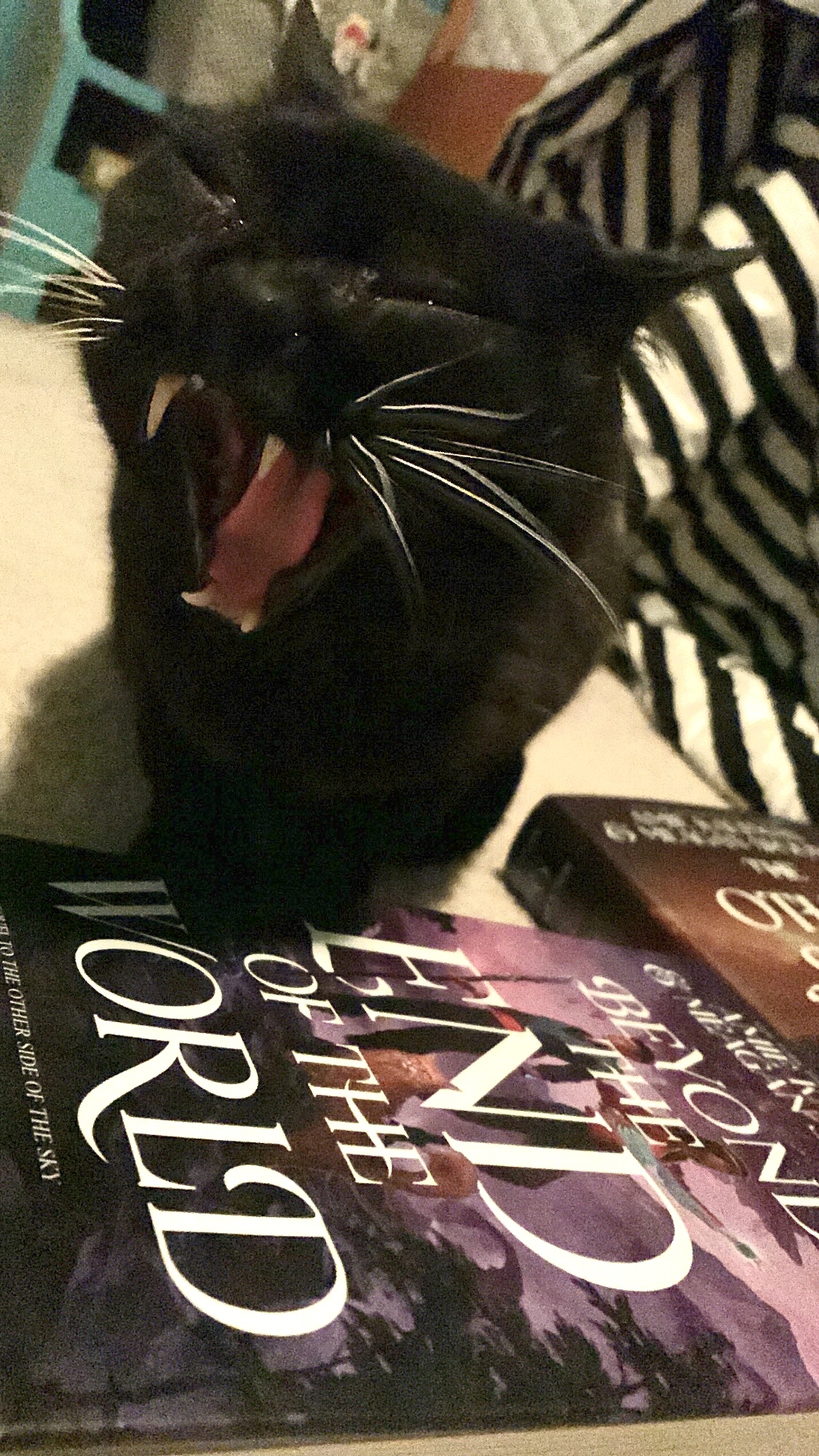
my copy ft. Anakin the cat being very tired of me

Nimh and North have switched places, and only a miracle can get them back where they each belong—and solve the conflict brewing Below.

Nimh and Inshara, the cultist bent on usurping her, are stranded in Alciel, Prince North’s domain in the clouds. But when Nimh wakes up, she realizes that Inshara has contacted the Queen and convinced her that she is Nimh. Below, Prince North is on the brink of discovering a secret that may upend all that Nimh and her people stand for. With the odds stacked against them both, their only chance is to reunite, but the hidden secrets Below may mean chaos for both North and Nimh.

Sky GIF - Sky - Discover & Share GIFs

TW/CW: train crash, frightening situations, descriptions of blood, murder

Every sequel that has a recap of what happened in the previous book is already great by my standards. But in all seriousness, Beyond the End of the World was a sequel that delivered a satisfying end to a uniquely inventive duology!

My only problem with Beyond is the first 100 or so pages; it moves a little slowly for the first quarter, and even though I love Amie Kaufman’s (and I guess Meagan Spooner’s, by proxy, even though I haven’t read any of her solo books) writing, I found myself losing interested. But once the inciting incident—Nimh’s in particular—is set into motion, Beyond’s pace accelerates to the perfect speed.

I loved the prospect of North and Nimh being trapped in worlds completely alien to them, but what made it so tense and well-executed was the introduction of conflict. Once the aftermath of book 1 fades off, Kaufman and Spooner did a fantastic job of setting up obstacles for each of them to overcome. Not only that, but these obstacles had fascinating ramifications that had such a jaw-dropping impact on the last quarter of the book.

I’m not usually one for twists thrown into the last book in the series not long before it ends, but the revelation at the end of Beyond was enough to put a giddy, baffled grin on my face. DANG. Without spoiling anything, I’m still reeling from it just thinking about it. Part of what made it so great was its implications on the worldbuilding—once this domino is set in motion, it tears down everything about Nimh’s world that you thought you knew. So well done, and so well-built-up over the course of two books!

I have one slight problem with said twist. One of the aspects of this duology that I loved so much was the fact that it’s the only “magic vs. technology” book that I’ve read that actually works. The twist, however well-executed that it was, did kind of throw a wrench in the whole concept. Again, no spoilers, but the fact that this is the direction that the twist meant that the “magic vs. technology” part was almost rendered moot. I still hold that this twist was incredibly well-written, but it’s a bit of a disappointment on the themes front.

Of course, it was wonderful to be back in Kaufman and Spooner’s shiny world of goddesses and floating cities. Although I’m more partial to Nimh than North, it was great to see them both again, and it was even sweeter to see them reunite. I didn’t feel a whole lot for the side characters, but given how wonderfully written most everything else, I could let that slide. Plus, cats. I would do anything to pet the Bindle cat.

Overall, a stunning and tense conclusion to one of the most creative series that I’ve come across in the past few years. 4 stars!

Medieval | Gif Hunt | Aesthetic gif, Gif, The witcher

Beyond the End of the World is the conclusion to the Other Side of the Sky duology, preceded by The Other Side of the Sky. Amie Kaufman and Meagan Spooner have also written the Starbound trilogy (These Broken Stars, This Shattered World, and This Fractured Light) and the Unearthed duology (Unearthed and Undying) together.

Today’s song:

besides being on of my favorite TV on the Radio songs, this music video just cracks me up every time

That’s it for this week’s Book Review Tuesday! Have a wonderful rest of your day, and take care of yourselves!
Posted in Book Review Tuesday

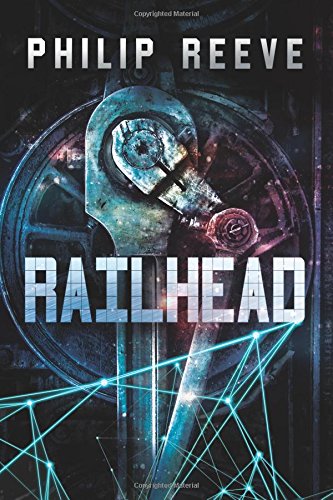
Book Review Tuesday (1/25/22) – Railhead

Happy Tuesday, bibliophiles!

As of last week, it had been ages since I’ve read anything by Philip Reeve. I’d gotten through the whole Larklight trilogy in middle school and loved it, and I read Fever Crumb as well and wasn’t as much of a fan. I forgot about him for a while, until I got a recommendation from Sabrina (thank you!) about another series of his—the Railhead series. I decided to pick it up, and I ended up liking it—after reading this, I definitely want to see how the rest of the story goes!

Enjoy this week’s review!

Amazon.com: Railhead: 9781630790486: Reeve, Philip: Books

Railhead (Railhead, #1) – Philip Reeve

In the distant future, it isn’t spaceships that transport humanity across the stars—it’s a massive network of trains. The Great Network spans across the entire galaxy, and one line can take you anywhere that you so choose. It’s the perfect place for Zen Starling, a young thief who makes a living from the goods he steals from passenger cars. But when he attracts the attention of the mysterious Raven, Zen finds himself entrenched in a royal conspiracy. Soon, his own identity as a nobody from the streets is called into question, and his success on Raven’s mission may determine the rest of his career.

Star Wars Prequel - Planet Coruscant | Star wars, Film inspiration, Gif

TW/CW: violence (fairly mild), descriptions of killing animals/dead animals, fire, fear

It’s been about 5 years since I’ve read anything by Philip Reeve; I loved the Larklight trilogy but didn’t have the same luck with Fever Crumb, so he was generally hit-or-miss for me. But ultimately, I’m glad I picked Railhead up! It was the perfect antidote after reading something as heavy as Anthem; fun, light-hearted, and fast-paced. (Thanks again for the rec, Sabrina!)

The worldbuilding of Railhead made the whole book. It’s the kind of intricate worldbuilding that I aspire to have in my own writing; no stone is left unturned in terms of the little details that make the Great Network so genuine-feeling and fleshed out. Best of all, none of it is delivered in info-dumps; pieces of information are spaced out and don’t distract from the overall story. There was so much love put into every little nook and cranny of Reeve’s world, from the trains to the android history to the graffiti on the walls. I especially loved the Hive Monks—the concept behind them was so inventive! I wished we’d seen more of Uncle Bugs and the others.

As far as characters go, I didn’t get attached to many of them, but they were at least decently flushed out. Zen himself didn’t have many traits that would distinguish him from the average middle grade/YA protagonist, and having him get saddled with this trilogy’s equivalent of the chosen one trope didn’t exactly help his case. He was simply…alright for me. I felt the same way towards most of the other characters; they were distinct enough to not be trope-y, but not distinct enough to be rememberable. I did like Nova, though. She was my favorite out of the main cast—I liked her backstory a lot, and her being an android (or a “moto,” as is the lingo in Zen Starling’s world) added a unique layer to her story.

The plot itself was a little lacking for me, but its fast pace saved it. At its worst, the plot seemed to [Robert Plant voice] ramble on without any clear direction, but at its best, it was loads of fun. You do get the sense that you’re clinging to the top of a speeding train, the way the events move—it’s very fast-paced, and given both the setting and the premise, it’s perfect!

I wasn’t as invested in the main plot, but I tended to gravitate more towards the side plots, the short anecdotes that fleshed out Railhead’s world even more. The fact that I got more excited about seeing giant manta ray creatures and looking at the insides of futuristic trains than the actual should probably say something about the book itself, but those parts gave me joy, and that’s that. Again—it’s the tiny details that made Railhead as entertaining as it was.

All in all, a romp through a futuristic world at breakneck speed that shone in its detailed worldbuilding. I’m on board with continuing the rest of the series! 3.75 stars, rounded up to 4!

Padawanlost — ✩ star wars gif meme ✩ [¾] planets: Coruscant...

Railhead is the first book in the Railhead trilogy, and it is followed by Black Light Express (#2) and Station Zero (#3). Philip Reeve is also the author of the Larklight trilogy (Larklight, Starcross, and Mothstorm), the Mortal Engines quartet (Mortal Engines, Predator’s Gold, Infernal Devices, and A Darkling Plain), the Fever Crumb series (Fever Crumb, A Web of Air, and Scrivener’s Moon), and several other series for young adults and children.

Today’s song:

That’s it for this week’s Book Review Tuesday! Have a wonderful rest of your day, and take care of yourselves!

Posted in Book Review Tuesday

Book Review Tuesday (1/18/22) – Anthem

Happy Tuesday, bibliophiles!

I went on a kick of Noah Hawley’s books in the first half of 2021, and I managed to read all of them. I’d already been exposed to his writing through Fargo and Legion (my two favorite shows), and my experience of his books ranged from just good to masterful. So naturally, I was excited to hear that he had a new book coming our way in 2022! I preordered it and read it last week, and…well, it was hard to read. Great writing, as always, but god, it was heavy.

Enjoy this week’s review!

Anthem: Hawley, Noah: 9781538711514: Amazon.com: Books

Anthem – Noah Hawley

my copy ft. my bookshelf (including the other two Noah Hawley books I own) & a cool filter

Our world is in shambles. The political chasm between the American people is widening more with each day, the oceans are rising, and now, teenagers are committing suicide by the thousands each day.

One such teenager was Claire Oliver, the daughter of a reviled pharmaceutical mogul. After her death by an overdose, her parents send Simon, her younger brother, to a rehab center in Chicago to make sense of her passing. There, he meets a strange figure who only goes by The Prophet. The Prophet’s enigmatic visions lead Simon and his fellow patients out of the rehab center and on the road to a shadowy man known only as the Wizard, whose downfall may be their only means of salvation.

satchel cannon | Explore Tumblr Posts and Blogs | Tumgir

TW/CW: suicide (overdosing, hanging, jumping from bridges, etc.), racism, descriptions of rape/sexual assault, graphic violence, anti-semitism, climate change, brief descriptions of genitalia, blood

Anthem, in its essence, is Noah Hawley’s megaphone for existential dread. But given the times, it’s understandable.

Let me be crystal-clear about this: it’s a bad idea to read this book if you’re not in a good headspace. A lot of what Anthem deals with is a worst-case scenario of the future: near anarchy, the political divisions of the U.S. with the volume turned up even more so, mass suicide, climate change, and every other bit of dystopia you can possibly imagine. This is Hawley’s vision of the worst that could possibly be, and he does it well. What’s really scary about it, though, is that some parts were almost plausible. I’m not cynical enough to call it realistic, but I’m scared enough to call it partially feasible. It’s scary. enough that Noah Hawley flat out apologizes for the world he created—like the horrific worst case parenting scenario of The Good Father, it’s the most pessimistic outcome on the spectrum, but it’s well-written.

As always, Noah Hawley has a unique way with words that paints the near-future in a number of ways. There’s the main plot, in which a band of disillusioned, teenage rehab patients go on a cross-country road trip based solely on a 14-year-old who claims to have visions from God and encounter everything from gangs of gun-toting clowns to lions. But interspersed within are anecdotes from a wide cast of characters—most of which are unlikeable, as per Noah Hawley standards—that add to the genuinely disturbing feel of the world he’s created.

However, Hawley’s vivid descriptions often gave way to portions of flat-out rambling—about the state of the world, the nature of the darkest parts of the human species, the possibilities of a world like the one of Anthem. This part was what bogged me down the most; as a young person who would theoretically be maturing into this dystopia, it…well, it freaked me out, to put it plainly. I’d been on a stint of finishing books in a day, but this one took me almost four just because I couldn’t swallow all of the statistics and existential doom at once. Even so, at least it was well-written; Hawley’s talent for spinning words and stories, combined with all manner of allusions, made it slightly easier to palate.

Through it all, Hawley presents a strange, pseudo-fantasy quest throughout a changed America, and every bit of it hooked me. Every little detail made for a landscape that felt tangible enough to touch. I’ll have to go back and read some of his other books to see if this is really a hallmark of his, but in Anthem, at least, all of the sensory details were what made the world seem so frighteningly real: the paintings on the side of the van, the music on the car radio, the interior decor of the Wizard’s sadistic mansion. Without them, a book like Anthem might not have succeeded for me—if you’re going to make commentary on what the future might turn out to be, tell us what this future looks like.

Most of my other problems were more nitpicky; some of the dialogue, especially with the teenaged characters, felt at times very unrealistic. (sir, I’m aware that you have gen z kids but I, also a gen z kid, can assure you that nobody, nobody, says “LOL” out loud.) That part was inexcusable. There were some minor threads that weren’t resolved all the way (ex. the whole “these memes are driving our children to suicide” subplot—the meme is explained, but given that it was the first line of the synopsis, I expected it to play a bigger role), and the ending, although it also was explained, felt rushed. There’s hope in the resolution, but the resolution was so glossed over that it couldn’t be felt all the way.

But through it all, one thing was clear to me—this felt like a pandemic book. I don’t mean that in a derogatory way. Anthem just seems like one of the first in a new wave of dystopian novels, books that speak to the fear, chaos, and violence of the past six years. Anthem feels like the kind of book that will be remembered as distinctly “21st century”: post-Trump, amidst the COVID-19 pandemic, and appropriately frightened for what the future might hold not just for America, but for us as a species.

All in all, a frightening vision of the future from one of my favorite literary masterminds, but not quite coherent enough to his best work. 3.75 stars, rounded up to 4!

fargo fx | Explore Tumblr Posts and Blogs | Tumgir

Anthem is a standalone novel, but Noah Hawley is also the author of Before the Fall, The Punch, The Good Father, Other People’s Weddings, and A Conspiracy of Tall Men. Hawley has also adapted the Coen Brothers’ Fargo and Marvel Comics’ Legion for TV on FX and Marvel Television.

Today’s song:

That’s it for this week’s Book Review Tuesday! Have a wonderful rest of your day, and take care of yourselves!
Posted in Book Review Tuesday

Book Review Tuesday (1/11/22) – The Kindred

Happy Tuesday, bibliophiles!

Ever since I read The Sound of Stars back in 2020, I’ve been eagerly anticipating Alechia Dow’s next book. I preordered The Kindred last year knowing that I’d love it, and although I didn’t enjoy it as much as The Sound of Stars, it was a wonderfully sweet and rollicking novel.

Enjoy this week’s review!

The Kindred by Alechia Dow

The Kindred – Alechia Dow

my copy ft. some more purplish sci-fi books & a cool filter

After a violent, class-based revolution ravaged the Monchuri system, the Kindred program is introduced to quell the chaos; in order to ensure equal representation within the kingdom, mind pairings between citizens from all over the system.

Felix and Joy are paired by the Kindred, but their backgrounds couldn’t be more different; Felix is the Duke of the Monchuri system, while Joy is a commoner in the poorest planet in the system. But when the rest of the royal family is assassinated and Felix is put under suspicion, they escape together—only to crash-land on Earth. With the galaxy hunting for them and targets on their backs on Earth, the two must find a way to return home and prove Felix’s innocence.

Download this awesome wallpaper - Wallpaper Cave

TW/CW: violence, racism, fatphobia/bodyshaming, murder, kidnapping

The Kindred wasn’t quite as potent as The Sound of Stars was for me, but in no way does that mean that I didn’t enjoy it. In fact, it’s solid proof that if I see Alechia Dow’s name on a book, I’ll probably read it.

Despite the trigger warnings I listed, The Kindred is fairly light-hearted; even with all of these topics discussed (all with aplomb), it still manages to be a feel-good, tender read throughout. The themes of racism and fatphobia (mostly with regards to Joy) are handled in a sensitive way that doesn’t dull their importance, but the book is consistently light-hearted and warm. It hits the perfect balance of not diminishing these themes and keeping levity within the book, and it’s the perfect book if you want sci-fi that will cheer you up!

Everything I loved about The Sound of Stars was in The Kindred in spades! Felix and Joy were such endearing characters, and their chemistry together was perfect. They had conflicting personalities on the surface level (with Felix being the more reckless one and Joy being more sensible and reserved), but as they bonded, their relationship became the textbook example of “opposites attract” done well! Plus, it’s always wonderful to have queer couples like them front and center. Joy is demisexual/asexual, and I believe Felix is pansexual or queer? (Felix’s sexuality wasn’t specified, but it’s mentioned that he’s been in romantic relationships regardless of gender so I’ll say queer for now.) Alechia Dow never fails to give us the diverse stories we need.

As far as the plot goes, I wasn’t invested in it as much as I was the characters. Most of it was a bit predictable—not much subtext, surface-level political intrigue, a neat and tidy end to the conflict, and all that. But I didn’t mind this time; the focus was supposed to be on Felix and Joy’s romance, after all. The Earth part of the story was funny most of the time; I didn’t get as many of the music references this time, unlike with The Sound of Stars (definitely not a Swiftie here haha), but the fact that there’s a black cat named Chadwick sold me. BEYOND CUTE.

My other main problem with The Kindred was the aliens themselves. It’s one of my main pet peeves in sci-fi in general: aliens that look like humans, but with a few very minor differences. Although there were some side aliens that were described as non-human, Joy and Felix and their species were just…humans with better technology? Eh…I will say though, at least they’re not white this time. In particular, Joy is plus-size and Black-coded, which was a vast improvement from the white-coded aliens that usually end up in the aforementioned trope. I’m willing to let it slide this time (sort of) because a) Alechia Dow is a great writer and b) diversity.

All in all, a romantic, diverse, and all-around feel-good sci-fi from an author that I’ll be sure to watch in the future. 4 stars!

Thor 3 Ragnarok : Le film de tous les changements pour Thor ? | melty
The Kindred summed up in a single gif

The Kindred is a standalone, but it is set in the same universe as The Sound of Stars, Alechia Dow’s debut novel. You don’t have to read one to understand the other, but there are nods to The Sound of Stars throughout The Kindred. Alechia Dow is also the author of the forthcoming Sweet Stakes (expected to be released in 2023), and contributed to the anthology Out There: Into the Queer New Yonder.

Today’s song:

That’s it for this week’s Book Review Tuesday! Have a wonderful rest of your day, and take care of yourselves!
Posted in Book Review Tuesday

Book Review Tuesday (1/4/22) – Rise of the Red Hand

Happy Tuesday, bibliophiles!

Since I haven’t been able to go to the library lately, I’ve been going through some books on my wish list at the Kindle library. I found this in the sci-fi section, and despite a lot of mediocre to bad reviews, I figured that I would give it a try. And yes, it was a little messy at times, but it presented a unique addition to the YA dystopia genre.

Enjoy this week’s review!

Rise of the Red Hand (The Mechanists, #1) by Olivia Chadha

Rise of the Red Hand (The Mechanists, #1) – Olivia Chadha

25 years after a devastating nuclear war, Ashiva ekes out a living in the slums of the South Asian province. While the rich gorge on new technology, the poor barely get by on secondhand tech and scarce food and water.

Ashiva works for the Red Hand, a revolutionary organization with the goal of dismantling the oppressive government of the South Asian province. As a new sickness ravages the province, Ashiva is forced to ally with Riz-Ali, a rich uplander who may hold the key to exposing a dark conspiracy within the government.

ohapplejuice.tumblr.com - Tumbex

TW/CW: human experimentation, pandemic, graphic violence, emergency medical procedures, death, blood, faked disability, attempted murder

Rise of the Red Hand was more than a little messy, but it had enough unique takes on the average dystopia to pull it through.

What sets Rise of the Red Hand apart from most everything else in the YA dystopian genre is its setting; it’s set in a futuristic South Asia, which is really cool to see, especially since 90% of the dystopias I’ve read are set somewhere in the U.S.! That, along with the atmosphere of the future world that Chadha created and the interspersed South Asian culture and slang, was a breath of fresh air.

Along with that, the highlight of Rise of the Red Hand is that it made dystopia feel…human. There were slices of life that the reader witnesses amidst the horror and destruction—the last real-food vendor in the market, a group of children putting a “kick me” sign on a government robot—that made the setting feel genuine. Dystopias are supposed to be bleak and horrible, of course—that’s the definition of a dystopia in the first place—but elements like these are what make it believable. No matter the circumstances, little pockets of life always thrive. Or, in the words of Jeff Goldblum, “Life finds a way.”

I have mixed feelings about the worldbuilding. On the one hand, Chadha did a good job of making a thorough buildup to the current state of her world, and I didn’t feel as though I were missing anything as I read it. On the other hand, this information was delivered in chunks that were often hefty and distracted from the present dialogue. Good worldbuilding, but ruined by getting dropped on the reader’s head like cinderblocks. Also, on the subject of the provinces…if Asia was divided into the South Asian province and the Asian province, why were North America, South America, and Africa just provinces on their own? It made sense for Europe and Australia, since they’re both fairly small as far as continents go, but…North and South America and Africa are huge. How could that be one province?

The plot itself wasn’t terribly unique; Chadha’s writing made it compelling enough, but underneath all its trappings, it was your garden-variety “take down the oppressive government (that is oppressive for very vague and unspecified reasons) kind of dystopian plot. It’s not to say that it isn’t bad, just overdone. Take away the thorough worldbuilding and unique setting, and this could have been something from 10 years ago, post-Hunger Games. However, I will say that at least it was specified why the government was so oppressive—and a lot of it’s horribly sinister. But again, the setting was the saving grace here—not much else.

Other than that, the characters were decent—not terribly interesting, but not cardboard either. The romance between Ashiva and Riz-Ali felt very rushed and insta-love-y, and was ultimately very unnecessary. Taru’s chapters didn’t feel very necessary, and her voice bothered me. And on the subject of Taru—why exactly did they fake her having brittle-bone disease? Not only are we supposed to be rooting for Ashiva, who conspired to do this, how is that even a solution? That part just felt…weird.

Overall, a dystopia that boasts a unique setting, humanity and atmosphere—but not a lot else. 3 stars.

Dystopia GIFs - Get the best GIF on GIPHY

Rise of the Red Hand is the first book in the Mechanists duology, and it is followed by an untitled sequel set for release this year. Olivia Chadha is also the author of Balance of Fragile Things.

Today’s song:

the harmony at the very end is so pretty 🥺

That’s it for this week’s Book Review Tuesday! Have a wonderful rest of your day, and take care of yourselves!
Posted in Book Review Tuesday

Book Review Tuesday (12/28/21) – Squad

Happy Tuesday, bibliophiles!

After finishing and loving The Mermaid, the Witch, and the Sea, Squad immediately came on my radar—with the details of the Mermaid sequel being hazy at best, I needed more of Maggie Tokuda-Hall’s writing in my life. I found it in Squad, a punchy and timely graphic novel with bright colors and inner darkness.

Enjoy this week’s review!

Amazon.com: Squad: 9780062943149: Tokuda-Hall, Maggie, Sterle, Lisa: Books

Squad – Maggie Tokuda-Hall and Lisa Sterle

In her junior year, Becca moves to a new high school, thinking that she’ll have to settle with not fitting in. To her surprise, she’s taken under the wings of the three most popular girls in school, and soon, she is swept up into a world of new clothes and rowdy parties. But these three girls have a secret—they’re werewolves, and their prey are the predatory boys they find at their parties. But as the police investigate their most recent killing, Becca must decide if she still wants to be a part of their werewolf Squad.

Squad : Tokuda-Hall, Maggie, Sterle, Lisa: Amazon.ca: Books
art by Lisa Sterle

TW/CW: attempted rape, misogyny, racism, graphic violence, gore/blood

With its juxtaposition of a bright color palette and the darkness of werewolves out for blood, Squad is the perfect graphic novel for this day and age, and presents a timely theme—when does justice become purely revenge?

I’ve been a fan of Tokuda-Hall’s since The Mermaid, the Witch, and the Sea, but I hadn’t seen anything of Lisa Sterle’s before this. Now, I can definitively say that they make a fantastic graphic novel team! The combination of Tokuda-Hall’s dark and witty writing and Sterle’s bright colors and distinctive faces (both human and wolf) meshed so well together, making the storytelling all the more cohesive. Sterle’s art style is one that I really liked, and it’s the perfect style for this story. I’d like to see something else from this team—their respective writing and art styles were perfect for the aesthetic of Squad!

Right off the bat, I loved the concept of this novel and the implications it had. The idea of a clique of werewolves preying on rapists at parties already had my attention, and this part was executed so well! But beyond this, Squad asks us the question that’s become so prevalent with #MeToo and the growing movement to hold rapists accountable: when does getting back at the perpetrator become pure revenge and not accountability? Seeing all of this through the eyes of Becca—the newest in what we find out is a long line of werewolves—is a perfect way to show these themes from the perspective of a newcomer.

Becca’s perspective also serves as a wonderful way to show how dangerous trying to fit in can be. Over the course of Squad, a rift begins to form between these four girls, especially with Arianna, who has begun to break all the rules set by their previous “alpha,” and Amanda, who seems to be the only one willing to stick to their original plans. All of this threatens to tear Becca apart, even when her own mother pushes her to continue climbing the social ladder. It presents a great dilemma for Becca—is it worth it to go against what she feels is right for a chance at power?

However, there were a few things that I didn’t quite like about Squad. First off, the ending felt very abrupt and unresolved. It went from point A to point B with no real correlation, and it simply…ended. From reading two of her works now, I’d say that endings aren’t Tokuda-Hall’s strong suit; I didn’t mind the ending of The Mermaid, the Witch, and the Sea as much as I did this one (although my friends in book club would probably say otherwise lol), but it still felt rushed. Squad’s ending was still sweet, but it lacked a cohesive resolution.

In addition, while I loved the idea of a sapphic werewolf romance, the relationship between Becca and Marley was very rushed. Like the ending, I loved what little I saw of it (especially that last scene!), but it felt crammed into the last third of the story and bordered on insta-love. Plus, I have mixed feelings about Becca being paired with Marley; it made sense in concept, since they were both caught up in the conflict of the rest of the squad, but given some of the offhand comments that Marley makes about Becca in the beginning, it didn’t make sense that Becca would immediately tolerate all that and fall in love. Maybe if we’d seen if Marley had a change of heart or at least apologized about some of those comments, it might have made sense. But the romance ended up being sweet, but sloppily done. Almost an afterthought.

All in all, a biting (no pun intended) and important tale of the line between accountability and revenge. 4.25 stars!

Squad : Tokuda-Hall, Maggie, Sterle, Lisa: Amazon.ca: Books

Squad is a standalone, but Maggie Tokuda-Hall is also the author of The Mermaid, the Witch, and the Sea. Lisa Sterle is also the illustrator of Witchblood and the creator of the Modern Witch Tarot Deck.

Today’s song:

That’s it for this week’s Book Review Tuesday, and the last Book Review Tuesday of 2021! Have a wonderful rest of your day, and take care of yourselves!