Posted in Book Review Tuesday

Book Review Tuesday (2/4/25) – Death of the Author

Happy Tuesday, bibliophiles!

I’ve been a longtime fan of Nnedi Okorafor, albeit on and off—I picked up Akata Witch back when I was in middle school, and then discovered her adult books when I was in high school. Since then, I’ve been a fan of her quirky brand of Africanfuturism. You can imagine my surprise when I found out that Death of the Author was not an addendum to her long sci-fi fantasy canon, but instead literary fiction—albeit, with a dash of sci-fi. Either way, the switch from genre to genre is as smooth as I’d expect from Nnedi Okorafor.

Enjoy this week’s review!

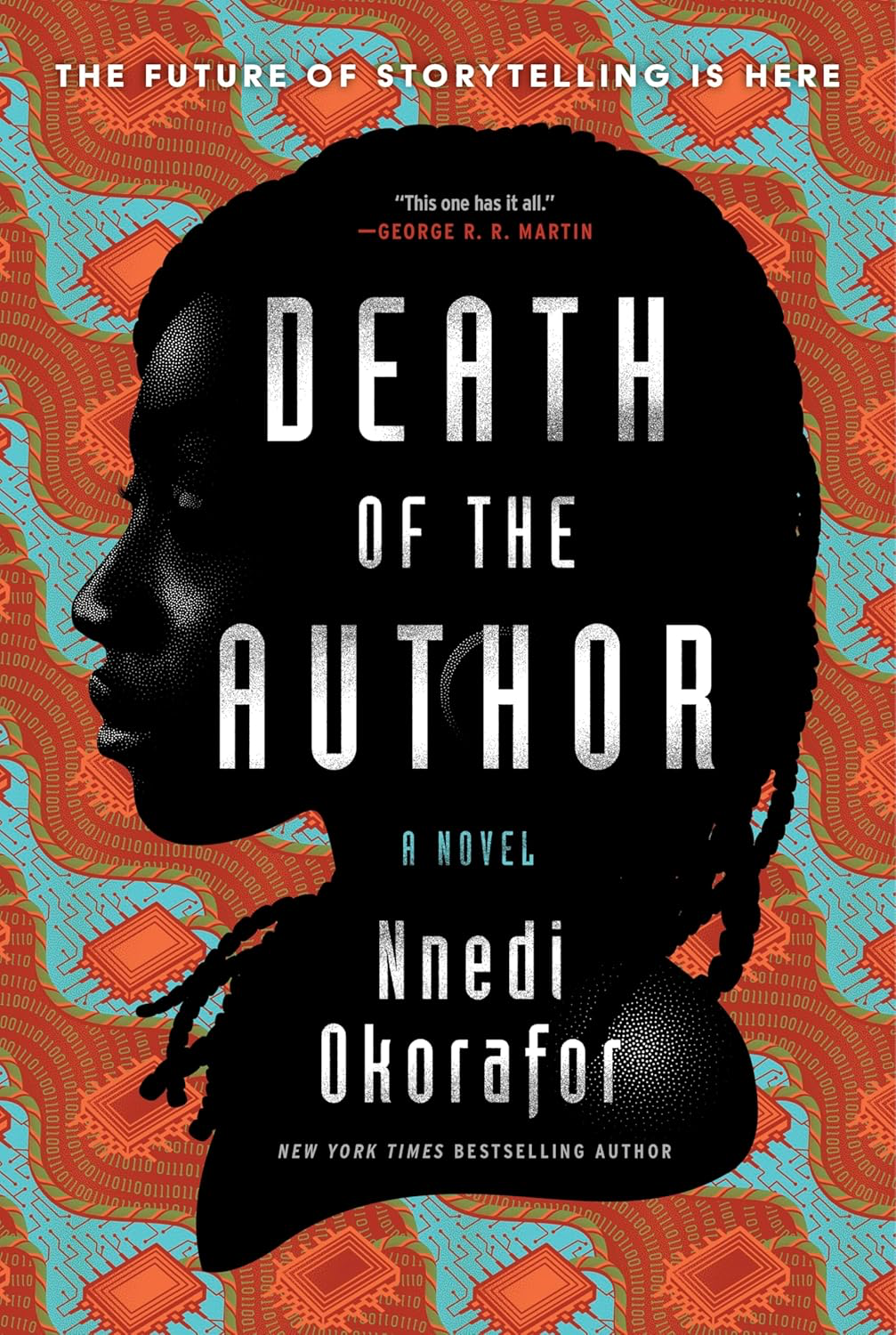
Death of the Author – Nnedi Okorafor

Zelu is on the verge of giving up her dream to be a writer. After a pile of rejected manuscripts and a botched job as a professor, she moves back in with her overbearing, judgmental family as she attempts to get back on her feet. But when a spark suddenly comes to her, she has a bestseller on her hands: Rusted Robots. As she grapples with the price of fame and the mobility—and simultaneous lack thereof—Zelu must come to terms with her own identity as she explores the fabrication of it that the public has created for her.

TW/CW: substance abuse, ableism (external & internalized), loss of a parent, near-death situations, kidnapping

Of all people, I didn’t expect Nnedi Okorafor to take the leap into literary fiction, and after I found out the switch in genre, I didn’t expect to enjoy Death of the Author as much as I did. Thankfully, it’s only really literary in the sense that it’s contemporary, realistic fiction…mostly. The woven tapestry of Zelu’s real life and her creation, Rusted Robots, turned out to be a powerful meditation on the nature of art and identity.

Once again, make no mistake: this is fiction, but it’s not entirely just fiction. The assumption is that it’s a handful of years in the future; Zelu has fairly futuristic, adaptive prosthetics that are still in beta testing, and she tests out an automated cab service that’s been newly introduced to the streets of Chicago. Yet Okorafor takes the same skilled hand that she uses to craft intricate, far-future worlds and translates it into the idiosyncrasies of modern life, from the gauntlet of social media fame (and harassment) to being in the confines of a chaotic, judgmental family. For every character that was introduced, Okorafor matched them with an unforgettable personality, even if they only appeared for a few pages. All of the complex, rapidly fluctuated emotions were depicted with sensitivity, from the highest joys to the deepest pits of anguish and the plentiful uncertainty in between. Even without her talent for worldbuilding, Okorafor is a force to be reckoned with, and Death of the Author is proof.

I was hesitantly optimistic that Okorafor was writing a disabled main character again; Noor was a great novel, but from my memory, there was quite a bit of internalized ableism in the main character that went unaddressed. (However, somehow I didn’t know that Okorafor has experience with disability and was herself temporarily paralyzed, so my bad.) The setting couldn’t be more different for Death of the Author, but Okorafor has certainly stepped up her game as far as writing disabled characters—and part of it is that Zelu is unlikable. More often than not, you can at least sympathize with her, but at times, you can see her for the insufferable, argumentative, reckless stoner that her family sometimes sees her as. Of course, not every disabled character has to be likeable, but her relative un-likeability made some of the novel’s most powerful commentary shine even more. As she grapples with her meteoric rise to literary fame, Zelu’s fans place the burden of her being a “role model” for a number of communities: Black, woman, Nigerian-American, disabled. Being a role model can be powerful, but as soon as people saw Zelu as more of a role model than a person, it disregarded her humanity in an entirely different way. She became an example, not an autonomous being—something that is intimately tied to what many disabled people experience. In that way, Zelu represents a leap in how Okorafor writes her disabled protagonists—not just independent, but human.

I don’t have a ton of experience with meta-fiction—it’s not a matter of me not liking it, I just hardly get around to reading much of it—but Death of the Author pulls it off with ease. If you’re still not convinced that Okorafor’s literary fiction isn’t for you, you’ll at least be tided over by her signature brand of Africanfuturism, complete with the landscape of a futuristic Nigeria, robots, and appearances from Udide. It’s somehow a delightful vision of the future, where types of robots have proliferated across the face of the Earth in the face of the extinction of the human race. It’s threaded into Zelu’s life, yet it’s also a clever distillation of the novel’s themes; Ankara’s struggle with coexisting with Ijele inside of his head, as well as the changing world around him, spoke to the themes of embracing collaboration and the blurry relationship between creator and reader.

Which brings me to the whole “death of the author” part. I’ll admit, the Roland Barthes quote from the (original) “Death of the Author” gave me literary theory flashbacks. But as a grounding concept for the book, I love how Okorafor’s Death of the Author playfully pokes fun at the concept. Here, it’s as though the concept has been subsumed by the publishing industry; instead of taking Zelu’s novel as tied to her heritage and her disabled identity, the world swallows it and regurgitates a whitewashed, Americanized movie adaptation that the public eats up. (“Look what they’ve done to my song, Ma…”) Yet at the same time, Zelu is confronted by readers who insistently pester her, insisting that everything in the novel is fully tied to her identity and selfhood. Death of the Author’s strength is the clarity it finds in the balance. Zelu’s work is intimately tied to her identity, but just as intimately tied to her imagination. Her being marginalized meant that people saw her work as surely being solely about her identity, but that wasn’t the whole story either. (The note in the acknowledgements about Okorafor talking to her daughter about worrying that readers would think that Zelu is her makes the point all the more clear.) In this case, fence-sitting is the most reasonable position I can think of—to consider reader interpretation first and foremost can have fruitful results, but to deny the lived experience veers into foolishness, and vice versa; Okorafor’s embrace of the area in the middle is what made the message so clear. Reading and world-creation is a twin act, created both by ourselves and those who receive our work—it’s not a simple question of one or the other.

All in all, a surprising novel that at first seemed like a left turn, but turned out to be another testament to Nnedi Okorafor’s enduring talent. 4 stars!

Death of the Author is a standalone, but Nnedi Okorafor is also the author of several books for adults, teens, and children, including the Binti trilogy (Binti, Home, and The Night Masquerade) the Nsibidi Scripts series (Akata Witch, Akata Warrior, and Akata Woman), Lagoon, Noor, the Desert Magician’s Duology (Shadow Speaker and Like Thunder), and many more.

Today’s song:

ADORE this album

That’s it for this week’s Book Review Tuesday! Have a wonderful rest of your day, and take care of yourselves!

Posted in Book Review Tuesday

Book Review Tuesday (1/28/25) – The Marble Queen

Happy Tuesday, bibliophiles!

Graphic novels haven’t been all I’ve been reading this month, but I’ve certainly been on a kick of reviewing them. Unfortunately, this one wasn’t nearly as good as The Infinity Particle, but it’s apples and oranges to compare them. I really need to stop putting everything with “sapphic” and “fantasy” in the description on my TBR, because while I love those two things together, they aren’t automatically the recipe for a good book. Sadly, The Marble Queen is proof of that.

Enjoy this week’s review!

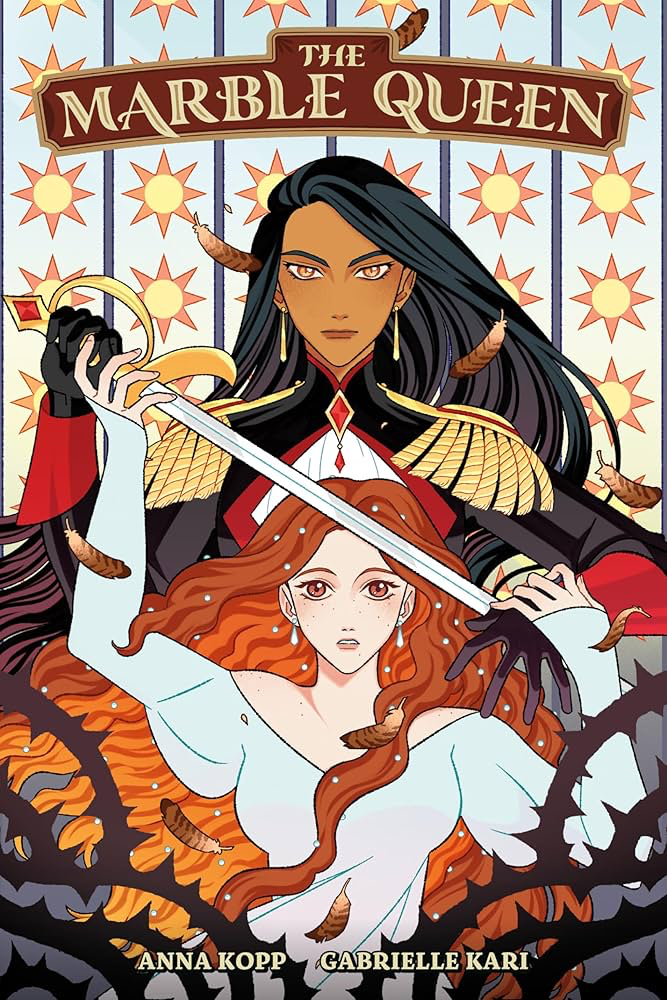
The Marble Queen – Anna Kopp and Gabrielle Kari

Princess Amelia lives in a kingdom in turmoil. Accosted on all sides by pirates and on the brink of war between its neighboring nations, Marion is on the verge of collapse. Only a miracle can save it—and that miracle may be to marry Amelia off to the prince of the neighboring kingdom of Iliad. But soon, she finds out that there was a mistake—it was not the prince she is being married off to, but the new queen, the stunning Salira. Stuck in a foreign kingdom with no control over her destiny, Amelia searches for answers. But with political forces from all sides conspiring against them, she must ally with Salira in order to save both of their kingdoms from ruin.

art by Gabrielle Kari

TW/CW: blood, violence, loss of loved ones, anxiety, poisoning (attempted)

I went into this graphic novel thinking I’d get a sapphic fantasy. The sapphics? They’re here. The fantasy? Not so much. The writing and artwork? The latter picked up some of the slack left by the rushed writing, but not enough. Given more page time and refinement, The Marble Queen could have been something promising, but it was clearly a case of too many plot ideas in a shell that could not hold all of them.

If you’re looking for fantasy, The Marble Queen will likely disappoint. If you’re looking for something more along the lines of a regency romance with political intrigue thrown in, you might be more satisfied. The Marble Queen has plenty of ballroom dancing, flowy dresses, court intrigue, and pirates, but nothing that would necessarily separate it from something in our history. There was a vague, throwaway sequence about some crystals beneath Iliad that supposedly had magical powers, but it ended up having zero consequence to the plot—it felt like Kopp threw it in just so that she could say “See? See? This is fantasy, we promise!” Also, so many of the place names felt so randomly plucked and too close to real world things—kingdoms called Marion (not necessarily a common name, but similar enough to Marianne/Maryanne that it loses the fantastical feel) and Iliad (I don’t think I have to explain that one) made the worldbuilding feel even lazier. The Marble Queen’s artwork also had a lack of immersion—other than the glimpses we got of the palace and the outside world, many of the characters were shown on flat, monochrome backgrounds, making it difficult to get a full picture of the world. Had this been historical fiction with a loose basis in some of our cultures, it might have been more effective.

Additionally, The Marble Queen was all over the place in terms of plot. I got the impression that Kopp and Kari had a plethora of ideas for what to do with the story, but not nearly enough time to execute them. As a result, every subplot felt smushed together like sardines in a tin can—so many of them were there, and yet almost none of them had room for proper mobility. I was particularly intrigued by Amelia’s anxiety and her feelings of isolation in Iliad. Her fear and alienation, although given a fair amount of space in the first half of the novel, had the potential to be poignant, but since it was shoved in unceremoniously against at least six other subplots, it had to room to grow into a compelling, sensitive story. The same went for the political intrigue—I liked it in concept, but the plot with Stefan had so little room to develop that by the time the reveal came, I’d guessed it about 30 pages earlier. In between all this, we get rapid-fire scenes of training montages, poisoning attempts, emotional backstory with not nearly enough grace given to the grief they should have held, said random bit about magical crystals that doesn’t end up being relevant at all, and a pirate that was clearly supposed to be a “fan favorite” character, but only got about 5 pages of character interactions tops. Given more polishing, The Marble Queen could have been a successful story, but it had no sense of direction, which made me struggle to keep my interest in the characters.

Said plot, more overstuffed than a Thanksgiving turkey, is why I think the romance didn’t work for me either. I did get that the arrangement was meant to be rushed, but when so many extraneous plot events were happening around Amelia and Salira, I never bought the chemistry that Kopp so badly wanted to convince the reader that existed between them. We’re supposed to believe that Amelia and Salira are slowly falling in love, but there’s hardly any indication in the dialogue that a connection is being made, save for a heavy dose of panels of Amelia with sparkly eyes and anime blushing. We’re supposed to sympathize with Salira because of the untimely death of her first girlfriend, but we hardly get an indication that she’s uncomfortable during the wedding, and after the explanation to Amelia, she comforts her, and then they make out in front of a painting of her ex-girlfriend and move on. Again, this was a victim of The Marble Queen‘s full-to-bursting plot—a romance that could have been compelling was ruined by a plot that moved too fast and contained too much of the wrong things.

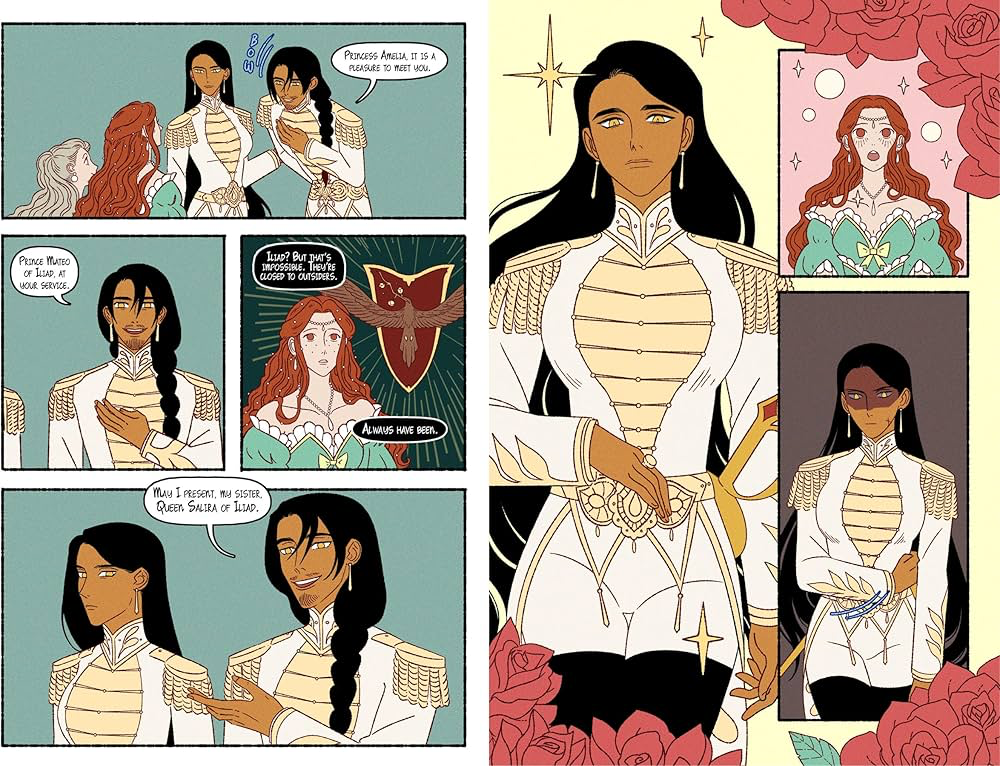
The art was…alright, I suppose. That gorgeous cover set my expectations too high. I could get on board with the almost-Manga art style, and I did enjoy some of the expressions that the characters made. Although the color palette was warm and pleasant, it was largely flat—there was a significant lack of shading and depth, which can sometimes work, but in a story and world this fantastical, some of it was necessary. Additionally, Kari had a tendency to overexplain some of the gestures of the characters. Instead of having some creative (and sometimes silly) depictions of sound effects, there were direct writings of, say, “rise,” “kneel,” or “stab” when characters stood up, knelt or got stabbed, or repetitions of “beautiful” when Amelia first sees Salira. In moderation, some of this could have worked, but in such large amounts (and in places where these things could have easily been inferred by…well, just looking at the artwork), they grated on me.

That being said, I loved Gabrielle Kari’s character designs! She did an excellent job of making the characters expressive and distinctive in their respective looks. Anime blushing aside (I could let it slide after a while), all of the characters had wonderful stylistic quirks and tells, making them fun to follow around their kingdom, even when the writing itself slacked off. The design language wasn’t just clear, but enjoyable to see between the kingdoms; I loved the contrast of Amelia’s flowing, flouncy dresses in contrast to the tighter, more soldierly attire of the royals of Iliad. It added what some of the writing failed to add with the themes of her alienation and isolation—she was clearly an outsider, in both her foreign mannerisms and personality and the way she stuck out in the crowd.

All in all, a fantasy (?) graphic novel with the potential for epic drama, but got dragged down by an overstuffed plot that squeezed the life out of the characters. 2 stars.

The Marble Queen is a standalone, but Anna Kopp is also the author of Lifeblood, as well as many Minecraft novels for younger readers. Gabrielle Kari is also the illustrator of No Holds Bard, written by Eric Gladstone.

Today’s song:

NEW TUNDE ADEBIMPE IN APRIL, LET’S GOOOOOOOOOO

That’s it for this week’s Book Review Tuesday! Have a wonderful rest of your day, and take care of yourselves!
Posted in Books

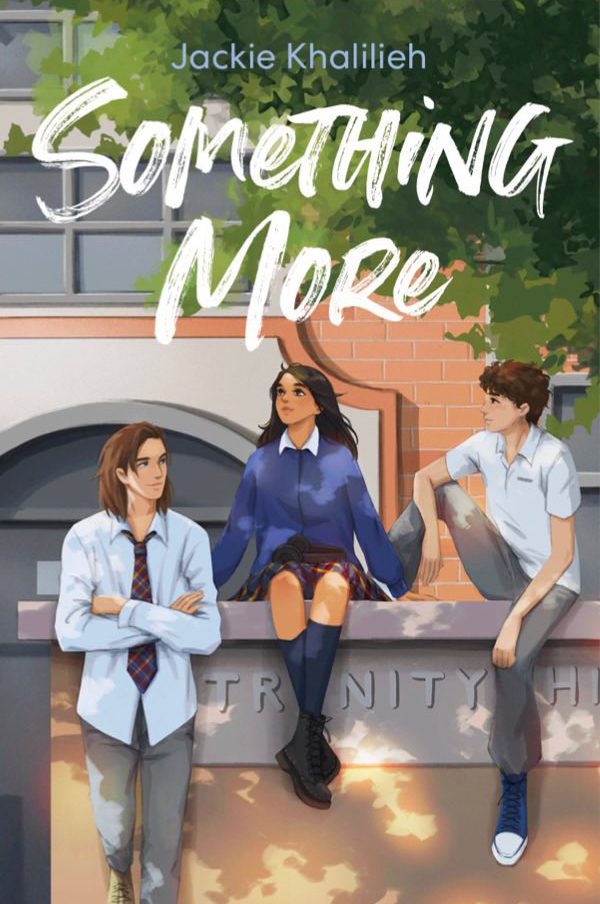
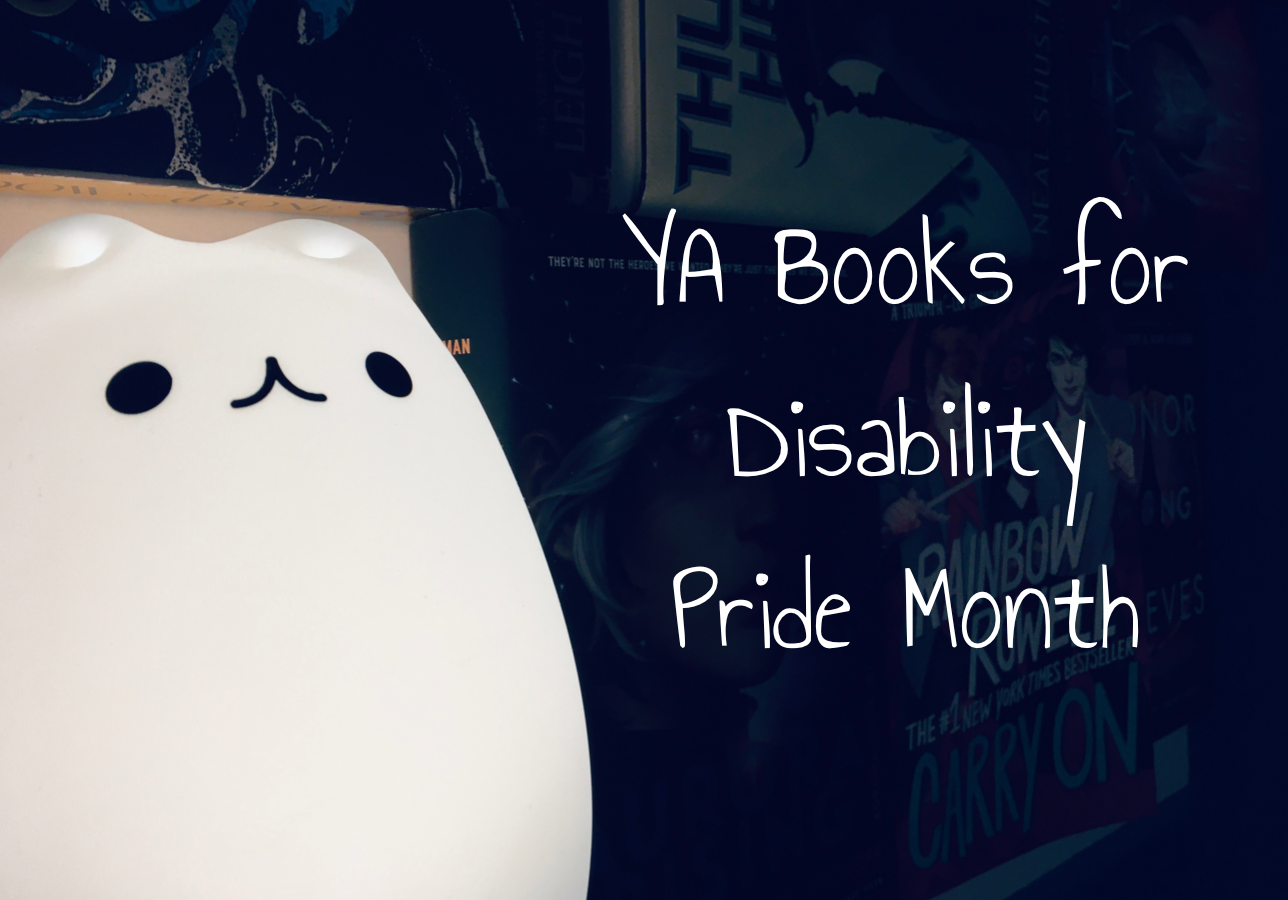
♿️ The Bookish Mutant’s Books for Disability Pride Month – 2024 Edition ♿️

Happy Monday, bibliophiles!

Here in the U.S., July is Disability Pride Month! In the three years that I’ve been making these lists, disability is still forgotten even in many intersectional feminist circles, and the importance for uplifting the disabled community has never been more important than know, what with the fallout of the COVID-19 pandemic, where disabled people, especially those who are immunocompromised, were disproportionately affected. Every year, even though I look in as many places as I can, it’s difficult for me to find books with disabled stories at the forefront that don’t center suffering or being “inspiring.” (As of now, I have only ever read one book with my disability, SPD, and heard of only one other. Inspiration for me to write my own stories…) So with these lists, I hope to provide disabled books with a wide range of representation, both in terms of disability and in the intersection of race, gender, and sexuality.

NOTE: my memory (and the internet) is imperfect, so if I’ve misrepresented/mislabeled any of the specific rep in these books, don’t hesitate to let me know!

KEY FOR TERMS IN THIS POST:

  • MC: Main character
  • LI: Love interest
  • SC: Side character

For my previous lists, click below:

Let’s begin, shall we?

♿️THE BOOKISH MUTANT’S BOOKS FOR DISABILITY PRIDE MONTH (2024 EDITION)♿️

FANTASY:

SCIENCE FICTION:

REALISTIC FICTION:

TELL ME WHAT YOU THINK! Have you read any of these books, and if so, did you enjoy them? What are some of your favorite books with disabled rep? Let me know in the comments!

Today’s song:

this song makes me SO so incredibly happy!! thank you to Horsegirl for recommending it!!

That’s it for this month’s recommendations! Have a wonderful rest of your day, and take care of yourselves!

Posted in Book Review Tuesday

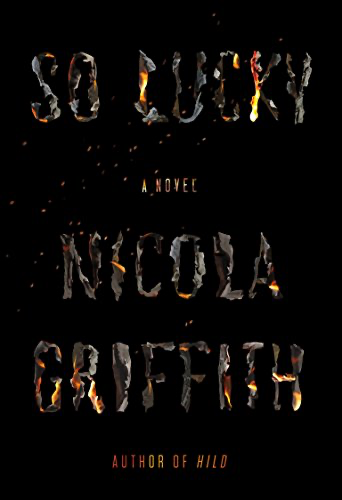
Book Review Tuesday (7/18/23) – So Lucky

Happy Tuesday, bibliophiles!

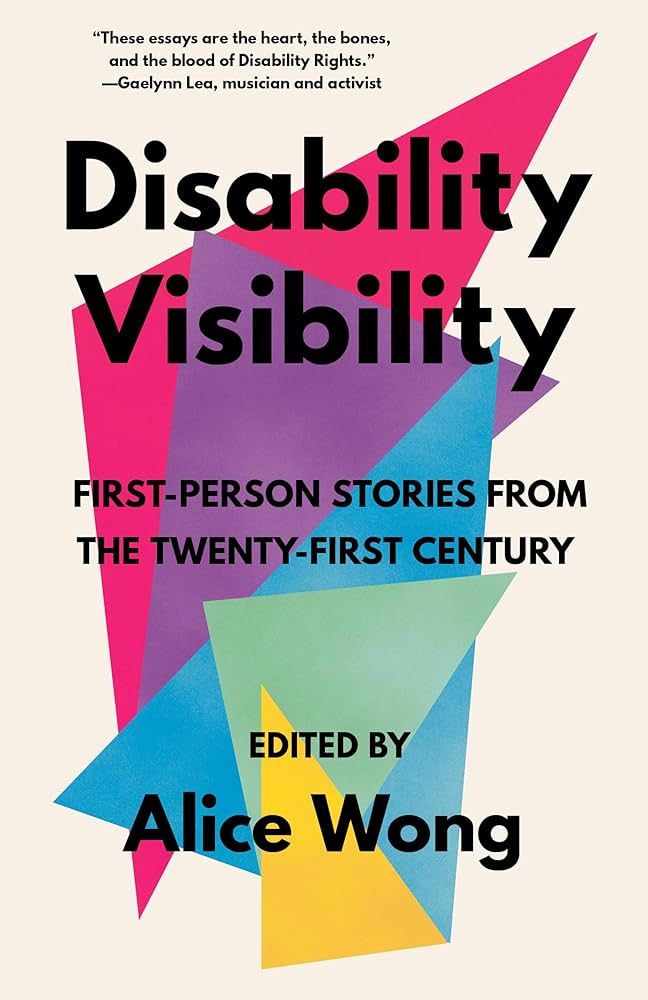
I came upon this book after poring through the “further reading” section of Alice Wong’s incredible Disability Visibility anthology (which you should also go read!!), and I put it on hold at the library soon after I heard about it. I was completely unfamiliar with Nicola Griffith before reading this novella, but she delivered so much power and resonance in the span of only 180 pages. We’re barely halfway through the year, but I know that I’ve got another favorite read of this year.

Enjoy this week’s review!

So Lucky – Nicola Griffith

Mara Tagarelli has it all. Happily married and the head of a multimillion dollar AIDS foundation, she lives a life of contentment and security. But in the span of days, Mara is diagnosed with MS, and her wife leaves her soon after. Her colleagues now dismiss her needs, and she’s left without work, without the care she needs, and without any prospects for the future. But as she slowly begins to find a community, she realizes the power that she holds—to put those she values in danger, but to give them the justice that they deserve.

TW/CW: ableism, hate crimes, murder, medical mistreatment, misogyny

I finished this book several days ago, but I’m still positively reeling from the effect it had on me. I picked it up after seeing it included as a recommendation in the “further reading” section of Alice Wong’s Disability Visibility, thinking it would be something good to read during Disability Pride Month. What I found was something far more than just “something good to read”—it was wholly refreshing, resonant, and both heartbreaking and heartwarming. So Lucky wasn’t a novel that I expected to hit me so hard, but it did, and I am forever grateful for it.

I’ve never been more in love with such an angry character, to be honest. Griffith’s writing of Mara felt more than authentic, a character that climbed out of the page, demanding to have her voice heard. And although her anger is her primary character trait, it’s an anger that resonated with me like nothing has before; in a landscape where disabled women, both fictional and real, are expected to be demure and sadly accepting of their fate (but in a sexy way, of course, because they obviously only exist as objects of pleasure for men), having a character as fiery and determined as Mara very nearly made me cry. I don’t have MS, but I am a disabled reader, so watching Mara express her anger at her treatment, at her life, and at the world around her was more than I could have asked for. More disabled women who aren’t conventionally likable and are written authentically, please! Use this novella as a guide.

So Lucky is a hard read—it doesn’t pull any punches, and that’s exactly how it should have been. It displays a lot of some of the more harsh realities of being disabled, especially being physically disabled: dismissal by your colleagues, mistreatment at work (and eventually being fired because of said diagnosis), relationship turmoil, medical mistreatment, and disability-motivated hate crimes are all a part of the narrative that Griffith portrays. It’s visceral and heartbreaking, and it doesn’t hold back in the slightest. But never once did it feel amped up for tension, or unnecessarily exaggerated: this is the story of an angry woman, and the story of a system built on bringing her down, as well as others like her. It really represents a good portion of the spectrum of issues that disabled people, especially disabled women, face, and Nicola Griffith captured all of it with incredible aplomb.

Despite that, So Lucky never falls into hopelessness. Even though Mara faces hardships aplenty, it never portrays the disabled experience as defined solely by tragedy and suffering. In spite of it all, there is always hope: Mara finding an online community of other disabled people, taking care of her cat (shoutout to Rip), and coming to the realization that her anger was never from the MS itself: it was from the experience of living in a world that did not want her to succeed. At its heart, So Lucky is an incredibly raw story, but a fearlessly hopeful story, one where our protagonist knows that her anger doesn’t come from being disabled, but from existing in a world where disabled people are treated so poorly. And that anger only adds to her determination to continue to fight for a better, more accessible world. There is no disability to inspirationally overcome, only a system. I can’t think of much that’s more beautiful than that.

All in all, a short novella that packs a deeply impactful punch, and portrays disabled womanhood in a refreshing light. 5 stars!

So Lucky is a standalone, but Nicola Griffith is also the author of Ammonite, Hild, Cold Wind, Slow River, and many other books for adults spanning several genres.

Today’s song:

never in my life would I have anticipated liking a Weezer song THIS much, but you can blame Snail Mail for this one

That’s it for this week’s Book Review Tuesday! Have a wonderful rest of your day, and take care of yourselves!
Posted in Book Review Tuesday

Book Review Tuesday (7/12/22) – The Reckless Kind

Happy Tuesday, bibliophiles!

In my endless hunt for books with good disability rep, I found this one recommended in several places. I’m not usually one for historical fiction, but I was glad to see a disability book in a genre other than realistic fiction. To my surprise, it became a rare 5-star read for me—tender, heartfelt, and so unabashedly queer and disabled!

Enjoy this week’s review!

The Reckless Kind – Carly Heath

Norway, 1904. Even though marriage is what traditional society expects of her, Asta has no interest in marriage, and especially not in Nils, the rude boy her mother has set her up with. Her mother sees a life of domesticity as her only path, but Asta is determined to carve her own way. After Nils’ recklessness cements her wish to not marry, she runs away with her two friends, Gunnar and Erlend. They make a life caring for Gunnar’s family farm, but with the money running out and the rest of their village against them, it will take all of their strength to create their own destinies.

TW/CW (from Carly Heath, inside book): ableism, misogyny, homophobia, xenophobia, suicidal ideations, violence, descriptions of injury, references to alcoholism, abuse, and self-harm

what if 😳 I melted down a priceless family heirloom 😳😳 and made it into a prosthetic arm for you 😳😳😳 (and we were both boys)

I picked up The Reckless Kind for the promise of queer and disabled rep, but I didn’t expect it to become a 2022 favorite of mine so quickly! It’s rare that I enjoy historical fiction this much, but this novel was a success on every front imaginable.

The diversity of The Reckless Kind is what drew me in, and it was such a central and beautiful aspect of this novel! This book focuses on not one, but four characters who are disabled—Asta has Waardenburg syndrome (includes single-sided deafness), Gunnar has Brown-Séquard syndrome and has a prosthetic arm, Erlend has an anxiety disorder, and Fred, one of the secondary characters, has Post-Concussion syndrome! On top of that, Asta is asexual, Gunnar and Erlend are in an mlm relationship, and the three of them are in a queerplatonic triad! Does it get any better than that? I think not. Just what I needed as a queer, disabled reader.

Each and every aspect of said diversity is handled so thoughtfully and lovingly; you can tell from the first page just how much love and care Heath put into writing this story. Even though their traditional society looks down upon them for a number of reasons, the journey these characters take to make their own way is heartwarming to read. Everything from the special modifications on Gunnar’s car to the life they carve out for themselves on the farm is filled with such palpable determination and love that only a bunch of outsiders making their own way can make me feel. Found family trope for the win, as always.

All of that would work fantastically on its own, but it’s Heath’s characters that made The Reckless Kind truly shine. Asta was an absolute DELIGHT. Just an absolute sweetheart. Even though the world has beaten her down so much, she has this consistent spunk and contagious kindness to her that she brings everywhere she goes. I loved the way she cared for all of the animals on the farm, and her story is sure to resonate with so many. Gunnar and Erlend were equally wonderful, and they balanced each other out perfectly, what with Erlend’s theatrical charm and Gunnar’s droll, self-deprecating humor. Their relationship made me giddy more than not; I loved how Heath depicted all the messiness of relationships, as well as two characters who did their best to work with each other’s problems. All three of them together made for the recipe for a near-perfect book.

Through it all, Heath presents a story of persistence despite the odds and the love it breeds between outsiders. All three of the characters faced parents, peers, and others who shunned them for parts of themselves, but this book was all about self-love and living in a world that doesn’t love you. It’s fiercely queer and disabled, and it’s the perfect story for anyone who has ever felt like the world is against them.

All in all, a tender, powerful, and heartwarming story of disability, queerness, and making your own way that quickly found its way to my 2022 favorites. 5 stars!

The Reckless Kind is a standalone and Carly Heath’s debut novel.

Today’s song:

That’s it for this week’s Book Review Tuesday! Have a wonderful rest of your day, and take care of yourselves!
Posted in Books

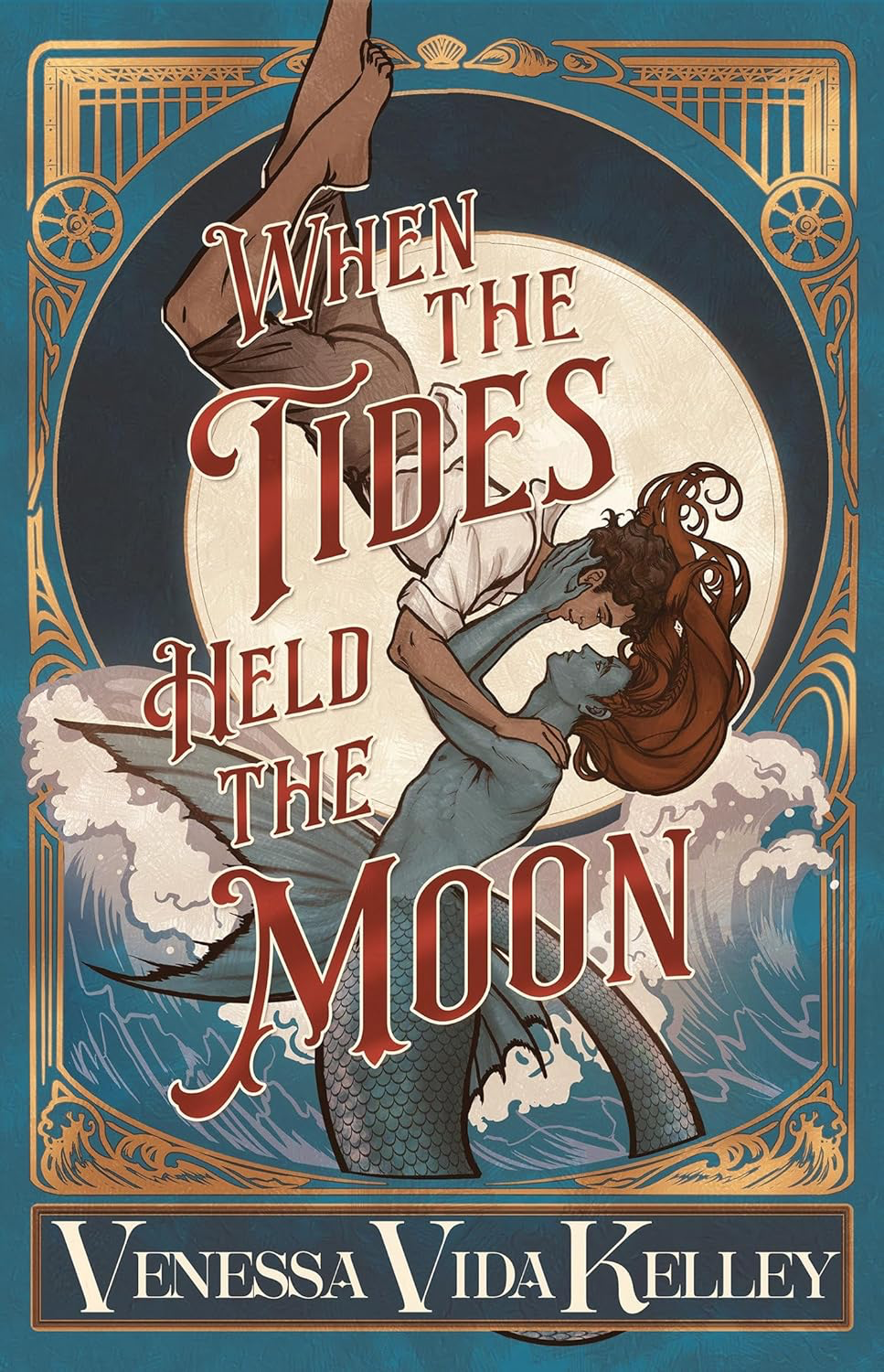
YA Books for Disability Pride Month (2022 Edition) + my experience with SPD and why representation really, really matters

Happy Monday, bibliophiles!

It’s July again, which means—though it’s too often overlooked—that it’s Disability Pride Month here in the U.S.! Even as intersectional as feminism and diversity efforts have become in recent years, the disabled community has been left out of the picture more often than not. YA books are no exception—even now, it’s difficult to find good, solid disability rep, and even harder to find books from disabled authors. So uplifting disabled voices is always important, as with uplifting all kinds of marginalized voices.

I’ve talked a little about good and bad disability rep on this blog, but I haven’t talked about how it affects me—I did put it in my bio a few months ago offhandedly, but I’m disabled as well. I have sensory processing disorder (SPD), a neurological disability that causes me to over-respond to sensory input, mainly sound; My nervous system doesn’t translate stimulus like a neurotypical brain would, making me over-respond to certain sensory input. Big crowds, loud noises (fire alarms, stopping buses, and almost anything that you can find in a city) are major causes of anxiety and discomfort for me, and often cause me to go into a fight-or-flight position or overload entirely.

As a result, being in situations with lots of sensory stimuli, such as school or social gatherings, can be exhausting, what with trying to juggle keeping my cool with said stimuli and participating fully in an activity. It also affects how I go about ordinary tasks as well—driving, for instance, has been a struggle, what with my hypersensitivity combined with my iffy-at-best motor coordination. (Part of SPD is that the nervous system doesn’t fully integrate all of my senses, which is why tasks like these are difficult for me.) SPD makes me feel everything—sound especially—far more intensely than a neurotypical person might, which often overloads my system.

Here’s the thing: although I’ve seen other parts of my identity—bisexuality, being mixed race, or even just personalities like mine—represented in books, I’ve never seen SPD represented in a book. Not on TV, movies, or any other kind of media, either. Never. I’ve been looking for years, but most of the time, what comes up when I search for books with characters that have SPD usually ends up being help books for parents with SPD kids. (Not to dismiss the value of those books—just not what I’m looking for.) There have been a few, but even then, they haven’t been available at the library. (I’ve got one on hold though—let’s hope Not If I Can Help It is good) I could always be missing something (PLS IF ANYBODY KNOWS ANY KIND OF MEDIA WITH GOOD SPD REP DROP SOME IN THE COMMENTS BEGGING YOU), but it’s been frustrating going to google and getting something that decidedly wasn’t what you were going for.

Even though I’ve seen myself represented in other ways, it’s frustrating to not have book characters—even side characters—that have similar experiences to me. Growing up, I had my fair share of not-so-subtle teasing for expressing some of my symptoms, and in that respect, I had no role models, no fictional characters to really look up to in that respect. That’s part of why I’m writing books with protagonists that have SPD—there’s always a kid out there who just needs a fictional character to look up to when they have nobody else. This is why representation matters—for those who never saw themselves represented growing up, and for those to come who may have the chance to feel represented.

So here are my disability pride month recs for 2022—not all of them are from disabled authors, but I’ve done my best to compile a list from a variety of genres, a variety of backgrounds (POC, queer, etc.), and a variety of disabilities.

(for my list from 2021, click here!)

Let’s begin, shall we?

YA BOOKS FOR DISABILITY PRIDE MONTH

One for All, Lillie Lainoff

GENRES: Historical fiction, retellings

REP: MC with POTS (disabled author)

MY RATING: ⭐️⭐️⭐️.75, rounded up to ⭐️⭐️⭐️⭐️

A Three Musketeers retelling featuring a swordfighting, chronically ill protagonist!

The Reckless Kind, Carly Heath

GENRES: Historical fiction, romance, LGBTQ+

REP: MC with Waardenburg syndrome, MC with Brown-Séquard syndrome, MC with anxiety, side characters with post-concussion syndrome (disabled author)

MY RATING: ⭐️⭐️⭐️⭐️⭐️

I’ll be reviewing this one soon—a beautiful and tender tale of a disabled, queerplatonic triad in 1900’s Norway!

The Weight of Our Sky, Hanna Alkaf

GENRES: Historical fiction

REP: MC has OCD

MY RATING: ⭐️⭐️⭐️⭐️

A harrowing story of a girl with OCD in the Philippines searching for her mother during the race riots of 1969.

The Night When No One Had Sex, Kalena Miller

GENRES: Contemporary/realistic fiction, romance, LGBTQ+

REP: Multiple POVs; one MC has Lupus (chronic illness)

MY RATING: ⭐️⭐️⭐️.5

A diverse and funny story of four pairs of teenagers on prom night and a humorously failed sex pact.

The Boy Who Steals Houses, C.G. Drews

GENRES: Contemporary/realistic fiction, romance

REP: MC has anxiety, autistic side character (disabled author)

MY RATING: ⭐️⭐️⭐️.5

A messy and emotional story of a boy and his brother making their own in a world that turns its back on them.

A Quiet Kind of Thunder, Sara Barnard

GENRES: Contemporary/realistic fiction, romance

REP: MC is selectively mute, Deaf love interest

MY RATING: ⭐️⭐️⭐️.5

A tender, sweet romance with disability front and center!

Gallant, V.E. Schwab

GENRES: Paranormal, fantasy

REP: MC is mute and uses sign language to communicate

MY RATING: ⭐️⭐️⭐️.75, rounded up to ⭐️⭐️⭐️⭐️

Though this wasn’t my favorite V.E. Schwab book, I loved its paranormal atmosphere!

Lakelore, Anna-Marie McLemore

GENRES: Magical realism, fantasy, fiction, LGBTQ+

REP: MC with ADHD, MC with dyslexia (disabled author)

MY RATING: ⭐️⭐️⭐️.75, rounded up to ⭐️⭐️⭐️⭐️

Lakelore is one of the most intersectional pieces of magical realism or fantasy that I’ve ever read—both protagonists are nonbinary, Latinx, and neurodivergent!

Meet Me in Outer Space, Melinda Grace

GENRES: Contemporary/realistic fiction, romance

REP: MC has Central Auditory Processing Disorder (CAPD) (disabled author)

MY RATING: ⭐️⭐️⭐️.75, rounded up to ⭐️⭐️⭐️⭐️

Although I wasn’t as big of a fan of the romance, I loved how Meet Me in Outer Space explored navigating disability in college!

On the Edge of Gone, Corinne Duyvis

GENRES: Science fiction, survival, post-apocalyptic

REP: Autistic MC (disabled author)

MY RATING: ⭐️⭐️⭐️.5

A gripping post-apocalyptic book featuring a determined, Autistic protagonist!

TELL ME WHAT YOU THINK! Have you read any of these books, and if so, what did you think of them? What are your favorite YA books with disability rep? And please, does anybody have any recs for media with good SPD rep? Kinda desperate over here…

(I can only go with my headcanon that Jean Grey from X-Men has SPD for so long, folks, please…)

Today’s song:

I wanna hate Jack White so bad but HE JUST KEEPS PUTTING OUT SONGS LIKE THIS

That’s it for this post! Have a wonderful rest of your day, and take care of yourselves!

Posted in Book Review Tuesday

Book Review Tuesday (4/26/22) – One for All

Happy Tuesday, bibliophiles!

Disability representation—especially in YA—is few and far between, and even when I do find it, a lot of disability rep is still written by abled authors. (That isn’t always necessarily a bad thing, but it’s easy to fall into harmful tropes and misrepresent disability that way.) So when I heard about One for All, I was so excited—a feminist, historical fiction novel about a girl with a chronic illness! And beyond that—a girl with a chronic illness WHO SWORDFIGHTS. Doesn’t get much better than that, am I right? My copy finally came from the library last week, and although it wasn’t the perfect book, I enjoyed a lot of it!

Enjoy this week’s review!

One for All – Lillie Lainoff

Tania de Batz is determined for the world to see her as more than just a “sick girl.” As the daughter of a former musketeer, her passion is swordfighting, and with the help of her father, she’s become a skilled fighter. But when her father is brutally murdered, she discovers his dying request to send her to a finishing school.

But what she finds at L’Academie des Marieés is no finishing school—it’s a secretive school that trains young women as musketeers. Tania is soon swept into a world of swords and secrecy, and soon, she and her fellow students have an assassination plot to uncover. The only clue to the plot—and maybe even her father’s murder—lies in a boy named Étienne, but his charms may be Tania’s undoing.

TW/CW: ableism, blood, murder, loss of a loved one, past mention of sexual assault

Good disability representation—especially in YA—seems to only happen once in a blue moon. So I was so happy to find this book—a feminist historical fiction book written by a disabled author, no less! And while I did have a few problems with the story overall, One for All was no doubt a fantastic debut!

First things first—disability rep! While I can’t speak to the accuracy, Lillie Lainoff (the author) has the same chronic illness as Tania—Postural Orthostatic Tachycardia Syndrome (POTS)! Disabled representation from disabled voices always makes my heart so happy! For me, it’s even better that One for All is a historical fiction piece; most books with disabled characters only exist in contemporary/realistic fiction books, and I adamantly believe that disability rep in genres like historical fiction, fantasy, and science fiction is just as important, if not more important; it’s crucial for disabled readers to know that they don’t only exist in modern realistic fiction realities—they have always existed in history, and they can exist in fantasy and sci-fi worlds as well. One for All did a fantastic job at detailing all the aspects of Tania’s POTS and how it affected her daily life, from her routine to her social interactions and childhood. So many chronically ill readers will be able to see themselves in Tania, and that, to me, is immensely impactful.

Beyond that, One for All is fiercely feminist! It’s set in France in the 1600’s, and the themes of empowerment and sisterhood ran deeply through it. Throughout most of the book, Tania struggles with her place in the world as a disabled woman in a time where both are frowned upon, but her journey for self-empowerment is one that is sure to resonate with so many readers. Although some of the other students don’t treat Tania with the respect she deserves at first, there are themes of recognizing and correcting your previous ableism. The friendship that Tania eventually shares with the rest of the fellow L’Academie des Marieés students is wonderfully tender and strong, and it makes for an incredibly empowering novel overall.

As much as I loved the aforementioned aspects, however, there were a few aspects of One for All that I didn’t like as much. For the most part, I liked the writing style well enough; Lainoff’s prose flowed well and was appropriately descriptive when the time called for it. However, Lainoff’s style tended to fall towards the over-the-top side of the spectrum. I could let it slide in most instances—it fit with the mood and tone of the book in general—but in some cases, it felt overly purple and theatrical. It had a dramatic feel to it, and while it fit the classic retelling tone at times, it felt superfluous in other cases.

Additionally, I wasn’t quite as invested in the assassination part of the plot as I was in the rest of the book. Seeing as that (after Tania’s father’s murder) was the main driving force to the plot, it didn’t come through all the way; it was overshadowed by more mundane character interactions (which I did like), and as a result, felt rushed and oversimplified. For something that was supposed to be the primary inciting incident of the second half of the book or so, it felt more like a subplot than anything. As a result, I felt my mind wandering a bit during these parts, but it didn’t take me out of the book entirely.

All in all, a feminist retelling with a disabled heroine who all readers will want to cheer on. 3.75 stars, rounded up to 4!

One for All is a standalone and Lillie Lainoff’s debut novel.

Today’s song:

That’s it for this week’s Book Review Tuesday! Have a wonderful rest of your day, and take care of yourselves!
Posted in Book Review Tuesday

Book Review Tuesday (11/16/21) – Aurora’s End (Aurora Cycle, #3)

Happy Tuesday, bibliophiles!

Wow. The day has finally come, folks. 1 and a half years of waiting, and now I have answers. My favorite series has come to a close, and yet it doesn’t feel like the end. It’s surreal to think that this may be it—the series that changed the course of my life, finally capping off. But if this really is the end, then Aurora’s End is the best conclusion that I could have ever asked for, and a book that I will no doubt cherish just as fervently as the first two books.

Now, TREAD LIGHTLY! If you haven’t read Aurora Rising or Aurora Burning and intend to, beware of spoilers! If you want to read my previous reviews, look no further:

Enjoy this week’s review!

Aurora's End by Amie Kaufman and Jay Kristoff | Penguin Random House Canada
F I N

Aurora’s End (Aurora Cycle, #3) – Amie Kaufman & Jay Kristoff

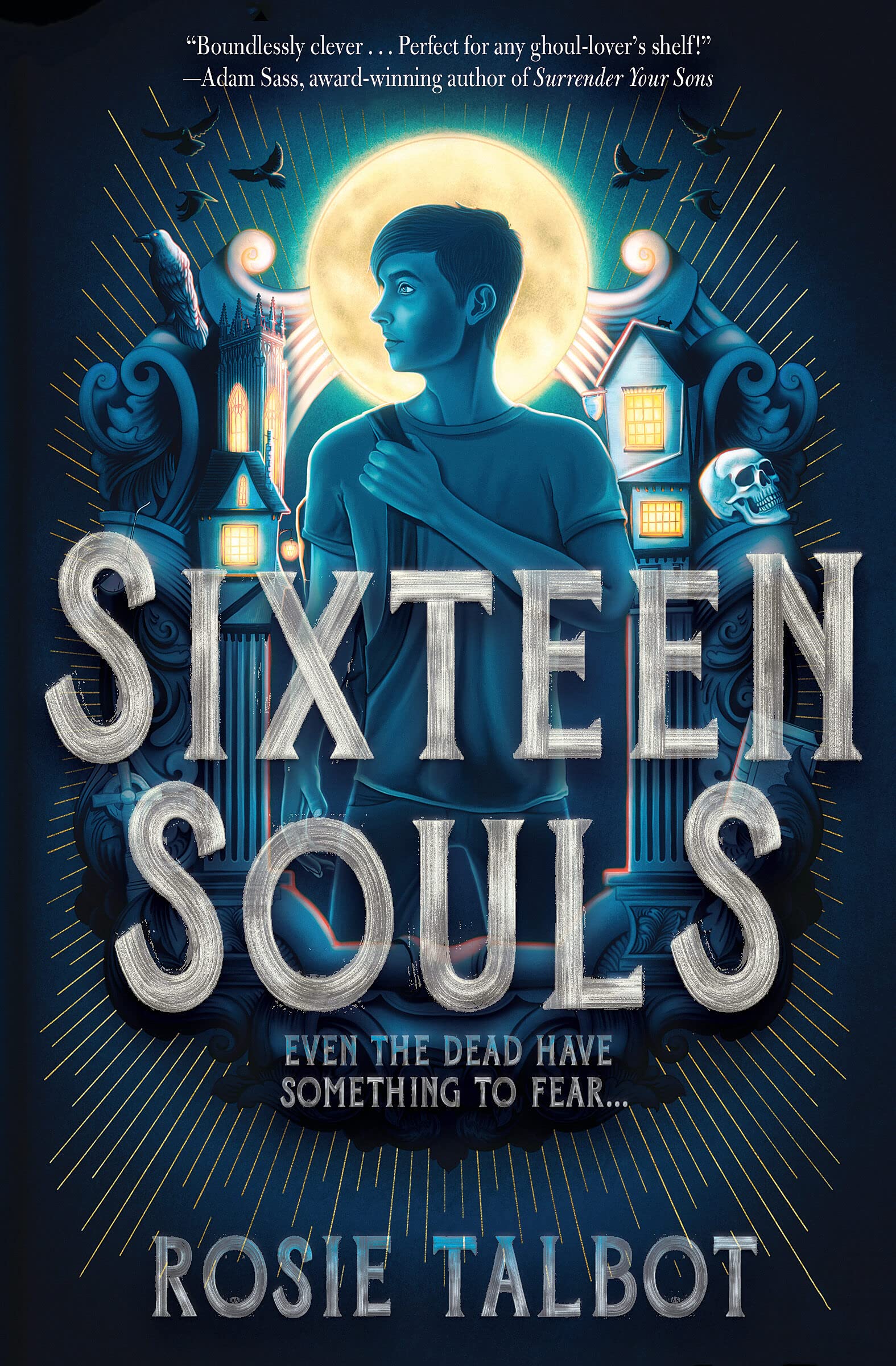
my copy ft. Aurora Burning and Aurora Rising, plus a cool filter and some crystals (not Eshvaren crystals oop)
last picture, I promise—here’s Finny boy with Hobbes, one of my cats

For all intents and purposes, the Battle of Terra was the end for Squad 312. They failed to stop the Starslayer from harnessing the Eshvaren’s Weapon, and intergalactic war is imminent. Meanwhile, the Ra’Haam slips in through the chaos, threatening to cover the entire universe in its spores.

But by a cosmic twist of fate, Tyler, Auri, Kal, Zila, Scarlett, and Finian are unscathed. They’ve been separated by time, and the only chance they have at thwarting the Ra’Haam is turning history itself inside out. Time is not on their side, though, and it may not be enough to save civilization itself from being wiped out.

karlmordo - This is how things are now! You and me. Trapped in...
Aurora’s End without context

TW/CW: graphic violence, mild sexual content, blood, near-death situations, severe allergic reaction, emergency medical procedures, loss of loved ones, death, descriptions of injury, body horror

[WARNING: this review may contain spoilers for Aurora Rising and Aurora Burning!]

I still haven’t come to grips with the fact that this is really the end of the Aurora Cycle. But as someone whose life was permanently altered for the better by this trilogy, I can say with certainty that this is the best end to the series that I could have ever asked for. My heart is so, so, so full of love.

There were so many factors that went into the separate situations that Squad 312 got themselves into, but Kaufman and Kristoff have once again proved that nothing is impossible. Time is distorted, there are future selves to be dealt with, technology and ancient aliens races are as complicated as ever, and of course, Past Pete is here to kill Future Pete. Lucky for us, Kaufman & Kristoff have been rapid-firing Chekhov’s gun, and every detail from the past two books comes full circle. After how mind-boggling the plot and cliffhanger of Aurora Burning were, Aurora’s End brings everything back in superbly clever and surprising ways, making for a trilogy that’s more cohesive than ever before.

And my emotions…MY EMOTIONS! After so long apart, reuniting with Squad 312 felt like reuniting with long-lost friends. Despite this being the last book, the development that many characters got was such a beautiful way to bring them all the way back and display the enormous growth many of them have had over the course of the series. Out of all of them, though, I thoroughly enjoyed getting to see Finian and Scarlett’s relationship develop; they’re such an unlikely couple, but the love they have for each other is so consistently tender and heartwarming. Plus, a) NORMALIZE BI PEOPLE IN STRAIGHT PASSING RELATIONSHIPS! STRAIGHT-PASSING RELATIONSHIPS ARE SO VERY VALID!, and b) DISABLED PEOPLE!! IN LOVING RELATIONSHIPS!! WE NEED MORE OF THOSE!! Nothing can top Kalauri, but Fin and Scar come very, very close. I LOVE those two. Power couple. Finian is the once and future disaster bisexual.

Also, Tyler trying to be all “space pirate”-y after an entire lifetime of being Captain America was a train wreck…comedy gold

One aspect of Kaufman and Kristoff’s writing that I haven’t often touched on is how they build tension. Their skill at developing heart-pounding tension is especially evident in Aurora’s End; they did such a masterful job of raising the stakes over the course of these three books, and bringing it all to a nail-biting cataclysm towards the end. The last 100 pages of Aurora’s End had me stressed out to no end, but…in a good way? It made me genuinely worried for everybody involved. Look, I’ve gotten way to attached to my space misfits over the past two years. Let me off the hook this once.

Along with all that, Kaufman and Kristoff once again more than delivered with everything that made the first two books so strong. The universe was expanded upon in surprising ways, the characters were more fleshed out and lovable than ever, the chemistry was impeccable, the action sequences had me clutching the book in a vice grip, and the dialogue hit the perfect balance of levity, tenderness, and solemnity. The found family of Squad 312 is stronger than ever, and my heart is still bursting with love for all of them.

It’s hard to end this review. It isn’t every day that a series changes my life, but the Aurora Cycle truly did. These books taught me so much about moving through this world as an outsider; Auri taught me that I didn’t have to be brave or strong to be a hero, and that people with the fate of the world on their shoulders can have their big feels too. She was the first time I’d really seen a mixed-race hero, and having a character like her means the world to me. I’ve come to see myself in Finian, and he’s taught me that I deserve love just as I am. And Squad 312 has taught me that no matter who you are, there will always be a home for the outsiders. It cemented, more than ever, that even if you think that you are alone in the world, somebody out there loves you, and will give you a home.

All in all, the perfect ending for a series that changed my life for the better. 5 stars for the sake of Goodreads, but realistically, however many stars there are in the known universe.

Squad 312 forever. 💗

never again shall we submit

Aurora’s End is the final book in the Aurora Cycle, preceded by Aurora Rising (#1) and Aurora Burning (#2). Amie Kaufman and Jay Kristoff have also written the Illuminae Files together; Amie Kaufman is also the author of the Starbound trilogy (co-written with Meagan Spooner) and the Elementals series, and Jay Kristoff is also the author of the LIFEL1K3 trilogy and Empire of the Vampire.

Today’s song:

That’s it for this week’s Book Review Tuesday! Have a wonderful rest of your day, and take care of yourselves!
Posted in Mini Reviews

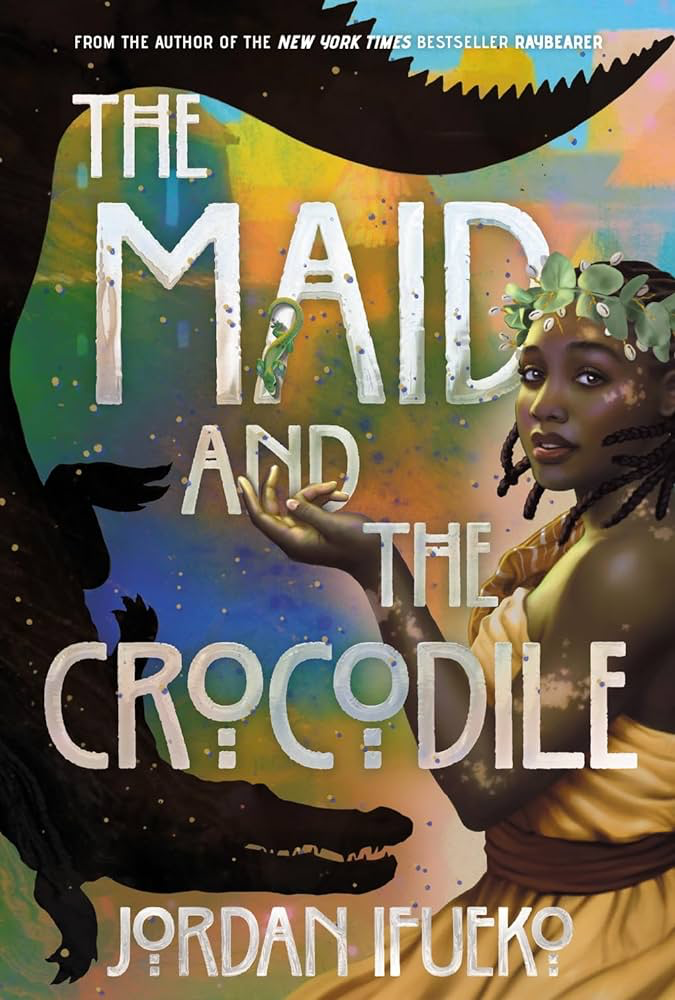
Mini Reviews of Books I Read in Florida

Happy Thursday, bibliophiles!

I was in Florida about a week ago for a quick trip, but as I always do, I brought some books along on my Kindle to get me through the plane rides and the heat. I like doing little mini-reviews of these books when I go somewhere else, so I figured I’d do it again here, since I certainly read a couple of very interesting books while I was in Florida. So here we have three mini-reviews of books I read in Florida.

Let’s begin, shall we?

🦎BOOKS I READ IN FLORIDA🦎

Forgotten Star – Colin Weldon

Amazon.com: Forgotten Star eBook : Weldon, Colin: Kindle Store

Blurb from Goodreads:

Following a devastating encounter with an unknown alien ship resulting in the disappearance of her parents as a child, Tamara Cartwright now spends her life scouring the galaxy in the hope of finding the dark force that attacked her father’s ship.
Now the Captain of a rescue vessel, The Massey Shaw, she makes a choice, resulting in the destruction of a star in order to save a stricken vessel, a prohibited act while using alien technology. Now, an outlaw, she is entrusted with the fate of a very unusual young girl endowed with special abilities. She must also find the survivors of an ill-fated ship at the hands of a malevolent race know only to the humans as the Ghosts. Driven by the hope of finding the truth of her parent’s disappearance and one last chance to make a difference to those in need of rescue, she must go on one final mission into deep space and deal with the monsters from her past.

Hansolo Badfeeling GIF - Hansolo Badfeeling Starwars GIFs | Star wars gif, Star  wars, Gif

TW/CW: human experimentation, loss of loved ones, death, graphic violence

Forgotten Star wasn’t without its flaws by a long shot, but it was such a fun and fascinating piece of space opera! With lots of political intrigue, strange aliens, and mysterious powers, there’s something for every sci-fi fan in here.

I need to start off with my main problem, though: the grammar. It was…inconsistent, at best. This novel definitely needed an extra round of editing (or two) in that respect; there were lots of errors in punctuation (mostly placement of commas), and there were a few misspellings and omissions that could have been fixed. (As well as a misspelling of “berth,” as in “a wide berth,” as “birth” …YIKES) On occasion, the faulty grammar was enough to take me out of the story entirely, but for the most part, I could let it slide. Sometimes.

But other than that, Forgotten Star was a great piece of sci-fi! One thing this novel did incredibly well was the handling of multiple POVs – for a lot of multiple POV books, it takes a while for all of the characters/elements to coalesce, but it didn’t take long for all of the elements here to come together, making for a cohesive and intricate story. I also loved all of the alien races, and the intricacies of their relationships with humans. It’s always a breath of fresh air to see aliens that clearly have some creative design put into them.

Some of the dialogue and characters were a little stiff and inauthentic at times, but for the most part, a lot of the characters were interesting to delve into. I liked Ona and Urhan, in particular – they had very interesting arcs and backstories, and I loved seeing them develop.

My only other major problem was that the ending wrapped up a *little* too nicely? From everything that built up over the course of the story, it seemed like there was a setup for a sequel, but the ending tried to wrap everything up too quickly. I’d like to see more from this universe.

All in all, though, a well-thought-out and intricate piece of space opera. 3.75 stars, rounded up to 4!

⭐️⭐️⭐️.75

Queen of Coin and Whispers – Helen Corcoran

Amazon.com: Queen of Coin and Whispers: A kingdom of secrets and a game of  lies: 9781788491181: Corcoran, Helen: Books

Blurb from Goodreads:

‘She loved me as I loved her, fierce as a bloodied blade’

When Lia, an idealistic queen, falls for Xania, her new spymaster–who took the job to avenge her murdered father–they realise all isn’t fair in love and treason.

Lia won’t mourn her uncle: he’s left her a bankrupt kingdom considered easy pickings by its neighbours. She’s sworn to be a better ruler, but if she wants to push through her reforms, she needs to beat the Court at its own games. For years, Xania’s been determined to uncover her father’s murderer. She finally gets a chance when Lia gives her a choice: become her new spymaster, or take a one way trip to the executioner’s axe. It’s an easy decision.

When they fall for each other, their love complicates Lia’s responsibilities and Xania’s plans for vengeance. As they’re drawn together amid royal suitors and new diplomats, they uncover treason that could not only end Lia’s reign, but ruin their weakened country. They must decide not only what to sacrifice for duty, but also for each other.

Animated gif about pretty in Fantasy and medieval by Marveline.

TW/CW (from Helen Corcoran): off-page suicide, murder, emotional torture

I’m not sure if I would necessarily call Queen of Coin and Whispers a fantasy novel – there wasn’t a whole lot that would distinguish it from a historical setting (no different magic properties/creatures/worldbuilding/etc.). But that’s not to say that it was a bad book – in fact, it was stunning!

There’s plenty of YA fantasy books on the market with protagonists who suddenly ascend to royalty. But Queen of Coin and Whispers addresses what most of those novels don’t – the mental tax of ruling a country at such a young age. Lia goes through endless trials and tribulations and even faces becoming the ruler that her uncle was, all while grappling with love and other relationships. Corcoran wrote her development so well, and it’s so refreshing to see a genuine-feeling story like Lia’s.

Additionally, the romance! Lia and Xania’s relationship was so sweet – sharing books, secret conversations, and all things warm and fuzzy. They go through all the ups and downs of first love, and I love seeing wlw rep like theirs in non-contemporary stories. I love those two. 💗

Other than that, the political intrigue and the depiction of the transition of power was so well-done! Everything was so multi-layered and detailed, making it feel like Lia and Xania’s world was a real and fleshed-out one. Just when you think you know the answers, something new pokes out its head, and you’re left guessing until the very last page.

All in all, a fascinating royal mystery with genuine characters and a sweet sapphic romance. 4 stars!

⭐️⭐️⭐️⭐️

The Lifeline Signal (Chameleon Moon, #2) – RoAnna Sylver

The Lifeline Signal (Chameleon Moon, #2) by RoAnna Sylver

Blurb from Goodreads:

Parole is still burning. And now the day everyone has been waiting for is finally here: it’s collapsed. A lucky few managed to escape with their lives. But while their city burned, the world outside suffered its own devastating disaster. The Tartarus Zone is a deadly wasteland a thousand miles wide, filled with toxic storms, ghostly horrors, and just as many Eyes in the Sky as ever. Somehow, this new nightmare is connected to Parole. And it’s spreading. 

Now Parole’s only hope lies in the hands of three teenagers reunited by their long-lost friend Gabriel – in their dreams. Now they’re on a desperate cross-country race, carrying vital plans that may be Parole’s salvation. First they’ll board the FireRunner, a ship full of familiar faces that now sails through Tartarus’ poison storms. Then, together, they’ll survive Tartarus’ hazards, send a lifeline to lost Parole – and uncover the mystery connecting everyone, inside Parole and out.

The world outside Parole isn’t the one they remember, and it didn’t want them back. But they’ll save it just the same. It’s what heroes do.

TV Shows | Queer Culture Chats

(for my mini-review of book 1, Chameleon Moon, click here!)

TW/CW: loss of loved ones, violence, near-death situations

I didn’t like this one *quite* as much as I did Chameleon Moon, but it was still such a fun read!

One of the things I love most about this series is how diverse it is – easily the most diverse series I know! We have an almost entirely different cast of characters in The Lifeline Signal, but among the three main characters, we have a nonbinary (xie/xir pronouns) Native American (Tsalagi) character with Arnold-Chiari malformation, a bisexual Indian-American character, and an aro-ace autistic Vietnamese-American character! Among the side characters, there’s no shortage of queer, POC, and disabled characters, including a Black hijabi woman, a nonbinary character, polyamorous relationships, and more! Books as diverse as this series don’t come along very often, so three cheers for RoAnna Sylver for all this representation!

The worldbuilding outside of Parole was also fascinating – there’s all sorts of weird sci-fi and fantasy aspects, including, but not limited to: superpowers, ghosts, dragons, giant ships, and robotic animals of immense size. As you can imagine, it’s a lot of fun! Between the relationships between all of the characters and the expansion of the worldbuilding, there’s no shortage of interesting elements to chew on. Plus, it was so sweet to see all of the characters from Chameleon Moon come back.

My only major problem was that the plot got a little bit convoluted at times – I found myself thinking “wait, why is all this happening?” several times throughout the novel, but it didn’t take me out of the story itself. Don’t get me wrong – The Lifeline Signal has a great story, but it seemed to get lost in itself at times.

All in all, a sequel that does justice to book one as well as expanding its world, while still providing an original storyline. 3.75 stars, rounded up to 4!

⭐️⭐️⭐️.75

Today’s song:

I saw Sleater-Kinney and Wilco (we came for Wilco, they were AMAZING) on Tuesday night, and even though most of Sleater-Kinney’s stuff didn’t make me feel anything, there were a couple songs that I thought were interesting! This is one of them

That’s it for these three mini-reviews! Have a wonderful rest of your day, and take care of yourselves!
Posted in Book Review Tuesday

Book Review Tuesday (7/27/21) – It’s My Life

Happy Tuesday, bibliophiles!

I figured that I should scour my TBR for books for disability pride month (and to read beyond that, of course), and I found this one that I had shelved back in 2019. The cover immediately caught my eye (AAH THE COLOR SCHEME), but I still have mixed feelings about the book itself – not ragingly bad, or anything, but not amazing either.

Enjoy this week’s review!

IT'S MY LIFE | Kirkus Reviews

It’s My Life – Stacie Ramey

Jenna has lived her whole life believing that she was born with cerebral palsy, and she’s never let it stop her from doing what she wants to do. But after discovering that her parents hid the fact that her CP was caused by an injury at birth, she’s infuriated with them – and the fact that she hasn’t been able to make her own decisions regarding the surgeries she gets. With the help of her lawyer uncle, she decides to push for medical emancipation.

All the while, Jenna’s childhood crush, Julian, has moved back into town. She reconnects with him over text with an anonymous persona, but will she have the courage to reveal her true self to him?

Buzz lightyear meme hmmmm - Caption | Meme Generator
eh what the heck, I’m putting this here bc a) adequately describes said mixed feelings and b) I can’t think of any gifs to put in

TW/CW: internalized ableism, mild violence (punching), hospitalizations, ableist slurs (challenged), descriptions of injury

WARNING: this review may contain some minor spoilers, so tread lightly!

This is…complicated. I picked this book up for disability pride month, and while I can’t speak to the representation itself (as I don’t have cerebral palsy), there were good and bad parts of this book, in terms of how disability was represented and the plot itself.

Let’s start off with the good stuff. Jenna as a character was definitely a great protagonist – she’s not perfect, but she’s incredibly determined and a very independent thinker. She’s a little messy at worst, but I really didn’t mind. She had a great personality, for the most part, and her struggle with getting medical emancipation was incredibly eye-opening.

Again, I can’t speak to how accurate the CP rep was, but for the most part, it seemed well researched. The author mentions in a note at the back of the book that she worked with kids with CP, which seems to have informed part of Jenna’s story. A good portion of it seemed to work – there was clearly a lot of research put into the different kinds of mobility aids that Jenna uses and the kinds of surgeries she went through. It also deftly defied the dreaded “cure narrative” – Jenna’s attitude towards her disability was more one of reaching for freedom than seeking to “overcome” it in anyway. It’s not often that we get this kind of story from abled authors, so I appreciated that.

However, I’m still a little miffed by how they represented Jenna’s disabled identity. At a point in the book, she reaches out to someone who went through a surgery that her parents want her to have (part of why she seeks to be medically emancipated). This person responds to Jenna later in the book via email, and explains that she leads a “differently-abled” club at her school; she explains how she prefers that term, even though most of the disabled community doesn’t. (For those of you who don’t know: it’s generally accepted that the majority of the disabled community prefers not to use the term “differently abled,” as the terminology is seen as sugarcoating or patronizing them and their experiences. Some disabled people may use the term, but when referring to the community, it’s good to just stick with “disabled.”)

Now, if this had come from a disabled author, I might have passed it by; as I said, not everybody in the disabled community dislikes the term “differently abled,” but disabled is usually the more accepted term. But since this is coming from an abled author, I’m really not sure how to feel about it; it’s generally abled people that have used started using the term (which is where the discourse comes from), so putting that on disabled people in a book – especially someone who Jenna looks to for advice – doesn’t sit right with me. Additionally, Jenna never explicitly says that she’s disabled; maybe I’m reading into it too much, but it just seems a little strange, coming from an abled writer writing a disabled character. (And on the subject of the club…did everybody in said club actually agree to call it the “differently abled club?” I find that hard to believe…)

Hmm Emoji GIF - Hmm Emoji ThinkingEmoji - Discover & Share GIFs | Emoji gif,  Thinking emoji, Emoji
this gif comes to mind…

Other than that, there were a lot of hospitalization scenes that felt a little too much like plot devices, and the scene with the rival hockey team (this is where the ableist slurs TW comes in) didn’t need to happen; all it did was give a bit of “I love my girlfriend!” points for Julian (he punches the guy who yells ableist slurs at Jenna), which created some conflict that I felt was completely unnecessary. It’s My Life certainly had a rom-com feel to some of it, so why not just keep it that way? CAN I GET SOME MORE DISABLED BOOKS THAT DON’T CENTER AROUND THE PROTAGONIST GETTING SLURS YELLED AT THEM, PLEASE?

My only other complaints were that some of the high school scenes weren’t super authentic, and I didn’t care a whole lot about the romance, but that’s the most minor of my issues. But overall, mixed feelings on this one – the themes of medical emancipation and Jenna’s character were great, but the disability representation, while I can’t speak to the CP accuracy, had some good intentions and research, but uncomfortable messages surrounding the identity itself. 3 stars.

Top 30 Mixed Feelings GIFs | Find the best GIF on Gfycat

It’s My Life is a standalone, but Stacie Ramey is also the author of The Sister Pact, The Homecoming, The Secrets We Bury, and Switching Fates.

Today’s song:

That’s it for this week’s Book Review Tuesday! Have a wonderful rest of your day, and take care of yourselves!