Posted in Book Review Tuesday

Book Review Tuesday (4/9/24) – A Tempest of Tea

Happy Tuesday, bibliophiles!

I enjoyed Hafsah Faizal’s Sands of Arawiya duology when it came out, but when I heard that she was doing a fantasy heist novel with vampires and tea involved…yep. I’m in. No questions asked. And like her previous books, A Tempest of Tea was full of heart, humor, and more than a little blood.

Enjoy this week’s review!

A Tempest of Tea (Blood and Tea, #1) – Hafsah Faizal

Arthie Casimir runs a tight ship. By day, she runs a tearoom, but as soon as night falls, it’s a hub for vampires. It’s her only livelihood, and the one thing keeping her off the streets. But her secret is slowly spilling out—and the only way to keep it under wraps—and running in the first place—is to make a deal with some of the most dangerous vampires in the city. And infiltrating their inner circles isn’t a job for just one person. With a ragtag crew at her back, Arthie finally has an in—but will they be able to get out in one piece?

TW/CW: loss of loved ones (past), blood, gore, violence, themes of colonialism, racism, human trafficking/kidnapping (past), fire

Everybody, say it with me: every YA fantasy novel with an ensemble cast and a heist plot isn’t ripping off Six of Crows! Every YA fantasy novel with an ensemble cast and a heist plot isn’t ripping off Six of Crows!

Sure, the inspiration is there (it’s hard not to be inspired by Leigh Bardugo, after all), but like The Gilded Wolves or Into the Crooked Place, the similarities end with a fantasy heist plot with multiple POVs. (The same cannot be said for Among Thieves. BOOOOOO.) I already had high hopes that Hafsah Faizal had the skill to pull off a fantasy heist of her own, and she more than delivered—A Tempest of Tea was nothing short of a delight from start to finish.

Hafsah Faizal has a knack for creating lovable characters, the kind that easily bounce off one another and produce no shortage of genuinely clever banter. I’m glad to say that this quality carried over tenfold into A Tempest of Tea! Arthie was such a compelling protagonist to follow; her wit and determination made her the perfect mastermind for the Athereum heist, and her charm made every line of dialogue a treat. Her relationship with the equally charming Jin made for a pair with instant chemistry—they were similar enough that they meshed with each other excellently, but different enough to make them unique assets to the team that they were building. Flick, though the least developed of the three, was just as compelling—I find myself wanting so much more of her backstory! I imagine we’ll get more of that in book 2, but having that part of her somewhat hidden gave her so much more appeal, especially given that she was instrumental to the heist.

The setting was equally lovable in all of its lush descriptions! Already, it’s just pure fun to begin with—a historical, London-like setting with vampires embedded in the culture—what’s not to like? There’s really not a whole lot of magic, but just by introducing vampires and having them affect Arthie’s world in the ways that they did made A Tempest of Tea so much fun to pick apart. A lot of those shifts were evident in the changes Arthie made to her teahouse (and bloodhouse) when night fell—subtle hints like those made the world feel so much more real—and under a very palpable strain. The vampires themselves weren’t the most original take on vampires I’ve ever seen (not really much to distinguish them from any other vampire), but Faizal’s way of writing them is what made them stand out—they were often alluring, but in a way where the predatory side of them was transparent, but their influence of the characters was as well.

Part of why I was so excited for Faizal to do a heist novel was that her style seems like it was made for that all along. She has such a cinematic, action-packed writing style that made the Sands of Arawiya books such an adventure. It seems like more years of writing experience under her belt have benefitted her greatly—all that time honing her writing made A Tempest of Tea a finely crafted heist novel! All of the beats were there, and though they were familiar, Faizal’s writing practically jumps off the page, making the atmosphere seep through the ink and drag you right along with Arthie and her band of outcasts and criminals. There’s tons of well-choreographed action, but just the right amount that it didn’t overwhelm the narrative. Up until the ending (more on that later), the pacing was similarly excellent—the balance of character development/backstory, worldbuilding, and delicately constructing the plot made for a book that I had to force myself to not read in one sitting.

However, my only major issue—and the only thing keeping me from giving it the full four stars—is how the culmination of the heist was executed. We got all of the tension of sneaking into the Athereum and some of the confrontation, but the execution of it felt incredibly rushed. I could almost stretch my suspense of disbelief enough to side with Faizal and say that it was supposed to feel like a blur, but that’s reaching, even for me. There were far too many twists and turns crammed into a single scene, and for all of the somewhat quiet scenes that went on earlier in the novel, I could have used some more page space to spread all of these events out. It was discombobulating, but not in a way that felt stylistic or intentional in any way. It also dampened the emotional impact of the ending—we’d been going so fast that I barely registered that the book had actually ended when it did.

All in all, an action-packed heist fantasy that faltered in some execution at the end, but flourished in its cinematic writing and characters. 3.75 stars, rounded up to 4!

A Tempest of Tea is the first book in the Blood and Tea duology, with an untitled sequel tentatively slated for release in 2025. Hafsah Faizal is also the author of the Sands of Arawiya duology (We Hunt the Flame and We Free the Stars), and has contributed short stories to the anthologies Eternally Yours and The Grimoire of Grave Fates.

Today’s song:

That’s it for this week’s Book Review Tuesday! Have a wonderful rest of your day, and take care of yourselves!

Posted in Book Review Tuesday

Book Review Tuesday (2/20/24) – No Gods, No Monsters

Happy Tuesday, bibliophiles!

I’ve had this book on my radar for a few years, as well as The Lesson; I almost read it earlier last week, but then I discovered that I could only read it on my phone, for some reason (nope). Coincidentally, I found it at Barnes & Noble later that week (on a very necessary detour I made with a friend), so I finally decided to pick up a copy for myself. Now, I’m so glad that I have a hard copy—No Gods, No Monsters is one of the most unique fantasy novels I’ve read in a while!

Enjoy this week’s review!

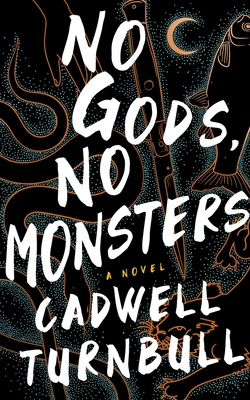
No Gods, No Monsters (Convergence Saga, #1) – Caldwell Turnbull

Around the world, strange creatures have come out of hiding from the shadows. Creatures of myth and legend, those thought to be confined to the imagination. In the wake of this unexplained event, known globally as The Fracture, the stories of people across America collide. A woman reckon’s with her murdered brother, unjustly killed by Boston cops, but learns that her brother’s life was more fantastical than she could have ever imagined. A professor goes in search of a friend presumed dead, but finds a schism between two cults in its place. A young girl must warm up to the presence of her adopted sister, who she grows to love despite her bloodlust. All of these events converge as the world of monsters is revealed, but can mankind reckon with their presence—and their demand to be seen?

TW/CW: police brutality, gun violence, gore, substance abuse/past mentions of an overdose, sexual abuse, domestic abuse

If I’m being honest, it’s a real shame that No Gods, No Monsters has an average rating of 3.45 on Goodreads. To be fair, it’s probably one of those “you love it or you hate it” books, but I absolutely loved it. Sometimes you love the book with an average rating over 4.00 and tens of thousands of reviews, but sometimes it’s those lower-rated and lower-reviewed novels that hit the spot. (see also: Spare and Found Parts – Sarah Maria Griffin)

No Gods, No Monsters truly felt dreamlike, and that’s what made this novel stand out to me. It’s not concerned with being overly coherent, and it drifts about in bits and pieces. I guess that’s the aspect that put a lot of people off, but it’s the kind of writing and storytelling that suits the story that Turnbull is trying to tell. It fits with the whole theme of “monsters have come out of hiding and we can’t do anything about it” theme—there’s global panic, sure, but first there’s the denial that anything is happening at all, and then the reality hits you, and you still try to deny it. This whole novel felt like navigating the haze of denial while the monsters creep out of the shadows: you know exactly what’s going on, but as long as you can help it, I’m not here, this isn’t happening.

I feel like No Gods, No Monsters could have just as easily worked as a short story collection. Each section, switching POVs from dozens of characters who are slowly woven together, works on its own, situated within worlds that are’ separate until the threads begin to tie themselves into an interlocking web of magic towards the end. They all felt like short stories, but I don’t think anything was taken away from them not being short stories—No Gods, No Monsters is a very non-traditional novel in several ways, and I liked that it toed the line between novel and anthology in order to flesh out the themes of community and the things that bound all of the characters together in the chaos.

My favorite section had to be that of Sondra and Sonya—their story was all at once chilling and tender, heartwarming, heartbreaking, and horrifying. Off of the top of my head, this instance in the novel is one of the few depictions I can think of where talking about complicated love in a fantasy/sci-fi setting really does feel complicated; the complication is very literal in the sense of depicting the drain (no pun intended—no spoilers, though) on Sondra, but her horror of both reckoning with the actions of Sonya in the present and how much they bonded in the past felt nuanced in a way that truly made me feel for Sondra. In general, this part of the novel is representative of what I loved about the novel as a whole: although there were some physical consequences to the monsters coming out of hiding, I loved that Turnbull chose to focus more on the emotional and interpersonal connections that happened in the aftermath.

Going off of that point, I loved how No Gods, No Monsters handled its expansive worldbuilding! The event that incites everything that happens in the novel is implied to be the start of a global upheaval, but Turnbull handles the complexities of it with aplomb. It doesn’t feel like every single action movie where we go instantly into mass panic and riots in the streets (although that is stated to have happened in the background), but instead gives us information in breadcrumbs through how it affects the many and varied characters of the novel. I did find myself wanting more of how the monster emergence is affecting the world, but a) I figured that the uncertainty is a consequence of the characters themselves not fully knowing what’s going on, and b) the fact that this is a series, so we’re bound to learn more in the books to come. I have We Are the Crisis downloaded, so I’m excited to find out more!

All in all, a truly memorable and inventive fantasy that explored the not-often-discussed areas of trauma and denial in the face of global upheaval. 4 stars!

No Gods, No Monsters is the first installment in the Convergence Saga, followed by We Are the Crisis. Caldwell Turnbull is also the author of The Lesson.

Today’s song:

my friend just got me hooked on indigo de souza, I’m OBSESSED

That’s it for this week’s Book Review Tuesday! Have a wonderful rest of your day, and take care of yourselves!
Posted in Book Review Tuesday

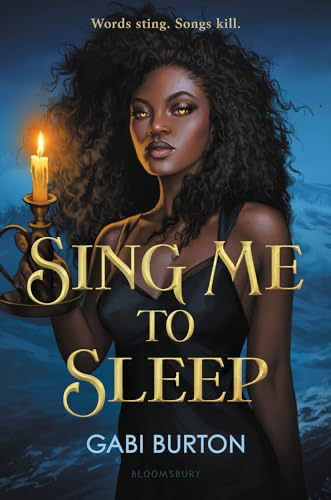
Book Review Tuesday (2/13/24) – Sing Me to Sleep

Happy Tuesday, bibliophiles!

I always love stories about mermaids and sirens, so Sing Me to Sleep instantly went on my TBR when it came out last June. Sing Me to Sleep presented a land-bound take on sirens that proved fascinating, and resulted in a tense, seductive YA fantasy!

Enjoy this week’s review!

Sing Me to Sleep – Gabi Burton

Saoirse is hiding a deadly secret. She’s a siren, driven by the urge to kill and seduce, which has made her into the perfect assassin. Her talents took her all the way to the good graces of the royal family of Kierdre, but they don’t know of her true identity—and she must hide it at all costs, lest she incur the wrath of their creature-hating king. But working as one of the personal bodyguards to Prince Hayes has its perks, and soon, Saoirse finds herself questioning her loyalties—and drawn towards a prince who would kill her if he discovered her true self.

TW/CW: genocide (past), kidnapping, fantasy violence, murder, poisoning, drowning, stabbing, torture

I’m not going to bog down this review by starting it with another rant about how jaded I am with epic and high fantasy, but I’ll leave it at the fact that this was the reason that my expectations for Sing Me to Sleep were so average. But I ended up blowing through this novel, and I haven’t done that in weeks—it’s just pure fun.

I won’t lie—I was a little disappointed when I realized that Sing Me to Sleep took place primarily on land when they had a siren protagonist. Mermaids and sirens are an instant draw for me, so I was excited to explore some of those magical aspects and how Burton realized them in her fantasy world. However, once I got into the novel, I ended up enjoying how Saoirse’s siren status affected her when she was confined to land, from the call of the sea every time she came near it to being momentarily thrilled by having her head dunked underwater while being tortured for information. Burton’s handling of Saoirse’s hidden thirst for male blood was similarly well-executed; it set a kind of time bomb of sorts whenever she was around her targets, and made the stakes feel tangible and not just an aside thrown in to remind the reader that she’s a siren. The way that Burton utilized these aspects made for a novel with just the right amount of stakes, with tension in all the right places.

Sing Me to Sleep hinged on the twist of Saoirse, trained to seduce and take advantage of men before killing them to satisfy her bloodlust, accidentally falling for Prince Hayes and not knowing what to do with herself. I was banking on it being a little cheesy (this is YA fantasy, after all), but I really appreciated how slow Burton took it with the budding romance! Not only was the forbidden aspect of it enhanced by the aforementioned handling of Saoirse being a siren, Burton didn’t go headfirst into the romance, like so many authors end up doing while trying to pull off enemies-to-lovers. The initial hatred and disdain felt genuine, and Saoirse’s inner conflict when she realized that she was falling for one of her marks was appropriately a shock to her senses. Although I didn’t particularly care for Prince Hayes as a character, Saoirse’s reactions to him felt true to what enemies-to-lovers should be. I’m interested to see how the romance will play out in the sequel…

Again: I’ll spare you my gripes with epic fantasy as a whole, but unlike of much of the fantasy I can remember reading recently, Sing Me to Sleep had the beginnings of some fascinating fantasy worldbuilding! The novel does a great job of establishing all of the different magical races and subsequently detailing the history of discrimination and subjugation amongst them. Burton did have quite a lot on her plate, but for the most part, she juggled it well, making for a world with limits that made sense and enough hints within to make me want to read the sequel just to see how some of the hidden elements get explored. Half the hard part of worldbuilding is making it something that the reader is actually motivated to read once you’ve done all the heavy lifting to create it, and Burton succeeded on that front!

However, while Burton did well with juggling several moving parts in her worldbuilding, I’m not sure if I can say the same for her characters. Although Saoirse was a compelling protagonist with motives that were appropriately fleshed-out, most of the others—of which there were a ton—left a lot to be desired. Besides Hayes, if we got any trace of their personalities, it was left at one character trait (or physical description) to distinguish them, and not much else. Combine that with the expectation that there were dozens of these characters running around that we had to remember to get all of the plot, and it just made for a mess as far as remembering why any of them were important save for their job descriptions. If some of them had been cut out, it would have solved the whole problem—it’s just a case of Burton biting off much more than she could chew, which is entirely understandable for a debut novel.

All in all, an action-packed fantasy full of tension, forbidden love, and bloodlust. 4 stars!

Sing Me to Sleep is Gabi Burton’s debut novel and the first novel in the Sing Me to Sleep duology, concluded by Drown Me with Dreams, which is slated for release this August.

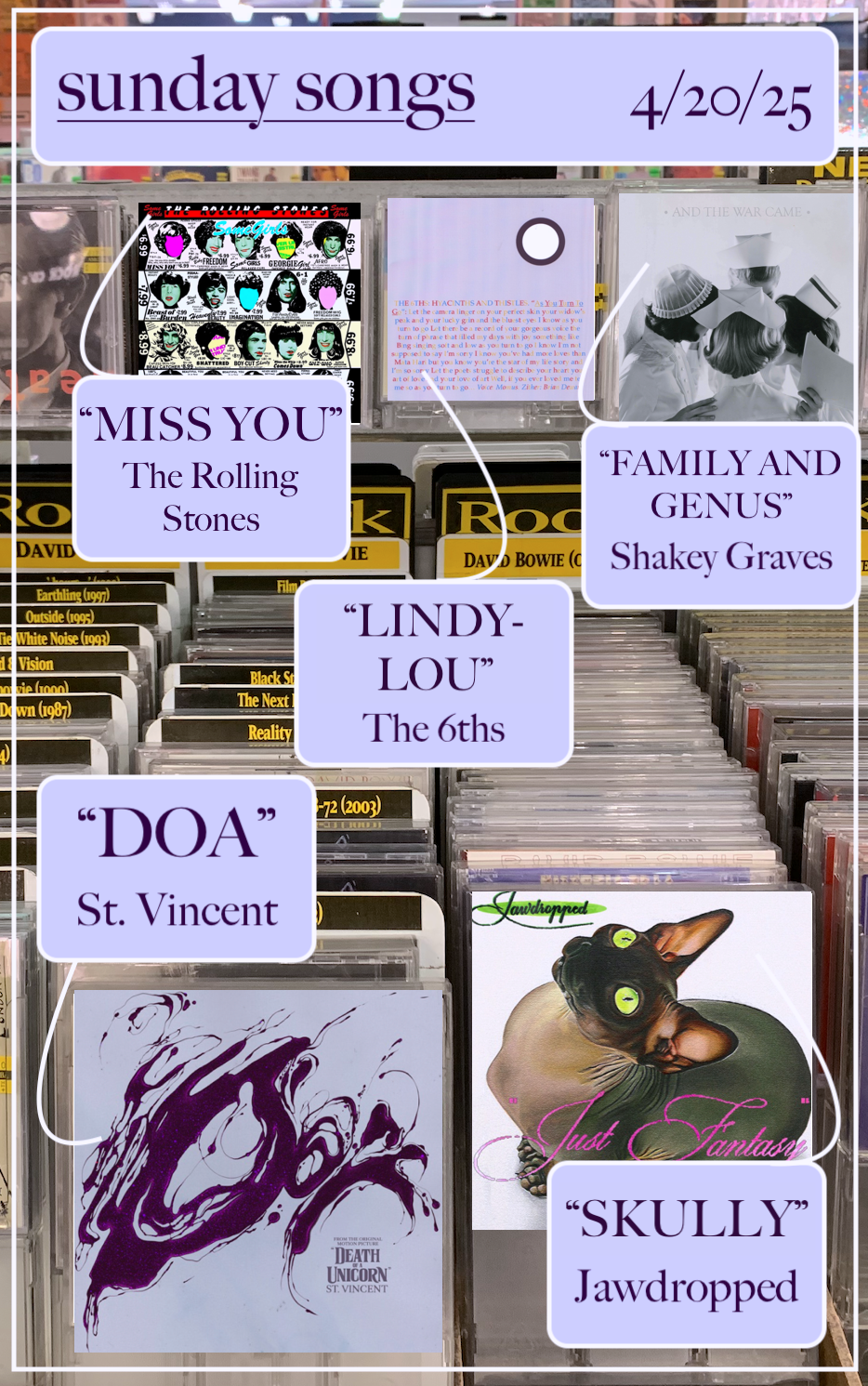
Today’s song:

That’s it for this week’s Book Review Tuesday! Have a wonderful rest of your day, and take care of yourselves!
Posted in Book Review Tuesday

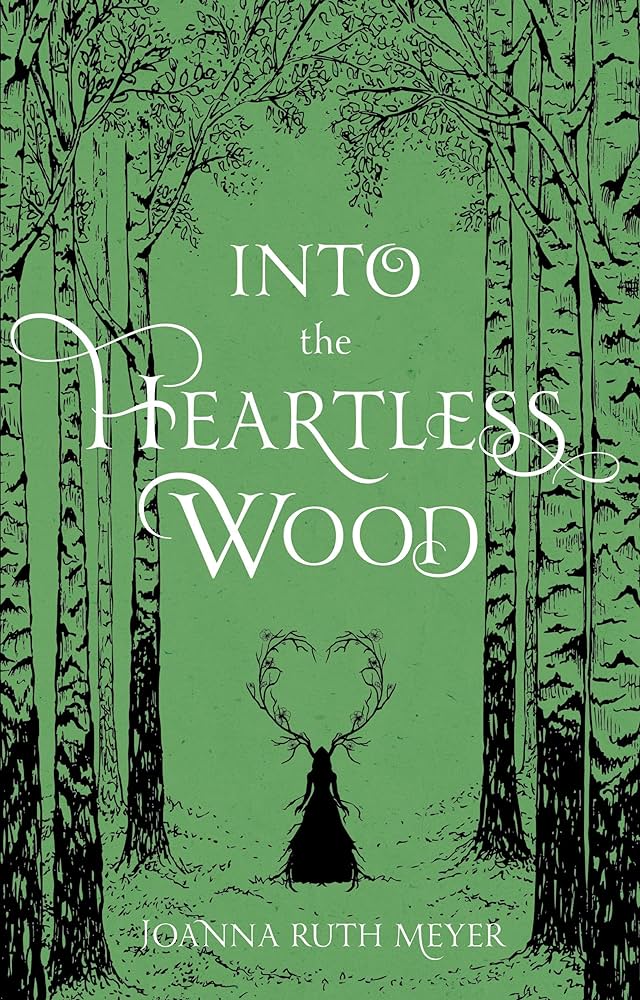
Book Review Tuesday (1/2/24) – Into the Heartless Wood

Happy Tuesday, bibliophiles! First post of the year, phew…

I went into Into the Heartless Wood with no expectations—it was the very end of the year, and I just happened to be in a fantasy mood, mostly brought on by The Siren, the Song, and the Spy and The Stardust Thief. I’m glad I had zero expectations, because Into the Heartless Wood was deeply beautiful and emotional, and it had just the right elements to make for a modern fairytale.

Enjoy this week’s review!

Into the Heartless Wood – Joanna Ruth Meyer

Owen Merrick knows better than to venture into the witch’s wood. The forest within is where the tree-sirens dwell, monstrous creatures capable of tearing down cities and ensnaring even the most sensible people with their fatal song. The woods took Owen’s mother when he was young, and ever since, he’s vowed never to return. But after his little sister wanders into the wood and incurs the wrath of the tree-sirens, one of them spares their lives. Owen and the tree-siren both begin to feel a pull towards each other. In secret, Owen visits the tree-siren, but their relationship is one that may spell disaster for the human and siren kingdoms. A war is brewing, and they may be caught in the middle.

TW/CW: blood, gore, child endangerment, suicide, torture, vehicle crash/derailment, war themes

Into the Heartless Wood was just something I picked up because I was in an extended fantasy mood for most of last week, but it blew me away at how emotional and heartbreakingly tender it was. I thought I’d given up on Beauty and the Beast retellings, but to be honest, I had no idea that this was a retelling until after I’d finished the whole thing, and maybe that’s what made it so memorable. All it stuck to was the central theme of the story—everything else was Joanna Ruth Meyer, and that everything else was beautiful.

This is more of a general statement on fantasy/supernatural romances in general, but it feels like every pairing in it ends up where the woman is human, and the man is the non-human creature or monster. It’s on most of the shirtless dude (but this time he’s a werewolf/vampire/etc.) romances that I see advertised, and it’s in a lot of popular YA fantasies. It’s always the king or prince of the fae that the otherwise practical human girl falls for. And even though it’s my favorite movie, The Shape of Water fits too. You get the idea. We hardly ever let women be monsters. Not to get real College with it, but there’s something to be said for the fact that we can’t stand to make women monsters—and therefore unattractive in some way—because otherwise, they wouldn’t be tidy little sex objects anymore. Women are hardly ever in the position of the monstrous character because a lot of writers can’t stand the thought of a woman’s characteristics or redemption arc not being tied to her beauty.

That’s part of why Into the Heartless Wood stood out to me so much. Something as simple as a gender-swap has done this novel an immense service. Seren, the tree-siren love interest, is monstrous in the basic sense, but her inner conflict and the history that led up to who she is was written in such a painfully tender way. Even if she wasn’t meant to be the love interest, you would still feel so deeply for her. The way that her POV chapters switched from verse to prose depending on her circumstances was so artfully subtle, and Meyer had no trouble navigating between the two, even as Seren herself struggled to separate herself from the woods. The conflict between Seren and her sisters, as well as the inner conflicts of her place in the world and the struggle to become something more than a pawn of her mother, made her not just fleshed-out, but a character I was rooting for from page one. (I always feel sympathetic towards the monsters, but the point still stands.) Owen was the perfect match for her—his sensitivity and fearful yearning for something beyond the ordinary fit Seren’s search for meaning beyond the wood perfectly.

The Kingdom of Tarian was also fleshed out just right! I’m assuming most of it was Welsh-inspired, judging from the names of places and characters, but I liked the integration of the industrial aspect of Tarian, and not automatically opting for a medieval setting, as most fantasies tend to do. (It’s all well and good, but it gets tiring once 95% of the high fantasy books you’ve read end up with the same setting with minor tweaks.) The industrialization enhanced the nature/mankind conflict that the novel sets up; from the beginning, there’s a stark contrast between the human world of steam trains and semi-modern warfare and the wood, with its wild, man-eating tree witches, and it made the central, generational conflict between the Witch of the Wood and the king of Tarian seem even more grave, even if the lives of both protagonists and their families weren’t at stake.

What wrapped all of this together was both the prose and verse of Joanna Ruth Meyer. Both ways, her writing was truly lyrical, achingly poetic in even the most fleeting of scenes. The emotion that was baked into the fiber of this story made the almost Romeo & Juliet-like romance of Owen and Seren feel all the more revolutionary—teenagers always feel like their love stories are what make the world go ’round, but Meyer made you believe every word of it and root for the lovers every step of the way. Every bit of both love and heartbreak was heartstring-tugging—there’s nothing like a story of lovers giving each other the courage to break away from the mold set by the world(s) around them. Works like a charm.

All in all, an achingly romantic and heartbreaking fantasy that had me hanging on every word. 4.5 stars!

Into the Heartless Wood is a standalone, but Joanna Ruth Meyer is also the author of the Echo North series (Echo North,Wind Daughter, and the companion Wolf Daughter & The Oldest Magic), and the Beneath the Haunting Sea series (Beneath the Haunting Sea and Beneath the Shadowed Earth).

Today’s song:

big thank you to my brother for sending me this one!!

That’s it for this week’s Book Review Tuesday! Have a wonderful rest of your day, and take care of yourselves!
Posted in Book Review Tuesday

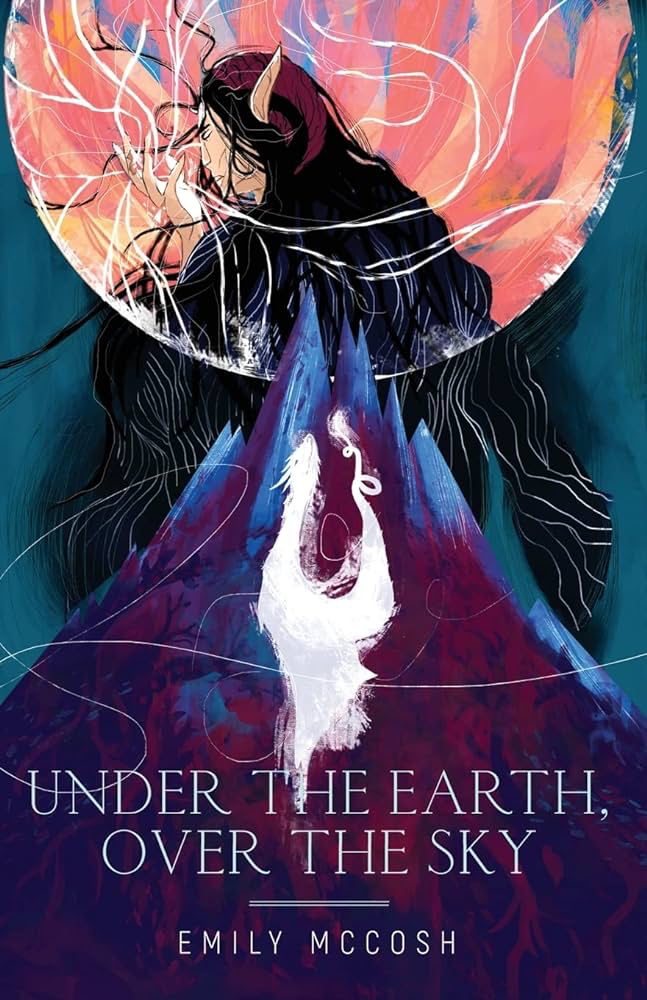
Book Review Tuesday (10/3/23) – Under the Earth, Over the Sky

Happy Tuesday, bibliophiles!

I swear it’s entirely a coincidence that I’m reviewing two books that have titles separated by commas with the word “sky” somewhere in them (The other would be Deep as the Sky, Red as the Sea). They’re entirely different books, but I’m glad to say that they’re equally excellent. Under the Earth, Over the Sky gives fantasy a tenderness that it’s desperately needed for years, and I am all the better for reading it.

Enjoy this week’s review!

Under the Earth, Over the Sky – Emily McCosh

Iohmar does not meddle in the affairs of the human world. He is above such things, being an ancient fae king older than human civilization itself. But when he finds an abandoned, dying baby in the borderlands between the human world and his kingdom, he takes it upon himself to raise him as his own. He names his human son Lorcan, and he takes him back to live in the fae kingdom. But Iohmar’s ancient magic has begun to wane, and with threats encroaching into his kingdom, he must do whatever it takes to protect baby Lor and the rest of his subjects.

TW/CW: past mentions of abuse/loss of a loved one, abandonment of a child, nightmares, child endangerment

I’m so sick and tired of grimdark, man. I’ll save my rant about it for another day, but I just feel like it’s a blight on fantasy, and on any genre where it’s applicable. (Life is full of joy and beauty! They can never take your joyous whimsy!) That’s why this book feels so necessary. Under the Earth, Over the Sky really did heal my soul. It may not be without its flaws, but it’s such a deeply moving and poignant tale of love beyond boundaries and parenthood.

For the past few years, I’ve found myself drifting away from most kinds of high and epic fantasy; at their very worst, they’ve just felt like the same plots coughed up over and over, but with far heftier of a page count than is necessary. But Under the Earth, Over the Sky feels like the best kind of subversion of all of the self-serious, high-and-mighty tropes that have turned me off from a fair portion of the genre. How do you make your haughty, ancient king of the fae with the wisdom of a thousand moons a genuinely compelling character? Simple: make him raise a baby. The synopsis already made this book sound endearing, but I couldn’t have predicted how much of a warm bath to the soul that this book would really be.

Of course, the dynamic between Iohmar and his adopted son was where Under the Earth, Over the Sky shone the brightest. Watching Iohmar’s cold heart slowly melt as he began to care for Lor was truly a joy, and Emily McCosh portrayed all of the ups and downs of their father-son relationship so poignantly. He was such a compelling character beyond his dynamic with Lor as well; McCosh also did an excellent job of making his life and relationships genuinely complicated, making him feel truly fleshed-out and making some of the stakes seem more real. Every part of his raising Lor tugged at my heartstrings, from the moment he realizes that he has to care for this baby, to grappling with the fact that his appearance frightens his own son. Not to praise the plague that is the Disney live-action remakes, this novel reminded me of the only good one—the dynamic between Angelina Jolie’s Maleficent and baby Aurora was similarly sweet. The fact that it’s a father-son relationship also feels so important—having a male character showing such vulnerability and care is something that we need more of, certainly.

Most of the other character interactions were similarly comforting and cozy. I especially loved the dynamic between Iohmar and his wife Rúnda; they were so quietly devoted to each other, and their gentle love fueled the already heartwarming feel of this novel. The interactions between Iohmar and the humans he encounters along the way were similarly poignant. Not only did they serve to drive home the rift between Lor’s human and adopted fae identities, Iohmar’s subtle changes in how he dealt with humans was so tender and indicative of his shifting character. Strangely, even though there weren’t as many characters, subtle interactions like these were what made the world feel lived-in—it didn’t take a lot for this world to feel populated, which helped immensely with my feeling of immersion.

However, as well fleshed-out as many aspects of Under the Earth, Over the Sky were, the subplots surrounding the main plot felt rather rushed. Although the stakes of Iohmar’s magic rotting were clear and tangible, the aspect of the rippling felt like it barely held any weight. They weren’t as well established at the start of the novel, and that lack of immersion felt like none of it was really serious—it really did feel like an afterthought. That part was resolved in a similarly messy way, but at least it got somewhat neatly swept under the rug. It was an interesting enough concept, but a lack of context and fleshing-out made it feel almost meaningless.

All in all, a refreshingly cozy and tender story of parental love and changes of heart. 4 stars!

Under the Earth, Over the Sky is a standalone, but Emily McCosh is also the author of All the Woods She Watches Over, an anthology of short stories and poetry, and the ongoing In Dying Starlight series.

Today’s song:

live laugh Lisa Germano

That’s it for this week’s Book Review Tuesday! Have a wonderful rest of your day, and take care of yourselves!

Posted in Books

The Bookish Mutant’s Books for Latinx Heritage Month (2023 Edition)

Happy Friday, bibliophiles!

Here in the U.S., National Latinx Heritage Month lasts from September 15 – October 15! I’m always looking to diversify my reading, but this month is especially important to me since I’m half Latina myself, and I love exploring parts of my culture and others’ through literature. I sadly didn’t get around to making a recommendations post last year, since it landed when I was still trying to settle into college, but I really wanted to make on this year, so I planned ahead. And even though the header says YA (I’m stingy about my WordPress space), I wanted to include books of all age ranges in this year’s post. Enjoy!

For my past lists for Latinx Heritage Month, click here:

Let’s begin, shall we?

THE BOOKISH MUTANT’S BOOKS FOR LATINX HERITAGE MONTH (2023 EDITION)

REALISTIC FICTION/CONTEMPORARY

FANTASY/PARANORMAL

SCIENCE FICTION:

TELL ME WHAT YOU THINK! What are your favorite books by Latinx authors? Have you read any of these books, and what did you think of them? Let me know in the comments!

Today’s song:

merry Shakey Graves, everybody

That’s it for this post! Have a wonderful rest of your day, and take care of yourselves!

Posted in Book Review Tuesday

Book Review Tuesday (8/15/23) – Nightbirds

Happy Tuesday, bibliophiles!

I’ve seen this novel around a fair bit ever since it came out, both in the blogosphere and from our queen Amie Kaufman, who co-hosted the podcast Pub Dates with Kate J. Armstrong. It seemed like a more unique YA fantasy concept, and the 20’s-inspired setting intrigued me, and…okay, who wasn’t looking at that gorgeous cover? Now that I’ve read it, I can say that I enjoyed it, but I came away with mixed feelings—Nightbirds was a well-crafted fantasy in terms of worldbuilding, but its characters and general fence-sitting about what it wanted to say slightly put me off.

Enjoy this week’s review!

Nightbirds (Nightbirds, #1) – Kate J. Armstrong

In Simta, no one is more sought after than the Nightbirds. Long ago, these girls from the Great Houses were bestowed with the magic of witches, and with a kiss, they can grant that power to anyone who wishes to wield it. Matilde, Sayer, and Æsa are this season’s Nightbirds, but they have already learned that they will only ever be seen and treated as disposable. Yearning for something more to life, they stumble upon an underground networks of witches—witches whose powers come fro outside of the Great Houses, and are hidden from sight from the government. With the knowledge that their power will not be suppressed, the three Nightbirds set out to make things right.

TW/CW: misogyny, fantasy violence, murder, death, past mentions of torture, near-death situations

I came to this book mainly from the word of Amie Kaufman, who also happened to release a 1920’s-inspired YA fantasy this year. And while I did enjoy Nightbirds as a whole, the more I thought about it, the more drawbacks I found. If you’re torn between the two, stick with The Isles of the Gods.

Let’s start with the best part of the novel, though: the worldbuilding at the atmosphere! The Jazz Age inspiration was heavy, but it was executed incredibly; the worldbuilding, from the hidden magic to the forces trying to suppress it, was impeccably-crafted, with not a single stone unturned in terms of the intricacies of Simta and Armstrong’s world as a whole. It was a world that felt genuinely fun to be in—there was so much to explore along with the three main characters, and I enjoyed every minute of it.

All that wouldn’t have been possible with Armstrong’s atmospheric writing. There were other markers about Nightbirds that signaled it as a debut novel (more on that later), but for a first novel, the writing in this novel was fantastic! It’s the kind of writing that doesn’t just immerse you in the world, but dunks you headfirst into it with its vivid, vibrant imagery. Armstrong’s writing was so clear that I could visualize the world of Nightbirds almost cinematically, every scene played out like it already had a screen adaptation. The steady pacing added to that effect as well—it had a great balance of political intrigue, action, and down time to keep me intrigued for most of the novel.

However, the multiple POVs were an issue for me for most of the novel. The worst crimes that a multi-POV book can commit is not marking which POV the chapter is from, and switching POVs without warning in the middle of a chapter. Nightbirds was guilty of both. With these kinds of books, it’s often a struggle to pick out one character’s voice from another, but the third-person POV remedied that slightly. Even so, it was maddening trying to feel my way through the chapter and remember whose POV was being focused on. And speaking of the characters, they were in some serious need of being fleshed-out. Other than Matilde, whose personality was being entitled and stubborn, I could barely get a read on both Sayer and Æsa beyond what the synopsis said about them. Aside from Matilde, they had hardly any distinctive features, personalities, or traits, which made the whole multiple-POV mess all the more maddening. All of it could have been prevented with some chapter headers and giving the characters more life—it really wouldn’t have been all that hard of a fix.

And for a book that was advertised as being a feminist fantasy, Nightbirds really didn’t seem to know what it wanted to say. For a plot centered around an archaic system built on exploiting teenage girls, you would think that there would at least be some commentary on it. All we really got was a hollow, vague sense of taking back power, but there was no real call to action to do just that; aside from the revelation of the underground network of witches whose magic hasn’t been suppressed by the fantasy patriarchy, there’s hardly any real questioning of the system or realizing that there is a way to reform it and break away from it entirely. It’s like the book equivalent of thinking that you’re a feminist just because you post some instagram infographics on your story every once in a while and do nothing else. It’s saying “smash the patriarchy!” and then sitting comfortably and doing nothing. That’s basically what Matilde’s “character arc” ended up being, honestly. I know there’s probably better words to describe it, but the one that comes to mind is just…white woman-y. I guess I missed the queer rep (WHERE??? I saw no indication of any queerness 😭), but except for that and the conveniently described token side character of color, there was no hint of intersectionality. And no, I’m not saying that every book has to have an impeccably diverse cast, but for a book that billed itself as feminist and supposedly centered around tearing down oppressive systems, I feel like intersectionality should be taken far more into consideration. Nightbirds just came off as more white feminism than actual feminism.

All in all, a fantasy debut with stunning worldbuilding, but that was dragged down by its lack of fleshed-out characters and hardly any hint of the feminist messaging that it advertised. 3.5 stars.

Nightbirds is the first in the Nightbirds duology, which continues with the forthcoming sequel Fyrebirds. Nightbirds is Kate J. Armstrong’s debut novel.

Today’s song:

this is just such a GROOVE

That’s it for this week’s Book Review Tuesday! Have a wonderful rest of your day, and take care of yourselves!
Posted in Book Review Tuesday

Book Review Tuesday (5/16/23) – The Isles of the Gods

Happy Tuesday, bibliophiles!

If my constant blabbing about Aurora Rising from the past four years should bring you to any conclusion, it’s probably that I’m a massive Amie Kaufman fan. So when I heard that she was making her solo YA debut this year, I was BEYOND excited!! I immediately preordered, and it came right when I’d just finished up my first year of college—the perfect present! And even though I’ll always pick sci-fi over fantasy, if anybody can make a fantasy that I’ll give 5 stars, it’s Amie Kaufman.

Enjoy this week’s review!

The Isles of the Gods (The Isles of the Gods, #1) – Amie Kaufman

Selly has the ocean in her blood.

She’s been tagging along with her father on the high seas since she was a baby, but now, he’s left Selly to her own devices in the port town of Kirkpool. Intent on tracking him down, she tries to set sail, only for her plans to go awry at the hands of Prince Leander, who wants to hitch a ride for his own gain—to seek out the storied Isles of the Gods, where the ruling deities of her world are fabled to be laying in a restless, dormant sleep. But when a disastrous assassination attempt leaves Selly and her crew stranded, she has no choice to trust Leander—and make it to the Isles no matter the cost.

isles ft. some rainy trees

TW/CW: murder, graphic violence, abandonment, assassination, fatal vehicle explosion

From what I can tell, The Isles of the Gods is a book around a decade in the making, a passion project that Amie Kaufman had been crafting relentlessly in between releasing some of her other collaborative novels. So there’s automatically 10 years of love in this novel—and boy, it really did show.

I’ve preferred sci-fi to fantasy for years, but leave it to Amie Kaufman to craft a fresh setting that kept me turning the page for hours! I’m already a sucker for pirates in fantasy, and that aspect was executed with just the right balance of campy fun and nail-biting stakes. And after parsing through all of the rich facets of the world that Kaufman created, it’s left me with one question: what’s keeping authors from creating more industrial/advanced fantasy settings? Consider me done with fantasies with automatically medieval settings, can we do more 1920’s-inspired fantasies that don’t just focus on the jazz age stuff? I didn’t know I could possibly yearn for the melding of magicians and old-timey cars quite this much, but I’ll say it once and I’ll say it again: if anybody can do it, IT’S AMIE KAUFMAN.

Kaufman’s writing, as it always is, was the real star of the show in The Isles of the Gods. There’s something instantly transporting about her prose—from the first sentence, I felt dunked headfirst into this lush, rich world, from the gripping prologue to the delightfully suspenseful final sequence. Maybe this is just a consequence of me being so attached to her writing style, but she has such a way of drawing you into the story in record time. Every book is a little world in and of itself, but hers never cease to feel tangible. Reading fantasies with sea settings are always fun for me, being about as landlocked as you can get here in the U.S., but reading this reminded me of a passage from Neil Gaiman’s The Ocean at the End of the Lane, about the protagonist imagining that the rain pattering against his window at night was waves on the hull of a ship. Good thing it was pouring rain when I was reading this book.

And speaking of Kaufman’s writing—now that I’ve seen her solo and collaborative works, I can say with certainty how clever of a writer she is. She sets up common conflicts that threaten to drag down the book, but whips them into cunningly-subverted left turns that kept me guessing all through the novel. A whole bunch of characters that you *can’t* quite tell apart, but are still personally relevant to the protagonist? Oh look, a botched assassination attempt that gets rid of them! Have a lovable but borderline one-note character who hasn’t had the chance to prove themself? Put that sorry little man in a Situation!™️ It may be diabolical, but it made my enjoyment of the book increase that much more—nothing like trope subversion and avoidance left and right to keep you on your toes.

As for the characters, I’m not quite as attached to them as I was with the squad of the Aurora Cycle, for example, but that’s way too high a bar, even if it’s still Amie Kaufman, but I did adore a lot of them! There was clearly so much love and care put into Selly, and it showed—she had a beautiful arc, and she was such a determined and lovable character to root for. Leander’s type of character—the charming, spoiled prince that the protagonist can’t help but fall for—has been done since time immemorial, but Kaufman’s take on the trope resulted in some lovely laughs and a slow-burn romance done right!

And…yes, I felt a little too called out by Keegan. The “bookworm who hasn’t seen the light of day in way too long” was already there, but…dude. I just shaved my head in January. DUDE. AMIE KAUFMAN, STOP PEEKING INTO MY BRAIN LIKE THAT. YOU COME INTO MY HOUSE, AND YOU MAKE A GENDER-SWAPPED CHARACTER OF ME?

Jude and Laskia (especially the former) didn’t get quite as much page time, but they were incredibly intriguing as not-quite-antagonists, but puppeteering each other and subsequently being puppets to political forces beyond their control. I kept getting hints that Laskia was going to turn to Selly/Leander/Keegan’s side, but now that we’ve seen ✨the cliffhanger,✨ the future is uncertain…hmm. I didn’t quite get the promised “squad” vibe that the blurb promised, but I have a feeling that the two camps are going to merge sooner than later…

Also, we love an absolutely Indiana Jones final sequence. NAILED the fantasy brand of campy.

One sidenote—Amie Kaufman said several times that Isles was going to have LGBTQ+ rep, and all we really got was the lesbian couple that appeared for a total of…maybe three pages? Which, yeah, that’s all well and good, but the question that many readers had about said rep was if any of the protagonists were going to be queer, and…so far, nothing? As much as I loved this book, I can’t help but be a little disappointed on that front.

All in all, a gripping, cinematic, and utterly lovable solo venture from one of my favorite authors. 4.75 stars, rounded up to 5!

bonus Hobbes content

The Isles of the Gods is the first in a planned duology, concluding with an unnamed final book slated for release in 2024. Amie Kaufman is also the co-author of the Illuminae Files, the Aurora Cycle (with Jay Kristoff), the Starbound trilogy, and the Other Side of the Sky duology (with Meagan Spooner). On her own, she is the author of the middle grade Elementals trilogy.

Today’s song:

loving this album hnnnnngh

That’s it for this week’s Book Review Tuesday! Have a wonderful rest of your day, and take care of yourselves!
Posted in Book Review Tuesday

Book Review Tuesday (4/18/23) – The Spear Cuts Through Water

Happy Tuesday, bibliophiles!

I was in a fantasy mood recently, so I decided to pick up The Spear Cuts Through Water after hearing some rave reviews from other bloggers. The gorgeous cover only added to the sell. But in the end, this novel ended up being a major disappointment—a murky, 500+ page slog that was only enjoyable for fleeting moments. I really need to stop setting myself up for disappointment with all these overly long high fantasy books…

Enjoy this week’s review!

The Spear Cuts Through Water – Simon Jimenez

The Emperor of the Moon Throne has terrorized the land of the Strangled Throat for centuries, aided by his three reckless sons, aptly dubbed The Terrors. But like everything else that he has seized, the Emperor’s power comes from an age-old moon god who has been locked under the palace against her will. But a god is not meant to be kept in captivity.

So she escapes. Aided by Jun, a disgraced palace guard, and Keema, a warrior from a distant, mysterious land, she sets off on a journey to find her freedom. But the Moon Throne will not let go of her so easily…

TW/CW: ableism, cannibalism, child abuse, murder, body horror, substance abuse, mentions of sexual assault (off-page), torture, loss of loved ones

This is one of those instances where I feel like I’ve read a completely different book than all of the 5-star reviewers. I really wanted to like it—and there were a few things that I did like—but ultimately, it felt like a 20-minute prog-rock song in book form: well-written, but so unneccesarily convoluted and full of itself that it became insufferable.

Before I go on my tirade, I will acknowledge that there were some wonderful, very bold and skilled parts of this novel. Jimenez’s writing had moments of being both beautiful and insightful—there were a few anchors to pull me through the slog, and his prose had moments of being incredible. 2nd person is always a bold choice, but unlike other aspects of this novel, it was executed very well, succeeding at being both immersive and fresh without feeling like it was bold just for the sake of being so.

“Bold” is generally I word that I could ascribe to most of this book. A lot of it was written in a fresh, nontraditional way, and I appreciated its execution in some sections. But a lot of it just felt like showing off—having unconventional chapter breaks and an infuriating structure just for Jimenez to show that he was capable of doing so. Most of these ended up being to the novel’s detriment. The random “chapter” breaks (there really weren’t any chapters in this book?), which mostly just ended up being sized-up font that was, essentially, what should have just the first sentence of the paragraph. And since they were all just first sentences of the paragraph, there were 2-3 of these breaks per page. POVs got switched without warning and without explanation, making the reading experience overcomplicated where it could’ve been an easy fix. It just felt like it was biting itself in the foot in the name of art—it could have been a beautiful story, if it wasn’t so intent on showing off how “different” it was.

As a result, so much of this novel got lost. Even though I was fairly lost trying to discern whose POV is it this time, I did notice one thing while reading The Spear Cuts Through Water—where’d the worldbuilding go? Other than the vague notion of a fantasy world (gods and goddesses, some talking animals/spirits, etc.), I had no idea of the layout of the world, the regions of the world, any kind of cultural cues or conventions, any kind of magic system…it just wasn’t there. At all. The same goes for the characters—they were all but cardboard, moved around like pawns for seemingly no reason. (I get that they were under oath by the Moon God, but the point still stands. They didn’t need to be that stiff.) Other than the reveal about Keema, nothing compelled me about either of them, or any of the other passing side characters. This novel was just so intent on chasing itself in circles that it forgot the essential elements that a novel needs.

All in all, a fantasy with great potential, but that ended up losing itself under layers of attempts to be daring and new. 2 stars.

The Spear Cuts Through Water is a standalone, but Simon Jimenez is also the author of The Vanished Birds.

Today’s song:

LOVE this album, this feels like a perfect match for “There’s No Other Way”

That’s it for this week’s Book Review Tuesday! Have a wonderful rest of your day, and take care of yourselves!
Posted in TV

Shadow and Bone, season 2 – Netflix review 🐉

they really just hand the Mal reveal to you right there, huh

Happy Friday, bibliophiles!

Season 2 of Shadow and Bone has finally come out, and with it came so much potential—new and beloved characters were finally being introduced, and with the melding of the original Shadow and Bone and Six of Crows storylines, we were finally getting material that was actually from the latter books. But although it was entertaining overall, it’s clear that a few things have started to get lost in translation in this new season. Still a fun watch, for the most part, but I have more gripes than I did than for season 1.

Now, tread lightly! This review contains spoilers for seasons 1 & 2 of Shadow and Bone, so if you haven’t yet watched it, read this at your own risk!

for my review of season 1, click here!

Enjoy this review!

SHADOW AND BONE, SEASON 2 – NETFLIX REVIEW

THE GREAT:

what’s with Tolya’s expression there 💀

Most of what I liked from season 1 ended up carrying over (CGI, casting, etc.), so, again: see my original review for most of that. But here’s what I liked about season 1 in particular:

  • Nikolai and Wylan: Nikolai and Wylan were my favorite characters from Shadow and Bone and Six of Crows respectively, so I was nervous going into this season. Nothing lives up to how we picture characters in our imaginations, but I’d say that Patrick Gibson and Jack Wolfe both did a good job at bringing these characters to life! Gibson definitely captured Nikolai’s lovably over-the-top swagger and charm, and his outfits were stellar as well. Similarly, Wolfe played Wylan’s shy and sensitive personality wonderfully, and as in the books, he had some solid chemistry with Jesper (Kit Young).
  • We’re actually getting some of the Six of Crows plot now? It had to happen eventually, given that the showrunners were combining both series and the fact that the audience largely liked the Crows more than the Shadow and Bone plot (understandable). Even with the tweaks that happened to make it work into the main storyline, it was still super fun (and also harrowing—the Jordie flashbacks, anyone?) to see some of the more iconic events from the book come to life. And the band’s finally all together! Almost…
  • More screen time for David!! DAVID! MY BOY! He was one of my favorite side characters in the books, and I’m so glad that he got to have more attention in this season. Luke Pasqualino played his gentle, awkward personality so well, and his newfound chemistry with Genya…getting all of the old Shadow and Bone feels from back in the day…🥲 love those two
  • We don’t have to deal with the Darkling anymore…for the time being: The decision to smush the plots of Siege and Storm and Ruin and Rising was certainly interesting one; again, it’s easy to see that it happened after the overwhelming audience preference for the Crows, and it definitely expedited some of the less interesting parts from those novels. Unlike the new Six of Crows stuff from seasons 1 and 2, this felt a bit more seamless, and even though I’m sad that we won’t quite get everything, it still makes sense. It’s messy, but it…kind of worked. And, as the title suggests, I’m glad that we won’t have to put up with hipster Darkling for a while. I say “for a while” because from the “”twist”” ending, it looks like they might be going the King of Scars route if they continue the Shadow and Bone plot…I wouldn’t be surprised if they brought him back. Ugh. They handled him super uncomfortably (see my s1 post for my issues), so I hope they keep him dead in the Netflix series. I can dream.
  • The Hummingbird: HUEHDKSJHSHJKDKHFSHSJKDLFHDJDFHF FANTASY FLYING SHIP GO BRRRRRRRRRRRRR
YEAAAAAAAAAAAAAAAAH BABEYYYYYYY

THE NOT-SO-GREAT:

Again, most of my gripes from season 1 carry over. I’m staying mad about Nina not being plus-sized. Do better, Netflix.

  • Tamar and Tolya: Other than Nikolai and Wylan, a lot of the newly introduced characters in this season felt especially gimmicky, and these two fell right into that. I remember thinking that they were mildly interesting in the book, but they were sort of forgettable in my experience. And Netflix somehow made them…worse? Had it not been for the “teehee Tolya will take any opportunity to recite poetry, silly goofy man,” and their genders, these two would’ve been indistinguishable. And both of them ended up being annoying—again, Tolya just had the poetry gag, and Tamar was just there to deliver slick one-liners and look cool. Not really a highlight. Eh.
  • Why are they making some of the characters so gimmicky all of the sudden? I know. This is a show based off of a YA book, and a lot of these characters are meant to be over-the-top. In the case of Kaz Brekker, for instance, it still works. But it feels like they’ve just taken qualities of existing characters and amped them up for no reason? I saw it most prominently with Jesper; there’s so much more nuance to his character than just being a charming gunslinger, but that’s…the only thing season 2 ever did with him. They just reduced him to being the comic relief character and erased all of his other characters, which is a massive disservice to him and Six of Crows as a whole. And don’t even get me started on that ridiculous attempt to break the fourth wall and then cut away. WHY.
my boy deserves better
  • The New Six of Crows plotline. Again. The initial Six of Crows plot in season 1 was somewhat entertaining, but it was pretty obvious that it was shoehorned in just so that they could try and fix up the timeline. And somehow, by some horrific miracle, they managed to make another new plot that was EVEN WORSE. WHAT WAS THAT. They weren’t even trying to hide the fact that they needed some time to stall before getting to the more climactic parts of the series. They just went on a sloppily-written heist and then got trapped in a room with a poisonous gas that somehow made them all relive their tragic backstories? How much more hackneyed can you get? Some of the laziest writing I’ve seen in ages…
  • The Darkling’s henchmen: Again: gimmicks. Ridiculous. No wonder they were so disposable.
  • THIS ONCAT ERASURE WILL NOT STAND: self-explanatory. You thought you could tide us over by throwing a goat in season 1 for comic relief? THE PEOPLE HAVE SPOKEN, AND WE WANT THE CAT.

(it’s me, I want the cat)

NOT NECESSARILY GOOD OR BAD, BUT JUST KIND OF FUNNY:

  • Why is Freddie Carter constantly making that face? You know the one. Does the role of Kaz Brekker somehow have a prerequisite for being in a constant state of sucking in your cheeks?

Inej: I will have you without armor, or I will not have you—

Kaz:

Overall, I have much more mixed feelings about this season; a lot of the issues I had initially were exacerbated much more this time around, but it was still entertaining to watch and somewhat well-acted. As a longtime fan of the books, it’s been interesting to see how they’ve been adapting these two series, and although they were less faithful this season, I’ve still been compelled to see how it all plays out. So I’d give it a solid 3.5 stars since it was still fun, if not frustrating.

TW/CW: graphic violence, war themes, animal death, depictions of illness, child death, loss of loved ones, body horror, blood

Today’s song:

what a great album

That’s it for this TV review! Have a wonderful rest of your day, and take care of yourselves!