TW/CW: there are mentions of gun violence/school shootings as well as deportations/racism in this post. If those are sensitive topics for you, scroll down to the bold, underlined text to see the book recommendations. Take care of yourself!
Happy Monday, bibliophiles! Looks like I’ll be back for the foreseeable future, now that I’ve adequately got my stuff in order life-wise. As much as I can.
I’d like to take a moment before I get into this post to talk about something nobody seems to want to talk about. I hate to start this off on a somber note, but I have to get this off my chest. I was planning on coming back to the blogosphere earlier, but last week happened to be a dumpster fire like no other. On Wednesday, September 10th, Evergreen High School—the high school I attended—was the victim of a school shooting. Yet nobody seemed to care, solely because a certain conservative influencer happened to be louder and more favored by Trump, and therefore more important, than my community. Days after this tragedy hit my community, it seemed to disappear from the headlines, even when it was revealed that the shooter, like so many in this country, had been radicalized by neo-Nazi and white supremacist ideologies online. I’m livid. I’m heartbroken. I’m only just now coming down from the horrific mess of feelings that came about on Wednesday. If you take anything from this part of the post, it’s that none of these shootings are nameless. This happened in the town where I grew up, where I made friends and had crushes and went through awkward high school stages, just like the rest of you. I beg of you: remember that school shootings are neither abstract nor nameless. End gun violence now. To everyone in the mountain community that I’ve called home for so many years, I love you. Take care of yourselves, take care of each other.
If you’d like to help out, the Colorado Healing Fundis taking donations to support repairs for EHS and to help the families whose children have been affected by this tragedy. Please chip in what you can. If not, keep speaking out. Remember Evergreen. Remember every other victim of gun violence.
…
Now, then…here in the U.S., September 15th-October 15th is Latine Heritage Month! Regrettably, I never got around to making a full blown recommendations list like I usually do. September-October is a dicey time as far as getting my stuff together for school, but it is a little embarrassing, given that I’m half Latina. But there’s no time like the present.
But as with any marginalized community, even in times of such strife as these, we must resist the fact that our lives are defined only by suffering. Every time I learn more about my Colombian heritage, I feel fuller. More me. Even though it’s only a half of me, I feel like I’m discovering more of myself. And that brings me so much joy. Reading beautiful books by Latine authors brings me joy. Eating food from my culture brings me joy. If nothing else, we must remember that joy is an act of resistance. No amount of slander and hurt from the government will make us less Latine. They can never erase us. So I hope we can come together and celebrate what makes us fuller and celebrate the joy of community, because that can never be extinguished.
For my past lists for Latinx Heritage Month, click here:
NOTE: I’ve switched to using “Latine” as opposed to “Latinx” from now on, as there have been criticisms that “Latinx” is more Westernized; though Spanish is a gendered language, the suffix -e is frequently used to denote gender neutrality. Personally, I use Latina to refer to myself since I’m a cis woman, but I generally use Latine to refer to the community at large. If you’re in the community, use whichever language suits you best. I’m just too lazy to change my header…oops.
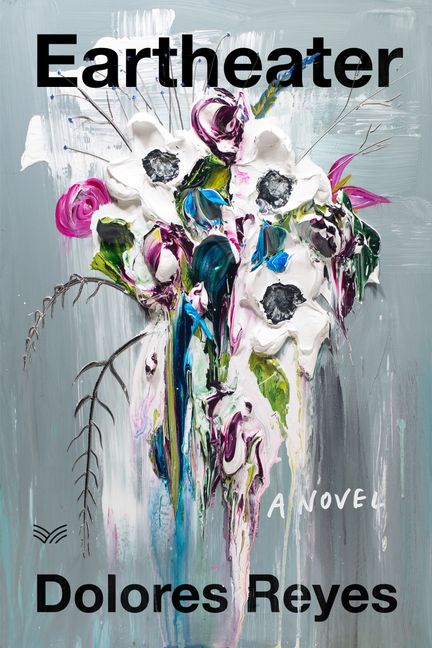
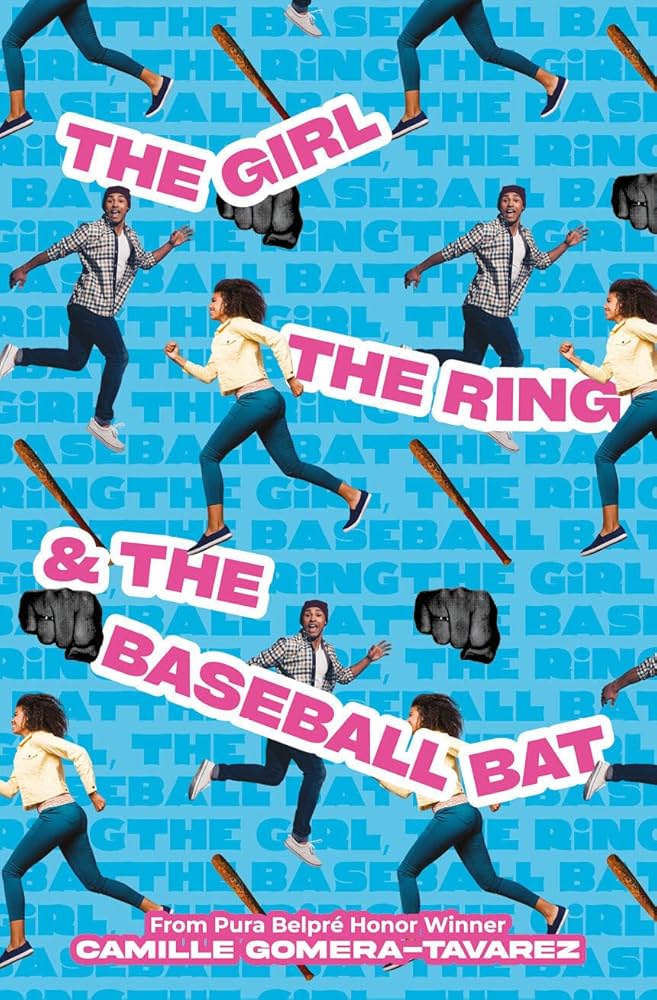
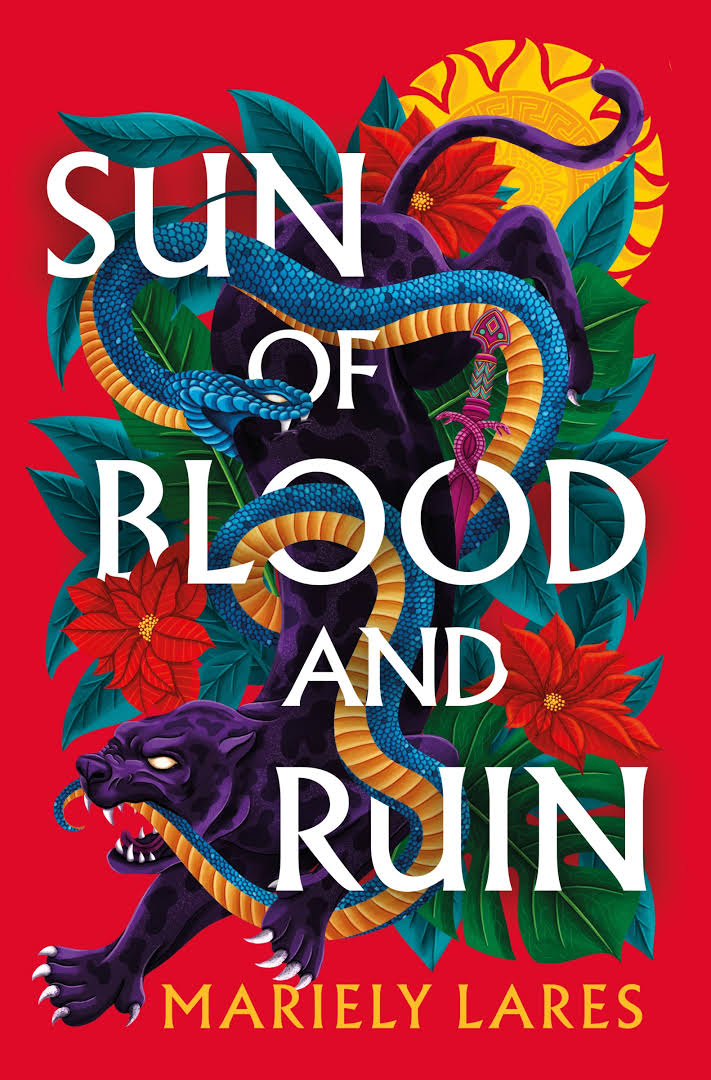
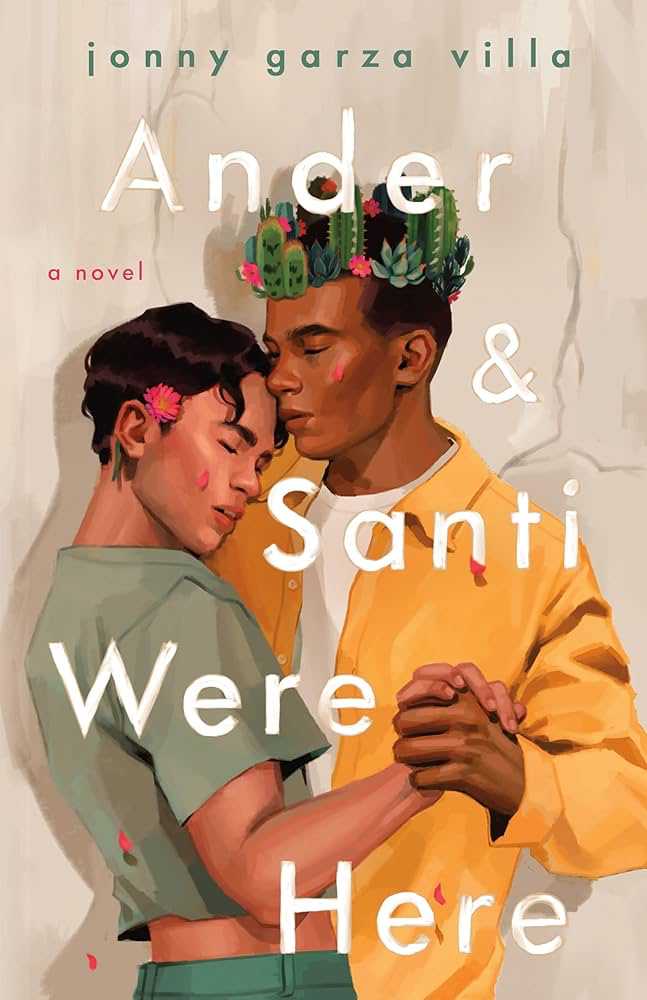
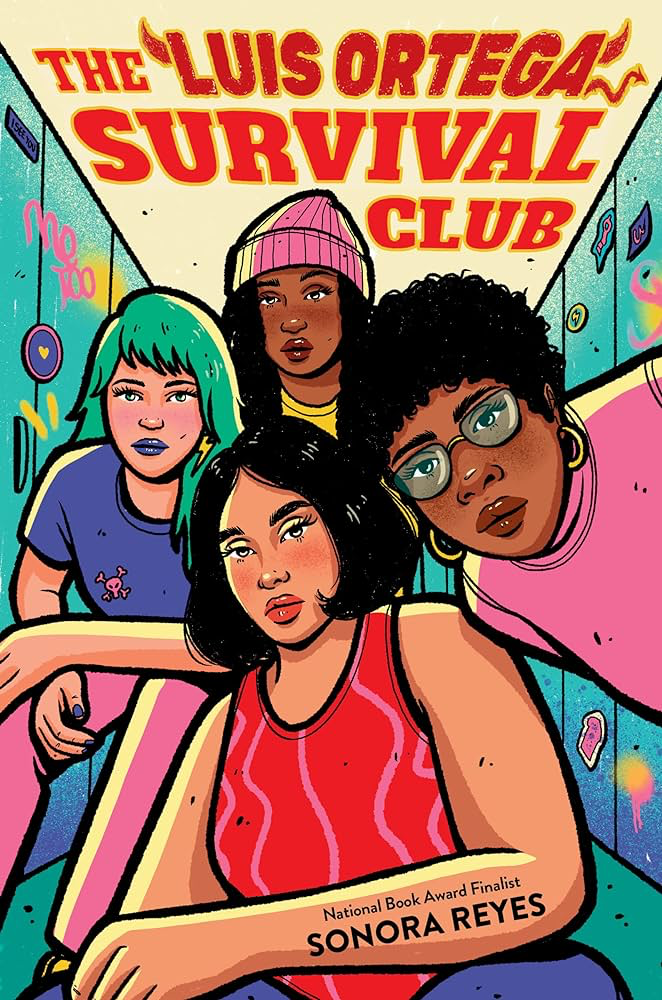
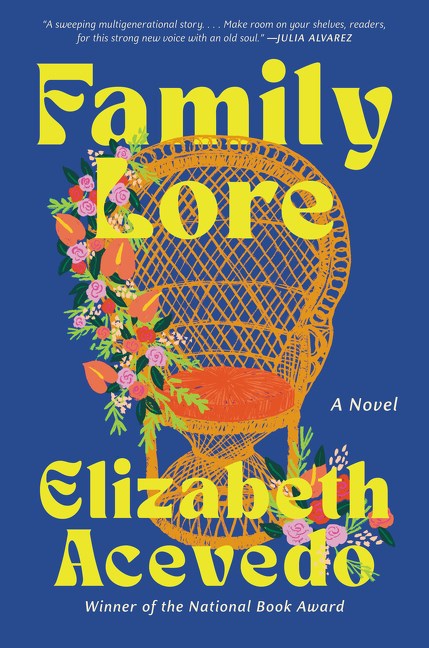
THE BOOKISH MUTANT’S BOOKS FOR NATIONAL LATINE HERITAGE MONTH (2025 EDITION)
TELL ME WHAT YOU THINK! Have you read any of these books, and if so, did you like them? What are some of your favorite books by Latine/x authors? Let me know in the comments!
Today’s song:
That’s it for this recommendations post! Have a wonderful rest of your day, and take care of yourselves!
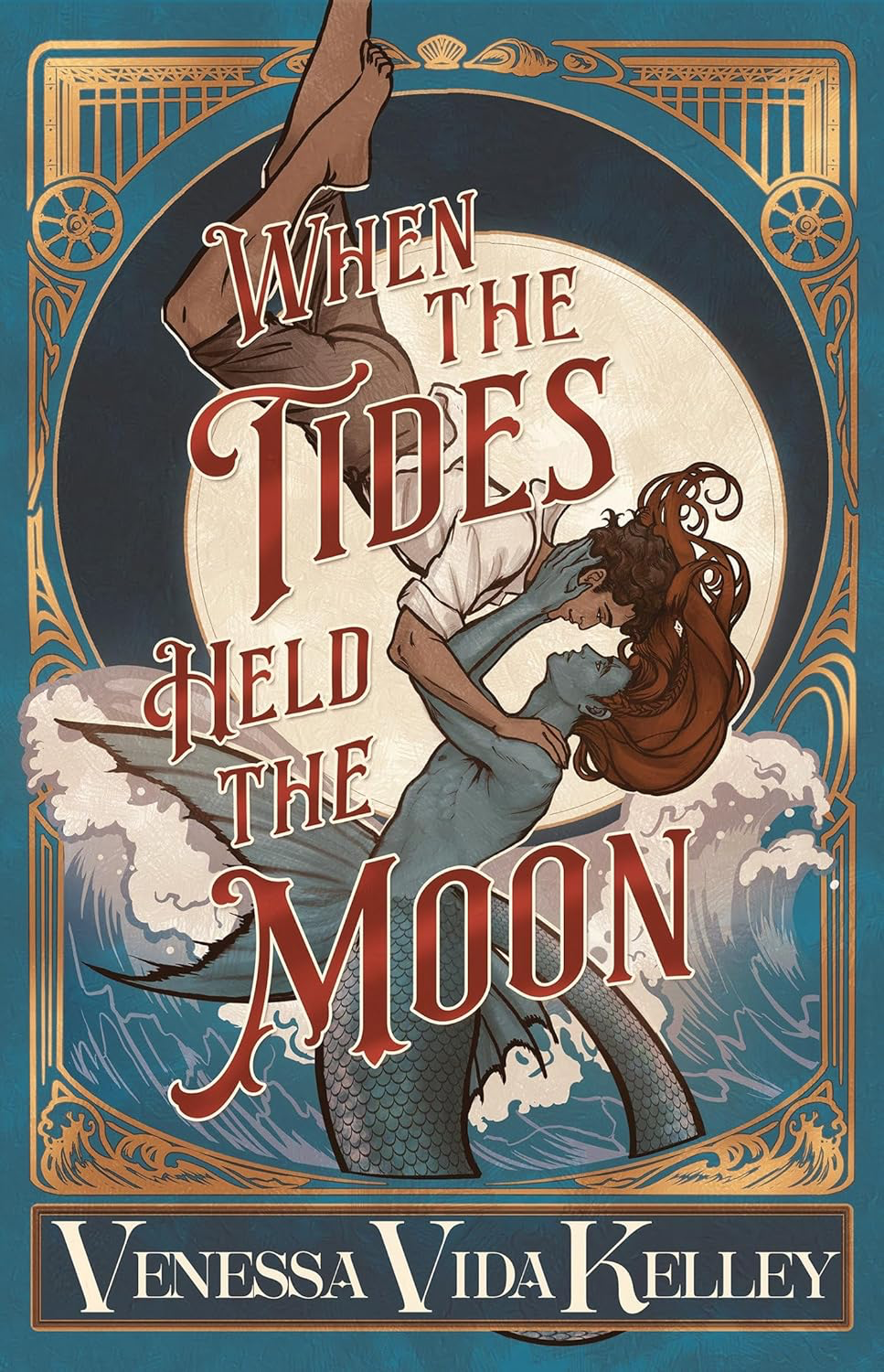
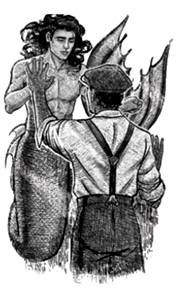
I found this novel in an Instagram post about upcoming queer releases in 2025, and this one immediately caught my eye. You put a comparison to The Shape of Water in the tagline, and you bet I’m in. (If anything, it’s right between The Shape of Water and Nightmare Alley, given the setting.) Venessa Vida Kelley has delivered a vibrant and sensitive story of queer love and solidarity amongst weirdos.
Orphaned and far from his homeland of Puerto Rico, Benny Caldera makes a living as an ironworker in 1910’s New York City, barely scraping together enough to stay afloat and out of reach of the taunts of his white coworkers. But when Sam Morgan, the owner of a sideshow, notices his handiwork, he commissions a strange project for him: a tank whose contents are unknown to him. Benny takes the opportunity for a new job, and finds an unexpected family in the sideshow’s performers. He soon finds out that the tank holds an impossible marvel: a captured merman. As Benny gains the merman’s trust, he finds himself drawn to him—and the merman to him. But when Morgan’s abuse to the merman turns deadly and the sideshow begins to crumble, it’s up to Benny to hatch a plan to save them all.
TW/CW: racism, homophobia, abuse (emotional and physical), violence, blood, ableism, xenophobia, mentions of sexual assault (off-page)
art by Venessa Vida Kelley
I may be a somewhat critical consumer, but listen…you dangle a comparison to The Shape of Water in front of me like a carrot, and goddamnit, I’m eating it right up. God forbid that a weird girlie such as myself consume even more media about found family, fish people, and the nature of marginalization!! That being said, nothing comes close to The Shape of Water, but that’s not the book’s fault. When the Tides Held the Moon is a beautiful novel in all of its parts.
When the TidesHeld the Moon boasts a vibrant cast of characters, and it really felt like a feat for Kelley to balance all of them and still give them unique and complementary personalities. Besides Benny and Río, the cast is mostly rounded out by the fellow performers in the sideshow, of which there are many. Yet out of the nine (I think?) primary side characters, none of them ever felt like an afterthought. Each of them were not only rounded out, but had such thoughtfully planned interactions with all of the other characters—sometimes clashing, and sometimes meshing perfectly. There were individual romances and special friendships between the nine of them, but they were a shining example of found family done well. Despite their individual differences, their solidarity and kinship shone through on the page, making for a narrative that had no shortage of tenderness and heart.
The romance between Benny and Río shone in When the Tides Held the Moon. There was such a tenderness to both of them that gave the novel so much of its heart. I’m always a sucker for narratives about two outsiders falling in love, but I love the ways that their separate senses of outsiderness intertwined; they shared music, stories, and tales of their respective homelands. The slow burn romance was paced well, and never felt rushed. I do feel like the ending was a tad bit too close to The Shape of Water, without spoiling anything, but I think their individual way of solidifying their romantic relationship at the end of the novel separated itself enough in the end, making for a resonant, vibrant end to the novel and to their respective arcs. It was all just so wonderfully sweet, but never in a way that felt insincere or cloying—I just loved them!
When the Tides Held the Moon is an incredibly diverse novel, which was exactly how it should’ve been; even without nearly as much knowledge as Kelley has (this was a very well-researched novel and it shows), it would’ve been a disservice to show either New York City or the culture of sideshows as places that don’t have a history of diversity. Immigrants from many different countries (Puerto Rico, Ireland, India, and Russia to name a few) are at the forefront, as well as lots of queer people, disabled people, people of color, and people who overlap within these intersections. However, some novels have a tendency to have a very 21st century view of all of these things. When the Tides Held the Moon felt very historically sensitive in terms of the language it used around these characters, but not in a way that was sanitized. In fact, it didn’t hold back from depicting the kinds of horrific oppression that these characters faced. Yet it wasn’t straight-up trauma porn either—it was honest about the struggles marginalized people faced during this time period, but never in a way that felt like their trauma was being exploited for emotion. That emotion shone through naturally in the interactions that the characters had and the solidarity they fostered in the face of mutual oppression.
That being said, the major thing keeping When the Tides Held the Moon was some of the writing, particularly the dialogue writing. Even from someone with a fairly high tolerance for bombastic, dramatic dialogue (I love Ray Bradbury and the Claremont run of X-Men for similar reasons, if that gives you a good idea of where I’m at), Kelley’s dialogue often bordered on too much. As sensitive and nuanced as everything else about this novel was, the dialogue trended towards excessively cheesy and overdramatic more often than not. Though I adored Río as a character, his voice very much fell into that overly verbose, “wise”-sounding dialogue that you could slap on any fantasy character. Benny in particular had some of that pathetic “aw, gee, mister, gimme a break, why don’tcha” kind of overwritten voice that was in-character at best but almost grating at worst. The side characters had varying degrees of this affliction, but none of them necessarily jump out at me save for the very stereotypically New York mobsters (“he’ll be sleepin’ with the fishes,” etc…wait, there was SUCH a missed opportunity them to say that). The only exception I can think of was Matthias since it was established that it was his genuine personality and not a consequence of the writing. If this were any other novel, I would’ve tolerated this much less, but Kelley’s story had so much heart that I could partially let it slide…but not all the way.
All in all, a beautiful, sensitive novel about love and marginalization with a big heart. 4 stars!
When the Tides Held the Moon is a standalone and Kelley’s debut novel. She is also the author of the forthcoming graphic novel Manu Faces the Music, which is set to be released in 2026.
Today’s song:
That’s it for this week’s Book Review Tuesday! Have a wonderful rest of your day, and take care of yourselves!
Looks like I’m back! I’ve returned to college, and, as it always does, it has taken me some time to settle in. My ducks aren’t fully in a row, but they’re straightened enough that I’ve figured out when and where I’ll have times to squeeze in some writing. Key word is some: chances are I’ll stick to the two posts a week for a while now that I’ve got lots of schoolwork on my hands.
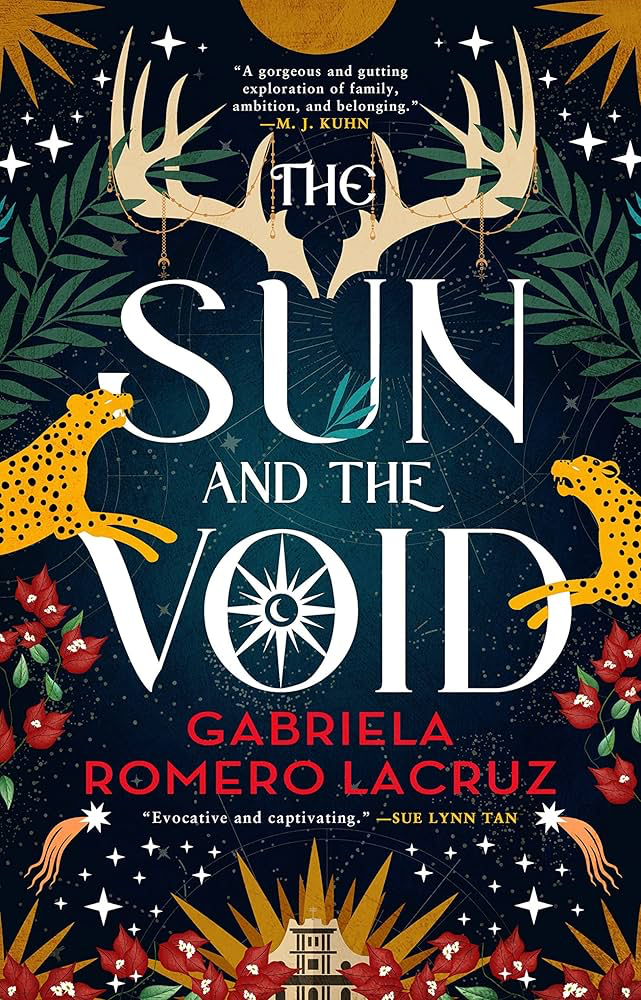
For this week’s Book Review Tuesday, I have a book that it’s almost miraculous that I liked as much as I did; at their worst, overly long epic fantasy novels are the bane of my existence. The Sun and the Void clocks in at nearly 600 pages, and I expected at least some of it to be a slog. Lo and behold, this novel held so much more in store—vibrant characters, Venezuelan-inspired mythology, and a daring quest across an inhospitable land.
Reina has lived her life on the outskirts of society. Though her kind, the nozariels, have won their freedom, her tail and features mark her as an outcast. Reina returns to her estranged grandmother in dire need of healing—and answers. Now kept alive by means of dark, unpredictable magic, she is now the owner of a terrible secret: her grandmother is in league with a demon-god hungry for sacrifices, and one such sacrifice may be someone that she holds dear.
On the other side of the kingdom, Eva struggles to hide her true self. Her mixed heritage—part human, part valco—makes her a target. Soon after she is set to be married off to a man she barely knows, she falls in with a revolutionary. But this charming, volatile man has a darker side, a hunger for power that will not spare her if she stands in the way.
The paths of these women intersect as the clock ticks, and the fate of both of their worlds may hang in the balance…
Ever since my tastes started drifting more into adult novels, I’ve had a history of getting a hundreds or so pages into an epic fantasy novel, losing my way, and coming out with only the vaguest sense of plot and one character. There’s some of it that’s on me, but it’s often a case of rambling; I’ve found many such novels to be more wordy than necessary and convoluted in their delivery of the worldbuilding. I lowered my expectations for The Sun and the Void for this very reason, though I clung onto it because of the promise of the Venezuelan and Colombian-inspired setting and anticolonial storyline (!!!!!!!!!!!!). Beyond being sick of generic, catch-all European settings in fantasy, my half-Colombian Spidey sense was tingling…and for good reason! The Sun and the Void is an overlooked gem of epic fantasy, with magic and action abound.
The vibrant setting that Romero Lacruz crafts was the clear star of The Sun and the Void. Her South American-inspired landscape was a breath of fresh air in a sea of vaguely European epic fantasies, breathing some much-needed life and diversity into the genre. Logistically, this region of South America—Venezuela and Colombia—also provides a variety of biomes to play with: we get flashes of deserts, forests, and glittering, tropical beaches, all with a fantastical dash of demons and monsters. That alone would have already put it a step above your average epic fantasy, but it was this series’ unique fantasy races that truly shone! As metaphors for oppression and who the dominant power in society deems “acceptable,” the nozariels and valcos were effective on that front. Their designs, however, were what made them so fun, making for memorable characters in looks and culture as well as personality.
In my experience, there are certain brands of epic fantasy that are allergic to accessible writing. When I say accessible, I don’t mean simple; accessible doesn’t mean the absence of artful prose or clever metaphor. For me, accessible prose is inventive, but not so caught up in making itself sound clever that it becomes a chore to read. Romero Lacruz’s writing is a fantastic case study in how to hit the balance between artful and digestible. Every action scene, political machination, and argument is rendered in ways that do feel like how people talk, and yet she never forgets to season her prose with unique metaphors and descriptors of the characters and their surroundings that keep you hooked—or, in my case, vigorously highlighting on my Kindle. At no point did the writing feel pompous or overly convinced of its own talent—it’s writing for writing’s taste, which is what writing should be.
Power dynamics were at the forefront of The Sun and the Void, and the explorations of them were some of the most impactful parts of the novel. Through the side characters, Romero Lacruz portrays the different way that power manifests itself in people; no matter how “noble” their causes, characters like Doña Ursulina and Javier became so obsessed with achieving their goals that it subtly began to eclipse all else. What was unique about The Sun and the Void, however, was how it was framed: through the eyes of vulnerable, sensitive women that get pulled under their spells. Such abusive dynamics meant that Reina and Eva were respectively drawn into the web of these other characters. At no point were they helpless—they were victim to people that promised them healing or freedom, and became so entangled in the schemes of others that they had to fight tooth and claw to find their way back to the light.
That being said, the weakest links in The Sun and the Void lay in the worldbuilding. Even though this novel is one of the few lengthy epic fantasies that I’ve read that miraculously doesn’t get overly convoluted, the price it paid was that some of the worldbuilding was left messy and sloppy once I took a closer look. The glossary was helpful, but it took quite a while to get used to some of the intricacies of the magic system. Terms are thrown around in a very slipshod way, and instead of the dreaded page-long block of worldbuilding exposition, we get…a few sentences, at most, before said facet of the magic system is barely mentioned for the rest of the novel. It’s an issue with followthrough—once something was mentioned, it often took 300 pages for it to make a brief appearance, only to poof back into the unexplained ether. It’s clear that there was a lot of thought behind the worldbuilding, but the issue was more of following the time-honored rule of Chekhov’s gun—Chekhov’s magic system, in this case. The gun did go off in the end, but it took so long to get to that moment that I completely forgot the significance of it being there in the first place.
All in all, an epic fantasy that defied the conventions of the genre—setting, writing style, and more—in all of the best ways. 4 stars!
The Sun and the Void is the first novel in the Warring Gods series, followed by The River and the Star, which is slated for release in 2025. The Sun and the Void is Romero Lacruz’s debut novel.
Today’s song:
BLESSED WITH ANOTHER NEW SOCCER MOMMY TRACK AND A NORTH AMERICAN TOUR NEXT YEAR!!!!!
That’s it for this week’s Book Review Tuesday! Have a wonderful rest of your day, and take care of yourselves!
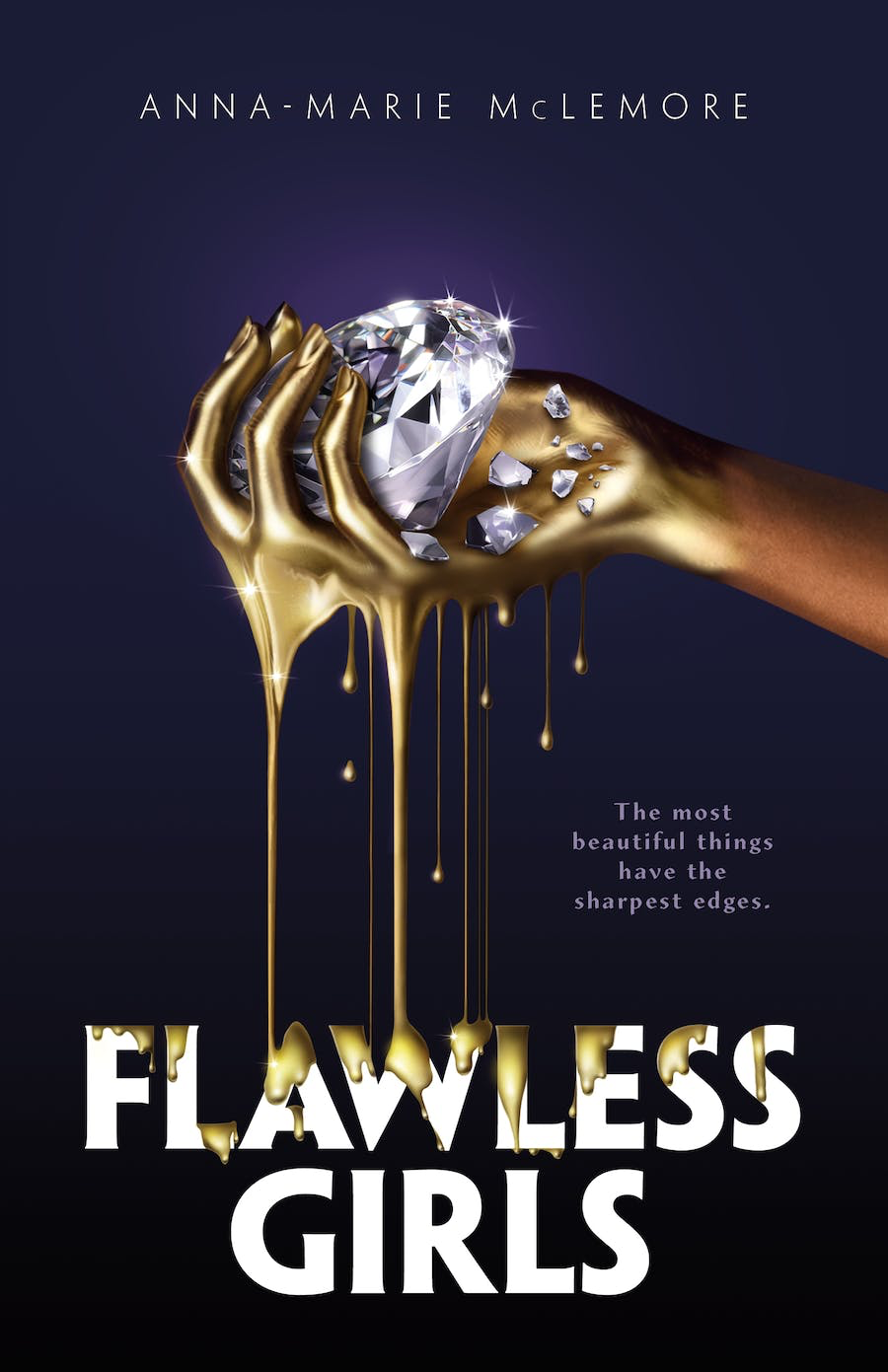
I’ve been a fan of Anna-Marie McLemore since high school, but over the past two years or so, I’ve seen a decline in quality in their books; for their last two releases, I chalked it up to co-authoring (Venom & Vow) and being constrained by what they had to work with, although that could be a stretch (Self-Made Boys: A Great Gatsby Remix). With their latest release, Flawless Girls, having a concerningly low average rating (3.30 at present), I expected the worst, but still wanted to believe that they could come back with something better. And…Flawless Girls was better, but only by a slim margin.
The Soler sisters—Isla and Renata—are famously wild, raised to be rebellious and questioning of their restrictive society from a young age. But their grandmother knows that society will frown upon such disobedient girls, and there is one last resort to keep them in line: the prestigious Alarie House, a finishing school famous for the assembly line of polite, high-society women that it churns out. After Renata returns from the Alarie House plagued by madness, Isla decides to dig into the dark corners of the school to see just what made her sister crumble. But what she finds in the corrupted heart of the Alarie House may put all of the girls in jeopardy…
TW/CW: prejudice against an intersex person, fire, body horror, misogyny, dysphoria, descriptions of injury, violence
For the past two years or so, I’ve seen a decline in Anna-Marie McLemore’s novels, which is something that I’ve dreaded saying. I didn’t want to force such words upon the same lyrical talent who wrote When the Moon Was Ours and Wild Beauty, but alas…maybe it wasn’t meant to last. Although it wasn’t as disappointing as Venom & Vow or Self-Made Boys, Flawless Girls was thoroughly messy, even if there were some bright spots in it.
What I want to emphasize the most about Flawless Girls is that, for all of its flaws (no pun intended), it had promise—it was just severely underdeveloped. If McLemore didn’t want to flesh out the concept of the novel, I think it would have worked spectacularly as a novella or even a short story. McLemore’s narration, even it wasn’t as lushly descriptive as I’ve come to know them for, had the feel of a cautionary fable, which was a perfect fit for this story. Even if it did feel like we were being sledgehammered in the face with the main metaphor, it nonetheless had the feeling of a dark fairytale or a fable. To be honest, Flawless Girls could work even better if it were aimed at younger YA audiences just coming into the genre, and I don’t mean that as a slight to the novel at all. It’s not subtle, but as a transitory book between middle grade and YA, it could work. With some significant polishing, of course.
Said main metaphor is femininity—more specifically the performance of it. The institution of the Alarie House served as a pointed commentary about the artificiality of our expectations for women and girls, and how unattainable and manicured these expectations are. It was especially poignant with Isla, a Latina and intersex protagonist struggling with performing femininity with a nonconforming body. Isla’s story felt incredibly personal—I had no idea that McLemore was also intersex, and it’s clear from every page that this is the story of their heart. There’s so little intersex representation out there, but that’s not the only reason why Flawless Girls, with a little polish, could be so important—it’s a fable of the madness that befalls women and feminine-presenting people crumbling under the weight of beauty and behavioral standards. Could it have been more subtle? Without a doubt. Was it impactful nonetheless? Absolutely.
That being said…a recurring thought I had while reading Flawless Girls was that it felt like a front for as many gemstone facts as possible. Next to the metaphor about femininity and performance, gemstones were right up there with the most striking motifs of the novel, but they were everywhere. Once you get past the 30% mark, characters will just ramble on about any kind of gemstone fact that they can shove in the span of two pages. At that point, a motif that bloats so much of the narrative just isn’t a motif anymore—it’s just swallowing everything else in its path. It did play a key role in the ending, but if McLemore wanted to make said ending more impactful, slimming down the endless character interactions where they just talk about gemstones for five pages would have been the right move. Like with jewelry, placement is key—you can’t just drown the narrative in a single motif and call it pretty.
Also, the worldbuilding is a mess. A complete mess. In the synopsis and the beginning of the novel, it’s stated that the reason that Isla and Renata are sent off to the Alarie House is that they’ve been raised to be rebellious and questioning of authority, and as they are Latina girls, it’s safer to teach them to keep quiet so that they don’t garner any unwanted attention. That would have been a very timely theme…if there was any indication of what society that Flawless Girls was set in! I assumed that it was a vaguely historical setting (and the author’s note didn’t clarify much else other than it being “historical”), but we get no sense of where we are in time, save for pre-21st century. Flawless Girls could equally work as being in a fantasy world or historical fiction with a touch of magical realism…but we have no idea which McLemore was going for, because outside of the Alarie House, nothing about the world is explained. No explanation of how and why the finishing schools came to be, no explanation of the technology level, no explanation of the (presumably) patriarchal powers pulling the strings and squeezing women into these molds. No worldbuilding, only gemstones!
All in all, a disappointing and messy effort from a longtime favorite that felt half-baked at best, but still shone in places. 3.25 stars.
Flawless Girls is a standalone, but Anna-Marie McLemore is also the author of Wild Beauty, When the Moon Was Ours, The Weight of Feathers, Lakelore, Dark and Deepest Red, Blanca & Roja, and Self-Made Boys: A Great Gatsby Remix. They also co-authored Venom & Vow (with Elliott McLeMore) and Miss Meteor (with Tehlor Kay Mejia), and have contributed short stories to several anthologies, including All Out: The No-Longer-Secret Stories of Queer Teens throughout the Ages, Eternally Yours, Color Outside the Lines, and many others.
Today’s song:
one of my favorite songs from this album!!
That’s it for this week’s Book Review Tuesday! Have a wonderful rest of your day, and take care of yourselves!
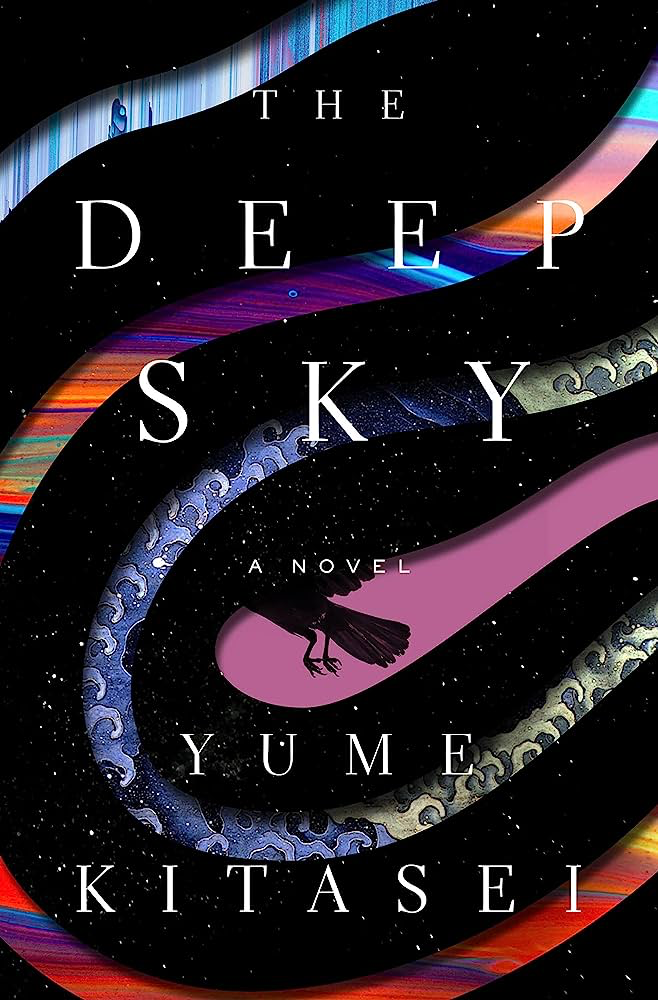
The Deepy Sky came out this July, and I’ve been seeing a ton of buzz about it around the blogosphere since. I’m always in for a sci-fi thriller, and this one delivered in that aspect, as well as the wonderful mixed-race rep!
Asuka has been chosen as a representative on a mission to deep space, where she will help give birth the next generation of Earth’s children. But she has been chosen to represent Japan—a country she barely knows, as a half-Japanese, half-Latina girl raised in the United States. Feeling like an imposter to an unfamiliar country, she accepts her duty and joins the crew of the Phoenix. But a deadly explosion onboard the ship leaves her the only surviving witness. With all eyes on her once more, Asuka must get to the bottom of the explosion before the perpetrator strikes again.
TW/CW: racism, terrorism, miscarriage/fertility themes, death of a child
“Literary” sci-fi rarely does it for me; most of what I’ve read barely scrapes past the 3.5 star rating for me, at best. Often, what happens is that the sci-fi element gets significantly watered down for the sake of marketability, drama, and a place in a celebrity’s book club (see: Sea of Tranquility, In the Quick). But The Deep Sky had the chops to make itself unique—and incredibly poignant.
The sci-fi plot of The Deep Sky is pretty standard as far as story elements go, but Kitasei’s approach to it made it feel fresh. It’s the setup for a myriad of sci-fi thrillers: you’ve got a large crew voyaging through the depths of space, only for a tragic accident to leave everyone onboard in suspicion, with no way to get back to Earth. It’s not necessarily a new approach plot-wise that keeps it going—it’s the emotional core that Kitasei brings to it. You’re really able to see deeply into Asuka’s head, deeper than a lot of authors dare to go with these kinds of stories; it’s a great way to increase the stakes without having to complicate the mystery of the story.
Also, LET’S HEAR IT FOR MIXED-RACE REPRESENTATION!! I’ve been on a roll with books with amazing mixed-race characters and stories lately (see also: Leslie Marmon Silko’s Ceremony—a very different book, but no less poignant), and as a mixed-race person, I’m so glad that narratives like these exist. Kitasei’s depiction of the imposter syndrome that Asuka faces about her identity is twofold—not only is there the level of it that comes with her being of Japanese and Mexican descent in the U.S., but also in the fact that she has to represent Japan—a country that she’s barely been to—in this mission. It really did make me feel so, so seen. Kitasei’s portrayal of having these intersecting identities and them coming at odds with how others want to box you in was deeply moving and authentic, and I cannot thank her enough for that.
Back to the subject of literary sci-fi. A lot of these types of novels that I’ve read deal with intersecting, nonlinear timelines, which may or may not have to do with actual time travel (case dependent). For the most part, it worked incredibly in Kitasei’s favor—even outside what we can consider the “main” plot, the pieces that we get of Asuka’s life before the deep space mission were almost more intriguing than the actual murder mystery in space. Kitasei’s character work is incredibly detailed and nuanced, and having most of this novel be driven by character and family was a choice that made me enjoy it that much more. These types of sci-fi thrillers normally lend themselves to very distant characters, and minimal character work by proxy (outside of “trust no one”), so this was a breath of fresh air in that sense.
That being said, the nonlinear timeline was also what brought part of the novel down for me. There’s much more emphasis placed on the time before the mission than the actual mission, making the murder mystery plot feel like an afterthought. The way that these timelines were spaced out meant that we went long stretches without checking in on what’s supposed to be the novel’s inciting incident, which made the stakes feel much lower than they were meant to be. The tension got appropriately amped towards the end, but other than that, there really wasn’t as much thriller as I was expecting going in. Maybe this is just a matter of how The Deep Sky was marketed, but I did wish we got a little more of the “main” plot.
All in all, a rare gem of a literary sci-fi novel where every page brimmed with emotion and suspicion. 4 stars!
The Deep Sky is a standalone; it is also Yume Kitasei’s debut novel.
Today’s song:
listened to my first Arlo Parks album, and I’m a fan!! this was my favorite, for sure
That’s it for this week’s Book Review Tuesday! Have a wonderful rest of your day, and take care of yourselves!
Here in the U.S., National Latinx Heritage Month lasts from September 15 – October 15! I’m always looking to diversify my reading, but this month is especially important to me since I’m half Latina myself, and I love exploring parts of my culture and others’ through literature. I sadly didn’t get around to making a recommendations post last year, since it landed when I was still trying to settle into college, but I really wanted to make on this year, so I planned ahead. And even though the header says YA (I’m stingy about my WordPress space), I wanted to include books of all age ranges in this year’s post. Enjoy!
For my past lists for Latinx Heritage Month, click here:
TELL ME WHAT YOU THINK! What are your favorite books by Latinx authors? Have you read any of these books, and what did you think of them? Let me know in the comments!
Today’s song:
merry Shakey Graves, everybody
That’s it for this post! Have a wonderful rest of your day, and take care of yourselves!
As some of you may know, last week (March 20-27) was when the #TransRightsReadathon was hosted in response to a dangerous increase in anti-trans legislation across the U.S. Created by Simi Kern, the goal of the readathon was to give the spotlight to as many trans books and authors as possible to bring them awareness and support in light of the rampant transphobia across the country and beyond. It’s been frightening and heartbreaking to see what’s happening in other states, and I want to support my trans siblings in any way possible. So I’ve decided to include shorter reviews of all of the trans books I read this week—all of which were good!
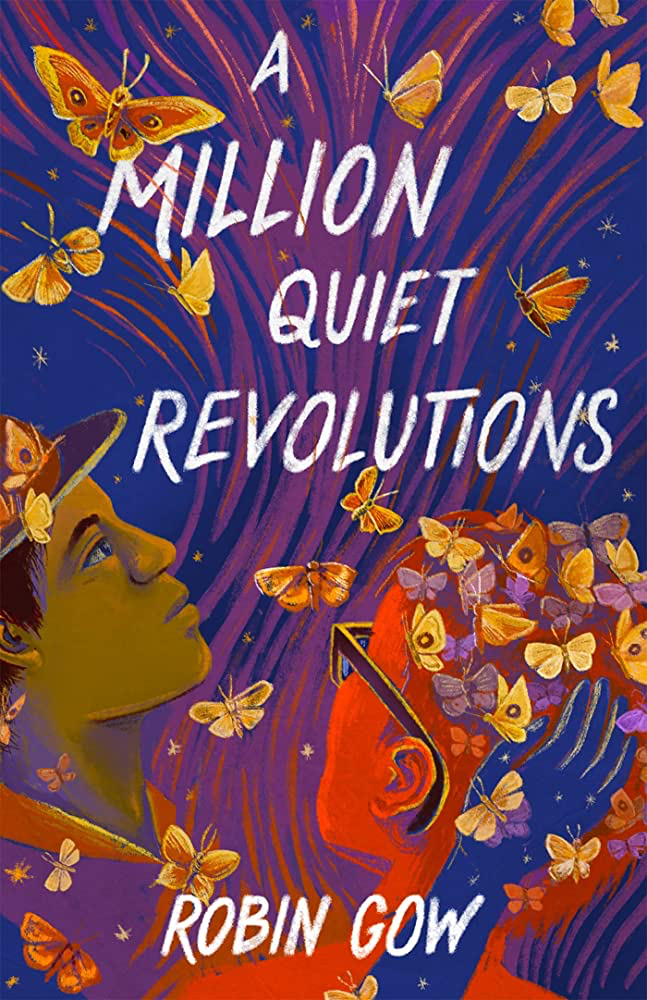
For as long as they can remember, Aaron and Oliver have only ever had each other. In a small town with few queer teenagers, let alone young trans men, they’ve shared milestones like coming out as trans, buying the right binders–and falling for each other.
But just as their relationship has started to blossom, Aaron moves away. Feeling adrift, separated from the one person who understands them, they seek solace in digging deep into the annals of America’s past. When they discover the story of two Revolutionary War soldiers who they believe to have been trans man in love, they’re inspired to pay tribute to these soldiers by adopting their names–Aaron and Oliver. As they learn, they delve further into unwritten queer stories, and they discover the transformative power of reclaiming one’s place in history.
TW/CW: transphobia, dysphoria, misgendering/deadnaming, homophobia, off-page sexual assault, religious bigotry
Novels in verse always get me when they’re done well, and A Million Quiet Revolutions was no exception. The story of Aaron and Oliver is one that was essential to be told, and it resulted in a beautifully poignant piece of verse!
The growing relationship between Oliver and Aaron felt so genuine, and the combination of pseudo-epistolary format (oh god, that sounded pretentious…) with verse emphasized the way that their relationship transcended barriers of both place and time. The interweaving of the past with the present gave me an insight into a queer part of history that I’m almost embarrassed that I didn’t consider until reading this—better late than never, I suppose. Their voices both leapt off the page, and the easy flow of Gow’s verse made the reading experience feel effortless, drifting like wind—good poetry, to me, doesn’t quite feel like poetry; the rhythm remains, but it doesn’t feel like going line by line in such a rote way.
Above all, the message of this novel in verse is one that’s so important, especially in a time where the narrative of LGBTQ+ people being trendy and new is being pushed so often—queer people have always been here, and we will always be here. Aaron and Oliver’s journey of researching their trans namesakes—cross-dressing soldiers in the Revolutionary War—was one that’s so necessary for understanding our own roots. The key to belonging is realizing that you have always been a part of history, no matter how many pains historians have taken to ignore or deliberately erase the queerness and transness that has always been there. For me, that’s why A Million Quiet Revolutions is such an important read.
Brimming with history and rich verse, A Million Quiet Revolutions is an ode to discovering your own roots, and finding solace in hidden histories. 4 stars!
In this queer contemporary YA mystery, a nonbinary teen with autism realizes they must not only solve a 30-year-old mystery but also face the demons lurking in their past in order to live a satisfying life.
Sam Sylvester’s not overly optimistic about their recent move to the small town of Astoria, Oregon after a traumatic experience in their last home in the rural Midwest.
Yet Sam’s life seems to be on the upswing after meeting several new friends and a potential love interest in Shep, the pretty neighbor. However, Sam can’t seem to let go of what might have been, and is drawn to investigate the death of a teenage boy in 1980s Astoria. Sam’s convinced he was murdered–especially since Sam’s investigation seems to resurrect some ghosts in the town.
Threatening notes and figures hidden in shadows begin to disrupt Sam’s life. Yet Sam continues to search for the truth. When Sam discovers that they may be closer to a killer than previously known, Sam has a difficult decision to make. Would they risk their new life for a half-lived one?
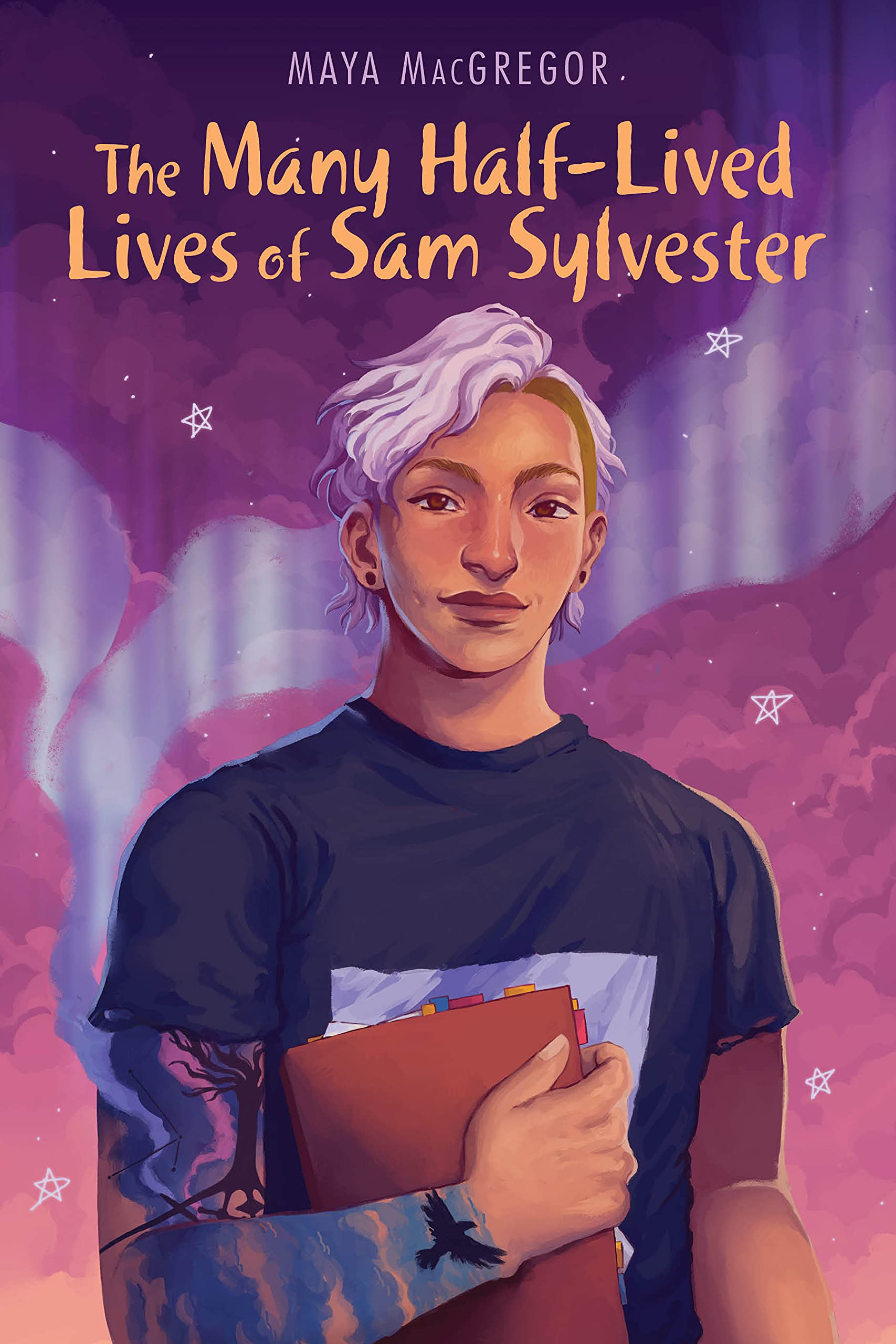
My ultimate hope was that this book would be as well-crafted as its cover, and for the most part, it lived up to my expectations! The Many Half-Lived Lives of Sam Sylvester deftly toes the line between a coming-of-age story and a decades-old mystery, buoyed by a diverse and lovable cast.
Sam Sylvester has a batch some of the most diverse representation I’ve seen in a realistic fiction/mystery novel in a while—aside from having a nonbinary, asexual, and Autistic protagonist (more neurodivergent protagonists, please!!), there were so many different characters that were incredibly intersectional—queer, POC, and disabled characters all across the board, and not just the teen characters too! All of these identities were woven so well into the story, and I loved the journey of self-acceptance and reckoning that Sam experiences throughout the novel as they unravel the mystery of the boy who died in their room 30 years ago.
That being said, although I liked most every aspect of this novel, this really feels like a novel that’s going to date itself. I enjoyed a handful of the references (always extra points for David Bowie), but a lot of the more recent ones—the references to Tumblr, Gen Z slang, internet culture, and a Steven Universe gag every other page, read as very hackneyed and stilted. As authentic as the rest of Sam Sylvester was, those parts dragged down what would have otherwise been powerful and realistic dialogue. Most of the writing did its job and did it well, but the attempt to ground it in the present day only ended up making a novel that’s going to date itself far quicker than it was probably intended to.
Despite that, I’d say that Sam Sylvester is still a must-read—for the excellent representation, for the mystery, and for the coming-of-age story. 3.75 stars, rounded up to 4!
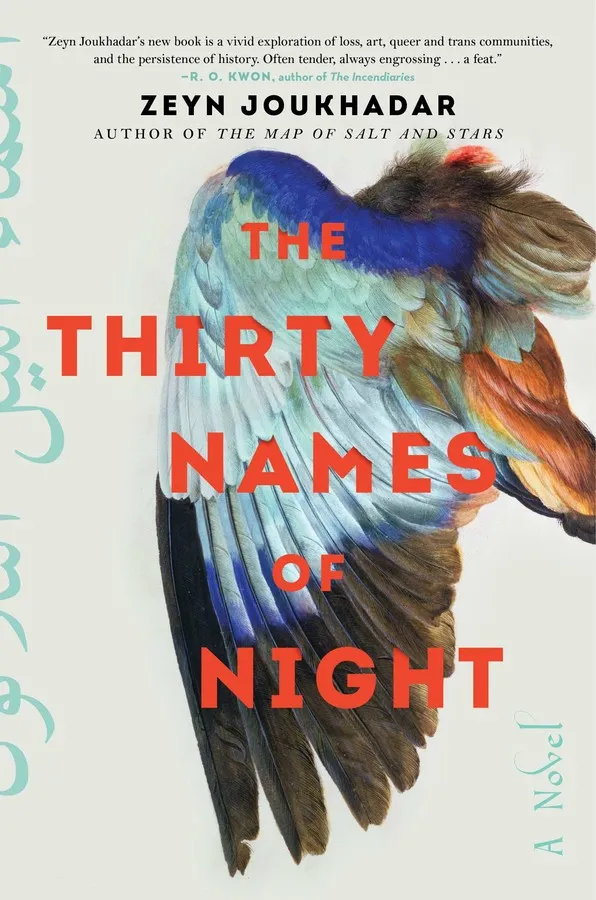
The author of the “vivid and urgent…important and timely” (The New York Times BookReview) debut The Map of Salt and Stars returns with this remarkably moving and lyrical novel following three generations of Syrian Americans who are linked by a mysterious species of bird and the truths they carry close to their hearts.
Five years after a suspicious fire killed his ornithologist mother, a closeted Syrian American trans boy sheds his birth name and searches for a new one. He has been unable to paint since his mother’s ghost has begun to visit him each evening. As his grandmother’s sole caretaker, he spends his days cooped up in their apartment, avoiding his neighborhood masjid, his estranged sister, and even his best friend (who also happens to be his longtime crush). The only time he feels truly free is when he slips out at night to paint murals on buildings in the once-thriving Manhattan neighborhood known as Little Syria.
One night, he enters the abandoned community house and finds the tattered journal of a Syrian American artist named Laila Z, who dedicated her career to painting the birds of North America. She famously and mysteriously disappeared more than sixty years before, but her journal contains proof that both his mother and Laila Z encountered the same rare bird before their deaths. In fact, Laila Z’s past is intimately tied to his mother’s—and his grandmother’s—in ways he never could have expected. Even more surprising, Laila Z’s story reveals the histories of queer and transgender people within his own community that he never knew. Realizing that he isn’t and has never been alone, he has the courage to officially claim a new name: Nadir, an Arabic name meaning rare.
As unprecedented numbers of birds are mysteriously drawn to the New York City skies, Nadir enlists the help of his family and friends to unravel what happened to Laila Z and the rare bird his mother died trying to save. Following his mother’s ghost, he uncovers the silences kept in the name of survival by his own community, his own family, and within himself, and discovers the family that was there all along.
TW/CW: transphobia, xenophobia, racism, Islamophobia, miscarriage, grief, sexual assault, animal death, loss of a parent
I didn’t go into The Thirty Names of Night with any expectations, but I was stunned by the writing! This novel is one of the best magical realism novels I’ve read in recent years, with writing as rich as a tapestry and a story that’s just as well-woven.
Joukhadar’s writing style was the star of Thirty Names; this is the first of his novels that I’ve read, but he has such a unique talent for finding unlikely comparisons and weaving them into the richest, most obvious but out-of-sight metaphors imaginable. I would never have compared the gray sky on a foggy day to the color of a kitchen knife, and somehow, it was right in front of me. His talent for metaphor suited the emotional depth of this story, as well as the almost fantastical element of the birds in New York—I will never claim to be the expert on him, but if there was any story that was suited for Joukhadar to tell, it’s this one.
That writing also made the emotional core of this story possible. There’s so much to Thirty Names: gender identity, grief, heritage, family, and the body itself, but all of it was handled with such grace and aplomb that made the story feel really, truly real. I might’ve even passed the aspect of the birds by as something that could feasibly happen with how this story was written. Every part of this novel is deeply moving, raw and beautiful, and the prose flows as smoothly as air over a bird’s wings.
All in all, a beautiful, literary tale of connections—to family, to gender, and to the world around us at large. 4.25 stars!
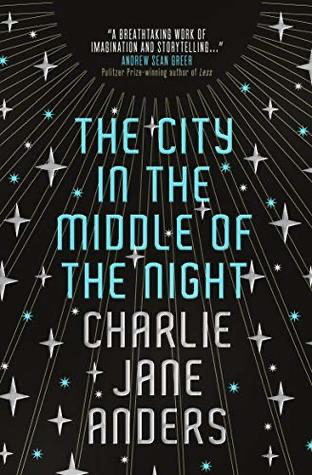
“If you control our sleep, then you can own our dreams…And from there, it’s easy to control our entire lives.”
From the brilliant mind of Charlie Jane Anders (“A master absurdist”—New York Times; “Virtuoso”—NPR) comes a new novel of Kafkaesque futurism. Set on a planet that has fully definitive, never-changing zones of day and night, with ensuing extreme climates of endless, frigid darkness and blinding, relentless light, humankind has somehow continued apace—though the perils outside the built cities are rife with danger as much as the streets below.
But in a world where time means only what the ruling government proclaims, and the levels of light available are artificially imposed to great consequence, lost souls and disappeared bodies are shadow-bound and savage, and as common as grains of sand. And one such pariah, sacrificed to the night, but borne up by time and a mysterious bond with an enigmatic beast, will rise to take on the entire planet–before it can crumble beneath the weight of human existence.
TW/CW: animal attack/animal death, police brutality, body horror
Alright, so the only explicitly stated Latinx characters, specifically of Mexican ancestry, are named…Carlos and Maria? So most everybody else gets semi-unique names, but not them? It’s like Cho Chang all over again…[LOUD INCORRECT BUZZER}
If I hadn’t read Victories Greater Than Death beforehand, I would’ve been more suspicious, but it seems like Anders has gotten a lot better with diversity on that front, but…still iffy. Just saying.
That aside, The City in the Middle of the Night was one of the more inventive dystopias that I’ve read recently, but it fell victim to very convoluted writing. It’s obvious from every page that Anders put so, so much work into creating a fleshed-out world with an equally fleshed-out history—that was a riotous success on her part. The premise of society being divided by a tidally-locked planet felt eerily feasible, and I absolutely ADORED all of the alien life forms on the night side of January—the Gelet were obviously my favorites, but I would’ve liked to have seen more creatures. ALWAYS MORE CREATURES.
However, Anders’ writing choices ended up making parts of The City in the Middle of the Night something of a struggle. The story itself ended up being rather convoluted and tangled, and I found myself getting lost and confused about wait, which side of the planet are we on again? Why are we here in the first place? The additions of a boatload of characters that ended up having very little consequence to the plot at large didn’t help either. This story had the potential to be incredible, but it ended up getting so lost in itself that it became an ordeal to figure out where I was.
All in all, an inventively-conceived dystopia that excelled in worldbuilding but floundered in its writing. 3.25 stars.
Tell me what you think! Did you participate in the #TransRightsReadathon, and if so, what books did you read? What do you think of these books?Let me know in the comments!
Today’s song:
That’s it for this week’s Book Review Tuesday! Have a wonderful rest of your day, and take care of yourselves!
Happy Wednesday, bibliophiles, and more importantly, Happy International Women’s Day!
Aside from that, the month of March in the U.S. is Women’s History Month! These past few years have been tumultuous for women here in the U.S. and elsewhere, with the attacks on bodily autonomy being some of the most violent in recent years. But despite it all, we cannot lose hope—by lifting each other up, we can foster an environment that respects women as equals. And as I’ve always said, literature is resistance: it isn’t just real-life heroes that can inspire us to incite change—fictional heroines can have just the same effect. So for the occasion, I’ve gathered even more feminist YA book recommendations.
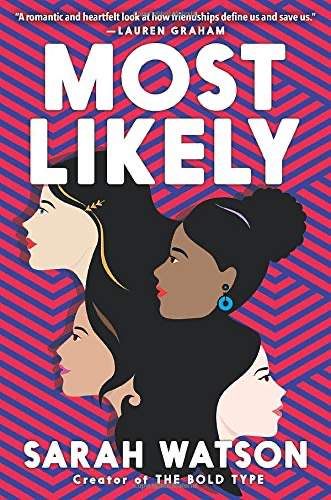
An intersectional story that weaves together the lives of four girls in their senior year of high school—one of which will become the president of the United States.
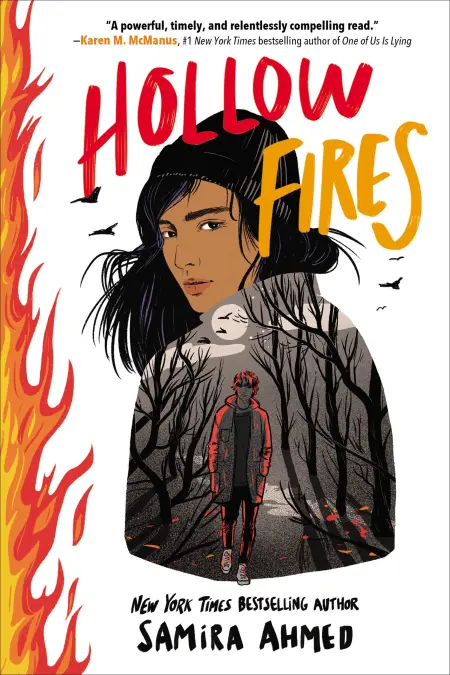
Samira Ahmed always ends up showing up on these lists, and for good reason—she’s never missed with any of her raw and fiercely feminist novels, and Hollow Fires is no exception.
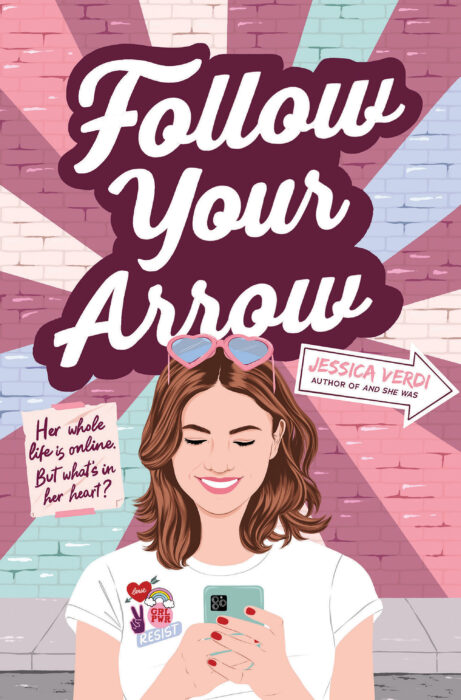
Though this book was far from perfect, I think it’s still worth it to put on this list; the writing and romance weren’t great, but Follow Your Arrow has plenty of timely discussions around bisexuality and how we treat queer women.
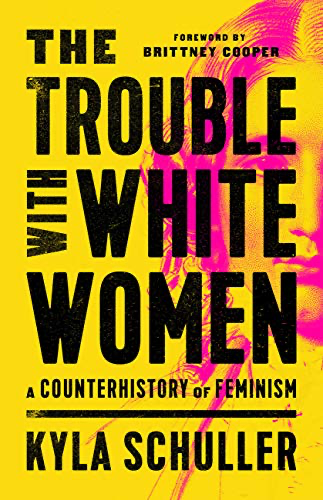
Although this list was intended to be just for YA and fiction, I’d be remiss if I made a post about feminism and didn’t include this book. The Trouble With White Women presents a view on feminism that is necessary for moving past simply white feminism, and presents the feminist movement through those on the margins, such as Frances Harper, Pauli Murray, and Alexandria Ocasio Cortez. It’s seriously one of the best nonfiction books I’ve read in ages—on any subject matter.
TELL ME WHAT YOU THINK! What did you think of the books on this list? What are your favorite feminist YA books? Let me know in the comments!
Today’s song:
Most of the Warpaint I’ve heard hasn’t done much for me (aside from their great cover of “Ashes to Ashes”), but I love the quietness of this one!
That’s it for this list of recommendations! Have a wonderful rest of your day, and take care of yourselves!
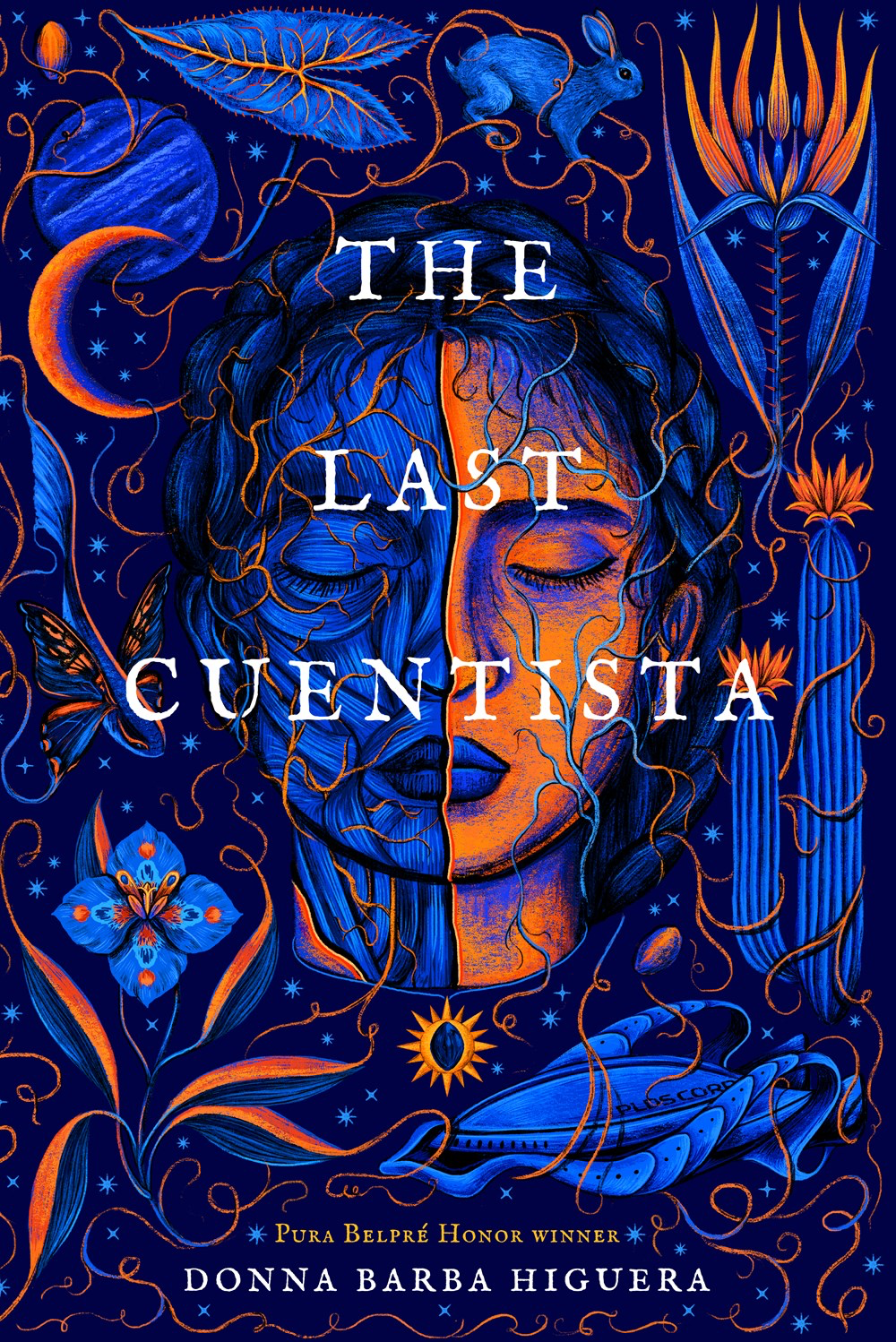
I’ve had The Last Cuentista on my TBR for a fair amount of time, but I’d forgotten about it until I saw a copy at my college’s library, so I ended up picking it up. I remembered almost nothing about the synopsis or why I wanted to pick it up in the first place, but what I found was a beautiful tale of the power of storytelling.
Petra Peña loves nothing more than listening to the stories of her abuelita, and dreams of someday being a storyteller like her. But when Earth is put in danger by a comet, she must abandon her abuelita and travel with her parents and younger brother to planet Sagan, where humanity can start over. But on the centuries-long journey, the ship is infiltrated by the Collective, a shady organization who aims to erase the crimes of humanity’s past by wiping the memories of all the passengers. When Petra wakes up, she realizes that she is the only one who remembers Earth—and the only one who can save what remains of the human species from forgetting itself altogether.
TW/CW: loss of loved ones, descriptions of injury, fear, descriptions of sleep paralysis
Good middle-grade sci-fi is hard to come by, but The Last Cuentista was nothing short of wonderful. With a story as beautiful as its cover, it’s a shining testament to the power of storytelling and a poignant reminder to never forget where you came from.
I know I opened with specifically saying that The Last Cuentista is middle-grade, but I’d say it toes the line right between middle grade and YA. Petra is 13 years old, and there’s certainly some more middle-grade aspects to how the themes are dealt with and some of the character interactions, but it borders on hardcore, nail-biting sci-fi in other places. Think of every piece of sci-fi media that deals with cryosleep for several centuries, and think of all of the potential, existential obstacles that come along with it: chances are, they do end up appearing in this book. It’s a weird place to navigate reading-wise when you’re that age (I certainly remember wishing that there was an in-between place for middle grade and YA), but The Last Cuentista retains a middle-grade sensibility without downplaying the integrity of its themes and world simply because it’s aimed at a younger audience.
One of the strongest aspects of The Last Cuentista was Donna Barba Higuera’s fantastic writing. She especially excels at sensory details; in a particularly nail-biting scene when Petra is still awake while her pod is preparing for cryosleep (AAAAAAAAAAAAAA), Higuera filled her prose with all kinds of sensory details that really sold the crushing fear of the moment. Her descriptions of the bizarre flora and fauna of Sagan are just as lush, painting a picture of an alien planet just as well as Petra’s abuelita paints stories. Higuera’s ability to create suspense and her ability to spin beautiful prose went hand in hand, making for a novel that had me invested the whole time.
The Last Cuentista also had some beautiful themes; Petra’s quest to keep the history of humanity alive through storytelling serves to remind us that we should never forget who we are, despite having a history wracked with war and darkness. The Collective was a perfect, sinister dystopia to set this theme against, and they also added to the suspense that Higuera consistently built throughout the novel. Petra’s journey to return humanity to its roots was poignantly written and so wonderfully timely, and I have no doubt that The Last Cuentista will be a book that stands the test of time. In the end, we are all united by the stories that bind us together. Never underestimate the power of a storyteller.
My only gripe with this novel were some of the characters. Other than Petra and her family, most of the side characters felt interchangeable. A few of them had a few base traits to go off of, but other than that, I often found myself getting them mixed up. The switch from the Greek letter/number designations to nicknames didn’t necessarily help, although it was clearly important thematically. I wish we’d gotten as much development out of at least some of them as we got with Petra and maybe Voxy—the story was powerful by itself, but it would have been more so if some of the other characters were more fleshed out.
All in all, a beautiful piece of sci-fi that reminds us that stories have the power to do anything—change us, teach us, and above all, unite us. 4 stars!
The Last Cuentista is a standalone, but Donna Barba Higuera is also the author of Lupe Wong Won’t Dance, as well as the picture books El Cucuy is Scared, Too! and the upcoming The Yellow Handkerchief.
Today’s song:
shuffle decided to hit me right in the 6th grade feels today, I see
That’s it for this week’s Book Review Tuesday! Have a wonderful rest of your day, and take care of yourselves!
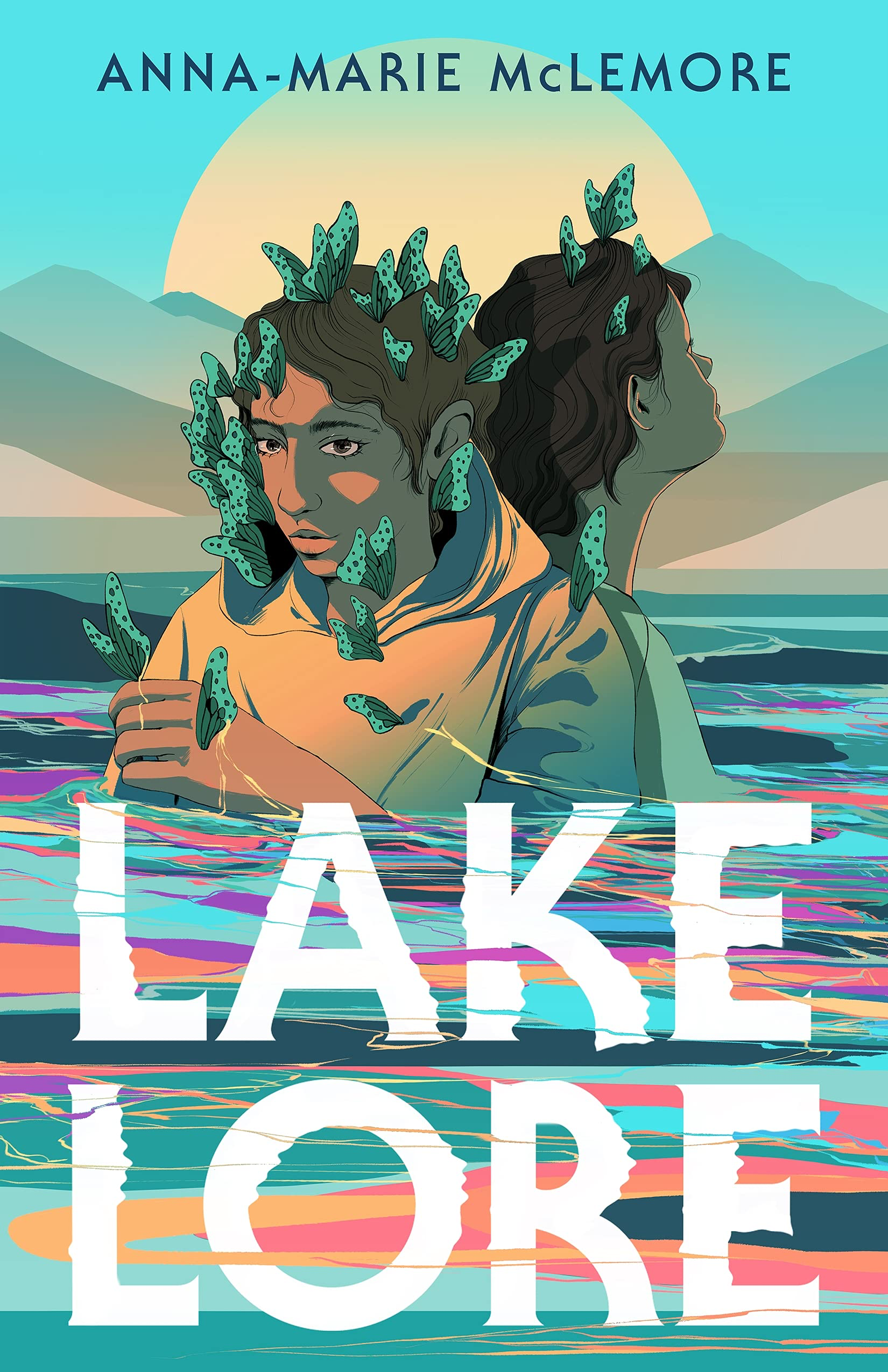
I’ve been a huge fan of Anna-Marie McLemore’s books for ages; their prose is always immersive and lush, and their stories never fail to pull at the heartstrings. So I was over-the-moon excited to find out that they had a new book out! I put Lakelore on hold as soon as I could, and I finally got to read it last week. While it wasn’t their best work, Lakelore is still a beautiful tale of the trans experience.
The town where Bastián and Lore live has a secret: under the lake is a strange, unknown world. But they are the only ones who have ventured down into this secret world, and they know something that the other townsfolk don’t know: the world under the lake is blending with the real world. The only way to put the two worlds back in their places is for Bastián and Lore to reunite, but the secrets between them may tear them apart before they reach their goal.
I loved Lakelore, but it lacked the very thing that makes McLemore’s other books so unique—the magical realism aspect. It was there, sure, but it felt so sidelined when the synopsis emphasized it so much. That being said, Lakelore was still excellent, and it’s sure to resonate with so many nonbinary readers!
The representation in Lakelore was truly fantastic! Both Bastián and Lore are Latinx and nonbinary; Bastián also has ADHD and Lore has dyslexia! This kind of intersectional representation is what I live for, and McLemore wrote it all so gracefully! Each aspect of their identities was so wonderfully written, from Bastián’s journey starting testosterone to Lore’s therapy sessions to cope with school having dyslexia. The whole book is a beautiful testament to being the other in some way, and the way that McLemore explores it with Bastián and Lore was fantastic.
And I’d be remiss if I didn’t mention Anna-Marie McLemore’s unforgettable prose! Their writing is as strong as ever in Lakelore, and the way their signature, magical writing style told Bastián and Lore’s stories made it all the more engaging, emotional, and tender. It’s the kind of writing that feels like looking at pure, unadulterated magic, instantly transporting the reader to the small town and the mysterious lake at its heart.
That being said, I was a little disappointed with the magical realism aspect of Lakelore. At best, it was underdeveloped; we got glimpses of the world beneath the lake, but it was never quite expanded upon. We saw that this underwater realm gave Bastián’s alebrijes (which I also loved—great metaphor for healthy coping mechanisms!) the ability to move, but other than that, it was very vague, save for the urban legend aspect of it. I guess it’s on me for thinking that Lakelore was gonna be some kind of nonbinary Abe Sapien kind of deal, but even so, I wanted so much more from that aspect after how strong McLemore’s magical realism/fantasy game usually is.
All in all, a fantastic addition to Anna-Marie McLemore’s pantheon that lacked slightly in the magical realism department, but made up for it with the beautiful depiction of a Latinx, nonbinary, and neurodivergent experience. 3.75 stars, rounded up to 4!
Lakelore is a standalone, but Anna-Marie McLemore is also the author of The Mirror Season, Wild Beauty, When the Moon Was Ours, Dark and Deepest Red, Blanca & Roja, The Weight of Feathers, and the forthcoming Great Gatsby remix Self-Made Boys.
Today’s song:
That’s it for this week’s Book Review Tuesday! Have a wonderful rest of your day, and take care of yourselves!











 The Bookish Mutant