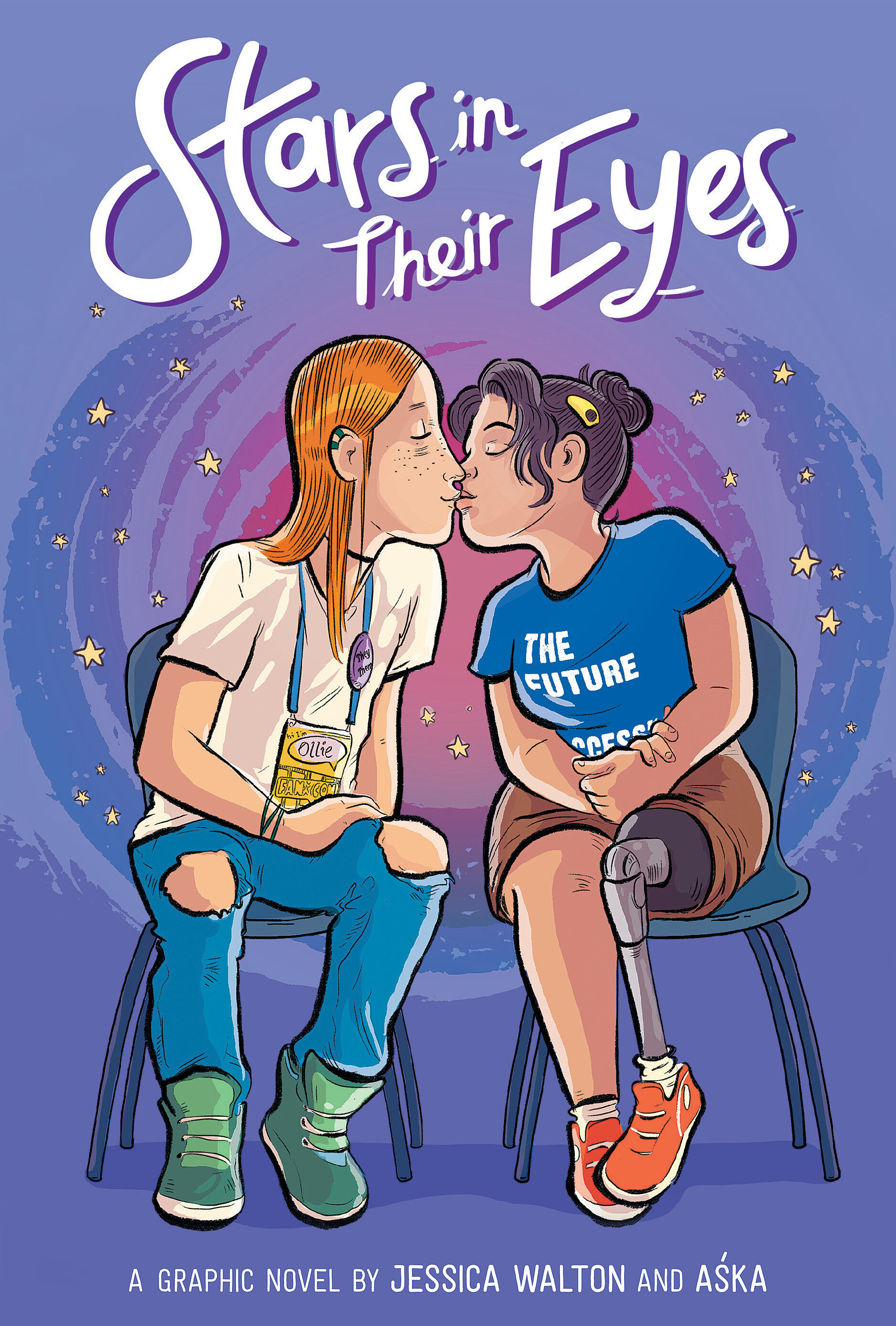
I’m always on the hunt for books with disability and bisexual rep, and I’ll always go for a graphic novel, so Stars in Their Eyes was a natural pick for me! With a charming story and graceful handling of social issues, this graphic novel was an adorable, light read that’s perfect for readers in transition between middle grade and YA.
Maisie has saved up to go to her first FanCon, and now she’s finally on her way! She’s excited to meet her idol Kara Bufano, an action star who’s an amputee just like her. On arrival, FanCon isn’t everything that Maisie thought it would be—it’s loud, confusing, and it’s making her chronic pain act up. But when she meets Ollie, one of the young FanCon volunteers, it’s love at first sight. Maisie feels comfortable talking about her disability and queerness with them, but how will they manage when FanCon is over and they have to go home?
TW/CW: panic attacks, descriptions of cancer (past)
I’m firm in the belief that there should be some kind of smaller, transitory genre between middle grade and YA; the gulf between kid’s books and books meant for teens, especially in terms of maturity, is larger than most realize. But Stars in Their Eyes hits the perfect sweet spot between the two. With younger protagonists but a more nuanced view of social issues—and love at first sight—this graphic novel is a light, comforting read!
Even though I can’t speak to the accuracy of the specific disability rep (Maisie has a lower-leg amputation as a result of childhood cancer), it was so refreshing to see a disabled character written by a disabled author! It’s kind of painful to say that, but…the bar is so low, after so many middle grade and YA books that misrepresent disability. Nevertheless, the discussions surrounding Maisie’s disability were not only important to represent, but well-executed as well! There were plenty of natural segues that were used in Walton’s writing to get into topics such as overexertion and the importance of positive representation (!!!!), and it’s wonderful to see a pointed criticism of the narrative that disabled people exist to inspire non-disabled people. Stars in Their Eyes is bound to be so meaningful to so many young disabled readers, and it warmed my heart.
Stars in Their Eyes is also bound to be crucial for young queer people as well! Maisie is bisexual. and Ollie, the love interest, is nonbinary, but beyond that, there was an emphasis on being young and discovering your identity that I’m so glad is being represented. At 14, Maisie has only come out to a handful of people, and is nervous about being in queer spaces and going to queer events; it’s an issue that I rarely see in queer media, but it’s so important for young queer people know that it’s okay to be nervous about these things! There’s a first time for everything and everyone, and it’s natural to be shy or scared about showcasing your identity or belonging in queer spaces for the first time.
The comic con setting of Stars in Their Eyes was spot-on! I went to comic cons frequently when I was Maisie and Ollie’s age, and it’s a wondrous, nerdy experience—and it’s also an overwhelming one. It’s been several years since I’ve been to one, but I’m glad that this fictional one had a quiet-down room—I hope that soon becomes part of the institution, because what a lot of people don’t talk about with comic cons is that they’re a lot. (Man, I wish my comic con had one of those back in the day…) There’s so much to take in, from all of the booths and celebrities and cosplayers (and all of them crowded in one building), but all of that amounts to a ton of crowds and sensory overload. It’s the first comic con story I’ve seen tackle this aspect, and it’s a refreshing angle to see discussed. I have sensory issues, so that’s mainly why I got overwhelmed so easily at comic con, but it’s great to show younger readers that even though comic con is a wonderful place, it’s natural to be overwhelmed, sensory issues or not.
However, even though pop culture and comic cons were the focus of Stars in Their Eyes, a key part of it was mishandled and hindered some of my enjoyment of this graphic novel. Aside from two fictional TV shows that Maisie and Ollie bond over, almost everything is a fake reference—Barb from Stranger Things is now Bard from Danger Things, Star Wars is now Sci-fi Wars (??) and the Dark Side is the Far Side (????), and any Doctor Who-related media is referred to as “Time Doctors.” I get making faux-pop culture references to dodge copyright or establish a fictional world, but the sheer amount of them and how obviously they were referencing other very popular pieces of media just got so tiring and eye roll-inducing after a while. If it’s that obvious that you’re referencing a piece of media, it defeats the purpose of having a fake piece of media. It got so concentrated that I ended up bumping my rating down from the full 4 stars.
All in all, a lighthearted graphic novel about first love, geekdom, and the being confident in your queer and disabled identities. 3.75 stars, rounded up to 4!
Stars in Their Eyes is a standalone; Jessica Walton is also the author of Introducing Teddy, and has also contributed to the anthologies Growing Up Disabled in Australia, The (Other) F Word: A Celebration of the Fat & Fierce, and Meet Me at the Intersection.
Today’s song:
decided to give cate le bon a try after hearing her work with wilco & st. vincent…pompeii did NOT disappoint!!
That’s it for this week’s Book Review Tuesday! Have a wonderful rest of your day, and take care of yourselves!
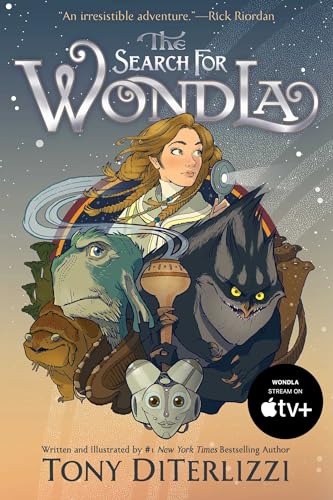
This is going to be different from my normal Book Review Tuesdays, as I’m reviewing an entire trilogy. Normally, that would be a tall order for a single post, but this trilogy is different. It’s a series that I read so often in middle school that even the teachers started to recognize the cover when I brought it in. It’s a series that has woven itself into the fabric of my life, just as Arius’ metaphor of time as a braided rope. It’s a series that inspired me to pursue writing—specifically writing science fiction.
In light of the new (and deeply disappointing) Apple TV+ series, I decided to re-read the series for the first time in six and a half years. Some novels you loved when you were younger don’t age well, but after I devoured all three books in the span of a day each, I can say that Tony DiTerlizzi’s WondLa trilogy has stood the test of time.
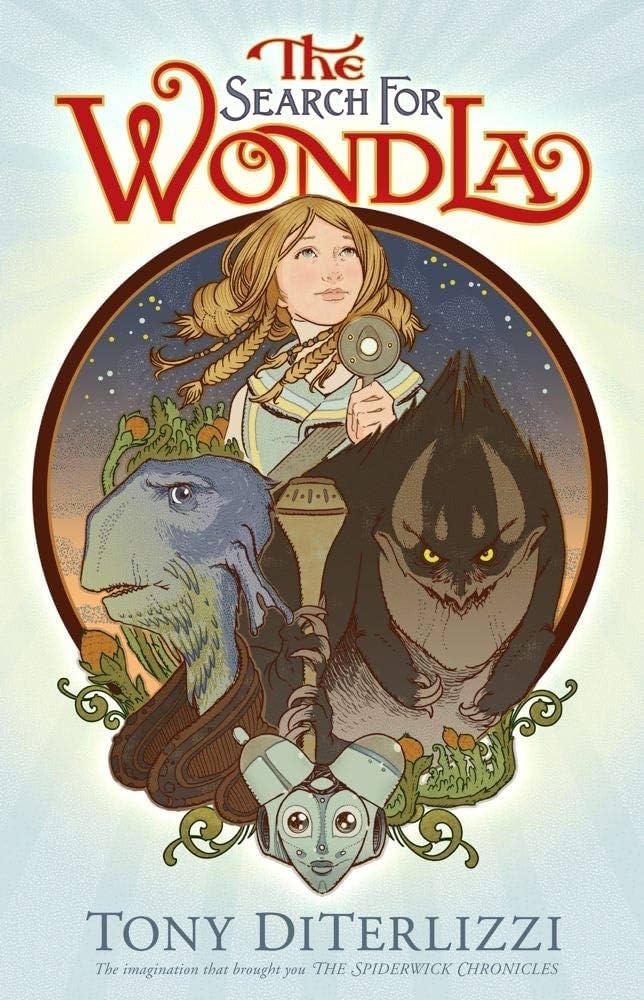
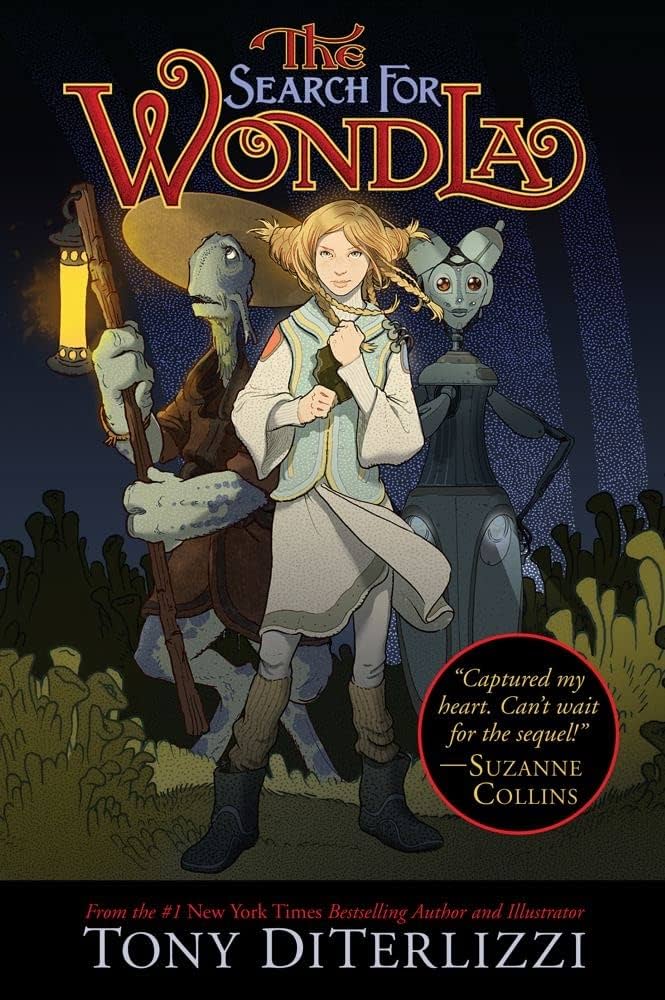
When a marauder destroys the underground sanctuary that Eva Nine was raised in by the robot Muthr, the twelve-year-old girl is forced to flee aboveground. Eva Nine is searching for anyone else like her: She knows that other humans exist because of an item she treasures—a scrap of cardboard on which is depicted a young girl, an adult, and a robot, with the strange word, “WondLa.”
☆
There definitely wasn’t an ulterior motive to me re-reading this series…totally not just to replace my reviews on Goodreads from 2016 (“OMG BEST BOOK EVER SQUEEEEEEEEEEEE but BIG FEELS”). Yeah.
The Search for WondLa is the reason why I decided that I wanted to write science fiction. It introduced me to a vast world of sci-fi literature that would become my favorite genre. It showed me a rich world full of bizarre, wonderful creatures and told me that I, too, had the power to foster such weirdness in my heart and bring it into the world. When I say that I don’t know where I would be without the WondLa trilogy, I’m not exaggerating in the slightest. Tony DiTerlizzi truly has, like Arius, given gifts to the world in the form of these novels.
The Search for WondLa coexists as a startlingly original piece of worldbuilding while also paying homage to a number of novels and stories—The Wonderful Wizard of Oz, of course, but also the older sci-fi that has inspired DiTerlizzi throughout his career, from Dune to Star Wars and others. There’s Jim Henson lurking in his fanciful creatures, Hiyao Miyazaki in his alien landscapes, and Ray Bradbury in his matter-of-fact, bombastic dialogue. On the subject of both Miyazaki and dialogue, what always cracks me up about this series (affectionately) is the various names DiTerlizzi gives to his characters and places. When I watched Nausicaä of the Valley of the Wind for the first time, my brother and I agreed that the long chunks of expository dialogue were all part of the hokey charm of the movie—it’s distinctly old sci-fi, and it’s so silly that it becomes charming. The same can be said for DiTerlizzi’s naming process…which is so unsubtle that it’s hilarious. Besteel? Surely he’s not a beast-like, predatory character. A fishing village by a lake? Can’t be anything but Lacus, right? Cæruleans? You’re not gonna believe what color these aliens are…but it’s WondLa’s charm. Intentional or not, these names might be one of the most faithful homages to the sci-fi genre.
Even if The Search for WondLa was the only book in the series, some of the character arcs are so expertly resolved within the span of a single book that it would be a satisfying standalone. Muthr’s may be the most clear-cut, but it’s nonetheless deeply impactful; her journey of battling with her own programming and beliefs and embracing the perilous, unknowable beauty of the natural world forms a key piece of the novel’s emotional anchor. She’s clearly the Tin Man, and although she can never fully adapt, by the end of her story, she has most definitely grown a heart. I think Rovender Kitt is the reason why I love the trope of gruff, older characters who reluctantly end up taking children under their wing on a fantastical journey. His development oscillates between heartbreaking and heartwarming in equal measure; Eva helped him remember to have empathy, and he, in turn, became the father figure that she never had. He never stops being gruff and sarcastic, but he rediscovers his caring core. The last few chapters of the novel are brutal for clear reasons, but Rovender’s breakdown, wracked with grief and survivor’s guilt, guts me every time. It’s a drastic shift from the Rovender we see at the beginning of the novel, but almost 500 pages is enough time for him to become the series’ epicenter of guidance and wisdom.
Part of my motivation to re-read the series was because of the Apple TV+ series (spoiler alert: it’s awful. They turned Eva into an adorkable Disney princess. Skip it.), but watching and reading them closely together made me realize what the show fundamentally gets wrong about the series: it’s weird, and it’s unafraid of being weird. All of the aliens have unique, truly otherworldly designs, with no punches held just because the target audience skews younger. Eva Nine is so far from perfect, even by the standards of young girls: her hair’s a mess, she doesn’t have a clue about surviving in the outside world, and yet confidently asserts that she can talk to animals, something that most would have left behind by the time they turn 12. But it’s all true! She’s unafraid of being weird, but that’s where her loneliness arises: she’s not just looking for humans, she’s looking for someone who understands the circumstances that molded her into the confidently strange person that she is…
Somebody hold me. No wonder I read this book to death when I was 12…
For its undeniable role in shaping the course of my life, 5 stars.
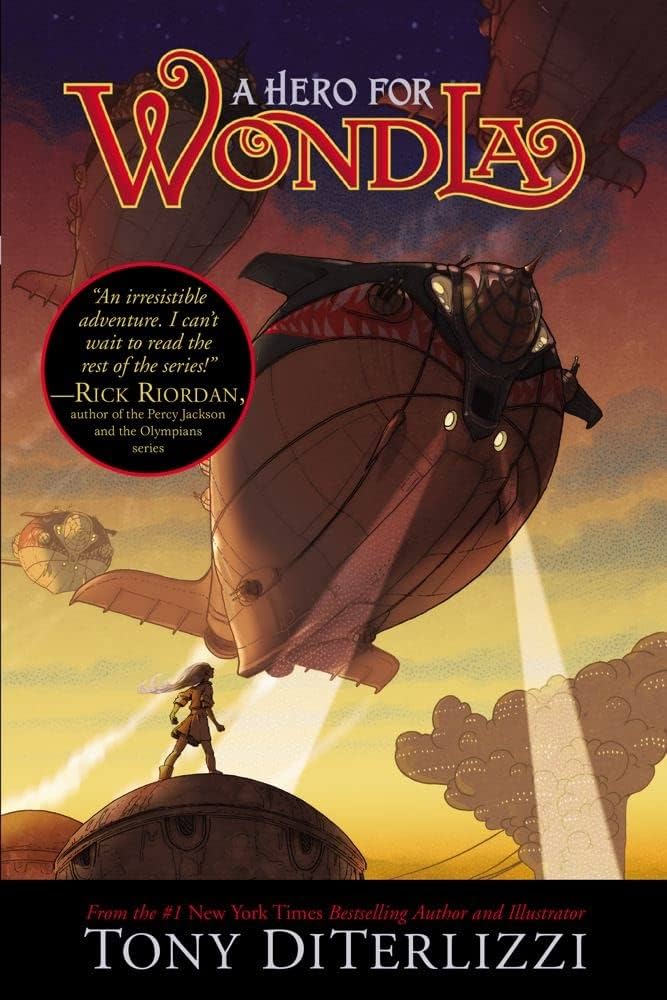
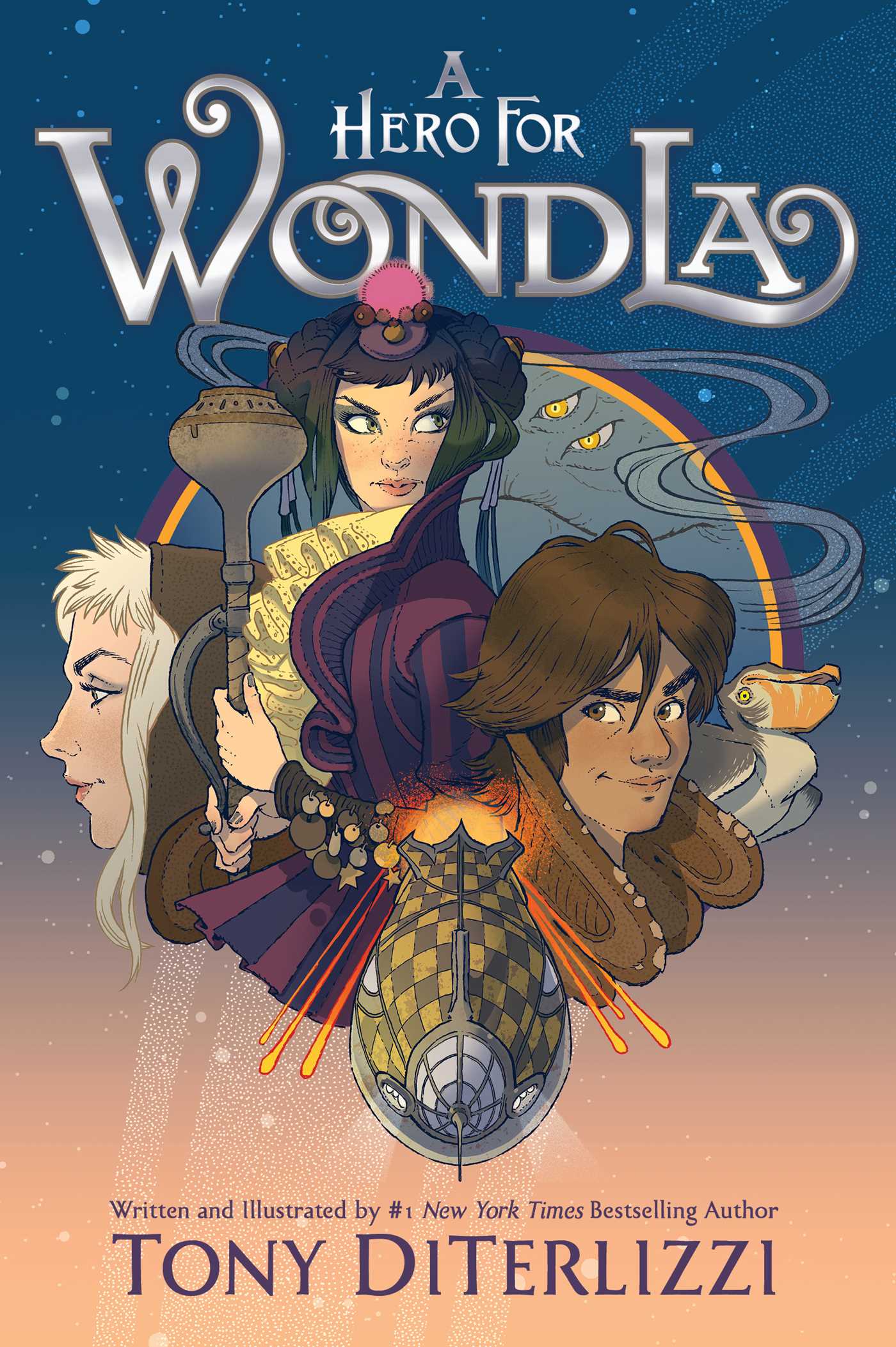
Before the end of The Search for WondLa , Eva Nine had never seen another human, but after a human boy named Hailey rescues her along with her companions, she couldn’t be happier. Eva thinks she has everything she’s ever dreamed of, especially when Hailey brings her and her friends to the colony of New Attica, where humans of all shapes and sizes live in apparent peace and harmony.
But all is not idyllic in New Attica, and Eva Nine soon realizes that something sinister is going on—and if she doesn’t stop it, it could mean the end of everything and everyone on planet Orbona.
☆
A Hero for WondLa is a truly worthy predecessor to book 1 for so many reasons, but what struck me the most upon re-reading it is how painfully accurate—and beautiful—Tony DiTerlizzi’s depiction of weird middle school girlhood is. I had to stop and remember that yes, this is a middle-aged man writing this, and yes, he has a daughter, but she was still a toddler when he wrote this…and yet he nails it. Right down to the smallest details.
A Hero for WondLa follows Eva Nine’s journey after she’s discovered that she’s not the only human. She visits New Attica, the pristine, final stronghold of the human race, where technology rules all. Eva’s first instinct is to fit in; she’s taken under the wing of Gen Pryde and her Mean Girls 2049 posse of identical, plastic friends, who are intent on making her fit in—they giggle at her sanctuary-born eccentricities, and she’s only praised when they mold her to look just like them. Even after that, they’re laughing behind their hands. She flees their false promise of friendship and into the arms of Eva Eight, her long-lost sister who has waited 100 years for her arrival. Eight hates New Attica and all of its lies, and promises Eva that she’s just like her. And yet, despite this insistence, Eva fails to find solace in her, either. It’s only when she becomes one with the Spirit of the Forest that she becomes her truest self—putting that which gives her power front and center. Like The Wizard of Oz, the (emerald) city she has spent her whole journey looking for is nothing but a sham, and in the end, there’s no place like “home”—the person that she is most comfortable being.
Oh, god. I need a minute. Ow. No other book I can think of captures the limbo of being 13 and not knowing who your real friends were lodged so deeply into my heart. Eva, like me, was so desperate for friendship and human connection that both attempts ended in complications, but through it all, everything came back to the found family she has built—the outcasts, the prisoners, the exiled. The ones who had her back. The ones who were just as confused as she was, but joined her journey after realizing the error in their ways.
The aesthetic language of A Hero for WondLa is drastically different than book one, with its pristine, plastic city of humans living in a bubble. Even the clean walls of Sanctuary 573 had a retro feel to them—likely centuries outdated from New Attica’s tech—but all of this is so blindingly new. None of the robots and automatons have the same old-fashioned friendliness as Muthr, trading approachability for sleekness and monstrous amounts of wires and tentacles. But along with it is a sinister aspect that DiTerlizzi doesn’t shy away from; I’d forgotten that, although the discussion is brief, that it’s implies that among all of the mind-control and executions that Cadmus Pryde is carrying out eugenics is casually a part of his long list of crimes against the last of humanity. The WondLa trilogy isn’t one to shy away from darkness (part of why it’s stood the test of time for me), but that aspect stood out, especially since this is science fiction we’re talking about, a genre that has a long history of portraying the eradication of disabilities as a sign of progress. I’d remembered that there are a handful of disabled characters, but having that as a clear signifier of evil in a middle-grade novel is something I can’t praise enough.
The Search for WondLa is a very self-contained story; although book sequels surpass it, in my opinion, the conclusion that it ended on (minus the epilogue) was hopeful and wrapped-up enough that it could have been a reasonable end to Eva Nine and Rovender’s journey. But this novel does such an excellent job of intensifying the stakes in so many ways. As Eva learns of a conflict that could soon entrench the whole planet in war, we get so many of the real time costs. Foreshadowed details, hinted at from the start of the series, metamorphose into sinister threats. Interpersonal relationships become tangled in this vast, interspecies conflict—nobody knows the truth. Side characters (although all but one do end up surviving in the end) often die mere chapters after they’re introduced. It’s a very tense book in and of itself, but as the setup to the massive conflict in the final book, it’s a masterclass in building up both physical and emotional stakes.
And…good god, all of Rovender’s emotional moments always kill me the most. Without going too in-depth, the scene of his complicated reunion with Antiquus destroyed me when I was younger, and it might have destroyed me even more…
It reminds me of another song that similarly destroys me:
“There will come a day/When the Earth will cease to spin/You’ll hold me close and say: ‘my God, where have you been?'” (Shakey Graves, “Chinatown”)
For the deeply emotional journey, then and now, 5 stars.
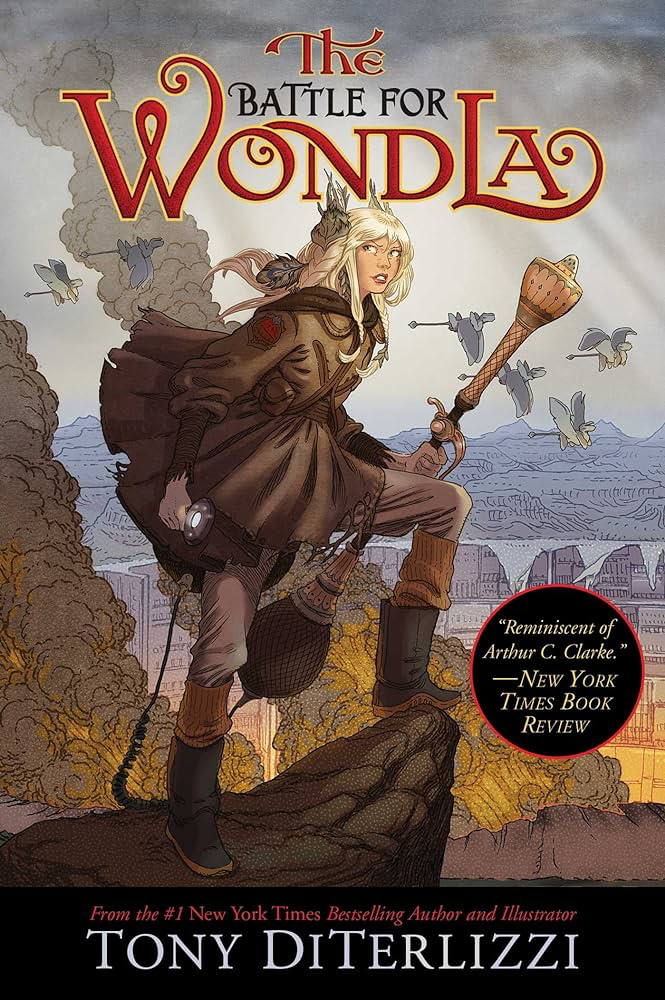
All hope for a peaceful coexistence between humankind and aliens seems lost in the third installment of the WondLa trilogy. Eva Nine has gone into hiding for fear of luring the wicked Loroc to her companions. However, news of the city Solas being captured by the human leader, Cadmus Pryde, forces Eva into action once again. With help from an unlikely ally, Eva tries to thwart Loroc’s ultimate plan for both mankind and the alien life on Orbona.
☆
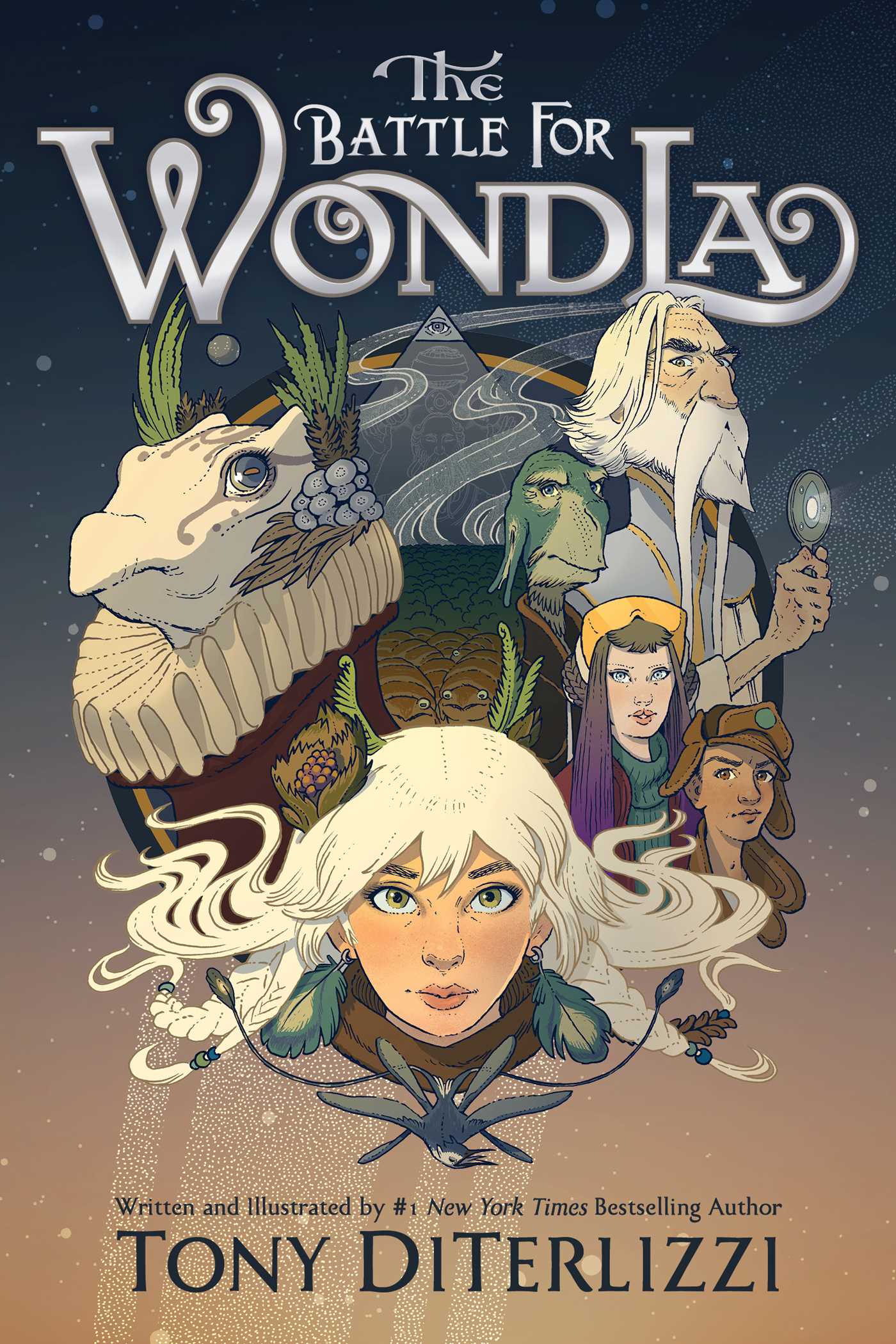
The Battle for WondLa was my favorite book of the trilogy when I first read it, and I find myself agreeing with the sentiment almost a decade later. Was this influenced by the fact that, in retrospect, the original book cover almost certainly contributed to my bisexual awakening at age 12? Maaaaaaybe. In all seriousness, it’s such a brutal, beautiful, and downright exhilarating conclusion to a series like no other.
This incarnation of Eva Nine, as matured as we see her in the trilogy, has always been my favorite. After she embraces her powers and connection to the natural world, she’s such a fascinating hero to follow, partly because she never fully gives up her younger traits. In fact, her powers lie in what made her a target in the first novel—her sensitivity and empathy. Now that she can communicate with all of the creatures of Orbona, she uses her sensitivity to find it within herself to accept the machinations of the natural world and show mercy for even the most frightening of beasts. Sensitivity is her superpower, and that is such an important lesson for younger readers—especially young girls. It’s overwhelming to feel everything all of the time, especially when you’re Eva’s age, but having a heroine who wrestles with that and learns to fine tune her all-seeing empathy and use it to her advantage is so, so crucial. I’m likely among a majority when I say that my sensitivity was often treated as a weakness growing up, so having a heroine whose sensitivity saves the world is just about the best role model you could write for a young girl.
As the title suggests, The Battle for WondLa boasts some of the best battle scenes in the whole trilogy. I’m not talking about the massacre of New Attica, although that remains truly brutal, but the ones that display Tony DiTerlizzi’s talent the most is the scenes where Eva uses the sheer might of the forest to win her battles. Now that I’m older, I’ll inevitably associate WondLa with Björk for a number of reasons, but Eva Nine goes from that precocious, earlier “Human Behaviour” Björk straight into “Nattúra” as her development goes on—unflinching femininity channeling the incomprehensible power of nature. Does it get any better than that, folks? Actually, it does—watching Eva Nine take down a squadron of Warbots with the help of a herd of giant water bears. “My herd…help me.” COME ON. Eva getting injured and then being carried back into battle by the mother sand-sniper that she freed from the menagerie? GIVE IT TO ME!! A highlight of the novel, without a doubt.
What stands out to me about Battle is this novel’s willingness to make complicated characters. Whether they’re the culmination of arcs of characters who have been in the series for multiple books or side characters that only show up in the latter half of the novel, there’s something to be said for how unflinchingly complex everyone is, and how that further complicates Eva’s quest to unite humans and aliens on Orbona. Hailey, with whom Eva is still (justifiably) bitter over her treatment in New Attica, sheds his tough, cocky exterior to reveal a loyal, humble friend by the end of the novel. Zin’s scientific distance becomes a detriment to him in the wake of the death of his family—and the threat exerted by his power-hungry brother, making him realize the error in his lack of emotional intelligence. Redimus, who unintentionally caused nearly all the dominoes for the entire series to play out against Eva, is never written as fully black or white; Eva can never fully bring herself to forgive him, but she learns to accept his attempt to, in his own words, “rectify his past actions,” and to accept that everyone is a web of decisions and consequences that never fully align with each other. And that’s what makes her journey feel so much more earned.
At the heart of The Battle for WondLa is connectivity—it’s all very “I/O” to me. Loroc’s ultimate goal is to unite Orbona, but unity in the form of everyone, human and alien, being either enslaved or consumed by him. He tricks his allies with promises of harmony, only for them to realize that harmony ends up being the harmony of being together…inside of his stomach. Eva wins by championing the fact that it’s the uplifting of everyone’s unique strengths that makes a community strong, whether it’s the unity of the aliens or the interconnectedness of all of the plants and animals of Orbona. We are each an integral part of a community, whether it’s a food web or a village, and it is those unlikely connections that make us stronger. As with today, the greatest mistake that any civilization can make is thinking that we are separate from nature. To once again quote Peter Gabriel, “I’m just a part of everything,” and that is where strength—and love—come from.
All in all, an unforgettable finale for a series that changed the trajectory of my life overwhelmingly for the better. 5 stars.
Tony DiTerlizzi is the author of several books for both early readers (Adventure of Meno, Ted, Jimmy Zangwow’s Out-of-This-World Moonpie Adventure, G is for One Gzonk!) and middle grade (Kenny and the Dragon and The Spiderwick Chronicles, co-authored with Holly Black). All seven episodes of WondLa are now streaming on Apple TV+*.
*I could only make it through 5/7 episodes before I had to quit. Only watch it out of morbid curiosity or if you have intentions to read the books and see how you got robbed.
Today’s song:
thank you to my brother for turning me on to this one!!
That’s it for this week’s Book Review Tuesday! Have a wonderful rest of your day, and take care of yourselves!
Here in the U.S., July is Disability Pride Month! Although I’ve seen some more recognition for it in the past few years, I find myself saying this over and over—disability issues are left behind in intersectional feminism far too often. The larger representation in media of disabled people as otherwise white and cishet, the lack of accessibility at many pride events, and the hurdles that most disabled students have to go through in order to get accommodations at school is proof. And yet, around 27% of Americans have some sort of disability—myself included. As the literary world has slowly shown more stories with disabled characters, it’s more important than ever to uplift disabled voices.
Like some of my other themed lists this year, I’ve decided to expand it beyond YA, because I’d be remiss if I didn’t include some of the amazing Adult and MG reads with disabled rep over the years. I’ve separated all of these recs by age group, and included their genres, my rating, and the type of disability rep.
(SHOUTOUT TO NOT IF I CAN HELP IT, I FINALLY HAVE A MORSEL OF SPD REP)
for my lists from previous years, click here:
2022 (+ on having SPD and the lack of representation)
TELL ME WHAT YOU THINK! Have you read any of these books, and what did you think of them? What are your favorite books with disabled rep? Let me know in the comments!
Today’s song:
That’s it for this year’s Disability Pride recs! Have a wonderful rest of your day, and take care of yourselves!
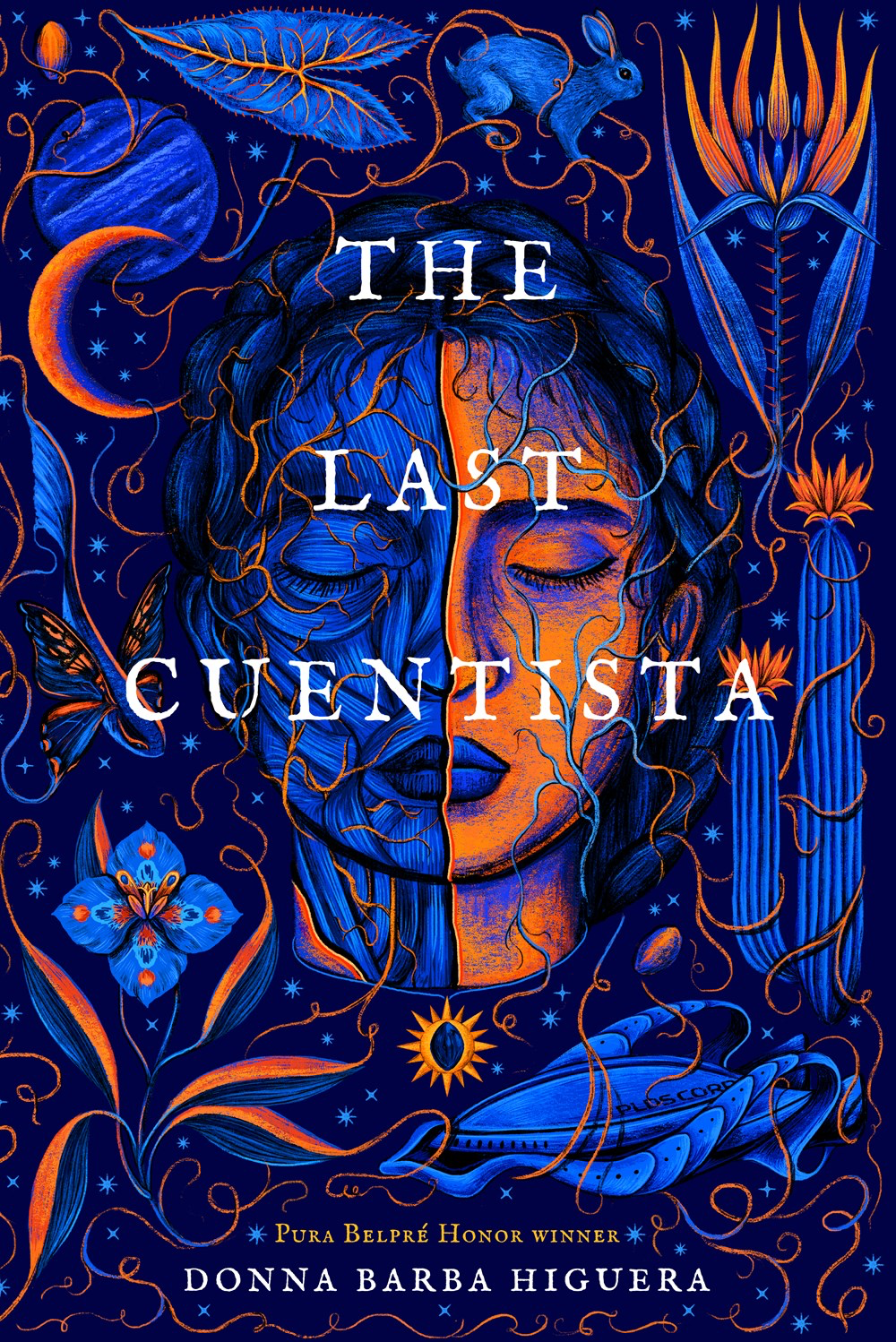
I’ve had The Last Cuentista on my TBR for a fair amount of time, but I’d forgotten about it until I saw a copy at my college’s library, so I ended up picking it up. I remembered almost nothing about the synopsis or why I wanted to pick it up in the first place, but what I found was a beautiful tale of the power of storytelling.
Petra Peña loves nothing more than listening to the stories of her abuelita, and dreams of someday being a storyteller like her. But when Earth is put in danger by a comet, she must abandon her abuelita and travel with her parents and younger brother to planet Sagan, where humanity can start over. But on the centuries-long journey, the ship is infiltrated by the Collective, a shady organization who aims to erase the crimes of humanity’s past by wiping the memories of all the passengers. When Petra wakes up, she realizes that she is the only one who remembers Earth—and the only one who can save what remains of the human species from forgetting itself altogether.
TW/CW: loss of loved ones, descriptions of injury, fear, descriptions of sleep paralysis
Good middle-grade sci-fi is hard to come by, but The Last Cuentista was nothing short of wonderful. With a story as beautiful as its cover, it’s a shining testament to the power of storytelling and a poignant reminder to never forget where you came from.
I know I opened with specifically saying that The Last Cuentista is middle-grade, but I’d say it toes the line right between middle grade and YA. Petra is 13 years old, and there’s certainly some more middle-grade aspects to how the themes are dealt with and some of the character interactions, but it borders on hardcore, nail-biting sci-fi in other places. Think of every piece of sci-fi media that deals with cryosleep for several centuries, and think of all of the potential, existential obstacles that come along with it: chances are, they do end up appearing in this book. It’s a weird place to navigate reading-wise when you’re that age (I certainly remember wishing that there was an in-between place for middle grade and YA), but The Last Cuentista retains a middle-grade sensibility without downplaying the integrity of its themes and world simply because it’s aimed at a younger audience.
One of the strongest aspects of The Last Cuentista was Donna Barba Higuera’s fantastic writing. She especially excels at sensory details; in a particularly nail-biting scene when Petra is still awake while her pod is preparing for cryosleep (AAAAAAAAAAAAAA), Higuera filled her prose with all kinds of sensory details that really sold the crushing fear of the moment. Her descriptions of the bizarre flora and fauna of Sagan are just as lush, painting a picture of an alien planet just as well as Petra’s abuelita paints stories. Higuera’s ability to create suspense and her ability to spin beautiful prose went hand in hand, making for a novel that had me invested the whole time.
The Last Cuentista also had some beautiful themes; Petra’s quest to keep the history of humanity alive through storytelling serves to remind us that we should never forget who we are, despite having a history wracked with war and darkness. The Collective was a perfect, sinister dystopia to set this theme against, and they also added to the suspense that Higuera consistently built throughout the novel. Petra’s journey to return humanity to its roots was poignantly written and so wonderfully timely, and I have no doubt that The Last Cuentista will be a book that stands the test of time. In the end, we are all united by the stories that bind us together. Never underestimate the power of a storyteller.
My only gripe with this novel were some of the characters. Other than Petra and her family, most of the side characters felt interchangeable. A few of them had a few base traits to go off of, but other than that, I often found myself getting them mixed up. The switch from the Greek letter/number designations to nicknames didn’t necessarily help, although it was clearly important thematically. I wish we’d gotten as much development out of at least some of them as we got with Petra and maybe Voxy—the story was powerful by itself, but it would have been more so if some of the other characters were more fleshed out.
All in all, a beautiful piece of sci-fi that reminds us that stories have the power to do anything—change us, teach us, and above all, unite us. 4 stars!
The Last Cuentista is a standalone, but Donna Barba Higuera is also the author of Lupe Wong Won’t Dance, as well as the picture books El Cucuy is Scared, Too! and the upcoming The Yellow Handkerchief.
Today’s song:
shuffle decided to hit me right in the 6th grade feels today, I see
That’s it for this week’s Book Review Tuesday! Have a wonderful rest of your day, and take care of yourselves!
Happy Saturday, bibliophiles, and merry Christmas Eve to those who celebrate!! Lots of baking to look forward to today…
This tag was created not long ago by the wonderful Laura @ The Corner of Laura, and it looks like a ton of fun! My TBR is out of control, so this’ll be a good chance to comb through it and clear off the dust.
RULES:
Link back to the original creator (The Corner of Laura) and link back to this page (otherwise, the original creator won’t get a notification).
Thank whoever tagged you and link back to their post
Go to your preferred random number generator, set the number limit to the exact number of books on your TBR list (on Goodreads or any other equivalent list) and generate 7 different numbers.
Find the books on your TBR list that correspond with those numbers
Explain why you added it, try to predict what you will think of it now and decide whether you’re going to keep it on your TBR or delete it.
(Optional) Challenge yourself to read the ones you decide to keep within seven weeks
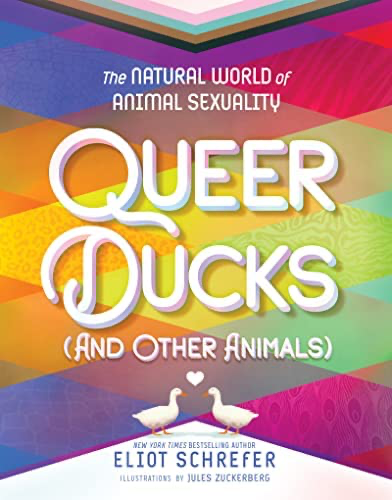
This is obviously a very different kind of book than The Darkness Outside Us (also by Schrefer), but it sounds like a really sweet book; there’s a notion that queerness is only a human concept, which is entirely wrong, and I’m glad that this book is aiming to dispel that myth, especially for a younger (YA) audience.
I’ve been meaning to get to some of the more middle grade-leaning books on my TBR, but looking back at this one, I forget why I added it, and it doesn’t seem all that compelling to me now.
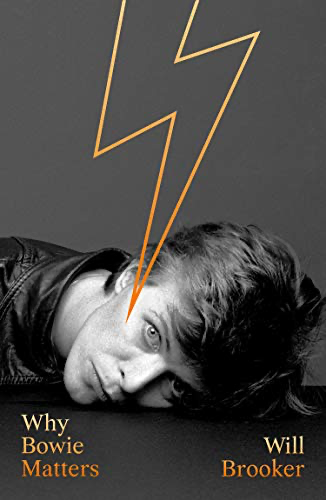
It’s no secret how much I love David Bowie, so I don’t need to explain why this one’s on my TBR. This one has some mediocre reviews, but I’m interested in the stance that Brooker takes with this book—tackling the art and people who made Bowie who he is.
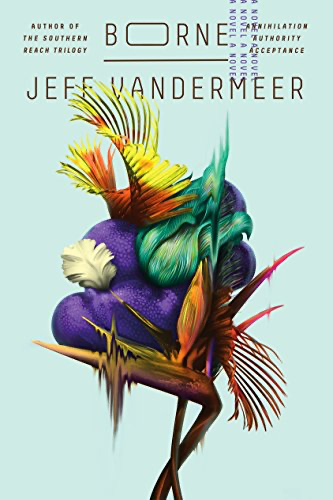
After watching Annihilation, I ended up putting several of Jeff VanderMeer’s books on my TBR, but I still haven’t gotten around to reading any of them. This one sounds super out there (as all of his books seem to be), and despite how long the synopsis is, I think it’ll be an interesting read. Plus, it has much more positive reviews than most of his other books, so I guess that’s a good sign?
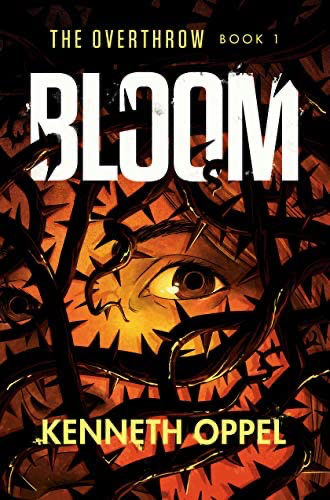
It’s been ages since I’ve read anything by Kenneth Oppel, but I remember liking The Nest and some of the Silverwing books when I was in elementary/middle school. This one sounds like it’s right in between middle grade and YA, which should be interesting, especially with the sort of post-apocalyptic premise.
+ anyone else who wants to participate! if you see this tag and want to do it, I’d love to see your answers! if I tagged you and you’ve already done it/don’t want to do it, my bad.
Today’s song:
we love it when shuffle just slaps you in the face with childhood nostalgia…good stuff
That’s it for this book tag! Have a wonderful rest of your day, and take care of yourselves!
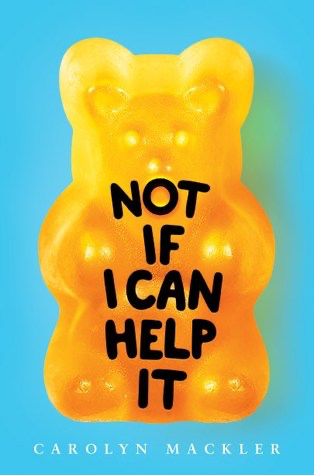
Ever since I realized that literature has been something I could see myself in, I’ve been looking high and low for books with SPD representation. For years, all I managed to find were help books for parents SPD children (again—not diminishing their value, I was just looking for something else) and hardly any fiction in sight. By some miracle, I ended up coming across this book recently, and I was elated to find a book that finally reflected my disability! I set my expectations hesitantly high, but I ended up adoring Not If I Can Help It; I wish I had it when I was Willa’s age.
Willa has Sensory Processing Disorder—she hates the texture of certain foods, tags and seams on clothes irritate her to no end, and she gets overwhelmed easily. With her occupational therapist, she’s been able to manage it—and keep it a secret from her 5th-grade class. But when her dad breaks the news that he’s engaged to her best friend’s mom, she struggles to handle the change—she loves her best friend Ruby, but being her sister would be another situation entirely. As 5th grade draws to a close, can she and Ruby work things out—as best friends, and as sisters?
TW/CW: sensory overload, bullying
I’m going to go so far as to say that Not If I Can Help It is a fairly monumental book for me. It’s the first book I’ve ever read with a protagonist who has SPD, and as somebody with SPD, it fills my heart to see myself in a book like this. I’m so, so, so glad this book exists.
I’ve been trying to find any kind of SPD fiction for years, and Not If I Can Help It surprised me with how realistically and respectfully SPD was handled. I related so much to Willa—even though our specific brands of SPD differed (Willa’s seems to be more tactile, whereas mine are mainly auditory), I related so much to Willa’s experience, from her experience with handling change to the everyday things she does with her parents to cope with her SPD. (I JUST GOT MY OWN BODY SOCK TOO??? we love the body sock in this house) I’ve been going back to OT in preparation for college lately, and I also loved the scenes with Willa and her therapist in the sensory gym—again, so respectfully written and authentic! Mackler mentions in the acknowledgments that Not If I Can Help It was partially based off of her experience with one of her sons, who has SPD, and this is bound to be a book that so many of us with SPD will relate to—I certainly did.
It’s been a while since I’ve read any middle grade, but the gap was a lot easier to bridge than I thought it would be. Mackler’s writing, along with our shared experience, made me instantly feel for Willa. She’s such a unique, determined character, so full of life and spirit. I loved her individual quirks, and her growth over the novel made me wish that I had this kind of book when I was her age—I could’ve used a Willa when I was going into middle school. (Also, kudos to Willa for managing her SPD on top of living in MANHATTAN, wow…)
The story was additionally a super sweet one. I completely related to Willa’s reticence to having change, and all of the changes she experiences (her dad getting married to her best friend’s mom, going to middle school, and her longtime babysitter moving, to name a few) served to help her grow so much as a character. All of the supporting characters were wonderfully unique in their own ways, adding not only to the story, but helping to emphasize the point, to paraphrase Ruby’s mom, that we all have our “things” going on—not everybody is as normal as you may think they are, and that there will be all kinds of people to support you along your journey.
All in all, a book that I sorely wished that I’d been able to read when I was younger, but one that I’m so glad I got to read here and now. This is the first book with SPD rep that I’ve read, and given how authentically it was represented, it will always have a special place in my heart. Thanks so much to Carolyn Mackler and Willa. 💗 4.5 stars!
Not If I Can Help It is a standalone, but Carolyn Mackler is also the author of several middle grade and YA books, including Tangled, Infinite In Between, Love and Other Four-Letter Words, and The Earth, My Butt, and Other Big Round Things.
Today’s song:
adding this song to my internal list of songs with god tier intros
That’s it for this week’s Book Review Tuesday! Have a wonderful rest of your day, and take care of yourselves!
I’ve been an avid reader from a young age. I read voraciously throughout my pre-teen years, but as I got older, I began reading “older” books—I had been introduced into the wonderful world of YA literature. But it wasn’t quite as smooth as I thought; although young adult books generally encompass a teenage experience, there can often be a wide range of content. While some YA books are lighter and more suitable for younger teens, many range into the “older” teen spectrum that often deals with heavier and more mature subject matter. For me, at least, I think it’s good to have “transition” books for younger YA readers—books that are distinctly “teen,” but aren’t quite as graphic for someone who isn’t mature enough to handle certain topics. I’m doing my best not to make generalizations about the maturity of younger teenagers here, since I was one not so long ago, but I feel like it’s not the best idea to start an 11 or 12 year old on something as dark as Six of Crowsor Illuminae.So for those reasons, I’ve decided to compile some books that I think would be great to introduce younger readers to the wide world of YA literature.
Let’s begin, shall we?
📖BOOKS TO TRANSITION YOUNGER TEEN READERS INTO YA 📖
Marie Lu’s books tend to stray on the darker side, but The Kingdom of Back is the perfect standalone for any reader to get into her books. This one is a favorite of mine—such a beautifully-crafted fairytale!
Sisters of the Wolf wasn’t my favorite book, but part of what stood out to me about it (apart from the amazing research that went into the prehistoric setting) was that it hit the perfect balance between middle grade and YA—it’s dark enough to be separated from middle grade, but still palatable for a younger reader transitioning between the age groups.
Like Sisters of the Wolf, The Soul Keepers is the perfect bridge between middle grade and YA; even though most of the characters are written as older teens, the level of dark elements struck the perfect balance between younger and older teen readers.
Nothing like a good fairytale retelling to introduce a reader to YA! Lish McBride’s sense of humor never fails to make me smile, and Curseswas a continuously clever and hilarious retelling of Beauty and the Beast. If there’s any Beauty and the Beast retelling to start a reader on, it’s this one.
The Tiger at Midnight has all of the elements of a classic YA fantasy book, and it’s the perfect choice for introducing a reader into the vast world of YA fantasy! I don’t know why I haven’t picked up the next few books—book 1 was a lot of fun!
For a reader who wants to jump into romance, the Once Upon a Con series is a perfect starter! Plus, what’s not to love about comic cons, books, and tons of pop culture references?
Speaking of retellings…here’s one for readers who are keen on Arthurian legends! Once & Future presents one of the most inventive Arthurian legends I’ve read in a while—space, corporations, curses, and more! It’s wonderfully queer all around as well.
There are a lot—and I mean a lot—of astoundingly mediocre and ridiculous YA dystopias that tried to jump on the Hunger Games train, so why not start off a reader with something that’s genuinely fun and inventive? The Light at the Bottom of the World is a stand-out, action-packed and creative, with a determined protagonist that you can’t help but root for!
Here’s another light and sweet romance! I Love You So Mochi is the perfect feel-good romance, and it doubles as a spectacular coming-of-age story about finding your passion and your place.
TELL ME WHAT YOU THINK! What are some other books that you’d recommend for younger teens who are just starting to read YA? Have you read any of these books, and if so, what did you think of them? Tell me in the comments!
Today’s song:
this is such a fun album!! not a bad song here
That’s it for this post! Have a wonderful rest of your day, and take care of yourselves!
Happy Monday, bibliophiles! Wow, I’m SO relieved to be finally done with that AP Gov project…
Goodreads Monday is a weekly meme originally created by Lauren’s Page Turners, but has since moved to Budget Tales Book Blog. All you have to do to participate is pick a book from your Goodreads TBR, and explain why you want to read it.
This one’s been sitting on my TBR for about a year, and it sounds like a strange and wonderfully poignant story of grief.
Let’s begin, shall we?
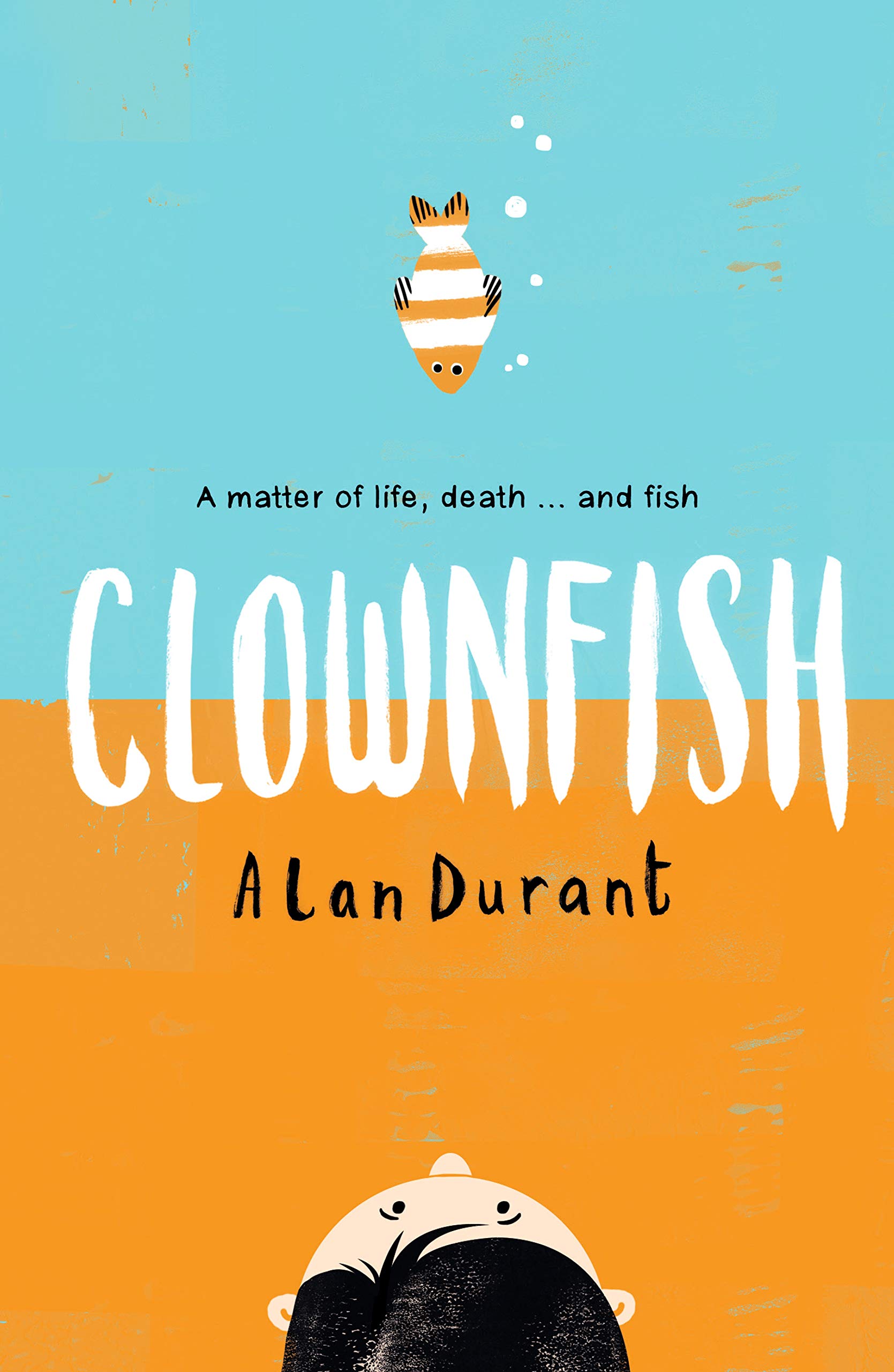
GOODREADS MONDAY (12/6/21) – CLOWNFISH by Alan Durant
Dak’s dad has been dead for seven days when suddenly he reappears. He’s the same in almost every way, with one startling exception: Dad has turned into a clownfish, and now lives in a tank at their local aquarium. Dak is delighted by the news – he has Dad back, even if he isn’t quite as he was before.
Deciding to keep Dad’s transformation a secret, Dak visits him at the aquarium as often as he can, and ends up spending so much time there that they offer him a job. This is how he comes to meet Violet, the owner’s prickly but kindhearted niece; when the aquarium is threatened with closure, the pair must work together to save it.
For Dak, the stakes couldn’t be higher … after all, if the aquarium shuts down, what will happen to the fish? In parts wry, moving and undoubtedly strange, this beautifully crafted story will stay with you long after the final page.
So why do I want to read this?
This one’s classified as YA on Goodreads, but it looks like it’s more middle grade—Dak, the protagonist, is 12, according to the reviews. I know I sound like a broken record by now, but I really need to read more middle grade. And this one sounds delightfully strange and sweet.
There’s a challenge in depicting grief in the eyes of a kid, especially with how they process it. The case of Clownfish is particularly interesting; with a little bit of magical realism, Dak’s dead dad is now a clownfish. It sounds like the kind of book that would be great as an animated movie—stop-motion or 2D is the feeling I’m getting. Either way, this one looks like I’d love it, but I’m sensing a 50-50 chance that I’ll cry.
Today’s song:
That’s it for this week’s Goodreads Monday! Have a wonderful rest of your day, and take care of yourselves!
Happy Monday, bibliophiles, and happy first day of November! Can’t believe 2021 is nearly over…
Goodreads Monday is a weekly meme created by Lauren’s Page Turners. All you have to do to participate is pick a book from your Goodreads TBR, and explain why you want to read it.
I haven’t read a whole lot of middle grade in the past few years, but this one caught my eye. I’ve seen a lot of sci-fi books with stranded ships and AI with ulterior motives, but I’m interested to see how it translates to a younger audience!
Let’s begin, shall we?
GOODREADS MONDAY (11/1/21) – ORION LOST by Alastair Chisholm
After a catastrophic Unknown Event leaves the colony ship Orion stranded deep in space, it’s up to thirteen-year-old Beth and her friends to navigate through treacherous and uncharted territory and reach safety. But a heavily damaged ship, a mysterious alien species, space pirates, and an Artificial Intelligence which Beth suspects may be lying to her mean that getting home has never been so difficult.
Hugely gripping, with incredible twists and a fast-paced, action-packed story, this is an unputdownable science fiction adventure – perfect for fans of Mortal Engines and Star Wars.
So why do I want to read this?
Right off the bat, the blurb reminded me a lot of The Loneliest Girl in the Universe; both involve characters who are unexpectedly deserted in the vast reaches of space, faced with the challenge of navigating their way back home by themselves. I’ve seen a lot of YA and Adult sci-fi books with similar plots (I love books like these, full disclosure), but I’ve never seen anything like it in the world of Middle Grade. As 13-year-old Madeline would vehemently attest to, I’ve found that there’s a general dearth of sci-fi—good sci-fi even more so—for elementary to middle school-level readers, so I’m always happy to see something like this pop up on my radar.
Beyond that, every little thing peppered in the synopsis makes me more and more excited to read Orion Lost! Aliens? Shifty AI? Space pirates? Middle school Madeline would’ve been all over this, and I’m all over it now. I’ll have to see if it’s available at the library.
Today’s song:
it’s always a good day when Radiohead releases something new
That’s it for this week’s Goodreads Monday! Have a wonderful rest of your day, and take care of yourselves!








 The Bookish Mutant