Posted in Book Review Tuesday

Book Review Tuesday (7/16/24) – The Vela

Happy Tuesday, bibliophiles!

The Vela came on my radar again when I dredged my TBR for books to read during this year’s Disability Pride Month. Beyond the disability rep…what could possibly go wrong with Becky Chambers AND Rivers Solomon, right? I’m glad to say I was right—whether it was the work of new-to-me or longtime favorite authors, they all came together in stunning harmony in The Vela, a timely sci-fi epic that’s as observant as it is thrilling.

Enjoy this week’s review!

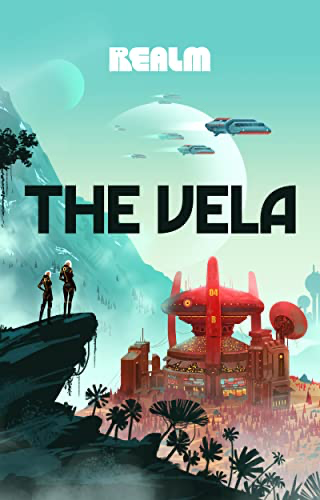
The Vela: A Novel – Yoon Ha Lee, Becky Chambers, Rivers Solomon, and S.L. Huang

Asala Sikou can’t afford to care about anybody but herself. Not when her star system is on the verge of collapse, and not when everyone she once knew is long dead. But when she receives a job to track down the Vela, a ship hauling thousands of refugees that mysteriously disappeared, Asala knows that there’s more than meets the eye to the incident. So does Niko, the smart but sheltered child of another planet’s president. The two unlikely companions will have to team up to track down the Vela—and all of its refugees—before they’re embroiled in a galaxy-wide war.

TW/CW: xenophobia, racism, themes of genocide, descriptions of death/corpses

The promise of Becky Chambers and Rivers Solomon in one novel was the main draw of The Vela for me, but by the time I finished the novel, I was fully invested in all four contributors. Their talents came together so seamlessly, making for a novel that wasn’t just coherent, but downright thrilling—The Vela is sure to satisfy whether or not you’re familiar with the authors.

Out of all of the authors who contributed to The Vela, I was the most hesitant about Yoon Ha Lee; the one book I’ve read of his was one that didn’t mesh with my style (but that was also his first attempt at middle grade, so that could have been my issue). I read a sample of Ninefox Gambit ages ago and liked it, but not enough to buy it. Consider me proven wrong about him! As the author who started off the novel, he was the perfect choice. His fast-paced prose made for an opening chapter that integrated the reader swiftly and effortlessly into the world of The Vela. Later on, his battle scenes were some of the highlights of the novel; every chase sequence and dogfight is so meticulous that I questioned whether or not he’d actually been in the thick of an intergalactic war. I’ll be seeking out more of his work after this!

Becky Chambers was, by far, the author I was most excited about seeing in The Vela. I’ve fallen head-over-heels in love with her cozy sci-fi, as many other readers had. What she contributed to The Vela, however, was a sense of complication. Like The Galaxy, and the Ground Within, where she piled a series of unlikely characters together and had them clash in terms of culture, politics, and personality, Chambers excelled at complicating the relationships between each character. Her cozy agenda made me forget how well she writes cold, fascist characters; the way she wrote General Cynwrig sent chills up my spine, conveying the dull distance she has from every other character. Every interaction with her is nothing but war room strategy, and that’s why she and Niko clashed so fundamentally. While toeing over making Cynwrig sympathetic, Chambers gave us a glimpse into her mind without justifying her actions. It’s a difficult dilemma to skirt around, but one that served to develop Niko incredibly; they had a very un-nuanced view of the galaxy, and although their views weren’t changed fundamentally, it allowed them to see different sides without excusing their horrific actions.

Rivers Solomon, the other author I was looking forward to reading in The Vela, gave us the novel’s best glimpse into the mind of the protagonist, Asala. Their prose here, which combines rough-edged anger with exceptional metaphor, fleshed out Asala in ways that the other chapters did not; Solomon had the weight of sculpting all of the events that made Asala as cool and calculated as she was, and by the end, I had a vision of her that was as clear as a map, with every mountain range and river of her life writ out. Her cold disillusionment was palpable, but by the time Asala begins to move more towards purpose and determination, we can see, with incredible clarity, every step that led up to it.

S.L. Huang was the only author featured in The Vela who I was completely unfamiliar with. Now that I’ve finished the novel, I’m keen on checking out her other works, because I can’t think of many other authors who are able to write war so poetically, but never romanticize it at any point. Nothing is ever glorified (as it should be, both in general and considering the themes of The Vela), but there’s something so silk-smooth and beautiful in the way she described battalions of ships on the horizon and the chaos of war as all of the parties scramble for a handhold. For a novel with a prominently anti-war sentiment, Huang’s prose served a valuable purpose—humanizing the consequences of war that many of the characters were unable to grasp, and writing it with such tact and heart that it bordered on poetry.

As a whole…what a timely novel, isn’t it? Surely, we couldn’t learn a thing or two from this world, where star systems and planets are being physically torn apart and destroyed because nobody considered that their enemies are also human…surely that’s not applicable to [checks notes] practically every issue we’re dealing with at the moment, no?

All in all, a seamless and cohesive sci-fi thriller that wonderfully harmonizes the unique talents of the authors that it displays. 4 stars!

The Vela is the first in an anthology series, followed by The Vela: Salvation, which features Nicole Givens Kurtz, Sangu Mandanna, Maura Milan, and Ashley Poston.

Today’s song:

my friend and I were discussing our favorite album intros last night, and they showed me this…they’re right on the money with this one (thanks!!)

That’s it for this week’s Book Review Tuesday! Have a wonderful rest of your day, and take care of yourselves!

Posted in Book Review Tuesday

Book Review Tuesday (11/28/23) – Hunger Makes the Wolf

Happy Tuesday, bibliophiles!

Hunger Makes the Wolf came on my radar when I was looking for more books with disability rep (as always), but I ended up buying it on my Kindle after my dad notified me that I had some unused Kindle points (thank you for reminding me!)—it was free with the points added on, so how could I resist? And while Hunger Makes the Wolf wasn’t perfect, it’s a ton of gunslinging, space-fantasy fun.

Enjoy this week’s review!

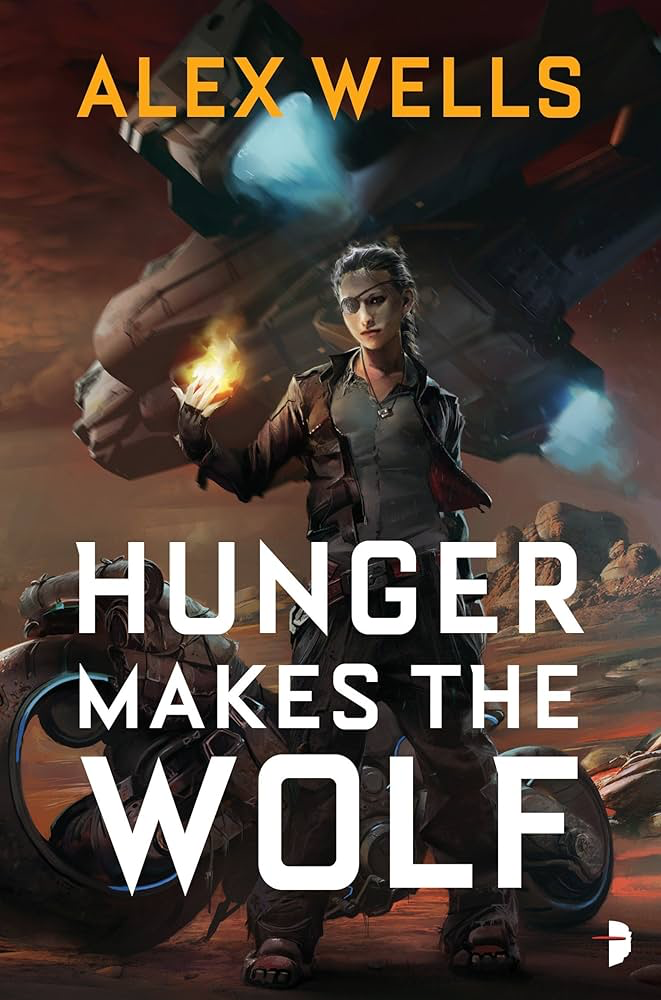
Hunger Makes the Wolf (The Ghost Wolves, #1) – Alex Wells

Hob Ravani ekes out a living in the deserts of Tanegawa’s World, a planet owned by TransRifts—the corporation who controls the market on interstellar travel in the whole galaxy. For 10 years, Hob has gotten by with the help of the Ghost Wolves, a group of bandits roaming the desert and finding money where they can. But when Hob discovers the body of Nick, the man who recruited her to join the Wolves, abandoned in the desert, she knows that she has to act before TransRifts discovers their operation—and discovers the powers that she’s kept hidden from sight.

TW/CW: murder, descriptions of injuries, descriptions of corpses, violence, loss of loved ones, human experimentation

Writing accents phonetically is a slippery slope that I’m not going to get fully into in this review. In this case, though, Alex Wells had decent success with making everyone who was meant to sound like they had a Southern accent actually sound like they had a Southern accent, which worked—this novel was a space Western, after all. That being said, the unintended consequence was that Wells’ spelling of Hob’s accent was that I imagined her voice more like Holly Hunter in Raising Arizona than the badass, hardened gunslinger that she was made out to be. It sort of worked, though.

As far as sci-fi subgenres go, I’m not usually huge on space Westerns; I’ve rarely seen them done exceedingly well (even The Mandalorian got more than a little repetitive eventually), but the best are at least fun. And that was what Hunger Makes the Wolf was—incredibly fun. It had all of the trappings of a debut novel, but what Wells did get right on the first time was that pacing. Although the action sequences were what made Hunger such a blast to read in the best parts, Wells also knew how to balance them out with quiet, more emotional moments, and also moments to slip in worldbuilding without absolutely walloping you with it. Wells’ action was really the star of the show here; their fight scenes had just the right amount of tension, levity, and butt-kicking to make for more than one delightful scene.

Recently, I’ve read several sci-fi books that were marketed as “space fantasy,” and none of them have really fit the bill. And yet, Hunger Makes the Wolf wasn’t necessarily marketed as such, but it does what the other novels lacked. Even amidst the classic sci-fi backdrop of corporate greed, massive spaceships, and gruesome human experimentation, there’s the element of the characters’ strange hidden powers. Naming said powers “witchiness” was already a win in my book, the charm of it really fits the Western atmosphere that Wells was going for—it hits that sweet spot of not sounding overly jargon-y or formal, but not too hokey, either. Every time one of the characters mentioned it, I couldn’t help but smile—especially in Hob’s aforementioned Holly Hunter voice.

Hunger Makes the Wolf is an incredibly ambitious novel, and the ambition is accentuated when you remember that this is Alex Wells’ debut. In some ways, it worked; Wells managed to juggle a safe amount of the worldbuilding without leaving the reader without context, but also without dumping it excessively. However, what Wells did not juggle as well was the sheer amount of characters that we jump between. Hunger was clearly meant to have a found family theme to it, which I’m normally a sucker for, but Wells just had so many extraneous characters on their hands that none of the character relationships felt fleshed out. If we had gotten more scenes with Hob and the rest of the Wolves, for instance, I would have believed that they really were as thick as thieves. Adding onto this, the perspective switches may not have been necessary; Mags, although she plays a prominent role, doesn’t have a perspective or voice that added anything substantial to the narrative. It’s a classic debut author case: Alex Wells had some spot-on ideas, but they bit off far more than they could chew.

All in all, a rollicking space fantasy with action aplenty, but with characters that left me wanting more. 3.5 stars!

Hunger Makes the Wolf is the first book in the Ghost Wolves duology, followed by Blood Binds the Pack. Hunger was Alex Wells’ debut novel; they are also the author of the short story Angel of the Blockade.

Today’s song:

FARGO IS BACK I AM FOAMING AT THE MOUTH OH MY GOOOOOOOD

That’s it for this week’s Book Review Tuesday! Have a wonderful rest of your day, and take care of yourselves!

Posted in Uncategorized

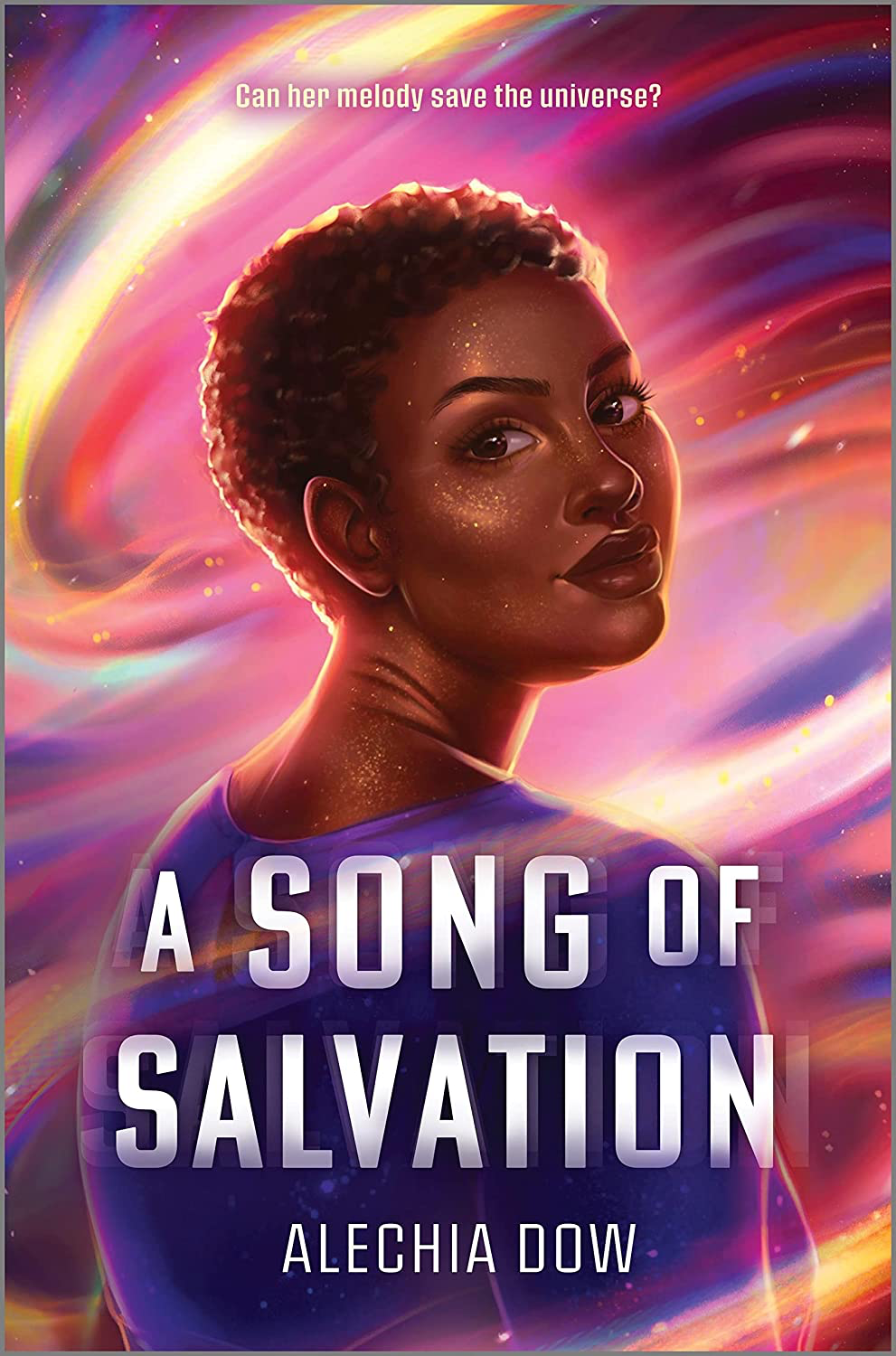
Book Review Tuesday (7/25/23) – A Song of Salvation

Happy Tuesday, bibliophiles! Everybody say happy birthday to Hobbes, who turns 7 today:

I’ve been following Alechia Dow ever since The Sound of Stars was a 5-star read for me way back in 2020; I’ve loved reading her brand of hopeful, queer YA sci-fi with Black characters at the forefront, and so I was so excited to hear that A Song of Salvation was set in the same universe as her first two books! Unfortunately, I found it to be more lackluster than her first two books, but that doesn’t mean that I still enjoyed it.

Enjoy this week’s review!

A Song of Salvation – Alechia Dow

Zaira Citlali knows her purpose. As the reincarnation of the goddess Indigo, she has been granted with their powers—but cannot seem to harness them. What’s worse, her mortal enemy, the destruction god Ozvios, remains at large, and as he creates war all across the galaxy, he’s eyeing Zaira as a prime sacrifice. But Zaira won’t go down without a fight, even if it means rushing to control her powers. With the help of Wesley, a disgruntled smuggler who just wants to get the job done, and Rubin, a celebrity podcaster that Wesley definitely doesn’t find ridiculously attractive, she must find her way to Terra, the center of intergalactic conflict, to ensure that the song of the universe remains intact.

TW/CW: themes of war, genocide, colonialism/imperialism, murder

I liked this book. But I wanted to like it so much more. Ever since The Sound of Stars, I’ve been trying to get my hands on every Alechia Dow that comes out—normally, I love her special brand of sweet, vibrant sci-fi with Black, queer characters at the forefront. But putting this book next to The Kindred has made me realize that I’m liking her books less and less with each one that comes out. And that makes me really sad. It almost makes me scared to re-read The Sound of Stars, which was a 5-star read for me, just out of fear that it won’t be as impactful for me now as it was back in 2020. All that is to say that A Song of Salvation was still a solid read, but a visible downgrade from both The Sound of Stars and The Kindred. It doesn’t feel like her best work at all.

I’ll start with the positives: if anything, A Song of Salvation was still fun and well-crafted. Dow’s space opera universe where queer characters of color are in charge of their own destinies and get to star in their own star-crossed romances is always a treat to step inside of. The new context and worldbuilding that Song adds to this already vibrant world made it even more fleshed out and real, and Dow was adept at handling all of the intergalactic politics as war descended upon the universe. It’s all richly layered and detailed, with no stone left unturned in terms of the eccentricities of everything going on. And of course, sci-fi with high(ish) stakes but with ultimately hopeful and happy resolutions are always a win. Before I get into my main gripes, I should clarify that I did enjoy the book—it was still a fun read, and better than a fair portion of YA sci-fi—but having read Dow’s other novels, it left me wanting more.

What was endearing to me about The Sound of Stars and The Kindred (the latter to a lesser extent) were the characters—Ellie and Morris felt so resonant, and Felix and Joy, even if they were slightly less so, were still a joy (no pun intended) to be around. Given that Dow’s books have leaned more on the side of character-driven, I expected Song to have the same kind of characters and character development, but unfortunately, I found it lacking. Zaira, Wesley, and Rubin were all fun characters, in the abstract, but it felt like Dow didn’t give them the same love and care that she did for her other characters. They all seemed to have a baseline personality trait each: Wesley is grumpy, Rubin is flamboyant, etc. There wasn’t a whole lot to Zaira, either—it genuinely saddens me to say this, but she feels like every single “reincarnated god/goddess/has the power of a deity” kind of character, whose only traits seem to be that they’re overpowered. And for all of the “I can’t control my powers :(” talk, she seemed to miraculously save the day most every time? That’s not to say that they weren’t all at least entertaining, though; they had a good group dynamic, and Wesley and Rubin were cute together. (Did anybody else feel like Rubin was a toned-down, YA version of Ruby from The Fifth Element? The name and everything…I can’t be the only one to see that…)

Plot-wise, A Song of Salvation struggled to remain relevant for at least half of the book; it felt like a lot of running about with no consequence to the story (and, y’know, the looming intergalactic war?). The second half more or less suffered from the same problem, but it hinged so much on the cameos from the previous books. Don’t get me wrong—it was really sweet to see Ellie, Morris, Joy, Felix, and all of the others, but the more that they showed up, the more it felt like they were being used as crutches to keep longtime readers interested in the story. And for such endearing, well-developed characters, having them used like this was such a shame. They were too well-written to just be cameos. It really felt like such a shame.

All in all, a fun addition to Alechia Dow’s sci-fi universe, but one that relied too much on the wondrousness of its predecessors to stand on its own. 3.5 stars.

A Song of Salvation is the companion to Alechia Dow’s other YA sci-fi novels, The Sound of Stars and The Kindred; they are not a concrete trilogy, but they are all set in the same universe, and can be (and probably should be, just to understand everything) read as such. Dow is also the author of the forthcoming middle grade novel Just A Pinch of Magic (slated for release this October) and All’s Fair(y) in Love & War (slated for release in 2025).

Today’s song:

haven’t been able to stop listening to this gaaaaah

That’s it for this week’s Book Review Tuesday! Have a wonderful rest of your day, and take care of yourselves!

Posted in Uncategorized

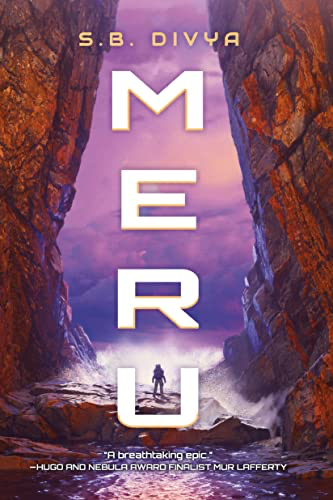
Book Review Tuesday (6/20/23) – Meru

Happy Tuesday, bibliophiles!

I’ve been eyeing this book for a while—I remember it being heavily advertised on Goodreads when it was first released, and normally, I don’t pay much attention to Goodreads ads or sponsored books, but all you had to say was “space opera” and I was hooked. I’m a woman of simple tastes. It was cheap on the Kindle library, so I bought it to read on vacation. To my excitement, it ended up being my favorite book that I read on vacation—so detailed and gripping!

Enjoy this week’s review!

Meru (The Alloy Era, #1) – S.B. Divya

Jayanthi, like all other humans in her day and age, are confined to Earth. Kept there by the Alloys, evolved human descendants with advanced capabilities, she has been raised by Alloy parents on her homeworld, but has always dreamed of seeing the wider galaxy. But when an opportunity arises for Jayanthi to explore the newly discovered planet Meru with the aid of an Alloy pilot, she jumps at the chance—what better way to show the galaxy that humans are more than their violent past?

With the help of Vaya, her Alloy pilot, Jayanthi touches down on Meru. Soon, they find themselves embroiled in a human-alloy conflict, seemingly engineered to separate the two of them. Will Jayanthi and Vaya beat the odds—and restore faith in the human race?

TW/CW: ableism, xenophobia (fictional), sexual content/pregnancy, descriptions of injury, sci-fi violence

I got carsick while reading this book, but I don’t hold it against it at all. That was on me and my hubris of thinking that I wouldn’t get nauseous on a long car trip just this once. Whoops.

Reading some of the lower-rated reviews of Meru is kind of cracking me up…listen. I get that zie/zir pronouns (and neopronouns in general) are somewhat obscure, but of all the absolutely wild, dense, and out-there concepts that this book throws at you, that’s what makes you jump ship? Not the exceedingly complicated…well, everything else?

That being said, Meru lived up to the hype I’ve seen it getting for the past few months! It hit a sweet spot for me that a lot of sci-fi and fantasy books rarely do—creating a complex and multilayered universe, but very delicately balancing when and where to deliver all of this information. Divya came very close to going over the edge, but she navigated the worldbuilding delivery with aplomb.

So, about said worldbuilding. I’d say that Meru isn’t for the faint of heart, even for longtime sci-fi fans—as I mentioned in the beginning of the review, there’s a lot to take in, from the post-human history of the Alloys to all of the machinations surrounding new genetic modification laws in the future. But even though we do get some of this information in larger chunks, Divya excels at navigating which information is actually relevant to the scene it’s informing, and not sledgehammering you with extra information that only becomes relevant elsewhere in the book. It also helps that every inch of said worldbuilding is truly fascinating—it’s clear to see how much care was put into the creation of this universe.

If you’re talking about disability in sci-fi, you’re generally bound to open a particularly dicey can of worms. There’s quite a lot of eugenics narratives that a lot of readers have let slide for years, and the narrative of curing all disabilities is seen as positive, when a lot of the disabilities being described never needed curing in the first place. For the sake of this review, I’ll keep it short, but the bottom line is that it’s gross. But Meru takes a refreshing perspective on disability in sci-fi—not only was Jayanthi, the protagonist, specifically engineered to have sickle-cell anemia (now THAT’S a subversion I like), her disability is depicted in a far more advantageous and positive light. Anyone who’s ever touched a high school biology textbook probably remembers this example: despite its drawbacks, those with sickle-cell also have increased resistance to many tropical diseases. That’s exactly the case for Jayanthi, whose sickle-cell anemia makes her more suited to the environment of the planet Meru than those without it. Positive disability rep is good enough, but having it specifically depicted as something that gives the character the edge is something special. That, along with the wonderful discussions around disability and bodily autonomy (both allegorical and literal), made Meru a wonderful experience for me as a disabled reader.

In addition, Divya has created such a vibrant cast of characters in Meru! Jayanthi was such an endearing and powerful protagonist, and her relationship with the equally endearing Vaha was full of tenderness, despite its ups and downs. Almost all of the cast added to the book’s masterful suspense and tension, making you feel deeply for all of the relevant characters before things got (very) hairy. Plus, the integration of Sanskrit, several Indian-coded (and other POC characters), and loads of casual queerness was a breath of fresh air from all of the white, male, cishet sci-fi that still dominates the market. We need more books like Meru.

All in all, an intricately-crafted sci-fi novel that dazzled with its detailed worldbuilding, diversity, and refreshing discussions around disability. 4 stars!

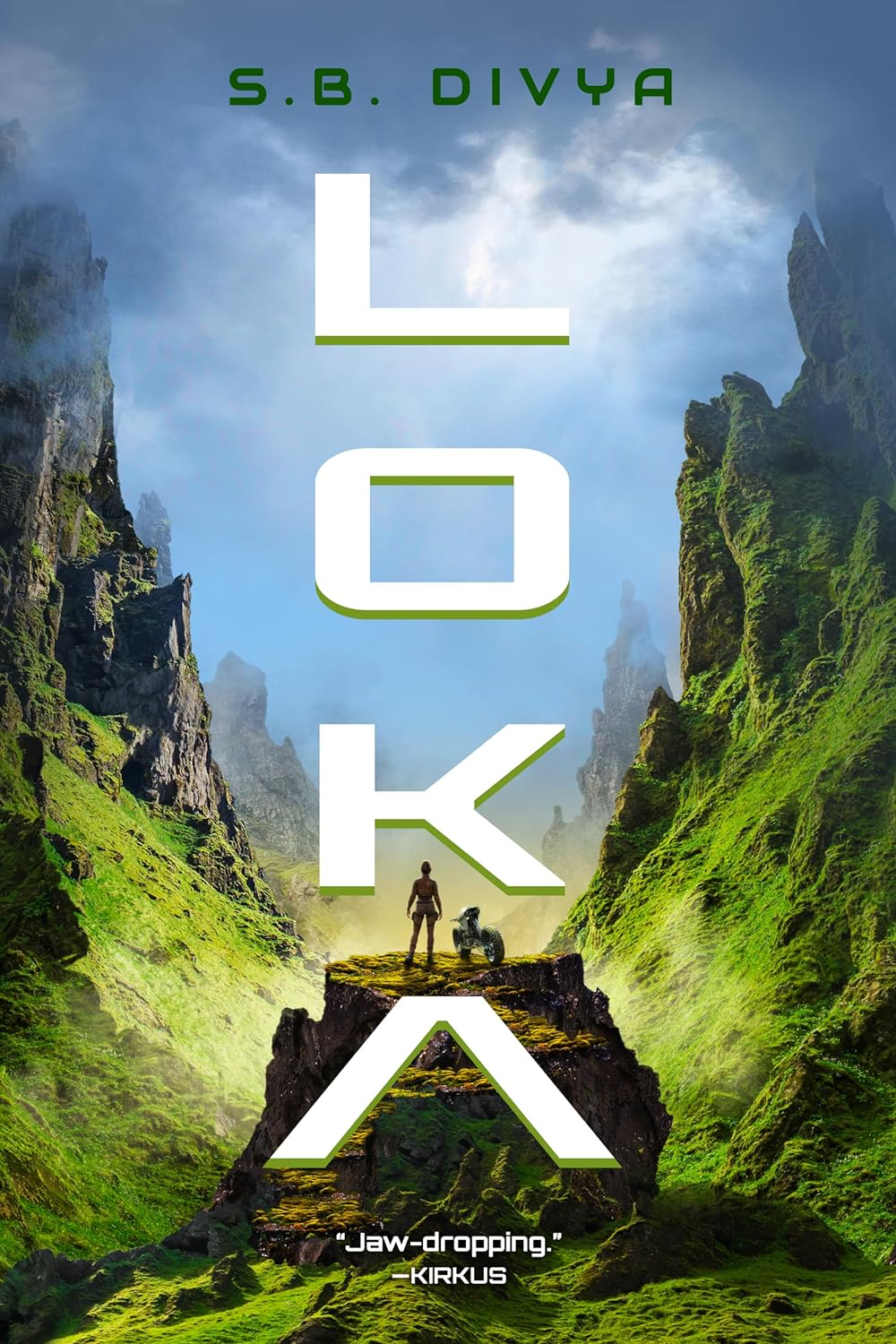
Meru is the first book in S.B. Divya’s Alloy Era series, continued by the forthcoming Loka, slated for release in July of 2024. Divya is also the author of Machinehood and Run Time, as well as a contributor to several short story collections.

Today’s song:

NEW SMILE IT’S SO GOOOOOOOOOOOOOOOD (does this mean that we’re closer to hearing “Read the Room” too?????

That’s it for this week’s Book Review Tuesday! Have a wonderful rest of your day, and take care of yourselves!

Posted in Book Review Tuesday

Book Review Tuesday (3/14/23) – Nightwatch on the Hinterlands

Happy Tuesday, bibliophiles!

I was a huge fan of K. Eason’s Thorne Chronicles when I first read them, so you can imagine my excitement when I found out that she was starting a companion series set in the same universe! (I didn’t find out until a few weeks ago, but that’s beside the point.) I jumped on the chance to put it on hold at the library, and I finally got to read it recently; however, I found Nightwatch on the Hinterlands to be an entirely different type of story than Rory Thorne, which, in this case, was its downfall.

For my double review of How Rory Thorne Destroyed the Multiverse and How the Multiverse Got Its Revenge, click here!

Enjoy this week’s review!
Nightwatch on the Hinterlands – K. Eason

It’s been decades since any of the riev—battle-mechas designed for the war effort—have done any harm to civilians. For years, they’ve been decommissioned or redesigned for labor purposes. So when Lieutenant Iari arrives at the scene of a crime and realizes that a riev may have been the perpetrator, she knows that the mystery will lead down a trail that she never anticipated treading. Along with Gaer, an ambassador-turned-spy, Iari must play a dangerous game amongst her planet’s criminal underbelly, one that may lead to something greater than a simple murder.

TW/CW: murder, blood, descriptions of injury, xenophobia (fictional—cast is almost exclusively aliens)

I was a massive fan of the Thorne Chronicles, but after reading Nightwatch on the Hinterlands, I’m sorely disappointed in the direction that K. Eason decided to go with this series—my most common thought while reading this novel was why include this?

As a starting point: why these characters? I liked Iari well enough in How the Multiverse Got Its Revenge, and she does have the potential to have an interesting story, but I didn’t get enough information in Multiverse to really care about her. I didn’t remember much about Gaer either, and he was a well-written and likable character, at the very least, but there wasn’t much that carried over from the previous books to make me care enough about him. These characters were virtually all that carried over from the Thorne Chronicles into this new series (The Weep), and that was where my disinterest began.

In concept, I like Eason’s decision to set Nightwatch in the seedy, criminal underbelly of the world that was touched on in the Thorne Chronicles. It’s a classic sci-fi setting, and with how rich Eason’s established world already was, it would be easy to make something compelling out of it. However, the Thorne Chronicles were far more centered around the human characters, and the aliens were more of a sideplot, mostly just appearing in Multiverse. Nightwatch, however, was entirely centered around the alien characters; normally, this is something I’d be 100% on board with, but without the context that could’ve been given in either Multiverse or in…y’know, some part of this book, I was left in the dark for any of the conventions of this part of Eason’s established world. I somehow understand that not giving glimpses of the other characters (Rory, Messer Rupert, etc.) would’ve been easy fan service, but other than Iari, if I hadn’t known that this was a companion book, I wouldn’t have seen the connection at all.

And on the subject of context…we needed so much more of it. So much more. Even though 90% of these alien species weren’t even talked about in the Thorne Chronicles, Eason wrote Nightwatch in a way that automatically assumes that readers know every single cultural aspect of every single alien species (of which there are many), as well as the context of the various wars that have gone on before the events of Nightwatch, in a very short timespan. I’m all for science fiction novels that don’t dump every single bit of exposition and worldbuilding into the story in one, unceremonious pile at the beginning, but this felt like the other extreme—wanting to avoid that so much that the reader is left without a single clue of what’s going on. I understand the concern that this writing style grew out of, but there really could’ve been a much more comprehensible happy medium in terms of worldbuilding. Beyond that, it’s clear to see how much time Eason put into creating these alien races and cultures, and that’s something I’ll always admire, but the effect of that got dwarfed by the alienating (no pun intended) fashion that she (did not properly) integrated them.

Like the approach to worldbuilding, Eason’s writing style in this novel is a double-edged sword. It’s a wildly different style from the endearingly irreverent but simultaneously observant voice that she used in the Thorne Chronicles. In contrast, Nightwatch had the distant feel of a hardboiled noir in space, quick and to the point, except for when information was delivered. On the one hand, it’s proof that Eason can be very versatile in terms of voice across her novels. On the other, this didn’t feel quite as genuine as the Thorne Chronicles—it made sense for the story, but the characters less likable, and the plot felt rushed, like constant running in circles from A to B without much context as to why or how. It suited the style of Nightwatch to a point, but it ended up being a detriment to both the pacing and my general enjoyment.

While I was reading, I was debating whether or not I wanted to stick it out for the rest of the series; I really wanted to give K. Eason the benefit of the doubt after how much I adored the Thorne Chronicles, but I don’t think I’ll be continuing The Weep after how unpleasant my experience with Nightwatch was. Obvious points go to the extensive worldbuilding and the clear time and care put into crafting this aspect of the world, but most of the other elements—the writing style, the way we got (or didn’t get) pieces of worldbuilding, and not much to make me care for the characters—brought my enjoyment down immensely. 2 stars.

Nightwatch on the Hinterlands is the first book in the Weep series, succeeded by Nightwatch Over Windscar. This series is a companion to the Thorne Chronicles, which consists of How Rory Thorne Destroyed the Multiverse and How the Multiverse Got Its Revenge. K. Eason is also the author of several other novels, including the On the Bones of Gods series (Enemy, Outlaw, and Ally).

Today’s song:

BACK ON THE PETER GABRIEL TRAIN FELLAS CHOO CHOO

That’s it for this week’s Book Review Tuesday! Have a wonderful rest of your day, and take care of yourselves!

Posted in Books

YA & Adult Reads for Black History Month (2023 Edition)

Happy Friday, bibliophiles!

February has just rolled around, and in the U.S., the month of February is Black History Month! Ever since I’ve started interacting more with the book blogging community, I’ve been working on reading more diversely, and making posts like these to encourage others to do the same—reading from a single, homogenous perspective is effectively reading in a bubble, when part of what makes reading so special is its ability to give you an easily accessible insight into the perspectives of others.

But this year, the theme of Black History Month is Black Resistance. I’ve been thinking a lot lately about how that relates to YA; a good portion YA literature is inherently tied to resistance and anti-authority sentiments. And yes, part of that may be teenagers rebelling against their parents, but it also instills so much power into its impressionable teen audience: even though you’re young, you have the power to change the world. Now that YA has become more diverse in recent years, it has shown that resistance is even more tangible. That tyrannical, dystopian government that the protagonist must defeat can be translated into real-word terms: systemic racism, police brutality, and so much more. Teaching teenagers (and everybody else, for that matter) that they have that power to change the world is such an important thing, because they will grow up knowing that they can enact the same changes as the characters they read about.

That being said, I have been shifting to read more adult books in the past few years, and I’d be remiss if I didn’t talk about some of the amazing books by adult Black authors as well. I’m too lazy to change the graphic, but I’m also going to include some adult-oriented books in here as well.

So with that, here are some of the YA and adult books by Black authors I’ve read in the past year. If you’d like to see my posts from previous years, click below:

Let’s begin, shall we?

YA & ADULT BOOKS FOR BLACK HISTORY MONTH (2023 EDITION)

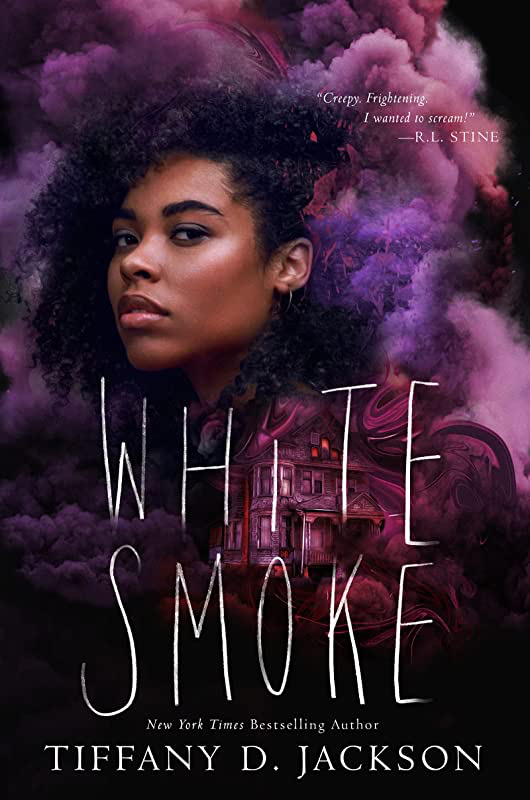
White Smoke, Tiffany D. Jackson

GENRES: YA, horror, thriller, fiction

MY RATING: ⭐️⭐️⭐️.5

Tiffany D. Jackson has a talent for building suspense, but this is the first time I’ve seen her do a full-blown horror novel—and it was exceptionally chilling!

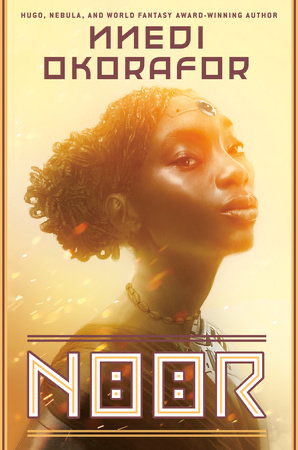
Noor, Nnedi Okorafor

GENRES: Adult, science fiction, Afrofuturism

MY RATING: ⭐️⭐️⭐️.75, rounded up to ⭐️⭐️⭐️⭐️

A wildly imaginative piece of Afrofuturism with a disabled protagonist!

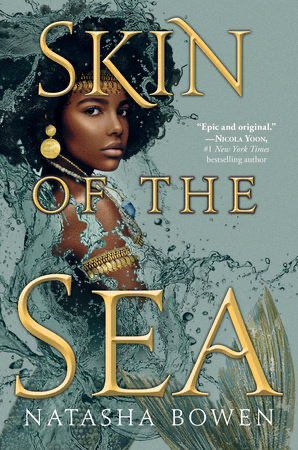
Skin of the Sea, Natasha Bowen

GENRES: YA, fantasy, retellings

MY RATING: ⭐️⭐️⭐️⭐️

YA mermaid novels have historically been disappointing for me, but Skin of the Sea gave me hope that a good one is possible—and there can be so many creative twists and perspectives put on it!

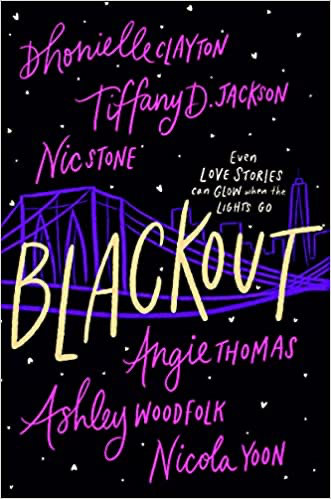
Blackout, Dhonielle Clayton et. al. (anthology)

GENRES: YA, fiction, romance, short stories (anthology)

MY RATING: ⭐️⭐️⭐️

A collection of short stories about different romances during a blackout in New York City!

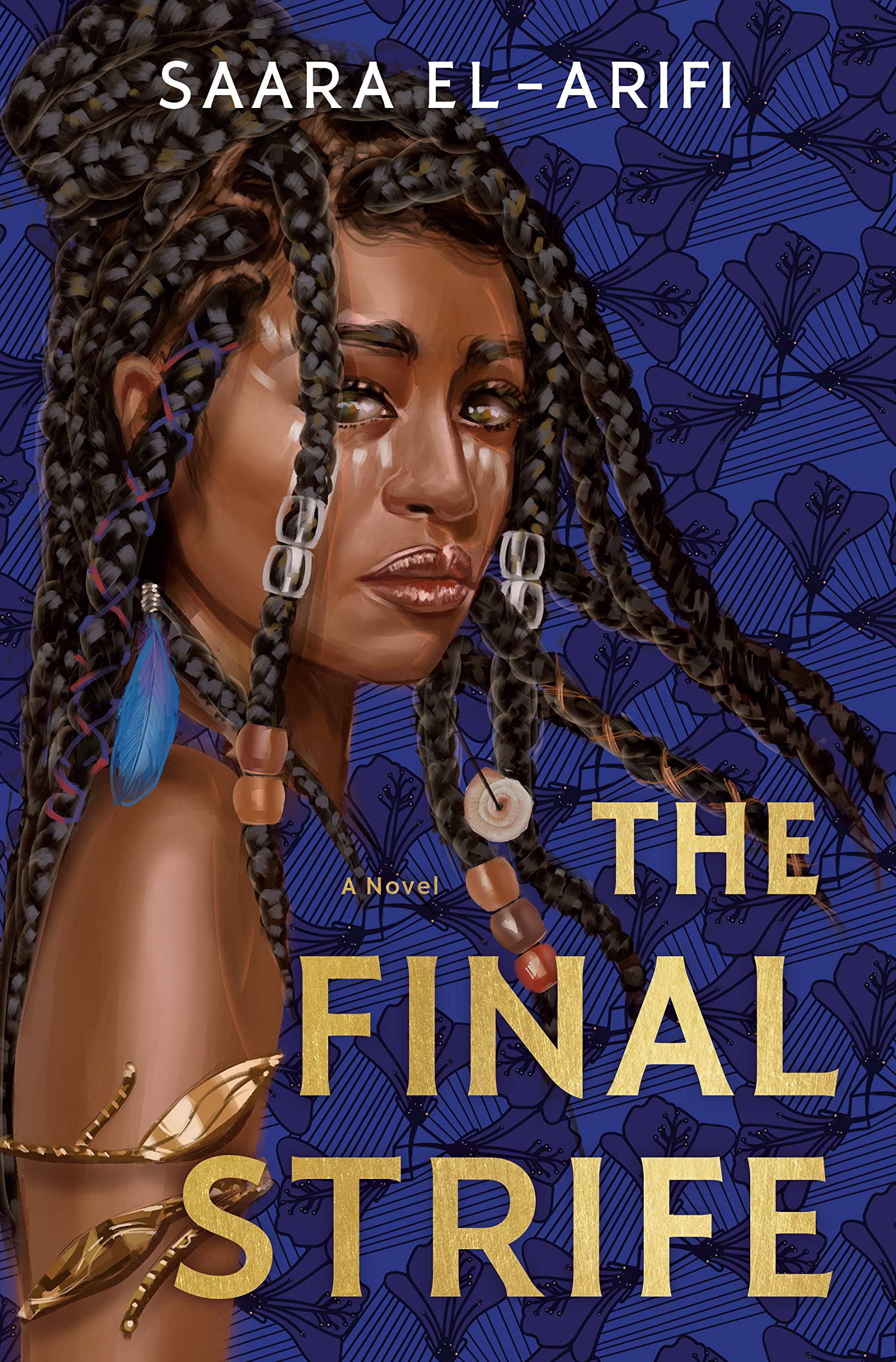
The Final Strife (Ending Fire, #1), Saara El-Arifi

GENRES: Adult, fantasy, romance, LGBTQ+

MY RATING: ⭐️⭐️⭐️.5

A fantasy with exceptional worldbuilding, an unlikely chosen one, and a sapphic romance!

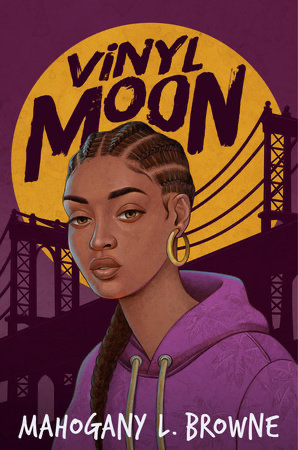
Vinyl Moon, Mahogany L. Browne

GENRES: YA, realistic fiction, novels in verse

MY RATING: ⭐️⭐️⭐️.5

Half prose and half novel-in-verse, Vinyl Moon is a beautiful story of healing and friendship.

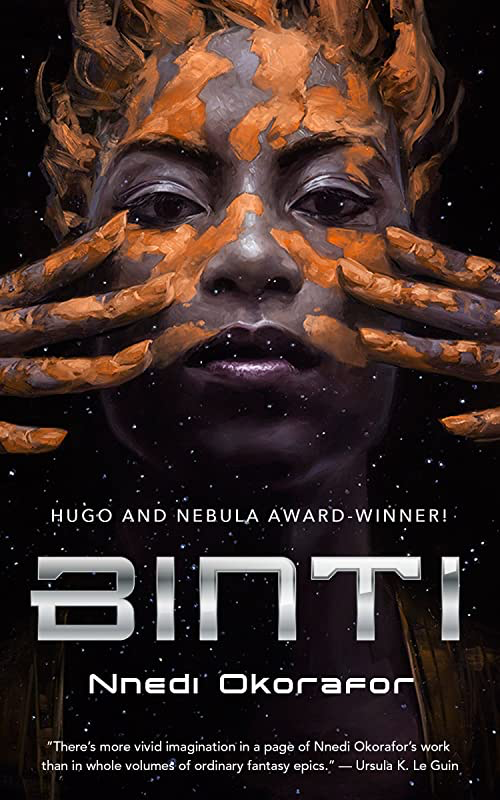
Binti (Binti, #1), Nnedi Okorafor

GENRES: Adult, science fiction, space opera

MY RATING: ⭐️⭐️⭐️.5

Normally, I wouldn’t double up on authors, but Nnedi Okorafor really deserves it here—I still need to finish this series, but it’s so charming and inventive!

TELL ME WHAT YOU THINK! What are some of your favorite books by Black authors that you’ve read recently? Tell me in the comments!

Today’s song:

somehow I didn’t know that this song existed until a few days ago, and I haven’t been able to stop listening to it since

That’s it for this year’s list of Black History Month recommendations! Have a wonderful rest of your day, and take care of yourselves!

Posted in Book Review Tuesday

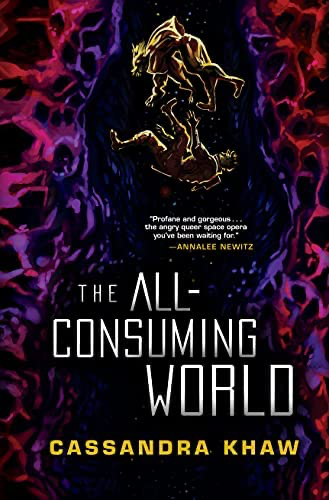
Book Review Tuesday (11/29/22) – The All-Consuming World

Happy Tuesday, bibliophiles!

I never learn, do I? Every few weeks, I always start craving sci-fi again, and when there’s nothing readily available at the library or on Kindle, I just sift through the dust bunnies in my TBR until I find something interesting. And to be fair, The All-Consuming World did sound interesting. I was willing to give it a chance despite the pitifully low ratings it’s been getting (a 3.28/5 on Goodreads, as of now), but it turned out to be exactly the disappointment that the reviews promised.

Enjoy this week’s review!

The All-Consuming World – Cassandra Khaw

Maya’s glory days are over. After being resurrected dozens of times, she’s slowly outgrown the Dirty Dozen, the galaxy’s most infamous criminal group, and decided to make her own way. But when the galaxy’s ruler, an all-powerful, sentient AI, threatens to hold their realm in a chokehold, it’s up to Maya to recruit the disbanded bunch of cyborgs, clones, and lowlives to save the galaxy from complete control.

TW/CW: body horror, sci-fi violence, amputation/emergency medical procedures, suicide

DNF at 35%.

I genuinely can’t think of a book with a more jarring writing style than this one. Jarring can sometimes be good, but in the case of The All-Consuming World, it seemed like a case of vast stylistic indecision, and this indecision dragged the entire book down with it. I really wanted to like this book—queer space opera is always up my alley, and I always want to try and support queer authors—but it ended up being a sore disappointment all the way through. (What I could stand to read before I gave up, anyway.) As I always say with my negative reviews: I completely understand. Putting yourself out there as an author is an immensely hard thing to do, and I always admire the work put in. But this book just did not click with me at all.

The writing style is what, for me, made The All-Consuming World crash and burn. Maya was clearly supposed to be a rough-around-the-edges character, battered and bruised, and all around Tough and Gritty™️, and at least half what I read seemed to try and get that voice…with at least 15 f-bombs dropped within rapid succession of each other on each page. Now, I don’t have a problem with swearing at all, and I appreciate the art of a well-placed, well-timed swear. But the excess of ill-placed cusses (along with more f-bombs than there are leaves on the trees in the Amazon Rainforest)—half of which were in combinations that made absolutely no sense at all—made for writing that read more like a middle schooler trying to be edgy than a tough and hardened criminal.

But on the other hand, the other half of what I read was some of the wordiest, floweriest prose I’ve ever read. And some of that had moments of being good—I’ll give Khaw some credit for that—but it was such a jarring contrast. Sometimes, juxtaposition like this works, but the two, distinct voices that Khaw was trying to go for had such a vast gulf in tone between them that it lacked any sense of cohesion whatsoever. I really wanted to stick it out to see what happened, but it was just giving me such a headache to try and weather the writing, so I had to quit.

I stopped at 35% of the way through, and I still don’t have a clue what was going on, plot-wise. I seriously can’t remember if there was a plot beneath all of the flashbacks and exposition, impenetrable prose, and multitudinous f-bombs. From the synopsis, I was told that Dimmuborgir was supposed to be a central plot point, but I only remember it being mentioned a single time. Yes, 35% of the way in isn’t all that far, but that close to the halfway point, I would’ve thought that the characters would have at least moved the slightest bit towards their destination. It was all very…vague. Vague sense of rebellion towards a vague concept of an omniscient, ruling AI with a vague set of characters that fell into either AI or Hardened Criminal™️ boxes. And the worldbuilding? Left the building before the book had even begun. Trying to read The All-Consuming World felt like trying to dig through a messy closet, and emerging an hour later without having found the thing you needed to find in the first place.

All in all, a book that it pains me to rate so low, but crashed and burned in almost every conceivable aspect. 1 star.

The All-Consuming World is a standalone, but Cassandra Khaw is also the author of the Persons Non Grata series (Hammers on Bone and A Song for Quiet), Nothing but Blackened Teeth, These Deathless Bones, and several other novels and novellas.

Today’s song:

BACK TO BLUR AGAIN!! so far, this is my least favorite album of theirs that I’ve listened to, but it’s still a fantastic listen—take this song, for instance

That’s it for this week’s Book Review Tuesday! Have a wonderful rest of your day, and take care of yourselves!
Posted in Book Tags

Last, Now, Next Book Tag

Happy Thursday, bibliophiles!

I figured I’d do a tag, so here’s one that looks fun! I found it over at Laura @ The Corner of Laura (who you should absolutely follow if you don’t already), and the tag was originally created by Shivakshi @ Tales I Tell.

Rules:

  • Link back to the ORIGINAL CREATOR- Shivakshi @Tales I Tell
  • Show gratitude to the person who tagged you.
  • Mention these points in your post.
  • Answer the following questions and use the original graphics and featured image.
  • Use the tag “Book Tag |LAST, NOW, NEXT|” in your post.
  • Tag as many bloggers as you want.
  • Have fun!

Let’s begin, shall we?

graphic credit to Shivakshi @ Tales I Tell

THE LAST, NOW, NEXT BOOK TAG

LAST

What was the last book you read?

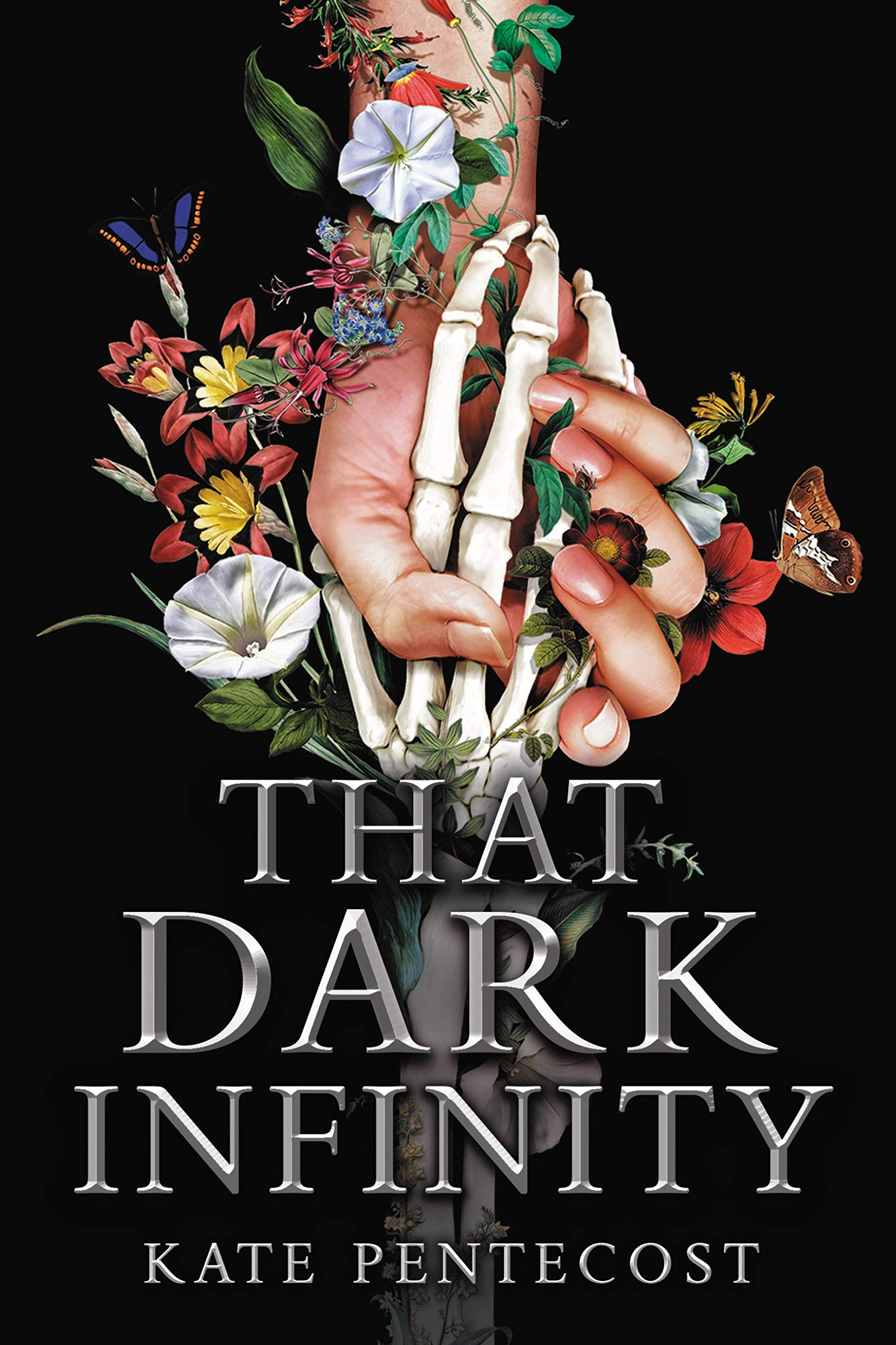
I just finished That Dark Infinity, and it was fantastic!! definitely expect a review next week

Will you recommend this book to others?

Absolutely! At worst, I’m a little jaded with how formulaic certain parts of YA fantasy have gotten, but this one was refreshingly inventive. (plus, bisexual rep!!)

NOW

What is your current read?

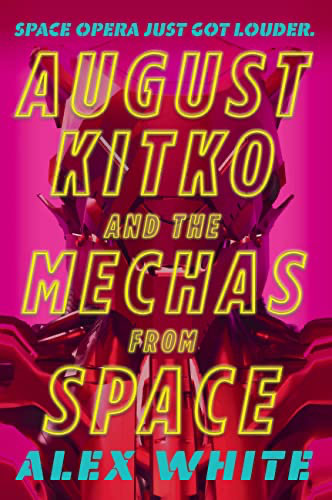
I just started August Kitko and the Mechas from Space last night. I’m not very far into it, but it’s alright so far.

Why did you pick this book?

I was in the mood for some sci-fi, and this one was available on the Kindle library and seemed fun, so it was perfect. I originally found out about it from a review by Kate @ Feathered Turtle Press (thanks, Kate!)

How much time do you think you will take to finish your current read?

August Kitko is on the longer side (465 pages on the Kindle edition), so maybe one or two more days.

NEXT

What genre would you like to read next?

I was in a fantasy mood for the first half of the week, but I think I’m leaning more towards sci-fi now (hence August Kitko). I think I’ll pick up some more sci-fi before my library books come in.

What would you like to pick: a long read or a short read?

It doesn’t matter much to me, but I think I’d prefer something in the middle—something that’ll keep me going for a while, but not something overly long.

Mention some books you’re eyeing!

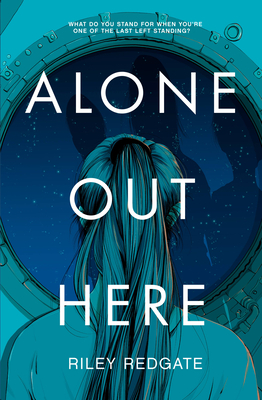
I just got a notification that the copy of Alone Out Here that I put on hold at the library came in! This will be my second Riley Redgate book—I thought Final Draft was alright, but this sounds like a very different book, so I’m excited.

I TAG:

Today’s song:

That’s it for this book tag! Have a wonderful rest of your day, and take care of yourselves!

Posted in Book Review Tuesday

Book Review Tuesday (5/31/22) – Dreams Bigger Than Heartbreak (Unstoppable, #2)

Hi again, bibliophiles!

I liked the first book in Charlie Jane Anders’ Unstoppable trilogy, Victories Greater Than Death, so when I saw book 2 at the bookstore the other day, I figured I’d give it a shot. I ended up giving it the same rating as book 1, but for different reasons; it felt like a middle book, but that wasn’t always a bad thing.

Now, tread lightly! This review may contain spoilers for book 1, Victories Greater Than Death. If you have not read it and intend to, proceed with caution!

For my review of Victories Greater Than Death, click here!

Enjoy this week’s review!

Dreams Bigger Than Heartbreak (Unstoppable, #2) – Charlie Jane Anders

Tina and her band of unlikely heroes have saved the universe—for now. But what comes next?

Tina has begun her studies at the Royal Space Academy, but every day, she’s still haunted by her transformation. As she begins to lose her former self, she questions whether or not her duty is worth it. Elza, already feeling distanced from Tina, enters a competition to become a princess, but is faced with the ghosts of the past in the famed Palace of Scented Tears. And Rachael, the quiet artist of the group, is struggling with the loss of her artistic abilities after a run-in with a strange artifact. All the while, the threat of the xenophobic Compassion is on the rise, and if it’s to be stopped, the three friends must reunite amidst their personal struggles.

TW/CW: sci-fi violence, murder, xenophobia, anxiety, descriptions of injury

Dreams Bigger Than Heartbreak had the unmistakable feel of a middle book. However, that doesn’t mean that I didn’t enjoy it.

Despite some of its shortcomings, Charlie Jane Anders’ brand of space opera is a breath of fresh air in the world of YA science fiction. The worlds she creates are multilayered, complex, and immersive, and all of the aliens in them are equally creative. For sci-fi fans looking for a series that’s endlessly creative, look no further. What makes it even better is the vast range of diversity present—just to name a few, we have a queer protagonist, a Black, Brazilian, queer protagonist, and a plus-sized protagonist with anxiety as the stars of Dreams. There’s queer rep aplenty in Dreams Bigger Than Heartbreak, and there’s something for everybody—it’d be hard to find some facet of yourself represented in some way in these books.

That being said, there were certain aspects of Dreams that I wasn’t as big of a fan of. Anders’ writing was what stuck out to me in this book in particular. There’s not much dressing on her prose; that isn’t always a bad thing, but it felt very bare-bones to me—lots of “[they] felt,” “[they] knew,” “[they] saw,” etc. I forget if this was as exacerbated in book 1, but this was what took away from my enjoyment the most in Dreams. At times, it almost had the effect of being talked down to—not an ideal writing style.

Additionally, I feel like the plot and pacing weren’t as strong as book 1’s were. While Victories moved at an almost dizzyingly breakneck pace, Dreams was comfortable to slow to a crawl, which was necessary for the character-building, but did little to move the plot forward. The plot itself was also lacking—it explored the paths of Tina, the protagonist of Victories, as well as Elza and Rachael. All of their POVs were interesting in concept, but Rachael’s tended to drag along. Although I love all of the characters that Anders created, it would’ve benefited the book so much more to just be from Tina’s POV; her plot was the most compelling of the three, and yet, it’s the one that the least time was allotted to. Once the three were reunited towards the end, it picked up, but before the last third of the book or so, it bordered on being a slog—I’m so surprised I’m saying that, given how overwhelmingly fast-paced Victories was!

However, as in Victories, the themes were as strong and timely as ever. Togetherness, acceptance, and fighting xenophobia and prejudice are at the heart of this story, and with such a diverse and lovable cast, these themes shone brighter than ever. It’s just the kind of sci-fi story we need right now, and I’m excited to see how it ends next year!

All in all, a victim of second-book-syndrome that made up for some of its flaws with its timely themes and loving and accepting energy. 3.5 stars!

Dreams Bigger Than Heartbreak is the second book of the Unstoppable trilogy, preceded by Victories Greater Than Death and concluded by the forthcoming Promises Greater Than Darkness, slated for release in 2023. Charlie Jane Anders is also the author of All the Birds in the Sky, The City in the Middle of the Night, Six Months, Three Days, Five Others, and several other novels and short story anthologies.

Since I’ve already posted once today, check out my May 2022 Wrap-Up for today’s song.

That’s it for this week’s Book Review Tuesday! Have a wonderful rest of your day, and take care of yourselves!
Posted in Books

Sci-Fi Tropes, part 2: Spiders, Telekinesis, and More

Happy Friday, bibliophiles!

I made a post a few months back discussing a handful of sci-fi tropes that I’ve seen in books—here it is, if you’d like to have a look! When I wrote it, I knew I’d be writing several more similar posts; the world of sci-fi literature is so diverse in its content, so there’s no shortage of tropes, however specific, that I can discuss. Some of these tropes are broader and others are fairly minute, but I think they’ll be a lot of fun to discuss.

So let’s dive in, shall we?

David welcomes you | Shipping | Know Your Meme

SCI-FI TROPES: PART 2

MYSTERIOUS, TELEKINETIC WOMEN

dark phoenix gif | Tumblr | Dark phoenix, Jean grey phoenix, Marvel gif
had to include her bc she was the blueprint for this trope…probably

Here’s an interesting one to tackle. I see this one almost exclusively in space operas, but the basic premise is usually as follows: a woman, usually younger than the rest of the main cast, is either gifted with or born with unexplainable and unparalleled telekinesis. This power usually means that she’s the main decider in ✨the fate of the universe✨. These powers of hers often result in mind-bending displays of grandeur, including but not limited to: killing enemies in disturbing ways, crumpling spaceships like soda cans, and bending space and time itself.

Often, these powers come along with an intense emotional burden; at the heart of it, there’s a quintessential “why me?” dilemma with respect to her powers. Inner conflict is all part of the package with godly telekinesis, which often results in this character losing her mind and/or lashing out at other members of the cast. And, well…given that it’s either a “puppet of an all-powerful cosmic entity” or “being devoured from the inside by space energy” situation, it’s understandable.

What sometimes rubs me the wrong way about this trope—although I’m all for cosmic women tearing apart the fabric of the universe (who isn’t?)—is the fact that most of these women have a lack of agency. Which, given that a lot of the characters that come to mind are written by men, is more than a little concerning. Even with all of this awe-inspiring power, these women are often portrayed as helpless. Many of their breakdowns about the burden of their power are often reduced to “oh, she’s just a women being overly emotional, typical.”

Which brings me to why I appreciate a particular instance of this trope—Auri from Aurora Rising. She may still be frightened of her own power, but she takes control of the situation—she takes it upon herself to master her powers, break away from the path that the Eshvaren have set for her, and ultimately save the galaxy. She has agency, and, yes, that’s the bare minimum, but she’s written with a significant amount of sway over her abilities as the books go on.

This trope can be poignant and powerful if used right, but if misused, it can lead to a lot of reductive stereotypes.

BOOKS WITH TROPES: Aurora Rising (Amie Kaufman and Jay Kristoff), Forgotten Star (Colin Weldon), The Stars Now Unclaimed (Drew Williams)

IF THE ALIENS AREN’T BASICALLY HUMANS, THEY’RE JUST ANTHROPOMORPHIZED ANIMALS

Bossk Star Wars GIF - Bossk Star Wars Empire Strikes Back - Discover &  Share GIFs
this is far from the most dramatic example, but Bossk is the only one I can find a gif of

I get it. Creature design is hard—how do you create an alien that’s simultaneously familiar enough for a reader to project onto (if that’s the goal) but also weird enough to pass as “alien?”

In my last post, I talked about the trope of aliens that just looked like humans. That’s the ultimate alien design deal-breaker for me, unless there’s a good explanation for it. But in my opinion, the next level down is just making your aliens intelligent versions of animals with no other changes. Like the human-alien trope, it just feels like lazy design. It’s not that basing your alien design off of a certain animal is bad—on some level, most alien design is just that. The lazy part is just making an upright version of an already existing animal and changing nothing beyond that. (Plus, if it’s mammalian, you’re just…making intergalactic furries? Uh…)

One of the worst examples that I can recall is from The Stars Now Unclaimed, which I DNF’d. Not only was their an alien species that were just upright wolves, the species itself was called a Wulf. I KID YOU NOT. At that point, it’s almost…self-aware of how lazy it is? Or it seems that way, at any rate. But you just…don’t do that. Under any circumstances.

BOOKS WITH THIS TROPE: The Stars Now Unclaimed (Drew Williams), Earth Force Rising (Monica Tesler), Columbus Day (Craig Alanson)

AND ON THAT SUBJECT, WHAT’S WITH ALL THE SPIDERS?

Ron Weasley is my spirit animal - GIF on Imgur

While we’re on the topic of creature design, here’s another trope that I’ve found several times. Lots of alien species in literature—most intended to be menacing, but not all—have been based on spiders, or described as spiders or spider-like.

One aspect of basing an alien design off of an animal is to still try and make it as alien as possible, and one way to do that is to base it off of an animal that many already consider “alien” or “scary.” These are often invertebrates—cephalopods, jellyfish, insects, and arachnids—spiders. By creating a creature with elements that are already unnerving to a lot of people, you’ve achieved the effect of making it alien without making it totally unfamiliar.

But why spiders in particular? Most of the spider-aliens that I’ve seen at the forefront of sci-fi stories are meant to be menacing. I suppose there’s already a latent metaphor of spiders catching unsuspecting prey in their webs, if menacing is the route the author intends to go on. If these characters are meant to be antagonistic, spiders are the perfect combination—not only do they look alien to us, but they’re also a commonly feared animal. They’re also involved in a lot of insidious metaphors, creatures known for ensnaring their prey in webs. I can speak to the “commonly feared” part myself—I’m fine with really small ones (jumping spiders and such—they’re cute), but big spiders? No way. I blame the wolf spider that I found in my room when I was five. (WHY DO THEY RUN SO FAST AAAAAA)

As far as aliens with animal basis, I think spider-aliens are effective. Even if they do fall into the “animals with no changes other than intelligence” trope, at least they’re not completely bipedal and upright—eight legs! But already, they’re so wildly different from us—the perfect starting point for an interesting alien.

BOOKS WITH THIS TROPE: The Doom Machine (Mark Teague), Project Hail Mary (Andy Weir), One Giant Leap (Dare Mighty Things, #2) (Heather Kaczynski), The Outside (Ada Hoffmann)

THE FATE OF COMIC RELIEF RESTS ON THE MACHINES

C-3PO and R2-D2 discovered by Lux on We Heart It

Are none of your characters particularly funny? Have they not gotten the chance to banter properly? Are they all on a spaceship? I’ve got a trope for you, then…

This is the exact flip side of one of the tropes I mentioned in my first post—unhinged AI. Often times in space opera books with large cast, there is a character that’s some sort of machine: a droid, a ship’s AI, et cetera. But their main role, apart from providing convenient solutions to hacking-relation problems, is to lighten the mood.

So why machines? I’m not entirely sure myself, but I have a theory. Part of it may be to avoid risk—sometimes it’s too dangerous to have a character whose only personality trait is to be “sassy” or “the funny one,” so putting this personality onto an AI of some kind reduces the possibility of a one-dimensional flesh-and-blood character. AI are often reduced to minimal personality traits, as often, they’re designed for a particular task. Unless they have a short character arc where they have an epiphany of some kind about breaking free of their programming, they’re usually helpful vessels of humor in an otherwise hardened and dry-humored crew.

What’s more about this trope is how often it shows up—pick up any space-opera in the bookstore or the library, and there’s a good 75% chance that there’s a minor Sassy AI™️ character. I hesitate to say that it’s tried and true, but it’s certainly difficult to screw up. The problem is that most of them have the same sense of humor—sass, “oh, you humans are so stupid haha” condescension, and making jokes at inopportune times. (There’s also the inevitable running joke of the flesh-and-blood characters telling said AI character to shut up.) I appreciate good AI comic relief, but it’s become a formula, almost to the point where what I once thought was hilarious now makes me feel almost nothing.

So give your AI something unique—glitches, specific quirks, something, anything that will set it apart from 50% of other machines on the shelf.

BOOKS WITH THIS TROPE: Aurora Rising (Amie Kaufman and Jay Kristoff), Columbus Day (Craig Alanson), To Sleep in a Sea of Stars (Christopher Paolini), Crownchasers (Rebecca Coffindaffer), Honor Among Thieves (Ann Aguirre and Rachel Caine)

TELL ME WHAT YOU THINK! What are your opinions on these tropes? What are some other tropes that you’d like me to discuss? Tell me in the comments!

Blade Runner 2049 - Album on Imgur

Today’s song:

listened to this whole album the other day. it was hit or miss for me overall, but when it got good, it got good

That’s it for this post! Have a wonderful rest of your day, and take care of yourselves!