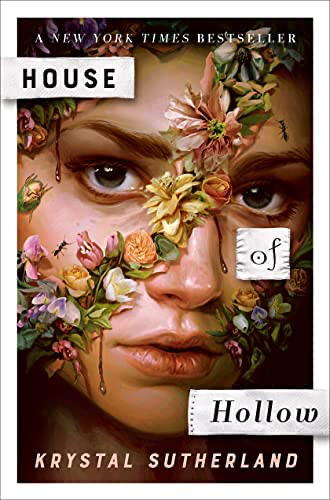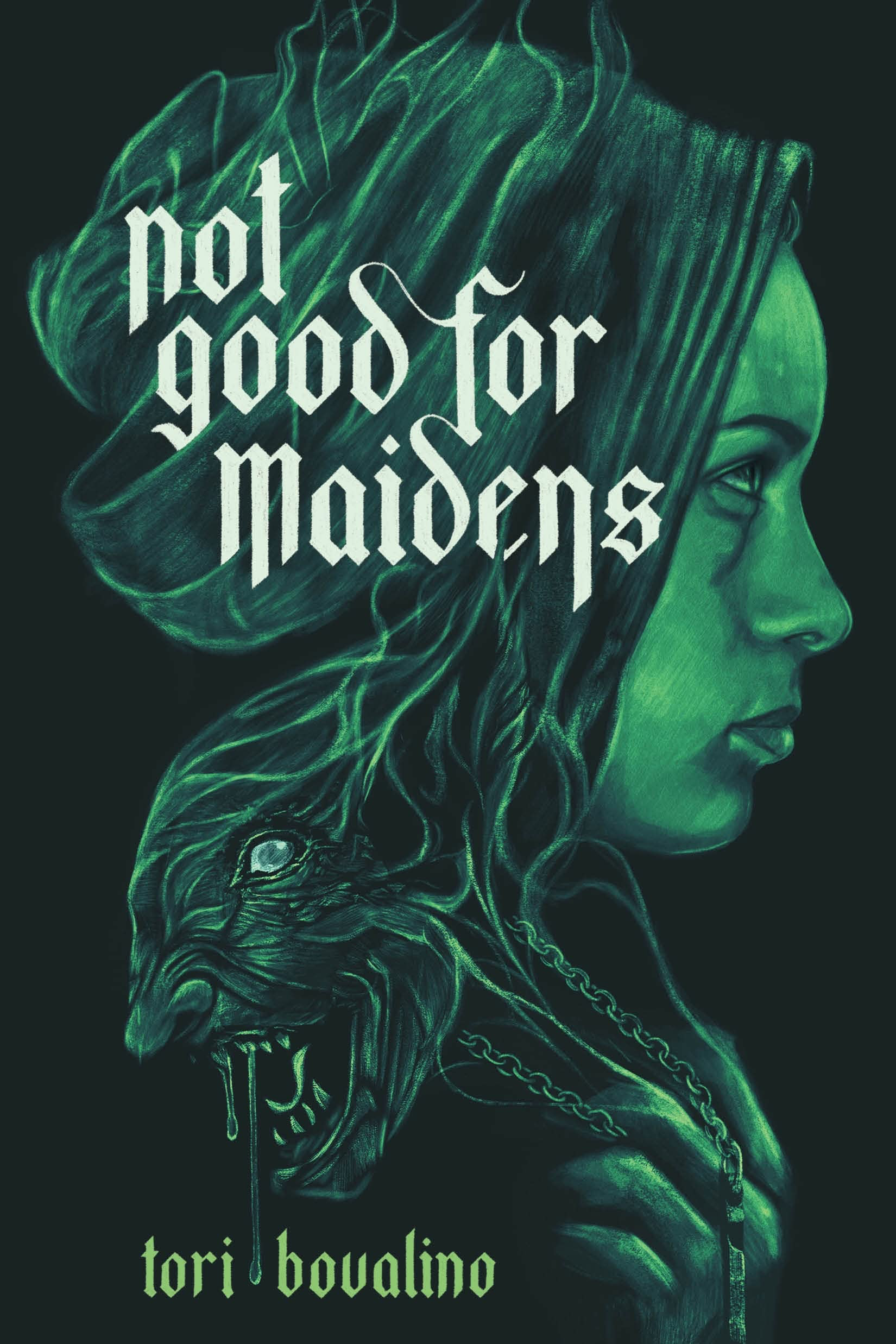
I’ve seen a lot of buzz about Queen of Faces in the past few months, and it seemed intriguing. Plus, you know I’m always up for queer rep in my fantasy! So of course, I had to pick Queen of Faces up. (Unrelated, but I’ve had “Queen of Eyes” by The Soft Boys stuck in my head solely because of reading this book. New title for the sequel just dropped?) I’m glad to say that though it wasn’t perfect, Queen of Faces was a promising debut fantasy novel!
Anabelle Gage is trapped in a body that isn’t hers—cheap, male, and rapidly deteriorating. Her only way to swap into a new, magical body is to be accepted into Paragon Academy, the most prestigious school in all of the Eight Oceans. After failing her entrance exams, Anabelle is certain that she’s doomed to die in the body she’s trapped in. One run-in with the law later, and she’s faced with Nicholas Carriwitch, Paragon’s renowned headmaster, who gives her a choice: be his right-hand mercenary, or die for her transgressions. Now entangled in a world of magic, crime, and mystery, Anabelle must decide if her choice was worth it—and how to get out of the body that she hates.
TW/CW: descriptions of injury, blood, suicide, violence, racism (fictional ethnicities/nationalities), war themes, dysphoria
In this day and age, it truly makes my heart sing to see queer voices flourishing in YA and middle grade voices flourish.I just had this lingering feeling that this is going to make so many trans teens so, so happy. This novel is so thematically strong; Ana’s journey was full of twists and turns, but it was so easy to sympathize with her and her continual struggle to find herself—not just in a new chassis (the magical bodies that can be swapped in this universe), but in terms of her identity. Lord includes a lot of motifs about transformation; there’s a recurring bit about caterpillars, butterflies, and metamorphosis that was, granted, a bit heavy-handed at the worst of times, but for a YA audience, was a lovely and poignant metaphor for both transness and general coming-of-age. Her journey is a perfect one for a YA audience, trans or not—her feelings of insecurity and unsureness about her identity and purpose are sure to deeply resonate with so many people.
Queen of Faces is billed as dark academia, but I’m not sure if it completely fits the label. We get some of that classic magical school format paired with the dark underbelly that Ana discovers, but most of the plot focuses on Ana’s time as a mercenary, and not necessarily Paragon Academy itself. That being said, it’s not necessarily an issue with the book—more just an issue with the marketing. Paragon Academy started to feel like an afterthought towards the end, and there were definitely some loose ends that could’ve been tied up with that plot. However, Ana’s mercenary plot was what drove the novel, and it was the most compelling part of the story for me. Lord has a knack for writing action sequences, and her tense atmosphere was flawlessly maintained for the whole novel. I loved how Ana and Wes played off of each other during this plot, and all of the friends-turned-foes (and vice versa) had excellent chemistry; Ana and Wes are shaping up to be the kind of enemies-to-lovers YA couple that I would’ve loved in high school. (However, the weird pseudo-love triangle going on was, yes, pretty YA, but it was so rushed and unfinished that I couldn’t even excuse it being YA. It was just…odd.) Beyond that, I loved how all of this coalesced into Ana’s character development, and her discovery of the truth of her mysterious job—and her superiors—was such a vital component to her eventually self-realization.
The worldbuilding in Queen of Faces was a mixed bag, but most of it was solid. Lord’s magic system was imaginative and well thought-out. I loved Lord’s visualizations of the branches forming, and I loved all of the consequences of how magic affected Caimor and the rest of the world. I also think the history of Caimor and the Eight Oceans was explained nicely, and without any unwieldy info-dumps. The system of the chassises and body-swapping was well-done as well, and served as a cogent commentary on class inequality. However, some of the other aspects of the worldbuilding were slightly shaky. I had a vague sense of the technology level—I assumed closer to the 1920’s given the presence of cars and radios, but not much more advanced than that, but I didn’t get a good sense of it. Lord also regularly inserted the fact that Ana loves romance manga, which felt jarring and out of place in this otherwise fantastical setting. I had the same issue with the fact that there’s something called the “Babel Curse,” which would imply the existence of Christianity/the Bible in this otherwise completely fantasy universe. Small issues, sure, but they took me out of the narrative with how much they were mentioned. But for a debut novel’s stab at worldbuilding, it’s a good start.
Queen of Faces unfortunately suffered from some pacing issues. The first third or so was paced reasonably well, and I had a good sense for how the events of the novel had progressed. However, once Anabelle gets to Paragon Academy, there’s time-skipping all over the place; my irrational hatred for random timeskips is just that—irrational—but Lord often didn’t let the reader know that these timeskips had even happened until the last relevant minute. I fully thought that only days had passed by, and boom…it’s been a month? The pacing was just so uneven that it was difficult to get my footing in places, which took me out of the main narrative, especially in the first half of the novel. Given the fact that we’ve mostly left Paragon Academy behind by the second half of the novel, it didn’t help that the pacing also left so many loose threads unresolved. Things evened out towards the end, but it never fully recovered from the topsy-turvy pacing at the beginning.
All in all, a daring and mysterious debut full of dark magic, shifting alliances, and conspiracies. 3.75 stars!
Queen of Faces is Petra Lord’s debut novel and the first book in the Queen of Faces series; its followup, King of Masks, is slated for release in 2027.
Today’s song:
That’s it for this week’s Book Review Tuesday! Have a wonderful rest of your day, and take care of yourselves!
Here in the U.S., June is Pride Month! You know the drill. I hate how bittersweet these posts are, and the bitter keeps growing. I see the beauty of this month and our queer community, but I can’t help but shrivel from the reminders that there have been repeated attempts to take queer books off the shelves across the country, and that the trans community here in the states has been under attack more than ever. My heart truly, truly hurts for all of us. I hurt. Of course, here I am, being cisgender in my cushy blue state with an openly gay governor, but nonetheless, I hurt whenever any other member of the queer community is hurt.
I’ve been an out and proud bisexual for almost eight years. Not long, in the grand scheme of things, but these years have taught me so much about queer people and the LGBTQ+ community. If there’s anything that I see in us, it’s our tenacity. No matter the slew of hateful legislation and rhetoric, we always come back stronger than ever. If there’s anything that the queer community doesn’t do, it’s back down in the face of a threat. In spite of the never-ending threats from outside and inside (the infighting never stops, y’all needto be normal about each other, please), we are like dandelions pushing through the cracks in the pavement: we never surrender, and we continue to bloom in the face of adversity.
But here’s the thing. I don’t like having to be this resilient. I don’t think any of us do. But if there’s anything to take solace in, it’s that our community is so strong and diverse that there will always be someone fighting. Yes, we all have to do what we must, but it’s important to remember that simply surviving, just being, is resistance in the face of the government wanting the public to believe that we aren’t worthy of the same rights as everybody else and that our stories are not fit for public consumption. You don’t have to be out and proud. All you have to do is be.
So here’s my annual pride month recommendations list of queer books from a variety of genres and backgrounds. I’ve compiled all kinds of books from various sexual orientations and gender identities, as well as backgrounds (queer people of color, disabled queer people, queer immigrants, etc.). Hopefully there’s something for everyone. (As always, if I’ve mistakenly identified anything on this list, please let me know! I’m only human.)
Now, more than ever, it’s crucial to support the LGBTQ+ community (especially the trans community, who are under attack more than ever) in whatever way you can. If you want to show your support them monetarily, here are some great organizations to donate to:
This is a non-exhaustive list, and I encourage you to seek out organizations in your area! There are so many wonderful people across the country (and the world) doing great work for the LGBTQ+ community.
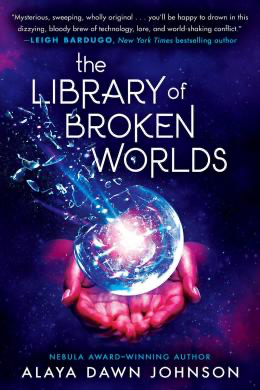
The Library of Broken Worlds – Alaya Dawn Johnson | YA | sapphic MC and LI, wlw relationship, several queer/gender-nonconforming SCs (queernormative world, widespread use of neopronouns) | space fantasy, romance, POC | ⭐️⭐️⭐️.75
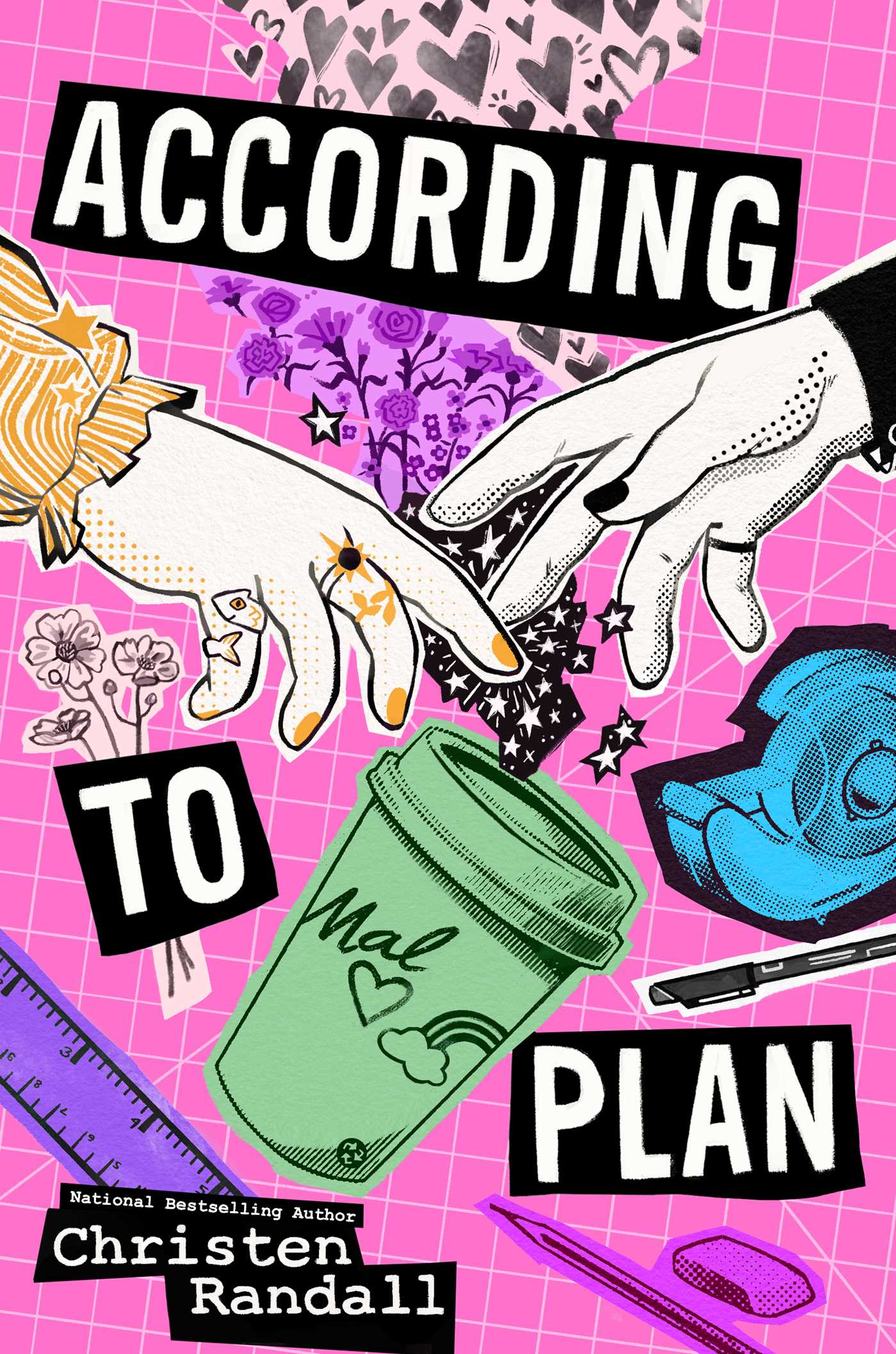
According to Plan – Christen Randall | YA | nonbinary, bisexual MC, bisexual LI, queer relationship, several queer SCs | disability, romance | ⭐️⭐️⭐️.5
TELL ME WHAT YOU THINK! Have you read any of these books, and if so, what did you think of them? What are some of your favorite queer books that you’ve read recently? Let me know in the comments!
Today’s song:
That’s it for this recommendations post! Have a wonderful rest of your day, and take care of yourselves!
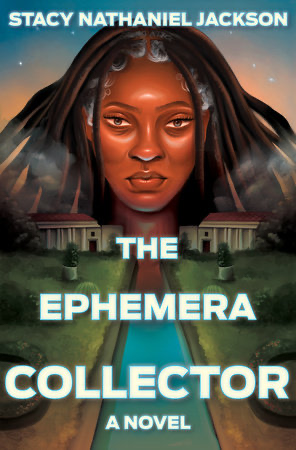
Continuing with Disability Pride Month, here’s a fascinating 2025 debut! I love books about libraries and archives, both for personal reasons and because of the possibilities that they hold. Add in the queer, science fiction aspect of it, and I was instantly hooked. The Ephemera Collector turned out to be one of the more unique books I’ve read recently, both in its mixed-media approach and the sprawling nature of its vision.
2035. In a divided, polluted Los Angeles, Xandria Brown pours her passion into her work as an archivist. Collecting ephemera from prominent Black authors, artists, and activists, she fights to preserve her work as the threat of corporate encroachment in her library looms. After the death of her wife, only her health bots, which monitor her symptoms of long COVID, keep her company. But when the library goes into lockdown for undisclosed reasons, Xandria and her health bots must get to the bottom of the mystery—and make sure that her collections are unscathed.
TW/CW: ableism, eugenics, racism, violence, medical content
Though not without its flaws, this is one of those novels where you can really feel how much of a labor of love it was for the author. The Ephemera Collector is Stacy Nathaniel Jackson’s debut novel, which he published in his 60’s (!!!). It’s a mix of prose, poetry, and visual media, and I honestly wish I’d read a physical copy instead of an ebook in this case, because I feel like my Kindle couldn’t grasp the formatting fully. Nevertheless, The Ephemera Collector is a unique novel in all senses: a unique dystopia, a unique Afrofuturist novel, and a startlingly original piece of sci-fi.
Stacy Nathaniel Jackson’s vision of the United States 10 years from now was certainly bleak, but his worldbuilding was what made The Ephemera Collector stand out so much to me. No stone was left unturned in terms of what happens to America in the next 10 years, from the threat of corporate oversight on Xandria’s archives of Black history to the COVID-34 pandemic that occurs a year before the novel is set. It was bleak to me, but not necessarily cynical to me; yeah, us going into a second global pandemic only 14 years after “getting through” the first one seems a bit cynical, but given how this country absolutely bungled how we handled COVID-19, it feels somewhat realistic. Yet the weirder and further you get from the center of what makes Jackson’s dystopia a dystopia, the more imaginative the worldbuilding gets. Xandria is followed around by health bots that all have distinct personalities. There’s a whole Atlantis 2: Electric Boogaloo situation with a group of POC separatists who settle underwater off the coast of California. The weirder Jackson gets with it, the better the worldbuilding becomes; those unique touches are what stuck with me the most.
Yet even though Jackson’s vision of the future is full of polluted air and government corruption (not too far off…oof), it never fully felt like completely gloom and doom. In the end, I feel like this novel was about the importance of preserving history, and the main character’s fight is to keep corporations out of her exhibition of Black history, namely a collection of ephemera about Octavia Butler. Our protagonist is a queer, disabled Black woman who comes from a line of disabled Black ancestors, and she is standing her ground when it comes to preserving their history as a fundamental thread in the fabric of our country. Xandria putting up this fight, for me, was what kept The Ephemera Collector from being fully cynical. To imagine a darker vision of the future is one thing, but to have a character fight it, win, and outlast said corruption and hatred (somehow, she lives to be 300 years old? I assumed it was the gene editing, but it’s never fully explained) was what gave me hope in the end. Xandria, a battered woman who faced threats to her archives, non-consensual gene editing and eugenicist practices, and the death of her wife, comes out the victor in the end, triumphant over everything she fought to defeat. She is alive to preserve the history of her ancestors, but she is also proof that even the groups that America is most determined to erase will survive no matter what this country throws at them—and outlive them by centuries.
Going into The Ephemera Collector, I knew it wouldn’t be the easiest book to digest. The reviews warned me of a novel that frequently went on tangents that didn’t relate to the main storyline, and a novel that was disorganized in general. Having that in mind, I went in with low expectations. While I do think this novel was a bit disorganized at worst, I think it was partially the point. This is a book about an archivist poring through artifacts in a massive library. Jackson’s style is very stream-of-consciousness, and I feel like it uniquely reflects what Xandria’s mindset would accurately be if she spent most of her waking hours as an archivist. It reminded me vaguely of The Library of Broken Worlds, a very different book from this one, but still a sprawling, magnificent at best, deeply convoluted at worst novel set in a vast library. Maybe that’s just what you’re in for if you write imaginative books about sci-fi/fantasy libraries. There were some sections that strayed too far from the main plot for my taste (more on that later), but overall, I enjoyed the breaks in form, whether it was the switches from prose to poetry to the anecdotes about Xandria’s ancestry. It really put me in mind of an archivist, and that seems exactly what Jackson set out to do. For me, it also tied back into the theme of preserving history—all of what we see is the history that Xandria fought so hard to keep alive and non-sanitized by corporations.
Here’s the thing, though. I was fine with the earlier tangents because I could see the thread that connected them to the rest of the novel. But around 60% of the way through, The Ephemera Collector quite literally loses the plot. Without warning, it switches to an entirely new story that’s barely connected to the main story—and that’s being generous. The only possible connection I could find was that one of the characters was a relative of Xandria, but that’s it. There’s no connection to her or the library. My dilemma is that although it was very distant from the rest of the novel, it was still a compellingly written storyline. It dealt with one of the more fascinating parts of the worldbuilding: the separatist community who created an underwater settlement, and later became pseudo-climate refugees when it became untenable to live underwater for any longer. It was so strange and lovely to pick apart, but it didn’t connect to the main narrative until the very last minute. Even in the context of Xandria looking through the archives, there wasn’t a clear thread. I’m tempted to give this less than 4 stars, because although this frustrated me, the writing was just that good. In my more arbitrary system, I guess it would be more in the 3.8-3.9 range, if we’re getting really specific, but I like it more than a 3.75. It’s a weird dilemma, but so is the whole novel, really.
All in all, a deeply imaginative Afrofuturist novel that pushed the boundaries of what a dystopia can be. 4 stars!
The Ephemera Collector is a standalone and Stacy Nathaniel Jackson’s debut.
Today’s song:
NEW GUERILLA TOSS, WOOOO
That’s it for this week’s Book Review Tuesday! Have a wonderful rest of your day, and take care of yourselves!
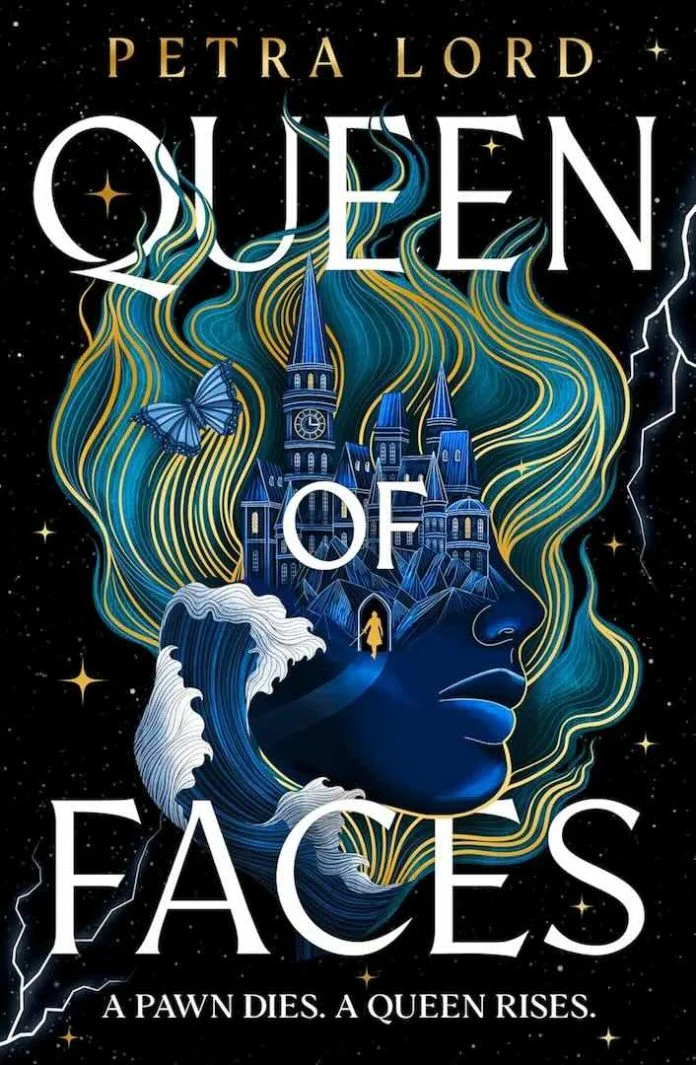
For the time being, I’m back! Safe to say I was swamped this semester, so I’m glad that I’ll have about a month of rest before I go back to school for the spring semester. When I wasn’t writing here or in my WIPs, I wrote around a combined 24 combined pages for various papers…and they say being an English major is easy…
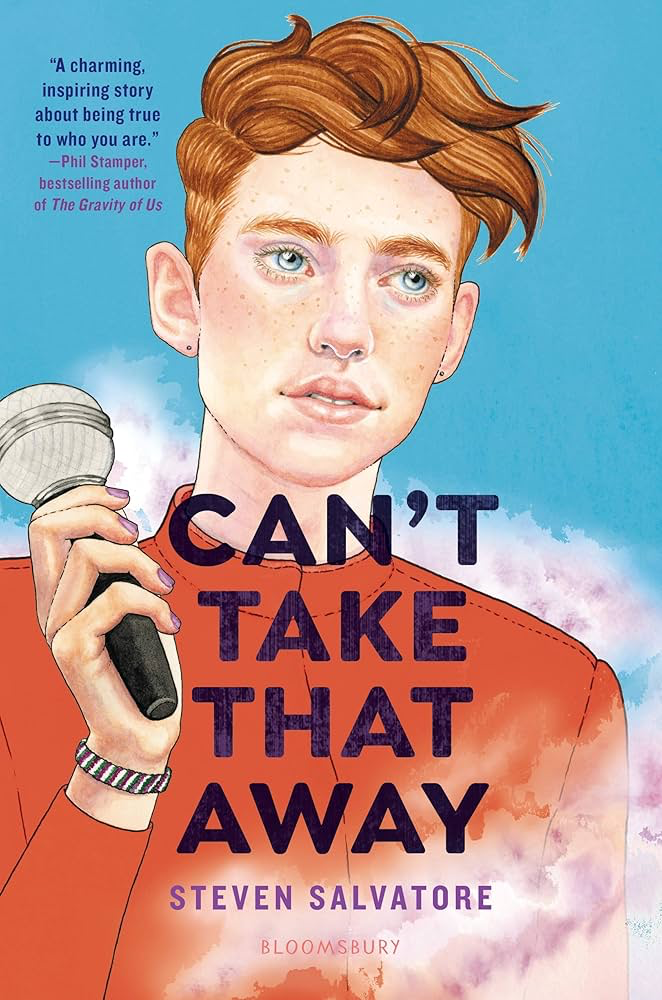
Either way, I’ve had Can’t Take That Away on my radar since it came out in 2021. As with most other books on my TBR, there’s no real rationale for it languishing there for so long. I ended picking it up because of the premise; queer YA and MG books are bearing the brunt of bans and challenges here in the States, so I wanted to support them whenever I can (even if it’s already a good amount of what I read). (I can’t find anything definitive on whether or not this one was actually banned or challenged other than one Goodreads reviewer shelving it as such.) Either way, though it had its flaws, the storyline of Can’t Take That Away feels ripped right out of the headlines, and it’s a vital piece of literature for trans teens looking to find their voices.
Carey Parker was born to be a diva. With an unwavering love for Mariah Carey and aspirations of stardom, they have fought tooth and nail to express themself the way that they want. So when a friend convinces them to audition for Elphaba in their high school’s production of Wicked, they seize the opportunity—and land the leading role. Yet in spite of their apparent talent, parents and teachers cause an uproar about genderqueer Carey’s casting in the role of a leading lady. With mounting threats to kick them out of the play and dismantle the production all together, Carey must find their voice in order to prove that they deserve to be heard—and sing.
TW/CW: homophobia, transphobia, misogyny, misgendering, physical assault/violence, descriptions of injuries, bullying, gender dysphoria, suicidal ideation, cheating, loss of loved ones
I have nothing against Wicked, but reading this while being oversaturated with all things Wicked every time I opened up Instagram was an experience, for sure…I guess if Carey were a real person, they’d be over the moon at the prospect of the movie, so there’s that.
Without a doubt, Can’t Take That Away is a story that needed to be told. For the most part, I applaud Steven Salvatore for delivering this novel with unflinching realism (about 90% of it, at any rate. More on that later). The plot—parents and teachers cause an uproar when a genderqueer teen takes on the role of Elphaba in their high school’s production of Wicked—feels like a headline waiting to happen. I have no doubt that it’s already happened. My only minor complaint is that the main villains (Mr. Jackson and Max) felt cardboard, but they too, in a way, felt like the adults raving and ranting about “gender ideology” and the online trolls bent on tearing queer people down. They leaned on the side of exaggeration, yet…some people are just like that, unfortunately. That realism is what fueled the story; Carey’s manifold struggles, from grappling with gender dysphoria, bullies, and first love, was delivered both candidly and sensitively. Salvatore didn’t hold back from the ugly parts of some of these topics (be warned—happy ending aside, it’s a rough ride), but it made them all the more important to show that, like the plot, Carey is as real a person as your trans classmate. Carey could easily be someone in your life, and that was what made the story ring so resonantly.
That being said, I felt that the romance was incredibly messy, and not necessarily in a good way. Having Carey have their first love as they’re fighting to find themself was a good side plot in concept, but…it was just a dumpster fire for no reason. I don’t know if this is just me reading YA and no longer being a teenager, but half of the romantic drama felt unnecessary in contrast to the very timely, very upfront main plot. Why did Carey need to kiss some random guy in a basement while they were dating Cris? How are Carey and Cris just okay with everything that the other did? Maybe this is just me, but if my partner kissed somebody else in a basement while we were dating, I wouldn’t come running back…see? MESSY. Can’t Take That Away already had high drama aplenty, and I know that’s a hallmark of YA to some extent (that I appreciate), but this bordered on ridiculous.
I’m rather conflicted about the ending. It was wrapped up quite neatly, which isn’t inherently a crime, especially since it’s YA. There are bound to be some things that are tied up more nicely than they would be in real life. Can’t Take That Away is aimed at high schoolers, and unless it’s too neat, this quality isn’t always an instant flaw in YA books. That being said, Can’t Take That Away bordered on taking that to an extreme. After the protest, the cops are immediately on the side of the queer people and people of color, and have almost no hesitation about punishing the white male perpetrators of the hate crimes. Carey’s protest immediately goes viral, and they get so famous that they get free tickets to see Mariah Carey and go onstage and sing with her. The bad guys get their comeuppance almost instantly, and the good guys get the greatest rewards possible. I’m not saying that Carey and company didn’t deserve a happy ending—they absolutely did—but it felt unrealistic to a point where it almost felt like the fulfillment of a fantasy. Sure, that’s what writing’s for to some extent, but when dealing with a plot that felt ripped from the headlines, the resolution felt much less so. You can give characters a fulfilling, satisfying victory that feels earned and realistic!
Yet at the same time, queer kids deserve these kinds of stories. There are easily infinite examples of straight characters getting unrealistic endings that end in instant fame and wish fulfillment, so why shouldn’t Carey? Why shouldn’t all of the trans kids reading their story? Yes, it made me roll my eyes a little when this story, one that ended well enough, had to escalate everything to “and then Carey got everything that they ever wanted in life! Yippee!” But after the deluge of hatred and violence that Carey endured throughout Can’t Take That Away, why shouldn’t they get that ending? This novel is not escapist by any stretch of the imagination, but there’s a kind of necessary escapism in these stories—very real circumstances resolving with the absolute best possible outcome with no strings attached. Sure, it was a stretch, but Carey deserves it—and so do all of the queer teens reading this book.
All in all, a book with flaws here and there, but ultimately proved a timely story about finding your voice. 3.5 stars!
Can’t Take That Away is a standalone, but Steven Salvatore is also the author of And They Lived…, No Perfect Places, The Boyfriend Subscription, and the forthcoming novel When Love Gives You Lemons, which is slated for release in May of 2025.
Today’s song:
this is the leastfitting pick for a book about a teen who loves Mariah Carey, but I only pair books with songs in my Sunday Songs, so…enjoy the whiplash. Bon appetit!
That’s it for this week’s Book Review Tuesday! Have a wonderful rest of your day, and take care of yourselves!
Here in the U.S., June is Pride Month! And every month, I find myself having a downer of an introduction, just because the world only gets kinder to queer people in the smallest increments, it seems. The vocal minority in this country are still bent on erasing all evidence that queer people exist in the first place, like an offending stain on a white tablecloth. (A note to homophobes: has it ever occurred to you that you don’t have to look at pride flags or queer couples? You can just look away and not make it anybody else’s problem…life is so short, man.) But our community is one characterized by resilience: no amount of book bans, culture wars, or bigotry will wipe us off the map. We are are here, we have always been here, and we will always be here. Nothing you do will make us disappear. Don’t let the vocal minority distract you from the beauty created and progress made by our community.
So once again, here’s a list of YA and Adult books with queer characters and themes, curated by your local bisexual. I also added the specific representation of each book.
TELL ME WHAT YOU THINK! Have you read any of these books, and if so, did you enjoy them? What are some of your favorite queer books that you’ve read in the last year? Let me know in the comments!
Today’s song:
That’s it for this year’s pride recommendations! Have a wonderful rest of your day, and take care of yourselves!
Happy Tuesday, bibliophiles! I’m back from vacation, and I’m feeling rested—and ready to review one of the books I read on my trip.
Junker Seven hung around on my TBR for about a year, and I ended up buying it on Kindle for my trip; as I’ve said ad nauseam, queer sci-fi is the stuff of life for me, so I’ll always lap it up when given the chance. Although I wish the worldbuilding (and the politics) were more creative, it was a solid tale of of love and the joy in reminding yourself that your existence is an act of resistance.
Castor Quasar makes a solitary but dangerous living as a junker, ferrying scrap—and fugitives—across the galaxy. They prefer to stay out of the business of others, whether that’s the widespread political unrest throughout the galaxy or simply making friends. But when Castor is offered a job with an exorbitant amount of money, they can’t help but be suspicious, even though the offer would mean valuable repairs for their ship—and an easier living. Their cargo is Juno Marcus, a trans activist with a target on her back and an urgent need to escape before the Intergalactic Peace Force finds her. Castor reluctantly agrees, but they soon find themself in over their head—and head over heels in love…
TW/CW: murder, loss of loved ones, transphobia, deadnaming, misgendering, ableism, police brutality
Junker Seven was by no means without its flaws, but if you’re looking for a love letter to trans love and identity, a slow-burn romance, and resistance in space, then you’ve come to the right place! Not my favorite, but this was a good book to start off pride month—unabashedly queer and political.
Structurally, there were a lot of odd worldbuilding choices (I’ll get to that later), but despite that, the world of Junker Seven felt wonderfully lived-in. The quiet moments where Castor was alone on their ship were what convinced me of this world being tangible; not everything is sleek, clean, and untouched. You never get the sense that the ship is cramped just because it was made so, but because of all of the choices that led Castor to the place they are today. It’s not just a plot device vehicle—it’s got special nooks and crannies that have been shifted over the years, and there’s a goldfish that’s been there through it all, Castor’s only constant companion. Details like this, as well as some of the pockets of resistance that Castor and Juno find throughout their journey, added a real human element to the story. Even with only two characters for most of the novel, Kelley did an excellent job of making the galaxy seem like a tangible place where humans have settled—and brought their unique ways into a new, far-future world.
If you’re looking for representation, especially trans representation, then you’re in the right place—Junker Seven has diversity in spades! Both the main character and the love interest are trans, as well as several side characters, and Castor is also disabled—they have burn scars, a prosthetic leg, and autism! The key part of said representation is that it never felt like a checklist; if the acknowledgements are any indication, Kelley’s goal was to create a resonant story of trans joy, love, and resistance, and though I’m not trans (disabled and queer, though), that love shone through; Junker Seven felt like a love letter to trans resistance all the way through, from Castor and Juno’s slowburn romance to Castor’s gradual radicalization. I love how the disability representation was handled as well! All of the details about Castor’s autism affects their job felt authentic as a neurodivergent person; no stone was left unturned, whether it was how wearing their prosthetic affected their sensory issues to how it affected their relationships. It’s clear from every page that the diversity in this novel wasn’t borne out of a need to tick off every possible marginalization—it was borne of a need to put authentic queer, trans, and disabled stories out into the world.
That being said, the worldbuilding of Junker Seven gets stranger the more I think about it. There are enough pockets that could convince you that, yes, this could be hard sci-fi that had some thought put into it, but the actual worldbuilding ends at the descriptions of the climates of the planets that Castor and Juno are hopping to and from. Other than that, the politics are the main focus, but given howpolitical this book is, I was surprised at how unoriginal it was in terms of the evolution of politics and queer resistance. Junker Seven is set several hundred years from now, and yet the politics are all but copied and pasted from the U.S. politics of today—no changes whatsoever, save for being stricter when it comes to the treatment of trans people in particular. Yes, history does tend to repeat itself in terms of treatment of the marginalized, but it’s never in the exact same way twice; technology changes, rhetoric changes, leadership changes. None of that is reflected in Junker Seven; honestly, it was familiar to such a degree that it would have worked more if it were set in a less futuristic dystopia set on Earth. This story is set so far in the future that minimal changes in language and policy just makes no sense. It would have been so much more potent—and creative, frankly—to see how the adapted technology of the future actually factored into how trans people in this universe were being oppressed. There were a few throwaway mentions of more advanced technology that was being used to surveil trans people, but that was about the extent that anything changed. It all boiled down to unused potential—there were so many opportunities to explore how (possible) aspects like advancing technology, increased policing, and advancements in genetic modification could affect the status of trans people throughout the galaxy. And yet, Kelley chose to change almost nothing about our current political climate and paste it into space—to the detriment of my suspension of disbelief. Oppression of marginalized groups remains the same in its goals, but not necessarily in its methods—those change with the times.
What also suspended my disbelief was how little we knew about Marwood save for that he was horrible. Save for being a Trump stand-in, we knew almost nothing about him, save for that a) he’s evil (Trump), b) there’s a widespread news network that’s basically his mouthpiece that he uses to demonize trans people (Fox News), and c) did I mention? He’s evil. I will give Kelley some credit for at least establishing the Zephyr News aspect and the fact that his nepotistic predecessor both ended presidential term limits and instated Marwood in a corrupt, illegitimate election so that his fascist, ultra-conservative values would live on. That, at least, felt like a reasonable enough start for a villainous character, but that was it. The key word here is start. I wouldn’t say it completely falls into the dystopian trope of “we’re not going to say anything about the government, but you have to understand. They’re BAD, guys. BAD,” but it comes rather close. This circles back to my overarching issue of unoriginal worldbuilding, but I wanted to know what separated Marwood from any other run-of-the-mill fascist—did he come from a celebrity background and had no real political experience, like Reagan or Trump, or was he a more cold and calculating type with political prowess who knows exactly how to undo any kind of progress and twist the laws in order to abuse his power? A successful, frightening villain needs to be more than an evil cardboard standup that lurks in the shadows, and we never got more than fragments to show that Marwood was more than a stand-in fascist to move the plot along. (Also, did the entire galaxy, after blending into an almost universal accent after several hundred years, universally adopt a vaguely American two-party system and government? It’s…yeah, I have trouble believing that too.)
Although the disability representation is excellent, as I said before, I did find it odd that it wasn’t a part of Castor’s radicalization; being disabled in the 21st century is already a cyberpunk dystopia as it is, so I’m surprised that there wasn’t much discussion of not just Castor’s experience with being disabled, but how it affected their work or their perception of politics. Save for a throwaway line about an autistic person being driven to a life of crime because of how poorly said autism was treated and handled, there wasn’t much rumination on it other than that. I get that the main focus of Junker Seven was trans resistance specifically, I do wish we at least got more of it than what we got. Come to think of it…as diverse as Junker Seven was, there wasn’t a whole lot of intersectionality in terms of politics. I think there was…maybe one line about race and police brutality, and that was about it? I wouldn’t say that this is inherently a flaw of the book itself, but, once again, given how unabashedly political it was, I did find it odd that there wasn’t at least a small mention of the intersection of queer/trans issues with aspects like race, class, and disability.
All in all, a solid piece of queer sci-fi which suffered from unoriginal and nonsensical worldbuilding, but was nonetheless a shining ode to queer resistance. 3.5 stars!
Junker Seven is the first of the Twin Suns duology, followed by the forthcoming sequel Rebel Rising, which is slated for release in September. Kelley has also released D3F3CT: A Twin Suns Novella, set in the same universe as Junker Seven, as well as the novellas As the Light Goes Out and A Very Lighthouse Christmas. They have also contributed to Spectrum: An Autistic Horror Anthology and the forthcoming Dead Cowpokes Don’t Wrangle: A Weird West Anthology.
Today’s song:
why, why, WHY DID I PUT OFF LISTENING TO THIS ALBUM FOR SO LONG??
That’s it for this week’s Book Review Tuesday! Have a wonderful rest of your day, and take care of yourselves!
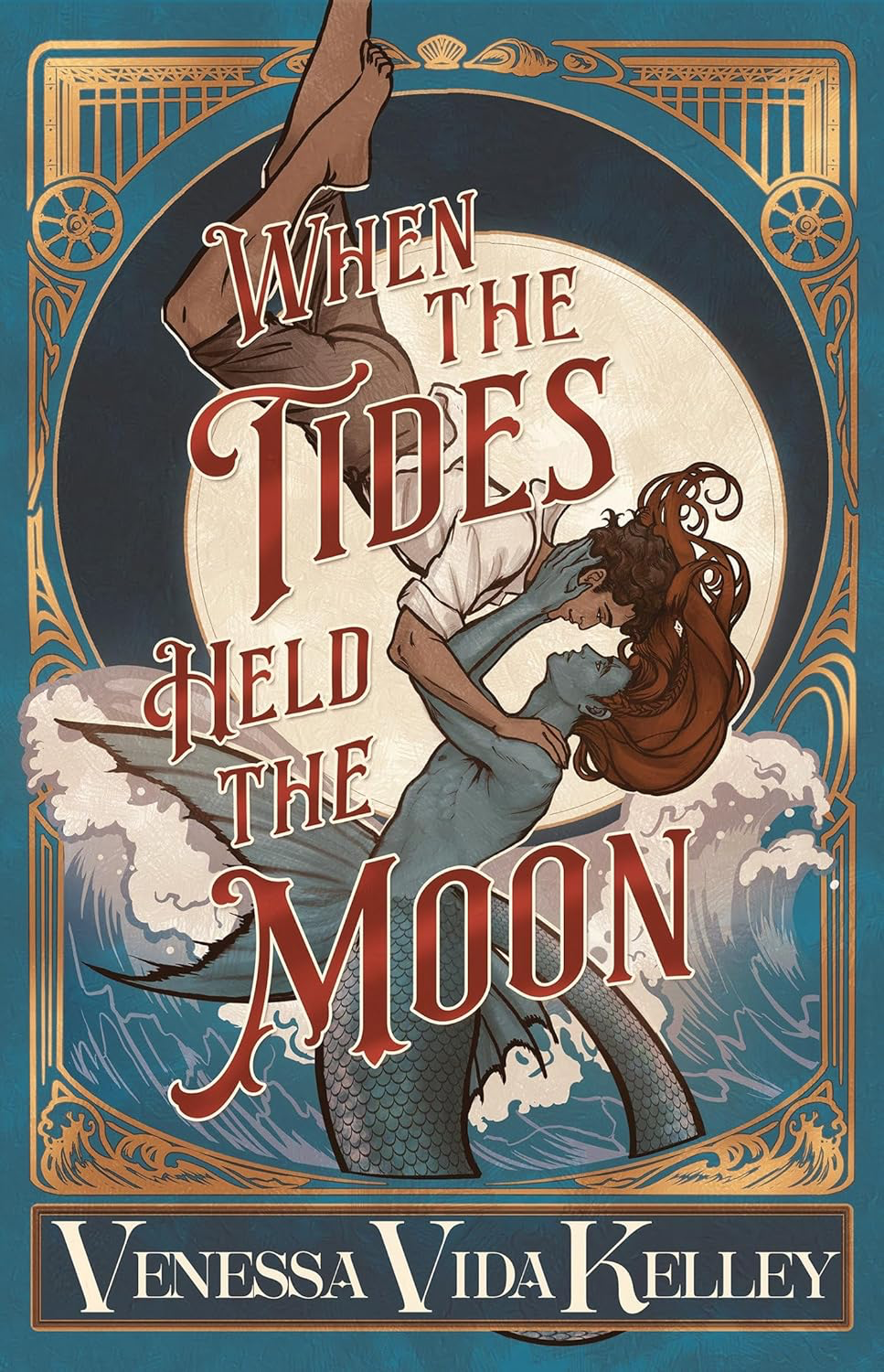
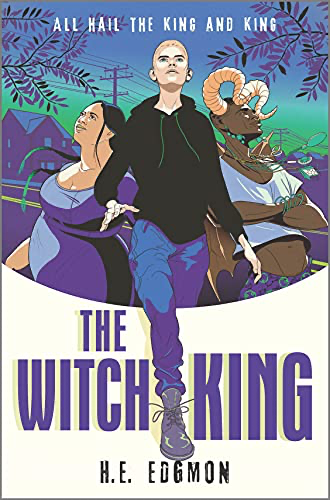
Far be it from me to start the month off with a negative review, but that’s just how my December started off. Eh. Should be a lesson to me for trying to read something that’s been on my TBR for 3+ years—my tastes generally don’t change dramatically in that amount of time, but my standards for writing and plot certainly did. That’s all to say that The Witch King was a promising, inclusive fantasy that quickly proved itself to be not worth my time.
Wyatt Croft is a witch, and in the North American realm of the fae, witches are the enemy. Years ago, Wyatt’s magic got out of control, forcing him to flee back to the human world and go into exile. But his betrothal to Emyr, the prince of the fae, has not dissolved, and Emyr is back on the hunt for him. Forced back into the world of the fae, Wyatt must come to terms with his engagement—one that may hold the lives of all of North America’s witches in the balance. And his feelings for Emyr may be coming back, as much as he wants to hide them…
The Witch King has made me realize that I need to expand my criteria for DNFing books; most of my DNFs are 1-star books—the ones that are just so bad that I can’t finish them. In comparison to a lot of the other books on my DNF shelf, The Witch King wasn’t comparably as bad. But the difference is that at a certain point, it was just so clear to me that this book was not worth my time. I really wanted to like it, but once I got past the first third, there wasn’t any point in me finishing this book. A DNF is not always a 1-star read, but a 1-star read is not always a DNF. It’s like geometry but easier to explain.
I wanted to emphasize that I really wanted to like The Witch King. But in the 3+ years that this book has languished on my TBR, it’s clear that my standards have changed. The foreword by Edgmon was incredibly touching, and it’s so clear that this was the book of their soul—there’s no denying the love that went into this book. And it’s so, so important to support trans authors like him, but it’s just as important to remember that even when you read diversely, a book’s diversity doesn’t automatically fix every plot hole and writing issue. There’s some slack I’m willing to give Edgmon because this was his debut, but The Witch King really left a ton to be desired.
It’s clear that Edgmon put a lot of thought into constructing Wyatt’s character, but in his quest to make him as relatable as possible, Wyatt turned from simply “relatable” to an incompetent mess. Even as a queer person, there’s only so many “I am a gay little worm who makes terrible life decisions” (actual quote from the book) jokes I can take. Jesus Christ. The word “cringe” is outright abused these days, but I feel like this is a valid quality to ascribe to the writing of The Witch King, since most of the humor feels so overdone and unfunny. If your type of humor consists of Tumblr jokes from 2017, then boy, do I have the book for you. All of the attempts to make Wyatt seem more human and fallible made him just feel like a pathetic mess incapable of seeing past his personal faults and (many) mistakes. It absolutely grated on me after a certain point. The rest of the writing wasn’t all bad, but good god, Wyatt’s characterization made me want to jump ship almost immediately.
Since I abandoned ship after the first third, there’s probably some context that I inevitably missed, but the worldbuilding of the North American fae really left a ton to be desired. Apart from the rivalry between witches and fae, there really wasn’t much of an explanation as to how the fae worked in tandem with the human world: where do the borders between human and fae begin and end? How do the two interact? And more importantly, what are the different interactions between the different species of fae? There were a bunch of different creatures that were just thrown at you in the background with zero explanation, never to be seen again. There’s a difference between convoluted worldbuilding and worldbuilding that just isn’t properly thought-out, and this fell firmly into the latter camp. It was all just a hot mess. I’ve read several reviews saying similar things about the worldbuilding, so…I guess it never did get better beyond what I read? Oof.
That being said, I really appreciate the diversity that Edgmon wrote into The Witch King. Having a trans main character is so important, and as much as Wyatt got on my nerves, characters like him need to be in the spotlight. Edgmon presented a lot of character that were very diverse in terms of race, gender, and sexuality, and while it seems like the representation wasn’t all accurate and some of Edgmon’s depiction of social issues wasn’t handled as well as it could’ve been (glad I didn’t get to that part, I guess…), it’s always good to have a range of characters like that. It’s about all I have to say about The Witch King that’s positive, but it’s worth being highlighted.
All in all, a diverse fantasy debut that sadly crashed and burned in its characterization and lazy worldbuilding. 2 stars.
The Witch King is the first book in the Witch King duology, followed by The Fae Keeper. Edgmon is also the author of the Ouroboros series, which consists of Godly Heathens and Merciless Saviors.
Today’s song:
That’s it for this week’s Book Review Tuesday! Have a wonderful rest of your day, and take care of yourselves!
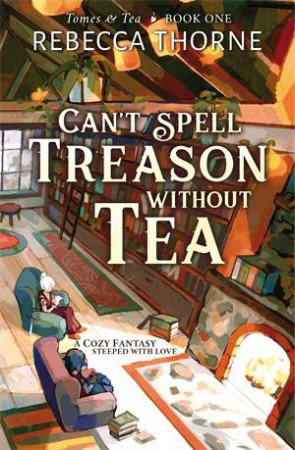
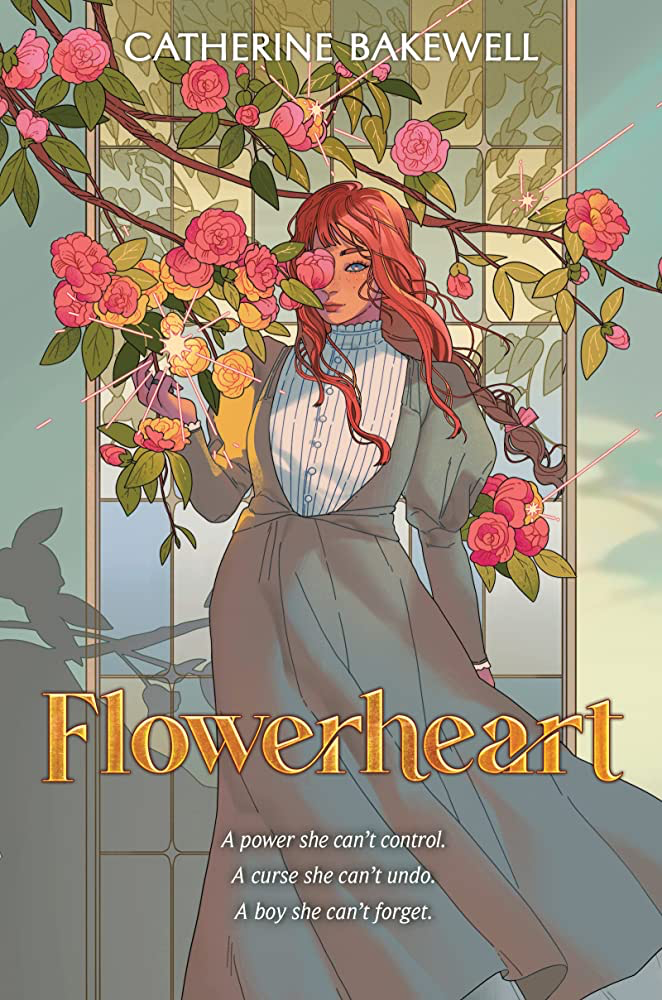
Here’s some queer fantasy for my last review of Pride Month 2023. I’m so glad that cozy sci-fi/fantasy as a subgenre is slowly multiplying nowadays, and that’s exactly what drew me to Flowerheart. I borrowed it from the Kindle library and ate it up in a few hours flat—though it wasn’t without its flaws, it was a charming, sweet palate-cleanser with lots of flowers and queer rep!
Clara has a gift—she can summon flowers at will, making them grow in any space she focuses on. But she’s only 16, and her flower magic is uncontrollable—and sometimes dangerous. When she accidentally causes poisonous flowers to grow in her father’s chest, Clara is distraught—and in desperate need of someone to heal his ailment and help her hone her magic. But the best magician for the job just happens to be Xavier, her former best friend who she can’t quite hide her feelings for. With Xavier hiding secrets and Clara racing against the clock, can they heal her father—and rein in her wild magic?
I love the title of this book as much as the next person, but I’m not gonna pretend that it isn’t a valid Warrior Cats name. Just saying. I’ll bet you money that it was somebody’s OC from 2014.
Flowerheart has a 3.58/5 average rating on Goodreads at present. I have a thing where I’ll see ratings in the 3.5 range and think “oooh, this could be a disappointment,” and then I’ll finish the book and realize that it was just about right on the money. It makes sense. I can see why several people loved it, but a good amount of people felt lukewarm about it or disliked it. For me, I’m sort of in the middle—it was a charming, sweet palate-cleanser, but the holes in the story and some of the writing style prevented me from enjoying it all the way.
The main selling point for Flowerheart seemed to be its coziness—setting aside the annoying, clearly BookTok marketing tactic to put “cottagecore” in the actual description, Bakewell passed with flying colors in terms of this book’s coziness! Other than a brief moment of fantasy body horror (said Flowers growing from Clara’s dad’s Heart), there’s very little that’s stressful. The book also has a strong emphasis on embracing your emotions and learning to love them (as opposed to suppressing them), which is always a win in my book (no pun intended). The queer-normative world was also a delight alongside of that—Clara is bisexual and in a straight-passing relationship, and there are several trans and nonbinary side characters! I ate this book up fairly quickly, but it was a delightful world to stay in, however short the stay was.
That being said, I really wanted more from the world. There really isn’t much to chew on other than the fact that everybody has a unique type of magic, there’s a ruling council of magicians that keeps everybody in check, and that most of the names have a vaguely European root or origin. Other than that, there was almost nothing to hold up the worldbuilding—if it were a house on stilts, the stilts might as well have been popsicle sticks. Where does the magic come from? What is the technology level of this world? Why are they letting 16-year-olds onto this magician council that makes all of the important decisions? Where even were we in the first place? Was there even a name for the place that Flowerheart was set in??? Cozy sci-fi/fantasy and expansive worldbuilding can coexist (see: anything by Becky Chambers), so the subgenre isn’t the issue. I didn’t need a huge, elaborate picture of the world of Flowerheart, but it was sadly clear that Bakewell did the bare minimum in terms of worldbuilding. I really did want more.
Aside from that, my main issue (if you can call it that) was the writing style. On its own, I liked it a lot—it had the perfect, charmingly over-the-top kind of style to it, and it suited the story very well. I saw another review that compared it to Harry Potter, and it made a lot of sense—it did sound very distinctly British. But Harry Potter is mostly middle-grade, and Flowerheart tended to skew the same way in its voice; Clara’s voice read more as a 12-14 year old than a 16 year old. Again: it’s not the coziness and relatively low stakes that made it feel more middle-grade, but the way that the characters were written. Not much of an issue, but I really feel like this would’ve been more successful if Clara was a few years younger.
All in all, a cozy fantasy that was filled with quite a few holes, but still sweet enough to enjoy. 3 stars.
Flowerheart is a standalone, but Catherine Bakewell is also the author of the middle-grade novel We Are the Song.
Today’s song:
ughhhhhh this album is so good
That’s it for this week’s Book Review Tuesday! Have a wonderful rest of your day, and take care of yourselves!
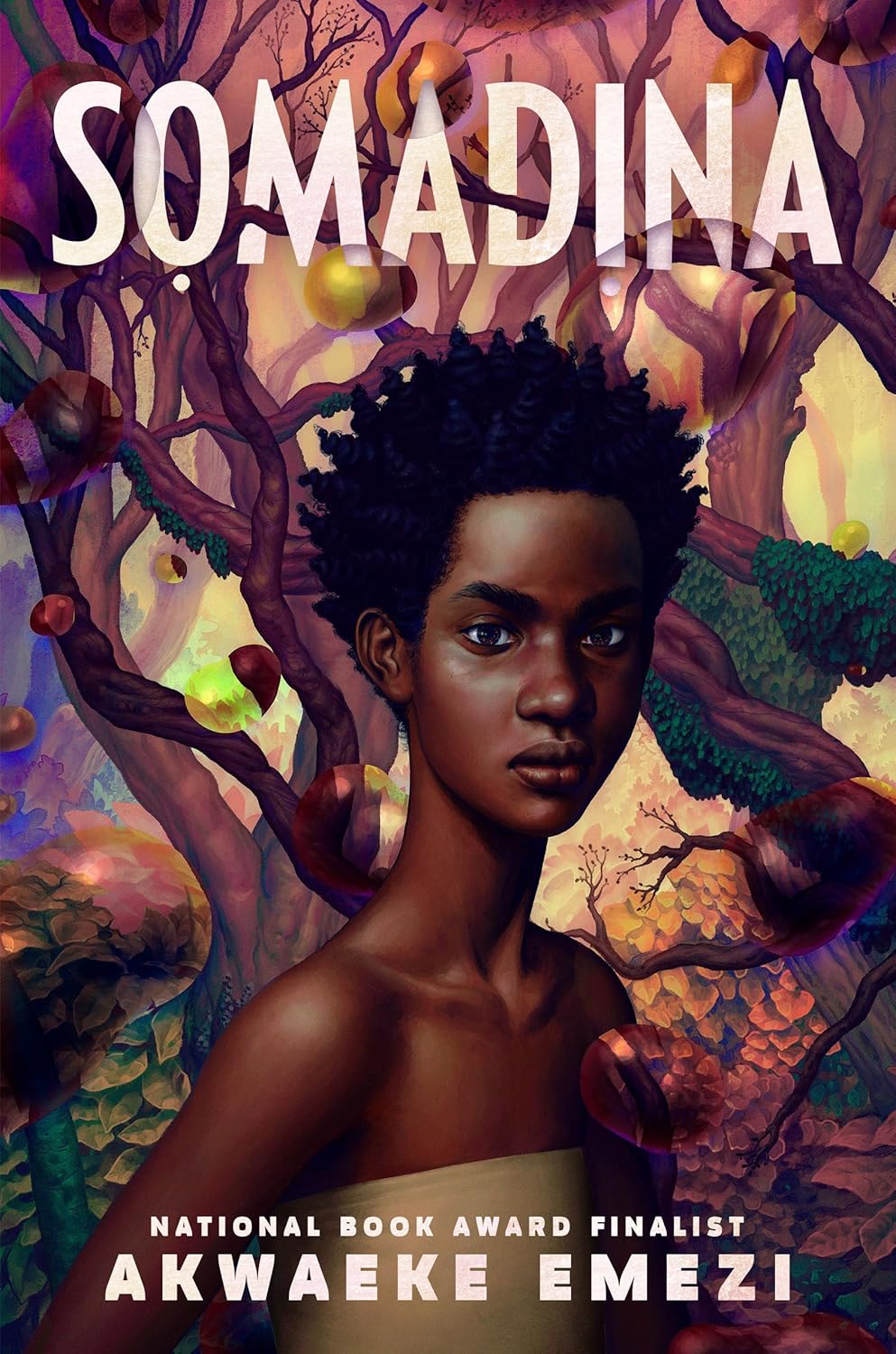
Here we are again in pride month! It certainly is a joyous time of year, but in the past few years, it’s been a difficult one, too. All across the country, we have seen waves of anti-LGBTQ+ legislation, and the rhetoric that queer people are unnatural and wish to convert your children has spread like wildfire. We’ve also seen a dangerous increase in book bans—particularly by queer authors and authors of color. Books with diverse perspectives aren’t harming children—depriving children of these books is the dangerous part. Now more than ever is it important to read diversely: there’s never any harm in seeing a different perspective through literature. And if you’re really that concerned about “protecting the children,” maybe you should advocate for stricter gun laws instead of worrying about drag queen story hour.
In past years, I’ve split this post up into multiple (organized by genre), but I decided to make it all one post this year to keep it all more organized.
TELL ME WHAT YOU THINK! What are your favorite queer reads that you’ve read recently? Have you read any books on this list, and what did you think of them? Tell me in the comments!
Today’s song:
That it for this year’s pride month recommendations! Have a wonderful rest of your day, and take care of yourselves!
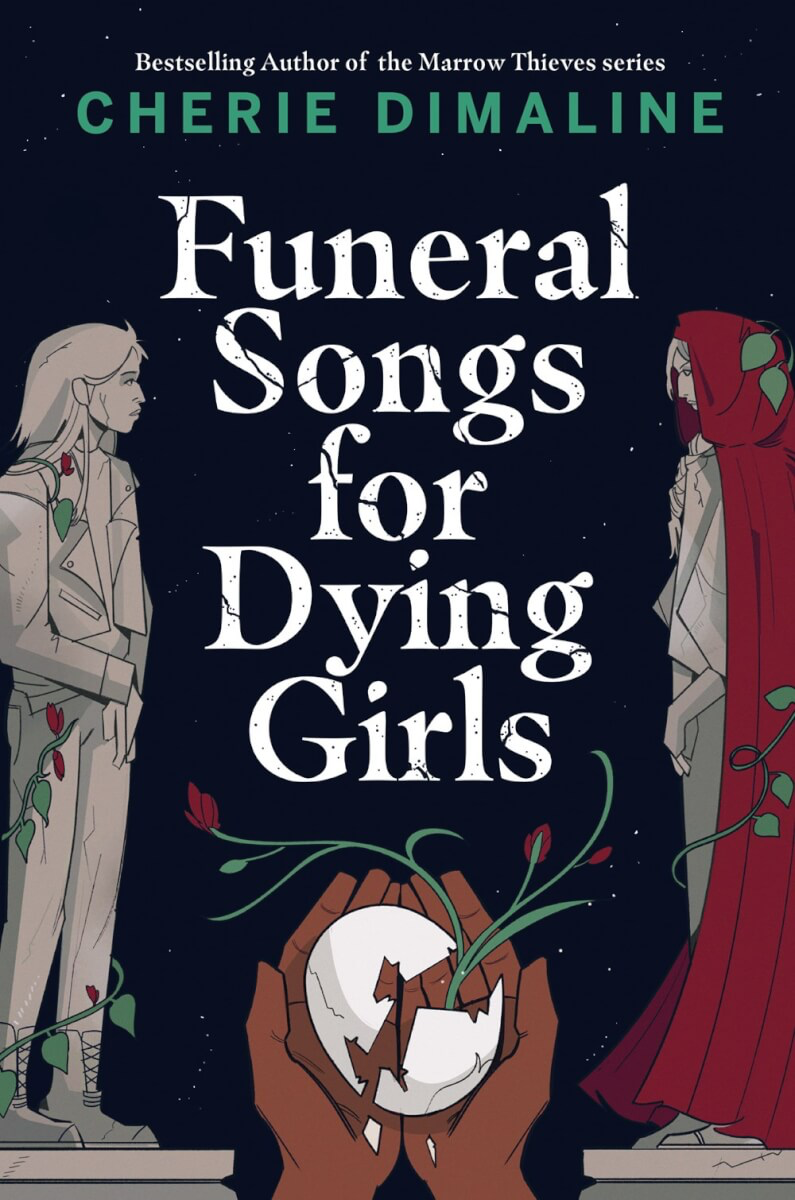
As some of you may know, last week (March 20-27) was when the #TransRightsReadathon was hosted in response to a dangerous increase in anti-trans legislation across the U.S. Created by Simi Kern, the goal of the readathon was to give the spotlight to as many trans books and authors as possible to bring them awareness and support in light of the rampant transphobia across the country and beyond. It’s been frightening and heartbreaking to see what’s happening in other states, and I want to support my trans siblings in any way possible. So I’ve decided to include shorter reviews of all of the trans books I read this week—all of which were good!
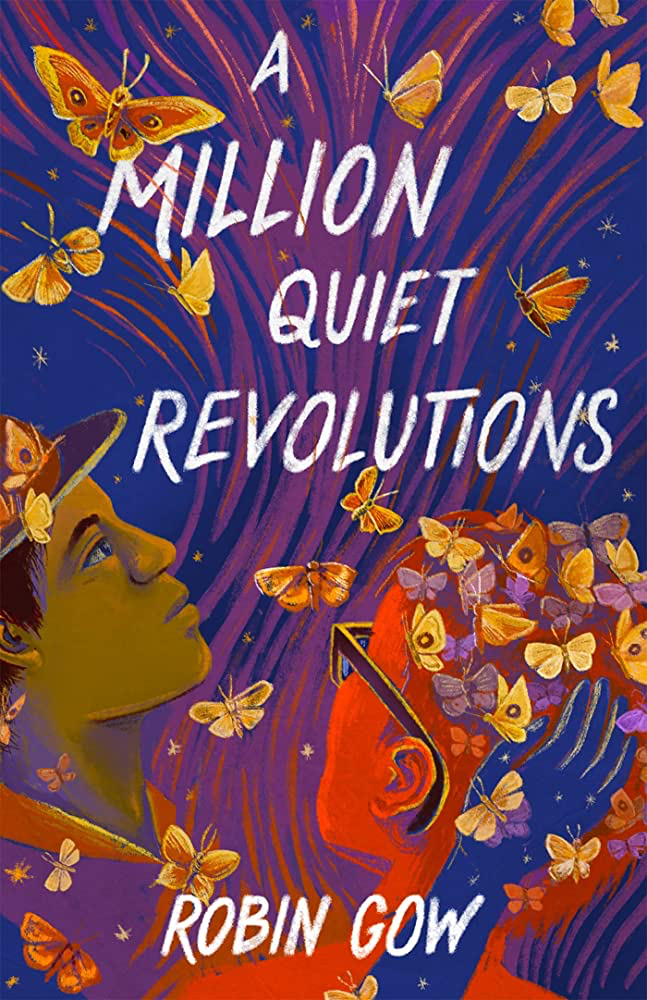
For as long as they can remember, Aaron and Oliver have only ever had each other. In a small town with few queer teenagers, let alone young trans men, they’ve shared milestones like coming out as trans, buying the right binders–and falling for each other.
But just as their relationship has started to blossom, Aaron moves away. Feeling adrift, separated from the one person who understands them, they seek solace in digging deep into the annals of America’s past. When they discover the story of two Revolutionary War soldiers who they believe to have been trans man in love, they’re inspired to pay tribute to these soldiers by adopting their names–Aaron and Oliver. As they learn, they delve further into unwritten queer stories, and they discover the transformative power of reclaiming one’s place in history.
TW/CW: transphobia, dysphoria, misgendering/deadnaming, homophobia, off-page sexual assault, religious bigotry
Novels in verse always get me when they’re done well, and A Million Quiet Revolutions was no exception. The story of Aaron and Oliver is one that was essential to be told, and it resulted in a beautifully poignant piece of verse!
The growing relationship between Oliver and Aaron felt so genuine, and the combination of pseudo-epistolary format (oh god, that sounded pretentious…) with verse emphasized the way that their relationship transcended barriers of both place and time. The interweaving of the past with the present gave me an insight into a queer part of history that I’m almost embarrassed that I didn’t consider until reading this—better late than never, I suppose. Their voices both leapt off the page, and the easy flow of Gow’s verse made the reading experience feel effortless, drifting like wind—good poetry, to me, doesn’t quite feel like poetry; the rhythm remains, but it doesn’t feel like going line by line in such a rote way.
Above all, the message of this novel in verse is one that’s so important, especially in a time where the narrative of LGBTQ+ people being trendy and new is being pushed so often—queer people have always been here, and we will always be here. Aaron and Oliver’s journey of researching their trans namesakes—cross-dressing soldiers in the Revolutionary War—was one that’s so necessary for understanding our own roots. The key to belonging is realizing that you have always been a part of history, no matter how many pains historians have taken to ignore or deliberately erase the queerness and transness that has always been there. For me, that’s why A Million Quiet Revolutions is such an important read.
Brimming with history and rich verse, A Million Quiet Revolutions is an ode to discovering your own roots, and finding solace in hidden histories. 4 stars!
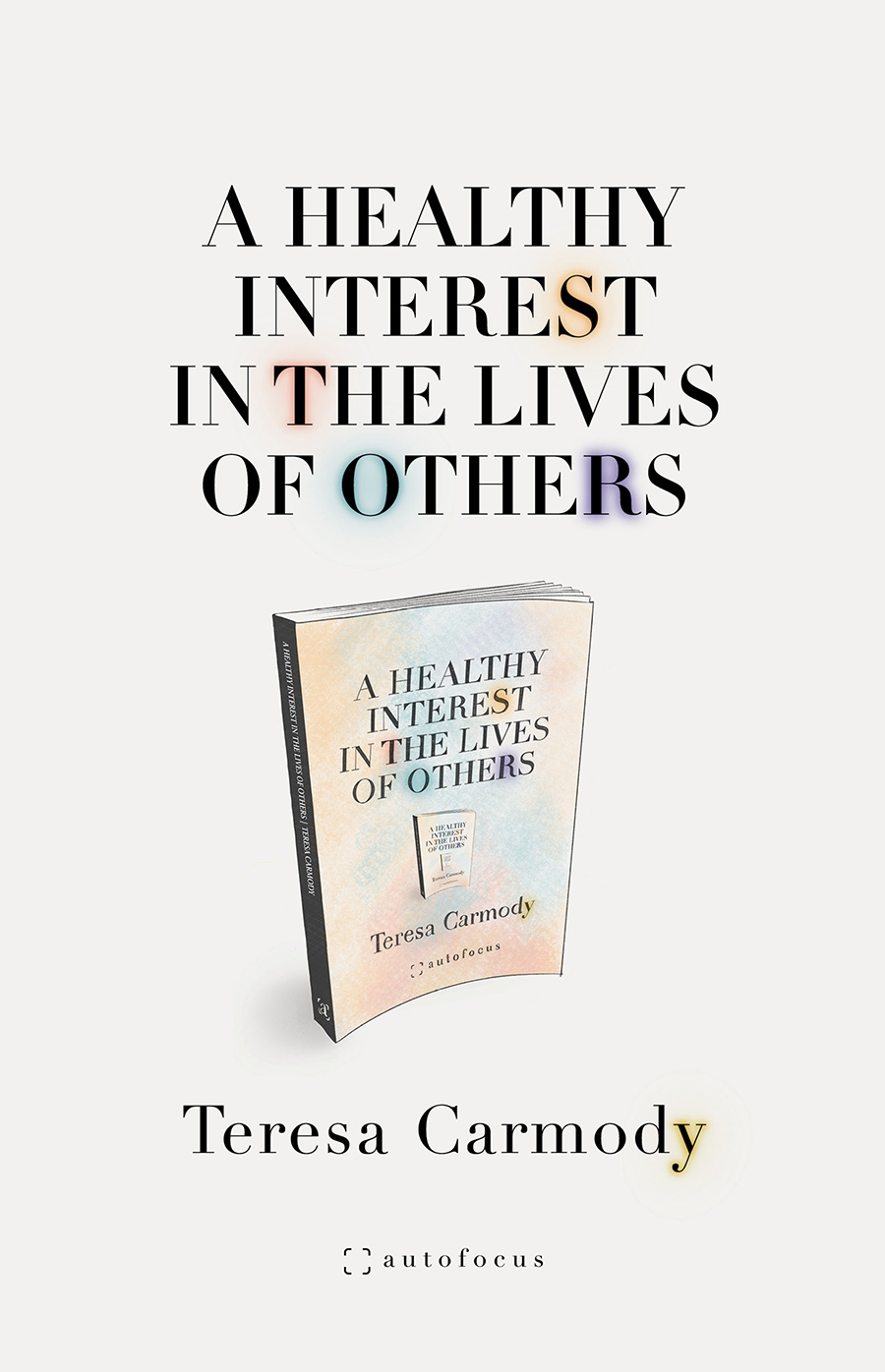
In this queer contemporary YA mystery, a nonbinary teen with autism realizes they must not only solve a 30-year-old mystery but also face the demons lurking in their past in order to live a satisfying life.
Sam Sylvester’s not overly optimistic about their recent move to the small town of Astoria, Oregon after a traumatic experience in their last home in the rural Midwest.
Yet Sam’s life seems to be on the upswing after meeting several new friends and a potential love interest in Shep, the pretty neighbor. However, Sam can’t seem to let go of what might have been, and is drawn to investigate the death of a teenage boy in 1980s Astoria. Sam’s convinced he was murdered–especially since Sam’s investigation seems to resurrect some ghosts in the town.
Threatening notes and figures hidden in shadows begin to disrupt Sam’s life. Yet Sam continues to search for the truth. When Sam discovers that they may be closer to a killer than previously known, Sam has a difficult decision to make. Would they risk their new life for a half-lived one?
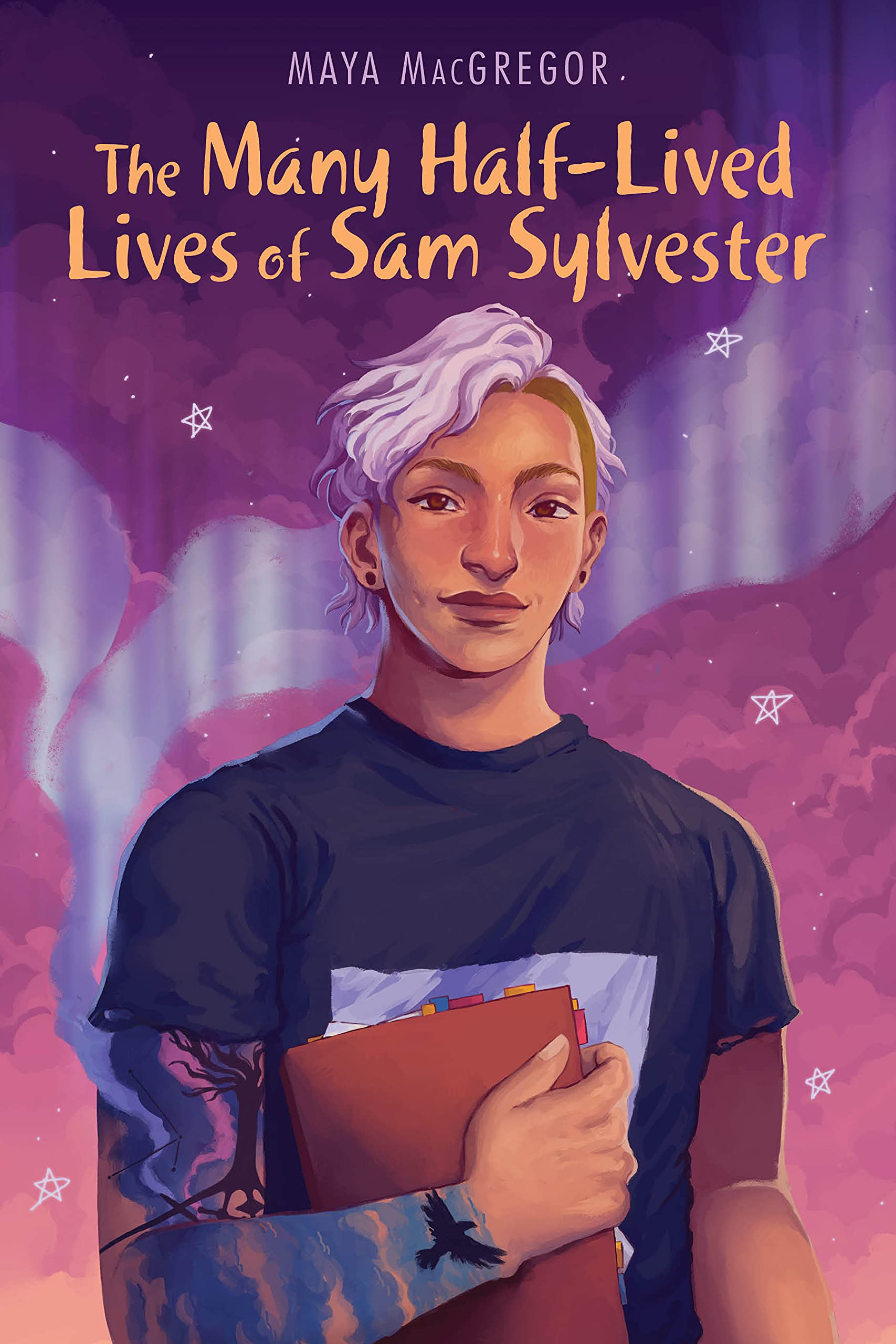
My ultimate hope was that this book would be as well-crafted as its cover, and for the most part, it lived up to my expectations! The Many Half-Lived Lives of Sam Sylvester deftly toes the line between a coming-of-age story and a decades-old mystery, buoyed by a diverse and lovable cast.
Sam Sylvester has a batch some of the most diverse representation I’ve seen in a realistic fiction/mystery novel in a while—aside from having a nonbinary, asexual, and Autistic protagonist (more neurodivergent protagonists, please!!), there were so many different characters that were incredibly intersectional—queer, POC, and disabled characters all across the board, and not just the teen characters too! All of these identities were woven so well into the story, and I loved the journey of self-acceptance and reckoning that Sam experiences throughout the novel as they unravel the mystery of the boy who died in their room 30 years ago.
That being said, although I liked most every aspect of this novel, this really feels like a novel that’s going to date itself. I enjoyed a handful of the references (always extra points for David Bowie), but a lot of the more recent ones—the references to Tumblr, Gen Z slang, internet culture, and a Steven Universe gag every other page, read as very hackneyed and stilted. As authentic as the rest of Sam Sylvester was, those parts dragged down what would have otherwise been powerful and realistic dialogue. Most of the writing did its job and did it well, but the attempt to ground it in the present day only ended up making a novel that’s going to date itself far quicker than it was probably intended to.
Despite that, I’d say that Sam Sylvester is still a must-read—for the excellent representation, for the mystery, and for the coming-of-age story. 3.75 stars, rounded up to 4!
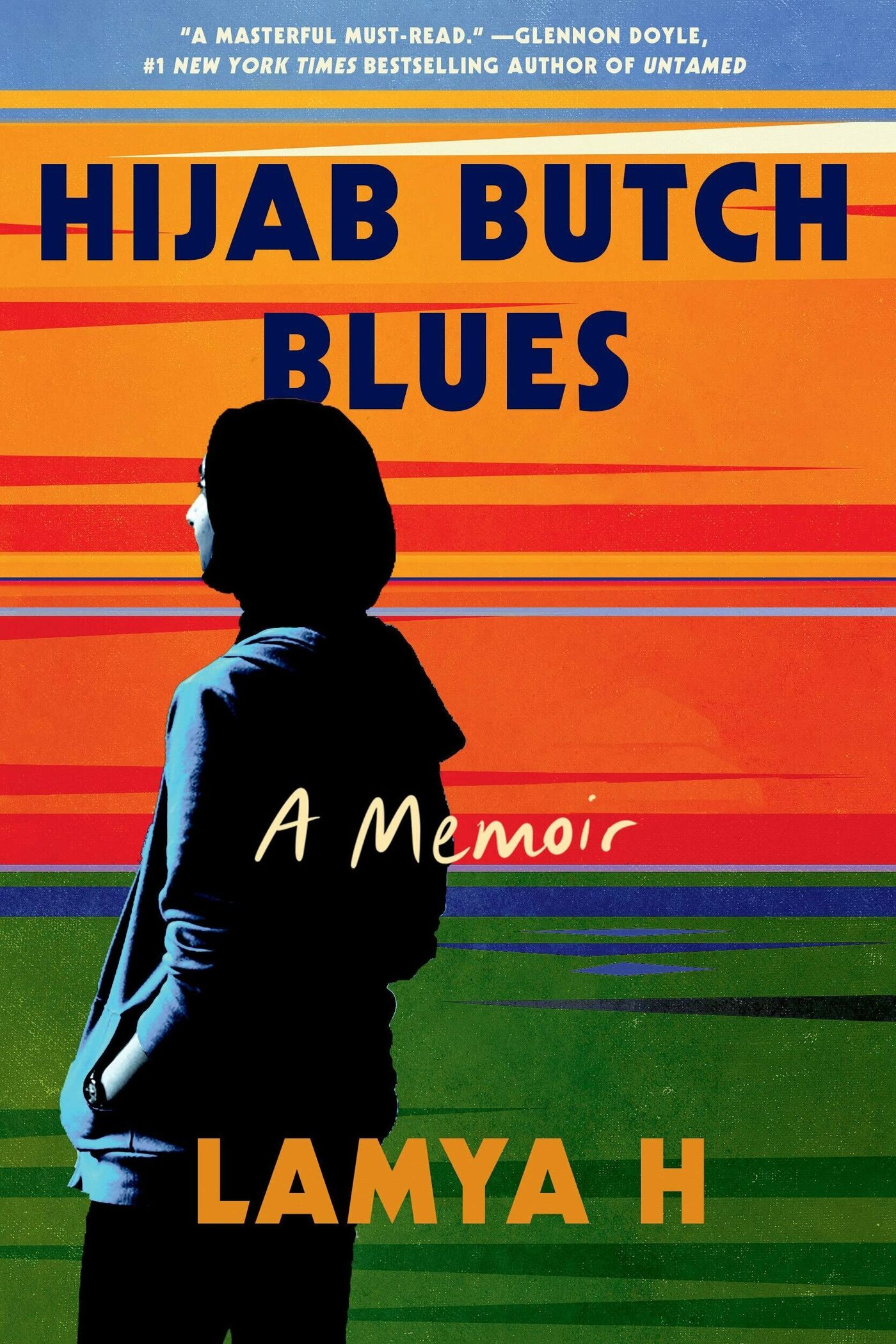
The author of the “vivid and urgent…important and timely” (The New York Times BookReview) debut The Map of Salt and Stars returns with this remarkably moving and lyrical novel following three generations of Syrian Americans who are linked by a mysterious species of bird and the truths they carry close to their hearts.
Five years after a suspicious fire killed his ornithologist mother, a closeted Syrian American trans boy sheds his birth name and searches for a new one. He has been unable to paint since his mother’s ghost has begun to visit him each evening. As his grandmother’s sole caretaker, he spends his days cooped up in their apartment, avoiding his neighborhood masjid, his estranged sister, and even his best friend (who also happens to be his longtime crush). The only time he feels truly free is when he slips out at night to paint murals on buildings in the once-thriving Manhattan neighborhood known as Little Syria.
One night, he enters the abandoned community house and finds the tattered journal of a Syrian American artist named Laila Z, who dedicated her career to painting the birds of North America. She famously and mysteriously disappeared more than sixty years before, but her journal contains proof that both his mother and Laila Z encountered the same rare bird before their deaths. In fact, Laila Z’s past is intimately tied to his mother’s—and his grandmother’s—in ways he never could have expected. Even more surprising, Laila Z’s story reveals the histories of queer and transgender people within his own community that he never knew. Realizing that he isn’t and has never been alone, he has the courage to officially claim a new name: Nadir, an Arabic name meaning rare.
As unprecedented numbers of birds are mysteriously drawn to the New York City skies, Nadir enlists the help of his family and friends to unravel what happened to Laila Z and the rare bird his mother died trying to save. Following his mother’s ghost, he uncovers the silences kept in the name of survival by his own community, his own family, and within himself, and discovers the family that was there all along.
TW/CW: transphobia, xenophobia, racism, Islamophobia, miscarriage, grief, sexual assault, animal death, loss of a parent
I didn’t go into The Thirty Names of Night with any expectations, but I was stunned by the writing! This novel is one of the best magical realism novels I’ve read in recent years, with writing as rich as a tapestry and a story that’s just as well-woven.
Joukhadar’s writing style was the star of Thirty Names; this is the first of his novels that I’ve read, but he has such a unique talent for finding unlikely comparisons and weaving them into the richest, most obvious but out-of-sight metaphors imaginable. I would never have compared the gray sky on a foggy day to the color of a kitchen knife, and somehow, it was right in front of me. His talent for metaphor suited the emotional depth of this story, as well as the almost fantastical element of the birds in New York—I will never claim to be the expert on him, but if there was any story that was suited for Joukhadar to tell, it’s this one.
That writing also made the emotional core of this story possible. There’s so much to Thirty Names: gender identity, grief, heritage, family, and the body itself, but all of it was handled with such grace and aplomb that made the story feel really, truly real. I might’ve even passed the aspect of the birds by as something that could feasibly happen with how this story was written. Every part of this novel is deeply moving, raw and beautiful, and the prose flows as smoothly as air over a bird’s wings.
All in all, a beautiful, literary tale of connections—to family, to gender, and to the world around us at large. 4.25 stars!
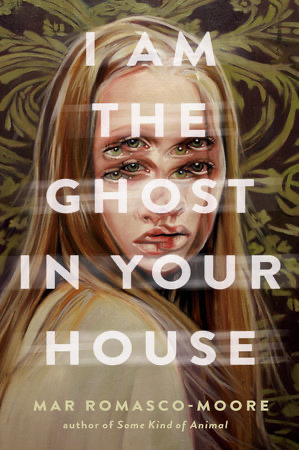
“If you control our sleep, then you can own our dreams…And from there, it’s easy to control our entire lives.”
From the brilliant mind of Charlie Jane Anders (“A master absurdist”—New York Times; “Virtuoso”—NPR) comes a new novel of Kafkaesque futurism. Set on a planet that has fully definitive, never-changing zones of day and night, with ensuing extreme climates of endless, frigid darkness and blinding, relentless light, humankind has somehow continued apace—though the perils outside the built cities are rife with danger as much as the streets below.
But in a world where time means only what the ruling government proclaims, and the levels of light available are artificially imposed to great consequence, lost souls and disappeared bodies are shadow-bound and savage, and as common as grains of sand. And one such pariah, sacrificed to the night, but borne up by time and a mysterious bond with an enigmatic beast, will rise to take on the entire planet–before it can crumble beneath the weight of human existence.
TW/CW: animal attack/animal death, police brutality, body horror
Alright, so the only explicitly stated Latinx characters, specifically of Mexican ancestry, are named…Carlos and Maria? So most everybody else gets semi-unique names, but not them? It’s like Cho Chang all over again…[LOUD INCORRECT BUZZER}
If I hadn’t read Victories Greater Than Death beforehand, I would’ve been more suspicious, but it seems like Anders has gotten a lot better with diversity on that front, but…still iffy. Just saying.
That aside, The City in the Middle of the Night was one of the more inventive dystopias that I’ve read recently, but it fell victim to very convoluted writing. It’s obvious from every page that Anders put so, so much work into creating a fleshed-out world with an equally fleshed-out history—that was a riotous success on her part. The premise of society being divided by a tidally-locked planet felt eerily feasible, and I absolutely ADORED all of the alien life forms on the night side of January—the Gelet were obviously my favorites, but I would’ve liked to have seen more creatures. ALWAYS MORE CREATURES.
However, Anders’ writing choices ended up making parts of The City in the Middle of the Night something of a struggle. The story itself ended up being rather convoluted and tangled, and I found myself getting lost and confused about wait, which side of the planet are we on again? Why are we here in the first place? The additions of a boatload of characters that ended up having very little consequence to the plot at large didn’t help either. This story had the potential to be incredible, but it ended up getting so lost in itself that it became an ordeal to figure out where I was.
All in all, an inventively-conceived dystopia that excelled in worldbuilding but floundered in its writing. 3.25 stars.
Tell me what you think! Did you participate in the #TransRightsReadathon, and if so, what books did you read? What do you think of these books?Let me know in the comments!
Today’s song:
That’s it for this week’s Book Review Tuesday! Have a wonderful rest of your day, and take care of yourselves!