Since today is both in the middle of Latinx Heritage Month and the start of spooky season proper, I figured I would deliver on both fronts. I’d heard a lot of buzz about this one, especially the fact that it had polyamorous representation—something I rarely see in literature, much less in YA. Genre fiction written in verse is also uncommon, so I had to pick up this book since it combined both of them. The result was something that was inventive at every turn.
Andres Santos is ready for a new start. After moving to Miami from São Paulo, he’s keen on leaving his past behind—especially his brush with mortality after nearly drowning and seeing the face of Death itself. He barely escaped by making a deal with Death for a second chance at life. Now, he’s a part of a happy, poly triad, deeply in love with spunky photographer Renee and joyous dancer Liora. But when a car crash puts Liora in a coma, Andres and Renee know that the only option is to confront Andres’ past—by returning to the Underworld where he once bargained for his very life.
TW/CW: car crash/coma, emotional abuse, suicide, self harm, eating disorders, fantasy violence
The minute that David Bowie was mentioned, I tried so hard not to go headfirst into liking this novel. My expectations were average, and I wanted to be surprised. And then “Space Oddity” became a recurring motif. You know me, I ate that up.
For the most part, I’ve rarely seen genre fiction and novels in verse mix. The latter is usually reserved for telling realistic fiction stories and occasional historical fiction, though I’ve only seen one or two examples of the latter. But using this method outside of fiction is something that, now that I’ve read Death’s Country, I feel should be utilized more often. Poetic language lends itself to describe the dark, fantastical setting of this novel and fantastical settings in general, and Romero’s is no exception; even if it doesn’t fill up the entire page, the flowing language renders the setting in luscious detail. Given that romance is also at the beating heart of this novel, Romero’s decision of putting it in verse made the romance feel all the more like the center of the narrative. Once more, her language didn’t just put the spotlight on it—the sparsity of the amount of words on the page truly made it feel like the center of the universe.
Even with the leaps and bounds that literature, mainly YA, has made in terms of queer representation, I’ve seen hardly any with polyamorous representation. (The only other one that I can remember is Iron Widow, which I also recommend!) What I liked about how Death’s Country handled it was that it was a polyamorous story, but that it wasn’t necessarily about polyamory; those stories have a place, but sometimes, the most powerful representation comes from seeing yourself in fantastical stories usually reserved for white, cishet, etc. protagonists. There are great discussions about the stigmas surrounding polyamory (cheating, slut-shaming, etc.), but they were only a part of the story, not the whole. The more that I think about it, a poly triad makes this story work in a way that it might not have with a couple; having two people, not just one, braving the Underworld for their girlfriend in a coma, presented a unique twist on a story that’s been retold countless times, and presented an opportunity to explore multiple perspectives of love under duress.
I went into Death’s Country expecting a meditation on death (obviously), but what I didn’t expect was such an insightful metaphor about how we idealize those we love in death. The Underworld in Death’s Country is almost a vehicle for reproducing what people deem most memorable about them: not just how they die, but how they were seen in death. Liora, who was adored unconditionally by both Andres and Renee, has been molded into a romanticized version of herself that, upon closer inspection, barely resembles the real Liora. Most of that is thanks to the manipulation of The Prince, but we later find out that even he is a reflection of the dark side of Andres’ love—that kind of unquestioning idealization that strips a real person into a glowing facsimile of who they once were. This provided an insight into these kinds of retellings (Death’s Country is a loose retelling of the myth of Orpheus and Eurydice) that they don’t normally touch on; death changes the people you love physically, but also mentally—in the perceptions of others that come to define them once their physical body is gone.
However, I feel like Death’s Country could have used a dual POV to execute the emotion to its absolute fullest. The only perspective we get is Andres, while we never get into the headspace of Renee, who is journeying with him through the underworld alongside him for the entire book. I wasn’t as big of a fan of Andres as a protagonist (I found him to be on the abrasive side at worst), but Romero’s writing of him was never sloppy or badly-executed in a technical sense. I just had the strongest sense that Renee had just as much of a story to tell as him! I get that Andres was specifically the one who made a deal with Death for another shot at life, but Liora isn’t just his girlfriend—she’s Renee’s girlfriend too. She needed more backstory, but I have a strong feeling that Death’s Country would have been enhanced if she’d also had more of a voice.
All in all, an inventive, fantastical novel-in-verse with plenty of fresh twists on otherwise well-trodden literary ground. 4 stars!
Death’s Country is a standalone, but R.M. Romero is also the author of The Dollmaker of Krakow, The Ghosts of Rose Hill, A Warning About Swans, and the forthcoming novel Tale of the Flying Forest.
Today’s song:
A NEW CURE ALBUM?? what a time to be alive
That’s it for this week’s Book Review Tuesday! Have a wonderful rest of your day, and take care of yourselves!
Here in the U.S., July is Disability Pride Month! Although I’ve seen some more recognition for it in the past few years, I find myself saying this over and over—disability issues are left behind in intersectional feminism far too often. The larger representation in media of disabled people as otherwise white and cishet, the lack of accessibility at many pride events, and the hurdles that most disabled students have to go through in order to get accommodations at school is proof. And yet, around 27% of Americans have some sort of disability—myself included. As the literary world has slowly shown more stories with disabled characters, it’s more important than ever to uplift disabled voices.
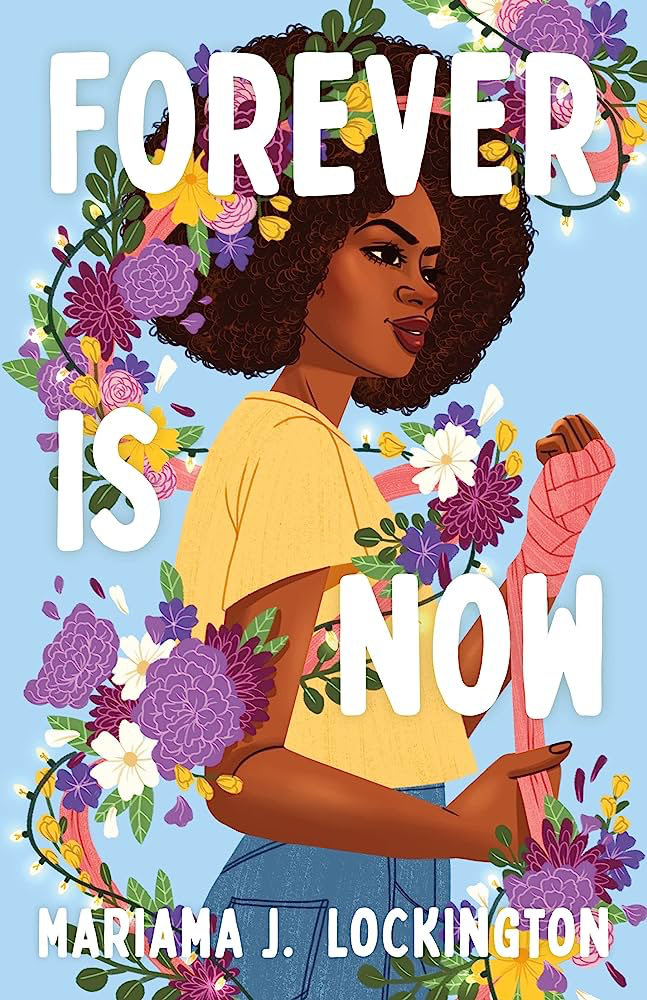
Like some of my other themed lists this year, I’ve decided to expand it beyond YA, because I’d be remiss if I didn’t include some of the amazing Adult and MG reads with disabled rep over the years. I’ve separated all of these recs by age group, and included their genres, my rating, and the type of disability rep.
(SHOUTOUT TO NOT IF I CAN HELP IT, I FINALLY HAVE A MORSEL OF SPD REP)
for my lists from previous years, click here:
2022 (+ on having SPD and the lack of representation)
TELL ME WHAT YOU THINK! Have you read any of these books, and what did you think of them? What are your favorite books with disabled rep? Let me know in the comments!
Today’s song:
That’s it for this year’s Disability Pride recs! Have a wonderful rest of your day, and take care of yourselves!
Here we are again in pride month! It certainly is a joyous time of year, but in the past few years, it’s been a difficult one, too. All across the country, we have seen waves of anti-LGBTQ+ legislation, and the rhetoric that queer people are unnatural and wish to convert your children has spread like wildfire. We’ve also seen a dangerous increase in book bans—particularly by queer authors and authors of color. Books with diverse perspectives aren’t harming children—depriving children of these books is the dangerous part. Now more than ever is it important to read diversely: there’s never any harm in seeing a different perspective through literature. And if you’re really that concerned about “protecting the children,” maybe you should advocate for stricter gun laws instead of worrying about drag queen story hour.
In past years, I’ve split this post up into multiple (organized by genre), but I decided to make it all one post this year to keep it all more organized.
TELL ME WHAT YOU THINK! What are your favorite queer reads that you’ve read recently? Have you read any books on this list, and what did you think of them? Tell me in the comments!
Today’s song:
That it for this year’s pride month recommendations! Have a wonderful rest of your day, and take care of yourselves!
As some of you may know, last week (March 20-27) was when the #TransRightsReadathon was hosted in response to a dangerous increase in anti-trans legislation across the U.S. Created by Simi Kern, the goal of the readathon was to give the spotlight to as many trans books and authors as possible to bring them awareness and support in light of the rampant transphobia across the country and beyond. It’s been frightening and heartbreaking to see what’s happening in other states, and I want to support my trans siblings in any way possible. So I’ve decided to include shorter reviews of all of the trans books I read this week—all of which were good!
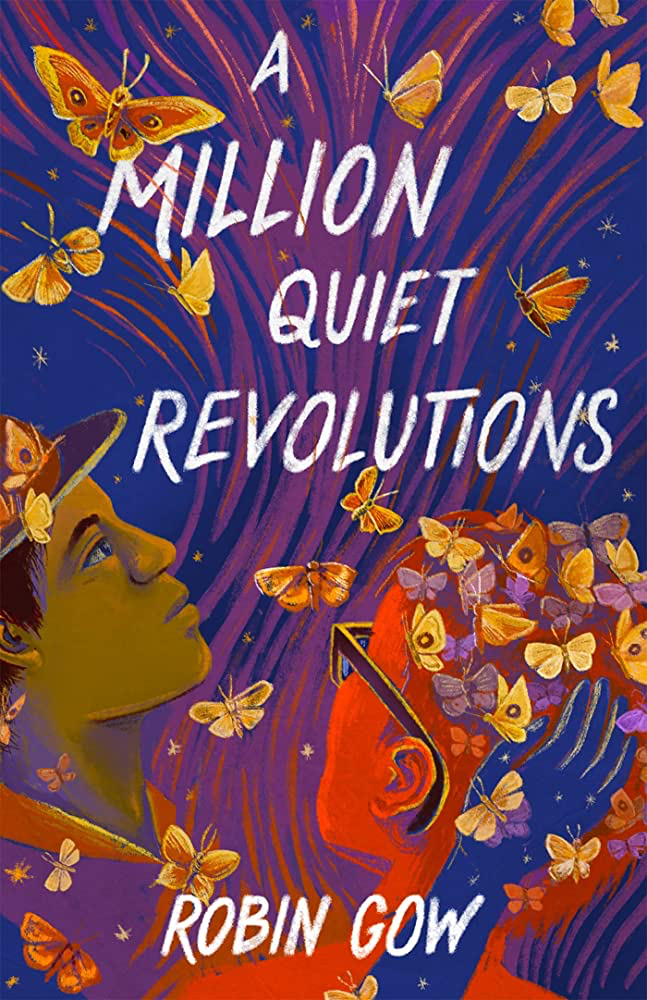
For as long as they can remember, Aaron and Oliver have only ever had each other. In a small town with few queer teenagers, let alone young trans men, they’ve shared milestones like coming out as trans, buying the right binders–and falling for each other.
But just as their relationship has started to blossom, Aaron moves away. Feeling adrift, separated from the one person who understands them, they seek solace in digging deep into the annals of America’s past. When they discover the story of two Revolutionary War soldiers who they believe to have been trans man in love, they’re inspired to pay tribute to these soldiers by adopting their names–Aaron and Oliver. As they learn, they delve further into unwritten queer stories, and they discover the transformative power of reclaiming one’s place in history.
TW/CW: transphobia, dysphoria, misgendering/deadnaming, homophobia, off-page sexual assault, religious bigotry
Novels in verse always get me when they’re done well, and A Million Quiet Revolutions was no exception. The story of Aaron and Oliver is one that was essential to be told, and it resulted in a beautifully poignant piece of verse!
The growing relationship between Oliver and Aaron felt so genuine, and the combination of pseudo-epistolary format (oh god, that sounded pretentious…) with verse emphasized the way that their relationship transcended barriers of both place and time. The interweaving of the past with the present gave me an insight into a queer part of history that I’m almost embarrassed that I didn’t consider until reading this—better late than never, I suppose. Their voices both leapt off the page, and the easy flow of Gow’s verse made the reading experience feel effortless, drifting like wind—good poetry, to me, doesn’t quite feel like poetry; the rhythm remains, but it doesn’t feel like going line by line in such a rote way.
Above all, the message of this novel in verse is one that’s so important, especially in a time where the narrative of LGBTQ+ people being trendy and new is being pushed so often—queer people have always been here, and we will always be here. Aaron and Oliver’s journey of researching their trans namesakes—cross-dressing soldiers in the Revolutionary War—was one that’s so necessary for understanding our own roots. The key to belonging is realizing that you have always been a part of history, no matter how many pains historians have taken to ignore or deliberately erase the queerness and transness that has always been there. For me, that’s why A Million Quiet Revolutions is such an important read.
Brimming with history and rich verse, A Million Quiet Revolutions is an ode to discovering your own roots, and finding solace in hidden histories. 4 stars!
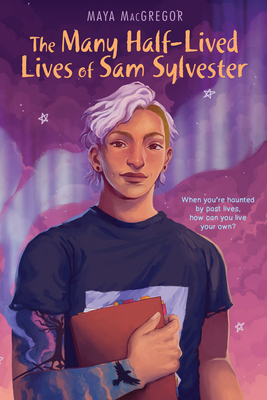
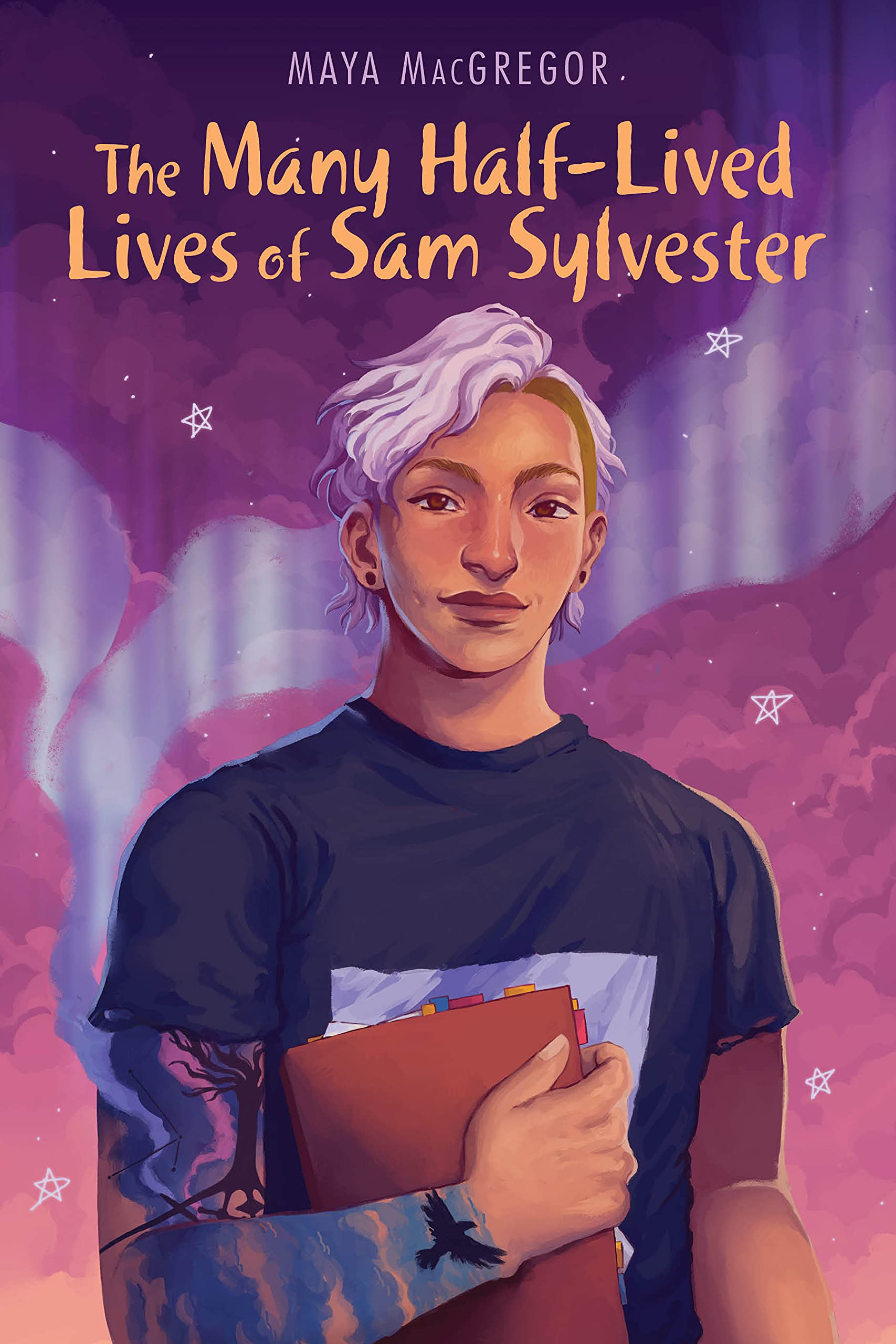
In this queer contemporary YA mystery, a nonbinary teen with autism realizes they must not only solve a 30-year-old mystery but also face the demons lurking in their past in order to live a satisfying life.
Sam Sylvester’s not overly optimistic about their recent move to the small town of Astoria, Oregon after a traumatic experience in their last home in the rural Midwest.
Yet Sam’s life seems to be on the upswing after meeting several new friends and a potential love interest in Shep, the pretty neighbor. However, Sam can’t seem to let go of what might have been, and is drawn to investigate the death of a teenage boy in 1980s Astoria. Sam’s convinced he was murdered–especially since Sam’s investigation seems to resurrect some ghosts in the town.
Threatening notes and figures hidden in shadows begin to disrupt Sam’s life. Yet Sam continues to search for the truth. When Sam discovers that they may be closer to a killer than previously known, Sam has a difficult decision to make. Would they risk their new life for a half-lived one?
My ultimate hope was that this book would be as well-crafted as its cover, and for the most part, it lived up to my expectations! The Many Half-Lived Lives of Sam Sylvester deftly toes the line between a coming-of-age story and a decades-old mystery, buoyed by a diverse and lovable cast.
Sam Sylvester has a batch some of the most diverse representation I’ve seen in a realistic fiction/mystery novel in a while—aside from having a nonbinary, asexual, and Autistic protagonist (more neurodivergent protagonists, please!!), there were so many different characters that were incredibly intersectional—queer, POC, and disabled characters all across the board, and not just the teen characters too! All of these identities were woven so well into the story, and I loved the journey of self-acceptance and reckoning that Sam experiences throughout the novel as they unravel the mystery of the boy who died in their room 30 years ago.
That being said, although I liked most every aspect of this novel, this really feels like a novel that’s going to date itself. I enjoyed a handful of the references (always extra points for David Bowie), but a lot of the more recent ones—the references to Tumblr, Gen Z slang, internet culture, and a Steven Universe gag every other page, read as very hackneyed and stilted. As authentic as the rest of Sam Sylvester was, those parts dragged down what would have otherwise been powerful and realistic dialogue. Most of the writing did its job and did it well, but the attempt to ground it in the present day only ended up making a novel that’s going to date itself far quicker than it was probably intended to.
Despite that, I’d say that Sam Sylvester is still a must-read—for the excellent representation, for the mystery, and for the coming-of-age story. 3.75 stars, rounded up to 4!
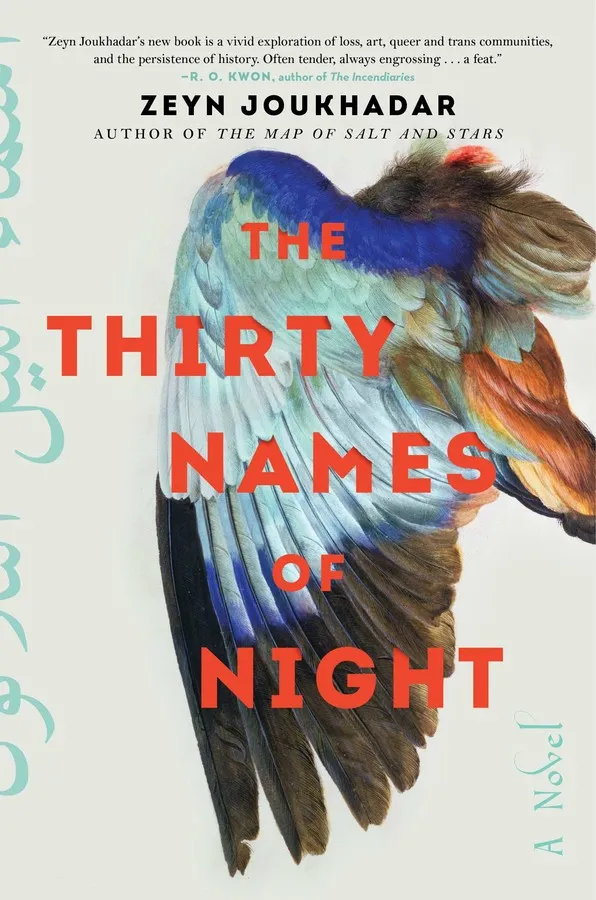
The author of the “vivid and urgent…important and timely” (The New York Times BookReview) debut The Map of Salt and Stars returns with this remarkably moving and lyrical novel following three generations of Syrian Americans who are linked by a mysterious species of bird and the truths they carry close to their hearts.
Five years after a suspicious fire killed his ornithologist mother, a closeted Syrian American trans boy sheds his birth name and searches for a new one. He has been unable to paint since his mother’s ghost has begun to visit him each evening. As his grandmother’s sole caretaker, he spends his days cooped up in their apartment, avoiding his neighborhood masjid, his estranged sister, and even his best friend (who also happens to be his longtime crush). The only time he feels truly free is when he slips out at night to paint murals on buildings in the once-thriving Manhattan neighborhood known as Little Syria.
One night, he enters the abandoned community house and finds the tattered journal of a Syrian American artist named Laila Z, who dedicated her career to painting the birds of North America. She famously and mysteriously disappeared more than sixty years before, but her journal contains proof that both his mother and Laila Z encountered the same rare bird before their deaths. In fact, Laila Z’s past is intimately tied to his mother’s—and his grandmother’s—in ways he never could have expected. Even more surprising, Laila Z’s story reveals the histories of queer and transgender people within his own community that he never knew. Realizing that he isn’t and has never been alone, he has the courage to officially claim a new name: Nadir, an Arabic name meaning rare.
As unprecedented numbers of birds are mysteriously drawn to the New York City skies, Nadir enlists the help of his family and friends to unravel what happened to Laila Z and the rare bird his mother died trying to save. Following his mother’s ghost, he uncovers the silences kept in the name of survival by his own community, his own family, and within himself, and discovers the family that was there all along.
TW/CW: transphobia, xenophobia, racism, Islamophobia, miscarriage, grief, sexual assault, animal death, loss of a parent
I didn’t go into The Thirty Names of Night with any expectations, but I was stunned by the writing! This novel is one of the best magical realism novels I’ve read in recent years, with writing as rich as a tapestry and a story that’s just as well-woven.
Joukhadar’s writing style was the star of Thirty Names; this is the first of his novels that I’ve read, but he has such a unique talent for finding unlikely comparisons and weaving them into the richest, most obvious but out-of-sight metaphors imaginable. I would never have compared the gray sky on a foggy day to the color of a kitchen knife, and somehow, it was right in front of me. His talent for metaphor suited the emotional depth of this story, as well as the almost fantastical element of the birds in New York—I will never claim to be the expert on him, but if there was any story that was suited for Joukhadar to tell, it’s this one.
That writing also made the emotional core of this story possible. There’s so much to Thirty Names: gender identity, grief, heritage, family, and the body itself, but all of it was handled with such grace and aplomb that made the story feel really, truly real. I might’ve even passed the aspect of the birds by as something that could feasibly happen with how this story was written. Every part of this novel is deeply moving, raw and beautiful, and the prose flows as smoothly as air over a bird’s wings.
All in all, a beautiful, literary tale of connections—to family, to gender, and to the world around us at large. 4.25 stars!
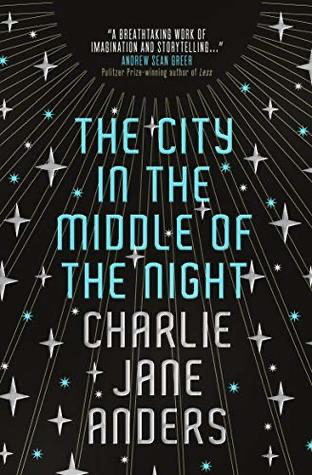
“If you control our sleep, then you can own our dreams…And from there, it’s easy to control our entire lives.”
From the brilliant mind of Charlie Jane Anders (“A master absurdist”—New York Times; “Virtuoso”—NPR) comes a new novel of Kafkaesque futurism. Set on a planet that has fully definitive, never-changing zones of day and night, with ensuing extreme climates of endless, frigid darkness and blinding, relentless light, humankind has somehow continued apace—though the perils outside the built cities are rife with danger as much as the streets below.
But in a world where time means only what the ruling government proclaims, and the levels of light available are artificially imposed to great consequence, lost souls and disappeared bodies are shadow-bound and savage, and as common as grains of sand. And one such pariah, sacrificed to the night, but borne up by time and a mysterious bond with an enigmatic beast, will rise to take on the entire planet–before it can crumble beneath the weight of human existence.
TW/CW: animal attack/animal death, police brutality, body horror
Alright, so the only explicitly stated Latinx characters, specifically of Mexican ancestry, are named…Carlos and Maria? So most everybody else gets semi-unique names, but not them? It’s like Cho Chang all over again…[LOUD INCORRECT BUZZER}
If I hadn’t read Victories Greater Than Death beforehand, I would’ve been more suspicious, but it seems like Anders has gotten a lot better with diversity on that front, but…still iffy. Just saying.
That aside, The City in the Middle of the Night was one of the more inventive dystopias that I’ve read recently, but it fell victim to very convoluted writing. It’s obvious from every page that Anders put so, so much work into creating a fleshed-out world with an equally fleshed-out history—that was a riotous success on her part. The premise of society being divided by a tidally-locked planet felt eerily feasible, and I absolutely ADORED all of the alien life forms on the night side of January—the Gelet were obviously my favorites, but I would’ve liked to have seen more creatures. ALWAYS MORE CREATURES.
However, Anders’ writing choices ended up making parts of The City in the Middle of the Night something of a struggle. The story itself ended up being rather convoluted and tangled, and I found myself getting lost and confused about wait, which side of the planet are we on again? Why are we here in the first place? The additions of a boatload of characters that ended up having very little consequence to the plot at large didn’t help either. This story had the potential to be incredible, but it ended up getting so lost in itself that it became an ordeal to figure out where I was.
All in all, an inventively-conceived dystopia that excelled in worldbuilding but floundered in its writing. 3.25 stars.
Tell me what you think! Did you participate in the #TransRightsReadathon, and if so, what books did you read? What do you think of these books?Let me know in the comments!
Today’s song:
That’s it for this week’s Book Review Tuesday! Have a wonderful rest of your day, and take care of yourselves!
Happy Wednesday, bibliophiles, and more importantly, Happy International Women’s Day!
Aside from that, the month of March in the U.S. is Women’s History Month! These past few years have been tumultuous for women here in the U.S. and elsewhere, with the attacks on bodily autonomy being some of the most violent in recent years. But despite it all, we cannot lose hope—by lifting each other up, we can foster an environment that respects women as equals. And as I’ve always said, literature is resistance: it isn’t just real-life heroes that can inspire us to incite change—fictional heroines can have just the same effect. So for the occasion, I’ve gathered even more feminist YA book recommendations.
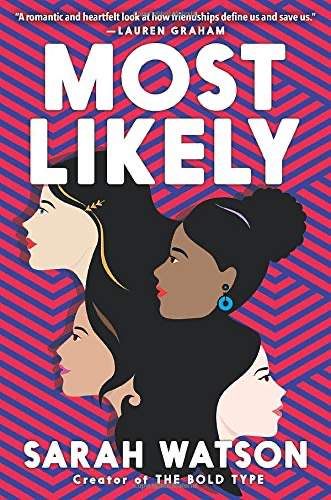
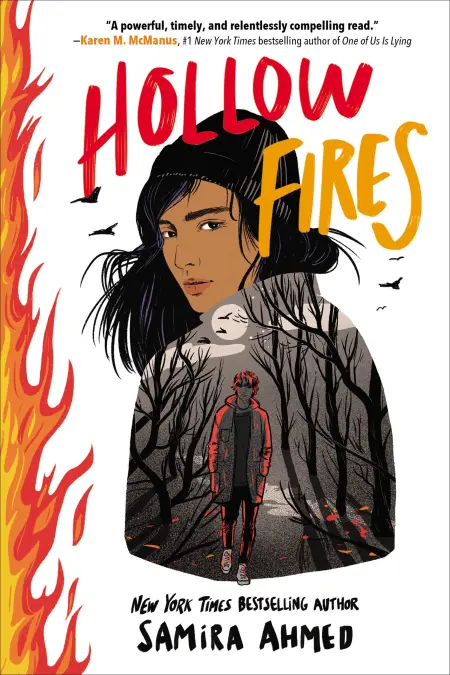
An intersectional story that weaves together the lives of four girls in their senior year of high school—one of which will become the president of the United States.
Samira Ahmed always ends up showing up on these lists, and for good reason—she’s never missed with any of her raw and fiercely feminist novels, and Hollow Fires is no exception.
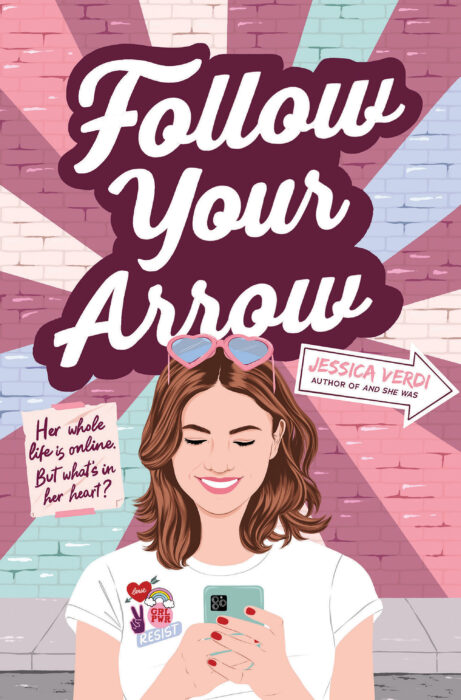
Though this book was far from perfect, I think it’s still worth it to put on this list; the writing and romance weren’t great, but Follow Your Arrow has plenty of timely discussions around bisexuality and how we treat queer women.
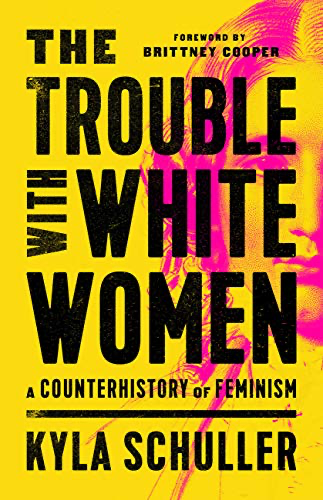
Although this list was intended to be just for YA and fiction, I’d be remiss if I made a post about feminism and didn’t include this book. The Trouble With White Women presents a view on feminism that is necessary for moving past simply white feminism, and presents the feminist movement through those on the margins, such as Frances Harper, Pauli Murray, and Alexandria Ocasio Cortez. It’s seriously one of the best nonfiction books I’ve read in ages—on any subject matter.
TELL ME WHAT YOU THINK! What did you think of the books on this list? What are your favorite feminist YA books? Let me know in the comments!
Today’s song:
Most of the Warpaint I’ve heard hasn’t done much for me (aside from their great cover of “Ashes to Ashes”), but I love the quietness of this one!
That’s it for this list of recommendations! Have a wonderful rest of your day, and take care of yourselves!
Happy Tuesday, bibliophiles! I refuse to believe that February is almost over…
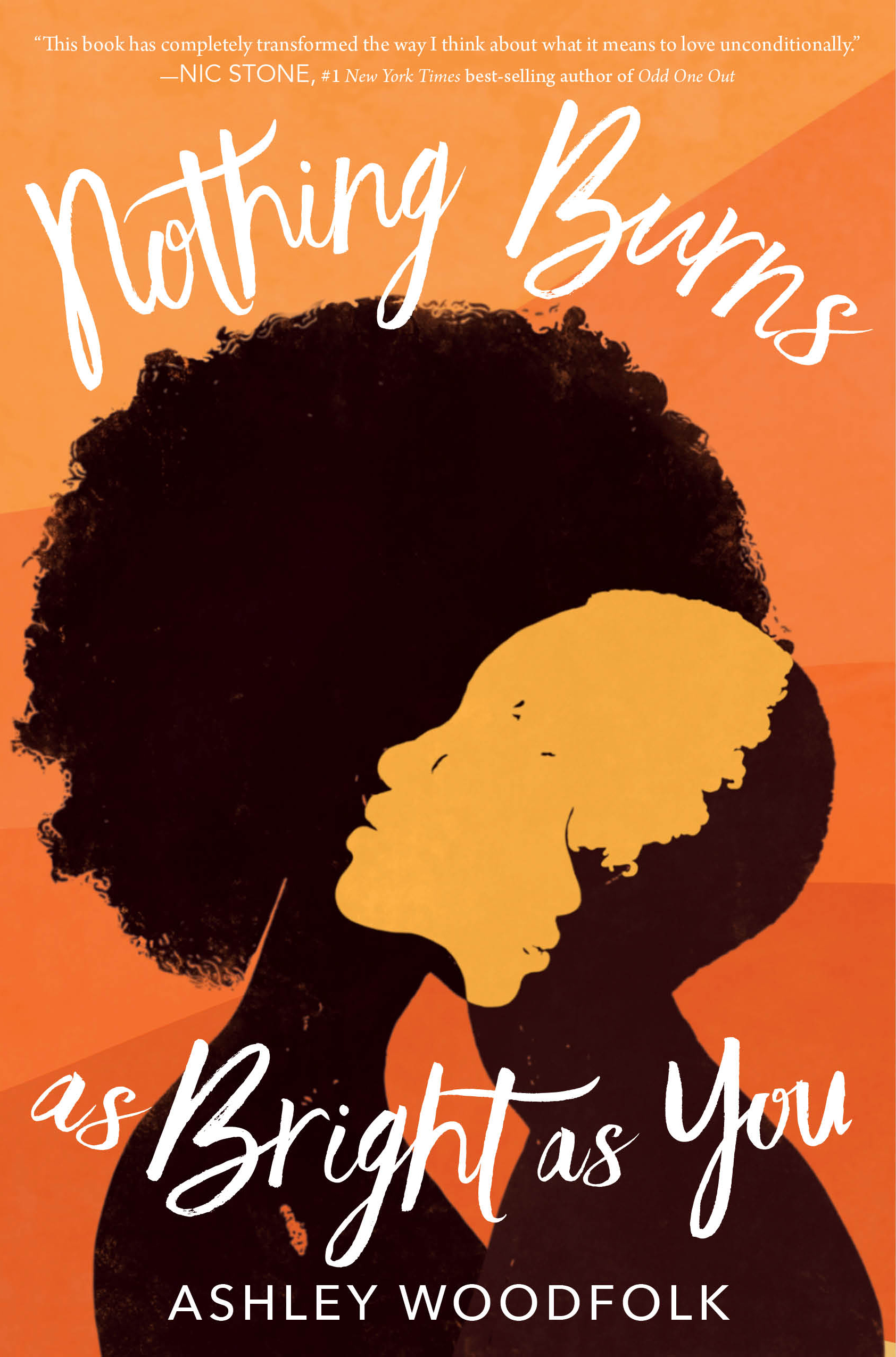
I didn’t know that Ashley Woodfolk had come out with a new book until very recently, and I ended up picking it up more on a whim than anything. But Nothing Burns as Bright as You quickly became my favorite read of this month, and easily the best of Woodfolk’s work that I’ve read. Raw, visceral, and consistently powerful, Woodfolk’s prose is great, but her poetry is something else entirely.
Written in verse, Nothing Burns follows two unnamed girls, best friends who slowly but surely realize that they’ve become something more. But when one’s actions begin to toe the line of their relationship, their love—and their lives—fall in jeopardy. The foundation that once sustained their relationship has begun to crumble, but whether it can be glued back together will be decided in the blink of an eye.
TW/CW: racism, homophobia (some religious homophobia), substance abuse, sexual harassment
I kind of love the feeling when a book you just picked up on a whim hits you harder than you ever could have anticipated. I just thought “oh, it’s Ashley Woodfolk, I liked her last book, what could go wrong,” and the next thing I know, I’m highlighting every other line on my Kindle. Nothing Burns as Bright as You is just that powerful, a poignant story of the complexities of a toxic relationship.
Woodfolk’s prose is already excellent, as evidenced in When You Were Everything and several of her short stories, but her poetry hits a note so resonant that I couldn’t stop thinking about it. Every line is nothing short of genius—clever and observant, but nothing short of raw and painful. Nothing Burns as Bright as You is a heart laid bare for all to see, unflinching in the complicated, nuanced realities it depicts.
It would be easy to romanticize the events of Nothing Burns as Bright as You, but Woodfolk knew exactly how to avoid it; it’s a story about falling so hard in love that you lose yourself, but it’s also about coming to terms with loving somebody who drags you through the mud, who breaks you down even when they promise to love you. Setting fire to a dumpster outside of a high school is the perfect set-up for a coming-of-age romance, but a coming-of-age romance this isn’t…and is. The emphasis should be on the coming-of-age part; it’s about learning to heal from somebody that you thought loved you, and grappling with the fact that love isn’t black and white, and like a fire, it can give you warmth, but also consume you to the point of no return.
Even when both of the protagonists went unnamed, their personalities and stories shone through in every page. Despite the fact that it made writing my summary here a little tricky, the character study is vibrant enough that you don’t need names to tell each character apart—their clashing personalities come through in every relentlessly beautiful line. It’s so important to tell more inclusive love stories, but the reality is that not everything is quite so neat and simple—sapphic love isn’t always sunshine and roses. We need our stories of queer Black girls falling in love, but we need our stories of queer Black girls growing from complicated, toxic relationships almost just as much.
All in all, a startlingly raw and beautiful story of the complexities of queer love and being with somebody to the point of danger. 4.5 stars!
Nothing Burns as Bright as You is a standalone, but Ashley Woodfolk is also the author of When You Were Everything and The Beauty That Remains, and has also contributed short stories to collections such as Blackout, A Phoenix Must First Burn, and several others.
Today’s song:
WAAAAAAAAAAAAAAAGH THIS IS SO GOOD I LIKE IT EVEN MORE THAN MOST OF CRACKER ISLAND????
That’s it for this week’s Book Review Tuesday! Have a wonderful rest of your day, and take care of yourselves!






 The Bookish Mutant