
Happy Sunday, bibliophiles!
This week: even though I mention both Water Moon and Underwater Moonlight in this post, they’re somehow not paired together…sorry. Plus, songs about grief, love, and illegally keeping wild animals in your apartment.
Enjoy this week’s songs!
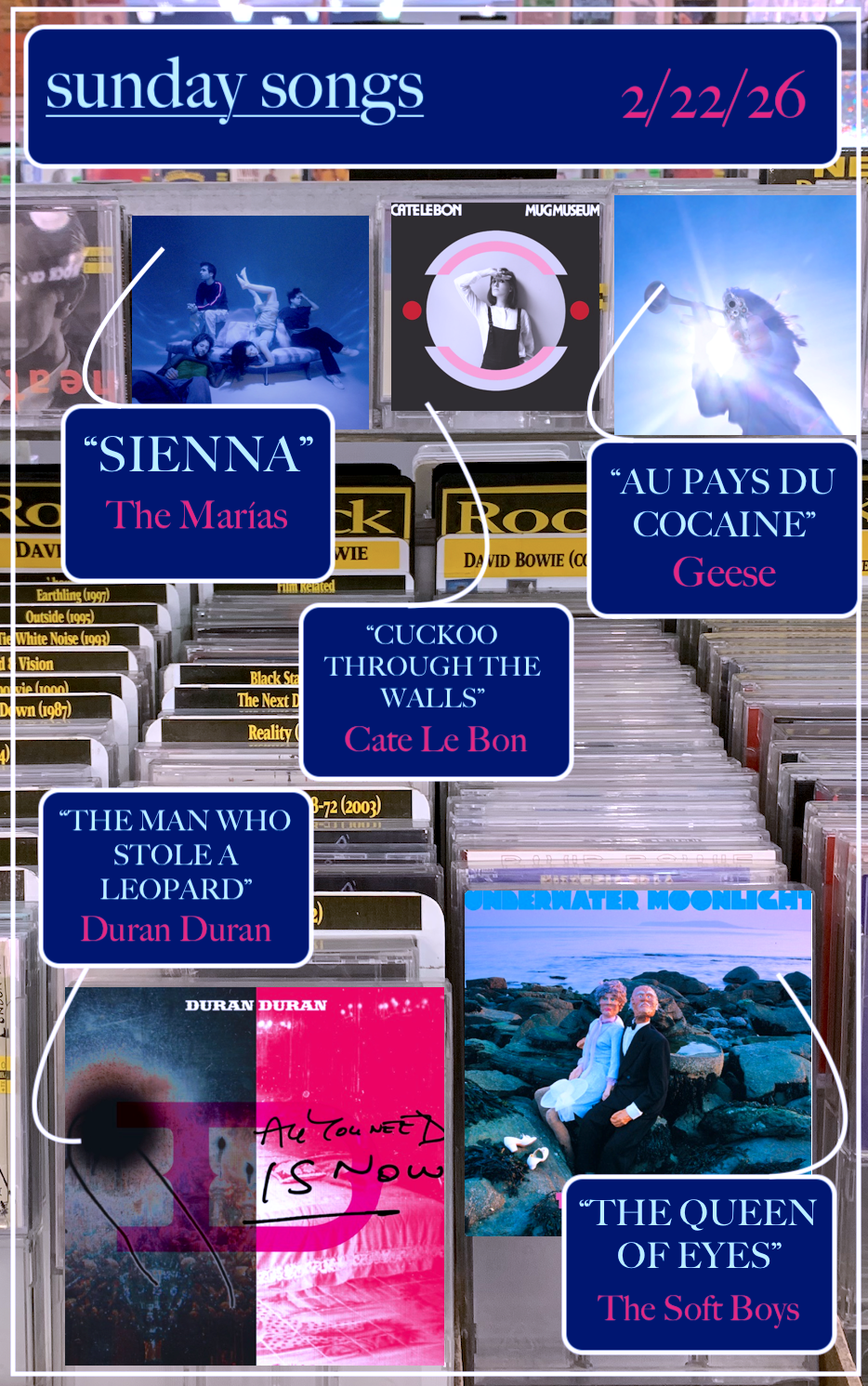
SUNDAY SONGS: 2/22/26
“The Man Who Stole a Leopard” – Duran Duran
I didn’t expect to be putting such critical Madeline Todd lore here on the blog, but it was recently dredged up from the annals of my mind after not thinking about it for, at minimum, a decade. So here you are.
I’ve been something of a Durannie from a young age. Second-generation Durannie on my mother’s side, if you will. My mom was at the critical point of fandom for Duran Duran, being a tween (and then a teen) in their heyday, and from an early age, she passed down that love to me. I have lots of fond memories of watching their music videos from a DVD on our old TV, along with listening to their CDs while we played with Barbies, some of which my mom had passed down to me as well. That brings us to All You Need Is Now, which came out when I was in elementary school; a lot of the tracks have heaps of nostalgia attached to them, including “The Man Who Stole a Leopard,” which I loved at the time. Fast forward a few years, and I now had my own iPod nano that I could listen to music with at night. “The Man Who Stole a Leopard” made its way onto the first playlist that my dad lovingly made. But at night, this song transformed into something that scared the shit out of me. Specifically, the violin sample beginning at 5:52. “Scared the shit out of me” is an adequate description, but what might be more accurate is that it gave me the absolute willies. My heebies were jeebied, dude. Something about the mild distortion of the violins, under cover of darkness, sounded so fundamentally wrong to my 10-year-old mind, huddled under blankets. Thankfully, I got my dad to remove the song from the playlist, and the nightmare ended.
Naturally, this was a very pleasant thing to remember when I woke up at 4 am a few weeks back. But when I revisited “The Man Who Stole a Leopard,” I found that my memory had completely distorted my perception of that violin sample that freaked me out all those years ago. Admittedly, I get a kind of knee-jerk sense of dread in the lead up to it, but I was pleasantly surprised that it sound completely innocuous to me—a little distorted and reverby, but just a handful of fuzzy chords to give a flourish to the outro. I’m now hovering where I was in the pre-iPod era, when I was allured by this song. Despite what the fabricated (yes, FABRICATED, I’ve been living a lie since 2011) news broadcast might lead you to believe, this tale of the man who stole a leopard and kept it in his apartment is entirely fictional. (Granted, some of the wording in the broadcast clues me in to the fictionality of it now, but it’s still fairly convincing, especially considering that they got the real newscaster Nina Hossain to record it.) What stands out to me about this track, along with most of the tracks I fondly remember from All You Need Is Now, is that there’s hardly a sense of Duran Duran trying to put their youthful, ’80s glory days in amber and imitate it. Sure, there’s a very “Hungry Like the Wolf” sensibility to the subject matter, but its prolonged runtime (6:15) and more eery atmosphere better fits their earliest albums, before they became perennial pop icons of the ’80s. Like a prowling cat, it’s a drawn-out, seductive crawl through a tale of toxic seduction and love that isolates you from all else. But from all of these memories, there’s one crucial lesson I have to take from this: things tend to sound a lot more sinister when you’re in the dark. Shed some light on it, and this track—like so many other things—will lose the fangs you thought they had. What a relief it is to not be 10 anymore. I love this song.
…AND A BOOK TO GO WITH IT:
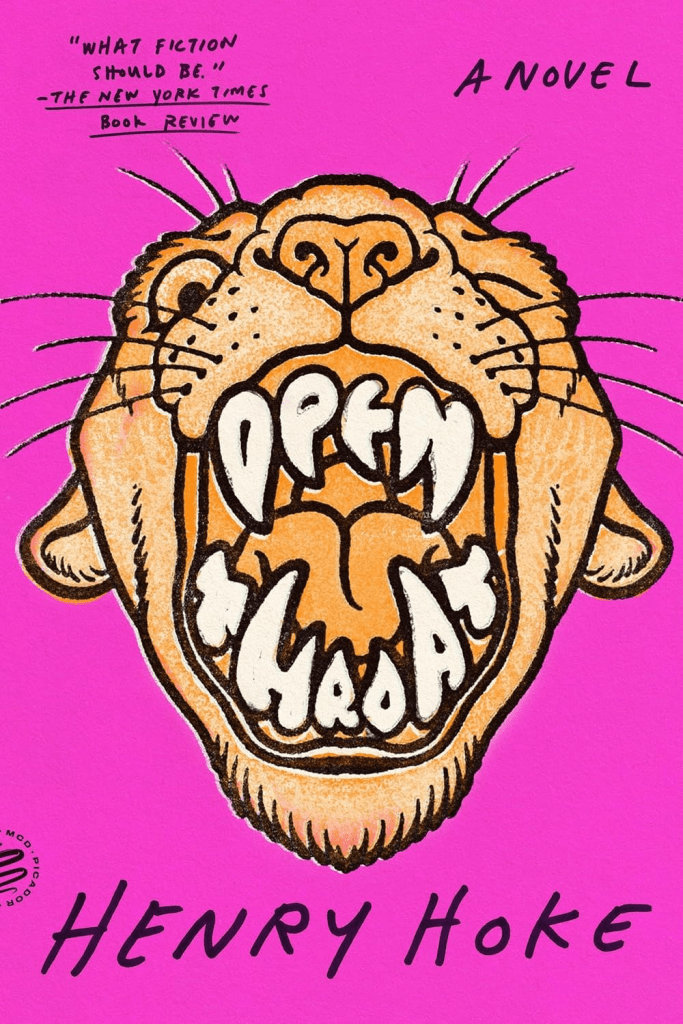
Open Throat – Henry Hoke – I think there’s enough overlap between a big cat being inside human houses and almost being domesticated to bridge the gap between a leopard and a mountain lion. Literary fiction isn’t always my favorite, but this was an excellent read.
“Queen of Eyes” – The Soft Boys
At its worst, a lot of punk music and culture became a caricature of itself; There was such a dogged determination to “sticking it to the man” that, in declaring that they were different from the mainstream, they created a different kind of conformity in sound and style. If you’re not exactly like x, y, or z, you weren’t punk. As insufferable as that is in retrospect (and today, presumably, though I don’t keep up with a lot of modern punk), it did breed a veritable garden of absolute weirdos who weren’t punk enough in a myriad of ways—bands like XTC and The Soft Boys, whose quirky members adhered in some ways to punk’s musical style, but were too sincere—and literary-minded—for punk, because punks don’t write about statues who come alive and wander out to sea. I’ve definitely been influenced by some aspects of punk bands and aesthetics over the years, especially when I started becoming more aware of politics; however, I feel like the bands I identify more with are the ones that were a little too soft, melodic, or just authentic enough for punk. And I think that’s where my expression falls too—I’ve always identified, in terms of my makeup and my clothes and my politics and my music, with “alt,” just because it’s an umbrella term for anyone who falls outside of those strictly-defined, often social media-enforced lines in the sand between one aesthetic from another. My music taste was bound to fall here eventually.
I’d loved about half of Underwater Moonlight ever since I saw Robyn Hitchcock for the first time, but now that I’ve started collecting vinyl, I picked up a copy of the album when I saw him again at the beginning of the month—AND GOT IT SIGNED BY THE MAN HIMSELF!! I’m still in shock, honestly, so on the off chance that you’re reading this, Mr. Hitchcock—thanks again. It’s been in the background of my life consistently for the past month, and I can’t think of any downsides, other than my neighbors hearing the lyrics of “Old Pervert” through the walls. (Look, it’s not my fault that they made a song called “Old Pervert” but also made it an indisputable banger.) I was agonizing over which song to include here, since they’ve all more or less been on a loop in my brain, but “Queen of Eyes” stuck out to me, probably the sunniest inclusion on the record, especially on the heels of the jagged, leering stylings of “Old Pervert.” Even this early on, Hitchcock was nothing but himself: his half-nonsensical, half sweetly sincere and lovesick lyrics are wrapped in a wallpaper collaged from the psychedelic Beatles, Syd Barrett, and something that could have only come from his brain and his alone. Bright, jangly, and infectiously catchy, it embodies this line from the booklet that came from my record booklet, written by David Fricke: “the Soft Boys dared to ask: did punk rock and the end of the 1970s…also have to mean the end of joy, literacy, and bright voices?” That torch remains the same one that Hitchcock has carried for the rest of his prolific career. What struck me while listening to Underwater Moonlight is that this same spirit has always been there—his sprightly musical vitality has only brightened since his early forays into music.
…AND A BOOK TO GO WITH IT:

A Song of Salvation – Alechia Dow – “Here I am again, it’s no surprise/Locked in orbit ’round the queen of eyes…”
Expect a lot more about The Marías in the coming weeks—they’ve been a very calm anchor in the chaos of…well, everything in my life. I’ve spent the past week digging more into their music, but this song was one of the first I discovered, in no small part because it was the soundtrack to a recent art trend that went around Instagram and TikTok. (The one I linked is from @zaiciart on Instagram, who has such a wonderful style!) From what I’ve heard of the album, Submarine really was the best possible name—every song feels like it’s been submerged, crafted from trails of bubbles and that special kind of whispery echo that happens to your voice when you’re trying to talk to your friends in the pool. María Zardoya has such a uniquely ethereal voice, so much so that it was genuinely jarring to hear her normal, lower speaking voice on their (excellent) Tiny Desk concert. “Sienna” is a wistful track, but one that only really harpoons you in the gut out of nowhere once you look into the lyrics—the backdrop is the fallout of Zardoya’s previous relationship, but specifically mourning the baby she imagined having with her partner: “she would have done all these things like us. But because we broke up, Sienna will never exist,” Zardoya said about the origin of the track. The track’s ghostly qualities crystallizes once you know that meaning—this entire future that Zardoya imagined is nothing but mist now; it’s fitting that, as this future fades away, so does the song, and Submarine as a whole—”Sienna” is the last breath before the album closes, an exhale of resignation before Zardoya’s wishes become ephemeral.
…AND A BOOK TO GO WITH IT:
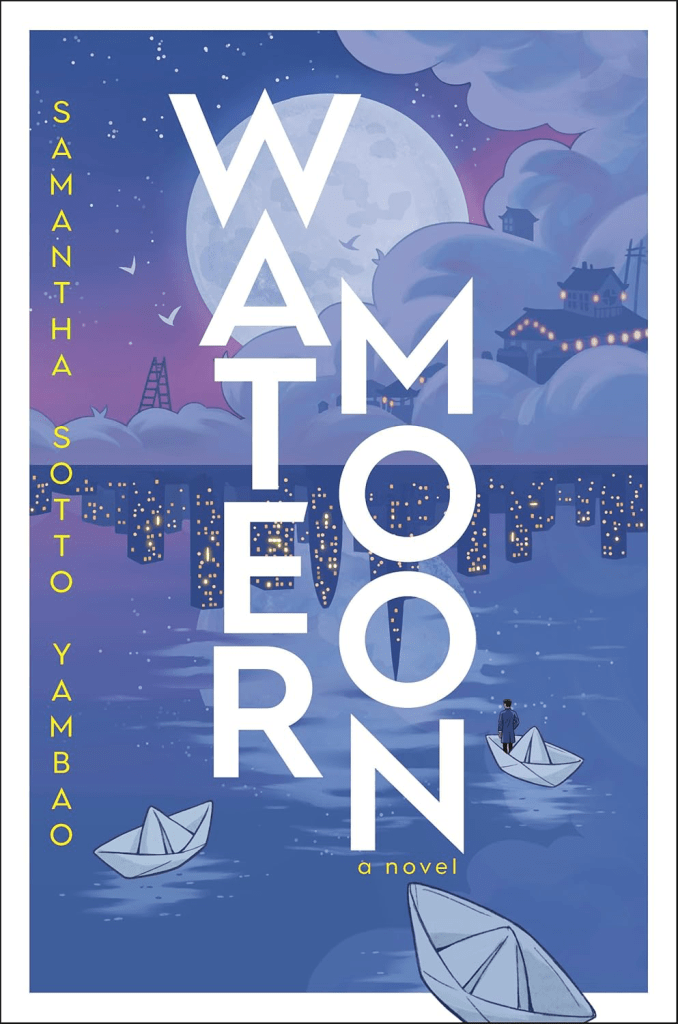
Water Moon – Samantha Sotto Yambao – “And I smile when I think of all the times we had/On the beach in the winter, when the waves were mad/Down by the water, crystal clear/See her face in the forest, then it disappears…”
“Cuckoo Through the Walls” – Cate Le Bon
Sunday Songs has basically become one of those Scooby-Doo villain reveal scenes. You rip off the “Sunday Songs” mask, and it’s just a weekly excuse for me to blabber on about Cate Le Bon. You fools all fell for my trap!
Did Cate Le Bon just casually come out of the womb with years’ worth of fully-formed talent? I still have two albums of hers that I haven’t listened to, but I swear that she’s incapable of making a bad album. Mug Museum feels a lot more like a standard indie rock album than her more recent works, but even the more (marginally) accessible style couldn’t keep her from her quirky engine firing on all cylinders. Moments of somber contemplation (“Mug Museum”) are hand in hand with ragged rage (“Wild”), and yet all form the weave of Le Bon’s experiences surrounding the album. Most of it deals with the death of her grandmother and how Le Bon processed her sudden absence from the matrilineal line; for her, it was less about what her grandmother meant to her as an individual and more about how her family rearranged and shifted in wake of her absence. The titular Mug Museum is a kind of haunted house of sorts where memories live: she called it “an imaginary place where relationships are looked at and thought upon.” Walking through this album does feel like strolling through a museum built inside of someone’s old house; small objects hold centuries of memories, and every strand on a curtain or crack in a window holds a deep history. “Cuckoo Through The Walls” is one of the tracks that I felt exemplified this feeling the best. Its more restrained, steady pace feels like tentatively peering through all the corners of said aging, dusty house, glancing at the light illuminating unseen gaps in the floorboards. Le Bon describes a state where these memories have anchored her to the house, to the point where she almost becomes the house itself: “And I watched the dinner drown/I drank for hours/Never leave the house/Cuckoo through the walls/Lay still on the ground/Exhale the sound of symphonies.” Like her signature, left-of-center takes on the most universal emotions, her grief doesn’t keen, but sinks into all the hollows of her mind and body—and that might be more of an honest depiction of it than most songwriters are willing to take.
…AND A BOOK TO GO WITH IT:
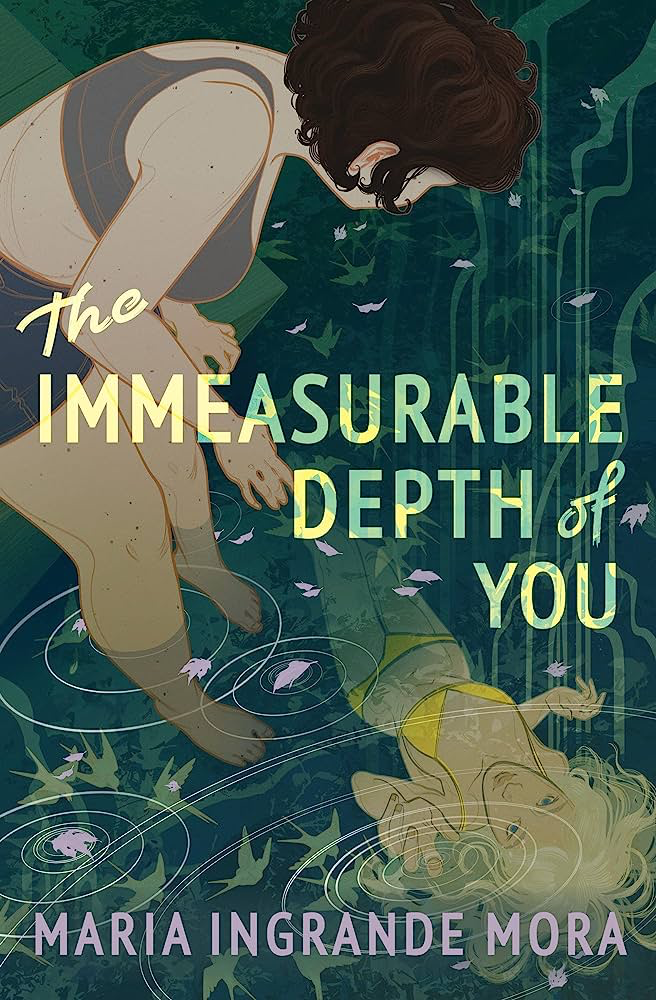
The Immeasurable Depth of You – Maria Ingrande Mora – “I will not sing your name/And tie my heart to Jupiter/And watermelon dreams/I felt the fear of change…”
Alright, you got me. The jury’s still out if Getting Killed is getting lobbed onto the mounting pile of albums I want to listen to, but “Au Pays du Cocaine” makes me understand a modicum of the hype. Sometimes an album invades your Instagram feed for no reason, but half the time, there’s at least something to it, even if that something boils down to only a song or two. This song just makes me feel…safe. Yes, it’s seems more to be about a relationship with someone who’s ruined their life, but it feels so safe to me. It sounds like the friends you give you a ride when it’s too far to walk, and the people who texted me and offered their showers when the hot water shut off in my apartment. It’s a hastily-built up lean-to to give you a fleeting moment of shelter in the rain. The middle ground between my feelings about “Au Pays du Cocaine” and the more literal lyrics is that it’s a promise: believing that people can change, and being ready for them when they do. I’ve learned the hard way that for some people, you just have to let them heal on their own terms, but that you by no means have to forgive them, or even be there for that healing. There’s a hard-won freedom in that realization. But this song is for the ones that are worth sticking around for—the people you love despite their faults. It’s rare to find those people worth sticking around for, but maybe that’s why I feel such solace in this song—those people are few and far between, but this song is for them.
…AND A BOOK TO GO WITH IT:
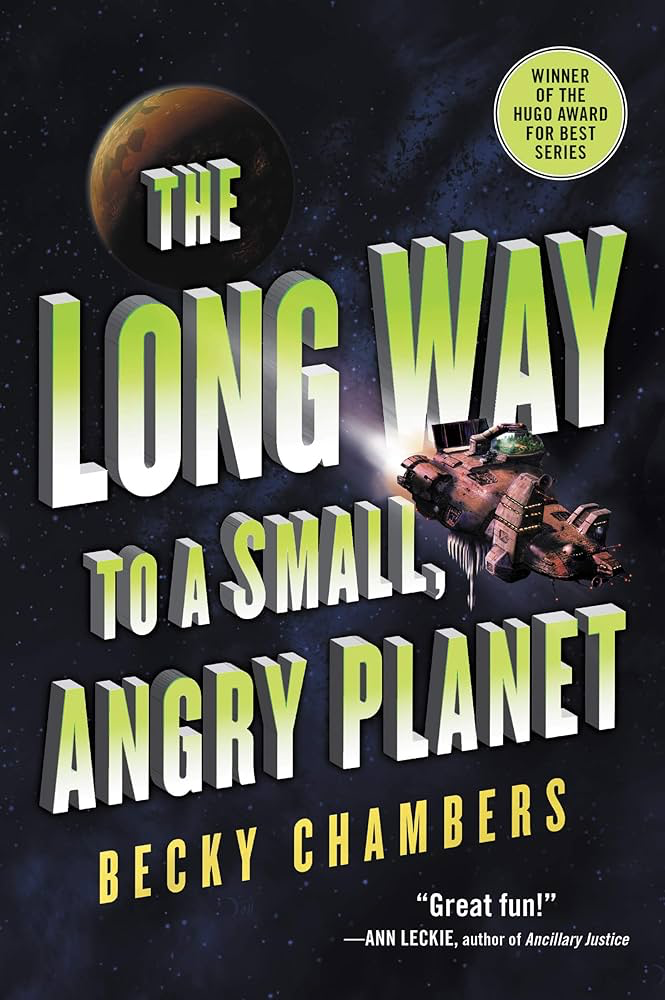
The Long Way to a Small, Angry Planet – Becky Chambers – “You can be free/You can be free and still come home/It’s alright/I’m alright…”
Since this post consists entirely of songs, consider all of them to be today’s song.
That’s it for this week’s Sunday Songs! Have a wonderful rest of your day, and take care of yourselves!


 The Bookish Mutant
One thought on “Sunday Songs: 2/22/26”