Posted in Book Review Tuesday

Book Review Tuesday (9/22/26) – Blue-Skinned Gods

Happy Tuesday, bibliophiles, and happy fall equinox/bisexual visibility day eve!

Since this week is Bisexual Visibility Week, I figured I would read some books to supercharge my own bisexuality celebrate the occasion. I’m normally not a huge literary fiction reader, but I read SJ Sindu’s graphic novel Tall Water back in May and really enjoyed it, so I figured I’d give more of their works a try. Blue-Skinned Gods turned out to be quite an impactful novel!

Enjoy this week’s review!
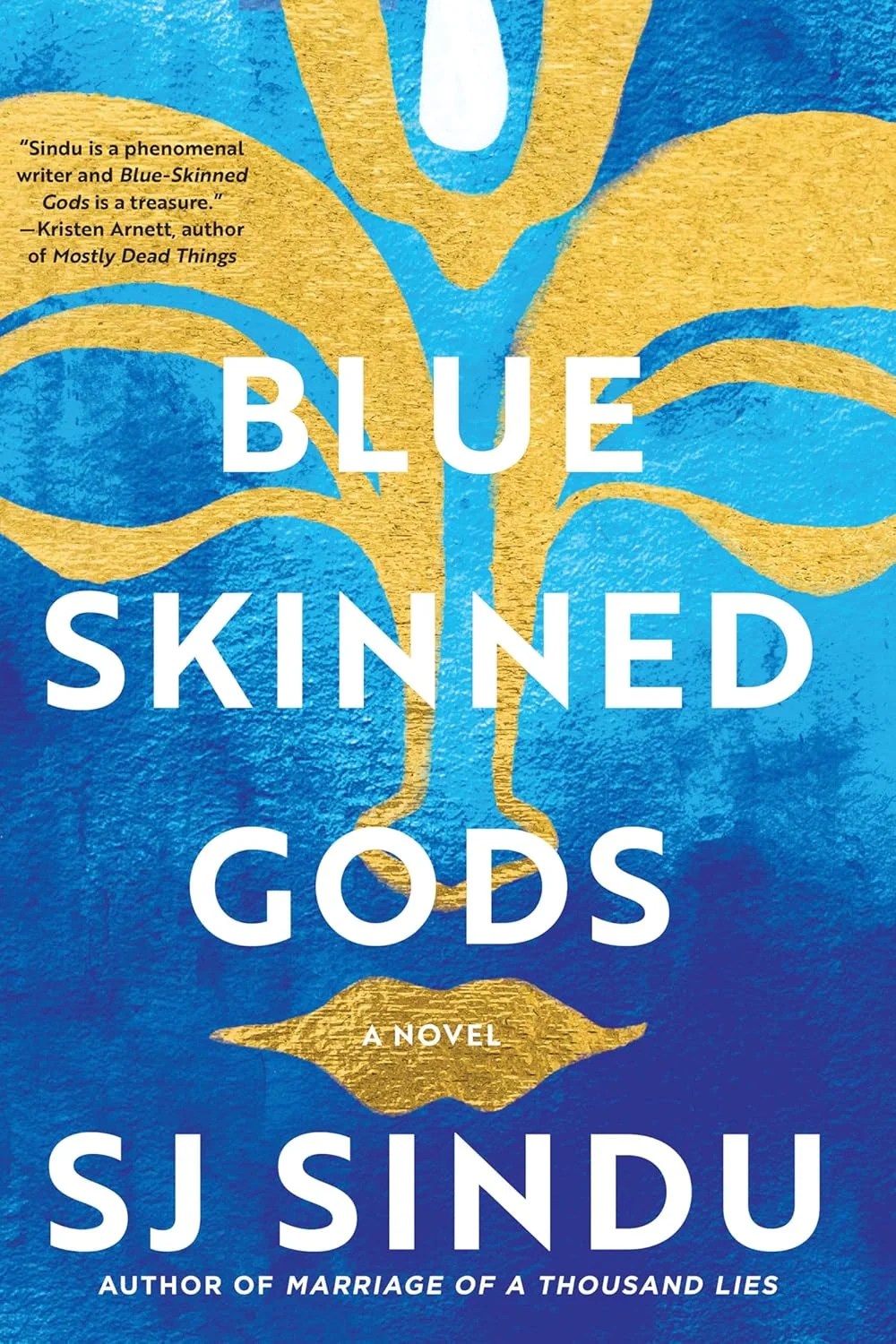
Blue-Skinned Gods – SJ Sindu

Kalki was born with sky-blue skin. His parents, believing he is the reincarnation of the god Vishnu, set up an ashram where they make a living off of Kalki’s supposed healing powers. As Kalki gets older, the cracks in his identity and his father’s manipulation of him begin to grow. But on a pilgrimage to New York City, Kalki discovers that the carefully-constructed narrative of his life may not live up to what his father made them out to be, and that the only way to discover his true nature—godly, human, or something else entirely—is to break free of his father’s grip.

TW/CW: child abuse, religious bigotry, cancer, loss of loved ones, emotional & physical abuse, sexual content, suicide, attempted murder

There’s a moment that I particularly liked in Blue-Skinned Gods that, to me, exemplifies the best qualities of SJ Sindu’s writing. When Kalki first arrives in New York City, he describes the traffic as rivaling that of India, with the rickshaws replaced by yellow cabs. It struck me, and it really made me laugh—I feel like a lot of the Orientalist rhetoric that we hear about India is about how crowded and unclean the streets are and how out of control the traffic is, and this passage felt like a slap upside the head to all of those tropes. But Sindu didn’t write it necessarily as such: it was just how Kalki processed his first experiences of the city. The impact of that observation was how a lot of the themes were delivered—everything had layers of satire, nuance, and emotion, and it just felt downright clever. Sindu’s writing engrossed me in the setting and delivered its messages all folded up into one: neither was separate from the other, and that’s what sets their writing apart to me.

Sindu’s buildup of Kalki’s character was one of the strongest aspects of this novel. His narrative voice, with his strong sense of justice and deep sensitivity to the corruption of the world around him, gave the novel a very tender aspect, especially considering the cruel hand that he and his family and friends were dealt. Kalki deals with his fair share of trauma, and Sindu did an excellent job of depicting it respectfully and not milking it into gratuitous trauma porn. (That being said, take heed of the trigger warnings. Blue-Skinned Gods is definitely a difficult novel to read.) There was a kind of innocence to him, but it was rooted in his belief of justice and his godly duty to right the wrongs of the world. Once he breaks away from his abusive father’s grip and comes into his own, his journey to true self-discovery was heartbreaking and heartwarming; on the one hand, Sindu’s portrayal of everything he’s built his life on come crumbling down almost instantaneously was just plain sad, but seeing Kalki’s rocky journey towards advocating for himself and not letting himself be manipulated by other people was so fulfilling. It’s clear that Sindu put so much love into Kalki, and every page was proof.

Strangely, I feel like Blue-Skinned Gods isn’t as much about religion in the end—it plays a part, but not the whole. It’s about people wanting to believe in something so desperately that they’re willing to do callous things to the people caught in the crossfire. Kalki’s childhood is stripped away just because his father knows the power of people who just want to see miracles—and because his father knows that it’s profitable to bring false miracles to people. When Kalki escapes to New York City and finds refuge in Lakshman and his band, he’s told that his father has been using him, but then gets manipulated by the band so that they can profit off of his identity as well, just in a different way. I think it’s also about how otherness is seen as profitable, and how when the othered person doesn’t want to be commodified, they become something to despise and fear in the eyes of the majority. Sindu had so much to say with Blue-Skinned Gods, but for the most part, she did an excellent job of addressing it without it coming off preachy—the narrative just lended itself to so many ethical and emotional questions, and Sindu navigated all of them with aplomb.

For the most part, Blue-Skinned Gods was such a strong book. Sindu was willing to let the reader absorb the weight of all the emotions in this novel, even though it spans around 20 years and there are a lot of events to dwell on. However, the same kindness was not shown to the ending. Without spoiling anything, it felt like such a climactic moment chock full of complicated and horrific emotions, like many of the events throughout Kalki’s life. There’s so much buildup, and then it’s over and done in about a page, as is the emotional fallout. It was an ending that made me think that there were at least 5-10 more pages, but it just ended—that was it? Why did this moment not get the same treatment as the rest of the traumatic events in this novel? It didn’t take away from my rating of this novel, but I feel like it needed more room to breathe, and much too abrupt for something so emotionally charged.

All in all, an affecting novel of religion, identity, and the lengths you’re willing to go to just to believe in something. 4 stars!

Blue-Skinned Gods is a standalone, but SJ Sindu is also the author of several other books for children, teens, and adults, including Marriage of a Thousand Lies, The Goth House Experiment, Tall Water (with Dion MBD), and Shakti. They also contributed to the anthology Be Gay, Do Crime.

Today’s song:

IT’S FINALLY HERE

That’s it for this week’s Book Review Tuesday! Have a wonderful rest of your day, and take care of yourselves!

Posted in Geeky Stuff, TV

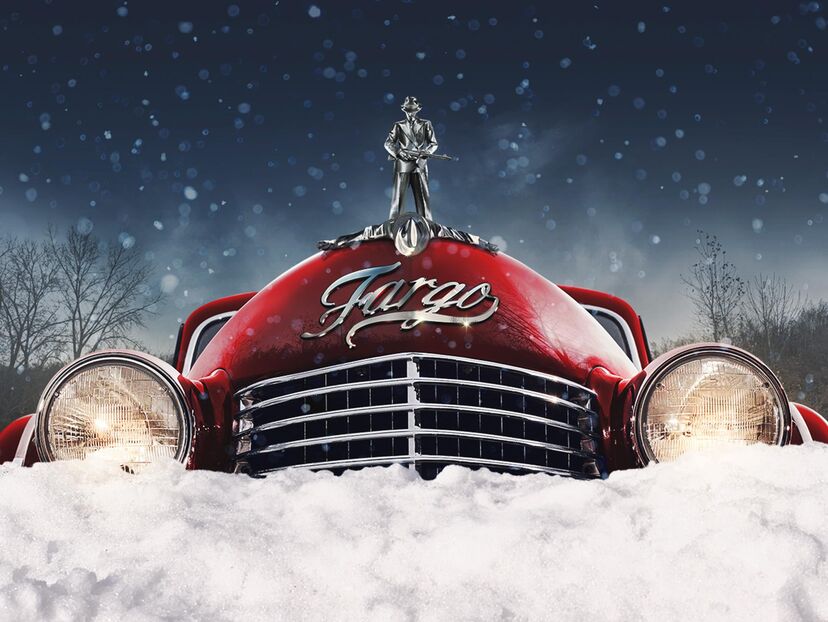
“If I don’t come back, I’m dead or in jail.” (Fargo: Year 4 review)

FXNOW - Watch Full Episodes of FX Shows & Movies
All images in this post credit to FX Networks

Happy Friday, bibliophiles! I suppose that the bibliophile greeting doesn’t *quite* fit for this post, but hey, you probably followed this blog for books, right? Today, we’ve got something a little bit different–but at least I kept my promise, didn’t I? I hinted at doing a review for at least a week prior to today…

At the beginning of quarantine, my brother and my parents had just started binging Fargo. So like so many of us have done with different shows in the last 6 months, I starting doing some serious binge-watching. I’d already been exposed to Noah Hawley’s masterful storytelling through Legion, but Fargo never ceased to wow me. I forgot about it for a few months after finishing up season 3, and then the trailer for season 4 came out in September. I didn’t see it coming, but little did I know that this newest season would be my favorite yet!

Chris Rock Leads the Future in New Fargo Season 4 Teaser

Here’s the special thing about Fargo: each season follows a plot that, chances are, you’ve seen before: murder mysteries in small towns, sibling rivalries escalated to astronomical proportions, dysfunctional crime families; this season, in particular, centers around the politics of rivaling Italian and African-American gangs in 1950s Kansas City, and a mortician’s family who unwillingly gets caught up in the action. But every season, without fail, Noah Hawley spins it into something that you’ve never seen before, be it with the characters, the cinematography, and the plot twists (and there’s a LOT of plot twists). Fargo is all about the unexpected, and season 4 brings the factor of the unknown and unseen up to levels that I haven’t seen since…well, I guess that season 3 ending…(no spoilers.)

And maybe I’m biased for this one. October was one of the hardest months I’ve had in quite a while, and Fargo was, without a doubt, one of the things that kept me going through it. As the season came out, my days started to revolve around the Monday nights that would inevitably bring another episode to fuel me with enough dopamine to keep me going through the rest of the week. But I genuinely believe that this show embodies what storytelling should be–what good TV should be, really. And this season has truly cemented Fargo as my favorite show. (And considering that I don’t readily jump for murder mysteries/historical fiction, that’s definitely saying something. That’s just the power of Noah Hawley, folks…)

Now, TREAD LIGHTLY! This review may contain some minor spoilers, but for your benefit, I’ll try to keep it light on them. But even so, be warned…

Fargo" season 4 has spun a complex, compelling American fable of race and  crime | Salon.com

I…can’t really find anything major that I didn’t like about this season, so consider this review a breakdown of most everything that I loved.

THE GREAT:

  • Characters/casting/acting: With every Fargo season, there’s no shortage of complex characters and masterful actors (for previous seasons, see: Martin Freeman, Bokeem Woodbine, Jean Smart, Ewan McGregor, David Thewlis, Mary Elizabeth Winstead, etc.), but season 4 in particular had them in no short supply. I loved all of the (HUGE) main cast and many of the supporting characters, but for one reason or another, this is the first season where I’ve gotten really attached to more than one character. And considering that Fargo is one of those shows that 75%-80% of the main cast is killed off by the time the finale rolls around, it…didn’t go over well with my emotions. But in all seriousness, THESE CHARACTERS!

Let me just digress to talk about my three favorites in this season:

Fargo Season 4 Episode 5 Review: The Birthplace of Civilization | Den of  Geek
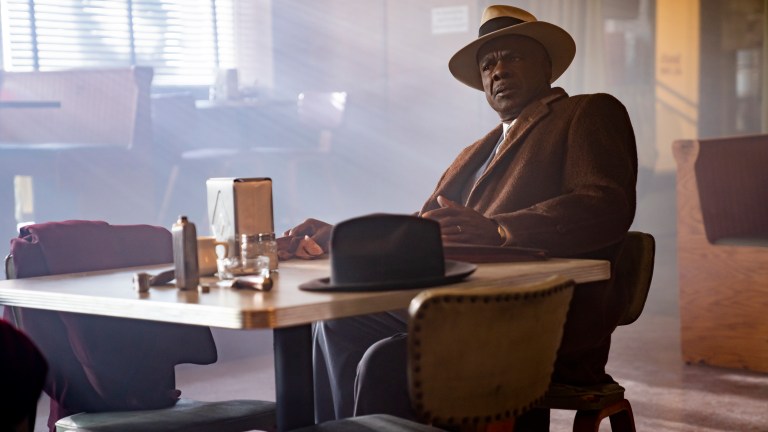
  • Doctor Senator (Glynn Turman): let’s be honest, what’s not to like? He consistently has some of the best lines/general dialogue in this season, he’s strategic, he’s clever, and he’s instantly likable. I’ll get more in depth on the morally gray theme of the whole season later on in the review, but leave it to Fargo to make us AGGRESSIVELY sympathize with all manner of mobsters and criminals…anyways, this guy’s the best.
In 'Fargo' Season 4, All the Cops are Bad — Noah Hawley Explains Why |  IndieWire
“I am Ethelrida Pearl Smutny. And I am one of a kind.”
  • Ethelrida Smutny (E’myri Crutchfield): LOVE HER! She’s one of the few characters in this season who’s morally right and seeks to do the right thing, and she is such a lovable character in every way. She’s frequently underestimated by most of the adults in this season, but she shows herself to not only be smart–smarter than them, in some cases–, but compassionate and determined to do the right thing. The world needs more people like Ethelrida.

And last but most definitely not least…

Fargo' Season 4 Character Guide: Who's Who in the New Series
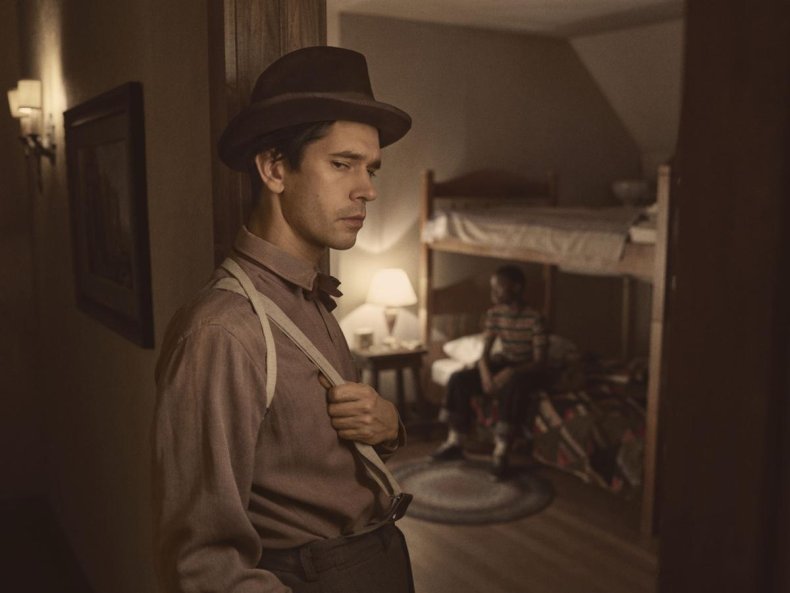
“If I don’t come back, I’m dead or in jail. Do your lessons.”
  • Patrick “Rabbi” Milligan (Ben Whishaw): [SCREAMS AND CRIES INTO THE VOID]

Out of the three I just mentioned, he’s absolutely my favorite. He’s endured so much tragedy and trauma over the course of his life, but all he wants is for Satchel to have a better life. Again, no shortage of clever and insightful lines, and objectively one of those characters that just needs a big hug and a mug of hot chocolate. Just…just trust me on that one. You’ll see.

FX Postpones Fargo Season 4 After Production Delays Due to Coronavirus |  Consequence of Sound
I hate myself for thinking about that “What do you have? A KNIFE! NO!” vine when I saw this scene…

But as far as characters, it doesn’t stop there. Everybody, from Chris Rock (Loy Cannon) to Jason Schwartzman (Josto Fadda) to Jessie Buckley (Oraetta Mayflower) truly shines in season 4. Each character is distinct, complex, and it was an absolute joy to see all of their stories unfold. (Also, it’s worth it just to see Jason Schwartzman just SNAP…that scene of him just pretending to hold a gun and just go “HAGAGAGAGAGHGHAGSDHAGHGHGH” just lives rent-free in my mind now…)

(Plus…THE GAYS WON 2020, EVERYBODY! Can we just talk about how Zelmare and Swanee INVENTED “be gay, do crime?”)

Preview — Fargo Season 4 Episode 8: The Nadir | Tell-Tale TV
[intense sapphic happiness ensues]

Whew, that went on for a while. BUT WAIT–THERE’S MORE, BECAUSE THIS SHOW IS VERY NEARLY FLAWLESS:

  • Score and soundtrack: At this point, I think it’s just impossible for Jeff Russo to ever make a bad score for a movie or a TV show. Besides all of the remixes of the music from previous seasons, I loved all of the new songs. I particularly liked Odis (Jack Huston)’s theme (somehow it almost sounds like a car alarm? But in a good way) and the Legion-y song with the shootout with Zelmare and Swanee at the train station. And I loved all of the other songs that were slipped in. No spoilers for the context of the Johnny Cash song in the finale, but when I tell you that I SOBBED…
  • Timely themes: One of the main complaints I’ve seen about this season is that it’s “too woke,” (🙄) which I think is utterly idiotic. This season’s set in 1950, but it’s more timely than ever–there’s discussions of race, police brutality, immigration, and what it means to be an American. And it’s all handled quite well, I think. One thing I’ve always appreciated about the show as a whole is how it depicts the American police system–for the first three seasons, there’s usually 1-2 cops that actually know what they’re doing, but they’re frequently dismissed by a largely unbelieving and sexist police force. This season is the first where we have both of our main cops as largely corrupt, but we still sympathize with one of them (PTSD relating to WWII). Most of the characters are morally gray as well (I mean, most of the main cast are members of separate gangs), and that contrast was also well-done.
  • That classic, Noah Hawley weirdness: in every season, there’s at least one episode or plot point that’s highly out of the ordinary, and lucky for us, we got that in the form of episode 9. Besides having a whole episode of Rabbi and Satchel after not seeing them for two episodes, there’s an amazing Wizard of Oz theme with the whole episode. I’ll shamelessly admit to thinking about it for a solid WEEK.
Fargo' Season 4, Episode 9 Recap: And a Little Dog, Too - The New York Times
  • All the Coen Brothers references, of course: Treehorn? The Raising Arizona screaming? Everything that I missed? LOADS OF FUN.
Chris Rock Says Irish Actress Got Best Part on 'Fargo,' Evil Nurse Oraetta
“Ya like pie?”

All in all, this was a masterful show from start to finish. My favorite season out of the four, by far, although I love them all. I’m already rewatching the whole season over again…

MY RATING: ★★★★★

TW/CW: Graphic violence (mostly gunshot wounds, but there’s some parts that definitely made me queasy), racism, xenophobia, police brutality, some brief racist/homophobic/ablelist slurs, poisoning, loss of loved ones, alcoholism/substance abuse

EDIT: Whoooooooa, apparently this is my 500th post! Dang…😳

Today’s song:

I haven’t heard this song in so long…the memories…😭

That’s it for this TV review! Have a wonderful rest of your day, and take care of yourselves!