Here we are again in pride month! It certainly is a joyous time of year, but in the past few years, it’s been a difficult one, too. All across the country, we have seen waves of anti-LGBTQ+ legislation, and the rhetoric that queer people are unnatural and wish to convert your children has spread like wildfire. We’ve also seen a dangerous increase in book bans—particularly by queer authors and authors of color. Books with diverse perspectives aren’t harming children—depriving children of these books is the dangerous part. Now more than ever is it important to read diversely: there’s never any harm in seeing a different perspective through literature. And if you’re really that concerned about “protecting the children,” maybe you should advocate for stricter gun laws instead of worrying about drag queen story hour.
In past years, I’ve split this post up into multiple (organized by genre), but I decided to make it all one post this year to keep it all more organized.
TELL ME WHAT YOU THINK! What are your favorite queer reads that you’ve read recently? Have you read any books on this list, and what did you think of them? Tell me in the comments!
Today’s song:
That it for this year’s pride month recommendations! Have a wonderful rest of your day, and take care of yourselves!
As some of you may know, April is Autism Acceptance Month here in the U.S.! I don’t think I’ve highlighted a book list for the occasion, but in my ongoing quest for disability rep in general, I’ve come across many great books with Autistic protagonists and stories. If you’re looking to diversify your reading, it’s always important to uplift every kind of marginalized voice, and disability rep in general often gets left in the dust. So I’ve compiled a list of books by Autistic (with one exception—the author is still neurodivergent, just not Autistic) for this month.
NOTE: some of the older books on this list may still use the term Asperger’s, but in recent years, the term has since been renamed to Autism Spectrum Disorder (ASD) in the DSM-5, in part because of its association with Hans Asperger, who was involved with Nazism. Some people still use the term, but it is still important to acknowledge the history behind the term.
Enjoy these book recs!
THE BOOKISH MUTANT’S BOOKS FOR AUTISM ACCEPTANCE MONTH
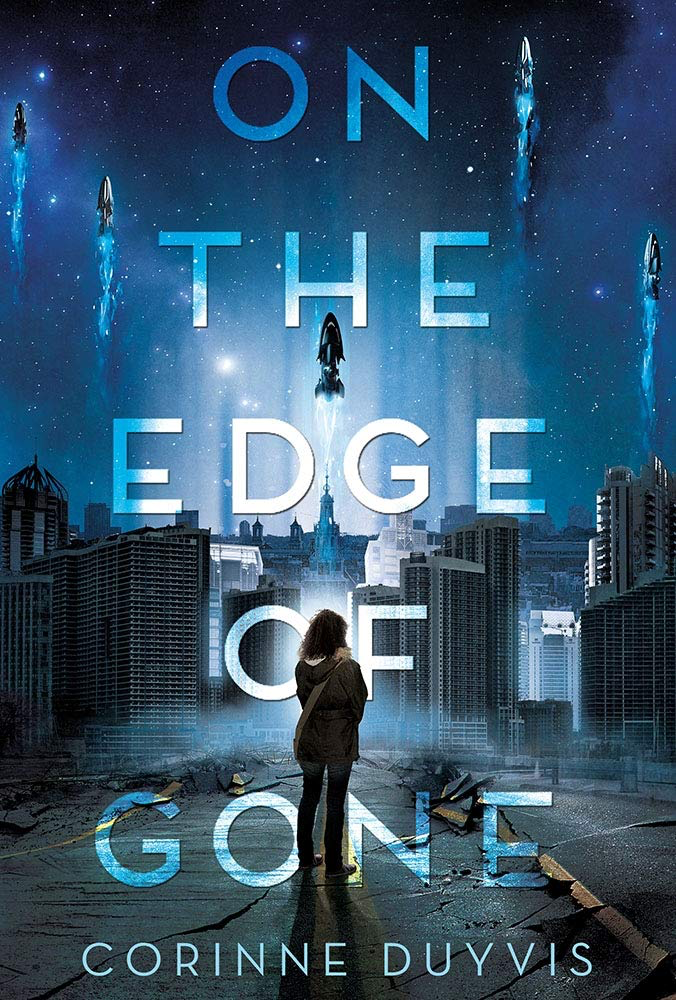
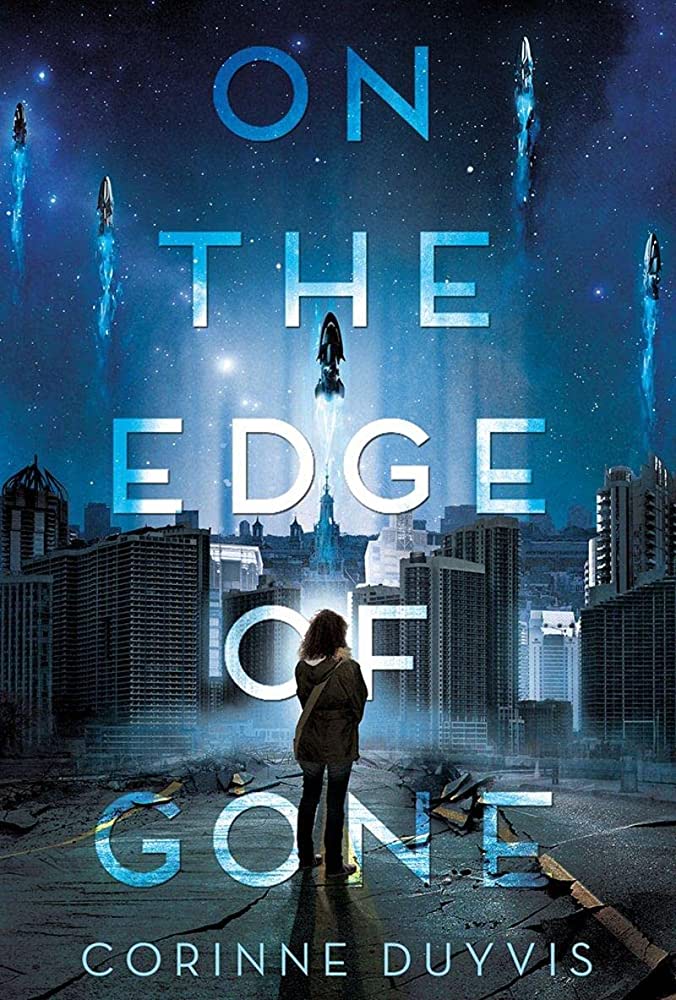
On the Edge of Gone – Corinne Duyvis: (YA, Sci-fi) a harrowing, dystopian vision of the world moments after a comet’s blast changes a girl’s life forever. | ⭐️⭐️⭐️.5
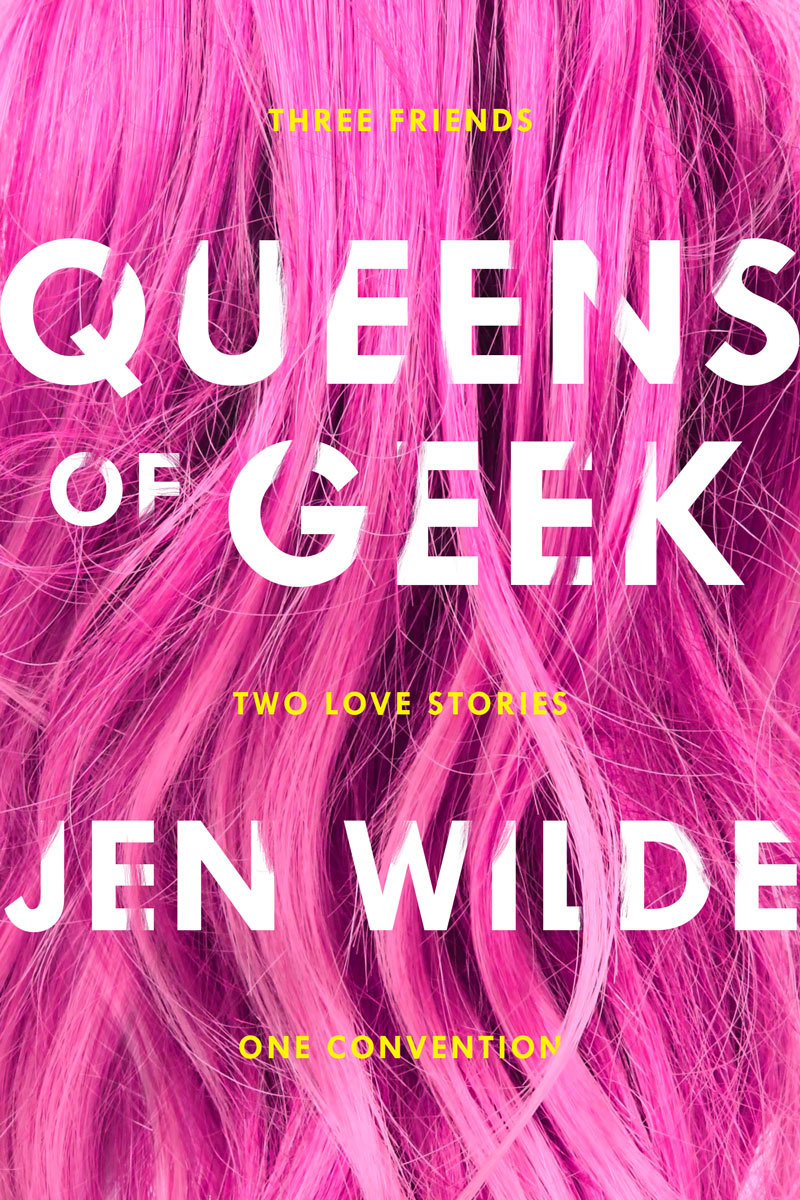
Queens of Geek – Jen Wilde: (YA, Fiction) a fun love letter to comic cons, fandom, and geek culture! | ⭐️⭐️⭐️⭐️
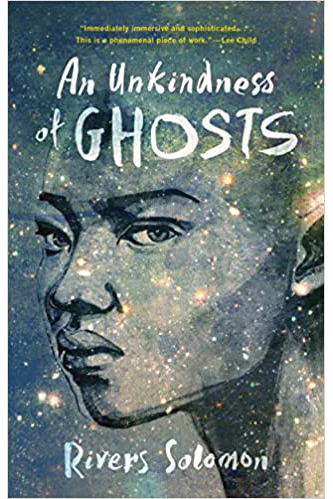
An Unkindness of Ghosts – Rivers Solomon: (Adult, Sci-fi) the raw, unforgettable story of a colony ship structured like the Antebellum South, and one woman’s quest to change things for the better. | ⭐️⭐️⭐️⭐️
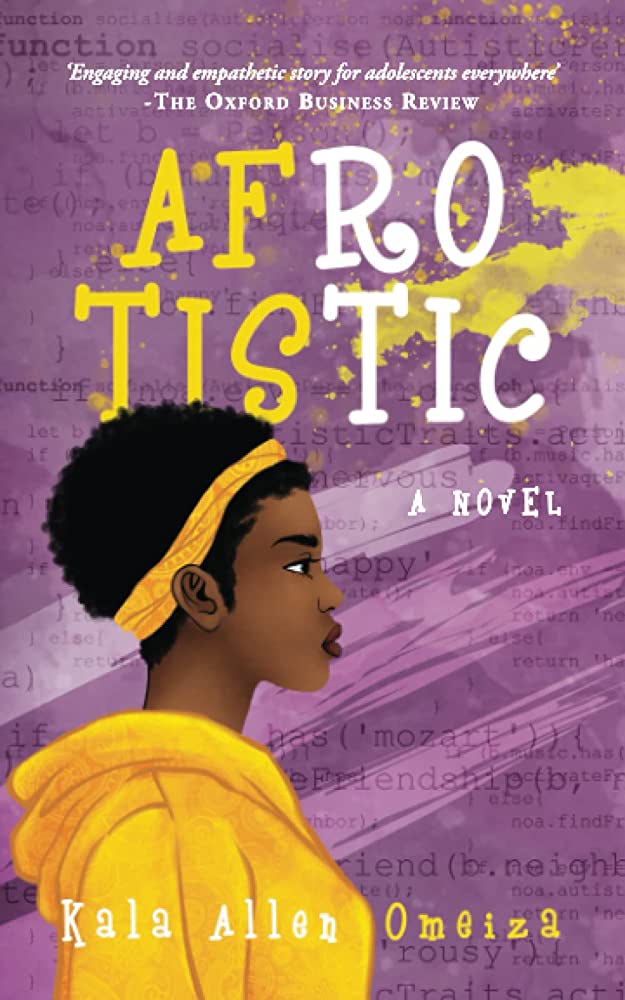
Afrotistic – Kala Allen Omeiza:(YA, Fiction) I love that this novel centers a young Black Autistic girl—it’s so refreshing to see disability rep that isn’t just white!
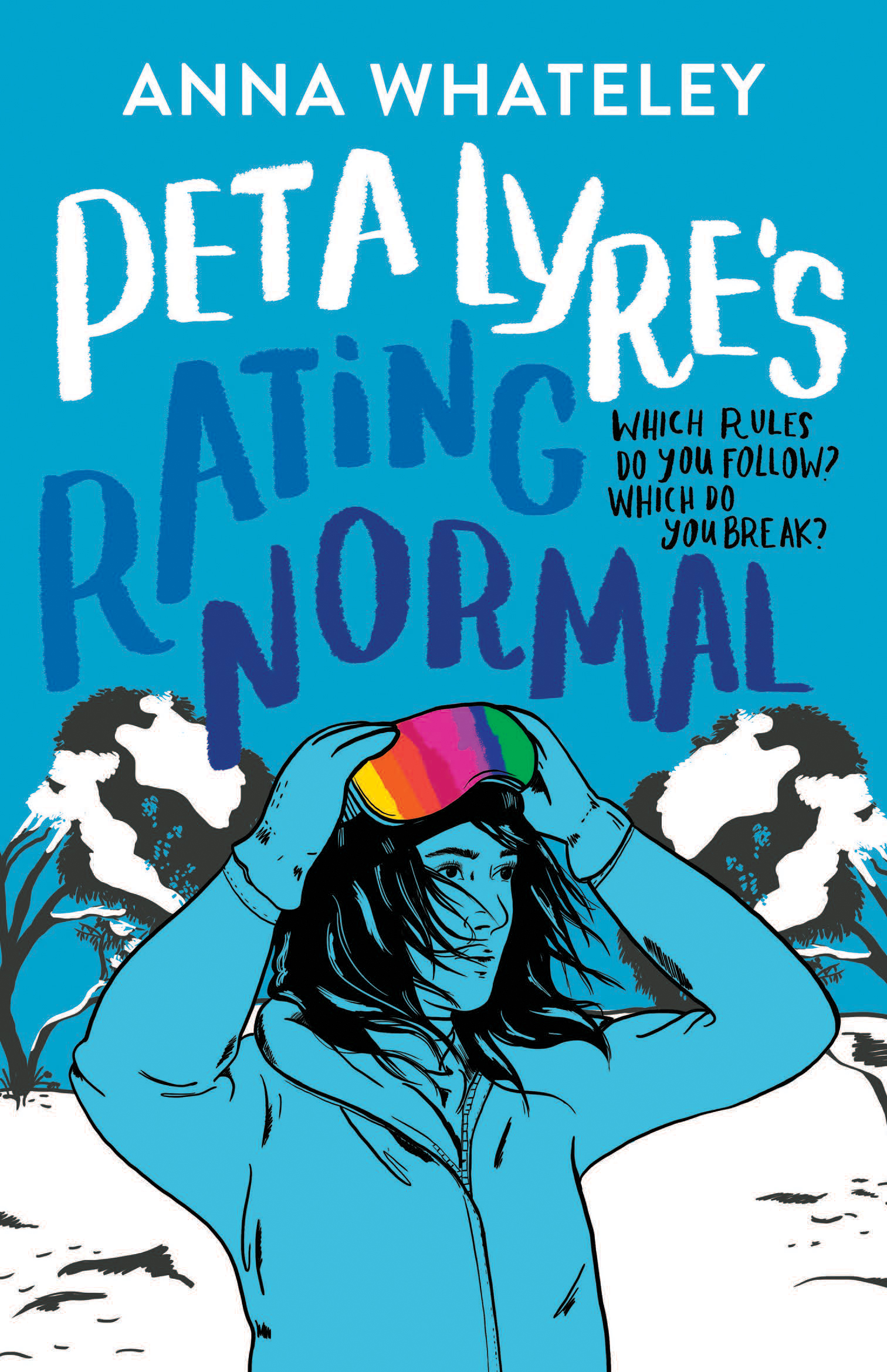
Peta Lyre’s Rating Normal – Anna Whateley: (YA, Fiction) I’m a woman of simple tastes. I see queer and neurodivergent rep, and I click “want to read” without a second thought.
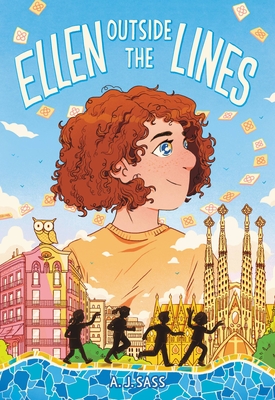
Ellen Outside the Lines – A.J. Sass:(MG, Fiction) I don’t read much MG these days, but I’m excited about the queer and Autistic rep in this one!
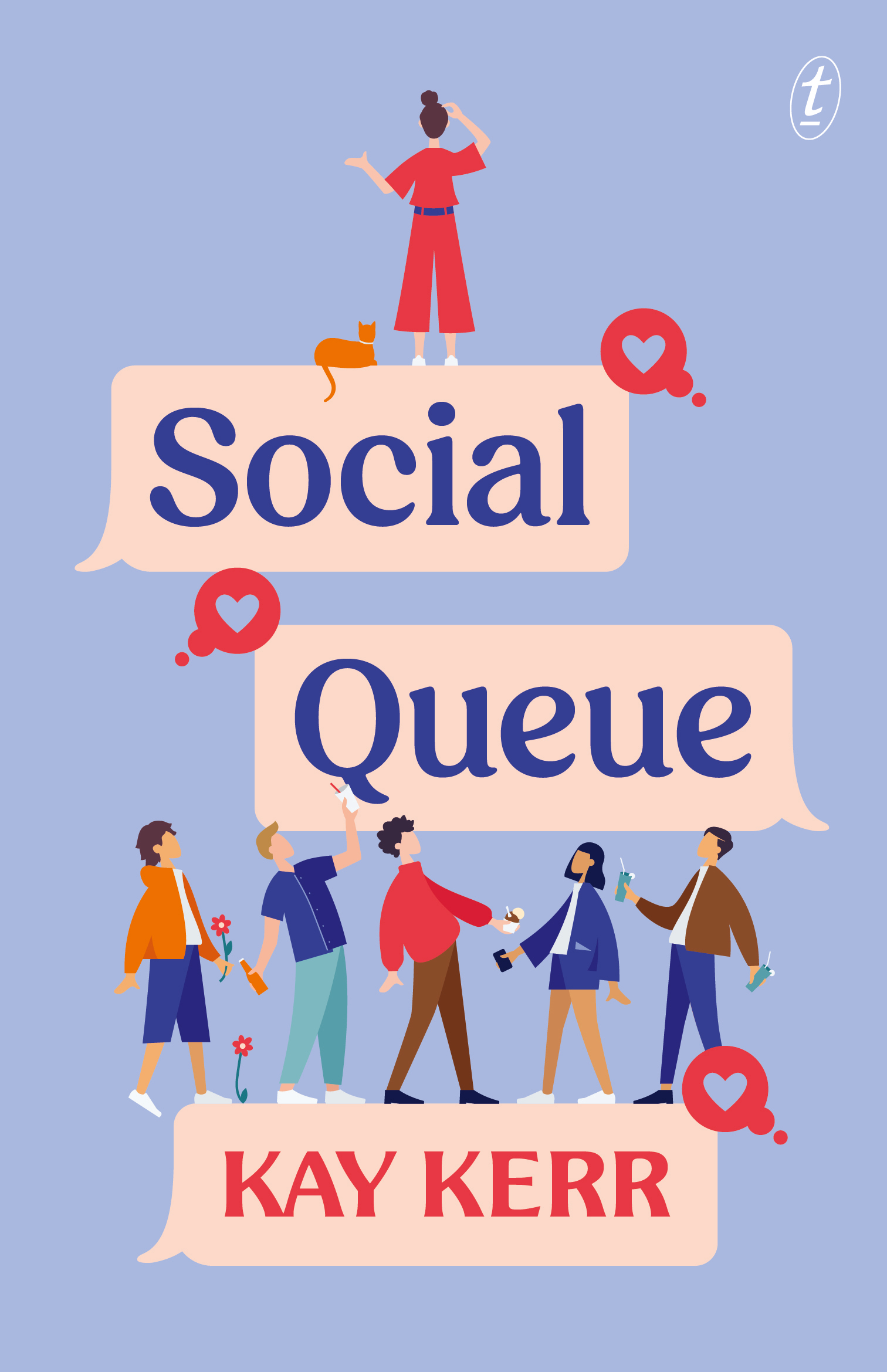
Social Queue – Kay Kerr:(YA, Fiction) I just started reading this one—I’m excited to see how it explores autism and dating!
TELL ME WHAT YOU THINK! Have you read any of these books, and if so, did you like them? What are your favorite books with Autistic rep? Let me know in the comments!
Today’s song:
That’s it for this list of recommendations! Have a wonderful rest of your day, and take care of yourselves!
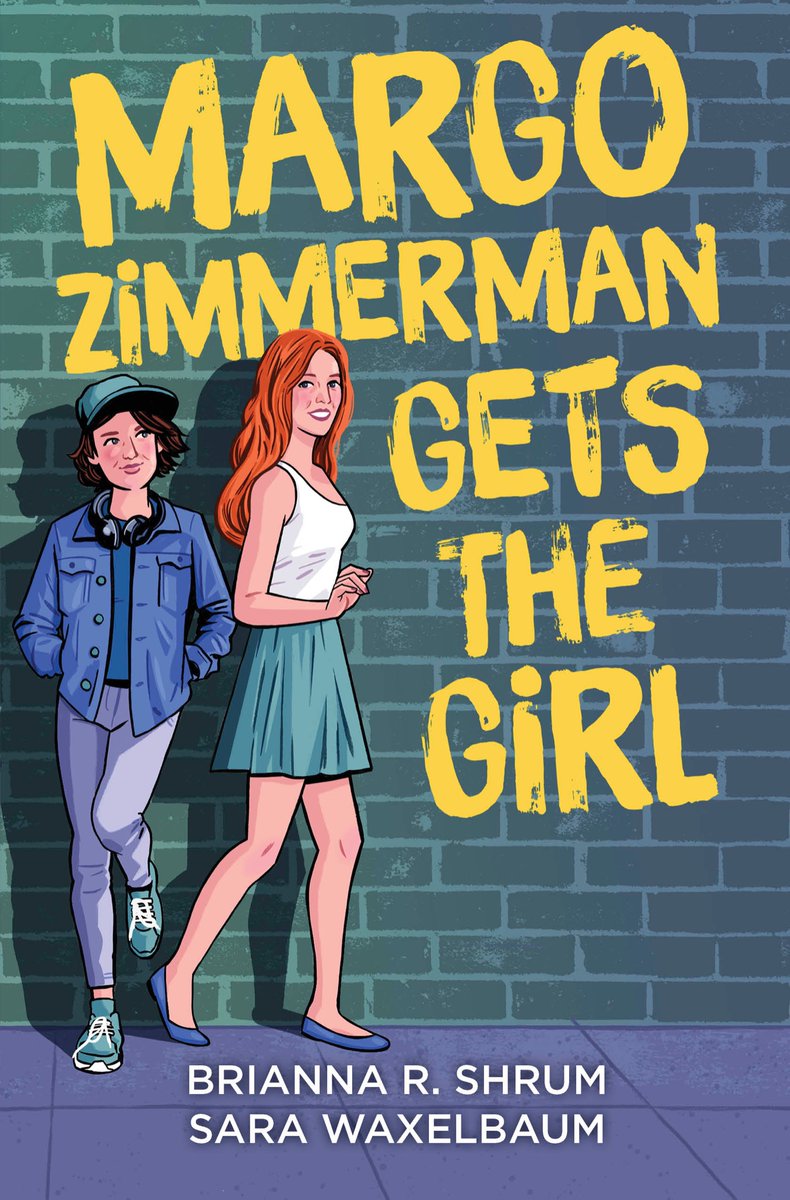
As some of you may know, last week (March 20-27) was when the #TransRightsReadathon was hosted in response to a dangerous increase in anti-trans legislation across the U.S. Created by Simi Kern, the goal of the readathon was to give the spotlight to as many trans books and authors as possible to bring them awareness and support in light of the rampant transphobia across the country and beyond. It’s been frightening and heartbreaking to see what’s happening in other states, and I want to support my trans siblings in any way possible. So I’ve decided to include shorter reviews of all of the trans books I read this week—all of which were good!
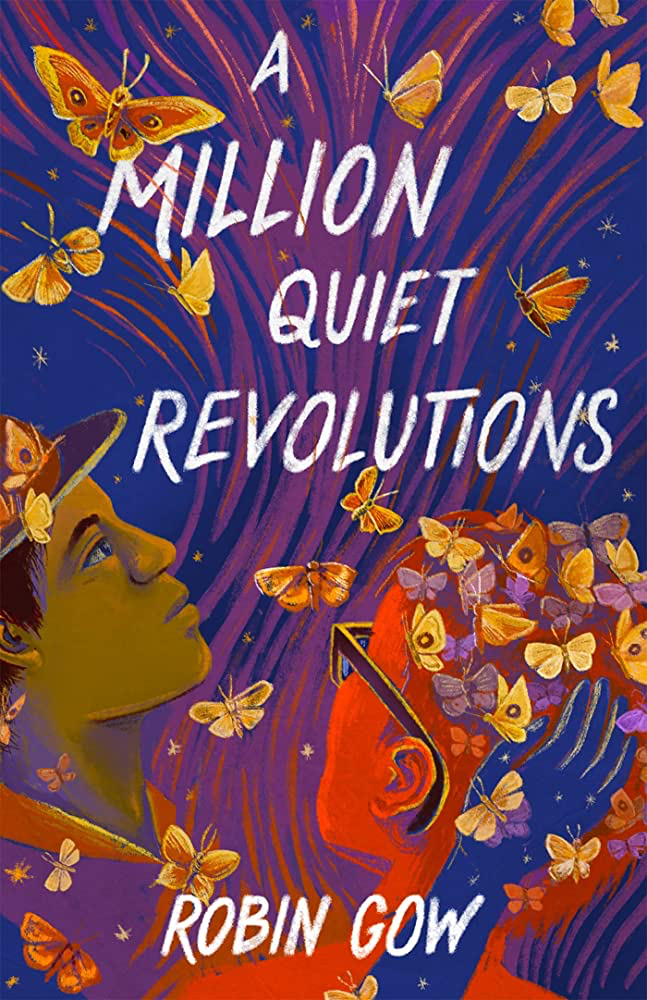
For as long as they can remember, Aaron and Oliver have only ever had each other. In a small town with few queer teenagers, let alone young trans men, they’ve shared milestones like coming out as trans, buying the right binders–and falling for each other.
But just as their relationship has started to blossom, Aaron moves away. Feeling adrift, separated from the one person who understands them, they seek solace in digging deep into the annals of America’s past. When they discover the story of two Revolutionary War soldiers who they believe to have been trans man in love, they’re inspired to pay tribute to these soldiers by adopting their names–Aaron and Oliver. As they learn, they delve further into unwritten queer stories, and they discover the transformative power of reclaiming one’s place in history.
TW/CW: transphobia, dysphoria, misgendering/deadnaming, homophobia, off-page sexual assault, religious bigotry
Novels in verse always get me when they’re done well, and A Million Quiet Revolutions was no exception. The story of Aaron and Oliver is one that was essential to be told, and it resulted in a beautifully poignant piece of verse!
The growing relationship between Oliver and Aaron felt so genuine, and the combination of pseudo-epistolary format (oh god, that sounded pretentious…) with verse emphasized the way that their relationship transcended barriers of both place and time. The interweaving of the past with the present gave me an insight into a queer part of history that I’m almost embarrassed that I didn’t consider until reading this—better late than never, I suppose. Their voices both leapt off the page, and the easy flow of Gow’s verse made the reading experience feel effortless, drifting like wind—good poetry, to me, doesn’t quite feel like poetry; the rhythm remains, but it doesn’t feel like going line by line in such a rote way.
Above all, the message of this novel in verse is one that’s so important, especially in a time where the narrative of LGBTQ+ people being trendy and new is being pushed so often—queer people have always been here, and we will always be here. Aaron and Oliver’s journey of researching their trans namesakes—cross-dressing soldiers in the Revolutionary War—was one that’s so necessary for understanding our own roots. The key to belonging is realizing that you have always been a part of history, no matter how many pains historians have taken to ignore or deliberately erase the queerness and transness that has always been there. For me, that’s why A Million Quiet Revolutions is such an important read.
Brimming with history and rich verse, A Million Quiet Revolutions is an ode to discovering your own roots, and finding solace in hidden histories. 4 stars!
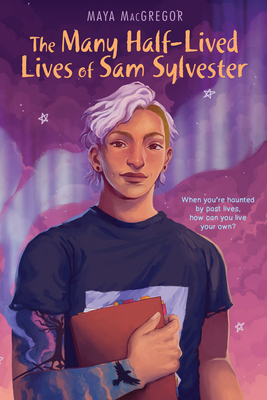
In this queer contemporary YA mystery, a nonbinary teen with autism realizes they must not only solve a 30-year-old mystery but also face the demons lurking in their past in order to live a satisfying life.
Sam Sylvester’s not overly optimistic about their recent move to the small town of Astoria, Oregon after a traumatic experience in their last home in the rural Midwest.
Yet Sam’s life seems to be on the upswing after meeting several new friends and a potential love interest in Shep, the pretty neighbor. However, Sam can’t seem to let go of what might have been, and is drawn to investigate the death of a teenage boy in 1980s Astoria. Sam’s convinced he was murdered–especially since Sam’s investigation seems to resurrect some ghosts in the town.
Threatening notes and figures hidden in shadows begin to disrupt Sam’s life. Yet Sam continues to search for the truth. When Sam discovers that they may be closer to a killer than previously known, Sam has a difficult decision to make. Would they risk their new life for a half-lived one?
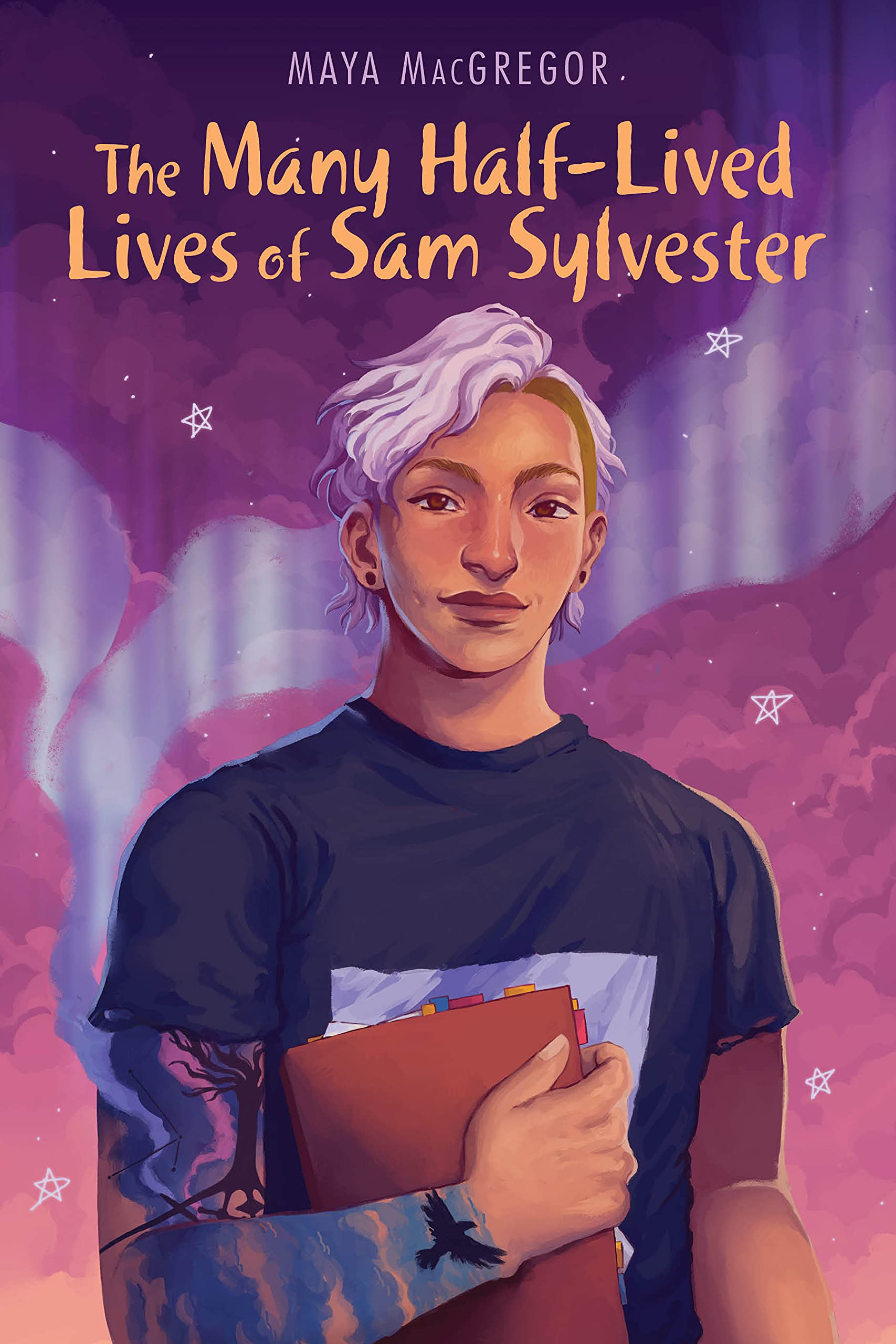
My ultimate hope was that this book would be as well-crafted as its cover, and for the most part, it lived up to my expectations! The Many Half-Lived Lives of Sam Sylvester deftly toes the line between a coming-of-age story and a decades-old mystery, buoyed by a diverse and lovable cast.
Sam Sylvester has a batch some of the most diverse representation I’ve seen in a realistic fiction/mystery novel in a while—aside from having a nonbinary, asexual, and Autistic protagonist (more neurodivergent protagonists, please!!), there were so many different characters that were incredibly intersectional—queer, POC, and disabled characters all across the board, and not just the teen characters too! All of these identities were woven so well into the story, and I loved the journey of self-acceptance and reckoning that Sam experiences throughout the novel as they unravel the mystery of the boy who died in their room 30 years ago.
That being said, although I liked most every aspect of this novel, this really feels like a novel that’s going to date itself. I enjoyed a handful of the references (always extra points for David Bowie), but a lot of the more recent ones—the references to Tumblr, Gen Z slang, internet culture, and a Steven Universe gag every other page, read as very hackneyed and stilted. As authentic as the rest of Sam Sylvester was, those parts dragged down what would have otherwise been powerful and realistic dialogue. Most of the writing did its job and did it well, but the attempt to ground it in the present day only ended up making a novel that’s going to date itself far quicker than it was probably intended to.
Despite that, I’d say that Sam Sylvester is still a must-read—for the excellent representation, for the mystery, and for the coming-of-age story. 3.75 stars, rounded up to 4!
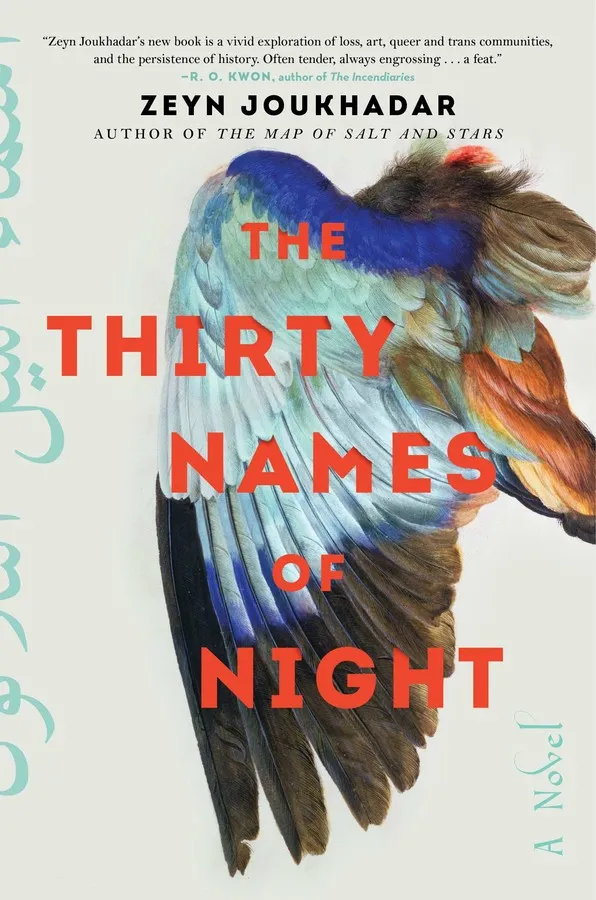
The author of the “vivid and urgent…important and timely” (The New York Times BookReview) debut The Map of Salt and Stars returns with this remarkably moving and lyrical novel following three generations of Syrian Americans who are linked by a mysterious species of bird and the truths they carry close to their hearts.
Five years after a suspicious fire killed his ornithologist mother, a closeted Syrian American trans boy sheds his birth name and searches for a new one. He has been unable to paint since his mother’s ghost has begun to visit him each evening. As his grandmother’s sole caretaker, he spends his days cooped up in their apartment, avoiding his neighborhood masjid, his estranged sister, and even his best friend (who also happens to be his longtime crush). The only time he feels truly free is when he slips out at night to paint murals on buildings in the once-thriving Manhattan neighborhood known as Little Syria.
One night, he enters the abandoned community house and finds the tattered journal of a Syrian American artist named Laila Z, who dedicated her career to painting the birds of North America. She famously and mysteriously disappeared more than sixty years before, but her journal contains proof that both his mother and Laila Z encountered the same rare bird before their deaths. In fact, Laila Z’s past is intimately tied to his mother’s—and his grandmother’s—in ways he never could have expected. Even more surprising, Laila Z’s story reveals the histories of queer and transgender people within his own community that he never knew. Realizing that he isn’t and has never been alone, he has the courage to officially claim a new name: Nadir, an Arabic name meaning rare.
As unprecedented numbers of birds are mysteriously drawn to the New York City skies, Nadir enlists the help of his family and friends to unravel what happened to Laila Z and the rare bird his mother died trying to save. Following his mother’s ghost, he uncovers the silences kept in the name of survival by his own community, his own family, and within himself, and discovers the family that was there all along.
TW/CW: transphobia, xenophobia, racism, Islamophobia, miscarriage, grief, sexual assault, animal death, loss of a parent
I didn’t go into The Thirty Names of Night with any expectations, but I was stunned by the writing! This novel is one of the best magical realism novels I’ve read in recent years, with writing as rich as a tapestry and a story that’s just as well-woven.
Joukhadar’s writing style was the star of Thirty Names; this is the first of his novels that I’ve read, but he has such a unique talent for finding unlikely comparisons and weaving them into the richest, most obvious but out-of-sight metaphors imaginable. I would never have compared the gray sky on a foggy day to the color of a kitchen knife, and somehow, it was right in front of me. His talent for metaphor suited the emotional depth of this story, as well as the almost fantastical element of the birds in New York—I will never claim to be the expert on him, but if there was any story that was suited for Joukhadar to tell, it’s this one.
That writing also made the emotional core of this story possible. There’s so much to Thirty Names: gender identity, grief, heritage, family, and the body itself, but all of it was handled with such grace and aplomb that made the story feel really, truly real. I might’ve even passed the aspect of the birds by as something that could feasibly happen with how this story was written. Every part of this novel is deeply moving, raw and beautiful, and the prose flows as smoothly as air over a bird’s wings.
All in all, a beautiful, literary tale of connections—to family, to gender, and to the world around us at large. 4.25 stars!
“If you control our sleep, then you can own our dreams…And from there, it’s easy to control our entire lives.”
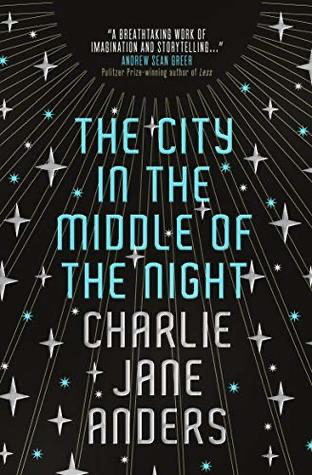
From the brilliant mind of Charlie Jane Anders (“A master absurdist”—New York Times; “Virtuoso”—NPR) comes a new novel of Kafkaesque futurism. Set on a planet that has fully definitive, never-changing zones of day and night, with ensuing extreme climates of endless, frigid darkness and blinding, relentless light, humankind has somehow continued apace—though the perils outside the built cities are rife with danger as much as the streets below.
But in a world where time means only what the ruling government proclaims, and the levels of light available are artificially imposed to great consequence, lost souls and disappeared bodies are shadow-bound and savage, and as common as grains of sand. And one such pariah, sacrificed to the night, but borne up by time and a mysterious bond with an enigmatic beast, will rise to take on the entire planet–before it can crumble beneath the weight of human existence.
TW/CW: animal attack/animal death, police brutality, body horror
Alright, so the only explicitly stated Latinx characters, specifically of Mexican ancestry, are named…Carlos and Maria? So most everybody else gets semi-unique names, but not them? It’s like Cho Chang all over again…[LOUD INCORRECT BUZZER}
If I hadn’t read Victories Greater Than Death beforehand, I would’ve been more suspicious, but it seems like Anders has gotten a lot better with diversity on that front, but…still iffy. Just saying.
That aside, The City in the Middle of the Night was one of the more inventive dystopias that I’ve read recently, but it fell victim to very convoluted writing. It’s obvious from every page that Anders put so, so much work into creating a fleshed-out world with an equally fleshed-out history—that was a riotous success on her part. The premise of society being divided by a tidally-locked planet felt eerily feasible, and I absolutely ADORED all of the alien life forms on the night side of January—the Gelet were obviously my favorites, but I would’ve liked to have seen more creatures. ALWAYS MORE CREATURES.
However, Anders’ writing choices ended up making parts of The City in the Middle of the Night something of a struggle. The story itself ended up being rather convoluted and tangled, and I found myself getting lost and confused about wait, which side of the planet are we on again? Why are we here in the first place? The additions of a boatload of characters that ended up having very little consequence to the plot at large didn’t help either. This story had the potential to be incredible, but it ended up getting so lost in itself that it became an ordeal to figure out where I was.
All in all, an inventively-conceived dystopia that excelled in worldbuilding but floundered in its writing. 3.25 stars.
Tell me what you think! Did you participate in the #TransRightsReadathon, and if so, what books did you read? What do you think of these books?Let me know in the comments!
Today’s song:
That’s it for this week’s Book Review Tuesday! Have a wonderful rest of your day, and take care of yourselves!
Happy Tuesday, bibliophiles, and happy Valentine’s Day! I’ve got no plans other than eating cookies, but I’m all for spreading the love. 💗
Son of the Storm has been on my radar for…about 6 months? A year? I’m not sure, but either way, I’m glad I picked it up. Usually, long, epic fantasy books like this make me lose interest, but Suyi Davies Okungbowa has written a tale that had me hooked almost all the way through.
Danso is well on the way to becoming a renowned scholar, but despite the path set before him, he seeks more in life than what his university can teach him. He knows that the city of Bassa has sinister secrets woven into its history, walling itself away from the rest of the world and making every immigrant swear to secrecy. Danso’s bravado catches up with him when he discovers Lilong—and along with her, a type of magic that he never knew existed. A magic that bonds to him, and a magic that could determine his fate and the fates of Bassa itself.
These days, it’s rare for an epic fantasy over 500 pages to keep my attention; to pull it off, you have to not only have great worldbuilding, but you have to buoy it with some kind of action and character building, and more often than not, many will lean on one to propel the page count. I was hoping that Son of the Storm wouldn’t fall into that trap, but to my relief, it gave us all of those elements and more, making for a compelling fantasy that hooked me on the rest of the series!
It’s clear to me that so much care was put into the characters of Son of the Storm, but Danso stood out the most to me. He’s refreshingly fleshed out—he’s lovably cocky, he’s determined, and he can talk his way out of any situation. Beyond that, there was so much nuance to him that made the plot all the more compelling; the wrongs within Bassa had a personal connection to his own family history, and that drove him to discover more about the outside world. It’s a low bar, I know, but I’m so used to epic fantasy having issues that are only tangentially related to their protagonists, and giving Danso a more personal, tangible connection to the plot made the story all the more interesting to read.
And that’s in no small part thanks to Okungbowa’s fantastic writing! His prose hit the perfect balance of fantastical and grounded, making the human aspect of the story shine through. The moments of humor are balanced with moments of meditation on systemic issues and personal biases, and there wasn’t a moment that I thought that either were too much or too little. Although the plot did have brief moments of lulling, Okungbowa easily revived the suspense and action to keep the story moving in ways that made sense and were integral to the journeys of each character. In my experience, it’s difficult to keep up that pace for over 500 pages; usually, something gets lost in the worldbuilding or somewhere else, but Son of the Storm was, for the most part, consistently action-packed.
Back to the characters, however, is where my major problem came in: the multiple POV structure. Normally, I’m a sucker for multiple POVs when they’re done well, giving the reader a chance to see the story through the eyes of several, fleshed-out characters. It’s clear that Okungbowa loves his characters, but maybe he loved them…a little too much. During the last half of the book, we got the POVs of a few side characters that only had relevance in a certain section of the book, taking away the spotlight from the development of the main characters, such as Danso, Lilong, and Zaq. A lot of the time, these characters’ voices didn’t even come through, making the fact that the chapter is from their POV nearly pointless. Having the POVs consistently switch between Danso, Lilong, Zaq, and maybe Esheme would have made the story flow so much better, and it would have made sense to focus on their development rather than a passing side character.
All in all, an action-packed piece of fantasy with lovable characters and a plot that kept me guessing. 4 stars!
Son of the Storm is the first in the Nameless Republic series, followed by Warrior of the Wind, which is slated for release in November of this year. Suyi Davies Okungbowa is also the author of David Mogo Godhunter and several other short stories.
Today’s song:
listened to this album (Leisure) yesterday, and it was a lot of fun!! this one’s a standout
That’s it for this week’s Book Review Tuesday! Have a wonderful rest of your day, and take care of yourselves!
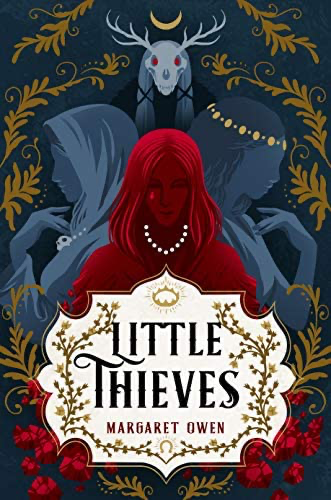
I forget exactly where I first heard about Little Thieves, but I think it may have been from seeing other people’s reviews here in the blogosphere. Now that I’ve read it, let me just say this: whoever’s review it was that inspired me to pick up this book, thank you so much. YA fantasy has started to become formulaic for me at worst, but Little Thieves was filled with charm, humor, and refreshing spins on the subgenre as a whole. Enjoy this week’s review!
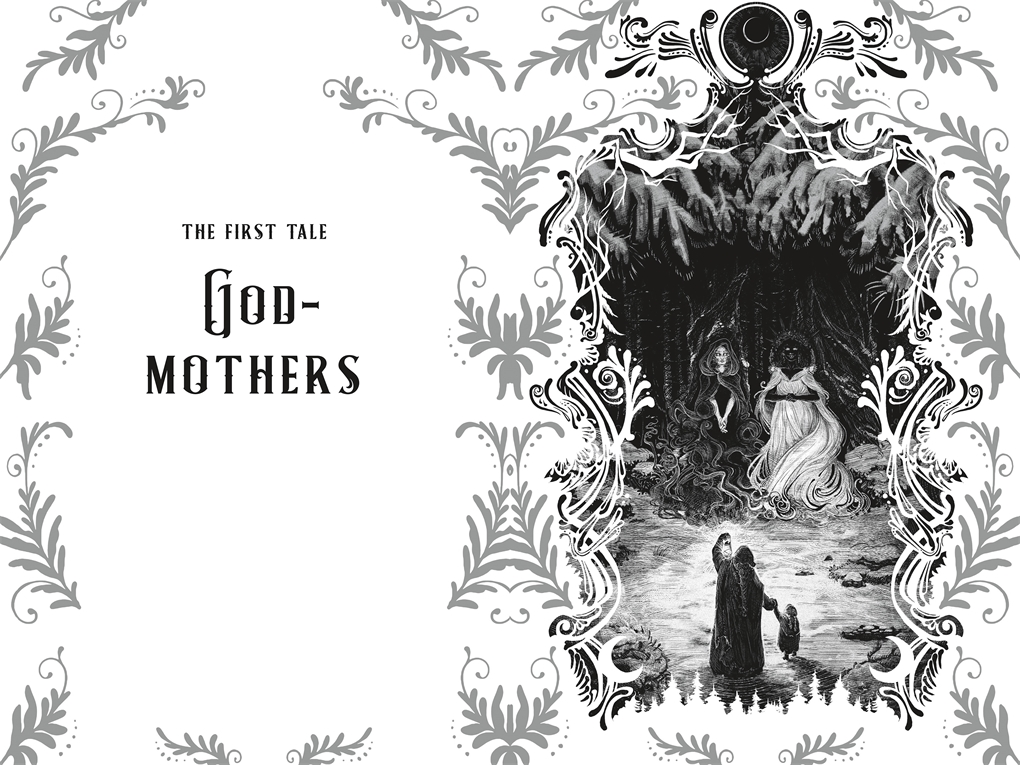
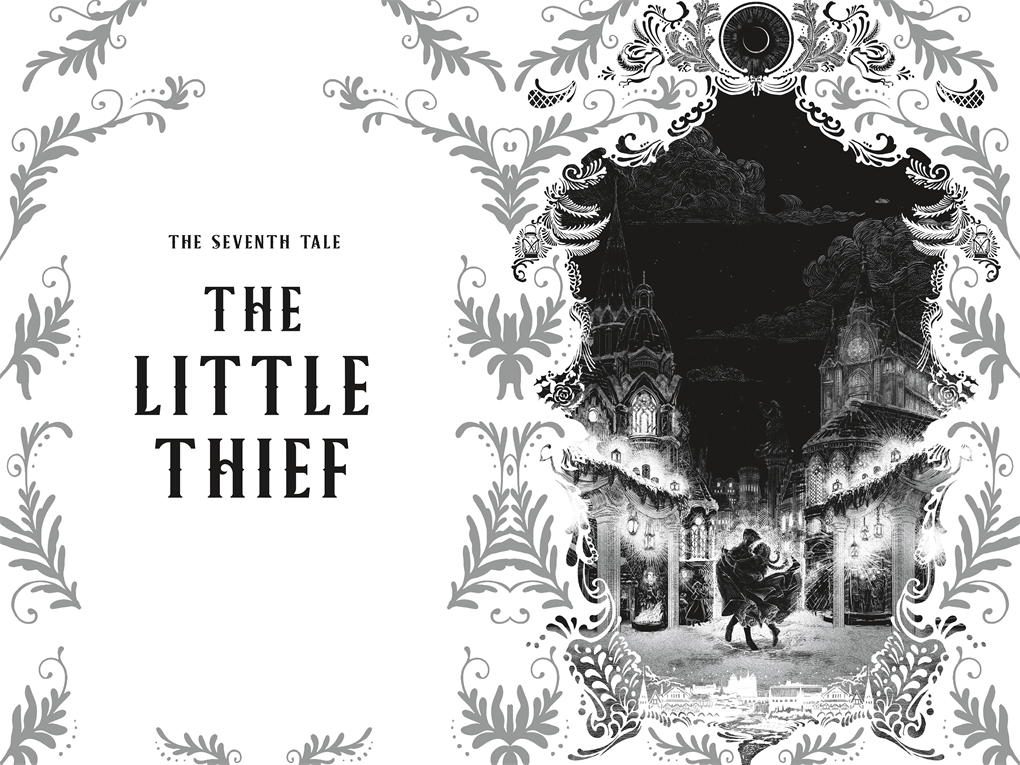
Vanja Schmidt is the thirteenth daughter of a thirteenth daughter. Her mother knew how bad her luck would be, so when she was a child, she surrendered her daughter to be raised by the goddesses of Death and Fortune. But as Vanja grows older, she doesn’t seek to follow the paths of her surrogate parents and runs off on her own, making a living swindling and picking pockets. Vanja’s swindling gets as far as the royal palace, and with the theft of a charmed necklace of pearls, she assumes the identity of Princess Gisele.
But Vanja’s life of crime has attracted unwanted attention. When a Low God curses her body to turn to jewels at the full moon, Vanja must retrace her steps and right her past wrongs. Her trail of thievery will reach into the heart of a conspiracy that leads to Princess Gisele’s betrothed, and soon, Vanja realizes that she’s in for more than she bargained for.
some of the beautiful illustrations from Little Thieves, done by Margaret Owen herself!
TW/CW: child abuse, animal death, blood, descriptions of injury, sexual harassment
Barely halfway through the first month of the year, and I’m already running into books this good? SUCH a relief after the brief slump I was just in…
YA fantasies—fairytale retellings in particular—are books that I’ve started to steer away from slightly; over the years, they’ve gotten blatantly formulaic for me, and it’s rare that any have an impact on me anymore. It feels sad saying that, but after a while, I just got sick of all the secret royalty and love triangles and the lack of good worldbuilding. But Little Thieves showed me that there’s still faith in a sputtering subgenre and treated me to an exceptionally fun time!
It’s been a while since I’ve read a fairytale retelling—after a while, there are only so many Cinderella and Beauty and the Beast retellings one can take. But Little Thieves retold a fairytale that I hadn’t even heard of before—The Goose Girl, written by the Brothers Grimm. It also puts a spin on the fairytale’s antagonist, making her the main character and giving her more nuance and motives. From the first page, Little Thieves felt like a breath of fresh air into a tired genre, and I am all the better for it.
Owen’s vibrant characters seemed to leap off the page, and each and every one of the main cast won my heart in record time. They were all so distinct: Vanja with her determination and sass, Emeric’s delightfully uptight and sensitive demeanor, and the absolute chaos that was Ragne; I got attached to most of the main cast fairly quickly, which is certainly a rare occurrence for me. Little Thieves is also one of the only YA books I can think of that actually gets a morally gray protagonist right. “Morally gray” characters have almost become a buzzword after the success of books like Six of Crows, but most of the time, they just end up being characters that Do Crimes™️ but they have a Tragic Backstory™️ so they’re a Complex Character™️. Vanja, however, actually felt morally gray—her way of life, however shady her dealings and actions were—was her way of survival and defiance. Maybe that’s what happens when you’re raised by two surrogate moms that also happen to be the goddesses of Death and Fortune, but either way, it was refreshingly well-executed.
For the most part, I was also a fan of the writing style! It reminded me a lot of Ashley Poston—it was very cheeky and filled with humor, which matched Vanja’s voice perfectly, but it was also capable of plenty of nuance and depth, resulting in some spectacular bits of prose. Some of the humor bordered on meme-y at times, which was more than a little jarring, but in comparison to the rest of the book, I can let it slide. It’s the kind of charming writing that made me laugh, smile, and swoon, and it suited Owens’ story wonderfully.
The worldbuilding was also excellent, and I loved exploring the pseudo-German, medieval setting! It’s clear that Owens spent lots of time and energy into not only making a fleshed-out world with the appropriate amount of history and constraints, but also trying to stay faithful to German folklore and the original Brothers Grimm tale. All of the gods, shapeshifters, and other creatures were a delight—another reason why I’m a little bored with most YA fantasy is because they often shy away from having lots of mythical creatures (in place of just slapping a magic system onto a vaguely European setting), so, like so many other aspects of Little Thieves, this was such a breath of fresh air. I know I sound like a broken record every time I say that, but that’s seriously how reading all 500+ pages of this book felt.
Going off of that, I loved the casual queerness in Little Thieves! With a lot of fantasy settings where queerness is present, homophobia is still present because there’s a misconception that an ancient/older setting automatically equals homophobia/transphobia. I get the purpose of that on some level if the book is trying to share a message or theme about homophobia or transphobia, but on the other hand, if you can have a complex magic system and dragons, the concept of homophobia not being a thing in your fantasy world isn’t that strenuous of a stretch to make. Owens once again bashes all of these fantasy tropes and integrates queerness into her worldbuilding as something normal, and it made my heart so happy. Although no labels are specifically used in the book, Vanja and Emeric are both implied to be somewhere on the demisexual/asexual spectrum, Gisele is implied to be a lesbian (and later is in a relationship with Ragne), and there are several nonbinary and gender nonconforming side characters! More queer fantasy like this, please! (Also, I just loved Emeric and Vanja together. Just Love Them So Much)
All in all, a rare YA fairytale retelling that subverts all of the tropes of the genre and dazzles with its nuance and charm. 4.5 stars!
Little Thieves is the first in the trilogy, followed by Painted Devils (slated for release later this year) and an untitled third book. Margaret Owens is also the author of the Merciful Crow series, which consists of The Merciful Crow and The Faithless Hawk.
Today’s song:
just listened to this whole album today, perfect for winter!! this one almost sounds like Kid A
That’s it for this week’s Book Review Tuesday! Have a wonderful rest of your day, and take care of yourselves!
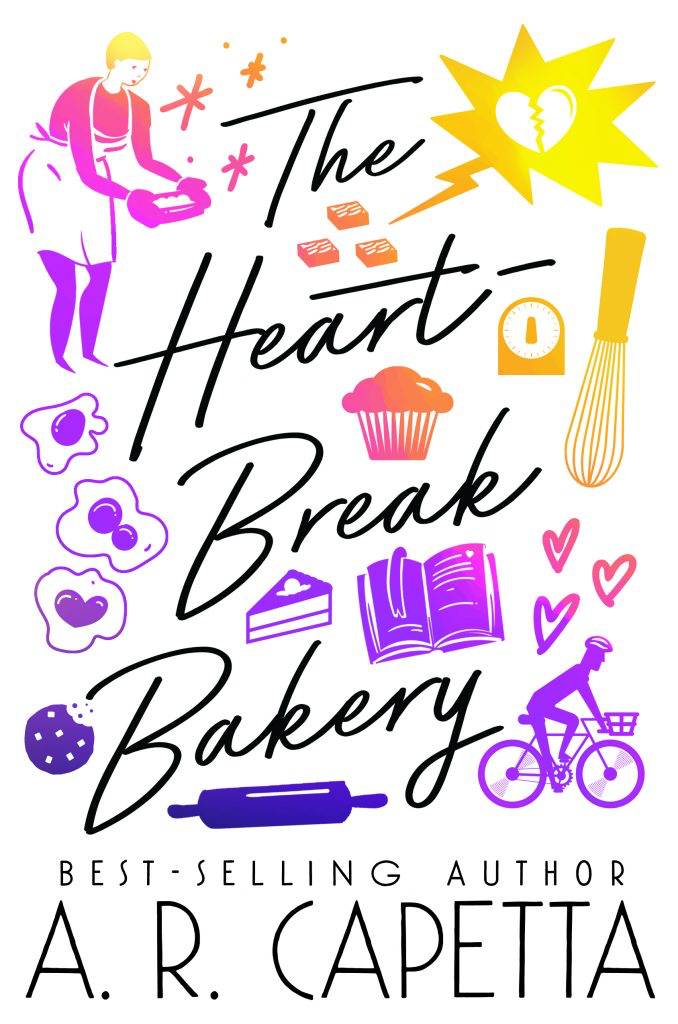
I’ve been a fan of A.R. Capetta ever since I read the Once & Future duology, and when I was looking for a sweet rom-com to read the other day, the opportunity presented itself in this book. I’m glad to say that this is proof that Capetta almost never misses—a tender and sweet (no pun. intended) celebration of queerness and baking!
Syd loves nothing more than baking—especially when it’s at the Proud Muffin, the queer-run bakery at the center of Austin’s queer community. After a nasty breakup, Syd deals with it in signature Syd fashion—by baking all the frustrations and bad feelings out into a batch of brownies. But when Syd’s frustrations works its way into the brownies and causes everyone that eats them to have relationship troubles, Syd has to fix the issue how it began—with baking. Throw in the cute delivery-person, and Syd has to avoid a recipe for disaster…
TW/CW: gender dysphoria
this book: has several jokes about the fact that it’s still possible to have a bad hair day even when you’ve shaved your head
me, having just shaved my head: [chuckles] “I’m in danger!”
I came into The Heartbreak Bakery just for a queer romance to tide me over, and I can now say with certainty that A.R. Capetta never misses! This piece of magical realism is a love letter to queer communities and spaces, and it made my heart so happy.
First off, this is easily one of the most diverse rom-coms that I’ve ever read! Syd is the first main character that I’ve read that’s agender, and the main relationship is between Syd and Harley, another nonbinary character! I think the entire cast is queer—a gay couple owns the Proud Muffin, there’s a polyamorous couple on the side, and there are queer characters of all identities as side characters, and many of them are POC as well! Capetta never shies away from unapologetic queerness, but it particularly shone in The Heartbreak Bakery.
The magical realism aspect was also fantastic, and it also culminated into a theme that I thought was incredibly important. I liked the ambiguity of where it came from, but the concept of putting tangible feelings into baking that have a visible ripple effect had me on board instantly. It served to show a great theme: the feelings that you put into anything, be it a project, a relationship, or a batch of brownies, is what you’re going to get out of it. If you pour all of your negativity into something, that’s exactly what’s going to come out of it. The Heartbreak Bakery takes the concept very literally—brownies that make couples break up, cakes that make you apologize, et cetera—but it was a great theme to explore. I do feel like some of the problems being almost immediately solved by the “apology cake” were a tad bit too easy for Syd to maneuver, but I’m glad Capetta made it more complicated—having Marisol eat the cake by accident, for example. (I wish I had a physical copy of the book on hand—some of those recipes looked good!)
My only major qualm with The Heartbreak Bakery was the pacing. I’m all for slower, gentler books, but it felt like the main points of conflict were unevenly spaced. For instance, the final climax of the bake-off felt far too rushed for me; given how much hinged on the outcome, it should’ve gotten a lot more page time than it did. Some of the interim scenes between the main points of conflict should’ve been shortened in favor of the more important, plot/character building scenes. It was a great novel to start with, but I could’ve done with a little tweaking with the pacing and the importance placed on certain scenes.
All in all, an incredibly sweet (no pun intended) magical-realism romance that reads as an ode to baking, queerness, community, and love itself. 3.75 stars, rounded up to 4!
The Heartbreak Bakery is a standalone, but A.R. Capetta is also the author of The Lost Coast, the Once & Future duology (co-authored with Cory McCarthy), Echo After Echo, and several other books.
Today’s song:
man I have so many memories of hearing this song when I was a kid
That’s it for this week’s Book Review Tuesday! Have a wonderful rest of your day, and take care of yourselves!
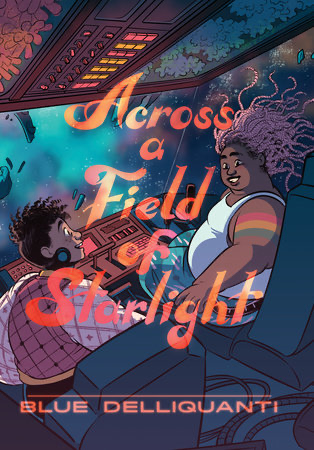
My first review of the year also happens to be the first book that I finished this year! I hadn’t heard anything about it before I came upon it while browsing the YA graphic novel section of Barnes & Noble. I’m always all in for queer sci-fi, and that, combined with the art style, was enough to convince me to buy it. I’m so glad to say that it was a wonderful graphic novel, full of heart, bright colors, and queerness aplenty.
Lu and Fassen have been friends since childhood, after a chance meeting when Fassen’s spaceship crashed onto Lu’s peaceful planet. Though they came from entirely different backgrounds, they kept in contact even as Fassen was forced back into their duty as a soldier. But when the tyrannical Ever-Blossoming Empire begins a siege on Fassen’s resistance front and endangers Lu’s planet, the two are reunited. Together for the first time in years, they must set aside their differences to escape the Empire’s clutches—and discover truths about each other.
TW/CW: sci-fi violence, depictions of injuries/blood, war themes, vehicle crash, loss of loved ones (off-page)
Across a Field of Starlight was the perfect book to start my year off with! With its beautiful art, tender story, and unapologetic queerness all the way through, this is a graphic novel that you won’t want to miss.
I’d be remiss if I didn’t acknowledge how wonderfully diverse Across a Field of Starlight is. I don’t think I’ve read anything—graphic novel or otherwise—quite this diverse in such a long time! Both of the protagonists are nonbinary and POC, Lu is plus-sized, and there is an array of POC and trans characters all throughout the story. I especially loved that Delliquanti didn’t shy away from giving their cast of characters a variety of different body types, and it made their world and story all the more rich.
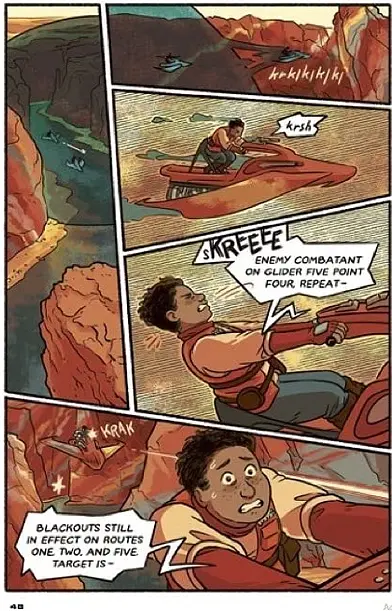
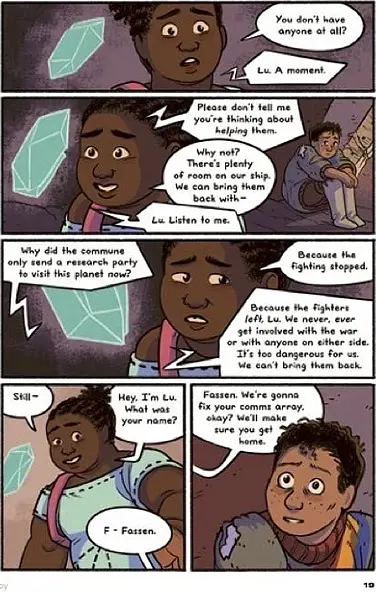
Delliquanti’s art style made Across a Field of Starlight shine as well. Although the book gets into some dark themes—war, colonization, etc.—the colors are vibrant all the way through, giving it a very fantastical feel. It especially suited Lu’s more peaceful, utopian planet and its welcoming nature, as well as Lu’s caring personality. Delliquanti’s depiction of outer space has a beautiful vibrance to it, making for an incredibly inviting story.
art by Blue Delliquantiart by Blue Delliquanti
The perspectives that Delliquanti chose gave the story a more compelling angle as well. Instead of most sci-fi/fantasy war stories, Across a Field of Starlight focuses on the Firebreak resistance front and a party completely outside the main conflict; most media (Star Wars comes to mind) focuses just on the tyrannical empire and the rebellion, but I liked that they largely left the Ever-Blossoming Empire as more of a looming threat. It also made the point that even though Firebreak was fighting to free the galaxy of colonization, they weren’t all pure and good either, and although the aim was good, the motives for some of the authority figures may have been less so. Never meet your heroes, kids.
That being said, I would’ve liked more context for the intergalactic conflict that this novel sets up. I did like that we were thrown right into the action, but I would’ve liked more historical context on how the Ever-Blossoming Empire and the Firebreak came to be, how long they’ve been at war, and the consequences for the rest of the galaxy. Across a Field of Starlight is great on its own, but with a world as expansive as the one Delliquanti has created, it’s begging for a few sequels or spin-offs, or at least some more background.
All in all, a highly enjoyable graphic novel filled with heart, diversity, and vibrant color. 4 stars!
Across a Field of Starlight is a standalone, but Blue Delliquanti is also the author of the comic series O Human Star, which currently has three volumes, and has contributed to several other comic collections.
Today’s song:
good mindset for this year, I think
That’s it for this week’s Book Review Tuesday! Have a wonderful rest of your day, and take care of yourselves!
This week, July 11-17, is Nonbinary Awareness Week, and today, July 14, is International Nonbinary People’s Day! I’ve done a few specific lists for books with different identities within the LGBTQ+ community, but I don’t think I’ve done a specific nonbinary one. Given that it’s the perfect time to do it, I figured I would shine a light on books with protagonists (and sometimes authors!) with nonbinary and gender non-conforming identities. Representation always, always matters, especially for a community who face scrutiny even from within the LGBTQ+ community. 💛🤍💜🖤
Let’s begin, shall we?
THE BOOKISH MUTANT’S YA BOOKS FOR NONBINARY AWARENESS WEEK
All at once heartbreaking and tender, I Wish You All the Best is an incredibly powerful story of a nonbinary teen’s journey of acceptance and self-love.
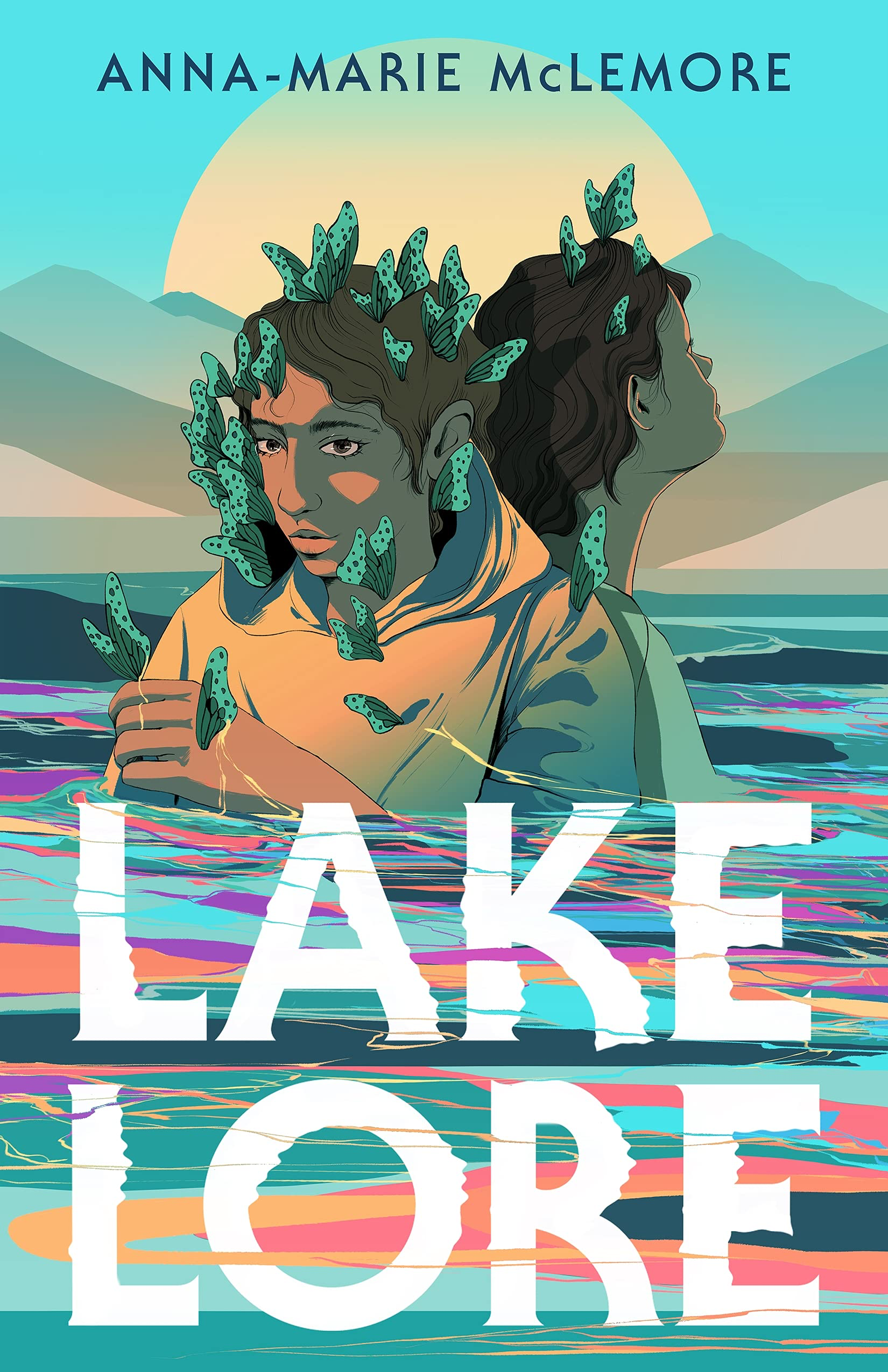
Anna-Marie McLemore never misses, and this beautiful story of two nonbinary, Latinx, and neurodivergent teens and a secret world beneath a lake is proof.
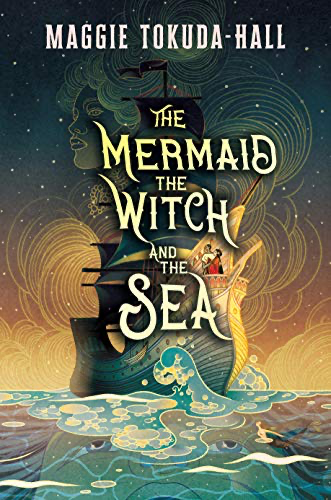
The Mermaid, the Witch, and the Sea features a powerful genderfluid pirate as one of the main characters! There’s another prominent side character who is nonbinary as well.
Though I didn’t enjoy this one as much as I Wish You All the Best, The Ghost We Keep is still an incredibly powerful exploration of grief. It’s also one of the only books I’ve seen that features a protagonist that uses multiple pronouns—Liam uses he/they pronouns!
Mask of Shadows is a super fun fantasy novel featuring a genderfluid assassin!
TELL ME WHAT YOU THINK! Have you read any of these books, and if so, what did you think of them? What are your favorite books with nonbinary and gender non-conforming rep? Tell me in the comments!
Today’s song:
this is so creepy I love it
That’s it for this post! Have a wonderful rest of your day, and take care of yourselves!
I’ve been a huge fan of Anna-Marie McLemore’s books for ages; their prose is always immersive and lush, and their stories never fail to pull at the heartstrings. So I was over-the-moon excited to find out that they had a new book out! I put Lakelore on hold as soon as I could, and I finally got to read it last week. While it wasn’t their best work, Lakelore is still a beautiful tale of the trans experience.
The town where Bastián and Lore live has a secret: under the lake is a strange, unknown world. But they are the only ones who have ventured down into this secret world, and they know something that the other townsfolk don’t know: the world under the lake is blending with the real world. The only way to put the two worlds back in their places is for Bastián and Lore to reunite, but the secrets between them may tear them apart before they reach their goal.
I loved Lakelore, but it lacked the very thing that makes McLemore’s other books so unique—the magical realism aspect. It was there, sure, but it felt so sidelined when the synopsis emphasized it so much. That being said, Lakelore was still excellent, and it’s sure to resonate with so many nonbinary readers!
The representation in Lakelore was truly fantastic! Both Bastián and Lore are Latinx and nonbinary; Bastián also has ADHD and Lore has dyslexia! This kind of intersectional representation is what I live for, and McLemore wrote it all so gracefully! Each aspect of their identities was so wonderfully written, from Bastián’s journey starting testosterone to Lore’s therapy sessions to cope with school having dyslexia. The whole book is a beautiful testament to being the other in some way, and the way that McLemore explores it with Bastián and Lore was fantastic.
And I’d be remiss if I didn’t mention Anna-Marie McLemore’s unforgettable prose! Their writing is as strong as ever in Lakelore, and the way their signature, magical writing style told Bastián and Lore’s stories made it all the more engaging, emotional, and tender. It’s the kind of writing that feels like looking at pure, unadulterated magic, instantly transporting the reader to the small town and the mysterious lake at its heart.
That being said, I was a little disappointed with the magical realism aspect of Lakelore. At best, it was underdeveloped; we got glimpses of the world beneath the lake, but it was never quite expanded upon. We saw that this underwater realm gave Bastián’s alebrijes (which I also loved—great metaphor for healthy coping mechanisms!) the ability to move, but other than that, it was very vague, save for the urban legend aspect of it. I guess it’s on me for thinking that Lakelore was gonna be some kind of nonbinary Abe Sapien kind of deal, but even so, I wanted so much more from that aspect after how strong McLemore’s magical realism/fantasy game usually is.
All in all, a fantastic addition to Anna-Marie McLemore’s pantheon that lacked slightly in the magical realism department, but made up for it with the beautiful depiction of a Latinx, nonbinary, and neurodivergent experience. 3.75 stars, rounded up to 4!
Lakelore is a standalone, but Anna-Marie McLemore is also the author of The Mirror Season, Wild Beauty, When the Moon Was Ours, Dark and Deepest Red, Blanca & Roja, The Weight of Feathers, and the forthcoming Great Gatsby remix Self-Made Boys.
Today’s song:
That’s it for this week’s Book Review Tuesday! Have a wonderful rest of your day, and take care of yourselves!
Here we have the last of my pride month recommendations for this year! This post is focused on contemporary and realistic fiction books, but romance and mystery are included in here as well. And as always with my recommendations: diversify your reading 24/7, but always take this time to uplift LGBTQ+ voices!
(click here for this year’s queer YA sci-fi and fantasy recs!)
So let’s begin, shall we?
🏳️🌈THE BOOKISH MUTANT’S 2022 YA PRIDE MONTH RECS: CONTEMPORARY/REALISTIC FICTION 🏳️🌈
LGBTQ+ REP: Bisexual MC, lesbian, bi, pan/nonbinary, and gay side characters, straight-passing relationship
MY RATING: ⭐️⭐️⭐️⭐️
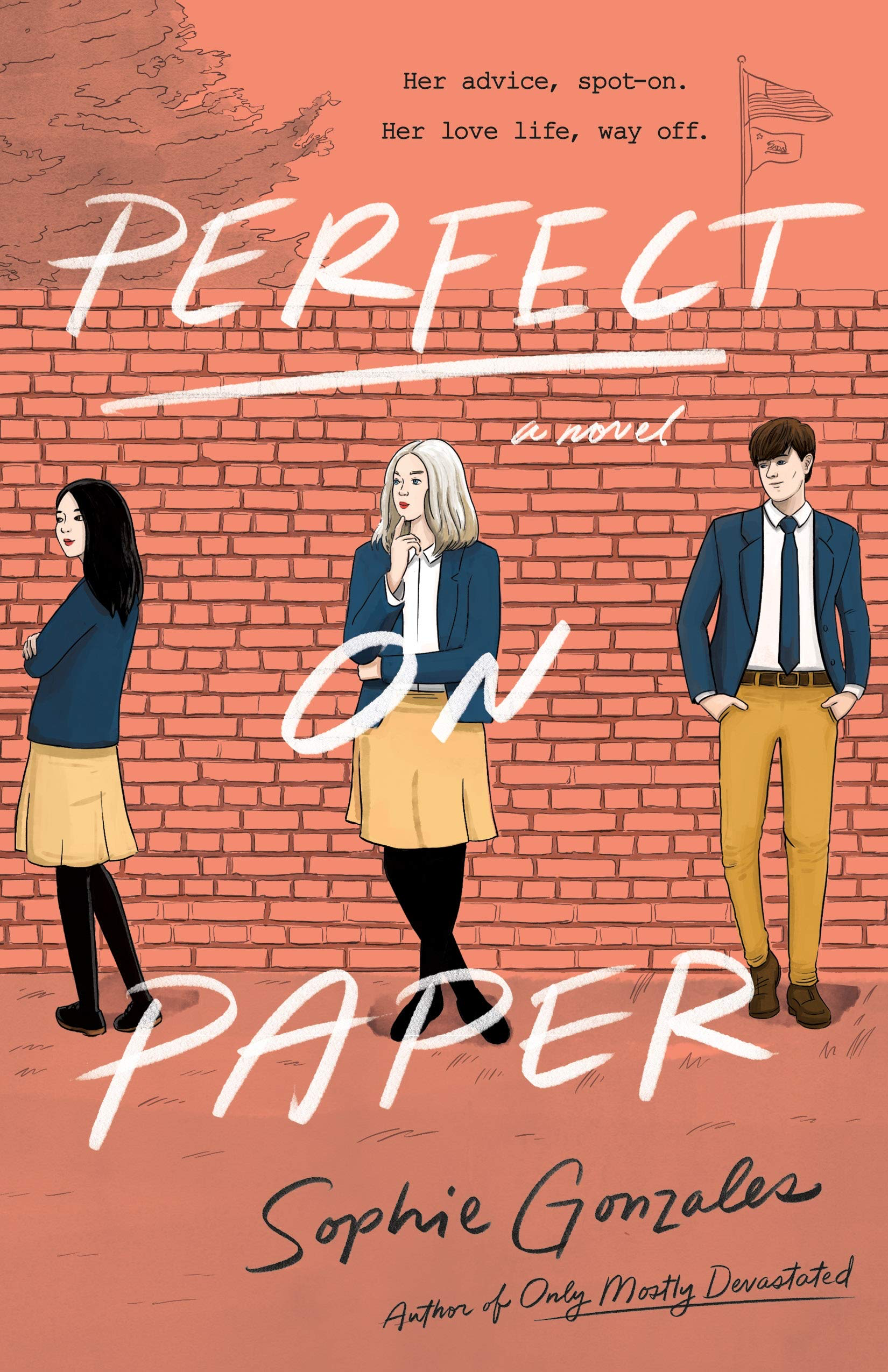
I’m saying this as a proud bisexual woman: Perfect on Paper is seriously some of the best bisexual rep I’ve ever read! There’s so many important discussions in this book, from internalized biphobia to how the queer community views straight-passing relationships, all with a sweet and messy romance!
LGBTQ+ REP: Bisexual love interest, straight-passing relationship
MY RATING: ⭐️⭐️⭐️⭐️.5
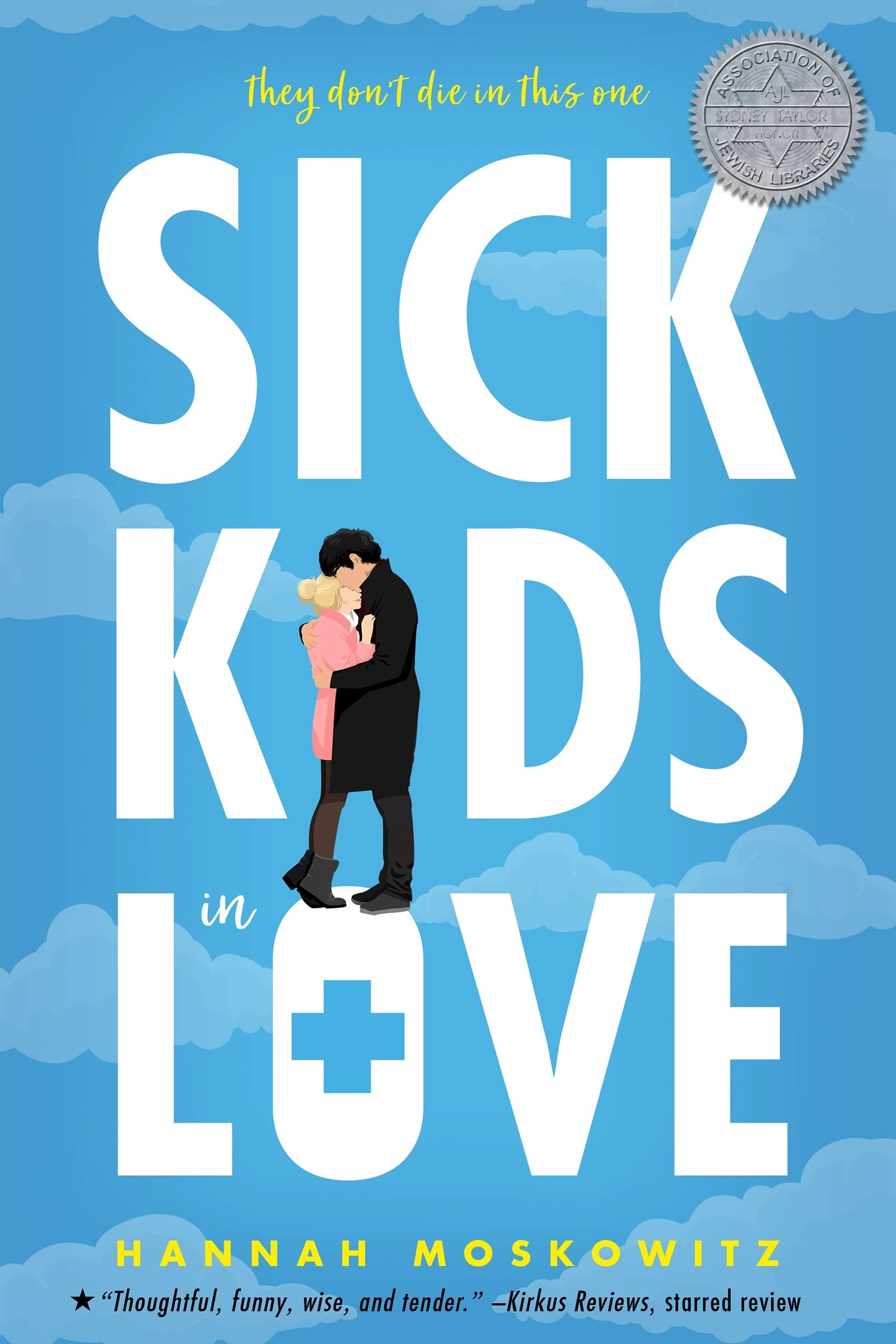
Sick Kids in Love is such an important book for so many reasons (namely its groundbreaking disability rep), but this is what intersectionality looks like—both protagonists are disabled and Jewish, and the love interest is also bisexual! Always warms my heart to see disabled bisexual characters.
LGBTQ+ REP: Gay MC, bisexual love interest, mlm relationship, trans woman, lesbian, and gay side characters, side wlw relationship
MY RATING: ⭐️⭐️⭐️⭐️
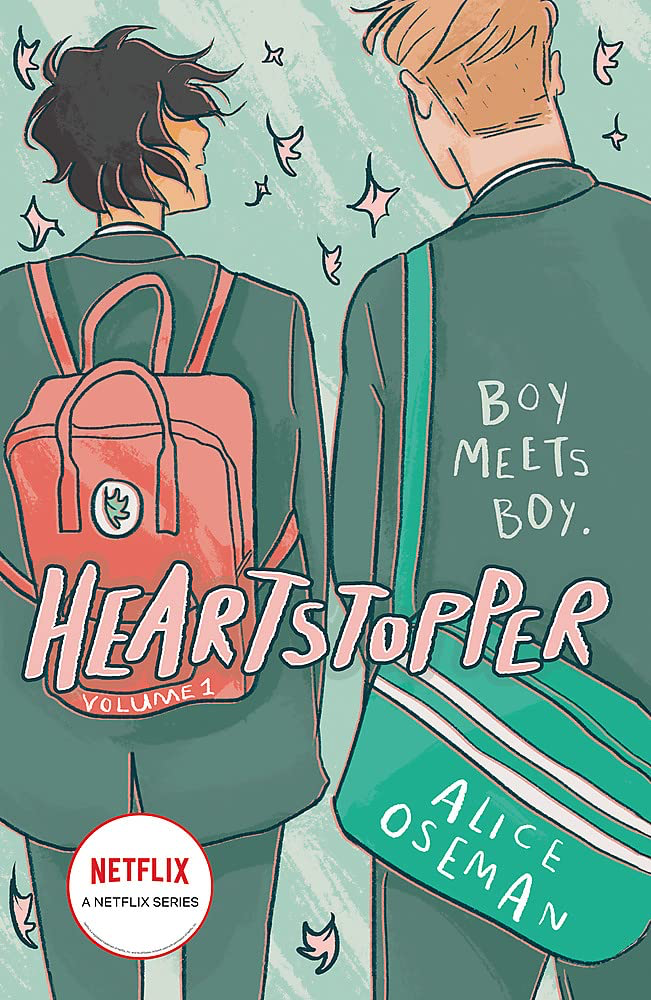
I’d be remiss if I didn’t include Heartstopper here—such a sweet and heartwarming LGBTQ+ romance comic! Plus, I can say with certainty that the bisexual rep is ON POINT. I adored the Netflix show too! (did anybody else full-on SOB during Nick’s coming out scene 😭)
TELL ME WHAT YOU THINK! What are your favorite queer YA contemporary/realistic fiction books? Have you read any of these books, and if so, what did you think of them? Tell me in the comments!
Today’s song:
That’s it for this post! Have a wonderful rest of your day, and take care of yourselves!











 The Bookish Mutant