Happy Sunday, bibliophiles! I hope this week has treated you well.
First off, apologies for the lack of a book review/Sunday Songs this week. I’ve just been busy with school, and I didn’t have as much time to sit down and write something that wasn’t the draft I’m trying to get myself back into the rhythm of writing. (I’ve been cobbling at this post in advance before this week, so that’s why you’re able to see it now.) Plus, I was just generally exhausted on Tuesday, but it was a good exhaustion, all things considered, because I’d seen Peter Gabriel the night before! Words don’t do justice to how incredible of a show it was. You’ll definitely hear about it later.
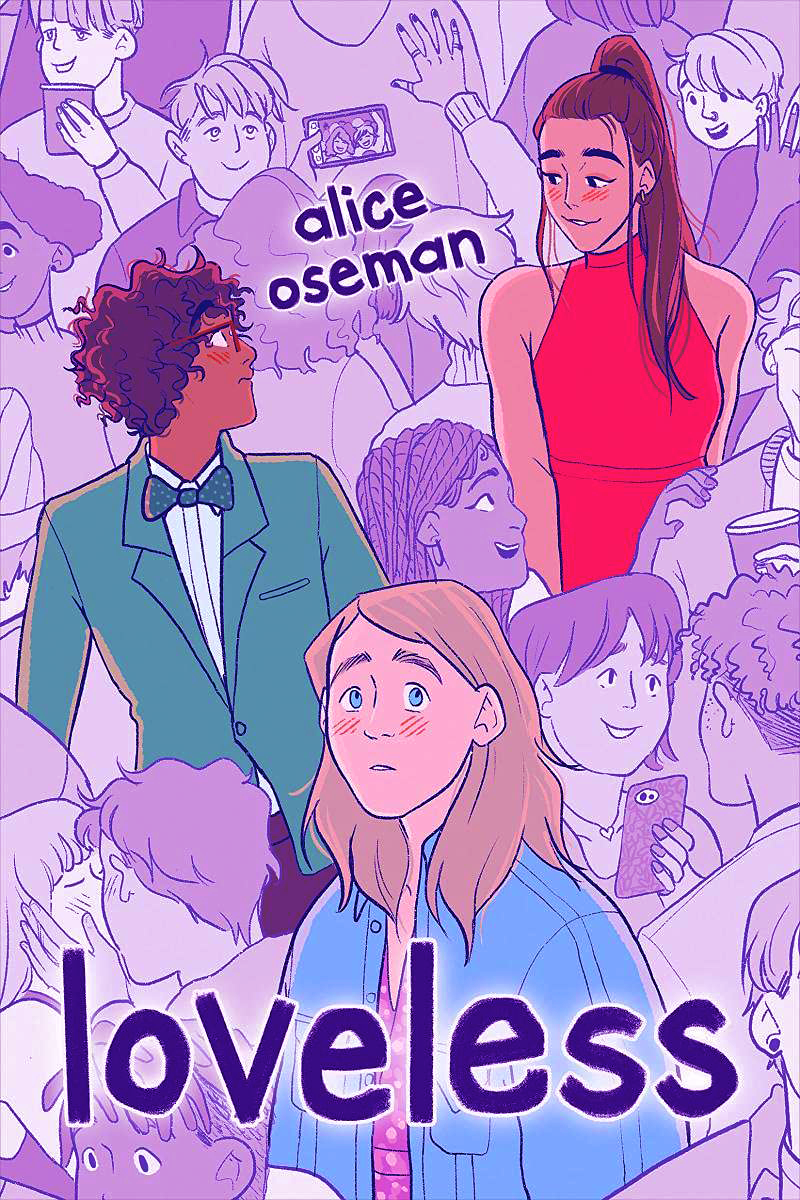
Here in the U.S., Asexual Awareness week, or Ace Week, is celebrated from October 22-28! Even though I’m not on the asexual/aromantic spectrum, it’s impossible to not see how much this community gets left behind, even within the LGBTQ+ community; just as any other spectrum of identity, it’s just as valid and worthy of respect as anything else. I’ve been meaning to make more asexual book lists, but this time of year is kind of crazy for me. But this year, I figured I would start early so I would have another book list—we need to shed more light on these fantastic books and authors!
TELL ME WHAT YOU THINK! Have you read any of these books, and what did you think of them? What are your favorite books with characters on the asexual spectrum? Let me know in the comments!
Today’s song:
That’s it for this year’s recommendations! Have a wonderful rest of your day, and take care of yourselves!
Here we are again in pride month! It certainly is a joyous time of year, but in the past few years, it’s been a difficult one, too. All across the country, we have seen waves of anti-LGBTQ+ legislation, and the rhetoric that queer people are unnatural and wish to convert your children has spread like wildfire. We’ve also seen a dangerous increase in book bans—particularly by queer authors and authors of color. Books with diverse perspectives aren’t harming children—depriving children of these books is the dangerous part. Now more than ever is it important to read diversely: there’s never any harm in seeing a different perspective through literature. And if you’re really that concerned about “protecting the children,” maybe you should advocate for stricter gun laws instead of worrying about drag queen story hour.
In past years, I’ve split this post up into multiple (organized by genre), but I decided to make it all one post this year to keep it all more organized.
TELL ME WHAT YOU THINK! What are your favorite queer reads that you’ve read recently? Have you read any books on this list, and what did you think of them? Tell me in the comments!
Today’s song:
That it for this year’s pride month recommendations! Have a wonderful rest of your day, and take care of yourselves!
Happy Wednesday, bibliophiles! I wrote most of this post in advance, but as of now, I’m about to move out of my dorm!! I HAVE SUCCESSFULLY FINISHED MY FIRST YEAR OF COLLEGE!!
Here in the U.S., May is Asian American and Pacific Islander Heritage Month, and I’ve compiled another list of book recommendations for the occasion! Diverse reading shouldn’t be restricted to a single month, but it’s so important to amplify marginalized—in this case, AAPI—voices during this month. My lists serve as guides to read during not just their respective months, but any time you’d like.
However, this year is a little different. Even though I’m too lazy to change the header image (sometimes you’ve gotta be a bit stingy with your media space), I’ve decided to put both YA and adult books on this list. I’ve started to read more adult books in the past few years, and I’d be remiss if I didn’t include some of these books on this list. So it’s a slightly wider pool to choose from this year—read at your leisure!
Huntress (Ash, #0.5) – Malinda Lo: (Fantasy, LGBTQ+) normally I wouldn’t put a prequel/spin-off on a list like this, but this one can stand on its own—worth a read! | ⭐️⭐️⭐️.5
Not Here to Be Liked– Michelle Quach:(Realistic Fiction) a wonderfully feminist read about a high schooler’s battle with sexism in her school newspaper. | ⭐️⭐️⭐️⭐️
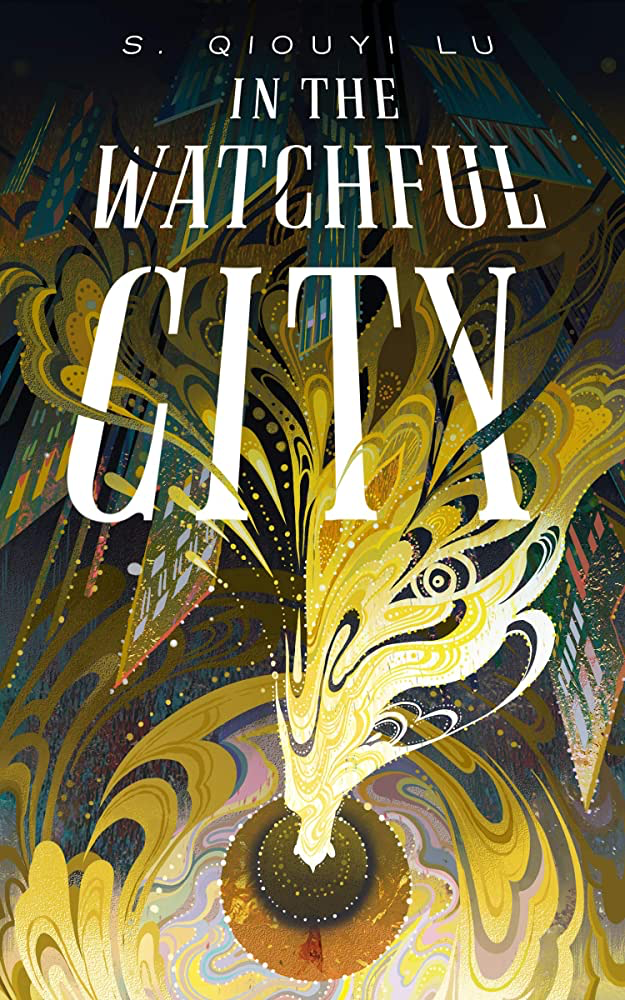
In the Watchful City – S. Qiouyi Lu: (Science Fiction, Fantasy, LGBTQ+) a multilayered anthology-novella centered around a strange cabinet of curiosities! | ⭐️⭐️⭐️.5
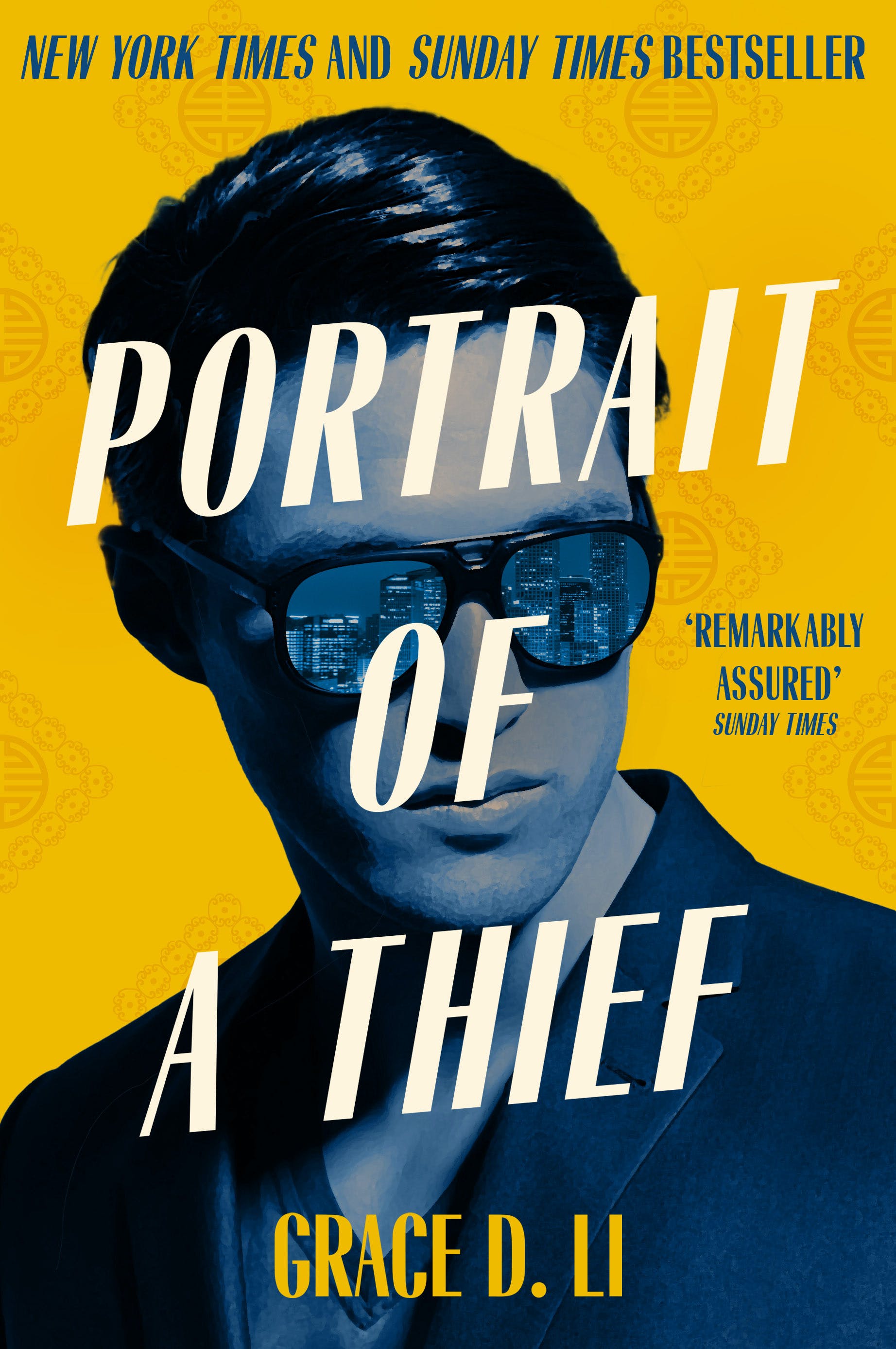
Portrait of a Thief – Grace D. Li: (Mystery, Thriller) a group of Ivy League students turned thieves and con artists set off on a mission to return prized art back to China. | ⭐️⭐️⭐️⭐️
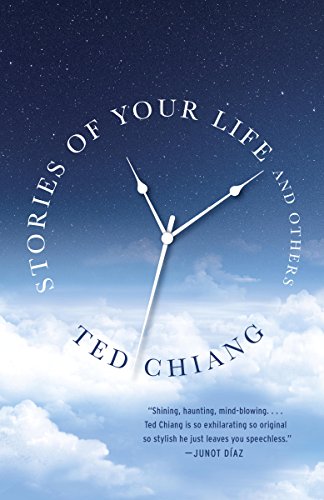
Stories of Your Life and Others – Ted Chiang: this anthology contains “Story of Your Life,” the inspiration for the movie Arrival, and although that was the only story in the collection to absolutely wreck me, all of the stories were fantastic! | ⭐️⭐️⭐️⭐️
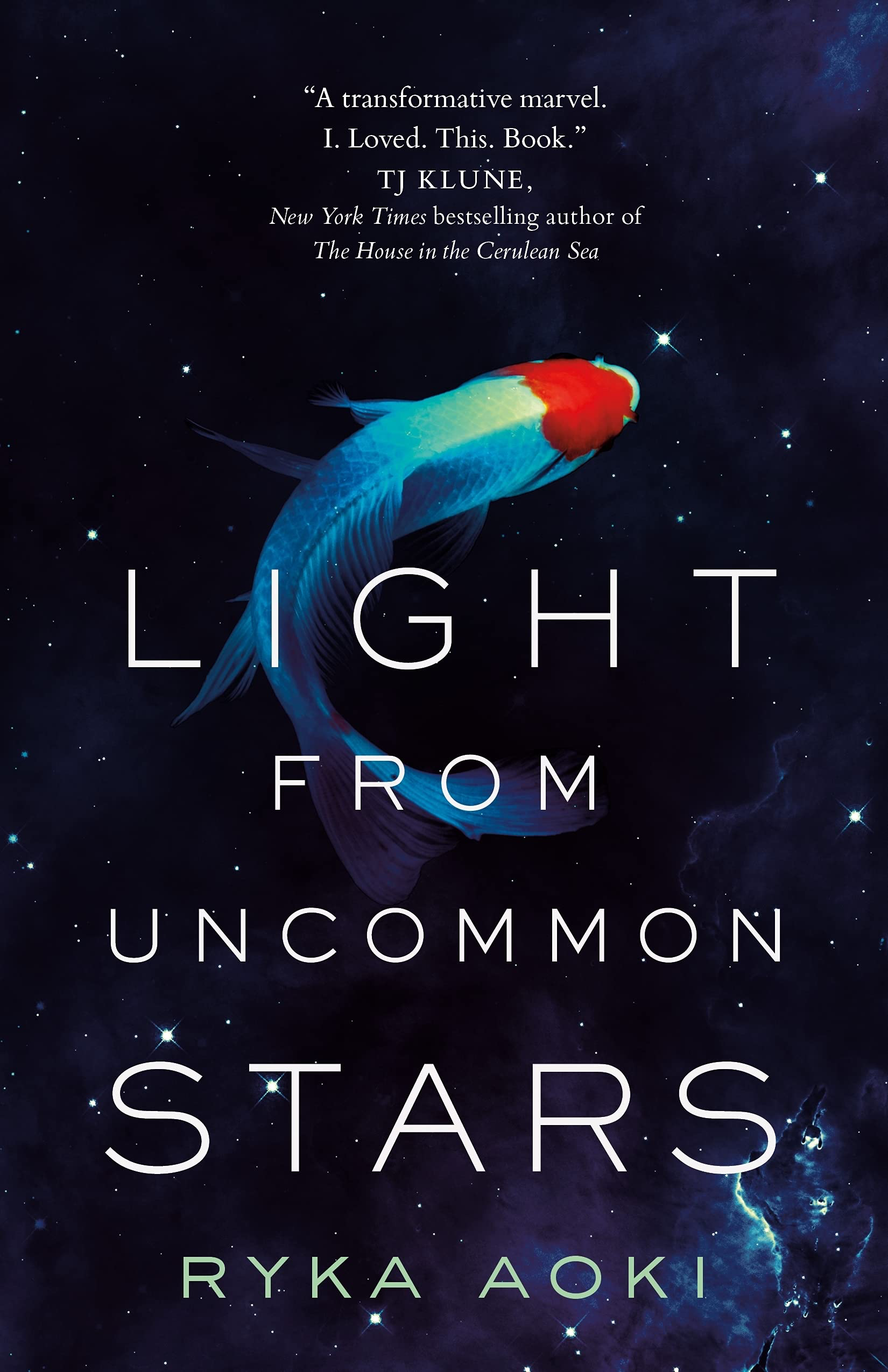
Light from Uncommon Stars – Ryka Aoki: (Science Fiction, LGBTQ+) if you can think of anything, there’s a good chance it’s in here somewhere—aliens, donut shops, and cursed violins, oh my… | ⭐️⭐️⭐️.75, rounded up to ⭐️⭐️⭐️⭐️
TELL ME WHAT YOU THINK! Have you read any of these books, and what did you think of them? What are some of your favorite books by AAPI authors? Let me know in the comments!
Today’s song:
I FEEL LIKE I’VE ASCENDED TO ANOTHER PLANE OF EXISTENCE HELP
That’s it for this list of recommendations! HAve a wonderful rest of your day, and take care of yourselves!
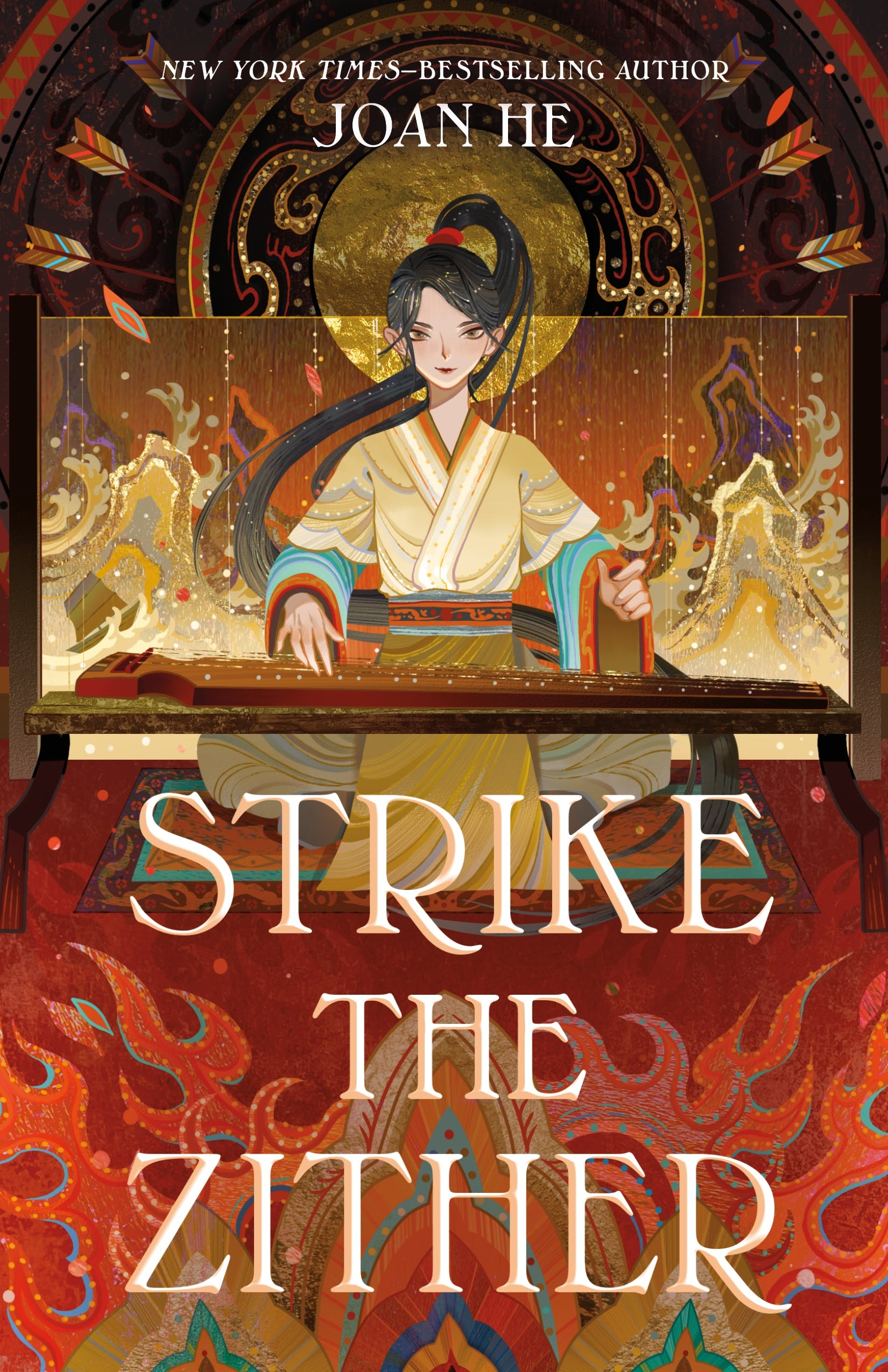
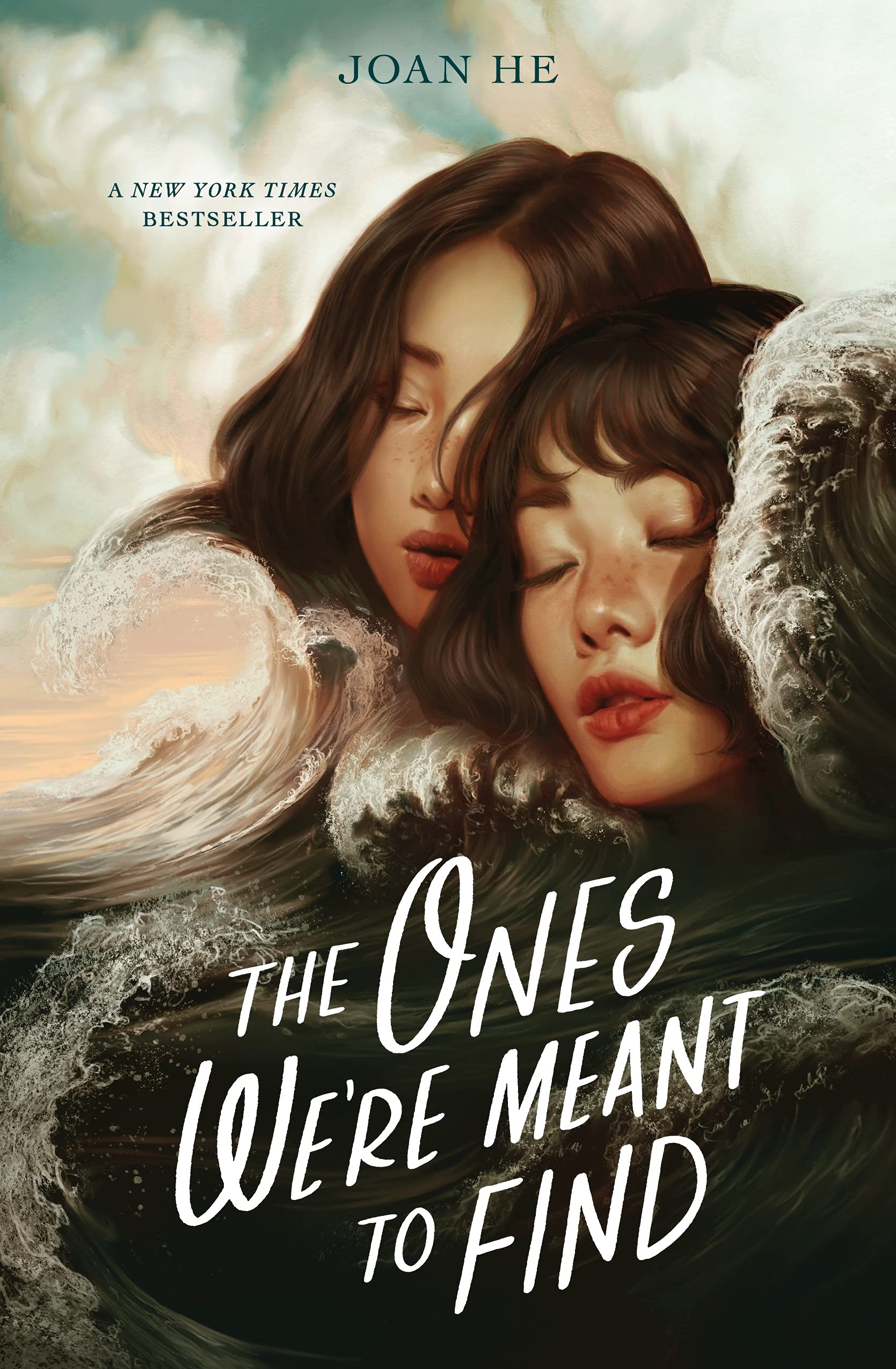
Descendant of the Crane and The Ones We’re Meant to Findmade me an instant fan of Joan He, and so I was immediately hooked when I found out that she was cooking up another piece of folkloric-feeling historical fiction! And now that I’ve finished this novel, I can safely say that Joan He has never once let me down. Fingers crossed that it’s consistent.
Zephyr has spent her whole life mapping survival out strategically. It was necessary after she was orphaned while she was still young, but as the strategist of the warlordess Xin Ren, she now holds the fate of a warring country in her hands. Three factions are fighting for dominance under a figurehead of an empress, and any sudden moves could mean that one faction takes over the entire Xin Dynasty.
When Zephyr is sent on a mission to infiltrate the ranks of the enemy to ensure the safekeeping of Xin Ren’s loyal followers, she collides with Crow, an enemy strategist with an agenda of his own. But the boiling point of all three factions is fast approaching, and Zephyr must do anything in order to make it out alive—even if it means exposing herself to the enemy.
I’m not sure why I’m so hesitant to say that Joan He can do no wrong at this point. She’s never missed. Not with Descendant of the Crane, not with The Ones We’re Meant to Find, and certainly not with this novel. Her first two books were already works of art, and I’m glad to say that He is consistent in the quality of her writing, and consistent in her ability to put out so much unique media into the world of literature.
Each Joan He book is memorable in its own way, but what stood out to me about Strike the Zither was how wonderfully cinematic it was. It wasn’t frustratingly quippy or overtly self-serious; He knew just when to hit the balance, juxtaposing war with well-placed zither solos and political intrigue. He seems to do political intrigue especially well—there’s a way to make it genuinely interesting without having the entire focus be on court drama, which happens so often in YA, and with both this novel and Descendant of the Crane, she teases each development just enough to continually keep my attention. With the stylized art on the cover, I could honestly imagine this novel being adapted into a darker Laika Studios stop-motion film, but no matter the medium, Strike the Zither feels like it was born for the screen.
He also has an awareness of her characters that not many YA authors do—she knows that Zephyr and all of the other supporting characters are over the top, and she absolutely rolls with it. Again, Strike the Zither was a master class in balance; Zephyr neither fell into the all-too-common self-seriousness of YA, nor did she constantly break out into the dreaded Marvel Funny personality. She’s theatrical, but in a fun way that doesn’t mire itself in angst unnecessarily. Given this novel’s roots in Chinese classics and folklore, it’s the perfect way to write it; He mentions that the original epic of the Three Kingdoms had a tendency to put historical figures on a godlike pedestal, and this felt like a tongue-in-cheek response to that style.
The pacing of this novel also sealed the deal for me; although it was a little difficult to get into right out of the gate with how the world and its characters were so rapidly introduced, once it got going, the pace never faltered. Every action felt calculated, like the strategist that Zephyr is, and each choice elevated the plot to heights that I didn’t expect Strike the Zither to reach. The main twist was so deftly executed, and it had me grinning from ear to ear when I came across it, and my excitement never waned over the course of this novel. This one’s a must-read, trust me.
All in all, an impressive display of Joan He’s talent on all fronts. 4 stars! I can’t wait for the rest of the duology!
Strike the Zither is the first book in the Kingdom of Three duology; the sequel, Sound the Gong, is set for release in October of 2023 (!!!). Joan He is also the author of Descendant of the Crane and The Ones We’re Meant to Find, both of which are standalones.
Today’s song:
I’ve had this on repeat for the past few days :,) so lovely
That’s it for this week’s Book Review Tuesday! Have a wonderful rest of your day, and take care of yourselves!
Happy Wednesday, bibliophiles, and more importantly, Happy International Women’s Day!
Aside from that, the month of March in the U.S. is Women’s History Month! These past few years have been tumultuous for women here in the U.S. and elsewhere, with the attacks on bodily autonomy being some of the most violent in recent years. But despite it all, we cannot lose hope—by lifting each other up, we can foster an environment that respects women as equals. And as I’ve always said, literature is resistance: it isn’t just real-life heroes that can inspire us to incite change—fictional heroines can have just the same effect. So for the occasion, I’ve gathered even more feminist YA book recommendations.
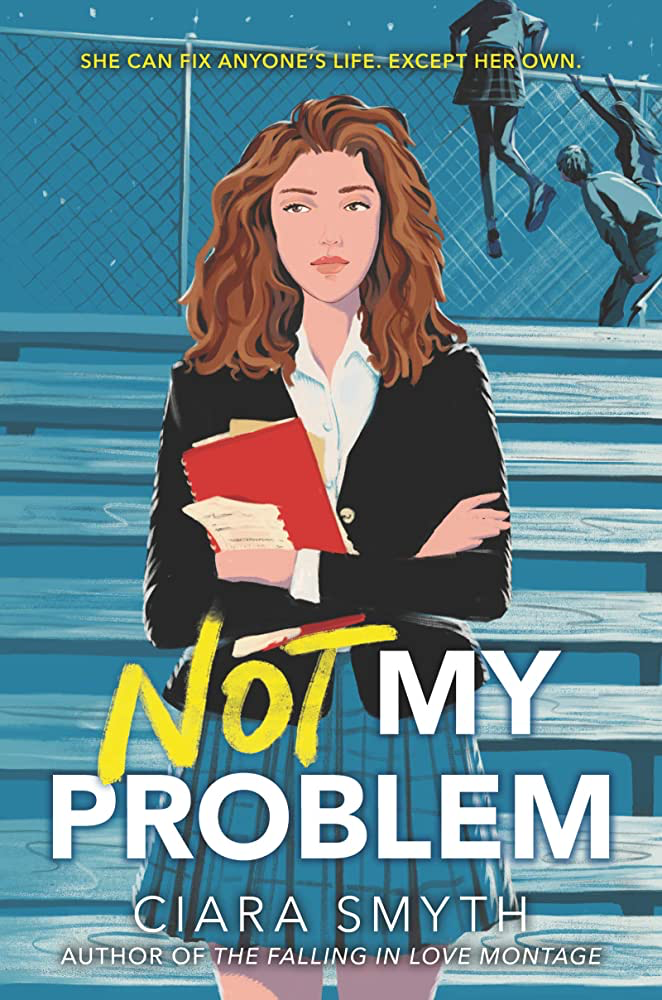
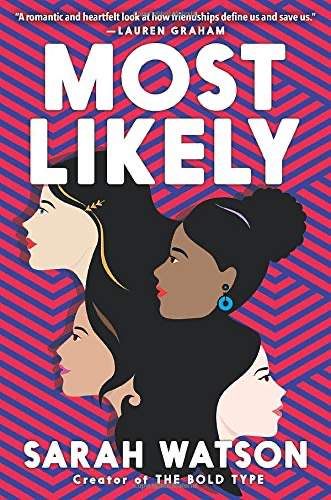
An intersectional story that weaves together the lives of four girls in their senior year of high school—one of which will become the president of the United States.
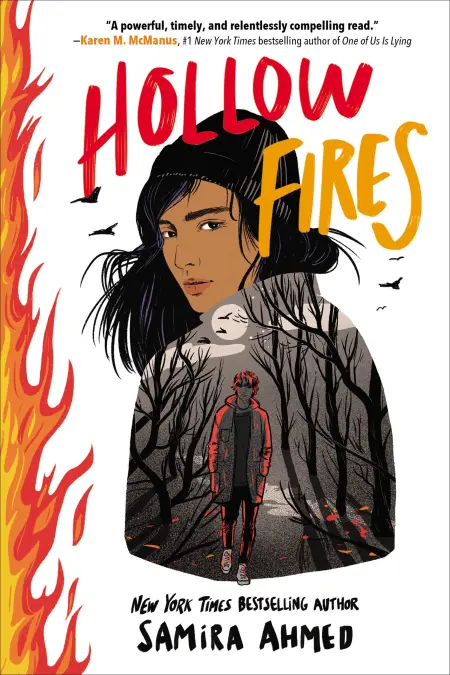
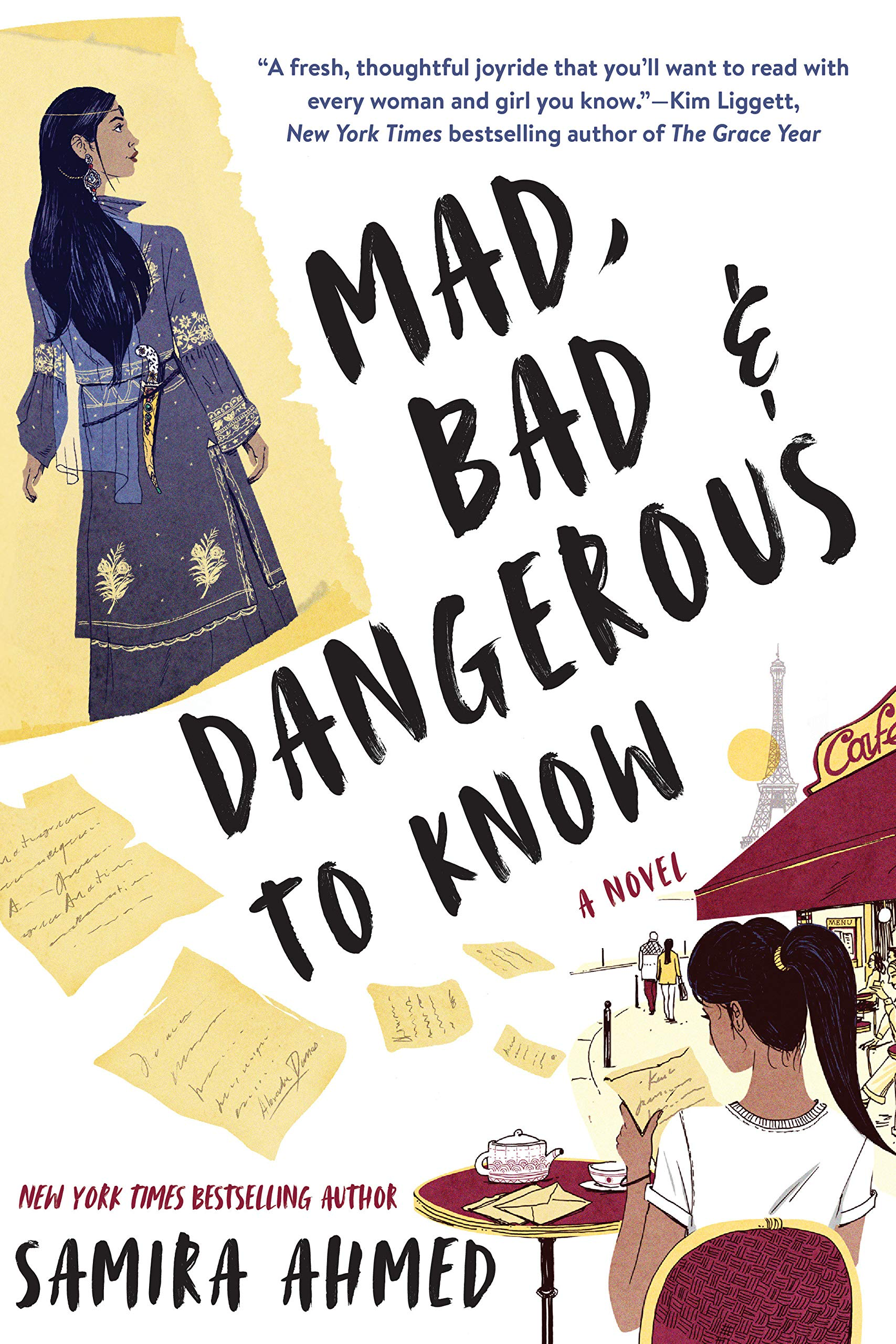
Samira Ahmed always ends up showing up on these lists, and for good reason—she’s never missed with any of her raw and fiercely feminist novels, and Hollow Fires is no exception.
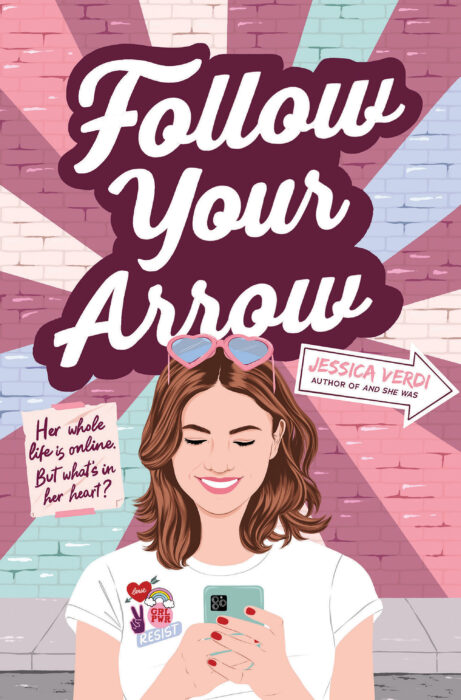
Though this book was far from perfect, I think it’s still worth it to put on this list; the writing and romance weren’t great, but Follow Your Arrow has plenty of timely discussions around bisexuality and how we treat queer women.
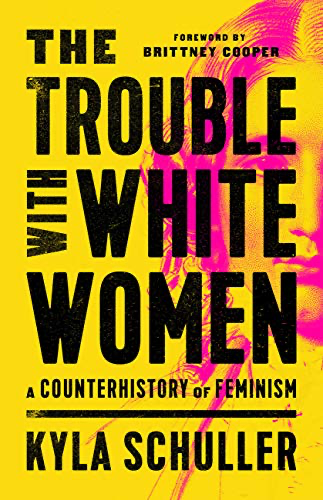
Although this list was intended to be just for YA and fiction, I’d be remiss if I made a post about feminism and didn’t include this book. The Trouble With White Women presents a view on feminism that is necessary for moving past simply white feminism, and presents the feminist movement through those on the margins, such as Frances Harper, Pauli Murray, and Alexandria Ocasio Cortez. It’s seriously one of the best nonfiction books I’ve read in ages—on any subject matter.
TELL ME WHAT YOU THINK! What did you think of the books on this list? What are your favorite feminist YA books? Let me know in the comments!
Today’s song:
Most of the Warpaint I’ve heard hasn’t done much for me (aside from their great cover of “Ashes to Ashes”), but I love the quietness of this one!
That’s it for this list of recommendations! Have a wonderful rest of your day, and take care of yourselves!
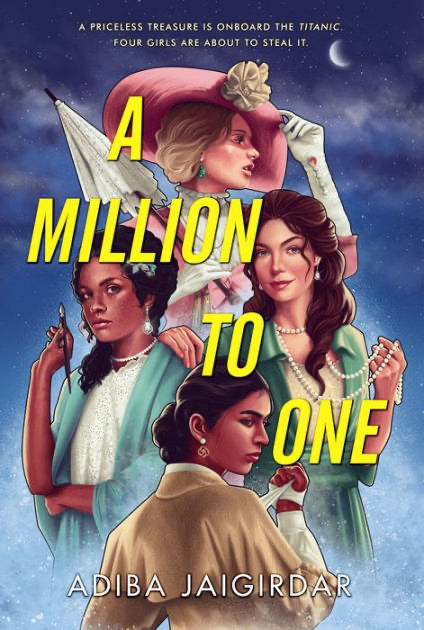
I hate to end the month on a negative note review-wise, but I just wasn’t a fan of this novel. I’ve been following Adiba Jaigidar’s books for a little while, and for the most part (still don’t see why Hani and Ishu still gets that much hype), she does well with writing diverse YA romances. I was excited to see her take on a different genre, but to my disappointment, A Million to One read as a half-baked, flimsy excuse for a heist.
For my review of Hani and Ishu’s Guide to Fake Dating, click here!
Josefa, Emilie, Hinnah, and Violeta: four girls from radically different backgrounds, thrown together on the RMS Titanic. Their mission: to steal a copy of the Rubaiyat, embedded with jewels and worth a fortune. With all of their skills combined, the girls are confident that they can swipe the priceless book once and for all. But the Titanic is filled with distractions, romance, and all sorts of obstacles, and the job may be easier said than done. Add in the recent revelation that the Titanic is sinking, and the four realize that they may be in over their heads…
TW/CW: drowning, mentions of parental abuse, loss of loved ones, abandonment
Yikes. I think I’m gonna have to break up with Adiba Jaigirdar after this one. I loved The Henna Wars,Hani and Ishu’s Guide to Fake Dating was decent but nothing earth-shattering, and now A Million to One was just plain disappointing. Her books have just gotten progressively worse for me? I really appreciate that she’s branching out from romance, but it really seems like she bit off more than she could chew.
Before I get to all my gripes, I will say that I loved, as with all of Jaigirdar’s novels, the amount of diversity. It’s historical fiction, but we have Black, Pakistani, and Croatian characters, a sapphic romance, and all but one of the main characters are immigrants, which is always fantastic to see. The thing about A Million to One was that everything came down to the execution, and the execution failed miserably.
If I had to sum up A Million to One in brief terms, it feels like Jaigirdar was watching your garden-variety heist movie, fell asleep half an hour in, and then tried to write a book from that memory as soon as she woke up. All of the beats of a typical heist were technically there, but they all but stood around and did nothing. Everything that should have been interesting about this novel—getting the gang together, the Titanic setting, carrying out the heist, the romance—was glossed over in favor of a good 100 pages of dithering in between each major plot point. It was the skeleton of a heist, lacking all of the meat and muscle that would have made it substantial.
For instance: the first few chapters of the novel. These were dedicated to Josefa assembling her crew, which is the kind of beat that I really enjoy in any kind of heist plot. However, all it consisted of was Josefa randomly going up to the rest of the characters with seemingly no explanation and offering them the job, and them either agreeing to it immediately (???), or, if we were lucky, having a paragraph of deliberation before agreeing to it. This could have been a perfect opportunity to develop the characters (especially since they weren’t developed much at all throughout the novel anyway) and introduce their personalities/roles in the heist, but we got absolutely none of that. It wasn’t like A Million to One was so long that this part of the plot needed to be cut down for time—it’s barely over 300 pages. There was no excuse for that.
And for the amount of opportunities that Jaigirdar had to develop these four characters, most of them were shockingly underdeveloped. Other than some insight on the motivations of Violeta and Emilie, all four characters had nearly indistinguishable voices, personalities, and no reason for being on the mission other than a vague role. We got a bit of a tragic backstory for Hinnah, at least, but a tragic backstory with nothing else to go off of does not a well-developed character make. In addition, we only got a vague idea of what the characters’ roles were—the actress, the thief, the acrobat, and the forger—often with no context. For instance: Violeta was supposed to be an actress, but we got no idea of her background, her training, and how she got to be so good. For a novel that seemed to market the diversity and individuality of the crew, it would’ve been leagues better if I had been able to tell who was who without the chapter titles.
The majority of the novel ended up being a bunch of meaningless dithering about on the Titanic, which was intended to…build up the suspense, I supposed, but it felt like far too many pages of The Gang running around the ship, chatting with a boy or two, trying to throw the guards off their trail, and making no progress whatsoever. There was supposed to be a romance somewhere hidden in there, but it ended up being my problem with Hani and Ishu, amplified: two characters just got thrown together with zero prior chemistry, insinuation, or anything that would suggest love. It got to the point where any movement in the novel was indistinguishable, and by the time I finally got around to the actual heist, any semblance of suspense or action had vanished. The only thing that managed to partially grab my attention was the fact that the Titanic had started to sink, but by then, the only aspect that somewhat grabbed my attention was that half of the main cast died. If major character deaths are the only thing that are keeping your reader interested, then something is very wrong with your plot.
All in all, a break from form for Adiba Jaigirdar, but one that ended in a half-baked, borderline boring disaster. 2 stars.
A Million to One is a standalone, but Adiba Jaigirdar is also the author of The Henna Wars, Hani and Ishu’s Guide to Fake Dating, and the forthcoming The Dos and Donuts of Love.
I’ve already posted once today, but have another song anyway:
such a lovely cover 😭
That’s it for this week’s Book Review Tuesday! Have a wonderful rest of your day, and take care of yourselves!
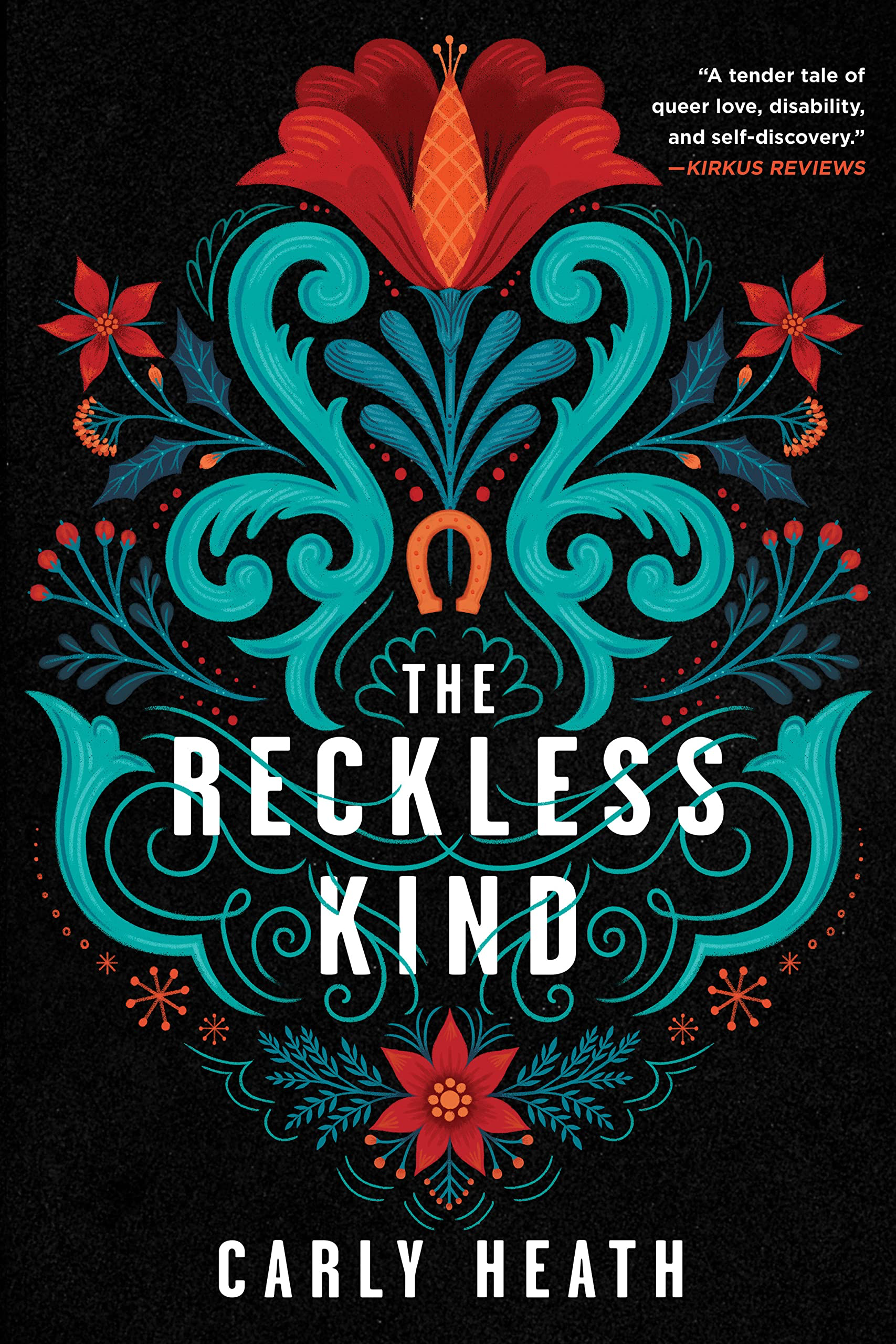
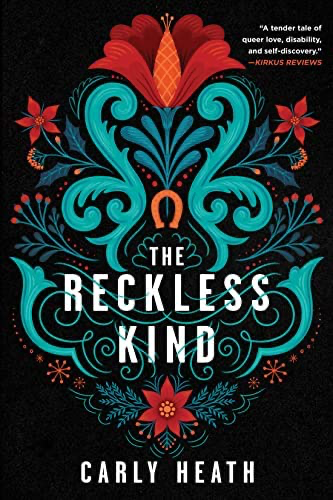
In my endless hunt for books with good disability rep, I found this one recommended in several places. I’m not usually one for historical fiction, but I was glad to see a disability book in a genre other than realistic fiction. To my surprise, it became a rare 5-star read for me—tender, heartfelt, and so unabashedly queer and disabled!
Norway, 1904. Even though marriage is what traditional society expects of her, Asta has no interest in marriage, and especially not in Nils, the rude boy her mother has set her up with. Her mother sees a life of domesticity as her only path, but Asta is determined to carve her own way. After Nils’ recklessness cements her wish to not marry, she runs away with her two friends, Gunnar and Erlend. They make a life caring for Gunnar’s family farm, but with the money running out and the rest of their village against them, it will take all of their strength to create their own destinies.
TW/CW (from Carly Heath, inside book): ableism, misogyny, homophobia, xenophobia, suicidal ideations, violence, descriptions of injury, references to alcoholism, abuse, and self-harm
what if 😳 I melted down a priceless family heirloom 😳😳 and made it into a prosthetic arm for you 😳😳😳 (and we were both boys)
I picked up The Reckless Kind for the promise of queer and disabled rep, but I didn’t expect it to become a 2022 favorite of mine so quickly! It’s rare that I enjoy historical fiction this much, but this novel was a success on every front imaginable.
The diversity of The Reckless Kind is what drew me in, and it was such a central and beautiful aspect of this novel! This book focuses on not one, but four characters who are disabled—Asta has Waardenburg syndrome (includes single-sided deafness), Gunnar has Brown-Séquard syndrome and has a prosthetic arm, Erlend has an anxiety disorder, and Fred, one of the secondary characters, has Post-Concussion syndrome! On top of that, Asta is asexual, Gunnar and Erlend are in an mlm relationship, and the three of them are in a queerplatonic triad! Does it get any better than that? I think not. Just what I needed as a queer, disabled reader.
Each and every aspect of said diversity is handled so thoughtfully and lovingly; you can tell from the first page just how much love and care Heath put into writing this story. Even though their traditional society looks down upon them for a number of reasons, the journey these characters take to make their own way is heartwarming to read. Everything from the special modifications on Gunnar’s car to the life they carve out for themselves on the farm is filled with such palpable determination and love that only a bunch of outsiders making their own way can make me feel. Found family trope for the win, as always.
All of that would work fantastically on its own, but it’s Heath’s characters that made The Reckless Kind truly shine. Asta was an absolute DELIGHT. Just an absolute sweetheart. Even though the world has beaten her down so much, she has this consistent spunk and contagious kindness to her that she brings everywhere she goes. I loved the way she cared for all of the animals on the farm, and her story is sure to resonate with so many. Gunnar and Erlend were equally wonderful, and they balanced each other out perfectly, what with Erlend’s theatrical charm and Gunnar’s droll, self-deprecating humor. Their relationship made me giddy more than not; I loved how Heath depicted all the messiness of relationships, as well as two characters who did their best to work with each other’s problems. All three of them together made for the recipe for a near-perfect book.
Through it all, Heath presents a story of persistence despite the odds and the love it breeds between outsiders. All three of the characters faced parents, peers, and others who shunned them for parts of themselves, but this book was all about self-love and living in a world that doesn’t love you. It’s fiercely queer and disabled, and it’s the perfect story for anyone who has ever felt like the world is against them.
All in all, a tender, powerful, and heartwarming story of disability, queerness, and making your own way that quickly found its way to my 2022 favorites. 5 stars!
The Reckless Kind is a standalone and Carly Heath’s debut novel.
Today’s song:
That’s it for this week’s Book Review Tuesday! Have a wonderful rest of your day, and take care of yourselves!
It’s July again, which means—though it’s too often overlooked—that it’s Disability Pride Month here in the U.S.! Even as intersectional as feminism and diversity efforts have become in recent years, the disabled community has been left out of the picture more often than not. YA books are no exception—even now, it’s difficult to find good, solid disability rep, and even harder to find books from disabled authors. So uplifting disabled voices is always important, as with uplifting all kinds of marginalized voices.
I’ve talked a little about good and bad disability rep on this blog, but I haven’t talked about how it affects me—I did put it in my bio a few months ago offhandedly, but I’m disabled as well. I have sensory processing disorder (SPD), a neurological disability that causes me to over-respond to sensory input, mainly sound; My nervous system doesn’t translate stimulus like a neurotypical brain would, making me over-respond to certain sensory input. Big crowds, loud noises (fire alarms, stopping buses, and almost anything that you can find in a city) are major causes of anxiety and discomfort for me, and often cause me to go into a fight-or-flight position or overload entirely.
As a result, being in situations with lots of sensory stimuli, such as school or social gatherings, can be exhausting, what with trying to juggle keeping my cool with said stimuli and participating fully in an activity. It also affects how I go about ordinary tasks as well—driving, for instance, has been a struggle, what with my hypersensitivity combined with my iffy-at-best motor coordination. (Part of SPD is that the nervous system doesn’t fully integrate all of my senses, which is why tasks like these are difficult for me.) SPD makes me feel everything—sound especially—far more intensely than a neurotypical person might, which often overloads my system.
Here’s the thing: although I’ve seen other parts of my identity—bisexuality, being mixed race, or even just personalities like mine—represented in books, I’ve never seen SPD represented in a book. Not on TV, movies, or any other kind of media, either. Never. I’ve been looking for years, but most of the time, what comes up when I search for books with characters that have SPD usually ends up being help books for parents with SPD kids. (Not to dismiss the value of those books—just not what I’m looking for.) There have been a few, but even then, they haven’t been available at the library. (I’ve got one on hold though—let’s hope Not If I Can Help Itis good) I could always be missing something (PLS IF ANYBODY KNOWS ANY KIND OF MEDIA WITH GOOD SPD REP DROP SOME IN THE COMMENTS BEGGING YOU), but it’s been frustrating going to google and getting something that decidedly wasn’t what you were going for.
Even though I’ve seen myself represented in other ways, it’s frustrating to not have book characters—even side characters—that have similar experiences to me. Growing up, I had my fair share of not-so-subtle teasing for expressing some of my symptoms, and in that respect, I had no role models, no fictional characters to really look up to in that respect. That’s part of why I’m writing books with protagonists that have SPD—there’s always a kid out there who just needs a fictional character to look up to when they have nobody else. This is why representation matters—for those who never saw themselves represented growing up, and for those to come who may have the chance to feel represented.
So here are my disability pride month recs for 2022—not all of them are from disabled authors, but I’ve done my best to compile a list from a variety of genres, a variety of backgrounds (POC, queer, etc.), and a variety of disabilities.
REP: MC with ADHD, MC with dyslexia (disabled author)
MY RATING: ⭐️⭐️⭐️.75, rounded up to ⭐️⭐️⭐️⭐️
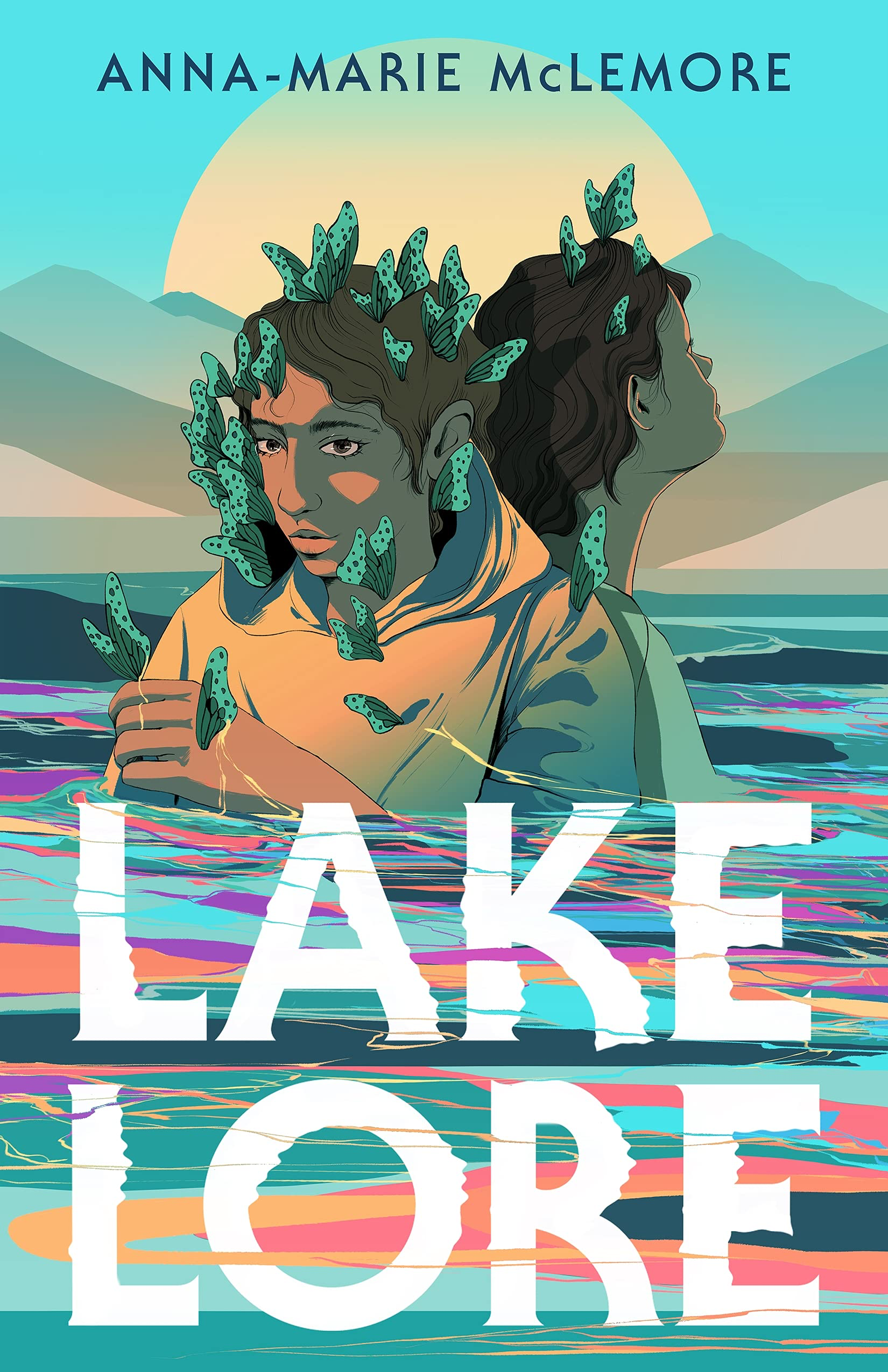
Lakelore is one of the most intersectional pieces of magical realism or fantasy that I’ve ever read—both protagonists are nonbinary, Latinx, and neurodivergent!
A gripping post-apocalyptic book featuring a determined, Autistic protagonist!
TELL ME WHAT YOU THINK! Have you read any of these books, and if so, what did you think of them? What are your favorite YA books with disability rep? And please, does anybody have any recs for media with good SPD rep? Kinda desperate over here…
(I can only go with my headcanon that Jean Grey from X-Men has SPD for so long, folks, please…)
Today’s song:
I wanna hate Jack White so bad but HE JUST KEEPS PUTTING OUT SONGS LIKE THIS
That’s it for this post! Have a wonderful rest of your day, and take care of yourselves!
For those of you who didn’t know, in the U.S., May is Asian American & Pacific Islander Heritage month! I made a list of YA reads for the occasion last year (click here if you’d like to parse through), but since I’ve read so many more incredible books by AAPI authors since last May, I figured I would make another list. These are books from all genres, but all of them are from authors of AAPI heritage. And with all of these kinds of posts, I always want to impress the following: reading diversely should never be confined to one part of the year. That being said, it’s always important to uplift marginalized voices—AAPI in this case—and reading is a key way to do so.
Let’s begin, shall we?
THE BOOKISH MUTANT’S YA BOOKS FOR AAPI HERITAGE MONTH (2022 EDITION)
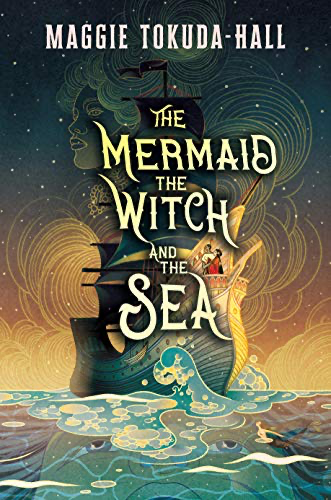
One of my favorite reads of last year, The Mermaid, the Witch, and the Sea was a raw and tender read filled with pirates, mermaids, and resonant love. Highly recommended!
Rise of the Red Hand certainly wasn’t perfect, but it’s best element was its representation; it’s one of the only dystopias that I’ve seen that’s set in South Asia!
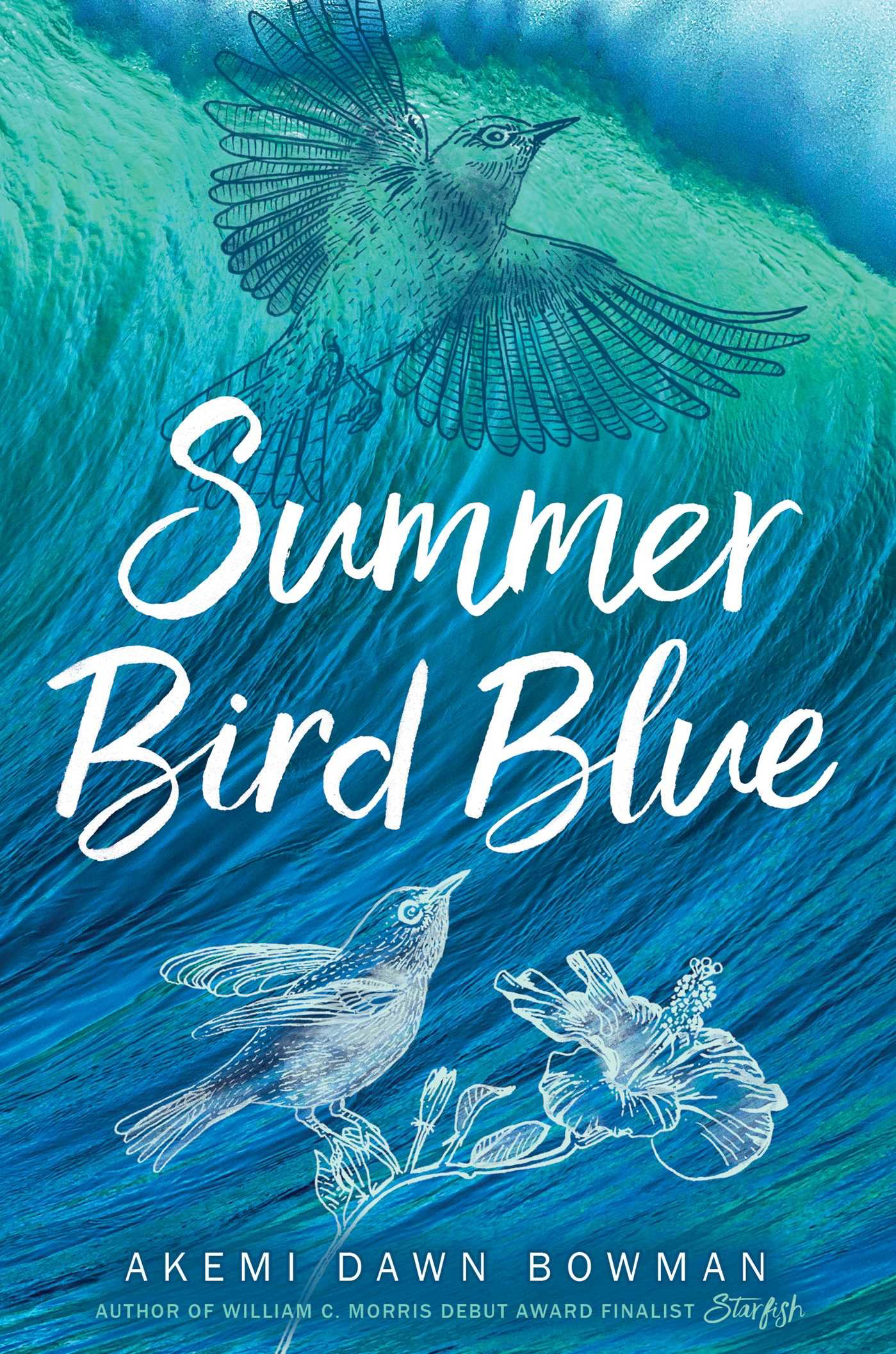
A powerful and unforgettable story of grief and starting over. Akemi Dawn Bowman’s writing never fails to stir up all kinds of emotions in me.
TELL ME WHAT YOU THINK! Have you read any of these books? If so, what did you think of them? What are your favorite YA books by AAPI authors? Let me know in the comments!
Today’s song:
That’s it for this post! Have a wonderful rest of your day, and take care of yourselves!
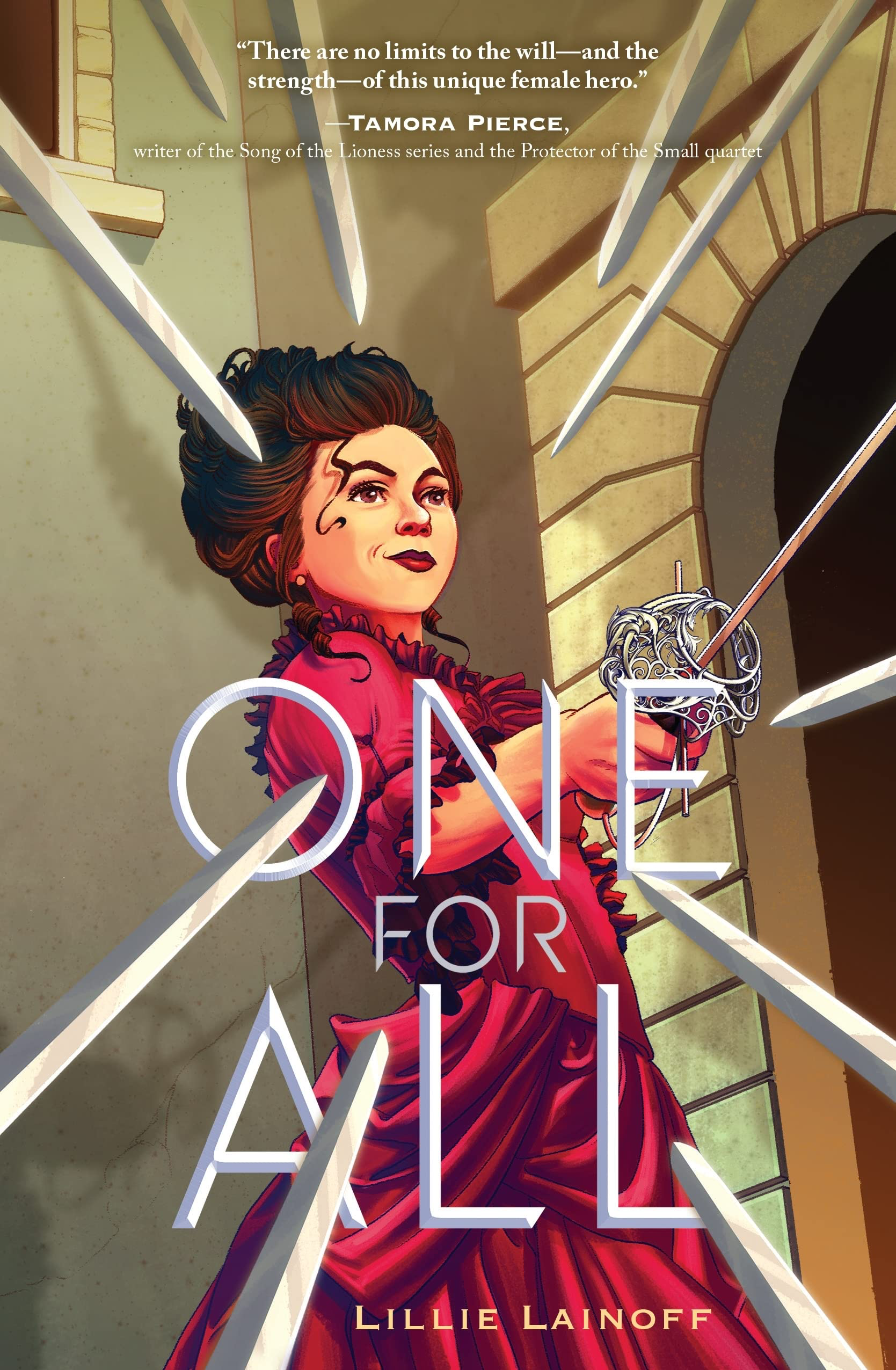
Disability representation—especially in YA—is few and far between, and even when I do find it, a lot of disability rep is still written by abled authors. (That isn’t always necessarily a bad thing, but it’s easy to fall into harmful tropes and misrepresent disability that way.) So when I heard about One for All, I was so excited—a feminist, historical fiction novel about a girl with a chronic illness! And beyond that—a girl with a chronic illness WHO SWORDFIGHTS. Doesn’t get much better than that, am I right? My copy finally came from the library last week, and although it wasn’t the perfect book, I enjoyed a lot of it!
Tania de Batz is determined for the world to see her as more than just a “sick girl.” As the daughter of a former musketeer, her passion is swordfighting, and with the help of her father, she’s become a skilled fighter. But when her father is brutally murdered, she discovers his dying request to send her to a finishing school.
But what she finds at L’Academie des Marieés is no finishing school—it’s a secretive school that trains young women as musketeers. Tania is soon swept into a world of swords and secrecy, and soon, she and her fellow students have an assassination plot to uncover. The only clue to the plot—and maybe even her father’s murder—lies in a boy named Étienne, but his charms may be Tania’s undoing.
TW/CW: ableism, blood, murder, loss of a loved one, past mention of sexual assault
Good disability representation—especially in YA—seems to only happen once in a blue moon. So I was so happy to find this book—a feminist historical fiction book written by a disabled author, no less! And while I did have a few problems with the story overall, One for All was no doubt a fantastic debut!
First things first—disability rep! While I can’t speak to the accuracy, Lillie Lainoff (the author) has the same chronic illness as Tania—Postural Orthostatic Tachycardia Syndrome (POTS)! Disabled representation from disabled voices always makes my heart so happy! For me, it’s even better that One for All is a historical fiction piece; most books with disabled characters only exist in contemporary/realistic fiction books, and I adamantly believe that disability rep in genres like historical fiction, fantasy, and science fiction is just as important, if not more important; it’s crucial for disabled readers to know that they don’t only exist in modern realistic fiction realities—they have always existed in history, and they can exist in fantasy and sci-fi worlds as well. One for All did a fantastic job at detailing all the aspects of Tania’s POTS and how it affected her daily life, from her routine to her social interactions and childhood. So many chronically ill readers will be able to see themselves in Tania, and that, to me, is immensely impactful.
Beyond that, One for All is fiercely feminist! It’s set in France in the 1600’s, and the themes of empowerment and sisterhood ran deeply through it. Throughout most of the book, Tania struggles with her place in the world as a disabled woman in a time where both are frowned upon, but her journey for self-empowerment is one that is sure to resonate with so many readers. Although some of the other students don’t treat Tania with the respect she deserves at first, there are themes of recognizing and correcting your previous ableism. The friendship that Tania eventually shares with the rest of the fellow L’Academie des Marieés students is wonderfully tender and strong, and it makes for an incredibly empowering novel overall.
As much as I loved the aforementioned aspects, however, there were a few aspects of One for All that I didn’t like as much. For the most part, I liked the writing style well enough; Lainoff’s prose flowed well and was appropriately descriptive when the time called for it. However, Lainoff’s style tended to fall towards the over-the-top side of the spectrum. I could let it slide in most instances—it fit with the mood and tone of the book in general—but in some cases, it felt overly purple and theatrical. It had a dramatic feel to it, and while it fit the classic retelling tone at times, it felt superfluous in other cases.
Additionally, I wasn’t quite as invested in the assassination part of the plot as I was in the rest of the book. Seeing as that (after Tania’s father’s murder) was the main driving force to the plot, it didn’t come through all the way; it was overshadowed by more mundane character interactions (which I did like), and as a result, felt rushed and oversimplified. For something that was supposed to be the primary inciting incident of the second half of the book or so, it felt more like a subplot than anything. As a result, I felt my mind wandering a bit during these parts, but it didn’t take me out of the book entirely.
All in all, a feminist retelling with a disabled heroine who all readers will want to cheer on. 3.75 stars, rounded up to 4!
One for All is a standalone and Lillie Lainoff’s debut novel.
Today’s song:
That’s it for this week’s Book Review Tuesday! Have a wonderful rest of your day, and take care of yourselves!












 The Bookish Mutant