
Happy Sunday, bibliophiles! I hope this week has treated you well.
This week: I apologize in advance for every single driving mention and/or pun that I made in this post. I didn’t even notice it at a certain point…I just couldn’t…stop…
Enjoy this week’s songs!

SUNDAY SONGS: 9/22/24
“Bloody Ice Cream” – Bikini Kill
It’s been just under a month since I had the privilege of seeing Bikini Kill live, and even as someone who isn’t a hardcore fan of the band, I had SUCH a wonderful time! That’s owed in no small part to the commanding presence of Kathleen Hanna, not just in the history she carries, but in just how real she was. There she was, a pioneer of feminist punk, just onstage joking about how her bra was too tight and recounting a memory of rich girls pelting her with squirt guns before she walked into a job interview. Never at any moment was there a pretense of acting cool or punk. It was nothing but Kathleen Hanna, in all of her smudged-mascara and sequined glory. Bless Kathleen Hanna, really.
So when she introduced this song, which I was familiar with only in name, by saying that it was dedicated to “all woman writers,” you bet that I stood up and saluted her like it was the national anthem. And even as a fan on the sidelines, I’d accept “Bloody Ice Cream” as a new kind of anthem. It articulates in less than one and a half minutes what so many creators—chiefly women—are told about the profession: “The Sylvia Plath story is told/To girls who write/They want us to think/That to be a girl poet/Means you have to die.” The unspoken doctrine of your craft not being valid unless you sobbed and suffered over it permeates all kinds of media. I’ve been around so many people who think that trauma is the secret to good writing, whether it’s slapping it onto their characters or thinking that their hope in their message is invalid because it doesn’t show the bleakness of the real world. Counterpoint: ever experience happiness? Even once? Was that not in the real world?
The modern world may be far from perfect, but we have an understanding that could nurture and heal the Sylvia Plaths and Virginia Woolfs of tomorrow. And we have the recognition that there is no power greater than joy. In and outside of the writer’s world, we’re taught that to feel downtrodden is to experience the real world, competing each other for how exhausted we are, how much we have on our plates, and how sad and gloomy our projects are. Is this really what creativity is? It’s not like there’s no value in showing the darker aspects of life, but for how much it clogs the literary world, I feel like so many people have forgotten that writing—and imagination—isn’t just a contest for who can work themselves to the bone the most artfully. I write to put out the energy I want to see reflected in the world around me. And that energy is joy. The systems of oppression that surround us want to see people like us being so downtrodden that we have no energy to question them. So write. Write joy. Write what’s in your heart. Scream and dance like Kathleen Hanna. And don’t underestimate the value of kindness. They hate to see you joyous.
…AND A BOOK TO GO WITH IT:
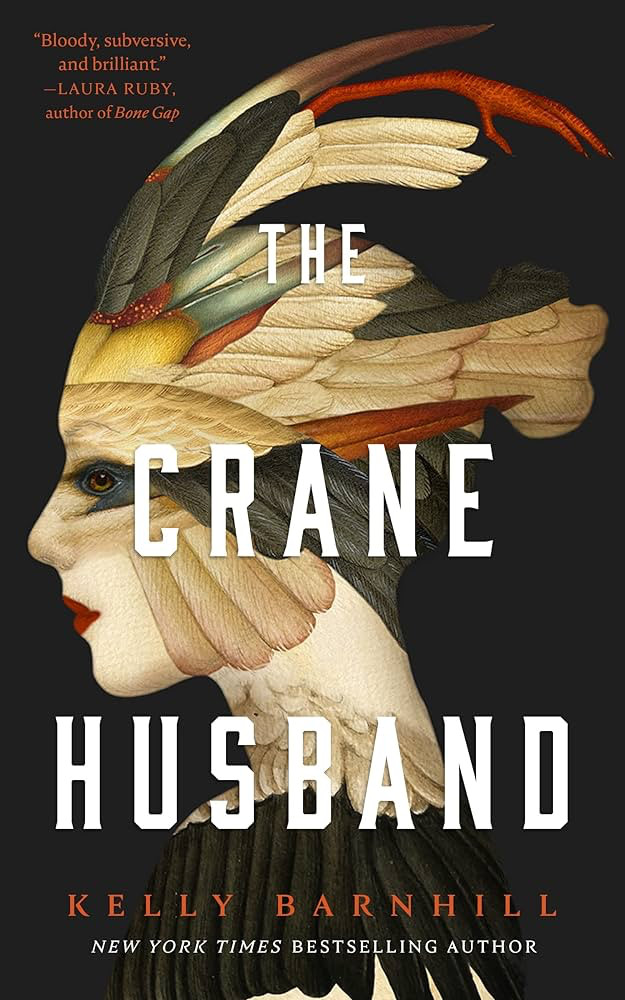
The Crane Husband – Kelly Barnhill – “Who was it/That told me/All girls who write/Must suicide?”
“My Impure Hair” – Blonde Redhead
The best shoegaze sounds like you’re slipping in and out of a dream, that limbo best experienced from 1-4 in the morning when you’ve woken up from a dream, your eyes are gummy, and you’re not sure if the hazy shapes forming the walls and bed around you are part of another dream you’ve yet to wake up from. I guess that’s why it’s so easy for people to get high to this kind of music, but like…well, all things, sobriety is better suited to experiencing them. “My Impure Hair” is the closing track on 23 (I’m not even a diehard fan, but I just LOVE that album cover), and even from this tiny taste, it feels like an artfully placed closing track. It has the quality of a lullaby; every element, from the soft instrumentation to Kazu Makino’s vocals, is whispered, as though not to disturb a swaddled baby drifting off in their crib. Once you think you’ve heard a distinct sound, it bleeds into another like spilled watercolors, creating a pale wisp that floats, airless, on the passing wind.
…AND A BOOK TO GO WITH IT:
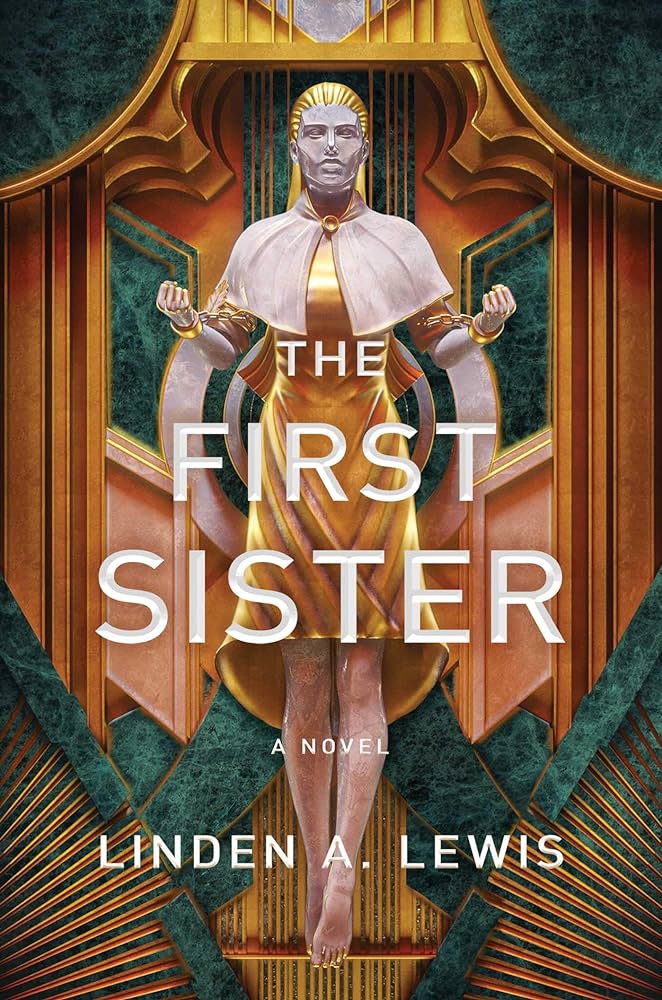
The First Sister – Linden A. Lewis – “But in the end/We defend our decadence/You never wept like that/Whatever lost, I won’t forget about you…”
Nothing baffles me more about “Kanga Roo” than the fact that, although it didn’t officially see the light until 1978, it was recorded sometime in 1974. I suppose there’s some ’60s psychedelic bands that got close to the sound here, but this kind of deterioration feels so modern. It doesn’t sound like 1974! It sounds like a less fuzzy Spacemen 3 or the first take of a Bends-era Radiohead b-side. One of the top comments on the official audio called it “the rough draft for Wilco’s Yankee Hotel Foxtrot,“ which is the most astute description I’ve ever seen ascribed to it—I don’t know how it never clicked, but suddenly, “Ashes of American Flags” makes eons more sense.
I can only imagine what hearing this in 1978 felt like—probably the musical equivalent of “mom, come pick me up, I’m scared” after expecting something more like “In The Street.” Jesus. That feeling certainly crept into me when I first heard this song, while driving home from a concert late at night, navigating a winding canyon road in near-pitch black. All of the shrill mechanical squeals sound much more menacing when you’re barely awake. “Kanga Roo” sounds like it’s actively pulling itself apart at the seams, a threadbare rag only attached to its halves by a few strands of fraying string. The drums are never on beat or consistent in volume, somebody’s banging on a cowbell for about 15 seconds, and all the electric guitars are doing is getting scratched and squealed into oblivion. It’s a bizarre experience, watching a song crumble like charcoal in a dead firepit the morning after a campfire. Yet there’s an innocence to it; Alex Chilton’s voice is the only clear sound in “Kanga Roo.” You’re hearing the instruments fighting for their lives while Chilton’s plainly singing “You was at a party/Thought you was a queen.” The iconic line that gave the song its name (“oh, I want you/Like a kangaroo”) almost makes no sense, and I’m not sure if Chilton has ever offered up an explanation, but somehow, I see it. I imagine one of those towering, buck kangaroos standing at full height, and feeling the desire to grasp someone in your arms with the strength of such a creature.
I included This Mortal Coil’s cover of “Kangaroo” in one of my past Sunday Songs that I didn’t get around to writing because I was occupied with moving and school; I have too much homework to fully go into who’s coming out victorious if we’re pitting the original against this one, but I’m at least partial to it for how sparse it feels, even with the soaring strings. It’s much more put-together than the original (not to disparage the artful chaos), but there’s something to be said for what it does with the negative space that the Big Star version drowns out. What can I say? They got me. They got me with the big feels.
…AND A BOOK TO GO WITH IT:
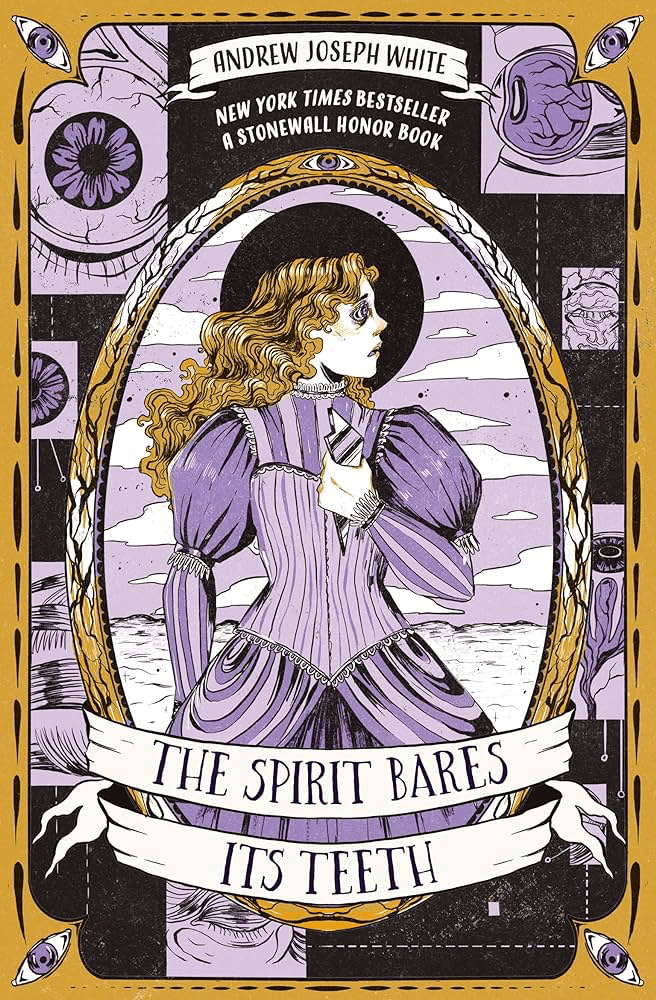
The Spirit Bares Its Teeth – Andrew Joseph White – the lyrics could match up with any number of books, but it’s the creaking, uneasy atmosphere that puts it squarely in this novel’s company.
I’m so glad that Soccer Mommy has become a prominent enough artist that she has the means to do funny marketing campaigns, because whoever came up with the one for “Driver” had a stroke of genius. By calling a number that Sophie Allison posted, you could get a snippet of the track before it came out, followed by “how’s my driving?”-style call prompt. Maybe we are in an okay timeline.
Without a doubt, Sophie Allison has never been more sure of herself at the wheel. A departure from the expression of beauty in lingering grief that were the two lead singles, “Lost” and “M,” “Driver” presents a more lighthearted detour to the landscape of Evergreen. The backing guitars and effects have gained a grungier, grimier edge, but Allison’s sunshine puts them all in a dusty, golden light. As the guitars and drums thrum like gravel skipping across a dirt road, Allison turns her attention to the present loves of her life. You almost get the feeling that she’s slipping into the self-deprecation of her early career, but there’s nothing but affection for herself, but more in terms of her partner, who puts up with her “losing [her] concentration on every whim.” Allison presents herself as the more emotional, scatterbrained half of the couple, which her partner is playful about, but is also the one to ground her when she gets too far into her head with a reminder of “where are we going now?” She’s never completely blameless, but she’s full of nothing but love for her anchor that keeps her from veering off the path; it’s not like some of her earlier songs, like this would indicate that she’s in danger of slipping away entirely, but it’s an exercise in learning to rein yourself in—and find somebody who isn’t afraid to rest a hand on your shoulders and remind you where your feet are planted.
…AND A BOOK TO GO WITH IT:
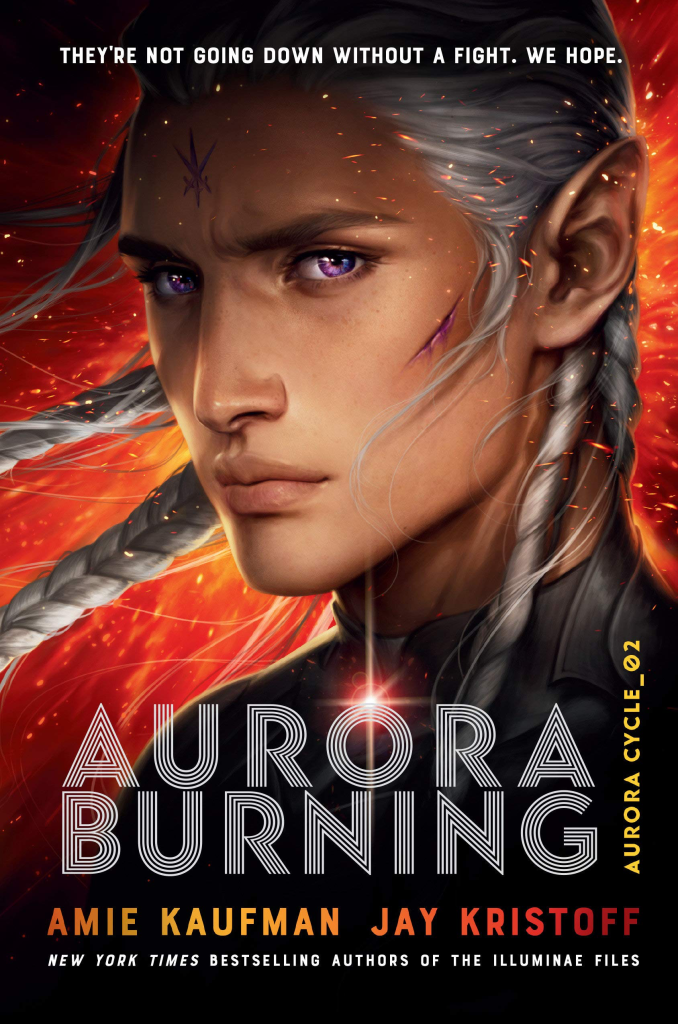
Aurora Burning (The Aurora Cycle, #2) – Amie Kaufman and Jay Kristoff – not to get all 2020 Madeline on you all, but…the Kalauri in this song…I’m gonna keel over…
“I’m a five foot four engine waiting to move/I’m a test of his patience with all that I do/‘Cause I’m hot and he stays cool, I don’t know why/But he puts up with my moods/And he makes me smile when he says/’Where are we going now?'”
The connection of inspiration between Radiohead and The Smiths never surprises me, but sometimes, with bands that inspire another, you find a single song that you know is the missing link in the evolutionary tree, the line of ancestry concretely delineating their music as kin. More specifically, it makes sense next to their cover of “The Headmaster Ritual,” though “Bishop’s Robes” takes a much more subdued turn.
Yorke’s raw lyricism thrives in both simplicity and complexity; he can weave any number of stories with denser, more prosey lyrics, but he knows just what kind of simple, unadorned phrases to stab you in the gut with. In this case, it’s the chorus, repeated like a shaky-voiced prayer in a dark corner: “I am not going back.” It becomes more of a reminder than a statement, as though to convince his brain that no, he’s not back in his pre-teen years under the reign of his “bastard Headmaster.” Volumes have been written about the horrors and abuse of the British education system back in the day (see: pretty much anything by Pink Floyd)—and some continuing into now, I would imagine—but what sets “Bishop’s Robes” apart is the mood. It might be more accurate to call it a lack, as the most overwhelming feeling you get from this track is not anger but numbness. There’s a resignation to it, weighing down the music, as though, even in adulthood, the experience has sapped him: Yorke doesn’t have the energy to fling insults along the lines of “spineless swines” or “belligerent ghouls” at his abusive childhood tormentors—all he can do is “bastard.” And it’s that eyebagged, forlorn crawl that sells the lasting effect it had on him. After years of unyielding discipline, I can imagine the fear of not raising your voice—a haunting presence that permeates every note of this track, constantly looking over its shoulder to guard innocent contraband that doesn’t exist.
…AND A BOOK TO GO WITH IT:
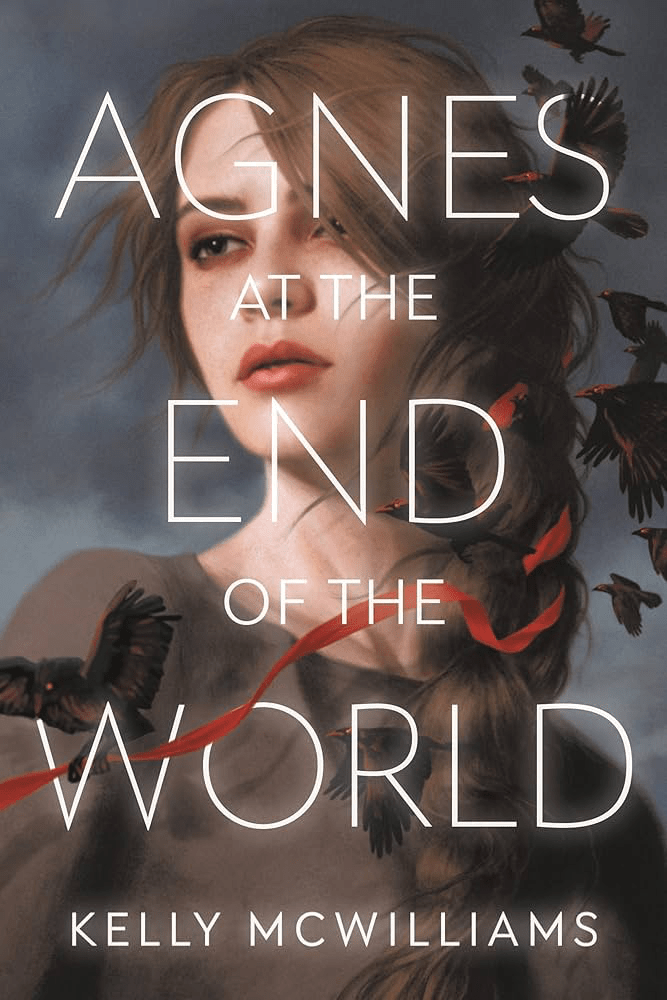
Agnes at the End of the World – Kelly McWilliams – secrecy, escape, and the horrors of a perverted version of Christianity in the hands of the wrong man.
Since this post consists entirely of songs, consider all of them to be today’s song.
That’s it for this week’s Sunday Songs! Have a wonderful rest of your day, and take care of yourselves!


 The Bookish Mutant
Thanks for Bishop’s Robes! I’ve never heard that one and I love it.
LikeLiked by 1 person
so glad you like it!! it really is fantastic
LikeLike