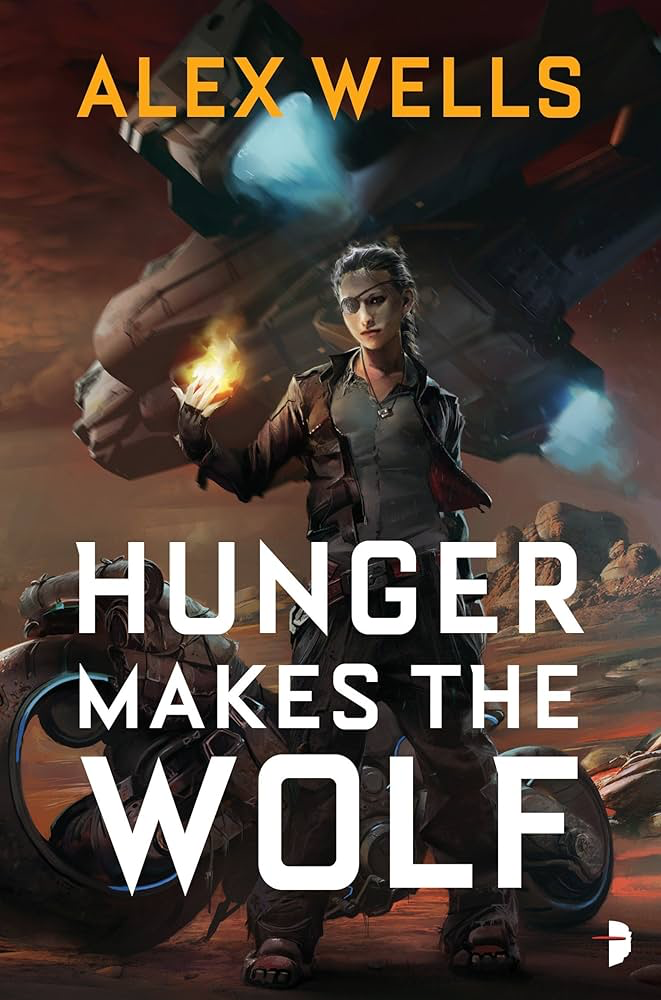
Hunger Makes the Wolf came on my radar when I was looking for more books with disability rep (as always), but I ended up buying it on my Kindle after my dad notified me that I had some unused Kindle points (thank you for reminding me!)—it was free with the points added on, so how could I resist? And while Hunger Makes the Wolf wasn’t perfect, it’s a ton of gunslinging, space-fantasy fun.
Hob Ravani ekes out a living in the deserts of Tanegawa’s World, a planet owned by TransRifts—the corporation who controls the market on interstellar travel in the whole galaxy. For 10 years, Hob has gotten by with the help of the Ghost Wolves, a group of bandits roaming the desert and finding money where they can. But when Hob discovers the body of Nick, the man who recruited her to join the Wolves, abandoned in the desert, she knows that she has to act before TransRifts discovers their operation—and discovers the powers that she’s kept hidden from sight.
TW/CW: murder, descriptions of injuries, descriptions of corpses, violence, loss of loved ones, human experimentation
Writing accents phonetically is a slippery slope that I’m not going to get fully into in this review. In this case, though, Alex Wells had decent success with making everyone who was meant to sound like they had a Southern accent actually sound like they had a Southern accent, which worked—this novel was a space Western, after all. That being said, the unintended consequence was that Wells’ spelling of Hob’s accent was that I imagined her voice more like Holly Hunter in Raising Arizona than the badass, hardened gunslinger that she was made out to be. It sort of worked, though.
As far as sci-fi subgenres go, I’m not usually huge on space Westerns; I’ve rarely seen them done exceedingly well (even The Mandalorian got more than a little repetitive eventually), but the best are at least fun. And that was what Hunger Makes the Wolf was—incredibly fun. It had all of the trappings of a debut novel, but what Wells did get right on the first time was that pacing. Although the action sequences were what made Hunger such a blast to read in the best parts, Wells also knew how to balance them out with quiet, more emotional moments, and also moments to slip in worldbuilding without absolutely walloping you with it. Wells’ action was really the star of the show here; their fight scenes had just the right amount of tension, levity, and butt-kicking to make for more than one delightful scene.
Recently, I’ve read several sci-fi books that were marketed as “space fantasy,” and none of them have really fit the bill. And yet, Hunger Makes the Wolf wasn’t necessarily marketed as such, but it does what the other novels lacked. Even amidst the classic sci-fi backdrop of corporate greed, massive spaceships, and gruesome human experimentation, there’s the element of the characters’ strange hidden powers. Naming said powers “witchiness” was already a win in my book, the charm of it really fits the Western atmosphere that Wells was going for—it hits that sweet spot of not sounding overly jargon-y or formal, but not too hokey, either. Every time one of the characters mentioned it, I couldn’t help but smile—especially in Hob’s aforementioned Holly Hunter voice.
Hunger Makes the Wolf is an incredibly ambitious novel, and the ambition is accentuated when you remember that this is Alex Wells’ debut. In some ways, it worked; Wells managed to juggle a safe amount of the worldbuilding without leaving the reader without context, but also without dumping it excessively. However, what Wells did not juggle as well was the sheer amount of characters that we jump between. Hunger was clearly meant to have a found family theme to it, which I’m normally a sucker for, but Wells just had so many extraneous characters on their hands that none of the character relationships felt fleshed out. If we had gotten more scenes with Hob and the rest of the Wolves, for instance, I would have believed that they really were as thick as thieves. Adding onto this, the perspective switches may not have been necessary; Mags, although she plays a prominent role, doesn’t have a perspective or voice that added anything substantial to the narrative. It’s a classic debut author case: Alex Wells had some spot-on ideas, but they bit off far more than they could chew.
All in all, a rollicking space fantasy with action aplenty, but with characters that left me wanting more. 3.5 stars!
Hunger Makes the Wolf is the first book in the Ghost Wolves duology, followed by Blood Binds the Pack. Hunger was Alex Wells’ debut novel; they are also the author of the short story Angel of the Blockade.
Today’s song:
FARGO IS BACK I AM FOAMING AT THE MOUTH OH MY GOOOOOOOD
That’s it for this week’s Book Review Tuesday! Have a wonderful rest of your day, and take care of yourselves!
Here I am with a proper book review this week! I’m not exhausted now! However, I’ve still been in something of a reading slump for a fair portion of the month. Behold the consequences.
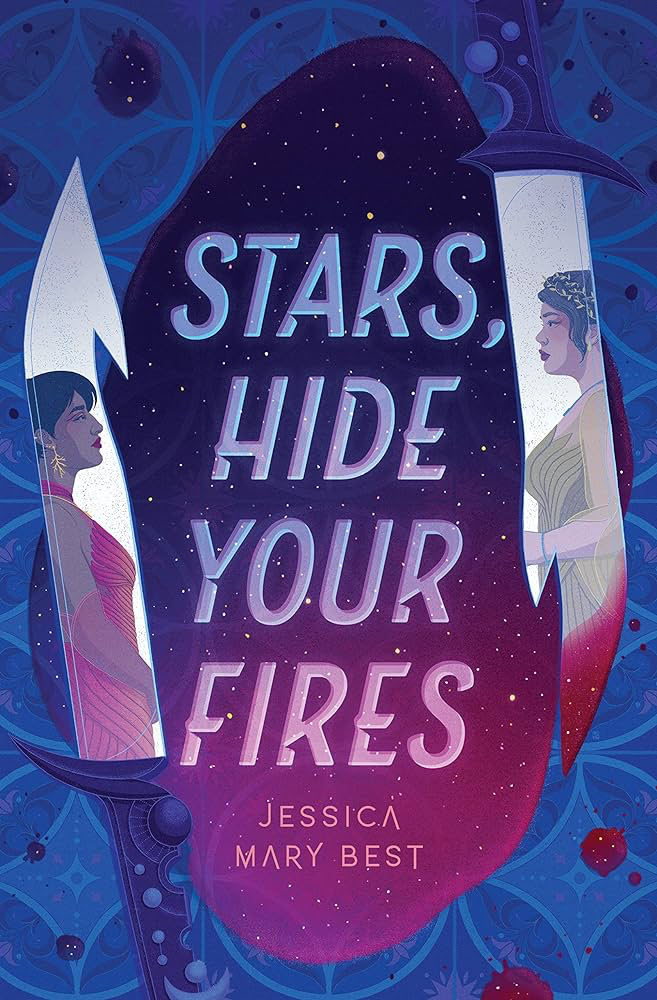
Knives Out in space? Yep. I am not immune to propaganda. I fell for that one. The gorgeous cover helped. Duped by a pretty cover again. I’m always on the hunt for YA sci-fi that really delivers, but even though Stars, Hide Your Fires was an entertaining read, it largely fell into the “ballrooms in space” trap that so much of the subgenre suffers from.
Cass knows her place. As a thief scraping out a living on a backwater moon, she knows that there’s no escape that the life that the Emperor and his family have made for people like her. But when she sees the chance to hitch a ride to the Palace Station, she knows she’s hit it big. Steal enough jewelry, and she’ll be able to escape the planet forever. But when the Emperor is mysteriously murdered and suspicion lands on her, Cass must find a way to escape the space station—and clear her name.
TW/CW: murder, blood, sci-fi violence
I really need to stop going after YA sci-fi books where most of the plot takes place in some kind of ballroom or palace. After a certain point, it just gets so bogged down in the flowy dresses, jewelry, and court intrigue modeled after…I don’t know, Ancient Rome, probably, that it barely feels like sci-fi anymore. It’s really a travesty. But even though Stars, Hide Your Fires was far from perfect, it didn’t fall into every single one of the pitfalls I just described. It at least had a few elements that almost set it apart. Almost.
I’ll give Best this—for the first quarter of the book or so, Stars, Hide Your Fires did actually feel like science fiction. Although we didn’t get into the full extent of the worldbuilding, I did like the setup of the class difference just from showing the differences between two planets. You really did get a sense for Cass’ situation, and the setting of the dead, backwater moon really emphasized not only that, but the stakes that Cass later had to follow up on. Best’s writing sold the dusty, gloomy setting that dominates the first quarter of the book, and in comparison to all of the glittery ballroom business that comes later, it was a well-written contrast.
I’d also have to hand it to Best for keeping Stars, Hide Your Fires so tightly paced! Even though I lacked much connection to the plot, I’d be remiss if I didn’t acknowledge how neat it was—that part really felt sanded to a polish. All of the beats lined up straight into place, and with the exception of some dawdling in the middle, it at least held my attention for most of the novel. If anything, Stars, Hide Your Fires had some solid timing—Jessica Mary Best clearly had her line of dominoes ready to fall from the start, and the suspense was palpable.
That being said, other than the first and last quarters, I barely got the sense that this was science fiction. It’s one of those books where it could have just as easily been a historical drama or even fantasy if you took away the space setting. Sci-fi is my go-to, and usually, I’d like for a novel to present at least something partially new, whether it be a subversion of a typical setting, a unique kind of technology, or even some aliens to populate the universe. (ALIENS! ALIENS! ALIENS!) But other than being set in space, Stars had nothing to its name in that department. You could have just as easily made the palace a grounded palace on Earth, and hardly anything about the plot would have changed. Cass’ home moon could have been a different country, the spaceships could have been trains, the escape routes that she took could have been back alleys or indoor ventilation ducts. Even though it’s billed as sci-fi, Stars, Hide Your Fires doesn’t have anything to show for it other than being in space.
Additionally, I felt hardly any connection to the plot or characters. That was in no small part thanks to how unoriginal much of it was. You’ve got a generic setup of a tyrannical empire, but you don’t get much of a sense of what exactly is tyrannical about what they’re doing, other than being generally evil and a bit of monkey business with clones. To oppose them is an equally generic rebellion, and other than them being billed as heroic, you don’t really have much motivation to root for them since their goal is defeating said empire and not much else. Cass doesn’t have any ties to either, but other than her poorer background, there’s not much to her, either. My, a loner, rebellious pickpocket? Where have I seen that before? That’s the sad thing about this novel—if we’d had some original elements to any of the plot points, it could have been really fun. I’m all for a heist in space, but you’ve got to have the sci-fi chops to pull it off. And there’s some slack I’m willing to give Best since this is her debut novel, but it was still disappointing on that front.
All in all, an entertaining YA novel that could have elevated itself above simply “entertaining” if it had boasted any kind of original elements. 3 stars.
Stars, Hide Your Fires is a standalone; it is also Jessica Mary Best’s debut novel.
Today’s song:
thank you to whoever was in charge of the Wilco pre-show playlist on Sunday night for this
That’s it for this week’s Book REview Tuesday! Have a wonderful rest of your day, and take care of yourselves!
Happy Sunday, bibliophiles! I hope this week has treated you well.
First off, apologies for the lack of a book review/Sunday Songs this week. I’ve just been busy with school, and I didn’t have as much time to sit down and write something that wasn’t the draft I’m trying to get myself back into the rhythm of writing. (I’ve been cobbling at this post in advance before this week, so that’s why you’re able to see it now.) Plus, I was just generally exhausted on Tuesday, but it was a good exhaustion, all things considered, because I’d seen Peter Gabriel the night before! Words don’t do justice to how incredible of a show it was. You’ll definitely hear about it later.
Here in the U.S., Asexual Awareness week, or Ace Week, is celebrated from October 22-28! Even though I’m not on the asexual/aromantic spectrum, it’s impossible to not see how much this community gets left behind, even within the LGBTQ+ community; just as any other spectrum of identity, it’s just as valid and worthy of respect as anything else. I’ve been meaning to make more asexual book lists, but this time of year is kind of crazy for me. But this year, I figured I would start early so I would have another book list—we need to shed more light on these fantastic books and authors!
TELL ME WHAT YOU THINK! Have you read any of these books, and what did you think of them? What are your favorite books with characters on the asexual spectrum? Let me know in the comments!
Today’s song:
That’s it for this year’s recommendations! Have a wonderful rest of your day, and take care of yourselves!
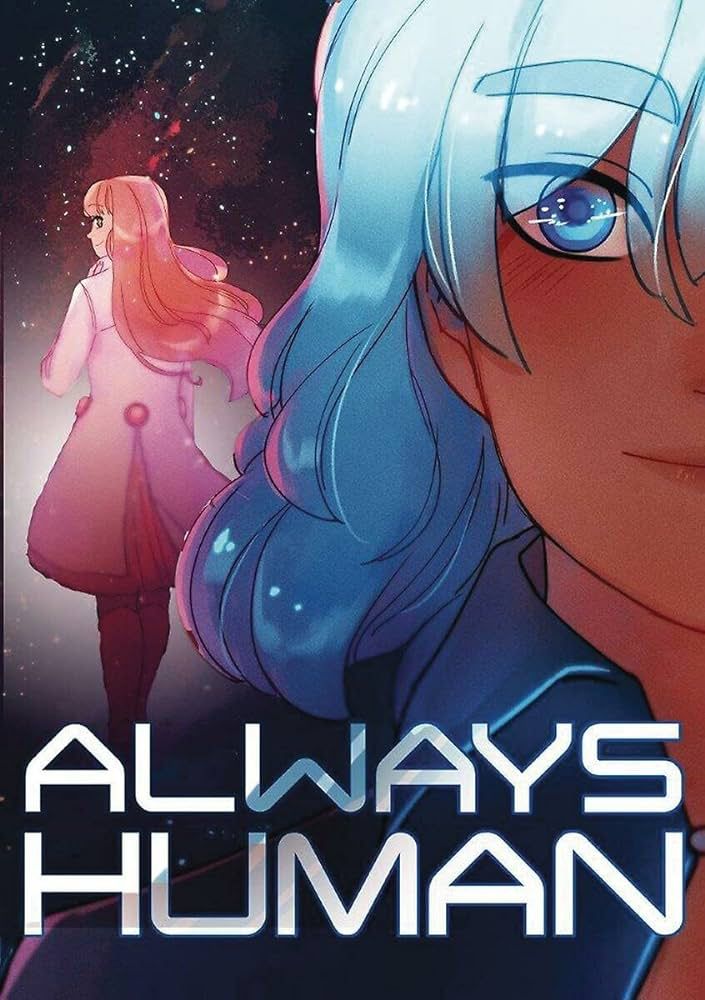
Always Human came onto my radar around three years ago—probably from my fellow bloggers—but I’d forgotten about it until I came across it at my college’s library. I’m always a sucker for cozy sci-fi, and I never say no to a graphic novel, so of course I picked this book up. But while it was sweet and had some great commentary on disability, it didn’t quite scratch my sci-fi itch in all the right ways.
Sunati lives in a world of body modification. With simple, easy-to-use technology, she can change any part of her appearance that she wishes—even enhancing her memory so that she won’t have to study for tests. But not everybody has it as easy as Sunati. Austen has Egan’s syndrome, which means that her immune system rejects any kind of body modification. When the two meet by chance, it’s love at first sight. And although they are different in all kinds of ways, it won’t take long before they realize that they were made for each other.
Art by Ari North
TW/CW: nothing that I can find—Always Human is very gentle, and I’d be hard-pressed to find anything triggering about it. Enjoy!
Always Human is sweet. It was a soft, tender palate-cleanser, but I didn’t find myself getting very attached to any of it. It’s cute, and I’d say it’s worth a read, but it lacked the emotional weight to fully immerse myself in the characters or the world.
Let’s start out with the positives. It’s rare that fictional, sci-fi disabilities actually mirror the experience of disabled people, but Always Human did an excellent job of portraying Austen’s disability. Austen has Egan’s syndrome, a fictional autoimmune disorder where her body rejects any kind of body modification, which is central in the futuristic world where Always Human is set. Throughout Sunati and Austen’s developing romance, this novel makes the very important case that disabled people do not exist to inspire you, and that going through life as a disabled person isn’t some grand feat. It’s something that Sunati has to contend with when talking about Austen, and watching her learn made at least some of the romance work.
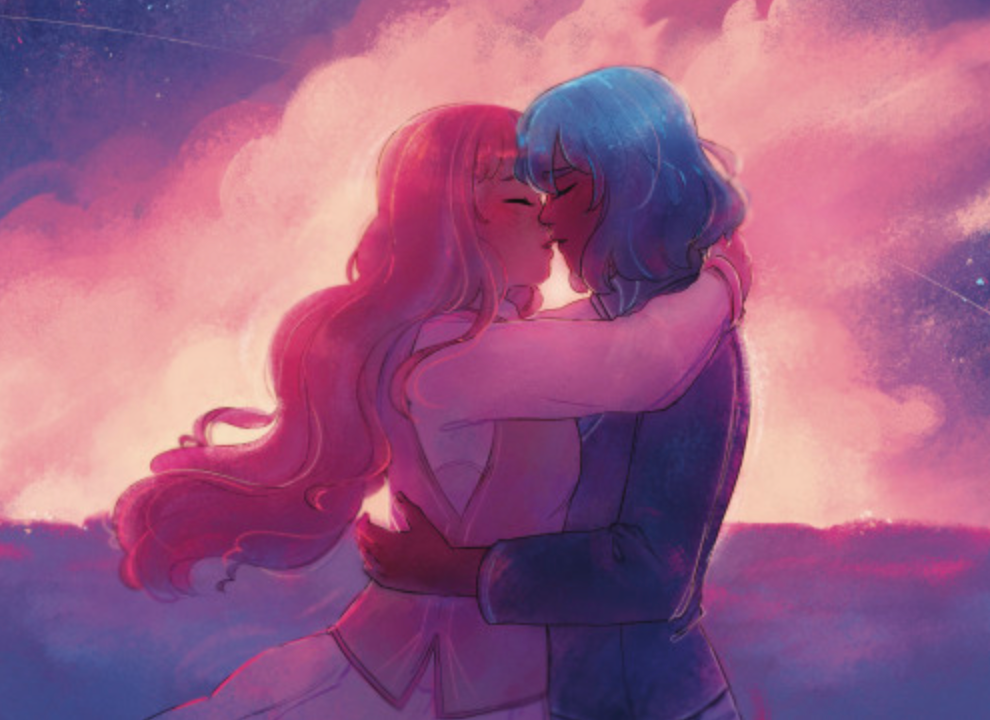
Additionally, I loved how vibrant the art style was! I’m not usually one for the quasi-manga style that North draws in, but every panel really did pop. The vibrant pinks and blues truly shone, which simultaneously sold the joyous glow of young love and the bright, technology-centric world that Sunati and Austen inhabit. Just like the story itself, there are no hard edges: everything is soft and cloudy, calling sunsets, cotton candy, and hope to mind. It suited the story exceptionally well—Ari North absolutely looked like she knew what she was doing.
However, there was one part of the art that didn’t sit as pleasantly with me. Although the colors consistently popped, the character movements…did not. Their poses looked so consistently stiff. And listen. I’m an artist. I get it. Drawing dynamic poses is so hard. Game recognizes game. But the characters’ movements looked so wooden, no matter what pose they were drawn in. These static poses failed to immerse me fully in the story—if they don’t look like they’re really moving, how can I believe that anything else is? I’m saying this to myself as well as Ari North: maybe a few more of those nice references on Pinterest would have livened up the art.
Always Human made the jump from WebToon to print after seemingly wild success on the former, but I’m not sure if the plot format survived the leap. The broken-up chapters would theoretically work if I were getting them, say, once a week, but all together, they didn’t feel quite as coherent. I’m all for cozy sci-fi and slice-of-life stories, but what makes the ones I like work is that there’s still some kind of end goal, however low-stakes it may be, that the characters are heading towards. Always Human felt rather meandering in that sense. It really felt like the plot was being made up as North went along, and the result was quite lukewarm. Even the romance, which the plot clearly hinged on, was set up and happened so quickly that the rest of the story didn’t hold much water. If the romance had been slowly developed over the course of the graphic novel, I would have felt much more engaged. Thus, I never really felt the emotion that North was trying so hard to get across—it all felt rushed and half-baked. Insta-love is never the answer, kids.
All in all, a light and fluffy sci-fi comic that boasted vibrant color and cogent points about disability, but felt rather stiff in both the art and the plot. 3 stars.
Always Human is the first volume in the Always Human series; the series concludes with Love and Gravity.
Today’s song:
adore this album, but also, I can’t listen to it too many times in a row, y’know?
That’s it for this week’s Book Review Tuesday! Have a wonderful rest of your day, and take care of yourselves!
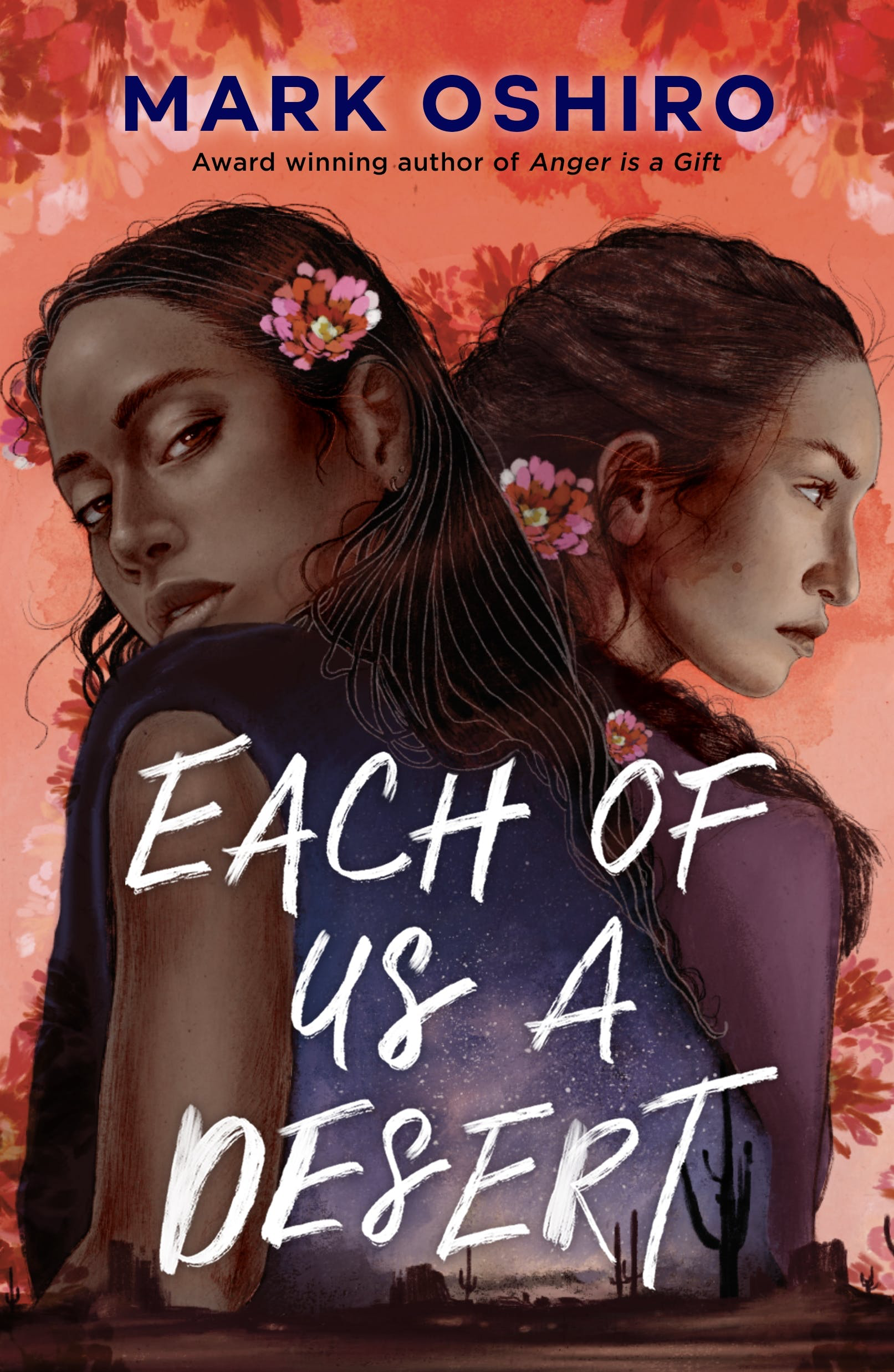
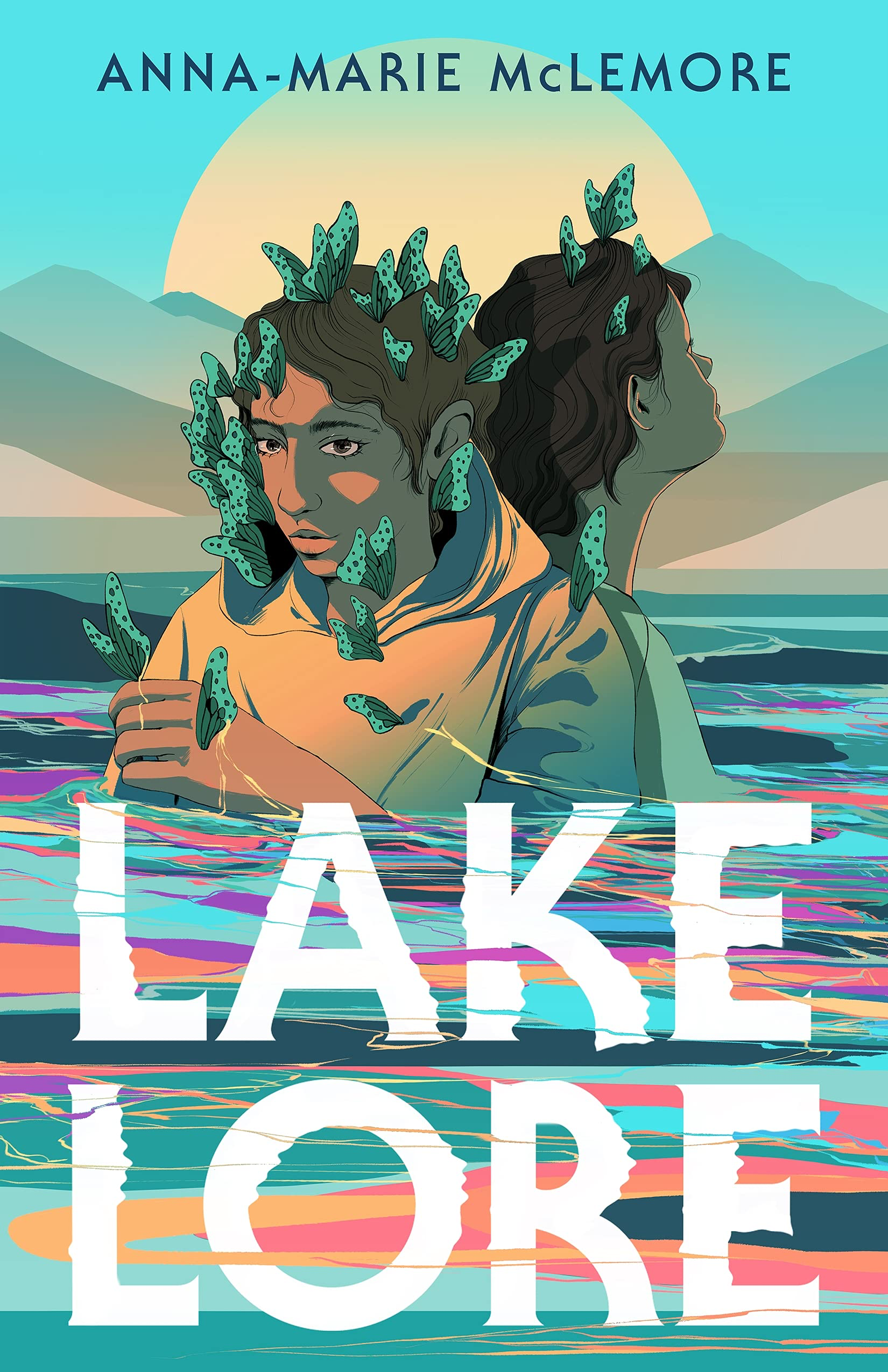
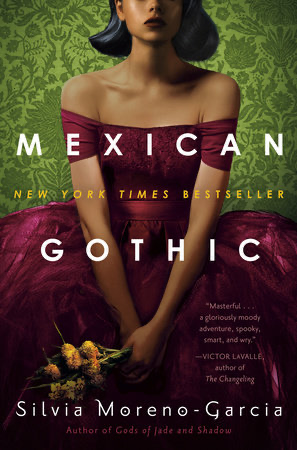
Here in the U.S., National Latinx Heritage Month lasts from September 15 – October 15! I’m always looking to diversify my reading, but this month is especially important to me since I’m half Latina myself, and I love exploring parts of my culture and others’ through literature. I sadly didn’t get around to making a recommendations post last year, since it landed when I was still trying to settle into college, but I really wanted to make on this year, so I planned ahead. And even though the header says YA (I’m stingy about my WordPress space), I wanted to include books of all age ranges in this year’s post. Enjoy!
For my past lists for Latinx Heritage Month, click here:
TELL ME WHAT YOU THINK! What are your favorite books by Latinx authors? Have you read any of these books, and what did you think of them? Let me know in the comments!
Today’s song:
merry Shakey Graves, everybody
That’s it for this post! Have a wonderful rest of your day, and take care of yourselves!
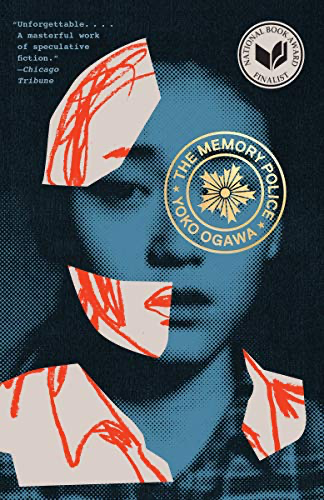
I forget how exactly I came across this novel, but it was one of the first books that I put on my Libby wish list way back in March 2020, when I lived off of Kindle books. At the time it was always on hold for weeks when I tried to check it out, and so gradually, it faded to the bottom of the list. But after years of forgetting about it, I rediscovered this novel—and it was finally available! Usually, literary science fiction doesn’t always do it for me, but The Memory Police was a strangely quiet dystopia with a powerful undercurrent.
A young writer leads a quiet life on a distant, unnamed island, grieving a multitude of losses. Her parents passed away many years ago, but it isn’t just people that are disappearing—it’s objects, animals, and ideas as well: hats, birds, ribbons, and all manner of things. Once they disappear, nobody on the island has any recollection of their existence—they simply fade from public memory. And to enforce this, the island is under the iron fist of the Memory Police, who are there to make sure that these forgotten things stay that way. But she seems to be one of the only people who still clings to the memory of what’s been lost.
When the writer’s editor falls under suspicion from the Memory Police, she hatches a plan to hide him under her floorboards, silently completing her novel as they evade capture. And as more and more objects begin to fade into obscurity, her writing may be the only thing left to cling to.
TW/CW: loss of loved ones (past), kidnapping, police brutality
The Memory Police has been compared time and time again to 1984, and the comparison is clear, but it seemed to take a more literary approach. And while the “literary” part initially made me suspicious, this was one of the most creative and wholly human dystopian novels that I’ve read in a long time!
What sets The Memory Police apart from most other dystopias that you can think of is its perspective. We aren’t given an extensive history as to how the unnamed island came to be under such totalitarian rule, and how everything began disappearing and why. Nor do any of the characters—save for the main character’s editor, referred to only as ‘R’ in this translation—have names, save for their roles or jobs (the protagonist’s parents) or their physical appearance (the old man). All this book seeks to do is give you an ordinary person’s view into something haunting—the protagonist is just as confused as you are, and she is moving through this world in the only way that she can. Naturally, I was curious about the main plot points (how and why everything was disappearing, and how the Memory Police came to be), but I got that the point wasn’t to explain such things, but to see it happening firsthand through somebody else’s eyes, when they may know about as much as we do. I assumed the Memory Police were in control of what disappeared and they had some degree of immunity, which I was curious about, but the decision to omit these details at least made sense as a stylistic choice.
Make no mistake—The Memory Police is certainly haunting, but there’s a quietness to it that makes it stand out from the rest. In this state-surveilled, isolated island environment, this novel is the closest thing that you can get to a slice-of-life story. Other than some chilling instances involving break-ins by the Memory Police, it’s the story of one woman flying under the radar and trying to write her novel as the world is crumbling around her. There’s a constant fear surrounding everything, but in between, she finds time to craft a novel, share secret memories about her parents’ world and what they loved, and hold parties from an elderly man who helps keep her editor hidden. Sometimes, frightening change doesn’t come in the form of something obvious—it’s often slow and goes unnoticed, and it is the small things that keep us going through it.
Literary science fiction like this often comes off like it’s trying to be better than “regular” science fiction, like it boasts some lofty message that your common novel can’t possible get across. I’m glad to say that The Memory Police does none of that—some of the writing does fit that style, but nothing about it comes across as belittling or haughty. In fact, it has an incredibly powerful message. With all of the plot centering around the loss of memory and holding on to the last remnants of a past world, the ending made an incredibly powerful statement: as long as there is somebody around to keep a memory of something alive, memories never really die—they always stay with us. It’s a beautiful message on loss, and about resistance in general—maybe the most powerful thing we can do in the face of tyranny is to know that there is a way to change things, and hold memories of what our forebears did in the face of similar situations. This book is proof that dystopias don’t have to be flashy and overtly gritty to get their themes across—quietness can be just as powerful.
All in all, a nontraditional dystopia that made an incredible impact from reveling in its quiet moments. 4 stars!
The Memory Police is a standalone, but Yōko Ogawa is the author of many other novels that have been translated into several different languages, including Revenge, The Housekeeper and the Professor, Hotel Iris, and more.
Today’s song:
Peter Gabriel Summer 2 is upon us
That’s it for this week’s Book Review Tuesday! Have a wonderful rest of your day, and take care of yourselves!
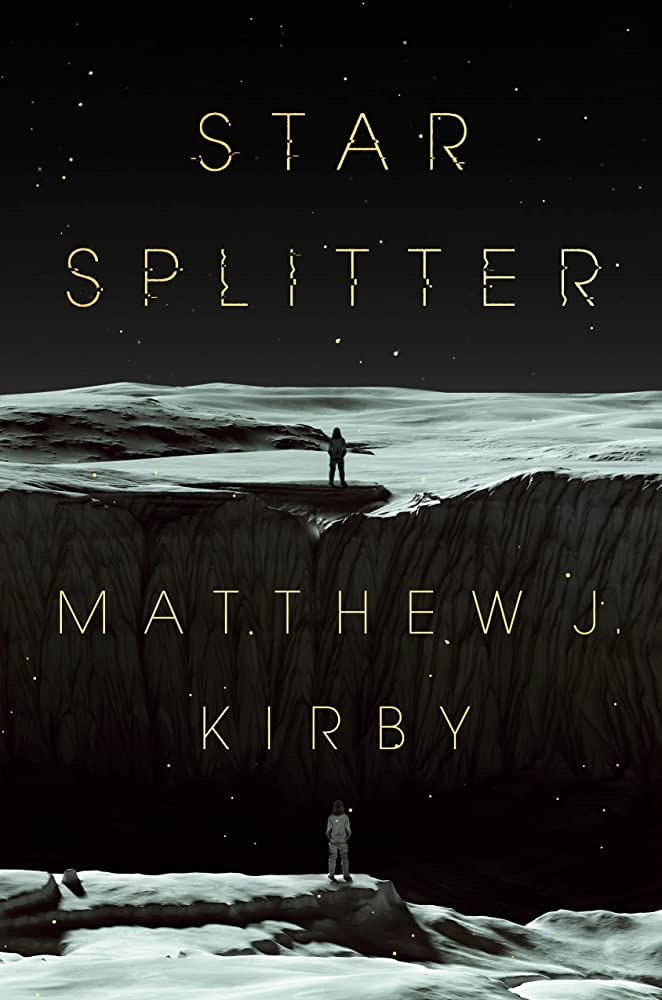
Honestly, it’s a wonder that I managed to get my hands on this book when I did. I heard about it from a few “out this week” blog posts from other book bloggers (thank you!!), and as of today, the book’s only a week old. I put it on hold on the Kindle library, and it came in surprisingly quick, to my relief! I was super excited by the sci-fi premise, and in most of the relevant aspects, it absolutely delivered!
The method of space travel that 17-year-old Jessica Mathers is familiar with isn’t the kind you’d expect. In for the process to work, teleportation is a crucial step—the body that you’re in on Earth isn’t the same one that goes to space. But either way, after six years of waiting to reunite with her scientist parents on a faraway exoplanet, Jessica is going to space.
But when she wakes up, she’s alone in the wreckage of the ship that was supposed to carry her and the crew, stranded on an alien planet. The walls of the wreck are covered in the evidence of something sinister, and her parents are nowhere in sight. And a teleported clone of herself may be the only person she can trust—and the only person for miles around on this planet.
TW/CW: sci-fi violence, blood, murder, body horror, loss of loved ones
tread lightly – this review contains some spoilers!
Sci-fi that references old(er) poetry is an incredibly niche demographic, but I’d be lying if I said I wasn’t squarely in the middle of it. You got me there.
This book kind of came out of the blue for me—I forgot that Matthew J. Kirby existed after reading a few of his books in middle school (sorry), so Star Splitter was more of a left-field pick for me. But despite its flaws, it was a fascinating and gripping read—certainly a better addition to the world of YA sci-fi!
Hard sci-fi is hard to nail down for a young adult book; astrophysics and quantum mechanics are hard for anybody to understand, but I can speak for myself as an (older) teenager and a longtime YA when I say that it might be even harder to understand for a younger-skewing audience. Not to insult anybody’s intelligence—I’m fully including myself in there, in all my new English major glory. But Kirby hit the near-perfect balance with explaining the mechanics of teleportation, and how it factored into space travel. It wasn’t explained like it was being explained to a child, but it didn’t dump all of the information in an unceremonious chunk of jargon, either. And it’s a super fascinating concept to boot—it adds a layer of suspense to an already suspenseful book, there’s significant ramifications for most everything about the world that Kirby sets up, and there’s an existential aspect too. It’s all great there.
The story itself held a lot of water for me as well! There was so much to pick apart in it‚ from Jessica’s existential conflict about interacting with her own clone (HUH) and her own body to the mystery of what happened to the DS Theseus and its inhabitants. (Also, loved that we had a spaceship called Theseus. I’m assuming it’s a nod to the Ship of Theseus, but it also works on another level when you consider what happened with the crew. I won’t spoil anything about that in particular.) Kirby’s writing consistently kept all of that afloat, juggling two different timelines with suspense unfolding in both of them. His descriptions of the landscape of Hades (Mr. Kirby really likes his Greek mythology, huh?) were also nothing short of lovely—I’m a sucker for any kind of alien planet exploration, and Star Splitter, for the most part, adequately scratched that itch.
I say “for the most part” because, as much as I loved it, there were so many parts that seemed too important that were just left out of the final conflict. The sideplot about the ruins of an alien city with a giant pile of ground sloth-looking skeletons???? Bioluminescence everywhere?? BEING PURSUED BY AN UNSEEN ALIEN IN THE SHADOWS??? That was my favorite part of the whole novel, but we really didn’t get any resolution to it. It felt like such a crime that we never got to see where that thread led, given how much it was foreshadowed and otherwise built up. I get that it wasn’t necessarily the main conflict, but Kirby gave it a similar amount of weight to the main conflict, so it felt like it was in need of a more satisfying conclusion than “Jessica got out of the city ruins somewhat unscathed.” I NEED MORE. GIVE THE PEOPLE (ME) WHAT THEY WANT.
I feel like this happened a lot with Star Splitter for me—aside from the main conflict, there were so many fascinating and inventive things going on with the world that felt so creative, but were just tossed aside as afterthoughts once they were explained. The fauna on Hades? Mt. Ida? QUANTUM GHOSTS? I was just taken aback by so many parts of the plot, only to have them scrapped in favor of the main conflict, which I…halfway understand. All this is to say that said main conflict was excellent, but I just wanted more. It wasn’t like Star Splitter was an exceedingly long novel either—320 pages leaves some room to explore at least a few other aspects of the world, I think. That’s why I’m *officially* putting my rating at 3.75 instead of the full 4 stars—there was so much creative stuff to chew on, but not enough of it was expanded upon. I’ll be needing a sequel, please and thank you. 🫶🏻
All in all, an inventive and fascinating sci-fi novel that presented a plethora of creative aspects to fill up the plot, but still left me wanting in some places. 3.75 stars, rounded up to 4!
As of now, it looks like Star Splitter is a standalone, but Matthew J. Kirby is the author of several other books for children and young adults, including the Dark Gravity Sequence (The Arctic Code, Island of the Sun, and The Rogue World), The Clockwork Three, A Taste for Monsters, and many others.
Today’s song:
getting caught up on Palehound before Eye on the Bat comes out…another great album!! this song reminds me so much of Wilco
That’s it for this week’s Book Review Tuesday! Have a wonderful rest of your day, and take care of yourselves!
As some of you may know, last week (March 20-27) was when the #TransRightsReadathon was hosted in response to a dangerous increase in anti-trans legislation across the U.S. Created by Simi Kern, the goal of the readathon was to give the spotlight to as many trans books and authors as possible to bring them awareness and support in light of the rampant transphobia across the country and beyond. It’s been frightening and heartbreaking to see what’s happening in other states, and I want to support my trans siblings in any way possible. So I’ve decided to include shorter reviews of all of the trans books I read this week—all of which were good!
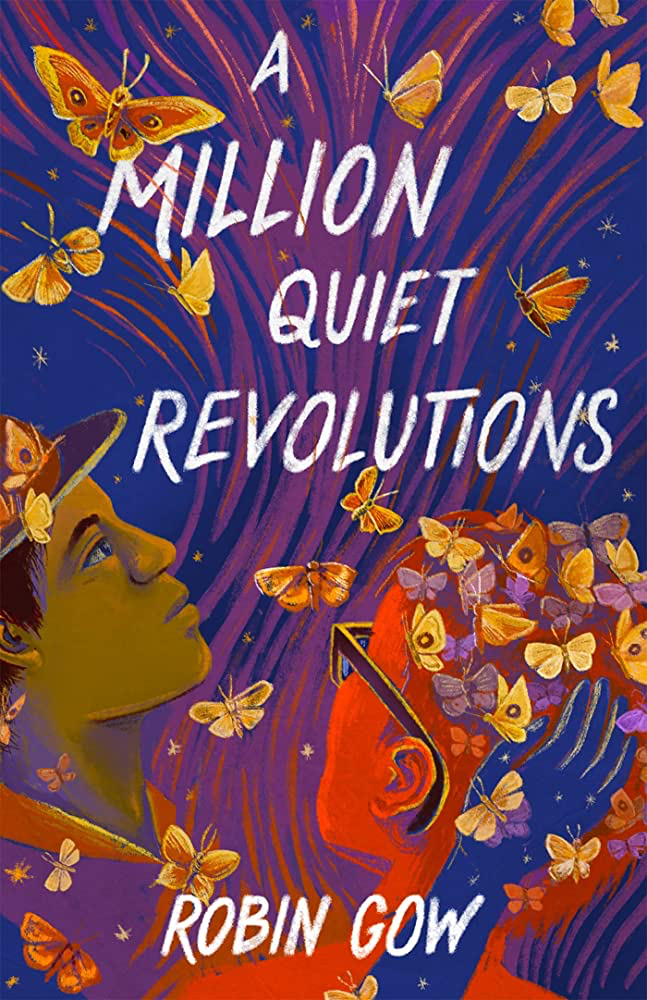
For as long as they can remember, Aaron and Oliver have only ever had each other. In a small town with few queer teenagers, let alone young trans men, they’ve shared milestones like coming out as trans, buying the right binders–and falling for each other.
But just as their relationship has started to blossom, Aaron moves away. Feeling adrift, separated from the one person who understands them, they seek solace in digging deep into the annals of America’s past. When they discover the story of two Revolutionary War soldiers who they believe to have been trans man in love, they’re inspired to pay tribute to these soldiers by adopting their names–Aaron and Oliver. As they learn, they delve further into unwritten queer stories, and they discover the transformative power of reclaiming one’s place in history.
TW/CW: transphobia, dysphoria, misgendering/deadnaming, homophobia, off-page sexual assault, religious bigotry
Novels in verse always get me when they’re done well, and A Million Quiet Revolutions was no exception. The story of Aaron and Oliver is one that was essential to be told, and it resulted in a beautifully poignant piece of verse!
The growing relationship between Oliver and Aaron felt so genuine, and the combination of pseudo-epistolary format (oh god, that sounded pretentious…) with verse emphasized the way that their relationship transcended barriers of both place and time. The interweaving of the past with the present gave me an insight into a queer part of history that I’m almost embarrassed that I didn’t consider until reading this—better late than never, I suppose. Their voices both leapt off the page, and the easy flow of Gow’s verse made the reading experience feel effortless, drifting like wind—good poetry, to me, doesn’t quite feel like poetry; the rhythm remains, but it doesn’t feel like going line by line in such a rote way.
Above all, the message of this novel in verse is one that’s so important, especially in a time where the narrative of LGBTQ+ people being trendy and new is being pushed so often—queer people have always been here, and we will always be here. Aaron and Oliver’s journey of researching their trans namesakes—cross-dressing soldiers in the Revolutionary War—was one that’s so necessary for understanding our own roots. The key to belonging is realizing that you have always been a part of history, no matter how many pains historians have taken to ignore or deliberately erase the queerness and transness that has always been there. For me, that’s why A Million Quiet Revolutions is such an important read.
Brimming with history and rich verse, A Million Quiet Revolutions is an ode to discovering your own roots, and finding solace in hidden histories. 4 stars!
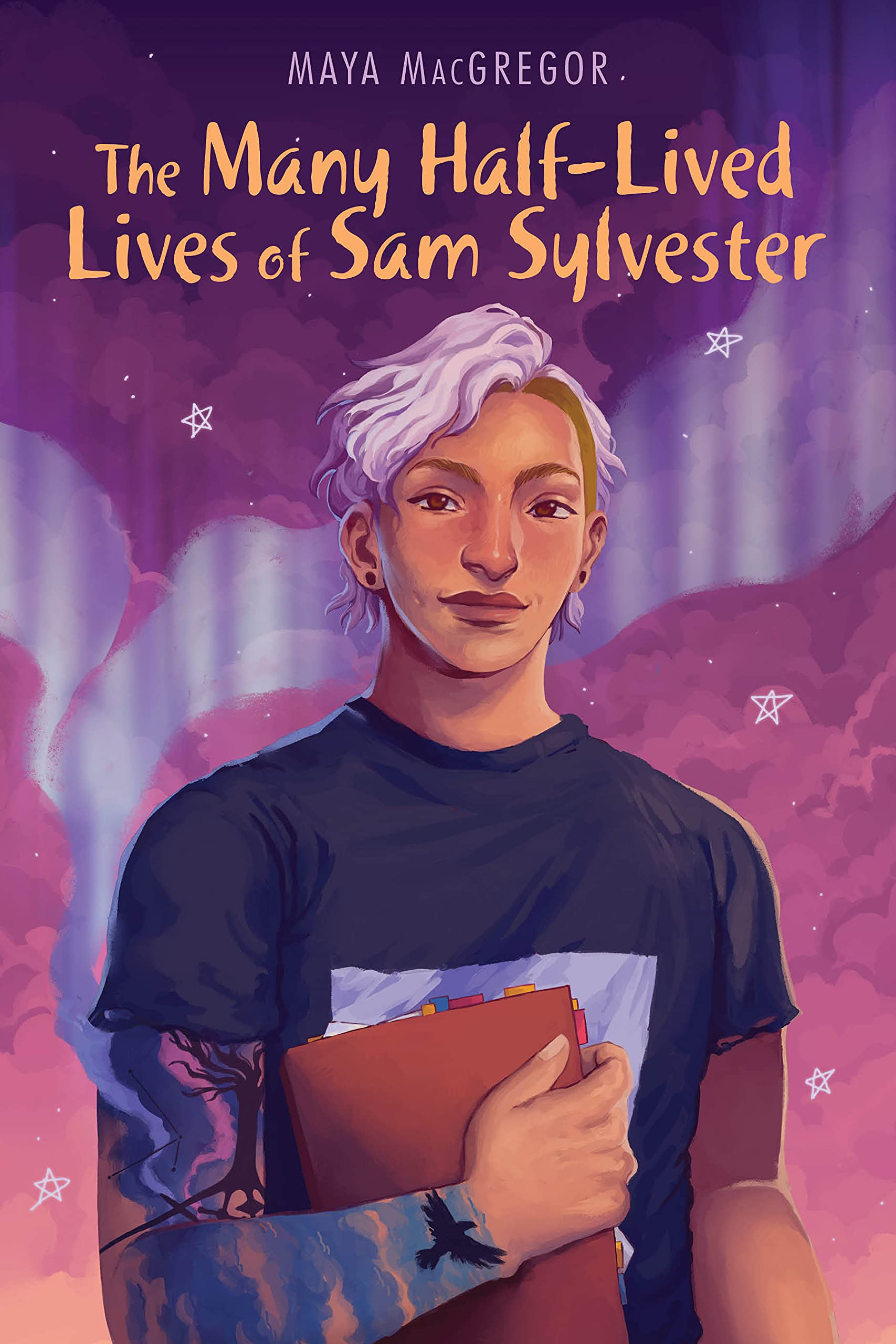
In this queer contemporary YA mystery, a nonbinary teen with autism realizes they must not only solve a 30-year-old mystery but also face the demons lurking in their past in order to live a satisfying life.
Sam Sylvester’s not overly optimistic about their recent move to the small town of Astoria, Oregon after a traumatic experience in their last home in the rural Midwest.
Yet Sam’s life seems to be on the upswing after meeting several new friends and a potential love interest in Shep, the pretty neighbor. However, Sam can’t seem to let go of what might have been, and is drawn to investigate the death of a teenage boy in 1980s Astoria. Sam’s convinced he was murdered–especially since Sam’s investigation seems to resurrect some ghosts in the town.
Threatening notes and figures hidden in shadows begin to disrupt Sam’s life. Yet Sam continues to search for the truth. When Sam discovers that they may be closer to a killer than previously known, Sam has a difficult decision to make. Would they risk their new life for a half-lived one?
My ultimate hope was that this book would be as well-crafted as its cover, and for the most part, it lived up to my expectations! The Many Half-Lived Lives of Sam Sylvester deftly toes the line between a coming-of-age story and a decades-old mystery, buoyed by a diverse and lovable cast.
Sam Sylvester has a batch some of the most diverse representation I’ve seen in a realistic fiction/mystery novel in a while—aside from having a nonbinary, asexual, and Autistic protagonist (more neurodivergent protagonists, please!!), there were so many different characters that were incredibly intersectional—queer, POC, and disabled characters all across the board, and not just the teen characters too! All of these identities were woven so well into the story, and I loved the journey of self-acceptance and reckoning that Sam experiences throughout the novel as they unravel the mystery of the boy who died in their room 30 years ago.
That being said, although I liked most every aspect of this novel, this really feels like a novel that’s going to date itself. I enjoyed a handful of the references (always extra points for David Bowie), but a lot of the more recent ones—the references to Tumblr, Gen Z slang, internet culture, and a Steven Universe gag every other page, read as very hackneyed and stilted. As authentic as the rest of Sam Sylvester was, those parts dragged down what would have otherwise been powerful and realistic dialogue. Most of the writing did its job and did it well, but the attempt to ground it in the present day only ended up making a novel that’s going to date itself far quicker than it was probably intended to.
Despite that, I’d say that Sam Sylvester is still a must-read—for the excellent representation, for the mystery, and for the coming-of-age story. 3.75 stars, rounded up to 4!
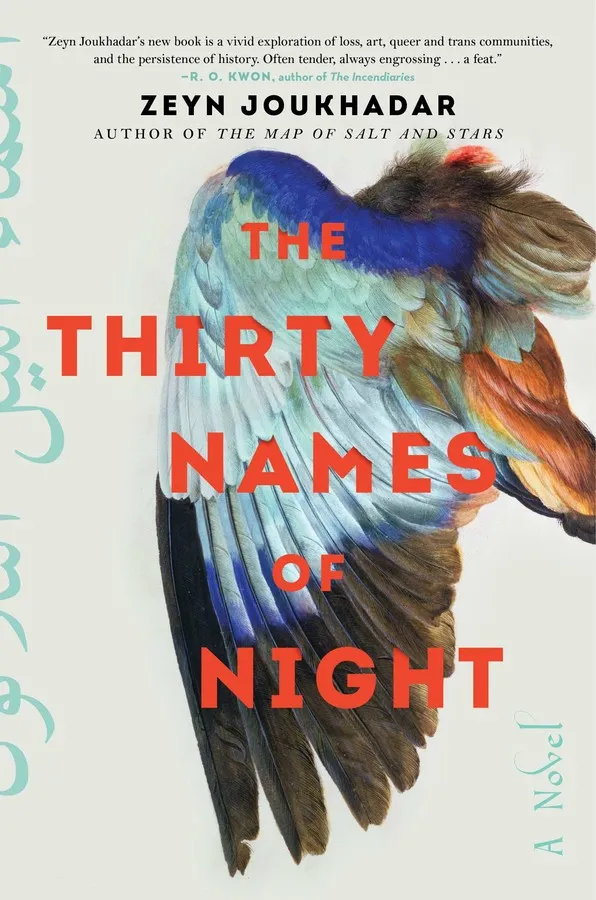
The author of the “vivid and urgent…important and timely” (The New York Times BookReview) debut The Map of Salt and Stars returns with this remarkably moving and lyrical novel following three generations of Syrian Americans who are linked by a mysterious species of bird and the truths they carry close to their hearts.
Five years after a suspicious fire killed his ornithologist mother, a closeted Syrian American trans boy sheds his birth name and searches for a new one. He has been unable to paint since his mother’s ghost has begun to visit him each evening. As his grandmother’s sole caretaker, he spends his days cooped up in their apartment, avoiding his neighborhood masjid, his estranged sister, and even his best friend (who also happens to be his longtime crush). The only time he feels truly free is when he slips out at night to paint murals on buildings in the once-thriving Manhattan neighborhood known as Little Syria.
One night, he enters the abandoned community house and finds the tattered journal of a Syrian American artist named Laila Z, who dedicated her career to painting the birds of North America. She famously and mysteriously disappeared more than sixty years before, but her journal contains proof that both his mother and Laila Z encountered the same rare bird before their deaths. In fact, Laila Z’s past is intimately tied to his mother’s—and his grandmother’s—in ways he never could have expected. Even more surprising, Laila Z’s story reveals the histories of queer and transgender people within his own community that he never knew. Realizing that he isn’t and has never been alone, he has the courage to officially claim a new name: Nadir, an Arabic name meaning rare.
As unprecedented numbers of birds are mysteriously drawn to the New York City skies, Nadir enlists the help of his family and friends to unravel what happened to Laila Z and the rare bird his mother died trying to save. Following his mother’s ghost, he uncovers the silences kept in the name of survival by his own community, his own family, and within himself, and discovers the family that was there all along.
TW/CW: transphobia, xenophobia, racism, Islamophobia, miscarriage, grief, sexual assault, animal death, loss of a parent
I didn’t go into The Thirty Names of Night with any expectations, but I was stunned by the writing! This novel is one of the best magical realism novels I’ve read in recent years, with writing as rich as a tapestry and a story that’s just as well-woven.
Joukhadar’s writing style was the star of Thirty Names; this is the first of his novels that I’ve read, but he has such a unique talent for finding unlikely comparisons and weaving them into the richest, most obvious but out-of-sight metaphors imaginable. I would never have compared the gray sky on a foggy day to the color of a kitchen knife, and somehow, it was right in front of me. His talent for metaphor suited the emotional depth of this story, as well as the almost fantastical element of the birds in New York—I will never claim to be the expert on him, but if there was any story that was suited for Joukhadar to tell, it’s this one.
That writing also made the emotional core of this story possible. There’s so much to Thirty Names: gender identity, grief, heritage, family, and the body itself, but all of it was handled with such grace and aplomb that made the story feel really, truly real. I might’ve even passed the aspect of the birds by as something that could feasibly happen with how this story was written. Every part of this novel is deeply moving, raw and beautiful, and the prose flows as smoothly as air over a bird’s wings.
All in all, a beautiful, literary tale of connections—to family, to gender, and to the world around us at large. 4.25 stars!
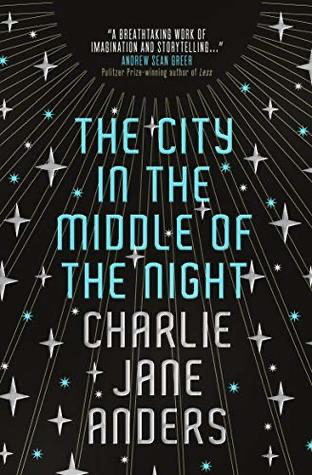
“If you control our sleep, then you can own our dreams…And from there, it’s easy to control our entire lives.”
From the brilliant mind of Charlie Jane Anders (“A master absurdist”—New York Times; “Virtuoso”—NPR) comes a new novel of Kafkaesque futurism. Set on a planet that has fully definitive, never-changing zones of day and night, with ensuing extreme climates of endless, frigid darkness and blinding, relentless light, humankind has somehow continued apace—though the perils outside the built cities are rife with danger as much as the streets below.
But in a world where time means only what the ruling government proclaims, and the levels of light available are artificially imposed to great consequence, lost souls and disappeared bodies are shadow-bound and savage, and as common as grains of sand. And one such pariah, sacrificed to the night, but borne up by time and a mysterious bond with an enigmatic beast, will rise to take on the entire planet–before it can crumble beneath the weight of human existence.
TW/CW: animal attack/animal death, police brutality, body horror
Alright, so the only explicitly stated Latinx characters, specifically of Mexican ancestry, are named…Carlos and Maria? So most everybody else gets semi-unique names, but not them? It’s like Cho Chang all over again…[LOUD INCORRECT BUZZER}
If I hadn’t read Victories Greater Than Death beforehand, I would’ve been more suspicious, but it seems like Anders has gotten a lot better with diversity on that front, but…still iffy. Just saying.
That aside, The City in the Middle of the Night was one of the more inventive dystopias that I’ve read recently, but it fell victim to very convoluted writing. It’s obvious from every page that Anders put so, so much work into creating a fleshed-out world with an equally fleshed-out history—that was a riotous success on her part. The premise of society being divided by a tidally-locked planet felt eerily feasible, and I absolutely ADORED all of the alien life forms on the night side of January—the Gelet were obviously my favorites, but I would’ve liked to have seen more creatures. ALWAYS MORE CREATURES.
However, Anders’ writing choices ended up making parts of The City in the Middle of the Night something of a struggle. The story itself ended up being rather convoluted and tangled, and I found myself getting lost and confused about wait, which side of the planet are we on again? Why are we here in the first place? The additions of a boatload of characters that ended up having very little consequence to the plot at large didn’t help either. This story had the potential to be incredible, but it ended up getting so lost in itself that it became an ordeal to figure out where I was.
All in all, an inventively-conceived dystopia that excelled in worldbuilding but floundered in its writing. 3.25 stars.
Tell me what you think! Did you participate in the #TransRightsReadathon, and if so, what books did you read? What do you think of these books?Let me know in the comments!
Today’s song:
That’s it for this week’s Book Review Tuesday! Have a wonderful rest of your day, and take care of yourselves!
I was a huge fan of K. Eason’s Thorne Chronicles when I first read them, so you can imagine my excitement when I found out that she was starting a companion series set in the same universe! (I didn’t find out until a few weeks ago, but that’s beside the point.) I jumped on the chance to put it on hold at the library, and I finally got to read it recently; however, I found Nightwatch on the Hinterlands to be an entirely different type of story than Rory Thorne, which, in this case, was its downfall.
For my double review of How Rory Thorne Destroyed the Multiverse and How the Multiverse Got Its Revenge, click here!
It’s been decades since any of the riev—battle-mechas designed for the war effort—have done any harm to civilians. For years, they’ve been decommissioned or redesigned for labor purposes. So when Lieutenant Iari arrives at the scene of a crime and realizes that a riev may have been the perpetrator, she knows that the mystery will lead down a trail that she never anticipated treading. Along with Gaer, an ambassador-turned-spy, Iari must play a dangerous game amongst her planet’s criminal underbelly, one that may lead to something greater than a simple murder.
TW/CW: murder, blood, descriptions of injury, xenophobia (fictional—cast is almost exclusively aliens)
I was a massive fan of the Thorne Chronicles, but after reading Nightwatch on the Hinterlands, I’m sorely disappointed in the direction that K. Eason decided to go with this series—my most common thought while reading this novel was why include this?
As a starting point: why these characters? I liked Iari well enough in How the Multiverse Got Its Revenge, and she does have the potential to have an interesting story, but I didn’t get enough information in Multiverse to really care about her. I didn’t remember much about Gaer either, and he was a well-written and likable character, at the very least, but there wasn’t much that carried over from the previous books to make me care enough about him. These characters were virtually all that carried over from the Thorne Chronicles into this new series (The Weep), and that was where my disinterest began.
In concept, I like Eason’s decision to set Nightwatch in the seedy, criminal underbelly of the world that was touched on in the Thorne Chronicles. It’s a classic sci-fi setting, and with how rich Eason’s established world already was, it would be easy to make something compelling out of it. However, the Thorne Chronicles were far more centered around the human characters, and the aliens were more of a sideplot, mostly just appearing in Multiverse. Nightwatch, however, was entirely centered around the alien characters; normally, this is something I’d be 100% on board with, but without the context that could’ve been given in either Multiverse or in…y’know, some part of this book, I was left in the dark for any of the conventions of this part of Eason’s established world. I somehow understand that not giving glimpses of the other characters (Rory, Messer Rupert, etc.) would’ve been easy fan service, but other than Iari, if I hadn’t known that this was a companion book, I wouldn’t have seen the connection at all.
And on the subject of context…we needed so much more of it. So much more. Even though 90% of these alien species weren’t even talked about in the Thorne Chronicles, Eason wrote Nightwatch in a way that automatically assumes that readers know every single cultural aspect of every single alien species (of which there are many), as well as the context of the various wars that have gone on before the events of Nightwatch, in a very short timespan. I’m all for science fiction novels that don’t dump every single bit of exposition and worldbuilding into the story in one, unceremonious pile at the beginning, but this felt like the other extreme—wanting to avoid that so much that the reader is left without a single clue of what’s going on. I understand the concern that this writing style grew out of, but there really could’ve been a much more comprehensible happy medium in terms of worldbuilding. Beyond that, it’s clear to see how much time Eason put into creating these alien races and cultures, and that’s something I’ll always admire, but the effect of that got dwarfed by the alienating (no pun intended) fashion that she (did not properly) integrated them.
Like the approach to worldbuilding, Eason’s writing style in this novel is a double-edged sword. It’s a wildly different style from the endearingly irreverent but simultaneously observant voice that she used in the Thorne Chronicles. In contrast, Nightwatch had the distant feel of a hardboiled noir in space, quick and to the point, except for when information was delivered. On the one hand, it’s proof that Eason can be very versatile in terms of voice across her novels. On the other, this didn’t feel quite as genuine as the Thorne Chronicles—it made sense for the story, but the characters less likable, and the plot felt rushed, like constant running in circles from A to B without much context as to why or how. It suited the style of Nightwatch to a point, but it ended up being a detriment to both the pacing and my general enjoyment.
While I was reading, I was debating whether or not I wanted to stick it out for the rest of the series; I really wanted to give K. Eason the benefit of the doubt after how much I adored the Thorne Chronicles, but I don’t think I’ll be continuing The Weep after how unpleasant my experience with Nightwatch was. Obvious points go to the extensive worldbuilding and the clear time and care put into crafting this aspect of the world, but most of the other elements—the writing style, the way we got (or didn’t get) pieces of worldbuilding, and not much to make me care for the characters—brought my enjoyment down immensely. 2 stars.
Nightwatch on the Hinterlands is the first book in the Weep series, succeeded by Nightwatch Over Windscar. This series is a companion to the Thorne Chronicles, which consists of How Rory Thorne Destroyed the Multiverse and How the Multiverse Got Its Revenge. K. Eason is also the author of several other novels, including the On the Bones of Gods series (Enemy, Outlaw, and Ally).
Today’s song:
BACK ON THE PETER GABRIEL TRAIN FELLAS CHOO CHOO
That’s it for this week’s Book Review Tuesday! Have a wonderful rest of your day, and take care of yourselves!
February has just rolled around, and in the U.S., the month of February is Black History Month! Ever since I’ve started interacting more with the book blogging community, I’ve been working on reading more diversely, and making posts like these to encourage others to do the same—reading from a single, homogenous perspective is effectively reading in a bubble, when part of what makes reading so special is its ability to give you an easily accessible insight into the perspectives of others.
But this year, the theme of Black History Month is Black Resistance. I’ve been thinking a lot lately about how that relates to YA; a good portion YA literature is inherently tied to resistance and anti-authority sentiments. And yes, part of that may be teenagers rebelling against their parents, but it also instills so much power into its impressionable teen audience: even though you’re young, you have the power to change the world. Now that YA has become more diverse in recent years, it has shown that resistance is even more tangible. That tyrannical, dystopian government that the protagonist must defeat can be translated into real-word terms: systemic racism, police brutality, and so much more. Teaching teenagers (and everybody else, for that matter) that they have that power to change the world is such an important thing, because they will grow up knowing that they can enact the same changes as the characters they read about.
That being said, I have been shifting to read more adult books in the past few years, and I’d be remiss if I didn’t talk about some of the amazing books by adult Black authors as well. I’m too lazy to change the graphic, but I’m also going to include some adult-oriented books in here as well.
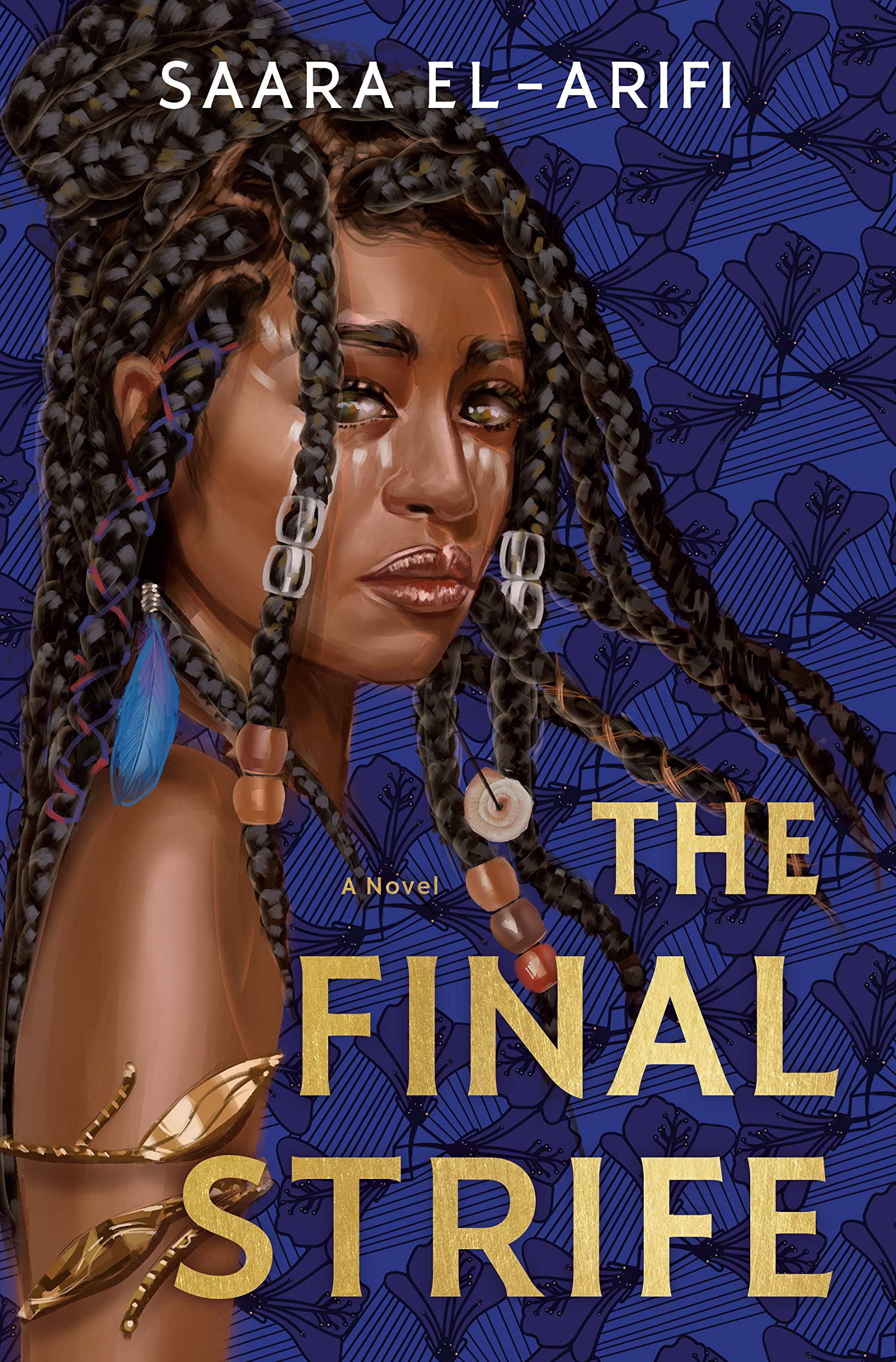
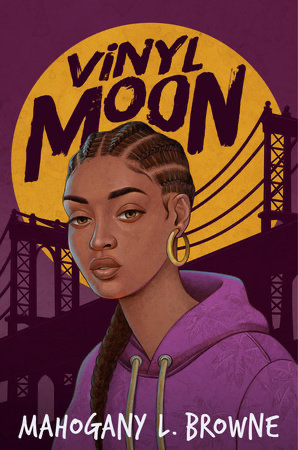
So with that, here are some of the YA and adult books by Black authors I’ve read in the past year. If you’d like to see my posts from previous years, click below:
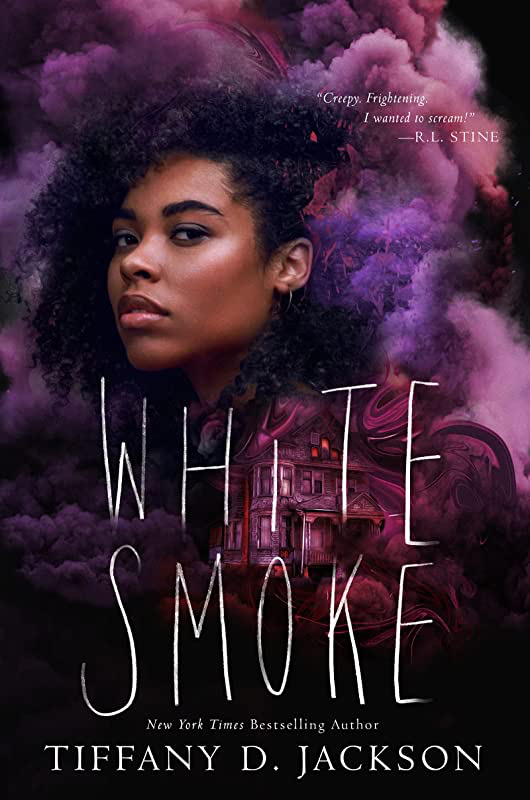
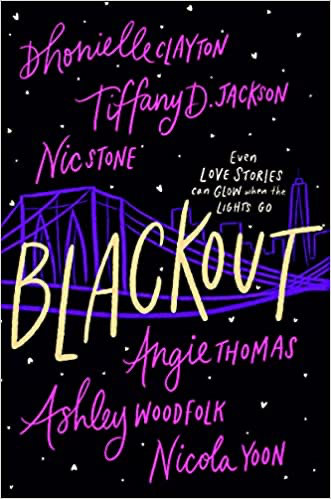
Tiffany D. Jackson has a talent for building suspense, but this is the first time I’ve seen her do a full-blown horror novel—and it was exceptionally chilling!
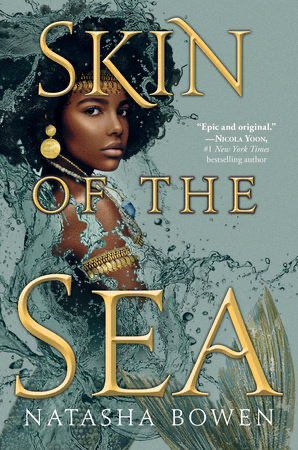
YA mermaid novels have historically been disappointing for me, but Skin of the Sea gave me hope that a good one is possible—and there can be so many creative twists and perspectives put on it!
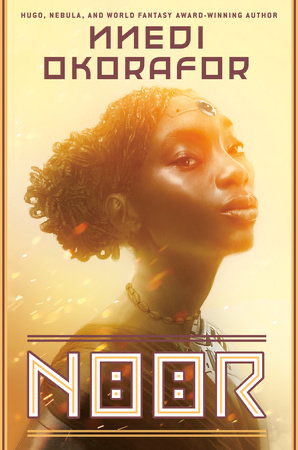
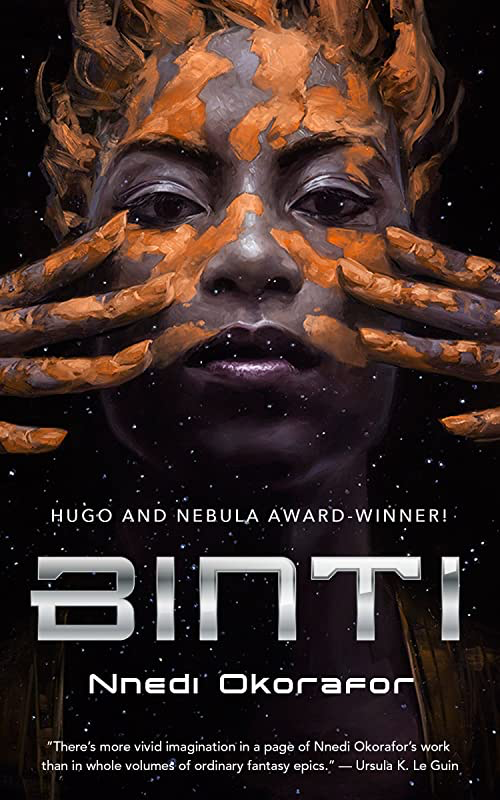
Normally, I wouldn’t double up on authors, but Nnedi Okorafor really deserves it here—I still need to finish this series, but it’s so charming and inventive!
TELL ME WHAT YOU THINK! What are some of your favorite books by Black authors that you’ve read recently? Tell me in the comments!
Today’s song:
somehow I didn’t know that this song existed until a few days ago, and I haven’t been able to stop listening to it since
That’s it for this year’s list of Black History Month recommendations! Have a wonderful rest of your day, and take care of yourselves!







 The Bookish Mutant